




Likes
19
Share


@cherokee
Follow
Привет 🖖
С новым годом 🎅
2022 самый ужасный год в моей жизни! Он был сложным во всем, экономический кризис, война.......
Я добавил видео, это 2 ракеты 31 декабря упали рядом с моим домом, русские нацисты обстреляли жилой район, умерла девушка 22 года ей было..... 4 человека получили ранения..... Так страшно ещё не было! Мы встречали новый год под обстрелы ракет и звук сирен тревоги в полной темноте...... Россия государство террорист убийца 😣
Это мой блог и я хочу здесь делится своими чувствами и эмоциями, что бы больше людей знали что происходит.
А теперь дневник.
На этой неделе растения стабильно получали 20 часов света, это очень помогло им стать больше и сильнее.
Я продолжаю тренировки LST.
На этой неделе была обрезка веерных листьев, я часто практикую дефолиацию автоцветов. Надеюсь проблем со светом не будет, растения уже показали "усы" свой пол, значит стадия предцвета будет примерно через неделю, хочу что бы они стали ещё больше и набрали "мяса" массу.
Ещё раз поздравляю всех с новым годом. Мира вам и вашим семьям, и мирного неба, что бы в ваш дом не прилетали ракеты.
🇺🇦 🇺🇦 🇺🇦

Likes
15
Share


@curious_jules
Follow
Buds still quite small, but their smell is quite powerful. Lower leaves are yellowing.

Likes
6
Share

@eldruida_lamota
Follow
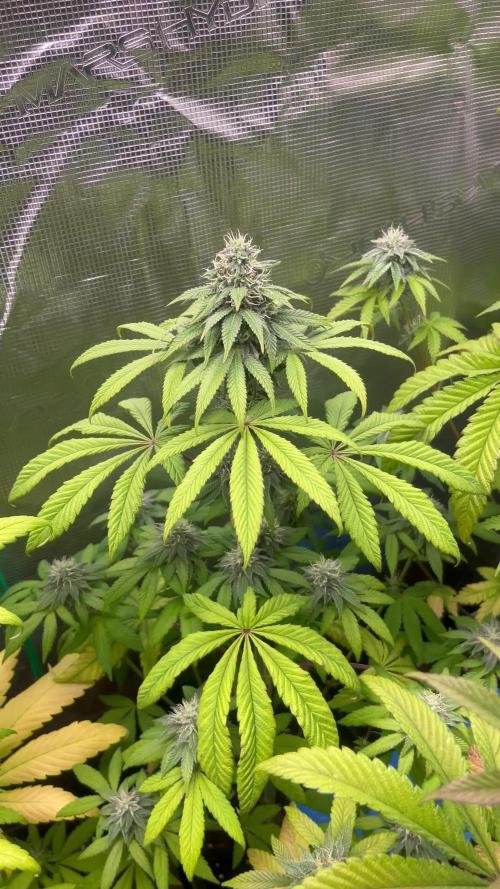
Que pasa familia, vamos con la quinta semana de floración de estas Drizl Pickl feminizadas de Seedstockers.
Vamos al lío ,se trasplantaron en macetas de 7 litros definitivamente.
El ph se controla en 6.0 , la temperatura la tenemos entre 24/20 grados y la humedad ronda el 50%.
El ciclo de floración puse 12h de luz, el foco está al 80% de potencia.
De momento van creciendo a buen ritmo y tienen un buen color.
La flor coge forma y se empieza a. Llenar de tricomas.
Agradecer Agrobeta por el envío del kit gold series para esta temporada, son unos jefes 🙏
- os dejo por aquí un CÓDIGO: Eldruida
Descuento para la tienda de MARS HYDRO.
https://www.mars-hydro.com
Hasta aquí todo, Buenos humos 💨💨💨
Likes
5
Share


@LittleBigTrees
Follow
Still only feeding water, I put them into 4ltr pots so they won't want food for a few weeks, flipped to 12/12 on day 35

Likes
9
Share


@Micro_Grows
Follow
Growing this particular plant was extremely eye opening to me and the future grows I will be doing. It's allowed me to get first hand experience with a different strain, a new substrate, different nutrients and different ways of growing!
I learnt that my yields will be enhanced through the use of a larger pot regardless of the substrate, light or strain, but the pot size I have makes for a very nice little plant with big 4 large frosty colas enhanced by advanced grow techniques.
Damn it. Just missed the 200g dry weight...
I thank everyone who joined me on this grow and specially to all those that commented!
Likes
2
Share


@Saintvicious
Follow
Looks like a lot of top sights. Afraid stretching too much. Hopefully it fills in.
Likes
209
Share


@BioBuds
Follow
It was finally time to harvest her, what good times we had with her. Amazed with how beautiful this plant is, how easy to manage and train and how rewarding Orange Hill Special is.
So we said our thanks and goodbye, thanked her for all the joy she gave while growing her. I realize more and more how I love growing them even more than the end-product.
It takes my mind of all going on for a while, in my miniature jungle world in the attic.
Im sure all of you just sometimes sit there and watch them, in wonder, dreaming away with a good buzz on, watching them wave in the wind of the fans.
So with a heavy hart I apologize, play them their last music, sit with them and feel them and smell them, watch the glistening of the cristals.
In the end we had 209 gram dried Orange Hill Special, I will know the total of the grow, in a few days, since the final big whopper still has to dry: my XtraKush, be sure to check the harvest of that one *in couple of days) and see a one-dollar seed outperform two 10 dollar seeds.
I probably go over 500 grams for the total grow, which would be 1.6 grams per watt. Big success!
Consider an SP-3000 for your next light, you won't be disappointed! Check www.mars-hydro.com for the latest discounts!
Thank you @MarsHydroLED for letting us try out your light, it made this successful grow possible!
Greetings and all the best! Thank you to our friends here, our followers and the whole Growing Diaries community for just being there.
Big Hug,
Sunshine and BioBuds


Likes
12
Share

@GoodTimesOrganics
Follow
Hi liebe Community and Welcome Back! 💚🌱
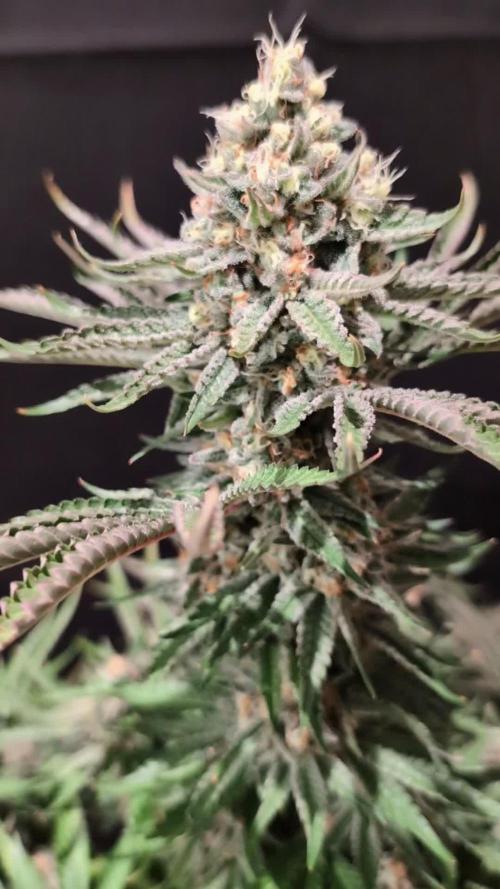
Nach der siebten Blütewoche entwickelt sich die Aficianado Pflanze weiterhin sehr schön und legt echt an Maße zu!
Sie ist in diesem Run definitiv die Beautyqueen.
Die Struktur, die Buddichte, Interniodenabstände alles perfekt!💚
Die Trichome sprießen und dass Icing zieht sich wunderbar über die Sugarleafes.
Das süßlich- fruchtige Aroma entwickelt sich immer mehr, es hat nun auch etwas beeriges und vanillige Aromen.
Ich habe ein Bild an die Jungs von Aficianado geschickt, leider konnten sie mir über das Bild auch nicht sagen welche Variation es ist.
Eingrenzen könnte ich es jedoch soweit, es ist eine aus der 2025er Kollektion mit der Vanilla Berry Pie, da kann ich vom Aroma her auch voll mit gehen.
Das Problem daran ist, das es mit dieser Kreuzung halt mehrere Varianten gibt🙈
Ab jetzt bekommt die Pflanze nur noch Wasser bis zur vollen Reife.
Die Umgebungsgegebenheiten sind aktuell gut für die Endblüte!
—————
🌞 Temp: 27
🌚 Temp: 18°C bis 19°C
💨 RH: 49%
VPD: 1,42 kPa 🏜️
💡ppfd: 830 mpm
—————
Viele Grüße 👋
Likes
22
Share


@GrowinHome
Follow
Welcome to the last week!
The ladies are allready showing some discoloration on the leaves.
This last week they will only get plain cold water, no nutrients.


Likes
25
Share


@BudHaks
Follow
Week 13!
I have decided to stagnant harverst her in two parts as there is fresh growth in her lower half that the light cannot reach and the top buds are mature now and at the optimal cloudy trichomes I'm looking for are present.
Look at all those trichomes heavy leaf and buds!
She is heavy and smelling amazing with hints of fruit and cookies.
I will also be flushing her next week!
What an amazing journey, coming to an end!


Likes
6
Share
@eldruida_lamota
Follow
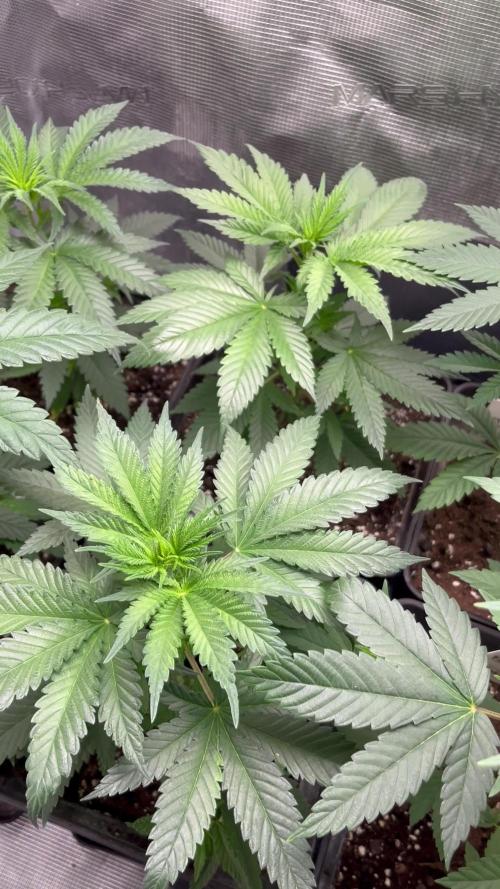
Que pasa familia, vamos con la quinta semana de vida de estas Gorilla girl F1 de Sweetseeds.
Vamos al lío, las plantas se trasplantaron a macetas de 7 litros.
El ph se controla en 6.5, la temperatura la tenemos entre 24/22 grados y la humedad ronda el 70%.
El ciclo de crecimiento puse 20h de luz, el foco está al 50% de potencia.
Me gustaría estar más encima este cultivo pero la salud me está impidiendo un poco este 100% con el proyecto. Con suerte la semana que viene andaré mejor.
- os dejo por aquí un CÓDIGO: Eldruida
Descuento para la tienda de MARS HYDRO.
https://www.mars-hydro.com
Hasta aquí todo, Buenos humos 💨💨💨
Likes
23
Share


@dataTwiiix
Follow
06/04: Début 3ème semaine jusqu'à présent je suis content de moi, c'est ma deuxième culture. La première a été assez mouvementée et cette fois-ci je me sent plus à l'aise par rapport aux arrosages par exemple. J'ai choisi de ne pas utiliser du allmix par exemple pour pas risquer de brûler mon plant lors de l'engraissâge etc.
06/05: Aujourd'hui "tie down" des branches les plus basses. (LST j 0) + Arrosage à l'eau clair 400ml ainsi que toping des branches basses.
06/06: j'aperçois les premiers pistils la phase de pré-flo est sur le points de débuter je vais augmenter la luminosité petit à petit dans les jours qui viennent pour arriver autour des 70,000Lux en phase de flo.
06/07: je vais revoir mon planing d'engraissage et ajouter un engrais de flo. et du CalMag agent toutes les deux semaines, quand au GHE essential une fois par semaine en foliaire.
06/08: le filet est placé depuis ce matin, maintenant on attends l'étirement floral pour le remplir.
06/09: arrosage +/-500ml avec engrais, j'ai tenté de descendre le filet pour palliser le plant et commencer à diriger le branche dans les trous du filet mais j'ai changé d'avis car je le sentais pas, je préfère attendre le stretch et utiliser le filet quand les branches l'atteindront naturellement.
06/10: finalement j'ai fait un topping hiers soir car le fiming ne semblait pas prendre et le cola continuais a monter et a chaque nouveau noeud j'avais chaque fois que deux branche donc j'ai préferer le topping certaine branche latérale on déjà rejoint la hauteur de deux branche obtenue grâce au topping. je suis étonnée par la vigueur de cette variété qui se remet rapidement de tout stress!
Likes
10
Share


@ElegantBuds
Follow
Hello growers.
Last week i started flushing because all the trichs were milky.
The plant got a little bit denser in the colas.
The smell is amazing.
Lets hope for some quality bud.
See you next week.
ElegantBuds
Likes
86
Share


@DogDoctorOfficial
Follow
Apolo F1 Mission Diary - Week 2: The Rise of the Green Titan
Greetings, fellow growers and botanical enthusiasts! Our Apolo F1 has sprouted into a verdant marvel, standing tall and proud, like a green titan rising from the soil. Join me in this second-week report as we explore the wonders of growth, the magic of transplantation, and the botanical symphony of nutrients.
This week marked a significant milestone – the grand migration to an 11L fabric pot, generously provided by the good folks at Royal Queen Seeds. Now, let's talk fabric pots and why they're the VIP treatment for our plant's roots.
Fabric pots, oh, they're like the five-star hotels for roots! Unlike their traditional counterparts, fabric pots offer superior aeration. The porous fabric breathes, preventing the soil from becoming waterlogged and ensuring oxygen reaches every nook and cranny of our Apolo F1's root system. It's like giving our plant a breath of fresh air, quite literally.
But the benefits don't end there – fabric pots also prevent roots from circling the container, promoting a more extensive and fibrous root system. This, my friends, translates to a happier, healthier plant with increased nutrient uptake and overall vigor. It's like our Apolo F1 is getting a botanical spa day every day!
Now, let's dive into the alchemical mix that accompanied this transplantation – my special Aptus Holland super soil blend. Picture this as the magic potion for plant prosperity.
First in the concoction is Micromix Soil, a blend of microorganisms and stimulants that's like a botanical feast. These microorganisms act as the unsung heroes of the soil, enhancing nutrient availability and fostering a symbiotic relationship with our green companion.
Next up, enter the Substrate Buffer Powder – the pH conditioner extraordinaire. Unstable pH conditions begone! This powder, featuring micronized calcium, acts as the stabilizing force, ensuring our plant enjoys a balanced pH banquet.
And let's not forget the All-in-One Pellet – the time-released 100% organic pellet fertilizer. Packed with a compounded NPK fertilizer, magnesium, sulfur, and organically chelated microelements, it's like a gourmet meal for our Apolo F1. The L-amino acids are the chef's kiss, enhancing nutrient absorption and overall plant health.
During the transplantation spectacle, I introduced Mycor Mix once again. This blend of endomycorrhizae, fixed on a vegetal carrier, is like the entourage for our Apolo F1, feeding and protecting the fungi that, in turn, support our plant's growth. It's the ultimate teamwork, a botanical Avengers assembling to ensure our green hero thrives.
And the best part? Our Apolo F1 is reacting with sheer botanical enthusiasm, reaching for the stars and soaking in the nutrients like a plant on a mission.
Before I conclude this week's report, a heartfelt shoutout to Royal Queen Seeds for the royal treatment in the form of fabric pots, to Aptus Holland for being the architects of this nutrient symphony, and to Grow Diaries for being the virtual arena where our horticultural tale unfolds.
Stay tuned for the next chapter in our Apolo F1 Mission Diary – where we'll witness the continued ascent of our green titan.
As always thank you all for stopping by and for supporting me on this journey, i am super passion about growing and fell blessed to have you all with me on this new journey <3 <3 <3
Genetics - RQS APOLLO F1
Ligth - LUMATEK ZEUS 465 COMPACT PRO
Food - APTUS HOLLAND
All info and full product details can be find in can find @
https://www.royalqueenseeds.com
https://aptus-holland.com/
https://autopot.co.uk/
https://lumatek-lighting.com/
With true love comes happiness <3<3<3 Always believe in your self and always do things expecting nothing and with an open heart , be a giver and the universe will give back to you in ways you could not even imagine so <3<3<3
<3 <3 <3 Growers love to you all <3 <3 <3


Likes
43
Share


@TheBulldozerSicily
Follow
Base 75 lt acqua demineralizzata (ec 80);
Aggiungiamo:
37.5 grow 37.5 micro 37.5 bloom 30 ml tarantula 30 ml voodo juice.
Ottenendo ec 474 ph 6.5
Iniziamo questo nuovo ciclo non partendo da seme come sempre, ma partendo da un ottima talea giá radicata, fatta da un nostro amico agricoltore.
Ci aggiorneremo settimanalmente al solito, vedremo i cambiamenti e aggiornamenti settimana dopo settimana.
Buon anno nuovo a tutti!! E buona coltivazione!!!!
Likes
15
Share


@Bread_n_Buds
Follow
Here we are day 55 for our Wurlz F1 Hybrid. I would immediately like to say, do you notice anything by any chance? I said day 55 and we're pretty much ready. The leaves are turning yellow regularly, I have removed the fertilizers, the pistils are ripe, the resin is out, there are all the signs for a harvest which should take place towards the end of next week.
The plants were born on April 6th, I repeat on April 6th for those who cannot grasp the concept. Most certainly Watermelon Candy and Wurlz will be harvested around June 6th, guys...8 weeks...not even 9 or at most nine weeks.
If you're good at math, you do it otherwise I'll lend you some fingers.
For topping lovers it means that if you want to do topping on autoflowering plants they won't finish in biblical times, according to my calculations even doing topping shouldn't go beyond three months, like an autoflowering from the previous generation.
Why am I talking about the previous generation? Because these have certainly moved forward with speed, I have seen them grow and above all swell the flowers like I have never seen them do.
As for the rest of the resin and pistils, everything is really in place. I want to do a terpene inspection soon and evaluate the ripeness for the harvest.
The Wurlz also ends a little earlier than the others and is truly lightning.
Strong, fast as the wind, stable as promised by Zammi.
https://www.zamnesia.io/it/10669-zamnesia-seeds-wurlz-f1-automatic.html
Feeding is by Plagron with the Power Buds - Sugar Royal - Green Sensation + Alga Bloom combo that drives me crazy https://plagron.com
The lights are from Viparspectra p2000 and provide super light www.viparspectra.com/
Tent & Air www.secretjardin.com
Music of the week www.radionula.com
+++ 432 hz frequencies to keep in line my Girls to Gaia.
Site Description
ZAMNESIA SEEDS - WURLZ F1 HYBRID AUTOMATIC: EFFECTS TO LEAVE YOUR HEAD IN A WHIRL!
As the end product of combining Runtz with Watermelon Candy, Wurlz F1 hybrid Automatic showcases a reliable, uniform, and, above all, easy growing experience. The resulting buds offer mind-blowing flavors and soothing effects, making Wurlz F1 Automatic more than worthy of being on your radar.
GROWING WURLZ F1 HYBRID AUTOMATIC
As an autoflowering strain, it takes just 9–10 weeks for Wurlz F1 Automatic to move from germination to harvest. Fortunately, there's very little required other than a bit of maintenance along the way. This is partly due to the F1 genetics that make this strain robust and uniform, resulting in plants that reach a similar height and provide a similar (large) yield. Moreover, Wurlz F1 Automatic is highly resistant to disease, pests, and other ailments.
Reaching heights of about 65–80cm, Wurlz F1 Automatic is not an overbearing plant and can fit into smaller spaces with zero fuss. Once ready to yield, growers have the potential to see a return in the region of 450–500g/m² indoors and 50–150g/plant outdoors.
AROMAS, FLAVORS, AND EFFECTS OF WURLZ F1 HYBRID AUTOMATIC
After Wurlz F1 Hybrid Automatic wows you with its easygoing growing experience, the best is yet to come: the smoke test. Teeming with terpenes, this cultivar offers a fruity and candy-like flavor tinged with just a little bit of pine for good measure. In terms of effects, Wurlz F1 Automatic is bolstered by 24% THC and a finely tuned array of cannabinoids, making for a soothing, physically relaxing, and, in larger amounts, couch-locking high. So settle in with some of your favorite friends, snacks, and movies; this is relaxation at its finest.
www.zamnesia.io

Likes
21
Share


@OGTrauma
Follow
Now it’s our POST PANDEMIC VIRGO SEASON & as Spring and ‘Fiestas Patrias’ are coming here homies!!! Have Big Gas Puff on my Behalf! 👽
Declaring on September the First, Im Setting officialy the photopheriod as 20/04 hours resting too, they start in midnight as they will help to provide an ideal temperature at night, and thats the reason why stick with covering most of the day yet respecting some time off the grid, as for both mary jane plant processes like foliar feeding or the transplant depicted below and electronics used requires a bit of resting as lifespam testing and recomendations tend to stick on ‘calm your tits homie’ even on autoflowering scenarios, last consideration is the electricity bill as can become bothersome in some countries too.
Moving on plant growth , I personally consider up to this date , a healthy growth even when i changed the substrate it has quite a possitive impact and that’s on having a number of survivors above the mínimum of plants i want to be spread each on 11 lt of ’ Organic Life Light Mix’ for the most oustanding Killer Kush FV, by using the growth vigor & not stressed AF criteria , as it’s always good to do backups in case i had a strong damping-off or like a bad germination scenario. Notice the quirk of ‘Pot on Pot’ made the transplant a bit easier, and how can make some small upgrades if added in your grow , if its on your market and fits your style as well.
Regarding to feeding, new transplant soil was watered with Hesi boost, Top candy and BAC Calmag’s 2.0 (I chose this Brand specifically as it present other useful micronutrients on its composition ), as they first ones show to have quite a stimulant and refreshing effect on the babies, considering the size of more than decent root samples took before being moved on their final containers. This experience also introduced me the carencies i must attend usually on these type of soils, who also i do consider that being this deal of too light substrate, is a deal of a trade off too , like, im saying this this Organic Life Light Mix it’s not a bad product at all but consider is way more needy unlike traditional soils or even fuck, this shit is more airy than other light soils compositions hhahah, so, final words here, like at the same time the speed gained plus not a total damping off on germination phase & good interaction with fertilizers i use as plant interaction shows quite a good evolution, specially being keen on carencies and disbalances are faster to present and faster to attend , it requires more handling specially on feeding like all shit that is making this grow go at super fast speed , as i took some pics of root mass and it’s development shows it’s quite advanced yet on the optimal point to transplant.
PS: I will stay with the non finalists , the more pansy Killer Kush aren’t totally discarded as the point of having backups to have a better coverage regarding to uncertainity of germination and the fact that still fuck up things and shit my pants in the near future, as usual, im a shitty grower if not noticed ! 😂😂😂.
HAVE A BIG DICK ENERGY SEPTEMBER MFS !!!
// i'm uploading the photos asap as possible :P