


Likes
Comments
Share


@Blacksheep
Follow
Still on point. Starting to get things dialed in after a big new move. Started 2 more lemon Zkittles 2 Cinderella Jacks and 2 more Think Different. Love DUTCH Passion! Pots are full of lime, earthworm castings (Lots) feather meal fish meal phosphorus... starting to smell. A buddy grew lemon skittles (Kix) and does it stink. Love it.



Likes
31
Share


@DudeGrowsWeed
Follow
Diesel Automatic is doing OK, growing slowly and still with the mosaic pattern on the leave. @James from RQS took a look and said:
I would say that you might have a potassium deficiency on your plants. the deficiency might be caused by an excess of fertilizers and nutrients. Excess salt is especially common as it tends to build up in the growing medium. Nutrient lockout is a very common cause of most deficiencies. When the pH of the soil is too low, it makes the medium too acidic. This causes stress in the root zone and prevents the uptake of potassium. Here you have an article that might be helpful:
https://www.royalqueenseeds.com/blog-potassium-deficiency-in-cannabis-plants-a-how-to-guide-n671
I gave her some Recharge and Espoma Organic Grow 2-2-2. Lets see what happens. 👍


Likes
10
Share


@nonick123
Follow
🚀 4 clones de Blueberry Pie F1 Fast seleccionados por @stacksfarmz - https://www.instagram.com/stacksfarmz/
🚀 Breeding by @seedsmangenetics - https://www.seedsman.com/eu-en/blueberry-pie-f1-fast-feminised-seeds-sman-blpi-fast-fem
💦 BioTabs 15% DISCOUNT code "GDBT420" biotabs.nl/en/shop/ @biotabs_official
🌱Substrate PRO-MIX HP BACILLUS + MYCORRHIZAE @promixmitch @promixgrowers_unfiltered
💡2 x Mars Hydro FC1500 EVO Led Grow Light (2024 NEW FC 1500-EVO Samsung LM301H 150W LED) - https://marshydro.eu/products/fc1500-evo-led-grow-lights/ - https://www.amazon.de/dp/B0CSSGN5D8?ref=myi_title_dp

Likes
9
Share

@HOMEGROWBOOK
Follow
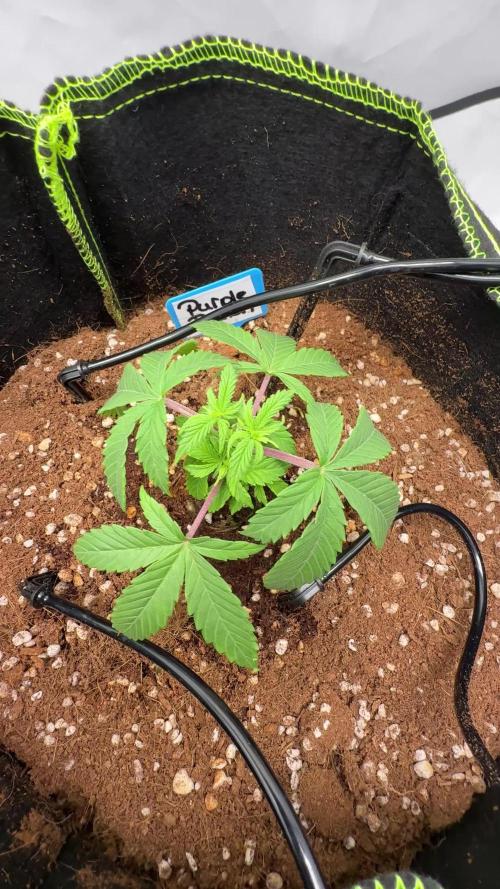
At the start of Week 4, Purple Punch entered a more active vegetative phase. The plant measures around 11 cm and shows healthy, vibrant green growth with no visible deficiencies. Internode spacing remains tight, indicating good light intensity and stable conditions.
This week marks the beginning of structured training. Topping, LST, main-lining, and light defoliation were introduced to shape the plant early and encourage even canopy development. The plant responded well so far, with no signs of stress after the initial training.
Feeding is based on a coco setup with balanced nutrients and root support, maintaining a pH of ~5.9 to optimize uptake. Environmental conditions remain stable, supporting recovery and continued growth.
Likes
13
Share


@SzkolaZiola
Follow
Last days for most of them - only Strawberry Cough will stay longer - she is super hungry and I can not keep up with feeding her - most of leaves are yellow now. 😱
The rest - four plants will be harvested on the weekend - 2-3 days from now and frozen - I'll be making bubble hash and fresh frozen live resin from them in the following weeks 😈
Trichomes are mostly milky with some amber starting - ideal ripeness and time to freeze those glands


Likes
8
Share


@Damballa
Follow
Los cogollos se están volviendo grandes como puños. Las hojas de la planta central se tornaron amarillas, luego cobre hasta quemarse las puntas por falta de nutrientes debido al bajo EC del agua.
Likes
6
Share


@Organicgrowing
Follow
i havested both plants on Day 67 because of a birthday, coming up and didnt wanna Risk anybody finding out because of noise.
It took 9-12 days to dry, i know i can trim and jar them by smelling to it, it needs to have dank smell and you can easily snap the bud off the branch.
After 10 days cure it does'nt hurt my throat, and from the the start the smell was good and only gets better from every time i open my jars, im really looking forward to the flavors to come out.
You should definitely do some lst crossing branches etc.
After i had trimmed i got 150 g and got 4.3 g of nice drysift hash 90 ug, i accediently dropped some keif about 3 grams


Likes
48
Share

@Natrona
Follow
Strawberry Trop Cherry - Strng Seeds
W7 12/21-27
Nutrients:
12/23 1.5 ltr each
Aptus Regulator 1.5ml
Aptus strtbooster 2.5ml
Flora micro 5ml/g
Flora grow 5ml/g
Grow Time 5ml/g
Plant Juice 2 TBSP/g
6.41ph, 931ppm, 62.4
12/24 when transplanting added Dynomyco and Mychoreaza in the planting hole. The soil base is 50/50 Fox Farm Happy Frog and Coast of Maine. I watered the lower portion of the new pot with 1.5 liters then added the plant and more soil.
12/25 1.5 ltr
Aptus Regulator 1.5ml
Calmag 2.5ml/g
Recharge 2.5ml/g
6.04ph, 463ppm, 62.6f
12/27 1.5 ltr each
Aptus Regulator 1.5ml
Aptus strtbooster 2.5ml
Flora micro 3ml/g
Flora grow 1ml/g
Flower Time 7.5ml/g
Plant Juice 2 TBSP/g
6.45ph, 831ppm, 62.2
The Strawberry’s received 1.5 liters 3 times this week. A big week for defoliation and lollipop. It is evident that topping an asymmetrical plant does nothing to create more tops. The 6 Strawberry plants are huge for 7 weeks. Originally, I was planning to wait until January to transplant, however, the roots were showing out of the bottom of the pots, and every plant is over a foot tall and half are over 2 feet.
I believe the CO2 Exhale bag makes a difference in the speed of growth and development.
These are heavy feeders. All showed some nitrogen deficiency earlier on and I’ve increased feeding. I planned to use grow dots extended for photo period plants when I transplanted them to 5 gal. I asked Santa in early November, and he kept sending notice that the order had been delayed. So, I decided to use TPS1 for this grow. I flipped to 12/12 on 12/28 and will water only this week. I hope to reduce the stretch during the first 2 weeks of flower.
I must admit; I took on more than I can handle. I started these in November expecting them to be much smaller at 6 weeks. But no, these gals have grown with vigor. I had these 6 huge plants and 4 autos in the 4X4 tent. They grew faster and bigger than the autoflowers am used to growing. Christmas week was hectic with 5 harvests, 6 transplants and defoliation. I had to have my husband assist in the transplant to hold the plant as I held the fabric pot open.
A side note: I’m taking applications for Spring & Summer cabana boy positions when I go to the beach. Strawberry Cadillac has the big fans needed for the job.
12/28 Strawberry Cadillac #1 36” #2 26“
Strawberry Trop Cherry #1 26” #2 16”
Straw-Lectric Lemonade #1 18.5” #2 18
Important dates
11/9 Germination
11/25 Transplant to 1.5 gal,
12/1 Topped, Pinned and removed 2 large center leaves
12/5 Repositioned pins and removed lowest fan leaves
12/16 Topped 4 tops on each plant except Cadillac1 (first topping) and put manuka honey on the cut.
12/24 Transplant to 5 gal
12/27 Defoliate all
12/28 Flip to 12/12
Stay green, growers love 💚🌿
💫Natrona💫
Processing
Likes
6
Share


@Ferenc
Follow
No more fertilization. They will be harvested in 2 weeks very stinky ones.... Alll good just keep flushing them and removing upcoming yellow leaves. :) They are quote wet so just giving them 200ml.of water a day to.not to over water them.


Likes
74
Share


@PeppaWutz
Follow
Flushtime... 😃 last week started and I will flush them for 4-5 days. Dont want to change water 2 times a week
Trichomes and buds looking good. Next week harvest 👊😋

Likes
17
Share


@JL420
Follow
los cogollos estan engordando y el olor ha aumentado tanto que me toco poner el filtro de carbon activo.
Hubo un pequeño exceso y regue un par de dias solo con agua de osmosis ec 0,17 y ph 6

Likes
2
Share

@eldruida_lamota
Follow
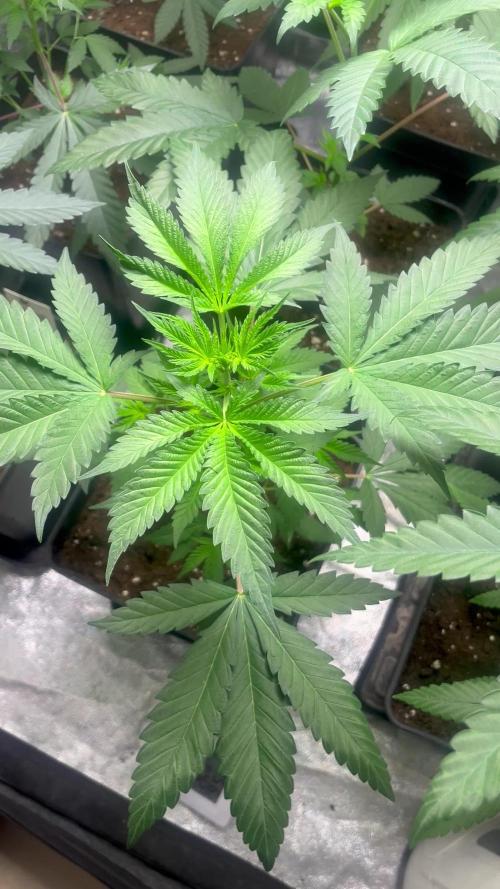
Vamos familia, actualizamos la sexta semana de vida de estas Gelato44 de RoyalQueenSeeds.
La temperatura que estuvo entre los 24-26 grados y humedad dentro de los rangos correctos.
Todavía estamos en el ciclo 16 horas luz, 8 oscuridad, estiraron bien y ensancharon bastante también, el color es verde sano.
Se nota que los nutrientes de la marca Agrobeta hacen sus funciones.
También realicé una poda de bajos que yo si las veo necesarias para explotar después la flor.
- os dejo por aquí un CÓDIGO: Eldruida ,descuento para la tienda de MARS HYDRO.
https://www.mars-hydro.com
Hasta aquí todo, Buenos humos 💨💨💨
Processing
Likes
16
Share


@Dunk_Junk
Follow
Doing her thing this week. Trichomes really coming out now. Not much input from me needed.

Likes
12
Share


@WestToEastBerlin
Follow
English
The first video was taken 2 days after the lollipopping/defoliation day, the rest on the last day of week 6.
Towards the end of week 6, the ladies showed a few symptoms of light stress, which is why I increased the distance to the lamp to 45 cm and since then things have been running optimally again.
However, I think I will continue to veg for another 1-2 weeks and only then switch to 12/12.
Deutsch
Das erste Video, wurde 2 Tage nach dem Lollipopping/Defoliation Tag aufgenommen, der Rest am letzten Tag von Woche 6.
Gegen Ende der Woche 6 hatten die Ladys ein paar Symptome von Lichtstress gezeigt, weswegen ich den Abstand zur Lampe nun auf 45 cm erhöht habe und seitdem läufts auch wieder optimal.
Ich denke, ich werde jedoch noch 1–2 Wochen weiter Vegen und erst dann auf 12/12 wechseln.


Likes
Comments
Share

@BioGrowBayer
Follow
Woche 6 läuft richtig gut! 💚🌿
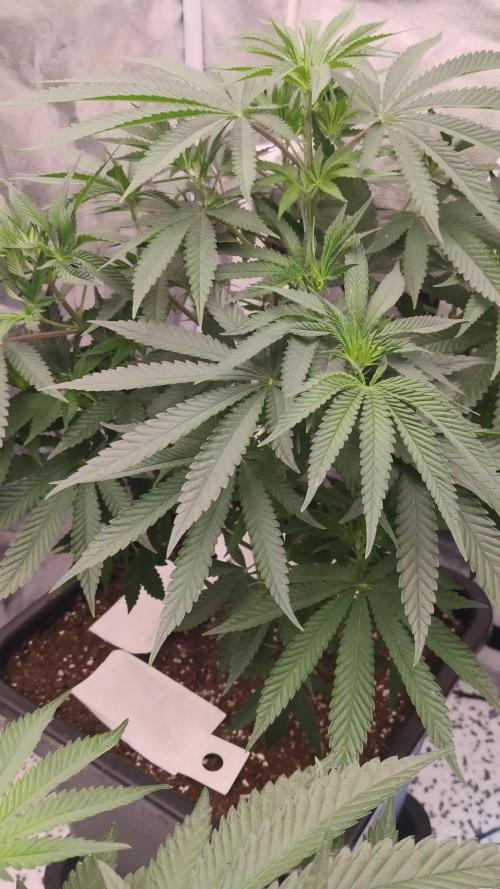
Die Ladys entwickeln sich schön und legen ordentlich an Größe und Masse zu.
🕷️ Kleine ungebetene Gäste:
Ich habe einen leichten Thripsbefall entdeckt. Zum Glück früh genug erkannt – deshalb direkt Raubmilben ausgebracht. 🛡️🐛 Jetzt dürfen die kleinen Helfer ihre Arbeit machen.
💩 Guanokalong zeigt Wirkung!
Der Guanokalong-Dünger macht sich mittlerweile deutlich bemerkbar. Die Pflanzen wirken vital, das Wachstum ist kräftig und insgesamt scheint ihnen die Nährstoffversorgung richtig gut zu gefallen. 💪🌱
Bis jetzt bin ich mit der Entwicklung absolut zufrieden. Jetzt heißt es weiter beobachten und wachsen lassen. 🚀🌿