Likes
Comments
Share
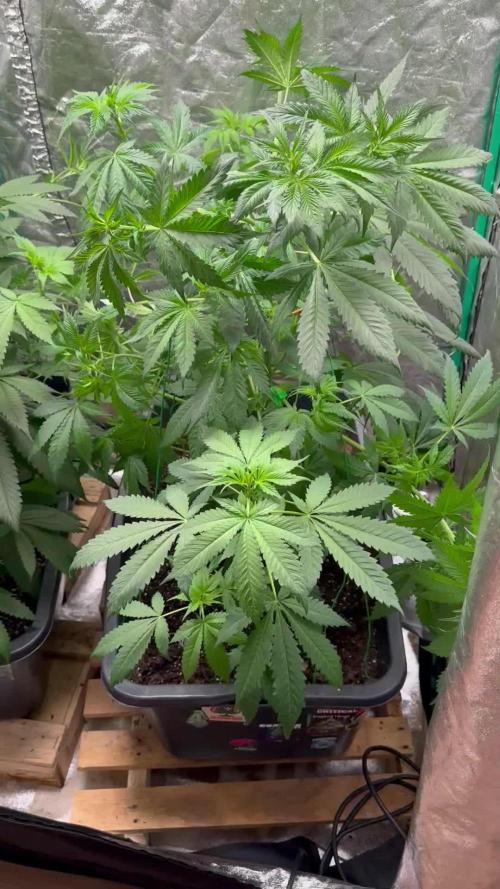
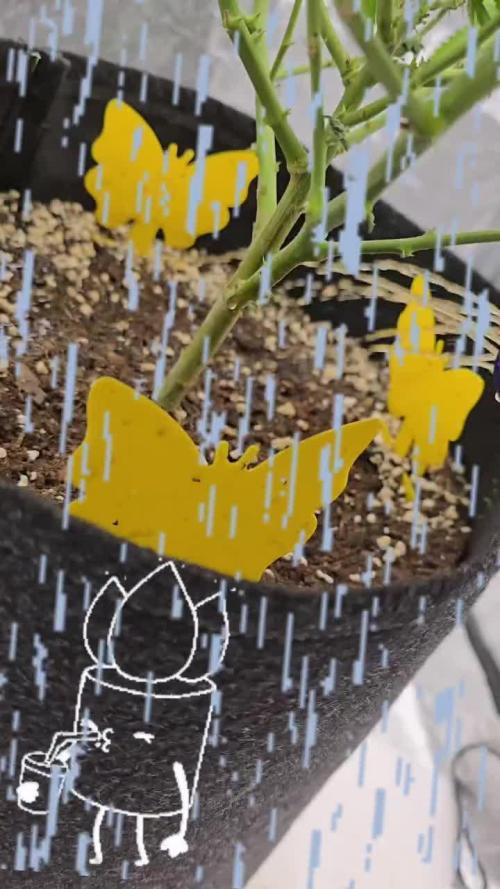
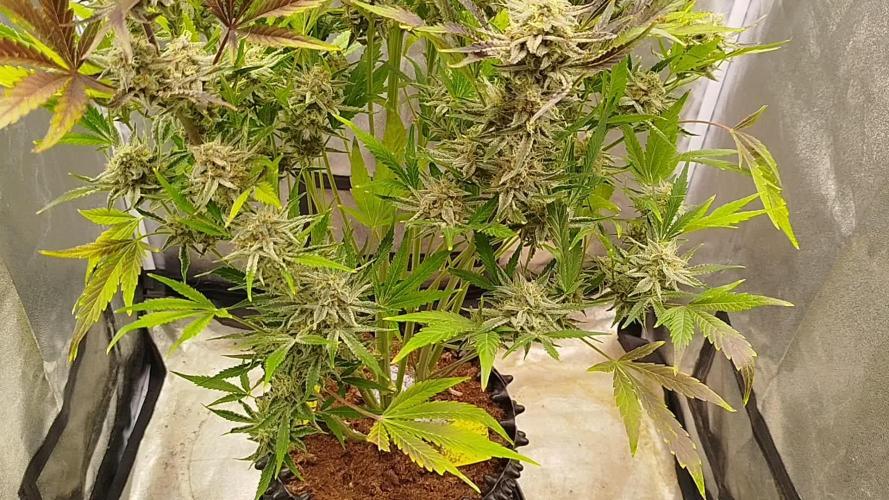
Plants are doing well, The 84" inch tent is a must if your not training or topping. I removed all the sacks that appeared last week and I haven't seen anymore show up so fingers cross, I check daily. Bigger tent also helps with heat control as the air has more room to rise. Hope you all like the pictures, I started to take videos as they provide more detail with less work.
Likes
13
Share
@Oyziphar
Follow
DAY 63 / 9 weeks of flowering. Last pictures of these sativa's. Ready to harvest 😛 Not all plants are equally ripe.. Some plants have hard ripen buds. But some plants could use one or more extra weeks of flowering, 😶 The fragrance varies widely. From fruity candies to strong diesel scent. 😊 The size and appearance of the plants also varies greatly. Not really suitable for SOG. 😪 This week only water. 😨 Low RH% 40-45 --------------------------------------------- Plant size and description : #1 89cm Promising in the first weeks, but ultimately only a small plant with a low yield.😥 #2 144cm Monster-tall beautiful large sativa-like plant, with beautiful fat buds. I love her. 😍 #3 144cm By far the most typical sativa plant. Enormous length with loose foxtail buds. Could use a few more weeks of flowering. 😵 #4 129cm Tall plant with fewer buds. Maybe because this girl is in the corner of the growing room where she doesn't get that much light. Nice and ripe anyway.😳 #5 117cm Beautiful semi-tall plant. The buds may not be as fat, but they are nicely ripe. 😉 #6 92cm Very photogenic rather small plant. The buds seem to spiral up to a fat top. 😃 #7 123cm Large plant with many sativa influences. Pointed hard top studded with trichomes. 😛 #8 124cm Like # 7, a nice big plant but with leaf greenery woven into the buds. 😋 #9 102cm Half to rather high plant endowed with one of the most beautiful buds. Sativa-style bud, but swollen, hard and ripe. Magnificent! A lust for the eye.😍 #10 65cm Small plant. Lower yield. Many brown hairs. Pretty ripe. 😄 #11 71cm Very small even thin plant. Pointed small tops. Undoubtedly the plant with the least yield. Still lovely. 😊 #12 111cm Semi-tall plant. Floppy side branches, but really nice buds. 😀 #13 113cm One of my favorites. Beautiful plant with very fine decorative flowers. Very fresh and tasty appearance. Delicious! 😍 #14 92cm Rather small plant, but with firm hard ripe swollen buds. Yummy. 😘 #15 126cm Incredible plant with a fist-sized huge super-fat head top. But also beautiful side branches with thick buds. Exteme heavy yielder! 😝 #16 88cm Small plant in the corner with relatively many buds. Pointed head top. 😚
Likes
16
Share
Partimos la segunda semana de floración de nuestras green gelato de Royalqueenseeds! Alimentadas con Nutrientes quemanta e iluminadas con el #spectrumboard de 75w de heavengrowligths. Ya notamos el desarrollo de las primeras flores, aplicamos los nutrientes específicos en la dosificación recomendada para la semana en la que va 🤟🏻
Likes
38
Share
Приветствую своих друзей из разных уголков мира. Я приношу извинения за то, что я делаю не регулярные обновления, так как у меня очень много работы перед небольшим отпуском. Поэтому я хочу сделать как можно больше. Я собираю информацию о каждом своём дневнике. Если вы следите за мной, то вы знаете, что я веду несколько дневников партизанского выращивания. Данные растения от Доктор Выбор я вынес на болоте с высоким камышом, после чего я пересадил растения в 10-12 литровые горшки и добавил корневых стимуляторов. Результаты прогресса видны сразу. Растения увеличили свой размер практически в 2 раза. Это полностью 100% сатива стиль. Есть некоторые проблемы с насекомыми и слизнями, некоторые листья были покусаны, поэтому завтра я отправлюсь бороться с вредителями. А так же я планирую транспортировать туда ещё несколько других штаммов, в том числе один из штаммов будут растения Доктор Выбор, так как ценю его работу за тесные связи с Россией. В целом у меня всё хорошо и потихоньку все мои дневники развиваются. Если вам интересно следить, за приключениями травки в России, подписывайтесь на мои дневники
Likes
10
Share
@KINGT88
Follow
Man it's been a while since I posted been having problems when it got cold trying to keep the temp right and all nutrients right..some bumpy roads but here they are!! Blackberry Moon Rocks. If you have any questions or thoughts let me know been doing some lst training to try and get more out of them, really don't know what I'm doing lol. But hey practice makes perfect.
Likes
1
Share
Here we go week 3 underway stretch has finish now so last night shes been cleaned lolipopped not too heavy thou ,looking good so far its the tallest from all ,she drinks around 1.5l a day now ,very stucker flowers this will have
Likes
44
Share
@RakonGrow
Follow
Note : + jegliches Zubehör wird in der GermniationsWoche aufgelistet . Zeitraffer Videos folgen immer nachträglich. + videos werden so geschnitten das nur ein geschlossenes Zelt erscheint , ergo Fehlen paar reale Minuten (ca 1 Std) . + + leider ist die Halterung defekt und die Videos etwas schief . Vielleicht mach ich mich irgendwann mal daran und korrigiere das. Sorry Day 43: + Höhe : 64cm Es wächst und wächst :)) Day 44: + Höhe : 65cm + 2 Liter Flaschenwasser , kein Dünger . + + PH 6.5 + Drain : PH 7.0 Höhe ist bei 63cm , das ist 3 cm mehr als die Vorgabe ausweisst :)) Day 45: + 66cm höhe. + 2 Liter Flaschenwasser + + Dünger für Blühte + + + Canna Terrar Flores (Achtung wirkt wie PH-) + + + Canna Boost + + + Cannazym + + + Greenhouse Feeding BioEnhancer als PH+ Jetzt säuft sie wie wilde , keine 24h und die 2Liter sind komplett wech . Mehr geht aber nicht in den Topf , ergo muss ich mir langsam mal überlegen ob ich Tropfbewässerung nutze . Und es treten duch das nur Wasser extreme "Calzium" Probleme auf . Hihi , aber so hab ich mal das ganze auf Startsequenze gesetzt . Ich arbeite also noch daran diese Mischung aus BioBizz Light und Urgesteinmehl nach Schätzung zu meistern :)) Den Fakt ist , da ist viel zu viel Urgesteinmehl drinne , was auch die Vegiphase schon gezeigt hat. Day 46: + 1.5 Liter Flaschenwasser + + Dünger für Blühte + + + Canna Terrar Flores (Achtung wirkt wie PH-) + + + Canna Boost + + + Cannazym + + + Greenhouse Feeding BioEnhancer als PH+ Day 47: Draussen zu heiss , drinnen zu feucht ... Ja genau was ich nicht brauch lol ... GoPro aus der Halterung gefallen :)) Day 48: + Höhe : 68cm + 2 Liter Flaschenwasser + + Dünger für Blühte + + + Canna Terrar Flores (Achtung wirkt wie PH-) + + + Canna Boost + + + Cannazym + + + Greenhouse Feeding BioEnhancer als PH+ Draussen zu heiss , drinnen naja ... Der Entfeuchter arbeitet weil ich sonst hier Tropenstimmung bekomme :)) Ein wenig Entlaubung . Day 49: + Höhe : 68cm + 2 Liter Flaschenwasser + + Dünger für Blühte + + + Canna Terrar Flores (Achtung wirkt wie PH-) + + + Canna Boost + + + Cannazym + + + Greenhouse Feeding BioEnhancer als PH+ + + + PH 5.8 + + Drain PH 6.5 Läuft bei der Lady , sie trinkt , liebt das Licht (auch wenn die Spitze etwas zuviel bekommt , sie betet halt etwas ) , Mangelerscheinungen sind echt gering . Hat die heissen Tage (27° im Zelt bei 60%-57% ) hat sie super überstanden . Ich werde immer besser im Gießen . 75% von oben , 25% lass ich von unten aufsaugen .
Likes
10
Share
@Uneasy
Follow
One of the plants turned out to be male. Another one turned out to be herma. I don't think it was my fault, there was probably something wrong with the seeds. I took them both out of the cabin. We continue on our way with the remaining two plants. It was a stressful week.
Likes
140
Share
@MrJones
Follow
mrjones - Slurricane #7 S1 🌱Slurricane #7 S1 @inhousegenetics_official 👨‍🌾🏽GD Grower: MrJones 🔹🔹🔹🔹🔹🔹GOALS🔹🔹🔹🔹🔹🔹 🌞Environment - 75/80℉ and 55% Humidity 💧 Feeding - Advanced Nutrients Organic ⚗️Soil - 50% Ocean Forest / 20% Tupur Royal Gold / 10% Earth Worm castings / 10% lobster Compost / 10% Additional Perlite 🍃Training / HST, Will be topping, Cloning, and creating larger plants, and placing to flower under a trellis 🕷️ IPM - Will be using Green Cleaner" 1 OZ per Gallon, and CannControl from Mammoth alternating between products each month for Integrated Pest Management. 💡Using 480 Watts of LED Lights. 🔹🔹🔹🔹🔹🔹🔹🔹🔹🔹🔹🔹🔹🔹🔹 📜 Rambling - Week 17 / The number of buds that are growing here is just insane, the smell coming from the tent is amazing, I am noticing the leaf color getting a bit too green, I will decrease the PPM/EC by 200 for the next few weeks. 🔹🔹🔹🔹🔹🔹🔹🔹🔹🔹🔹🔹🔹🔹🔹 ▶️ Sunday - 05.30.21 / No watering today - these ladies are looking great ▶️ Monday - 05.31.21 / Fed with half a gallon of above-mentioned nutrient / continue defoliation will need to focus this down, ▶️ Tuesday - 06.01.21 / No watering today - these ladies are looking great ▶️ Wednesday - 06.02.21 / Fed with half a gallon of the above-mentioned nutrient ▶️ Thursday - 06.03.21 / No watering today - these ladies are looking great ▶️ Friday - 06.04.21 / Fed with half a gallon of the above-mentioned nutrient ▶️ Saturday - 06.05.21 / No watering today - these ladies are looking great 🔹🔹🔹🔹🔹🔹🔹🔹🔹🔹🔹🔹🔹🔹🔹
Likes
3
Share
June 13: cool and rainy spring but she will start growing quickly with warmer temperatures near the solstice. This backup seed is actually about 5 weeks old and not seven. June 14: nice weather today but supposed to get rainy again this week. June 17: did first topping for the manifold. Rain again today. June 18: more rain again today.
Likes
4
Share
Likes
29
Share
@1juan420
Follow
🌸 Day 62 // Day of harvest Finished pretty quickly and smells very sweet, floral kinda like a haze but not chemically biting
Likes
28
Share
Day 24 Watering 2L/plants, first watering 1L /plants, second watering 1L/plants and mix fertilizer 🌈 Day 27 Watering 2L/plants, first watering 1L /plants, second watering 500ml/plants and mix fertilizer, third watering 500ml/plants 🌈
Likes
14
Share
I make topping and this is the day after topping so they look growing nice. The next 2 days I will change them to bigger pot I already prepared so let’s gooooooo Growing guyssss
Likes
17
Share
@soloczek
Follow
21th day flower EC 1,9 mS/cm PH 6,1 26th day EC 2,0 mS/cm PH 6,0
Likes
8
Share
@Theia
Follow
The tropicana cherry is a magnificent plant. Its stocky and stout with really great node space. I love how solid she is and i just see such a good foundation for stretch. A really explosive week of growth. I pushed PPFD up to 310umols. Dimmers are at 60% which is drawing 224w plus 18w of DRRB. I have alos started Emerson effect ... Another The Emerson effect is triggered by the simultaneous exposure of plants to light in the deep red and far-red spectra Deep Red 660 nm /Far-Red 700 nm . A bit of boring science that explains why you need both far red and deep red in order to trigger Emerson. The effect occurs because photosynthesis is driven by two distinct pigment systems working in series:Photosystem II (PSII): Absorbs energy most efficiently at shorter wavelengths (higher frequencies), like 680 nm (441 THz). Photosystem I (PSI): Absorbs energy most efficiently at longer wavelengths (lower frequencies), specifically 700 nm (428 THz). When you provide only the higher frequency (deep red), PSI becomes a bottleneck. When you provide only the lower frequency (far-red), PSII is not sufficiently excited to provide electrons. Providing both frequencies simultaneously allows both systems to work at peak efficiency, resulting in a rate of photosynthesis that is greater than the sum of the two lights used individually. To understand the Emerson Effect, think of photosynthesis not as a single engine, but as a two-stage assembly line. What is the Emerson Effect? Discovered by Robert Emerson in 1957, this phenomenon shows that plants perform photosynthesis much more efficiently when they are hit by two specific types of light at the same time: Deep Red (660 nm) and Far-Red (700+ nm). If you give a plant only Far-Red light, photosynthesis is very slow. If you give it only Deep Red, it's better but still limited. However, when you give it both at once, the total rate of photosynthesis is significantly higher than if you just added the two results together (1+1=3). What is Happening? (The "Assembly Line") Inside the plant's chloroplasts, there are two "workstations" called Photosystem II (PSII) and Photosystem I (PSI). They work in series, meaning the first one must pass "parts" to the second one. PSII (The First Station): This station is tuned to catch Deep Red light (660 nm). It harvests electrons from water. PSI (The Second Station): This station is tuned to catch Far-Red light (700 nm). It takes the electrons from the first station and uses them to create energy (ATP and NADPH). The Problem: If you only provide Deep Red light, the first station works fast, but the second station can't keep up because it isn't being "powered" efficiently by that specific frequency. This creates a traffic jam of electrons. The Solution: By adding Far-Red light, you power up the second station. It now "pulls" the electrons from the first station much faster, clearing the traffic jam and making the whole assembly line run at full speed. The Benefits for The Grow Because i am using the Biotabs water-only method, my plants already have a steady supply of organic nutrients. Implementing the Emerson Effect offers several distinct advantages: Increased Biomass: Because the "engine" is running faster, the plant produces more sugars and carbohydrates, leading to heavier fruits or flowers. Faster Finishing: Plants often reach maturity sooner because they have more surplus energy to complete their life cycle. Better Light Penetration: Far-Red light is very good at passing through the upper leaves. This "wakes up" the lower parts of the plant that would otherwise be shaded, allowing the whole plant to contribute to growth. Enhanced Secondary Metabolites: In many crops, this synergistic light can stimulate the production of terpenes and antioxidants, improving the "quality" (smell, taste, and potency) of the final harvest. The "Sunrise/Sunset" Trick I am using 4x Invisible sun Far red/Deep red bars,they use high-quality Samsung LH351H (660nm Deep Red) and specific Far-Red (730nm) diodes for 10–15 minutes at the start or end of the light cycle. This mimics the natural shift in light at sunrise and sunset, "waking up" the photosystems or signaling the plant to go into "sleep mode" faster, which can further optimize the flowering cycle. Enviromentally i am chasing a VPD of about 1,1kpa. My room seem to sit nicely at lights on at 24c with no real drama and a little help from a 220W greenhouse bar radiator. Its using abot 4kw/h a day atm because my room is attached to the side of my house and its been -5c.. I have had to add some humidity as its also very dry atm. Im aiming for RH of 65% with my 24c but it is more around the 62s.. VPD is crucial and is the focus for this grow for me. The autopots and Biotabs make it so easy ican really just focus on perfect enviroment. A VPD of 1.0–1.2 kPa provides enough "atmospheric pull" to move calcium and magnesium up from the roots, which is critical for the rapid cell division happening now.. Plants will be flipped on Saturday which is their week 5 as im a bit behind.. As this happens i will push PPFD upto 4-500umols. by week 2 of flower. Thats the plan anyway..
Likes
2
Share
Topped once, turned off IR @ nights, slowed vertical growth back down, and took off both of the very lowest internodes on each plant. Eisenia fetida Stratiolaelaps scimitus Armadillidium vulgare Red wigglers (Eisenia fetida) are highly beneficial. They are considered an ideal choice for "no-till" or container-based organic growing because they live in the upper layers of soil, feeding on organic mulch rather than the plant's root system. Red wigglers accelerate the breakdown of organic amendments and produce high-quality, nutrient-dense worm castings directly in the root zone. Clover is another exceptional component of an organic rhizosphere, offering a sustainable, self-sustaining alternative to synthetic nitrogen fertilizers produced via the energy-intensive Haber-Bosch process. By forming a symbiotic relationship with Rhizobia bacteria, clover converts atmospheric nitrogen N2 into ammonium NH4, providing a steady, slow-release nutrient source that enhances soil health and reduces environmental impacts. Red clover offers superior nitrogen fixation and biomass production compared to white or yellow clover, making it the premier choice for maximum soil vitality, particularly for improving soil structure and providing a high-volume nitrogen credit for subsequent crops. If it is fully functional and efficient soil, the rhizophagy cycle is superior long-term than any synthetic delivery when it comes to preventing deficiencies, not because it's "better," per se. The medium will require a very high CEC to make it to harvest without re-fertilization. The rhizosphere acts as a dynamic, interactive exchange where plants and soil microbes trade resources based on immediate needs. When a plant lacks a specific nutrient, it changes its physiology and releases specialized chemical cocktails—root exudates—into the surrounding soil. These exudates, which include sugars, amino acids, and organic acids, serve as a "shopping list" to attract specific microorganisms, which in turn return higher levels of desired nutrients. There is nothing in comparison when using synthetic delivery, which can cause plants to stop producing exudates, effectively "starving" the beneficial soil life, over time turning the soil barren and void of microbial life. Responsible use, applying the right amount at the right time, can minimize these negative effects. Relying solely on synthetic fertilizers without replenishing organic matter is what typically leads to exhausted soil. The use of synthetic fertilizers can utilize the Cation Exchange Capacity (CEC) of the soil, but without a robust rhizosphere and active microorganisms, the efficiency of this process is significantly reduced. This makes synthetic growing more difficult to prevent deficiencies overall compared to an efficient organic living soil with a robust rhizophagy cycle, as there is no "one size, fits all" when it comes to different nutrient profiles of strains/genetics, making it trickier to "guess" and prevent creeping deficiencies. CEC does not contribute towards EC. Add more CEC using biochar, problem solved. If you keep pH between 6.3 and 6.7, hydrogen is exudated to cycle the medium's CEC for its needs. Keeping the pH between 6.3 and 6.7 creates an environment where plants release H+ to displace positively charged nutrients (like Ca2+, Mg2+, K+ held on soil particles or within artificial media this cycle through nutrients via the medium's Cation Exchange Capacity (CEC) Microorganisms generate a stable potential of approximately 0.5 V EC. The rhizosphere creates its own food, similarly to chelation, using 1000's of varying combinations to create its own food. Start to finish, just add water. Eventually, more materials will need to be added at the beginning of each new grow, but very attainable to go from seed to harvest without ever fertilizing. ATP is important when it comes to biomass accumulation. Cellular root respiration and cellular respiration are essentially the same biological process, the breakdown of glucose to create usable energy (ATP) in the presence of oxygen, just taking place in different parts of the plant. Synthetic (salt-based) grows have significantly lower levels of total rhizosphere respiration, often referred to as root-zone activity, compared to organic living soil grows. While the plant roots themselves may respire in both systems, the surrounding soil ecosystem in a living soil setup is vastly more active, teeming with bacteria, fungi, and beneficial microorganisms. 2 pools of ATP, it won't double in growth buuuut, but improving root respiration by ensuring high oxygen in the soil is crucial. Good aeration ensures roots can fully utilize glucose to generate the ATP necessary for nutrient uptake, leading to healthier and more productive plants, even if growth isn't exactly doubled. The ATP created using root respiration is dedicated to rootzone growth; the ATP created using regular cellular respiration in a synthetic system would have to dedicate a lot of ATP to the roots when there is little or no root respiration. It's true that there is less of an initial ATP cost in breakdown when nutrients are already in their final form (synthetic), but you lose a solid chunk of ATP when the entire plant is reliant on cellular respiration alone; a large portion of ATP is dedicated to root zones for "forced" nutrient uptake rather than traded. Making it overall less efficient, even if the initial cost of breakdown is higher. Not sure if I butchered that but one can hope It makes sense. Oxygen is of critical importance when growing in living soil compared to synthetic soil because it supports the metabolic needs of the microbial, fungal, and insect ecosystem, rather than just the root respiration required by the plant itself. While synthetic grows can survive in lower-oxygen environments with precise mineral feeding, living soil systems rely on aerobic microbes to decompose organic matter (microbial mineralization) to create plant-available nutrients, which is an oxygen-intensive process. While a specific fair percentage is difficult to guess, my experience points to a massive, compound difference between the two methods and the amount of oxygen required. All the ATP spared is used on more biomass, not only that, but the extra root respiration can achieve a much higher CO2 compensation point naturally than you could with synthetic and atmospheric CO2 alone. As a plant grows faster and increases in size, its demand for nutrients to support that growth increases, requiring a higher rate of nutrient uptake. As plants enter phases of rapid vegetative/floral growth, their metabolic demand for nutrients increases exponentially. Without a robust buffer zone—whether in the soil (cation exchange capacity) or in a hydroponic reservoir—deficiencies will occur rapidly because the instantaneous demand for specific nutrients can quickly exceed the rate of supply. A growing body of evidence suggests that organic living soil provides superior long-term soil health and environmental benefits compared to synthetic fertilizers, which are often criticized for promoting a cycle of dependency and degradation. While synthetic fertilizers offer short-term convenience and high yields, they often come at the expense of long-term soil health, sustainability, and increased corporate control over growers/ farmers. Organic living soil, while slower and requiring more care to establish, creates a sustainable, resilient, and, ultimately, more fertile environment. We don't really grow; we facilitate energy conversions, and energy is just numbers. Because the universe works the same way today as it did yesterday, there is a single, fundamental mathematical quantity that remains constant. We call this quantity energy. You cannot put "energy" under a microscope. You observe matter and forces (like heat, motion, or light), but energy is just a scalar number calculated to help predict how these things will change and interact. When an object falls, or when a battery powers your phone, matter shifts and changes form. Through it all, the universe ensures the "total score" of the numbers remains exactly the same. Once all water is removed, approximately 95% to 97% of a plant’s dry matter consists of carbon, oxygen, and hydrogen. These three elements form the structural backbone of all plants. NPK & all the rest 3-5%. Indigenous Amazonians created, or at least significantly enhanced, the fertile, dark soil known as Terra Preta de Índio (Portuguese for "Indian Black Earth") by incorporating biochar and other organic materials into the soil. This anthropogenic (human-made) soil technique, which dates back roughly 2,500 to 8,000 years, allowed ancient civilizations to flourish in regions with naturally poor, acidic, and nutrient-poor tropical soils.
Likes
16
Share
@valiotoro
Follow
Hello everyone week 3 of flower has passed for this Tropicana cookies auto 🌴 Same feeding schedule Mars hydro FC-E6500 75% have a great day and wish you all happy growing 😎👨‍🌾🏻