




@Canadian
Follow
Nothing to really say except that they are growing very well Thank you for reading I will continue to update have a happy grow


@HollowSource
Follow
This girl is phat. Real thick stalk and massive leaves. I topped her twice, which I had reservations in doing given her weak start. She bounced back incredibly so she also got some LST to open up the canopy. It's flower time for this lady and I'm excited to see her stretch and fatten up!




@DogDoctorOfficial
Follow
💙 PROJECT BLUE TENT – WEEK 15 💙
🥒 PICKLE LEMON HAZE F1 – PHENO A
🍂 THE COLOURS ARE CHANGING, THE FLOWERS ARE GETTING READY, AND WE'RE ENJOYING THE FINAL CHAPTERS!
Hello everyone, and welcome back to another chapter of Project Blue Tent! 💙🌱
My friends, my friends…
IS IT SPRING OUTSIDE OR ARE WE STILL IN AUTUMN?! 😂🌸
The temperatures outside are rising again, the plants are showing beautiful colour transitions, and inside our little green oasis, we're approaching what I believe will be the final chapter of this adventure.
Welcome to Week 15 of flowering for Pickle Lemon Haze F1 Pheno A!
And what a beautiful girl she is!
This week is very much about observation.
We're not introducing new training techniques, we're not restructuring the canopy, and we're not making unnecessary changes to an environment that's already established.
The major work is behind us.
The flowers are looking beautiful, the fading is becoming increasingly visible, and we're observing how each individual plant progresses towards maturity.
We've also moved to plain water, with our reservoir EC now sitting around 0.2 mS/cm and the natural pH reading approximately 5.98.
Meanwhile, our under-canopy lighting experiment continues to give us interesting observations, particularly regarding the colour expression and the development of the flowers throughout the lower sections of the canopy.
And because apparently taking photographs of flowers wasn't enough for this week's entertainment, we've also invited Matilda, our little spider friend, for another photographic adventure! 😂🕷️
We're also continuing our 3D-printing experiments, testing some new irrigation accessories for the next run.
So, although this is a week without major cultivation changes, there's still plenty to talk about.
Let's give Pickle Lemon Haze F1 Pheno A her own spotlight!
💙🌿
🌱 A QUICK LOOK BACK – WHAT IS PROJECT BLUE TENT?
For anyone joining us for the first time, let's quickly explain what we're doing here.
Project Blue Tent is our shared growing environment, where we're documenting four individual plants representing two different Zamnesia F1 cultivars.
🌈 BLUE WAFFLE F1 – PHENO A.
🌈 BLUE WAFFLE F1 – PHENO B.
🥒 PICKLE LEMON HAZE F1 – PHENO A.
🥒 PICKLE LEMON HAZE F1 – PHENO B.
Four individual plants.
Two cultivars.
One shared ecosystem.
All four girls share the same general environmental conditions, reservoir, irrigation arrangement, and nutritional program.
Throughout the project, we've documented their development individually, starting with their early stages and following them through transplantation, HST, topping, LST, SCROG, defoliation, and flowering.
We've spent considerable time establishing the canopy, organizing the branches, supporting the structure, and experimenting with different aspects of our growing environment.
Lighting has also been an important part of this project.
Our main overhead LEDs provide the primary illumination, while two LumiFlora 150W full-spectrum fixtures have been installed beneath the canopy in an X-cross configuration.
Nutritionally, we've been working with the PLAGRON Hydro line, gradually adjusting the program as the plants progressed through flowering.
And now, we're approaching the finish.
The structural work has been completed, the flowers have developed throughout the canopy, and we're concentrating on observing the individual characteristics of each plant.
That's also why we've kept separate GrowDiaries reports.
Even when plants share the same environment, their individual expressions deserve to be documented independently.
And today, it's Pickle Lemon Haze F1 Pheno A's turn!
💙🥒
🌸 WEEK 15 – PHENO A IS LOOKING BEAUTIFUL!
Let's start with the obvious.
THIS GIRL IS LOOKING FANTASTIC! 😂💙
Pickle Lemon Haze F1 Pheno A continues to impress with her flower density, compact structure, and beautiful overall appearance.
We're now at a stage where the flowers themselves are taking centre stage.
The earlier work on the canopy is behind us, and we're able to appreciate the structure that developed throughout the previous weeks.
The branches are established, the flowering sites are distributed throughout the canopy, and the flowers are continuing to show their individual characteristics.
One of the things I particularly enjoy about this stage is being able to step back and appreciate the complete plant.
You spend weeks working on structure, positioning branches, managing the canopy, and making adjustments.
Eventually, you reach a point where you can simply grab the camera and enjoy what has developed.
And that's exactly where we are.
There aren't any major structural interventions this week.
We're concentrating on observation, photography, environmental stability, and the individual progression of the plants.
Sometimes, doing nothing is precisely what the situation calls for.
And honestly, I could spend hours looking at these girls!
😂📸🌱
🍂 THE FADING – BEAUTIFUL COLOUR TRANSITIONS THROUGHOUT THE PLANT!
Now, let's talk about one of the most interesting things happening this week.
THE FADING!
We're seeing increasingly noticeable colour changes throughout Pheno A, with lighter green areas, yellowing foliage, and warmer reddish tones becoming more visible.
And I absolutely love photographing this stage.
But why does this happen?
Let's take a moment to understand what's happening rather than simply describing the colours.
The green appearance of leaves is primarily associated with chlorophyll, the pigment responsible for capturing light energy during photosynthesis.
As plants progress through their life cycle, chlorophyll levels can decline, allowing other pigments to become more visible.
Carotenoids contribute yellow and orange tones, while anthocyanins are responsible for many of the red, purple, and blue colours we can observe in plants.
The expression of these pigments is influenced by genetics, while environmental conditions can also affect how the colours develop.
This is particularly interesting in Project Blue Tent because we're observing several plants sharing the same general environment.
Even within the same cultivar, individual phenotypes can display different colour combinations.
And between our two cultivars, the contrast can be even more noticeable.
Pheno A is showing us her own beautiful colour palette, with increasingly visible fading and warmer tones throughout the plant.
Her sister, Pheno B, has been displaying a somewhat different expression.
And that's exactly what makes individual phenotype documentation so interesting.
We shouldn't assume that every plant will develop identical colours simply because they share the same environment.
Nor should we attribute every change to one single factor.
We're recording what we observe and looking at the complete picture.
The flower development, the trichomes, the pistils, the foliage, and the overall condition of the plant all matter.
One important point: fading alone doesn't tell us that a plant is ready for harvest.
It's one observation among several, and we're continuing to assess the individual maturity of the flowers.
For now, we're enjoying the colours and documenting the changes.
🍂🌈💙
❄️ THE FLOWERS – DENSE, COMPACT, AND BEAUTIFULLY DEVELOPED!
Now, let's get closer!
The flowers are looking absolutely beautiful.
Their compact appearance and dense structure are among the things that stand out most when looking at Pheno A.
Throughout the canopy, we're finding plenty of beautiful flowering sites, and the photographs give us an opportunity to appreciate their development from different angles.
Looking at the whole plant, we can appreciate the overall structure and the distribution of the flowers.
But when we move closer, we discover an entirely different world.
The textures.
The pistils.
The trichomes.
The intricate details of the flowers and surrounding sugar leaves.
And that's precisely why I enjoy macro photography so much.
A photograph can capture a beautiful moment, but getting closer allows us to appreciate details that might otherwise go unnoticed.
The visible frost is another beautiful feature of this stage.
And although we're approaching the end, we're not going to rush the conclusion.
We'll continue observing the trichomes and the overall flower maturity before making any final decisions.
For now, we're enjoying the view, taking photographs, and appreciating the beautiful work these girls have done!
😂📸❄️
🌈 PHENOTYPIC EXPRESSION – SAME CULTIVAR DOESN'T MEAN IDENTICAL PLANTS!
This is something I always enjoy discussing when documenting individual plants.
We have two Pickle Lemon Haze F1 sisters growing inside the same tent.
They share the same general environment, lighting arrangement, irrigation system, and nutritional program.
Yet individual plants can still express their characteristics differently.
Their morphology, flower formation, pigmentation, and progression through flowering can all provide interesting differences to observe.
Genetics influence how a plant expresses its characteristics, while environmental factors can also contribute to the appearance we see.
This is why comparing individual phenotypes is so interesting.
We can look at Pheno A and Pheno B and appreciate their similarities without expecting them to be identical.
And the same applies when comparing the Pickle Lemon Haze girls with our Blue Waffle F1 plants.
Four individual plants, sharing one ecosystem, but each with her own story.
We're not trying to manufacture differences or attribute every characteristic to a specific cause.
We're documenting what we actually observe.
And that's one of the most valuable aspects of keeping individual diaries.
💙🌿
👃 THE AROMA – THE ROOM IS GETTING INCREDIBLY AROMATIC!
Now, let's talk about something our photographs cannot communicate.
THE SMELL! 😂🌸
The aroma throughout the room is incredibly strong, and spending time around these plants has become an absolute pleasure.
It's one of those things that makes the final weeks particularly enjoyable.
We can photograph the flowers.
We can capture the colours.
We can get close enough to document the trichomes.
But the aroma is something you'll have to experience yourself!
The photographs simply cannot do that part justice.
I'm not going to invent a detailed terpene profile or assign specific aromatic compounds without proper testing.
What I can tell you is that the room smells beautiful, and Pheno A is certainly contributing to that wonderful aromatic experience.
A little reminder of why we enjoy documenting every stage of these adventures.
😂💙🌸
💡 UNDER-CANOPY LIGHTING – MORE INTERESTING COLOUR OBSERVATIONS!
Now, let's talk about one of the most interesting experiments inside Project Blue Tent.
Our LumiFlora under-canopy lighting arrangement!
As many of you already know, we're using two LumiFlora 150W full-spectrum fixtures positioned beneath the canopy in an X-cross configuration.
These fixtures supplement our main overhead LEDs, which provide the primary illumination from above.
And throughout this project, we've been paying particular attention to the lower sections of the plants.
One of the observations we're making at this stage is that we're seeing more pronounced reddish colour expression around some of the areas receiving supplemental under-canopy illumination.
It's particularly interesting when looking at the photographs and comparing different sections of the plants.
We're also observing that the plants in this run are progressing towards the finish relatively quickly.
However, I want to make an important distinction here.
We're documenting an interesting association, not claiming that the under-canopy lighting or its red spectrum alone is responsible for the colour changes or faster finishing.
There are several variables involved, including genetics, plant maturity, environmental conditions, and the overall lighting arrangement.
To establish a direct relationship, we'd need a controlled comparison with appropriate measurements and comparable plants.
For now, we're observing, photographing, and recording what happens.
And that's exactly what this project is about.
Experimenting, learning, and sharing the results without making claims that the observations cannot support.
The two LumiFlora fixtures remain in their established X-cross configuration, and we're continuing with the same general approach.
I'm genuinely looking forward to reviewing the complete project once everything is finished.
A massive thank you to LumiFlora for making this experiment possible!
💡🌱💙
🌡️ THE ENVIRONMENT – FEELS LIKE SPRING OUTSIDE!
Now, this is something worth mentioning!
The outside temperatures have increased again.
And we're not talking about a small difference during the afternoon.
Even past midnight, we're seeing temperatures around 22.4°C outside!
My friends, what is happening with the weather? 😂🌸
It almost feels like spring is trying to make an early appearance.
But inside the tent, we're keeping things under control.
Fortunately, our air conditioning is helping us manage the warmer outside conditions and maintain the established environmental targets.
Our current reference conditions are:
🌡️ Day air temperature: approximately 25°C.
🌙 Night air temperature: approximately 20°C.
💧 Relative humidity: approximately 55%.
💧 Solution temperature: approximately 21°C.
🌱 Substrate temperature: approximately 21°C.
🌫️ CO₂ level: approximately 666 ppm.
The important thing is that we're adapting to the outside conditions without making unnecessary changes to the established indoor environment.
We're keeping an eye on the temperatures, monitoring the room, and allowing the air conditioning to help compensate for the warmer weather.
As always, these are our reference operating conditions, rather than every temporary reading that might appear during maintenance.
The girls have been developing under this general arrangement, and we're concentrating on keeping things stable as we approach the final stage.
Outside: spring vibes.
Inside: autumn colours.
I think we've managed to create our own little season! 😂🍂🌸
💧 IRRIGATION – THE SYSTEM REMAINS UNCHANGED
The irrigation and drainage arrangement continues operating as part of our established ecosystem.
All four plants share the same reservoir and irrigation system.
Our recorded watering volume remains approximately 1.6 litres per plant over 24 hours.
This is our reference measurement, rather than an assumption that every plant consumes exactly the same amount.
Individual demand can vary, so we continue monitoring the plants and the system.
At this stage, we're not introducing unnecessary changes to an arrangement that's already established.
The irrigation system remains in place, and we're concentrating on observing the plants as they progress.
And speaking of irrigation, there's something new happening behind the scenes!
But before that, let's talk about this week's nutritional change.
💧🌱
⚗️ NUTRITION – PLAIN WATER FROM HERE!
As explained in our previous reports, we've now reached the point where I've decided to discontinue the nutritional program and move to plain water.
This change applies to all four plants because they share the same reservoir.
Our current readings are:
💧 EC: approximately 0.2 mS/cm.
💧 pH: approximately 5.98.
The EC represents our starting-point water reading.
We're no longer adding:
PLAGRON Hydro A.
PLAGRON Hydro B.
PLAGRON Power Buds.
PLAGRON Green Sensation had already been discontinued earlier in flowering.
We're also not using PLAGRON pH Plus or pH Minus for the current water.
The natural pH is approximately 6.8
Why have we made this change?
Because we're approaching the final stage, and after observing the flowers, the trichomes, the aroma, and the overall development, I've decided it's time to move away from the previous feeding program.
The initial plan is to use plain water for a few days, potentially around one week, while continuing to observe the plants.
We're not setting an exact harvest date based solely on this change.
And an important clarification for anyone following the experiment: plain water doesn't magically remove nutrients from the flowers or guarantee a particular flavour outcome.
It's simply the nutritional change we've chosen for this stage of our project.
Our priority remains accurate documentation and observing the actual maturity of each individual plant.
So, from this week onward:
EC approximately 0.2 mS/cm.
pH approximately 6.8
No additional nutrients.
Let's see how the final chapter develops!
💙💧
🖨️ 3D PRINTING – BUILDING SOMETHING FOR THE NEXT RUN!
Now, let's move away from the flowers for a moment.
Because while the girls are approaching the finish, I'm already experimenting with something for our next adventure!
3D printing!
I've been working on several prototype bases designed to sit beneath the watering points.
The idea is to create a small distribution plate that helps spread the incoming water across a wider area of the coco surface.
Instead of allowing the water to fall directly onto one concentrated spot, the design aims to distribute it more evenly.
And that's what we're currently testing.
I've printed several versions and have been carrying out small tests to observe how the water flows across the different designs.
Will the distribution be more uniform?
Will the shape need adjustments?
Will we need to modify the dimensions?
These are exactly the questions we're trying to answer.
At the moment, these are prototypes, not finished products.
I'm evaluating the designs and checking their practical behaviour before deciding which version, if any, will be incorporated into the next run.
I've included photographs showing the 3D-printed pieces and some of the tests.
And honestly, this is one of the things I love about cultivation.
There's always something new to explore.
Sometimes it's genetics.
Sometimes it's lighting.
Sometimes it's environmental control.
And sometimes it's simply sitting down with a 3D printer and trying to improve a little detail in your irrigation system!
😂🖨️💙
We'll share more about these experiments as they develop.
For now, it's another project happening behind the scenes while the girls finish their journey.
🔬 MATHILDA RETURNS – A LITTLE SPIDER PHOTOGRAPHY SESSION!
And now, my friends…
THE REAL STAR OF THIS WEEK'S PHOTOGRAPHIC SESSION!
MATHILDA! 😂🕷️💙
Yes, our little spider friend is making another appearance!
This time, we decided to bring Matilda along for a little adventure and let her explore while we captured some photographs.
Nothing too serious.
Just a bit of fun and an opportunity to experiment with macro photography.
And honestly, she's a fantastic little subject!
Look at those legs.
The body structure.
The details.
The way she moves across the flowers.
When you get close enough with a macro lens, even the smallest creatures become fascinating photographic subjects.
It's incredible how much detail we can discover when we slow down and take the time to look.
I've included several photographs of Mathilda because I wanted to share this little moment with everyone.
Of course, she isn't part of our cultivation experiment!
She's simply our unexpected photographic guest.
😂🕷️📸
And I think it's fair to say she's becoming quite comfortable in front of the camera.
Mathilda, you're officially part of the Project Blue Tent photo collection!
💙
📸 MACRO PHOTOGRAPHY – THE BEAUTY IS IN THE DETAILS!
Photography remains one of my favourite parts of documenting these projects.
And during these final weeks, there are so many beautiful details to capture.
The flowers.
The changing colours.
The trichomes.
The textures.
And, of course, Matilda!
I'm continuing to experiment with macro photography and focus stacking.
For anyone unfamiliar with focus stacking, it's a technique where multiple photographs are taken at different focus distances and combined into one image.
The idea is to increase the depth of field and bring more of a small subject into focus.
This can be particularly useful when photographing intricate subjects at high magnification.
And between the flowers and our little spider friend, we've certainly had plenty of opportunities to experiment!
I hope you enjoy the photographs as much as I enjoy taking them.
Sometimes the smallest details make the biggest difference.
📸💙
🔭 THE FINAL STAGE – ARE WE APPROACHING HARVEST?
My friends, we're getting close!
Looking at the flowers, their development, the visible trichomes, the fading, and the overall appearance of the plants, I genuinely feel we're approaching the end of this adventure.
We've already moved to plain water, and we're continuing to monitor the plants as they progress.
But exactly when will we harvest?
That's still something we'll have to determine.
I don't want to invent a date simply because we're excited to reach the finish.
We'll continue looking at the trichomes, the pistils, the overall flower maturity, and the individual condition of each plant.
And remember, we're growing two different cultivars inside the same tent.
Even the two phenotypes of the same cultivar may not necessarily finish together.
That's another reason why keeping individual diaries is so important.
Will Pickle Lemon Haze F1 Pheno A be ready before her sister?
Will the Blue Waffle F1 girls follow a similar timeline?
Will we end up harvesting the plants separately?
Let's see!
I'm genuinely curious to find out.
For now, we're keeping things stable, continuing our observations, and allowing the plants to complete their journey.
No rushing.
No guessing.
Just patience and good documentation.
💙🌸
💬 COME JOIN OUR DOGDOCTOROFFICIAL DISCORD COMMUNITY!
Before we finish, I want to invite everyone to join our Discord family!
If you're already part of the community, thank you for being there.
And if you haven't joined us yet, you're more than welcome!
We've built a place where growers can share their experiences, exchange knowledge, discuss equipment, show their gardens, share photography, and learn from each other.
We also organize our community photo championships, cups, and giveaways!
There's always something happening, and one of the things I appreciate most is seeing growers with different backgrounds and levels of experience coming together.
You don't need to be an expert.
You don't need an enormous garden.
You don't need expensive equipment.
Everyone is welcome!
Come and introduce yourself, share your photographs, join the conversations, and become part of the adventure.
And don't forget to check our giveaway channels!
👽 Mr. Baggy and other surprises are waiting for you!
💙 JOIN US HERE:
https://discord.gg/dogdoctorofficial
Growers helping growers.
Sharing knowledge.
Learning together.
And having a little fun along the way!
We'd love to have you with us!
💙 FINAL THOUGHTS – ANOTHER BEAUTIFUL CHAPTER FOR PICKLE LEMON HAZE F1 PHENO A!
My friends, Week 15 has been another beautiful chapter for Pickle Lemon Haze F1 Pheno A.
The flowers are looking fantastic, the density is impressive, and the fading is giving us a beautiful display of changing colours.
We're seeing lighter green tones, warmer colours, and increasingly noticeable transitions throughout the plant.
The under-canopy lighting experiment continues to give us interesting observations, particularly regarding the colour expression and the development of the flowers throughout the lower sections.
We're also observing relatively fast progression towards the finish, although we're not attributing that to one particular lighting variable without further testing.
The environment remains stable despite the warmer temperatures outside.
The air conditioning is helping us maintain our indoor conditions, while the irrigation arrangement continues operating as established.
We've now moved to plain water, with an EC of approximately 0.2 mS/cm and a natural pH of approximately 5.98.
The major cultivation work is behind us.
Now we're observing, documenting, and enjoying the final stages.
We've also had Matilda joining us for another little photographic adventure, continued our macro photography experiments, and started testing our 3D-printed irrigation prototypes for the next run.
So, although this week hasn't brought major changes to the cultivation setup, there's certainly been plenty happening behind the scenes!
And as for Pheno A?
She's looking beautiful, and I'm genuinely looking forward to seeing how the final chapter unfolds.
Four individual plants.
Two cultivars.
One shared ecosystem.
Different expressions.
Different stories.
And one incredible adventure that has given us plenty to learn along the way.
Same tent.
Same ecosystem.
Same passion.
Same love.
And another beautiful week inside Project Blue Tent!
💙🥒🍂🌈❄️
🙏 A HUGE THANK YOU – THE PEOPLE BEHIND PROJECT BLUE TENT!
A project like this doesn't happen alone, and I want to take a moment to thank everyone who has been part of this adventure.
A massive thank you to ZAMNESIA for providing the genetics and making it possible for us to document these beautiful Blue Waffle F1 and Pickle Lemon Haze F1 plants individually.
Thank you to PLAGRON for the Hydro nutrient line supporting the girls throughout their journey.
A huge thank you to ZAMNESIA for the Phytonaut LED lighting, curved scissors, and clip fans that continue playing important roles in our setup.
Thank you to MARS HYDRO for the irrigation and drainage equipment helping us maintain consistency throughout the room.
A special thank you to LUMIFLORA for the two 150W full-spectrum under-canopy fixtures. This has been one of the most interesting experiments in Project Blue Tent, and I'm looking forward to reviewing everything we've learned.
WELCOME TO HEMP HOOKS!
Thank you for joining our adventure and for providing our community with a discount code.
🌐 https://hemphooks.com/
Discount code: DogDoctor
Enjoy 15% OFF your entire order!
We're looking forward to exploring more of your products in upcoming runs and sharing our experiences with the community.
Thank you to GROWDIARIES for providing the platform where we can document the plants, share our photographs, and record the lessons we learn along the way.
And, of course, a massive thank you to everyone following Project Blue Tent, reading our diaries, watching the videos, and supporting the journey.
Your comments, encouragement, and continued support make sharing these individual chapters even more enjoyable.
And to our Discord family, thank you for making this community such a fantastic place to spend time.
If you haven't joined us yet, come and say hello, check out our photo championships and giveaways, and become part of the adventure!
💙 https://discord.gg/dogdoctorofficial
Until the next chapter, my friends…
Keep growing.
Keep learning.
Keep documenting.
Keep experimenting.
And never lose that passion for the little details that make every run special.
GROWERS LOVE, HAPPY GROWING, AND TAKE CARE, EVERYONE! 🌱💙🥒🍂🌈❄️



@LokalGrenz
Follow
Start of week three looks like everything is good so far
Topped one ( less leafy one on the left) today feb17th first time topping might do the other one in few days not sure yet if I want to just let it grow nat
Day 19 Feb 19 I topped the other one on the right bushy one


@Screwie
Follow
Evening ladies and genitals, this week is amazingly better than the last few weeks.
Reasons are:
1. i upgraded the fan in my grow tent. Its tall and oscillates.
2. I’ve figured out how to get the vapor from the humidifier directly into the tent as you can see in the video. As the extraction fan is running 24/7 it pulls in the air from the only open air intake hole pulling in the vapor.
3. I repotted from the teeny tiny pots into 2 litre pots with Sohum Living Soil. So I've upgraded the soil type. For a beginner like me this releases a lot of internal pressure from worrying about the nutrient deficiencies.
With all that said the ladies have responded great. I’ve started to weigh each pot to guage how much water is being evaporated so i dont overwater.
Some issues remain on the leaves from my previous overwatering but I’ve learnt that the damaged leaves will stay damaged. You can see the tips are hella bent in 1 pic at the ends. Hopefully it will be OK for the new leaves at least. I cut off damaged leaves on 2 of the girls but left the others. I want to see what happens when they are left to grow naturally and mindful of the fact that if defoliating at not the right intervals will stunt their growth . I will do LST but at the moment i cant cause they're not really big enough yet.
Till next time, peace out. 420 right around the corner!


@Ikalimkury
Follow
Craaazyyyy weeks
Craaazyyyy growth
Loving it AAALLLL
Ok, so, this is the 5th week.
Plants started flowering during 4th. They've had massive growth (from my perspective and experience 😅😅) and started to smellll
I think I was consistent on that LST. Always trying to give all the heads as much light as possible. It was a lot of work, but I still loved it. Having 2 plants makes it more fun because I need to have a diferent point of view for each one.
S has been toped, and with LST I was able to have lots of heads very well positioned
B is responding marvelously to bending, wich makes it hard to bend because THERE IS NO MORE ROOM TO RUN TO 😂 she is growing a lot, and there's just to much leaves to tuck...
As I was saying they're different, wich I am loving
I decided to defoliate them as my last stress move towards the plants.
Cutted the leaves that were on the bottom and covering the top heads, and the very small, tiny, thiny side branches.
I am lowering the LST to minimum.
Since the heads I chose, now have space and LIGHT to grow at will, I want to not disturb them as much as I can.
You can see that when I defoliated them, there was light on the soil. And just in 1 day difference, even at this point, you almost can feel them grow! I was amased, because of the stress I had caused them.
Yet, look with attention, you can spot the differece.
(I hope you can see it too through the screen, because it's real 😅)
Look at the S. She is doing just greaaaaat. Think it was a good decision to top her. Hope it keeps growing as it is!
Smell is increasing
Day 30 changed the light to 24h ON.
Day 31
- Heads bigger
- !QUESTION!
-I always water the plants simultaneously. B's vase is noticeble heavier. Cant understand why... I'm going to start checking if they need to be watered at different times. I can only imagine that the root system is different, due to its "differences outside". But really! They have suffered different stress at different times... different root system = different drainage?
Food for thought
Day 32
Defoliated them because I thought they were too bushy. Felt like it maybe was a mystake, later, due to some recommendations i read...
Day 34
Plants seem to have reacted ok to defoliation, lets see how the next days go by
Day 36
Starting to get frosty and smelly
Plants seem healthy ❄️
TEMPERATURE: 22-27°C
RH: 40-60%
WATER PH: 6.2-6.5


@Skinnytalls420
Follow
Day 34-28/08/22 my diaries have got abit messy as I’ve been unwell but so far so good with this tulip can’t wait 😜 growing really well!!

shorts_status_processing


@Andres
Follow
the temperature is rising and spring has arrived. Hopefully it is the best for her. she has very big buds, which makes their weight down. hopefully they keep growing and my dog doesn't eat them


@TheNetherstokeDruid
Follow
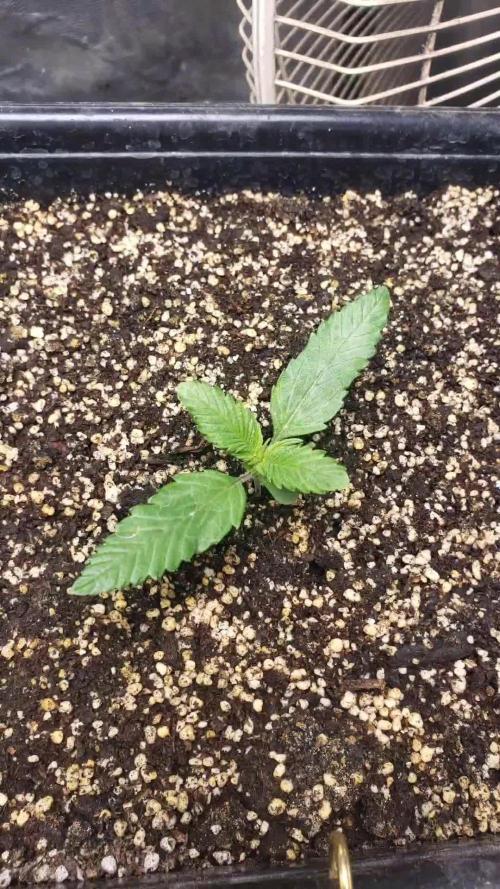
New light this week! Not sure what I should expect. I fed the girls early on, but think the feed levels were too strong as they showed signs of pH imbalance again. Flushed them with water, tested pH, low and behold pH too low. After flushing fed with a lighter nutrient mix, which they have both enjoyed since. By the end of the week, it's obvious these girls like the new light. It's promoted some new growth and more bud sites, which will hopefully increase the overall yield.
Going to be fun watching them fatten up over the next couple of weeks or so.


@The_Doctor_Green
Follow
Hola a todos! Espero que anden bien!!..
Les comento que hice esta semana, la he regado con agua un riego y el último hoy, con nutrientes en sus dosis indicadas más arriba.
La planta ha crecido mucho esta semana 35 cm en 7 días, ha pegado el estirón, y también han mostrado sus preflores.
Esta semana he tenido una humedad alta 70% y no la he podido bajar,pero con humedad y una temperatura que ha rozado los 28 grados por momentos, he notado que las plantas les gusta ese ambiente, por eso el crecimiento que ha pegado.
Hoy (17/09 ) ,dia 35, de la Strawberry Gorila Auto he quitado las hojas más grandes que tapaban las ramas bajas, espero que en este momento no estrese la planta.
Bueno, no los aburro más, nos vemos la próxima semana!.
Buenos humos!!


@Bread_n_Buds
Follow
Now we've reached day 34
We are now in flowering, the plant is growing well and the flowers are swelling, we really like the pace at which it grows, very well proportioned and with all things in their place.
We started giving fertilizers for flowering again
slowly to avoid going overboard. We were over veg and now we're taking it easy.
Site Description
ZAMNESIA - RUNTZ F1 HYBRID AUTOMATIC: UNIFORMITY, RELIABILITY, AND GREAT FLAVOURS!
What can we say about Runtz that hasn't already been said? Well, trust us when we say you've never seen it quite like this before! From the team at Zamnesia comes Runtz F1 Automatic. Now, this isn't some Formula One car-related special edition, no. This strain takes everything you know and love about the original Runtz and offers a reliable and uniform growing experience that will impress everyone.
GROWING RUNTZ F1 HYBRID AUTOMATIC
Runtz F1 Hybrid Automatic is the lovechild of Gelato and Zkittlez; the result is a strain that's extremely vigorous and fast to flower (taking just 10 weeks from germination to harvest). While autoflowers generally make for a no-hassle growing option, F1 hybrid seeds take this ethos one step further. Runtz F1 Automatic showcases great uniformity, meaning all plants will have a remarkably similar appearance and output. These plants are also highly resistant to pests and disease, so if it's your first foray into the world of cannabis cultivation, you're in the right hands with Runtz F1 Automatic.
Reaching heights of 55–75cm, Runtz F1 Automatic can slot into the pokiest of grow spaces, both indoors and outdoors. But this small stature is not to the detriment of production. Once ready, growers will be treated to a return of around 500g/m² indoors and 100–150g/plant outdoors.
AROMAS, FLAVORS, AND EFFECTS OF RUNTZ F1 HYBRID AUTOMATIC
Another perk of F1 hybrid genetics is that these plants are teaming with terpenes and cannabinoids, making for a pungent and potent experience you're unlikely to see with other strains. When it comes to delivering massive flavors, Runtz F1 Hybrid Automatic certainly doesn't phone it in. Upon taking that first toke, users open themselves up to bold notes of creamy vanilla mixed with candied citrus fruit. The result is mouth-watering. With 25% THC to its name, Runtz F1 Automatic offers an uplifting, euphoric, and creative high that will suit all kinds of scenarios, whether social or solo.
So seeds of all brands, in addition to these great F1 Hybrids and the entire Zamnesia line, fertilizers and everything related to the world of cannabis, you should buy them from the best online store in the sector www.zamnesia.io

shorts_status_processing


@yaron
Follow
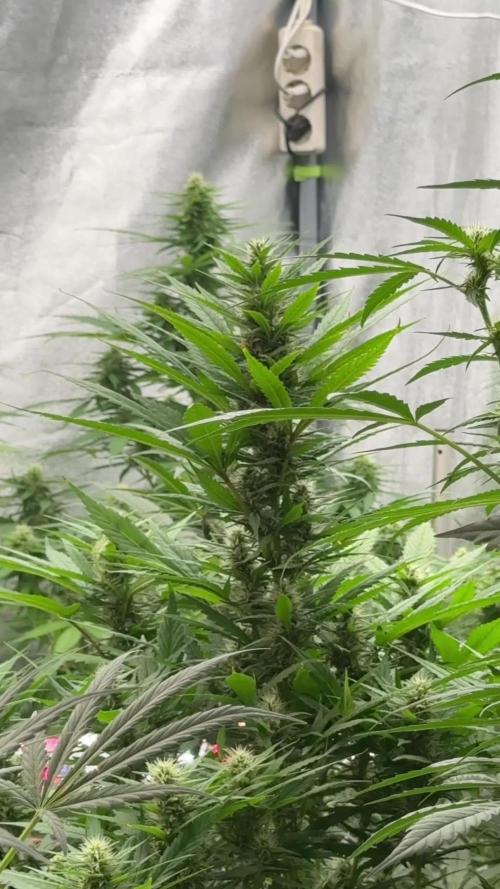
starting week 6,the wedding cheesecakes are in flower for a couple of days now and the gg are starting to flower.
alot of wind and clouds and rain these past two weeks but the girls are looking good in my opinion.
update:after 4 or 5 days of rain and low temperatures finally the re is sunlight so the girls have to recover a bit.
but things are looking better wheatherwise.
cheers!

@DogDoctorOfficial
Follow
Week 4 Flower – Supercrop Week: Taming the Moon-Shooter
Both Sundae Driver girls are thriving, stacking bud sites and frosting up fast. Pheno #2 tried to aim for the moon, so this week I performed a supercrop to keep the canopy even and unlock more lateral sites. She bounced back within days and is already curving up; new sites are catching light beautifully. I also did a light, targeted defoliation to open airflow, nothing heavy.
Feed & Mix (this week)
Testing a hybrid Aptus + Plagron approach at low solution EC to complement the rich, pre-amended soil.
• Plagron Power Buds – 1 ml/L
• Plagron Green Sensation – 1 ml/L
• Plagron Sugar Royal – 1 ml/L
• Aptus Regulator – 0.15 ml/L
• Aptus CalMag Boost – light dose, just to keep LED demand covered
Why low feed?
The living/“easy” soil we built is still hot and active (medium EC ~2.96 mS/cm), so I’m keeping the solution EC ~0.4–0.5 mS/cm with pH ~6.1. That lets the soil do most of the work while I steer with gentle inputs and avoid salt stacking or tip burn.
⸻
Deep Dive: Supercropping (What, Why, When, How)
What it is
Supercropping is a high-control, high-reward training move: you soften (pinch) the inner stem tissues and bend the stem over without tearing the skin. The plant heals with a strong “knuckle,” redistributes hormones, and pushes more energy to side shoots. Result: flatter canopy, better light use, more productive sites.
Why do it (Week 4 Flower)?
• Pheno #2 outpaced the canopy and was nearing the lights
• Even canopy = more uniform PPFD and bud development
• Bending redirects auxins to lower sites → more usable bud sites
• A late stretch check without heavy cutting
Best timing
• Ideal: late veg through early flower stretch (Weeks 2–4 of flower) while stems are still pliable.
• Later than Week 4: be more cautious—stems lignify and snap easier.
Step-by-step
1. Hydrate first: Slightly hydrated plants bend better than very dry ones.
2. Choose the internode you want to lower (usually the tall outlier).
3. Pinch and roll the stem gently between thumb and forefinger for 5–10 seconds to soften the pith.
4. Bend to ~45–90° toward an open space in the canopy.
5. Support: If the skin shows micro-cracks, wrap loosely with plant tape; add a soft tie or stake to hold position.
6. Aftercare: Keep airflow up, avoid heavy feeding changes for 24–48h, and don’t stack stress (no major pruning at the same time).
What to expect after
• Leaves may droop for a few hours; prayer and curve-up typically return within 24–72 hours.
• A hardened knuckle forms in 3–7 days, strengthening the stem.
• Side sites along the bent branch accelerate; top re-orients upward.
• Usually less foxtailing later because tops are kept at ideal distance from the light.
Risks & how to avoid them
• Snap/tear: Don’t bend dry or cold stems; soften first and bend slowly.
• Infection: If skin splits, tape loosely and keep humidity in check.
• Over-stressing: Avoid combining with heavy defol or big feed changes on the same day.
⸻
Canopy & Care Notes
• Minor defoliation only this week—just a few broad fans that shaded key sites. I prefer leaf tucking elsewhere to preserve photosynthetic “engines.”
• Aroma is coming on; both phenos are stacking clean white pistils with visible trichome build on sugar leaves.
• I took the girls outside the tent for a careful studio shoot—this might be the last time. Intentional supercropping is great; accidental branch breaks during handling are not.
⸻
Why this recipe (and why it’s gentle)
• Power Buds helps flower initiation/transition behave predictably.
• Green Sensation brings a compact PK + micro package and carbs; paired at low EC to avoid over-layering with the soil’s nutrients.
• Sugar Royal supports metabolism and aroma precursors.
• Regulator + CalMag keep cell walls strong, transpiration steady, and LEDs fed.
• With substrate EC ~2.96, I’m letting biology and amendments supply most macros; the solution (~0.4–0.5 EC, pH ~6.1) is a steering wheel, not the engine.
⸻
What’s Happening Now
• Stretch is nearly done; supercrop leveled the canopy without stalling growth.
• Bud sites multiplying and beginning early stacking.
• Trichomes appearing across sugar leaves; calyx build just starting.
What to Expect Next (Week 5+)
• Expect:
• Stretch to taper off; energy shifts into stacking and calyx swell
• Noticeably more trichomes; first hints of terp profile intensifying
• The supercropped knuckle to fully harden; consider stakes or light trellis to support future weight
• Don’t expect (yet):
• Final density or full resin push—that’s more a Weeks 6–8 game
• Heavy leaf stripping; I’ll keep it light to protect photosynthesis
• Keep an eye on:
• Humidity management as flowers bulk—tighten RH stepwise to mid-50s to reduce microclimate risk
• Mg/K demand under strong LEDs (watch for interveinal fade or edge crisping)
• Wound sites from supercrop—good airflow, no standing moisture
⸻
Connection & Monitoring
I’ve logged a set of videos this week: TrolMaster data screens plus hands-on canopy time. Daily check-ins are still the best way to catch tiny changes before they become big ones—and it keeps the grower-plant connection strong.
⸻
Closing
Week 4 is the hinge between stretch and stack. One deliberate supercrop turned a moon-shot into a level, efficient canopy, opening light to more sites without slowing momentum. With a living soil doing the heavy lifting and a gentle, targeted feed, both Sundae Drivers are on track for a clean, aromatic finish.
Cant wait for the stacking phase.
📲 Don’t forget to Subscribe and follow me on Instagram and YouTube @DogDoctorOfficial for exclusive content, real-time updates, and behind-the-scenes magic. We’ve got so much more coming, including transplanting and all the amazing techniques that go along with it. You won’t want to miss it.
• GrowDiaries Journal: https://growdiaries.com/grower/dogdoctorofficial
• Instagram: https://www.instagram.com/dogdoctorofficial/
• YouTube: https://www.youtube.com/@dogdoctorofficial
⸻
Explore the Gear that Powers My Grow
If you’re curious about the tech I’m using, check out these links:
• Genetics, gear, nutrients, and more – Zamnesia: https://www.zamnesia.com/
• Environmental control & automation – TrolMaster: https://www.trolmaster.eu/
• Advanced LED lighting – Future of Grow: https://www.futureofgrow.com/
• Root and growth nutrition – Aptus Holland: https://aptus-holland.com/
• Nutrient systems & boosters – Plagron: https://plagron.com/en/
• Soil & substrate excellence – PRO-MIX BX: https://www.pthorticulture.com/en-us/products/pro-mix-bx-mycorrhizae
• Curing and storage – Grove Bags: https://grovebags.com/
⸻
We’ve got much more coming as we move through the grow cycles. Trust me, you won’t want to miss the next steps, let’s push the boundaries of indoor horticulture together!
As always, this is shared for educational purposes, aiming to spread understanding and appreciation for this plant. Let’s celebrate it responsibly and continue to learn and grow together.
With true love comes happiness. Always believe in yourself, and always do things expecting nothing and with an open heart. Be a giver, and the universe will give back in ways you could never imagine.
💚 Growers love to all 💚

@SundancerS
Follow
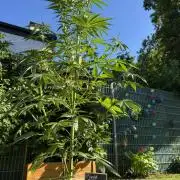
Die Pink Rozay bestätigt diese Woche endgültig, dass sie ein echtes Sommerkind ist. Kaum kratzen die Temperaturen an der 30 Grad Marke, drückt sie aufs Gas und wächst gefühlt direkt Richtung Mond. Das Höhenwachstum ist beeindruckend, aber mindestens genauso schön sind ihre riesigen Sonnensegel. Die Blätter wirken gesund, kräftig und sehen fast so aus, als wollten sie möglichst viel Sommer auf einmal einsammeln.
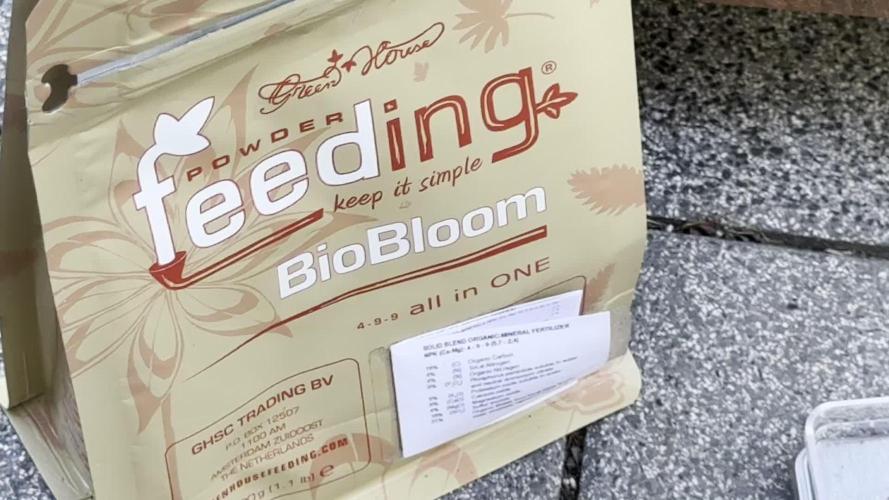
Die Vorblüte zeigt sich mittlerweile sehr deutlich und damit war es Zeit für den Wechsel auf Green House BioBloom nach Düngeplan. Jetzt hoffen wir, dass die Dame ihre Energie langsam etwas weniger in die Höhe und dafür mehr in die kommende Blütenproduktion investiert. Wobei wir sie mittlerweile gut genug kennen, um zu wissen: Das es auf jeden Fall gut wird. .
Das warme Wetter sorgt außerdem für ordentlich Durst. Aktuell verschwinden rund 2,5 Liter Wasser pro Tag, was zeigt, wie aktiv sie gerade arbeitet. Insgesamt präsentiert sich die Rozay wieder einmal als robuste, vitale Pflanze mit starker Genetik. Sie sieht hervorragend aus und macht genau das, was man sich von einer Outdoor-Dame im Hochsommer wünscht. 😘
shorts_status_processing


@eldruida_lamota
Follow
Hola familia, de nuevo, actualizamos las skunk, y es que estoy encantado con esta genética , son tan simétricas las 3, ninguna espigó , comen fenómeno, y se ve en su color y sus hojas.
Pronto pasaremos a la floración, todo va a pedir de boca 10/10. Empezamos alimentar también la genética
Los parámetros son correctos, aun que la humedad está un pelón por debajo de lo que me gustaría 55%.



@deseed_uy
Follow
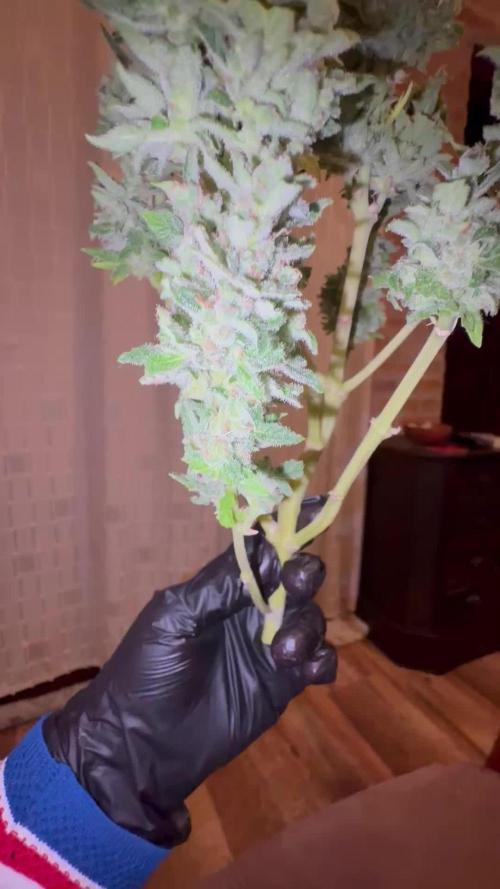
Quedó enana pero eso es un tema mio con las auto q no les agarro el tema todavia jajaja ya saldran mejores! De gusto no tengo dudas q debe estar rica porq le hice un bueeen lavado de varios riegos con cannazym y solo agua, el olorsito q tiene ya lo dice todo, es re limón😍




@GYOweed
Follow
Pruned it. Needs more frequent water but looks green and healthy.
Smells like coriander not diesel or yucky yet heheh.