


Likes
Comments
Share


@Naturalist
Follow
The final week, I trimmed a lot to give the bottom growth a final chance to brown up.

Likes
4
Share

@GreenHobbit
Follow
Hash Burger
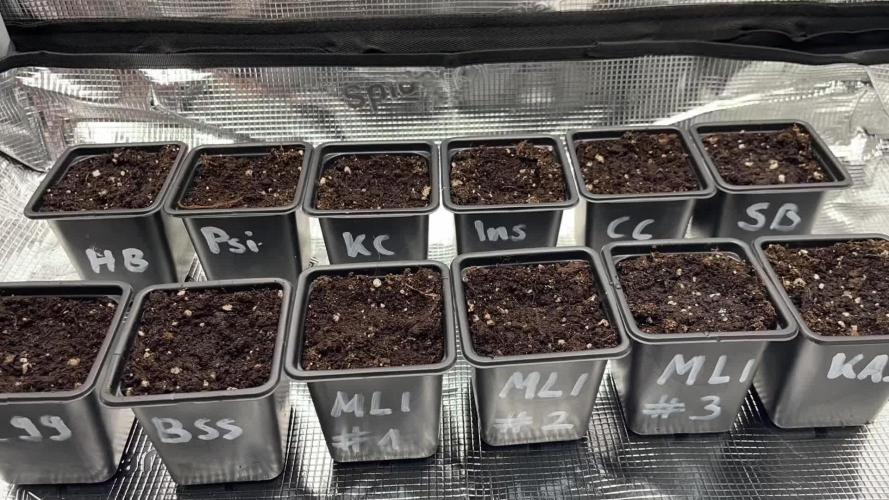
And we’re off! 💚
Hash Burger hatte offenbar keine Lust auf langes Warten und war am 30.09. die Erste der gesamten Truppe, die ihren Kopf aus der Erde gesteckt hat. 😏
Seitdem entwickelt sie sich sauber weiter und arbeitet bereits am ersten richtigen Blattwerk. Damit bekommt sie für diesen Run schon mal den Titel „First out of the ground“.
Mal schauen, ob sie ihren kleinen Vorsprung behalten kann. 🍔🌱

Likes
27
Share


@adam_pawloski87
Follow
This week went really great! Plants are looking super healthy today at day 22 from seed!! Today they got a dose of just pure water phd at 6.5 ! Temperature an humidity has been staying pretty stable everyday, staying around 70-75 degrees and 58-61 % humidity!! Can’t wait to see what these girls do this week ! Hope you all enjoy , an had a great safe weekend! Peace love an positive vibes to y’all Cheers 😶🌫️💨💨💨If there’s any questions, please ask me 🙏🏻

Processing
Likes
4
Share


@ReelEyezEnt
Follow
So the at the start of week 4 the girls have taken a beating from the pesticide that I spray on them, had to take off some dying fan leaves.
the one plant is recovering nicely while her sister on the other hands need a close eye.
This week the girls will get their first watering with actual noots

Likes
40
Share


@Teamdirtbag2
Follow
This girl is also unbelievable at 30 inches she is grand. The growth has been amazing again. She is looking great.
I have added 1000 watt Hps for supplemental light. 4 and a 1/2 hrs of extra light. I have split that into 2 and a 1/2 hours in the evening and 2 hours in the morning. I think that puts me somewhere in the area of 16 to 17 hours of light.

Likes
10
Share

@ThatsmyGrow
Follow
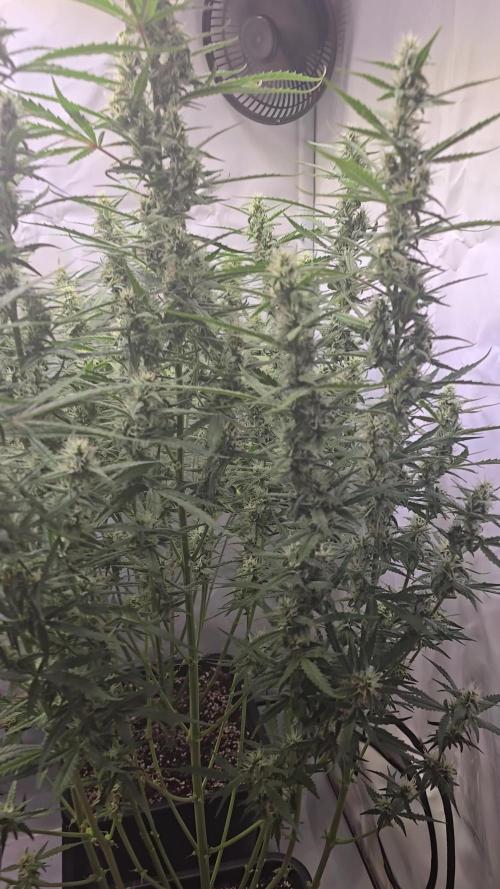
Wir wiederholen woche 4 des düngeschema, da sie sicherlich noch 3/4 wochen blüte brauchen wird.
Likes
9
Share


@HashtagHerbs
Follow
Seeds were directly off the mother plant, soaked in water for 24 hours. They were pretty slow to popping and required me to use my fingertips to pop them gently. After that it was 100% successful.
Likes
5
Share


@Kickdrum
Follow
She has left the Sunset Sherberts behind, and deciced to take advantage of the nice and toasty environment. Jedi (her name) has finally broken through. Steady at 21.5-24 C. RH at 65-75% with Spider Farmer Huimidifier and Dehumidifier, shooting for VPD. (day 1)
Let's quickly review the key new components I've planned to integrate or have already:
Circulation Pump - Adding this to the 14L Mars Hydro reservoir will ensure even fresh, circulated-for-a-miniute-every-hour, batch of water (and later nutes) to the auto-drip system, maintaining optimal feeding for my plants when I am away, next week.
Biobizz & BioTabs Supplements - These organic nutrient and microbial products will provide a comprehensive and balanced feeding regimen for my plants.
Auto-Drain Potted Plant Stands - The wheeled, auto-draining stands will simplify watering and prevent any spills or overflows.
Inkbird Humidity Controller - Pairing this with the Spider Farmer humidifier and dehumidifier will allow me to precisely maintain the ideal VPD (Vapor Pressure Deficit) levels.
LST Clips, Trellis Net & Shelves - These will help me maximize my grow space and optimize the plant canopy for optimal light exposure.
Pest Control Strips - An important preventative measure to stay ahead of any potential pest issues.
Smart Soil Sensors - The Zigbee-enabled sensors will provide vital data on soil moisture, temperature, and more, which I can monitor remotely.
Air Purifier/Ion Generator - Ensuring my grow environment has clean, high-quality air circulation.
With all of these elements in place, combined with my existing setup and the automated control via the iGrow app, I'm truly creating a "hands-off" grow operation. (theoretically, with a bro, coming to phiscally check too)....The ability to monitor and adjust key parameters remotely while I'm away in Italy.
Running on Sunrise/set mode(18/6) over the "seedling" scene, in iGrow app, keeping track of DLI and later on, the Adlites will come into play.
Temp at 23.5 and RH is at 60%.

Likes
142
Share


@MadeInGermany
Follow
Hi everyone 🤗
This week the two Kosher Tangie Kush were harvested by Amsterdam Genetics 😍.
extremely good phenotypes. The blue cheese pheno 2 and 3 were placed in the darkroom according to the video.
These were harvested yesterday, from which the pictures will come in the next update :-).
All others need 2-3 weeks.
I wish you lots of fun with the diary, stay healthy 🙏🏻 and let it grow 🌱


Likes
42
Share


@rhodes68
Follow
Chew Mee - 1390 grams wet - 221 grams dry
Dink - 1040 grams wet - in dry- dry yield 182 grams


Likes
51
Share


@Coughy
Follow
Day 57- Did a light defoliation.
RO water at 66 PPM.
Running until more Ambers pop.
Day 58- checked trichromes, ambers are showing up in clumps, I’d say about 15-20% amber trichs at the moment. PPM 55.
Day 60: 4-5 day flush brings me to harvest. Cut down both plants, light trim of larger fan leaves and placed in tent.
I used 2 scrog nets to hang the buds, worked ok, need to make tighter next time... too much droops!
So far,
First 24 hours of tent at 68 F and 70% humidity.
At 48 hours 67F and reduced to 60% humidity
At 72 hours 69 F and reduced to 55% humidity, maintaining till dry.
Trying to get temps a little lower but no A/C...
Trying to stretch drying time close to 14 days. Anything after 7 and I’m happy.
Likes
35
Share

@Mrs_Larimar
Follow
2025-09-26
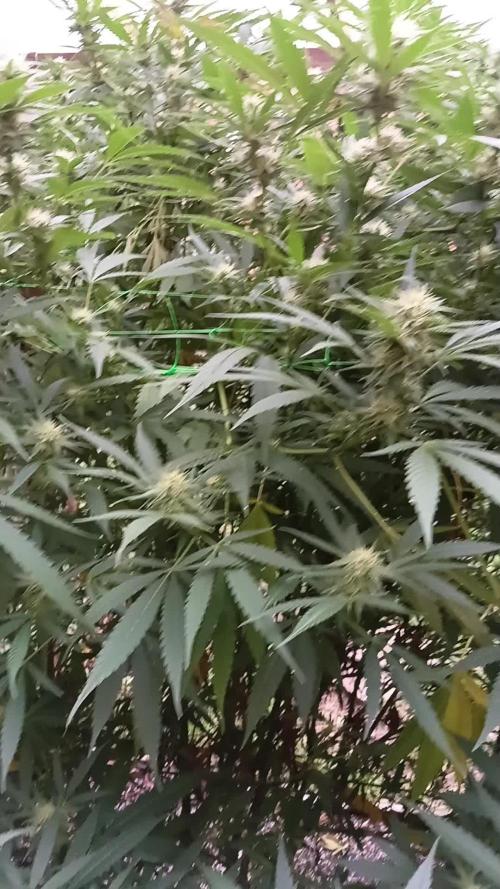
well weather changed hardly
6 days continously heavy rain and cold winds.
and this year she seems to take longer - hmmpf
but sespite all this, shes sfe
standing in 2 SCROG- nets and has a roof
so no risk of mold
only watching the branches wich are not covered by the roof

Likes
8
Share

@GREENPHOENIX6262
Follow
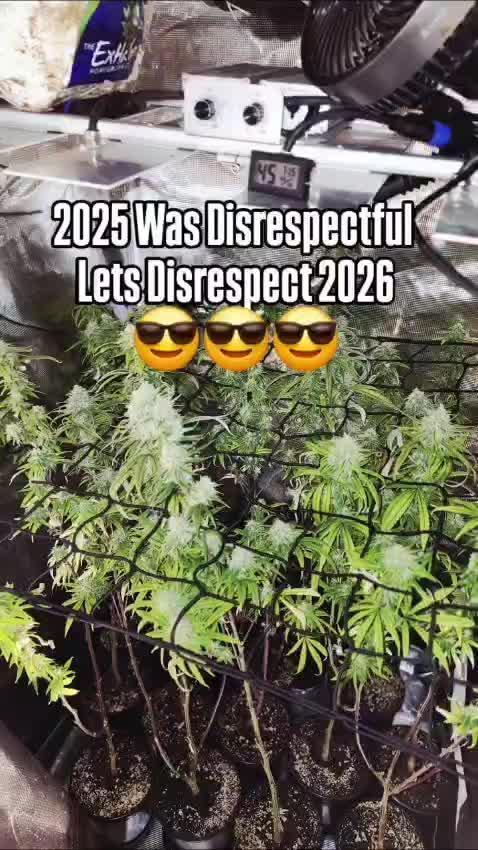
12/30 - Dropped the 3x3 net for spacing - Micro dosing Silica and Green Planet through harvest - Sick plants have bounced back and are flowering accordingly - Update concluded 😎😎😎😎

Likes
18
Share


@Hashy
Follow
Week 4
Light cycle=18/6
Light Power=100w
Extractor controller settings
High temp= 25c
Low temp= c
Temp step=0c
High Rh= 60%
Low Rh= %
Rh step=0%
Speed max=5
Speed min=1
Smart controller settings (during lights on).
Lights on=06.00am
Radiator on= below 20c
Radiator off= above 21c
Smart controller settings (during lights off).
Lights off=00.00am
Radiator on= below 18c
Radiator off= above 19c
VPD aim=0.6-1.2
DLI aim=22-30
EC aim=0.8
PH aim=6.2
Fri 12/1/24
#3 (Day 22)
📋 Turned pot 180 deg
Sat 13/1/24
#3 (Day 23)
📋 pot is getting lighter, prob water tomorrow.
Sun 14/1/24
#3 (Day 24)
📋
💧💧💧💧💧💧💧💧💧💧💧💧💧💧💧💧
Method= manual
Total volume made=12L
Neutralise=0.1ml/L
Silicon=1.0ml/L
Calmag=1.0ml/L
Terra grow=2.0ml/L
Roots=0.2ml/L
Easy Ph down=0.2ml/L
Feed=nutes
Volume=2L
Ec=1.7 PH= 5.8/6.0
Time=4.45pm
Runoff.
Total runoff=100ml
Ec=7.3 PH=5.2/5.4
💧💧💧💧💧💧💧💧💧💧💧💧💧💧💧💧
Mon 15/1/24
#3 (Day 25)
📋 turned pot 90 deg.
Tue 16/1/24
#3 (Day 26)
📋 opened up the plant.
wed 17/1/24
#3 (Day 27)
📋 removed 1st 3 fingered fan leaves.
Installed the drippers.
🚿 foliar sprayed (cal-mag 5ml/L).
Turned pot 90 deg.
Thur 18/1/24
#3 (Day 28)****
📋 H=22cm D=50cm DLI=26.9
💧💧💧💧💧💧💧💧💧💧💧💧💧💧💧💧
Method= manual
Total volume made=10L
Neutralise=0.1ml/L
Roots=0.25ml/L
Easy Ph down=0ml/L
Feed=Water
Volume=2.5L
Ec=0.2 PH= 6.5/6.6
Time=8.30pm
Runoff.
Total runoff=360ml
Ec=6.3 PH=5.3/
💧💧💧💧💧💧💧💧💧💧💧💧💧💧💧💧
11.00pm Increased light power from 100w to 120w.
This week she really started to kick into gear. She is loosing the tiger stripes by the looks of her.
Back soon.
Take it easy.


Likes
21
Share


@CanadianFillmore
Follow
Welcome back to growfessor theatre! Week 4F begins in the 4x4.
Heavy defoliation performed on the Mandarin dreams and Do-si-dos, Green Crack and LSD got a light defoliation. LSD had the most yellowing, she seems to be the hungriest for nutrients.
Not much else to report, the ladies are happy, healthy and bud is developing nicely!
Thanks for stopping by growfessors 👽🌳💚 stay tuned for another episode, later this week.

Likes
15
Share

@Mati_86
Follow
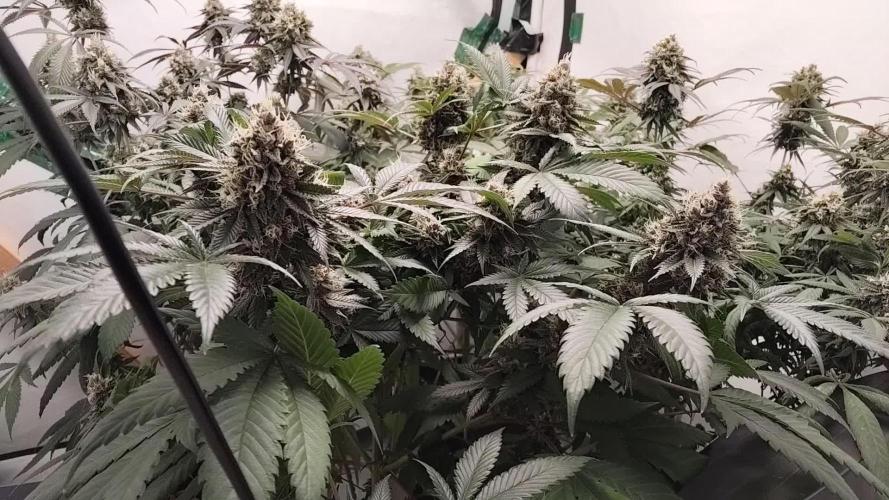
die buds schwellen an und ab jetzt gibt es keinen dünger mehr. ich hatte diese woche mal leicht gespült sodass ich ca 1 l drain hatte. der ec lag bei 2.0 ca.. werde kommende woche nochmal leicht spülen und wieder messen. zurzeit faden die oberen blätter aber die unteren sind mir etwas zu grün. habe noch 1.5 bis 2 wochen bis ich ernte. denke bis dahin wird das grün verschwinden. bin bis jetzt zufrieden und hoffe das die rlf sich senkt, denn es hat viel geregnet in der vergangenen woche und im zelt hatte ich gestern mittag 63% rlf😐.
ist aber bis zum abend auf 52 %runter..
heute hab ich 48% rlf im zelt.
die super boof und rainbow melon halte ich mir als mutti's 😁

Likes
4
Share

@adam_pawloski87
Follow
@twenty20mendocino Ateam R&D Update ~ Let’s Go day 12 week 2 of Flower for these lil ladies are looking really great ! we are showing some very nice preflower , an looking super healthy! This next week we will be into week 3 which means yess we are going for another trim up so you do not want to miss next weeks update! I hope you all enjoy an Y’all have a great safe weekend, let’s make it amazing a productive! Peace love an positive vibes to all y’all Cheers Blaze on 😶🌫️💨💨💨💨

Likes
8
Share

@Hempface86
Follow
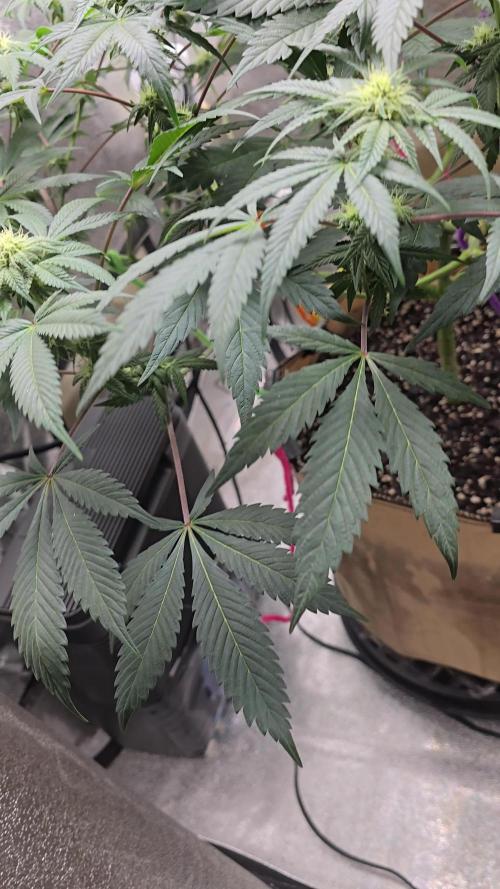
Alright, so I just introduced some green sensation as we're going into the fourth week and beyond, she's a decent sized plant, so I want to make sure she's got everything she needs .. i will say she has been a fairly fast growing plant 🌱

Processing
Likes
220
Share


@CRiSPrGrow
Follow
Week 2 Mr.B's Six shooter
so this one is doing fine, still no water needed since last week, literally no maintenance required, just spraying the soil with 0.25 ml / 250ml organic amino acid concentrate. You know how canna boost smells like soy sauce, well this one smells like that kinda except when i open it my whole basement smells like a chineese wok restaurant lol . Six shooter looks like i got three phenos , this one is an indica pheno looks like , let's see how she grows ! added cal mag to the foliar spray, once only this week, on day 5. amino spray on the soil is daily, until the 10 day mark. still only going to be plain water and secondary nutrients like CO2 and micronutrients . that's the plan anyway. VPD tappering off towards 1.1 as humidity is creeping down from a high of 42 to the high thirties now. going to plant my in soil ppm reader before i water for the first time since transplant lol... maybe not even this week ! low maintenance? will update 🚀