





Likes
13
Share


@3lementa1
Follow
This is just a beautiful strain to grow. The leaves have a rich dark green appearance and the shape is a mix of fatter indica leaves and longer sativa leaves. It's tendency is a fairly manageable and predictable grow/stretch and it responds well to training and powerful lights. The leaves on one of them changed colour at the end of flush and went yellow with some purples and pinks but the buds themselves have almost a silver glow to them. The pistils come out in early flower in a very strong, spikey and symmetrical way that amplifies the cool glow given off by the trichomes. With the rich, dark, beautiful leaves, the whole appearance is really beautiful and otherworldly. One of the Wedding Cake plants self-pollenated and there are some seeds in the CBD Blue Shark, but they're few and far between. It's not a disaster like the Wedding Cake. Honestly I can't say enough good things about this strain. The plants were hardy, easy to work with and forgiving of mistakes and experiments. The flowers looked amazing through every stage of development, and the finished product smells great, tastes great, looks great, and makes you feel great. This is my favourite strain to grow so far.

Likes
6
Share


@Weedosaurus
Follow
Hi there !
Week 6 of flowering and the weather is an absolute shit fest now. Rain almost everyday, glad she is not under it, temperature are low but I am fighting as I Can.
All pistils still white, I think she needs three more weeks, thats gonna be though but good I choose this genetic which is kind of cold crop.
F41 pistils are turning creamy we are getting closer to the harvest guys ! Maybe 2 weeks more or even a bit less.

Likes
19
Share


@adam_pawloski87
Follow
Let’s go Day 85 from seed !! This has been another great week ,ladies are coming close to the finish line an looking so beautiful!! This week we will continue flushing on these 3 ladies an jump em into there 48 hrs of darkness on Friday or Saturday will see ! Let’s have another great week ,, peace love an positive vibes to all y’all Keep them eyes peeled for next weeks update !! Cheers 😶🌫️💨💨💨💨💨🤙🏻

Likes
18
Share


@Wrongholn519
Follow
A note on last weeks goals:
- Continuing LST has been very easy with this girl. Following a VPD chart and keeping a good environment has been key to establishing a successful low stress training regiment. In the last week I decided to use stainless steel nuts and bolts as weights. I tie them to the end of the side branches rather than tieing them down to the side of the pot. This makes it easier to water.. I will use this technique again, I really like it. I also pull my plants out of the tent and place them in a tote to water them and inspect them.
- I've been playing with my CO2 generators .. adding more yeast, less sugar etc.. the highest CO2 concentration I've been able to achieve is 1050 ppm. With that in mind i will probably purchase a rotometer and a CO2 tank for future runs. Furthermore I think that the yeast and sugar combo could lead to an infestation if in not carefull (bugs are attracted to sugar and yeast). I have noticed my plants are praying for 15 hours a day though and I think the CO2 has been a game changer through vegetation.
A note on my environment:
I decided to add photos of some of my gear for my garden. This grow I decided to swap my intake and exhaust fan placement. With putting my exhaust on the FLOOR, the air in my tent is drawn from upwards towards the floor. This gives my plants proper contact time with the CO2. It also takes the heat from the top of my tent and pulls it downwards acting as a heat source for my crop... In my pictures you will notice my 4 inch inline fan and my 6 inch inline fan are attached to a secondary room. This helps me draw fresh air while releasing my exhaust away from my tent room.
WHEN GOING INTO FLOWER I turn up my intake fan to get cool air to the top of my tent. The exhaust draws it down cooling my tent when the lights are turned up in the last stage of flower. As a new grower this has been the step to changing my entire grow. Everything is much healthier and I owe it all to my environment, and Fastbuds genetics.
One more thing: I almost burnt my house down and electrocuted my ass with a cheap water heater... careful while playing with electricity and water 🤣🔥🔥⚡️
Next week's goals:
- Turn up lights slowly
- Continue to play with CO2 generators to try and achieve 1200+ ppm concentration
- Continue training and defoliation
- keep up pest management.. these fungus gnats keep trying to regroup and they're starting to hurt my feelings.. I get rid of them in my tent but they keep coming back!
The bud sites are stacking nicely, I'm getting excited she starting to remind me of the Fastbuds Forbidden Runtz auto when she went into flower...and that was the best plant I've ever grown 🔥🔥🔥🔥🔥
Happy growing everyone!
Processing
Likes
19
Share


@BigBuds95
Follow
Day 56, taller tent I ordered off Amazon is stuck in transit, tops are really starting to turn yellow even with lights at half power(red only), no bud bleaching yet, lower PAR full spectrum cobs should be here tomorrow so ill keep those on her til harvest! Very hardey plant, beautiful purple/violet, with a wonderful fruit diesel gas scent with chocolate undertones
Likes
9
Share


@HIAZ_urbanbudfarmer
Follow
In the end she went longer than expected but that's cool 😎 super dense buds . I really enjoyed this strain. Very nice smoke.
Gromie's use the promo code GROWEED for a 15% discount on any Fast Buds purchase.
Likes
31
Share


@TheHighentist
Follow
They looking good, but temp is a little too high. It is what it is
One of the plants (In front to the left) is more frosty, with less amber pistils.
But overall the trichomes are starting to go from crystal to cloudy. Which is my timing for start flush.
24/7
-Temp 23-26day/21-24night
-47%RH (2+-)
25/7 Water day* start of flush
Gave them till run through with plain ph balanced water, and topped it off with some light nutrients-mixed water.
-Temp 23-26day/21-24night
-49%RH (2+-)
26/7
-Temp 23-27day/21-24night
-47%RH (2+-)
27/7
-Temp 23-26day/21-24night
-47%RH (2+-)
28/7* Water day / flush
-Temp 23-27day/22-24night
-47%RH (2+-)
29/7
-Temp 24-27day/22-24night
-47%RH (2+-)

Likes
13
Share

@HIAZ_urbanbudfarmer
Follow
Hi Gromie's, well it's the end of another problem free week!
Week 9 going into week 10 of veg!
I don't usually veg for this long but I'm just trying to get the timing right for perpetual harvest.
Plants in flowering tent were harvested & drying now for 5 days, so these girls will be transferred to the flowering tent in the next few days for the start of flowering, I've allready planted new seeds for the following grow, so just trying to get on top of the timing for everything related with perpetual growing.
Thinking of setting up a 4x2 tent with a 4 inch extraction fan & filter for drying, so I can cut out around a week, that way as soon as I've harvested & cleaned the tent I can transfer plants from veg instead of having to dry in the flowering tent. Have developed really strong & thick structure's from the H.S.T & L.S.T training. Plants are nice & healthy.
Performed 1 last defoliation before they go to flower as they get very bushy quickly.
Likes
15
Share


@Kurow
Follow
This week is dedicated to finalizing the pot and nutrients for the rest of the lifecycle, looks like it took to the nutrients very well not much new upwards growth but new leaf sites appeared!

Processing
Likes
12
Share


@Siriuz
Follow
Hey guys!
Started week #8
Day 52
Sorry for not uploading many pics these past few days ago but you get it we busy and sometimes can't do much even tho we want to!
Please check on the last picture at Day 50 and compare to new picture on day 53
You will noticed many changes!
We also expanded the net and modified some other lights from setup.
We've been good and theyve been great
Outdoors everyday and tons of lights and love so she can continue to flower :).
Day 53
Fed them medium hard
1710ppm /3.79g floranova bloom
Only 300ml followed by
900ml plain water
Plus outdoors from 7.30am til 2.30pm
Day 54
Ladies are looking good
Great day great weather
All day outdoors til 6pm
Now under CFL til 6.30am
Then back outdoors
Got some videos today!
Day 55 we've updated our set of lights to a new LED grow lights 600 watts plus 100 watts CFL :)
Day 56
It's already rocking their bodies
Rich in THC Content
Look at those crystals!!!!
Day 57
End of week 8
Start of Week 9
coming up soon
Likes
24
Share

@Wondrej
Follow
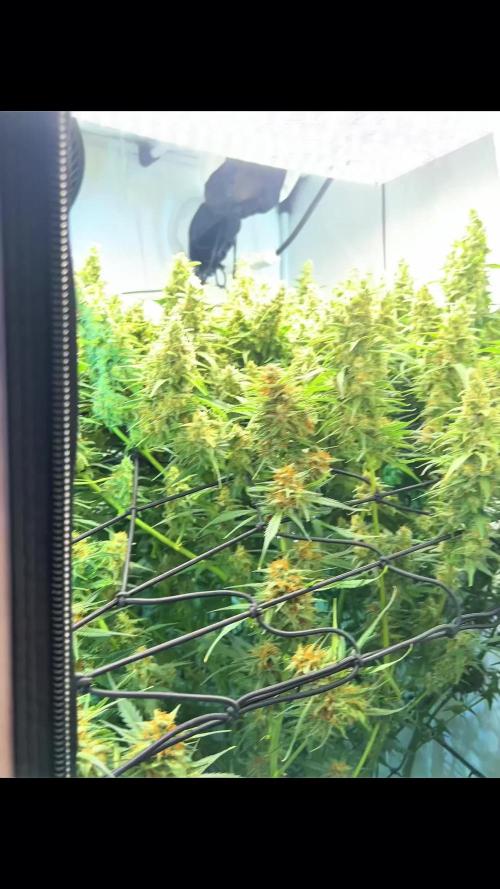
🎼 Week 13: The Grand Finale Approaches (Flower Week 8)
One love growmies, we still not done yet with this BPP auto 😻🤤 I’m giving them like 2 more weeks maximally.
The finish line is in sight, and the symphony is reaching its crescendo!
This week has been all about patience and classical vibes. I’m still playing B. Smetana - Vltava every morning, and I swear the trichom production is responding to those majestic crescendos. Some buds are becoming rock-hard and the scent is so heavy it almost has a texture.
📈 Final Weeks Strategy:
I’m starting to taper off everything. Just pure, clean water from here on out to let the plant finish its cycle naturally in the living soil. No more top-dressing, just letting the biology do the final touch-up.
Girls are almost ready to graduate. It’s been a long journey from that first Scrog tucking to this massive sea of purple and green. Trichoms still not even cloudy so stay tuned, the harvest is just around the corner!
UPDATE- Last days of week 13 video
Likes
59
Share


@JeyGanesha
Follow
Grower, ancora non l'ho provata.ma sono sicuro che è più che valida...vi farò sapere quando sarà pronta

Processing
Likes
1
Share


@SGCFarms
Follow
Showing pistils like crazy only 7 days in. Will be switching her into the main flower tent and release her from all LST tie downs. I will defoliate if there becomes too much fan leaves covering lower potential.

Likes
10
Share


@Pggrower
Follow
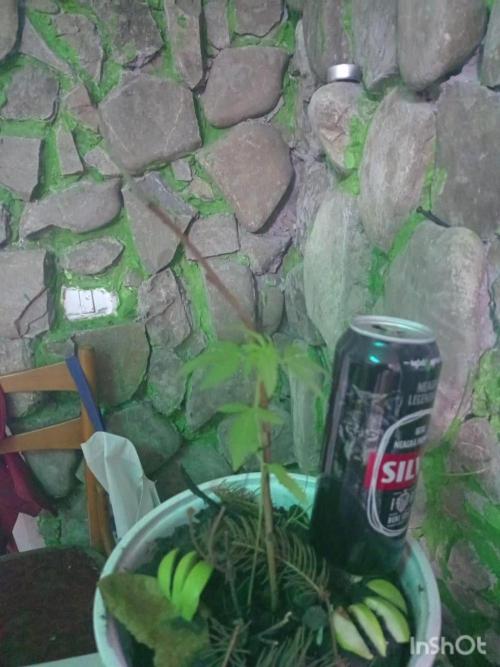
The flowering process isn't it beautiful. I love this stage doesn't matter how the plant turned out in training or in this case the panic moments when they get too tall. 😅 because you start seeing the results of the work that was done. They are all doing well.


Likes
11
Share


@IndoorOrganix
Follow
Day 49. I seem to have misplaced some of the photos I had so I will be uploading them when I find them. My carbon filter decided to fall off and land on the front right plant which caused it to lose a main branch. Some slight issues with some lower leaves as you can see at the end of the video . Still full blast on bio canna range and molasses. They will be switched to 12/12 today.
Likes
2
Share


@TheWeedPimp
Follow
Bad weather all week only rain little sun.👎🏻 But she grow slow and nice

Likes
20
Share


@Funny1Joint
Follow
Hello guys My 2 second grow Im soo excited :)) Happy smookee dayy bithcızz see yaa!!


