


Likes
Comments
Share


@Firepharmer
Follow
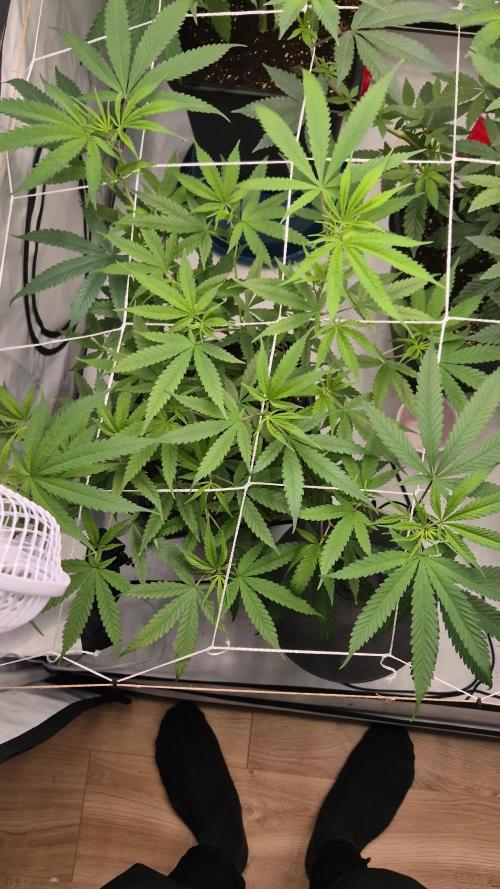
Flushed and chopped down!!
Vert impressed with the Futur vert flora max series led’s killer quality killer yield






Likes
37
Share


@TheIceCreamParlour
Follow
Hey guys, it's been a great journey but I've finally hung my Stardawg out to dry! Yesterday was their last day totalling 8 weeks on flower. Realistically they could have benefited from a further week because the lower buds are somewhat underdeveloped but then I would risk losing the preferred sweet high smoke of the top buds. With this being my first attempt it's been a great learner not only for how to care for the plants but also the environment. As soon as these went into flower and started stretching I knew that putting 6 in a 2.4 x 1.2m tent was a bad idea. They just got so big which is the cause of the lower sites not being as good as the top colas. Despite that I'm really happy with the outcome and I'm hoping ive got 30oz+ of real good quality nugs. All of the top colas have turned a gorgeous violet colour too which you can see on the pictures and I absolutely love.
For my next grow I've gone with 6 fastbuds strains which hopefully will go under a scrog.
Check back next week for the harvest and weigh in!

Likes
10
Share


@Bread_n_Buds
Follow
Trainwreck is now an established strain in the history of cannabis, now we can see how it turns out on the automatic one from Zamnesia.
Remember that we are growing a plant worked with the techniques indicated and another left to grow without pruning to preserve its speed; in the previous/next diary you will find the other plant of the same variety.
In this diary we find worked with the Main Lining. Topping at the second internode to create the MainFold, growing shoots worked parallel to the ground for another three internodes and then topped again. We have removed the branches of 1 internode on each side and topped the remaining two branches on each side.
Slow down the use of nitrogen during this technique, you may not need everything recommended by the manufacturers. So, if the leaves become too dark or, worse, the tips of the leaves arch downwards and the leaf becomes "crunchy", it is time to lighten or stop the basic fertilizer. She is a bit dark and I slowed down by giving only additives.
Comparison is the salt of experience, so the plant in the other diary will be treated very differently, go see it to compare.
We started the Plagron fertilization program, we are in 100% organic configuration, the soil is recycled Promix + 1/3 fresh soil + 10% Perlite + RQS Mycorrhizae Mix (4 g in the mix, 1 g under the small fiber pot).
We fertilize with: 1 ml/l Power Roots - 1 ml/l Pure Zym - 1 ml/l Sugar Royal - 3 ml/l Alga Grow
We sprayed 3 ml/l Vita Race foliar fertilizer once a week.
https://plagron.com/it
We always have the excellent RQS mycorrhizae flowing in the soil.
https://www.zamnesia.io/it/5778-mix-micorrize-easy-roots.html
Take a taste of this strain, it's a cross of legendary strains
https://www.zamnesia.io/en/11055-zamnesia-seeds-trainwreck-automatic.html
Short Description Zamnesia // Trainwreck Automatic is the autoflowering descendant of the popular cannabis strain Trainwreck (a stunning cross of Thai and Mexican landraces). Much loved for its 70% sativa genetics and sativa-like effects, Trainwreck Automatic is as easy to grow as an indica (even in cold climates).
This autoflowering strain goes from germination to harvest in 11–12 weeks, meaning you'll be harvesting sativa buds in no time. It prefers warmer climates, but thanks to its short life cycle, it can also be grown in more northern areas (provided it is germinated a few weeks early when growing outdoors)
Trainwreck Auto offers delicious lemon and lime flavors that enhance the classic sativa profile of its parents. Furthermore, thanks to the spicy and earthy notes, the overall experience will be even more intense, regardless of whether you smoke or vape it. In terms of its effects, Trainwreck Auto is euphoric, uplifting and energizing. Fueled by a THC content of around 21%, this strain is perfect for socializing and best suited to smokers who prefer to stay active after consuming cannabis, rather than lazing around doing nothing.
The whole world of cultivation and much more is from Zamnesia: just take a look at the site and you will find "all the best that nature has to offer" in various shapes and colors.
-- // www.zamnesia.com

Likes
44
Share


@The_Good_Twin
Follow
11 Sep 2021
Today starts week 2 of the flowering stage and week 10 of life for my lovely Ladies. I did some massive defoliation and pruning the other day and all three of my babies are looking amazing afterwards!! Absolutely beautiful! I have a short video log (I’m not cool enough to call it a vlog), and a few pictures to upload to start this week.
I must admit that I really thought I may have overdone the defoliation and pruning, but so far it’s turning out exactly as I had hoped. There are budlets forming at every node, and all three plants are looking healthy and strong.
I decided to look at my feed chart and to count backwards from the date that they should be ready for harvest and to arrange their feeding schedule. I made a plan where I can provide a good steady level of nutrients in the proper stage of growth, and schedule time for the flush to be done by the time harvest time arrives.
So today I started the Mid-Bloom stage 4 of my Flora-Trio 6 part feeding chart. I’m still giving half the nutrient level until I know there are no issues, then I will adjust to full strength if necessary. At 50% strength each plant was given: CALiMAGic 2ml, FloraMicro 2.4ml, FloraGro 2ml, FloraBloom 4.2ml, Floralicious Plus 1ml, and Liquid KoolBloom 1ml mixed into a gallon of water. The initial pH for all three gallons was 6.3. I wanted to adjust them up, so I added 1.2ml of pH UP to each gallon which adjusted them as follows: C1 - 6.7, and C2/C3 were both adjusted to 6.6.
I still don’t have a replacement TDS meter, so only pH was measured in the runoff. Runoff pH was as follows: C1 - 5.9, C2 - 6.1, and C3 - 5.8. The runoff levels of C1 and C3 are still lower than id like, but still manageable.
As I mentioned several times above; my plants are looking great, and I plan to keep growing them as they are until this method needs to be adjusted or changed. I’m just letting them grow wild. Granted, I’m trying my best for them to grow the way I want, but I’m not using a support net at all (yet). I say (yet), because once the buds start to bulk up, they may need support to stand upright. If that day comes, I’ll use the net. Time will tell.
The temperature in the tent was 82F, and the humidity was 45%. So far my trio is growing beautifully! Enjoy everyone! I am!!
14 Sep 2021
I ended up using only about half of each gallon the other day, so today I gave the rest of each gallon to the perspective plant it belonged to. None of the plants had any real runoff from the amount given today, so I’ll probably start feeding every two days instead of every 3-4. It happens with each grow. The trick is to identify how much they need, and how often. It seems to change with every plant.
So as I stated above; each plant received about 1/2 gallon of water and nutrients that was prepared a few days ago. Each plant received CALiMAGic 2ml, FloraMicro 2.4ml, FloraGro 2ml, FloraBloom 4.2ml, Floralicious Plus 1ml, and Liquid KoolBloom 1ml.
The pH going in was: C1 - 6.7, C2/C3 - 6.6. As I said above, there wasn’t enough runoff to measure, so I don’t have runoff data today.
The temperature in the tent was 84F, and humidity was 57%. I measured each plant and adjusted the lights according to their growth. C1 is now 23 inches tall, C2/C3 are both 23.5 inches tall. I adjusted the lights to all be 15 inches over each plant. Light spill off is still awesome for all three plants, and each one of my lovely ladies is looking absolutely amazing!
15 Sep 2021
My plants are doing AWESOME!! I looked in on them a little earlier today and just sat in my floor and looked at them. They are doing amazing! Absolutely beautiful!!
I have used a support (scrog) net for each of my grows so far; till this one. At least so far that is. I may end up putting it in to support the branches once they are loaded with bud, but for right now I have just let them grow as they naturally want too.
Of course there are some exceptions to that last statement. At the end of my first week of flower I decided to defoliate and prune them down. I did so much defoliation and pruning that I thought I may have hurt my girls, but nope! They have responded even better than I had hoped.
I trimmed off all of the lowest branches that weren’t already long enough to get full light exposure, as well as most of the small intermediate branches growing off of more established branches. The result… every node growing on every branch is developing buds! All of them are getting full light exposure, and ventilation from the fans inside the grow room.
These three are looking better than any of my previous plants thus far. I am very pleased with how they’re doing!
I’m feeding again today because what I gave them yesterday just didn’t seem sufficient. None of them had any runoff to measure; so I’m going to make sure that they do as well as possible!
I’m sticking with the mid-bloom stage 4 of my Flora-Trio 6 part feeding chart at 50% of recommended levels. My plants are doing great at 50% strength so far, so if it isn’t broken, don’t fix it! No deficiencies have been seen, so I’ll keep on keeping on that.
Each plant received a mixture of a gallon of water with the following nutrients: CALiMAGic 2ml, FloraMicro 2.4ml, FloraGro 2ml, FloraBloom 4.2ml, Floralicious Plus 1ml, and Liquid KoolBloom 1ml.
C1 and C2 didn’t take the whole gallon, but about 3/4 of it. C3 took the whole gallon, but that may be because it is in a bigger pot.
The initial pH of each was: C1 - 6.4, C2 - 6.5, and C3 - 6.3. I added pH UP to each as follows: C1 - 2ml, which adjusted to a final pH of 6.7. C2 - 1ml, which adjusted to 6.9, and C3 - 1.5ml, which adjusted to 6.6.
I still haven’t gotten another TDS meter, so no TDS data to report. Runoff for all three plants was lower than I expected. C1 was 5.8, and C2/C3 were 5.7. I really expected them to be near 6.2 or thereabouts, but nope. I’m going to have to keep an eye on that.
The humidity today was 65%, which is pretty good. The temperature in the tent was 84F. It was over 90F outside today, so hot outside = hot in the tent. 🤷♂️
They’re still looking great! Happy growing everyone!

Likes
9
Share


@Headies
Follow
This is the beginning of each week. So I flushed them and switched nutrients. They were mag deficient, nitro toxic. Not PH actually. I'm adding co2 next week after I seal the room. I think I need to back the PAR down to 800 but they are still alive and it's over half way done.
How any more weeks? I thought this was a 65 day auto. Hydro in a 5 gallon pot could add up to three weeks I heard with Autos. could these go 12 weeks total?

Processing
Likes
3
Share


@HeavensHarvest89
Follow
Great plant man I am loving her she is growing like a champ even after all i put her thru and snapped one of her colas but all good she bounced back like nothing happened will be growing more Fast Bud strains
Likes
3
Share

@MmaJunkie420
Follow
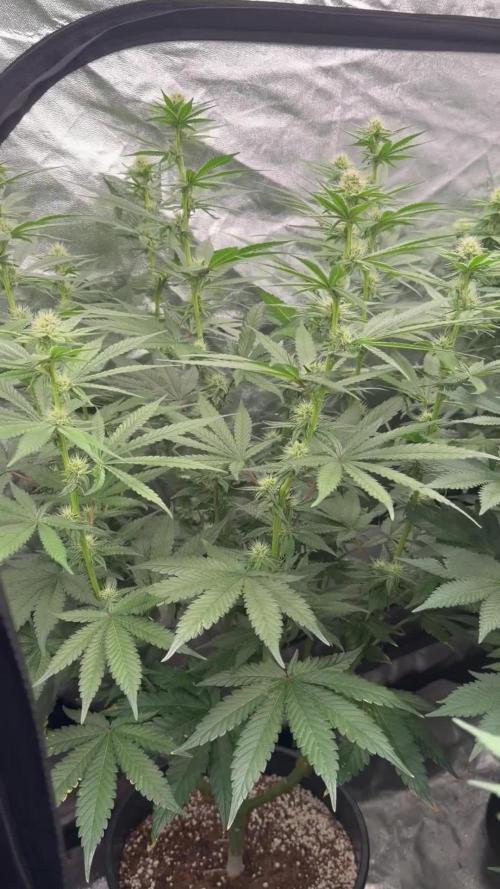
Week 4 is underway and these girls are thriving despite the humidity being so stubbornly fluctuating de humidifier cannot keep up. Managing to keep it below 60% mostly and keeping airflow strong. Papaya frosting is going to be very frosty and I suspect Chunky colas for this 1. Suppose to be 9 weeks strains but I feel a few Phenos may take the extra week to fully mature 😌💚✨


Likes
36
Share


@TerpTurtle
Follow
Took some clones & defoliated/lollipopped
I started building a veg tent and went with a 2x2 AC Infiniti equipped with the 4inch cloud line duct system
was a boring grow week.. ready for flower


Likes
6
Share

@RBG
Follow
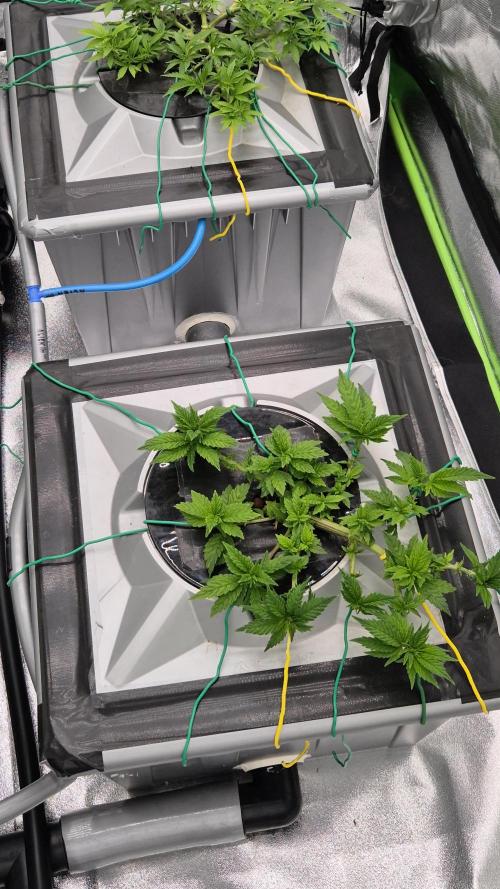
Week 6, here we are.... finally after 6 months of repeated losses and lessons, we've finally made it! Secret ingredient that no one told me. Uv sterilizer and pythoff
Overall I think Grape og is doing well. Notice that in early veg she handles stress, topping and lst nicely but further down in veg she had more temperament, showed more nute burn, slow growth from defoil and topping but bounces back rather quickly even after a complete cut down to her bareback of stems.
Light went from 60% to 90% over Week 5 to Week 6, next 2 days she'll be at 100% ready for flowering.
2 set AC infinity bar lights will go in over this week as well as my scrogg net.
Nutrients this round
Floramax veg1
Floramax organabud
Floramax flowering enhancer ( 1/4 ) dose
Flairforms roots
Sleepz with the fishes ( pythoff )
Cyco platinum series silica
Floramax Calmag
E.c 2.2
Ph 5.9-6
Will continue to keep doing lst and defoilation. I like to keep my lst on for my whole grow due to the way I LST, this will be the first time using a scrogg net to help with spread management, if I feel confident and comfortable ill remove lst in later flower if scrogg net will hold in place other the lady will curl in on herself

Likes
4
Share


@adam_pawloski87
Follow
@twenty20mendocino Ateam R&D Update ~ Let’s go day 91 an these girls are doing amazing! Looking nice an healthy we will let these girls recover for a few more days from the heavy defoliation and on Sunday we will be giving them the big flip , Let’s go flower!! Updates coming soon !
Sangria has been doing her thing , been drying for12 days now so Sunday we will be giving her the trim and jar her up, but updates coming soon yall!! Let’s have an amazing productive day as well as a great safe weekend, peace love an positive vibes to y’all Cheers an blaze on 😶🌫️💨💨💨💨

Likes
35
Share


@eldruida_lamota
Follow
Bueno familia ya finalizamos, estas red hot cookies son una cepa bestial.
La verdad que el secado muy bien 7 días en Malla y a los botes, 45% humedad y 23 grados es la temperatura ambiental que han tenido en el secado.
4 plantas que se cultivaron en un armario de 1.20 pero estos ejemplares solo ocuparon 80x80.
Así que ya está cultivada esta gran variedad que es novedad este 2020, americana de la familia Cookies, la Tropicanna Cookies (Girl Scout Cookies x Tangie) con un porcentaje de thc entre los 17/25%, una bomba.
Que decir de Agrobeta, lo peta 💪 en cuanto a nutrientes. Un saludo y buenos humos.

Likes
2
Share

@Lvnsource
Follow
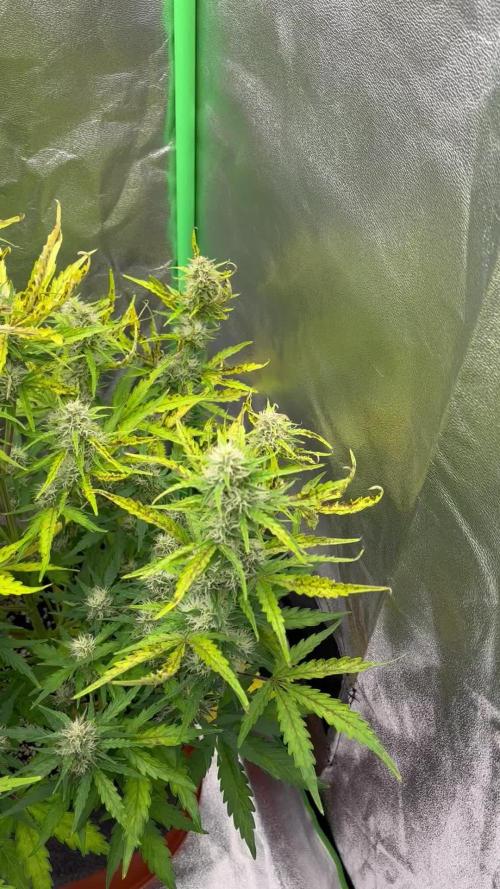
All I’m going to say is ooouff, it’s been a rough one this run and the plants took a beating especially the younger sister who’s got necrosis all over because of one fatal mistake I made; I didn’t use the correct calcium to magnesium ratio , the result ? Calcium lockout. I’m happy to say that I have managed to halt it though! Although I’m way too late , I think #2 is going to finish just fine, it’s not going to be 10/10 yield wise but there’ll be something :) As for #1 she is in a much better spot , the crown and few tops here and there are a lighter shade of green (which looks yellowish under the lights) but in actual ambient light they’re a shade darker. Well lesson learned, respect the calmag ratios! 😅
Likes
18
Share


@HippyHydro
Follow
Overall a good time spent... Loved sitting and paying weekly attention to the environment its quite therapeutic.. Even if its a case of sitting and staring for 20 minutes... (effects and taste will be updated once completed drying)


Likes
10
Share


@TheThiccBud
Follow
not much to say 😅 flowers become THICC, it is remarkable that the BUD becomes violently frosty and it looks like a good harvest 😍😇


Processing
Likes
9
Share


@Kushizlez
Follow
Everything coming along nicely. I’ve discontinued all nutes but will give one more little top dressing to the cheese plant tomorrow then that’s it. Just straight stabilized RO water from here out. The slurricane is just packing on PM like crazy. The cheese has actually stopped the spread for the most part. At harvest I’m going to wash the shit out of the slurricane and cheese with some warm RO water and some h202 to get the majority of it dissolved. Other than that the quality of the slurricane is beyond ridiculous. It’s by far the stickiest strain to the touch in the tent. It’s probably winning for smell too. It’s straight gassy licorice pine. The pm susceptibility is a deal breaking drawback though.
The cheese is looking good and smells great. It almost smells like rotten milk. Some of the nugs are really filling out into these nice long chunky little things. The pistils are turning a light orange/pink color too. Unfortunately it’s not maturing at the same rate and will make everything in the tent go for another 1.5-2 weeks.
Garlics are looking better. The lanky pheno has filled out quite a bit more than expected and is super frosty with a great smell. It’s finally starting to purple up a bit. I think it will still be quite leafy around harvest but time will tell. Pheno 2 has better structure and density but lacks frost, smell and color. Not very impressed by it honestly.
The zkittlez is looking great and getting super frosty. Especially around the crowns of the top colas. Lowers look like shit though. Despite being somewhat leafy, the main branches look quite dense. It’s probably the shortest and bushiest plant in the garden. It’s yellowing out quite a bit now and will probably finish with the blackberries and slurricane.
The blackberries look amazing and smell even better. One of the phenos is a crazy producer and creates massive buds with musky berry terps. The other pheno is a beautiful purple strain that produces a crazy amount of frost and chunky golf ball nugs at the expense of large yield. It’s smell is very sweet and candy like and has been a very low feeding and maintenance plant.
Slurricane #4 looks great aside from its infection. It definitely wins for resin content and smell but looks like a low yielder.


