


Likes
Comments
Share


@Localbudz
Follow
What a run!!!! my first grow was a massive success a wet weight of 3696 Grams. 16 colas in total from the V-8 manifolding technique i used on my two ladies. The average weight wet of each cola was 81.2 grams! I have this haul back in my tent ⛺. Excellent air flow not directly at the buds. I have the humidity at 50%. I expect a 10 to 12 day drying period with a 3 week minimum cure. I am taking a short break and starting a new crop of 4. Will be switching to either dwc or autopots. Have sour jack from crop king seeds still looking for an Indica. Will be running two sativa two indica under my twin TSL 2000. Check back for dry weight and pics of this first of many grows from Localbudz.


Likes
8
Share


@Tmasm
Follow
Panta está linda, crescendo bem.
Gosto muito do desempenho dela, barraca com condições mínimas, mas para ela tudo bem.
Primeiras fábricas automática da Zamnésia, estou impressionado com a qualidade dos produtos.
Visite www.zamnesia.com, você ficará surpreso com a variedade de produtos, todos da mais alta qualidade
https://www.zamnesia.io/magic-mushroom-dosage-calculator
https://www.zamnesia.com

Likes
6
Share


@Growbody
Follow
Tag 88: Die Epsilon F1 Automatic von Royal Queen Seeds hat den besten Zeitpunkt zur Ernte erreicht. Blütetag in der Erntezeit. Das verspricht den höchsten Ölgehalt und damit die höchstmögliche Aromaausbeute. Die Buds sind klebrig und sehr hart. Ich versuche die Schöne langsam zu trocknen, ich schalte nur abends für ein paar Stunden den Venti an. Das Nassgewicht ist mit einer Küchenwaage gemessen und nur grob über den Daumen ernst zu nehmen. Schliesslich zählt das Trockene. 🥦 😀

Likes
2
Share

@DogDoctorOfficial
Follow
🍮 8×8 Adventure – Week 11
Chem Brûlée – Pheno B
Hungry, Frosty & Still Asking for More 🌸❄️💡
Hello everyone, and welcome back to another chapter of the 8×8 Adventure! 🌱💚
And here we go again...
Chem Brûlée Pheno B.
If you've been following her diary, you already know this girl has never really been shy about expressing herself.
She's tall.
She's vigorous.
She's hungry.
She's beautifully structured.
And she's definitely not the quiet girl in the room. 😂
But this week, something interesting happened.
The plant itself didn't need much from me.
The room changed.
The lighting system received a serious upgrade.
The nutrition moved forward slightly.
And then...
we stepped back.
Because at this stage of flowering, sometimes the most important thing we can do is provide what the plant needs and let her get on with the job.
And Chem Brûlée Pheno B?
She's doing exactly that.
She's still shining.
She's still hungry.
She's still building.
And she's still very much herself.
🍮🌸❄️💡
────────────────────────
🌸 Week 11 – Let Her Keep Building
Chem Brûlée Pheno B remains around 130 cm, maintaining that taller, more open architecture that has separated her from her sister throughout this journey.
And honestly...
I'm really enjoying watching what she's doing with that structure.
The height isn't the story anymore.
The flowers are.
The plant has already established her architecture.
The branches are positioned.
The flowering sites are developing.
And now we're watching that framework slowly become something much more substantial.
This is the stage where I don't feel the need to constantly interfere.
She's healthy.
She's green.
She's flowering.
She's developing resin.
She's using the environment.
So...
let her work.
────────────────────────
🍽️ Yes... She's Still Hungry
If there's one thing Chem Brûlée Pheno B has made extremely clear throughout this grow, it's that she has an appetite.
😂🍽️🌿
She seems to look at the environment we've created and say:
"Okay... what else have you got?"
And while we obviously don't make nutritional decisions based purely on appearance, her vigorous growth and continued flower development make her a very interesting phenotype to observe.
She's using resources.
She's producing new floral development.
She's maintaining her foliage.
She's processing all that available light.
And she's continuing to build.
So yes...
our hungry girl is still hungry.
And we're listening.
We're not throwing everything at her.
We're not changing things dramatically.
We're simply making measured adjustments and watching the response.
That's the approach.
────────────────────────
❄️ The Frost Is Becoming Part of Her Personality
One of the things becoming increasingly difficult to ignore is the resin.
The frost is developing beautifully.
When you look at the plant from a distance, you see her overall architecture.
Move closer...
and suddenly the story changes.
Pistils.
Sugar leaves.
Trichomes.
Flower structure.
Texture.
Tiny details everywhere.
That's one of the reasons I love documenting these plants individually.
The wide photograph tells you where the plant is.
The macro photograph starts telling you what she's becoming.
And Chem Brûlée Pheno B is becoming increasingly interesting.
She's not finished.
Not even close.
But the direction?
I really like it.
────────────────────────
🌸 The Flowers Are Taking Shape
The developing flowers continue becoming more defined.
Those long white pistils are still reaching outward from the developing structures, giving the flowers that almost explosive appearance we've been watching.
But underneath those hairs, something more substantial is happening.
The buds are gaining structure.
The individual flowering sites are becoming easier to distinguish.
And the plant is slowly moving away from:
"I have flowering sites."
toward:
"I'm building flowers."
That's the transition we're watching now.
And because Pheno B has such a distinctive structure, it's particularly satisfying to see those flowers developing throughout her branches.
The architecture is becoming the foundation.
The flowers are becoming the story.
────────────────────────
💡 The 8×8 Just Got A Serious Photon Upgrade
Now let's talk about the biggest change this week.
The plants themselves didn't need much intervention.
But the lighting environment received a major upgrade.
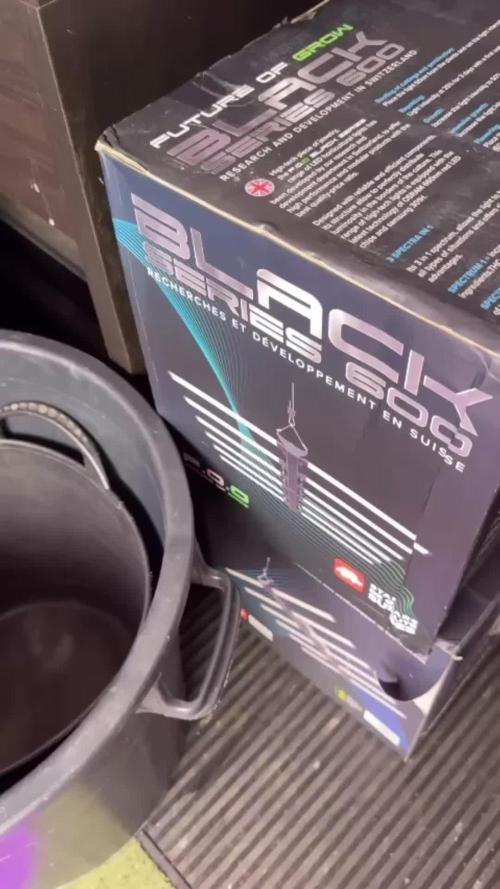
We've added two additional Future of Grow Black Series 600W fixtures to the 8×8.
And...
yes.
We definitely noticed. 😂💡
The available light increased more than I wanted initially.
So rather than simply running everything harder, we reduced the output.
We're currently running at approximately:
🔌 59% power from the plug.
And we're seeing approximately:
☀️ 1,500 PPFD across the upper canopy.
That's a serious amount of available light.
And I much prefer having that capacity available while controlling how much of it we're actually using.
We're not chasing the biggest number possible.
We're looking for the level that makes sense for the plants and the room.
And right now...
I'm very happy with where we've landed.
────────────────────────
☀️ More Light Doesn't Mean We Need More Power
This is something I particularly like about the new setup.
We now have considerably more lighting capability.
But we're not obligated to use all of it.
We added the two additional fixtures.
We measured the result.
The PPFD went higher than I wanted.
So we turned them down.
Now we're around 59% power from the plug.
Approximately 1,500 PPFD across the upper canopy.
And we're also saving electricity compared with simply running all the fixtures at maximum output.
That's a win for me.
We're testing the fixtures properly.
We're learning what they can do.
We're finding a practical operating point.
And we're not wasting power just because we have it available.
That's exactly what I wanted from this lighting upgrade.
────────────────────────
💚 Future Of Grow – A Big Thank You
A special shout-out this week to Future of Grow.
They provided the two additional Black Series 600W fixtures for us to test here in the 8×8 Adventure.
And now we're putting them to work.
Real room.
Real flowering plants.
Real measurements.
Real adjustments.
The additional fixtures gave us more lighting capability than we initially wanted, so we reduced the output to approximately 59%.
We're now seeing around 1,500 PPFD across the upper canopy.
And I'm genuinely happy with the balance.
Strong lighting.
More control.
Lower power consumption than running everything flat out.
And twelve different plants showing us how they respond.
Thank you, Future of Grow, for giving us the opportunity to test these additional fixtures and see what they can do in a real grow environment.
────────────────────────
☀️ Chem Brûlée Under The New Artificial Sun
And here's where things get fascinating.
The lighting environment has changed.
But Chem Brûlée Pheno B hasn't suddenly become another plant.
She's still tall.
Still vigorous.
Still hungry.
Still beautifully structured.
Still developing those flowers.
Still frosting up.
That's the beauty of genetics.
We can provide the environment.
We can provide the photons.
But the plant decides what to do with them.
The same light can fall on two phenotypes and produce two completely different stories.
And Pheno B is continuing to write hers.
She's taking that available energy and putting it toward what she does best:
growing.
Building.
Flowering.
────────────────────────
☀️ Around 1,500 PPFD Across The Upper Canopy
The approximately 1,500 PPFD we're currently seeing is across the upper canopy.
And with Pheno B, that distinction is particularly important.
She's a tall plant.
Her flowers and leaves occupy different levels.
The top of the plant sees stronger direct illumination.
The middle receives a different intensity.
The inner areas receive less direct exposure.
And lower parts of the structure naturally receive something different again.
That's completely normal.
A plant isn't a flat surface.
It's a three-dimensional solar field.
😂🌿☀️
Our goal isn't to make every single flower receive identical light.
It's to create a strong, useful lighting environment while allowing the plant to use the available photons effectively.
And that's why the ability to control the output is so valuable.
We can provide a very powerful artificial sun without necessarily running it at maximum intensity.
────────────────────────
💡 Photons Are Only One Part Of The Equation
I've talked about photons throughout this project because they're fundamental to what we're doing.
But they're never the entire story.
Light interacts with temperature.
Temperature interacts with transpiration.
Water availability affects nutrient movement.
Root-zone conditions influence uptake.
Nutrition supports development.
CO₂ influences photosynthetic potential.
Plant structure determines how photons move through the canopy.
Everything is connected.
That's why I don't want to simply keep increasing light because we can.
The objective is balance.
Give the plant strong usable light.
Keep the environment appropriate.
Maintain irrigation.
Support nutrition.
Observe.
And adjust when the plant actually tells us something needs changing.
Right now?
Chem Brûlée Pheno B is telling us she's happy.
────────────────────────
⚗️ Nutrition – A Small Step Forward
We've also made a small adjustment to the flowering nutrition this week.
Nothing dramatic.
We're simply moving Terra Bloom from 2.2 ml/L to:
🌱 Terra Bloom — 2.3 ml/L
The rest of the recipe remains:
🌱 Green Sensation — 1 ml/L
🌱 Power Buds — 1 ml/L
🌱 Sugar Royal — 1 ml/L
🌱 pH adjustment as required
That small increase brought the EC up slightly.
We're now around:
⚡ EC — 2.14 mS/cm
Again...
small adjustment.
Small movement.
Measured response.
We're not trying to reinvent the feeding programme.
The plants are developing beautifully.
So we're simply giving the flowering nutrition a small progression and watching how they respond.
And our hungry girl?
She's certainly giving us plenty to watch.
😂🍽️🌸
────────────────────────
💧 Irrigation – Let The System Keep Doing Its Job
The irrigation system remains consistent.
We're currently around:
💧 1.45 L per plant / 24 hours
with approximately:
🌡️ Solution temperature — 25°C
🥥 Substrate temperature — 25°C
At this stage, consistency becomes increasingly important.
The plant doesn't need us constantly changing things.
She needs a reliable root environment.
She needs water.
She needs nutrition.
She needs oxygen around the roots.
And then...
she needs time.
So that's what we're giving her.
The system continues doing its job in the background while we concentrate on observation.
────────────────────────
🌡️ Week 11 – Current Environment
The room is currently running approximately:
• 🌡️ Day Temperature: 26.5°C
• 🌙 Night Temperature: 26°C
• 💧 Relative Humidity: 61%
• 🥥 Substrate Temperature: 25°C
• 💦 Nutrient Solution Temperature: 25°C
• ⚗️ pH: 6.02
• ⚡ EC: 2.14 mS/cm
• 💨 CO₂: approximately 693 ppm
• 💡 Light Schedule: 12/12
• 💧 Irrigation: approximately 1.45 L/plant/24h
• ? Pot Size: 15 L
• 📏 Plant Height: approximately 130 cm
The environment remains broadly stable.
Summer still likes to remind us that absolute precision isn't always possible. 😂☀️
So the objective isn't chasing one perfect number.
It's maintaining a stable overall environment.
Avoiding unnecessary swings.
Watching the plants.
And responding when something actually needs attention.
Right now...
Pheno B looks very comfortable.
────────────────────────
🌿 No Need To Manufacture Work
This is probably one of the biggest themes of this week's report.
We're not doing much to the plants.
And that's intentional.
Earlier in the grow, we had plenty of work.
Training.
Structure.
Canopy management.
Defoliation.
Positioning.
Adjustments.
But now?
The plant has done most of the building.
She's created the architecture.
She's established the flowering sites.
She's developed the canopy.
She's now putting her energy into the flowers.
So I'm not going to manufacture work simply because I feel like I should be doing something.
Healthy leaves are working.
Flowers are developing.
The plant is healthy.
Air is moving.
Light is available.
Nutrition is consistent.
Water is being delivered.
Sometimes...
the best thing a grower can do is leave a healthy plant alone.
And our hungry girl seems perfectly happy with that arrangement.
────────────────────────
🌸 She's Putting Those Photons Somewhere
This is what I really enjoy about looking at Pheno B now.
We can actually see the result of all that invisible energy.
The photons are arriving.
The leaves are capturing light.
The plant is processing that energy.
And the visible result is right there:
More flower structure.
More definition.
More resin.
More development.
The plant itself becomes the record of what's happening.
And Pheno B is giving us a pretty impressive record.
She's not sitting still.
She's working.
Hard.
😂🌿
────────────────────────
📸 The Camera Is Still Loving Her
And once again...
this girl is fun to photograph.
😂📸
The full-plant shots show that tall, open architecture.
The middle-distance photographs show how the flowers are distributed through the branches.
And then you get closer...
and suddenly the frame becomes pistils, resin and flower structure.
That's the beauty of photographing the same plant every week.
You stop relying on memory.
You can actually compare.
Week after week.
Flower after flower.
Change after change.
And when you look back at the early photographs?
The difference is remarkable.
Chem Brûlée Pheno B has travelled a long way.
And she's not finished yet.
────────────────────────
Same Environment. Completely Her Own Answer.
This is still the heart of the 8×8 Adventure.
Twelve plants.
One room.
Shared environmental conditions.
Shared general lighting philosophy.
Shared irrigation.
Shared nutrition.
And yet...
twelve individual stories.
Pheno B is another perfect example.
She isn't Pheno A.
She isn't one of the compact girls.
She isn't one of the quieter phenotypes.
She's tall.
She's vigorous.
She's hungry.
She's frosty.
And she's developing her flowers in her own particular way.
The environment gives her the opportunity.
The genetics decide how she uses it.
And honestly?
I really like her answer.
────────────────────────
🍮 The Hungry Girl Is Still Hungry
If I had to choose one sentence for this week's report, it would probably be:
"She's still asking for more."
😂🍽️🌿
More photons.
More time.
More room to build.
More opportunity to develop.
And we're giving her those things in a controlled way.
Not blindly.
Not excessively.
But consistently.
The new lighting gives us additional capacity.
The small nutritional increase gives the flowering programme a little more room.
The irrigation keeps the root environment supplied.
The environment remains stable.
And then...
we watch.
That's the relationship between grower and plant at this stage.
We provide.
She responds.
We observe.
And when necessary...
we adjust.
────────────────────────
🔬 The Lighting Experiment Continues
The two additional Future of Grow Black Series 600W fixtures have added another fascinating layer to this project.
We now have substantially more lighting capability than before.
But the interesting result isn't simply the maximum output.
It's finding the useful operating point.
The PPFD initially went higher than I wanted.
So we reduced the fixtures to approximately 59% power from the plug.
We're now seeing around 1,500 PPFD across the upper canopy.
And we're doing it while using less electricity than running the fixtures at maximum output.
That's exactly the kind of practical information I wanted from this experiment.
The hardware gives us the capability.
The measurements tell us what is actually happening.
And the plants tell us whether they like it.
Chem Brûlée Pheno B?
So far...
she's looking pretty happy.
────────────────────────
🔮 Looking Ahead
From here, the plan remains beautifully simple.
Keep watching.
Keep photographing.
Keep the environment stable.
Keep irrigation consistent.
Keep nutrition appropriate.
Keep monitoring the lighting.
And let Pheno B continue doing what she's been doing.
Over the coming weeks, I'll be watching:
🌸 Continued flower development
❄️ Increasing resin coverage
🌿 Healthy foliage
💡 Response to the stronger lighting environment
💧 Water demand
🌡️ Environmental stability
🌬️ Air movement through the canopy
📈 Increasing flower density and definition
No need to force the next chapter.
She's already writing it.
We'll simply be here to document it.
────────────────────────
💭 Final Thoughts – Let This Hungry Girl Shine
Chem Brûlée Pheno B continues to be exactly what she has shown us throughout this journey.
Tall.
Vigorous.
Hungry.
Beautiful.
Distinctive.
And increasingly frosty.
This week, we didn't need to do much to her.
And that's a good thing.
We added two additional Future of Grow Black Series 600W fixtures.
We measured the increased light.
The PPFD went higher than I wanted.
So we reduced the output to approximately 59%.
We're now sitting around 1,500 PPFD across the upper canopy.
We increased Terra Bloom slightly from 2.2 to 2.3 ml/L.
The EC moved a little higher to approximately 2.14 mS/cm.
And then...
we stepped back.
Because she's doing her job.
She's taking the photons.
She's using the water.
She's using the nutrition.
She's building flowers.
She's producing resin.
She's becoming more and more herself.
And honestly?
That's exactly what I want to see.
The goal isn't to make her behave like another phenotype.
It's to give her the opportunity to show us what she can become.
And Chem Brûlée Pheno B is definitely taking that opportunity.
🍮🌸❄️💡🔥
So keep shining, hungry girl.
Keep building.
Keep frosting up.
Keep showing us what your particular expression of Chem Brûlée can become.
We're watching.
We're photographing.
We're learning.
And we're enjoying every minute of it.
────────────────────────
🙏 Thank You
A huge thank you to everyone following the 8×8 Adventure and taking the time to follow these individual stories.
Thank you to GrowDiaries for giving us the platform to document the journey and share what we're learning along the way.
Thank you to Zamnesia for the Chem Brûlée genetics and for giving us the opportunity to explore different phenotypes side by side.
Thank you to Plagron for supporting the garden with the nutrition and growing programme throughout this adventure.
And a massive thank you to Future of Grow for providing the Black Series lighting and, especially this week, for providing the two additional 600W fixtures for us to test in the 8×8.
Being able to increase the lighting capability, measure the response, reduce the output and find a practical operating point has been a fantastic part of this experiment.
We're currently running around 59% power and seeing approximately 1,500 PPFD across the upper canopy while also keeping electricity consumption lower than simply running everything at full power.
That's real-world testing.
That's what I like.
Thank you as well to Lumiflora for helping illuminate the deeper parts of the canopy and giving us another perspective on three-dimensional lighting.
And thank you to TrolMaster for helping us monitor and manage the environment behind the scenes.
And finally...
thank you to everyone following along.
Every comment.
Every question.
Every message.
Every person stopping by to see what these girls are doing.
You're all part of the adventure.
Twelve plants.
One room.
One shared environment.
And twelve completely different stories.
Chem Brûlée Pheno B is writing hers with an appetite.
😂🍽️🌸
She's hungry.
She's frosty.
She's beautiful.
She's developing some gorgeous flowers.
And she's still asking for more.
So let's give her the spotlight.
Let's keep those photons flying.
Let's keep watching those flowers develop.
And let's see just how far this hungry girl wants to take us.
🍮❄️🌸💡🔥
Until next week...
Growers Love, my friends, and happy growing! 🌱💚
See you next week in the 8×8 jungle. 🌿📸🍮
Likes
11
Share

@PapaTerps
Follow
Potion - Wizard Trees
Day 111
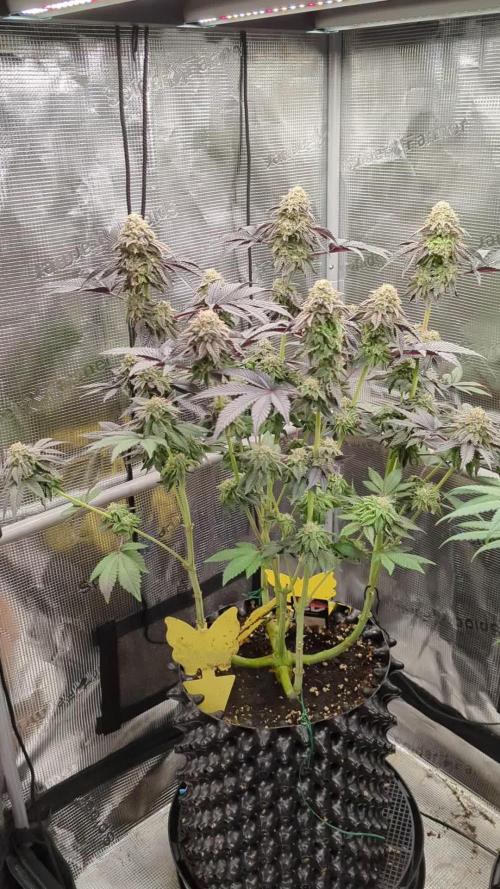
🚿 She has been watered every thee days with 2L of RO tap water pH'd to 6.3. As she is approaching harvest, I have slowly reduced the nutrients until she was receiving just plain water. From today, she is just about half way through flush, so another watering and then she'll be left to dry back.
✂️ I've removed a couple of larger sugar leaves from around the flowers at the top canopy to improve light penetration, as well as the usual inspections for mold and pests👍🏻
🌸 She's now in week 8 of bloom, her leaves have all turned purple, most of her sugar leaves too - the trichomes on her sugar leaves have also started to turn amber in clusters, which can almost be mistaken for rust 🤣 All of her trichomes have turned milky clear and her pistils are mostly amber too, so one more watering and that'll be that folks 🏻

Likes
107
Share


@Afterglow
Follow
Моя девочка за неделю выросла на 12 сантиметров и начала цвести, при этом еще и расширившись в стороны и заполнив все пространство бокса.
Опасаюсь, что она упрется в лампы и все ни как не могу решиться основные ветки еще немного погнуть в бок, чтобы уж неаверняка. Мне нравится как она выглядит: красиво, аккуратно, и погнув станет похожа на уродца.
Перешли на предцветное питание в начале недели. В это раз решил не использовать трехкомпонентные удобрения, а продолжить использовать Advanced Nutrients, уж очень хорошо на них растет.
За PH не смотрю, только контролирую PPM, который стабильный как константа что на влив, что в дренаже. Да и листья все целые, ни намека на болезнь, так как увеличил фосфор и калий, и убрал Cal-Mag, прошел легкий профицит азота.
Спасибо что заглянули.

Likes
7
Share


@Mr_Maritime
Follow
What a week.
Set up my new light today, next week should be 🔥
Had a mishap during lst and broke one of my better branches. I bandaged her with frog tape without wrapping it. She responded well and is back at it. Think I’ll leave the tape and let her break through it.
I’m going to start eyeing changes with my nutes now that I expect her to drink more under this light. I will likely start watering more than twice a week. Right now she gets 1L every 3-4 days.
Lemme know what you think. I’m stoked fr.
Likes
142
Share


@PapaNugs
Follow
A great week. Included a diagram so you can better tell which plant is which. I will be changing that up come flower to better fit the plants so I'll label them later as well.
Gonna flip to flower I believe to try and save space. Gonna be tight but wasn't planning that this time. Have to do a lot of training still. Haven't gotten to it due to being so busy with life.
I got some BT var israelensis or something close to that for the fungus gnats thanks to @resimax and will test that.
Lastly, you might catch a glance at the upcoming diary...

Likes
14
Share

@Nillenium
Follow
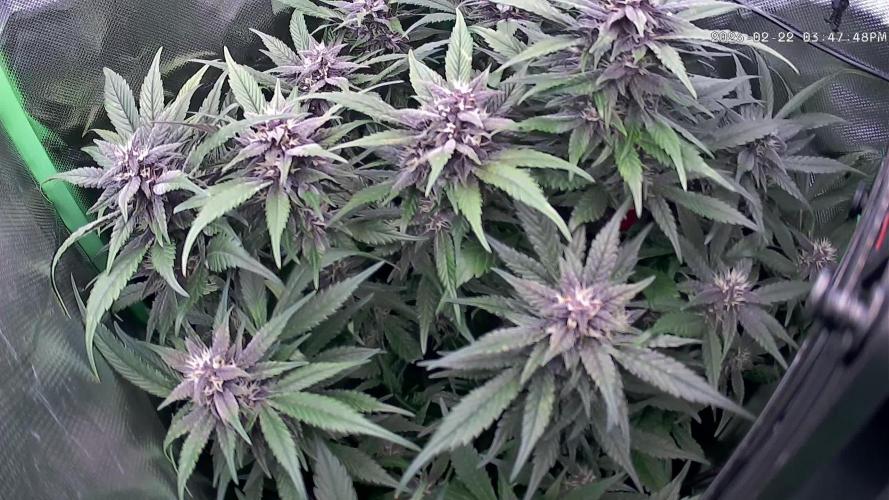
Wir haben Woche 9 hinter uns und die Pflanze fängt ein bischen an zu zicken, aber ich ignoriere es einfach. Sie wird schon fertig werden und es wird etwas brauchbares bei rum kommen.

Likes
Comments
Share


@LokalGrenz
Follow
Having cal mag issues going to hit the grow store tomorrow am and see can I get some organic cal mag and see if that helps other than that no real issues
2/24
I’m going sit my dumb ass down and chill I did a defoliation and man I over did it I think it’s pretty aggressive and i don’t know what I was thinking I was just clipping away 🤦🏾♂️…… anyway got some calmag for the color issues only going 1/2 tsp see how that goes hopefully when the new growth and more stretch happens it’ll look a lot better I’m also bottom feeding the calmag hope that works too
Likes
14
Share


@Redbud66
Follow
Lots of bud sites coming out.
Day 46 Gaia green top dressing for the 3 Gelato’s

Likes
8
Share


@GarciasGarden
Follow
Sorry I couldn’t get a lot of pics this week been busy planning the drying process for this one and they are getting cut down tomorrow ! Well some of them are! Bye bye biscotti mintz 1/2 and GMO Punch #4

Processing
Likes
17
Share


@greennug
Follow
shortest plant is 50cm tallest being 95cm. They are all doing wonderfully, most of autos are budding nicely and all of the photoperiods are ready to flower. looking very promising. i am changing my light schedule to 14-10 to kick these girls into flower.. this will give the plants an extra 17% (or so) a day under the lights.rather than 12-12. i cant be fussy as i only have one grow space but if my research is correct these should grow beautifully! the autos are well ahead so shouldnt affect my harvest weight too much. like i say i cant be fussy! thanks for looking


Likes
16
Share

@Naujas
Follow
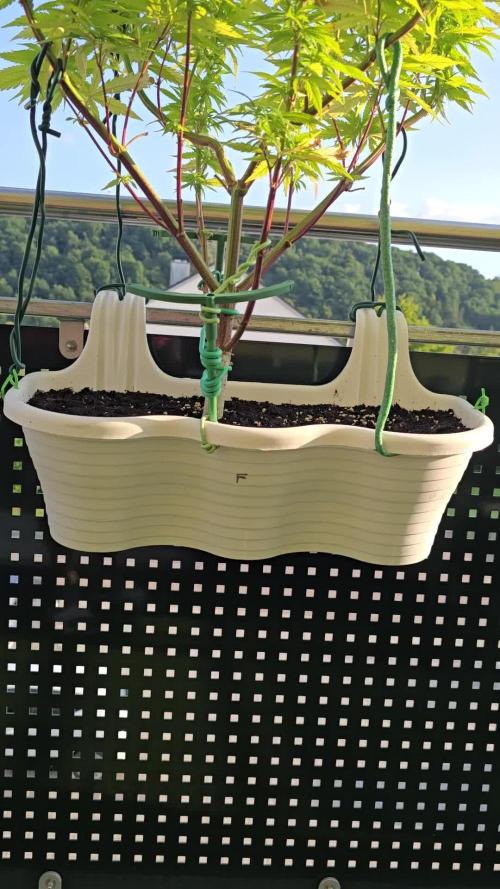
112 days!!!! This week was very difficult for the girl, because it rained a lot, but from today the weather forecast promises only good weather, I hope it will be so, next Saturday, I'm going on a long vacation, the girl will be without me for 3 weeks, so I won't be able to hide her from bad weather, I will leave the automatic watering which I will control via wifi, once a week I will ask a person to come to water with nutrients and take photos, :) so there will be weekly updates, but with fewer photos:) good luck to everyone :)
Likes
2
Share
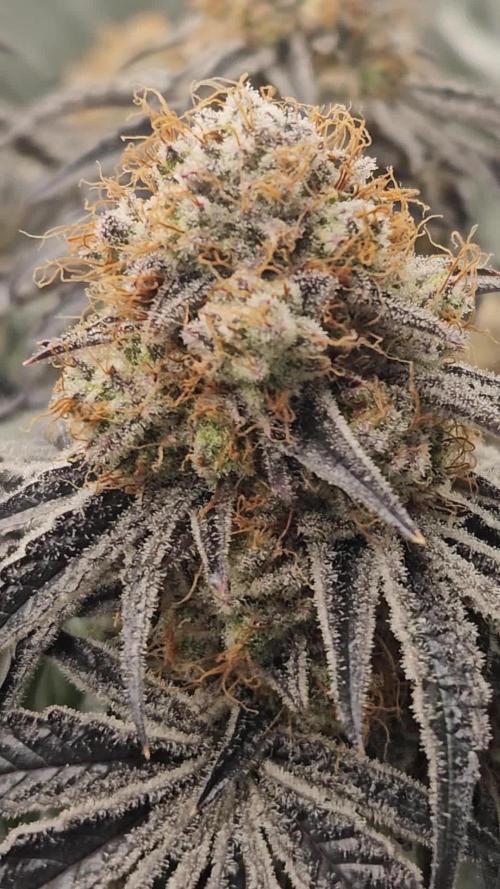

@NoProbation4Weed
Follow
One Bud was moldy where the other plants had no issues. This strain might me a little susceptible to mold.
The Terps on this are very nice. Dark Grape with hints of lemon.
Very Sticky and not very hard Trichome shells. maybe good for flower rosin or under cold contidions even for Hash Rosin.

Likes
3
Share


@MadBumbleBee
Follow
Day 35: Defoliation on some of my overgrown plants.
Day 40: My tallest plant is 43cm tall. Pretty good size, should double or even triple when it comes time to flower. Have had no problems so far, no issues with fungi or bacteria in my plants.

Likes
67
Share


@Ultraviolet
Follow
Inhale for 13s, Exhale for 13s,
Inhale for 8s, Exhale for 8s,
Inhale for 5s, Exhale for 5s,
Inhale for 3s, Exhale for 3s,
Inhale for 1s, Exhale for 1s,
Alignment. 1.618
A plant with both standard cellular respiration (occurring throughout the plant, including leaves and stems) and adequate root respiration will have a significantly higher ATP throughput than one restricted to only general cellular respiration in a limited way.
Cellular respiration is the fundamental metabolic process that occurs in all living plant cells (roots, stems, leaves, flowers, seeds) to convert glucose into usable energy (ATP). It requires oxygen and produces carbon dioxide and water as byproducts.
Root respiration is not a separate type of respiration, but rather a specific instance of cellular respiration occurring in the roots. Roots absorb oxygen from the air spaces in the soil to fuel their energy needs.
Roots require a substantial amount of ATP for essential functions like nutrient and water absorption, as well as growth and maintenance of their tissues.
The primary form of respiration in healthy plant roots is aerobic respiration, which is highly efficient, yielding up to 30-38 ATP molecules per glucose molecule.
Anaerobic Respiration (Inefficient): If roots are deprived of oxygen (e.g., in waterlogged soil), they switch to anaerobic respiration, which is far less efficient, producing only 2 ATP molecules per glucose molecule and also generating alcohol, which can be toxic and kill the plant.
Therefore, a plant with healthy, oxygenated roots performing efficient aerobic respiration in addition to the rest of the plant's cellular respiration has a much greater overall ATP production and energy capacity.
A soil without organic matter will generally have a low Cation Exchange Capacity (CEC).
Biochar is often prized for its potential to increase soil cation exchange capacity (CEC), but this effect is highly dependent on the specific properties of the biochar (feedstock and pyrolysis temperature) and the soil type to which it is applied.
High-ash biochars, especially those produced at lower temperatures and applied to acidic or sandy soils, can significantly boost CEC by providing abundant binding sites for cations like calcium (Ca²⁺), magnesium (Mg²⁺), and potassium (K⁺).
Biochar is more sustainable than typical organic matter for long-term soil improvement primarily due to its high stability and resistance to microbial decomposition, allowing it to persist in the soil for hundreds to thousands of years. This longevity provides a lasting positive effect on soil properties, particularly by increasing the cation exchange capacity (CEC) over time, while regular organic matter breaks down much faster.
Biochar generally offers a much higher CEC than coco coir, though specific values vary greatly; while coco coir might sit around 40-60 cmol/kg, biochar can range from tens to over 200 cmol/kg, with sources like Acacia wood biochar or even coconut shell biochar often surpassing coco's capacity due to its porous structure, creating significantly more cation-binding sites for nutrients, making it superior for nutrient retention.
Needs to be charged similar to coco but at a much higger rate. But shhhh.. it's a secret.
Recommend a balanced ratio of key cations, particularly calcium (Ca), magnesium (Mg), and potassium (K). A widely accepted general "ideal soil" cation saturation ratio is approximately 65-85% Ca, 6-12% Mg, and 2-5% K. That's roughly what mine gets.
Likes
7
Share


@MicroHidroGrow
Follow
Día 22. El estirón ha frenado. Las plantas están empezando a llenarse de flores. Se me hace extraño tener las plantas con esta forma, dado que siempre he usado cortes y LST. Se ven bastante bien, aunque cada vez que las miro, me dan ganas de cortarle alguna otra rama. Pero no quisiera mermar el rendimiento. Ya a esta altura sería más.contraproducente que otra cosa. Pero creo que debí haber sacado más ramas de las que saqué.
Día 24. Fui un iluso al pensar que el crecimiento había frenado. Hoy ya las plantas tienen 5 cm más que hace dos días. Voy a tener que doblarlas si siguen a este ritmo. Tuve que hacer un video, ya que no tengo lugar para sacar fotos en contra picado. Veo que se están llenando de flores y empiezo a imaginar el resultado final.
Día 26. Las plantas crecieron otros 5 cm en estos dos días. Ya estan 65 cm. Me empieza a preocupar, por lo que supongo que voy a tener que doblarlas un poco. Seguramente solamente doble las dos mas altas cruzadas entre si. Vengo ilusionado, pero sospecho que van a ser necesarias entre 7 y 8 semanas. Tuve que agregar solución, ya que había bajado mucho el nivel del depósito, y agregué un poco de bud blood. Voy a seguir usándolo hasta el momento del PK. Seguiré actualizando.
