




Likes
6
Share

@GoodTimesOrganics
Follow
Hi liebe Community and Welcome Back! 💚
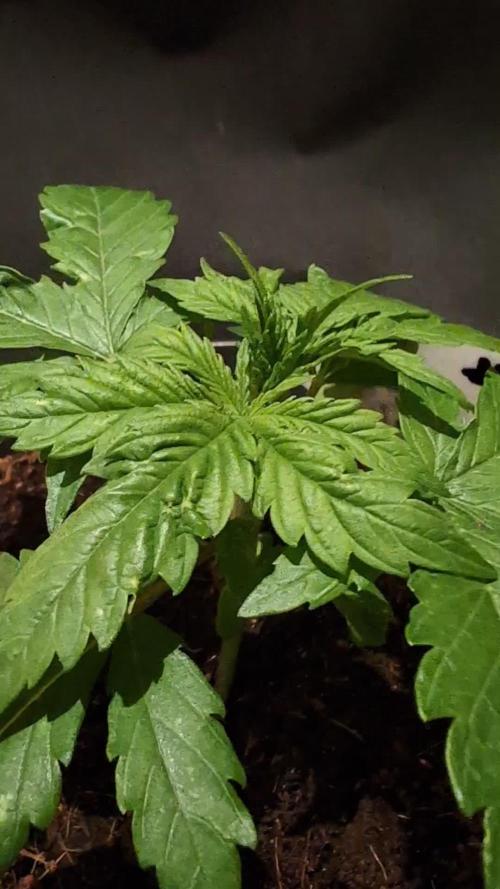
Nach der dritten Wachstumswochen entwickelt sich die Orange Bud solide. An den Blättern sind ein paar Macken feststellbar, jedoch nimmt das auf die Entwicklung aktuell keinen Einfluss.
Die neuen Blätter sehen sehr Gesund aus und insgesammt hat sich die Pflanze gut erholt.
Die Umgebungsgegebenheiten sind aktuell gut:
—————
🌞 Temp: 21
🌚 Temp: 18°C bis 19°C
💨 RH: 48%
VPD: 1,00 kPa
💡ppfd: 330 mpm
—————
Viele Grüße 👋


Likes
23
Share


@adam_pawloski87
Follow
This week was really great ! Today is day 43 and this week I tied them down a little more for LST and these 5 Wedding Cheesecakes are all starting to flower!! This week they will be getting a different dose of nutrients, switching to bloom so I’ll will be measuring out 1tsp of grow instead of 3 tsp , an bloom will be 3 tsp instead of 1 tsp, everything else remains the same per gallon of pure filtered water!! Can’t wait to see how these girls start stacking!! Y’all stay tuned for next week !! Happy grows✌️

Likes
567
Share


@Legendaryseedthumb
Follow
Day 26: the girls are starting to smeeeelllll aloooot! They haven’t popped the hairs yet but almost there! I just want them to start stretching soon so I can use my net! They are to small for that right now but in a week maybe 😃😍
Day 28: hey last day of this week. I can’t wait to see these girls flower. I won’t train them so much more because I need a faster harvest this time. My last grow I trained them like this until week 5/6.
So I will let them stretch and start using the net. I connected my autopots yesterday and everything seems to be just fine.
Mars hydro SP3000
High PPFD at 2.8 umol/j, average yield at 2.5g/w, increasing your yield 50% or more compared with old blurple and HPS lights, 300 watts output.
Dimmer knob added, more convenient to adjust the brightness. Up to 30 lights can be daisy-chained and control together on just one light, or just have one light in 120x60 tent.
https://www.instagram.com/marshydro_aliexpress2/
Likes
17
Share


@CanadianFillmore
Follow
Welcome growfessors! Flushing has begun in the 4x8, 06/23 they got 2L of water and today 06/24 they got another 2L. They will probably get another 2L in 3 days, before harvesting next week.
Very excited for this harvest, 10 plants will be my largest indoor harvest ever 👽🌳💚🤘


Likes
11
Share


@JoLatto
Follow
Apple Studel Auto for The Win This strain is next level Extreme Exotic Smells just Like Apple Banana Pie 🍎🥧
Likes
248
Share


@OrganicNature420
Follow
Germination date 🌱 12/07/2021
Day 50 02/09/2021
Strain 🍁 Humboldt Purple Matcha (2nd time
(Sherbinski x HSO)
THC% • Unknown
💡 Mars Hydro FC4800
• Power draw 480W + 5%
• Max coverage 5 x 5
• LED 2070pcsSamsungLM30B1&Osram660nm
• Max Yield 2.5g / watt
• Noise level 0 DB
• Removable Driver +2m cable
• Daisy chain (multiple lights)
https://marshydroled.co.uk/products/mars-hydro-fc-4800-led-grow-light-samsunglm301b-commercial-greenhouse-medical-indoor-kit 🇬🇧
https://www.mars-hydro.com/buy-fc-4800-480w-4x4-energy-saving-full-spectrum-commercial-led-grow-light-mars-hydro-for-sale 🇺🇸
PROMO CODE • (ORG420) DISCOUNT 👍🏻 marshydroled.com
⛺ Mars Hydro 120 x 120 x 200cm
📤📥 AC infinity 6inch
💧 10lt dehumidifier
❄️ 3.1kw air con system
💉 Nutrients GreenBuzzLiquids
Organic Grow Liquid • 1-4ml until 2wk flower
Organic Bloom Liquid • 2-4ml flower stage
Organic More PK • 2-4ml +wk3 of flower
Organic Calmag • 1-2ml/lt whole grow
Fast Plants Spray • first 3days at night lights off
More Roots • 2-5ml veg +2wks flower
Fast Buds • 5ml +wk2 of veg until 1wk flower
Humic Acid Plus • 2-5ml whole grow
Growzyme • 2-5ml whole grow
Big Fruits • 2-5ml flower stage
Clean Fruits • 5ml flush 1wk
Ph powder
Root Gel
Living Organics
PROMO CODE • organicnature420 15% off ✌️🏼
https://greenbuzzliquids.com/
🥥 Growing Media • Coco Coir
Notes 📝
So that's veg done and now onto its 10week of flower 🍁💚 intrigued to see how this works out from the last run. Same colours and smell? 👃I wonder ✌️🏼
Happy growing fam ❤️🌱🍁👍🏻


Likes
6
Share


@midnitrtoker
Follow
Almost at harvest. This is the last week of feeding then on to flush. I have it an extra week as I said before was not really satisfied with the overall performance of drip hydro. Buds seem to small and not dense as other nutrients I’ve used. I will definitely run drip hydro again see if I can get better results. The real test will be at harvest after weighing. See you all soon.
Likes
11
Share


@TherealNICOGREEN
Follow
Er gået rigtig godt skal have RENGJORT TELTET I DAG NÅR HEG FÅR MIN PAKKE MED NY JORD ,rodalon;) og så der flere KANNABIA DAGBØGER ENKELTVIS SELVFØLIGE PÅ VEJ ! Plus der snart vil komme hydro anlæg med 6 x 11 liter spande hvor de 3 af dem SKAL VÆRE KANNABIA OS;)

Likes
12
Share


@HAN_GROWER17
Follow
Fue una experiencia nueva utilizando este ciclo de cultivo 12/12hrs, encuentro que es una excelente producción para el ciclo utilizado.
Psicodelicia es una planta que recomiendo, buen aspecto, de un excelente desarrollo. Además de una excelente producción.
Las flores cosechadas están perfectas para realizar extracciones, contienen mucha resina pegajosa y olorosa.

Likes
20
Share


@Steno
Follow
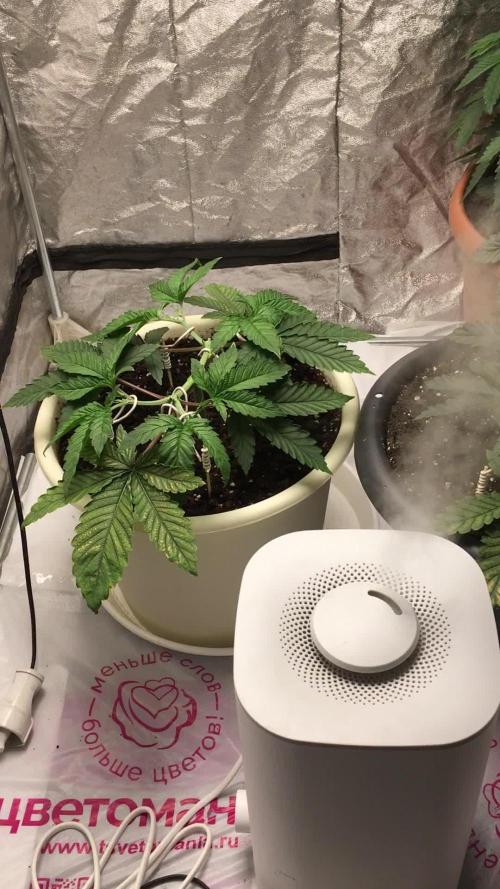
Smoothies are drying out --> HARVEST coming soon. Now there is only the last amnesia haze left.

Likes
64
Share


@MadeInGermany
Follow
Hey everyone 🤗.
This week you've put a lot of energy into growing your buds.
You look very beautiful :-)
Next week I'll add some Pk 13/14.
I wish you lots of fun with the update, stay healthy and let it grow 😎
You can buy this Strain at :
https://www.barneysfarm.com
Strain :
Blue gelato 41 clone from mother (Barney's Farm)
☝️
Genetics:
Blueberry x Thin Mint Girl Scout Cookies x Sunset Sherbert
👍
Vega lamp:
2 x
Todogrow LED HLG Quantum Board 100 W ( 200 W )
💡
Flower lamp:
2x Todogrow LED CXB3590 205 W = ( 410 W )
💡 ☝️
Soil : Canna Terra Professional +
☝️
Fertilizer:
Canna Terra Vega , Canna Terra Flores , Rizotonic, Cannazym, CANNA Boost, Pk 13/14, Canna Cal / Mag, Canna Ph - Grow, Canna Ph-Bloom
☝️🌱
Water:
Osmosis water mixed with normal water (24 hours stale that the chlorine evaporates) to 0.2 EG. Add Cal / Mag to 0.4 Ec Ph with Ph - to 6.0 - 6.3
💦 💧




Likes
12
Share


@Growfun
Follow
Everything's going well. The Maverick has fattened up a little bit which is nice she does smell kind of funky too not a strong smell but can't wait to try her.other than that it's just a waiting game. ✌️
Edit: I said blue cheese in the video when it is actually blue dream. And you can thank kosher kush for helping me make this video. 😉🤯

Likes
53
Share


@DogDoctorOfficial
Follow
Greetings, fellow growers! Welcome back to another exciting update on the journey of our beloved P.C.R.s. Week 4 of veg has been nothing short of spectacular, and I'm thrilled to share all the juicy details with you.
After the successful transplant into their final homes, our girls are thriving like never before. The transition was seamless, thanks to careful preparation and attention to detail. I made sure to clean up our 3x3 tent thoroughly, leaving no corner untouched. LED lights, fans, and all equipment received a deep cleanse to ensure a pristine environment for our precious plants.
Now, let's talk numbers. The TDS levels are holding steady at 470, indicating a perfect balance of nutrients for optimal growth. pH levels are sitting comfortably at 5.8, while the temperature remains a cozy 19 degrees Celsius for watering. These ideal conditions provide the perfect foundation for our PCRs to flourish.
Speaking of lighting, let's delve into the ViparSpectra P2000—a true gem in our grow arsenal. This LED grow light is a game-changer, providing the perfect spectrum of light for every stage of plant growth. From vegetative to flowering, the ViparSpectra P2000 delivers consistent, high-quality light that promotes healthy development and robust yields.
But the benefits don't stop there. The ViparSpectra P2000 is also incredibly energy-efficient, ensuring maximum output with minimal energy consumption. Plus, its compact design makes it the perfect fit for our 3x3 tent, delivering uniform coverage without any hot spots or shadowing.
Now, let's circle back to the importance of cleanliness in the grow room. A thorough clean-up not only promotes better plant health but also helps prevent pests, diseases, and other potential problems down the line. By starting with a clean slate, we set ourselves up for success and pave the way for a bountiful harvest.
In conclusion, Week 4 of veg has been a triumph on all fronts. Our PCRs are thriving, our grow environment is pristine, and our ViparSpectra P2000 is lighting the way to greatness. With each passing day, I'm more excited than ever to see what the future holds for our green beauties.
Until next time, happy growing, and may your harvests be plentiful!
Genetics - P.C.R. @Art_Genetix_Team https://artgenetix.world/
Nutricion @aptusholland https://aptus-holland.com/
LED Power @Lumatek and @viparspectra
As always thank you all for stopping by , for the love and for it all, i fell blessed to have you all with me for one more love journey Thank you Thank you Thank you , you guys are great and have been amazing , thank you for everything !
#aptus #aptusplanttech #aptusgang #aptusfamily #aptustrueplantscience #inbalancewithnature #trueplantscience #dogdoctorofficial #growerslove
With true love comes happiness , Always believe in your self and always do things expecting nothing and with an open heart , be a giver and the universe will give back to you in ways you could not even imagine so !
Growers love to you all

Likes
7
Share


@TiRobotProds
Follow
Quelques feuilles montrent des brûlures de noix prochain arrosage a l'eau.
13/12 cette dames mesure 104cm continue a s'étirer.
18/12 deux semaines de 12/12 stretch x5 pour cette dame.

Likes
54
Share

@Kirsten
Follow
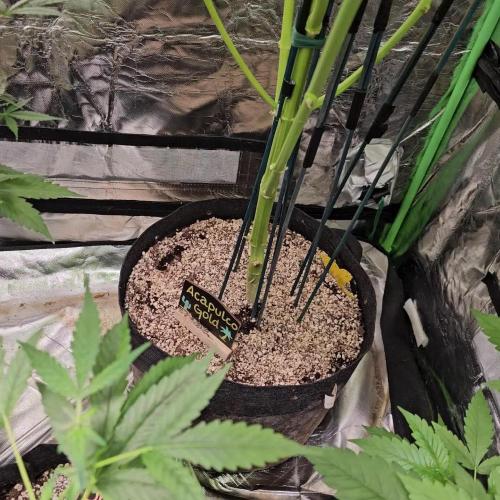
Acapulco Gold has been forming some promising looking buds 👌
I have had to increase waterings this week as the plant is becoming increasingly thirsty. The branches are very heavy for the plant now, and they're beginning to buckle under the weight, so I might have to stake the plant. Because it's got so big now.
I turn the plant round each day to evenly distribute light. It's become difficult due to the bendyness of the plant now, so I have to be very careful now whenever I move it.
The plant has done really well this week, actually, and hopefully, we can be done in the next few weeks, which would be great.
This has been the fastest and biggest plant I have grown yet. I'm very impressed.
I have increased the waterings and am trying to give correct nutrients.
However, I am also using Ecothrive dry amendments as always, and because of this, I don't know how many nutrients to add.
The plant is so big now, I don't think I am feeding enough.
If you have any ideas or suggestions, I'd appreciate it. Leave it in the comments 😁
I am having trouble assessing the nutrient requirements as the plant has always been a light green, but it is really beginning to go yellow.
Here is what I did this week.
12.9.25
I top dressed the plant with Ecothrive dry amendments.
The following amounts were used for this 8 Gallon pot;
💚1 TBSP Ecothrive Life Cycle
💚1 TBSP Ecothrive Bloom
💚 2 TBSP Diatomaceous Earth
Here is what I did this week.
12.9.25:
I watered the top dress in, with 6.5L of dechlorinated water PH'd to 6.0 with;
💜 2 TSP Sea K
💜 2 TSP Biosys
💜 8ml Trace
PH: 6.0
PPM: 597
13.9.25:
I watered with 2L of dechlorinated water PH'd to 5.9 with;
💜 .5 TSP Bud Explosion
PH: 5.9
PPM: 678
15.9.25:
I watered with 6.5L of dechlorinated water PH'd to 6.1 with;
💜 1 TSP Bud Explosion
💜 1 TSP Sea K
💜 8ml Trace
💜 1 TSP Biosys
PH: 6.1
PPM: 685
16.9.25:
I watered with 4L of dechlorinated water PH'd to 6.4 With;
💜 7ml Trace
💜 2 TSP Sea K
PH: 6.4
PPM: 552
The fungus gnats have really increased since I did a watering of the whole tent.
I have some more sticky traps set out, and I will not water for several days.
Once it has dried the top soil, I will add some more Diatomaceous Earth to the top 5cm.
Thanks very much for checking out my diary this week and for hanging out in the comments. Advice or encouragement is appreciated. It's been a fun week! 😁💚🤞🌱👌🧡
