


Likes
Comments
Share


@PrairieFrostGrow
Follow
*****Week 14 growth – March 6 to 12, 2021 – Week 5 flower ******
These girls are certainly different from one another. Pheno 1 has a more bushy appearance and Pheno 2 is lighter in color and more bud swelling at the tops. Expect to see some nice colors come out in #2😃 In the end......it’s about the smoke😂👍🔥
Bud Fusion being introduced this week. Into the last phase of feeding during flower now. Nitrogen is continued to be reduced as its late flower. Keeping up the feeding ppm this week as we are getting to the end. May be pushing them a little more than I should but finding out how they react for next run.
Still continuing to play with the light intensity and seeing how the girls react to my environment conditions when pushed harder. Could have backed off and stayed with 100, 300, 600, 900 PAR levels at the different stages but I have trying to go a little higher in the late stages and going over 1,000 PAR.
Little more detail…..
Mar 6/21, Day 29
- Dry out day
- Changed light cycle to 11/13 today to help with light intensity and reducing DLI.
- Light power reduced to 425 watts
Mar 7/21, Day 30
- Keeping up the feeding but reducing nitrogen.
- feeding with micro – 1.5, bloom – 2.5, ult B – 0.5, carbs – 1, B Storm – 2, S Storm – 2.5, Bud Fusion 0.15gr/l, Terp – 1.5, Jet Fuel – 0.5, Rezin 1
- 1150ppm and 6.0pH
- 4L
Mar 8/21, Day 31
- Watering with 2L feed from yesterday and 16L plain water
- Over shot the pH
- 400ppm and 5.9pH
Mar 9/21, Day 32
- Feeding again with Grow – 0.5, Micro – 1, Bloom – 1.5, Carbs – 1, Magnifical – 1
- Didn’t add many of the supplements
- 875ppm and 6.0pH
- 4L
Mar 10/21, Day 33
- Middle of the week and just giving some enzymes today
- Enzymes – 1.5ml
- 300ppm and 6.1pH
- 4L
Mar 11/21, Day 34
- Microbes again today
- Tap water with Jet Fuel – 1ml, Terpinator – 2ml, Nature’s Candy – 1.5ml, Rezin – 1ml, Ultimate B+ - 0.5ml, Recharge – 1tsp/gal
- 800ppm and 6.0pH
- 4L
Mar 12/21, Day 35
- Dry out day
- Been feed a couple of times this week so work with ¾ strength next week.


Likes
19
Share


@Comfrey
Follow
Plant is 21 cm high because of low stress training. The length of the stem is 34 cm.
Day 43
☁️🌧️☁️🌧️⛈️ 14 - 17 degrees, humidity is about 72 %
I prepared some simple comfrey manure for the next weeks of flowering. It‘s rich in silica and tannins and essential minerals. Mostly all fruit vegetables and flowers like it, so Tropicana will have it as a tee or head fertilization, as well as in her water mixed 1:20 and 1:5. Same procedure like with tomatoes or peppers. No watering in the next days. The soil is soaked with rainwater.
The growth is a bit slow in the last cold and rainy days but the flowers look nice.😊
Day 44
☁️☁️🌥️☁️🌥️ 14-20 degrees and humidity is around 64 %
Day 45
⛅️☁️🌧️☁️🌧️ 13-21 degrees and humidity is around 69 %
The flowers started to stack. The soil is too moist but I can‘t change here a lot. Don’t need too water in the neuerer Future and aafe water for late summer. Think when I can drink my next relax tee - take same leafs. Now Tropicana needs all of them for transpiration. Heavy pots. Too wet springtime. 🌧️☔️
Day 46
☁️🌥️⛅️🌤️ 13-19 degrees, humidity is falling. Windy. The flowers are stacking up. 🐞🐞 did their job and left. With them the mites disappeared (hide). But I found some eggs under the leafs off all three of my cannabis plants. So I will have an eye on this… balcony problem! Wait some more days and bring a couple of 🐞 again. Found some magnifying glass and it suits with my camera lens.
Day 47
🌤️☀️🌤️ 11-22 degrees, humidity 89 % and getting even higher this night. Took out two leafs.
Day 48
🌤️🌤️🌤️ 17-23 degrees, humidity 89-43%, falling!
Tropicana got a liquid breakfast this morning made out of two liter rainwater with 20% ready comfrey manure which is rich in silica and tannins and essential minerals. Be careful with liquid manure as you should have experience in giving high doses. Never more then 20% of the watering on moist soil and never give it pure and after the water. It will burn the roots. This is very fresh, only one week old and not too concentrated. Next week I will give maybe 10%. So, we just enjoy a sunny morning with a healthy breakfast and coffee! 😊
Day 49
⛅️☁️🌥️ 10-20 degrees and humidity is 91%. Tropicana got thirsty. She drinks more, 0-5-0,75 liters rainwater. I will never use black pots again, too warm soil on the sunny side and the water evaporates faster. I‘m quit lucky with my new hobby and with my beautiful Tropicana. Time for a relax tee. Took some leafs off plant no. two and three.

Likes
299
Share


@Metatronix
Follow
Hello to you all.
As a true visionary I decided to go FULL HYDRO this week, that means water in buckets and outside the buckets /s
This grow turns out to be an uphill battle but i already decided to bring it to completion no matter what...Icy weather, floods, alien invasions what's coming next a big bank crash?!
I'll bring this grow to the end! Who needs banks anyways when you got #coins ;)
On 22.02. added nutrients to the 140 liters of solution.
That's it, I hope to see y'all next week growmies.

Processing
Likes
4
Share


@ReelEyezEnt
Follow
Finally flipped the lights over to flower mode and took the humidifier out of the tent.
So far so good we are gonna keep watching to make sure we didn't over do the nuts. Don't want any Nut burn that can be annoying.
make sure you hit the follow button


Likes
51
Share


@Bread_n_Buds
Follow
Here we are again ready to start again, always under the sign of Zamnesia, we make our fantastic plants and we show you what we are capable of. We have 5 autoflowering strains and 5 photoperiodic ones and now we present them to you.
The second autoflowering that we present to you is the Black Orchid Autoflowering. This was advised and recommended to us directly by the Zamnesia elves and we are sure that they are keen to send us refinements, we have seen some super beautiful photos of this strain. Guys, black is black as a style of beauty for me it is unbeatable.
To explain my germination method which is a combination of experiences acquired in the field and readings of the right advisors, I have chosen to divide it into phases so that those who want can follow them and understand better step by step.
- Preparatory Phase ---- Check the average temperature in the room, humidity status to understand if it is the case to start or wait, I decided for the end of August because the temperatures start to drop towards the 22-25 degrees recommended for germination.
Then another thing more or less credible depending on the sensitivity is the control of the lunar phases. I believe in it a lot, it is a method that ancient farmers used to understand when it was best to plant depending on the attraction of the moon. To make my life easier I use a simple app that advises you on the right time to plant, harvest and put in the jar (depending on the lunar phases).
- Phase 1 --- Soaking in water. There are many authoritative friends who advise against this method due to the risk of drowning, but I have always been fine and I follow the rule if it opens in water the seed is almost certainly healthy and will come out of the ground 90% normally.
- Phase 2 --- Opening the seed in water. As soon as the seed opens and the root comes out a little, you have to be very very careful not to leave the seed in the water open for too long. This is why there is a risk of drowning. So as soon as the root comes out, it must be planted. Do not wait for it to stretch out a lot, you can wait a little longer in the absorbent paper, but not in water.
- Phase 3 --- In the meantime, while I soaked the seeds, I prepared my pots: I use small biodegradable pots (choose the ones with holes underneath for drainage). A few hours before working with the opened seeds, I moistened the soil with water adjusted to the right pH (5.8 - 6.2) and Plagron Power Roots. The small root is now open and we can make a little hole with a toothpick, widen it and insert the seed. Not too deep with the root facing downwards. From Serious Seeds we learned the dome technique: if you put a small dome of soil on the seed the water will settle on the sides avoiding overwatering problems.
- Phase 4 --- The plant emerges from the soil. So far I have not put the light, now I turn it on at minimum after half a day of soil to give direction to the seedlings. The first week the light will be gradually brought from 40% to 60% to go to 70% - 75% in the remaining weeks of veg. During the first week maximum, I keep the cycle of 24 hours to avoid stretching. Be careful not to exceed the first week at least with photoperiodic plants.
- Germination % --- In water 20/20 seeds have opened for good luck I'm waiting to talk when they come out of the ground but it seems that we are going towards an excellent percentage of germination..."Not too bad"...
- Soil and Food --- The soil used is entirely organic in every part and is the Plagron Promix that will be used with the 100% organic pack provided by Zamnesia complete with all the main fertilizers for your plant buy it at the link --
https://www.zamnesia.io/it/11457-plagron-easy-pack-natural.html
// Strain Description // It is said that the orchid symbolizes love, refinement and beauty. Well, we can confirm that the Black Orchid Automatic contains all these attributes and many more. This autoflowering variety has a lot to offer: a particular but very pleasant aromatic profile, and a relaxing and carefree high. Furthermore, this plant is very productive when grown in optimal conditions.
- Get a seed of this fantastic strain --- https://www.zamnesia.io/it/9493-zamnesia-seeds-black-orchid-automatic.html
- Soil and Fertilizers entirely organic --- https://plagron.com/en
- Growbox --- https://www.secretjardin.com/
- Music and sound --- I made my girls listen to 432hz frequencies and music from www.radionula.com
- Z --- You can find these seeds, much more from the world of cannabis, mushrooms and an incredible series of accessories and gadgets on the reference site not only mine but of many growers ----
https://www.zamnesia.io

Likes
18
Share


@Staffedition
Follow
Привет друзья. Моей растихе сегодня 34 дня.
Начал применять LST технику на 19 дне и продалжаю применять её через день, а 18 августа добавил ДЕФОЛИЗАЦИЮ
С 20.08 ДЕФОЛИЗАЦИЮ делаю каждые 3,4 дня
С 20.08 LST технику делаю каждые 3.4 дня
На сегодняшний день влажность 63%
Растение растёт хорошо. генетика радует.
Всем мира и добра!





Likes
1
Share


@TheBulldozerSicily
Follow
Entriamo nella 4° settimana, questa settimana defoglierò e provo a tappare al 4° internodo, per mantenerle

Likes
4
Share

@PapaTerps
Follow
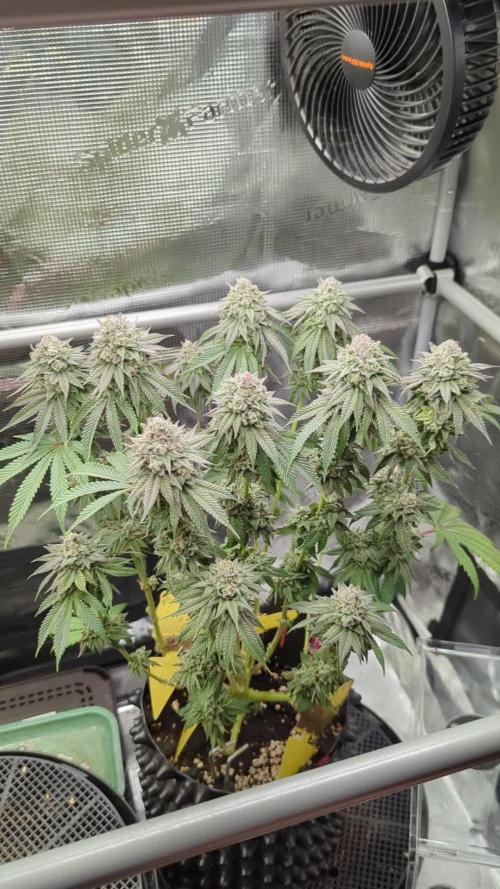
Glue 31 - Compound Genetics
Day 107
🚿 Watered every three days with 2L of RO tap water pH'd to 6.3.
✂️ No work on her this week, she had a good defoliation last week, so she is just sitting there waiting for harvest 👍🏻
🌸 Week 10 of bloom, all her trichomes have taken on a cloudy white colour, with her pistils drying and becoming amber. She has been thoroughly flush over the last 10 or so days, so she should be good to harvest in the next couple of days 🙌🏻

Likes
55
Share


@pifflestikkz
Follow
Day 99
09/08/24 Friday
Feed today, using de-chlorinated tap water pH 6, no plagron products this week due to seeing nute burn.
But she has bounced back yet again from a heavy defoliation and topping last week.
Trying to keep her small enough to flip in the tent 🤞
She is a demon though!! No matter what I take back, she always gives me more 😍
Day 100
10/08/24 Saturday
Picture and video update ✌️ 💚
Day 101
11/08/24 Sunday
De-chlorinated tap water pH 6 today again with calmag.
Day 102
12/08/24 Monday
De-chlorinated tap water pH 6 today again with calmag and Plagron PK13-14 5L 10% run off
Thriving 😍✌️💚
Likes
Comments
Share


@Billy_Piff
Follow
Great breeder, great strains to grow, and finished on time as advertised.

Likes
36
Share


@Regenwurm
Follow
In dieser Woche habe ich eine nicht gewünschte Verfärbung der Blätter festgestellt! Das grün ist blasser geworden und ein paar vereinzelte Blätter Sind von der Farbe leicht lila/ violett geworden. Ich bin bisher noch sehr zurückhaltend mit Dünger . Ich werde besonders in der kommenden Woche ein Auge auf pH Wert und Düngemenge legen da die Blüten stark am wachsen sind
Tage der Keimungsphase = 7 Tage.
Tage in Wachstum = 21 Tage
Tage in der Blüte = 21 Tage
Wachstum h Woche 3 Blüte = 8 cm
2 mal in dieser Woche mit Purolyt Mischung 1:25 besprüht
Lichtstärke: 90 %
PPFD: ca. 850 umol
Lichtabstand: 40 cm
Std Tag/Nacht: 18/12
Temperatur Tag: ca. 25 Grad
RLF Tag: 58%
Temperatur Nacht: 21 Grad
RLF Nacht: ca. 60 %
VPD Wert: ca. 1,0
PH Wert Wasser/Düngelösung: 6,2
EC Wert: nicht gemessen
Ventilator Oszillation: Stufe 1
Befeuchter: an
Entfeuchter: aus
Zusätzlicher Entfeuchter: 0 Stk. außerhalb vom Zelt im Raum
Bewässerung: 3* bewässert 1,5 l/Pflanze mit Dünger mit den o.g. Mengen
1 * pures Wasser mit 1 l/Pflanze
Purolyt Besprühung: 2 mal
Besprühung Fastplantspray : 1 mal
Controlling: Grow Control
Dünger: Greenbuzz Nutrients
Licht: Pro Emit Vollspektrum
Abluft: EC Carbon Active 750 m3
Danke an Zamnesia für die Seeds, den sonstigen Merch und natürlich das Vertrauen in die Kooperation
https://www.zamnesia.com/de/10681-zamnesia-seeds-pineapple-express-f1-automatic.html
Danke auch an Mia von GB:
https://greenbuzznutrients.com/de/
Ihr bekommt 25 % Rabatt bei der Nutzung des Codes auf der GB Homepage
https://greenbuzzliquids.com/de/shop/
Code: GD42025
(Mindestbestellwert 75€)
Likes
12
Share


@Terp_Bandit448
Follow
Week 3 started off good but ended horrible. I finally made my first big fu🤬k up. After LSTing on day 19 the next day I tried tighten up the LST and ended up snapping the main stock🤦♂️🏾 Forcing me to try and mainline just to save her, so now I’m just hoping for da best. On da positive side at least it happened to one of the freebie seeds from seedsman and not one that I spent a pretty penny for

Likes
2
Share


@Stewabis
Follow
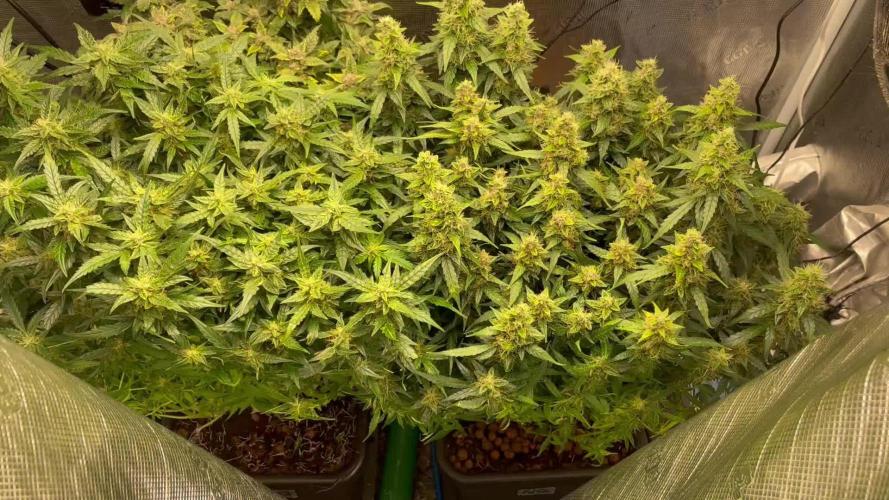
Started some Fastbuds. Ban purp pun and gorilla cookies. Have grown some blue dream, smoothies and Forbiden runtz, like the brand. Some Seedsman i tried like Nor lights was good. Will have to try some other brands to experience some difference if any. Im about six month in and i have seemed to have taken more info in than i wanted but still gratifying. ✌️




Likes
33
Share


@FlavoursUk
Follow
Had great results, especially when i upgraded to RO water.. if theres one thing i could of changed it would of been using the reverse Osmosis water sooner.
The rest of the grow was pretty easy, didn't even plant train as this was suppose to be a hassle free run. It was just that. Some good genetics from seedstockers too.
Good stuff!


