The Grow Awards 2026 🏆
Likes
Comments
Share
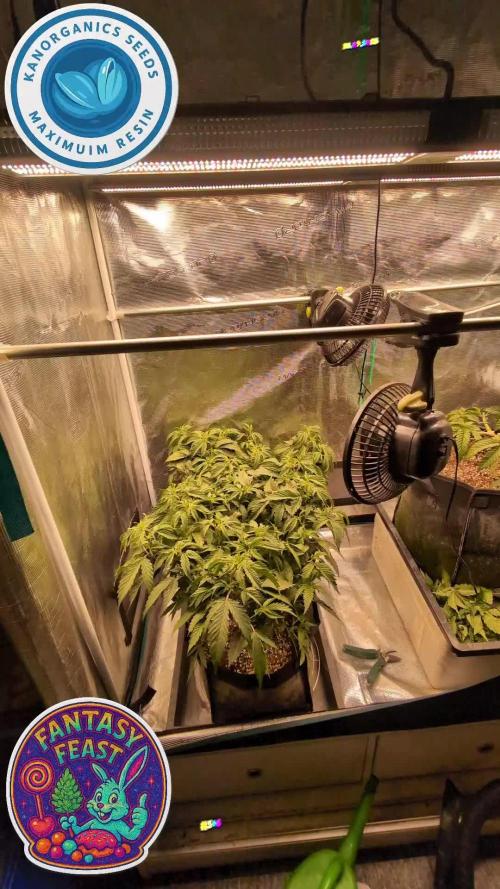
Week 3 flowering some flowering quicker then others which is expected as its about 15 different fire strains I have had to show my diaries in 3 parts this is my inhouse gentics I am so glad to finally get my hands on these , I'm pheno hunting a massive summer run with some fire gentics. I have inhouse 2x platinum gushers 2x terples 1x dolato s1 1x slurmint All from seed so hopefully I find a nice pheno I also have seedsman 2x strawberry banana grape which are both the biggest in tent 2 x peyote gorrilla 2 x wedding cake limited editions . Smells aboustley fire already 🔥 I have zamiensa seeds 3x larry bird kush one of the phenos are smelling like nothing I have smelt before Barneys farm 3x phantom OG which was clones from my last run Phoenix seeds X5 super kush clones from my last run Also I have grew 2 super silver haze OG which I got as freebies from seedsman they smell beautiful 😍
Likes
19
Share
Yellow butterfly came to see me the other day; that was nice. Starting to show signs of stress on the odd leaf, localized isolated blips, blemishes, who said growing up was going to be easy! Smaller leaves have less surface area for stomata to occupy, so the stomata are packed more densely to maintain adequate gas exchange. Smaller leaves might have higher stomatal density to compensate for their smaller size, potentially maximizing carbon uptake and minimizing water loss. Environmental conditions like light intensity and water availability can influence stomatal density, and these factors can affect leaf size as well. Leaf development involves cell division and expansion, and stomatal differentiation is sensitive to these processes. In essence, the smaller leaf size can lead to a higher stomatal density due to the constraints of available space and the need to optimize gas exchange for photosynthesis and transpiration. In the long term, UV-B radiation can lead to more complex changes in stomatal morphology, including effects on both stomatal density and size, potentially impacting carbon sequestration and water use. In essence, UV-B can be a double-edged sword for stomata: It can induce stomatal closure and potentially reduce stomatal size, but it may also trigger an increase in stomatal density as a compensatory mechanism. It is generally more efficient for gas exchange to have smaller leaves with a higher stomatal density, rather than large leaves with lower stomatal density. This is because smaller stomata can facilitate faster gas exchange due to shorter diffusion pathways, even though they may have the same total pore area as fewer, larger stomata. Leaf size tends to decrease in colder climates to reduce heat loss, while larger leaves are more common in warmer, humid environments. Plants in arid regions often develop smaller leaves with a thicker cuticle and/or hairs to minimize water loss through transpiration. Conversely, plants in wet environments may have larger leaves and drip tips to facilitate water runoff. Leaf size and shape can vary based on light availability. For example, leaves in shaded areas may be larger and thinner to maximize light absorption. Leaf mass per area (LMA) can be higher in stressful environments with limited nutrients, indicating a greater investment in structural components for protection and critical resource conservation. Wind speed, humidity, and soil conditions can also influence leaf morphology, leading to variations in leaf shape, size, and surface characteristics. Small leaves: Reduce water loss in arid or cold climates. Environmental conditions significantly affect gene expression in plants. Plants are sessile organisms, meaning they cannot move to escape unfavorable conditions, so they rely on gene expression to adapt to their surroundings. Environmental factors like light, temperature, water, and nutrient availability can trigger changes in gene expression, allowing plants to respond to and survive in diverse environments. Depending on the environment a young seedling encounters, the developmental program following seed germination could be skotomorphogenesis in the dark or photomorphogenesis in the light. Light signals are interpreted by a repertoire of photoreceptors followed by sophisticated gene expression networks, eventually resulting in developmental changes. The expression and functions of photoreceptors and key signaling molecules are highly coordinated and regulated at multiple levels of the central dogma in molecular biology. Light activates gene expression through the actions of positive transcriptional regulators and the relaxation of chromatin by histone acetylation. Small regulatory RNAs help attenuate the expression of light-responsive genes. Alternative splicing, protein phosphorylation/dephosphorylation, the formation of diverse transcriptional complexes, and selective protein degradation all contribute to proteome diversity and change the functions of individual proteins. Photomorphogenesis, the light-driven developmental changes in plants, significantly impacts gene expression. It involves a cascade of events where light signals, perceived by photoreceptors, trigger changes in gene expression patterns, ultimately leading to the development of a plant in response to its light environment. Genes are expressed, not dictated! While having the potential to encode proteins, genes are not automatically and constantly active. Instead, their expression (the process of turning them into proteins) is carefully regulated by the cell, responding to internal and external signals. This means that genes can be "turned on" or "turned off," and the level of expression can be adjusted, depending on the cell's needs and the surrounding environment. In plants, genes are not simply "on" or "off" but rather their expression is carefully regulated based on various factors, including the cell type, developmental stage, and environmental conditions. This means that while all cells in a plant contain the same genetic information (the same genes), different cells will express different subsets of those genes at different times. This regulation is crucial for the proper functioning and development of the plant. When a green plant is exposed to red light, much of the red light is absorbed, but some is also reflected back. The reflected red light, along with any blue light reflected from other parts of the plant, can be perceived by our eyes as purple. Carotenoids absorb light in blue-green region of the visible spectrum, complementing chlorophyll's absorption in the red region. They safeguard the photosynthetic machinery from excessive light by activating singlet oxygen, an oxidant formed during photosynthesis. Carotenoids also quench triplet chlorophyll, which can negatively affect photosynthesis, and scavenge reactive oxygen species (ROS) that can damage cellular proteins. Additionally, carotenoid derivatives signal plant development and responses to environmental cues. They serve as precursors for the biosynthesis of phytohormones such as abscisic acid () and strigolactones (SLs). These pigments are responsible for the orange, red, and yellow hues of fruits and vegetables, while acting as free scavengers to protect plants during photosynthesis. Singlet oxygen (¹O₂) is an electronically excited state of molecular oxygen (O₂). Singlet oxygen is produced as a byproduct during photosynthesis, primarily within the photosystem II (PSII) reaction center and light-harvesting antenna complex. This occurs when excess energy from excited chlorophyll molecules is transferred to molecular oxygen. While singlet oxygen can cause oxidative damage, plants have mechanisms to manage its production and mitigate its harmful effects. Singlet oxygen (¹O₂) is considered a reactive oxygen species (ROS). It's a form of oxygen with higher energy and reactivity compared to the more common triplet oxygen found in its ground state. Singlet oxygen is generated both in biological systems, such as during photosynthesis in plants, and in cellular processes, and through chemical and photochemical reactions. While singlet oxygen is a ROS, it's important to note that it differs from other ROS like superoxide (O₂⁻), hydrogen peroxide (H₂O₂), and hydroxyl radicals (OH) in its formation, reactivity, and specific biological roles. Non-photochemical quenching (NPQ) protects plants from damage caused by reactive oxygen species (ROS) by dissipating excess light energy as heat. This process reduces the overexcitation of photosynthetic pigments, which can lead to the production of ROS, thus mitigating the potential for photodamage. Zeaxanthin, a carotenoid pigment, plays a crucial role in photoprotection in plants by both enhancing non-photochemical quenching (NPQ) and scavenging reactive oxygen species (ROS). In high-light conditions, zeaxanthin is synthesized from violaxanthin through the xanthophyll cycle, and this zeaxanthin then facilitates heat dissipation of excess light energy (NPQ) and quenches harmful ROS. The Issue of Singlet Oxygen!! ROS Formation: Blue light, with its higher energy photons, can promote the formation of reactive oxygen species (ROS), including singlet oxygen, within the plant. Potential Damage: High levels of ROS can damage cellular components, including proteins, lipids, and DNA, potentially impacting plant health and productivity. Balancing Act: A balanced spectrum of light, including both blue and red light, is crucial for mitigating the harmful effects of excessive blue light and promoting optimal plant growth and stress tolerance. The Importance of Red Light: Red light (especially far-red) can help to mitigate the negative effects of excessive blue light by: Balancing the Photoreceptor Response: Red light can influence the activity of photoreceptors like phytochrome, which are involved in regulating plant responses to different light wavelengths. Enhancing Antioxidant Production: Red and blue light can stimulate the production of antioxidants, which help to neutralize ROS and protect the plant from oxidative damage. Optimizing Photosynthesis: Red light is efficiently used in photosynthesis, and its combination with blue light can lead to increased photosynthetic efficiency and biomass production. In controlled environments like greenhouses and vertical farms, optimizing the ratio of blue and red light is a key strategy for promoting healthy plant growth and yield. Understanding the interplay between blue light signaling, ROS production, and antioxidant defense mechanisms can inform breeding programs and biotechnological interventions aimed at improving plant stress resistance. In summary, while blue light is essential for plant development and photosynthesis, it's crucial to balance it with other light wavelengths, particularly red light, to prevent excessive ROS formation and promote overall plant health. Oxidative damage in plants occurs when there's an imbalance between the production of reactive oxygen species (ROS) and the plant's ability to neutralize them, leading to cellular damage. This imbalance, known as oxidative stress, can result from various environmental stressors, affecting plant growth, development, and overall productivity. Causes of Oxidative Damage: Abiotic stresses: These include extreme temperatures (heat and cold), drought, salinity, heavy metal toxicity, and excessive light. Biotic stresses: Pathogen attacks and insect infestations can also trigger oxidative stress. Metabolic processes: Normal cellular activities, particularly in chloroplasts, mitochondria, and peroxisomes, can generate ROS as byproducts. Certain chlorophyll biosynthesis intermediates can produce singlet oxygen (1O2), a potent ROS, leading to oxidative damage. ROS can damage lipids (lipid peroxidation), proteins, carbohydrates, and nucleic acids (DNA). Oxidative stress can compromise the integrity of cell membranes, affecting their function and permeability. Oxidative damage can interfere with essential cellular functions, including photosynthesis, respiration, and signal transduction. In severe cases, oxidative stress can trigger programmed cell death (apoptosis). Oxidative damage can lead to stunted growth, reduced biomass, and lower crop yields. Plants have evolved intricate antioxidant defense systems to counteract oxidative stress. These include: Enzymes like superoxide dismutase (SOD), catalase (CAT), and various peroxidases scavenge ROS and neutralize their damaging effects. Antioxidant molecules like glutathione, ascorbic acid (vitamin C), C60 fullerene, and carotenoids directly neutralize ROS. Developing plant varieties with gene expression focused on enhanced antioxidant capacity and stress tolerance is crucial. Optimizing irrigation, fertilization, and other management practices can help minimize stress and oxidative damage. Applying antioxidant compounds or elicitors can help plants cope with oxidative stress. Introducing genes for enhanced antioxidant enzymes or stress-related proteins over generations. Phytohormones, also known as plant hormones, are a group of naturally occurring organic compounds that regulate plant growth, development, and various physiological processes. The five major classes of phytohormones are: auxins, gibberellins, cytokinins, ethylene, and abscisic acid. In addition to these, other phytohormones like brassinosteroids, jasmonates, and salicylates also play significant roles. Here's a breakdown of the key phytohormones: Auxins: Primarily involved in cell elongation, root initiation, and apical dominance. Gibberellins: Promote stem elongation, seed germination, and flowering. Cytokinins: Stimulate cell division and differentiation, and delay leaf senescence. Ethylene: Regulates fruit ripening, leaf abscission, and senescence. Abscisic acid (ABA): Plays a role in seed dormancy, stomatal closure, and stress responses. Brassinosteroids: Involved in cell elongation, division, and stress responses. Jasmonates: Regulate plant defense against pathogens and herbivores, as well as other processes. Salicylic acid: Plays a role in plant defense against pathogens. 1. Red and Far-Red Light (Phytochromes): Red light: Primarily activates the phytochrome system, converting it to its active form (Pfr), which promotes processes like stem elongation and flowering. Far-red light: Inhibits the phytochrome system by converting the active Pfr form back to the inactive Pr form. This can trigger shade avoidance responses and inhibit germination. Phytohormones: Red and far-red light regulate phytohormones like auxin and gibberellins, which are involved in stem elongation and other growth processes. 2. Blue Light (Cryptochromes and Phototropins): Blue light: Activates cryptochromes and phototropins, which are involved in various processes like stomatal opening, seedling de-etiolation, and phototropism (growth towards light). Phytohormones: Blue light affects auxin levels, influencing stem growth, and also impacts other phytohormones involved in these processes. Example: Blue light can promote vegetative growth and can interact with red light to promote flowering. 3. UV-B Light (UV-B Receptors): UV-B light: Perceived by UVR8 receptors, it can affect plant growth and development and has roles in stress responses, like UV protection. Phytohormones: UV-B light can influence phytohormones involved in stress responses, potentially affecting growth and development. 4. Other Colors: Green light: Plants are generally less sensitive to green light, as chlorophyll reflects it. Other wavelengths: While less studied, other wavelengths can also influence plant growth and development through interactions with different photoreceptors and phytohormones. Key Points: Cross-Signaling: Plants often experience a mix of light wavelengths, leading to complex interactions between different photoreceptors and phytohormones. Species Variability: The precise effects of light color on phytohormones can vary between different plant species. Hormonal Interactions: Phytohormones don't act in isolation; their interactions and interplay with other phytohormones and environmental signals are critical for plant responses. The spectral ratio of light (the composition of different colors of light) significantly influences a plant's hormonal balance. Different wavelengths of light are perceived by specific photoreceptors in plants, which in turn regulate the production and activity of various plant hormones (phytohormones). These hormones then control a wide range of developmental processes.
Likes
3
Share
Letting her grow without any major cables. The photo from the question section is not referred to this plant.
Likes
281
Share
Germination date 🌰 26/01/2021 Day 56🌱 27/03/2021 Strain 🍁 🍉Watermelon zkittlez auto Barneys farm 🍉 Nutrients 💉 All mix slow release fertilizer 3lts/90lts of soil (guanokalong) Organic Wormcastings 25% of bag and added small amount slow release organic bloom to soil. Will top, top soil up in 3weeks 5weeks 7weeks as they say they're 70day auto. Will be adding in bat guano and bloom to water 5weeks on Set Up ⛺ amazon special not super cheap 💡 spiderfarmer sf4000 📤📥 AC infinity 6inch Notes🗒️✏️ Watermelon zkittlez = game changer They say %26 THC and I dont think it's far off to be honest. We all know they say these numbers to attract us but I honestly believe this plant is knocking on the %20+ 🌱🍁 .. it's one of if not the most frostest autos I've grown. One last dose of nutrients and I will give her a check on the mag to see how long shes got left. Well done barneys farm 👍🏻 Given her another feed as people still think 2weeks minimum left. She is bulking out as each day goes so happy to keep her going. Tricones are all milky jut cant see much amber yet Happy growing fam 🌱🍁👍🏻
Likes
14
Share
@danwho
Follow
9/15/2024 Stretch is moving along nicely. Only bummer is that the tops are crowding the light fixture and reducing the total light penetration. Working to keep the PPFD and DLI in a reasonable range and even across the canopy. First day of week 3 bloom nutrients. Both plants are looking incredible and moving along nicely into flower. Working hard to keep Plant A from overcrowding plant B. 9/17/2024 Adjusting fan setup to promote better circulation around the tent. Continuing to move the light over plant A an inch at a time. Running out of room slowly and will likely be forced to supercrop. Added 40watt bar light over plant B to offset the take over from plant A. 9/21/2024 Discovered herm signs all over plant B during trimming. Decided to cull it to avoid issues with plant A. Going to work to tailor the tent setup to push plant A going forward. The empty bucket will remain in the tent but is disconnected from its feed line and return line to the reservoir. Due to the herm in plant B, I left a lot more plant material on Plant A than I initially planned. With more room, it should hopefully bush out even more! Flower development on plant A is good with great stacking thus far. Still stretching, but slowing down. Any more stretch will require super cropping to avoid burning as I turn the lights up over the next two weeks, Planning to add lower lighting now with the additional space.
Likes
3
Share
Harvest time
Likes
22
Share
Flowering week 3. Everything is ok. I made a light defoliation.
Likes
14
Share
This has been a shit show last week with the left side plant getting sick. I let it drink so much down that pH was off and it reacted real quickly to that. I loathe this part of autos. They veg, start a stretch, throw pistils, then they just coast for 2 weeks doing nothing it seems but some slight stretching more , this happened last auto grow. Check out MEDICGROW website https://medicgrow.com/ Really excited to see what it can do I’m flower. Love the Bloom button which increases red spectrum when wanted/needed… Currently running at 40% Official Website: https://medicgrow.com/ Facebook: https://www.facebook.com/medicgrowled Twitter: https://twitter.com/medicgrow Instagram: https://www.instagram.com/medicgrow420/ YouTube: https://www.youtube.com/channel/UCNmiY4F9z94u-8eGj7R1CSQ Growdiaries: https://growdiaries.com/grower/medicgrowled https://growdiaries.com/grow-lights/medic-grow
Processing
Likes
17
Share
@kcartel
Follow
For the first time I cut the leaves, for more extensive illumination of the upper part, due to the close location of the light of the plant, the trunk trunk grows and does not stretch upwards, I want to cover the entire area of ??the pot with one layer then start the flowering stage at 6-7 weeks I didn’t cut the leaves, but simply pressed them to the ground, since this is my first experience, I think that everything is going well, the plant eats a lot of nutrient fertilizers and looks good as you can see, the temperature in the box exceeds 27 degrees and it seems to her that temper tsya. in many of the moments, I would like to express a special thanks to such a cool grower like ctm_dzagi! Looking at his works of past cycles, I learned a lot and continue to learn, his technique and approach is great! Well, we are waiting for the fifth week)) Let's go!
Likes
299
Share
Good day to all my friends and visitors here on GD. We harvested one of the Purple OG Punch girls , this is going to be a weird entry because I decided to not make a harvest entry till the other one lady finishes. Unfortunately because of my sticky fingers from all the trimming I did not make many pictures/videos of the grow itsels, to fill this void I decided on including the harvest videos and photographs. Although the final weight will be summed up in the final harvest. We finally see that our problem with the plants may not a deficiency but overfeed...decided to leave the reservoir as it is for this week and add only fresh water next week we will flush the system and for seven days the girls will only drink water. ---------------------------------------------------------------------------------- The SE7000 runs at 520 Watt and about 33cm from the canopy and is doing an astounding job. For anyone who is interested in obtaining this efficient and affordable light fixture here's the link: https://spider-farmer.com/products/spider-farmer-upgraded-se7000-730w-commercial-led-grow-light/ A shout out to Super Sativa Social Club for the gift of genetics : https://supersativaseedclub.com/ Also I want to thank Jungle Indabox nutrients for supplying me with their excellent & affordable nutrients : line https://www.jungleindabox.cz/en That's it friends, I hope to see y'all next week, bless.
Likes
6
Share
@Rinna
Follow
The girls are stretching nicely and looking healthy as can be. I added the second trellis for extra support when the buds will be ripening in late flower. There’s already some early ice, on the fan leaves too, so that’s a good start! Some pheno’s seem a little quicker with creating flowers, but since these are f1 seeds it’s not so crazy that there’s some difference. It looks like I’ve got either 3 or 4 quite different pheno’s, which is exiting. I’ll do a big defolation on day 21 of 12/12 so you’ll see that in the next weekly update 👌🏻
Likes
16
Share
Vamos familia, hora de cosechar estas gorilla de RoyalQueenSeeds. No veáis que pinta que tienen las flores están bien formadas y repletas de tricomas. Estoy deseando probarlas. El problema han sido las temperaturas las últimas semanas que excedieron los 30 grados. Aun así salió todo para alante Agrobeta: https://www.agrobeta.com/agrobetatiendaonline/36-abonos-canamo Mars hydro: Code discount: EL420 https://www.mars-hydro.com/ Hasta aquí es todo , espero que lo disfrutéis, buenos humos 💨💨.
Likes
44
Share
@RakonGrow
Follow
Note : Jegliches Equipment aufgelistet welches ich nutze findet Ihr in der Germinations Woche !!! Day 15 : ich weiss noch nicht ob der mineralische dünger wirklich sofort etwas gebracht hat . schauen wir was die zeitraffer so vermitteln. ist es seit gestern schneller am wachsen ? Day 16 : PPFD 275 * 20h = DLI 19.8 Day 17: + 0.5L Flaschenwasser (EC 0.26) + + Canna Rizothonic + + Canna Terrar Vega + = Total EC 0.68 (PH 7.2) + Final PH 6.15 Day 18: es wächst Day 19: es wächst immer noch ventilation übern blätterdach angemacht. ich glaub daher kommt das ruckeln im video Day 20: + 0.5L Flaschenwasser (EC 0.26) + + Canna Rizothonic + + Canna Terrar Vega + = Total EC 0.68 (PH 7.2) + Final PH 6.15 + 0.5L Leitungswasser (PH 8.0) Der Stamm hat sich in den letzten 3 Tagen verdreifacht vom Volumen. Jetzt hat er so Bleistift dicke erreicht. Day 21: die temps und relative luftfeuchte sind hier zwischen 58%-68% und 23.5°-25.5°C . reguliert sich aber immer zu den höheren werten . ist hier halt so :))