Likes
16
Share
@Borberad
Follow
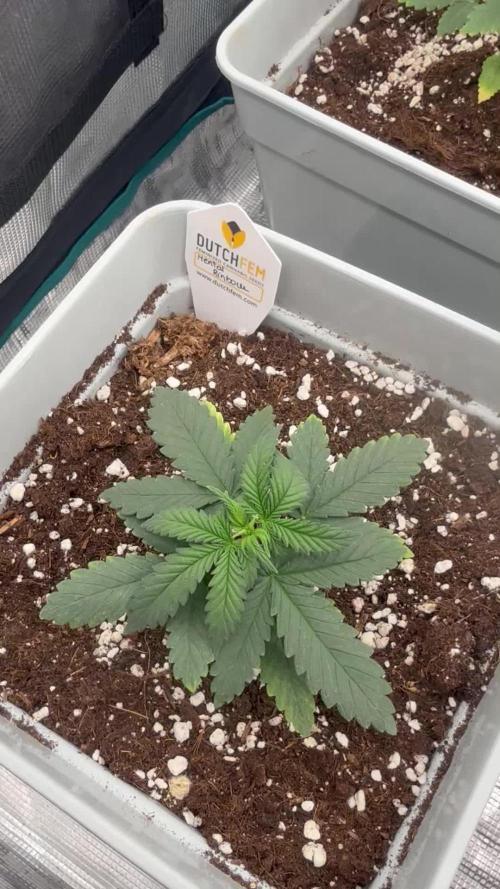
Beide Pflänzchen zeigen ihre ersten echten Blätter, somit ist die Keimung in meinen Augen weitestgehend beendet und die beiden starten in die erste Woche und ins neue Jahr, als zwei gesunde kleine Blümchen. Die als NR1 bezeichnete Pflanze stammt aus einem sehr dicken und deutlich getigerten Samen. NR2 stammt aus einem 1/3 kleineren grau/braunen Samen.
Likes
10
Share
@LowzGrowz
Follow
Was Easy Going No Issue Smaller side but didnt do much just let her go little over water @ Times from all the Rain was having... but she handled it
Likes
10
Share
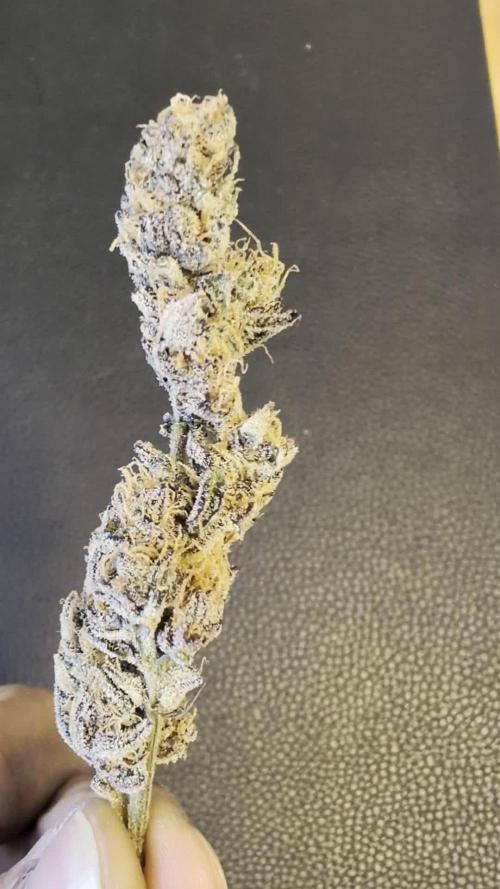
Pulled the girls down today, on day 58. Drying in 55% RH / 19c-21c - seems to be stable.
Likes
25
Share
Showtime... we are officially in flower watch these girls push out bud sites like crazy.... adjusting the temps and trying to keep them consistent is key from this point on wish me luck
Likes
30
Share
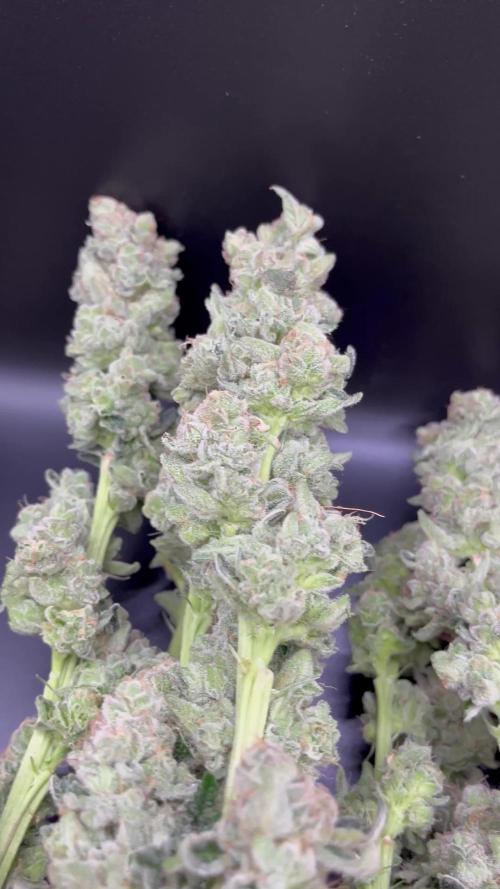
The journey is over sister today it's time to tell you about the harvest of a wonderful Purple Haze Automatic by Zamnesia. I have grown this plant many times and it has always given good results but here we are way beyond good we are at the highest levels that can be asked of an autoflowering. Lots of grass a really great harvest, lots of resin everywhere and with a wonderful smell in the coffee/chocolate area. Do we want to talk about the main cola? It's scary. Majestic, like those of the past united, big. With the Haze forget about the ball-shaped blooms. This is a whole and long steak in full haze style. The taste is something that I have really seen very few times, the color is normal, some shades of purple in the end but not the full purple that I have not found in this strain but patience because it is TNT, really the color for me is becoming above all a question of aesthetics I am a photographer and I love colored plants, but the normal ones drive me crazy too. You should see how many times I smelled it. And how many times I sniffed my fingers. And how the plate I cleaned it on smelled. A masterpiece of gentetics, maybe it's because of the entire Plagron Fertilizer Kit with all the 100% organic additives I used, maybe it's the golden period of cannabis that is cropstober even indoors, maybe it's because these plants started with the moon's favor, maybe it's all this together and much more like my fantastic geographical origin that gives me an ideal temperature, the plants vegetate great and when it's time to resinate the cold arrives. We are from 70 to 90 grams dry here too it did very well on the scale. Zamnesia Description // Have you ever wondered what Jimi played in 1967? With the Purple Haze Automatic, it has never been so easy to experience the magic of Purple Haze firsthand. In just 65 days, this compact autoflower will reward you with premium sativa buds that will take you on a long creative journey. --- Get a seed of this amazing strain --- https://www.zamnesia.io/it/8174-zamnesia-seeds-purple-haze-automatic.html The fertilizer kits that you can find on the Zamnesia website are perfect for this purpose, there is everything. Choose them based on their mineral/organic composition and the soil you have chosen. The plant has eaten the 100% Organic feeding of Plagron: Alga Grow and Alga Bloom as basic nutrients, the rooting Power Roots, the amino acids of Sugar Royal, the Enzymes of Pure Zym that eat the dead parts in the soil, Power Buds that always gives us immense satisfaction with rapidity of start of flowering and composition of the buds, the legendary Green Sensation that now needs no introduction, a name a guarantee. Also the foliar Vita Race used for the first time with success. The fertilizer kits that you can find on the Zamnesia website are perfect for this purpose, there is everything. Choose them based on their mineral/organic composition and the soil you have chosen. at the link --- https://www.zamnesia.io/it/11457-plagron-easy-pack-natural.html The quantity was measured using the sheet prepared on purpose on the Plagron website based on the soil chosen: Plagron Pro Mix + Perlite. at the link --- https://plagron.com/en The growbox is the DS120w by Secret Jardin as well as the DF16 ventilation system and all the fans at the link --- https://www.secretjardin.com/it/ The light was supplied in the past by Viparspectra and it went crazy but it came back to me to produce very well too... at the link --- https://www.viparspectra.com A fantastic selection of seeds, a headshop and a selection of exceptional accessories on the world of cannabis, many other things about mushrooms, health, well-being and all the beautiful things that nature offers only on the Zamnesia website at the link --- www.zamnesia.com Instagram ---- @zam.nesia - @zamnesiawebshop - @zamnesia_usa - @bread_n_buds
Likes
1
Share
We want to make 12 lbs per 4x8 bed it have 10 plant avg. per 1 cola = 5-10 gram But my coffin Candy is 60-100 top-cola per 1 plant Total 10 plant = 800-1,000 cola per 1 bed Waiting for mission
Likes
7
Share
Day 15: 👍🏾 Note: Plant closer to plant slower growth than the other. Day 18: 👍🏾 Day 21: 👍🏾 Note: Electric out for 2 days due to bad storm therefore plants are on balcony. They love their natural habitat.
Processing
Likes
12
Share
@ELPIRATA
Follow
Entramos a la semana numero TRES! 21/Mayo/2020 Hasta el momento no se han presentado incovenientes con respecto a condiciones al interior del cultivo, "#3 Auto Lemon Kix" aún se mantiene al margen de sus hermanas, con una altura y densidad menor en sus hojas, Cometí el error de impregnar demasiado la planta con el riego foliar, sus hojas demuestran aquello, ¿habra algun tipo de problema? *El día de hoy 23/05/2020 se han regado 3 plantas en macetas de 11 litros: X2 Semillas Auto Lemon Kix= 500 ml [2mlKnactive+1mlDeeperUnderground+3ml/L ATAGrowth-C+1,5mLTopCrop-TopAuto] PH 6.0 / EC= X Tº=22 X1 Semilla Auto Tutankhamon= 500 ml [2mlKnactive+1mlDeeperUnderground+3ml/L ATAGrowth-C+1,5mLTopCrop-TopAuto] PH 6.0 / EC= X Tº=22 *El día de hoy se han regado 1 planta en macetas de 7 litros: X1 Semillas Auto Lemon Kix#3 = 350ml [2mlKnactive+1mlDeeperUnderground+3ml/L ATAGrowth-C+1,5mLTopCrop-TopAuto] PH 6.0 / EC= X Tº=22 Dia 18: Aún no se aprecian aspectos de mejora en la Auto Lemon Kix#3, Recomendaciones? o debe ser solamente aspectos de genetica ? @DutchPassion
Processing
Likes
10
Share
Hello everyone, Now that I can tell the difference I split these apart, this is my Pineapple Kush, grown outdoors this time, shes smelling really fruty and I even seen some lilac hairs, lets see how she goes... See you guys next week🤘🤘🤙🤙✌️✌️✌️
Processing
Likes
14
Share
@rainman
Follow
Ahh shit, here we go again. After 2 month, I'm ready to grow again. This time it's gonna be Lemon AK, cuz its summer you know, not indica time. I'm using same lamp, same DIY growbox but with different reflective material. Gonna use Air Pot , i think it will be better than smartpot, will see. I have chosen some interesting combinating of nutrients for this plant, some from Advanced Nutrients and GHE, hope it works great. First seed that i started to germinate on 23/6 didnt germinate, i guess it was my fault cuz have put seed in refrigerator, and temperature was bouncing between 7.8c- 14c degrees, i thing it was a problem, so no pretension to fastbuds, you guys are awesome. Bought a new timer, set to 18/6 light. 3/7 Bought and started to germinate new seed, checked 24 hours later and its already opened, will plant after 48 hours, mb earlier. 7/7 Planted seed today. 9/7 After morning watering and turning on the lights, plant finally sprouted. 10/7 is first day, watering 2 times a day, on morning and evening. About 50-70ml under stem using syringe, rest 400+ml around plant. Day 2 - 500ml with RootPlus. Day 3 - 500ml with nutrients. Day 6 - Switched lights from 18 to 20 hours. Fans are now turned on 24/7. Intake fan gives a plant some nice breeze. Had no time so watered at night, 1L water under and near plant, and another 1.5L all over pot so it can last until tomorrow after's morning. Day 7 - Plant is showing great progress. No water today. New set of leaves showed up. Very happy with this week. Peace.
Likes
46
Share
@Dr_Rook
Follow
Esta segunda semana han crecido bastante en altura, sólo les di un poco de estimulador para tratar de retenerlas. Ayer jueves llegó el nuevo led que usaré a partir de ahora. Lo monté, y ya aproveché para transplantarlas a su maceta final de 3l. También les quite un par de nudos de abajo. Hasta ahora contento por cómo van desarrollándose, lo que más me preocupa es la estructura un tanto espigada. Las pasaré a 12/12 esta misma noche. Pensaba darles unos días más para que se recuperarán del estrés, pero algunas llegan a 22 y no quiero que se hagan muy altas para mi espacio.
Likes
19
Share
Yellow butterfly came to see me the other day; that was nice. Starting to show signs of stress on the odd leaf, localized isolated blips, blemishes, who said growing up was going to be easy! Smaller leaves have less surface area for stomata to occupy, so the stomata are packed more densely to maintain adequate gas exchange. Smaller leaves might have higher stomatal density to compensate for their smaller size, potentially maximizing carbon uptake and minimizing water loss. Environmental conditions like light intensity and water availability can influence stomatal density, and these factors can affect leaf size as well. Leaf development involves cell division and expansion, and stomatal differentiation is sensitive to these processes. In essence, the smaller leaf size can lead to a higher stomatal density due to the constraints of available space and the need to optimize gas exchange for photosynthesis and transpiration. In the long term, UV-B radiation can lead to more complex changes in stomatal morphology, including effects on both stomatal density and size, potentially impacting carbon sequestration and water use. In essence, UV-B can be a double-edged sword for stomata: It can induce stomatal closure and potentially reduce stomatal size, but it may also trigger an increase in stomatal density as a compensatory mechanism. It is generally more efficient for gas exchange to have smaller leaves with a higher stomatal density, rather than large leaves with lower stomatal density. This is because smaller stomata can facilitate faster gas exchange due to shorter diffusion pathways, even though they may have the same total pore area as fewer, larger stomata. Leaf size tends to decrease in colder climates to reduce heat loss, while larger leaves are more common in warmer, humid environments. Plants in arid regions often develop smaller leaves with a thicker cuticle and/or hairs to minimize water loss through transpiration. Conversely, plants in wet environments may have larger leaves and drip tips to facilitate water runoff. Leaf size and shape can vary based on light availability. For example, leaves in shaded areas may be larger and thinner to maximize light absorption. Leaf mass per area (LMA) can be higher in stressful environments with limited nutrients, indicating a greater investment in structural components for protection and critical resource conservation. Wind speed, humidity, and soil conditions can also influence leaf morphology, leading to variations in leaf shape, size, and surface characteristics. Small leaves: Reduce water loss in arid or cold climates. Environmental conditions significantly affect gene expression in plants. Plants are sessile organisms, meaning they cannot move to escape unfavorable conditions, so they rely on gene expression to adapt to their surroundings. Environmental factors like light, temperature, water, and nutrient availability can trigger changes in gene expression, allowing plants to respond to and survive in diverse environments. Depending on the environment a young seedling encounters, the developmental program following seed germination could be skotomorphogenesis in the dark or photomorphogenesis in the light. Light signals are interpreted by a repertoire of photoreceptors followed by sophisticated gene expression networks, eventually resulting in developmental changes. The expression and functions of photoreceptors and key signaling molecules are highly coordinated and regulated at multiple levels of the central dogma in molecular biology. Light activates gene expression through the actions of positive transcriptional regulators and the relaxation of chromatin by histone acetylation. Small regulatory RNAs help attenuate the expression of light-responsive genes. Alternative splicing, protein phosphorylation/dephosphorylation, the formation of diverse transcriptional complexes, and selective protein degradation all contribute to proteome diversity and change the functions of individual proteins. Photomorphogenesis, the light-driven developmental changes in plants, significantly impacts gene expression. It involves a cascade of events where light signals, perceived by photoreceptors, trigger changes in gene expression patterns, ultimately leading to the development of a plant in response to its light environment. Genes are expressed, not dictated! While having the potential to encode proteins, genes are not automatically and constantly active. Instead, their expression (the process of turning them into proteins) is carefully regulated by the cell, responding to internal and external signals. This means that genes can be "turned on" or "turned off," and the level of expression can be adjusted, depending on the cell's needs and the surrounding environment. In plants, genes are not simply "on" or "off" but rather their expression is carefully regulated based on various factors, including the cell type, developmental stage, and environmental conditions. This means that while all cells in a plant contain the same genetic information (the same genes), different cells will express different subsets of those genes at different times. This regulation is crucial for the proper functioning and development of the plant. When a green plant is exposed to red light, much of the red light is absorbed, but some is also reflected back. The reflected red light, along with any blue light reflected from other parts of the plant, can be perceived by our eyes as purple. Carotenoids absorb light in blue-green region of the visible spectrum, complementing chlorophyll's absorption in the red region. They safeguard the photosynthetic machinery from excessive light by activating singlet oxygen, an oxidant formed during photosynthesis. Carotenoids also quench triplet chlorophyll, which can negatively affect photosynthesis, and scavenge reactive oxygen species (ROS) that can damage cellular proteins. Additionally, carotenoid derivatives signal plant development and responses to environmental cues. They serve as precursors for the biosynthesis of phytohormones such as abscisic acid () and strigolactones (SLs). These pigments are responsible for the orange, red, and yellow hues of fruits and vegetables, while acting as free scavengers to protect plants during photosynthesis. Singlet oxygen (¹O₂) is an electronically excited state of molecular oxygen (O₂). Singlet oxygen is produced as a byproduct during photosynthesis, primarily within the photosystem II (PSII) reaction center and light-harvesting antenna complex. This occurs when excess energy from excited chlorophyll molecules is transferred to molecular oxygen. While singlet oxygen can cause oxidative damage, plants have mechanisms to manage its production and mitigate its harmful effects. Singlet oxygen (¹O₂) is considered a reactive oxygen species (ROS). It's a form of oxygen with higher energy and reactivity compared to the more common triplet oxygen found in its ground state. Singlet oxygen is generated both in biological systems, such as during photosynthesis in plants, and in cellular processes, and through chemical and photochemical reactions. While singlet oxygen is a ROS, it's important to note that it differs from other ROS like superoxide (O₂⁻), hydrogen peroxide (H₂O₂), and hydroxyl radicals (OH) in its formation, reactivity, and specific biological roles. Non-photochemical quenching (NPQ) protects plants from damage caused by reactive oxygen species (ROS) by dissipating excess light energy as heat. This process reduces the overexcitation of photosynthetic pigments, which can lead to the production of ROS, thus mitigating the potential for photodamage. Zeaxanthin, a carotenoid pigment, plays a crucial role in photoprotection in plants by both enhancing non-photochemical quenching (NPQ) and scavenging reactive oxygen species (ROS). In high-light conditions, zeaxanthin is synthesized from violaxanthin through the xanthophyll cycle, and this zeaxanthin then facilitates heat dissipation of excess light energy (NPQ) and quenches harmful ROS. The Issue of Singlet Oxygen!! ROS Formation: Blue light, with its higher energy photons, can promote the formation of reactive oxygen species (ROS), including singlet oxygen, within the plant. Potential Damage: High levels of ROS can damage cellular components, including proteins, lipids, and DNA, potentially impacting plant health and productivity. Balancing Act: A balanced spectrum of light, including both blue and red light, is crucial for mitigating the harmful effects of excessive blue light and promoting optimal plant growth and stress tolerance. The Importance of Red Light: Red light (especially far-red) can help to mitigate the negative effects of excessive blue light by: Balancing the Photoreceptor Response: Red light can influence the activity of photoreceptors like phytochrome, which are involved in regulating plant responses to different light wavelengths. Enhancing Antioxidant Production: Red and blue light can stimulate the production of antioxidants, which help to neutralize ROS and protect the plant from oxidative damage. Optimizing Photosynthesis: Red light is efficiently used in photosynthesis, and its combination with blue light can lead to increased photosynthetic efficiency and biomass production. In controlled environments like greenhouses and vertical farms, optimizing the ratio of blue and red light is a key strategy for promoting healthy plant growth and yield. Understanding the interplay between blue light signaling, ROS production, and antioxidant defense mechanisms can inform breeding programs and biotechnological interventions aimed at improving plant stress resistance. In summary, while blue light is essential for plant development and photosynthesis, it's crucial to balance it with other light wavelengths, particularly red light, to prevent excessive ROS formation and promote overall plant health. Oxidative damage in plants occurs when there's an imbalance between the production of reactive oxygen species (ROS) and the plant's ability to neutralize them, leading to cellular damage. This imbalance, known as oxidative stress, can result from various environmental stressors, affecting plant growth, development, and overall productivity. Causes of Oxidative Damage: Abiotic stresses: These include extreme temperatures (heat and cold), drought, salinity, heavy metal toxicity, and excessive light. Biotic stresses: Pathogen attacks and insect infestations can also trigger oxidative stress. Metabolic processes: Normal cellular activities, particularly in chloroplasts, mitochondria, and peroxisomes, can generate ROS as byproducts. Certain chlorophyll biosynthesis intermediates can produce singlet oxygen (1O2), a potent ROS, leading to oxidative damage. ROS can damage lipids (lipid peroxidation), proteins, carbohydrates, and nucleic acids (DNA). Oxidative stress can compromise the integrity of cell membranes, affecting their function and permeability. Oxidative damage can interfere with essential cellular functions, including photosynthesis, respiration, and signal transduction. In severe cases, oxidative stress can trigger programmed cell death (apoptosis). Oxidative damage can lead to stunted growth, reduced biomass, and lower crop yields. Plants have evolved intricate antioxidant defense systems to counteract oxidative stress. These include: Enzymes like superoxide dismutase (SOD), catalase (CAT), and various peroxidases scavenge ROS and neutralize their damaging effects. Antioxidant molecules like glutathione, ascorbic acid (vitamin C), C60 fullerene, and carotenoids directly neutralize ROS. Developing plant varieties with gene expression focused on enhanced antioxidant capacity and stress tolerance is crucial. Optimizing irrigation, fertilization, and other management practices can help minimize stress and oxidative damage. Applying antioxidant compounds or elicitors can help plants cope with oxidative stress. Introducing genes for enhanced antioxidant enzymes or stress-related proteins over generations. Phytohormones, also known as plant hormones, are a group of naturally occurring organic compounds that regulate plant growth, development, and various physiological processes. The five major classes of phytohormones are: auxins, gibberellins, cytokinins, ethylene, and abscisic acid. In addition to these, other phytohormones like brassinosteroids, jasmonates, and salicylates also play significant roles. Here's a breakdown of the key phytohormones: Auxins: Primarily involved in cell elongation, root initiation, and apical dominance. Gibberellins: Promote stem elongation, seed germination, and flowering. Cytokinins: Stimulate cell division and differentiation, and delay leaf senescence. Ethylene: Regulates fruit ripening, leaf abscission, and senescence. Abscisic acid (ABA): Plays a role in seed dormancy, stomatal closure, and stress responses. Brassinosteroids: Involved in cell elongation, division, and stress responses. Jasmonates: Regulate plant defense against pathogens and herbivores, as well as other processes. Salicylic acid: Plays a role in plant defense against pathogens. 1. Red and Far-Red Light (Phytochromes): Red light: Primarily activates the phytochrome system, converting it to its active form (Pfr), which promotes processes like stem elongation and flowering. Far-red light: Inhibits the phytochrome system by converting the active Pfr form back to the inactive Pr form. This can trigger shade avoidance responses and inhibit germination. Phytohormones: Red and far-red light regulate phytohormones like auxin and gibberellins, which are involved in stem elongation and other growth processes. 2. Blue Light (Cryptochromes and Phototropins): Blue light: Activates cryptochromes and phototropins, which are involved in various processes like stomatal opening, seedling de-etiolation, and phototropism (growth towards light). Phytohormones: Blue light affects auxin levels, influencing stem growth, and also impacts other phytohormones involved in these processes. Example: Blue light can promote vegetative growth and can interact with red light to promote flowering. 3. UV-B Light (UV-B Receptors): UV-B light: Perceived by UVR8 receptors, it can affect plant growth and development and has roles in stress responses, like UV protection. Phytohormones: UV-B light can influence phytohormones involved in stress responses, potentially affecting growth and development. 4. Other Colors: Green light: Plants are generally less sensitive to green light, as chlorophyll reflects it. Other wavelengths: While less studied, other wavelengths can also influence plant growth and development through interactions with different photoreceptors and phytohormones. Key Points: Cross-Signaling: Plants often experience a mix of light wavelengths, leading to complex interactions between different photoreceptors and phytohormones. Species Variability: The precise effects of light color on phytohormones can vary between different plant species. Hormonal Interactions: Phytohormones don't act in isolation; their interactions and interplay with other phytohormones and environmental signals are critical for plant responses. The spectral ratio of light (the composition of different colors of light) significantly influences a plant's hormonal balance. Different wavelengths of light are perceived by specific photoreceptors in plants, which in turn regulate the production and activity of various plant hormones (phytohormones). These hormones then control a wide range of developmental processes.
Likes
32
Share
Hey guys! Week 8 for the plant or week 3 of flower! 😍 And holy cow, these girls are growing fast, specially my baby that's on the front. And in fact, since they are so developed I decided to add some PK supplements slightly earlier and see how things go! On top of that both girls seem to have slightly different phenotypes, one of them is slowly turning purple while the other one is getting purplier leaves and trichomes, which I believe looks beautiful. I also defoliated and worked on the LST again, I need the lower buds to develop as well! Anyway, I hope you all enjoy the photos and see you all next week! 😊
Likes
13
Share
Mad I only had one seed can't wait to grow more 420 Fast Buds
Likes
65
Share
@Dendegrow
Follow
Woche 4 bricht an und es läuft hervorragend! Die Orange Sherbet bekommt diese Woche frischen Boden: eine Mischung aus Bio-bizz All-Mix und Greenhouse-Feeding, perfekt für die letzten Vegetationswochen und blüte. Zudem hat sich die Orange Sherbet sehr gut mit dem Backhefe-Buttermilch-Melasse-Experiment entwickelt, was zu einem starken CO2-Anstieg auf bis zu 1500 ppm geführt hat. 💨 Ich bin gespannt, wie sie sich in der neuen Umgebung entwickeln wird. Auf der anderen Seite explodieren die Frozen Black Cherries förmlich in der Hydroponik! 🌱 Die Entwicklung ist beeindruckend, und ich könnte nicht zufriedener sein mit ihrem Fortschritt. Die Blütephase rückt näher, und ich bin gespannt, wie sich alles weiterentwickelt! Ich halte euch auf dem Laufenden! 🚀 Week 4 is here, and things are going great! The Orange Sherbet is getting new soil this week—a blend of Bio-Beth All-Mix and Greenhouse-Feeding, setting her up perfectly for the final weeks of vegetation and . Additionally, the Orange Sherbet has responded well to the back yeast-buttermilk-molasses experiment, resulting in a significant CO2 increase of up to 1500 ppm. 💨 I'm excited to see how she adapts to her new environment. Meanwhile, the Frozen Black Cherries are absolutely thriving in hydro! 🌱 Their growth has been phenomenal, and I couldn't be more impressed with their progress. The flowering phase is getting closer, and I can't wait to see how everything unfolds! I'll keep you updated! 🚀
Likes
9
Share
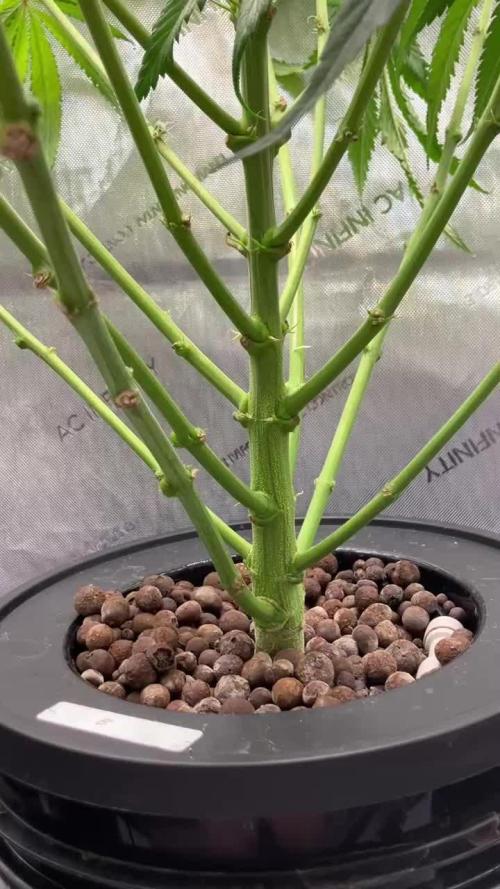
Transplanted into final 9l airpot and soon to be big ready for producing
Processing
Likes
7
Share
@420keef
Follow
This weather has been fucking with this grow way too much, one day it’s super cold & the other it’s like i’m living in the desert & when i get them out of my greenhouse because of the crazy temperatures it would start raining a half our later way too many times :/ i tried my best but this grow won’t be my best one🤷‍♂️🏻