






Likes
4
Share


@horrifiedonlooker
Follow
This week the blueberry exploded with growth. It's spreading out and covering the other two plants. It's a little droopy in the picture because I photoed it after it was in the dark for six hours.
Even with its rapid growth this week, overall, the blueberry lags behind the critical mango CBD and the cream plants which are flowering. There's also a little bit of brown on the upper fan leaves indicating a possible Mg deficiency. Until recently, I've had a very conservative nutrient solution. I've increased the Mg from 2.5ml/gal to 4.0 ml/gal which is well within the limits others have used with good results. My total ppm is still less than 1000..
I've been having problems with my ph meter this past week so bought a new one. When I compared the two within a specific standardized ph solution, the meter I was using was off by .3, meaning, I've been using water that's at about 6.1 instead of 5.8. I'm not sure how long, but I calibrated it a couple weeks ago. Moving forward I'll see if this helps. I just received some Armor Si (silica) to add to my mix. Next time I'll use it throughout my entire grow.
Otherwise, the plants are doing well. The cream and critical mango are stacking buds on their main cola and the branch colas are starting to form. Trichomes are forming on the flowering plants.

Likes
6
Share


@weedelicious
Follow
Day 78
Hey growmies,
The girls received 2 liters of water with fertilizer and Cal-Mag today. Before that, I defoliated them for the last time – I hope it wasn’t too much, but I wanted to try a more radical approach to hopefully get an even better end result. Unfortunately, some of the Pink Gelato's leaves are showing clear signs of heat stress, but so far she’s still growing well. I hope the terpenes are okay.
Day 79
The girls are doing well so far. Unfortunately, the tips of the Pink Gelato are a bit burned, and it's supposed to get even hotter in the next few days. I hope she survives the heat. The other two ladies don’t seem to mind it. The smell and the buds are getting bigger and bigger. The carbon filter is managing to neutralize the strong smell. Now we're heading into the final days of flowering

Likes
83
Share


@TheUk420Show
Follow
Hi guys so coming into to the final stretch now start of week number 8 the black dog has been on flush for 3 days it will be cropped in two days. Other plants that are on flush are 2 of the queens one purple one not. the large plants ie super crit and the super crit silver haze are both on flush since yesterday so they have the 9th week to go yet first harvest will be the black dog :)


Likes
3
Share


Likes
5
Share


@I_Identify_As_A_Dan
Follow
Week 10 for Moby dick by fastbuds,
She's finally starting to bulk up a little her flowers, but she's extremely leafy likely going to defoliate her again a bit because little worried about her main cola getting bud rot but no signs of that for now. But the weather definitely isn't helping that worry😂 I've also stopped praying her down in the mornings because of the high humidity i don't want to run into any issues. She's going to be a long living auto for sure... 14 weeks+ i reckon but maybe that will translate well to the final scale weight 😁
She was fed once this week with some FPJ, Regulator, Enzym+ & Topbooster by @aptus_portugal just to give it an extra boost!

Likes
71
Share


@ClubRiot
Follow
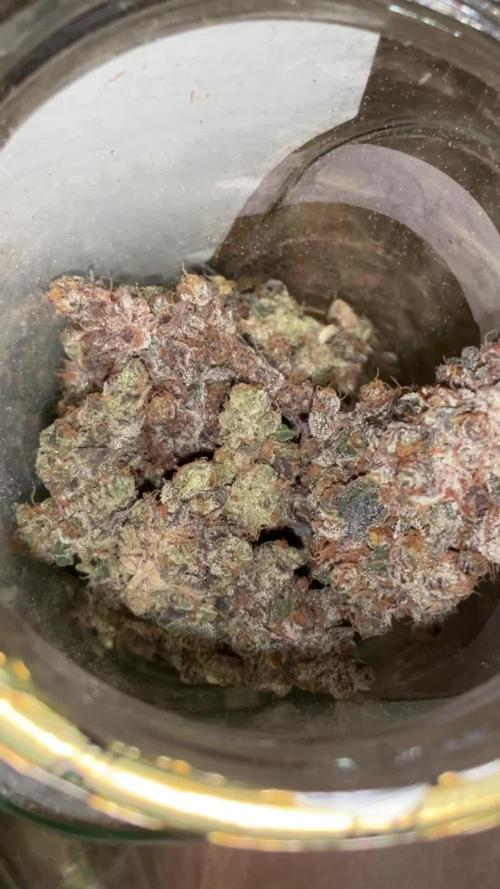
Royal Gorilla
Week 16
11L Pot
LED: SP250 (245W) for Flow. Stage
Canna COCO
Mineral Nutrients:
👇
Flawless Finish: 2 ml/L



Likes
22
Share


@MadeInGermany
Follow
Hey guys :-)
A lot has happened this week :-).
She has developed very well.
Today it was topped on the main shoot for the first time.
How often I will use topping on her, I make it dependent on how everyone else develops.
I want to bloom soon so it won't happen very often :-).
It was poured twice this week with 1 l each time (for nutrients, see table above).
Fast plant spray from GBL was applied 2 times this week.
New was added this week Fast Bud from GBL is preparing her for the coming flowering.
Bio Grow Stay away for a while because the substrate is 30-50 % consists of fresh earth and the ladies are nice and dark green :-).
Today there was another spray with neem oil against the remaining tripse which I will repeat one last time next week.
As always, everything was cleaned and checked.
Have fun with the update and stay healthy 🙏🏻
👇🏼👇🏼👇🏼👇🏼👇🏼👇🏼👇🏼👇🏼👇🏼👇🏼👇🏼👇🏼
A thank you for this wonderful strain goes out to
Herzog
https://instagram.com/herzog030?utm_medium=copy_link
and the Exotic Seeds team
You can buy this Nutrients at :
https://greenbuzzliquids.com/en/shop/
With the discount code: Made_in_Germany you get a discount of 15% on all products from an order value of 100 euros.
You can buy this Strain at :
https://www.exoticseed.eu/
Water: Osmosis water mixed with normal water (24 hours stale that the chlorine evaporates) to 0.2 EC. Add Cal / Mag to 0.4 Ec Ph with Organic Ph - to 5.8 - 6.4
👆🏼👆🏼👆🏼👆🏼👆🏼👆🏼👆🏼👆🏼👆🏼👆🏼👆🏼👆🏼

Likes
79
Share


@Salokin
Follow
Hello Growmies! 🌿👋
Welcome to Week 17 of our Epic Buzz journey! We're observing some noticeable progression in our plants, and we're nearly at the finish line with the next entry poised to be our final harvest week!
Here’s the breakdown for our Epic Buzz phenotypes:
Pheno #1 is thriving with its buds thickening up nicely, showcasing a frosty appearance that promises high-quality resin production.
Pheno #2 remains a bit smaller in comparison, yet it's catching up with an increase in bud density and trichome development.
Pheno #3 stands out with its robust growth and resin-packed buds that are slightly ahead in terms of maturity compared to its siblings.
As we approach the harvest, maintaining optimal environmental conditions—consistent humidity and temperature—is more crucial than ever to maximize their potential.
Stay tuned for our final week's update, and as always, stay lifted! 🚀🌱

Likes
16
Share


@GYOweed
Follow
Two Chile Verde clones by HBK genetics 🙌🙏 from Buds N Roses.
Will be testing some natural pgrs and BAP to mid flower one one clone and test my DIY K Citrate krebs cycle stimulator.
Will also see the difference when using immune triggers like chitosan foliar and harpin vs none.
11/20 ph runoff was 6.5 and 1250ppm


Likes
16
Share


@BLAZED
Follow
Week 9 (24-3 to 30-3)
24-3
Temps: 19 to 23.5 degrees
Humidity: 47% to 69%
Watering: 1000 ml.
Did some LST and supercropped some branches.
Also removed some leaves.
25-3
Temps: 18.9 to 23.7 degrees
Humidity: 51% to 68%
26-3
Temps: 19.1 to 23.9 degrees
Humidity: 50% to 64%
Watering: 1000 ml.
Timer set to 12/12!
27-3
Temps: 18.5 to 22.9 degrees
Humidity: 54% to 69%
28-3
Temps: 18.8 to 23.3 degrees
Humidity: 49% to 70%
Watering: 1000 ml. EC: 1.5 (added CalMag)
29-3
Temps: 19.2 to 22.9 degrees
Humidity: 55% to 70%
Watering: 1000 ml. EC: 1.5 (added CalMag)
30-3
Temps: 18.6 to 22.8 degrees
Humidity: 59% to 67%
Watering: 1000 ml.
Likes
4
Share

@420DeepGrow
Follow
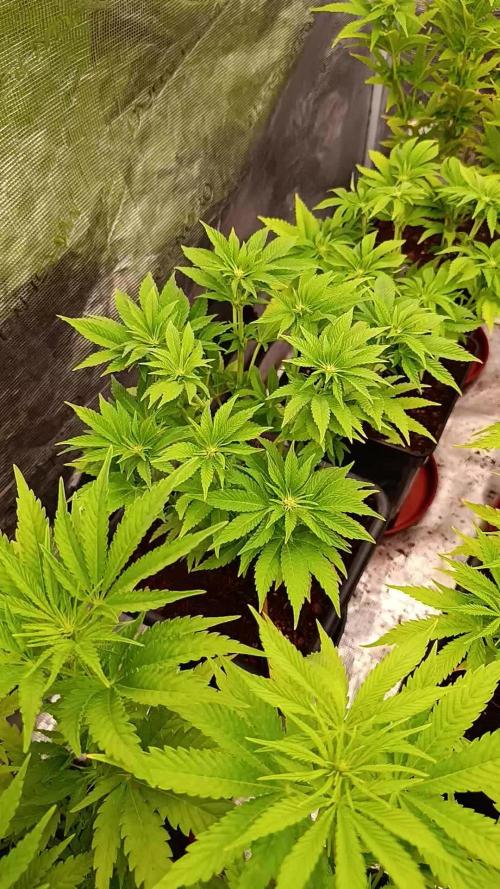
📆 Semana 3:
Con el coco ya limpio y la EC estabilizada, la planta entra en dinámica de absorción normal. El estiramiento se regula y comienzan a definirse los primeros botones florales en las puntas, con pistilos multiplicándose y estructura cada vez más ordenada.
Los riegos siguen suaves pero constantes, manteniendo el equilibrio radicular y evitando nuevas acumulaciones. La planta responde con hojas firmes, color uniforme y mayor presencia aromática, que evoluciona desde la nota cítrica inicial.
Semana de consolidación tras el ajuste del medio.
Seguimos creciendo fuerte 💪!
Likes
3
Share


@High_Grade_Dadli
Follow
Girls were welcomed by some shower of blessing... pistils poppin out girls filling out....upcoming week start doing some clean up and pruning

Likes
3
Share


@LittleBigTrees
Follow
Defoliated and in its flowering pot, switched to 12/12 on day 35 she's stretching out nice.
Will start feeding from week 7.
Processing
Likes
25
Share


@herewegrow
Follow
Ordered a scale the other day so should have some more numbers tomorrow! Not going to sample anything until I get the scale, then I'll update with some more details.

Likes
13
Share


@smokeycropping
Follow
Ahora le dí un inoculo de papa y humato las nenas cmo comen el. Micelio proliferan excelente y se ven sanas y con unos terpenos increíbles nunca tuve problemas plagas ni nada


