


Likes
Comments
Share


@SAC87
Follow
Week 7: The SpiderFarmer SF4000 has arrived. It’s hanging at about 28” at 80% and the plants seem to be very happy. The spectrum is significantly “whiter” rather than the purple of my other lights. Heat is definitely manageable. Buds have chunked up over that last week. I did probably the last feeding as I’m coming up to day 56. Clones are rooted and planted for next round and trying to decide what to run for next round. Some strains are looking better than others but overall pretty nice.
Happy Growing 🌱

Likes
5
Share


@GODAXE
Follow
09.08.2024
the leftover of the storm Debby bring 100mm of rain in 4 hour in the Pm, the road to the camper was damage by flood, and the other path, 1h much longer, was closed.
10.08.2024
finnaly reach the camper at 12h00 after a 4h00 tripp😡, usually it take arround an hour👿👿.
😱😱 I find the camper berry laying in the ground, unbucket by the wind and the rain of Betty.😱😱
😰😰And Barry is Missing😰😰
i had proceed to some root prunning has they have been dommage, and give them a fresh nuts solution at 900ppm as the older have been over diluated by the rain.🙏
11.08.2024
The Camper Berry nicelly recover from the storm. 😎
Fastberry is curvy like hell from is Wind Stress Trainig.
Blackberry dont give a shit and start showing some nice dark preflower.😜
Finally had some news of Barry, is basement have been flood by Betty😞, so i pass the day giving a hand on it.

Likes
7
Share


@hooolian
Follow
23/01/22: Plants are really tall and flowering well with lots of bud sites - pistils are long and prominent - the beginnings of the trichomes are starting to spread onto the leaves to make them sugar leaves. all looknig very healthy - the ventilation system in this tent is great with an intake fan and two circulation fans. ideal temperatures - looking very well.
average around 36 inches in height the largest one is around 47 inches.


Likes
30
Share


@valiotoro
Follow
Week 9🤓!!
Im entering in the last PuSsSh
Green ZenZaaation💥
FCE-6500 100% + adlite UV IR deep red🔛
Happy growing💚👨🏻🌾
Likes
2
Share


@Foxbud420
Follow
First watering without nutrients.
The cold temps are bad. The buds are small, could be more.
But im happy no mold or fungi.


Likes
8
Share


@McGrowin
Follow
Day 42
| #1 is developing well | #2 is doing best | #3 is a runt |
Lots of trichomes on #1 and #2
Lots of catching up to do for #3
Harvest expected by Halloween

Likes
2
Share


@LoganatorDude
Follow
Day 29-
I topped all of them except the little ones plus a Love Drunk and the Fruity Pebbles. I also removed the lower branches from the bottom three nodes.
I didn’t feed today, instead it was plain RO water, their feed will be later in the week. My phone cut out in the video as it ran out of juice. But the discoloration inside the new growth has been outgrown, even though it is once again appearing in the next set of leaves. I really hope she hangs in there! Morning Glory stands 6” tall. The rest are approx. 5” tall and the littles about half that.
Day 31-
As I suspected, the whopper dose of potassium from that seaweed bliss is showing itself potentially. The not Fruity Pebbles that already has been looking off, was pushed to far with the potassium. I believe the excess of potassium to be causing a manganese deficiency. Not the magnesium found in Epsom Salt, but the other more uncommon one. I read up, did some quick research, and this is my most likely conclusion as the fruity pebbles is exhibiting almost textbook description of manganese deficiency. The cause being too much potassium.
To my fortune, I found manganese from the fox farm Bushdoctor!! Also, I will add Botanicare Fulvex at half strength. Mainly to help absorption and include some Mg to help mitigate all the potassium.
Fingers crossed! Tonight I will foliar feed the rest, that way they can stay out in the sun for now.


Likes
6
Share


@jkadabra
Follow
Comienzo de la cuarta semana. Va muy bien, le hice más LST y la fumigué con antihongos.

Likes
12
Share


@Jays_Not_Here_Man
Follow
The Cookie Girls are doing great 😊 Overall, I’m very pleased with the results so far.
At day 8 I stopped tucking the branches and allowed them to grow up. In hindsight, I probably should have kept going for another couple of days. They continued to stretch rapidly all the way up to date 12 or so.
At day 10 I cleaned up some of the small bud sites and leaves that were below the 1st trellis. These sites do not get enough light to make anything good, and take away energy from the main tops as they grow and compete.
At day 12 I decided to add a second trellis net to provide support to the tops that came up so fast. They seem to have stopped their main stretch faze, and are looking happy and healthy now. I’ve continued my water, water, feed schedule and have not seen any cause for concern. The girls are taking a little over a gallon of water every 72 hours at this point.
Humidity is being controlled automatically with my in-line fan and humidifier. RH is set to 57% and temps hover between 77-80 degrees with lights on, and about 70-72 with light off thanks to my furnace being back on for the cooler temps.
The 2x4 5 gallon girl is doing great as well. 😊During the stretch, while I tucked, I snapped more than a couple of tops off, but the plant continues to thrive. She is going to have some great bud, the branch structure is nicely developed with tight node spacing.
I’ve been plucking off all the lower growth, and tucking leaves as they block bud sites. Will be doing a defoliation next week. Happy Gardening 🇨🇦👊❤️

Likes
11
Share


@CURATI_DA_SOLO
Follow
Questa l'ho superata al 5 nodo e successivamente il secondo nodo avendo così 8 apicali....questa e stata la struttura vincente infatti penso che da adesso in poi sarà questa la struttura che farò con le autofiorenti perché e intermedia fra uno stress troppo forte ed uno stress un po' più leggero ed ho notato che tutte le piante adorano questo tipo di potatura.... infatti le foto parlano da sole! Ringrazio ANESIA per questa splendida genetica forte e dalla struttura pesante! 🌈🌱🌈🌱🌈

Likes
10
Share

@pandrticka
Follow
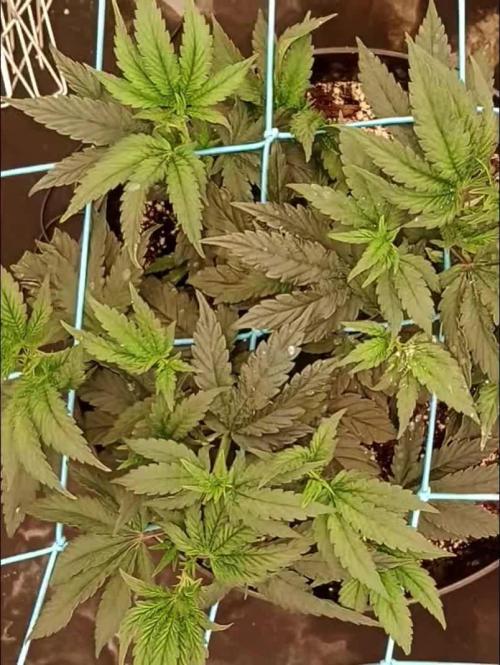
I’ve stopped worrying about them. Added a CO2 bag and a net. They are beautiful and healthy.

Likes
33
Share


@Wicked_Stix
Follow
They survived another week. Lowered the temp to 72 for the remainder of the grow. Wanting to see if it adds anything to the flavors and aroma. Just going to keep the juice pumping until they dont want anymore.

Likes
6
Share

@CannaArchive
Follow
Environment:
Temperature: ~26 °C
Humidity: ~65% RH
Light intensity: ~350 PPFD
Watering / Feeding:
Watering frequency was adjusted to the plant’s needs. The pot was watered once it felt noticeably lighter.
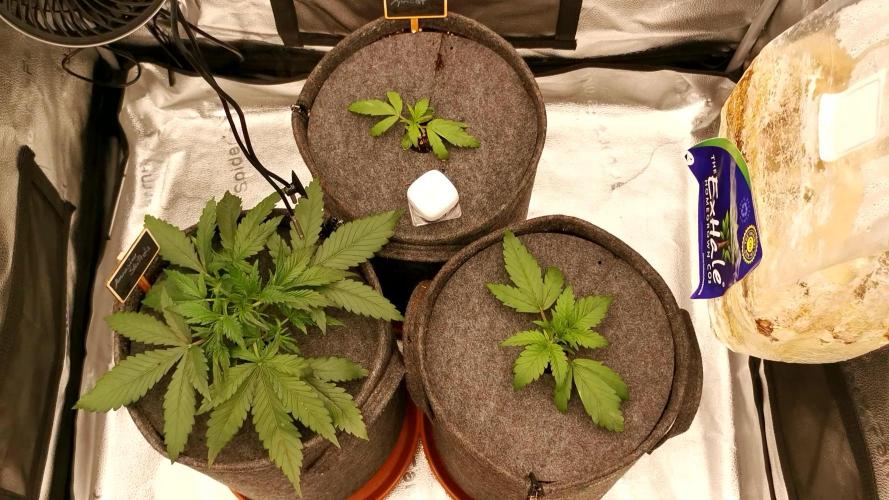
RO water was used, and one application of Greenhouse Bio Enhancer was added this week. Watering volume was slightly increased, as Amnesia Zkittlez showed a higher demand compared to the other plants 🙂
Observations:
During week 3, Amnesia Zkittlez showed very healthy and steady vegetative growth. Leaf color remained a deep, healthy green, and the plant continued to be the most vigorous one in the tent. 🌿
The structure looks compact and balanced so far. No training was applied; instead, only light leaf tucking was done to improve light penetration while keeping stress to a minimum.
Overall, the plant responded very well to the increased light intensity and stable environment.
The focus this week was on maintaining stable conditions and letting the plant develop naturally. Everything looks on track heading into the next phase 😊
Likes
9
Share


@Mr_nugs_lover_David
Follow
I'M changing the light cycle to 12-12 on December 22nd so this is the start of flower. This beautiful lady has become a very nice bush and is completely ready to start flowering, she looks extreme healthy and looks like she's enjoying the living soil blend, I'M USING THE LIVING SOIL BLEND OF FLORGANICS WHICH CONTAINS EVERYTHING SHE NEEDS FROM START TO FINISH. So let's see how this lady stretches which is one of the parts of the grow that I enjoy the most.


Likes
5
Share


@S_herby
Follow
These little plants really surprised me. ❤️😋🍃
My old profile: https://growdiaries.com/grower/spiritual_herb

Likes
2
Share


@Grilla
Follow
This tester strain from Mephisto is by far the sweetest smelling plant that I’ve ever grown. Honestly, I didn’t know marijuana could smell this way. I don’t think she’s going to yield much, but that is also because she wasn’t trained exactly how I wanted. I have two more seeds and will definitely pop another one my next round.


Processing
Likes
7
Share


@Kushizlez
Follow
Day 24-31
(Day 25) The smell in here is absolutely ridiculous. My last grow didn’t smell even close to this bad in early flower.
(Day 27) Stretch is finally all done. #6 in the back is very stout and barely stretched compared to everything else. I doubt it will yield much but I’m excited to see the nice tight colas on it. It seems to be still getting adequate light and raising it up is hard to do with a scrog net so I will just leave it. If it wasn’t getting enough light it would be stretching right?
The early frost is really shocking to me. My last indoor round definitely wasn’t this caked and I’ve never had an outdoor plant on this level either. That’s also true in terms of smell too.
(Day 29) I’m still debating whether I should feed anything in flower or just leave it. The only deficiency I’m seeing is purple stems from P def which could actually just be from light intensity rather than a lack of P.
I’ve done some thinking and I’ve decided to only feed my small plant. What I’m most curious about is if a PK boost will actually make any kind of a difference in flower when it comes to bud size and smokability. So to test this theory I will be top dressing a teaspoon of 0-18-0 bat guano, a tablespoon of 1-4-2 Destiny launch and a half strength watering of 0-0-15 kelp extract. I’m trying to avoid N all together as I just toxed my guinea pig plants with another experimental flowering PK boost that had a very small amount of N in it. This plant in particular actually has very early signs of N def and probably will fade harder than the rest.
(Day 31) Shit. Looks like #1 is starting to herm. It’s definitely not environment or light leaks so maybe it’s just genetic or the recent leaching stressed it out too much. Either way, it’s only a single lower branch and I’m prepared to cut her down if I start seeing anymore. I double checked every other budsite but couldn’t find anymore. In my experience true herms usually start pushing bananas out of the main tops and plants like mine can usually be salvaged with little to no seeded bud. But then again it’s day 31, when these things usually start to happen. I’m 50/50 on this one. I will be watching it everyday like a hawk if anymore show up. The breeder I’m using, ‘Jordan of the Island’s’ is notorious for having unstable genetics and this will be the last time I run any of his stuff. The quality is good, certainly better than most European and Dutch genetics I’ve run but I know I could do better where genetics are concerned. I can’t wait to start hunting my archive dosidos x gelato 41 and in house sugarcane.
Likes
Comments
Share

@gr3g4l
Follow
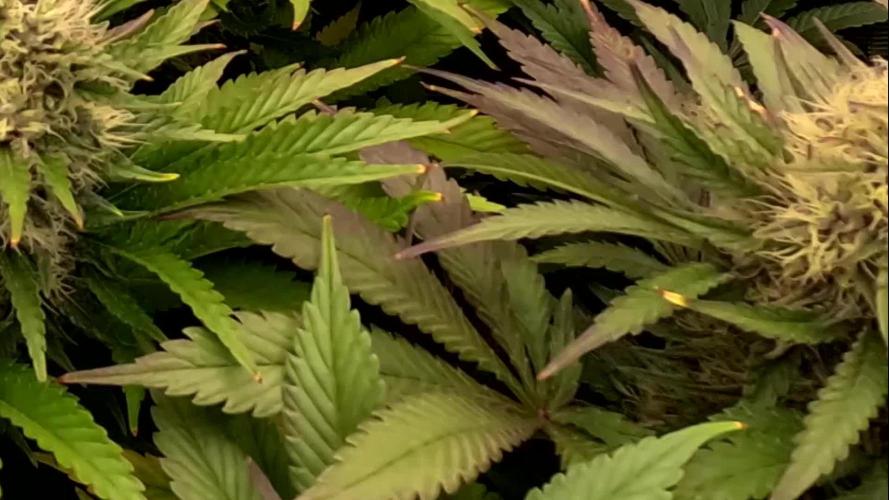
Semana de transición cromática y formación de lindas porras.
La nº6 sigue mostrando albinismo aunque parece que no aumenta de tamaño, se mantiene.
subí los led 5ctms y parece que funcionó bastante bien.
Entramos en una fase delicada por lo que añadí un deshumidificador que se enciende cuando se apagan los led. Más adelante añadiré otro ventilador y mantendré el deshumidificador las 24h. encendido.