Likes
Comments
Share
@MrJones
Follow
MrJones Black Berry OG 🔹🔹🔹🔹🔹🔹GOALS🔹🔹🔹🔹🔹🔹 🌞Drying Environment - 62/65F & 60% RH should take about 10 to 14 days to dry. 🔹🔹🔹🔹🔹🔹🔹🔹🔹🔹🔹🔹🔹🔹🔹🔹🔹🔹 📝 PRE-HARVEST REPORT- Currently the buds are in curing totes and will trim up on Friday or Saturday / Purchased a Trim Bag will see how it goes. 🔹🔹🔹🔹🔹🔹🔹🔹🔹🔹🔹🔹🔹🔹🔹🔹🔹🔹 ▶️ Friday - 04.30.21 /Just feeding H20 PH 6.2 ▶️ Saturday - 05.01.21/Just feeding H20 PH 6.2 ▶️ Sunday - 05.02.21 / Harvested plants today, and boy they looked amazing! ▶️ Monday - 05.03.21 / 1 Week into the drying process, the plants are being kept within environmental scope. ▶️ Tuesday - 05.04.21 / Dry Room Variables 55%/58% RH and 65F/68F Light Air Movement / In Darkness. ▶️ Wednesday - 05.05.21/ Dry Room Variables 55%/58% RH and 65F/68F Light Air Movement / In Darkness. ▶️ Thursday - 05.06.21/ Dry Room Variables 55%/58% RH and 65F/68F Light Air Movement / In Darkness. ▶️ Friday - 05.07.21/ Dry Room Variables 55%/58% RH and 65F/68F Light Air Movement / In Darkness. ▶️ Saturday - 05.08.21/ Dry Room Variables 55%/58% RH and 65F/68F Light Air Movement / In Darkness. ▶️ Sunday - 05.09.21/ Dry Room Variables 55%/58% RH and 65F/68F Light Air Movement / In Darkness. ▶️ Monday - 05.10.21 / Start of Week 2 in the Dry Tent Moving Along Nice and Slow Dry Room Variables 55%/58% RH and 65F/68F Light Air Movement / In Darkness. ▶️ Tuesday - 05.114.21/ Dry Room Variables 55%/58% RH and 65F/68F Light Air Movement / In Darkness. ▶️ Wednesday - 05.12.21/ Dry Room Variables 55%/58% RH and 65F/68F Light Air Movement / In Darkness. ▶️ Thursday - 05.13.21/ Dry Room Variables 55%/58% RH and 65F/68F Light Air Movement / In Darkness. ▶️ Friday - 05.14.21/ Dry Room Variables 55%/58% RH and 65F/68F Light Air Movement / In Darkness. ▶️ Saturday - 05.15.21/ Dry Room Variables 55%/58% RH and 65F/68F Light Air Movement / In Darkness. ▶️ Sunday - 05.16.21/ Dry Room Variables 55%/58% RH and 65F/68F Light Air Movement / In Darkness. ▶️ Monday - 05.17.21 / Moved the buds into drying/curing totes with stems on for a week- Dry Room Variables 55%/58% RH and 65F/68F Light Air Movement / In Darkness. ▶️ Tuesday - 05.18.4.21/ Currig, Dry Room Variables 55%/58% RH, and 65F/68F Light Air Movement / In Darkness. ▶️ Wednesday - 05.19.21/ Removed the buds from the steams and continuing to cure in the totes. Planning to trim on Friday or Saturday. ▶️ Thursday - 05.20.21/ Removed the buds from the steams and continuing to cure in the totes. Planning to trim on Friday or Saturday. 🔹🔹🔹🔹🔹🔹🔹🔹🔹🔹🔹🔹🔹🔹🔹🔹🔹🔹 📜 Cultivar Information - We have created this strain by crossing the best Black Domina available with Very Berry and our own Lost Coast OG Kush, this plant produces large colas with a super intense sweet berry flavor with a sweet-smelling aroma that varies from fruit and berries to sweet candy. This lady offers tight internal stacking giving a perfect structure for those super heavy colas, which is perfect for growth both indoors and out, if grown outside she is fairly resistant to mold and powdery mildew which is a real bonus with such large colas. 🔹🔹🔹🔹🔹🔹🔹🔹🔹🔹🔹🔹🔹🔹🔹🔹🔹🔹
Likes
32
Share
Hi Grower!! Day 109 Complete ( 80 Days Flower) Really awesome this strain, the heads are already dry and tested. Had 27% THC on the first test. I decided to build on the lower part and hope that there will be a little more Grown under Viparspectra P4000 CHECK YOUR DISCOUNT WITH THIS LINK ‐----------------------COPY&PASTE--‐-‐---------------- https://viparspectra.eu/?ref=budspencer Or with my Coupon Code: Budspencer420
Likes
4
Share
Alga vera biobizz once more. NEXT TIME go with Bloom. Smell sttrong. buds hard as a rock. Royal critical, royal gorilla, amnesia haze in the front smaller plants. One week more for Bubble kush (in video) then harvest. More space i will have than.
Likes
7
Share
@Brickie74
Follow
Well this is actually where i started. I had already germinated the Green Tea (Forbidden Fruit x Gelato) seed. Now i think i am caught up. I will try to post as many videos as possible. I suck at typing and with the dictation it takes longer to fix the f_ck ups than to just type what I wanted. I can just explain what I'm doing or what I've done for the week. This is my first ever grow journal so it may be all over the place....we will see..... I have multiple grows happening at the same time....sometimes I get carried away...lol....and might have a few more than I expected to have. I will do my best to keep things up to date and current. I definitely want to start running right out of the gate and make a pretty decent journal.
Likes
2
Share
Processing
Likes
8
Share
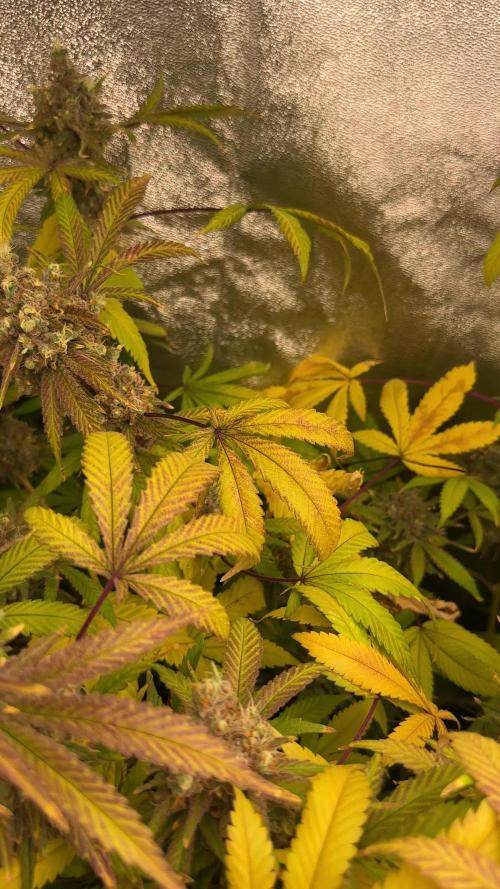
Esa familia, de nuevo e vuelto para actualizar las candy caramelo, también trasplantamos a su maceta definitiva, amarillean las hojas de abajo porque ya pedían un trasplante, y hasta que se amolden al nuevo sustrato. Ph controlado temperatura 22/26 y humedad algo baja 60% aunque pronto cambiaremos el ciclo lumínico. Hasta ahora esto es lo que hay y mientras catamos la cosecha anterior, os iré actualizando demás diarios con sus respectivas cosechas fumetillas, un saludo y hasta la próxima semana.
Likes
11
Share
@russrahl
Follow
Last Obi-Wan girl was left in dark for 3 days and then chopped on day 66 and is now drying. She was definitely the largest of all 4 plants in the tent. Cant wait to see the dry weight on this girl! Next update will be when all the bud is dry and we have a final weight for all 3 together. The first one we chopped only gave us just over 4oz dried but she was half the size as the other 3 girls and kinda lower in the corner. Pulled 7.4oz off the Wedding Cake in the same tent/setup and these last 2 Obi-Wan’s that are still drying are bigger then she was by a lot I think. Cheers 💨
Likes
7
Share
The plant is growing perfectly and is already getting very thick (the flowers). Resin is constantly forming and the smell is like a candy factory. There is still hope that the flowers will change color slightly, but it is difficult to get below 27 degrees during the day Flowering day: 34
Likes
3
Share
@Rko41
Follow
Engraissage pour fonky monk et Time loop , rinçage et flush pour ice pie et enchantress
Likes
54
Share
@wolfvb
Follow
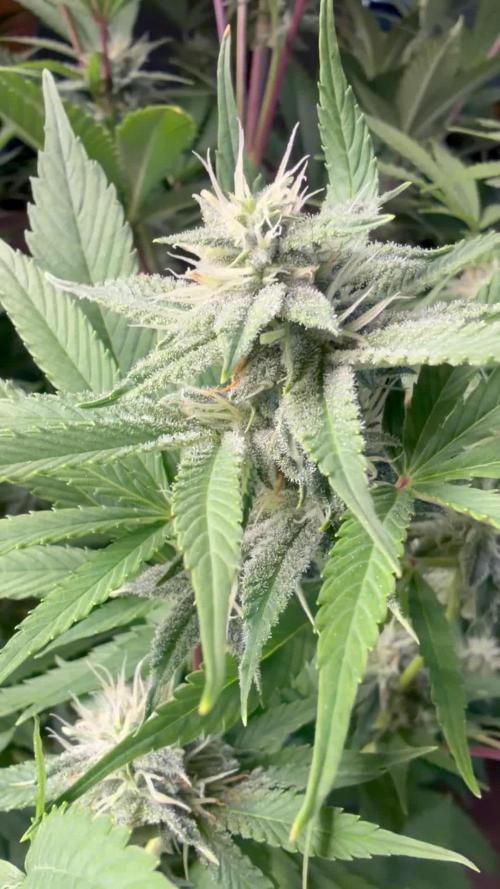
🌿 Mellow Jelly - Frost Factory & Full Recovery!? ❄️❤️‍? Let's go! Welcome to Week 16 for the Mellow Jelly. Hopefully, she is fully recovering from the thrips madness we had to deal with. Judging by how she is stacking up this week, I'd say she shook it off and is pushing hard to the finish line! 📈 The Details / Progress Report: Bouncing Back: She took the defoliation and pest cleanup perfectly. While you can still spot a few old battle scars on the older fan leaves, the upper canopy is completely focused on flower production. The airflow is dialed in, and she is putting all her energy into those buds. Extreme Frost: Just look at the macro shots! 🤯 The resin production is absolutely out of this world right now. The sugar leaves and calyxes are completely caked in a thick, sticky layer of white trichomes. Swelling Up: The colas are getting incredibly dense and chunky. We are starting to see a lot of those pistils curl inward and turn a beautiful fiery orange, but she is still pushing some fresh white hairs, which means she is still packing on weight! 🔥 Canopy Structure: Opening her up last week really paid off. The light is penetrating down to all those mid-canopy bud sites perfectly, ensuring we get solid development from top to bottom. 💧 Next Steps: We beat the bugs hopefully, so now we are officially in the coasting phase! The main goal right now is to keep the environment perfectly stable and start keeping a really close eye on those trichomes. We are getting into the final stages, so it is all about letting her swell up even more and waiting for that perfect harvest window. She is an absolute beast! Let's keep it growing! 🌱💨
Likes
9
Share
@Chubbs
Follow
Wow, another week done. It's become an absolute jungle in my greenhouse. A few of the GG4/Sherbets tops had to be mainlined since they're hitting the top of the greenhouse at 7ft8in tall. The smell is definitely getting stronger every day and it goes from super pungent, to sweet, to almost tropical. They're all still looking nice and healthy. The Athena Blended Line works wonders with my well water as the plants couldn't be happier. All in all Happy Growing.
Likes
19
Share
Yellow butterfly came to see me the other day; that was nice. Starting to show signs of stress on the odd leaf, localized isolated blips, blemishes, who said growing up was going to be easy! Smaller leaves have less surface area for stomata to occupy, so the stomata are packed more densely to maintain adequate gas exchange. Smaller leaves might have higher stomatal density to compensate for their smaller size, potentially maximizing carbon uptake and minimizing water loss. Environmental conditions like light intensity and water availability can influence stomatal density, and these factors can affect leaf size as well. Leaf development involves cell division and expansion, and stomatal differentiation is sensitive to these processes. In essence, the smaller leaf size can lead to a higher stomatal density due to the constraints of available space and the need to optimize gas exchange for photosynthesis and transpiration. In the long term, UV-B radiation can lead to more complex changes in stomatal morphology, including effects on both stomatal density and size, potentially impacting carbon sequestration and water use. In essence, UV-B can be a double-edged sword for stomata: It can induce stomatal closure and potentially reduce stomatal size, but it may also trigger an increase in stomatal density as a compensatory mechanism. It is generally more efficient for gas exchange to have smaller leaves with a higher stomatal density, rather than large leaves with lower stomatal density. This is because smaller stomata can facilitate faster gas exchange due to shorter diffusion pathways, even though they may have the same total pore area as fewer, larger stomata. Leaf size tends to decrease in colder climates to reduce heat loss, while larger leaves are more common in warmer, humid environments. Plants in arid regions often develop smaller leaves with a thicker cuticle and/or hairs to minimize water loss through transpiration. Conversely, plants in wet environments may have larger leaves and drip tips to facilitate water runoff. Leaf size and shape can vary based on light availability. For example, leaves in shaded areas may be larger and thinner to maximize light absorption. Leaf mass per area (LMA) can be higher in stressful environments with limited nutrients, indicating a greater investment in structural components for protection and critical resource conservation. Wind speed, humidity, and soil conditions can also influence leaf morphology, leading to variations in leaf shape, size, and surface characteristics. Small leaves: Reduce water loss in arid or cold climates. Environmental conditions significantly affect gene expression in plants. Plants are sessile organisms, meaning they cannot move to escape unfavorable conditions, so they rely on gene expression to adapt to their surroundings. Environmental factors like light, temperature, water, and nutrient availability can trigger changes in gene expression, allowing plants to respond to and survive in diverse environments. Depending on the environment a young seedling encounters, the developmental program following seed germination could be skotomorphogenesis in the dark or photomorphogenesis in the light. Light signals are interpreted by a repertoire of photoreceptors followed by sophisticated gene expression networks, eventually resulting in developmental changes. The expression and functions of photoreceptors and key signaling molecules are highly coordinated and regulated at multiple levels of the central dogma in molecular biology. Light activates gene expression through the actions of positive transcriptional regulators and the relaxation of chromatin by histone acetylation. Small regulatory RNAs help attenuate the expression of light-responsive genes. Alternative splicing, protein phosphorylation/dephosphorylation, the formation of diverse transcriptional complexes, and selective protein degradation all contribute to proteome diversity and change the functions of individual proteins. Photomorphogenesis, the light-driven developmental changes in plants, significantly impacts gene expression. It involves a cascade of events where light signals, perceived by photoreceptors, trigger changes in gene expression patterns, ultimately leading to the development of a plant in response to its light environment. Genes are expressed, not dictated! While having the potential to encode proteins, genes are not automatically and constantly active. Instead, their expression (the process of turning them into proteins) is carefully regulated by the cell, responding to internal and external signals. This means that genes can be "turned on" or "turned off," and the level of expression can be adjusted, depending on the cell's needs and the surrounding environment. In plants, genes are not simply "on" or "off" but rather their expression is carefully regulated based on various factors, including the cell type, developmental stage, and environmental conditions. This means that while all cells in a plant contain the same genetic information (the same genes), different cells will express different subsets of those genes at different times. This regulation is crucial for the proper functioning and development of the plant. When a green plant is exposed to red light, much of the red light is absorbed, but some is also reflected back. The reflected red light, along with any blue light reflected from other parts of the plant, can be perceived by our eyes as purple. Carotenoids absorb light in blue-green region of the visible spectrum, complementing chlorophyll's absorption in the red region. They safeguard the photosynthetic machinery from excessive light by activating singlet oxygen, an oxidant formed during photosynthesis. Carotenoids also quench triplet chlorophyll, which can negatively affect photosynthesis, and scavenge reactive oxygen species (ROS) that can damage cellular proteins. Additionally, carotenoid derivatives signal plant development and responses to environmental cues. They serve as precursors for the biosynthesis of phytohormones such as abscisic acid () and strigolactones (SLs). These pigments are responsible for the orange, red, and yellow hues of fruits and vegetables, while acting as free scavengers to protect plants during photosynthesis. Singlet oxygen (¹O₂) is an electronically excited state of molecular oxygen (O₂). Singlet oxygen is produced as a byproduct during photosynthesis, primarily within the photosystem II (PSII) reaction center and light-harvesting antenna complex. This occurs when excess energy from excited chlorophyll molecules is transferred to molecular oxygen. While singlet oxygen can cause oxidative damage, plants have mechanisms to manage its production and mitigate its harmful effects. Singlet oxygen (¹O₂) is considered a reactive oxygen species (ROS). It's a form of oxygen with higher energy and reactivity compared to the more common triplet oxygen found in its ground state. Singlet oxygen is generated both in biological systems, such as during photosynthesis in plants, and in cellular processes, and through chemical and photochemical reactions. While singlet oxygen is a ROS, it's important to note that it differs from other ROS like superoxide (O₂⁻), hydrogen peroxide (H₂O₂), and hydroxyl radicals (OH) in its formation, reactivity, and specific biological roles. Non-photochemical quenching (NPQ) protects plants from damage caused by reactive oxygen species (ROS) by dissipating excess light energy as heat. This process reduces the overexcitation of photosynthetic pigments, which can lead to the production of ROS, thus mitigating the potential for photodamage. Zeaxanthin, a carotenoid pigment, plays a crucial role in photoprotection in plants by both enhancing non-photochemical quenching (NPQ) and scavenging reactive oxygen species (ROS). In high-light conditions, zeaxanthin is synthesized from violaxanthin through the xanthophyll cycle, and this zeaxanthin then facilitates heat dissipation of excess light energy (NPQ) and quenches harmful ROS. The Issue of Singlet Oxygen!! ROS Formation: Blue light, with its higher energy photons, can promote the formation of reactive oxygen species (ROS), including singlet oxygen, within the plant. Potential Damage: High levels of ROS can damage cellular components, including proteins, lipids, and DNA, potentially impacting plant health and productivity. Balancing Act: A balanced spectrum of light, including both blue and red light, is crucial for mitigating the harmful effects of excessive blue light and promoting optimal plant growth and stress tolerance. The Importance of Red Light: Red light (especially far-red) can help to mitigate the negative effects of excessive blue light by: Balancing the Photoreceptor Response: Red light can influence the activity of photoreceptors like phytochrome, which are involved in regulating plant responses to different light wavelengths. Enhancing Antioxidant Production: Red and blue light can stimulate the production of antioxidants, which help to neutralize ROS and protect the plant from oxidative damage. Optimizing Photosynthesis: Red light is efficiently used in photosynthesis, and its combination with blue light can lead to increased photosynthetic efficiency and biomass production. In controlled environments like greenhouses and vertical farms, optimizing the ratio of blue and red light is a key strategy for promoting healthy plant growth and yield. Understanding the interplay between blue light signaling, ROS production, and antioxidant defense mechanisms can inform breeding programs and biotechnological interventions aimed at improving plant stress resistance. In summary, while blue light is essential for plant development and photosynthesis, it's crucial to balance it with other light wavelengths, particularly red light, to prevent excessive ROS formation and promote overall plant health. Oxidative damage in plants occurs when there's an imbalance between the production of reactive oxygen species (ROS) and the plant's ability to neutralize them, leading to cellular damage. This imbalance, known as oxidative stress, can result from various environmental stressors, affecting plant growth, development, and overall productivity. Causes of Oxidative Damage: Abiotic stresses: These include extreme temperatures (heat and cold), drought, salinity, heavy metal toxicity, and excessive light. Biotic stresses: Pathogen attacks and insect infestations can also trigger oxidative stress. Metabolic processes: Normal cellular activities, particularly in chloroplasts, mitochondria, and peroxisomes, can generate ROS as byproducts. Certain chlorophyll biosynthesis intermediates can produce singlet oxygen (1O2), a potent ROS, leading to oxidative damage. ROS can damage lipids (lipid peroxidation), proteins, carbohydrates, and nucleic acids (DNA). Oxidative stress can compromise the integrity of cell membranes, affecting their function and permeability. Oxidative damage can interfere with essential cellular functions, including photosynthesis, respiration, and signal transduction. In severe cases, oxidative stress can trigger programmed cell death (apoptosis). Oxidative damage can lead to stunted growth, reduced biomass, and lower crop yields. Plants have evolved intricate antioxidant defense systems to counteract oxidative stress. These include: Enzymes like superoxide dismutase (SOD), catalase (CAT), and various peroxidases scavenge ROS and neutralize their damaging effects. Antioxidant molecules like glutathione, ascorbic acid (vitamin C), C60 fullerene, and carotenoids directly neutralize ROS. Developing plant varieties with gene expression focused on enhanced antioxidant capacity and stress tolerance is crucial. Optimizing irrigation, fertilization, and other management practices can help minimize stress and oxidative damage. Applying antioxidant compounds or elicitors can help plants cope with oxidative stress. Introducing genes for enhanced antioxidant enzymes or stress-related proteins over generations. Phytohormones, also known as plant hormones, are a group of naturally occurring organic compounds that regulate plant growth, development, and various physiological processes. The five major classes of phytohormones are: auxins, gibberellins, cytokinins, ethylene, and abscisic acid. In addition to these, other phytohormones like brassinosteroids, jasmonates, and salicylates also play significant roles. Here's a breakdown of the key phytohormones: Auxins: Primarily involved in cell elongation, root initiation, and apical dominance. Gibberellins: Promote stem elongation, seed germination, and flowering. Cytokinins: Stimulate cell division and differentiation, and delay leaf senescence. Ethylene: Regulates fruit ripening, leaf abscission, and senescence. Abscisic acid (ABA): Plays a role in seed dormancy, stomatal closure, and stress responses. Brassinosteroids: Involved in cell elongation, division, and stress responses. Jasmonates: Regulate plant defense against pathogens and herbivores, as well as other processes. Salicylic acid: Plays a role in plant defense against pathogens. 1. Red and Far-Red Light (Phytochromes): Red light: Primarily activates the phytochrome system, converting it to its active form (Pfr), which promotes processes like stem elongation and flowering. Far-red light: Inhibits the phytochrome system by converting the active Pfr form back to the inactive Pr form. This can trigger shade avoidance responses and inhibit germination. Phytohormones: Red and far-red light regulate phytohormones like auxin and gibberellins, which are involved in stem elongation and other growth processes. 2. Blue Light (Cryptochromes and Phototropins): Blue light: Activates cryptochromes and phototropins, which are involved in various processes like stomatal opening, seedling de-etiolation, and phototropism (growth towards light). Phytohormones: Blue light affects auxin levels, influencing stem growth, and also impacts other phytohormones involved in these processes. Example: Blue light can promote vegetative growth and can interact with red light to promote flowering. 3. UV-B Light (UV-B Receptors): UV-B light: Perceived by UVR8 receptors, it can affect plant growth and development and has roles in stress responses, like UV protection. Phytohormones: UV-B light can influence phytohormones involved in stress responses, potentially affecting growth and development. 4. Other Colors: Green light: Plants are generally less sensitive to green light, as chlorophyll reflects it. Other wavelengths: While less studied, other wavelengths can also influence plant growth and development through interactions with different photoreceptors and phytohormones. Key Points: Cross-Signaling: Plants often experience a mix of light wavelengths, leading to complex interactions between different photoreceptors and phytohormones. Species Variability: The precise effects of light color on phytohormones can vary between different plant species. Hormonal Interactions: Phytohormones don't act in isolation; their interactions and interplay with other phytohormones and environmental signals are critical for plant responses. The spectral ratio of light (the composition of different colors of light) significantly influences a plant's hormonal balance. Different wavelengths of light are perceived by specific photoreceptors in plants, which in turn regulate the production and activity of various plant hormones (phytohormones). These hormones then control a wide range of developmental processes.
Likes
6
Share
@valiotoro
Follow
Hello everyone 😎 Week 5 of flower for the Dutchie🧡 Time to flush⚓️ Mac#1 Very nice smell of citrus & cookies 🍪🍋 SFV top buds ready✂️super dense,smell citrus & earthy🤤 Glueberry one more week for the top buds✂️
Likes
15
Share
@UJRey
Follow
What can I say? That gorilla girl is more than efforts, even with a 70% working light it keeps growing green mass, buds are heavy and tasty, smoke gets high good with a plant not even close to be done. Last week the watering raised up to 2x times, lower branches started growing much better. Waiting 1-2 weeks more for a harvest In the end of week 7 I can see that there is no yellow leafs, I give water twice a day, she still keeps growing and being cool :)
Likes
3
Share
@Joaka
Follow
ya se comienza a sentir un olor intenso, como se tenia previsto las black jack estan evolucionando sumamente rapido, ya comienzan a explotar en resina.
Likes
5
Share
Our Zookies Automatic are very cute. Remember that we are growing 1 Plant worked with the techniques and one left to grow without cutting techniques to preserve its speed. In this diary we find the plant that is growing nice and open with a main lining that works very very well. The plant is at medium internodal distance and this has allowed us to work on the mini brunches from the beginning with more ease until creating the classic T shape from main lining. We are opening everything very well and we have arrived at the second topping or at the third internode after the first topping, the mainfolding one. I am very happy with how this one is opened but the best in this sense is the King Louis Auto that you can find in the other diaries. The comparison is the salt of the experience so the plant of the other diary will be worked very differently go and see it to compare them. We have started the Plagron fertilization program, we are in 100% organic configuration, the soil is recycled Promix + 1/3 fresh soil + 10% Perlite + RQS Mycorrhiza Mix (4 g in the mix, 1 g under the small fiber pot). We are administering // 1 ml/l Power Roots - 1 ml/l Pure Zym - 1 ml/l Sugar Royal - 3 ml/l Alga Grow We have sprayed Vita Race Foliare 3 ml/l. https://plagron.com/en The doubts about the compatibility between Pure Zym and mycorrhizae have been dispelled, they can get along according to Plagron experts. If someone tells you that enzymes eat mycorrhizae, which in principle may seem possible, explain to them that it is not true. https://www.royalqueenseeds.it/growing/452-easy-roots-mix-di-micorrhize.html Is a top strain of the last few years very high level of thc ---- https://www.zamnesia.io/it/11174-zamnesia-seeds-zookies-auto.html Brief description of Zamnesia // The result of the cross between Animal Cookies, GG#4 and ruderalis, this compact variety produces top quality buds, maintaining all the charm of a modern US hybrid. Thanks to the hard work of the Zamnesia genetics team, Zookies Automatic is easy to grow, fast flowering and exceptionally vigorous. Regardless of whether you grow indoors, outdoors or in a greenhouse, if you are looking for a stable autoflowering strain that is quick to harvest, Zookies Automatic is definitely the one for you. Like all Zamnesia autoflowers, Zookies Auto promises rapid harvests of top-quality bud with minimal effort. And she delivers on that promise. After germination, Zookies Automatic plants grow vigorously for around 3–4 weeks. At the end of the pre-flowering phase, plants typically reach a height of between 90–110cm, depending on the size of the pot. The new strains are fantastic and the old ones are no exception... p.s. no hermaphrodites so far, can you growers say the same? You can find the entire world of growing on Zamnesia and more, just take a look at the site and you will find "all the best that nature has to offer" in various shapes and colors. --- // www.zamnesia.com
Likes
6
Share
@Jack22
Follow
What do you think about these first days? The humidity is not much stable but I’m planning to buy a humidifier in the next week.
Likes
38
Share
Started flushing this one. Gave her a good 10 gallon flush to start and she will get 5 gallons of RO water per day for 10 days or so. Took a couple early samples.