


Likes
Comments
Share


Likes
67
Share


@AwfulBuddy
Follow
Hi buddies im back to the diary
Everything is going well, the girls drink a lot 3 to 5 liters of feed per day, the Ph and EC remain stable.
I see new roots and buds continue to bloom💣 so I think they are fine and healthy.
Sensi Seeds indicates Skunk#1 with 8 weeks flowering
now i am at the beginning of week 7 bloom but I still don't see milky or amber trichomes and not even so many brown pistils, so i will repeat the week 5 feed as AN advice...
maybe from the next one I'll start with overdrive .. who knows? 😁
I made some macro videos of the trichomes, in the next few days I will update the diary with photos.
Thanks for the answers and advices to the grow questions, I know you don't do it for the free seeds, its only love 💚😜 love you too buddies
as usual thanks for stopping by and good growth everyone !!
Update: I need a tripod to take better macro shoots. Sorry for low quality pics

Likes
5
Share


@Ninjabuds
Follow
The rainbow Saltz has a very unique set of leaves it doesn’t have the traditional looking leaves that 80% of plants have I think when this plant flowers it’s gonna wrap around the stem
This week was smooth sailing I topped all the plants

Likes
38
Share

@Roberts
Follow
She did get huge, but she has some berry fruity smelly flower on her. Loaded with trichromes and looking like they will be dense and delicious. Thank you Athena, Spider Farmer, and Divine Seeds. 🤜🏻🤛🏻🌱🌱🌱
Thank you grow diaries community for the 👇likes👇, follows, comments, and subscriptions on my YouTube channel👇.
❄️🌱🍻 Happy Growing 🌱🌱🌱
https://youtube.com/channel/UCAhN7yRzWLpcaRHhMIQ7X4g.


Likes
8
Share


@CanarianGrow92
Follow
Green papaya from super sativa seeds club looking good at week 6, we will continue with some more nutrients from xpert nutrients this week and after that only water.
The buds are showing quite some thc levels and have an amazing sweet smell.
Very happy with this tester for sure!

Likes
2
Share


@High_Grade_Dadli
Follow
Week went smoothly cant complain....cutting are doing well also took 4 cutting of seed(think it's from applelicious) they already rooted n transplanted going to veg for a lil n send to flower to see if it's worth

Processing
Likes
4
Share


@Smokeytad420
Follow
Sorry for the delay. Were in rocket mode cuz things are blasting off!! Things r filling in nicely and i am happy not much i can complain about. Loving these genetics so far but i am not surprised because everyone I follow that grows SAG autos got the 🔥 with amazing results. Thanks to that follow along i try to not dissapoint. To all the planters of the trees lets keep growing the dank!! Catch ya the next updank Weednerds!! GrowerzLuv✌️


Likes
79
Share


@Salokin
Follow
Hello Growmies!
As we conclude our Epic Buzz journey, let's dive into the final harvest data under the exceptional conditions provided by the Trolmaster and the engaging platform of GD. This week marks the end of our cultivation cycle with a final wet weight of 1720 grams from a setup featuring the FC4800 light dimmed to 65% maximum, utilizing 108 watts over an area of approximately 0.48 square meters.
Final Harvest Metrics:
Yield Efficiency: Achieved an impressive yield efficiency of 15.92 wet grams per watt, underscoring the efficiency of our light setup.
Area Yield: With a productivity of 3583.33 wet grams per square meter, our cultivation space was maximized for optimal output.
Plant Yield: Each plant contributed significantly, averaging 573.33 grams, highlighting robust growth and development.
Density: The garden hosted 6.25 plants per square meter, optimizing space without overcrowding.
Energy Utilization: The grow utilized 225 watts per square meter, a testament to our strategic light management.
A huge shoutout to Trolmaster for making such an amazing contest possible, and to GD for providing a platform that brings us all together. This cultivation journey has been a rewarding challenge, showcasing the potential of careful strain selection and attentive grow practices.
In the meantime, feel free to check out my upcoming Barneys Farm diaries which will soon take over this tent. Exciting times ahead as we continue to explore and share our passion for growing!
Stay Lifted!
Salokin

Likes
2
Share

@Ninjabuds
Follow
The strawberry gorilla has come out of the soil and it pushed itself up very well without having to dig it up out the soil. This is one plant I’m excited for I hope it grows to look like the photos
The temps are rising around here making it some much easier to start seedling than in the winter with heater on full blast

Likes
3
Share

@Hitthejuan
Follow
7-19-2026 Mix Pack Auto RF3
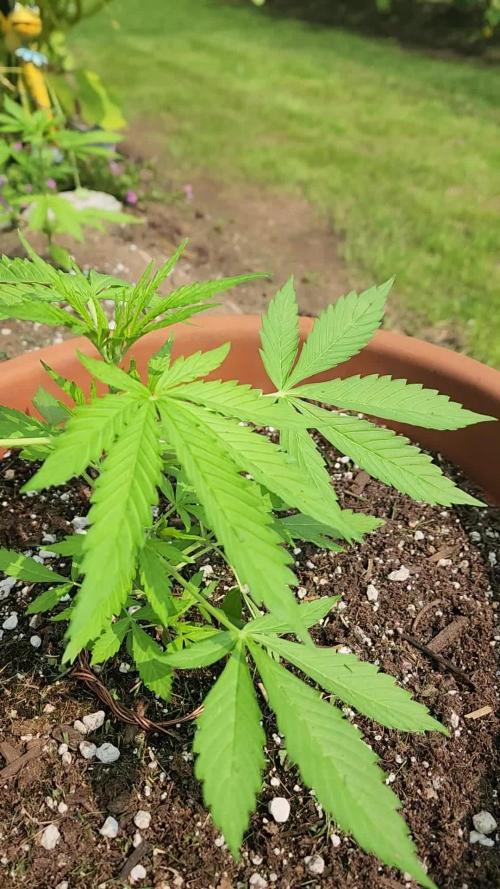
Hell everyone this week has been hot, humid and smokey as hell from the wildfires 🔥 in Canada. Very smokey to the point it blocks the sun. Had a couple of thunderstorms too. Air quality has been shity. But plants love this kind of weather. Both plants are looking healthy and great structure on the stems on both. I did add copper wire ive read it it helps with pestt, giving it a try. Also one of the plant's has started to flower 🌼 will change to flower stage when both plants start to flower, for now keeping it on vegetation.
Temperature: (daytime 80°- 100°+)( night time 60°-90°)
Humidity: 52% - 71%
Daytime:15 hours 6 mins
Tall: (A. 8 inches ) (B. 8 inches )
Smell: yes
Water: rain water for both
Plant (A) has a skunky/diesel/gassy with some fruity liomone sweet smell at the end. Kinda slicky feeling when you rub your fingers on the stem nodes. This plant has grown 5 inches and a nice wide too since last week and has a darkish green look to it. Structure of the plant's is looking great stems are nice and strong with a whitefish look to it. Its got some nice leafs to it im guessing it going to lean more towards a indica.
Plant (B) doesn't have a strong smell yet. A little fruity smell but not much. Structure on the plant is great the nodes are perfect spaced apart. This plants is also 8 inches tall but not as wide. Didn't really grow much since last week. But this plant has started to flower 🌼 two days ago on Friday. I wounder if it got stressed out or maybe this is not an nood out door plantto grow. Its been 27 so we will see. Its got a light green color on the leafs and the stems are starting to get more purple on it. I also took out the sunflower plant that was next to it.
It was starting to cover it up by its shade by like 3 pm so not getting the sunlight so it got pulled.
Thank for watching
Likes
2
Share


@Bluemels
Follow
Tag 65: Es hat sich eine gießroutine entwickelt. Alle 3 Tage kriegen die beiden zusammen 4 L. Die Wurzelentwicklung scheint recht unterschiedlich was man an der Nährstoffaufnahme liegen kann. Ich denke das Problem liegt in den Wurzeln....
Likes
24
Share


@OGOZHigh
Follow
Update : 09.06
Da das Wetter hier im Norden nicht so mit spielt, machen sie langsam Fortschritte.
Wir machen das beste Draus ✌️
Likes
2
Share


@MindFlowers68
Follow
She doubled in size this week. For some reason I thought the triploid growth stopped but It didn't. Was suprized how well she did this week being 100f ouside for several days. And she didn't need to be water any more than normal. Got one watering with compost tea ight before hot weather then got cal-mag water two mornings later.
Likes
1
Share


@Ultraviolet_
Follow
Turned off IR @ nights
Red wigglers (Eisenia fetida) are highly beneficial. They are considered an ideal choice for "no-till" or container-based organic growing because they live in the upper layers of soil, feeding on organic mulch rather than the plant's root system. Red wigglers accelerate the breakdown of organic amendments and produce high-quality, nutrient-dense worm castings directly in the root zone. Clover is another exceptional component of an organic rhizosphere, offering a sustainable, self-sustaining alternative to synthetic nitrogen fertilizers produced via the energy-intensive Haber-Bosch process. By forming a symbiotic relationship with Rhizobia bacteria, clover converts atmospheric nitrogen N2 into ammonium NH4, providing a steady, slow-release nutrient source that enhances soil health and reduces environmental impacts. Red clover offers superior nitrogen fixation and biomass production compared to white or yellow clover, making it the premier choice for maximum soil vitality, particularly for improving soil structure and providing a high-volume nitrogen credit for subsequent crops.
If it is fully functional and efficient soil, the rhizophagy cycle is far superior long-term than any synthetic delivery when it comes to preventing deficiencies, not because it's "better," per se. The medium will require a very high CEC to make it to harvest without re-fertilization. The rhizosphere acts as a dynamic, interactive exchange where plants and soil microbes trade resources based on immediate needs. When a plant lacks a specific nutrient, it changes its physiology and releases specialized chemical cocktails—root exudates—into the surrounding soil. These exudates, which include sugars, amino acids, and organic acids, serve as a "shopping list" to attract specific microorganisms, which in turn return higher levels of desired nutrients. There is nothing in comparison to synthetic delivery, which causes plants to stop producing exudates, effectively "starving" the beneficial soil life, over time turning the soil barren and void of microbial life. Responsible use, applying the right amount at the right time, can minimize these negative effects. Relying solely on synthetic fertilizers without replenishing organic matter is what typically leads to exhausted soil. The use of synthetic fertilizers can utilize the Cation Exchange Capacity (CEC) of the soil, but without a robust rhizosphere and active microorganisms, the efficiency of this process is significantly reduced. This makes synthetic growing more difficult to prevent deficiencies overall compared to an efficient organic living soil with a robust rhizophagy cycle, as there is no "one size, fits all" when it comes to different nutrient profiles of strains/genetics, making it trickier to "guess" and prevent creeping deficiencies.
CEC does not contribute towards EC. Add more CEC using biochar, problem solved. If you keep pH between 6.3 and 6.7, hydrogen is exudated to cycle the medium's CEC for its needs. Keeping the pH between 6.3 and 6.7 creates an environment where plants release H+ to displace positively charged nutrients (like Ca2+, Mg2+, K+ held on soil particles or within artificial media this cycle through nutrients via the medium's Cation Exchange Capacity (CEC)
Microorganisms generate a stable potential of approximately 0.5 V EC. The rhizosphere creates its own food, similarly to chelation, using 1000's of varying combinations to create its own food.
Start to finish, just add water. Eventually, more materials will need to be added at the beginning of each new grow, but very attainable to go from seed to harvest without ever fertilizing, regenerative cultivation.
ATP is king above all else when it comes to biomass accumulation. Cellular root respiration and cellular respiration are essentially the same biological process, the breakdown of glucose to create usable energy (ATP) in the presence of oxygen, just taking place in different parts of the plant. Synthetic (salt-based) grows have significantly lower levels of total rhizosphere respiration, often referred to as root-zone activity, compared to organic living soil grows. While the plant roots themselves may respire in both systems, the surrounding soil ecosystem in a living soil setup is vastly more active, teeming with bacteria, fungi, and beneficial microorganisms.
2 pools of ATP, it won't double in growth buuuut, but improving root respiration by ensuring high oxygen in the soil is crucial. Good aeration ensures roots can fully utilize glucose to generate the ATP necessary for nutrient uptake, leading to healthier and more productive plants, even if growth isn't exactly doubled. The ATP created using root respiration is dedicated to rootzone growth; the ATP created using regular cellular respiration in a synthetic system would have to dedicate a lot of ATP to the roots when there is little or no root respiration. It's true that there is less of an initial ATP cost in breakdown when nutrients are already in their final form (synthetic), but you lose a solid chunk of ATP when the entire plant is reliant on cellular respiration alone; a large portion of ATP is dedicated to root zones for "forced" (active) nutrient uptake. Making it overall less efficient, even if the initial cost of breakdown is higher. If that makes sense. Oxygen is of critical importance when growing in living soil compared to synthetic methods because it supports the metabolic needs of the microbial, fungal, and insect ecosystem, rather than just the root respiration required by the plant itself. While synthetic grows can survive in lower-oxygen environments with precise mineral feeding, living soil systems rely on aerobic microbes to decompose organic matter (microbial mineralization) to create plant-available nutrients, which is an oxygen-intensive process. While a specific fair percentage is difficult to guess, my experience points to a massive, compound difference between the two methods and the amount of oxygen required. All the ATP spared is used on more biomass, not only that, but the extra root respiration can achieve a much higher CO2 compensation point naturally than you could with synthetic and atmospheric CO2 alone.
As a plant grows faster and increases in size, its demand for nutrients to support that growth increases, requiring a higher rate of nutrient uptake. As plants enter phases of rapid vegetative/floral growth, their metabolic demand for nutrients increases exponentially. Without a robust buffer zone—whether in the soil (cation exchange capacity) or in a hydroponic reservoir—deficiencies will occur rapidly because the instantaneous demand for specific nutrients can quickly exceed the rate of supply.
A growing body of evidence suggests that organic living soil provides superior long-term soil health and environmental benefits compared to synthetic fertilizers, which are often criticized for promoting a cycle of dependency and degradation. While synthetic fertilizers offer short-term convenience and high yields, they often come at the expense of long-term soil health, sustainability, and increased corporate control over growers/ farmers. Organic living soil, while slower and requiring more care to establish, creates a sustainable, resilient, and, ultimately, more fertile environment.
We don't grow; we facilitate energy conversions.
Once all water is removed, approximately 95% to 97% of a plant’s dry matter consists of carbon, oxygen, and hydrogen. These three elements form the structural backbone of all plants. Corporate interest sells you the other 3-5% NPK & all the rest in RATIOS! Why not throw the 3-5% in a pot, and focus your energy on the other 95-97%?
Indigenous Amazonians created, or at least significantly enhanced, the fertile, dark soil known as Terra Preta de Índio (Portuguese for "Indian Black Earth") by incorporating biochar and other organic materials into the soil. This anthropogenic (human-made) soil technique, which dates back roughly 2,500 to 8,000 years, allowed ancient civilizations to flourish in regions with naturally poor, acidic, and nutrient-poor tropical soils.

Likes
46
Share


@Visions
Follow
Wow what can I fucking say... A real experience this was. True og x platinum is special cultivator. This freebie was a limited get it or don't this weekend sale only. I was lucky enough to snag some s7, candy cane, and 2 true ogs. The first true og failed due to me trying new germ methods. This one however weather no lights for 8 days with a window seal veg. She them bounced back and grew VIGOROUSLY. With the help of clonex and great white, we were able to top and clone her 2 weeks in veg and with strong lateral roots in 8 days.
As week 3 to 4 approached we then transplanted the clones into a new solo which was uneeded I know now. She great rapidly and was then sprayed with 30ppm colloidal silver. This was to prep her for a reversal in hope of a potential keeper just based on her vegetation growth alone. She is incredible man, a really fast grower.
As we approached week 5 and 6 of the vegetation process her clones got huge with big fan leaves which is know of the True Og since she is a high Indica hybrid. Her mama was the spread out over theist days of her vegetation cycle and achieved around 32 tops.
For and indica she does stretch well but my downfall was not knowing she was indica or "noticing" it by physical traits. I should have given her 8 weeks and then I would have had 64 tops with everything spread out with an impressive lollipop.... maybe 128 one tent?!.. In all honestly I should have given her 8 weeks to create 30 colas instead of bud sites and nice chunky tops. Amazing quality just need the yield... okay back to it..
As the stretch went for around 3 weeks or 20 days, I hsted and lsted where needed to keep an even canopy. She transitions to flower fast and likes bloom around week 3 into 4. She builds heavy frost early on in the first 20 to 30 days to flower. Next time she will definitely go past 70 days. 62 days was definitely pristine and she definitely is a keeper.
As mid to late flower set in, I Backed off gradually on the grow and increased on the bloom. I threw in terpinator late but will try near week 4 to 5 next go at her. She stacks incredible fast and well. Each bud created on this monster are dense as golf balls. She then starts to fade around Day 40. The 40s you will see purples and fall colors which then turn into a mix of reds, violets, autumn, and blackish purple.
She then throws the most tirchomes once she near day 50. Her bracts bulk hard as they fatten to finish but her pistils which are thin and horse hair like are very very few. This is an amazing feature as her flower to leaf ratio is more hmmm give me bud..
Her terp profile boasts early and bullies other plants until harvest. She smells of berries, just, gas, spice.... honestly it's extremely complex...
As I finally pulled her slightly amber on day 62 which was one of her early harvest ranges I'd day 60 to 75 for this strain. She was all cloudy however during the pull.
As the mom dried for a couple of days, we pulled some okay numbers and have learned a lot and we also know what to do to triple this harvest number next go.. the clone was also successfully reversed and we believe created f1s true og x plat visions cut and true slurricane by visions... we will updated as soon as we know...
Smoke report: OH man... this will be an ongoing thing until Christmas... I won't smoke much more until after march.. She is being saved until I get more. True Og x Plat 💯 hits like a fucking truck. She is a heavy head hitter with body stoning blended in as well which give her a nice balanced hybrid hit. It truly lives up to the platinum lineage tho with inhouses trichome productivity which is sugary and potent on hit almost like the sugar cane 🤔 She is extremely sticky when grinding into a bowl. The bud sticks completely in your top grinder almost every time.. As you smoke her you get the smoothest God damn smoke you'll ever smoke.. The smoke has a diesel pungent sting to the nose immediately after you take a hit. I'd say for a rookie it's probably a no go for you buddy... soon after that you are given the true og coined term "couchlocked" A real winner with other flavors which are extremely complex and can't be named until later--------------->>>
The flavors found/ complex terpene profiles given off by this cultivar are I'd say "loud". Very creamy berry kush notes on the jar opening. When you smoke her 2 hits into a bowl, your face with feel red and flushed like a dab would. Shes like smoking pure hash essentially. Thats how greasy she is. On the exhale you experience complex notes but mainly earthy diesel kush funk. Very enjoyable relaxing high. Very potent. 2 friends took 2 hits and said it was too much to function even after that... for an average smoker it needs a warning label 🏷️
True Og X Platinum truly serves its purpose medicinally in large amounts with pain numbing goods and most important sleep. She takes the tension from everyday endeavors and throws that shit in the rear view mirrors. Large amounts induce permanent sleep. This is highly recommended as a night time smoke which worms great with my lifestyle.
I really enjoyed growing this cultivar. The only thing I regret is not giving her 2 more weeks in veg. I would have capitalized instead of just getting some. Would have doubled if not tripled my harvest numbers. OH well. There will be a volume 2 shortly 😀
Update: No clone seeds. Pollen was kept. I believe it was due to using a store bought ppm. Nearly 35 days I think to get some pollen. Wasn't strong enough to reverse in a timely fashion for pollination. I'll grab a clone from wicked however and still continue crosses however. Rawtton will get some true og pollen however. All is not lost.


Likes
45
Share


@PEAKYPLANTERS
Follow
Hi everyone, brothers farmers
Welcome to a new week in the PeakyPlansters gardens.
I invite you to follow all my friends from Instagram even if you like ...
I hope the contents like you ....
Feel free to leave a comment


