


Likes
Comments
Share


@northernMike
Follow
Hey everybody, hope all is well👊.
It's been a good week, all plants are growing extremely well.
Pulled Sour girl #2 out of the box and got 21 grams(dry) of small
popcorn buds and 98 grams(dry) of nice sized nuggets, SUPER HAPPY😋.
Harvested Sour Girl #1 yesterday, this plant turned into a monster, it was almost 40 inches tall
and right around 36 inches wide💪. I never got real big buds from this plant,but I got lots of med. sized nuggets👍.
I put 77 grams of popcorn buds and 460 grams of nuggets into the tent to dry.👍
Will report on smoke and taste as soon as #1 is dry, right around 7-9 days.
As for the Amesia auto, I've had it growing in the gorilla tent under the new light(xs2000),
just letting it do it's thing, no topping or lst, 0 defoe and 0 food for the first 3 weeks.
For the flowering cycle I fed molasses and great white,humates and bloom from Dutch Sciences, that's it..
Super easy to grow and the buds are HUGE, harvested today and I got my biggest bud so far,
Main Cola 100 grams wet, HOLY SMOKES😍, couldn't believe it when I put that on the scale😶.
Remember, It's 420 Somewhere


Likes
30
Share


@3lementa1
Follow
I put the White Widow sprout and the biggest of the 3 others into a DWC bucket.
I put the peat pellet into a rock wool cube, jammed it to the bottom of the net pot, and covered the top with LECA. There is one air pump running 2 lines with one going to each bucket.

Likes
5
Share


@Mr_nugs_lover_David
Follow
She's looking very nice on this week, developing a lot of new bud sides so let's see if I can achieve an ideal shape before I flip them into flowering stage. Remember to do that you need to give the plants 12hs or less of light.
She's 100% organic grown with Florians living organics.

Likes
21
Share


@KrautFabrik
Follow
Day 56: nutrients like plan
Last feeding
Pictures are taken on day 56
---------------------------------------------
Nothing to say, she is growing good👍
Happy growing 🕷️🌱

Likes
69
Share


@nonick123
Follow
Día 94 (02/09) Aplico Insect Frass como Top Dress para ver si revierto un poco el amarilleamiento que muestran algunas hojas, ya que empieza a ascender por la planta
Riego con 500 ml H2O pH 6,5
Día 95 (03/09) Dia nublado y de temperaturas entorno a 24 ºC. NO es necesario regar!
Día 96 (04/09) Llueve que te llueve! 🌧️. Temperatura 21 ºC. Días de humedad alta por aquí!
Riego con 500 / 1000 ml H2O pH 6,5
Día 97 (05/09) Floración en progreso. No veo ni una sola oruga con el bacillus thuringiensis y espero que siga así! 🤞
Dia muy nublado. No hace falta riego
Día 98 (06/09) Riego con 500 / 1000 ml H2O pH 6,5 + 4 ml/L de BioGrow de Biobizz para tratar de parar el amarilleamiento que asciende por la planta
Día 99 (07/09) Riego con 500 / 1000 ml H2O pH 6,5 + 4 ml/L de BioGrow de Biobizz para tratar de parar el amarilleamiento que asciende por la planta
Día 100 (08/09) Riego con 1 Litro de Té Floración de Lurpe Solutions. Preparación: 24 horas con bomba de aire (oxigenación) con ingredientes:
Healthy Harvest 8 ml/L + Insect Frass 16 ml/L + Hummus Lombriz 8 ml/L + Melaza 1 ml/L + Kelp Hidrolizado 0,25 g/L
Aplico de nuevo Insect Frass como Top Dress
💦Nutrients by Lurpe Solutions - www.lurpenaturalsolutions.com
🌱Substrate PRO-MIX HP BACILLUS + MYCORRHIZAE - www.pthorticulture.com/en/products/pro-mix-hp-biostimulant-plus-mycorrhizae

Likes
8
Share


@NoProbation4Weed
Follow
Smell of the plant is amazing. Smells like red Berries. Buds got huge and medium dense. I only harvested the 3 main buds as they are developed the most. The rest of the plant can stay for one more week.
I Also removed some dead leaves.
Likes
18
Share


@MadeInGermany
Follow
Hey guys :-)
It's about time that space in the flowering tent becomes available because the ladies are getting bushy and big 👍😂.
was poured this week 2 times with 1 l.
Have fun and stay healthy 🙏🏻💚
👇🏼👇🏼👇🏼👇🏼👇🏼👇🏼👇🏼👇🏼👇🏼👇🏼👇🏼👇🏼
‘Powered by GreenHouse Feeding’
Copy the link for 10% off all Nutrients 👇🏼
http://shop.greenhousefeeding.com/
affiliate/madelngermany_passiongrower/
👇🏼👇🏼👇🏼👇🏼👇🏼👇🏼👇🏼👇🏼👇🏼👇🏼👇🏼👇🏼
You can buy this strain at :
https://www.ripperseeds.com/en/feminized/kmintz-feminized-cannabis-seeds
Water 💧 💧💧
Osmosis water with EC 0.0 Add Cal / Mag to 0.4 Ec and PH - to 6 - 6.4
MadeInGermany

Processing
Likes
4
Share


@Squaregrouper
Follow
I love the bud structure.. the buds are super sticky and thick as usual I bent her over at the top a bit to give the lower flowers a little more beef she is beautiful and sweet smelling like fresh pineapples and honey I'm like the outdoor mother that smelled more like Bubblegum.

Likes
36
Share


@Lordshiva83
Follow
Olá companheiros de cultivo, está semana notei evolução em todas as plantas, a ajuda do Mars hydro ts1000 fez toda a diferença, as minhas plantas adoraram, estou muito contente estão a desenvolver muito bem e a tropicanna já mostra a sua essência roxa 🤩🤩🍇🍇🍇☮️ Boas festas peace and love ☮️☮️


Likes
4
Share


@GODAXE
Follow
2024.09.12 D64
Its been two busy week,
as i trim the 1 pond mother, get aknowledge that my wife use my grow sniper two pruned is badly infested rose bush, since 2 week and never proper clean it whith alcool.😱😱😱😷
in result a massive PM & mithe contamination in my grow tent... 😱😭😷😭
all plant have been shoot with H2O2 at 0.5% and set ouside for 2 day, wich turn to be rainy as f***, until i clean and serilized everything, twice and run the hepa filter .😷😰
the plant look ok, lightly over wartered, but no more pest or PM sign as they return in the tent..
3 days later PM hardly bonce back, no choice to use more agressive treatment so they all have been shoot with saffer's defender 3 in 1.
after 3 shoot in 24h and another tent desinfection we should have get rid of it 🙏
8 day laters everything look fine👍, all damage leaf have been removed, i also prune some unrelevant lower and inner grow

Processing
Likes
10
Share


@levensfiets
Follow
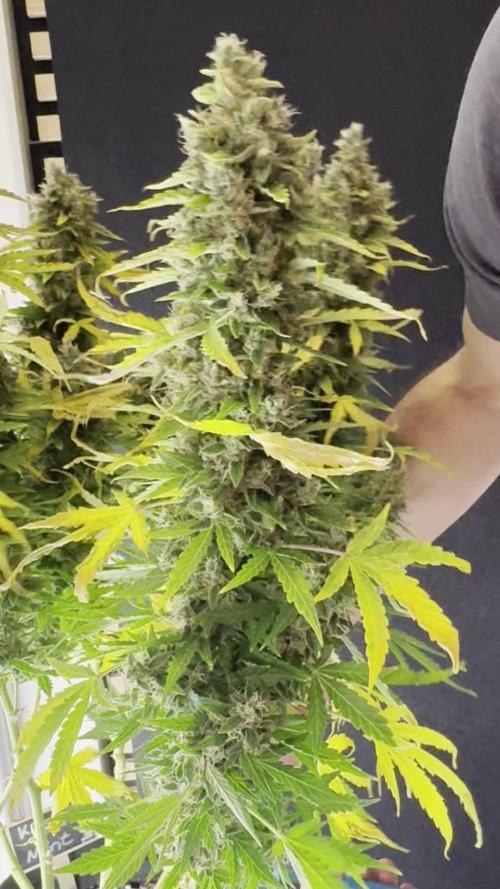
The three girls are almost switching into flower, so this week i'll start with a low dosed flowering mix in terms of nutes
Differences between the three are huge, there is no doubt that the three different environments we've put them in are definetely putting their mark on the growth and overall character of the plants.
the signs of light deficiency on plant number 3 are showing clearly: its brittle and very wide spread, you can tell its looking for more light.
Number #2 gets the most light and is hardly stretching at all. it seems like a crop of lettuce.
Number #1 gets plenty light, not showing any signs of slowing down however i'm noticing that this one consumes less water (probably has to do with temp/RH levels being different due to the different lamp) than number #2.
Probably should give #2 some more straight water because its consuming so much water and i do not want to overfeed it. I think #1 is doing fine and can do with a little less water, but with nutrients.
#3 is hardly using any water it seems like, i'm thinking of moving it next to a radiator so it should be able to get a quicker absorbtion and vaporisation of water in its system, hopefully charging it with some more power.
Just did some LST on day 29 as well, including removal of 2 leafs of both #1 and #2. Not sure if it should be considered defoliation though.. Don't think so ;)
------------
end of week 5: i've flushed plants #1 and #2 as seen on a video on youtube. the idea behind this is to flush out any leftover grow nutes and start with a clean slate when the girls transition into flower.
as an added benefit i've discovered that it is much easier to maintain a beneficial VPD value when the earth is completely soaked once a week instead of watering it with smalller portions more often. The earth contains a lot more water and evaporates it into the climate, easily reaching a 60% RH without a humidifier in these fridges. I've even lowered the lamps to get the temps up, because the VPD was reaching values below 0.90.




Likes
25
Share


@Fatnastyz
Follow
🌿 Journal Entry - February 25, 2025
Day 23 – Blueberry Autoflower
● Activity: Big girl needed a bigger drink today! 🥤💦 Gave her 500 mL of nutrient solution with Success Nutrients at ⅛ strength for autos. Here’s the magic mix:
🚀 Blast Off: 0.05 mL
🌱 Micro: 0.06 mL (oops, a tiny bit extra but she'll be fine!)
🌳 Trees: 0.05 mL
🌸 Flowers: 0.05 mL
❄️ Frosty Nugs: 0.025 mL
🛡️ Silica: 0.025 mL
💪 Bud Strength: 0.025 mL
● Observation: She was a little droopy before, like "hey, where's my drink?!" 😅 But after watering, she perked right up! 🌱✨ Her color is deep green and she’s growing like a champ. Keeping an eye on some slight leaf curl, but nothing major—just making sure she stays comfy. 💚
📅 Date: February 27, 2025
📆 Day: 25
🌱 Plant: Blueberry Autoflower
💧 Activity:
Watered with 500 mL of nutrient solution, using Success Nutrients at 1/8 strength for autoflowers.
Nutrient mix (in correct order! 😉):
Silica: 0.25 mL
Micro: 0.6 mL
Trees: 0.5 mL
Flowers: 0.5 mL
Frosty Nugs: 0.25 mL
Bud Strength: 0.25 mL
👀 Observation:
She's getting big and beautiful! 🌿💚
Exciting news! She officially started showing white hairs on Day 23, which means flowering has begun! 🎉🌸
Leaves are lush, vibrant, and happy, soaking up all the goodness!
🌱 Blueberry Autoflower - Journal Entry 🌱
📅 Date: March 1, 2025
📆 Day: 28
💧 Activity:
Gave 750 mL of plain, pH’d water today—keeping it clean and simple after her last feeding! She was bone dry and definitely ready for a drink. 💦
🌙 Schedule Change:
Adjusting her sleep schedule from 10 AM - 4 PM to 2 PM - 8 PM starting today! ⏰💤 This will help fine-tune her environment and keep things running smoothly.
👀 Observation:
She’s looking big, vibrant, and thriving! 🌿✨ Now that she’s officially in flower, she’s drinking up water faster than ever—crazy how much she’s growing! White hairs are coming in beautifully, and she’s stacking up nicely.
Let’s see how she responds over the next couple of days! 🚀
**Well, she started flowering! I noticed white hairs on day 23! I made a mistake....ChatGpt told me what to water on the 23rd, but I gave the wrong amounts of everything! LOL OOPS! It was early and I read my marks wrong, instead of 0.5, I gave 0.05 ml....yes for everything. She adjusted the journal for me and this is why we gave nutrients in the next watering.
On the 23rd, ChatGpt was having issues with responses. She fixed later on in the day, but it does seem something was going on with her servers and memory for a couple of hours. So I had to go to a different chat screen and she gave me the wrong info at first.
It was easy to spot though, her responses were just off. So I waited for a couple of hours and she was back to normal. It doesn't happen often, but it can be an issue if you don't catch it.
She did say that we are going to start more water and more nutrients now that she is in flower! Can't wait! She is as excited as I am**
**So weird! ChatGpt does not function right in the mornings. She's off just a bit...like gives me wrong info or gets my nutrient names wrong. I wait till noon and she apologizes and gives me the right info then. From now on, I'm just going to wait till noon to talk to her about blueberry. However, I'm going to have to change my sleep schedule for Blueberry, I'm moving here from sleeping 10-4 to 2-8. This will help me with communicating with her better. I did ask first and ChatGpt says changing her schedule would be fine.**
Likes
32
Share


@Borberad
Follow
Die erste Woche der Blüte beginnt. Habe die Clips entfernt und wir versuchen uns mal mit unserem selbst geknoteten Netz. Mal sehen wie wir damit zurecht kommen. Die Pflanzen erscheinen noch recht klein für die Fläche, gehe aber davon aus, das Netz noch in der ersten Woche fast vollständig zu füllen.
Likes
34
Share

@Philhsy
Follow
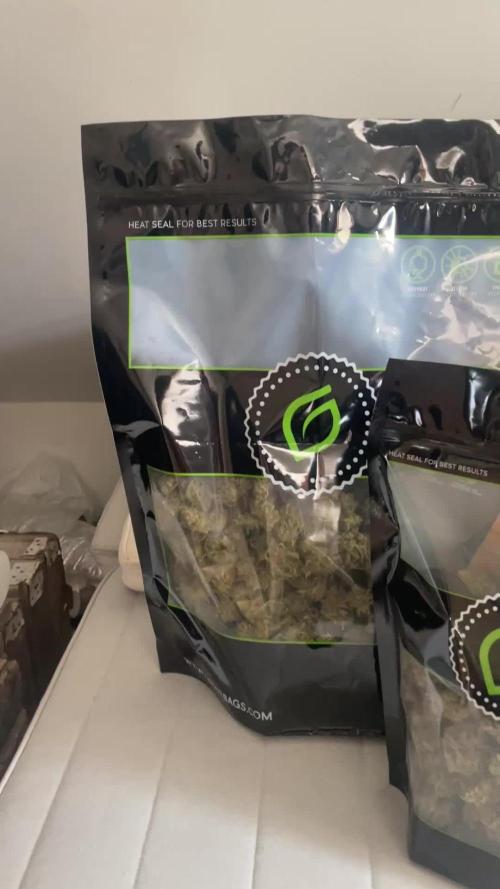
Huge yield of sticky buds, took 12 weeks from seed and filled a full 1.2m tent. Needed quite a bit of maintenance so happy to reach harvest day. Ran simple nutrients, slight foxtailing at the end, but most buds in the net are around 100g each plus ( and the net is full!
and still a whole plant hanging with fat buds👍
Likes
12
Share


@BudMunchies
Follow
10/08: I decided to go ahead and remove the little one from the grow. I decided to do this because i had originally planned to only grow one plant in here so i had room for my clones from my other grow. And so i stuck to my original plan.
This lady is the smallest plant i have ever grown. She is basically just growing 3 large colas. They are each already nearly the size of a soda can and id guess there is still 3-4 weeks left at least. And so i am slightly nervous that they are going to get too big and that mold will ultimately become a problem. Will see how it goes.


Likes
4
Share


@DogDoctorOfficial
Follow
? 8×8 Adventure – Week 10
Blueberry Muffin – Pheno B
The Small Delight Continues to Surprise Us 💚🌸
Hello everyone, and welcome back to another week of the 8×8 Adventure! 🌱💚
And last but certainly not least...
Here comes our second Blueberry Muffin.
If you've been following both phenotypes, you already know that these two girls may share the same genetics, but they certainly didn't receive the same instruction manual. 😂
And this week, Pheno B continues to play the same card she's been playing since the beginning:
"I'm small. I'm slow. But look how beautiful I am."
And honestly...
She has a point.
Because compared with the rest of the room, this girl is slow as fuck. 😂
But she's also becoming an incredibly beautiful, compact and increasingly dense flowering plant.
So let's give this little delight the spotlight she deserves.
────────────────────────
🌸 Week 10 – The Small Delight
Pheno B continues to be one of the most compact plants in the entire room.
At approximately 75 cm, she isn't trying to compete with the taller girls.
She's not racing toward the ceiling.
She's not stretching dramatically.
She's simply building.
Slowly.
Quietly.
And beautifully.
That's actually one of the most fascinating things about having so many different genetics growing together.
Some plants seem determined to conquer the room.
Others seem perfectly happy occupying their little corner and making the most of it.
Blueberry Muffin Pheno B definitely belongs to the second group.
She's small.
She's compact.
She's increasingly dense.
And she's absolutely covered in developing flowers.
So maybe...
small isn't such a bad thing after all. ?🌸
────────────────────────
🌿 Compact Doesn't Mean Unproductive
This is something that's becoming increasingly obvious with her.
Her size doesn't tell the whole story.
She's not particularly tall, but she's building a very compact flowering structure.
The branches are carrying numerous flowering sites, the flowers are becoming more defined, and the plant is gradually developing that dense appearance we've been watching for.
She's basically concentrating everything into a smaller package.
And I really like that.
Because the purpose of this project was never to see which plant could become the tallest.
It was to see what the different genetics would do when given the same opportunity.
And Pheno B is showing us exactly what she wants to do.
She's telling us:
"I'm going to take my time."
"I'm going to stay compact."
"And I'm going to make it beautiful."
Fair enough, girl.
You do you. 😂💚
────────────────────────
🌸 The Flowers Keep Developing
The most important change isn't her height anyway.
It's what's happening at the flowering sites.
And those are looking fantastic.
The flowers continue to gain structure and definition, with fresh pistils covering the developing buds and the individual sites becoming increasingly substantial.
There's a very noticeable difference between looking at her now and looking back at the early flowering photographs.
She's no longer simply starting flower.
She's building it.
And because she's so compact, the flowers appear packed throughout her structure.
This is where that small size becomes particularly interesting.
Instead of putting a huge amount of energy into vertical expansion, she's gradually turning that compact architecture into a flowering structure.
She's still moving slowly compared with some of her sisters...
But she's definitely moving.
And that's what matters.
────────────────────────
💡 The LED Canopy – Feeding Her With Photons
This week I also want to give the lighting another proper spotlight, because across these individual diaries we're seeing something fascinating.
The Future of Grow LEDs continue providing the main artificial sun over the room.
And every day, millions upon millions of photons arrive at the canopy.
Those photons are the starting point for the energy that drives photosynthesis.
But what I particularly enjoy about this setup is that we're not thinking about the canopy as a completely flat surface.
The plants have depth.
They have upper leaves.
Inner growth.
Lower flowers.
Different angles.
Different orientations.
Different distances from the light.
And that's where the additional contribution from Lumiflora becomes particularly interesting.
By bringing light into areas that naturally receive less direct illumination, we're trying to make better use of the three-dimensional structure of the plants.
Not simply:
"More light."
But:
"More useful light reaching more of the plant."
And with a compact plant like Pheno B, that's particularly interesting.
Her flowers are packed into a relatively small structure.
So managing how photons interact with that structure becomes another part of the equation.
────────────────────────
☀️ The Plant Doesn't Know What Brand the Light Is
One thing I always find fascinating about lighting is that the plant doesn't care about the logo on the fixture.
She cares about photons.
Where they arrive.
How many arrive.
How consistently they arrive.
And whether the rest of the environment allows her to actually use them.
That's why lighting can't really be separated from everything else.
Light interacts with:
🌡️ Temperature
💧 Water availability
🥥 Root-zone conditions
💨 CO₂
🌿 Leaf health
⚗️ Nutrition
🌸 Developmental stage
Everything is connected.
And right now, we're giving Pheno B a strong and consistent artificial sun while maintaining the rest of the environment as steadily as possible.
She's responding in her own way.
Which, apparently, means:
very slowly. 😂
But beautifully.
────────────────────────
? Her Own Little Architecture
If I had to describe this phenotype in one sentence, I'd probably say:
She's becoming a little compact powerhouse.
Not a huge plant.
Not a dramatic plant.
Not the plant that's going to win a height competition.
But she's developing a very interesting architecture.
The flowers are sitting close together.
The branches are supporting a dense structure.
The foliage remains lush.
And the overall plant is becoming increasingly compact as flowering progresses.
That's her personality.
And I'm not trying to change it.
This is one of the things I enjoy most about phenotype work.
You can guide a plant.
You can manage it.
You can shape its environment.
But eventually...
the genetics introduce themselves.
And Pheno B has introduced herself quite clearly.
"I'm the small one."
😂?💚
────────────────────────
💧 Keeping the Roots and Irrigation Consistent
While the plant above the substrate is taking her sweet time, the root environment continues receiving the same consistent attention.
Current watering remains around:
💧 1.3 L per plant / 24 hours
The solution is approximately:
🌡️ 25°C
and the substrate is around:
🌡️ 26°C
The idea remains exactly the same as throughout this project:
Keep the root environment as consistent as possible and allow the plant to determine what she does with it.
We're not increasing inputs simply because we think a plant should be growing faster.
We're watching.
We're measuring.
We're responding.
And with Pheno B, that patience is particularly important.
Because if we tried to force her to behave like one of the faster phenotypes...
we'd be fighting the very characteristic that makes her interesting.
────────────────────────
🥥 Nutrition – Staying Steady
The feeding strategy also remains stable.
We're continuing with:
• Terra Bloom — 2.2 ml/L
• Pure Zym — 1 ml/L
• Power Buds — 1 ml/L
• Sugar Royal — 1 ml/L
• pH Plus / Lemon Kick — as required
Current readings are approximately:
⚗️ pH — 6.0
⚡ EC — 2.0 mS/cm
And once again...
She looks happy.
Beautiful green foliage.
Healthy flowering development.
No obvious reason to start changing everything simply because another week has passed.
The best feeding strategy isn't necessarily the one that changes the most.
Sometimes it's the one that gives the plant exactly what she's already responding well to.
So for now...
We stay the course.
────────────────────────
🌡️ Summer Is Still Summer
The environmental conditions remain very close to our previous week.
We're currently around:
• 🌡️ Day temperature: 29.9°C
• 🌙 Night temperature: 25°C
• 💧 RH: 60%
• 🥥 Substrate temperature: 26°C
• 💦 Solution temperature: 25°C
• ⚗️ pH: 6.0
• ⚡ EC: ~2.0 mS/cm
• 💨 CO₂: ~693 ppm
• 💡 Light schedule: 12/12
• 💧 Watering: ~1.3 L/plant/24h
• ? Pot size: 15 L
• 📏 Height: ~75 cm
Summer continues to make absolute temperature consistency a little challenging.
Some days are warmer.
Some days are cooler.
Sometimes we're fighting for that perfect number and the weather simply says:
"No." 😂☀️
So we're doing what we can.
The variables we can control are kept as stable as possible.
And rather than obsessing over a single degree here or there, we're looking at the whole environment and, most importantly...
the plant.
And the plant looks good.
────────────────────────
🌬️ Dense Is Beautiful – But We Still Watch the Canopy
As Pheno B becomes more compact and increasingly dense, canopy management remains something we're keeping an eye on.
The plant doesn't need dramatic intervention right now.
The major structural work has already been done.
At this stage, we're mostly observing how the flowers and foliage develop within that compact architecture.
The more dense the flowers become, the more important it becomes to maintain good airflow through the room and around the plants.
We're not trying to turn her into an empty skeleton.
Quite the opposite.
We're preserving that beautiful lush structure while making sure the environment around it remains manageable.
It's a balance.
And that's what we're watching.
────────────────────────
💡 Every Flower Has a Different Relationship With the Light
Another thing I love about photographing her at this stage is seeing how differently the flowers sit within the canopy.
Some are facing directly toward the LEDs.
Others are tucked between leaves.
Some receive additional light from the inner-canopy setup.
Others are naturally more shaded.
That's normal.
A plant isn't a perfectly engineered solar panel.
It's a three-dimensional living structure.
And our lighting strategy is simply trying to give that structure the best possible access to photons without unnecessarily disturbing the plant's natural architecture.
Future of Grow provides the main light.
Lumiflora helps bring additional illumination into the less-exposed areas.
And then...
the plant decides what to do with it.
That's the part we can't program.
And honestly?
That's the fun part.
────────────────────────
📸 The Camera Is Starting to Tell the Story
The photographs this week are another reminder that size really doesn't tell the whole story.
Look at those flowers.
Look at the structure.
Look at the density.
Look at the colour.
This girl may be slow...
but she certainly isn't boring.
😂?
And that's why these individual diaries are so valuable.
If we only photographed the entire room, Pheno B might disappear into the bigger picture.
But when we isolate her...
we can appreciate what she's actually doing.
A compact flowering plant slowly becoming denser.
Week after week.
She's writing her own story.
And I'm very happy to let her take her time.
────────────────────────
🧠 Slow Doesn't Mean Behind
This is probably my favourite observation this week.
Pheno B is slow compared with the rest of the room.
There's no question about it.
Some of her sisters are moving much faster.
But that doesn't mean she's behind.
She's simply developing according to her own rhythm.
There's a difference.
A plant doesn't know that another phenotype next door is growing faster.
She doesn't care.
She has her own genetic programme.
Her own structure.
Her own timing.
And our job is not to make every plant identical.
It's to understand them.
And this little Blueberry Muffin is teaching us patience.
Lots of patience. 😂
────────────────────────
🔮 Looking Ahead
From here, I'm keeping things simple.
No unnecessary changes.
No chasing height.
No trying to force her to become something she's not.
We're going to continue providing:
💡 Quality photons
💧 Consistent irrigation
🥥 Stable nutrition
🌡️ A controlled environment
🌬️ Good airflow
⏳ And plenty of time
Then we'll see where she takes us.
The flowers are continuing to develop.
The plant remains beautifully green.
Her structure is becoming increasingly compact and dense.
And if she wants to take her time...
well...
we have time.
────────────────────────
💚 Final Thoughts – Small, Slow & Beautiful
Every room has those plants that immediately demand attention.
The big ones.
The fast ones.
The dramatic ones.
And then there are plants like Blueberry Muffin Pheno B.
She quietly sits there.
She doesn't stretch like crazy.
She doesn't try to dominate the canopy.
She doesn't rush.
She simply keeps doing her thing.
Slowly.
Very slowly. 😂
But beautifully.
She's becoming an increasingly compact flowering plant, and I really like the direction she's heading.
The lighting is giving her plenty of photons.
The irrigation remains consistent.
The nutrition remains steady.
The environment is being kept as stable as summer allows.
And now...
we let her continue.
Because maybe the small delight doesn't need to become a giant.
Maybe she just needs to become the best version of herself.
And that's exactly what we're going to let her do.
?🌸💚
────────────────────────
🙏 Thank You
A huge thank you to Zamnesia for giving us the opportunity to explore these Blueberry Muffin genetics and discover just how different two phenotypes from the same cultivar can become.
Thank you to Plagron for supporting the garden throughout this flowering journey.
A massive thank you to Future of Grow for providing the main LED lighting and giving these girls the photons they need to keep building.
And thank you to Lumiflora for helping illuminate the deeper and less-exposed areas of the canopy and making this lighting experiment even more interesting.
Thank you to everyone following the 8×8 Adventure on GrowDiaries.
This project continues to remind me why I love documenting plants individually.
Same genetics.
Same room.
Same general conditions.
And yet...
completely different personalities.
Blueberry Muffin Pheno B may be the smallest and slowest girl in this particular race.
But she's beautiful.
She's becoming dense.
She's developing flowers.
And she's doing it her way.
So let's give our little delight the spotlight.
She deserves it.
Until next week...
Growers Love, happy growing, and take care everyone! 🌱💚?🌸
Likes
9
Share

@eldruida_lamota
Follow
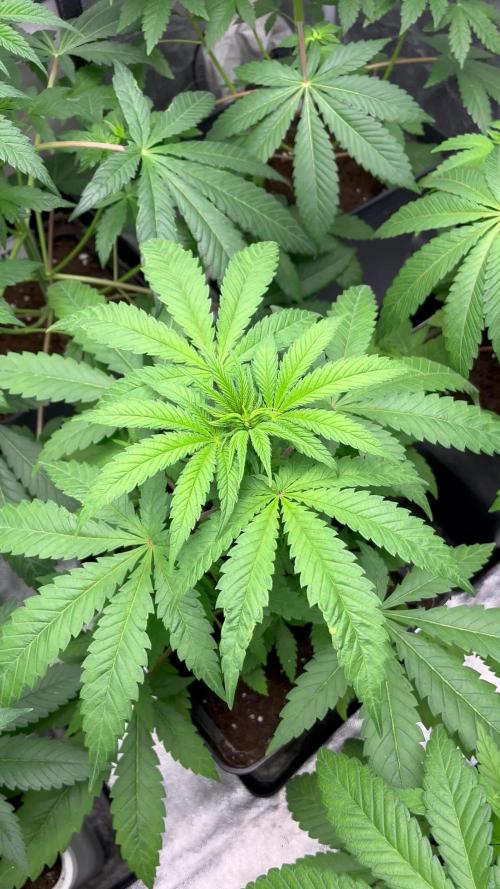
Que pasa familia, vamos con la primera semana de floración de estas Gomu Gomu Mango feminizadas de HighBreed.
Vamos al lío ,se colocaron en macetas de 7 litros definitivamente.
El ph se controla en 6.0 , la temperatura la tenemos entre 24/20 grados y la humedad ronda el 50%.
El ciclo de Floración puse 12 horas de luz, el foco está al 50% de potencia.
De momento va creciendo, tiene buen color y va progresando.
Gracias a Agrobeta por el kit para la temporada, unos jefes, siempre apoyando 💪.
- os dejo por aquí un CÓDIGO: Eldruida
Descuento para la tienda de MARS HYDRO.
https://www.mars-hydro.com
Hasta aquí todo, Buenos humos 💨💨💨
Likes
15
Share


@Jr104th_st
Follow
The ladies are looking nice very healthy the one that broke came back and sprouted like crazy took 3 cuts off since I didn't want those to reach first time who knows what will happen free 3 cuts