


Likes
Comments
Share


@RadDad
Follow
Ahhrrrrrggggghhhh PH imbalances!
Don't panic. We got this.
After a few theories and a bunch of research what I originally thought was light stress then a Cal Mag deficiency. Then I saw leaf damage and thought of Thrips. Wrong wrong and wronger.
Turns out the soil PH is all out if wack. By which I mean waaaaaay too high. Like almost 8. That's what I get for not thinking PH was nOT tHaT BiG a dEaL. Now equipped with my PH and TDS meters and a little PH up and PH Down from Standard Hydroponics we can get thing back into balance.
Lots of leaf growth this week. Looks like flowering is right around the corner. This will probably be the last week I'll feed her Grow Girls Grow from DSN and switch to Bloom Baby Bloom next week.
I've also done some defoliation this week to get light to some of the bud sites. Again I had no idea LST was this powerful, she's gonna have such pretty flowers
Looking forward to Bloom 🌹🚀🌻😎

Likes
83
Share


@RunWithIt
Follow
Alright, after last week's round of topping, she'll be at 40-60 tops! Monster of a plant! Never let a girl veg this long, so I'm really excited to see her in flower. Not too far off now!
As soon as I see roots on the clones I've pulled, she's going right in!
Cheers fellow growers 😎😄

Likes
101
Share


@DogDoctorOfficial
Follow
All going kind off as planed, appart from the SuperGlue Girl. just did a big 2,5 gallon Flush on her and now waiting for the soil to dry and start over the feedings. clean her good so i'm hopping for the best 😅 lets see how they react and if they cacth up 😍😋
Loving this LED Tec 😍
Girls:
1-BlueBerry
2-Alaskan Purple
3-Poyote Gorilla
4-Hindu Kush
5-Whitw Mango
6-Super Glue
7-Badazz Cookies
8-S.A.D.
tent -8x8 / 2.4x2.4 but i'm only using 1/2 so 4x4 / 1.2x1.2
Led - Lumatek 465w Compact Pro at 100%
All i Grow is medicine for myself,
Stay safe, stay tuned and B Happy
Peace out
D




Likes
4
Share


@milchshake289
Follow
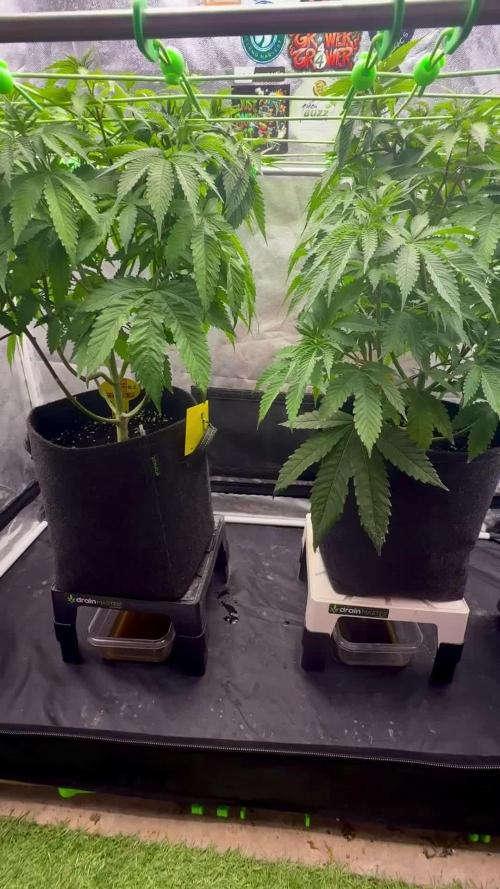
Week 2 day 1
plant is just happy but I would love to see some faster vegging.
Day 2
Fan adjustment today, felt like the plant was getting little windburn ( slight curling on the edge and dry/rough leaves)
Day 3
Added Horn- Bonemeal mix as Top dress today. It’s really fine grained so I hope this is going to help out with N + P in flower stage
Day 4
Plant still not ramping up. My guess is the roots are not developed well enough to get to the edge of the pot where the majority of the pre fertilized soil is at
Day 5
Drained the whole pot with 1l rainwater and tested run off water. It’s at 6.3ph. Hopefully the plant can reach all the nutrients now. I will add compost tea in about 3weeks. I need to wait for the compost to finish first at least partly.
Next grow will be better for sure when I’m more prepared.
Day 7
LST

Likes
1
Share

@deseed_uy
Follow
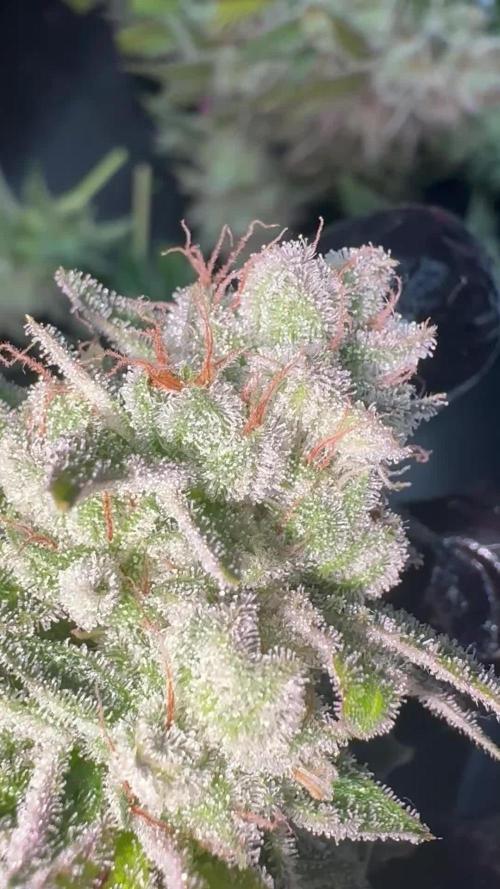
Este feno no fue de los mejores pero quedo mucho mejor con led que en exterior, una locura lo bañado en resina, las flores son mucho mas finitas y aireadas q el feno 1 y 2 pero muy linda genetica.

Likes
62
Share

@THcHunteR23
Follow
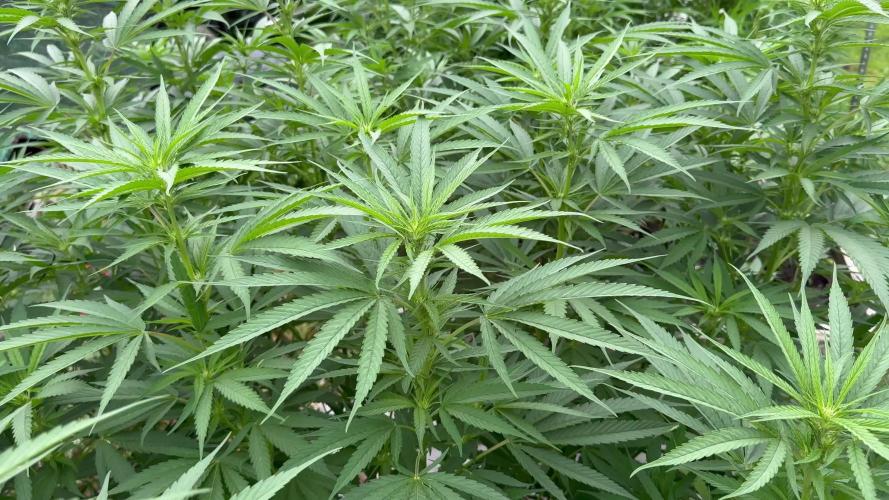
Elle est clairement en avance sur la majorité des autre autre variétés photopériodes
Toujours des gants de l’alcool pour désinfecter les ciseaux quand je fais une défoliation

Likes
5
Share


@SurSideCrew
Follow
Baklava de The Plug Seeds es un cruce de Wedding Cake X Gelato. Hay varios Phenos (3) el mejor para mi gusto es bastante púrpura y de gran rendimiento. Soporta bien altas cargas de fertilizante como además las altas temperaturas de verano. Con el frío tiende a cambiar el color a negro/purpura con tonos de verde lima y rojizos cobres. Terpenos que recuerdan a una bolleria o panadería, toques dulces, mantequilla, frutos secos, canela, miel y el pheno Gelato sale mas a crema dulce terrosa. Hay un pheno que es bastante mas Kush y Gassy! Altos contenidos en THC y muy buenos resultados para hacer extracciones.


Likes
6
Share


@Rinna
Follow
The girls are stretching nicely and looking healthy as can be. I added the second trellis for extra support when the buds will be ripening in late flower. There’s already some early ice, on the fan leaves too, so that’s a good start! Some pheno’s seem a little quicker with creating flowers, but since these are f1 seeds it’s not so crazy that there’s some difference. It looks like I’ve got either 3 or 4 quite different pheno’s, which is exiting. I’ll do a big defolation on day 21 of 12/12 so you’ll see that in the next weekly update 👌🏻

Likes
31
Share


@MadeInGermany
Follow
Hey everyone 😀.
A lot has happened this week 👍.
Flowering day 28
Today 1.2 liters were poured.
(See nutrient table for nutrient addition).
The humidifier was refilled with an Ec of 0.4. The tent has been cleaned.
Flowering day 29
Today the plants and buds were checked for health and cleaned.
Flowering day 30
Today was poured again.
This mam she got 1 liter of water.
(See nutrient table for nutrient addition). Of course, the plant was checked for its vitality 🧐😅.
Flowering day 31
The humidifier was refilled a little and the tent cleaned 👍.
Days of flowering 32
Today 1.2 liters of water were poured. (See nutrient table for nutrient addition).
Fans, fans, electrics have been checked for functionality 😊.
Flowering day 33
The plant has been carefully checked for pests, etc.
Flowering day 34
Today 1.6 liters were poured, so that it had about 10% drain 👍
For nutrient addition, see the nutrient table.
The tent was plastered and rubbed with disinfectant.
The buds look beautiful, and already smell extremely tasty again 😍.
I wish you a lot of fun with the update, let it grow 🍀 and all stay healthy 🙏🏻
You can buy this Strain at
https://www.barneysfarm.com/blue-cheese-34
You can buy the fertilizer at
https://www.greenbuzzliquids.com/
Type:
Blue Cheese
☝️🏼
Genetics:
Blueberry
X
Original Cheese
👍
Vega lamp:
2 x Todogrow Led
Quantum Board 100 W
💡
Bloom Lamp :
2 x Todogrow Led
Cxb 3590 COB 3500 K 205W
💡💡☝️🏼
Soil :
Canna Coco Professional +
☝️🏼
Fertilizer:
Green Buzz Liquids :
Organic Grow Liquid
Organic Bloom Liquid
Organic more PK
More Roots
Fast Buds
Humic Acid Plus
Growzyme Big Fruits
Clean Fruits
Cal / Mag
Organic Ph - Pulver
☝️🏼🌱
Water:
Osmosis water mixed with normal water (24 hours stale that the chlorine evaporates) to 0.2 - 0.4 EC. Add Cal / Mag 2 ml per l water every 2 waterings . Ph with Organic Ph - Pulver to 5.8 .

Likes
Comments
Share


@Cygi86
Follow
We have Monday today and we starting week 4, girls are after trimming and low stress training… everything going well

Likes
83
Share


@Southwest_budders21
Follow
Some Sunday plant porn 😍 I'm just going to flush for 2 weeks from tomorrow or Tuesday and hopefully they will be ready 😬 skywalker is looking so good now. If this is only my second ever run imagine the potential in 10 runs time 🤷♂️🏼 I've always knew my fingers were good at something 🏴😏🤣💚


Likes
31
Share


@MrJoint
Follow
✌️🎃 Thank you for checking my cultivation.
😍 The buds are hard like a rock.
💧 Watering with Ripen for start roots wash.
Likes
12
Share

@Webacca
Follow
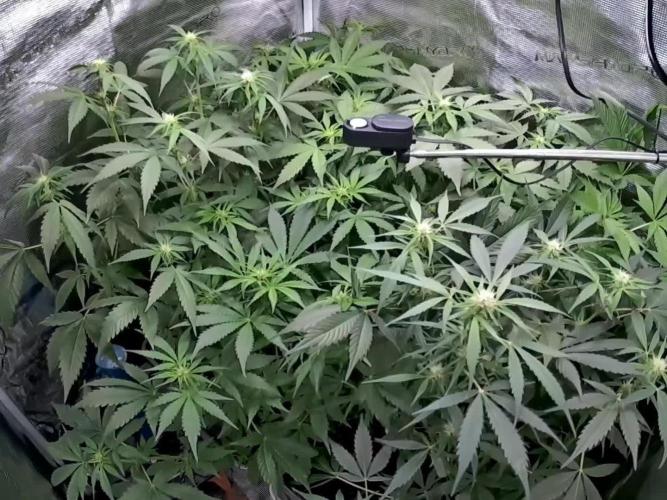
Die Woche gab erneut einen Schub, aber bei der Black Ice, die sich um 20cm gelängt hat. Wow.
Lemon Cherry Cookies immer noch ohne Blüten. Sollte dabei laut Datenblatt jetzt fast fertig sein 😳
Wieder ordentlich entlaubt und sonst heißt es warten...
Likes
7
Share


@ChitownCannaChica
Follow
So after consideration of the density of the buds and my night humidity levels— decided to chop a week early.
Buds are super dense. Concern for mold.
Very leafy lady- with massive fans
She’s 10% amber but still some white pistols on the lowers.
Very easy to grow. Stayed on the shorter side with minimal stretch—which is appreciated.
I love how the Plagron Green Sensation is nitrogen free! I used it from weeks 3-6. Super helpful as the leaves were getting a little curl— even with minimal nutes.
Will have harvest report soon. As terps can change after dry/cure.
Happy with the results of the Runtz and Plagron! 🏻💚


Likes
8
Share

@draco38
Follow
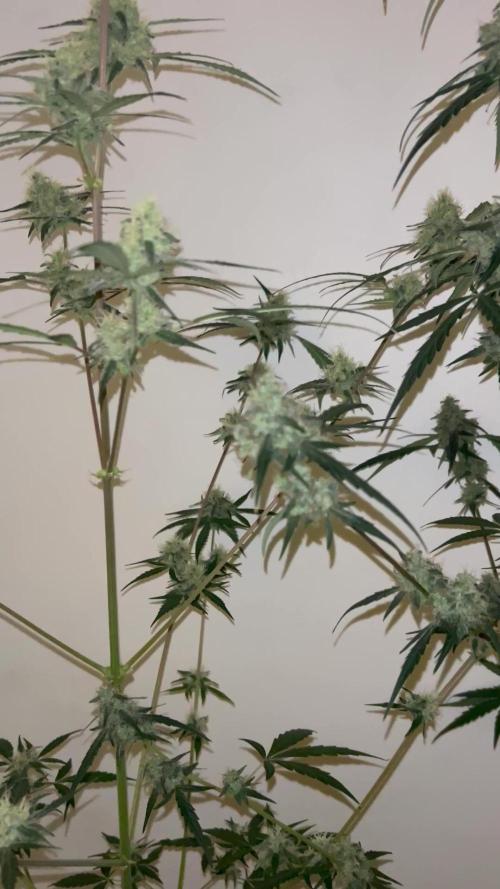
Settimane 10 di fioritura iniziata e hanno un profumo buonissimo e forte, a fine di questa settimana vedrò se raccogliere o aspettare un’altra settimana poiché i fiori in basso non sono ancora abbastanza maturi. Questa è la mia prima esperienza e so di aver commesso errori ma le piante hanno comunque resistito. Avrei bisogno di qualche consiglio per capire se dopo questa settimana devo raccogliere oppure no. Ciao a tutti
Likes
10
Share

@All_our_small_plants
Follow
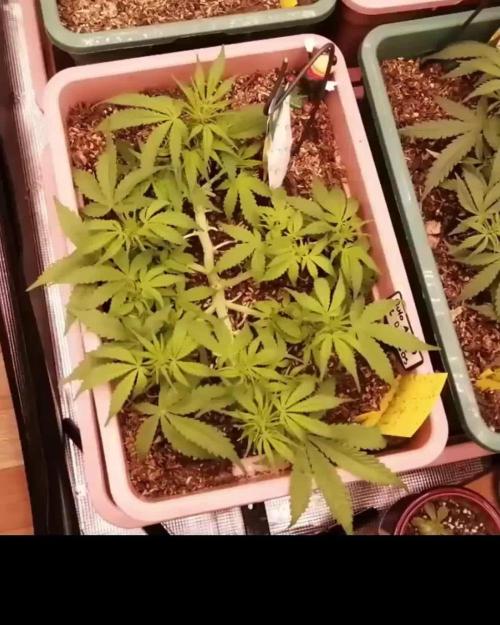
Bewässerung: 700ml
pH-Wert: 6,1
EC-Wert: 1,2
Temperatur: 25ºC
Luftfeuchtigkeit 62%
Schädlingsbekämpfung:
PPFD: 500 µmol/m²/s
DLI: 33
Düngemittel: Mineralischer Dünger 3.5-6-6
Besonderheiten: Wurden direkt in die erde gepflanzt in einer Kokos-Quelltabletten.
-Tag 37 Heute haben wir sie wieder gegossen und mit dem Blüten Dünger begonnen. Wir haben ihr nur noch 2 oder 3 Blätter entfernt und werden ab jetzt nur noch diese entfernen die Stören
-Tag 39 Sie hat heute etwas Dünger bekommen 😍
-Tag 41 Sie hat mit dem Stretch angefangen. Heute hat sie Wasser mit Effektive Mikroorganismen und Plagron Power Buds bekommen und sie war beim Friseur 😝

Likes
9
Share

@Santemjocko
Follow
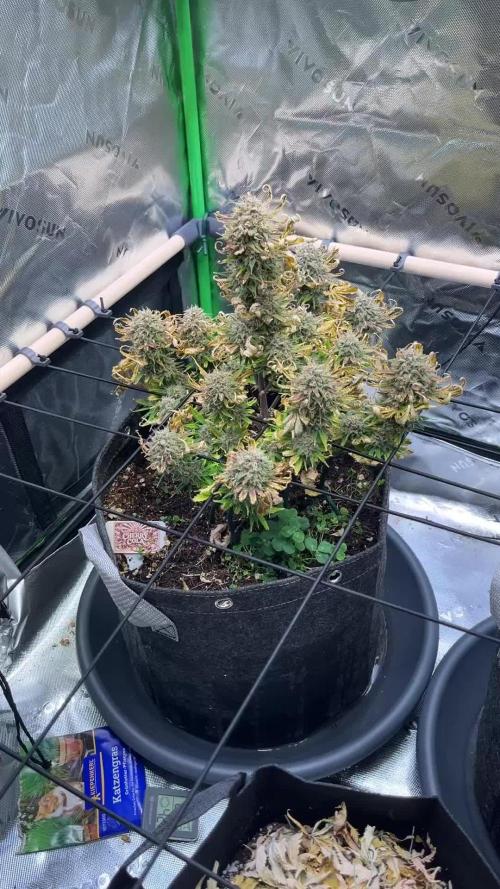
Endlich geerntet.
Trotz einiger Mängel sind die Buds doch sehr schön fest und klebrig geworden.
90g Nass, wet trim und in Dryferm Bags verpackt. Nach ca 5 Tagen, werde ich mir die schönsten Buds heraussuchen und weiter im Dryferm Bag bis zum Curing weitertrocknen lassen.
Der Rest fällt dann leider dem CanG zum Opfer und wird im Misthaufen entsorgt.