


@Cannabingrowin
Follow
Perfect. Now when to harvest? Seeing about 20 percent amber in some buds. Others are still only cloudy. The beginning of week 8 starts in 4 days. But I transitioned to flowering lighting over the course of a week. So maybe tomorrow. maybe the next day too. As soon as I see more than 30 percent amber trichomes on main colas(all of them) I will harvest. Ripening buds are a true beauty.
Damn these are a sight to behold. This is my second grow. I learned a lot. I love it. So smelly I just can't believe it. Tried to take a trichome pick. Still maybe 15 percent amber color starting to appear


@EhlersChick
Follow
2018.12.13 - Clone Day 74 - Flowering Day 22
I have no idea why #5 is so much taller than the others but whatever, I am NOT complaining! I'm so proud of my little garden {squeee!} 😃

shorts_status_processing


@Miss_Greenthumbs_Garden
Follow
All defolated and flipped today into flower 💚😊🌱


@Naturalist
Follow
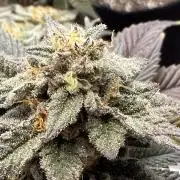
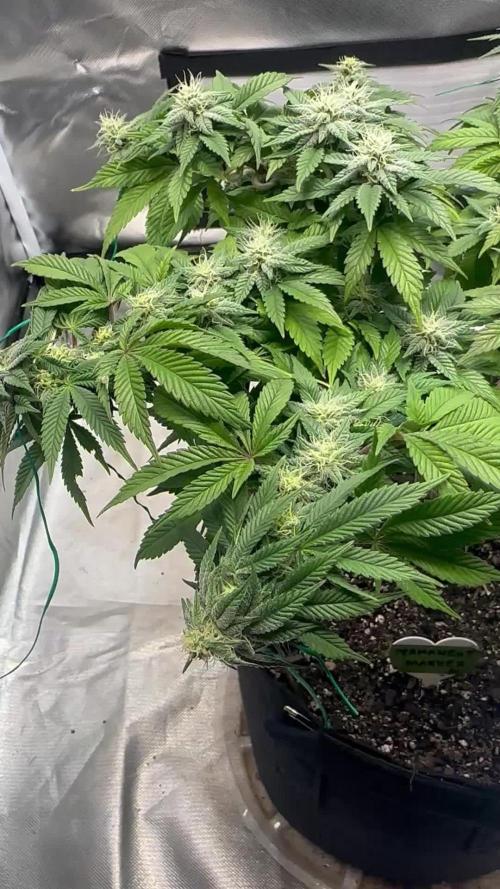
Increased feeding to 3ml FP on day 35 & light to 40% (abound 18-20000 lux) today on day 36, greening up nicely.

@Puff_TM_Dragon
Follow
Top dressed with Gaia Power Bloom and watered in with GH CalMag. Hardly any stretch happening but the buds are fattening up and looking nice.


@NAG420
Follow
Start of week 6 the end of week 5 she was just having her pistols come out. She is doing great growing fast I might have to buy bigger tent but will see what happens. Daytime temps are74/76 and nighttime temps 68/70 RH is now at 54%. New I have not even flushed or used sledgehammer because she looking so hungry at times. I did major defoliation on her had some many big fan leafs block lower bud sites to be also did a ton of tie down to try to get the last few stretches out the lower area.


@Growformyself
Follow
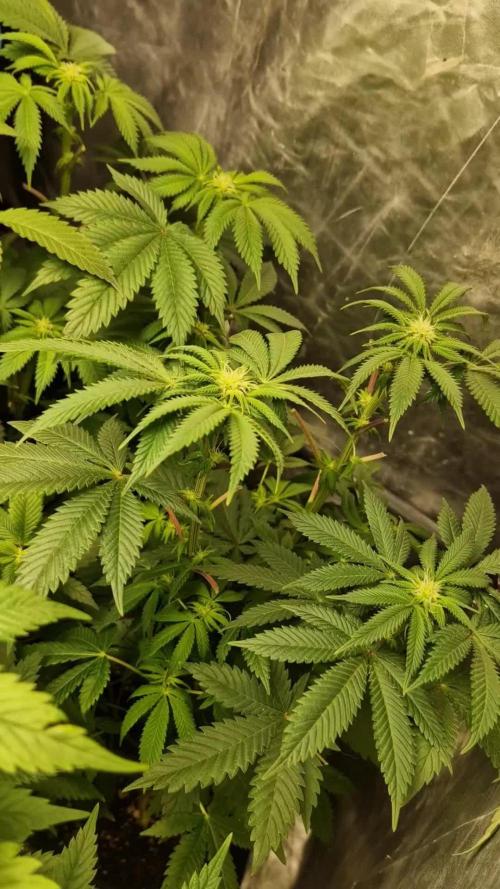
Bin echt sehr zufrieden und erstaunt, wie gut sich die Mädels gemacht haben. Und erstaunlich, wie die nach 22 Tagen schon riechen… bin echt gespannt, wie lange es noch bis zur Blüte dauert



@farah4weed
Follow
Hello guys 😍👽
This week is the most exciting time of my cultivation.
After we grew 10 og creams, today in the third week of flowering, all the seeds showed that they are feminized😍😍
My project has given the right result
But more important than this is the final product, which we compare with the father (og kush) and the mother (cake n cream) and the traits it inherited😍😍
Thanks for your comment🙏😍👽
"farah4weed"


@Bvercuiel
Follow
Finally My Gelato Bin Laden’s has started to flower. I haven’t defoliated this week and might need to clean up some leaves to open up the bud sites, i’ll do it later this week. The plant on the left has a lighter green colour to it, bot sure why, I’m not too concerned about her, she get’s the same feed and attention as the girl on the right. Let’s see how they start to change in the coming weeks.


@Xquisit
Follow
Today is 11/7/18. Watered GDP #1 and bagseed #1 today with nutes....... I am going to post these pics as a reminder for myself and as a leraning tool for anyone that like visuals. I am learning that these babies can be thirst buckets...I was making sure I don't do the newbie mistake of over watering...well, underwateringcan be just as bad. I been watering apprx. every 2 days...but this is what happens when I don't ...they end up frowning and hugging the pots. But I was informed, the smaller the pot, the more frequent I will have to water. They are in 1 gallon pots...The roots are not visible through drain holes; therefore, I haven't transplanted into 2/3 gallons.
Today is 11/8/18, I decided I will be transplanting GDP #1 and Bagseed #1 into 2 gallon pots. They did fully recover from dehydration. GDP#2 will remain in the 1 gallon pot for a lil while unless roots start appearing through drain holes. This plant has been tempermental from day 1. I don't understand why one side of the plant responds well to any training I have done (lst, manifold, topping, etc): howerever, the other side seems to have problems and take awhile to recover. It was suggested to throw it away long ago....I am a new grower and I felt I should keep it as a plant I can LEARN from, which I have learned a great deal. Today is 11/9/18. watered thoroughly because I didnt when I transplanted. Defoliated Bagseed #2. Today was photo day. Today is 11/11/18, I did a moderate defoliation. Today is 11/12/18, watered w/nutes only. Today is 11/14/18, watered with cal-mag only. Today will water with nutes and after tonights lights end their 18 hour light cycle, 12/12 will begin.


@Jinxed
Follow
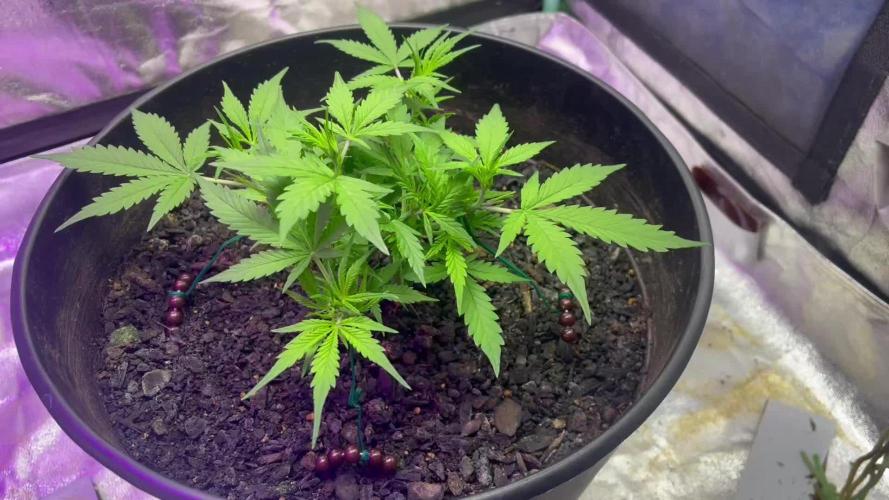
•Frostbanger is getting strong, starting to gain a scent 💨💨
•Random grows daily, but doesn’t have much of a scent


@Ultraviolet
Follow
Thank you. Gave her a cocktail to help with stress. Added 1st net for lateral support, not so much now, but for later. Blue light is absorbed by photoreceptor proteins called phototropins, which trigger a hormonal response that causes cells on the shaded side to elongate, making the plant bend toward the light. Try and fill this side a little. She is quite big already, just needs to find her stride again after the undue torture.
5 apex stems with 20-30 mini cola, let them develop a little, with the apical dominance shattered, all those 20-30 will all compete with each other as soon as that stretch is initiated. Key to a good stretch is making sure the plant is cycling efficiently, with large ATP conversions occurring lights out.
For now, I'm keeping light intensity high. A plant will slow its vertical growth in very high light intensities, leading to a more compact form with thicker stems and leaves. This response is a protective mechanism against light stress, which can damage the photosynthetic apparatus and lead to symptoms like leaf scorching, yellowing, and brittleness. Instead of growing taller, the plant invests its energy into creating a more robust, stress-tolerant structure.
Providing plants with necessary antioxidants helps protect the photosynthetic apparatus by scavenging reactive oxygen species (ROS) that cause damage from excess light.
UV light exposure can impact the xanthophyll cycle by either enhancing its photoprotective role or causing damage, depending on the intensity and type of UV radiation. UV exposure can trigger the synthesis of more xanthophyll cycle pigments to increase the plant's capacity to dissipate excess energy, but it can also cause direct damage, particularly to Photosystem II, and may lead to a decrease in the de-epoxidation state (DEPS ratio) which indicates a reduced capacity to dissipate excess energy.
Plants can respond to UV stress by increasing the synthesis of xanthophyll cycle pigments, such as violaxanthin and zeaxanthin, to improve their photoprotective capacity. UV-induced changes in xanthophyll cycle pigments can be linked to a plant's overall tolerance to high radiation stress. The xanthophyll cycle helps protect against photoinhibition, which is especially important when the plant is exposed to high levels of both UV and visible light. High doses of UV radiation can directly damage photosynthetic components, including the proteins, lipids, and pigments in the thylakoid membranes. Exposure to UV radiation can have a mixed effect on the de-epoxidation state (DEPS ratio) of the xanthophyll cycle pigments. In some cases, UV can inhibit the conversion of violaxanthin to zeaxanthin, resulting in a lower DEPS ratio and a reduced capacity for energy dissipation. However, the total pool of xanthophyll cycle pigments may increase, and this enhanced pool size could provide a greater potential for photoprotection despite a lower DEPS ratio.
The xanthophyll cycle works alongside other mechanisms, such as the accumulation of flavonoids (UV screens), to protect the plant from UV-induced damage.
Blue light repairs 100% UV-induced damage in plants through a process called photoreactivation, which uses a light-dependent enzyme called photolyase. This enzyme uses energy from blue and UV-A light to directly reverse the damaging pyrimidine dimers in the DNA caused by UV-B radiation, a key mechanism for maintaining the plant's genetic integrity.
After carbon, light, water, temperature, and nutrients, the limiting factor of a plant's growth is often its own internal factors or the amount of a key ingredient. Chlorophyll concentration is one such factor, as the amount of this pigment limits how much light can be captured for photosynthesis. Other factors include chloroplast number, respiration rate, and the concentration of carbon dioxide in the atmosphere, as plants are often in a CO2-deficient condition.
60x60x18=64800seconds x 700 = 45,360,000moles. 45DLI
Exposure to 165 µW/cm² of ultraviolet-B (UV-B) light for 3600 seconds = 1 hour, a extremely high, acute dose triggering stress responses and protective mechanisms.
.
The plant's photoreceptor protein, UVR8, senses the UV-B radiation. This triggers a signaling cascade that activates specific genes to protect the plant from damage. In response to the UV-B signal, the plant ramps up the biosynthesis of protective compounds like flavonoids, phenolic acids, and anthocyanins. These compounds absorb UV radiation and accumulate in the epidermal layers of leaves to shield inner photosynthetic tissues. The plant may increase leaf thickness or deposit more cuticular wax, creating a physical barrier to the radiation. The plant will produce more enzymatic and non-enzymatic antioxidants to neutralize the reactive oxygen species (ROS) produced by the UV-B radiation. The plant activates enzymes, including photolyases, to repair DNA damage caused by the UV-B. These repair mechanisms are critical for preventing permanent genetic mutations.
While protective measures are activated, a high dose delivered over a short period can cause stress that overwhelms the plant's defenses.
Photosynthesis is highly sensitive to UV-B. A high dose can inactivate Photosystem II (PSII), damage thylakoid membranes within the chloroplasts, and reduce chlorophyll content, which lowers the plant's overall photosynthetic capacity. Despite repair mechanisms, high UV-B doses can inflict persistent damage on the plant's DNA. One study found that acute, high-dose UV-B had a greater effect on genome stability than chronic, low-dose exposure. The overproduction of reactive oxygen species can cause oxidative stress, leading to the oxidation of lipids and proteins and disrupting cellular function.


@MadeInGermany
Follow
Hey everyone 😃.
Another wonderful week comes to an end with two wonderful phenotypes 😊.
In the next few days both will be placed in the flowering tent 😍.
Both were watered 3 times this week with about 1 liter of water.
I will of course cut cuttings before they come into the flowering tent 👍.
I'm very excited to see how the two will develop in bloom 😊.
Until then, I wish you all the best, stay healthy 🙏🏻 and let it grow 🍀
You can buy this Strain at :
https://sweetseeds.es/de/sweet-skunk-f1-fast-version/
Type:
Sweet Skunk F1 Fast Version
☝️🏼
Genetics:
Sweet Skunk Auto (SWS34)
X
Early Skunk
👍
Vega lamp:
2 x Todogrow Led
Quantum Board 100 W
💡
Bloom Lamp :
2 x Todogrow Led
Cxb 3590 COB 3500 K 205W
💡💡☝️🏼
Soil :
Canna Coco Professional +
☝️🏼
Fertilizer:
Green House Powder Feeding
☝️🏼🌱
Water:
Osmosis water mixed with normal water (24 hours stale that the chlorine evaporates) to 0.2 EC. Add Cal / Mag to 0.4 Ec Ph with Organic Ph - to 5.5 - 5.8 .


@Santica_Garden
Follow
Posted a quick video showing how the ladies are looking at the end of their 1st week of life. So far so good. Any questions just ask guys.
Happy Growing 👍🏾🔥💚🌱


@SMELLYBUDZ
Follow
Defoliation and supercrop a day before 24 hours of darkness. 12/12 following. Flip @ wee6 day1 from seed


@Leonweed10
Follow
Ya alimentandose mejor cada una de las plantas,de ahora en adelante tendran que crecer mas rápidamente para luego pasar a floracion en un par de semanas lo mas probable.


@artems
Follow
Marker is thriving, enjoying its meals as usual. The only change is its delightful berry scent, rather than the expected gassy aroma. Keep up the good work, and let's see how its flavors develop further! 🌿🍇



@HOME_GROWBOOK
Follow
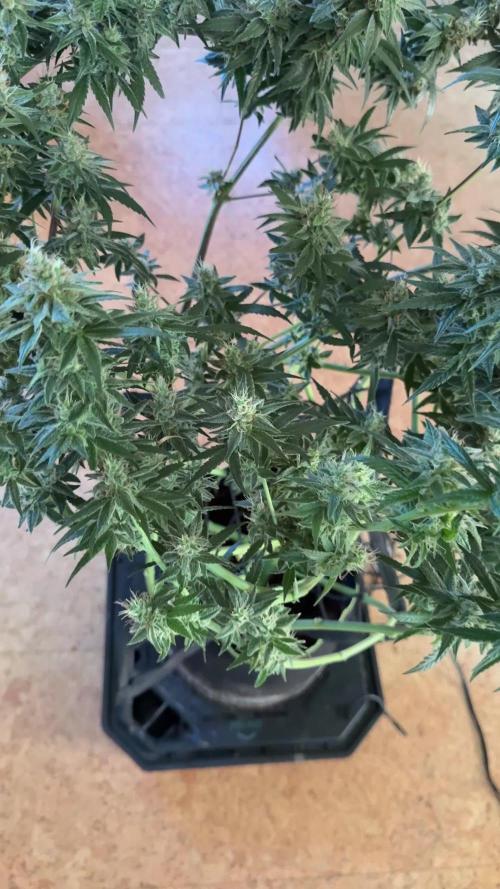
Die Lemon Skunk befindet sich in der letzten Phase ihres Zyklus – Spülwoche und Erntevorbereitung. Die Blüten sind voll ausgereift, kompakt und stark mit Harz überzogen. Der Duft ist intensiv zitrusartig mit einer erdigen Basisnote – typisch Lemon Skunk.
Die Trichomentwicklung ist jetzt im perfekten Erntefenster: rund 20 % bernsteinfarben, der Rest überwiegend milchig. Damit ist das gewünschte Gleichgewicht aus Potenz, Geschmack und Wirkung erreicht.
In dieser Woche wurde das Spülen gestartet, um verbleibende Nährstoffreste auszuleiten. Das Semi-Hydro-System läuft weiterhin sauber, die Pumpe bleibt aktiv, sorgt aber nur noch für zirkulierendes, klares Wasser mit angepasstem pH-Wert. Die Pflanzen beginnen sichtbar, die letzten Reserven aus den Blättern zu ziehen – das Laub hellt sich auf und zeigt das typische Ende des Zyklus.
Die Buds sind dicht, harzig und schwer, die Haupttriebe tragen ordentlich Gewicht. Alle Blüten sind gleichmäßig gereift, und das Terpenprofil entfaltet sich stark – süß, sauer, würzig.
Zum Ende der Woche steht die Ernte an. Nach einer kurzen Dunkelphase werden die Pflanzen geerntet und langsam getrocknet, um Aroma und Wirkung zu maximieren.
Fazit: Ein rundum erfolgreicher Run – das unfreiwillige Semi-Hydro-System hat sich als effiziente Lösung erwiesen. Gleichmäßiges Wachstum, starke Blütenstruktur und ein beeindruckendes Finish. Die Lemon Skunk zeigt ihr volles Potenzial: kompakt, harzig, aromatisch – ein würdiger Abschluss!
shorts_status_processing


@GreeneRecluse86
Follow
Such a great week watching these ladies bulk up!
It's looking like the gorilla zkittles won't get a full week on its current food schedule before I start it on its winter frost and flushing. The Red diesel and Phantom will probably take another two weeks on there food schedule.
Happy growing people!
I wish I would've started this grow sooner, then I wouldn't of ran out of stash during this quarantine!


