


Likes
Comments
Share


@Theia
Follow
This plant is a beast.. she is massive and well into her stretch. Loads of bud sites and great spacing between nodes. I had to supercrop her as she was pushing twice the height of all othe girls in the room. She took it well and is fully recovered and just great.
Love this plant.
Very odd smell quite disgusting ATM tbh..
I started giving this girl a light misting with some fishmix and activera for a few days as she was looking like she was not getting enough food. 5 days on she is looking good
Thanks for stopping by.
Happy growing all🌿🌱
Stay safe😷😷😷


Likes
Comments
Share

@Native_Grows
Follow
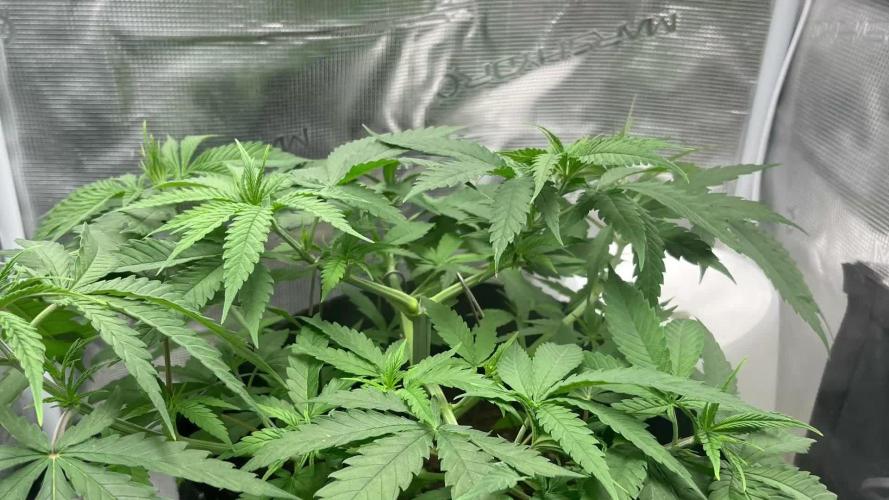
First time actually making it to harvest also a enjoyable smoke best tasting compared to the dispensary I miss it already took 3 grows to get this one

Likes
Comments
Share

@AlpenZilla
Follow
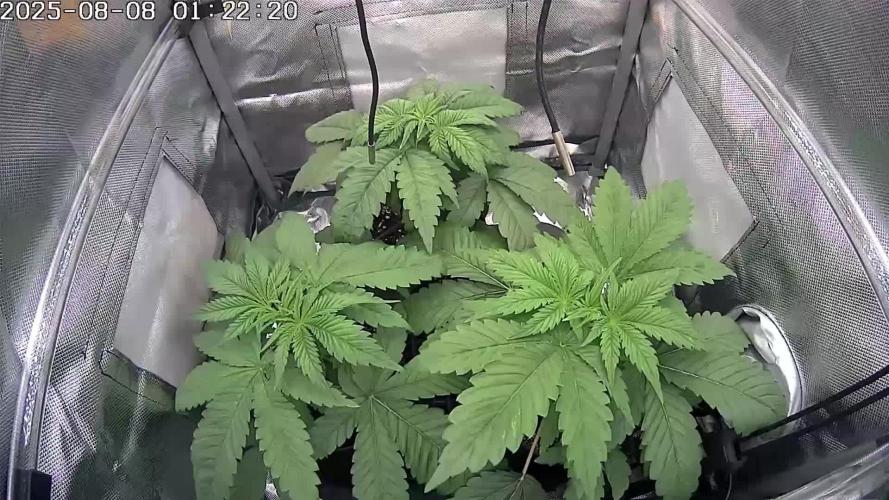
This week marked a small milestone for Seriotica:
✔️ Topped
✔️ Lower shoots removed (light lollipopping)
✔️ Transplanted into the final 15L fabric pots – and wow, the root development was way further along than expected. Didn't see that coming!
First time used:
Great White mycorrhiza – and I gotta say, transplanting went super smooth.
No signs of stress at all – I’ll definitely keep using it 👌

Processing
Likes
15
Share


@vibealive
Follow
Not too too much to report... Kind of on Auto Pilot really until the end... The broken top is FINE, and it's looking GREAT man!!
I'm sure we're going to get a solid yield... :)

Likes
Comments
Share

@Organic473
Follow
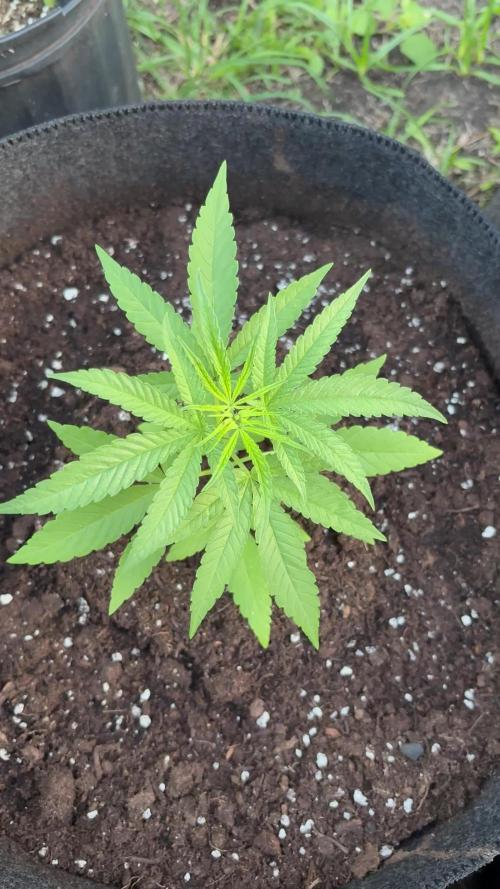
Transferred to a 5 gallon. She acclimated really fast and you can see her spreading out. No complaints thus far.


Likes
12
Share


@Gdawg
Follow
They are striving in there inviroment... sorry been ill for two weeks im impressed with the plants smell amazing and growing just as good
Likes
2
Share

@fadedgreentaurus
Follow
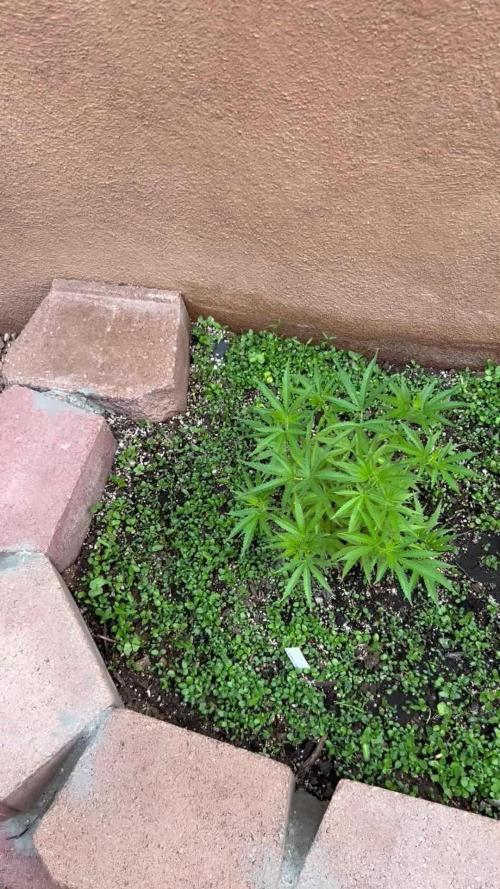
Gained 4-5 inches growth on every plant since moving outdoors. Been feeding compost tea I formulate myself brewed in concentrated and diluted 50-50 I’m ramping up my soil nutes for a week window I’m going out of town and having someone water for me. I getting exactly the results I’ve intended so far and couldn’t be happier. I’m rotating neem and bt. I’ve top dressed castings and guano as well as some other light dressing of other organics to promote micronutrients, I can’t recall everything as I tend to sort of wing it as I see fit. Soil coloration near black and teaming with life great aeration as green mulch becomes more prominent above ground, signifying penetration and good oxygen supply to established cannabis rootball. Teaming with the smell of signifying proper biome health. As spring establish new life the health of the yard has me feeling optimistic for the rest of the season. Most plants have near doubled in size and kicking off new stems from most recent topping. Survived a couple colder nights also which I hope to be the last that low for the rest of the year near 38-40 F*. Hardly fazed plants remain healthy as ever.
Likes
28
Share


@Kitties_and_Colas
Follow
84 days from seed and the Critical Purple is still vegging. She should flip any day now but on track with regular photo period plants In my region...x2 of the CP are filling up nicely. I harvested one of my GG autos last week and my GWS doesn't have very long either :)


Likes
29
Share


@MadeInGermany
Follow
Info:
Unfortunately, I had to find out that my account is used for fake pages in social media.
I am only active here on growdiaries.
I am not on facebook instagram twitter etc All accounts except this one are fake.
Hey everyone :-)
Another nice week goes by and it is slowly becoming a bush from training 😊.
This week it was poured 2 times with 1 l each time (For nutrients, see the nutrient table above).
She was trained once again with topping.
You still have some time until it blooms until space is free :-).
Otherwise everything was checked and cleaned like every day.
Have fun with the update and stay healthy 🙏🏻
You can buy this Nutrients at :
https://greenbuzzliquids.com/en/shop/
With the discount code: Made_in_Germany you get a discount of 15% on all products from an order value of 100 euros.
You can buy this Strain at :
https://www.amsterdamgenetics.com/product/kosher-tangie-kush/
Type:
Kosher Tangie Kush
☝️🏼
Genetics:
Kosher Kush
X
Tangie
👍
Vega lamp:
2 x Todogrow Led
Quantum Board 100 W
💡
Bloom Lamp :
2 x Todogrow Led
Cxb 3590 COB 3500 K 205W
💡💡☝️🏼
Soil :
Canna Coco Professional +
Nutrients :
Green Buzz Liquids :
Organic Grow Liquid
Organic Bloom Liquid
Organic more PK
More Roots
Fast Buds
Humic Acid Plus
Growzyme Big Fruits
Clean Fruits
Cal / Mag
Organic Ph - Pulver
☝️🏼🌱
Water: Osmosis water mixed with normal water (24 hours stale that the chlorine evaporates) to 0.2 EC. Add Cal / Mag to 0.4 Ec Ph with Organic Ph - to 5.8

Likes
70
Share


@Insaniac_0
Follow
All feeds with nutes use either a whole ratio, or combination, of "Veg Mix" and "Bloom Mix"concentrates. These are/will be DILUTED in water until a total ppm of add-in is reached using a (Total Dissolved Solids) TDS Meter measured in PPM (parts per million). The "Veg Mix" concentrate will eventually be added-in larger, then smaller, ratios while the "Bloom Mix" concentrate will eventually replace the "Veg Mix" concentrate entirely. The ppm and ratios will be listed when I feed. Veg mix recipe is on week 3. Bloom Mix recipe is on week 5.
Day 91/21
Replaced the small modified tomato ring with a full size 3 ring tomato support ring so I could support every branch. I made this decision on seeing a lot of my 90 degree breaks from yesterday as still mostly 90 degrees.
I also removed the tape from around the split and placed a wire tie under that trunk to ensure it was secure. After that I also placed a tie on each cola split just past my breaks and another higher up as an upper support.
VPD was great aagain today. 74F/55%RH/ Auto ILV but raised the fan setting from 4 to 5 so it didnt have run as long to get it back into range.
PPFD was a bit off yesterday and today from all of the sudden changes, But I raised my lights today and returned the settings to 750 max and 550 lowest.
This meant that I needed to move my fans as well. They are now on medium setting and all were checked for movement to as many branches as they can hit.
Day 92/22
Watered for salt flush today. Used 3 gallons of purified water at 7.1ph water no additives. PPM was about 70 after ph'd. Ended up with ~ 1.25 gallons of runoff that showed 5.95 and 5.98ph on two meters. Top soil tested at 6.44, 6.63, 6.36, and 6.47ph for an avg of 6.475. Runoff also showed 1540 ppm
VPD was controlled with having the door open for a few hours. Temps and humidity are 72F and about 50%RH with the door open, and about 75F and 55%RH with it closed. ILV still on auto fan setting 5.
PPFD was adjusted to 820 max and 600 lowest - I used 1 hour total of IR at mainlight on/off with 15 minutes before and after switch. She got another 45 minutes of UV today as well. I plan to increase to 1 hour tomorrow.
Day 93/23
Week 3 of flower and most all is well. I did however find some light burn. I say light burn because the only conditions that changed was 15 minutes more UVA today and the spots are on the leaves closest to the light. Feed yesterday was plain ph water and it improved both the topsoil and bottom runoff ph so I dont think it's a nute issue. My solution is to take control pics and reduce UVA back to 45 for another day or two to see if the condition persists or advances. Otherwise PPFD was about 820 down to 600. I used 1 hour of UV and 1 hour of IR at lights on/off
Other than that it was a lazy football day while I just leave her alone. VPD was normal with humidity easy to control at 55%RH or less and temps ranging from 74-76F during the day and down to 66-68F at night.
Day 94/24
Checked in on "light burn" control leaves and took pictures. My analysis is to reduce lights a little more so now max is 795ish. Went ahead with 45 minutes of UV light at mid day and 1 hr IR on the same standard I have been using.
Fans still on medium and since I dont believe the spots are related, I plan to leave them on that setting. Overall I dont see much need to change anything at the moment with the spots not getting much worse or at least not that noticeable other than what has happened already and I already reduced the lights a little. If I can identify any more new spots today or tomorrow I will reduce by another 25ppfd. And if not, then the next day I will try 1 hour of UVA again.
Temps and Humidity are controlled at the same 74-76F and 55%RH or lower. My plan is to keep RH that level throughout and possibly try to reduce again to as close to 45% as I can get. (edited)
Day 95/25
Reviewed suspected light burn and didnt see any progression either yesterday or today against my control pics from the day before. So I went with running UVA for 1 hr at mid day again today. Still using 1 hr IR on the same standard I have been using.
VPD was good today with same settings of 73-76F and 55% or lower RH.
Day 96/26
No issues to report today. She still has what looks like light burn on the older upper leaves, but doesnt really look to be getting worse and the lights are not getting brighter by growth anymore so I plan to leave them where they are and back them down if I see it get more progressive.
Conditions in the tent are the same as yesterday... like little to no vertical growth in two 2 days and no need to change anything. I 'do' adjust the ties daily to ensure they are not creating a pressure point. Most aren't even supporting anything and some are just pushing the cola back or out from others.
PPFD is 800 max and lowest is about 580. I ran 1 hr UVA midday with the same 1 hr IR at 30/30 with main light schedule that I have been running.
Temps steady. 73-76F in the day and 66-68F after lights out. RH% is 55 or less with the fan on auto.
97/27
Watering day. Started by testing /calibrating meters. Used 2.5 gallons of de-chlorinated tap water with starting ppm of 227, added ~700ppm of 100% Bloom Mix concentrate (actually 686ppm added) and ph balanced feed to ~7.0 tested on two meters. Fed until bottom drip began and got ~7cups in runoff after about 10 minutes of drain. Runoff produced 2 meter tests of 5.8ph with 1520ppm. Top soil was tested 4 times for an avg of 6.3752. Next feed will be sooner, thinking like in 4 days instead of 5 and I can adjust if she seems to dry out again. I'll be looking for ~1/2 gallon of runoff to estimate next feed from.
Light burn doesnt seem to be getting any worse. UV lights are doing 1 hr a day, midday, for the rest of the week and then I will increase a little per day each week until harvest. IR is still doing the same settings until harvest as well. 1 hour with 15/15 before and after main light schedule and 1 hr total.
VPD is controlled with no issues of temps or RH exceeding set limits. 73-76F and 65-68F overnight with no more than 55%RH while the ILV is set to auto.

Likes
30
Share


@EdsterGrows
Follow
Alright ladies and gents, finished shooting the last scenes for my Christmas video contest 😅 I had a couple of divas on set, and you'll see who I'm talking about.. lol
Alright; all three girls are getting ready for chop, it has been a lovely time and I've been patient, but I also wanted to make sure that I'm harvesting at the correct time. I purchased a jewel loupe off of Amazon and to my surprise all three girls had amber trichromes mixed with milky trichs. I went ahead and fed lightly and will be harvesting by day 75. I'll update with pictures of the trimmed flower before hanging. Blessing fellow cultivators! 🙌✌️
Edit:12-18-2017
I've finally uploaded my contest video, I really hope to win, and hope you all enjoy! 😸

Likes
2
Share
@Riboh
Follow
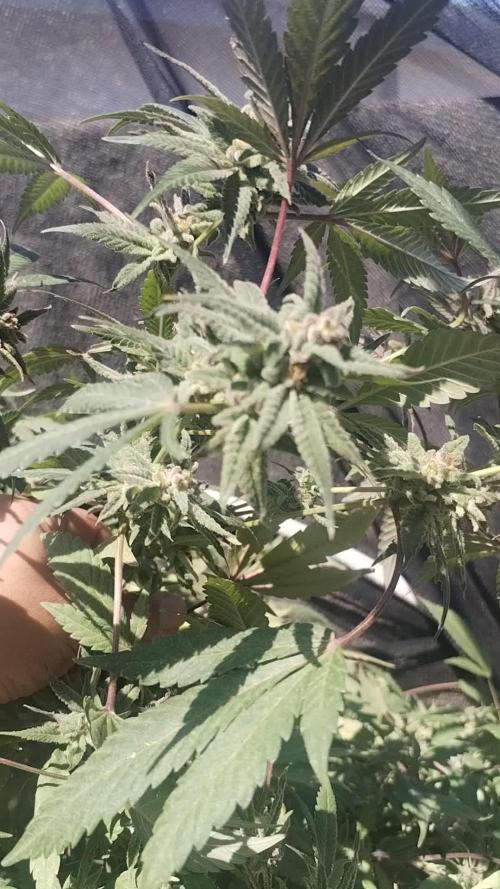
Week 8 and the Tart Pops girl is looking frosty and fragrant — sweet candy terps with a tangy twist filling the tent. Buds have packed on some serious weight over the past two weeks, with dense colas coated in a thick layer of sticky trichomes. The colors are starting to show hints of purple and pink under the sunlight, giving them that “dessert shelf” look.
Pistils are about 70–80% turned, and trichomes are mostly cloudy with a few clear still hanging around. Feedings are being tapered down, and the plants are cruising into their final phase before the flush begins.
Estimated harvest window Day 63–70 (Week 9–10) depending on trichome maturity. A few more days to let those terps peak and resin fully ripen before the chop. The Tart Pops are almost ready to live up to her name — sweet, sticky, and seriously tempting.

Likes
14
Share


@ScouseCityLX
Follow
Apologies that this took me so long to update!
This harvest was probably my second favorite, after my Choc Mint OG. Even tho the yeild was low due to only having 1 plant after a season on downs.

Likes
9
Share

@Mimi420
Follow
Day 56 – Rock-Hard Buds & Chop Time for Caramba!
Current Status & Plant Overview:
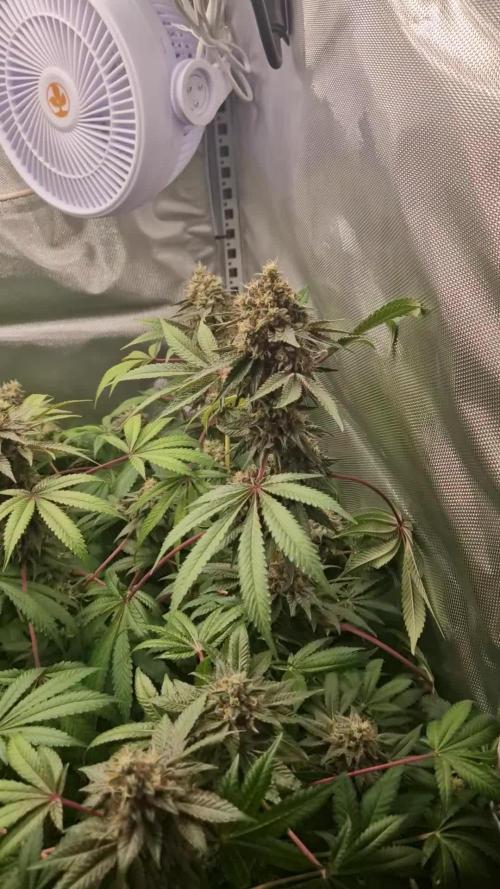
We are officially sitting at Day 56 of flower and the tent is an absolute jungle of frosty goodness. The canopy is completely stacked, and the SCROG net has done its job to perfection. The colas are looking massive, dense, and uniform right across the board.
Bud Density & Terpenes:
Rock-Hard: The buds on all plants are dense as rocks—completely solid from top to bottom, packing on serious weight in this final stretch.
Citrus Terps: The aroma in the room is next-level insane. Every time I open the tent, it hits you right in the face with a heavy, complex wave of pure citrus terps. The profile on these genetics is elite.
Caramba (The Chop is Tomorrow):
Readiness: She’s completely dialed and ready for the axe. The trichomes are looking prime—cloudy with just the right amount of amber creeping in. The flush did its job, and she’s fading out nicely.
The Plan: Tomorrow morning is chop day for Caramba! Time to hang her up and let her start the slow drying process.
Nebulas (Holding Down the Tent):
Progress: The two Nebulas are still pushing forward in their own rhythm. They’re frosting up heavily and packing density every single day, but they need just a little more time under the lights before their trichomes catch up to Caramba.
Final Thoughts:
Everything is running smoothly, and watching these finishes under these conditions has been a rewarding ride. Tomorrow morning we start harvesting the fruits of this labor. Stay tuned for the chop update!

Likes
181
Share


@Anonymous_2022
Follow
Thanks for stopping by.. Please hit the like button if you like what you see and ill be sure to check you out too Growmies 🌱
Shes had a good flush and been in the dark for 24 hours now shes hanging up for the next week or two 😎
She will be in drying tent with temps around 16 degrees and humidity will be monitored using a WIFI sensor hygrometer and a WIFI dehumidifier 👌
Buds are solid and smell great 😎
Pics dont do any justice as using my old phone for pictures as i broke mine New years eve after one to many 🍺👎
A BIG thankyou to Mars Hydro for sponsoring the lighting for this grow the TS1000 has been brilliant and produced some beautiful flowers 🔥🔥🔥
As you can see ive done a big wet trim so minimal trim up once dry ✂️
And a HUGE thankyou to all you guys for all the likes, comments and support 🙏🙏🙏
Wishing you all a Happy New Year Growmies 💚💚💚
Peace ✌️
Likes
2
Share


@Green_Peace
Follow
Added some cheap Wilkos organic feed into the mix because why the hell not? All plants look happy, healthy and green. PK will be added the next 2 weeks of peak flower. This plant is at the back of the timelapses.
Likes
46
Share


@LittleBigTrees
Follow
Defoliated and trimmed lower fluff from The plant day 20 flower ,
Lots of air and light can now get to the plant and hopefully grow some nice buds

Likes
29
Share


@sndwich
Follow
13 Weeks total including 1 week flush. Super easy to grow, LST her from the get go and she responded well.
First time growing autos and all very easy
Smells incredible! Very fruity,
The yield looks pretty good, no scales tho but will try to weight when dry.
Big heat issue during flower which fucked a lot of the girls, her included, so I think the yield would have been bigger but we got a nice amount in the end
Have trimmed her and put in a box to stop light getting in with strings holding her up, hopefully will dry ok as others are still going so can't hang in grow room as per usual
Will dry for a day or 2 until stems snap, then into jars for curing there after
UPDATE: Dried for 4 days - small nugs fully dried, larger still a little moisture inside, have jared with a Boveda in each jar to help maintain moisture levels in the jars and are popping jars twice a day if not more for 10 mins or so a time.
Dry Weight in jars @ 49 grams total, I expect it to go down a little but not much, really happy with the yield amount
Smoke wise tastes nice but know a few weeks in the jars will really open her up :)


