


Likes
Comments
Share


@3lementa1
Follow
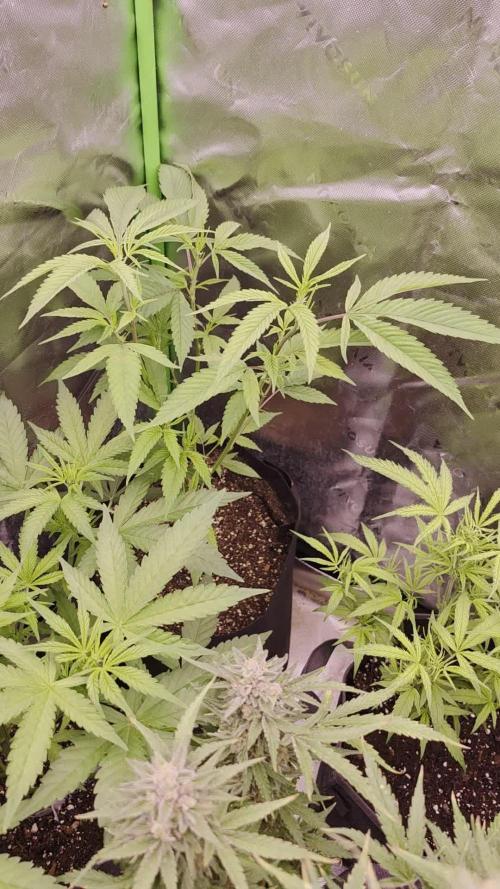
Because of how early I topped her, the base was very dense with foliage so I did some defoliation. You can see the four main branches (2 of which were topped) and the central FIM with its supercropping scars in the 4th pic.
Still running a 1000w MH bulb at 50%. Looking at getting a SMLED/COB LED combo light to replace my cool tube and associated fans and ducting.
Water level was down to 50%. I'll have to start topping up.
July 04 I rearranged my setup a bit while switching the MH bulb for the HPS. I think next run I'm going to grow 2 autoflowers and stagger them and try to run a perpetual harvest. I'm going to try to stick with the HID lights if I can manage the heat effectively. It was working well when I had the 6" cooltube and the 4" carbon filter exhausting out the window, but now that the smell is more intense, I don't want any air going out except through the carbon filter. I've thought about running filter-->fan-->cooltube-->outside but they're different sizes so it would lose efficiency. I've also thought about running clean air from outside the tent through the cooltube and then outside as it was intended, but I just don't think that's going to work with the space.
July 05 I noticed shiny spots on the leaves which seems to indicate I have thrips. I can't see any actual larvae even with my glasses on, but the sucked out spots are fairly distinctive and I can see small black particles that must be excrement. Temperature seems pretty good in there and humidity is ok at about 45%. I have some peppermint Dr Bronner's castile soap so I made a foliar spray of insecticidal soap by just pouring a few drops into a big spray bottle. Just worried about when to spray so I don't burn the plant. Just checked the reservoir and temp is 26c, PPM 860, Ph 6.5. I'm going to add plain water and try to bring the Ph back down to 5.5. It's possible that what I'm seeing is due to the Ph being too high. I'm going to start checking the Ph at least every couple days. It's annoying to unclip all the training wires every time I open the reservoir. It's also not very convenient to fill it. It's at an awkward height. I like the 5 gallon bucket because it was easy to set up and understand but I might be better off with a different type of reservoir.
3:45pm I just sprayed the underside of one section of leaves, I'll see how that section does under the lights. My concern is that if I spray under the lights, it will burn, but if I spray at night, it could cause mold. Hopefully I can get away with spraying all the leaves once or twice a week and it will go away.
July 06 She looks ok but I'm thinking it might be a Ph issue. Ph was 6.2 so I decided to just pitch the water and start again. I changed my method so I'm mixing the nutrients in the actual bucket the plant lives in and testing it there, instead of mixing in another bucket and pouring it into the DWC. Ph is now 5.7 and PPM 700.
July 08 just noticed that RH is 70% when the lights come on. I feel like I'm going to need a solution for overnight humidity. Maybe dry rid bags. Rh is 60% after a couple hours. Leaf, solution, and substrate temp down to 24 which is nice. Ph is back up to 6.3 again! I pH downed some tap water to 4 and added that to the reservoir.
July 09 Pistils just started coming out :) The Ph is still back up to 6.3 again but PPM is 750. I'm going to change the res again and lower the nutrient content a bit.

Likes
5
Share


@LittleBigTrees
Follow
Just been feeding them water this week.
Almost time to chop them down.
Apple fritter is fully cloudy.
Black orchid is half clear half cloudy trichomes and smells fantastic!
The two watermelon candy plants differ in appearance slightly but smell the same, they are both showing cloudy trichomes.

Likes
12
Share


@thonhash
Follow
Acabamos con estas colombian jack,con 70 días y un olor súper dulce,empezamos con el secado.



Likes
60
Share


@m0use
Follow
Ok, so I forgot to update this last week. woops, I will try and remember all the details but im sure to be forgetting something.
I decided to strip the plants a bit as I felt their bottom half under the canopy was a bit to thick and under performing It has a bunch of shity stems and buds trying to develop and they where looking sad and spindly, not enough light, If i had under canopy lighting sure that's fine I'd leave em and they would thicken up, but I don't; so they had to go. I selected defoliation as a techniques used but I did not touch anything in the canopy. only below it, it was all not performing well and would have just increased the risk of bad airflow and maybe rot come late flower.
I also have been noticing more issues with the one plant then the others and my hydro shop guys said it need more feed, I don't know how much I agree with them about that, they do not grow with amendments but it was time for the topdressing anyways. I mixed up the stuff and worked it into the top soil of the plants outside on the deck, when watering it in I also mixed it with my hands, I found this helps hydrate the Gaia Green powders and prevented them from forming dry pucks in the top layer. I think I need to always do this morning forward with all top dressings as just mixing it into the dry soil then watering is causing to much resistance and the top layer then gets a little bit crusty and hydrophobic, but mixing in while watering at the same time has prevented that from what I can tell. I also gave them a bit of a liquid soluble calcium as the PH was creeping back up again and didn't want that to be locked out. It helped to green up some of the plants again still the one is a bit to yellow for my liking. The top dress consisted of AP 4-4-4, PB 2-8-4 and some IF 3-2-4 Mixed it all up with something else can't remember, probably fulvic acids and magnesium.
I also did a bit of a calibration on my tools as well as I felt they might be off a bit.
The EC was not to bad, off by 41ppm or 0.082EC vs the base solution, my unit is a 500 scale pen eg. 500ppm=1.0EC
PH was a bit more off by PH 0.18 from the PH 4.01 calibration solution. I did not do a before for the PH 7.01 calibration solution as I started at 4.01 but its still close enough in the end at PH 7.03. The storage solution is almost always the same as the PH 4.01 calibration solution. In their manual it says if you don't have any storage solution just use the PH 4.01 calibration solution. I feel they maybe the same thing but one has red dye and some stabilizers in it. Who knows.
O and when working on my deck garden I was upcycleing the old cannabis growing mediums into the planters from the strawberry tent grow off, the one shaft from an older plant was purple inside when I broke it. It sat outside all winter so who knows what it was, I'm guessing its just anthocyanins or something similar.
Big shoutout to Medic Grow for sponsoring the lighting in my tent, They have provided me with 2x Mini Sun 2's in the 240w configuration, They use the v1 growing spectrum that is a all purpose seed to harvest spectrum so their is no hassle of switching it mid grow. If you're interested in learning more about Medic Grow products please visit the web link below.
https://medicgrow.com/
https://growdiaries.com/grower/MedicGrowLED


Likes
121
Share


@DogDoctorOfficial
Follow
Day 43 F and this girls are getting more beautiful each day, I’m amazed how new trichomes are pumping day by day, and the amount of them 🤩 yes, freakin Fu##ing yes 🙌 🙌🙌 shoutouts to MARSHYDRO and to AptusHolland for the help in this department 🙌🙌🙌
I believe we are getting closer and closer to harvest day by the speed on this girls , but time will tell and so will the colors on the trichomes 😆 for now i will keep giving plain water with some enzymes and microbial live to help keep the soil alive for the next run 💚💚💚🙏🙏🙏
Day 44 F and the trichomes are getting closer to be ready but still not there yet , i do like the numbers, the color on them, the structure 🤩💚🙏 felling pretty blessed with it all 🙏🙏🙏
Growers love guys and i my wishes for you all are that for a great 2020too 💚💚💚🙏🙏🙏🙌🙌🙌 thanks for stoping by and read my diaries 🙏🙏🙏💚💚💚 I truly appreciate the love and it all 💚💚💚💚🙏🙏🙏🙌🙌🙌
And with and enormous honneur and pleasure that i start collaborating with MARSHYDRO, they wore kind enough and send me a 4x4 grow tent and a TSW2000 for me to do tests and reviews, i got to admit the quality on the materials, the easy assembling, the user manual, even the art detail that came with a bunch of cool stickers, are plus things that can not go unnoticed 🙏💚 Thanks Marshydro for so many details 🙌😉 i will try and post them all in here, but you can follow me on my instagram account https://instagram.com/dogdoctorofficial for every day updates , videos giveaways etc, or in my youtube channel- https://youtube.com/channel/UCR7ta4DKLFMg2xxTMr2cpIg keep tuned 💚💚💚
Thank you MARSHYDRO for having faith in my love for growing , lets make magic together 🙏🙏🙏
Genetics - Cookies Fam genetics - 3x SunsetSherbet
Grow tent - MARSHYDRO 4x4
Ligth - MARSHYDRO TSW 2000 @ 100%
Food - HAPTUS HOLLAND
Filter - vanguard hydroponics Falcon Filters
Extraction - 2 x vanguard hydroponics 280m3h
Extraction control - SMSCOM Smart MK2
All i grow is medicine for myself, for me and for my best friend with is me 😆 nothing to sell, so don’t even ask 😅💚💚💚
All info and full product details can be find in can find @
https://www.mars-hydro.com/grow-tent
https://www.mars-hydro.com/led-grow-light/mars-ts-series-led-grow-light/mars-tsw-2000-led-full-spectrum-hydroponic-led-grow-light
https://marshydro.eu/ DISCOUNT CODE - DOGDOCTOR 💚💚💚🙏🙏🙏💚💚💚
https://marshydroau.com/
https://aptus-holland.com/
More info and updates @
https://growdiaries.com/grower/dogdoctor
https://instagram.com/dogdoctorofficial
https://youtube.com/channel/UCR7ta4DKLFMg2xxTMr2cpIg
💚💚💚Growers love to you all 💚💚💚

Processing
Likes
20
Share


@BudXs
Follow
"Chugging" along this week. Weather is hot, girls are loving the all time drip system. Forgot that my nutes and hot sun dont mix well and created a bad case of algae. Will monitor more often and maybe increase the drip flow

Likes
3
Share


@HowtoBubatz
Follow
The first week of flowering is here, and things are finally looking much better!
Both plants have recovered well and are now growing much healthier.🌱
#1 has already started stretching significantly, really picking up speed. It’s exciting to see how quickly it’s developing! Meanwhile.
#2 spent about half the week still in vegetation, but towards the end, I finally spotted the first signs of flowering.
Now that both are officially in bloom, I’m looking forward to seeing how they continue to develop over the next weeks. On to the next phase! 😊

Likes
4
Share

@AumShanti
Follow
ॐ
BUBBA KUSH - Barney's Farm
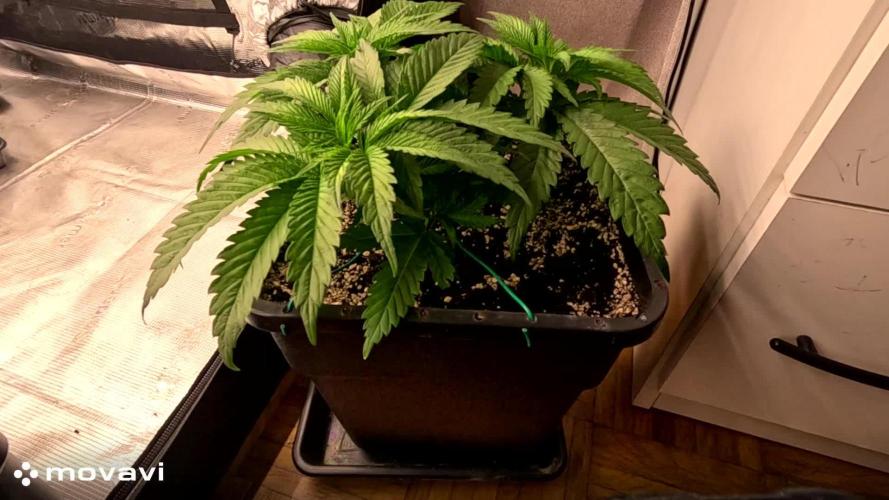
11L pots, 720W led, Remo Nutrients
"Bedroom setup"
3rd week of vegetation from 9.3.2026. to 15.3.2026.
This week i did topping, defoliation, and also wireing,
every day im spreading them by pulling wires.
Girls are healthy and looking so strong i rly like them :)
There is one of five which is superior over the other four :)
Take care and much love :)
ॐ
Likes
6
Share

@AestheticGenetix
Follow
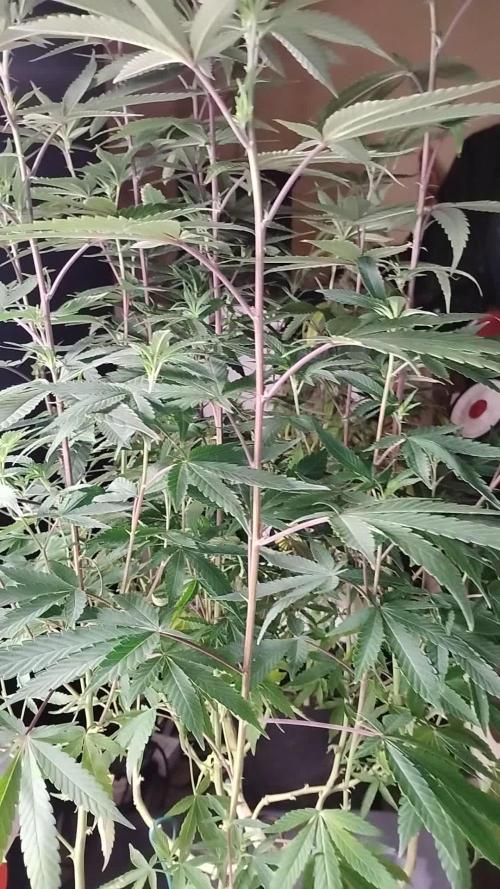
Been working on getting rid of the purple stems. She seemed super happy today.
Not a ton of noticable stretching going on with her. She looks really nice so far.
I haven't noticed many pistils yet. Been about 8 days since 12/12


Likes
50
Share


@AsNoriu
Follow
Day 85 since seed touched soil.
Trim jail !!!
2.4 meters of hanging frosty buds and air ;))))))
Happy Growing !!!


Likes
6
Share


@GreenGuerilla
Follow
29/06
Day40
Height 83cm
Noticed that on one of the plants that approx 70% of the leaves look exaggeratedly rough with a dusting of orangey brownish markings. This came after the bug episode I remedied with Eccofective Bug Spray (Organic)
Fed each 2L of Solution
Inoculated the rims of their pouches with Peppermint Oil. The creepy-crawlies hate it😈
07/06 Day 47
The one plant looks decidedly miserable. Weird rough leaves with slight discolouration and droopy. They're not being over or under watered.
They both receive the exact same nutrient ratio and mix.
It's been suggested to me by Bloombuster that it's heat-related. This makes sense as it was over 30c when I moved them outdoors.
They're also showing Indica genetics more than the Sativas they're meant to be. I'll make mention of this to Lineage Genetics.

Likes
43
Share


@Jack_Greenstalk
Follow
week 2 of flower, been able to line up compost teas with feeds so they get nutes, nutes, RO+TEA, Repeat. foliar last times this week, I stop spraying anything on week 3! showed how i like to shake them up with the scrog a bit in last vid. I do that to essentially simulate a wind storm, strengthen stalks and roots, also helps reorganizing the canopy as you sorta shake things into place that were bunched up next to neighboring leaves. next week will do a fairly heavy defoliation to allow better airflow around colas


Likes
5
Share

