


Likes
Comments
Share


@StonedandSteady
Follow
AutoBlueberry 6th w/ 1st W/ Flower breed by #DivineSeeds #DivineSeedsSquad #DivineSeedsBreedingCompany
Starting to Flower and her Smells are already getting Stronger of Gasy Blueberries!
Origin:Afghani/Thai
Type:50% Indica/ 40% Sativa/ 10% Ruderalis
Flowering:56 days
THC:22%
Harvest:400-550 g/m2
Height:110-150 cm
They were Growing under the #Growatt600w and in my #TopoLite 24×24×48 Grow Tent but I've Upgraded and Updated it to my #OsreeQB100W I'm also using #TNBNaturals #TheEnhancer Co2 Despersal Canister and using thier Ph⬆️⬇️ for my Decolinated Tap Water!
Green and Growing Up Great! She's Growing into her 7th week of Flower! She's Growing in my special blend of ProMix potting mix, a 1/2 bag of Earthworm castings and 2 light handfuls of Diatomaceous Earth mixed Up well for before transplanted! Diatomaceous Earth: Diatomaceous earth is made from the fossilized remains of tiny, aquatic organisms called diatoms. Their skeletons are made of a natural substance called silica. WHAT IS DIATOMACEOUS EARTH?
In a nutshell, DE comes from the fossilised remains of small marine organisms called diatoms. Over a 30 million year period, these hard-shelled algae collected on the bottom of bodies of water, eventually forming into a type of sedimentary rock. Fast forwarding, it wasn’t until around 1836 that a German peasant Peter Kasten discovered the ivory-coloured, powdery substance while drilling a well in northern Germany. Ever since, the usefulness of DE for multiple purposes, including industrial and horticultural applications, has been well-reported. Just sprinkle some diatomaceous earth on top of your soil and watch mother nature's secret weapon work its magic.CONDITIONS THE SOIL
When it comes to growing cannabis, everyone strives to provide the best soil to grow the best plants—but there’s always a way to make it even better. Making the soil a better medium is called soil conditioning, which is exactly what diatomaceous earth does. It works by improving the retention of moisture in your potting soil, holding a large amount of fluid and drying at a rate that’s much slower. This natural soil additive also helps to retain nutrients and allows for better oxygenation of the substrate. NATURALLY CONTROLS PESTS
DE is an all-natural, safe-to-use substance that doesn’t harm the cannabis plant with toxic chemicals. The nature of diatomaceous earth makes it useful against most types of insect infestation you might be experiencing; and unlike chemical insecticides, insects can’t develop a resistance to the effects of DE. So once they’re gone, they’re gone for good. DE is an abrasive. and when used as an insecticide, it gradually scrapes away an insect’s exoskeleton, absorbs the fluids, and dehydrates insects and other critters to eventual death. IMPROVES PLANT STABILITY
When using DE in your soil, it can be especially beneficial as it frees up nutrients so that they are made available to the plants as needed. This works via the silica content of DE being absorbed into the plant tissue, which helps improve the plant’s ability to respond and receive more nutrients as DE activates. This in turn results in greater yields and better stability under small pH fluctuations!
https://divineseeds.net/
https://instagram.com/divine.seeds?igshid=osxe2v7en33v https://divineseeds.net/
Thanks Again to All my Friends, Family's, Teams, Sponsors, Followers and Subscribers!!! Your Genetics are Merry Magnificent, Mega Marvelous and Mighty Medical! Love um!!! I really Can't stress enough how Thankful and Grateful I am of All of you and what you've Shared with Us! Means the World!!! It's definitely a Pleasure being able to Grow with these Phenomenal Grow Lights! Please Enjoy! BudBrothers4-Life! Cheers Famz!!! Much Props and Much Topz!💯🔥 #Osree #GrowStarStore #Growatt #TNBNaturals #TNBTeam #GrowYourOwn #Bliss
https://instagram.com/as420.ca?igshid=1f116alw054wp
The Grow Bags: https://www.as420

Likes
37
Share


@Pugbutt
Follow
Girls are starting to really bulk up with bud sites this week. So far so good, everyone but one is in perfect health. My one lady got a little nute burn, but I'm currently flushing her with ph water. Smell is still very weak, and although the ladies look skinny, I think they will fatten up down road. Only time will tell.


Likes
2
Share

@ThatsmyGrow
Follow
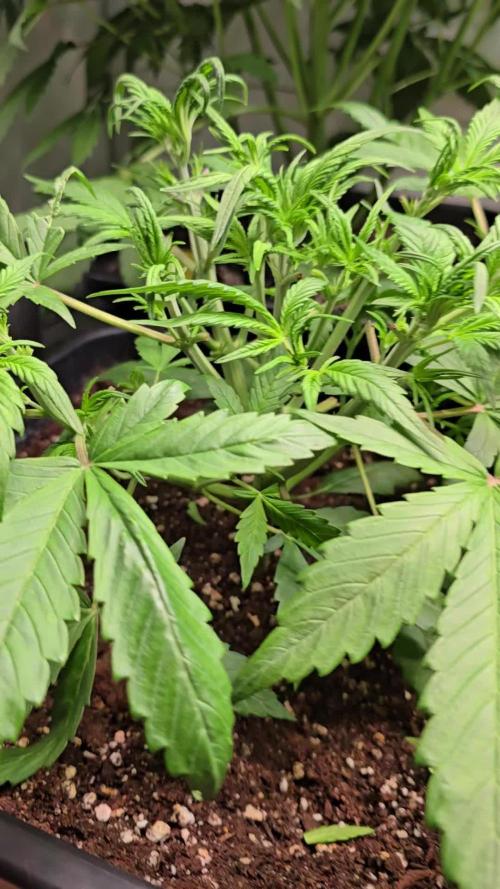
She need some time to get in flower. Hope she will turn in flower soon.

Likes
12
Share


@cookingwithninja
Follow
best cannabis I ever grew and smoked. Others agree. This is a cup winner I would win with no competition. 3 months harvested, 90% consumed. Will run more genetics and future cross, backcross. Feels like energy drinks, positive, 100% youre high and lit, extreme ripped. Smell is slight citrus, this is very sweet tasting and smelling because of my methods of growing. Oozing sticky like an industrial adhesive. Daytime smoke, ripped no couchlock. For heavy daily smoker this is above your level of comprehension, good luck finishing 0.5g session. 10/10 all categories.
4 months after harvest video macro, this is what 40% looks like

Likes
14
Share


@Bobbybrown
Follow
Super hype to try, lowest yielding strain in the tent. But had the best smells. Buds look fairly dense with a lovely dark deep purple color.

Likes
45
Share


@Ultraviolet
Follow
2nd net is up. Early bud formations are promising. holding up to the extremes pretty well, some leaves taking minor damage, but overall, she is holding up, gave her 1 night at 50F see how she would react, stressful. Not advised as it messes with her metabolism, but I want to see if it triggers any anthocyanin response. Love to see her purp up but no signs yet.
My homework.
Rubisco regeneration is intrinsically linked to nitrogen supply because Rubisco is a major sink for nitrogen in plants, typically accounting for 15% to over 25% of total leaf nitrogen. The regeneration phase itself consumes nitrogen through the synthesis of the Rubisco enzyme and associated proteins (like Rubisco activase), and overall nitrogen status heavily influences the efficiency of RuBP regeneration.Structural Component: Nitrogen is an essential building block for all proteins, and the sheer abundance of the Rubisco protein makes it the single largest storage of nitrogen in the leaf.
Synthesis and Activity: Adequate nitrogen supply is crucial for the synthesis and maintenance of sufficient Rubisco enzyme and Rubisco activase (Rca), the regulatory protein responsible for maintaining Rubisco's active state. Nitrogen deficiency leads to a decrease in the content and activity of both Rubisco and Rca, which in turn limits the maximum carboxylation rate, Vmax, and the rate of RuBP regeneration Jmax, thus reducing overall photosynthetic capacity.
Nitrogen Storage and Remobilization: Rubisco can act as a temporary nitrogen storage protein, which is degraded to remobilize nitrogen to other growing parts of the plant, especially under conditions of nitrogen deficiency or senescence.
Nitrogen Use Efficiency (NUE): The allocation of nitrogen to Rubisco is a key determinant of a plant's photosynthetic nitrogen use efficiency (PNUE). In high-nitrogen conditions, plants may accumulate a surplus of Rubisco, which may not be fully activated, leading to a lower PNUE. Optimizing the amount and activity of Rubisco relative to nitrogen availability is a target for improving crop NUE.
Photorespiration and Nitrogen Metabolism: Nitrogen metabolism is also linked to the photorespiration pathway (which competes with carboxylation at the Rubisco active site), particularly in the reassimilation of ammonia released during the process.
To increase RuBisCO regeneration, which refers to the process of forming the CO2 acceptor molecule Ribulose-1,5-bisphosphate (RuBP) during photosynthesis, the primary methods involve optimizing the levels and activity of Rubisco activase (Rca) and enhancing the performance of other Calvin-Benson-Bassham (CBB) cycle enzymes.
Biochemical and Environmental Approaches:
Optimize Rubisco Activase (Rca) activity: Rca is a crucial chaperone protein that removes inhibitory sugar phosphates, such as CA1P (2-carboxy-D-arabinitol 1-phosphate), from the Rubisco active site, thus maintaining its catalytic competence.
•Ensure optimal light conditions: Rca is light-activated via the chloroplast's redox status. Adequate light intensity ensures Rca can effectively maintain Rubisco in its active, carbamylated state.
•Maintain optimal temperature: Rca is highly temperature-sensitive and can become unstable at moderately high temperatures (e.g., above 35°C/95F° in many C3 plants), which decreases its ability to activate Rubisco. Maintaining temperatures within the optimal range for a specific plant species is important.
•Optimize Mg2+ concentration: Mg2+ is a key cofactor for both Rubisco carbamylation and Rca activity. In the light, Mg2+ concentration in the chloroplast stroma increases, promoting activation.
•Manage ATP/ADP ratio: Rca activity depends on ATP hydrolysis and is inhibited by ADP. Conditions that maintain a high ATP/ADP ratio in the chloroplast stroma favor Rca activity.
Enhance Calvin-Benson-Bassham (CBB) cycle enzyme activity: The overall rate of RuBP regeneration can be limited by other enzymes in the cycle.
•Increase SBPase activity: Sedoheptulose-1,7-bisphosphatase (SBPase) is a key regulatory enzyme in the regeneration pathway, and increasing its activity can enhance RuBP regeneration and overall photosynthesis.
•Optimize other enzymes: Overexpression of other CBB cycle enzymes such as fructose-1,6-bisphosphate aldolase (FBA) and triose phosphate isomerase (TPI) can also help to balance the metabolic flux and improve RuBP regeneration capacity.
Magnesium ions, Mg2+, are specifically required for Rubisco activation because the cation plays a critical structural and chemical role in forming the active site: A specific lysine residue in the active site must be carbamylated by a CO2 molecule to activate the enzyme. The resulting negatively charged carbamyl group then facilitates the binding of the positively charged Mg2+ion. While other divalent metal ions like Mn2+ can bind to Rubisco, they alter the enzyme's substrate specificity and lead to dramatically lower activity or a higher rate of the non-productive oxygenation reaction compared to Mg2+, making them biologically unfavorable in the context of efficient carbon fixation. The concentration of Mg2+ in the chloroplast stroma naturally increases in the light due to ion potential balancing during ATP synthesis, providing a physiological mechanism to ensure the enzyme is activated when photosynthesis is possible. At the center of the porphyrin ring, nestled within its nitrogen atoms, is a Magnesium ion (Mg2+). This magnesium ion is crucial for the function of chlorophyll, and without it, the pigment cannot effectively capture and transfer light energy.
Mg acts as a cofactor: Mg2+ binds to Rubisco after an activator CO2 molecule, forming a catalytically competent complex (Enzyme-CO2-Mg2+). High light + CO2) increases demand: Under high light (60 DLI is a very high intensity, potentially saturating) and high CO2, the plant's capacity for photosynthesis is high, and thus the demand for activated Rubisco and the necessary Mg2+ cofactor increases. Mg deficiency becomes limiting: If Mg2+ is deficient under these conditions, the higher levels of Rubisco and Rubisco activase produced cannot be fully activated, leading to lower photosynthetic rates and potential photo-oxidative damage.
Optimal range: Studies show that adequate Mg2+ application can enhance Rubisco activation and stabilize net photosynthetic rates under stress conditions, but the required concentration is specific to the experimental setup.
Monitoring is key: The most effective approach in a controlled environment is to monitor the plant's physiological responses e.g., leaf Mg2+ concentration, photosynthetic rate, Rubisco activation state, and adjust the nutrient solution/fertilizer to maintain adequate levels, rather than supplementing a fixed "extra" amount.
In practice, this means ensuring that Mg2+ is not a limiting factor in the plant's standard nutrient solution when pushing the limits with high light and CO2.
Applying Mg2+ through foliar spray is beneficial to Rubisco regeneration, particularly in alleviating the negative effects of magnesium (Mg) deficiency and high-temperature stress (HTS). While Mg can be leached from soil, within the plant it is considered a mobile nutrient, particularly in the phloem. Foliar-applied Mg is quickly absorbed by the leaves and can be translocate to other plant parts, including new growth and sink organs.
Foliar application of: NATURES VERY OWN MgSO4 @ 15.0g L-1 in a spray bottle.
Foliar sprays are often recommended as a rapid rescue measure for existing deficiencies or as a supplement during critical growth stages, when demand for Mg is high. Application in the early morning or late evening can improve absorption and prevent leaf burn.
The starting point [of creativity] is curiosity: pondering why the default exists in the first place. We’re driven to question defaults when we experience vuja de, the opposite of déjà vu. Déjà vu occurs when we encounter something new, but it feels as if we’ve seen it before. Vuja de is the reverse—we face something familiar, but we see it with a fresh perspective that enables us to gain new insights into old problems. Come walk in the enchanted forest.
Likes
19
Share


@Wenz004
Follow
Ausser etwas Streckung nicht viel passiert.
Zur Zeit täglich ca. 3 liter (gedüngt) durst.
Likes
12
Share

@AestheticGenetix
Follow
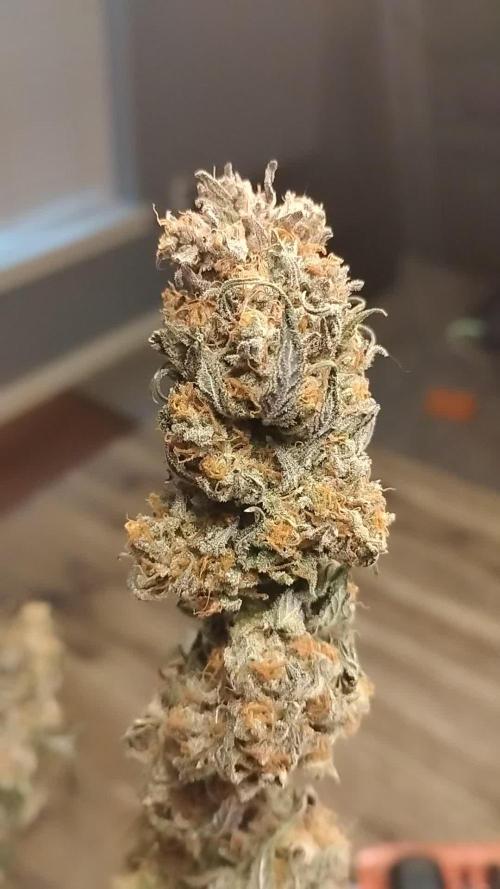
This was an experiment grow. Seeing if I can grow and flower in a 1 gallon pot with organic amendments. These buds actually turned out better than when I grew this same cut early this year with a bigger pot.
Chopped at day 55 of flower on 10/21/25

Processing
Likes
12
Share


@2SeedsToParadise
Follow
Upward growth gonna take off soon
So far so good,
on the road to paradise
Likes
2
Share

@JVKdopegrow
Follow
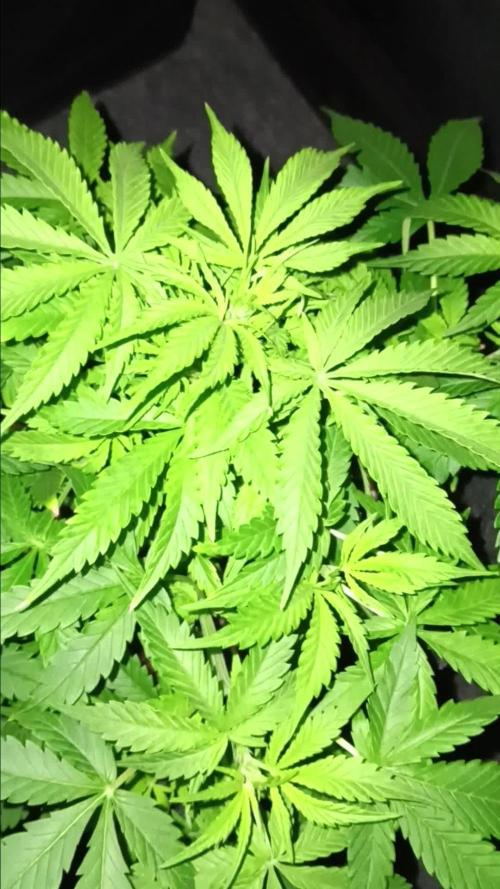
Another good week but I am surprised she is not entering the flowering stage yet. Beautiful color and shape! Excellent canopy growth as I finally have trimmed the lower nodes off a plant. Very light defoilation of some fan leaves as well.


Processing
Likes
Comments
Share


@Isle_of_dank
Follow
Flicked to flower 21th June under two 600watts LEDs in bloom humidity 47to53 temperature 20c to 25c will update with pictures on 26th June

Likes
18
Share


@Nurse
Follow
Irrigation: once every three days with the highest dose of fertilizer. 1.5 L ph6.5 ppm 1000
light: 40 cm
Rh 60
22 c
plants 47 cm to- 67 cm tallest
Hello everyone. Finally a little happiness on the last day of the week. This week the plants have healthier, greener leaves. And the buds are growing. I say what I did that helped my plant. I reduced the strong wind, I increased the humidity, I increased the distance between the light and the plant by 10 cm. And I started fertilizing a lot. I thought the leaves would burn because they had a lot of fertilizer, but on the contrary, they needed fertilizer.
Likes
12
Share


@eldruida_lamota
Follow
Que pasa familia.
Noticias buenas y malas, de 3 ejemplares, uno nos salió hermafrodita. Empezó a formar plátanos esta semana y al estar tirándolos en ramas distintas, cortamos por lo sano y ADIÓS.
Quedan 2 subimos cantidad de comida, pegaron buen estirón, y las flores están formando sin problema alguno.
Dejo muchas imágenes y vídeos de esta semana, y ya deducen ustedes.


Likes
8
Share


@4F1M6
Follow
This lady created quite the sea of tops. Shes getting nice and chunky as her bud production revs up. Trichomes are starting to pile on as she gives herself a coat. Strong orange citrus aroma wofting from her. Looks sexy and smells tasty! I can't wait.
I reduced the nitrogen dose again. I also stopped giving them vigorous. Its a pure bloom mix now as this lady is booming with flowers. Until next update. Happy growing and stay lit fam.

Likes
4
Share


@DrewbieDoobieNoobie
Follow
Hello Folks, 17 days from spraying the CS on MILF A we got Lots of nanners. I have a theory that the stronger the Colloidal silver PPM the more it will affect the plant I have been told that 30 to 50 ppm is good. The stuff I have clocked in at 158 PPM with my meter the bottle said 500 ppm so either way it did its job but I only sprayed 2 nodes and 95% of the plant started growing balls. there was 1 branch that had all girl parts on it see the pic above. Today was the day I hacked her up as she started to pop in the tent and I will find out how many buds got knocked up in 2 months or so, I did do a few on purpose with a paint brush and marked then with a loose Zip tie around the branch. I have been reading that the way to tell if a bud has been pollenated that the hairs will turn brown as a first sign and then the calyx will swell with the seed. this is my first time as a "pollen chucker" I really hope these will makes feminized seeds for this strain it looks like its worth keeping around. heat and stress resistant and I am seeing minimal tip burn, they are heavy drinkers. I will have to watch the 5 gallon pots closely every day. They look promising lets see what happens. Stay safe y'all Cheers and don't forget our fallen Hero's this Memorial Day


Processing
Likes
8
Share

@4F1M6
Follow
I started germination of 1 Gorilla Zkittlez bean on 29/12/2020. I pre moistened my rockwool cubes with ph balanced water to 6.4. Made sure the plug was just damp and not soaked. Using a small wooden dowel I increased the size of the plugs pre made hole. Than I sowed my bean into the hole. Ripped off a small piece of rockwool and mulched it up. Lightly filled the hole in with the mulched rockwool. Than stuck the plug into a misted humidity dome, to complete germination.
Shouldn't take anymore than 4-5 days to see a sprout. Once I see some cotlydon leaves bursting to the surface. I will get the plug planted into some 1 gallon pots. Plus get this lady situated into her home. Cant wait!
Some Background information on my experience with Gorilla Zkittlez. I've grown this variety out twice so far. Once in a 15 gallon container which became a super branchy beast. That yielded a large amount and filled up it's own 4x4 tent with a little training. The second and most recent time was in a 1 gallon SOG grow. She also flourished in a fast flip SOG grow banging off a fat head frosty main cola, with a few satellite buds. Very adaptive strain and seems to flourish in any environment and any size space. Looking forward too my 3rd adventure with Barneys farms masterpiece.
Likes
18
Share


@Stonyways
Follow
12 on 12 off, missing my girls... I spent about 35 mins tops with them during the week, and then I love giving them the attention they deserve on the weekends, what else is there to do when the worlds gone mad?
2nd grow on the "smart plug cycle" and the cost is so low..I am extremely happy with the SPIDER FARMER SF2000, but there's times I just want to plug in the 1000w to penetrate deep into the plants but the reasons for the LEDs is to grow some heady herbs for less. LEDs can get expensive but its just start up costs, after that you don't have to change bulbs and you don't notice the pull on the electric bill. WIN WIN
the ladies have been busy this week and producing which means i'll need to go in tomorrow and do a clean up.
happy growing!
...GOOD VIBES here!!!
HAPPY GROWING!!!!!
1/26/21 had to switch up watering today due to demands from the plants. This is where it gets tricky, 2 weeks left of feeding before flush and all I am trying to do is keep as many leaves possible to feed all those buds. I am usually just a big bud person but I recently purchased a hash machine and I know a couple old heads that still love bubble soooo...
THE SEED PHARM.... I will be going back very soon for more of this nice plant and something different.
THERE IS NEVER ENOUGH ROOM!!!