


Processing
Likes
Comments
Share


@RussianGrower
Follow
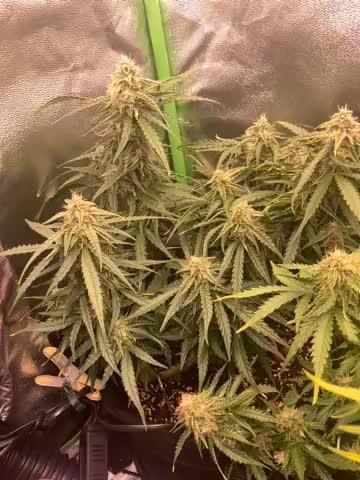
Hello, friends, I Welcome you again from Russia. Comes week 5 photoperiod Bubblelicious. I planned to make clones of this plant, but unfortunately the whole place is occupied by other projects, and temporarily I have to give up this idea, but I will continue to grow this plant, later on, I still make clones, and while I tear off the vegetative leaves and give free growth.

Likes
3
Share


Likes
50
Share


@Mr_Motalovah
Follow
Hello growers and tokers! 👋 👩🌾 🧑🌾.🔥💨
Hope you had a great week because these ladies sure have! 😍
They're starting to get that sweet aroma this strain gives off, her aroma will be over powering my tent in full flower. Love it!
Pictures and info were taken on day 12 of flower.
I put 71cm tall because that's the average between the three girls.
CC 1: 78cm
CC 2: 68cm
CC 3: 68cm
CC 1 is killing it with the double main colas. 💪 💪 🤩
CC2 is my favorite. She's got a perfect shape, nice evenly distributed canopy. Took LST great.
For me that's the goal when I do LST.
CC3 doesn't fall behind in any way, she's looking great.
There's a bunch of new growth everywhere so after 21 days i'll be doing some pretty heavy selective defoliation.
Feeding 1,5L each, every other day. Will be increasing as they ask for more.
How do they ask for more?
When feeding if the soil is drier than normal I give a 150-200ml increment of water.
I do that until they stop feeding so much then i just maintain that amount.
I start reducing if it takes longer to dry.
That works good for me. The old finger in the dirt trick. 👍
Nothing like knowing exactly what your ladies need first hand.
They've got a lovely green lush color.
It's a delight growing this strain.
I'll have to get me some more seeds for next run because this is a strain that will always have a spot in my garden. 😍 😍
Hope you enjoyed this week's update and stay tuned for next week.
If you like what you see check out the other strains in the garden. 😁
Take care and stay safe!
One love!

Likes
49
Share


@masterofsmeagol
Follow
8/29 Knowing I was going to have to yo to the hospital er again this morning with my wife I got up early and watered. We are supposed to get an inch of rain tomorrow but the bags were totally light. If I was going to be around I might've held off watering. Instead I watered everything one gallon and figured the rain will make up for the other 10 percent hopfully that will do it.
8/30 Rained overnight. Plants were soaked. Flowers are swelling. I defoliated a shit ton of yellow leaves the other day. I still don't think I have anything fungal but I'm keeping an eye u e out and am considering doing an application of plant doctor. We are suppised to get an inch of rain tonight and tomorrow I guess. My biddy said i shouod cover my plants because next week is going to be "great growing weather" but with the rain and then the sun it could be a recipe for disaster since I have some large flowers. I got my father's leaf blower running but it was leaking gas. Brought it to the repair shop and a buddy let me borrow his for thus storm. I and hit the plants with it this morning. It is super strong though. I need to be careful not to blow it right out of the bag!!! Or break branches. Of course after u left it started raining lightly. A nice rain that plants like but it's stopped. I'm wondering if I should go over and blast them again to keep them dry but I know it's going to rain off and on and it'd going to rain tonight. I'll check the weather and decide from there. So far things are going good. Still have some yellowing leaves and a few normal pests but that is to be expected.
UPDATE: Stopped raining so I went over
and shook off the plants then put the leaf blower to them. I made sure to get the interiors before I went and had shook things again by hand. Storage us low bur i took a video. Cant upload toll tomorrow. Buds are growing at an insane rate but im losing some fan leaves that just yellow and die. Im sure its senescence but its still wortisome. We are supposed to have a real good week of growing weather coming so I hope that doesn't change. I'll update tomorrow. That leafblower works awesome though.
8/31 Went over to an extremely sunny windy morning. I didn't even need to shake plants or use the leaf blower since I did it after it Rained last night. I'm worried the wind night dry my bags out today so I'll be sure to keep an eye on them. I defoliated a shit ton of leaves but apparently it's just senescence. I need to check the last time I fed. Trich development is going good. The smell was incredible this morning! Each strain has its own unique smell to it. We are supposed to have a real good week for growing so I'm looking forward to it. May do a preventative plant doctor app but I think it will be alright. I'll keep this updated.
UPDATE: Went over around one and plants were bone dry. The wind was RIDICULOUS! I added a few individual stakes and tied a couple loose branches. I got my tarp out and considered covering the cagecto protect from the wind. However I didn't have time to sanitize if and they had already been through it all night and day alwuth no breakages. Plants are strong and supported well. At least I hope. Plus the tarp would block the rest of the direct sun the plants are getting right now. The wind looked like it dud its worst and the trellis and supports held. I did add extra supports higher up the plant to prevent breakages. Found a moth larvae (yellow) and squished him. Also found some aphids but a few lady bugs and three lady bugs larvae so I think I'll be OK. I am really excited for this year. Flowers are really exploding! FORGOT TO PUT THE MOST IMPORTANT THING. WATERED EVERYTHING TWO GALLONS EXCEPT THE 10. WHICH GOT ONE.
9/1 Forgot my phone on the daY I really needed it. It rained last night. The wind was the strongest i've seen in years. I would've tarped the cage but i couldn't find any of the bungee cords or zip ties. Probably good I didn't. No breaks. One plant had dark brown splotches ALL over the leaves! I picked them all off and took pictures and will consult my commercial buddy. I researched and asked a question on here. If it's septoria or something that could ruin my gorgeous garden I'd rather just junk the plant. It's big but it's the furthest behind flowering and I would not be heart broken if I had to get rid of that for the others. This week is supposed to be the best week we've had all summer so I'm expecting major growth. I'll update after conferring with other growers and making a decision. Looking online it seems like it could just be lack of nutes with the co dictionary we've been having. It IS time to feed and I haven't been feeding much. We'll see what he says.
UPDATE: AFTER RESEARCH AND CONSULTING WITH OTHER CONMERCIAL GROWERS I BELIEVE THAT THIS IS A NUTRIENT DEFICIENCY. I READ THAT RAPID TEMP FLUCTUATIONS AND HIGH WINDS CAN EFFECT THINGS LIKE THIS. IT DOES NOT APPEAR TO BE SEPTORIA (WHICH I'M EXPERIENCED WITH). I WAS THINKING ABOUT DOING AN APPLICATION OF PLANT DOCTOR BUT SINCE IT WAS SO FEW DAYS DURING THESE CONDITIONS IM GOING TO WAIT AND MONITOR THE PLANT. I DEFOLIATED ANY LEAF THAT WAS SUSPECT. FOUND AND KILLED A BUD WORM. I THINK THEY ARE STILL DIEING FROM THE BT. IT WAS LIKE STRETCHING UP FROM THE TOG OF A BIG NUG LIKE, "HERE I AM COME OUT ME OUT OF MY AGONY." ALSO FOUND LADY BUGS AND BEETLES AND THEIR LARVAE. IVE SEEN TGE VERY LOWER SECONDARY BRANCHES GET STRIPPED ON A COUPLE PLANTS BUT THATS WHY I LEFT THEM THERE. IF THEIR ARE EARWIGS THEY CAN HAVECTHE SHIT THAT I WAS GOING TO LOLLIPOP ANYWAY BECAUSE THATS WHAT THEY USUALLY GO FOR. THEY ARE DEFINATELY STRAIB DEPENDANT TOO. THEY LOVE ANYTHING BLUEBERRY BUT DONT TOUCH THE REST. MAYBE THERE IS JUST A COUPLE IN "THAT BAG". ILL HAVE TO GO AT NIGHT AND CHECK. IM EXCITED. MY FLOWERS ARE EXPLODING IN SIZE AND TRICHOME PRODUCTION. SEEIMG THAT I THINK THIS IS A NUTRIENT ISSUE AND MY FEEDING DAY WAS TODAY I FED EVERYTHING 1.75 PINTS OF NUTRIENT MIX TO EVERYTHING BUT THE 10 GALLON WHICH GOT LIKE 3/4 OF THE POWERADE BOTTLE. PLANTS SEEM HAPPY AFTER I FEED SO MAYBE I SHOULD UP THE FEEDING SCHEDULE. SINCE THE SOIL WAS ALREADY MOIST AND IT RAINED YESTERDAY I FED WITHOUT WATERING. HOPFULLY THAT WILL BE OKAY. I'VE DONE IT BEFORE.
Went back over at six and WOW! After this nice sunny day buds have swollen. Plants seemed to love the nutes. I think the nutes in my soil are fairly depleted so I just needed to adjust my feeding schedule. I didn't notice anymore calcium deficiency looking spots and I had defoliated a lot of leaves. Super excited moving forward. Pistols are changing color on one 10th p phenome and retracting into buds. This is is the fun time. As long as I can avoid the rot.
9/2 Says it didn't rain last night but my plants are dripping wet. If course the leafblower kept dying so I had to shake everything by hand. Hope that's good enough. Gonna be real sunny. Bags still had some heft to them. I'll check them later. Found a few leaves with what looks like the calcium deficiency on the sane plant and I just removed them. I really don't think it's anything to worry about. I'll update later.
UPDATE: Went back around 10 and everything looked good and was dry. Brought the leaf blower to be fixed. Should have it by the end of the day. Found and killed another pillar and some ants. Took a picture of a lady bug/beetle. This sunshine is making my buds explode!! I was thinking about checking again tonight but I think I can wait and water tomorrow. Bags are still fairly heavy. I did take another couple leaves off the plant that lopks like it might have a deficiency or something. The stalks are bigger than the bottom of a baseball bat. A couple almost like the fat end. Some 9f the best plants I've grown. I also took three short videos of a plant of each strain. Maybe if it's short it will upload quicker. Happy growing! UPDATE: I was back and forth today. I did some pruning and defoliation and then I noticed that my canary was light as hell. I waited until night and went back and had a couple starting to droop so i watered everything 2 gallons except the 10 and tub got 1. Everytime I see them it seems like they are bigger
9/3 Used the leaf blower this morning to get the dew off the buds. I shook them by hand before that. I'm noticing like a little army of lady bug larvae so any aphids I have are not going to be a problem. I have adults as well but is the babies that eat 10x what the adults do. I'm hoping they'll wipe put any bud worms. The weather is great this week all sunny. Making the buds explode in size and increasing terp production. This is the strongest smelling cannabis I've grown. Each strain. Has its own unique "funk" to it. Purple punch is really sweet and floral smelling. 10th planet is more gassy. I need to get some yellow sticky traps. I saw a couple fungus gnats on my canary. A late blooming blueberrycheese. It's the one that dries out the fastest but is more sativa leaning and drinks TONS of water. I have two that are that phenome. Losing yellow leaves but exploding with flowers. Noticed a couple more leaves with that calcium deficiency looking leaf. I just defoliated it. I'm really happy where I'm at right now.
9/4 Plants were covered in water this morning and the leaf blower wouldn't start. I shook everything off by hand. Each strain hasits own STRONG unique scent. One tenth planet phenome smells like bubble gum. I think I've got like two weeks and some of the flowers on ONE plant should be done. I'm planning to take the top half and then letting the bottom mature longer of its not whete I want it to be. The weather has been gorgeous. Sunny today. I'll need to water tonight I'm sure. UPDATE: WENT OVER AT 3PM AND PLANTS WERE DRY. WATERED EVERYTHING 2 GALLONS BIT THE 10 AND THE TUB. THEY GOT ONE. FLOWER DEVELOPMENT IS VISIBLE FROM MORNING TO NIGHT. I HAVE A TENTH PLANET THAT I BELIEVE WILL BE READY FOR HARVEST (AT LEAST THE TOPS) WITHIN A COUPLE WEEKS. PISTOLS ARE RETRACTING AND TURNING ORANGE ON THIS PHENOME AND RED ON THE OTHERS. I AM LOVING HOW THIS STRAIN LOOKS GROWING. I HAVE REAL HIGH HOPES FOR IT. I FAILED TOO MANY TIMES UPLOADING THE VIDEO AND PICTURES I TOOK SO ILL DO THAT TOMORROW. I CANT BELIEVE THE SWELKING GOING ON AND THE AROMA! THIS IS SUCH A WONDETFUL YLTIME OF YEAR. STILL FIND8NY SMALL SPOTS OF WHAT LOOKS LIKE CAL DEFICIENCY IN THAT ONE PLANT. IM STILL UNCERYAIN WHWT TO DO WITH THAT ONE.





Likes
3
Share

@MaltaHerbman
Follow
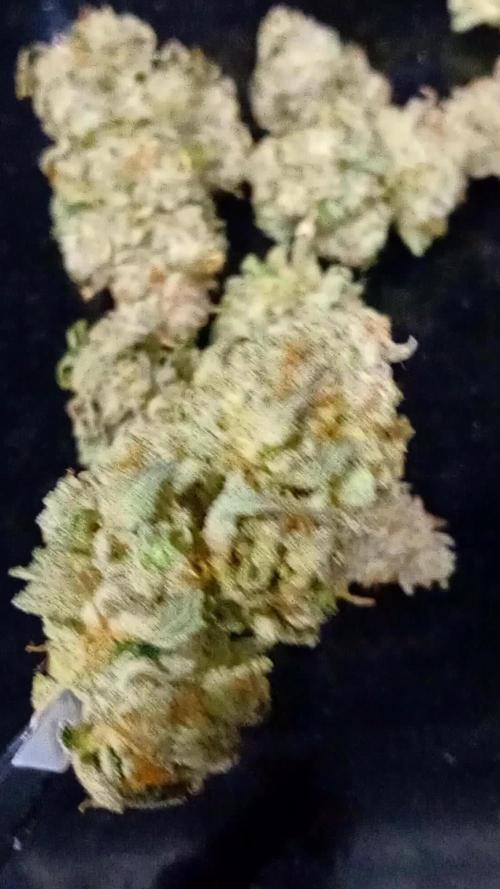
Finally harvest time 😘
Was a very nice to grow this seeds.Was happy with her from day 1 she keep growing every day and even done one time topping on this autoflower.
Now after harvest buds are really nice so 100 % Happy from grow to bloom.Now time to dry and taste 😃

Likes
26
Share


@Wicked_Stix
Follow
We back with some buckets! Time to fire up the pumps and get this show on the road. Soaked this beautiful little gem of a bean in some water until it cracked then threw it into the bucket with 100% perlite. Started them on a low dose of maxigro on day 3. Doing these diy Dutch Bucket style as always. Going to be running 8 in house genetics strains on the system with constant 24 hour a day irrigation. Not much exciting going on yet, but with a little luck that may change pretty soon.

Likes
11
Share


@ChameleonsCannabis
Follow
Mephisto freebie cross is not always labeled in pictures but the alaska should be hope you can tell the difference like me! So I got rid of the tents and got another light video should show it maybe a picture

Likes
8
Share


@IQuSX
Follow
Hi, topman.
6 week of 8 bloom it’s all.
It’s week was so nice!
Buds are feeling add fat. Change nutrients :
Big Bud on Over drive.
Add:
Top buster;
UV Balance;
Add device:
2x36w UV booster 380 nm of light 💡
Check next week and you could see pre-harvest time!



Likes
9
Share


@Vega0284
Follow
Chopped them today, great coloring so far, really excited to see how they turn out by the end. There weren't any issues this week as it was just a flush and a few days of darkness. I've got to get better at lollipoping and maintaining the skirt in the future. Definitely a lot of wasted energy and nutrients going into flowers that never budded out.

Likes
16
Share


@EaRtH
Follow
23.2. - Watered 💧
25.2. - Watered 💧
26.2. - Yesterday I've dropped the light lower and it's already doing it's work. Plants got noticeably back to bud development. Gelato plant is just an experiment at this point as that pheno went completely mad 😁
27.2. - Watered 💧
28.2. - I've cut down the Gelato plant. Unfortunately, it would not yield any decent buds. Rest in peace Gelato
29.2. - Week wrap-up: I'm left with 4 plants. 2 creamatics got their last feeding today, only water for one more week. Two fritters will be feeded at least one more week and then I will reconsider. However, it was fine week as buds got more big and dense 😎 Watered 💧
23.2. - 29.2.2024

Likes
10
Share


@GrowPassionItalyChris
Follow
Non riesco più ad aggiornare il diario come sempre comunque è stata una settimana bellissima! Ogni varietà sta completando le fioritura in maniera abbondante. Infiorescenze dure e molto resinose si formano in ogni parte delle piante. Sembrano tutte XXL di dimensioni! Molto profumate ogni varietà ha il suo raffinato aroma, non manca molto alla fase finale della fioritura. Sono felice di ogni varietà, complimenti a chi le ha create! Un abbraccio a tutti


Likes
55
Share


@Ultraviolet
Follow
High UV-B radiation can necessitate increased magnesium because it plays a crucial role in mitigating the stress and damage caused by UV-B exposure. High UV-B can lead to the production of harmful reactive oxygen species, and magnesium helps the plant's antioxidant systems and chlorophyll function to cope with this stress, making adequate magnesium supply essential for plant health under such conditions.
Why UV? To do with the way anthocyanin is different from other pigmentations in that its colouration is not attached to the cell itself, it's a pH thing, if you force the color through high dose, as soon as she stops being in that environment, it will begin to revert back to chlorophyll, nitrogen deficiency causes anthocyanin to be produced in the first place, and nitrogen is needed to create new chlorophyll. When plants have a nitrogen deficiency, they produce anthocyanins to protect the leaves from stress while they try to salvage remaining nutrients, like nitrogen, before leaf drop. 24:1 C:N carbon&nitrogen ratio in medium will trigger autophagy, which will begin the dumping of nitrogen into the soil to feed micros as they FEED on nitrogen to convert carbon sugars into chemical energy via cellular root respiration (calcium/phosphorous VITAL for sugar processing). Couple the UV with a nitrogen dump for all the colors of the rainbow, and remove the possibility of allowing the conversion back to chlorophyll. 10/14 mimics late autumn, winter is coming, maximizing genetic expressions of desired purple genes if they do exist, I have seen no indications that I'd expect from previous grows. Oxygen is the oxidizer; if a soil cannot breathe, nothing good will EVER happen.
Raised UV to lower the dosage.
The leaves begin producing a protein hormone called florigen (produced via the Flowering Locus T gene). DELLA proteins.
The plant measures the duration of the night by monitoring the amount of Pfr that has reverted to Pr.
I imagine it like an egg timer with sand. You can speed up the flow of sand one way or another, determined by what type of red light and the ratio overall.
The standard flowering cycle for many indoor plants is 12 hours of light and 12 hours of darkness. By applying a short pulse of far-red light at the very beginning of the dark cycle, a grower can trick the plant's internal clock. Forcing the conversion: A pulse of far-red light (730 nm) rapidly converts the active (P_{fr}) back into the inactive (P_{r}) form, simulating several hours of dark reversion. This amplified "sleep" signal causes the plant to believe the night started hours earlier than it actually did. For a short-day plant, this rapid reset means it can perceive a 14-hour night even though it only received 10 hours of darkness. This allows growers to use a 14/10 light cycle (14 hours of light, 10 hours of dark) without disrupting the flowering of short-day plants, as the far-red pulse makes the night effectively "long enough". This provides plants with more light for photosynthesis and can speed up the flowering process.
What about all night? Or a pulse (15-30min)?
High Pfr (Far-Red) overnight mimics a short night:If you maintain a high Pfr:Pr ratio overnight, the plant never receives the signal that a sufficient dark period has occurred. This mimics the conditions of a short night, during which Pfr levels remain high. Flowering is inhibited: As a result, the plant will not flower. This is the same effect that is observed when a flash of red light interrupts a long night, which instantly converts any Pr back to Pfr and resets the dark-reversion clock. But it's not that simple, I do not necessarily want a 14/10 for the entirety of the flower. Suppose you give a 12/12 with the pr/pfr conversion to make her more of a 10/14. It may not be the best option for the entirety of flower.
A photoperiod cannabis plant will develop differently under a 14/10 light cycle compared to a 10/14 cycle during the flowering phase. The differing lengths of light and darkness trigger different hormonal responses, influencing the plant's growth, final yield, potency, and maturation time. A faster maturation time in flowering cannabis offers quicker harvests and lower potential risk, but can result in diminished potency, lower yields, and a less complex flavor and aroma profile comparatively. The trade-offs depend on the grower's priorities and the specific cannabis genetics.
14/10 physical light cycle with pr/pfr conversion for optimal yield to make the plant think it's on a 12/12. After the first 4/5 weeks of flower, when trichomes ramp up, I will change it to 12/12, keeping the pr/pfr conversion. I should switch her to a more 10/14. Although this is stressful, make sure she is not suffering from undue stress from other areas. If enough stress accumulates, there is a chance the increased levels of jasmonic acid will make her pop a few seeds. Be aware, play it by how she is at the time.
If you want to make the 10/14 make sure one also applies a second pulse of far-red light (15-30min) two hours into the dark period. This mimics an even longer night, causing the plant to perceive a very short day of 10 hours and a long night of 14 hours. A pulse of only far-red light during a short-day plant's dark period will not disrupt its sleep. Unlike a pulse of red light, which would actively interrupt the dark period and inhibit flowering, far-red light promotes the biochemical state that signals a long, uninterrupted night.
This simulates the shortening days of late autumn/winter and can stress the plant, triggering a defensive response. Some growers report that this low, controlled stress can increase resin and trichome production as the plant works to protect its flowers. This mimics a natural outdoor harvest cycle where days get progressively shorter and nights longer. Reduce relative humidity during the late flowering stage to around 30%. This is another controlled stressor that can boost trichome production while reducing the risk of mold.
Unlock the full genetic potential and allow for maximal expression of desired genes during critical times.
Autoflowers contain genetics from the Cannabis ruderalis subspecies, which evolved to flower automatically based on a predetermined internal clock, or age that flowers based on age rather than light triggers, red and far-red light do not play a role in initiating the flowering stage. However, they significantly affect other aspects of the plant's growth and morphology. The premise that autoflowers do not use phytochrome red (Pr) to phytochrome far-red (Pfr) conversion for any function is incorrect. Like other plants, autoflowers utilize the phytochrome system to sense their light environment and manage processes like germination, shade avoidance, and vegetative growth, even if the phytochrome system isn't what signals them to flower.
Thank you 🙏
Almost time. Sound the horn! Maintaining 12-1600ppm by the morning's compensation point alone. She is consistently experiencing noticeable growth every day. Sulfur is in prior to flower, medium loaded with abundance, CEC charged, as the plant grows, so does its respiratory footprint. The exhaust fan starts to flare up at night far more often. The pH is unlocking hydrogen, allowing the plant to cycle CEC for its needs, which is optimal for soil microorganisms. It is charged with controlled doses of sucrose at optimal uptake temperatures. Full negative pressure diffusion setup linked to RH for nights, with negative pressure linked to daytime heat extraction. Just need to throw in the second net, switch spectral ratio and enjoy the show.
The struggle of the butterfly to escape through its caterpillar sac strengthens its wings; without this struggle, it would not be able to fly.
Likes
7
Share


@Mr_nugs_lover_David
Follow
Really happy with the performance of my 2 Haze berry plants by Royal Queen Seeds, both phenos have the exact same fragrance I love in this strain, very fruity and sweet smell it makes you forget about everything, you feel like you're in the Caribbean just enjoying a nice fruit salad, I cannot wait to see how this ladies will get on the 4th week of flower! Stay with me to see how this 2 girls keep developing their beautiful flowers! 💚❤️💛
Likes
6
Share


@Blumentopf
Follow
Nun ist es offiziell. Meine Pflanzen blühen. Obwohl beide so unterschiedlich sind, die ist 50 und die andere 40cm groß, haben beide gleichzeitig angefangen zu blühen.
Beim nächsten mal gießen kommt dann der erste Dünger dazu. Plagron alga bloom. Ich nehme wie manche Leute empfehlen nur die Hälfte, da es sich um automatics handelt.
Am Samstag habe ich nun das erste Mal gedüngt. 5ml auf 1l Wasser Pragron alga bloom.
Sonntag habe ich mein Pflanzen gemessen. 70 und 48cm. Meisterlich
Ich werde eine Woche nicht bei meinen Pflanzen sein können. Sie werden von Dritten gepflegt werden. Also Wasser und Dünger geben. Denke zweimal Wasser wird reichen. Dann nächste Woche wieder mehr.
Likes
40
Share

@SwabianMadness
Follow
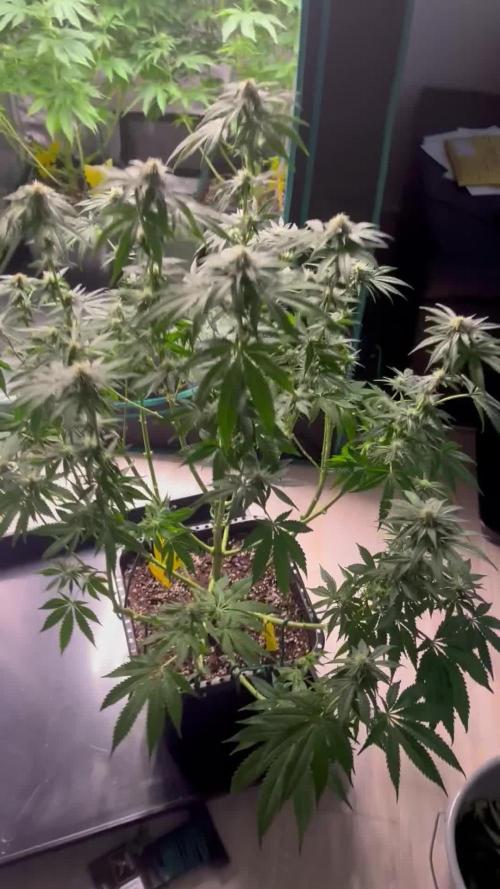
Hey Dudes. Back again with the third Week 👐🏼💚
Make an big Defoliation for all at Day 19. 1 1/2 Hour for each 😜😁
Two got an little Mg Deficiency. I give them Epson Salt one Day 0,6g Per 3 Liter and the next Day 1g per 4,5l Water. And every Watering 0.8ml Calmag
Let them alone three Days. And are thirsty then. The left in the back get more yellow Leaves. But nothing bad. Give all 10ml PK5/8 in 1l and try out the Sunrise Mode on my LED


Likes
11
Share


@johdlong
Follow
Hoping to see lots of bud densing this coming week. The smell of the terps this morning was crazy. A bit over 3 more weeks, I can't wait.
Day 44 update: Leaf yellowing has definitely been slowed, and senescence of lower yellowed leaves has also seemed to stop. Some leaves that continue to be of concern are particularly those accumulating anthocyanins, likely due to my low night time temps. I think they are doing very well, with some very minor problems. This cycle is in the winter for me, so the humidity and temps has been low, but I am happy to not have had to deal with pests or mold like in previous cycles.
Day 45 update: broke out the loop today to inspect the trichs, still looking very immature, as expected given there is still a few weeks left until the planned harvest date. Today I watered in a 1/4dose of Buildabloom, some quillaja, pineapple fpj, and some rootwise enzyme elixer.