


Likes
Comments
Share


@Chris_Calyx
Follow
So this was quite the productive week..!
They grew enough after the topping for em to bend over. First step to ScrOG has been done and I'm quite happy with the results 💚
Next step is the screen of course!
Then let them full it and switch em
Just a reminder.. I'm growin 4 plants in a 120*120 so a little patience would be required if you, like myself, would like to fill that space up ❤️💛💚
One day I'll fill it with just one plant 😆😆

Likes
16
Share


@TEAM_Piff_Paff
Follow
She is putting all her effort in growing two long and three little branches.
I turned her a bit more towards the sun and out of the shade of her neighbour plant.
As the weather is great, she needs more water now.

Likes
127
Share


@nonick123
Follow
Día 90 (15/04) Purple Lemonade FF empieza a teñir de morado las puntas de sus hojas, a la vez que tiene una senescencia preciosa donde sus hojas se tiñen de amarillo limón...
Día 91 (16/04) Riego 0,5 Litro H20 sin nutrientes. TDS 225 PPMs - pH 6,6
Día 92 (17/04) Estas plantas están muy sedientas en la fase final!
Riego 1 Litro H20 sin nutrientes. TDS 225 PPMs - pH 6,6
Día 93 (18/04) El olor empieza a es tan intenso que sale a través del armario a pesar de tener un potente filtro de carbono 😍😍😍
Día 94 (19/04) Mañana la cosecha! Último riego con 0,5 Litro H20 sin nutrientes. TDS 225 PPMs - pH 6,6
Día 95 (20/04) Fiesta de la cosecha! 💪 🚀 🎉 😍💥💨😁
💦Nutrients by Gen1:11 - www.genoneeleven.com
🌱Substrate PRO-MIX HP BACILLUS + MYCORRHIZAE - www.pthorticulture.com/en/products/pro-mix-hp-biostimulant-plus-mycorrhizae
-----------------------------------------------
Cosecha
Reporte de Peso húmedo & Peso Seco de Purple Lemonade FF by FastBuds
⚖️ Total peso húmedo 353 g
⚖️ Total peso seco TBD
💦Pérdida de H2O durante el proceso de secado TBD
🎨Colores
Los colores han sido preciosos, verde brillante durante toda su vida y al final ha empezado a teñir de morado las puntas de sus hojas, a la vez que tiene una senescencia preciosa donde sus hojas se tiñen de amarillo limón… 😍
👃Olores
💐Floración Fuerte aroma a limón (en momentos a “friega suelos” de limón), tierra, skunk…
🏜️ Secado TBD
🍗 Curado TBD
🍽️Sabor
A definir cuando esté bien curada en el reporte de humo
Variedad
💪Resistencia
Una planta resistente que ha soportado el peso final de los cogollos. Solo una de sus ramas que tenía un cogollo muy gordo ha necesitado soporte con cañas de bambú o similar
🏋️♂️Entrenamiento:
Se ha adaptado bien al LST realizado.
🌱Vegetativo:
Un vegetativo muy parejo, como si hubiese tenido Topping, pero no!
💐 Floración:
Un paso a floración rápido (5 días desde 12/12), un stretch del 300% pero con todas ramas a la misma altura prácticamente! ¡Impresionante!
Genética:
El resumen sería un perfil terpénico impresionante por la mezcla definida antes y unos cogollos muy gordos y densos con colores preciosos y aroma delicioso
👨⚖️Conclusión:
Una cepa muy muy recomendable! ¡A ver cuando se seque y se cure con qué sabores nos sorprende!

Likes
4
Share


@Phatlad187
Follow
Week 10,
first day of flower set both light up now runing a total of 730 wats, for now will turn both light up over time and will add a extra co2 bag temps at 30°c but i keep cheeking leaf temp and that between 24°c and 26°c so hopefull they do good
@growerchoice
@SHOGUN COCO A 4ml/L
160ml
@SHOGUN COCO B 4ml/L.
160ml
@SHOGUN ACTIVE BOOST 2ml/L.
40ml
@SHOGUN CAL MAG 1ml/L
20ml
@SHOGUN ZENZYM 2.5ml/L.
100ml

Likes
332
Share


@OrganicNature420
Follow
Germination date 🌰 10/03/2021
Day 99 🌱 22/06/2021
Strain 🍁
Purple Matcha, Humboldt seed bank
Nutrients 💉
Advanced nutrients
PH perfect sensi grow A+B (veg)
PH perfect sensi bloom A+B (flower)
B-52 (through veg until week2 of flower)
Voodoo juice (🖕🏻)
Tarantula (🖕🏻)
Piranha (🖕🏻)
Sensizym (all the way through)
Rhino skin (🖕🏻) add first leave for an hour
Big bud coco (week2+ of flower
Bud xfactor (🖕🏻)
Nirvana (🖕🏻)
Bud igniter (first 2weeks of flower)
Overdrive (last 2weeks of flower)
Flawless finish (flush week)
RockHoldings Rockresinator(week2+ of flower)
Vitalink calmag
Set Up
⛺ amazon special 1.2m x1.2m
💡 spiderfarmer sf4000
📤📥 AC infinity 6inch
💧 10lt dehumidifier
Notes🗒️✏️
We are done 🌱👍🏻 dripping in ❄️❄️❄️❄️❄️
Another beauty of a grow finished, I just hope I can get the cure right with no a/c. Humboldt have seriously smashed this strain. Great for beginners as it will take everything you give it. Stand by for the havest results and thanks for following everyone means alot ❤️🍁
Massive thanks to PharmaZ for sorting us out and helping us along, top bloke go follow 👍🏻
Stay turned and happy growing fam ❤️🍁🌱👍🏻

Likes
115
Share


@DogDoctorOfficial
Follow
Harvesting the Bounty of Cherry Cola Auto
Dear fellow cultivators, we've reached the triumphant culmination of Cherry Cola's journey as we delve into Week 13 – Harvest Time! Join me in celebrating the fruition of our labor and the bountiful rewards awaiting us as we harvest the radiant buds of Cherry Cola Auto.
As the sun sets on Week 13, the air is filled with anticipation and excitement. Harvest season has dawned upon us, marking the culmination of Cherry Cola's remarkable journey from seed to harvest-ready beauty.
In the heart of the garden, Cherry Cola stands tall, her branches heavy with the weight of abundant buds. Each bud is a testament to her resilience, her vigor, and the care and dedication invested in her growth.
With meticulous care and precision, the time has come to harvest Cherry Cola's radiant buds. Each cut is made with reverence, ensuring that only the finest, most pristine flowers make their way into our stash.
As the buds are trimmed and cured, an aromatic symphony is unleashed, filling the air with the tantalizing scent of Cherry Cola's terpene-rich profile. It's a sensory experience like no other, a celebration of nature's bounty.
As we gather the fruits of our labor, let us take a moment to reflect on the journey that has brought us here. It's been a labor of love, a testament to patience, perseverance, and the boundless wonders of nature.
In conclusion, let us raise a toast to Cherry Cola Auto – a true champion of the garden, a symbol of resilience, and a source of boundless joy. May her harvest be plentiful, her flavors unforgettable, and her legacy enduring. Until next time, happy harvesting, fellow enthusiasts! #CherryColaHarvest #BountifulBuds #GrowersPride
Nutrition: @aptusholland @aptus_world @aptus_
Love, Care, and Attention: @dogdoctorofficial
As always, thank you all for joining me on this journey, for your love, and for it all. My horticultural odyssey would never be the same without you. Your love and support are cherished, and I feel both honored and blessed to have you in my life
Friendly reminder all you see here is pure research and for educational purposes only
Growers Love To you All 💚 💚 💚
Likes
100
Share


@AsNoriu
Follow
Day 111. First is ready, second week behind, third maybe even 3 weeks behind ....
Plus they are LEAFY ,!!!!
Trim jail ...
Wet trim for all of them - no doubts !!!
Day 115. Still hanging, slowly drying and result should be decent at the end ... A week more I guess, very humid in UK ...
Day 118. First trimmed - 175 g. Other is chopped ! One still grows ...
Day 136. Chop day for the last one !!! Long run ....
Happy Growing !!!


Likes
29
Share


@Ganja_Victoria_Aus
Follow
Keeping my lady happy is a full-time job full of surprises, sometimes heavily exhausting long hours. I'm giving all my love to them. So thankfully, Respect and Love for my family for keeping me able to spend hours daily. 🌅🙏🤙
Unfortunately, grow diaries crash every time I update nutrients and photo 🤷

Likes
13
Share


@Valmont505
Follow
This is the week. I am watching the Tri's and looks like I should see some amber very soon. This will be a low yield but the bud quality will be very HIGH! The Jack's did well on just water and are very sticky.
Harvest is near - Then it's off to Vegas Baby!
Mid Week Check and due to my time frame I am going to harvest tomorrow evening --
I did harvest both tents. I must say the Green Crack is amazing. The buds are brilliant green, super dense & smell intense!
The Jack Skellington's came out very well. The buds are fully developed, super sticky & very strong smell. The trichome's looked ready, mostly cloudy with sprinkles of orange -
I can't wait to get these buds jarred up next week & get a final weigh in. I mostly look forward to some killer home grown bud! Super happy with the density of the buds from both tents.
Grow Bud Yourself - Grow Bud Yourself ! ...

Likes
17
Share


@4chuk
Follow
Oct. 30 - Week 4 begins. I removed some of the lower fan leaves and branches.
Oct. 31 - Photo update.
Nov. 1 - Photo update. I am trying to water more frequently, doing so is much easier with some lower leaves and branches having been removed.
Nov. 3 - Photo update. It's growing pretty well, all things considered.

Likes
57
Share

@DogDoctorOfficial
Follow
This week was just amazing, just perfect in all ways, she grew perfectly and in the end of the week i start noticing some colors meaning this will be a beautifully colorful plant Mama hehehehe
This week i started my P supplement and increase my dosages on the rest, this girl can take more so i will punch her a bit more hehehe
for this week that is it but i will get my hands dirty and clean up her to open space and air flow in the room, also to help them photons get deeper down in the canopy
As always thank you all for stopping by and for supporting me on this journey, i am super passion about growing and fell blessed to have you all with me on this new journey <3 <3 <3
Genetics - RQS MEDUSA F1
Ligth - LUMATEK ZEUS 465 COMPACT PRO
Food - APTUS HOLLAND
All info and full product details can be find in can find @
https://www.royalqueenseeds.com
https://aptus-holland.com/
https://autopot.co.uk/
https://lumatek-lighting.com/
With true love comes happiness <3<3<3 Always believe in your self and always do things expecting nothing and with an open heart , be a giver and the universe will give back to you in ways you could not even imagine so <3<3<3
<3 <3 <3 Growers love to you all <3 <3 <3
Medusa F1
Medusa is a true F1 hybrid created from pure, inbred cannabis lines. She boasts uniform grow traits, mouthwatering aromas and flavours, and plenty of potency. If you're looking to bring stable, elongated plants into your room, tent, or garden, look no further. Mouthwatering Aromas, High Potency, and Mid-Size Plants
Though she won't turn you to stone like the mythical goddess after which she's named, Medusa F1 is bound to get you plenty stoned in her own special way. Combining genetics from inbred lines deriving from Sugar Magnolia, a thick and sweet indica, and American Beauty, a fast, fruity hybrid loved for its well-balanced, positive high, the result is an autoflowering F1 variety that produces fresh flavours, a unique cannabinoid profile, and large yields.
A very aromatic cultivar with a vibrant concentration of terpenes bearing notes of fresh mint alongside an upfront peppery kick, backed up by hints of fresh fruit, berries, and tangy fuel. Her thick, frosty flowers consistently produce high levels of THC and CBG, as well as high concentrations of myrcene, ocimene, farnesene, and caryophyllene. As a result, Medusa F1 has strong effects that relax and stone the body from head to toe (brought on by particularly high concentrations of myrcene and farnesene) while motivating the mind with an uplifting, creative, and motivating kick (thanks to high concentrations of ocimene).
Medusa F1 seeds produce elongated autoflowering plants with long, strong branches and well-spaced internodes. Plants regularly grow up to 80–85cm tall and boast a fast flowering time of just 42–45 days (72 days from germination to harvest). Thanks to her genetics, Medusa F1 produces plenty of thick flowers with big, swollen calyxes that make for very easy trimming. Medusa F1 is very stable, handling stress and unfavourable growing conditions with ease, though she is somewhat susceptible to Botrytis, so make sure to keep tabs on the humidity in your grow room/garden
Likes
16
Share


@Boomdrawfyah
Follow
Dia 108 en el proyecto A la semana 15 ha sido pasada por agua y tormentas, han aguantado como unas campeonas, aunque he visto dos orugas y eso me preocupa, cuando paró de llover la rocie con xentari un producto agricola que lleva bacilus, esperemos que no vaya a más, y se terminen estos dias de lluvia para poder terminar bien el cultivo
Likes
7
Share


@maxpain
Follow
Week was good did a light defoliation...buds coming in nice now she smells nice too
Likes
3
Share

@AestheticGenetix
Follow
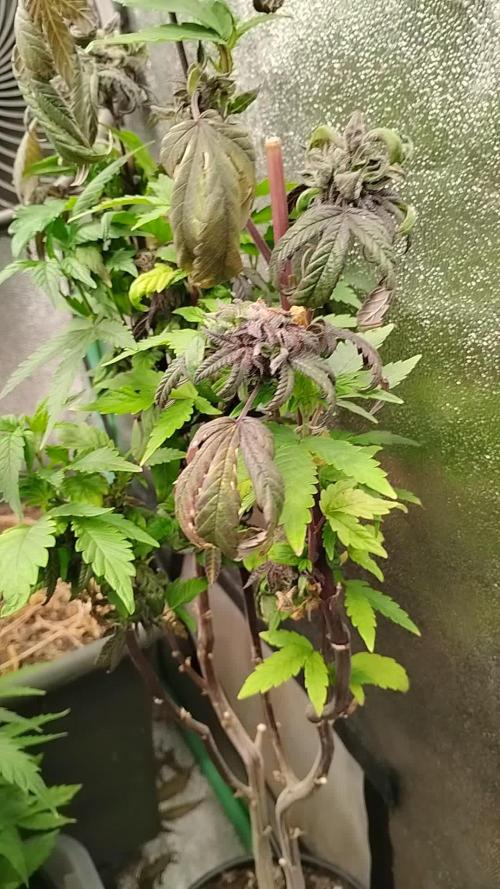
So she is finally starting to show some true leaves. I'm questioning what to do with her this round.
Most of the other plants in the tent right now, have a plan to be pollinated or be the pollinator. I have the ability to reverse a plant with sts spray as well.
But I'm not sure what I should cross with or to the purple chrome, or if I should at all.
Any suggestions?
Check out my YouTube for long form content that I can't post here
https://youtube.com/@aestheticgenetix?si=pSk5e-kvp-nVYccc
Likes
158
Share


@love_2_grow
Follow
D64.
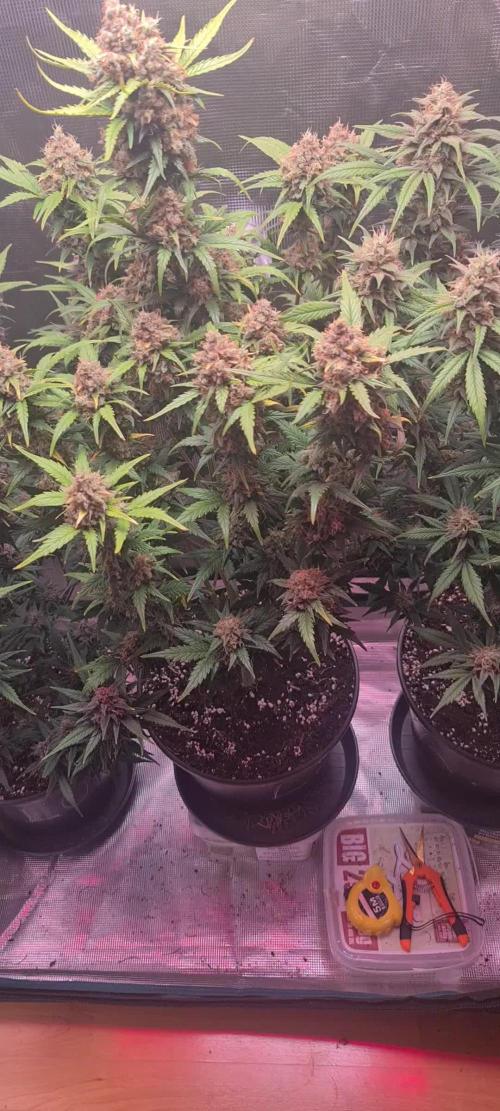
We're at the start of the fifth week of flower, and today, the Purplematic moved out, and now the Gorilla girl is all alone in the tent.
I also switched out her light from the big Kingbrite to the much smaller Viparspectra P600. I need the bigger light in my other tent, and even though the Viparspectra is a low-power light, I believe it should be enough, considering how small the Gorilla girl is. I could have put in one of the Greenception lights from my other tent, but it honestly was too much of a bother.
------------------------------
D66.
Yesterday, I gave her 2.5 liters of water @ pH 6.5 with humic acid and calmag.
Today, the green lacewing larvae (Chrysoperla Carnea) for combatting the thrips in my photo tent arrived, and I also dispersed a few of them in this tent. I haven't seen any thrips damage on the Gorilla girl, but I figured it wouldn't hurt to be proactive.
I also did minor defoliation to increase light penetration and air circulation.
------------------------------
D68.
Not much to report besides that this is one STINKY girl. She stinks up the entire lungroom, and I have ordered a new carbon filter.
Her senescence is slowly increasing, and I suspect she will be done soon-ish, although I haven't even looked at her trichomes yet.
------------------------------
D70.
We're at the end of the fifth week of flower, and chop day is getting close.
Her senescence is progressing nicely, and today, I checked her trichomes for the first time and already found quite a few amber ones.
She is coming down in a few days, but it won't be a large harvest due to her stunting. However, she smells fantastic, so I'm counting on a great smoke.
I went to WAR today against the spider mites we have in our ornamental plants in the apartment. I sprayed all plants with my homemade pesticide (capsaicin, alcohol, horticultural soap.) since I had it at hand. If that fails to knock the spider mites back, I'll bring out the neem oil instead.
The infestations aren't bad (yet), but it would suck to get mites into my tents, so better to be proactive.
------------------------------

Processing
Likes
12
Share


@blazeblaze
Follow
Soil medium : Coco perlite
I'm running these under 4 6500k 20w LED bulbs and 3 14w 3000k led bulb.
Plant did well the first week.
No nutrients were given.
Stay tuned. stoned*

Processing
Likes
81
Share


@LockDownGrow
Follow
ok so everything has gone fantastic , no nutrient burns at all , and have been slowly creeping up the base nutrients , i have stopped the cal mag and now adding house and gardens bud XL at full strength these girls are now in full swing of flower the Cal mag has made absolutely no difference too the yellow colour of this blackberry so I suspect it is just how this strain is as meany diary's on here of the same strain are also on the yellow side , but it's certainly not affecting the speed of the growth of her , i also bought a new ph stick this week ,
i have found when PHing the feed bucket that its best too have air stones in the bucket , add all nuts and then ph but do not use the feed that day as if you check the next day the ph is off again so i left it 24 hours after i add more ph down , and it seems too make the measurements alot easier and stable , i have bent down the main stems " without damaging them onto my netting too A keep the canopy all the same high so my lighting is covering all plants at the same distance and also it allowed the side stems too reach up too ,
i also was sponsored another new led light by kingbo this week so have added another 600watt led too the grow , so now have two 600's and one 900watt , and temps are still fine sitting at 24c lights on and 19-20 off , so am pleased with that ,
I accidentally bend the main stem last week while I was putting them under the netting too try and control the stretch , luckily it did not crack or snap the branch at all and she didn't droop on that branch at all and has healed already , it may or may not be related but as soon as it happened the side branches thickened up too the thickness of the main stem , this plant has over taken the rest in size even being a full week too 15 days younger , it's certainly not ideal but it really does not appear too have slowed down the growth and may well go in my favour , this lady really did stretch out from week 4 into 5 and is showing no sign of slowing down , her side branches are very thick almost as thick as the main stem , her leaf production was minimal and I have only had too remove very few too expose the bud sites , the yellowing seems too be recovering now and most of the plant is green now ,
Update ,
Now gone a lush green colour instead of that horrible yellow , and the buds have already started too purple , she has also stepped up a gear with her nutrient intake almost drinking 6 pints since Thursday ,
She seems too have slowed down on the stretch and has so meany bud site scattered all over her with as the diary name suggests black roses everywhere , and note too any seed banks reading this if there is not a purple stain out there already called black rose now is your chance lol and Iwant a sample pack first kinda like the tester :)
Now defoliation , as you can see they really didn't seem too mind at all being stripped and within a couple of days they had all replenished the lost leaves and even this week olive had to pull the odd few off as they have grown out ,
Method , well all info now is simple ,
Anything I cannot tuck under something that is blocking a bid site with shade I remove too middle or bottom ,
Everything else stays , I just stand above the plant and pull off anything covering the sites , it's really as simple as that , I see some strip them until there is nothing left on but a few sugar leaves , but for me didn't like the look of the plants , for me the growing process is just as much fun as the fruits ,