


Likes
Comments
Share


Processing
Likes
113
Share


@Skunky
Follow
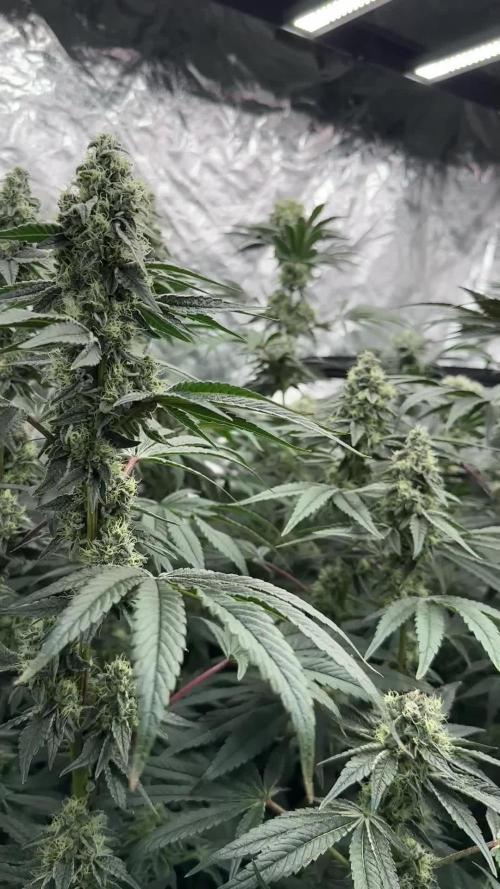
Well, today was the last day veging. I defoliated the lower 20%, switched on the red LEDs and set the timer to 12h. I activated the 2nd fan inside the box and also switched on the mini fan connected to the cooled hood. I'll leave it open until the stretch or the smell begins. As soon as there's any smell, I'll close the system by adding the glass shield. Also, I'll save the resulting temperature drop for the later weeks so... let's see...
Nutrients added: about nothing. I read somewhere you should flush the plants before the switch so I just feed a normal quantity of water with only a bit of nutrients. It's around a 1/20th of the recommended dose maybe.
Let the adventure begin!

Likes
9
Share

@Willy_Balls
Follow
All good. They swell like crazy. Currently on vegetative steering. 9 x 200 ml shots a day. Back to generative on day 49.


Likes
51
Share


@MadeInGermany
Follow
Info:
Unfortunately, I had to find out that my account is used for fake pages in social media.
I am only active here on growdiaries.
I am not on facebook instagram twitter etc All accounts except this one are fake.
Flowering day 8
since time change
to 12/12 h.
Hey guys :-)
The lady is developing great :-).
A few days ago she started stretching and will develop the first calyxes over the next few days :-).
It was poured 3 times this week (sewing materials see table above).
Next week I'll be removing the bottom shoots so the energy isn't wasted down on the popcorn buds.
Bio Grow will also be discontinued next week and only Bio Bloom Liquid will be given 👍.
Otherwise everything was cleaned and checked for health :-).
Stay healthy 🙏🏻
You can buy this Nutrients at :
https://greenbuzzliquids.com/en/shop/
With the discount code: Made_in_Germany you get a discount of 15% on all products from an order value of 100 euros.
You can buy this Strain at :
https://www.exoticseed.eu/
Type:
Herz Og
☝️🏼
Genetics:
Larry OG X Kosher Kush
Indica 60 % / Sativa 40 %
👍
Vega lamp:
2 x Todogrow Led
Quantum Board 100 W
💡
Bloom Lamp :
2 x Todogrow Led
Cxb 3590 COB 3500 K 205W
💡💡☝️🏼
Soil :
Canna Coco Professional +
☝️🏼
Nutrients :
Green Buzz Liquids :
Organic Grow Liquid
Organic Bloom Liquid
Organic more PK
More Roots
Fast Buds
Humic Acid Plus
Growzyme Big Fruits
Clean Fruits
Cal / Mag
Organic Ph - Pulver
☝️🏼🌱
Water: Osmosis water mixed with normal water (24 hours stale that the chlorine evaporates) to 0.2 EC. Add Cal / Mag to 0.4 Ec Ph with Organic Ph - to 5.8

Likes
12
Share


@zehfred
Follow
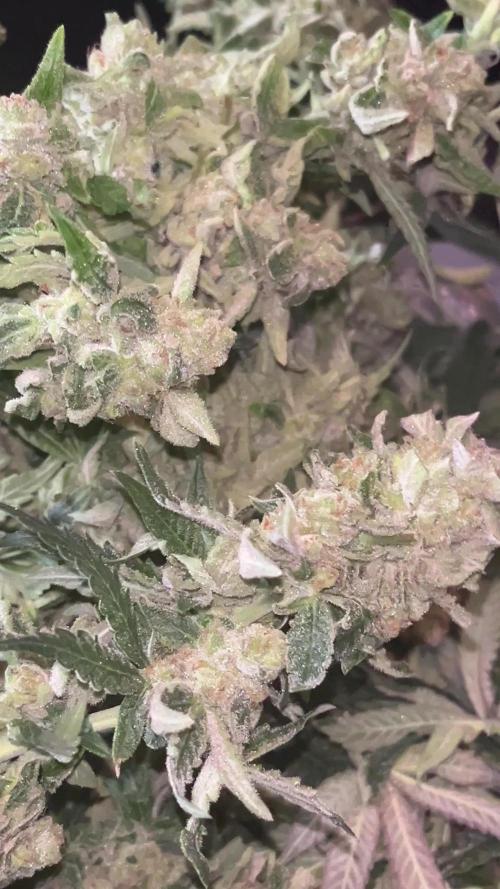
another week and one of the plants became huge lol... I'm going to flush the most mature one to harvest in two weeks



Likes
33
Share


@DWCbuds
Follow
After 3 failed germinations from growerschoiceseed.com I decided to order from ILGM.com. 2nd time around decided to germinate just 1 seed and it worked out well. Started soaking seed in ph adjusted water 6.5 for 48 hours. Seed showed small cracking so I placed the seed in damp paper towel. Let that sit for another 48 hours then placed in rock wool that I had soaking in ph 6 water for 24 hours. Placed Rockwell in DWC and turned both lights on at 12". She sprouted after 2 days. No nutrient yet.


Likes
6
Share


@pzwags420
Follow
On week 7 she is still putting out a lot of new pistils. Colas are fattening up but still have a few more weeks to go. The smell is sweet and fruity so far but its still early as trichs are still developing. Her top colas got a little too close to the lights and may be fox tailing or shes just more sativa of a pheno either way shes making some long colas and Im happy about that :)


Likes
49
Share


@masterofsmeagol
Follow
7/4 SUN was poking out a little bit. Plants loved that little feeding and seen to he noticeable larger this morning. I'm considering starting the nutes. At least the organic ones as well as upping the water intake I've been scared to water with all this rain and my experience last time. I plan on applying BT this afternoon and doing some work on the bottoms of the plants. I also saw a chipmunk in my cage so I have some spots in my fence that need to be patched. I know I can't compare this year to orher years as these are seeds and all the other years were clones. I CAN say for certain that my plants are healthiest they've been out of any of my journals. Previous plants were much larger but I was fighting numerous fungal, pathogens and pests at the sane time. Ear wigs would've lollipopped most buddies by now but I've seen no sign of them. I'm going to apply more poison where they were and add some rat traps inside the cage for the chipmunks. Once I fix the cage I think I'll be good.
UPDATE: Went back over and fixed the holes on my cage from high winds. I found an old wire trap or cage and just cut sections and ziptied them to the existing wire and to the structure thus covering any open holes. I'll need to put lathes aroubdvtge outside because if a rodent REALLY wanted in they could get in. My belt had been wearing thin but I use shit until it breaks (yesterday the heal came off my shoe lol) so I was working hard sweating my nuts off and my belt gives out totally. At least ive got the major stuff done. I took a few videos too. I'm imagining it was this little bit of sun that gave these plants that boost of growth but I'm wondering if the added nutes had anything to do with it. Bags weren't light and I could feel moisture in the soil so I didn't water. I'll check again tomorrow morning. Since I didn't see many plants or even leaves for that matter with damage I decided to hold off ob the BT and the plant doctor. Only time will tell if that was the right decision.
7/5 Plants look fantastic. I see a few more holes in leaves sporadically amd I'm hoping it's pillars. I've seen lots of lightning bugs on my camera though and grasshoppers are abundant. Not one growth shoot has been chewed (knock on wood) which is what the earwigs had always done. I watched a video from last year and by nowcthey had lollipopped all lower leaves. It may not be the best weather growing season wise but despite the rh consistently in the 90's I still don't have pm or fungal pathogens. Need to get the BT out. Didn't water as we've had all that rain. I'll water either tonight or tomorrow morning. Sunny high in the 90s low is 66. Tomorrow looks good too.
UPDATE WENT BACK OVER AROUND FIVE. IT WAS 88 DEGREES SO I WANTED TO CHECK THE GROW BAGS. THE POTS ARE FINE. IT WAS HUMID AS HELL. ONE PLANT WAS SLIGHTLY DROOPY BUT VERY LIGHT AND DRY. I FOUND TWO OTHERS THAT SEEMED LIGHTER THAN THE REST BUT HADNT DROOPED. I MIXED TWO GALLONS OF WATER WITH 1TSP KANGOROOTS AMD PHED IT CLOSE TO 6. I FED THE 3 PLANTS THAT WERE SUPER DRY LIKE A HALF GALLON AND SPRED THE REST OVER THE OTHER EIGHT PLANTS. THEY WERENT DROOPING BUT THEY WERE VERY DRY. I PLAN ON A FULL WATER TOMORROW. I WOULDVE DONE IT TODAY IF THE TEMPS WERENT SO HIGH. ITS RAINED A MONTH STRAIGHT SO I HAVENT HAD TO WATER. I MADE A COUPLE VIDEOS BUT I'LL HAVE TO UPLOAD TOMORROW.
7/6 Another super hot day. I hefted the pots and they still had some weight but I could tell they were dry. This rain has messed up my watering schedule. Well it made it so I didn't NEED to water. These are big plants now. I need to get a schedule to stick too. They're going to probably need a gallon a piece at least. I'm still nervous watering. Right now I'm just reading the plants. I added .5tsp kelp me/you to 1 gallon of water to help with heat stress. I fed an additional two gallons to the garden this morning including the two container plants in the back. They were dry on top too but I know they have water deeper down. Next watering I'll be more consistent and try to give them there 10%. It's great having the bags elevated. I can finally see when I start getting run off. I could even measure the ph of it instead of relying on that meter. Ill check the ph when I go back over. Still a few 🐛 holes but they are few and far between. I really don't want to spray for such a small problem but if I cant find them at night that's what I'll do.
UPDATE: Another 90 degree day. I went back over and gave the garden a gallon of water as they were dry and it didn't rain. Tried to use a soil ph meter to check ph. First couple were 6.4, 6.5 then I got 7.3 and I accidently dropped it. Then I got somethings that were high eights and even one 9! Obviously the Meter shit the bed. I'll lower the ph of the water slightly when I fully water tomorrow and I'm going to measure the runoff.
7/8 I must've messed up the journal again as the dates are off. GAVE PLANTS A FULL WATERING. Each girl got a gallon. I couldn't upload my videos this morning as I had to break up a fight. 3 on 1. Didn't give me a chance to put the videos up. I'll take some stills then I can upload them. I took stills and they all uploaded but didn't fucking save. I'm nit going to keep trying to upload if it's not going to. Noticed a few more holes in leaves and one skeletinized leaf so I need to either spray the bt or something more versatile. I'm putting more poison around the cage and de between the bags. I'll go check things out tonight. Sick of writing a book and uploading to just hace them disappear
7/9 Did a quick video today. Noticed the bags were fairly light despite the plants being soaked amd the pallets wet. I was pressed for time. I gave two gallons to the entire garden. I hope that will hold them over until tomorrow. I'll need to up how much water I give them. Going with a gallon and a half next time. I see more pillar spots and a moth took off when I shook the plants this morning. So I'm gonna have too apply the BT. I figure if I go over before dark tonight I might be able to see aju nocturnal insects around. Luckily my dad feeds the birds and they are always there. I think they help with pests.
UPDATE IT WAS A LITTLE COOLER TODAY BUT MICH MORE HUMID. I WENT AROUND SIX TO MAKE SURE THE GIRLS WERE OK WITH WATER AND TO GIVE THEM A TREATMENT OF BT. I WENT THROUGH THE GARDEN ANDCGOUND THREE LEQVES TO DEFOLIATE AND LITERALLY A COUPLE LEAVES ON TWO PLANTS WITH PILLAR HILESM WHEN I ARRIVED TWO BIRDS FLEW OUT. A HORNET CAME IN WHILE I WAS THERE. THIS DO LESS APPROACH SEEMS TO BE REALLY WORKING. I DODNT SEE NEARLT ENOUGH DAMAGE TO WARRANT SPRAY8NG MY EXTREMELY HEALTHY GIROS WITH ANYTHING. ILL KEEP AN EYE ON THEM AND CLEAN THEM UP A BIT. I DO NEED TO INSTALL THE VERY8CAL TRELLIS FOR SUPPORT. THEYRE PRETTY HEALTHY THOUGH. ONE PLANT IS ABOUT AS WIDE AS IT IS TALL. STILL......PLANTS ARE EXPLODING AND ITS GETTING TIGHT IN THERE. I NEED TO GET THE TRELLIS UP THOUGH.
7/10 I went over and was planning to water. Plants were wet and it's raining. Top of the medium was moist but the bags were light. ONE bag was super light but seeing that we are having showers all day and an additional half inch of rain coming tonight so I didn't water them. Especially since they looked great. Decided to to spray BT yet as the damage is so small and i think the birds have been taking care of the pillars for me. Now I'm wondering if I should've gave that ONE plant a little bit of water but it will be find. Did a video. I'm being careful not to over water. Last year this is when all my buddies were devoured by earwigs. And no senescence like the years before. I think it was hust those earwigs. I haven't lost shot for leaves. Even the stalks are bright green and look amazing.


Likes
48
Share

@MadeInGermany
Follow
Info:
Unfortunately, I had to find out that my account is used for fake pages in social media.
I am only active here on growdiaries.
I am not on facebook instagram twitter etc All accounts except this one are fake.
Have fun with the update.
Flowering day 42
since time change
to 12/12 h.
Hey everyone :-).
This week the buds have grown in size 😀.
They always smell sweeter and better :-).
As always, the water was completely changed after 16 days.
With the Ec I still stay on 1.2 - 1.4.
In the next 7-14 days she will get a bit more Pk 13/14.
Otherwise everything was cleaned and checked.
Have fun with the update.
Stay healthy 🙏🏻
You can buy this Strain at
https://www.amsterdamgenetics.com/product/kosher-tangie-kush/
Type:
Kosher Tangie Kush
☝️🏼
Genetics:
Kosher Kush
X
Tangie
👍
Vega lamp: 2 x Todogrow LED CXB3590 COB 55 W
1 x Sanlight S2W 62 W
💡
Flower lamp : 2 x Todogrow LED CXB3590 COB 55 W
1 x Sanlight S2W 62 W
💡 ☝️
Grow Aero System : Growtool 0.8
☝️
Fertilizer:
Canna Aqua Vega A + B , Canna Aqua Flores A + B , Rizotonic, Cannazym, CANNA Boost, Pk 13/14, Canna Cal / Mag, Canna Ph - Grow, Canna Ph-Bloom
☝️🌱
Water:
Osmosis water mixed with normal water (24 hours stale that the chlorine evaporates) to 0.2 EG. Add Cal / Mag to 0.4 Ec Ph with ph- to 5.2 - 5.8
💦 💧

Likes
19
Share


@BLAZED
Follow
Week 15 Harvest
21-2
Temperature: 29.7 degrees (lights on) 19.9 degrees (lights off)
Humidity: 67% (highest) 44% (lowest)
Watering: None.
22-2
Temperature: 29.9 degrees (lights on) 19.9 degrees (lights off)
Humidity: 65% (highest) 41% (lowest)
Watering: None.
Today is the last day, tomorrow i will harvest her.
I removed all large fanleaves and took some pre-harvest pictures.
23-2
Today is harvest day! I left the buds on the branches and hang them to dry.
Temperature: 18.1°c to 19.9°c
Humidity: 57% to 72%
24-2
Temperature: 17°c to 18.8°c
Humidity: 56% to 64%
25-2
Temperature: 16.8°c to 17.9°c
Humidity: 57% to 69%
26-2
Temperature: 16.2°c to 18.1°c
Humidity: 56% to 61%
27-2
Temperature: 16.2°c to 17.5°c
Humidity: 55% to 61%
28-2
Temperature: 16.3°c to 17.6°c
Humidity: 57% to 64%
29-2
No info.
1-3
Temperature: 17.8°c to 18.7°c
Humidity: 56% to 61%
2-3
No info.
3-3
Temperature: 16.5°c to 20.3°c
Humidity: 46% to 62%
After 8/9 days of drying the buds are dry enough, so lets start trimming!
The buds are pretty airy and foxtaily, but very resinous, she smells good, but i think the buds are a bit overdried.
End results:
Trim: 18.12 Gram.
Popcorn buds: 37,11 Gram.
Normal Buds: 70,98 Gram.
Total buds: 108,09 Grams.
I will post the progress of me making bubble hash in this diary very soon, so if you are interested make sure to keep an eye out!
Likes
2
Share

@Homegrower020
Follow
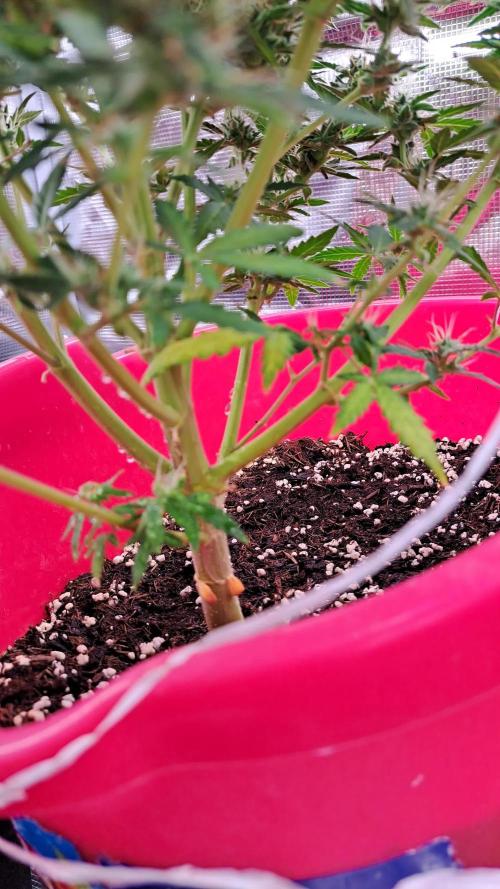
Bleuberry olmost ready to cure . Drying now 10 days and need 2/3 more . Kush on picture also ready . Flushed her few days . Leave her now in dark until saturday . Then bleuberry dry enough? And cut the kush on same day.. drying season has started !




Likes
Comments
Share
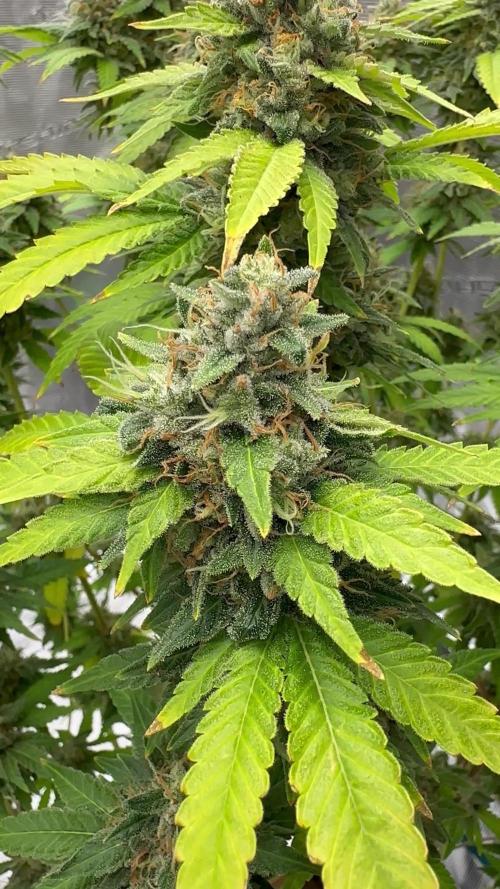

@Budhunter
Follow
Week 8 Flw - Day 62 flw -Day 118 of cycle
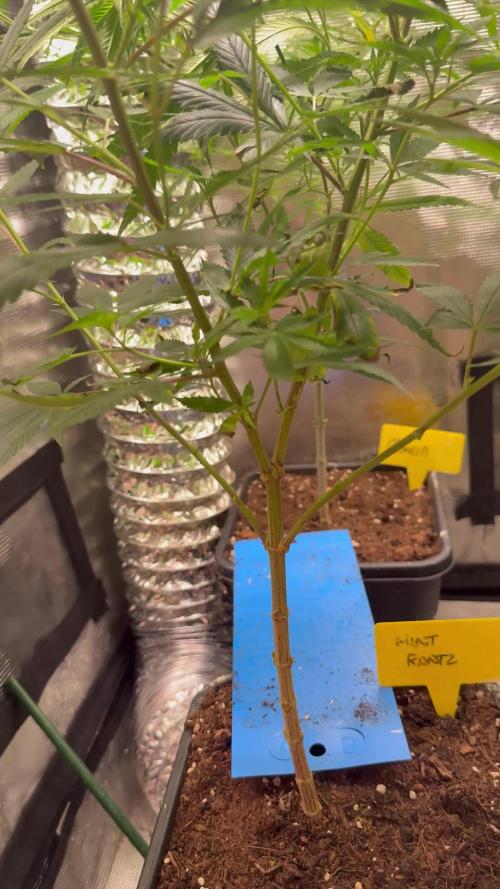
Jealousy is looking fat 😍 it’s the plant that are looking it will be finishing last. I cut off fertlizers and feeding only water. The smell and taste seems a vit diesel and skunk, usually found on purple strains..
I believe it will go for more 2 weeks and I can’t wait to harvest and smoke 💨
Likes
6
Share


@Chubbs
Follow
What up Fam,
Week 1 update on these beautiful little ladies. So far germination was a dream, and now they're starting to get there first set of leafs which is cool to see. I did do my first hand watering the other day and probably fed a little to early as I'm seeing a couple burt tips on the leafs. Or it could have been spraying ipm which I've had to do every 3 days since planting. One of my bags of soil where infested with Fungus knats so been trying to get rid of them without being to evasive. All in all though glad to start the first run in the new room and get it all dialed in. Happy Growing.