


Likes
Comments
Share


@Toocheaptobuyweed
Follow
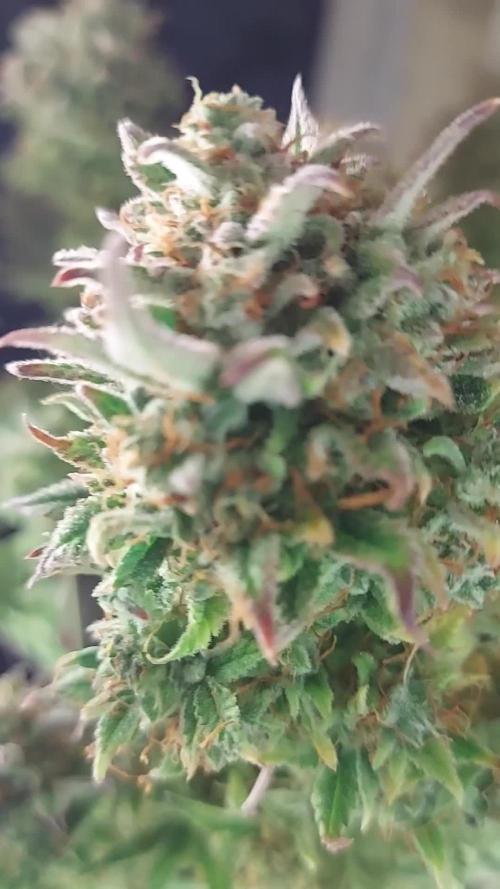
Wow. The buds are filling in. The trichomes are starting to pile onto the buds. There aren't many trichomes on the leaves yet, but the buds are thick. The high heat and low humidity has been a struggle. Lots of fan leaves losing the fight with heat, but the buds are looking great. This one is gonna be well over a pound. Well over

Likes
159
Share

@squalino
Follow
📝 Mes impressions finales
Quantité vs Qualité :
Je vais être honnête, même si les têtes sont bien denses, la quantité n'est pas tout à fait au rendez-vous.
C'est un peu mieux que sa petite sœur, mais pour moi, une plante doit approcher les 100g sec pour vraiment valoir le temps investi.
La Cherry Cola semble privilégier la résine au rendement.
Aspect :
C'est une merveille visuelle. Les têtes sont d'une beauté rare, totalement recouvertes de trichomes en masse, on dirait qu'elles ont été plongées dans le sucre.
Odeur :
C'est extrêmement fort ! Un parfum lourd, sucré et épicé qui embaume tout l'espace.
Note provisoire : 8/10.
J'espère maintenant que l'effet sera à la hauteur de cette production de résine incroyable.
🙏 Remerciements
Cette aventure n'aurait pas été la même sans vous. Avant de passer au test final une fois le séchage terminé, je voulais dire un grand merci à toutes les personnes qui ont suivi le parcours de cette plante, turn après turn, photo après photo. Vos conseils et votre présence font toute la différence.
Un merci tout particulier à @mia_biotabs pour le soutien et les produits qui ont permis de sortir une qualité de résine pareille !
On se retrouve très bientôt pour le résultat final!

Likes
126
Share


@Th3L0rAx
Follow
So had to adjust the weeks in the diary but here we are day 21 week 3 and they are starting to show preflowers and I’m greeted with a faint sweet smell every time I open the tent.
Grew about 3” average week over week internode distance is compact, this variety stalk is tremendous in power tried twice to start lst and both times the plant managed to
straighten it self upright within hours. After some debate I’ve decided that I’ll let her be an see what happens.
The stretch has started almost 3” of growth in last 3 days
Water with recharge and elementXX gonna wait till day 25 to hopefully see their effect on the plants
So that recharge is amazing 2” of growth in less than 48hrs made me have to adjust the light height. So from day 21 till day 25 just over 4” of height gained. Next feeding I’ll start to introduce bloom and molasses.
Morning of day 27 introducing TNB Naturals and turning on the second 600w LED, plants have seen explosive growth this week, tied some of the secondary branches down to allow better light penetration. I’m excited to see what the CO2 will encourage.

Likes
19
Share


@BearBuds
Follow
WHAT A HARVEST!!! My largest ever to date. After drying and curing the final weight is ~10.5 ounces of total flower and an additional 2 ounces of golden keif made from dry ice and bubble bags. I am SO STOKED right now. Thanks for checking out my grow diary. I will be back next season to continue to improve my technique.


Likes
32
Share


@LockDownGrow
Follow
I am sad too say out of all my seeds this blackberry kush has has the slowest development and just looks poorly slow growth and new leave deformities ,
The newest leaves are curling downwards and have a very round leave appearance yet everything else in the same space is loving life , I intended too top this plant but will see how she picks up in the next week ,
This week I had too change my lighting too 600 true watts of kingbo dual optical LED range due too the temps getting closer too 30c than I would like , and by doing so I have now got a constant temp of 27c lights on and 18c lights out

Likes
55
Share


@Ultraviolet
Follow
What's in the soil? What's not in the soil would be an easier question to answer. 16-18 DLI @ the minute. +++ as she grows.
Probably not recommended, but to get to where it needs to be, I need to start now.
Vegetative @1400ppm 0.8–1.2 kPa 80–86°F (26.7–30°C) 65–75%, LST Day 10, Fim'd Day 11
CEC (Cation Exchange Capacity):
This is a measure of a soil's ability to hold and exchange positively charged nutrients, like calcium, magnesium, and potassium. Soils with high CEC (more clay and organic matter) have more negative charges that attract and hold these essential nutrients, preventing them from leaching away.
Biochar is highly efficient at increasing cation exchange capacity (CEC) compared to many other amendments. Biochar's high CEC potential stems from its negatively charged functional groups, and studies show it can increase CEC by over 90%. Amendments like compost also increase CEC but are often more prone to rapid biodegradation, which can make biochar's effect more long-lasting. biochar acts as a long-lasting Cation Exchange Capacity (CEC) enhancer because its porous, carbon-rich structure provides sites for nutrients to bind to, effectively improving nutrient retention in soil without relying on the short-term benefits of fresh organic matter like compost or manure. Biochar's stability means these benefits last much longer than those from traditional organic amendments, making it a sustainable way to improve soil fertility, water retention, and structure over time. Needs to be charged first, similar to Coco, or it will immobilize cations, but at a much higher ratio.
a high cation exchange capacity (CEC) results in a high buffer protection, meaning the soil can better resist changes in pH and nutrient availability. This is because a high CEC soil has more negatively charged sites to hold onto essential positively charged nutrients, like calcium and magnesium, and to buffer against acid ions, such as hydrogen.
EC (Electrical Conductivity):
This measures the amount of soluble salts in the soil. High EC levels indicate a high concentration of dissolved salts and can be a sign of potential salinity issues that can harm plants.
The stored cations associated with a medium's cation exchange capacity (CEC) do not directly contribute to a real-time electrical conductivity (EC) reading. A real-time EC measurement reflects only the concentration of free, dissolved salt ions in the water solution within the medium.
98% of a plants nutrients comes directly from the water solution.
2% come directly from soil particles.
CEC is a mediums storage capacity for cations. These stored cations do not contribute to a mediums EC directly.
Electrical Conductivity (EC) does not measure salt ions adsorbed (stored) onto a Cation Exchange Capacity (CEC) site, as EC measures the conductivity of ions in solution within a soil or water sample, not those held on soil particles.
A medium releases stored cations to water by ion exchange, where a new, more desirable ion from the water solution temporarily displaces the stored cation from the medium's surface, a process also seen in plants absorbing nutrients via mass flow. For example, in water softeners, sodium ions are released from resin beads to bond with the medium's surface, displacing calcium and magnesium ions which then enter the water. This same principle applies when plants take up nutrients from the soil solution: the cations are released from the soil particles into the water in response to a concentration equilibrium, and then moved to the root surface via mass flow.
An example of ion exchange within the context of Cation Exchange Capacity (CEC) is a soil particle with a negative charge attracting and holding positively charged nutrient ions, like potassium (K+) or calcium (Ca2+), and then exchanging them for other positive ions present in the soil solution. For instance, a negatively charged clay particle in soil can hold a K+ ion and later release it to a plant's roots when a different cation, such as calcium (Ca2+), is abundant and replaces the potassium. This process of holding and swapping positively charged ions is fundamental to soil fertility, as it provides plants with essential nutrients.
Negative charges on soil particles: Soil particles, particularly clay and organic matter, have negatively charged surfaces due to their chemical structure.
Attraction of cations: These negative charges attract and hold positively charged ions, or cations, such as:
Potassium (K+)
Calcium (Ca2+)
Magnesium (Mg2+)
Sodium (Na+)
Ammonium (NH4+)
Plant roots excrete hydrogen ions (H+) through the action of proton pumps embedded in the root cell membranes, which use ATP (energy) to actively transport H+ ions from inside the root cell into the surrounding soil. This process lowers the pH of the soil, which helps to make certain mineral nutrients, such as iron, more available for uptake by the plant.
Mechanism of H+ Excretion
Proton Pumps: Root cells contain specialized proteins called proton pumps (H+-ATPases) in their cell membranes.
Active Transport: These proton pumps use energy from ATP to actively move H+ ions from the cytoplasm of the root cell into the soil, against their concentration gradient.
Role in pH Regulation: This active excretion of H+ is a major way plants regulate their internal cytoplasmic pH.
Nutrient Availability: The resulting decrease in soil pH makes certain essential mineral nutrients, like iron, more soluble and available for the root cells to absorb.
Ion Exchange: The H+ ions also displace positively charged mineral cations from the soil particles, making them available for uptake.
Iron Uptake: In response to iron deficiency stress, plants enhance H+ excretion and reductant release to lower the pH and convert Fe3+ to the more available form Fe2+. The altered pH can influence the activity and composition of beneficial microbes in the soil. The H+ gradient created by the proton pumps can also be used for other vital cell functions, such as ATP synthesis and the transport of other solutes. The hydrogen ions (H+) excreted during photosynthesis come from the splitting of water molecules. This splitting, called photolysis, occurs in Photosystem II to replace the electrons used in the light-dependent reactions. The released hydrogen ions are then pumped into the thylakoid lumen, creating a proton gradient that drives ATP synthesis.
Plants release hydrogen ions (H+) from their roots into the soil, a process that occurs in conjunction with nutrient uptake and photosynthesis. These H+ ions compete with mineral cations for the negatively charged sites on soil particles, a phenomenon known as cation exchange. By displacing beneficial mineral cations, the excreted H+ ions make these nutrients available for the plant to absorb, which can also lower the soil pH and indirectly affect its Cation Exchange Capacity (CEC) by altering the pool of exchangeable cations in the soil solution.
Plants use proton (H+) exudation, driven by the H+-ATPase enzyme, to release H+ ions into the soil, creating a more acidic rhizosphere, which enhances nutrient availability and influences nutrient cycling processes. This acidification mobilizes insoluble nutrients like iron (Fe) by breaking them down, while also facilitating the activity of beneficial microbes involved in the nutrient cycle. Therefore, H+ exudation is a critical plant strategy for nutrient acquisition and management, allowing plants to improve their access to essential elements from the soil.
A lack of water splitting during photosynthesis can affect iron uptake because the resulting energy imbalance disrupts the plant's ability to produce ATP and NADPH, which are crucial for overall photosynthetic energy conversion and can trigger a deficiency in iron homeostasis pathways. While photosynthesis uses hydrogen ions produced from water splitting for the Calvin cycle, not to create a hydrogen gas deficiency, the overall process is sensitive to nutrient availability, and iron is essential for chloroplast function.
In photosynthesis, water is split to provide electrons to replace those lost in Photosystem II, which is triggered by light absorption. These electrons then travel along a transport chain to generate ATP (energy currency) and NADPH (reducing power). Carbon Fixation: The generated ATP and NADPH are then used to convert carbon dioxide into carbohydrates in the Calvin cycle. Impaired water splitting (via water in or out) breaks the chain reaction of photosynthesis. This leads to an imbalance in ATP and NADPH levels, which disrupts the Calvin cycle and overall energy production in the plant. Plants require a sufficient supply of essential mineral elements like iron for photosynthesis. Iron is vital for chlorophyll formation and plays a crucial role in electron transport within the chloroplasts. The complex relationship between nutrient status and photosynthesis is evident when iron deficiency can be reverted by depleting other micronutrients like manganese. This highlights how nutrient homeostasis influences photosynthetic function. A lack of adequate energy and reducing power from photosynthesis, which is directly linked to water splitting, can trigger complex adaptive responses in the plant's iron uptake and distribution systems.
Plants possess receptors called transceptors that can directly detect specific nutrient concentrations in the soil or within the plant's tissues. These receptors trigger signaling pathways, sometimes involving calcium influx or changes in protein complex activity, that then influence nutrient uptake by the roots. Plants use this information to make long-term adjustments, such as Increasing root biomass to explore more soil for nutrients. Modifying metabolic pathways to make better use of available resources. Adjusting the rate of nutrient transport into the roots. That's why I keep a high EC. Abundance resonates Abundance.
Likes
35
Share


@Chedderbob112
Follow
It was a roller coaster ride guys but I started with four harvested I earlier got two ounce quick dry wasent flushed properly but these ones hav been there a some nice buds here n a hopefully will get a decent seed harvest stoned @chedderbob112 s2340420 don’t hav dry weight bud av went for fullness plant
Likes
11
Share


@cadur
Follow
Whoops, power went off in the shed, plant has been in the dark for 5 days basking in high humidity!
Silly me

Likes
14
Share


@Kakui
Follow
22 Diciembre: Hoy se pasó a etapa vegetativa nuevamente, se regó abundantemente de manera manual con lanza de riego para bajar la EC del sustrato a rangos vegetativos(3.5~6.0), se obtuvo runoff de 5.9pH y 5.0EC, durante los siguientes días se debe seguir bajando la EC con más cantidad de disparos al día.

Likes
15
Share


Processing
Likes
21
Share


@LittleBigTrees
Follow
The plants were so crowded I decided to put them into a Larger tent to allow some light to the lower bud sites and to help lower the humidity amongst the plants. I'm sure they will love the extra space.
The light has now been raised 20cm (20cm taller tent)
Allowing me to turn out right up which is 45000 lux in the centre right below it.
I will up the bloom to 2ml/l this coming week.
Likes
78
Share


@PEAKYPLANTERS
Follow
well well well, weed masters.
here we are !!!! ..... we have come to the end of another fantastic experience !!!
I begin by telling you that I just broke my single plant crop record ...
grown outside for all its vegetation and then integrated into a very small tent of just 80 centimeters, in the company of 4 other plants!
fantastic reaction to every stress ... he pulled up on his way like a fucking tractor and at the end of the race he was able to satisfy me decently determining the right balance between quality and quantity ....
I will definitely try other great beans from this serious company


Likes
4
Share


@Livetimegrower93
Follow
Week 8 And now we are here at flower and starting to think this might be a nice smoke she is looking healthy and starting to build your self up. Smells like a mild form of ammi but none the less ammi not long now till harvest now, ill keep you posted
Likes
5
Share

@420DeepGrow
Follow
📆 Semana 7
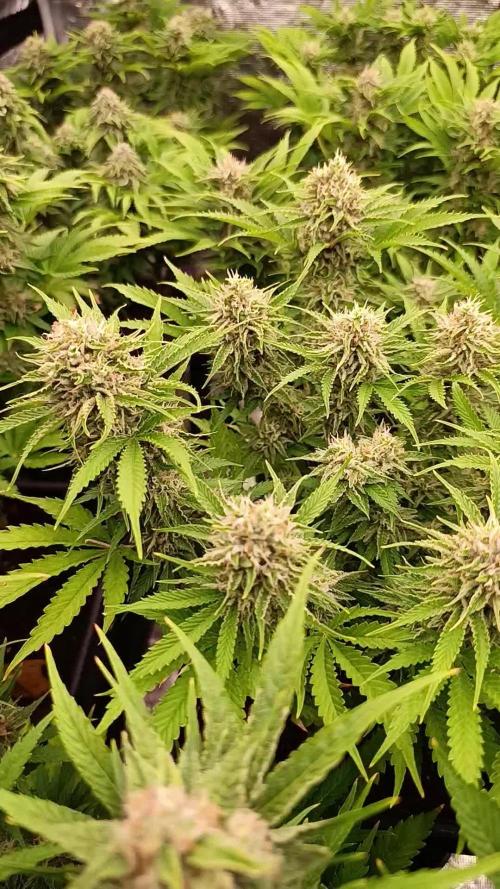
Las plantas siguen en plena fase de engorde, con los cogollos ganando densidad y peso día a día. La absorción continúa siendo eficiente y la canopia mantiene un verde sano.
Los erizos se compactan y la resina se hace cada vez más visible, señal de que la planta centra su energía en densidad y producción de terpenos.
Los aromas se intensifican y las flores dominan completamente la planta en esta recta final.
Seguimos creciendo fuerte 💪!


Likes
1
Share


@Gischtrute
Follow
In wenigen Tagen sind die Think Different quasi explodiert also musste ich bereits jetzt massiv entlauben. Ich habe das entlauben über 4 Tage gestreckt nicht das sie nicht klarkommen wegen Photosynthese Einbruch. Riecht seit 2 Tagen deutlich und muss den Schrank nun geschlossenen halten. Habe noch nie zuvor entlaubt. Wird sich zeugen wie das ausgeht aber alle Triebe bekommen nun viiiiiel mehr Licht.


Likes
19
Share


@4Haut
Follow
Finally the end of the sixth week. I had very bright, slightly yellow leaves because i had given too much light and too little fertilizer.
The lamp was then turned down to 80W and raised to 50cm height, so that the plant could calm down again. I also corrected the amount of fertilizer. Now she looks happier again 😇
Thanks also to @Seedler, I "tucked" the leaves under the buds and it worked very well. 🌱🌱🌱
Grow Hard. Go Pro.


