


Likes
Comments
Share


@AAAAFarms
Follow
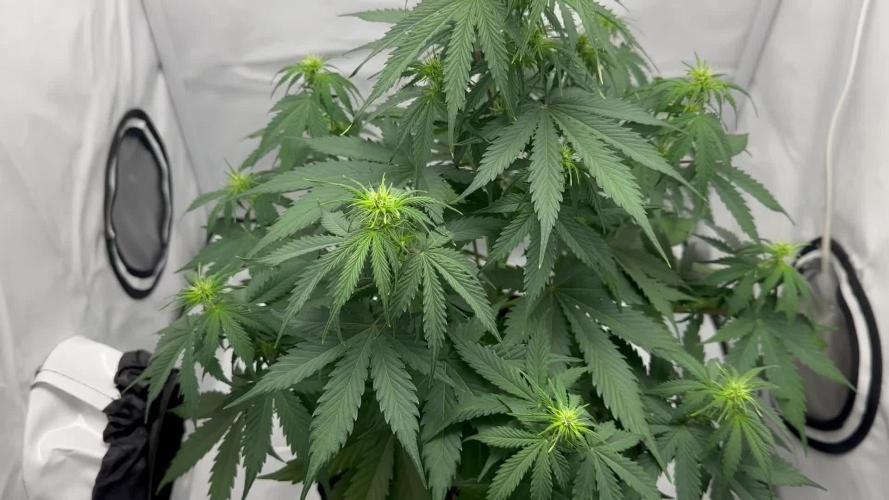
Thought id take pictures as video isnt the best
Removed a blue sherbert out as it had some issues, low yielder, top randomly died. Also on one of sundae punch the top died as i was moving
Found out my double Ds plant was a male moved her out for a week in a 24hr tent to slow its growth, back in 12 12 soon. End of week 5 photos. Harvest time expected to finish september 13th


Likes
Comments
Share
@Vet_J
Follow
The flowering stage is progressing really well and I’m genuinely happy with how she’s coming along at week 7. The first brown pistils have already started showing on two of the branches, which confirms she’s deep into her flowering cycle now — right on schedule for Glue Gelato Auto.
Next week I’m planning to significantly increase the flowering nutrients — particularly Big One and Top Candy, which should really push bud size and resin production from here on. Around the middle of the week I’ll also do a proper defoliation, clearing out the fan leaves that are blocking light from reaching the lower bud sites. The canopy has filled in nicely but it needs opening up to let those buds really fatten up.
Water intake has increased quite a bit — I’ve stepped up from one liter to two, and even then the soil is nearly bone dry by early morning. That kind of uptake is a good sign — the roots are clearly healthy and the plant is working hard to fuel bud development. I’ll be watching closely to see if she needs even more as things progress.
I’ve also been doing regular branch adjustments, gently repositioning the roped branches to keep the canopy level and make sure every top is getting its share of light. Nothing too aggressive at this point — just keeping things tidy.
Week 7 feels like a critical stage now. Pushing the flowering nutrients harder from here should make a real difference in final bud size and density.

Likes
Comments
Share


@Dankmark420
Follow
We cut her early due to a block off in the autopot system.. but she was frosty as a mofo for being cut way to early and the taste was surprisingly very sweet with a piney/spicy kind off aroma and taste


Likes
17
Share

@CCSAUTOVGROW
Follow
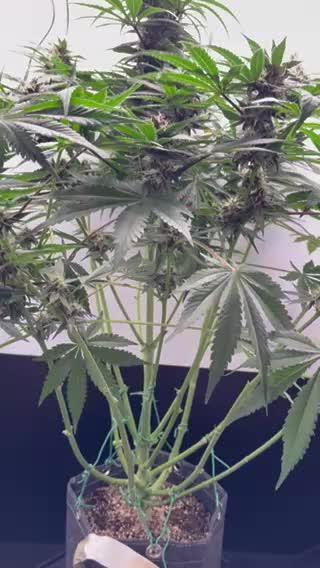
End of week 3 Flower. She is spectacular!!! Buds are starting to ripen and the sweet grape aroma is heavenly.

Likes
22
Share


@RDWCGrowing
Follow
1/11/2024 Vegetation Week 1 Day 1- I have a root almost in the water.. Yay!! Top feeding is almost done. she is looking a little sad as I work the transition Top feeding but once the roots are fully in the water she will start to take off. Ensured my PPFD is set between 250-300 it is set to: 258
1/12/2024 Vegetation Week 1 Day 2- I have a root in the water.... NO TOP FEED TODAY SIR!!! now that a root is touching the water and she looks stable, I am not going to topfeed, I will see how she looks tomorrow and as long as everything looks good I am going to go ahead and do a change and week 1 fill on Nutes.. I know it is a couple of days in but the same Nutes go through Week 2 and get changed at Week 3 So I should be good to go.. I will just ensure I fill to root touching the water when I change tomorrow.
1/13/2024 Vegetation Week 1 Day 3- Water Change Day!!
I added 36 Gallons of Water to the system:
Silica= .5mil/gal= 18mil
CalMag= .75mil/gal = 27mil
FloraMicro=3.0mil/gal = 108mil
FloraGro=2.0mil/gal = 72mil
FloraBloom= 2.0mil/gal = 72mil
PH DOWN= 30mil
Very important thing with this system is to now wait the 24 hours for the system to adjust.. Do not make any further adjustments to your PH up or Down for 24 hours to allow time for the system to balance.
1/14/2024 Vegetation Week 1 Day 4- Today I just adjusted the PH to ensure that it was right at 6.0
1/15/2024 Vegetation Week 1 Day 5- Today I Cleaned up the lower damaged leaves from the transition from top feeding to roots in the water. She looks good today.
1/16/2024 Vegetation Week 1 Day 6- Today I just took a picture of the beautiful lady for Log. Other than that just normal day to day operations, check the pH, check the Humidifiers and fill as necessary, check level of water in the Res. Everything looks great. onto Tomorrow!!
1/17/2024 Vegetation Week 1 Day 7- Today I filled the humidifers, checked the PH and just let her grow.. Grow baby Grow.....

Likes
44
Share


@rudiak
Follow
Well another epic this week. The girls are looking very tasty indeed now! I have now harvested one plant on day 57. It was a tad early for her but she started looking pretty bad for some reason. Potentially started the flush on her a little early or could have been root rot. Either way the plant was chopped to ensure buds were saved. She weighed a cracking 550g wet, and dry was about 100g. This was the girl that was completely untouched, no defoliation etc complete virgin ;).
Unfortunately the RH was high I ordered a dehumidifier but they sent me a faulty one and by time had a new one was too late some mould was starting to occur on the girls in a few places. I was over cautious and slung around 25g of buds that were near the mould just to ensure it didn’t spread to the rest of the plant. I also sped the drying up and placed in brown paper bags for last 2 days to suck the remaining moisture off after a full trim and inspection. The girls took a total of 5 days to dry and are now curing. They were a bit “hay” like in smell and taste but this was probably because of all the problems listed above. She is starting to smell much better after a couple of days of curing though so my faith is restored that the remainder of the buds may be quite good still!
The last 3 girls have been going lovely, and starting to bring in some purple colours to the sugar leaves which are quite nice, all the trichomes are nice and cloudy and just starting to go amber. I will be harvesting on day 66 as this will allow me a good period of time to trim them fully into reasonable size buds and dry in my hanging net in the tent to ensure no mould problems again.
For the last 3 days I have been flushing with 30L of water to ensure they are completely free of nutrients as again think this maybe another factor on the not so nice smelling/tasting buds from the first girl. I will give 2 days to fully dry the soil out bone dry before I cut them down. Happy I took her down early as it’s allowed me to ensure I have 3 good plants left and the remainder of the grow/dry/cure should go smoothly as know what I am doing now.

Likes
27
Share


@eldruida_lamota
Follow
Vamos actualizar la tercera semana de floración de estas Biscotti de RoyalQueenSeeds.
Un SOG que empezó mal pero que se ven con un buen color y avanzan progresivamente, así que a estar atentos.
La humedad es perfecta, la temperatura la e podido corregir y ya la tenemos entre 24/25 grados.
Añadi la base,Blue line B de Agrobeta.
Esta semana añadí tucán, gold joker, silver, tetra 9, beta shark y génesis también de Agrobeta.
Estoy controlando el ph está alrededor de 6- 6,5.
Mars hydro:
Code discount: EL420
https://www.mars-hydro.com/
Agrobeta:
https://www.agrobeta.com/agrobetatiendaonline/36-abonos-canamo
Hasta aquí todo, veremos como progresan pronto. Buenos humos 💨💨💨
Likes
5
Share







Likes
18
Share


@Earthsower
Follow
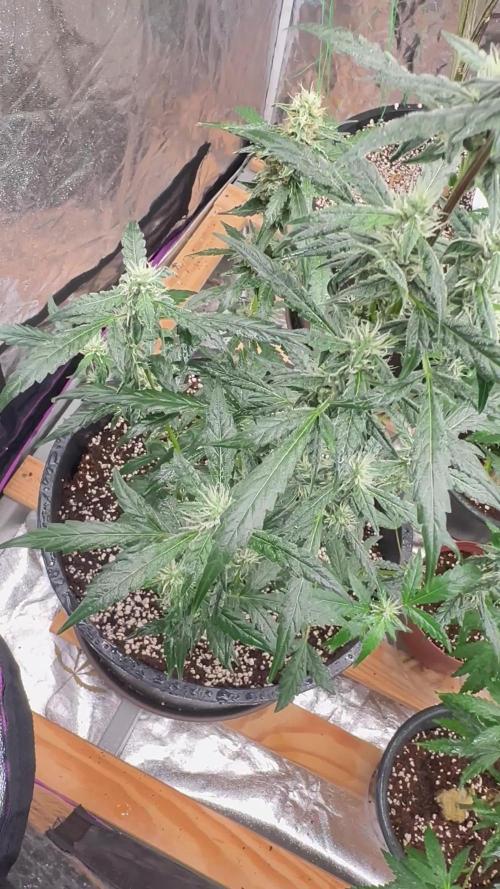
I have not fed this lady all week she has received just natural sunlight. I will wait for the pot to almost completely dry before I feed her again. She is showing good signs of recovery with further growth and a healthy emerald green colour to her leav


Likes
26
Share


@ExoticoSativo
Follow
Emocionado con el rápido crecimiento, en el día 4 la tuve que transplantar y le hice su primer riego con una mínima porción de sus nutrientes 💚 ya veremos como esta variedad reacciona a todo el amor y cuidados que le doy

Likes
Comments
Share


@JiminyCricket
Follow
I'm sorry for the poor journal upkeep. I kind of fell off keeping track of things as I had more and more responsibilities at home come up. I ended up harvesting 4 of my first five plants about two weeks ago. These have been curing in my smaller grow tent on an air rack. At almost three weeks cure they are already getting nice and crispy and starting to really gain their smell back. I've been pinching smaller sizes nugs to check on flavor and quality throughout the cure process. My fifth plant that was ready about a week or so after those first four I cut down and have curing on the same rack as well. Since the buds seem to be drying so well on the rack I'm wondering whether I should even put them in jars at this point until I need more room on my racks. My three purples which I believe are all the LSD-25 phenos, are also about ready to harvest for cure any day now as well.
I'm attempting to add all the pictures and videos and micros as soon as possible. I often encounter a lot of problems uploading anything for my weekly updates.

Processing
Likes
15
Share

@eldruida_lamota
Follow
Esa familia, nuestras crazy cookies están algo sobre fertilizadas y por ello le practicamos un lavado de raíces para eliminar los nutrientes sobrantes.
Ph controlado unos días sin regar la próxima semana y veremos que tal avanzan , floración lenta imagino que por culpa de la sobrefertilización aunque tiene solución fumetillas.

Likes
42
Share


@Roberts
Follow
After flush and 2 weeks of straight water to let plant fade, 48 hours of dark, now drying time. Does have a very nice smell. Curious to see what my dry weight will be. Thanks again for like and follows, plus YouTube subscribers.
Happy growing.

Likes
48
Share


@MG2009
Follow
Still on water only. Captains Cake going to mom and clone tent. Alongside sour dream. For future diary's. Switching to Budswell 0-7-0 for flowering next week.😁

Likes
56
Share


@Prilyfe13
Follow
May 3, 2024 Day 78
This week is what seems to be the last week before flushing and a light intensity drop. Both ladies look really nice and coming along swimmingly. More orange pistils, more amber trichomes. Not enough of either, but they are getting there. Probably the next week of nutrients and a week of flush.
Speaking of nutrients, I decided to cut the whole regimen in half. There's clearly nutrient burn and I can't seem to get rid of it. I also believe the plants aren't taking in as much water as they were before. The containers are holding more water and that tells me it has nowhere to go besides in the soil and the ants aren't keeping up. Nutrient lockout? Age of plants? They are an 8 week strain while we are starting week 11 today. I'm sure I'll find out. So I'm guessing about a week and a half left before harvest. I'm not sure if it will be 2 weeks or not, but I've been saying 2 weeks for over a week now. We are definitely close to comfortably call 2 weeks or earlier. Hopefully earlier.
Banana Purple Punch A is getting heavy. Branches are starting to lean and buds are covering buds from the weight. Apparently these branches aren't as strong as Banana Purple Punch B whose branches are stiff as boards. Very healthy though. Although, she did take a hit from the nutrient burn. Not much and definitely not as bad as the Tropicana Cookies did.
Banana Purple Punch B is a thing of beauty. She is small and compact, but her buds are fat and she smells amazing. Tons of trichomes and lots of bud throughout the plant. She'll definitely need a trimming before I harvest. I think I've decided to do a mostly wet trim and leaves just the sugar leaves on the plant. Anything with a stem I can reach will be cut off. Same with Banana Purple Punch A, but her buds to leaf ration is fantastic. I won't have to do much trimming on her. Banana Purple Punch B, on the other hand, will need a whole lot of trimming.
I've got this week's first set of trichome pics. One for each plant. Looks pretty good. A bunch of cloudy, a bunch of clear and some amber. Definitely not ready.
No watering today as I topped off the reservoirs with a half gallon of plain water. PHed at 6.2 which took a bit of PH down. Apparently my water is really low in acid.
The lighting will be staying the same for most of the week. As these ladies have only a couple of weeks left, I'll try to time the light intensity drop accordingly.
The environment is still messed up. SMH. The temp is still fine, but the humidity is still high. Now only 55%, but still too high. I'd prefer 40% now, but I'll take 50% somehow. It stopped raining and the weather is really nice, so I don't see why the humidity is still high. Last night the temp was averaging out at 67.9° with a low of 65° with the humidity still being high at 55.8%. At least it's staying the same.
Grow System Environment:
Temp: 73.2°
RH: 55.0%
VPD: 1.23 kPa
May 4, 2024
May the 4th be with you! Star Wars all the way!
Not a lot going on today. Both ladies got a full gallon of half dose nutrients. I think it's time. They have about a week and a half left to go. Maybe less. Hopefully less.
Banana Purple Punch A was rotated today. Her branches are so top heavy now that the whole plant jiggled when I moved it. Honestly, kinda funny to see. Her reservoir was almost empty. She's definitely still thirsty. With the half dose of nutes, I expect to start to see a fade.
At the end of the week I'll start the real flush with Flawless Finish. Only for the first watering though. Also, I don't top flush. All of the nutrient buildup on the top soil will just poison the plants. So I continue to run the reservoir. Afterall, that is the place where the nutrients get absorbed.
So Flawless Finish blocks some sort of beta things that prevent the plant from taking in nutrients. I've used it for the last 3 runs and I have no idea if it works or not. I very rarely get a good fade. Too many nutrients at the end? Maybe.
Banana Purple Punch B hasn't changed position at all. She fits perfectly in the tent where she is. She had a little bit more water than her sister, but still low enough to fill the reservoir with a whole gallon and not overdo it.
She also has about a week and a half left. Her buds are huge now. The very tops are the huge ones, but the lower buds are all dense. Should be decent popcorn for pressing.
Her leaves are a deep color of green. Not so deep to be a concern for toxicity. However, FastBuds says the leaves should turn light green at the end. We shall see. Also, I'm not seeing purple at all. Hence the half dose and flush next week.
The lighting of course is going to be dropped to 70% power in a few days. Then down to 60% at the start of next week and will be brought down to 50% for the final few days.
The environment is bad today. The humidity is back to 60%. I can still control the temp though. I think I need to drop it to 74° for the day and try to keep it at 65° at night. A tall order, but I think I can pull it off. I just wish I could get rid of this damned humidity. Not that I think anything will get ruined. I have 3 clip fans running at half power each, so airflow is fantastic. These also quite a bit of open space for Banana Purple Punch A. Not so much with Banana Purple Punch B. But she still has a decent amount of open space. Definitely enough to not get any issues. At least that's the theory.
Grow System Environment:
Temp: 74.0°
RH: 57.9%
VPD: 1.19 kPa
May 5, 2024
Trichome day!
I got a couple of decent trichome pics from each plant. They aren't perfect, but they are pretty good for what I can do.
No watering today obviously. That won't be for another day or 2.
Banana Purple Punch A looks great! Her colas are getting heavier and slightly fatter. I'd say I'm on point with when she will be done. I say another 10 days. Flush will start at the end of this week. That should leave me a good 5 to 6 days of flushing before harvest. She's also getting more and more orange pistils and some amber trichomes. I still see mostly clear and a good amount of cloudy. Definitely not ready yet.
Banana Purple Punch B also looks great! Her buds are just as fat as her sister plant. They aren't nearly as far along though. I'd give this one 2 weeks. But maybe the same 10 more days. They are different phenomes afterall.
Her branches are like SUPER stiff. No leaning, no anything except the jiggle when moved. Such a strong little one.
Neither plant is showing signs of fade yet. I expect it will start to show up in the next week. The buds are also still quite green. I'll also be expecting purple in the next week. We shall see.
Light power will be dropped at the end of the week I think. I was going to drop it tomorrow, but I think these two need a bit more time.
The environment is still messed up. It's mid spring now and it's just getting humid. I can expect to have a lot of humidity for the next 3 weeks. I will just have to do my best to fight it.
Currently, the temp is at 76° and the humidity is still at 60%. It just refuses to drop down. I had the humidity in my room all the way back down to 50% and it did absolutely nothing. I'll have to periodically open the tent until this humidity levels back out. No big deal, I'm always home.
I also keep trying to get the temp down at night. I can't seem to get it below 67°. I'd really like it at 65° and the day temp at 74°, but it doesn't seem to be working. The problem is I can't get the humidity down without cranking the heat. But if I crank the heat, the temp goes above 77° and gets dangerously close to messing up the trichomes.
Grow System Environment:
Temp: 73.1°
RH: 59.7%
VPD: 1.10 kPa
May 6, 2024
Not much going on today. No trichome pics, no watering, no light changes. The only thing I have to mess with is the humidity still. It should go down today. I have my room at 47%.
Banana Purple Punch A looks great! Super heavy colas and dense... Very dense buds. Solid. She has a few more orange pistils, but that's a good thing. She should be finishing up in about a week now.
Banana Purple Punch B is stunning. For a small plant, her structure is wonderful, bud are huge and solid. She is pretty bushy, so I will be very happy when I can trim all the foliage off before harvest. She should need about another 10 to 12 days.
The aroma coming off of these has changed since that last time I said something about it.
It's more pungent now and smells of sweet fruit and something heavy. I'm not getting much or any banana smell, but I'm a smoker, so my sniffer is a bit off. It's still strong enough for me to smell the essence of this strain. Unfortunately, I don't know anyone who doesn't smoke and will be willing to smell my weed. Lol
And the one person I know who would smell it smokes more than I do.
As before, the lights will stay the same for the rest of this week. Then I'll drop them down to a DLI of 36 mol/m²/d.
The environment is still kind of wonky with the temp being around 75° and the humidity being still high at 58%. But as I said earlier, I have my room back down to 48% humidity, so I should be able to get the tent down to 50% sometime this afternoon, and hopefully it will stay that way for at least another week.
Grow System Environment:
Temp: 73.8°
RH: 62.3%
VPD: 1.06 kPa
May 7, 2024
Watering day. Both ladies got a full gallon today. Other than that I took some pictures. I'm not bothering with trichomes for the next few days with these 2. They clearly aren't ready, so no point in checking clear trichomes. When I see more orange pistils, I'll start checking them.
Both ladies have super heavy buds. They are making the tops sway a bit when moved. So big, so dense, so heavy. I look forward to harvest.
The lighting is the same as always. It'll be dropped by the end of this week I think. I'm planning on dropping it down to 36 mol/m²/d for the last week of flower. It should work to bring out purple and to help tighten the buds up.
I'm also considering cutting the nutrients off at the end of this week and go for plain water. It's just about time for flushing as it is, so in 2 days, I'll do one last nutrient dose and that's it.
The environment is starting to readjust to a normal level, it's just taking a long time. Currently the temp is at 76° and the humidity is at 54%. Still high humidity, but better than 60%. My room has 42% humidity, so the humidity should eventually drop below 50%. I'll try to drop the temp as well. I'd like to see 74° for the rest of the grow.
I'm still having issues with night temp. I cannot get it to go down enough. It sat at 68° and 55% humidity.
Grow System Environment:
Temp: 73.6°
RH: 54.6%
VPD: 1.25 kPa
May 8, 2024
So I have been doing a bit of image research and have found that these two should start showing purple anyway now. At least that's what it looks like. These ones have super green buds. Nowhere near ready for harvest. Still another week and a half or so.
No water needed today. I will note that the reservoirs are still nearly full. Interesting.
Banana Purple Punch A looks great. Her buds are super fat and smell great. They are dense and when they are ready will be hard as rocks.
Her leaf to bud ratio is perfect. Not too many but no bare. I was more worried about her getting super bushy. Nothing of the sort. Very nice. I'll be trimming her down before harvest, but I'm not bothering with the sugar leaves until after drying. They will help give more of an even dry.
Banana Purple Punch B has caught up in bud size with her sister plant. Although, she has more leaves. Trimming will be a nightmare with this one. I plan to do it in 2 sessions. Once before harvest to clean out all of the stemmed leaves. Anything I can reach at the base of a leaf is gone. After drying, I'll complete the trimming session with basically a manicure and that's it.
The lights are staying as they are for a bit longer. I can't really tell if these two are actually done yet or not. I'll do a trichome check tomorrow and post pics.
The environment is a nightmare. It's still 60% humidity with the temp being a bit high at 77°. I'd rather it be at 74°, but the humidity gets higher that way. I'll just have to keep opening the tent as I have been for what seems to be the last week. Either way, I will not get mold. Not if I can help it. Now drying in such high humidity is a concern. Very little airflow. Hopefully I can keep the temp in the low 60's in there. I highly doubt it.
Grow System Environment:
Temp: 74.0°
RH: 57.6%
VPD: 1.19 kPa
May 9, 2024
Some noticable things today. First off, neither plant is taking in as much water as they were. A sign of either nutrient lockout or they don't need as much water because they are finishing up. Finishing up makes the most sense.
Banana Purple Punch A was rotated again today to keep the plant from growing mold and keep the lights hitting all the buds from every angle. She's definitely closer to being done than her sister plant is. I'd say about 5 days difference? Maybe slightly less. This is kind of a blessing and kind of a curse. I have 4 other plants in 3 gallon containers that need to go in the tent asap. If I can clear at least 2 of the 4 plants currently in the tent, including this one, I could fit all 4 plants in the tent with the last 2 plants. Then I can harvest those two separately kind of.
Banana Purple Punch B has huge buds now. Some are a little bigger than her sister. They seem to have the same amount of bud, just structured differently. This plant has the super compact structure with buds all up and down, but it's only like 19" where the other one is closer to 23" and has more space between buds.
But it's a larger plant, so there is the roughly the same amount of bud. At least that's what it looks like. I'm seeing no signs of fading yet. I'm guessing this is one of those strains that waits for the last week or so before showing color.
Although, other diaries I've seen show different. The weird thing is that the majority of the other plants I've seen all have purple buds. Mine are still bright green. But they are definitely not ready. So I'm guessing another week and a half.
Frankly, I have a lot of trouble timing harvests. I don't know what the plants do or are doing, for example, I've never had a plant finish up based on breeder specs. I've even had an autoflower go well over 15 weeks. Granted it was HUGE (understatement), but it still took over 15 weeks. But then I have strains that finish up in 12 weeks. But I couldn't tell if they were done or not. Disadvantages of not having the proper equipment. This time around I have a microscope, so I can get a really good idea of when to harvest.
As for trichome check, I was supposed to do it yesterday. Then I thought maybe today. But then I realized tomorrow is a new week, so I'll take my trichome pics tomorrow. Plus, they clearly aren't ready, so no point in checking yet.
The lighting as I said will stay the same for now. These 2 are showing no signs of needing it and are definitely not ready for it to drop. Not for another few days to a week anyway.
The environment is kind of calming down. I can keep the day temp down to 74°, but the humidity is still high at 55%. I'll be spending the day opening it up periodically... again. I did manage to get the average night temp down to 66°, so that's something. It messed up my Sour Diesel seedlings in my 2x2 though. The temp in there went all the way down to 62°. I really need to get them in this tent.
Grow System Environment:
Temp: 72.6°
RH: 58.7%
VPD: 1.11 kPa


Likes
3
Share


@Jungle_James_Grows
Follow
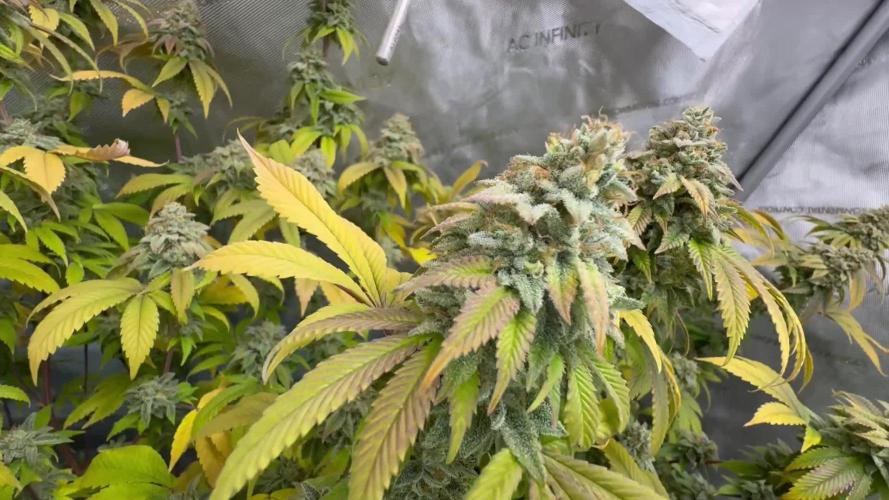
Short video of how she's doing. Preflowers are forming so time to top dress with worm castings and water in some banana F.P.J

Likes
376
Share


@Metatronix
Follow
Good day to all my friends and visitors here on GD.
After this week end, we will cut the first Tropicanna XL plant:D
Middle this week we changed the reservoir water for a fresh solution.
This plant will not get a flush before harvest, it's the first time i'm not flushing a plant for the cut but you know only two of the four girls are ready to chop and it's not possible in my RDWC to seperate feed them.
So yes it's kind of an experiment for me.
Something's not right with my fresh solution or the plants get root rot or something but the girls starting to show K deficiency...good that the plants are on the finish line :)
The SE7000 runs at 540 Watt and about 33cm from the canopy and is doing an astounding job.
For anyone who is interested in obtaining this efficient and affordable light fixture here's the link:
https://spider-farmer.com/products/spider-farmer-upgraded-se7000-730w-commercial-led-grow-light/
A shout out to Sweter Seeds for the gift of genetics, this cultivar really rocks 💪☘️💚 https://sweetseeds.es/en
I also want to thank Jungle Indabox nutrients for supplying me with their excellent nutrients line: https://www.jungleindabox.cz/en or
https://numazon.cz/homepage/
That's it friends, I hope to see y'all next week, bless.
