


@StonedandSteady
Follow
AutoBlueberry 10th w/ 5th W/ Flower breed by #DivineSeeds #DivineSeedsSquad #DivineSeedsBreedingCompany
3rd feed of #NukeHeads Nutrients #PlutoniumBloom and a look at my #Opium by #DivineSeeds at her 4th day of Dry! Can't Wait to Blaze!!! This AB is Flowering out and her Smells are Super Strong of Gasy and Candied Blueberries! I recently Trained down her branches to expose more Bud sites and Removed the Biggest fan leaves to expose the Bud site's to this Glorious #OsreeQB1000w Full Spectrum Grow Light! I've also Super Cropped, Topped um, Defoliated, Leaf tucked, and Implement the 3D's method like my Broski #TigerfishOrganics to remove the Dead, Dying and Diseased leaves!
Origin:Afghani/Thai
Type:50% Indica/ 40% Sativa/ 10% Ruderalis
Flowering:56 days
THC:22%
Harvest:400-550 g/m2
Height:110-150 cm
They were Growing under the #Growatt600w and in my #TopoLite 24×24×48 Grow Tent but I've Upgraded and Updated it to my #OsreeQB100W I'm also using #TNBNaturals #TheEnhancer Co2 Despersal Canister and using thier Ph⬆️⬇️ for my Decolinated Tap Water!
Green and Growing Up Great! She's Growing into her 5th week of Flower! She's Growing in my special blend of ProMix potting mix, a 1/2 bag of Earthworm castings and 2 light handfuls of Diatomaceous Earth mixed Up well for before transplanted! Diatomaceous Earth: Diatomaceous earth is made from the fossilized remains of tiny, aquatic organisms called diatoms. Their skeletons are made of a natural substance called silica. WHAT IS DIATOMACEOUS EARTH?
In a nutshell, DE comes from the fossilised remains of small marine organisms called diatoms. Over a 30 million year period, these hard-shelled algae collected on the bottom of bodies of water, eventually forming into a type of sedimentary rock. Fast forwarding, it wasn’t until around 1836 that a German peasant Peter Kasten discovered the ivory-coloured, powdery substance while drilling a well in northern Germany. Ever since, the usefulness of DE for multiple purposes, including industrial and horticultural applications, has been well-reported. Just sprinkle some diatomaceous earth on top of your soil and watch mother nature's secret weapon work its magic.CONDITIONS THE SOIL
When it comes to growing cannabis, everyone strives to provide the best soil to grow the best plants—but there’s always a way to make it even better. Making the soil a better medium is called soil conditioning, which is exactly what diatomaceous earth does. It works by improving the retention of moisture in your potting soil, holding a large amount of fluid and drying at a rate that’s much slower. This natural soil additive also helps to retain nutrients and allows for better oxygenation of the substrate. NATURALLY CONTROLS PESTS
DE is an all-natural, safe-to-use substance that doesn’t harm the cannabis plant with toxic chemicals. The nature of diatomaceous earth makes it useful against most types of insect infestation you might be experiencing; and unlike chemical insecticides, insects can’t develop a resistance to the effects of DE. So once they’re gone, they’re gone for good. DE is an abrasive. and when used as an insecticide, it gradually scrapes away an insect’s exoskeleton, absorbs the fluids, and dehydrates insects and other critters to eventual death. IMPROVES PLANT STABILITY
When using DE in your soil, it can be especially beneficial as it frees up nutrients so that they are made available to the plants as needed. This works via the silica content of DE being absorbed into the plant tissue, which helps improve the plant’s ability to respond and receive more nutrients as DE activates. This in turn results in greater yields and better stability under small pH fluctuations!
https://divineseeds.net/
https://instagram.com/divine.seeds?igshid=osxe2v7en33v https://divineseeds.net/
Thanks Again to All my Friends, Family's, Teams, Sponsors, Followers and Subscribers!!! Your Genetics are Merry Magnificent, Mega Marvelous and Mighty Medical! Love um!!! I really Can't stress enough how Thankful and Grateful I am of All of you and what you've Shared with Us! Means the World!!! It's definitely a Pleasure being able to Grow with these Phenomenal Grow Lights! Please Enjoy! BudBrothers4-Life! Cheers Famz!!! Much Props and Much Topz!💯🔥 #Osree #GrowStarStore #Growatt #TNBNaturals #TNBTeam #GrowYourOwn #Bliss
https://instagram.com/osree.light?utm_medium=copy_link
https://instagram.com/as420.ca?igshid=1f116alw054wp
The Grow Bags: https://www.as420
https://instagram.com/tigerfish_organics?utm_medium=copy_link
https://www.facebook.com/Tigerfishorganic/
#TigerfishOrganics YouTube Channel Link: https://youtube.com/channel/UC6OSXTda1JYaVNoCxdcYqIg




@CalGonJim
Follow
1/19 1am MONDAY...TOO STONED TO TYPE..WHAT THE HELL IS THIS THEN..HEY SHUT UP....WAIT...IS THAT ME?😂
1/19 5 AM.🚨 I GOT THE HOLY TRIANGLE OF WEED THE WHOLE FUUCK'N TRAILER PARK IS HERE!!!!! Finally got black tea Tangie in the ground so Julian bubbles and Ricky are all growing with Montel and ice t.
1/20 1:20PM VEGING PERFECT AT 30 WATTS!!!
1/21 10:11 AM. The whole fucking park is here. Julian sprouted!!! Bubbles and Ricky are doing great. I’m gonna top them and then I’m gonna start them over from clones so they grow roughly the same time as Julian and I’ll keep the Ricky and the bubbles others as mother plants and I’ll just keep them going.
1/21 10:15 AM vegging 12 inches 30 W Samsung LED Mars Hydro light perfect
121 1:10 PM I moved black tea Tangie into the germination station. The 2 gallon fits in here just fine. This will be fine for germination.. She’s sprouted only after about 40 hours so she’s really strong.


@SubherbNDad
Follow
Mid way through Week 6. I’m finally current in my grow diary so hopefully I can keep it updated in real time.



shorts_status_processing


@Hawkbo
Follow
Ok folks, gunna be one armed for another 6 weeks so I'm just the conductor the true heroes will go unseen. Everything is alive atleast, had a scare yesterday as things got so dried out everything went limp but an hour after feed turned back around. Noticed some yellowing and other coloring coming thru on alot of leaves so I bumped ppm up a little bit this last feed. They dont look like they have a deficiency, it's weird, they look beautiful but with a premature fade almost. I really like Green Buzz' line up/regiment I just have to dial it in which isnt easy since it's a multi strain crop and various size plants. It's very easy to use and makes me feel good knowing it's not poison. Did a minor leaf strip around the tent just to make things fit better. I'll copy and paste this to the diaries for the rest of the crop per usual but go into a little more detail on each plant individually. Pics and vids were taken on day 28 of flower. I'm trying to keep up with these as best I can from start to finish, the flip date was 6.10.19, today is 7.9.19.
The first one is pretty amazing, its showing pinkish red pistils early and just has a unique structure. I posted a shot on IG and someone pointed out what looked to be a sac in the middle of a flower. I double checked tonight and couldn't find any signs of germs but will pay attention over the next week just to be safe. It would be a shame if this doesnt get to finish out, thankfully I kept a cut of her.
Runtus Cuntus in the corner been pissin me off since day one and still being a dick. Just growing so slowly and ugly I want to take her out behind the woodshed but dont have the heart.


@Element
Follow
The three youngest plants (Red Hot, Critical XXL and Sweet Cheese) are taking only CalMag, and only 1,5ml/L of both Coco A and B





@DogDoctorOfficial
Follow
💜 Purple CousKush Auto by Zamnesia | Pheno A | Week 14 👑❄️
The Queen Has Come Down – One Massive Cola, Countless Beautiful Details 💜🌸📸
Welcome back to another chapter of the 8×8 Adventure! 🌱💚
Well, my friends…
Our Queen has come down. 👑💜
But not before we gave her one last opportunity to shine in front of the camera!
😂📸
And honestly?
I'm super happy with this girl.
She's beautiful.
She's impressive.
She's covered in details that make you want to grab the camera and get closer.
And that massive cola?
Oh, my goodness. 💜🔥
That's one of those structures that makes you stop for a moment, look at the plant, and appreciate what you've been watching develop throughout the entire journey.
But before we get carried away with the photographs, let's explain where we are, why this update is still being published as a flowering-week report, and what happens next.
Because, as with the other girls we've recently harvested, this is not the end of her story.
It's simply the end of her time standing in the tent.
The next chapter will cover the harvest and trimming process, with more details about the final result.
For now, let's celebrate Purple CousKush Pheno A.
Our Queen.
Our massive cola.
Our beautiful flowers.
And a photography session that gave us plenty to appreciate.
💜👑❄️✨
────────────────────────
📢 WHY ARE WE REPORTING THE HARVEST IN A FLOWERING-WEEK UPDATE?
Let's explain this again for everyone following the individual diaries.
Yes, this is a flowering-week report, even though Purple CousKush Pheno A has now been harvested.
And no, we haven't forgotten how the diary works!
😂💚
GrowDiaries has limitations on the number of photographs we can include in an individual update. When we reach a stage like this, there is simply too much we want to document to squeeze everything comfortably into one report.
We have the final photographs in the tent.
We have the studio session.
We have the macro photographs.
We have the stacking process and the behind-the-scenes work.
And then, of course, we have the harvest itself, trimming, and everything that follows.
Trying to put every part into one update would mean leaving out details that deserve their own space.
So we're following the same approach we've used for the other plants reaching harvest.
This flowering-week report documents her final appearance, the photography, and the transition out of the tent.
The harvest and trimming report will follow separately.
That way, we can give each stage the attention it deserves without sacrificing the photographs or the story.
And because these are individual phenotype diaries, each plant gets her own report.
Even when several girls come down around the same time, their stories remain separate.
That's the plan, my friends.
One plant.
One diary.
One story at a time.
💚🌱
────────────────────────
🌱 A QUICK RECAP – THE 12/12-FROM-SEED JOURNEY
Before we say goodbye to her flowering chapter, let's remember what this entire adventure has been about.
The 8×8 Adventure has been running on a 12/12 light schedule from seed.
We didn't give the plants a separate, extended vegetative period before changing the schedule.
Instead, we followed their development under the same overall light cycle and documented how the different cultivars and phenotypes expressed themselves.
And that's what makes this project so interesting.
We've had plants with different heights, structures, growth patterns, flowering characteristics, and individual personalities.
Some became tall.
Some remained compact.
Some developed more open structures.
Others produced dense, impressive flower formations.
And Purple CousKush Pheno A?
She's given us plenty of reasons to smile.
💜🌸
The same room provided the stage.
The same general environmental strategy supported the plants.
And the genetics gave us different expressions to observe.
We haven't tried to force every plant into the same shape or pretend they all developed identically.
We've simply grown them, documented them, and watched their individual journeys unfold.
And now, after all those weeks, our Queen has reached harvest.
I'm genuinely happy with what we've seen from her.
This is exactly why we keep these individual diaries.
Because the journey matters just as much as the final photograph.
────────────────────────
👑 OUR QUEEN HAS LEFT THE TENT
There are plants you enjoy growing.
There are plants you enjoy photographing.
And then there are plants that make you appreciate the entire journey when you finally stand back and look at them.
Purple CousKush Pheno A has given me that feeling.
💜👑
I'm super happy with her.
And I want to make that clear.
This isn't just about one massive cola or a handful of beautiful macro photographs.
It's about seeing the result of weeks of development and having the opportunity to document it properly.
She has her own character.
Her own flower structure.
Her own visual expression.
And now, we have the photographs to preserve that final moment before the next stage begins.
We took her out for a studio session, and of course, I couldn't resist taking a whole bunch of shots.
😂📸
You know me by now.
Give me a beautiful plant, a camera, and a little time in the studio…
and suddenly, everything else can wait.
But honestly, I think she deserves it.
She's our Queen.
Let's treat her like one.
────────────────────────
🔥 THAT MASSIVE COLA!
Let's talk about the obvious.
That cola.
💜🔥👑
Because some structures deserve their own moment in the report, and this is definitely one of them.
When you look at a plant throughout its development, you become familiar with its overall shape.
You see the branches.
You see the flowers.
You watch the individual structures develop.
But when you finally get to look at the plant in the studio, with the opportunity to photograph it properly, certain details suddenly stand out.
And that massive cola is one of them.
It's the kind of structure that makes you want to move around it, look at it from different angles, and see how much detail the camera can capture.
From a wider view, you appreciate the overall form.
Move closer, and the individual flowers begin to reveal themselves.
Move closer again, and suddenly you're looking at an entirely different world.
😂💜🔬
That's one of the things I love about documenting plants this way.
The whole plant tells one story.
The individual cola tells another.
And the macro photographs reveal yet another layer.
One plant.
Different perspectives.
Plenty to appreciate.
────────────────────────
📸 STUDIO TIME – ONE LAST CHANCE TO SHINE
Before moving into the next stage, we took Purple CousKush Pheno A into the studio and captured a collection of photographs.
And I'm glad we did.
💜📸
The studio gives us a different opportunity to appreciate the plant.
In the tent, we're looking at her as part of the complete environment.
We're looking at the canopy, the neighbouring plants, and the overall structure.
In the studio, we can focus entirely on her.
No distractions.
No other plants competing for attention.
Just Purple CousKush Pheno A and the camera.
👑💜
And when you have a beautiful plant in front of you, that's a very enjoyable place to be.
I wanted to preserve her appearance at this stage of the journey.
The overall structure.
The massive cola.
The individual flowers.
The frost.
The details that can easily be missed when you're simply walking past the plant every day.
Because once she's harvested, we can't recreate this exact moment.
The plant has moved on.
The flowering chapter is complete.
So these photographs become part of her record.
And honestly, I think they make a beautiful way to close this stage of the diary.
────────────────────────
🔬 MACRO PHOTOGRAPHY – WHEN THE FLOWERS BECOME A WORLD OF THEIR OWN
If you've followed the previous Purple CousKush updates, you'll know that I love getting close to these flowers.
😂💜🔬
And this week is no different.
The macro world has a way of changing your perspective.
You start with the whole plant.
Then you look at an individual cola.
Then you choose one flower.
And before you know it, you're exploring tiny details that are almost impossible to appreciate from a normal viewing distance.
The texture.
The layers.
The trichomes.
The pistils.
The little variations in the surface of each flower.
Every photograph gives you another way to appreciate the same plant.
And that's what makes macro photography so enjoyable for me.
It's not simply about making something look bigger.
It's about looking more closely.
It's about noticing.
It's about taking the time to explore details that might otherwise pass unnoticed.
And Purple CousKush Pheno A gives us a beautiful subject for that.
💜❄️📸
────────────────────────
BEHIND THE SCENES – HOW DO WE MAKE A FOCUS STACK?
This week, I also want to show you a little of what happens behind the photographs.
Because when you see a macro image with so much detail in focus, you might wonder how it was created.
And that's where focus stacking comes in.
🔬📸
When photographing a tiny subject at high magnification, the depth of field can be extremely shallow.
In simple terms, only a small part of the subject may appear sharply focused in a single photograph.
You can focus on one section of a flower, but other sections in front of or behind that focus plane may appear blurred.
And that's completely normal.
The closer you get, the more noticeable this limitation becomes.
So, for certain photographs, we can use a technique called **focus stacking**.
Instead of relying on a single photograph, we capture a series of images with the focus shifted slightly between frames.
Each image records a different part of the subject in sharp focus.
Then, using software, we align the photographs and combine the sharp areas into one composite image.
The goal is to produce a photograph with more apparent depth of focus than a single frame could provide under the same conditions.
That's the basic idea.
One photograph captures one slice of the subject.
A stack combines the useful focused details from several slices.
And when it works well, the result can reveal an incredible amount of detail.
💜🔬✨
────────────────────────
🖥️ FROM CAMERA TO COMPUTER – THE STACKING WORKFLOW
The photographs you see aren't always the end of the process.
Sometimes, they're the beginning.
😂📸
The general workflow looks something like this:
📷 **1. Capture the sequence**
We take a series of photographs of the same subject, shifting the focus gradually between frames.
🔍 **2. Review the images**
We check the sequence and make sure we have the frames needed to cover the different areas we want in focus.
💻 **3. Align the photographs**
The images may need alignment before they're combined, especially if there are tiny changes in framing between shots.
**4. Stack the images**
The software analyses the photographs and combines the areas it identifies as being in focus.
🖥️ **5. Inspect the result**
We review the composite for artefacts, soft areas, halos, or details that haven't blended cleanly.
✨ **6. Finish the image**
If necessary, we make final adjustments to the composite so the photograph represents the subject clearly and naturally.
And that's how we go from a series of individual frames to one detailed macro image.
Of course, not every stack comes out perfectly.
Sometimes movement causes problems.
Sometimes the software struggles with certain textures.
Sometimes the final image needs a little more work.
And sometimes, everything comes together beautifully.
That's part of the process.
It's photography, not magic.
Although, when you see a really good result…
it can feel a little like magic.
😂💜🔬
────────────────────────
🎥 THE BEHIND-THE-SCENES WORK MATTERS TOO
I enjoy sharing the finished photographs, but I also like showing some of the work that goes into creating them.
Because a beautiful image can involve more than simply pressing the shutter.
There's the subject.
There's the camera.
There's the lighting.
There's the focus sequence.
And then there's the time spent reviewing, aligning, stacking, and checking the final result.
📸💻
When everything comes together, the photograph can reveal details that a single frame might not capture clearly.
But I also think it's important to be transparent about the process.
A focus stack is a composite made from multiple photographs.
It's a photographic technique designed to extend apparent depth of focus.
It's not one single exposure, and it's not a substitute for the original photographs.
For me, the original images and the final stack both have their place.
One documents the individual frames.
The other lets us appreciate the subject in a different way.
And when the subject is a flower as beautiful as this one…
I'm happy to spend the time exploring it.
💜🔬✨
────────────────────────
❄️ DENSE FLOWERS, FROST, AND BEAUTIFUL DETAILS
Let's not let the photography discussion distract us from the plant herself.
Because the reason we're doing all of this is simple.
Purple CousKush Pheno A is beautiful.
💜🌸❄️
The flower structure is what catches the eye first.
Then the density.
Then the details that start appearing as we move closer with the camera.
And the macro photographs give us another way to appreciate all those little features.
The individual flowers.
The trichomes.
The pistils.
The textures.
The tiny differences from one area to another.
When you're looking at a plant every day, it's easy to become familiar with it.
You know what you're seeing.
But photography encourages you to stop and examine it again.
And sometimes, you discover something that makes you appreciate the plant all over again.
That's what I enjoy about this girl.
She's already beautiful as a whole plant.
But when we start looking at her details…
there's even more to appreciate.
💜👑
────────────────────────
🌿 THE 8×8 ADVENTURE – SAME ROOM, DIFFERENT GENETIC EXPRESSIONS
And once again, let's return to the reason this project exists.
The 8×8 Adventure brings different plants and phenotypes together in one shared environment.
They have the same general room conditions, the same overall lighting ecosystem, and the same grower observing their progress.
But they don't all develop in the same way.
Different sizes.
Different structures.
Different flowering patterns.
Different individual characteristics.
And that's what makes comparing them so interesting.
Purple CousKush Pheno A has developed her own identity throughout the journey.
Now that she's harvested, we can preserve the final photographs and look back at the complete record of her development.
The aim isn't to claim that one plant proves everything about a cultivar.
It's to document what happened in this particular run and build a useful record for future comparisons.
That's why the individual diaries matter.
They let us follow one plant from the beginning to the end without losing her identity among the other girls.
And our Queen has certainly earned her place in that record.
💜🌱
────────────────────────
💡 SAME PHOTONS, DIFFERENT EXPRESSIONS
The lighting environment has remained part of the upgraded Future of Grow Black Series setup used throughout the room.
The additional Black Series 600W fixtures gave us more lighting capability and flexibility, while allowing us to control the output according to the setup rather than simply running everything at maximum power.
LumiFlora also contributes to the lighting ecosystem deeper in the canopy.
And throughout this project, one of the most interesting things has been seeing how different plants express themselves under the same general conditions.
The environment is shared.
The photons are part of the same lighting system.
But the plants still develop their own structures and individual characteristics.
That's the beauty of the experiment.
We provide the stage.
The genetics give us the performance.
And Purple CousKush Pheno A has given us a beautiful final act in the tent.
💜☀️🌿
A massive thank you to Future of Grow for helping us expand the lighting setup and explore what this system can offer.
────────────────────────
😂 THE GROWER IS HAPPY – AND THE CAMERA IS BUSY
Honestly, my friends, I'm really happy with this girl.
And sometimes that's the whole story.
😂💜
You don't always need a dramatic problem to solve.
You don't always need a major change to report.
Sometimes you reach the end of a flowering journey, look at the plant you've grown, and feel genuinely satisfied with what you're seeing.
That's where I am with Purple CousKush Pheno A.
I'm happy with her.
I enjoyed documenting her.
I enjoyed taking her into the studio.
I enjoyed exploring the macro photographs.
And I enjoyed having the opportunity to preserve these final images before moving on to the next stage.
Now the camera work can take a little break.
Well…
until the next girl catches my attention.
😂📸
────────────────────────
📋 WHAT HAPPENS NEXT?
Her time in the tent is over, but there's still more to document.
🌸 **This report:** Her final flowering chapter, studio photographs, and focus-stacking behind the scenes.
✂️ **The next report:** The harvest and trimming chapter, including the details we can properly document at that stage.
📸 **The photographic record:** We'll keep the photographs connected to her individual diary so the journey remains easy to follow.
💚 **The bigger picture:** We'll continue building the 8×8 Adventure record, one phenotype at a time.
I'm not going to squeeze the entire harvest report into this update.
It deserves its own space.
For now, I want to celebrate the plant we have in front of us in these final photographs.
And when the next chapter is ready, we'll continue the story.
────────────────────────
👑 FINAL THOUGHTS – THE QUEEN HAS EARNED HER CROWN
Week 14.
Purple CousKush Auto by Zamnesia.
Pheno A.
Our Queen. 💜👑
She's come down, but before moving on, we gave her the studio time she deserved.
We captured the overall plant.
We admired that massive cola.
We explored the flowers up close.
And we spent time with the macro photographs and the focus-stacking process.
I'm genuinely happy with this girl.
She's been a beautiful part of the 8×8 Adventure, and I'm glad we've been able to document her journey individually.
This report isn't the final word on her harvest.
That chapter comes next.
For now, this is a celebration of her final days in the tent and the photographs that preserve this moment.
The 12/12-from-seed experiment continues to teach us about the differences between plants sharing the same environment.
And Purple CousKush Pheno A has given us another beautiful story to add to the collection.
So let's give her the spotlight.
Let's appreciate the massive cola.
Let's appreciate the flowers.
Let's appreciate the macro details.
And let's appreciate the photography that lets us look at her from a completely different perspective.
💜❄️📸
Thank you, Queen.
You've given us plenty to admire.
And I'm looking forward to documenting the next chapter.
────────────────────────
🙏 THANK YOU
A huge thank you to GrowDiaries for giving us the space to document the individual journeys of the 8×8 Adventure and share them with growers around the world. 💚🌱
Thank you to Zamnesia for the Purple CousKush genetics and for giving us this beautiful girl to follow from seed to harvest. 💜🌸
Thank you to Plagron for supporting the nutritional side of the adventure. 🌱
A massive thank you to Future of Grow for the Black Series lighting and for supplying the additional fixtures that expanded our lighting capabilities. 💡☀️
Thank you to LumiFlora for helping illuminate the deeper areas of the canopy.
Thank you to TrolMaster for helping us monitor and manage the environment behind the scenes.
And thank you to everyone following the 8×8 Adventure.
Every comment.
Every question.
Every observation.
Every person who takes the time to stop by and appreciate these individual journeys.
It genuinely means a lot. 💚
────────────────────────
🌿 COME JOIN OUR DISCORD COMMUNITY!
If you're not already part of the community, come and say hello!
💚 DogDoctorOfficial Discord:
https://discord.gg/dogdoctorofficial
Join us to discuss grows, equipment, photography, experiences, and the many things we learn along the way.
We also have community activities, discount codes, competitions, and giveaways.
Whether you're experienced or just starting out, you're welcome to join the conversation and be part of the community.
Come share your journey, ask questions, and meet other growers.
We'd love to see you there! 🤝🌱💚
────────────────────────
💚 GROWERS LOVE, MY FRIENDS!
See you in the next chapter of the 8×8 Adventure.
The tent has one less Queen in it.
The studio has a collection of beautiful photographs.
The macro stacks have given us another view of the details.
And the harvest and trimming report is waiting for its turn.
😂💜👑
One plant.
One journey.
One beautiful chapter completed.
Purple CousKush Pheno A…
you've earned your crown.
Let's keep documenting, keep learning, and keep appreciating every individual expression these girls bring into the room.
Growers Love, my friends. 💚🌱
Let her shine. 💜👑✨


@Takeaims
Follow
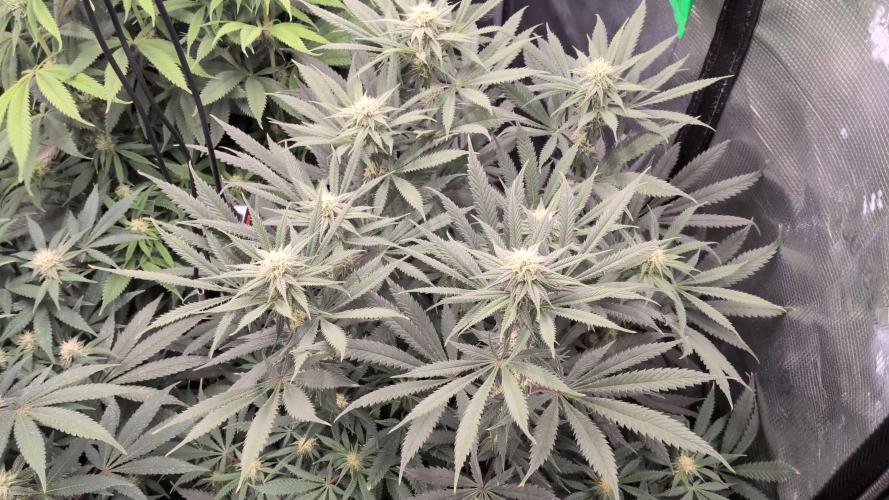
Coming into flower nicely a few are still a few weeks behind the others but I expect a full tent in a couple weeks


@GermanGrow182
Follow
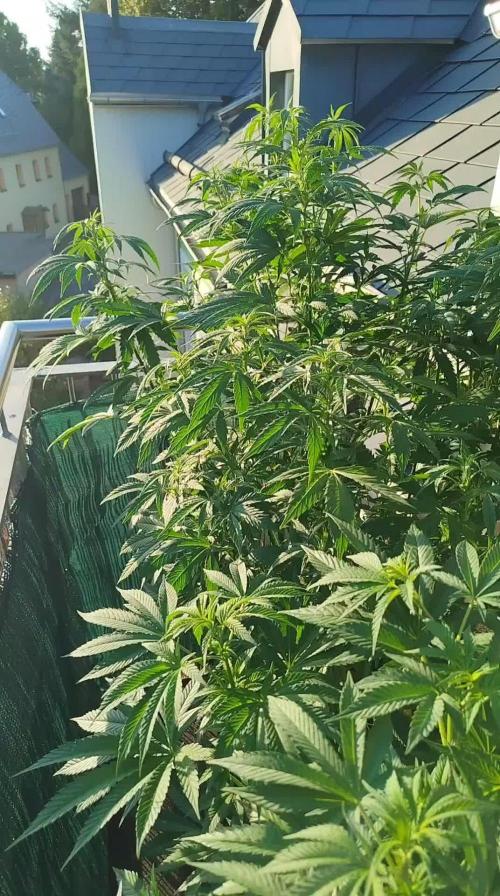
Top Wetter 👍 sie wachsen noch ein bisschen, der Stretch neigt sich dem Ende. Die Triebe fangen an, die Budstruktur zu etablieren. Endlich geht es los 😁 bei jeder wässerung gibt's biobloom dazu, alle 4 Tage calmag. Immer noch keine Mangelerscheinungen. Es läuft sehr gut ☺️👍 das wird endlich ein Rekordjahr 👌 bis nächste Woche ✌️


@Staffedition
Follow
Привет друзья. Моей растихе сегодня 119 дней
20.10 перевёл свет в режим 12/12
Начал применять LST технику на 19 дне и продалжаю применять её через день, а 18 августа добавил ДЕФОЛИЗАЦИЮ
С 20.08 ДЕФОЛИЗАЦИЮ делаю каждые 3,4 дня
С 20.08 LST технику делаю каждые 4.6 дней
На сегодняшний день влажность 54%
5.09.2023 заметил высокий Ph 7.9
С 48 дня Ph не ниже 5.8
На сегодняшний день Ph 6.0
Начал кормить с 60 дня Canna Terra Vega
PPM 870
Всем мира и добра!
Не забудь поставить лайк❤️, если понравилась как прошла неделя
И читайте наш TELEGRAM: https://t.me/smail_seeds
#Smail_Seeds 😀


@dgeneration
Follow
07-12 till 13-12
actually I did everything wrong this entire round. a bad start with much too late light. resulted in enormously stretched plants. almost impossible to save. after very deep repotting. they kept stretching. I still think too little light and too little water. now at the beginning of the third week of flowering they do not stop stretching .. a bizarre difference compared to the previous round.


@EhlersChick
Follow
2018.12.13 - Clone Day 74 - Flowering Day 22
I have no idea why #5 is so much taller than the others but whatever, I am NOT complaining! I'm so proud of my little garden {squeee!} 😃


@tresplantes
Follow
Smell is Even more amazing now al swellin up pretty good
Bluezy has a lil lighter bud structure for now but started swellin up just now
Dantes Inferno has already some good nuggs
Tomb Rider is really headbound and a lil too close to the lamp
Starting to lower the EC from 3 to 2.5
Starting With fade 2 days earlier than planed will give them a 5 day flush instead of 3


@Dunk_Junk
Follow
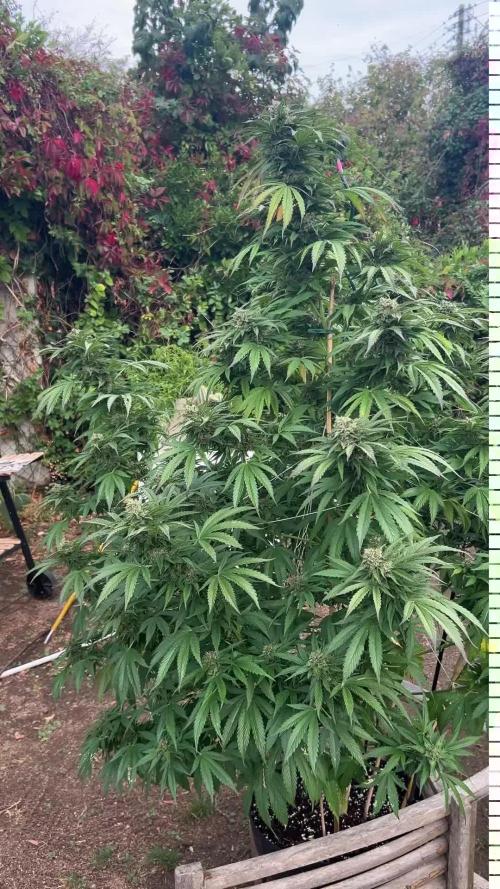
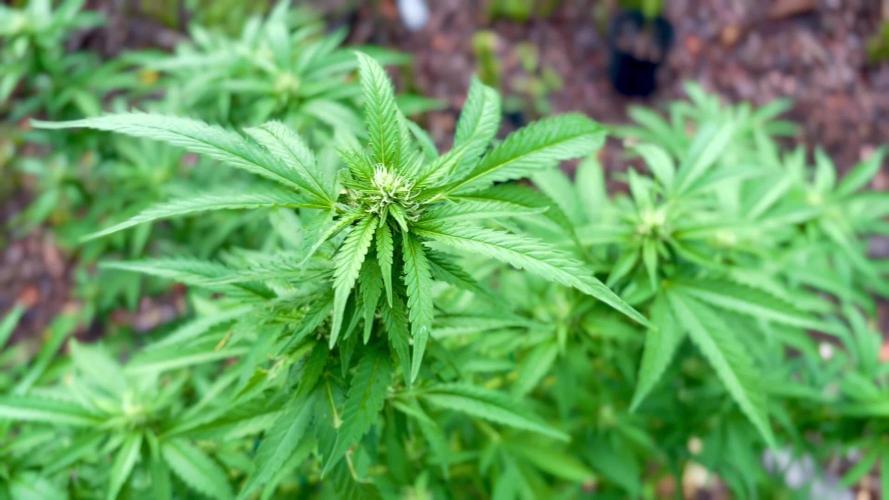
She's clearly not happy.
She hasn't been happy for a couple of weeks looking back at past weeks.





@Organic473
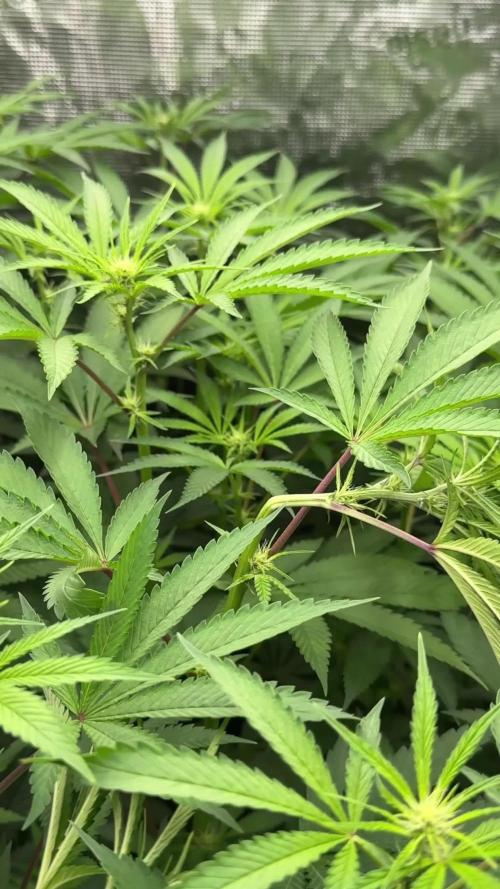
Follow
Fed her some bloom nutrients, she took it nicely.
I will continue to feed her nitrogen into the third week also.


@DogDoctorOfficial
Follow
💙 Project Blue Tent – Week 9
Blue Waffle F1 – Pheno A
🌿 Too Much Stretch, Then a Big Reset
Hello everyone, and welcome back to another chapter inside Project Blue Tent! 💙🌱
If you're new here, Project Blue Tent is our little experiment with four individual Blue Waffle F1 plants from Zamnesia, each documented separately from seed to harvest.
All four girls share the same environment, lighting, irrigation, nutrition and general cultivation philosophy.
And yet, as always...
they each have their own personality.
Last week I was wondering just how much these girls were going to stretch after seven weeks of vegetation.
Well...
I got my answer. 😂
They stretched.
A lot.
And this week became one of those weeks where the grower has to stop watching and start acting.
The plants were getting simply too tall.
With the height of the pots and substrate, the drainage system underneath them, and the distance between the canopy and the LED fixtures becoming increasingly limited, some of the tops were getting dangerously close to the lights.
So we made some changes.
A fairly big reset, actually.
And looking at the room now?
I'm very happy with where we landed.
🌿 Pheno A – She Took the Invitation to Stretch Seriously
Plant A is now approximately 145 cm tall.
😂
Yes.
One hundred and forty-five centimetres.
And when you add the height coming from the pots, substrate and drainage arrangement underneath the plants, that number becomes even more relevant when you're working inside a relatively limited vertical space.
Last week she was already moving quickly.
This week she basically said:
"Hold my nutrient solution."
😂💙
The structure she built during those seven weeks of vegetation gave her an enormous amount of material to work with.
The SCROG distributed that growth beautifully.
But once flowering stretch really kicked in, all of that established structure began pushing upward.
And eventually...
we simply ran out of comfortable vertical room.
So rather than fighting the plants continuously, we changed the room around them.
🕸️ The Second SCROG – Because These Girls Are Getting Big
One of the biggest changes this week was the installation of a second SCROG net.
This wasn't done because the first net failed.
Quite the opposite.
The first net did exactly what we wanted during vegetation:
It helped distribute the plants horizontally and build an even canopy.
But now these girls have become much taller.
And as flowering progresses, those branches are going to become heavier.
So the second net is there for something different:
support.
We're essentially creating another layer of structure through the upper portion of the plants.
This gives the flowering branches something to lean against as the flowers develop and gain weight.
And with plants this tall, I would much rather organize that structure now than discover later that a heavy flowering branch has decided to take a dramatic trip toward the floor.
😂
The second net also helps keep the canopy organized after the major defoliation.
And looking at the room now...
I think it was absolutely the right decision.
✂️ The Big Defoliation
And then came the other major event of the week.
Defoliation.
Not a little cleanup.
Not removing three leaves and calling it a day.
We went deep.
The room had become extremely dense, and with the plants stretching this aggressively, we needed to open everything up.
We removed leaves where they were creating unnecessary congestion and took out foliage from stems where appropriate, leaving the productive growth and flowering structure we wanted to carry forward.
This wasn't about making the plants look naked.
It was about making the structure functional again.
And there's an important distinction here.
We're not defoliating because removing leaves magically creates more flowers.
That's not the objective.
Leaves are valuable.
They're part of the plant's photosynthetic machinery.
The objective here was to manage excessive congestion, improve visibility through the canopy, increase air movement through the plant and reduce the amount of unnecessary foliage competing for space around the developing flowers.
We're trying to create a better working environment for the plant.
Not punish the plant.
Not stress it for the sake of stress.
And certainly not remove every leaf we can find.
🌿 What We Expect From This Defoliation
Now comes the interesting part.
After a significant cleanup like this, I don't expect the plants to immediately look like they're growing faster.
Quite the opposite.
There can be a period where they need to settle.
They've lost a considerable amount of leaf area.
We've physically changed their architecture.
So I expect the plants to spend some time adjusting and continuing their transition into flowering.
What I'm hoping to gain is something different:
better structure.
Better airflow.
Better light penetration.
Better access to the flowering sites.
Less congestion.
And a much easier canopy to manage as the flowers continue developing.
Will it completely stop the stretch?
No.
I wouldn't expect that.
The plants are already well into their flowering transition, and genetics, plant maturity and environmental conditions still have a huge influence on how much they stretch.
But by removing excess congestion and adding the second SCROG, we've made the remaining structure considerably easier to manage.
Now we watch.
🔥 A Few LED Burned Tops – And We Caught It
There was another little lesson hidden inside all that stretching.
Some tops had gotten too close to the LEDs.
And we saw a few leaves and flowering tips showing signs of LED stress/burning.
Nothing catastrophic.
Nothing that concerns me at this point.
But definitely something we needed to address.
And honestly?
I'm glad we caught it now.
Because once the plants were getting that close to the lights, we were already running out of room to work with.
So we attacked the problem from several directions.
We moved the ventilation equipment outside the tent.
We raised the LEDs.
We opened the canopy.
We installed another SCROG.
And suddenly...
we gained some valuable vertical breathing room.
That little bit of extra space can make a huge difference inside a tent.
🌬️ Moving the Carbon Filter & Extractor Outside
Another major change was moving the carbon filter and extractor outside the tent.
Previously, having that equipment inside the tent was consuming precious vertical space.
And with these girls reaching toward the lights, every centimetre suddenly became valuable.
So we moved the filter and extractor to the top of the tent.
The system now pulls air from the tent through the carbon filter and extractor and then exhausts it outside.
This gave us the space we desperately needed.
And that allowed us to raise the LED fixtures closer to the top of the tent rather than having the ventilation equipment occupying that valuable ceiling space.
It sounds like a relatively small modification.
But in a tent with plants this tall?
Huge difference.
Sometimes the solution isn't changing the plant.
Sometimes it's changing the room around the plant.
😂💙
💡 More Room for the Lights
And this is one of the most satisfying results of the whole operation.
Once the ventilation equipment was moved outside, we could bring the LEDs higher.
That immediately created more separation between the flowering tops and the fixtures.
The few areas that had experienced LED stress were addressed before things could become serious.
And now we have much more room to work with.
That's exactly what I wanted.
Because I don't want to spend the remainder of flowering constantly fighting the ceiling.
I want these girls to have somewhere to finish.
They already have plenty of height.
Now we need them to put their energy into the flowers.
🌬️ Two Fans – Creating a Vortex
We also added a second Zamnesia clip fan, positioned underneath the canopy.
So now we have:
One fan above.
One fan below.
And the goal isn't simply to make the leaves move.
We're trying to create a more complete circulation pattern through the tent.
With one fan moving air across the upper canopy and another helping move air underneath, the airflow can circulate through different levels of the room rather than leaving the lower portion relatively stagnant.
The idea is to encourage a kind of vortex-style circulation through the canopy.
Air moves.
Circulates.
Changes direction.
And continues moving through the plant structure.
This is particularly important now because we've spent the week opening the canopy and creating space.
There's no point creating all that space if the air simply sits there.
So now we've got airflow working from above and below.
And looking at the room?
It feels considerably more alive.
🌿 The Room After Defoliation
I have to say...
I love the way the room looks now.
Before the defoliation, it was an absolute jungle.
Beautiful.
Healthy.
But incredibly dense.
Now?
You can see the architecture.
You can see the branches.
You can see the flowering sites.
You can see the second SCROG.
You can see the airflow equipment.
And most importantly...
you can see the plants.
😂💙
The room feels organized again.
And that's exactly what we needed.
These girls have been growing extremely aggressively.
Now we're giving them a structure in which that growth can actually be managed.
✂️ A Word About Scissors
I also want to mention something that might seem insignificant but is actually very important to me.
The Zamnesia curved scissors.
I really like these.
For much of my defoliation, I actually use my fingers.
If a leaf can be gently removed without cutting anything else, that's often my preference.
But that's not always possible.
Some leaves are tucked into awkward places.
Some are smaller.
Some are delicate.
Some require a precise cut.
And that's where the scissors come in.
But there is one rule I don't compromise on:
Clean scissors.
Always.
Even when they're brand new, I still like to make sure the scissors are clean before using them.
When you're moving from plant to plant and making multiple cuts, cleanliness matters.
We're working with living tissue.
So there's no reason to introduce unnecessary contamination into the process.
Clean tools.
Gentle hands.
Deliberate cuts.
And don't cut something just because you happen to have scissors in your hand.
😂
💙 Pheno A After the Reset
And now...
let's come back to our girl.
Because despite all the work this week, Pheno A looks fantastic.
She's still one of the larger structures in this tent.
She's tall.
She's vigorous.
She's got plenty of flowering sites.
And after the cleanup, her architecture is much easier to appreciate.
The plant has gone from:
"How the hell are we going to fit all of this in here?"
to:
"Okay. Now we have a plan."
😂💙
The flowers are there.
The structure is there.
The health is there.
And now she has additional support underneath her developing flowering branches.
This is a very good place to be heading into the next stage.
🌸 From Building Plant to Building Flowers
This is the transition I'm most interested in now.
Up until this point, so much of the conversation has been about growth.
Height.
Branches.
SCROG.
Canopy.
Stretch.
But now?
The plant has done enough building.
I want to see her start putting more of that energy into flowering.
The architecture is established.
The second net is installed.
The canopy has been opened.
The lighting has been raised.
The airflow has been improved.
The room has been reorganized.
Now we let her work.
And hopefully...
the next photographs will show us exactly what all that preparation was for.
Beautiful flowers getting bigger.
💧 Nutrition – The Girls Are Hungry
Another important development this week is nutrition.
The girls are absolutely loving the feeding.
So we've increased the Hydro A and Hydro B recipe slightly.
We're now running:
Plagron Hydro A — 2.2 ml/L
Plagron Hydro B — 2.2 ml/L
Plagron Hydro Roots — 1 ml/L
Plagron Power Buds — 1 ml/L
pH adjustment as required
That small increase has brought the EC up accordingly.
Current recorded EC is approximately 2.49 mS/cm.
And again, this wasn't some dramatic change.
It was simply a small progression because the plants are consuming aggressively and showing us that they are ready for it.
They're growing.
They're flowering.
They're drinking.
They're hungry.
So we listen.
And we adjust.
That's the whole philosophy.
Don't feed a number.
Feed the plant.
🌡️ Week 9 Environment
The current recorded conditions are:
🌸 Flowering: Week 9
📏 Height: approximately 145 cm
💡 Light schedule: 12/12
☀️ Day temperature: 27°C
🌙 Night temperature: 27°C
💧 Relative humidity: 67%
⚗️ pH: 6.01
⚡ EC: approximately 2.49 mS/cm
🌡️ Solution temperature: 25.3°C
🌱 Substrate temperature: 24°C
🌬️ CO₂: approximately 666 ppm
? Pot size: 8 L
💦 Watering: approximately 1.6 L per plant / 24h
The environment remains remarkably stable.
And that's especially valuable after a week where we've physically changed so much of the room.
The plants have enough to deal with simply adapting to their new architecture.
I don't want environmental instability adding another variable.
So now...
stability.
Consistency.
Observation.
🔬 Same Room. Same Conditions. Four Different Girls.
One thing that's fascinating about this particular project is how uniform the room remains despite the plants being so vigorous.
The four Blue Waffle F1 girls are remarkably similar.
They all went through the same long vegetative period.
They all experienced the same lighting.
They all received the same irrigation.
They all received the same nutrition.
They all experienced the same environmental conditions.
And now they're all showing that same general flowering transition.
There are individual differences, of course.
That's what we're documenting.
But overall?
They are behaving like sisters.
And that's making this experiment incredibly interesting.
🌿 What I'm Watching Now
After this week's reset, there are several things I'm going to be watching closely.
First:
How quickly does the stretch settle?
Second:
How do the plants respond to the heavy defoliation?
Third:
How does the second SCROG hold the flowering branches as they gain weight?
Fourth:
How does the new airflow pattern perform under a developing flowering canopy?
And finally...
How much of that beautiful vegetative structure is going to turn into flowers?
Those are the questions now.
We've done the work.
Now we observe the results.
🌸 The Big Lesson From This Week
If there's one thing this week reminded me of, it's that a grow isn't always about having a perfect plan.
Sometimes you make the best plan you can.
Then the plant laughs at you.
😂
We knew they might stretch.
We didn't know they'd stretch this much.
So we adapted.
We moved the ventilation equipment.
We raised the LEDs.
We cleaned the canopy.
We installed another SCROG.
We added another fan.
We adjusted the nutrition.
And now?
The room is looking better than it did before the problem appeared.
That's what I consider a successful grow.
Not avoiding every problem.
Recognizing them early and adapting intelligently.
🔭 Looking Ahead – Now We Let Them Flower
And this is where things get exciting.
The girls have been through a major reset.
The canopy is open.
The second SCROG is in place.
The LEDs are higher.
The ventilation system has been moved outside.
Airflow is now working from above and below.
The plants are receiving their updated nutrition.
And Pheno A?
She's standing there at 145 cm, looking at me like none of this was particularly dramatic.
😂💙
Now I want to see what she does with the room we've created for her.
Hopefully the aggressive vertical growth begins to calm down.
Hopefully the flowers start becoming the dominant story.
Hopefully the second SCROG gives us the support we need as those flowers gain weight.
And hopefully those few LED-stressed tops recover without further drama.
I think we caught that issue early enough.
Now we watch.
💙 Final Thoughts – The Room Is Back Under Control
What a week.
Seriously.
😂
We went from:
"They're stretching a little."
to:
"Okay, these girls are going to hit the LEDs."
And then we went to work.
The carbon filter and extractor moved outside the tent.
The LEDs went higher.
The canopy received a serious cleanup.
A second SCROG was installed.
A second Zamnesia clip fan went underneath the canopy.
Airflow now works from above and below.
The nutrition was increased slightly.
A few LED-burned leaves and tops were cleaned up.
And after all of that...
I look at the room and smile.
Because it looks beautiful.
The plants look healthy.
The structure is organized.
The flowering sites are everywhere.
And Pheno A is absolutely shining.
She's tall.
She's vigorous.
She's beautifully developed.
And now she's finally got some breathing room.
🌿💙
The defoliation wasn't about making her smaller.
It wasn't about forcing her to flower.
It wasn't about chasing some magical yield increase.
It was about taking an overly crowded flowering structure and making it more functional.
The second SCROG isn't there because we expect failure.
It's there because these girls have become substantial plants and we want to support them properly.
The second fan isn't there simply to make the leaves dance.
It's there to help create better circulation through the entire canopy.
Moving the ventilation equipment wasn't cosmetic.
It gave us precious vertical space.
And raising the LEDs gave us more room between the fixtures and the flowering tops.
Every change had a reason.
And now...
we wait.
The girls have done their part.
We've done ours.
Now let's see what Blue Waffle F1 Pheno A does with this new chapter.
Because I have a feeling the next few weeks are going to get very interesting.
💙🌸🌿
🙏 A Huge Thank You
A huge thank you once again to Zamnesia for making Project Blue Tent possible and for giving us the opportunity to explore these beautiful Blue Waffle F1 genetics phenotype by phenotype.
Thank you to Plagron for the Hydro nutrient line and everything supporting these girls through this very vigorous cycle.
A massive thank you to Zamnesia for the Phytonaut LED lighting and for the curved scissors and clip fan that have become part of the practical side of this project.
Thank you to Mars Hydro for the irrigation and drainage system that continues keeping these girls supplied while they absolutely demolish their water.
😂💙
And thank you to GrowDiaries for giving us the platform to document all of this craziness and share it with growers around the world.
Most importantly...
thank you to everyone following Project Blue Tent.
This week was definitely one of those chapters where the plants reminded us who's actually in charge.
We planned.
They stretched.
We adapted.
😂
And now the room is ready for the next phase.
Four Blue Waffle F1 girls.
One room.
One environment.
One very ambitious flowering canopy.
And a second SCROG ready to catch whatever these ladies decide to throw at us next.
Let's see how they finish.
Until next week...
More room. More airflow. More support. And hopefully a lot more flowers. 💙🌸🌿
Growers Love, happy growing, and take care everyone! 🌱💙


@sabalero420
Follow
Bueno con las smoothie tuve un problema con el ph. Y por eso se pusieron mas amarillas de lo normal. Hay una que quedó con los cogollos muy chicos y ya no creo que vayan a engordar. Las blue dream vienen muy bien sin problemas. Con un lindo verde.


@The_Doctor_Green
Follow
4ta semana de floracion,con un crecimiento notorio en los cogollos,( ya la planta ha dejado de crecer en "altura" para empezar a dedicarse a inflar los cogollos).
El deterioro de las puntas de las hojas no avanzo, gracias a que baje el ph del agua de 6.5..a 6.1,en la semana siguiente le bajare la base de Grow de 3ml a 1ml ,para quitarle el posible exceso de nitrógeno, veremos que sucede con estos cambios,faltan muchas semanas por delante pero creo que va por buen camino.
