


Likes
Comments
Share


@Ferinky
Follow
En esta actualización se incluyen 2 semanas ya que por trabajo me fue imposible añadir la semana anterior.
El día 15 de Agosto recibió la segunda pulverización de Bacillus Thuringiensis para prevenir el ataque de las orugas.
Sigo alternando riego de agua un día con riego de Ascophillum Nodosum al día siguiente. He dejado de regar con Cannazym.

Likes
7
Share


@ThePotFactory
Follow
Safe to say this is where the money shots start to happen xD. All is going well I think, Im trying to water them every day. Not a lot of maintenance needed at this stage if Im honest. There seem only to be a few little flowers under the net that i just pick off; they usually amount to nothing once dried. Hope to get these colas fat and heavy.
Peace
Charlie

Likes
8
Share

@Nebuloso420
Follow
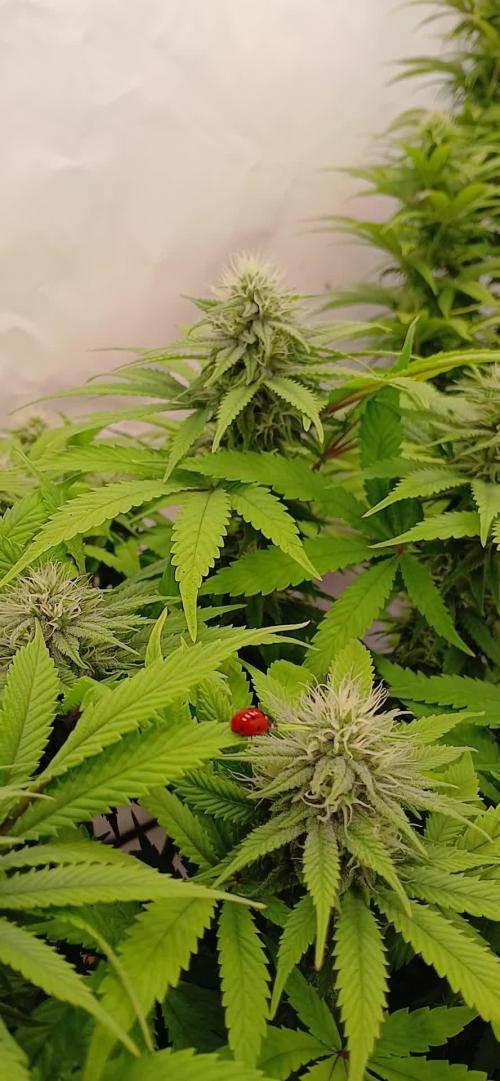
started with 15 liters of nutrient-mix this week. I need exactly one third of the recommended amount of fertilizer to get an EC of 1.4 mS/cm.
pH was 6.3.
Drain of the StrawberryAK had an EC of 2.2 and she smelled super strong when i took her out of the tent. An intense sour strawberry bubblegum scent.
The Humboldt Gelato smelled als very good, the typical mouthwatering Gelato smell. Drain had an EC of 1.7mS/cm.
The CBD Chronic also had an EC of 1.7mS/cm. Compared to the two other plants, she wasnt smelling very strong. Good old lemon and wood.


Likes
18
Share


@MadeInGermany
Follow
Hey everyone 😃.
This week she has done great 👍.
It was done again on all the drifted topping and sprayed one last time with neem oil so that the last trips are finally gone 😁.
We haven't had any pests for so many years and all of a sudden we have such little shit parts 😅.
This week it was poured twice with 1.2 l of water.
GHSC enhancer was added during a pouring (1 g per l)
The tent was cleaned every day this week and the plants were checked for health.
The humidifier is filled once a day.
Next week I will decide how I will continue the training because I have space again in the flower tent 😀.
Until then, I wish you and your families a good start into the new year 2021 🙏🏻.
Stay healthy and let it grow 🍀
You can buy this Strain at :
https://sweetseeds.es/de/red-mandarine-f1-fast-version/
Type:
Red Mandarine F1 Fast Version
☝️🏼
Genetics:
Red Poison Auto®️ (SWS39)
X
Tangie (California Orange x Hybrid Skunk)
👍
Vega lamp:
2 x Todogrow Led
Quantum Board 100 W
💡
Bloom Lamp :
2 x Todogrow Led
Cxb 3590 COB 3500 K 205W
💡💡☝️🏼
Soil :
Canna Coco Professional +
☝️🏼
Fertilizer:
Green House Powder Feeding
☝️🏼🌱
Water:
Osmosis water mixed with normal water (24 hours stale that the chlorine evaporates) to 0.2 EC. Add Cal / Mag to 0.4 Ec Ph with Organic Ph - to 5.5 - 5.8 .

Likes
11
Share


@Professor_Daank
Follow
Herrrrro gang! Welcome to another week of Daank's grow!
8/2: Brought back the Great White. I was reading that it works well in conjunction with other root excelurators, like Rapid Start. I got 2 more temp/humidity sensors for the tent. It allows me to keep track of 100% of what is really going on, I find it to take away worry (b/c temps are very important!). Today was a "eureka!" moment in terms of understanding run-off pH and it's value to telling the grower how healthy the plant is and what nutes may, or may not, be needed. I also got some new LED glasses so I don't burn my fucking corneas when tending to the garden - they are phenomenal and I suggest them if you grow with an LED. Check the videos and photos. Pistils are growing rapidly and baby budlets are starting to form. I'm actually getting a nice subtle purple color - it's very neat.
Today's run-off pH was 6.3, and I gave it 6.3 for water - so that's a good sign (I bounce the pH all around from 5.5-6.3). I'll keep track of this moving forward in the diary. Minor defoliation.
***Pro-Tip: If you're wondering what the run-off should be... around +.5/-.5 of what you put in is good. But this also might not mean anything... so many different opinions on the web.
****: My Spotify Playlist for my plants: https://open.spotify.com/playlist/0ydAFulbzDlqFr5WIZdfM1?si=r5M5H83BSQ6tOE5pk9Bg4Q
Day 38 - 8/4: Lil'budlet's are poppin' up all over. By the end of this week I assume we'll be in full swing.
Day 39: I have ordered new nutes, Advanced Nutrients. The reviews, photos, and research all point to using this for the best results. I found them to be a bit expensive, but if I can always get perfect pH values without much of a hassle... I'm down. They will be here by end of the week and I'll transition that over this weekend. I can't wait.
Day 40: 8/6 - Advanced Nutrient nutes arrive today. Watering will be a pleasure. The plants look great. The buds are real. Small smell. Trimmed last night quite a bit for bud production. They love George Gershwin's "Rhapsody in Blue". It perks 'em up.

Likes
13
Share


@FlavoursUk
Follow
Welcome back to another week, finally decided to flip to flower as these girls do grow pretty quickly in DWC. Aiming for some nice quality buds bit also a decent yield of at least 1 gram per watt of light.
Nutrient solution has not been changing to complete flower schedule yet but I will be sure to switch it over in a few days. The crucial part now is keeping the EC and pH in a good range to avoid any deficiencies or Nutrient lock out.
Let's see what the stretch brings the first few weeks. Stay tuned, and I'll be back for the by the end of the week to report some video feedback.
End of the week has ending with a heavy defoliation session. Plants were getting bushy and covering potential tops so that needed to be addressed. For now, it will be selective defoliation once they have recovered, which should be in 2/3 days.
Let's watch them bounce back. Stay tuned for week 2.
Check out my YouTube and Instagram channel for a closer look. (Link on profile)

Likes
4
Share


@Maximilian1234
Follow
Blütewoche 5
Die Pflanzen machen sich prächtig. Die Luftfeuchtigkeit will nicht runter, was mir die Damen aber bisher nicht übelnehmen. Ein paar hohe Triebe habe ich eingefangen und halbwegs auf Linie gebracht. Es Duftet schon richtig lecker

Likes
42
Share


@Dunk_Junk
Follow
Wow look at that bush!!!
I've not seen that much bush since Debbie Does Dallas! 😂 😍
She's grown another 18cm this week vertically too.
Hope she enters flowering soon 😬 😎

Likes
10
Share


@CzAlmighty
Follow
Veliká škoda že jsem neměl víc semínka . Tahle indica stojí za to ji zkusit .. DOPORUČUJU😎🍀💚


Likes
11
Share


@GREENPHOENIX6262
Follow
*Week 6 of flowering 10/01*
Critical +2.0 - Apple Fritter
Both plants are nearing harvest and have maxed out at a height of 48 inches.
Buds have developed heavy trichomes and are giving off a bright and vibrant smell.
85% of both plants have grown in their orange hairs and have a bright green and orange tint,
Today will be the last nutrient feed, I will be using the "Lotus Carboflush" starting tomorrow (10/02) to remove the salt build up until harvest which will be next week (10/09)
* 10/8 - Cut down*
Both are heavy on top - Covered in trichomes - smells deep (Citrus)
Dry trimming in two weeks - aiming for 14 day cure.
*Day 2 Dry Hang Video uploaded 10/09*
*10/15 - Harvest should be completed by the end of this week - 10/20*


Likes
16
Share


@Ultraviolet
Follow
Seedling managing 93F 30%RH, around 20 DLI. Vpd is in the 3's. No I don't recommend.
Signum Magnum.
"A great sign appeared in the sky
a woman clothed with the sun
with the moon under her feet
and on her head a crown of twelve stars.
Sing ye to the Lord a new canticle:
because He has done wonderful things.
Glory to the Father, and to the Son, and to the Holy Spirit
As it was in the beginning, and now, and ever shall be, world without end."
The plant nutrient nitrogen exists in forms with both positive and negative charges. Ammonium (NH4+)(immobile in soil)(Cation) has a positive charge, while nitrate (NO3-) (highly mobile in soil)(Anion)has a negative charge. Nitrogen is unique among plant nutrients in that it can exist in both positively charged (ammonium, NH₄⁺) and negatively charged (nitrate, NO₃⁻) forms in the soil. This makes it a special nutrient. In that it is responsible for providing balance for reactionary trade offs when it comes to ph. Because ph itself in the medium will always slowly drift towards acidicity, such is nature. 80% of nitrogen should be nitrate and no more than 20% ammoniacal nitrogen.
Ca, mg, and K are the big 3 cations related to soil composition, pH & base saturation.
When nitrogen is in the form of ammonium, it can compete with calcium, magnesium, and potassium for absorption sites in the plant root. This competition can lead to a reduction in the uptake of these other essential nutrients. Nitrogen, particularly in its nitrate form (NO3-), can increase soil acidity, which can also affect the availability of calcium, magnesium, and potassium. The form of nitrogen applied (ammonium vs. nitrate) can influence its interactions with other nutrients. Ammonium nitrogen can have a more pronounced negative effect on the uptake of calcium, magnesium, and potassium compared to nitrate nitrogen.
Common forms of ammonium nitrogen include ammonium ion (NH4+), urea, and ammonium compounds like ammonium nitrate, ammonium sulfate, and ammonium phosphate.
Common forms of nitrate nitrogen include potassium nitrate (KNO3), sodium nitrate (NaNO3), calcium nitrate (Ca(NO3)2), and ammonium nitrate (NH4NO3).
Phosphorus is an essential plant nutrient, and its availability in the soil is strongly linked to the presence of oxygen. Plants primarily absorb phosphorus as phosphate (PO4), and oxygen is a key component of this molecule. Furthermore, the availability of phosphorus in the soil can be impacted by factors like soil aeration and temperature, which in turn affect the oxygen supply to the roots.
Phosphorus uptake in plants is most critical during the early stages of growth, particularly within the first few weeks of plant development.
Young plants actively growing tissues have a high demand for phosphorus. They may absorb up to 75% of their total phosphorus requirements within the first few weeks of vegetative growth, with up to 51% of uptake happening overnight, primarily in the first few hours or early nightfall.
⑨Anaerobic root respiration, or respiration without oxygen, is detrimental to plants because it's less efficient and produces toxic byproducts, leading to reduced energy production, nutrient uptake issues, and ultimately, root damage and plant stress.
⑨Anaerobic respiration, unlike aerobic respiration, doesn't utilize oxygen as the final electron acceptor in the electron transport chain. This results in a significant drop in the amount of energy (ATP) produced, which is necessary for various plant functions, including growth, nutrient uptake, and maintenance of cellular processes.
⑨In the absence of oxygen, plants produce byproducts like ethanol and lactic acid during anaerobic fermentation. These byproducts can be toxic to the roots and inhibit their function,
⑨When oxygen is depleted in a medium, the pH tends to decrease (become more acidic) due to the production of metabolic byproducts. This is particularly relevant in biological systems where aerobic respiration relies on oxygen as the final electron acceptor.
⑨When oxygen is scarce, plants may switch to anaerobic respiration. This process produces carbon dioxide (CO2) as a byproduct.
⑨CO2 dissolves in water to form carbonic acid (H2CO3). This acid lowers the pH of the medium, making it more acidic.
⑨Anaerobic conditions can impair a plant's ability to regulate its internal pH, leading to a drop in cytoplasmic pH and potentially cellular acidosis.
⑨The change in pH can also affect the availability of certain nutrients to the plant, as pH influences the solubility of micronutrients like iron, manganese, zinc, copper, and boron.
⑨The lack of oxygen in the plant medium leads to a decrease in pH due to the production of carbon dioxide during anaerobic respiration and impaired pH regulation within the plant.
In plant cells, cellular acidosis, a drop in the internal pH of the cytosol, is a significant stress response, particularly during conditions like flooding or hypoxia. This acidification can be triggered by a decrease in oxygen levels, leading to the production of metabolic byproducts like lactic acid and CO2. The plant's ability to tolerate and recover from these conditions depends on its cellular mechanisms to regulate pH and mitigate the effects of acidosis. When plants are subjected to low oxygen environments, such as those experienced during flooding, anaerobic metabolism, which produces lactic acid and ethanol, becomes the primary source of energy. This can lead to a build-up of these acidic metabolites in the cytosol, causing a drop in pH.
OXYGEN
Atomic oxygen (single oxygen atom, O) is the lightest form of oxygen, as it has the lowest mass of the oxygen molecules. Oxygen also exists as a diatomic molecule (O2) and an allotrope called ozone (O3), which have higher masses due to the number of oxygen atoms combined.
Atomic Oxygen (O):
This refers to a single oxygen atom, which is the most fundamental form of oxygen.
Molecular Oxygen (O2):
This is the common form of oxygen we breathe, consisting of two oxygen atoms bonded together.
Ozone (O3):
This is an allotrope of oxygen, meaning it's a different form of the same element, consisting of three oxygen atoms bonded together.
Since atomic oxygen has the fewest oxygen atoms, it naturally has the lowest mass compared to O2 or O3.
Ozone (O3) Lifespan:
Ozone has a relatively long lifespan in the stratosphere, particularly at lower altitudes. For example, at 32 km in the middle latitudes during spring, ozone has a lifetime of about 2 months.
Oxygen (O) Lifespan:
Atomic oxygen, on the other hand, has a much shorter lifespan. At the same altitude, its lifetime is about 4/100ths of a second.
Ozone-Oxygen Cycle:
The ozone-oxygen cycle involves the rapid exchange between atomic oxygen (O) and ozone (O3). UV radiation can split molecular oxygen (O2) into atomic oxygen (O), which then reacts with O2 to form ozone (O3). Ozone can also be photolyzed by UV radiation, creating atomic oxygen again, which can then react with O3 to reform O2.
Dominant Form:
The partitioning of odd oxygen (Ox) between ozone and atomic oxygen favors ozone in the lower stratosphere. This means that a much larger proportion of odd oxygen exists as ozone than as atomic oxygen, especially in the lower stratosphere.
Recombination:
Atomic oxygen has a high energy and reactivity. When it encounters another oxygen atom, they can combine to form O2. This process releases energy, contributing to the heating of the atmosphere.
Ozone Formation:
Atomic oxygen can also react with molecular oxygen (O2) to form ozone (O3). Ozone plays a significant role in absorbing harmful UV radiation.
Other Reactions:
Atomic oxygen can react with various other molecules in the atmosphere, like nitrogen (N2), water (H2O), and carbon dioxide (CO2), forming different compounds.
UV light below 240nm (peak 185nm) creates ozone (O₃) through a process called photolysis, where UV light breaks down dioxygen molecules (O₂) into single atomic oxygen atoms (O). These single oxygen atoms then react with other oxygen molecules to form ozone (O₃). Specifically, UV-C light with wavelengths shorter than 240 nm can cause this photolysis.
UV light with wavelengths between 240-280 nm, (peak 254 nm) breaks down ozone (O₃) into dioxygen molecules (O₂) and atomic oxygen atoms (O). 280nm does not have the energy potential to break apart the stable bond of (O₂) into enough (O) to make (O₃)
At ground level, atomic oxygen (single oxygen atoms) has a very short lifespan. This is because it's highly reactive and quickly combines with other molecules to form stable diatomic oxygen (O2) or other compounds. While the exact timeframe varies depending on the specific circumstances, its lifespan is typically measured in nanoseconds or picoseconds.
Likes
19
Share


@Lazuli
Follow
She put on the weight very fast once she started flowering, at the harvest there was many amber trichomes at day 84. If u love kush u really have to give her a go, very loud terpines


Likes
22
Share


@Luv2Grow
Follow
Day 57 - Starting week 9 and WOW, what a difference in week. I’m thinking this girl is gonna end up being a beast. She’s stretching about an inch every day and filling in more and more each day. I’m ready for the next few weeks of more of the same. Growing is still fairly new to me and I can’t be happier with the FastBud genetics and how this girl is looking so far. Will give her the next foxfarm trio feeding on Thursday.
Day 58 - Not much to really update. She’s getting fatter and filling in everyday and getting pretty frosty. Will give her her next feed of foxfarm tomorrow. It amazes me, how much she fills in and fattens up each day.
Day 59 - I’m still amazed by the growth everyday. She’s looking pretty amazing. Gave her the last week 9 foxfarm feeding and will give her straight water until the week 10. She’s still got a couple weeks to go but can’t wait for her to be finished.
Day 60 - Looking great. She slowed down her drinking a bit so held off on watering her but will check her out tomorrow and see how thirsty she is. She’s defensively fattening up each day but still a couple weeks before I think about chopping. She’s got lots of growing time left.
Day 61 - She’s really starting to smell the place up and it amazing. She was pretty thirsty, gave her a full gallon of pH’d water before she started any sort of runoff. All looking good and can’t wait for her to finish.
Day 62 - Nearing the end of week 9 and really pleased with this girl. She’s really starting to fatten up and fill in. Still a couple weeks left but can’t wait to harvest and try this girl.
Day 63 - Ending week 9 and looking sweet. She’s really starting to pack on some weight and filling in nicely. She’s definitely starting to get frosty and starting to smell really good.
Likes
2
Share

@PharmaZ
Follow
Tuesday 4th August (day 38) 2-4am
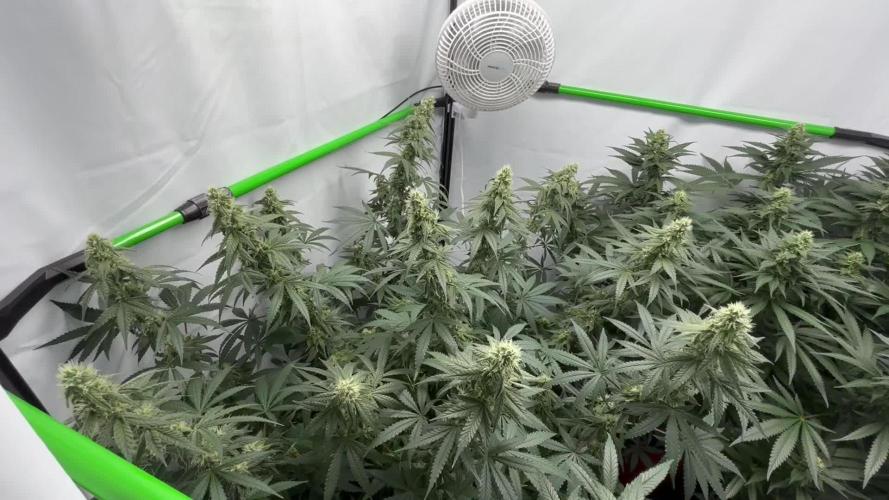
Heavy flushing EC keeps rising PH hasn’t come down below 2 after heavy watering and light feeding. I’m resorting to a reset flush now put roughly 15L of 1.0EC nutrient mix just Calmag and A&B through each pot and finished off with a Balanced feed for day 38
0.5ml/L - Calmag
1ml/L - Canna A&B
1ml/L - Big Bud
2ml/L Clean fruits
PH5.6 EC
Have removed the plant stands so I can bottom feed them extra when the lights are off, or if I can’t be home in time for watering. I’ve reduced light intensity when it’s too hot, battling high humidity.
As you can see they are surviving they are a dark green colour and bud development has been super slow due to all the issues when growing in summer.
I shouldn’t have had dry backs early flower should have just soaked them and worked with the humidity. Lessons learned as always with growing it’s never just plain sailing.
I might knock the pure coco on the head and start adding perlite again in the winter.
May get the autopots out haven’t decided yet.

Likes
6
Share


@n1mbu5
Follow
They are titchy one will be no more than 15g the other 30g but it was a fun run. Beautiful big fat buds and I would really like another go with these under less pressure with the circumstances.
I will add more photos!
**
OK more photos added so yeah my guess was close a nice yield for the small space and little effort put in.
I'm excited to see how my ones from scratch will turn out from my other diary🤩
Likes
11
Share


@Annakonda
Follow
Pas beaucoup d'odeur mais une fois coupée une belle odeur de sucre de bois et un peu de fruit se dégageait 🤤🤤🤤.
Pour avoir fait pas mal d'erreur et réussir a en tirer 127 g humide pour une première et juste un lst sur la tige principale ( quasi un sog) . Je pense avoir fait quelque chose de plutôt pas mal. Maintenant le produit final ne sera pas a son rendement maximum, mais ça me va.


Likes
6
Share

@CaveGanja
Follow
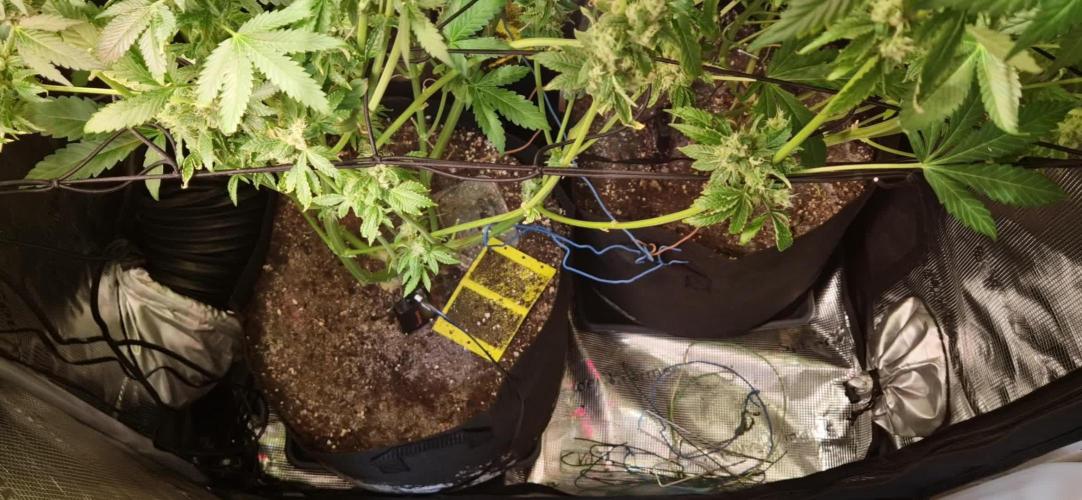
The gelato cookies is done all trichomes are milky.
Green gelato needs maybe one week more starting to purple a lot on the buds.
Isla mirage needs 2-3 weeks more.
I give them from now on only water the pot is pretty nasty a lot of salt on the survice.