The Grow Awards 2026 🏆
Likes
Comments
Share
@qanehbosm
Follow
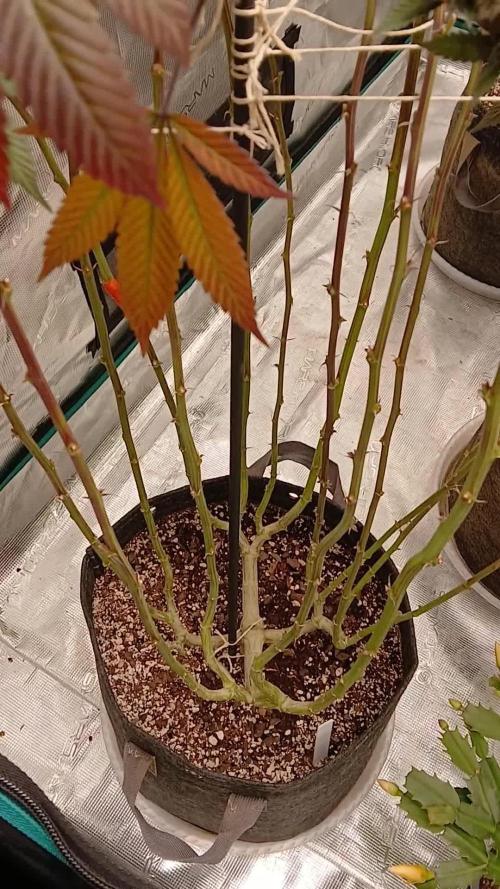
These plants are finally stable! I've stabilizrd the temperature and humidity. They appear a week behind where they should be. Two of the Candida plants look severely stunted in their growth. This is likely due to early novice mistakes. (The Candida plants are in the 10gallon Rhizopots). The two auto Sour Diesel's are strong and healthy. The Charlotte's Angel auto is doing quite well.
Likes
4
Share
RAW GROW is a tested blend of all 12 RAW Soluble plant nutrients, essential elements and supplements. This blend has been proven to be an optimal all-in-one base “Grow” horticultural fertilizer. RAW GROW is used through out the entire vegetative stage. Derived from: Plant protein hydrolysate, mono potassium phosphate, potassium sulfate, cane molasses, sodium borate, copper sulfate, iron DTPA, magnesium sulfate, manganese sulfate, zinc sulfate and azomite. Also contains non-plant food ingredients: Humic acids derived from leonardite and peat, kelp (ascophyllum nodosum), silicon dioxide derived from diatomite and yucca extract. When you overlap a copper wire to attract ions, it is called ion exchange. Copper wire is often used as a material for ion exchange because it has a high affinity for positively charged ions, such as copper, zinc, and nickel. When copper wire is overlapped or wound into a coil, it creates a surface area that attracts ions and allows them to bind to the wire or gather within the space. This process is used in various applications, such as electroplating, water treatment, chemical separation processes and cultivation. Electrolysis is a chemical process that involves passing an electric current through a liquid or solution containing ions. This process causes the ions to migrate towards the electrodes, where they undergo a chemical reaction. In the context of plant growth, electrolysis is used to increase the availability of your nutrient-rich solution that can be used to feed plants. Electrolysis and nutrient rich reservoirs work well together since your cannabis nutrients are salt based. The process involves passing an electric current through a solution of water and plant nutrients, which causes the water molecules to break down into their constituent parts, hydrogen, and oxygen. The hydrogen ions (H+) then combine with the nutrients in the solution to form a nutrient-rich substance that can be absorbed by the plant roots easier. This will only work in a nutrient rich solution as it requires the salt-based nutrients to engage. This process, known as hydrolysis, provides the plant with a continuous supply of nutrients and oxygen, which can help to increase plant growth and improve yields. By providing the plant with a more efficient method of absorbing nutrients, electrolysis can help to increase the uptake of essential elements such as nitrogen, phosphorus, and potassium. Additionally, electrolysis can help to maintain the pH balance of the growing medium, which is essential for optimal plant growth. One of the key advantages of using electrolysis to increase plant growth is that it allows for greater control over the growing system. This is exactly why this is generally a technique reserved for advanced hydroponics growers. By adjusting the voltage and current levels, cultivators can custom control the nutrient concentration and pH level of the solution, ensuring that the plant receives the optimal amount of nutrients sitting perfectly on potential hydrogen spectrum. Carotenoids absorb light in the blue-green range of the visible spectrum, complementing chlorophyll's absorption in the red range. Carotenoids protect photosynthetic machinery from excess light. They deactivate singlet oxygen, which is a harmful oxidant formed during photosynthesis. Carotenoids quench triplet chlorophyll, which can be harmful to photosynthesis. Carotenoids scavenge reactive oxygen species (ROS), which can damage cell membranes and proteins. Carotenoid derivatives signal plant development and responses to environmental cues. Carotenoids provide precursors for the biosynthesis of phytohormones like abscisic acid (ABA) and strigolactones (SLs). Carotenoids are pigments that give fruits and vegetables their orange, red, and yellow colors. They also act as free radical scavengers to protect plants during photosynthesis. Beta-carotene is the most common provitamin A carotenoid. It's found in orange and yellow fruits and vegetables like carrots, sweet potatoes, and mangos. Other carotenoids include lycopene, lutein, and zeaxanthin. These carotenoids have antioxidant and photoprotective properties. In plants, Vitamin A is found as carotenoids, which are pigments that give plants their color. Vitamin A is a fat-soluble vitamin. Vitamin B plays a vital role in plant growth and development. It acts as a coenzyme in many metabolic reactions, which are the basis for plant growth and maintenance. Vitamin B helps plants metabolize nutrients, which are essential for growth and development. Vitamin B helps plants respond to biotic and abiotic stress. Vitamin B can help plants grow new roots, which can reduce transplant shock. Vitamin B can help plants grow shoots, especially slow-growing plants. Vitamin B1 Also known as thiamine diphosphate, vitamin B1 is a key component of metabolic pathways like glycolysis and the tricarboxylic acid cycle. Vitamin B3 Also known as nicotinamide or niacin, vitamin B3 is a biostimulant that can improve plant growth and yield. Vitamin B6 Vitamin B6 acts as an antioxidant and cofactor, and is involved in plant stress responses. Vitamin C, also known as ascorbic acid, is a vital nutrient for plants that helps with growth and protects them from excess light. Vitamin C acts as a redox buffer, which is important for regulating photosynthesis. Vitamin C helps enzymes that regulate photosynthesis, hormone production, and regenerating antioxidants. Vitamin C is a coenzyme in the xanthophyll cycle, which converts excess energy into heat. This process helps plants protect themselves from too much light. seedlings to young plants can feed on 200-400 PPM, Teenage plants that have a maturing root zone can feed on 350-550 PPM and adults will feed 600-1000 PPM. The more you feed plants and watch them grow you'll get a feel for how much to give them. Less is more when trying to grasp this. High level of CEC in organic soil so I'm watering 5-gallon
Likes
9
Share
@MMVSS
Follow
So I'm Upset That She Didn't End Up Being A Mutant! ABC AND STEALTH FIGHTER COMBINED AND IT DECIDED TO GO WITH MORE STABLE GENES 😆 Don't Worry Some Mutants Did Pop In Other Parts Of My Garden I'll Make A Journal Soon! For Now We Will Just Pray This Is A Girl! She Due For Her Topping Today! She Exploded Once She Had Some Roots And I Blacked Out The Glass With Painters Tape! So We Flip Very Very Soon! One More Week! This May Not Look Like Much, But Considering Her Constraints, It's A LOT! TERRA POWER!
Likes
30
Share
10000 ml jeden 3 Tag in der zwanzigste Woche pH-Wert: 6,2 EC-Wert: 1,1 mS/cm Temperatur: 24ºC Luftfeuchtigkeit: 60% Schädlingsbekämpfung: / Düngemittel: Sie bekommen ab jetzt Brenneseljauche da sie im Outdoor Bereich ist. Besonderheiten: Wir mussten sie jetzt toppen da sie zu hoch wurde und das Dach berührte, es besteht die Gefahr von Schimmel oder das die Blätter Schlächter wachsen. -Tag 136 immer noch in vegetative Phase 😖 -Tag 137 Heute hat sie 10l Wasser mit 1l Brenneseljauche bekommen
Likes
5
Share
The auto flowers are on later stage flowering, so they are on a later stage nutrient feed. Had some issues with my blue sunset starting to get some possible light burn not too sure maybe even PH burn cause I waited to long to flush the Coco coir but it's not that bad and all of them are doing great the 2 in the soil (ocean forest and strawberry fields mix) look a lot more healthier than the ones in coco, still giving the ones in soil mainly water feeds with nutrients after 2 water feeds since the soil provides nutrients have a buddy keep asking making sure I'm doing that. But yeah it's at the fun part but also stressful part, for some reason this is the stage where I have had quite a bit of issues on previous grows but taking the advice of people on here I'm keeping it stupid simple all the nutrients listed may not all end up in the feed but sometimes a rotation of all the ones listed plus a few others.
Likes
7
Share
Se realizó un corte apical al segundo nudo, eliminando el primero...se estancó el crecimiento por 5 dias aproximadamente, ya volvieron a su ritmo normal de crecimiento
Likes
24
Share
@Buerofrau
Follow
They smell very strong, but good 😎😍😬 I think this is the last diary week before harvest. i can´t wait to enjoy this buds!!! 😁😁
Likes
21
Share
@Budhunter
Follow
As I did the flushing in day 68 I was watching the trichomes and on day 87 I could see 25-35% amber so I decided to cut it. I cut the whole plant on the base and hang them all to dry. For this reason I will update my findings later when it gets dry and trimmed. So far really happy with the results. It won’t yield much but the quality is impressive
Likes
Comments
Share
Likes
26
Share
I have loved this grow and for my 1st scog run I have learnt alot to imply to my next run!, so keep an eye out for my next organic scrog, using marshydro equipment and zamnesia seeds 😀 thanks for all your support and likes and I look forward to giving you another diary soon 💚👌👊 happy growing. I am looking for a organic nutrient range for my next run if you can help me, give me a shout💪💚
Likes
29
Share
@DreamIT
Follow
I have little to add that I haven't already said. These plants in particular grew from start to finish in 0.50l pots, produced nearly a pound of wet grass and about 30 dry grass overall. Not much, but it was as I expected, the smaller the pot, the lower the yield.
Likes
6
Share
She grows nice and quick if you Treat her well! I transplanted and made a couple mistakes so she didn’t reach 100% imo but it’s still a nice turn out! Hadn’t she not gotten pollinated I think the yield would’ve been more! Oh well still not a bad turnout will compare her to my other cut of this strain I have finishing up! Check it out, thanks for reading
Likes
17
Share
So had some problems. I took to long to raise my lights and i paid the price i flushed and 6.14 on the runoff so i think my meter is broken im also adding calmag too because from what ive been reading i should have used it sooner. You live and you learn though Some crunchy leaves but not as bad as my other plant The bud sites are doing awesome though still growing and the leaves are gaining more and more thc. She seems like shes still taking water and maturing so im not too worried. If anyone can give any advice to help me fix this it would be greatly appreciated
Likes
3
Share
@syoung
Follow
Started seeds in distilled water. 18hours later taproots were showing, so I poured onto paper towel and left for 24hours. When taproots are about an inch long I will pop into soil
Likes
4
Share
pH was still leaning towards the low side earlier in the week, but by Saturday's watering, pH is within desired range. Indoor AC unit is broken this week (will be replaced by next week) - but have been improvising to perform temperature control inside the tent as much as possible. Daytime light is currently set for overnight, as to mitigate overheating during summer months. During this week while we are improvising, the focus is on keeping the tent temperature as close to 80 degrees F (ideally below, but with outdoor air temps being around 100 daily, this is difficult this week). Using ice buckets and multiple oscillating fans to control the temperature as much as possible. Plants are under some stress from this, but leaves are not wilting and are only slightly discolored on some of the tips, which has improved with Saturday's heavy nutrient feed. Will update next week once AC unit is back and tent conditions are more under control, but thankfully plants seem to be making it through, and should bounce back quickly once conditions are back to normal. Nutrient type was switched to Fox Farm Big Bloom; a heavy feeding was performed on Saturday as the plants were a bit nutrient deficient, but will return to maintenance feedings on next feeding. Tuesday's Watering: Plant 2 - 1.25 gallons of water (pH: 5.41) - 0.5 tsp/gal of Bergman's Plant Booster Plant 3 - 1.25 gallons of water (pH: 5.56) - 0.5 tsp/gal of Bergman's Plant Booster Plant 4 - 1.25 gallons of water (pH: 5.91) - 0.5 tsp/gal of Bergman's Plant Booster Saturday's Watering: Plant 2 - 1.5 gallons of water (pH: 6.43) - 1/2 cup/gallon of Fox Farm Big Bloom (heavy feeding) - Height: 28.74 in Plant 3 - 1.5 gallons of water (pH: 6.27) - 1/2 cup/gallon of Fox Farm Big Bloom (heavy feeding) - Height: 23.23 in Plant 4 - 1.5 gallons of water (pH: 6.54) - 1/2 cup/gallon of Fox Farm Big Bloom (heavy feeding) - Height: 27.56 in ***General Hydroponics pH UP solution added. Will hold on next feed to re-assess where pH levels sit, now that they are within desired range.
Likes
2
Share
Likes
14
Share
No training yet whatsoever, and probably will not based on how she's growing- very vertically, no wayward side branches or stems. This is my preference for this plant as it has considerably less root growth space and I have no experience with micro grows! Have watered with pH between 6-7 (7, 6, 6.5 usually- allowing a range over the week). Watered with molasses and epsom one water, then plain, then a light feed with Cronk bloom nutrients (an auto-specific nutrient blend) when it started preflower. The plant beside it in the tent is exactly the same cultivar (Seedsman Critical +2.0), which was growing identically until about 1.5 weeks ago, when the difference in their environments became clear. Obviously the Monster is less monstrous :P Thanks for looking and happy growing everyone!
Likes
26
Share
Day 79 17/09/24 Tuesday Feed today using de-chlorinated tap water pH 6. Seeing good developments, buds forming nicely, divines are smaller denser structures but the buds are not lacking! Damn I'm surprised by 2L pots. Day 81 19/09/24 Thursday De-chlorinated tap water pH 6 only today. Day 83 21/09/24 Saturday Another feed to push this week they seem to be handling it 💚. Fattening up on the buds now and pistils starting to mature. Day 84 22/09/24 Sunday (End of week) Damn!! Noticed I have leaf rollers!!! Damn caterpillar, from moths. So I have removed affected leaves and areas and this AGAIN will affect yeilds on all plants...but I have determined the strains I will re run ! Let's hope we make it too the chop 😅💚
Likes
65
Share
@Dendegrow
Follow
So the net is installed, lets wait until it is full covered and then going into bloom. I make this time a trial only to feed the Organe sherbet with Melass yeast buddermilk and sugar in vegetation. The yeast will produce the whole grow enough co2 to keep it up about 800 ppm only thing you have to do is to put some sugar in the feeding solution.