


Likes
Comments
Share


@GarciasGarden
Follow
Let me just say I Am so fu***** mad. I should not have kept the blueberry clone knowing that the mother hermied a little... this god damn plant RUINED MY WHOLE GROWWWW that is why I haven’t posted .. for the last couple weeks I’ve been flushing all my girls because they aren’t my little girls anymore 😕 they all got seeds and I’m not talking a little bit .. I am finding them in almost every bud and it’s so sad because these wet betty’s were beautiful and soooo smelly and yummy I lost so much money and time ... well you win some you lose some ... but let me tell you this next run is going to be beautiful 🌹🌹 I cant wait to show you guys what’s next

Likes
17
Share

@Naujas
Follow
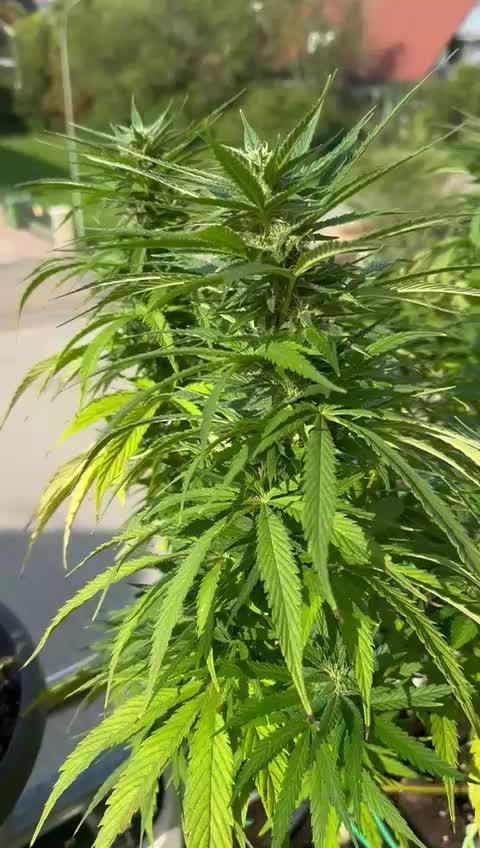
today is day 126!!!! i only received so many photos, it seems that the biotabs nutrients are working great, i'm still on vacation so girl, i water it myself with the help of wifi, and a few times a week she comes to water it separately :) everything looks pretty nice:) good luck to everyone:)!

Likes
8
Share


@Meechnmerchfarms
Follow
Overall extremely happy, best yield in this tent and also best average plant yield. Girl crush forever.

Likes
9
Share


@newenglandgrowers
Follow
Using some Neem oil and hydrogen peroxide ONLY ON MEDIUM (since I'm in flower), to get rid of these dumb fungus gnats I think they are the reason for the brown spots forming on the leaves. Installed a trellis this week to help spread out the canopy and improve airflow, however when I did this my dumbass accidentally snapped one of the colas, luckily I think it'll be ok because it seems to have only snapped the outer skin layer on only one side of that stem (I wrapped a piece of duct tape around the little snap to help secure it). This week went well I think I've got the fungus gnats under control, the stem I partially snapped still looks to be completely healthy and growing well so no complaints here successful 2nd week of flower👍🏾

Likes
2
Share

@BennyBud2210
Follow
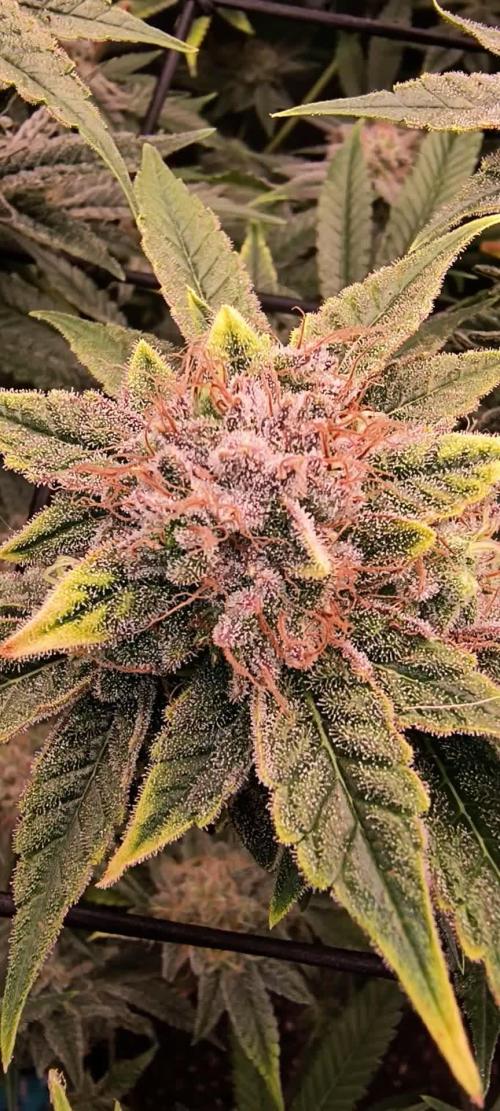
Die letzte Woche...
Alles ohne Dünger oder Booster...
Im Nachhinein hätte ich den PH Wert messen sollen..
Nun ja, ist notiert für den nächsten Grow 🤣
Likes
22
Share


@DeepRootsGrowTrees
Follow
Week #18 GSC By Kannabia
Week #18 Mar 8th-15th
Week #7 Flower
This week she's looking beautiful purple through out the plant the orange in the buds. Stay Growing!! Thanks for stopping by!!

Likes
29
Share

@Hempface86
Follow
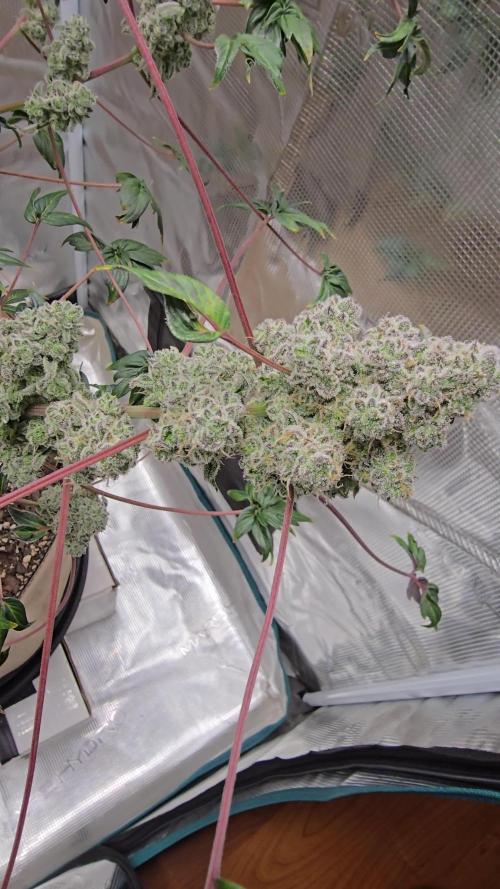
Ladies and gentlemen, here we are closing up week 4 of flower and I am so surprised at the size and beauty of these buds. The fan leaves are so small half of them are upside down, so it's crazy to me how it's able to photosynthesize the way it does with what it has to work with... I highly recommend this gross. She smells wonderful, very unique, but in a very good way, and as you can tell from the pictures, the buds are gonna be gorgeous beause you literally don't even have to do anything to them... easiest grow ever from seed to smoke .. hope everyone is doing well.God bless and have you growing 🙏

Likes
55
Share


@Roberts
Follow
Fruity Pebbles #1 has sprouted after I thought she was a dud. So I will be growing 2 of these plants in different nutrition through the grows. #2 has its own diary. She is getting acclimated currently. With the rockwool on the side of the basket, she should find the solution quickly. I have been testing if this is more efficient. So far it looks like a better option. Everything is looking good at the moment. Thank you ILGM. 🤜🏻🤛🏻🌱🌱🌱
Thank you grow diaries community for the 👇likes👇, follows, comments, and subscriptions on my YouTube channel👇. ❄️🌱🍻
Happy Growing 🌱🌱🌱
https://youtube.com/channel/UCAhN7yRzWLpcaRHhMIQ7X4g
Processing
Likes
11
Share


@MR_FASTBUD
Follow
Week 5 buds are getting fat!! Starting to get excited.. continuing lst and defoliation!
Likes
28
Share


@JiggleBudz
Follow
Day 64 - The start of Week 9! Flowers are getting nice and frosty now. Watering consistently with 2.1L with a 10% run off.
Day 65 - Defoliated some of the larger fan leaves that was growing towards the inside of the plant to promote ventilation and light distribution.
I saw a moth fly into my tent this morning but didn't see it come back out... After my coffee I sat down and inspected my plant. I found the moth stuck in one of the satellite branch flowers... Stuck in the sticky-icky-yicky of the a flower. I cut off that flower and disposed of the moth. Good to see she's getting sticky!
Day 66 - Humidity is sitting in the low 50's around my area, this helps lower the tent humidity nicely. I gave more water today with a 20% run off.
The flower stretch seems to have finished of the main cola. Some of the side branches are now nicely stretching to reach the main cola height.
Day 67 - She's looking beautiful.
Day 68 - Humidity in my area is up again putting the tent at 55% today. Everything seems to be going well.
Day 69 - Wah wah wih wah! 69! She's looking good the colas are filling up nicely. You can barely see any stem in the main cola's top.
Day 70 - The end of the week! Found 2 moths stuck to the yellow stickeys this morning. Plant looks good, watered with 2.1L with 11% run off.

Processing
Likes
23
Share


@CollectiveSol123
Follow
This is alot of work..but I'm loving it!!
Topped the 4 clones..they are looking great.. It will be interesting to see the yield on the 1st 3...I'm not getting my hopes up..🙄


Likes
10
Share


@Shefman93
Follow
Defoliated and lollipop the bottom of the plant at the end of week 2. Plant seems healthy, did an early top dress of 80% bloom 20% veg and I have began using the tribus bloom microbes inoculant at every watering. I will also be making banana peel tea to feed a boost this week.

Likes
9
Share

@Allybearx3
Follow
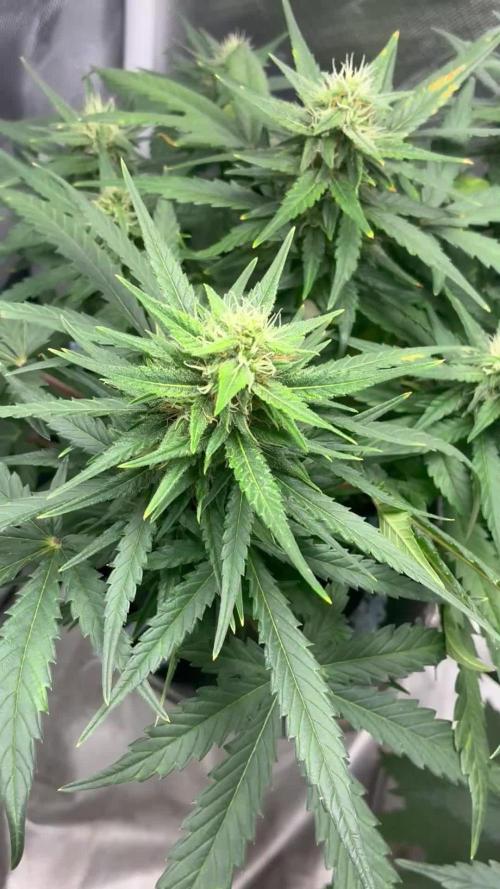
Week 6 done, been watching these girls closely for any deficiency, although I’m not 100% sure what they are chat gtp has been my friend lol I feel the one on left was facing some type of deficiency so upped the nutes on her just a little to see how she reacted, the discoloration in the lower leafs haven’t seem to spread up to new growth so I’ll keep watching her, the one on the right has stretched good and starting to develop bud sites hopefully they stack up nicely over the next few weeks she’s in new soil so I’m not so worried about her facing deficiency but still watch her just as close lol
Likes
40
Share


@Ganja_Victoria_Aus
Follow
LITTLE BEAST PLANT. GETTING ALL THE LOVE AND CARE I CAN GIVE THEM!
15 Apr. Finally I close a period of my life. With the previous grow. Got switch light. Now running fluence spyder 2i 630w full blast 70 cm from plant. Plenty c02 even if this version of fluence doesn't requires. I'm watering the plant almost everyday. Growing pretty fast.
Orange Kusk Cake topping 8 main node. I'm about to turn the first one in a monster. Mainling super cropping lst hst all in. I get to know her more close.
16 everything is running smoothly. Amazing computer keep temperature night and day under control also fan speed. Every tools work in redundancy and equality low speed talking each other.
Plant growing beautifully and super lushness. 3 more week of veg. After allingin all of them. Few clones for patient friend. New grower people. Switch to flower. I'm in peace of mind.
17 Apr. I bend and snap practically every node. Poor Lady.
I don't have the right of the music. Please remove it if create trouble.

Likes
19
Share


@PariaGrow
Follow
Luego de un par de semanas full trabajo me dediqué a ordenar un poco el jardín, revisar las plantas, reubicar algunas y realizar una respectiva poda de algunas hojas para que llegue luz a todos los brotes.
Algunas finalizando la tercera semana de floración, otras en su segunda semana de floración.
Está costando mantener los parámetros, ya comenzó la primavera por lo que aumenta la temperatura en mi espacio, pero se está logrando.
Se ha aplicado riego de Organic Bloom de B.A.C + Nirvana de Advanced Nutrients a partir de la segunda semana de floración. En dosis bajas para ver cómo andan.
Muy fuerte el olor dulce que están dejando todas, luego las revisaré mas detalladamente para especificar un poco los olores de cada plantas. La cantidad de resina es impresionante.
Likes
5
Share


@Jays_Not_Here_Man
Follow
These girls are all over the place! 🤪 one is reaching for the stars, the other is eating itself alive, and the other looks to be about 10 days behind the others with flowering🤦♂️ They are all still growing a fattening, but wow, I have not had this many deficiencies since my first grow. Smell is pungent, if my in-line fan is not constantly running, the house smells delicious (my words, not my wife). Getting excited 👊❤️🌱🇨🇦 Happy Gardening

Likes
24
Share


@Ganjaman19
Follow
Overall its been a decent grow had some high temps but all the plants have turned out good in there own way this is the 1st time I have not lollipopped and I got alot of small buds for making extracts and hash etc the next grow will all be lollipopped and we will see some bigger nugs


Likes
2
Share


@JolliGrowz27
Follow
Blueberry genetics comes through on the exhale. The Kush is in the flavor when you inhale. Spicy inhale fruity finish, great for evening chill. No couch lock though.

Likes
24
Share


@Stinkfox
Follow
She’s recovered from defoliation and buds are everywhere. THe tent is smelling great. Almost to the halfway point in flowering. Getting excited to see her swell.

Likes
4
Share


@SyntheticSunMan
Follow
Flushing straight RO water not phed. I run 2 weeks of flushing so these girls will be done in less than 2 weeks. The purple has reallly started to show since the flush started and I dropped the temps to 70 -65 day and 58-62 nights dropped the reservoir temp to 60.