


Likes
Comments
Share


@Thatgoodgas93
Follow
Awesome week I see new nodes springing from the remaining 3 main nodes it almost looks like I gave em all a bad haircut 😭. I can’t wait to see the rapid new growth now that there’s so much more sun getting in em!! These strains have proven to be very resilient against the recent drop in temps to below 59 degrees over nite. Despite the cooler nights the day air temps have been around the low to upper 70’s with a crisp dry west wind this week which is not only perfect for early September but for drying out from the last 2 storms Henri & Ida.

Likes
11
Share


@SardiniaExotics
Follow
Ventunesimo giorno di vita, tutto procede regolarmente. Non mi lamento della velocità di crescita :)
Le foglie più grandi risultano piegate nelle punte perché durante le ore notturne, le foglie più grandi piegandosi toccano terra.

Likes
3
Share


@Grow_Bro_NL
Follow
This week they really exploded and all new growth is lush and green so they seemed to have settled very well after the composttea.
The grape&cream #1 & #2 are starting to catch up to #3 as ive been bending and topping #3 a little more.
Due to the blumats keeping their soil moist ive just put in about 200ml of composttea in each pot.
All cuttings have rooted so far with just some pokon run of the mill cloning powder so thats a good thing to keep in mind.
As we head into week 4 ive seen the possibility to do some defoliation and supercropping to try to get a bit of an even canopy.
Keep you posted!

Likes
27
Share


@MrJones
Follow
I harvested four plants today, putting 884 grams of wet flowers into the dry tent. I am trying to keep the environment as close as possible to 60F / 60% RH, but with the current temperatures, I will be lucky to keep it around 65. I am looking forward to the terpenes moving towards the skunky aromas.


Likes
2
Share

@Bncgrower
Follow
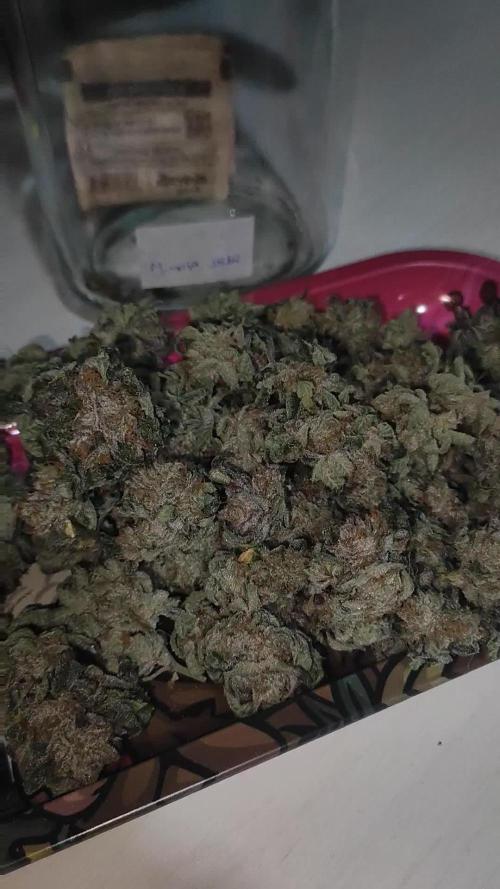
I’m very happy with the result; it’s impressive how changing the fertilizer directly impacts the quantity and quality of the buds.
Likes
10
Share


@Cannabot
Follow
Weathers been good,winds been a bit on the strong side.Full sun for them.Stems are getting thicker.Base nutes ph @6

Likes
3
Share


@Mojoluvs
Follow
Ok so week 5 she is looking beautiful so she is pre-flowering. I had no choice but to defoliate and some Lst

Likes
16
Share

@GoldenWeedGrower
Follow
📅 19/05/26
🗓️ D078 (B6 / D1)
🌡️ 1.1
💨 -
💧 -
🥗 -
⚗️ 1.2
🔬 5.8
🛠️ -
📋 -
📅 20/05/26
🗓️ D079 (B6 / D2)
🌡️ 1.4
💨 1300
💧 -
🥗 -
⚗️ 1.2
🔬 5.0
🛠️ Some little adjustment
📋 -
📅 21/05/26
🗓️ D080 (B6 / D3)
🌡️ 1.4
💨 1300
💧 15L
🥗 All nutrients
⚗️ 1.6
🔬 5.0
🛠️ -
📋 -
📅 22/05/26
🗓️ D081 (B6 / D4)
🌡️ 1.2
💨 1500
💧 -
🥗 Bloom A-B
⚗️ 1.9
🔬 4.8
🛠️ LST and defolation
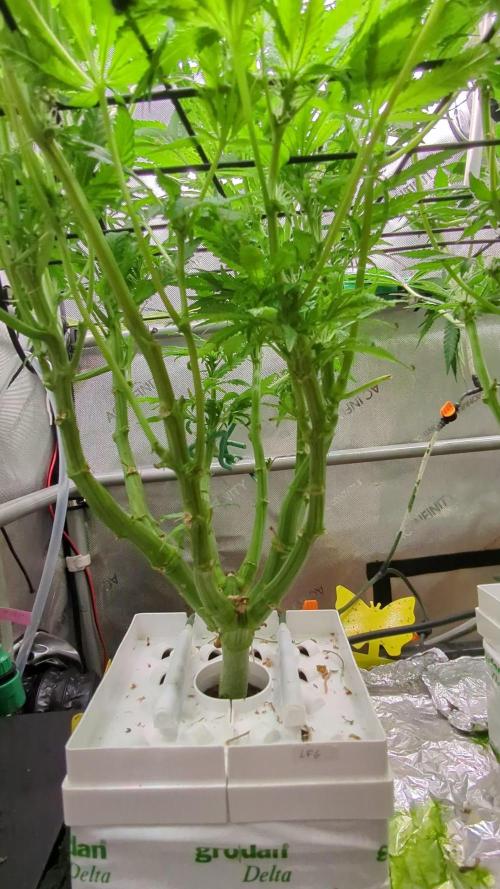
📋 pH is still low but I decided to leave it as is. LFG: I like the way she's growing - Super Boof is performing better than what I thought - Bruce Banner is the queen, there are already first buds formation - Lemon Cherry Gelato I hate he way she's growing so much that I eliminated all her clones, now I've only BB and LFG.
📅 23/05/26
🗓️ D082 (B6 / D5)
🌡️ 1.2
💨 1500
💧 -
🥗 -
⚗️ 1.7
🔬 4.3
🛠️ -
📋 -
📅 24/05/26
🗓️ D083 (B6 / D6)
🌡️ 1.2
💨 1500
💧 -
🥗 -
⚗️ 1.7
🔬 4.6
🛠️ Adding some ice to water to get the temp go down. Also LST and defolation
📋 -
📅 25/05/26
🗓️ D084 (B6 / D7)
🌡️ 1.2
💨 1600
💧 2L
🥗 Calmag, Bloom A-B
⚗️ 1.9
🔬 4.3
🛠️ -
📋 -
=============================================================
Legend:
📅 DATE
🗓️ DAY (StageWeek / Day)
🌡️ VPD
💨 CO2
💧 WATER ADDED
🥗 FOOD ADDED
⚗️ EC
🔬PH (adjustements)
🛠️ ACTIONS
📋 NOTES
📅🗓️🌡️💨💧🥗⚗️🔬🛠️📋
Likes
23
Share

@Dottgreenthumb
Follow
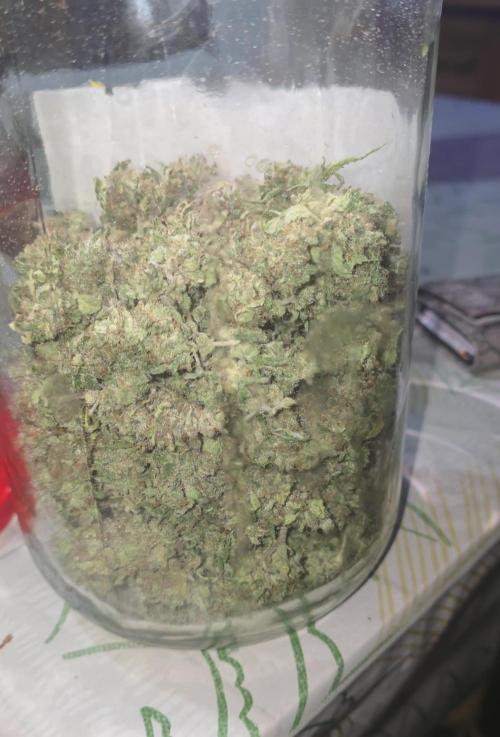
Molto energetico e creativo a lungo andare stanchezza mentale e sonnolenza fantastico per serata con gli amici al pub
Likes
10
Share


@Martymar021208
Follow
So this week I am starting to notice some watering issues I have cause early in the veg cycle I should have a payed a little more attention but noticed that I habe water logged my soil in a single plant causing soil lock and not completely drying out like the others between watering I will try to correct course this finally week of veg before changing over to flower. But the smells are definitely stronger excited to see this last bit of growth and it's time to start taking clones for another run


Likes
11
Share


@Boosted_Grows
Follow
Smooth sail still trying to dial it all in and I keep adding to the setup as I grow and learn more. Like to compare other grows for future questions about strain like growth pheneos etc.

Likes
3
Share


@Matagal
Follow
Fading Hard.
LBCOG 1 is almost done, one more week.
My plan is harvest all girls at november, 15.
Oly water abaout one week now. -
Love my garden!!!!
Likes
20
Share


@Ultraviolet
Follow
Not particularly growing for speed or any dedicated reason this time round, just adding water and a abundande of positivity, gotta admit I do like the autoseed logo. Off we go again into the magical forest.
(Arthrospira platensis) cultivated in high-alkaline, mineral-rich water in Kailua-Kona, Hawaii. It is renowned for having a higher nutrient content, including more carotenoids and essential fats, compared to other spirulina brands. It is frequently cited as a "complete food" due to its dense concentration of proteins, vitamins, minerals, and pigments.
The nutritional profile of standard dried Spirulina platensis biomass. 3kg of spirulina powder has an approximate NPK ratio of 10-2-1 (or 10% Nitrogen, 2% Phosphorus, and 1% Potassium).
Here is the breakdown of the nutrient content for 3kg of powder:
Nitrogen (N): ~300g (10% of total mass)
Phosphorus (P): ~60g (roughly 2% of total mass)
Potassium (K): ~30g (roughly 1% of total mass)
3kg of spirulina powder is more than enough nitrogen for 4 cannabis plants in a 100-gallon pot—in fact, it is likely excessive and could cause severe nutrient burn or toxicity if not properly managed. Spirulina has a very high protein content (46% to 63% dry weight), which translates to a significant nitrogen source. It is often described as a 5-1-1 NPK fertilizer.
3kg (3000g) of powder in 100 gallons means 30g per gallon. General organic recommendations for potent amendments (like frass) are often around 1–3 tablespoons per gallon. 30g of powder is roughly 2-3 tablespoons, making this a very high-strength application rate if added all at once. Balance this with calcium/magnesium, and organic nutrient delivery in soil growing can lead to deficiencies in these nutrients.
Not all of that 100 gallon is used, so figuring out precise measurements was ballpark, but there is about 10kg of engineered biochar in that pot. Mostly in the top half. Ideally, I'd have 25kg in a full active 100-gallon, but......... don't mess with something that is not broken. Roots do not utilize the entire 100 gallons. This has been a couple of years of trial and error, mostly error. The amount of cations you can add in grams depends entirely on the specific cation exchange capacity (CEC) of your biochar and the type of cation being added. Biochar CEC values vary widely, typically ranging from 4 to over 300cmolc/kg. Multiple Biochars in use, ranging upwards of 100cmolc/km.
Different cations have different atomic weights
Potassium K+ 39.1g/mol.
Calcium Ca2+ 40.1g/mol.
Magnesium Mg2+ 24.3g/mol.
Nitrogen NH4+ 18.04g/mol.
You get more nitrogen bang for your buck. It all depends on the CEC of the biochar you use, but brrrrrrrrrr roughly I'm looking at 500-600 grams worth of elemental cation exchange capacity, give or take. That's just for the biochar alone. Elemental cation exchange capacity refers to the ability of materials—such as soil, minerals, and biochar to adsorb, hold, and release positively charged ions Ca2+, Mg2+, K+, Na+, Al3+, and Zn2+. This capacity is a critical measure of nutrient availability in soil and energy density in electrochemical systems.
Added calmag 2:1 to complement spirulina.
Calcium (Ca): Approximately 150g - 300g of elemental calcium.
Magnesium (Mg): Approximately 75g - 150g of elemental magnesium.
So long as pH stays in 6.3 to 6.7 ish, the plant will unlock hydrogen. Plants will be able to cycle CEC for their own needs. Hydrogen ion pumping (proton pumping) is a fundamental mechanism used by plant roots to facilitate the cycling of nutrients within a medium's Cation Exchange Capacity (CEC), directly increasing nutrient availability. A growing medium's Cation Exchange Capacity (CEC) does not contribute directly to Electrical Conductivity (EC). CEC represents potential nutrient storage, while EC represents active nutrients in the water/soil solution. A medium with a high CEC can hold many nutrients, but if there is no water present, the EC will be low.
98% of plant nutrient uptake comes directly from the soil solution.
2% of nutrient uptake is directly from soil particles.
Nutrients held on exchange sites (CEC) are not directly measured by EC until they are released into the soil solution through exchange with other ions (e.g., hydrogen ions from roots or fertilizer).
Plants source the H+ ions (protons) used in cation exchange primarily by exuding carbon sugars into the rhizosphere, then microorganisms perform root respiration, which reacts with soil water to form carbonic acid H2CO3 that dissociates into H+ and bicarbonate. Roots also actively pump out H+ ions directly to acidify the rhizosphere, plants trade hydrogen produced through metabolism for essential nutrients held by the soil.
In plant cells, the H+ (protons) used in proton pumping across the plasma membrane come primarily from the cytoplasm (cytosol). The protons are derived from internal cellular sources, including metabolic processes that release H+, and the regulation of intracellular pH homeostasis.
Distilled water is highly useful in managing the electrical conductivity (EC) of a growing medium by allowing for precise control over nutrient concentration and assisting in the mobilization of nutrients from the cation exchange capacity (CEC) into the active, plant-available nutrient solution.
Just add water & positive energy.
Potential hydrogen. pH. + - , potential charge balance for hydrogen.
So long as there is adequate oxygen in the soil and air and water moves at a decent interval, its practically impossible for the pH to skew in a soil that is taking in oxygen and releasing CO2 and nitrogen, I say practically, but meh, even with plenty of oxygen, the process of converting ammonium NH4+ to nitrate NO3- by bacteria releases hydrogen ions H+, which directly causes acidification (lowering pH). While water movement is necessary, consistent water moving through the soil can leach away basic cations Ca2+, Mg2+, K+, Na+, leaving behind acidic hydrogen and aluminum ions, causing pH to drop, especially in humid regions. High levels of CO2 in the soil (from intense respiration) dissolve in soil water to create carbonic acid, H2CO3, which lowers the pH. (barometric pumping removes that possibility) The pH in a cannabis cultivation environment, particularly in hydroponic or soilless setups, will often naturally drift towards acidic (lower pH) over time. Understand how to know when to lime the pH back up. Complex but critical. Once I understood this it helped ease the pain of understanding pH.
Base saturation directly reflects the percentage of CEC occupied by base cations. Generally, as base saturation increases, soil pH increases because fewer acidic cations, H+ and Al3,+ are present on the soil colloid surfaces.
At a pH of 7 or higher, the soil colloids are saturated with base cations, resulting in a base saturation of 90+%.
While many sources include Sodium Na+ as a base cation, some calculations focused specifically on plant nutrients (like in some nutrient management contexts) may focus solely on the "Big 3": Ca2+, Mg2+, and K+. However, in soil science and CEC (Cation Exchange Capacity) measurements, sodium is usually included in the definition of total base cations, making it the "Big 4" base cations.
At a pH around 5.5, soils often have a 45–55% base saturation, while a soil with a pH between 6.5 and 6.8 generally has an 80–90% base saturation.
Base saturation is considered a reliable, albeit complex, indicator of soil fertility and the degree of soil weathering, acting as a crucial metric in soil classification and management.
Once you take full control of the pH, so long as there is oxygen, and one keeps tabs on base saturation levels. Its near impossible for anything to go wrong. All you are essentially doing is adding water and waiting for any sign of deficiency. Not so much growing as eliminating the possibilities of things going sideways. Can't over or under water, can't skew pH, can't go anaerobic. Everything runs in optimal cycles, watering every 2 to 3 days or as required, depending on the rate of combined ET. A little warmer, a little drier, but never short on water. All the nutrients are already there in the medium, we still focus on the water, just not adding salts, but to mobilize nutrients held in the Cation Exchange Capacity (CEC) and move them into the active soil solution for plant uptake, the best supplements to add to water are fulvic acid, humic acid, or seaweed/kelp extract. Liquid solutions with high concentrations of essential trace elements. Distilled water has no alkalinity or minerals to help buffer or release nutrients. Adding these supplements turns the "empty" water into an active agent that forces nutrients off the CEC colloids into the solution for plant uptake.
When to water? When Electrical Conductivity of soil gets low. No water, no conductivity.

Processing
Likes
28
Share


@GaiaGreenGiant
Follow
New weekly video uploads and more! See what’s happening in the Cabbage Patch! Day 14 Flower! Plants looking very h@ppy. Can’t wait to get in there and give it’s last defoliation.
Day 16 - She’s stacking up nice! Just need to water when dry. She’s on cruise control!
Day 20 - Defoliation video for ya! Cheers 🍻

Likes
19
Share


@nonick123
Follow
Día 48 (10/06) Riego con 1 Litro H2O + Regulator 0,15 ml/l + CaMg-Boost 0,25 ml/I +TopBooster 0,2 ml/l - pH 6.2
Día 49 (11/06) Riego con 1 Litro H2O + Regulator 0,15 ml/l + P-Boost 0,5 ml/l + K-Boost 0,5 ml/l + CaMg-Boost 0,5 ml/I +TopBooster 0,2 ml/l - pH 6.2
Subo el CalMag a 0,5 ml/L porque BPPA no se recupera, y el resto muestran inicio de deficiencia
Día 50 (12/06) Está lloviendo mucho por aquí. Menos mal que tengo el techo de policarbonato en mi invernadero casero. Hoy no necesitan riego
Día 51 (13/06) Riego con 1 Litro H2O + Regulator 0,15 ml/l + P-Boost 0,5 ml/l + K-Boost 0,5 ml/l + CaMg-Boost 0,5 ml/I + TopBooster 0,2 ml/l - pH 6.2
Día 52 (14/06) Riego con 1 Litro H2O + Regulator 0,15 ml/l + CaMg-Boost 0,5 ml/I + TopBooster 0,2 ml/l - pH 6.2
Día 53 (15/06) Riego con 1 Litro H2O + Regulator 0,15 ml/l + P-Boost 0,5 ml/l + K-Boost 0,5 ml/l + CaMg-Boost 0,5 ml/I + TopBooster 0,2 ml/l - pH 6.2
Día 54 (16/06) Riego con Té de Floración - 750 ml / planta
💦Nutrients by Aptus Holland - www.aptus-holland.com
🌱Substrate PRO-MIX HP BACILLUS + MYCORRHIZAE - www.pthorticulture.com/en/products/pro-mix-hp-biostimulant-plus-mycorrhizae
Likes
19
Share


@Coopmc
Follow
This Pheno from seeds from Supper Lemon Haze high CBD crossed with my FruitWalker!!
Decided to call this pheno SubLIMEinaL since she taste like key lime is supper chill, relaxing., and a bit psychedelic!!