




Likes
5
Share


@Ryno1990
Follow
The Tropicana Cookies has been doing awesome she's flowering great despite the humidity she's been doing amazing under the fold 6 by medic grow an deff been thriving with these cronk nutrients

Processing
Likes
13
Share


@ladyjane
Follow
8/17 - Fed the ladies with liquid nutrients today. Also did some selective defoliation. The soil looks really healthy. You can see how happy my worms are. The two are coming along nicely and just starting to bud.
8/19 - Top fed all the ladies today with Uprising Grow, Uprising Bloom, and Elemental.
8/21 - They are in bloom! They are beginning to flower and looking lovely. In between feedings I water with RO water and molasses. They seem to love it.
8/24 - Blooming along nicely! Watering just about every day now. Added some mulch to the tops that I made from the dried leaves I take during defoliation. Hoping to keep the tops a little more moist.

Likes
53
Share


@Mz876
Follow
Both Plants are beginning to stretch especially the second plant . I’m guessing they are about to start pre flowering . They’ve been super healthy. I just have a few leaves that go nutrients splashed on them so they’re looking a little burnt. I expected them to start flowering already but I’m not complaining .

Likes
1
Share


@Kraken85
Follow
Pour un premier cycles : Les bourgeons sont bien gonflés, la croissance est exigentes en nutriments et humiditées pour avoir de meilleurs résultat en Flo. Car en Flo Très gourmants en nutriments. Sa va je trouve que je me suis bien démerdé.
La partie afghane (Mazar-i-Sharif) est une très petite plante qui ressemble à un sapin de Noël.
Grâce au croisement avec la Skunk#1 elle a une performance accrue et une meilleure saveur.
1er Prix Type de Forte Bologne 2008.
2e prix à la High Times Cup 1999.
2e prix Highlife Cup 2002.
Gagnant du prix Soft Secrets Plant Of The Year 2014
Vivement le 2ème Cycles. Si vous avez des remarques, conseils ou autres .... Venez en discutez.


Processing
Likes
9
Share


@LittleBigTrees
Follow
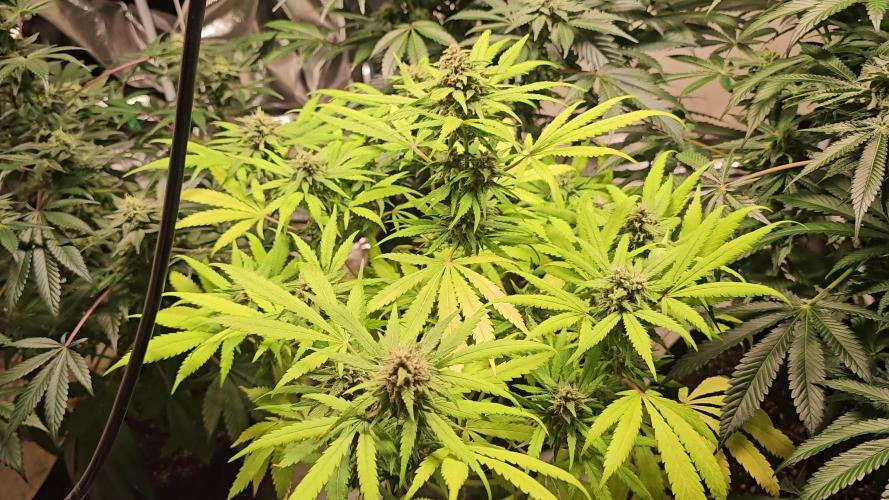
Turned light to 12/12 start week 6 day 35.
Defoliated the central cola's to allow the sides to catch up.
She's stretching fast at the moment.
I'll start feeding her from week 7




Processing
Likes
3
Share


@Ogbangbang2981
Follow
we entered flowering that's so beautiful purple color everywhere but she just started so let's watch her full out . still on bat poo diet
Likes
14
Share


@Ganja_Victoria_Aus
Follow
I keep bending this lady quite a lot. She is growing super vigorous on a diet Front Row Ag. She starting to smell like a basket of super ripe mandarin. Stunk dunk big. She staking super nice. Super close internode. I defoliated her quite a lot too. Hopefully no many small buds. Still a great yeald is promising from the look.

Processing
Likes
23
Share


Likes
50
Share


@DogDoctorOfficial
Follow
Week 5: Transplant Time & Root Power!
Oh man, this was one of those weeks! We transplanted all five phenos into bigger pots, and let me tell you, they’re thriving! (Check out the complete video episode for all the details 😉).
The girls are looking amazing, all pretty much the same size for now, so I don’t have any favorites yet—but let’s see what the future holds!
For photos, I used both my Nikon P900 and Sony A6000, with a bunch of lenses and filters to preserve the true colors—these LEDs are powerful!
Current Setup & Conditions
This week, they’re still chilling with their sisters in the big tent, but in about a week, they’ll be moving into the TrolMaster ecosystem for even better environmental control.
Watering: pH 6.06, EC 0.96
Temperature: A bit cold , but it is what it is. We’re facing some freezing outdoor temps (as shown last week in the frosty veggie garden pics!), yet these Runtz are holding strong like true champions. 💪❄️
Nutrition: Still on the Aptus Clean Program, with:
Regulator
System Clean
RO Water Conditioner
All-in-One Liquid
Root Development: The Real MVP!
Let’s go deep on roots! The mycorrhizae in the Pro-Mix soil has been working its magic, and I’m still boosting them further with a touch of Aptus Holland Mycor Mix. The root development on this transplant was insane—super white, healthy, and ready to explode with growth.
What Are Mycorrhizae?
The word “mycorrhiza” comes from Greek:
• Myco- meaning fungus
• Rhiza- meaning root
Mycorrhizae are a type of beneficial fungi that form a symbiotic (mutually beneficial) relationship with plant roots. These fungi extend far beyond the root zone, creating an underground network that helps plants absorb water, nutrients, and improve overall health.
This is not a single species but rather a whole category of fungi, mainly divided into:
1. Ectomycorrhizae – Live on the outside of plant roots, forming a sheath around them. Common in trees like pines and oaks.
2. Endomycorrhizae (Arbuscular Mycorrhizae, AMF) – The most beneficial for most crops and cannabis. These penetrate root cells, forming structures inside the roots that exchange nutrients.
Where Are Mycorrhizae Found in Nature?
Mycorrhizae naturally occur in forests, grasslands, and undisturbed soils worldwide. They play a crucial role in maintaining ecosystem balance by helping plants access nutrients from the soil.
In a natural environment, plants are constantly forming relationships with these fungi. However, in modern agriculture, excessive tilling, chemical fertilizers, and fungicides have reduced their populations, making supplementation necessary in many cases.
How Do Mycorrhizae Work?
Once mycorrhizae colonize a plant’s roots, they start forming an underground fungal network called the mycelium. This network extends the plant’s reach into the soil, acting as a second root system.
Benefits of Mycorrhizae:
✅ Enhanced Nutrient Uptake – Mycorrhizae help plants absorb phosphorus, nitrogen, and micronutrients that would otherwise be unavailable.
✅ Improved Water Absorption – The fungal network can reach deeper into the soil than roots alone, helping plants survive drought conditions.
✅ Stronger, Healthier Roots – They promote thicker, more robust root systems, reducing transplant shock.
✅ Better Soil Structure – They produce glomalin, a protein that improves soil aggregation and helps retain moisture.
✅ Natural Pest & Disease Resistance – Healthy plants with strong mycorrhizal relationships tend to be more resistant to soil-borne pathogens.
How Mycorrhizae Help in Cannabis & Gardening
In controlled growing environments, using mycorrhizae is a game-changer. Since cannabis relies heavily on phosphorus, the enhanced nutrient uptake provided by mycorrhizae is especially beneficial.
Best ways to apply mycorrhizae:
• At transplant – Dust roots with mycorrhizae powder or mix into soil.
• As a soil drench – Some liquid formulations allow fungi to colonize even after planting.
• Mix into your growing medium – Using pre-amended soil like Pro-Mix HP Mycorrhizae ensures roots have early access.
Pro Tip: Mycorrhizae need living roots to survive! Avoid using synthetic fungicides or excessive chemical fertilizers, as they can kill the fungi.
Think of mycorrhizae as a natural root booster. They’ve been around for hundreds of millions of years, helping plants thrive in all conditions. By using them in cultivation, you’re mimicking nature, ensuring your plants grow stronger, healthier, and more resilient.
When used correctly, mycorrhizae can increase yields, improve plant health, and reduce the need for synthetic inputs—making them a must-have for any serious grower!
Can’t wait to see how they’ll look in the next transplant!
I made a few changes to my improvised photo studio, including a pink background for now—because why not? Let’s keep things fun and full of color! 🌸📸
Massive gratitude to all our sponsors and of course, a special shoutout to Zamnesia, Plagron, and Grow Diaries for making this amazing cup happen. 🙌
And to the community—followers, supporters, lovers, haters—I love you all! ❤️ Let’s keep pushing forward, learning, and making this grow legendary!
Stay Tuned for More!
Next week, i may be moving them into bigger pots and getting them into their final environment. You won’t want to miss this next stage!
See you all next week—stay tuned, keep growing, good luck to all and let’s make history together! 🚀🌱
Genetics - Runtz https://www.zamnesia.com/6000-zamnesia-seeds-runtz-feminized.html
Nutrients - Plagron https://plagron.com/en/hobby
- Aptus Holland https://aptus-holland.com/
Controls - Trol MAster https://www.trolmaster.eu/
LED - https://www.futureofgrow.com/en
LED - https://www.thinkgrowled.com
Soil - https://www.promixgardening.com/en
Germination - Cannakan https://cannakan.com/?srsltid=AfmBOopXr-inLXajXu3QFgKXCXXos4F1oEvScjMKIB5MR5dk8-GJ-F49
DOGDOCTOR 15% off
Smoking Papers - https://ziggioriginal.com/
Terpene saver - https://grovebags.com/
As always thank you all for stopping by, for the love and for it all , this journey of mine wold just not be the same without you guys, the love and support is very much appreciloved and i fell honored with you all in my life
With true love comes happiness Always believe in your self and always do things expecting nothing and with an open heart , be a giver and the universe will give back to you in ways you could not even imagine so
As always, this is shared for educational purposes, aiming to spread understanding and appreciation for this plant. The journey with nature is one of discovery, creativity, and respect. Let’s celebrate it responsibly and continue to learn and grow together!
Growers Love To you All 💚
#EternityGrowCup #RuntzHunt #GrowersLove #CannabisCommunity #AptusHolland #ProMixSoil #TrolMaster #Zamnesia #Plagron #ZiggiPapers #Grovebags
Likes
7
Share


@OwlGang_Uk
Follow
Gorilla Glue #1 - Harvest Comment - I Am Very Satisfied With What I Got, I got 3 ounce 7 grams - I Uses Advance Nutrients PH perfect In veg then I switch to the iguana juice organic juice for the flowering stage. I notice a much more slower growth when I switch to organic nutrients.00
Likes
8
Share

@GERGrowDesigns
Follow
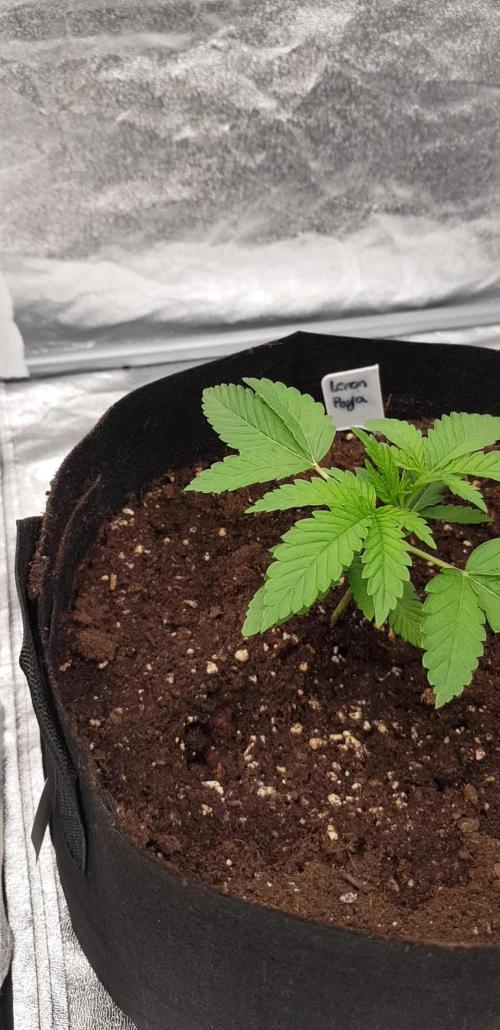
Welcome to Veg Week 3 of Fast Buds LemonPaya
I'm excited to share my grow journey with you from my
FastBuds Project . It's going to be an incredible ride, full of learning, growing, and connecting with fellow growers from all around the world!
For this Project , I’ve chosen the Feminized Photo strain Lemonpaya :
Here’s what I’m working with:
• 🌱 Tent: 120x60x80
• 🧑🌾 Breeder Company: Fast buds
• 💧 Humidity Range: 60
• ⏳ Flowering Time: 58 Days
• Strain Info: 30%THC
• 🌡️ Temperature: 26
• 🍵 Pot Size: 0.5l
• Nutrient Brand: Narcos
• ⚡ Lights : 600W x 2
A huge thank you to Fast Buds for allowing me to try my Best with this amazing collection from Automatic and Photo Strains they managed to Sponsore . Big thanks for supporting the grower community worldwide! Your genetics and passion speak for themselves!
I would truly appreciate every bit of feedback, help, questions, or discussions – and of course, your likes and interactions mean the world to me as I try to stand out in this exciting competition!
Let’s grow together – and don’t forget to stop by again to see the latest updates!
Happy growing!
Stay lifted and stay curious!
Peace & Buds!
Processing
Likes
7
Share


@Kushizlez
Follow
Day 49-56
(Day 50) I hooked up my carbon filter to the humidity controller and it is keeping the room exactly at 65-70% RH night and day. It looks like it turns on about every 45 minutes for about 5 minutes so it allows me to run the co2 bag properly. I don’t even have to use my dehumidifier. The room is 100% dark now too. Even the small red lights on the space heaters.
Not going to feed anything other than foliars this week.
(Day 51) Blackberry #4 & #8 #9 and white widows #2 & #3 are all confirmed males. Chopped them down and recycled the soil. White widow #1 is the first official female and I’m starting to see pistils on the m39/zkittlez too.
Plants seem to be responding to the light fairly well. It’s hung 32 inches above the canopy which is as high as it can go without strapping it to the roof, which may have to happen one day. The plant can get within 6 inches of the light so I’m probably good. The ppfd output is 1800umols which is super high so I want to hang them as high as possible in veg. I wish I could rent a ppfd meter to see if I’m in range at 32”.
(Day 52) Blackberry breath #3 is the first official bbb female to show. I decided to scrap BCTG #2. It sounded like a good strain but after looking at pictures of people who have grown it online, it doesn’t look up to my standards. I found a very small patch of powdery mildew on one of the leaves so I’m not even going to start with that shit again. I’m really thinking about scrapping the m39/zkittlez and the white widow too. I’m praying that I get at least 4 females of BBB.
I tried super cropping for the first time today. A few of the branches I definitely squished a bit too much as they turned quite brown and looked dead within a day.
(Day 53) Despite the m39/zkittlez vigorous growth, I know it will be a shitty strain that will most likely herm as it’s from a bag seed of low grade weed. I’ve decided instead of scrapping it, I will use it for experimenting with a new chemical powdery mildew preventative. If it dies oh well. I doused it and chopped a limb off a few hours ago during lights on and it seems fine.
(Day 54) I’m about 90% sure BBB 6&7 are both female. #2 & #5 are looking like males but too early too tell. #1 is really tough to say. Just gotta be patient I guess. #3 has a great spread out structure, I hope it doesn’t stretch too much. The scrogging is a priority. I put up the scrog net just to see how it fits. It’s a little small around the edges but that’s fine. So it’s looking like out the 9, I would be lucky to get 4 fems if #1 & 7 would show forsure already. If #1 is a female I have my 4 and I can throw out the white widow. The white widow is just insurance at this point.
Super cropped plants have recovered nicely. Going to continue doing this more.
I’ve noticed that the plants that were put into my custom soil mix have very small fan leaves compared to the fabric pots of straight promix and dry amendments. Could also be the fabric pot is helping dry downs too.
(Day 56) I’m seeing some yellowing so I’m going to give a foliar spray just too keep some deficiencies at bay. All of the plants are stunted except the m39 and bbb#3. Node spacing has also reduced significantly. I can’t help but feel it’s from the intensity of my lights but maybe they just need a transplant into some new soil something. Luckily the stunt and droop is only really happening to what I suspect are male plants anyway.
Leaves are looking twisted and gnarled on #5. Going to move it into the veg tent for a while.
I’m going to mix up and amend my Destiny/coco blend today and transplant bbb#3 and 6 & 7 in a few days.
I mixed them up in contractor bags making sure to toss and turn vigorously.
Here is my blend:
2 bags 40L Destiny soil
2 bags 40L coco
700ml glacial rock dust
700ml oyster shell flour
700ml nature’s pride bloom
300ml basalt rock dust
150ml langbeinite
150ml nature’s pride veg
I am also going to try the Destiny top dress as it’s only 13 bucks a bag and full of good shit. I’m trying to not feed heavy in flower other than 2 or 3 top dresses and 2 teas and nothing after week 5. Because it’s taken so long for the plants to show sex, when I transplant into the 10 gallon pots, they should have more than enough nutrients too keep them going strong all the way through flower with just water. I’m a little skeptical about that though. Besides teas and dressings are fun. Everything should be broken down by week 8 or so.
Will transplant in a few days.
Likes
23
Share


@Firepharmer
Follow
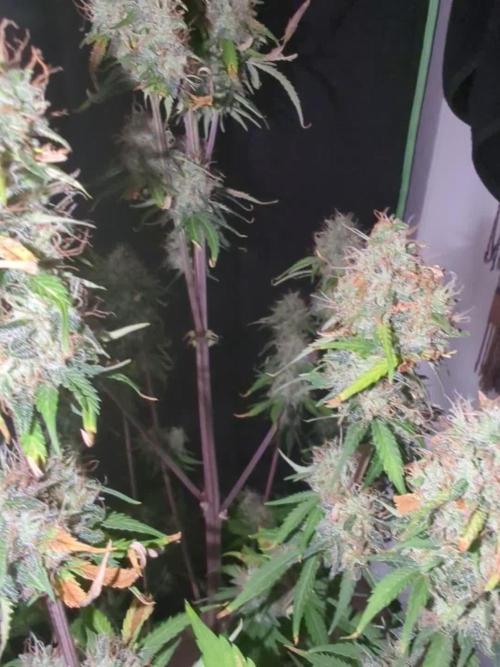
Week 5
Everything looks good and frosty .. I’ll add the futur vert uv LED’s in a few days


Processing
Likes
21
Share


@JuicyFruit
Follow
Day 48 - 11/11/19 started this week early by accident.
Plant smells like tropical cheese and i cant see the stalk anymore except from the leaves, very bushy and seems to be in a mid stage of flowering. buds are getting bigger by the looks of it. very sticky also!
Ive been removing about 2 leaves per day from this one, started with a couple touching the soil and removed a few higher ones today to expose the buds to more light and fresh air. when looking at this plant side on the main cola looks huge and growing more every day. im assuming this is about 2 weeks away from harvest so il probs flush next week. roll on harvest time! other than that the humidity has went up to 50-55 the odd time when watering all the plants. it doesnt stay high long with the heat from the lights so it should be fine.
Day 51 - 14/11/19
Still removing the odd couple of leaves every day to let the fresh air get near the main cola, i still cant see it very well but it looks like what a 6-7g bud looks like when its dried aha.
the smell can be described as if someone took a cheese strain and added something powerful and herbal/tropical to it.
cant wait to order my jewelers loupe in a few days to see where im really at :) and i added a video to show the plant looking all frosty. a few weeks to go now!
Likes
21
Share

@ThatsmyGrow
Follow
🌸 Week 11 – Gorilla Cookies Auto Pheno Hunt
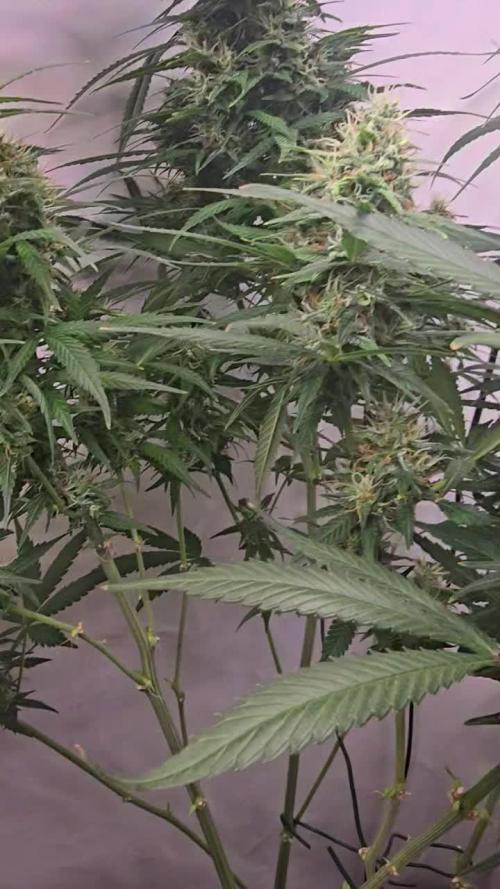
Another week is in the books, and now all the phenos have officially entered the bulking phase. 🔥🌸
The flowers are swelling rapidly, and it's amazing to see how differently each phenotype is stacking and filling out. Every week brings more weight, stronger aromas, and denser buds.
📈 Current observations:
All phenos are now focusing entirely on bulking up their flowers.
Pheno #1 and #2 are producing massive buds, with some already reaching the size of soft drink cans. 🥤🔥
Pheno #6 has made incredible progress over the last two weeks. Although it had the slowest start, it has developed beautifully and is building flowers surprisingly well. It will most likely need around two extra weeks after the others and will probably finish the grow on its own.
Pheno #3 unfortunately never fully recovered after I had to remove several main colas because they were growing into the SANlight fixture. While it's still producing nice flowers, it clearly lost some of its potential.
Pheno #4 continues to be my personal favorite. The aroma is absolutely incredible, with a sweet Kush profile, and the buds are becoming rock hard already. 💎
📊 Current environment:
Temperature: 31°C
Relative Humidity: 63%
VPD: ~1.66 kPa
SANlight fixture at maximum height
Light intensity: 90%
⏳ Looking ahead:
If everything continues as expected, I think the first phenos will be ready for harvest in about two weeks. The final stage is always my favorite—watching the buds swell even more, the trichomes mature, and the terpene profiles reach their peak.
I'm excited to see which phenotype finishes on top, but right now Pheno #4 is definitely leading the pack. 👑🔥
💬 Which pheno would you harvest first based on these updates?
Likes
17
Share


@SkunkyDog420
Follow
Hallo zusammen 🤙. So das war es habe sie abgeschnitten am 86 Tag. Sie riecht sehr stark nach Blumen und süß irgendwie 🤤.

Likes
7
Share


@Cannabis_Sativa
Follow
Mid/late flowering buds are sticky and strong like rock but too baby