


Likes
2
Share


@Ultraviolet_
Follow
Topped once, turned off IR @ nights, slowed vertical growth back down, and took off both of the very lowest internodes on each plant.
Eisenia fetida
Stratiolaelaps scimitus
Armadillidium vulgare
Red wigglers (Eisenia fetida) are highly beneficial. They are considered an ideal choice for "no-till" or container-based organic growing because they live in the upper layers of soil, feeding on organic mulch rather than the plant's root system. Red wigglers accelerate the breakdown of organic amendments and produce high-quality, nutrient-dense worm castings directly in the root zone. Clover is another exceptional component of an organic rhizosphere, offering a sustainable, self-sustaining alternative to synthetic nitrogen fertilizers produced via the energy-intensive Haber-Bosch process. By forming a symbiotic relationship with Rhizobia bacteria, clover converts atmospheric nitrogen N2 into ammonium NH4, providing a steady, slow-release nutrient source that enhances soil health and reduces environmental impacts. Red clover offers superior nitrogen fixation and biomass production compared to white or yellow clover, making it the premier choice for maximum soil vitality, particularly for improving soil structure and providing a high-volume nitrogen credit for subsequent crops.
If it is fully functional and efficient soil, the rhizophagy cycle is superior long-term than any synthetic delivery when it comes to preventing deficiencies, not because it's "better," per se. The medium will require a very high CEC to make it to harvest without re-fertilization. The rhizosphere acts as a dynamic, interactive exchange where plants and soil microbes trade resources based on immediate needs. When a plant lacks a specific nutrient, it changes its physiology and releases specialized chemical cocktails—root exudates—into the surrounding soil. These exudates, which include sugars, amino acids, and organic acids, serve as a "shopping list" to attract specific microorganisms, which in turn return higher levels of desired nutrients. There is nothing in comparison when using synthetic delivery, which can cause plants to stop producing exudates, effectively "starving" the beneficial soil life, over time turning the soil barren and void of microbial life. Responsible use, applying the right amount at the right time, can minimize these negative effects. Relying solely on synthetic fertilizers without replenishing organic matter is what typically leads to exhausted soil. The use of synthetic fertilizers can utilize the Cation Exchange Capacity (CEC) of the soil, but without a robust rhizosphere and active microorganisms, the efficiency of this process is significantly reduced. This makes synthetic growing more difficult to prevent deficiencies overall compared to an efficient organic living soil with a robust rhizophagy cycle, as there is no "one size, fits all" when it comes to different nutrient profiles of strains/genetics, making it trickier to "guess" and prevent creeping deficiencies.
CEC does not contribute towards EC. Add more CEC using biochar, problem solved. If you keep pH between 6.3 and 6.7, hydrogen is exudated to cycle the medium's CEC for its needs. Keeping the pH between 6.3 and 6.7 creates an environment where plants release H+ to displace positively charged nutrients (like Ca2+, Mg2+, K+ held on soil particles or within artificial media this cycle through nutrients via the medium's Cation Exchange Capacity (CEC)
Microorganisms generate a stable potential of approximately 0.5 V EC. The rhizosphere creates its own food, similarly to chelation, using 1000's of varying combinations to create its own food.
Start to finish, just add water. Eventually, more materials will need to be added at the beginning of each new grow, but very attainable to go from seed to harvest without ever fertilizing.
ATP is important when it comes to biomass accumulation. Cellular root respiration and cellular respiration are essentially the same biological process, the breakdown of glucose to create usable energy (ATP) in the presence of oxygen, just taking place in different parts of the plant. Synthetic (salt-based) grows have significantly lower levels of total rhizosphere respiration, often referred to as root-zone activity, compared to organic living soil grows. While the plant roots themselves may respire in both systems, the surrounding soil ecosystem in a living soil setup is vastly more active, teeming with bacteria, fungi, and beneficial microorganisms.
2 pools of ATP, it won't double in growth buuuut, but improving root respiration by ensuring high oxygen in the soil is crucial. Good aeration ensures roots can fully utilize glucose to generate the ATP necessary for nutrient uptake, leading to healthier and more productive plants, even if growth isn't exactly doubled. The ATP created using root respiration is dedicated to rootzone growth; the ATP created using regular cellular respiration in a synthetic system would have to dedicate a lot of ATP to the roots when there is little or no root respiration. It's true that there is less of an initial ATP cost in breakdown when nutrients are already in their final form (synthetic), but you lose a solid chunk of ATP when the entire plant is reliant on cellular respiration alone; a large portion of ATP is dedicated to root zones for "forced" nutrient uptake rather than traded. Making it overall less efficient, even if the initial cost of breakdown is higher. Not sure if I butchered that but one can hope It makes sense.
Oxygen is of critical importance when growing in living soil compared to synthetic soil because it supports the metabolic needs of the microbial, fungal, and insect ecosystem, rather than just the root respiration required by the plant itself. While synthetic grows can survive in lower-oxygen environments with precise mineral feeding, living soil systems rely on aerobic microbes to decompose organic matter (microbial mineralization) to create plant-available nutrients, which is an oxygen-intensive process. While a specific fair percentage is difficult to guess, my experience points to a massive, compound difference between the two methods and the amount of oxygen required. All the ATP spared is used on more biomass, not only that, but the extra root respiration can achieve a much higher CO2 compensation point naturally than you could with synthetic and atmospheric CO2 alone.
As a plant grows faster and increases in size, its demand for nutrients to support that growth increases, requiring a higher rate of nutrient uptake. As plants enter phases of rapid vegetative/floral growth, their metabolic demand for nutrients increases exponentially. Without a robust buffer zone—whether in the soil (cation exchange capacity) or in a hydroponic reservoir—deficiencies will occur rapidly because the instantaneous demand for specific nutrients can quickly exceed the rate of supply.
A growing body of evidence suggests that organic living soil provides superior long-term soil health and environmental benefits compared to synthetic fertilizers, which are often criticized for promoting a cycle of dependency and degradation. While synthetic fertilizers offer short-term convenience and high yields, they often come at the expense of long-term soil health, sustainability, and increased corporate control over growers/ farmers. Organic living soil, while slower and requiring more care to establish, creates a sustainable, resilient, and, ultimately, more fertile environment.
We don't really grow; we facilitate energy conversions, and energy is just numbers. Because the universe works the same way today as it did yesterday, there is a single, fundamental mathematical quantity that remains constant. We call this quantity energy. You cannot put "energy" under a microscope. You observe matter and forces (like heat, motion, or light), but energy is just a scalar number calculated to help predict how these things will change and interact. When an object falls, or when a battery powers your phone, matter shifts and changes form. Through it all, the universe ensures the "total score" of the numbers remains exactly the same.
Once all water is removed, approximately 95% to 97% of a plant’s dry matter consists of carbon, oxygen, and hydrogen. These three elements form the structural backbone of all plants. NPK & all the rest 3-5%.
Indigenous Amazonians created, or at least significantly enhanced, the fertile, dark soil known as Terra Preta de Índio (Portuguese for "Indian Black Earth") by incorporating biochar and other organic materials into the soil. This anthropogenic (human-made) soil technique, which dates back roughly 2,500 to 8,000 years, allowed ancient civilizations to flourish in regions with naturally poor, acidic, and nutrient-poor tropical soils.

Likes
6
Share

@IvanPalma
Follow
Se nota que los cogollos van engordando, como tengo plantas de diferentes clases se nota que las indicas van casi en su final. Las indicas por otro lado las he puesto al fondo del cultivo que son las que mas demoran. Todas en general tienen mucha fuerza pero cada riego recojo un par de hojas que se han caido solas. Al final quite el scrog y las deje sin ello y solo les he sujetado algunas ramas pero creo que van muy bien. En dos semanas mas 2 de estas plantas estarán listas para lavado de raíces.

Likes
7
Share


@Stickygreens420
Follow
12/12/2022: Getting close to the end. The Strawberry Gushers has turned completely purple. She may have a week or so to go. Just waiting for a bit more amber tricomes before I chop her. The Orange Bubblegum and Newberry are fading more every day, but they still have a couple more weeks. Just when I thought I got the fungas gnats under control more must have hatched. They are mainly concentrated in the Strawberry Gushers pot, so I threw in a new sticky trap and did a little watering with some mosquito bit tea. About 1/3 liter each. Just enough to get the first inch or two of soil wet. One lesson learned from this grow is start treating for pest issues when you first see them, instead of waiting for them to get bad like I did. Also, plan to implement or stricter IPM strategy next round.
12/15/2022: The Strawberry Gushers is just about done. Tricomes are about 20% amber, so she will be getting the chop this weekend. The Orange Bubblegum and Newberry still need more time, so I gave them a good watering today. They each got 1.5 liters of water at 6.6 ph, with ThermX-70, coconut powder, FishShit, and about 1 liter of mosquito bit tea for the gnats.
12/18/2022: only watered the Orange Bubblegum and Newberry today. They are both fading hard, but i think I'll give them another week or two before chopping. Gave each about 1.5 liters mixed with ThermX-70, FishShit,
and mosquito bits. Still can't get these fungas gnats 100% under control, but keeping it at a manageable population at least. The Strawberry Gushers is getting chopped tomorrow, so she didn't get any water. Was originally planning to chop it today, but still need to get my drying space dialed in. Trying to get as close to 60° with 60% RH.
Avg. VPD:1.6
PPFD: 600
DLI: 39

Likes
10
Share


@6toecat
Follow
Using a Rhaspberry Pi 4 to automate the watering and a TP-link 105 smart plug to automate the Viparspectra P2000 LED grow light.
You can see how I automated it here: https://hackaday.io/project/188129-rhaspberry-pi4-basic-watering-system-for-balcony
Basically, this is an "Automated Watering how-to Guide for Dummies" - as simple as technically possible. You still require some basic command line expertise, but the steps have been proven and I provide links to the gear I used AND the Node Red code, making this EASIER than anything else I've seen online.

Likes
4
Share

@GnomesAndStones
Follow
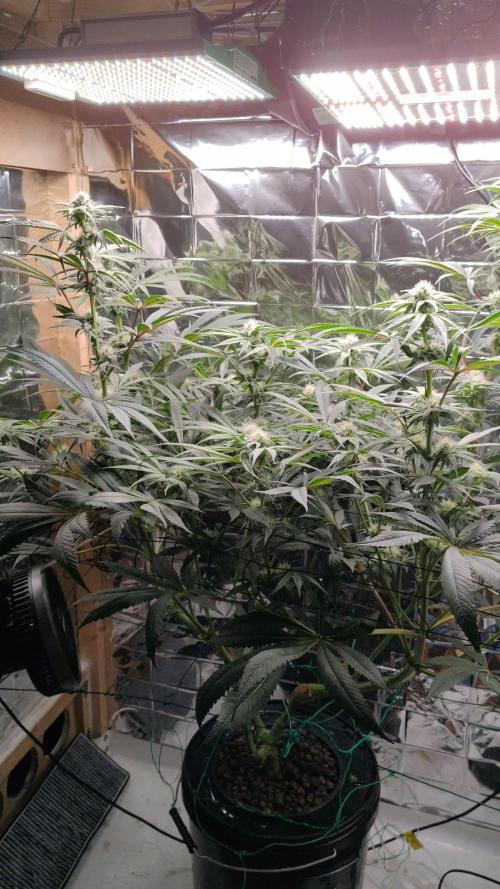
🌱 Frostmonster! Trichomes are spreading everywhere, even the fan leaves and stems are being covered. She is also starting to really swell up.
💧Refilled the reservoir daily with 2 ml/l CalMag, 1,8 ml/l bloom, 1,2 ml/l micro and 0,6 ml/l grow

Likes
13
Share


@HeavyHead
Follow
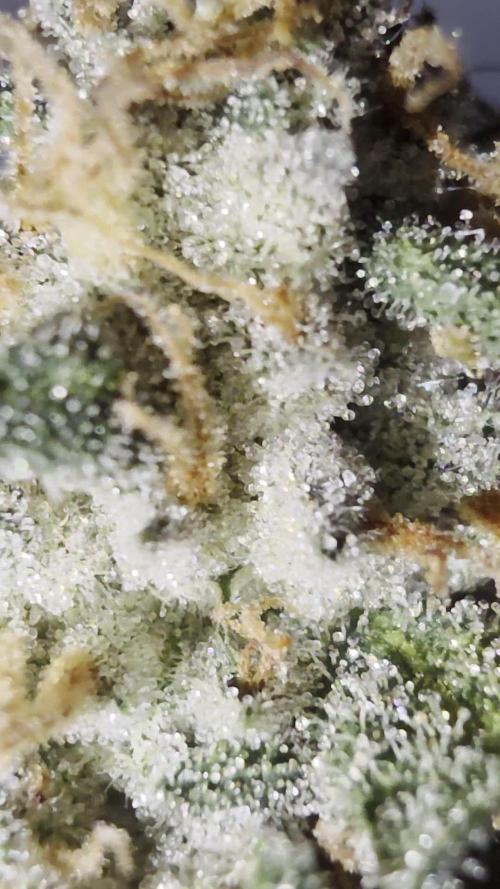
Great week this week :) been really fattening up and putting out a really sweet sugary smell.
Really liking the purpling I’m getting in the one. Had one of my males accidentally pop too soon so might end up with a few seeds :p


Likes
6
Share


@greenbeans420
Follow
Noticed PK deficiency in leaves so added 2 tablespoons on happy frog Bone Meal and 2 tablespoons on Down to earth...
Week 9. Plants liked the added PK but damage was dealt plants getting a heavy flushing.


Likes
3
Share


@iluMiGrower
Follow
Hello everyone and welcome to Week 7
It's been nice seeing the trichomes shine all around the buds while they fatten up each day.
Pot still drying...Probably will leave it a couple more days to see and start off with 1ml per gal of Tiger Bloom to help out a bit.
Cya all next week

Likes
21
Share


@OGTrauma
Follow
Big textwall incoming homies: Here Im doin some shit i knew from owning low to middle branded smd grow panels* how is that usually they come with both uv , ir, far red even newer quantum boards supplements itself with diverse chips extending their photosynthetic spectrum or making specific accesory bars / modules yet my purporse is rather focus on UV as this 15w bar (advertised as nominal 9 x 3w powered led) with UV-A 390-400nm spectrum – something that trigger some reaction to the plants with some other color son the flowering phase and trying to establish functional a ratio , as a bit of blue green and yellow have specific purposes instead of providing absurd quantities of red light , as there is some lateral cold bulbs in smaller but necessary ratios (as blue spectrum is still required on flowering , yet the original purpose was to complement mid to low branch development) in this shitty set up bonding with the upper bulbs and their colour temperature schema, every light has it's own schedule as how i suppose is a morning to night as something that cause plant resistance response (kinda noticed something i need to stimulate as i see a bit of fox-tailing but now with the uv-a i propose to build resistance and activate defense mechanisms like resin and of course, plant morphology according to its stage making bulkier , tankier , according to outdoor’s atmosphere i want to replicate as optimal weather as well – i hope this hardship make them more resilient and increase their health points as here i’s a HOT GIRL SUMMER- even indoors it rises my base temperature makes smell notorious, but as is not the usual weed smell make it and advantage in terms of discretion Killer Kush presents slight sweet tones not very prominent, the only herbal smell can be associated to pine undermining the refined coffee-like smell that is the dominant note (this selection of kush lack of lemon notes up to this point i can say it’s earthy with a bit of sour & sweetness) . Alas, as their late flowering phase and feeding schema should make chunky girls ,but the hot girl summer can become really a issue here, days and heat is something to be deal and prevent more light and food that they can chew , and this timing make me not over-do this niggas with excess of light, heat, disbalanced spectrum or extractions.
So automatizing it with some timers ( a very good hint to repurpose old shit in your house!) im doing a Schedule that turn off some lights through the course of the day switching the intensity and the spectrum itself , making a sweet morning to afternoon look alike , , making that timer looks really like a basement like a nice dream to my plants, not exposing them to very disfavourable conditions and yet controlling my electric bill peaking , by the same reason , ventilation is also measured as im relying just on ventilators to distribute and disperse heat and also doing the role of intraction / extractors, there are 9 usb fans in various levels of this weed maze <3 .
It's noticeable the quick evolution of these plants as there is no other factors to be aware except heat management as plants seem with not negative traces except some burnt leaf from previous weeks so i expect that they should be ready at the end of the month by my a personal mania of ripping shit all at once in order all to have that space at disposition for new projets , i will report stability eventually as they seemed quite rare enough when before putting to flower all, there was one already flowering AND THAT WAS FUCK THIS SHIT AND BECAUSE ITS NO CHEAP BULK TO EXPECT THIS SHIT!** ), and that shit become tears in the rain as that put me in some shit i can’t control or overcome, and just deal with in this strange lst bondage metal succubus nightmare that will be a nightmare to unmount too. Yet, i want the best conditions for her as all plants except her are ok so now the lateral bulbs also switched to give her more light (there is one on the left, right and on the back side, but i think better results with a neutral colour and using t5 led tubes with a water resistant case in each corner of the tent if i try to re do lateral lights ! )
*I still own the panels, in a next future, but not in this run i can use them as i think how i can supplement them and make them a team player as beyonding spectrum shaman shit i know now , and thankful to the chinese kids that made these fucking cheap as hell blessed bulbs,as they made me allow quickly adapt the spectrum on the main setup is 3000-4000k at the same ratio, with the addition of a cold light of 6500k on the idea of middle branching development too , and a small pint of unholy uv doing early 2000s cyberpunk shit with old trash janitor with compulsive hoarding stuff with some big gas leaks attitude niggas .
**I do second runs of plants in order reach a better result through practice - but is noticeable the lack of stability on these bastards as i was very happy with previous strains i can say this strain is a big no! , unlike their famous ones, like black Jack or sweet cheese , the former ones fast version are way more stable and they didn’t presented me autoflowering phenos in the batch … i don’t hate autos, but i hate to mix them with feminized on the same run, its like having a hermaphrodite indoors for me. 😫😫😫


Likes
Comments
Share


@Franco123
Follow
hi, the two plants are doing well and continue in their flowering and the odors they produce are increasing and these two have a sweet smell but also notes of wild fennel, or noticed that one of the two plants has a Polyploidy mutation in the flowers, for the rest, nothing has changed, they are still fed earthworm humus which was placed in the soil and cane sugar when given to drink with a controlled pH of 6.3/6.4
Likes
21
Share


@w33dhawk
Follow
Moin gibt nicht viel zu sagen hatte bei einer der octo moms Ph probleme die ich aber mit ner kleinen Spülung beheben konnte und am mittwoch 22.06.22 habe ich die Ladys etwas entblättert damit mehr Licht nach unten eindringen kann sonnst war nix weiter los ausser beobachten Ach ja und ich beschwerte mich nie wieder über schlechtes wetter jetzt is das wetter so gut das ich die Temps in der box kaum noch unter Kontrolle halten kann hatten am Freitag 24.06 knapp 30 Grad in der Wohnung nur mit gefrorenen Wasser Flaschen Könnte ich die Box auf 26,4 Grad runter kühlen noch wärmer aussen Temperaturen und ich hab ein Problem 😢 naja die Woche war okay die Ladys wachsen und Strecken sich läuft also......
Euch allen ein schönes Wochenende cu homies


Likes
68
Share


@Dendegrow
Follow
The harvest is in! 🌿✨ The buds have turned out absolutely stunning – dense, frosty, and bursting with trichomes. The aroma and flavor are something truly special: a delicate blend of cherries with a refreshing hint of mint 🍒🍃.
The high is incredibly potent, deeply relaxing, and body-focused – the perfect companion for unwinding in the evening 🌌💤. These cuttings have truly delivered, and despite the challenges along the way, the results are impressive. I harvested them at the perfect moment, with fully milky trichomes, ensuring peak potency and a balanced effect 💎✨.
Thanks to everyone who followed this journey – stay tuned for more updates and new adventures. Until then, enjoy the vibes and happy growing! 🌺📸
---
Die Ernte ist da! 🌿✨ Die Buds sind einfach wunderschön geworden – dicht, frostig und voller Trichome. Das Aroma und der Geschmack sind etwas ganz Besonderes: ein leichter Hauch von Kirschen, kombiniert mit einer erfrischenden Minznote 🍒🍃.
Das High ist unglaublich stark, tief entspannend und vor allem körperbetont – perfekt, um den Abend ausklingen zu lassen 🌌💤. Diese Stecklinge haben wirklich abgeliefert, und trotz der Herausforderungen unterwegs bin ich mit dem Ergebnis sehr zufrieden. Ich habe sie genau zum richtigen Zeitpunkt geerntet, bei vollständig milchigen Trichomen, um maximale Potenz und eine ausgewogene Wirkung zu gewährleisten 💎✨.
Vielen Dank an alle, die diesen Grow begleitet haben – bleibt dran für weitere Updates und neue Abenteuer. Bis dahin, genießt die Vibes und happy growing! 🌺📸


Likes
1
Share


@JNSGenetics
Follow
This week I moved them into their own grow tent because I realised I couldnt wait for them to naturally flip into flower. It would have taken atleast 4 more weeks.
Im really excited for the orange sherbert as the stem smell amazingly orange like. They are under 300watts of LED from mars hydro (samsung evo LM301H EVO). I might add another 250 - 400 watt HPS later in the flower stage as the plants will fill the tent.
I will give it another 4 - 7 days before i start tying them down (LST) to make sure I maximize the grow space and allow time for the final stretch.
Like this i estimate a yield around 500g to 700g of dry weight once harvested

Likes
5
Share


@RobsCoastalGrower4
Follow
Nice healthy growth. Starting to push up the nutrients slowly. First time using multi bottle system why not learn under pressure in a competition haha.

Likes
52
Share


@Rangaku
Follow
Final 2 weeks coming up , buds are firm and chunky , colours are coming out and the smell is out of control. Just a ween off nutes then flush next week