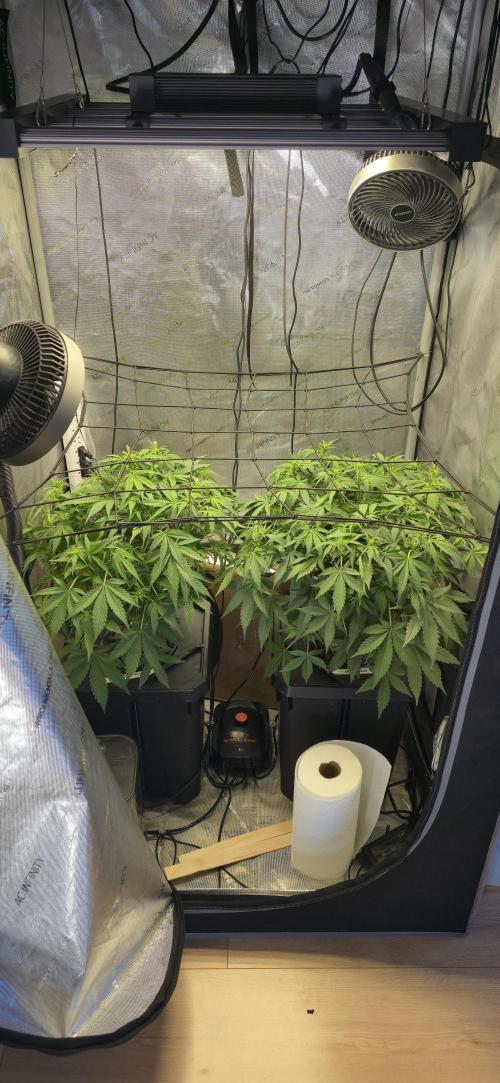
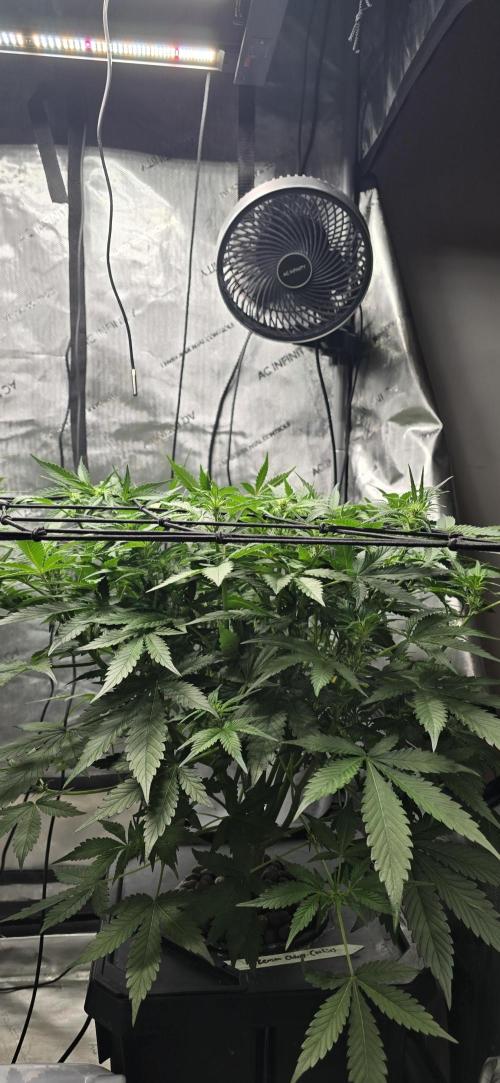
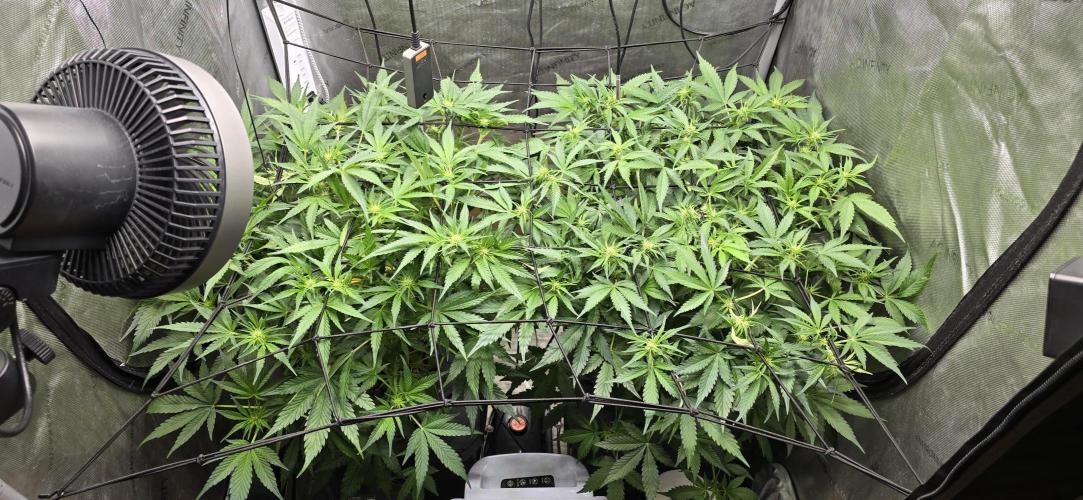
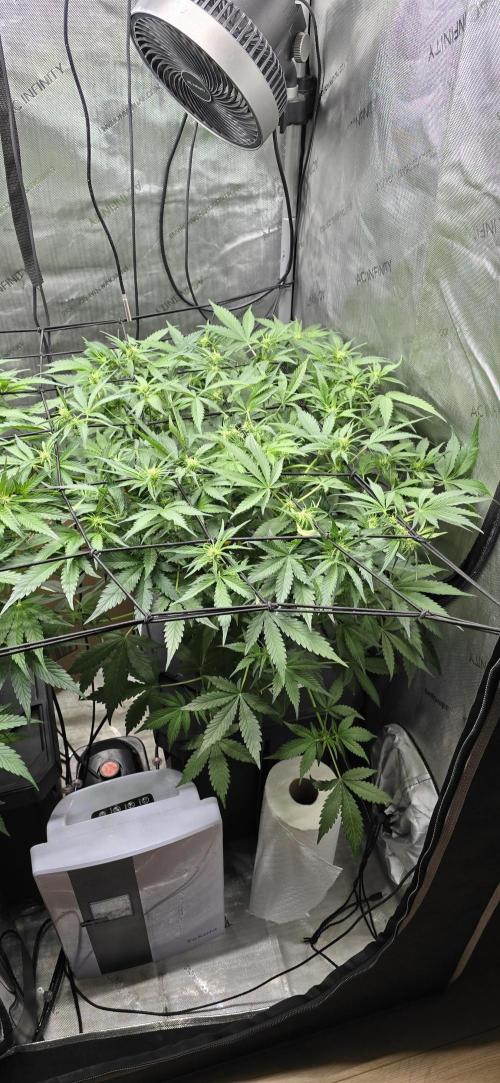
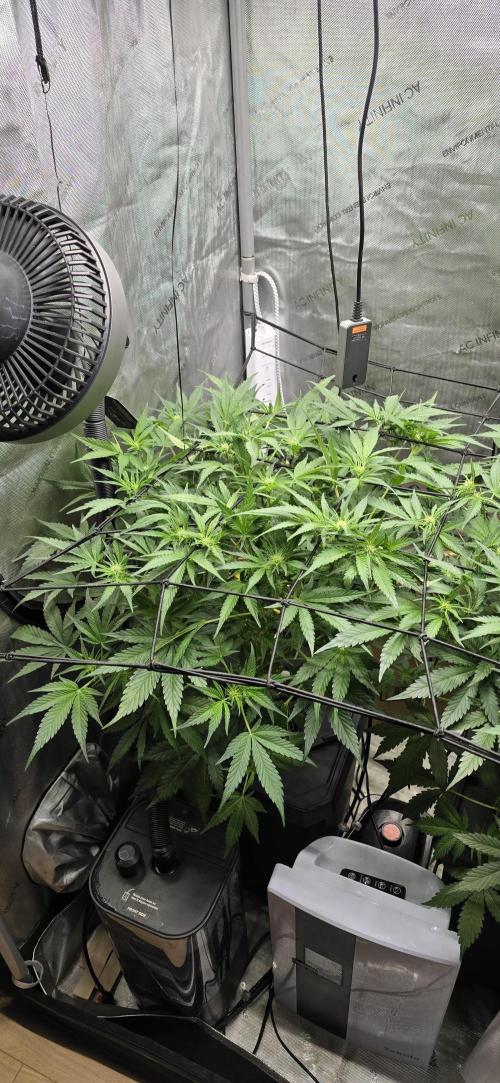
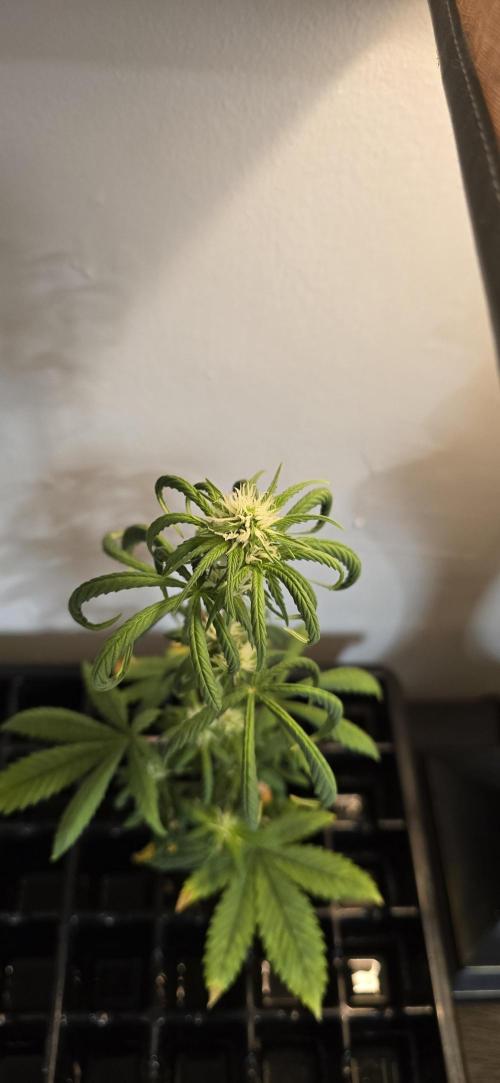
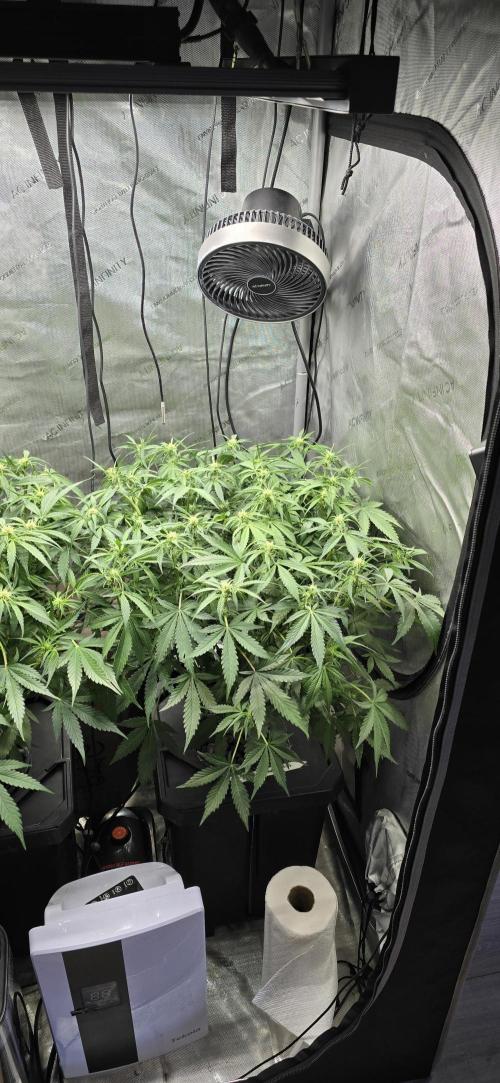
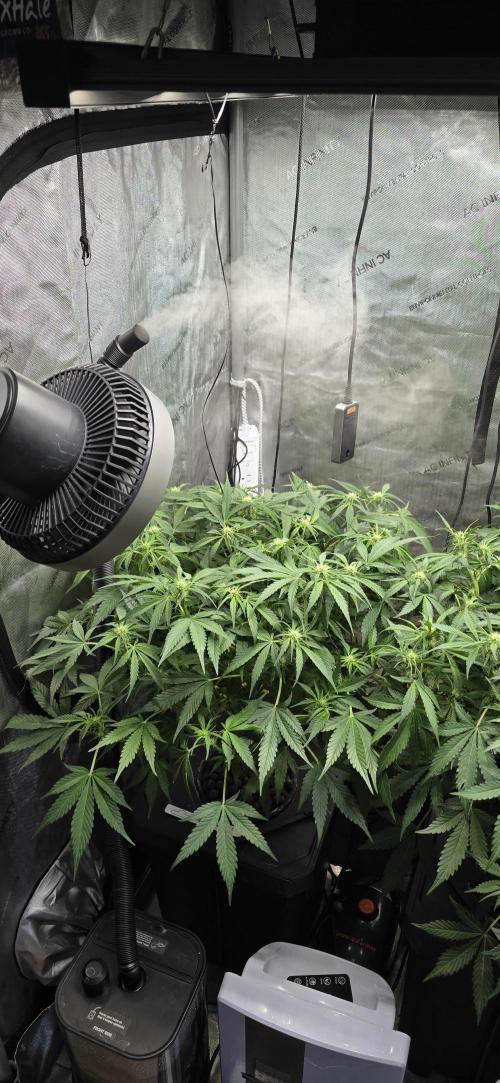
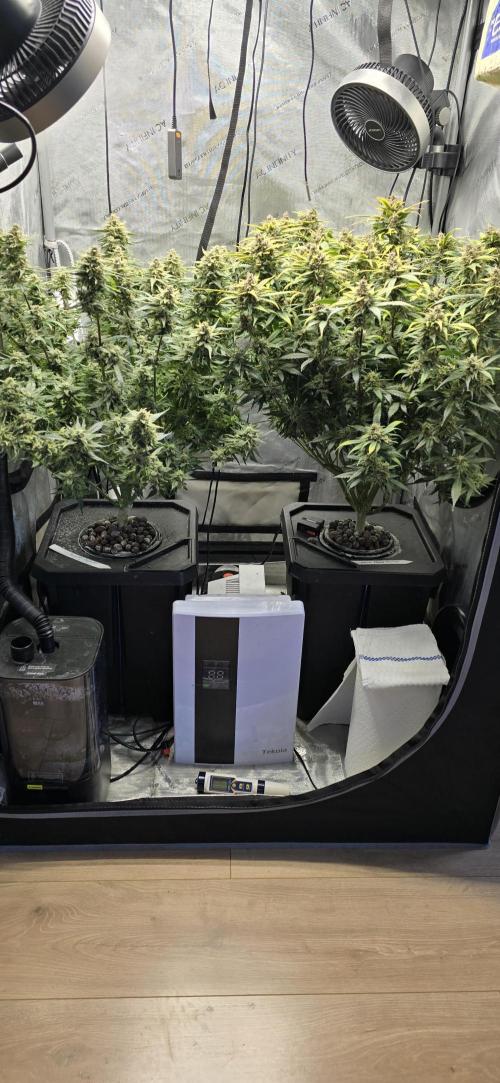
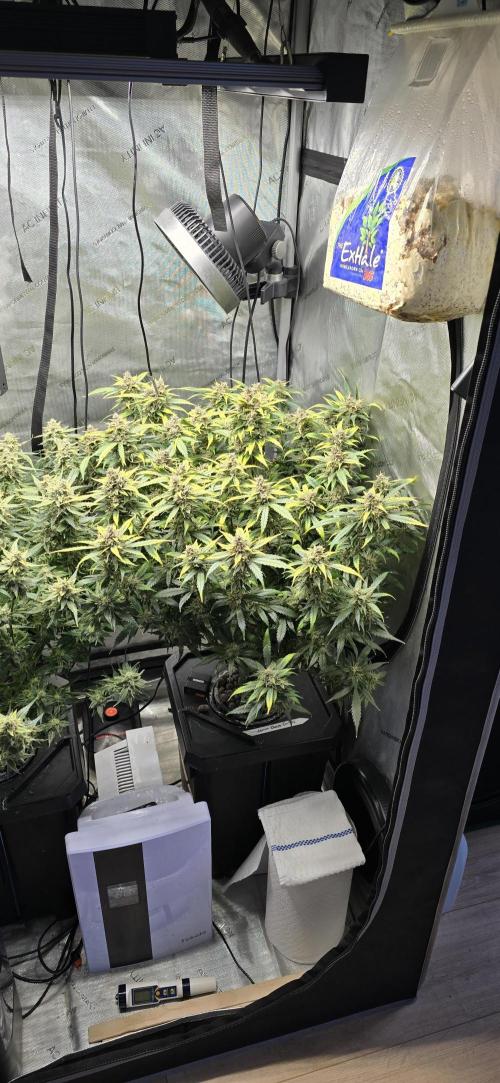
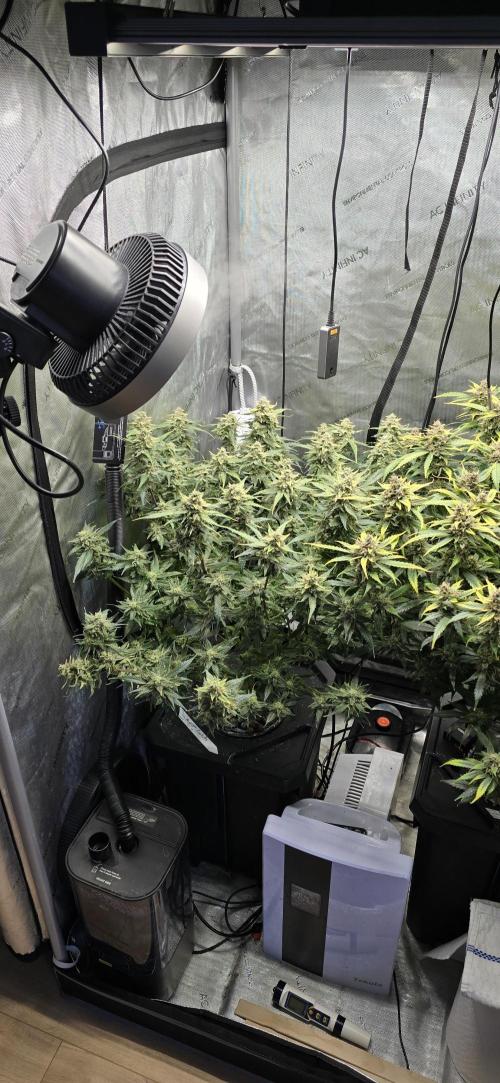
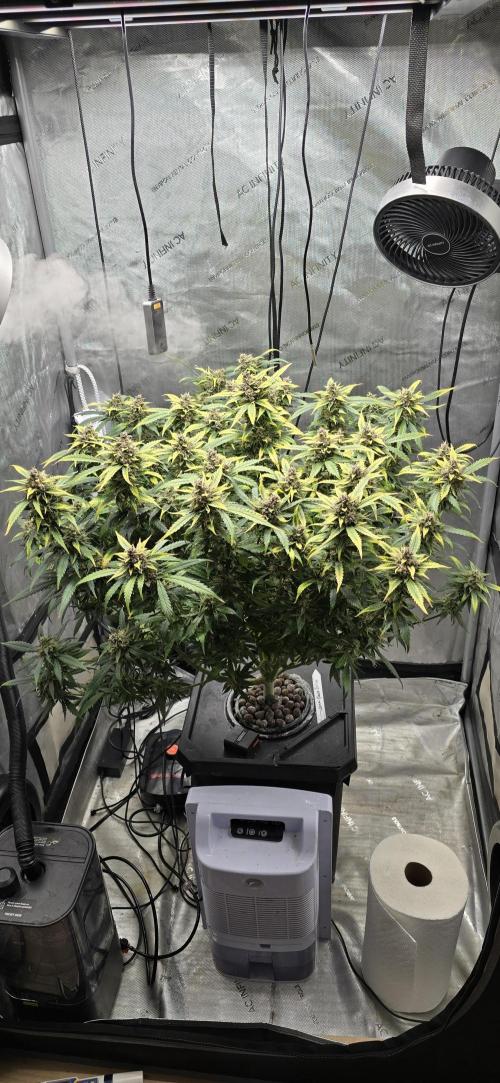
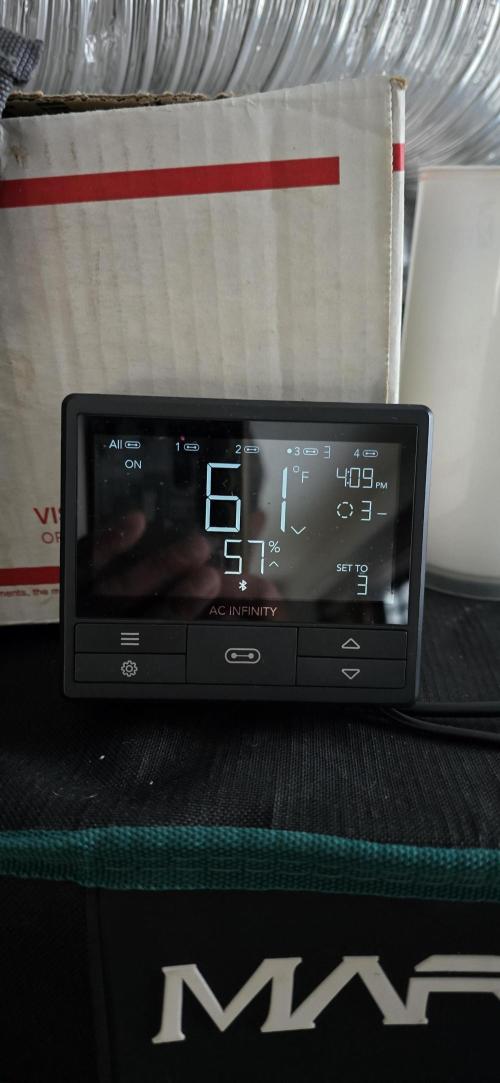
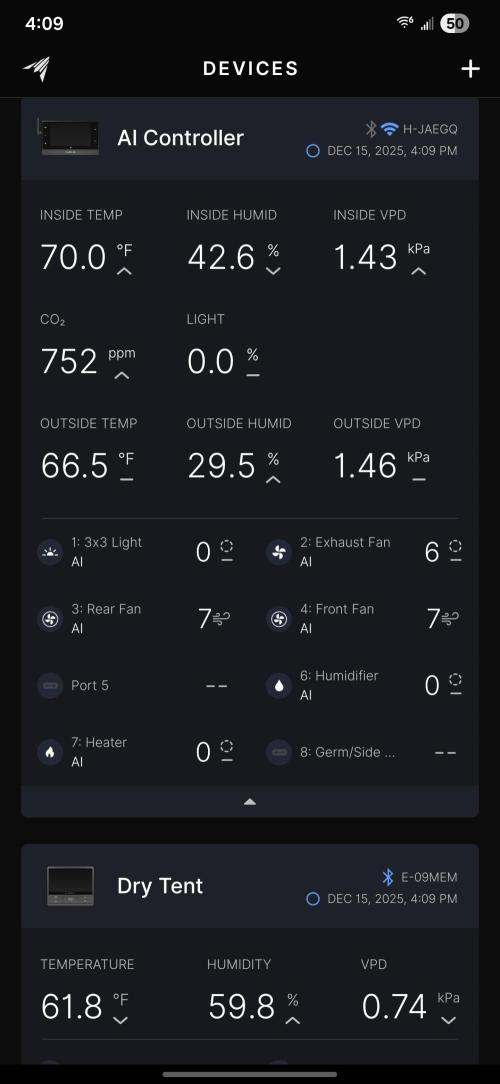
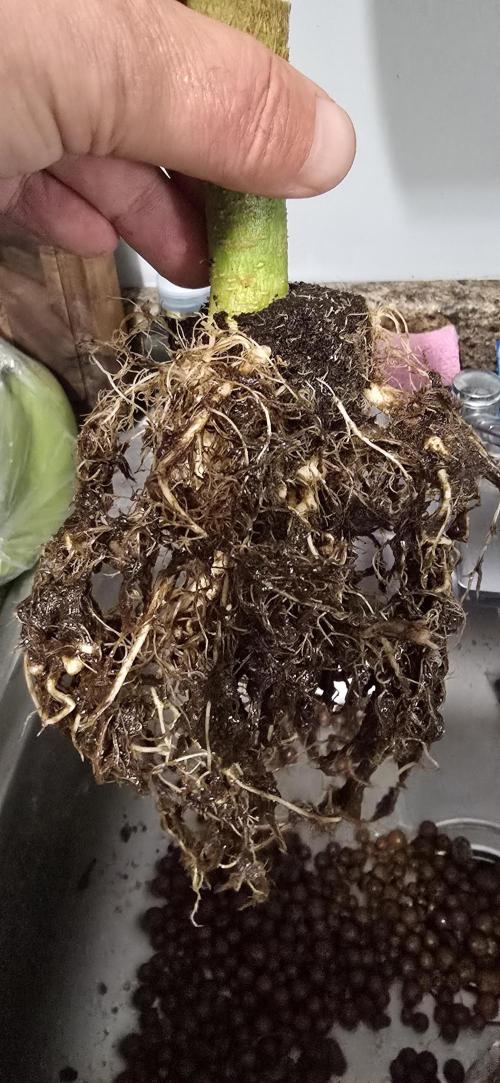
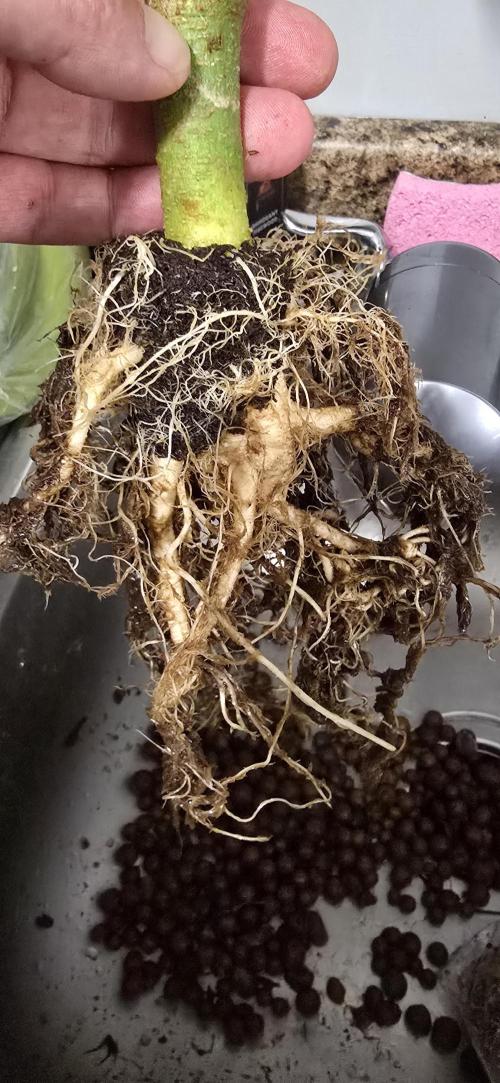
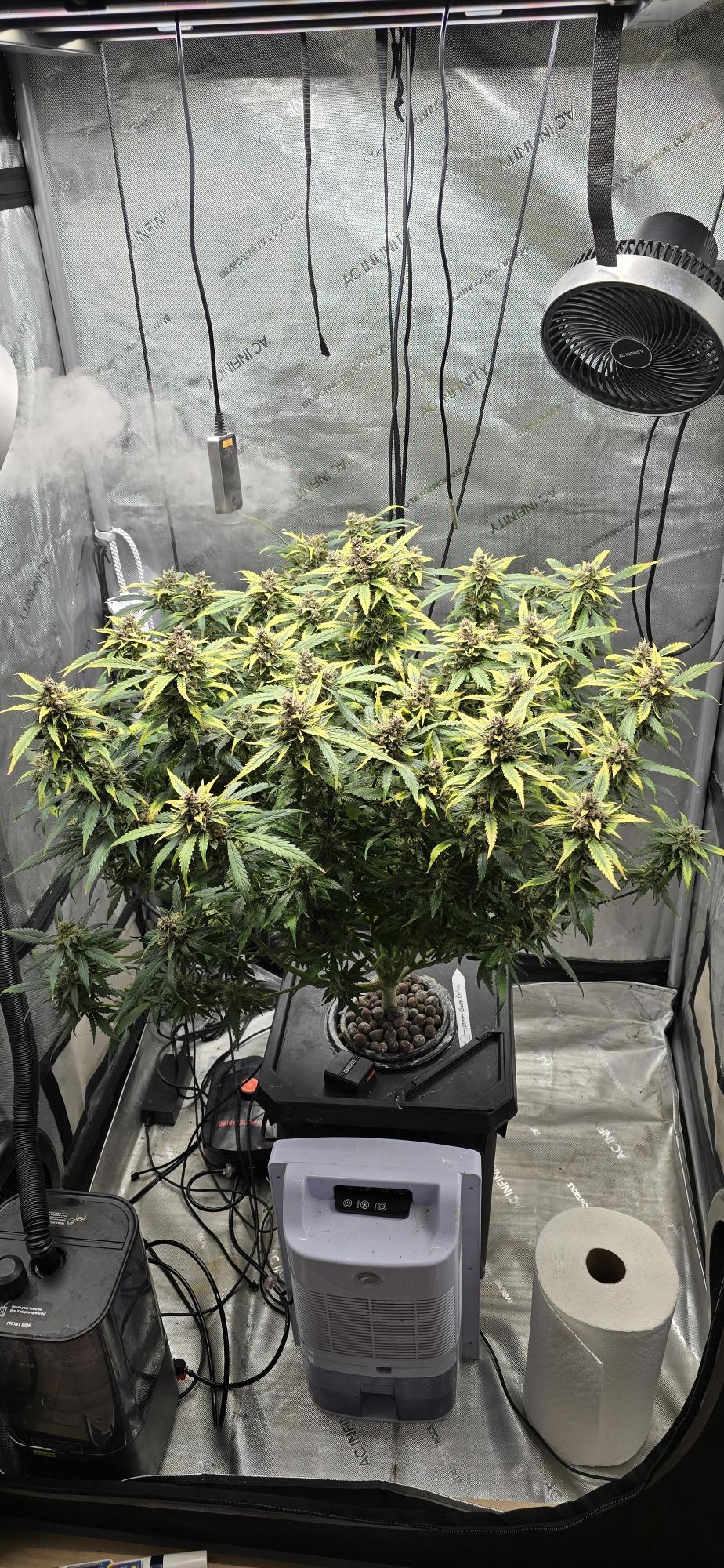
Prilyfe13 09/23/2025
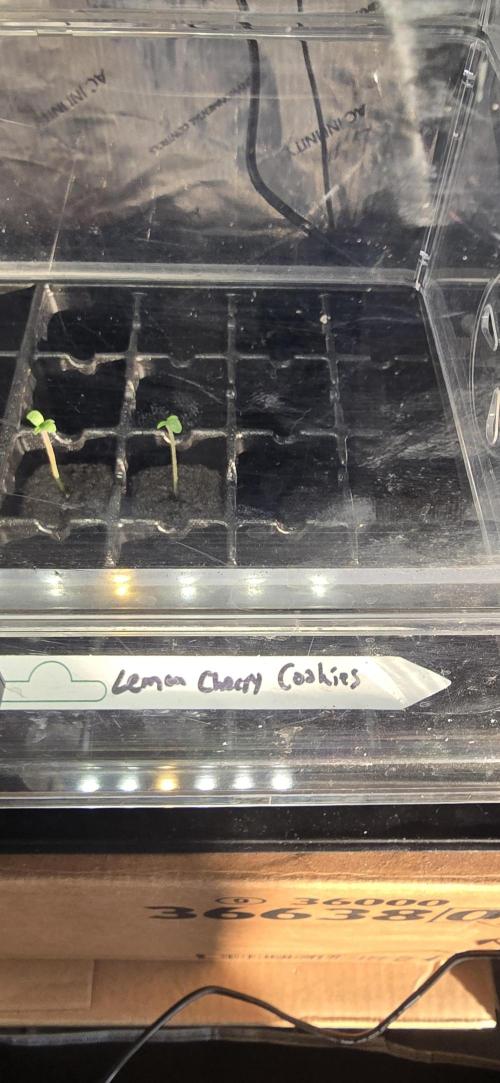
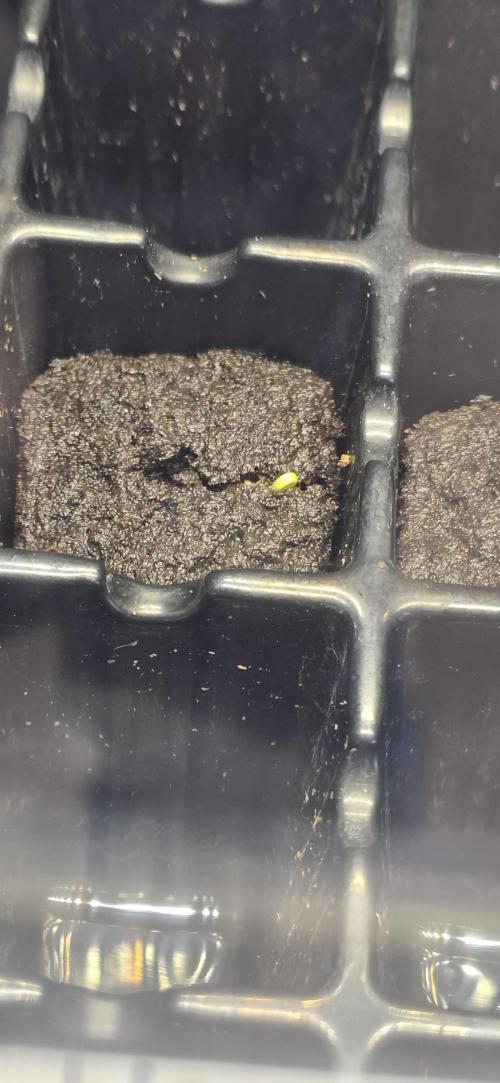
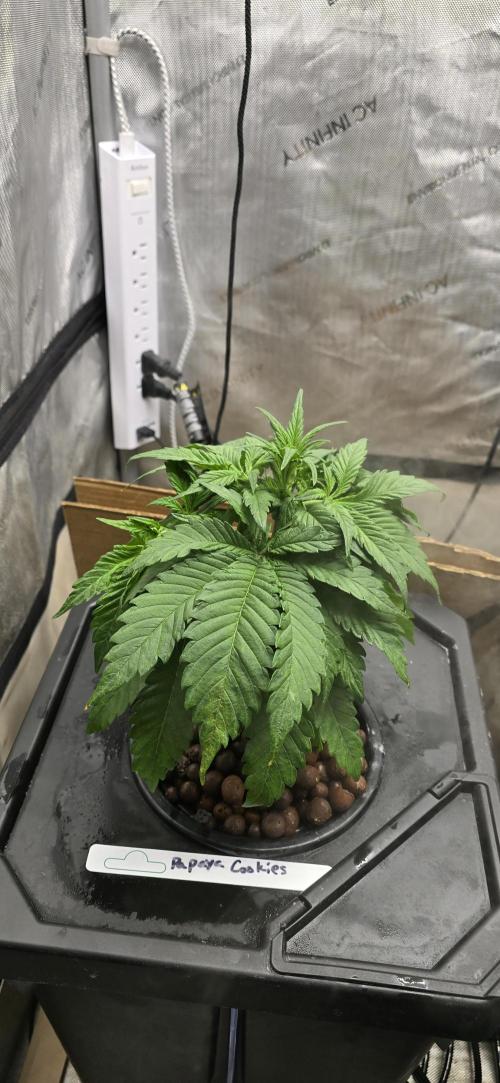
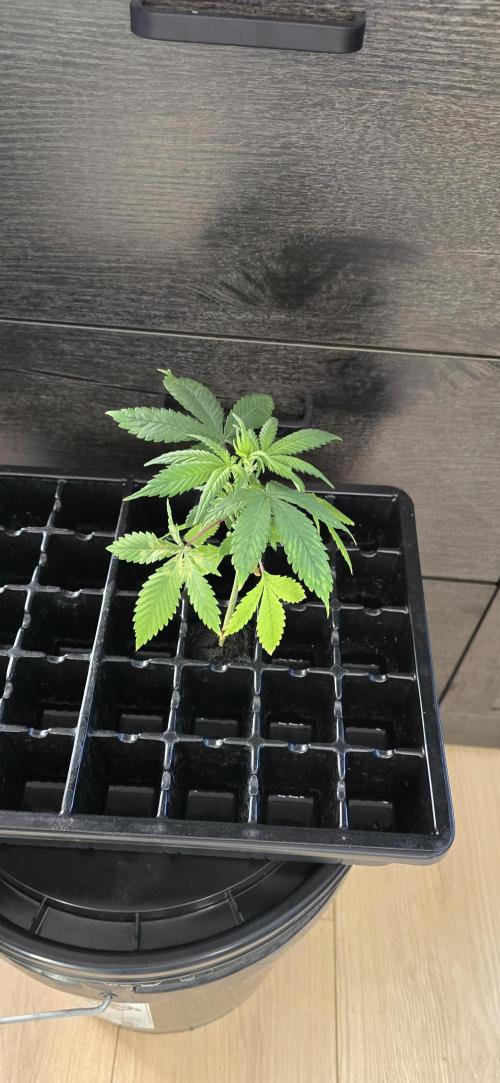
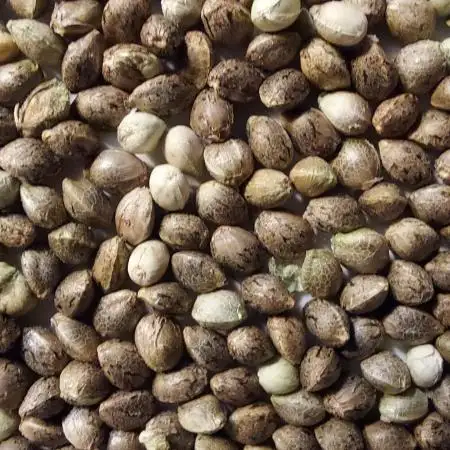
Day 2 and I already screwed up. 2 nights ago I popped my seeds in their cups of water for an overnight soak. Unfortunately I didn't know the grow light would turn on in the middle of the night as I hadn't set anything up yet. So they got 7 hours of full on light while in their cups. So I might have some dead seeds. But they sank and are now in their plugs waiting to show themselves. We'll see. I have 1 more of each seed, so if these don't work, I'll try the last 2 out.
09/26/2025
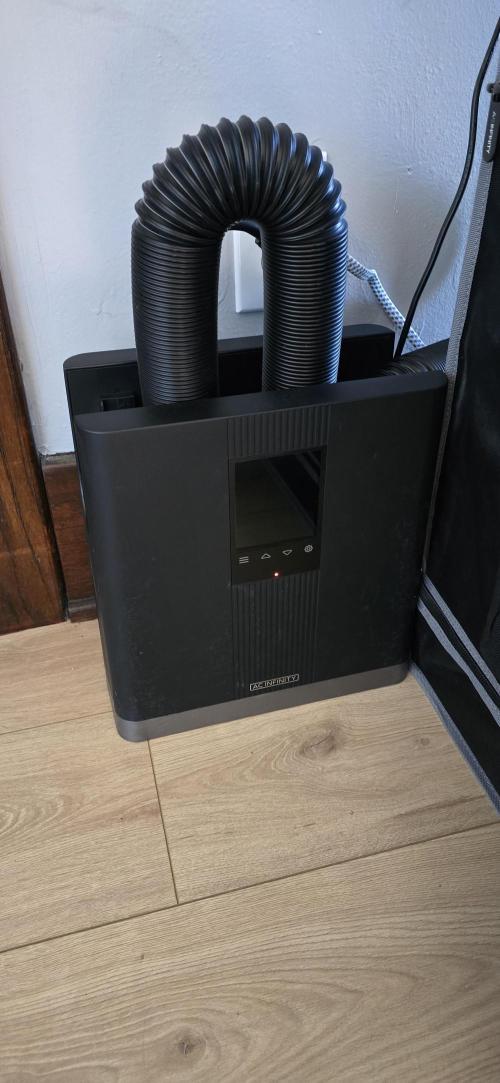
Alright everyone who actually reads this. Lol. I'm back after a full year of no growing. It was torture. Anyway, what matters is that I'm back and have my babies ready to go! Honestly, I've gone through a few things and I might not be as detailed as previously. I will do my best, but it might be a bit less than before. I'll still keep up with the readings. And now I have the AC Infinity Ai controller. So I can get precise readings for CO2 and DLI or PPFD. I really hope you enjoy my diary. Thanks for reading. And on with the plants!
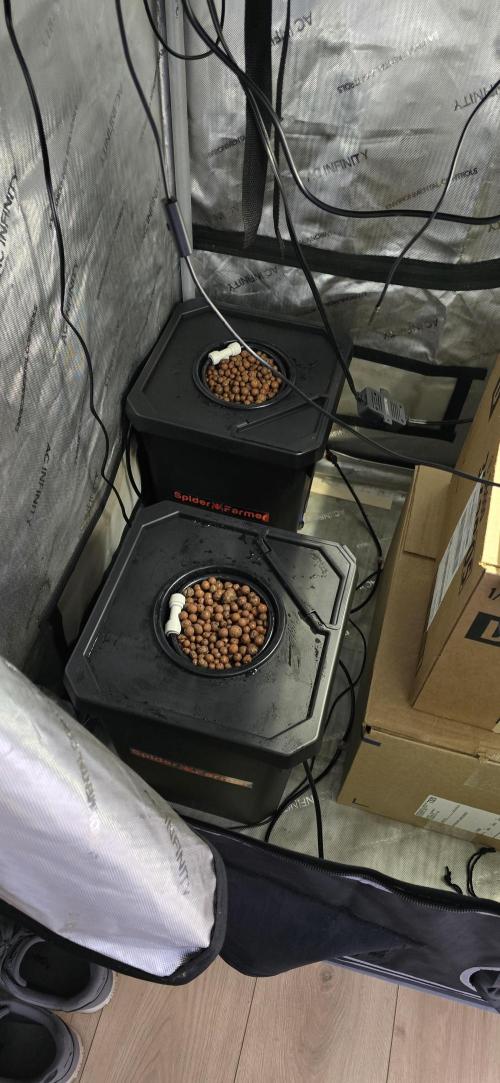
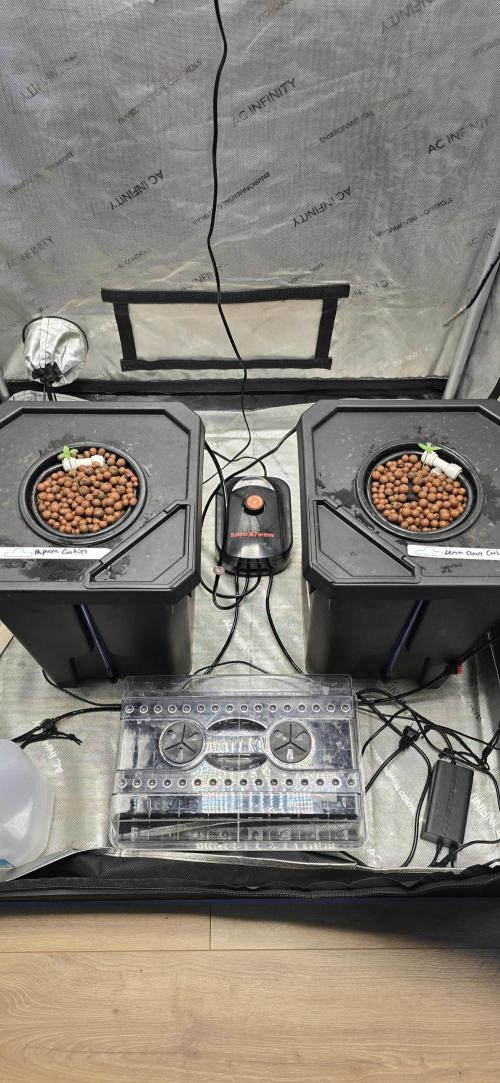
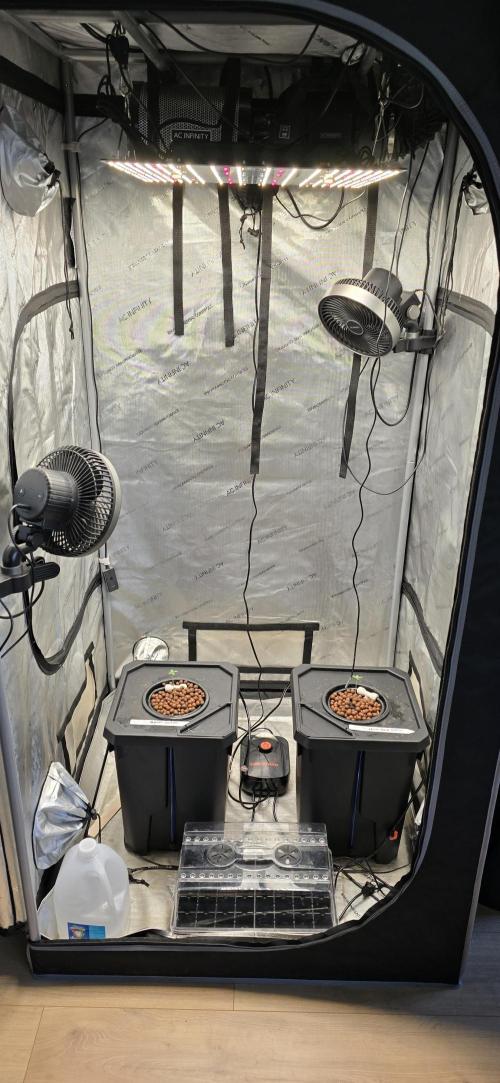
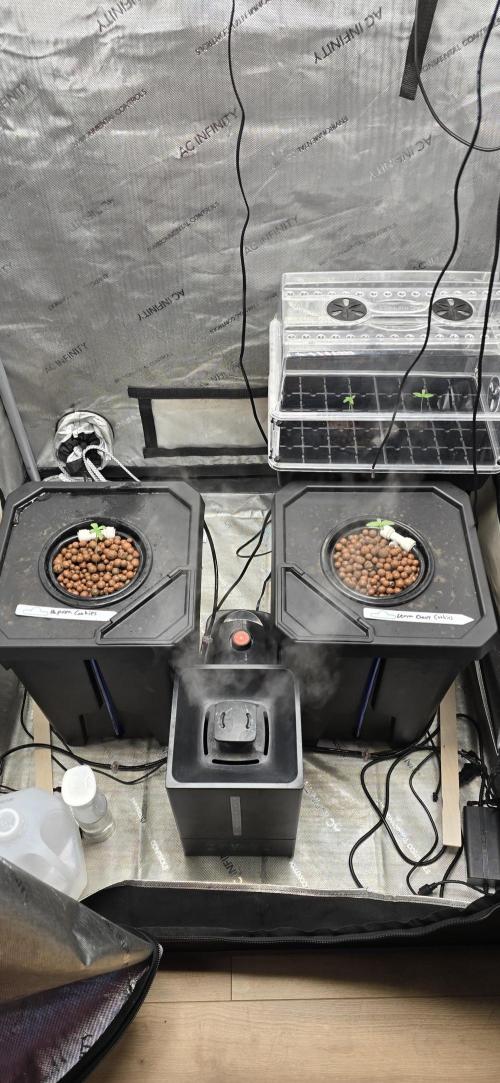
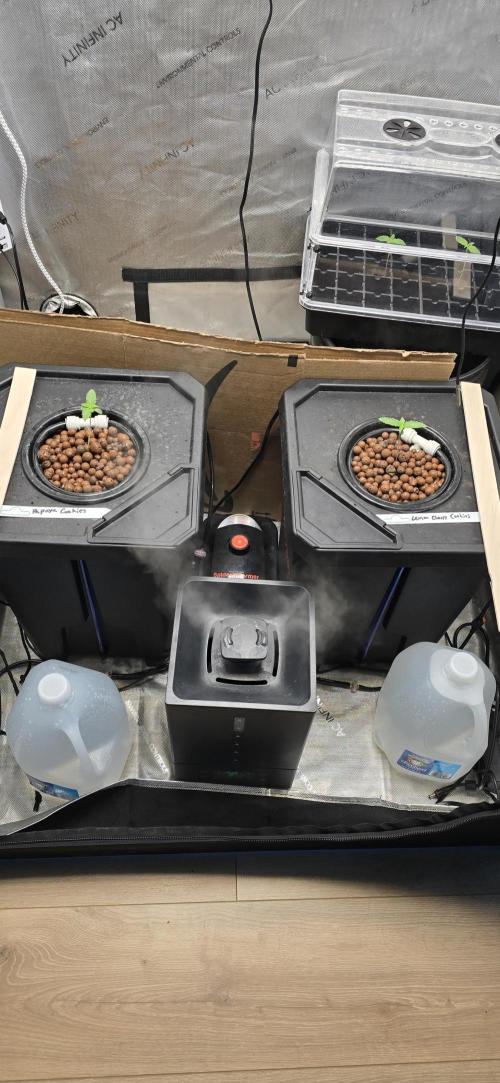
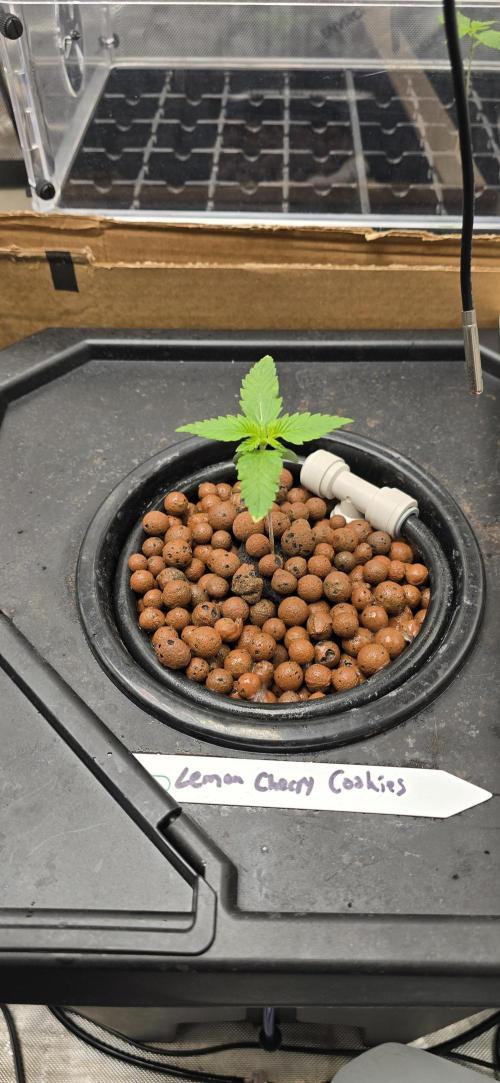
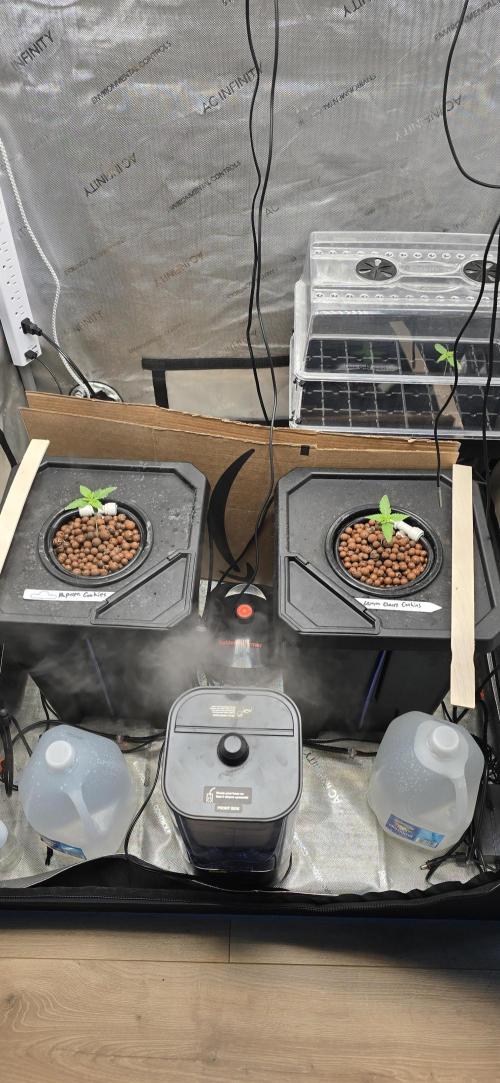
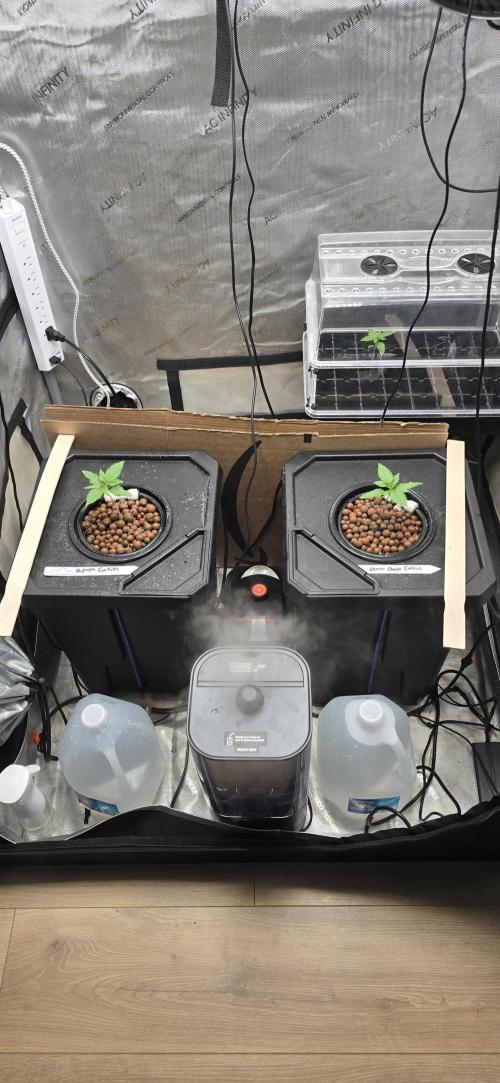
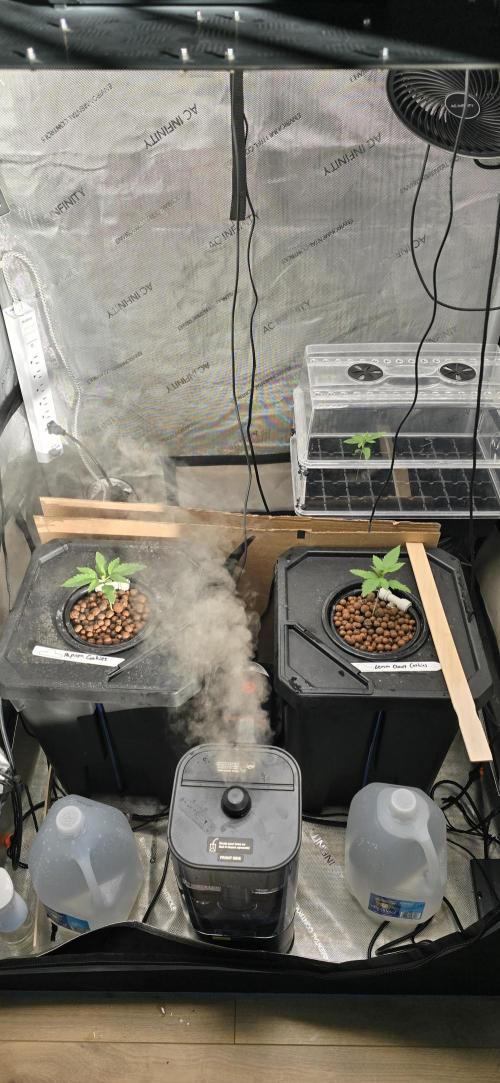
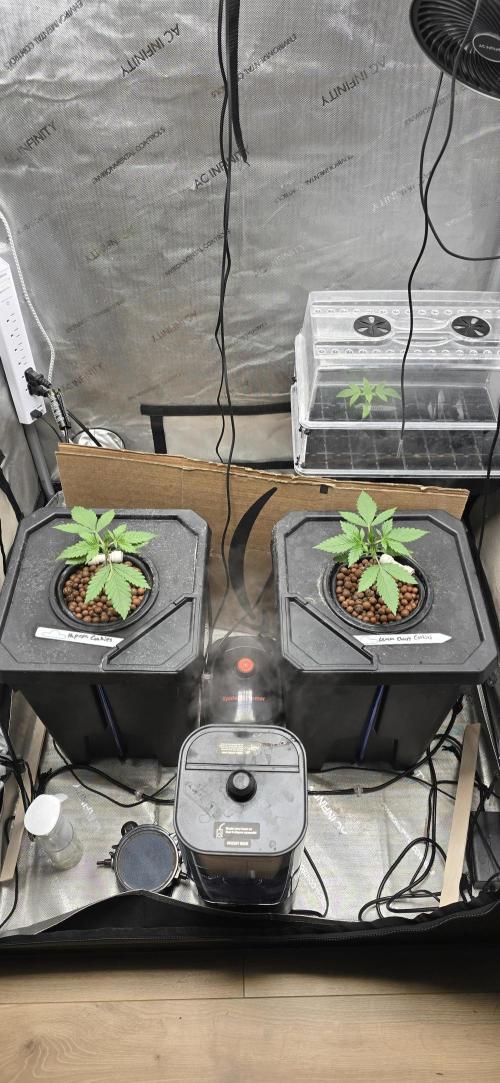
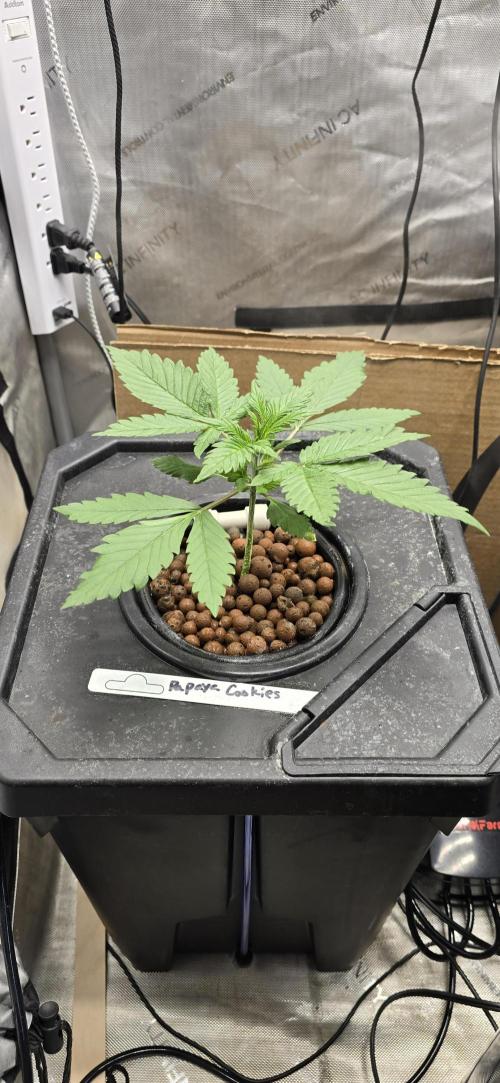
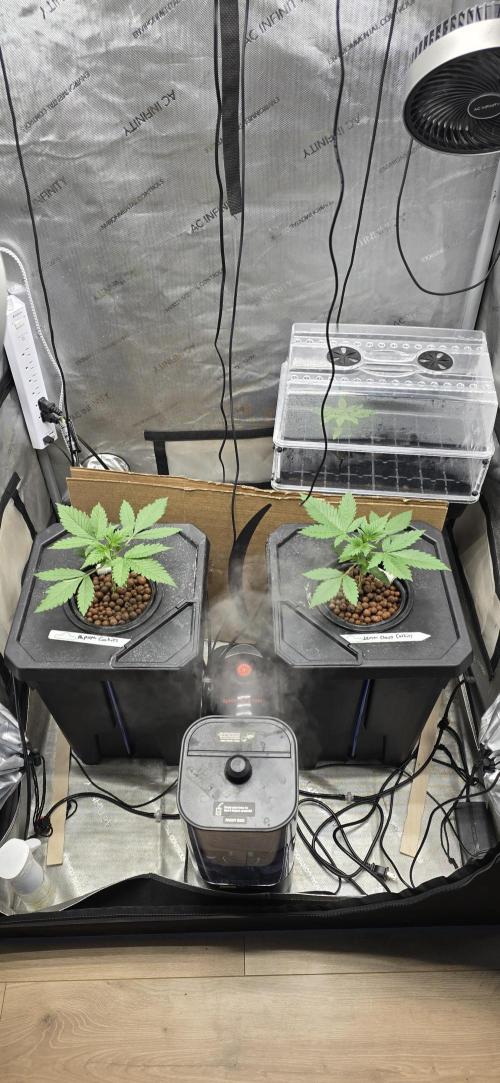
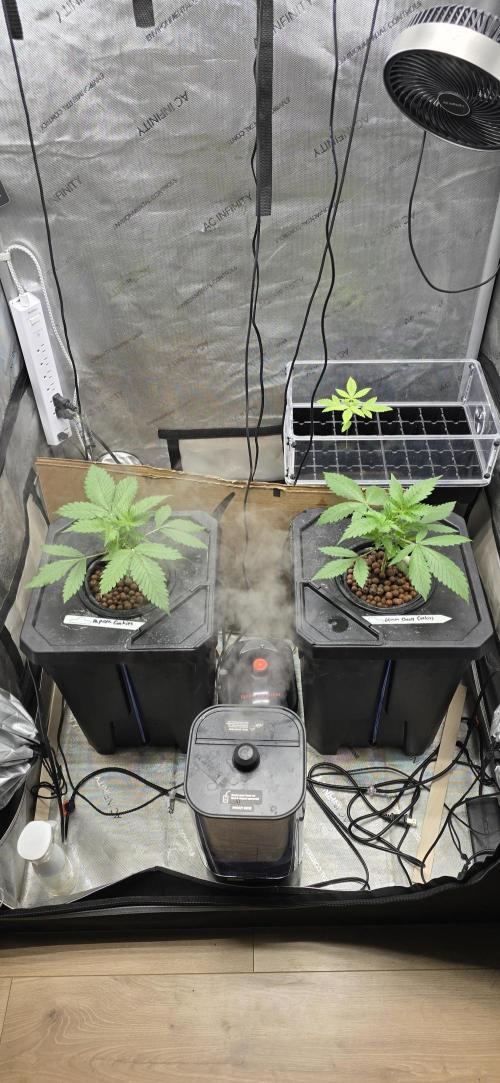
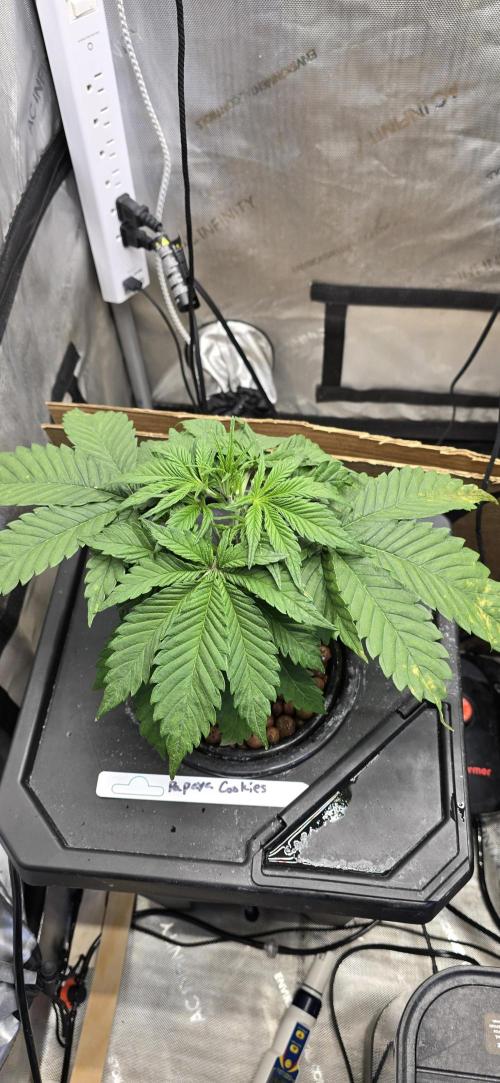
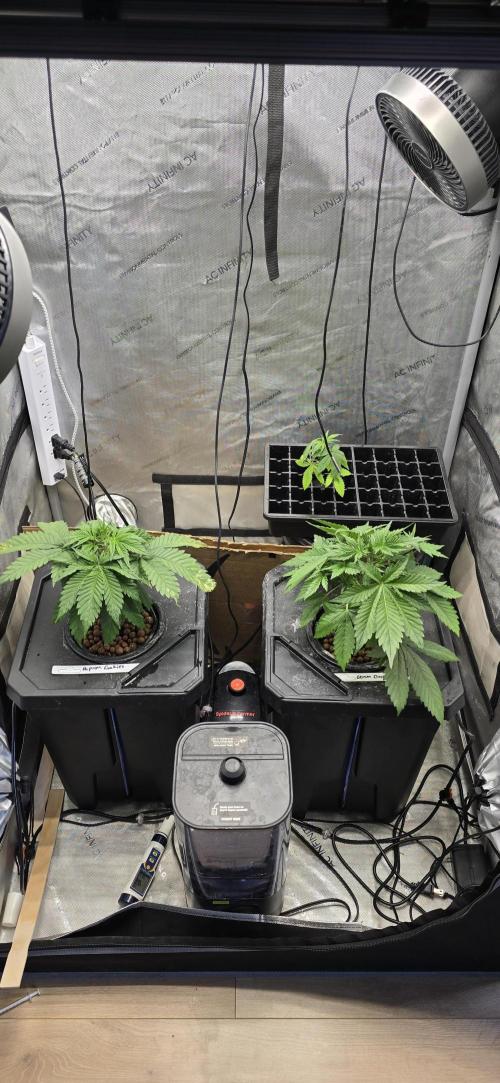
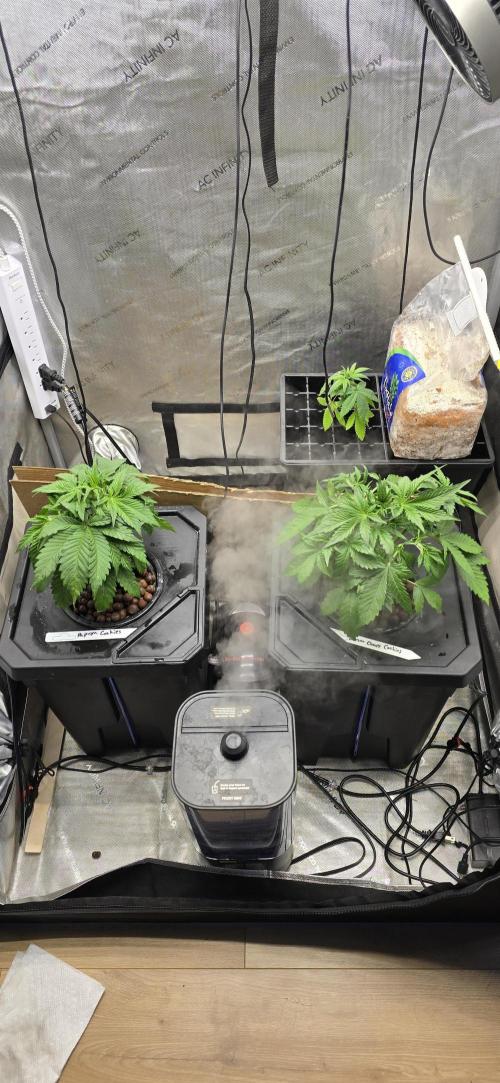
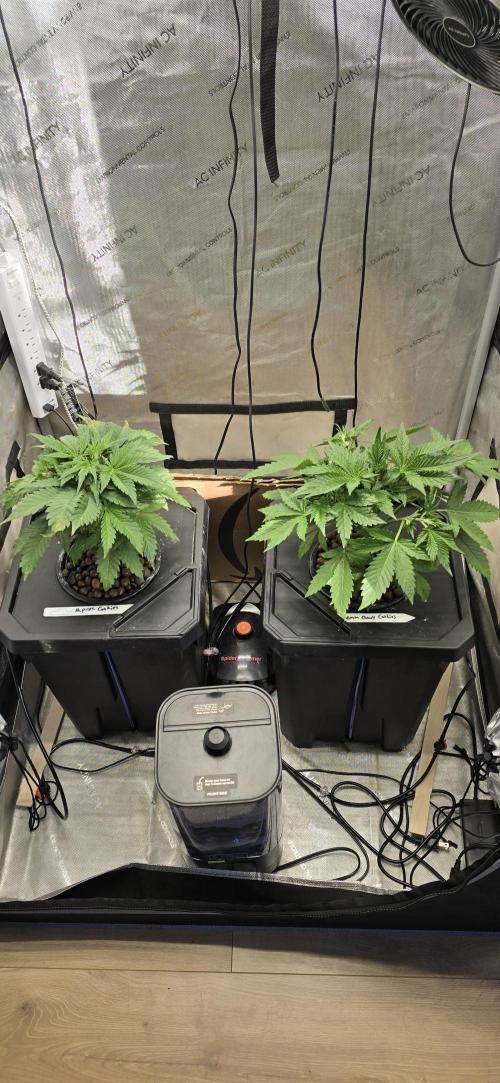
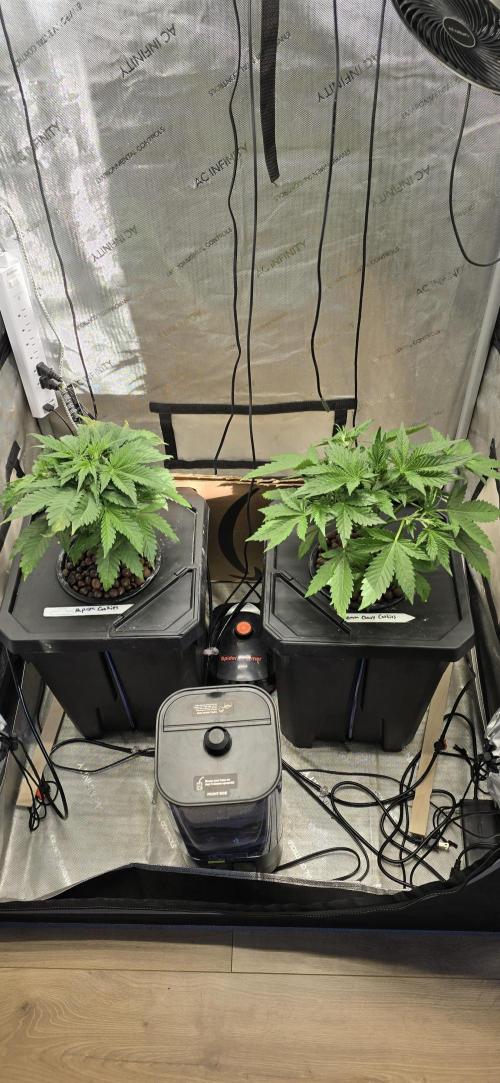
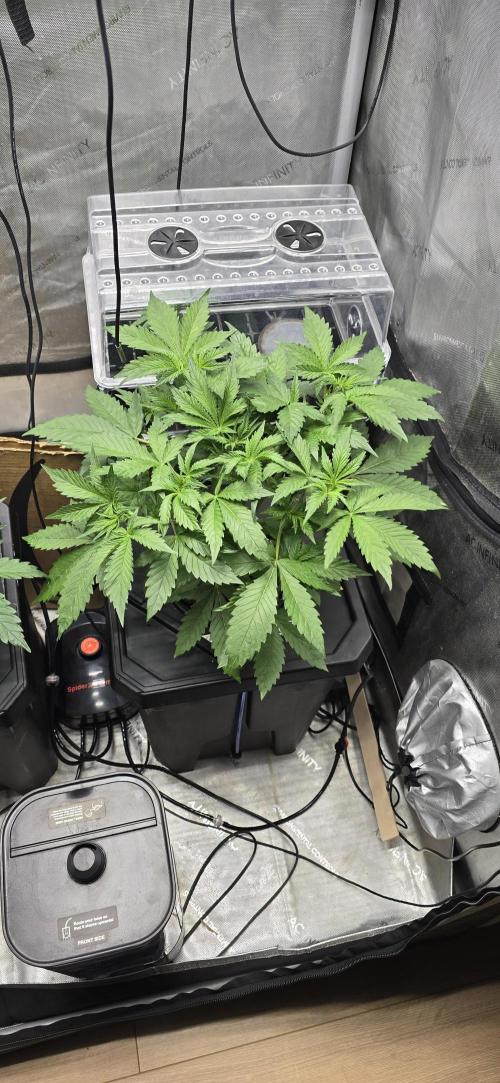
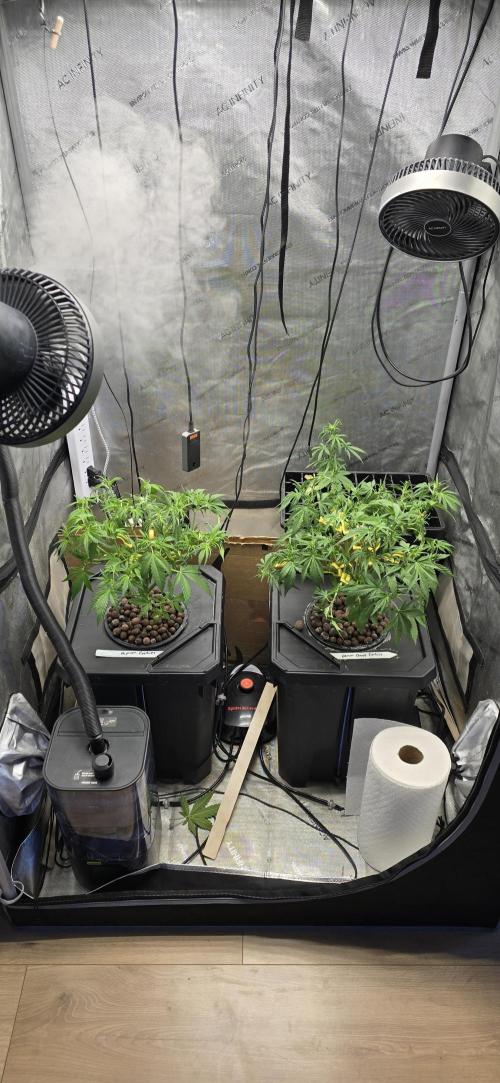
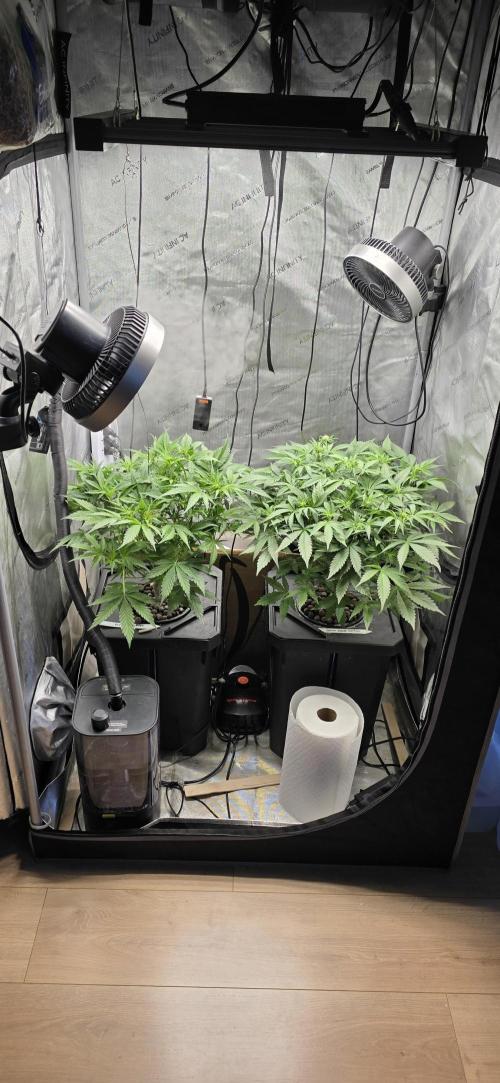
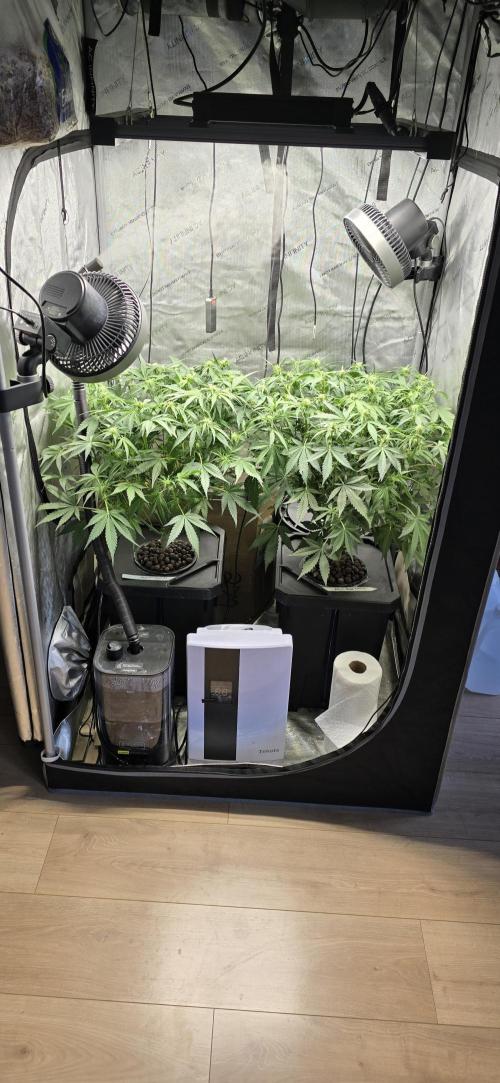
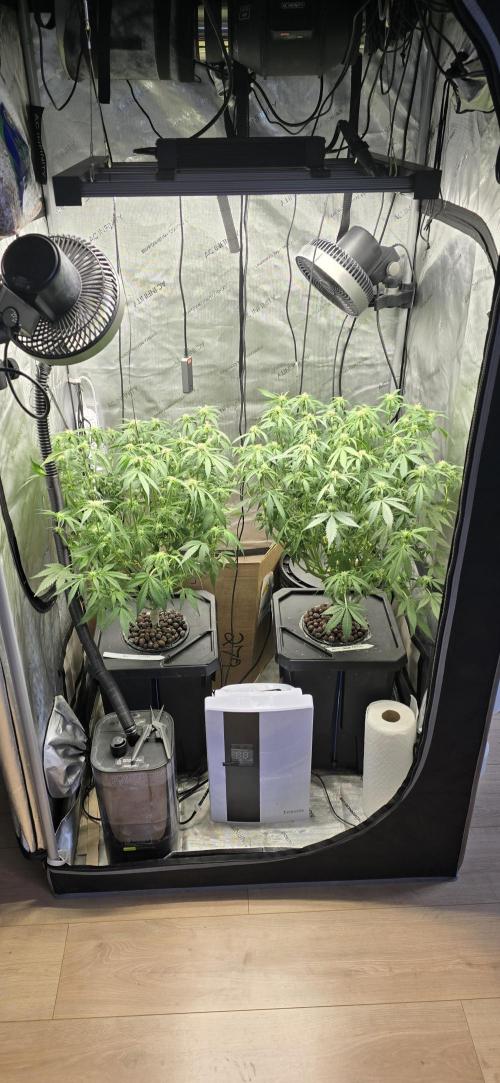
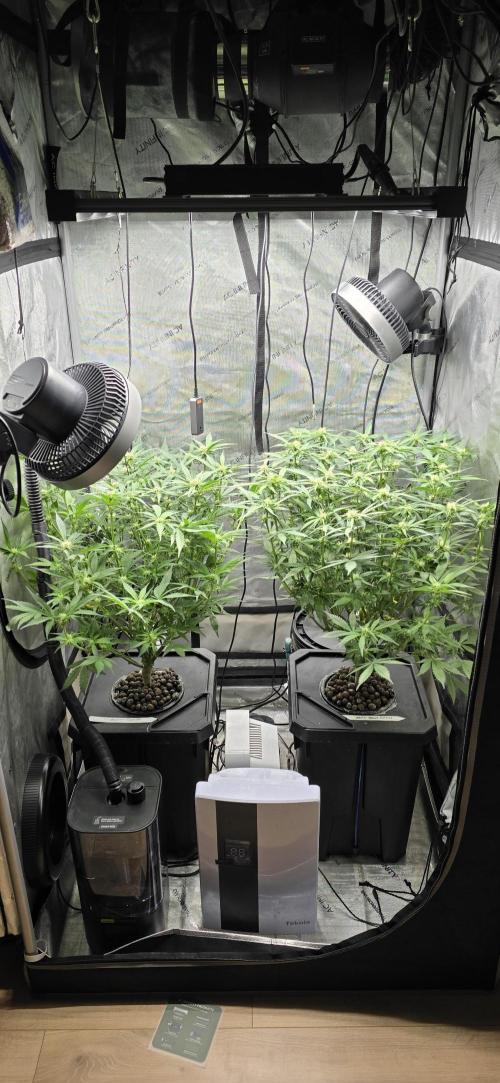
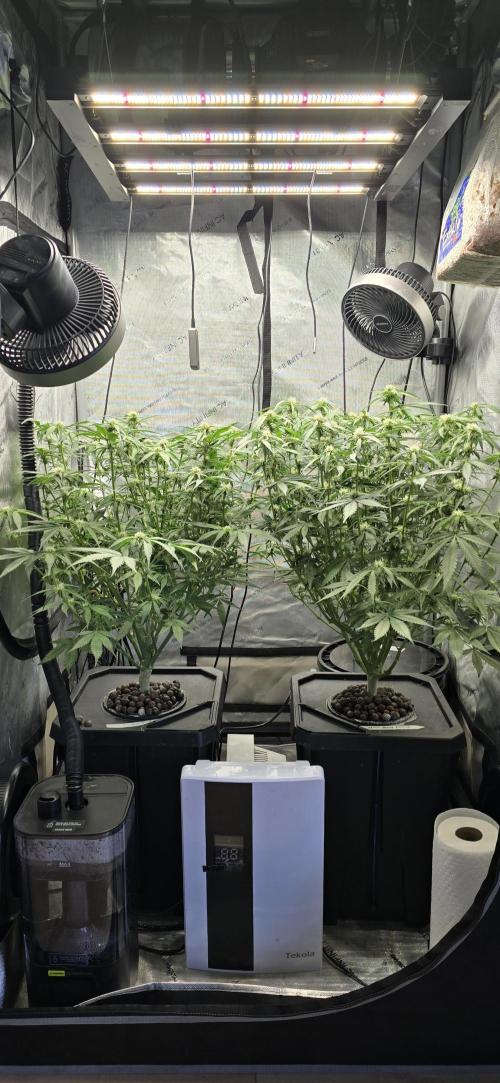
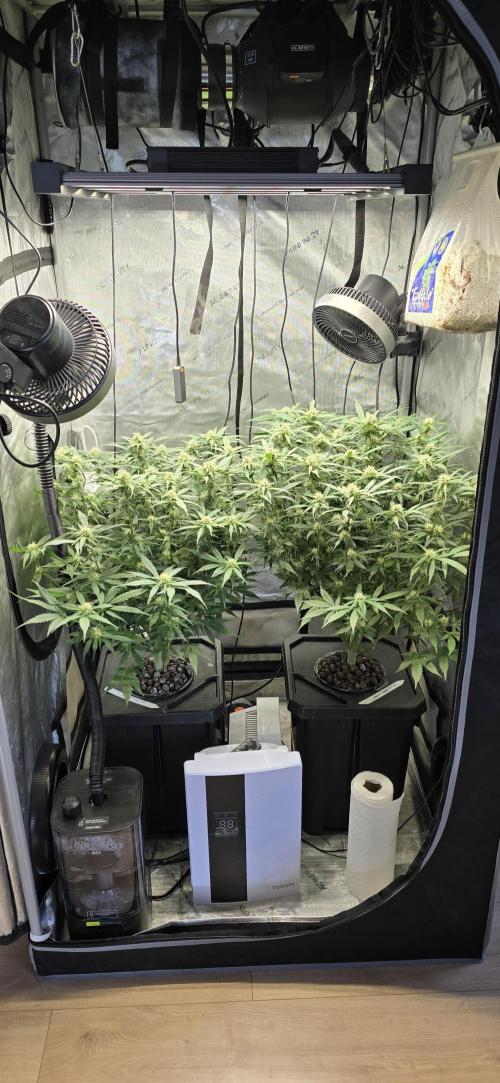
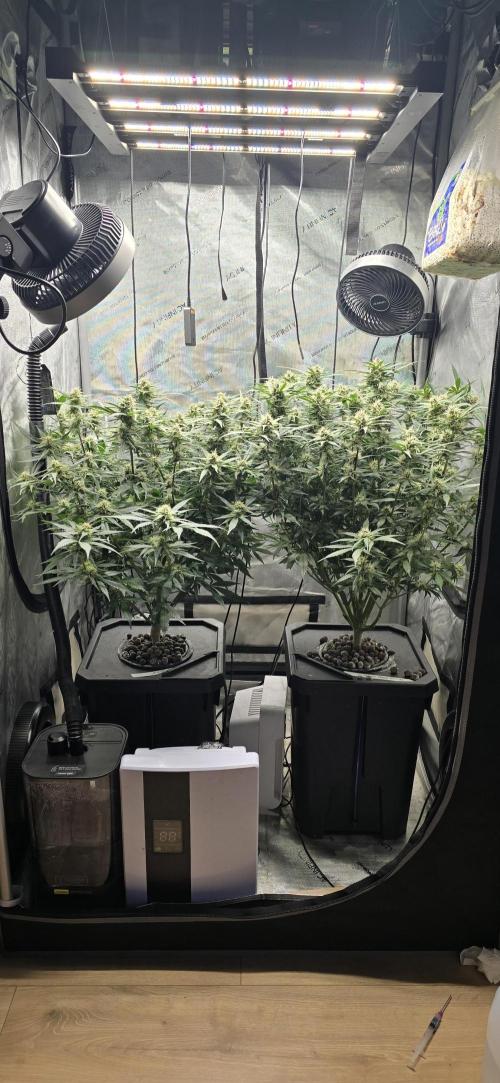
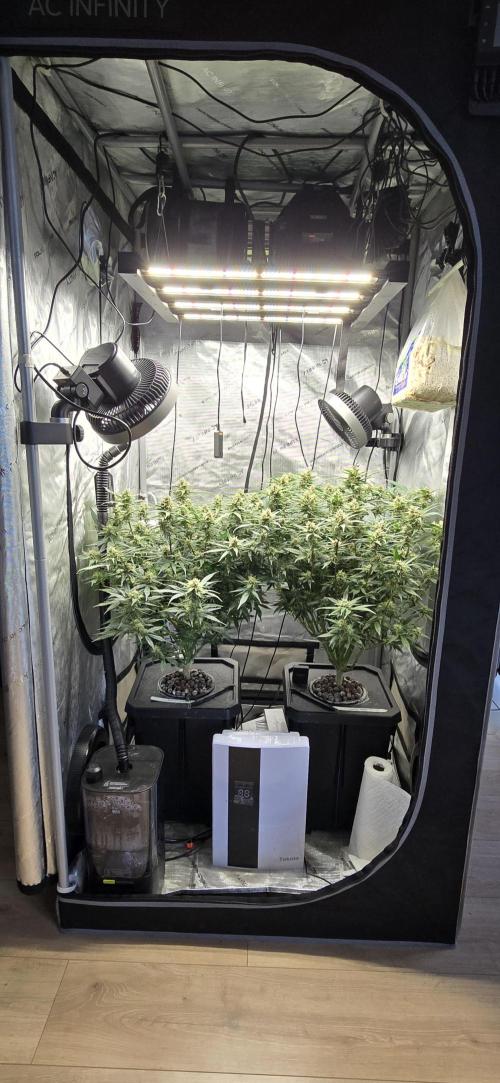
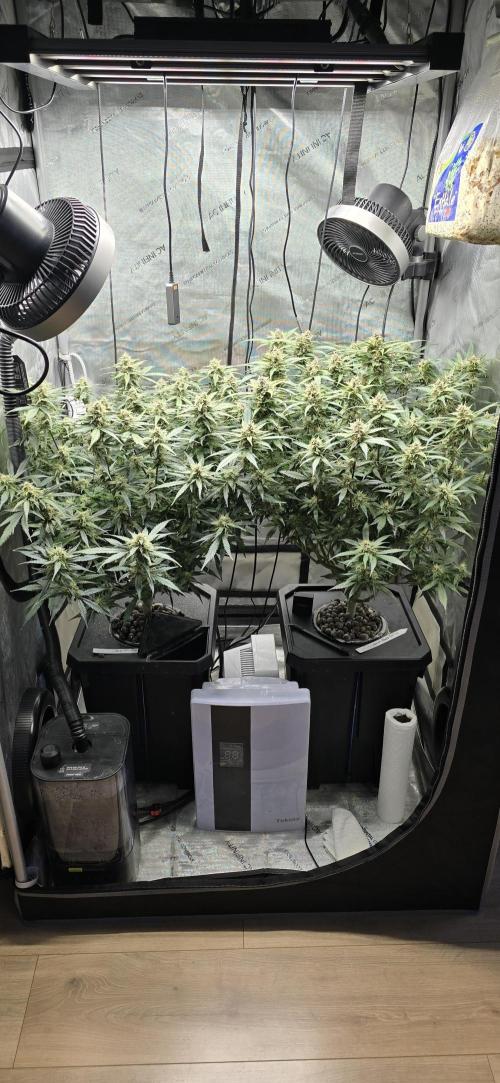
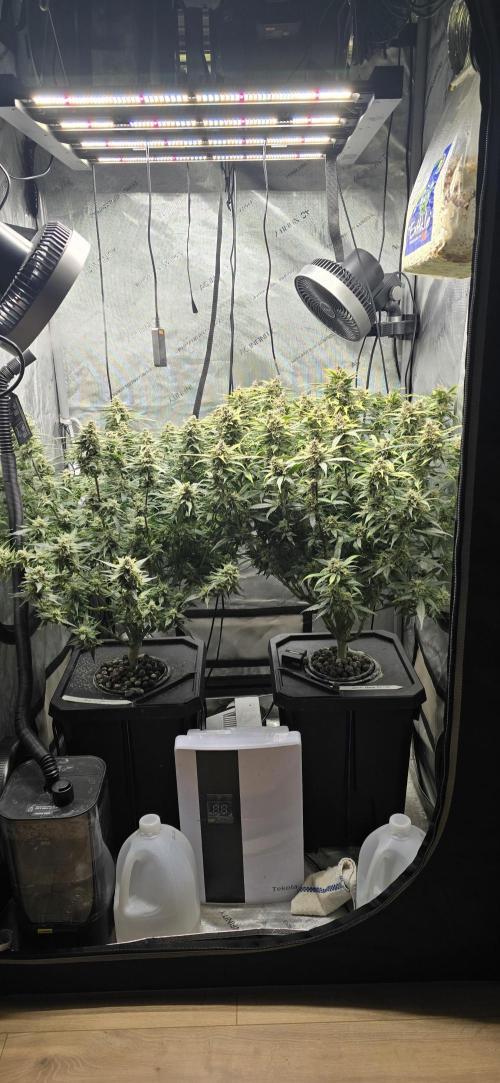
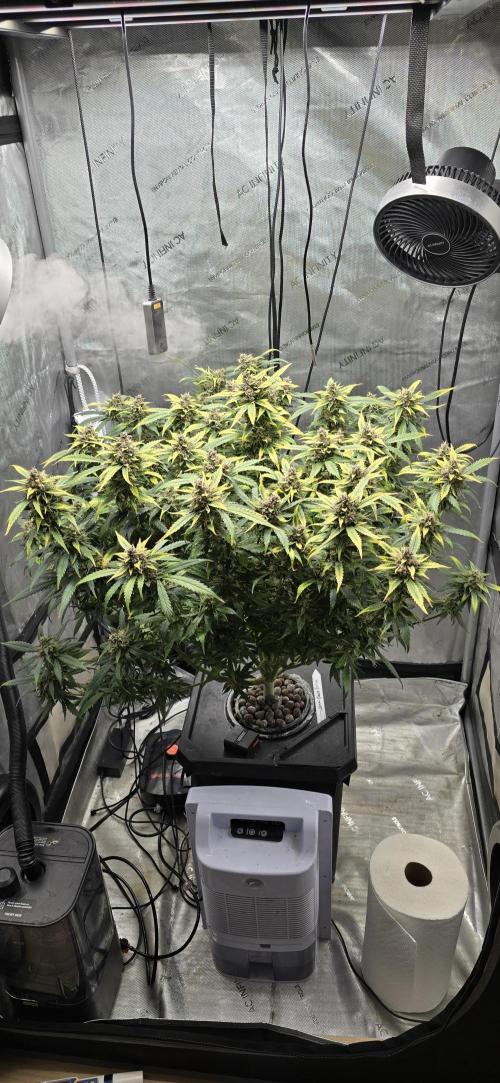
So this run will be 2 plants in a DWC 2 bucket system by Spider Farmer. 7 gallon buckets. I'll be using clay pellets as a medium and Lotus Nutrients for my mix. As these are autoflowers, I'll be cutting the dose down to a quarter to start. I don't think I'll go over half the dose in the end unless they need it. 🤩.
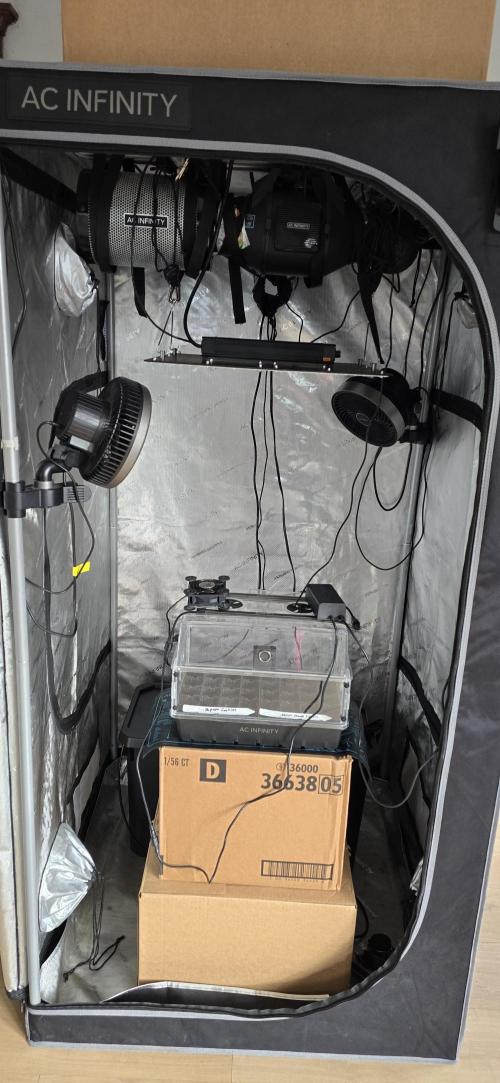
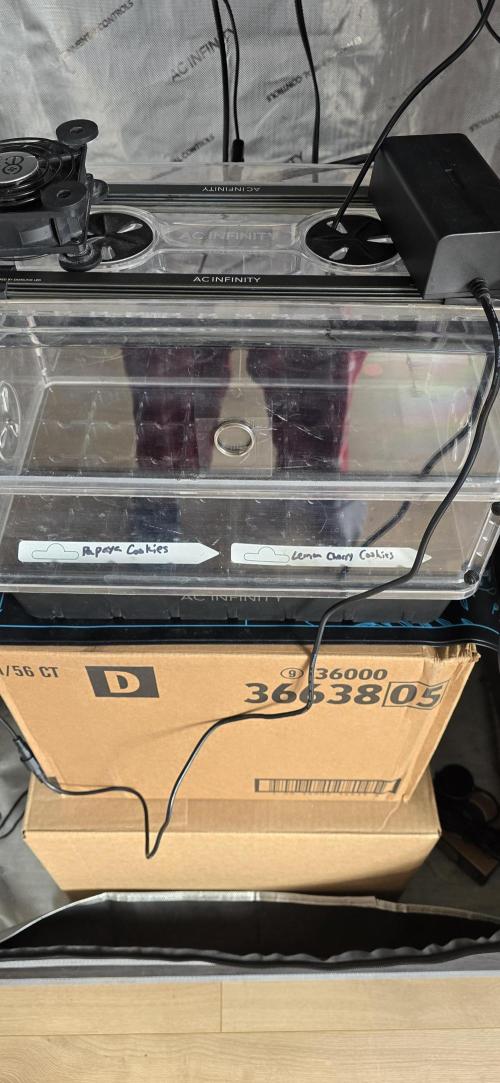
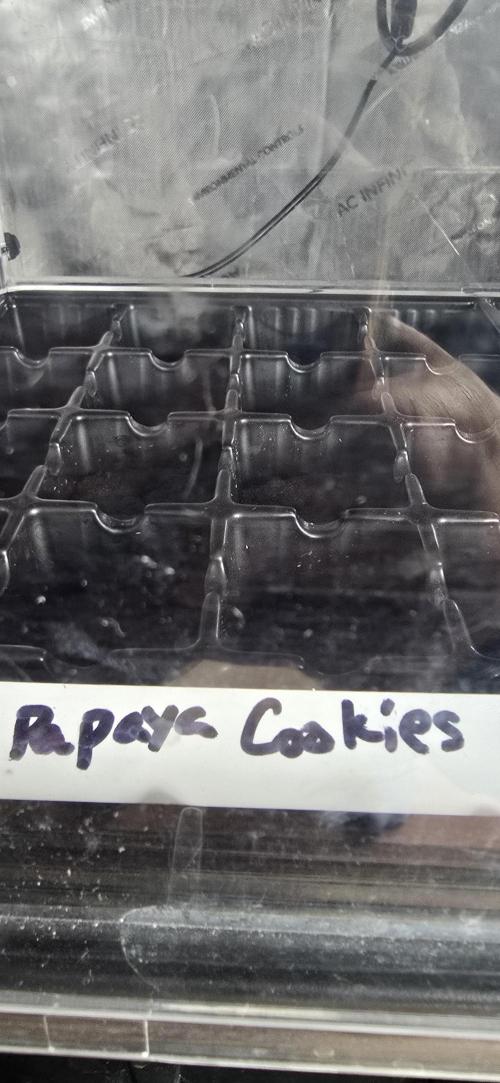
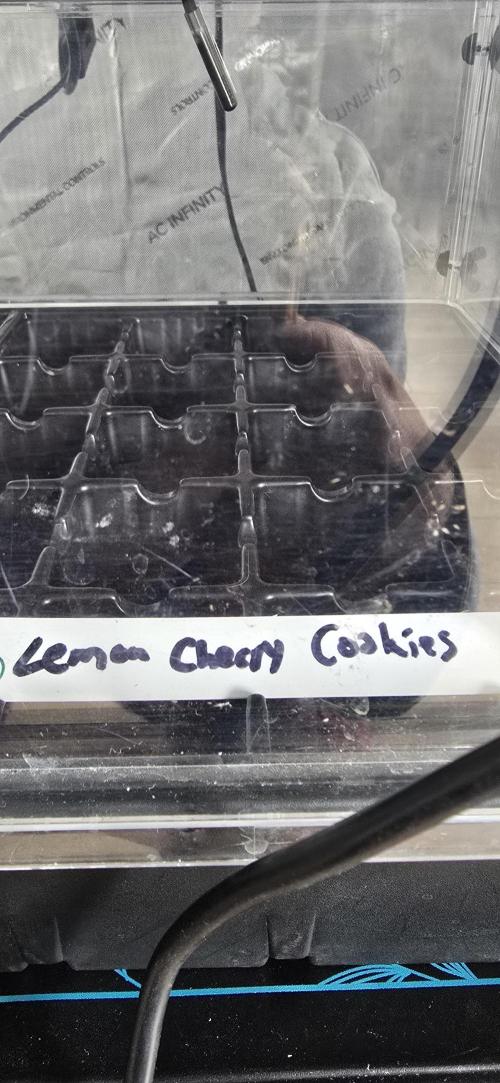
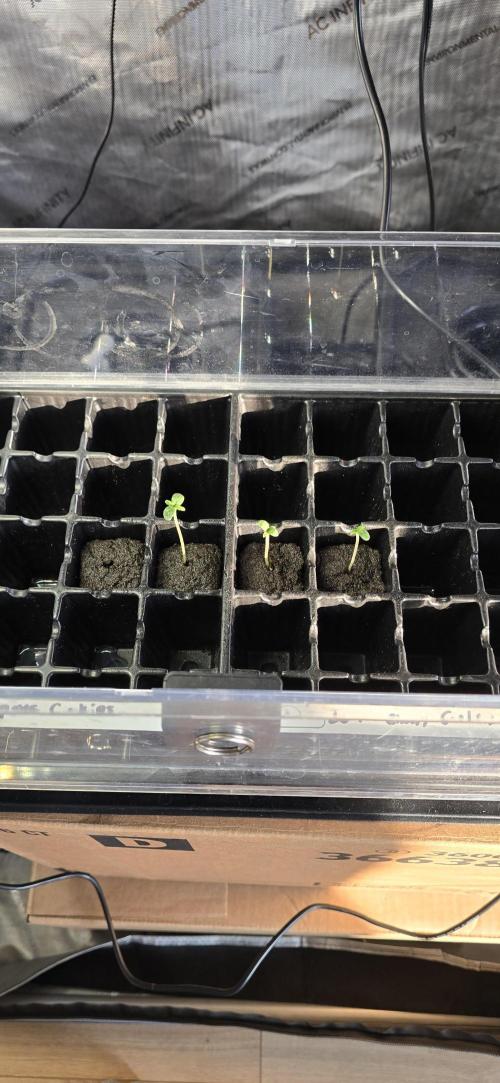
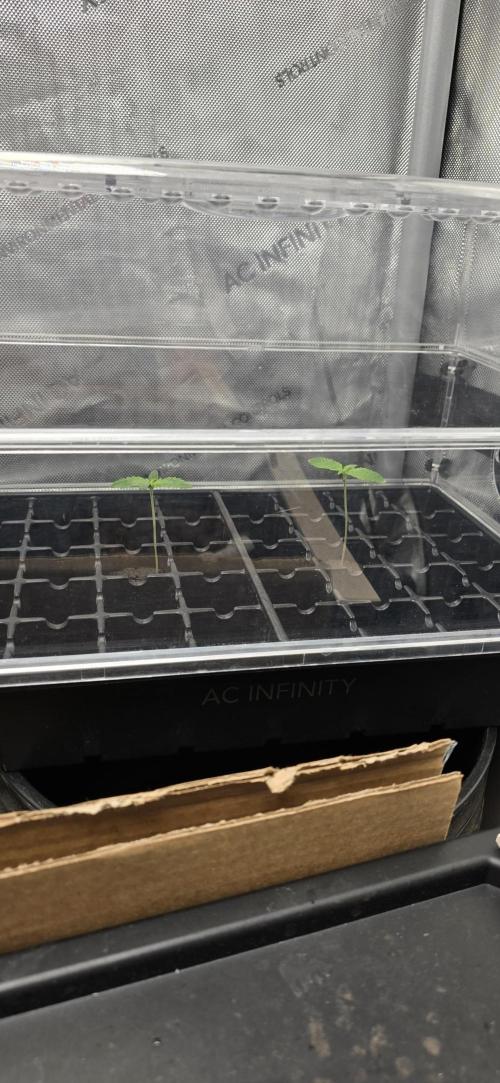
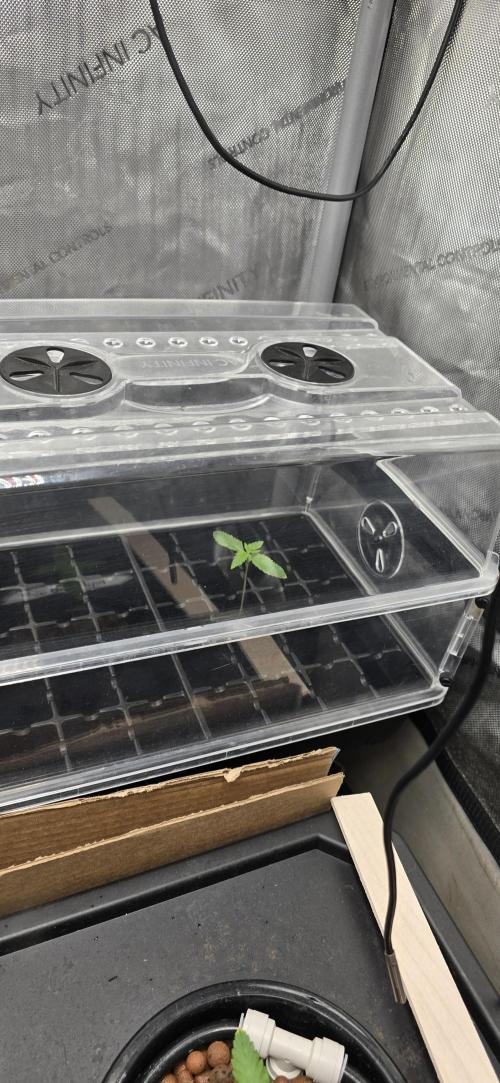
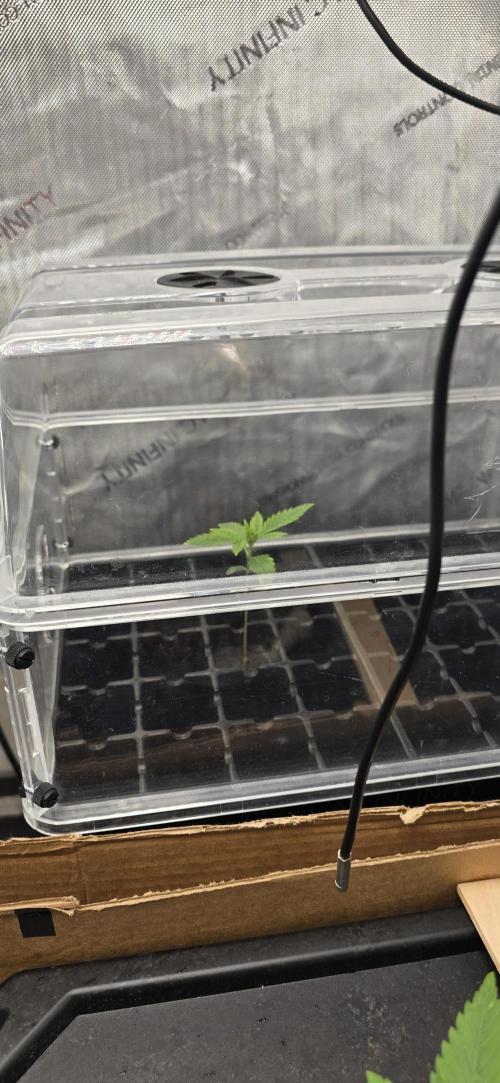
Currently I have these babies in the Germination System by AC Infinity with a heat mat, full dome and tray system, Ionbeam 11" grow lights for the seedlings, set to 20% power and an AC Infinity 4" fan.
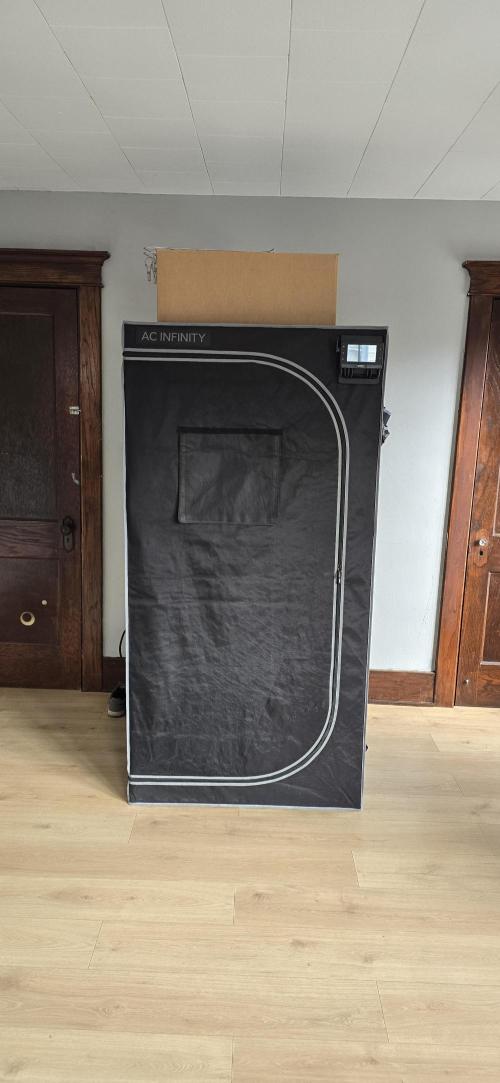
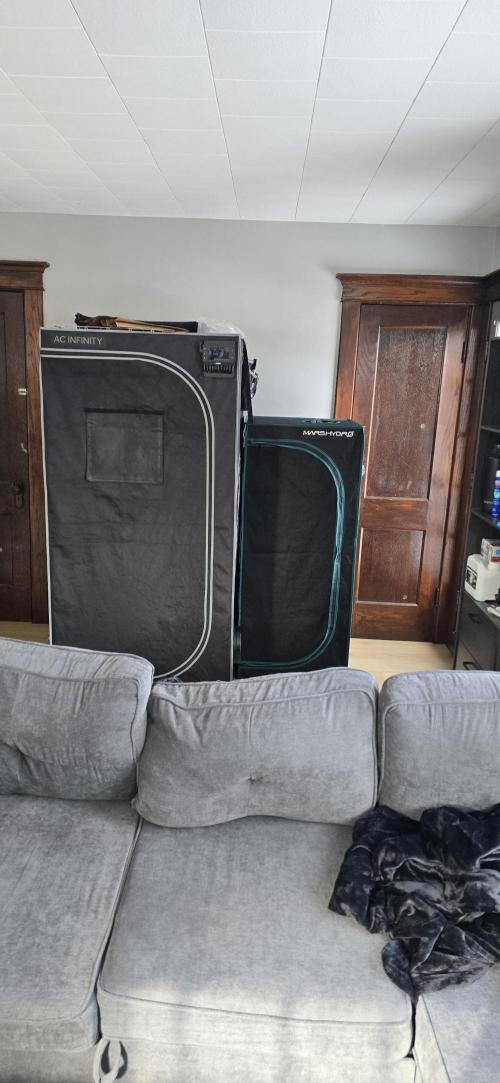
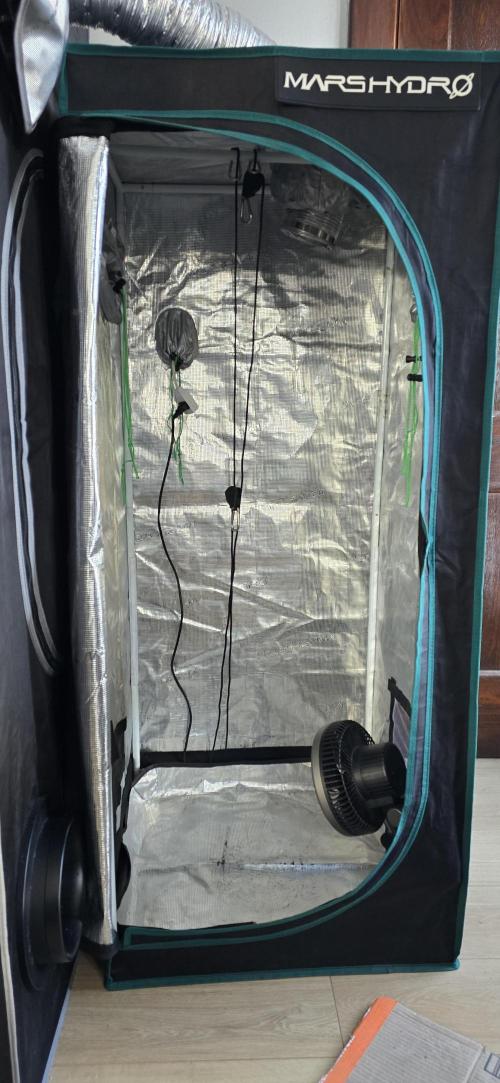
We'll be using the 3x3 AC Infinity Grow Tent grow system from last time. I do plan on getting a 4x4 in the next year or so. Probably sooner, but for now, we are in this one.
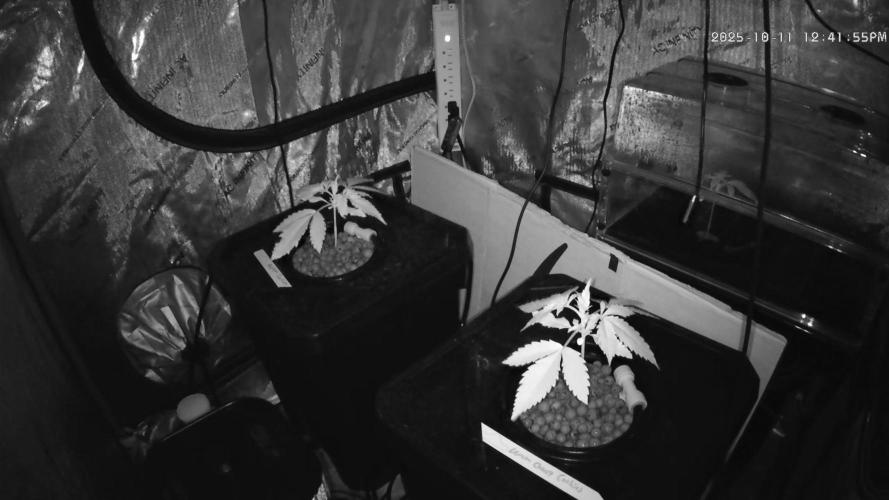
We get to look forward to a time lapse video in this run as well. Woohoo! Just got a Vivosun Grow Tent Camera.
Temp: 75° right where I want it.
RH: 77%
VPD: 0.66 kPa
Note:
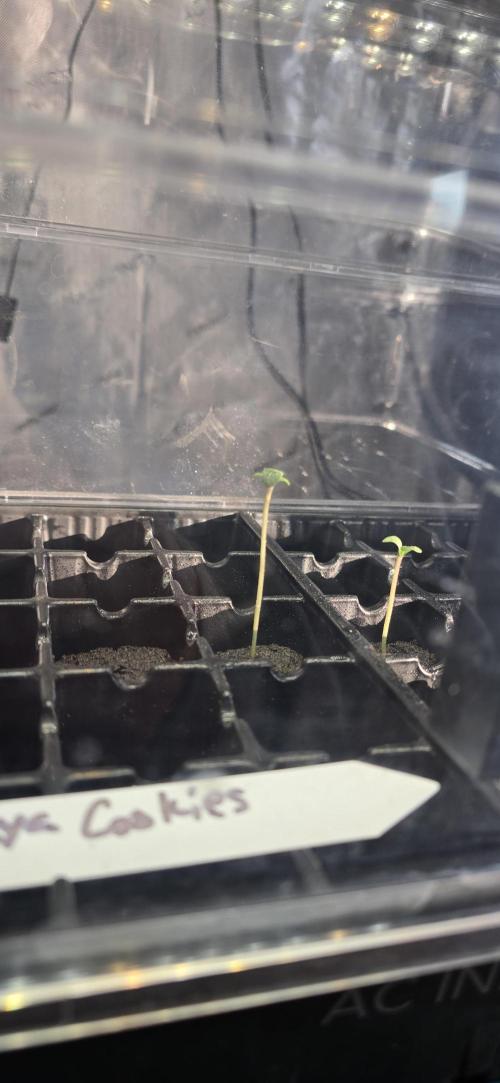
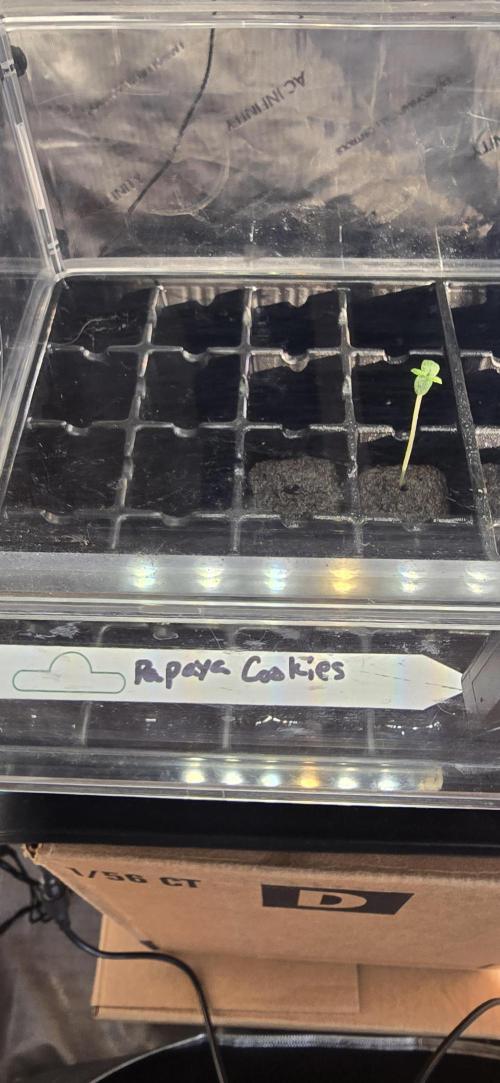
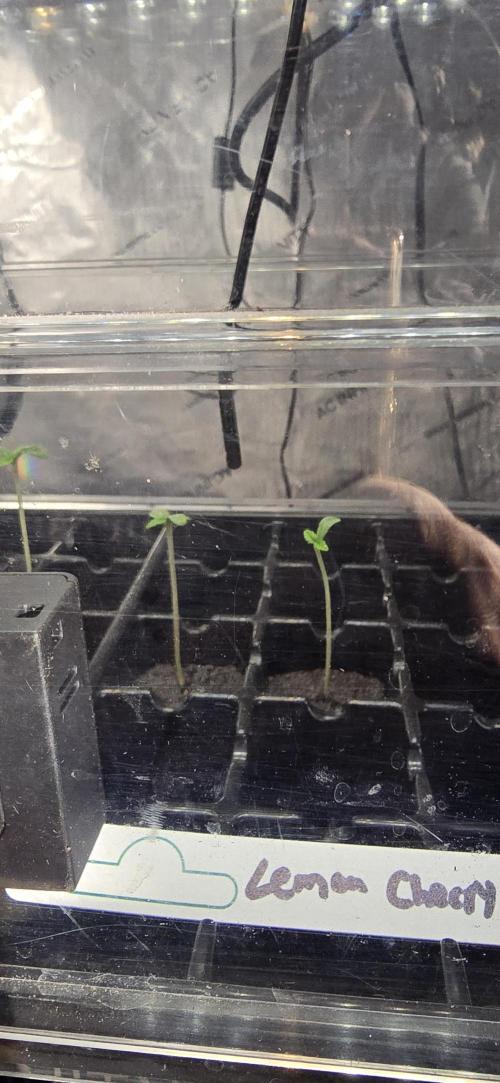
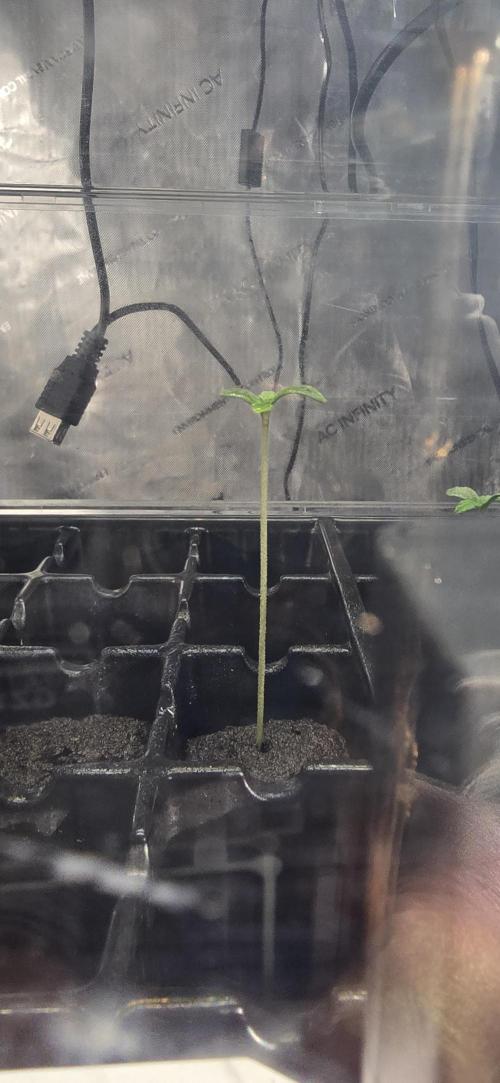
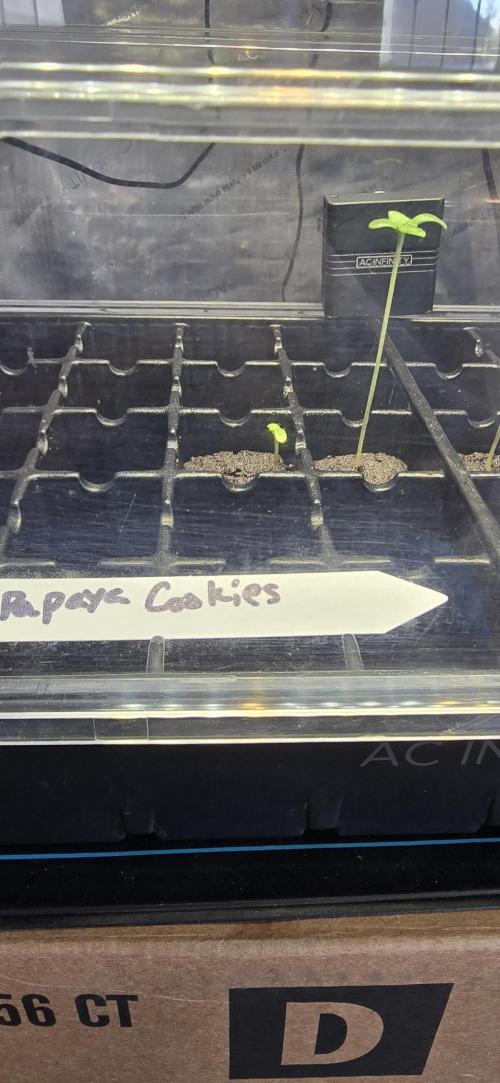
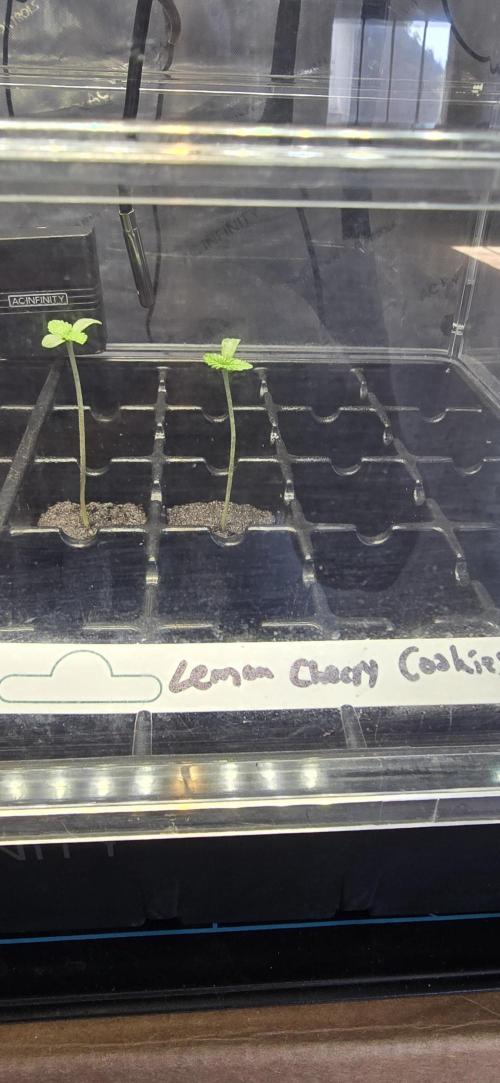
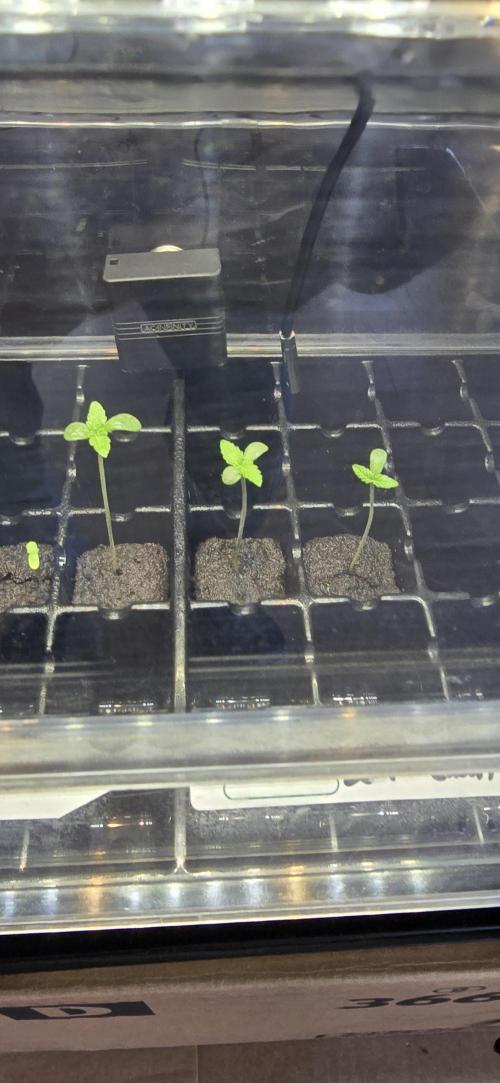
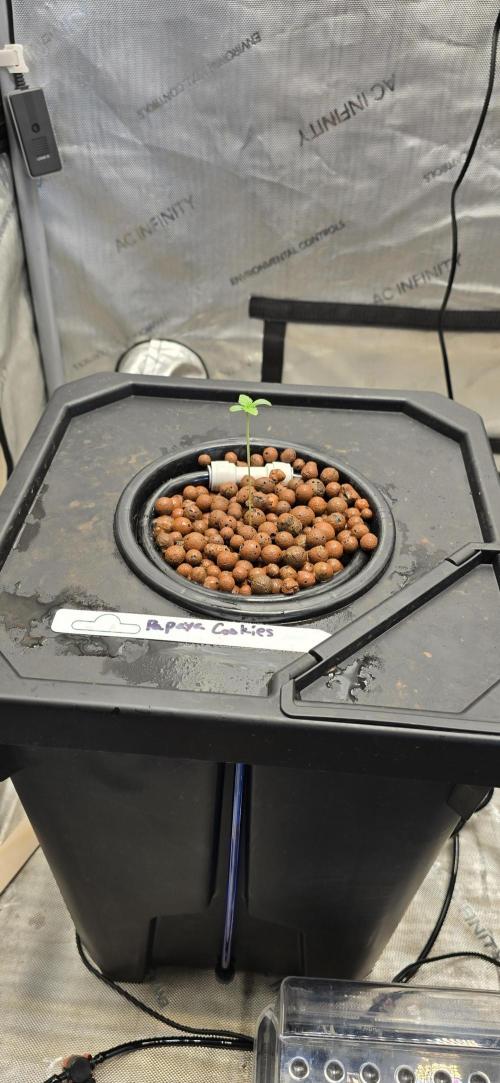
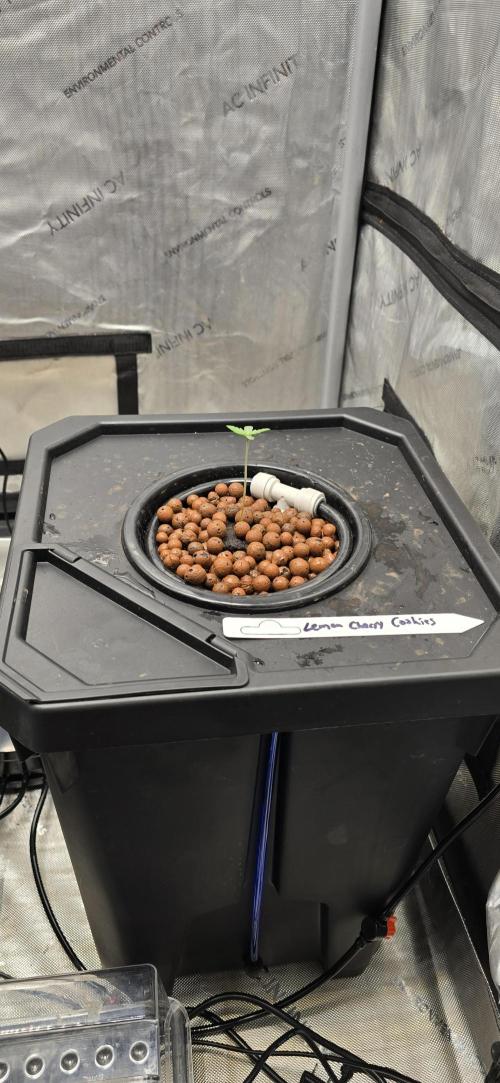
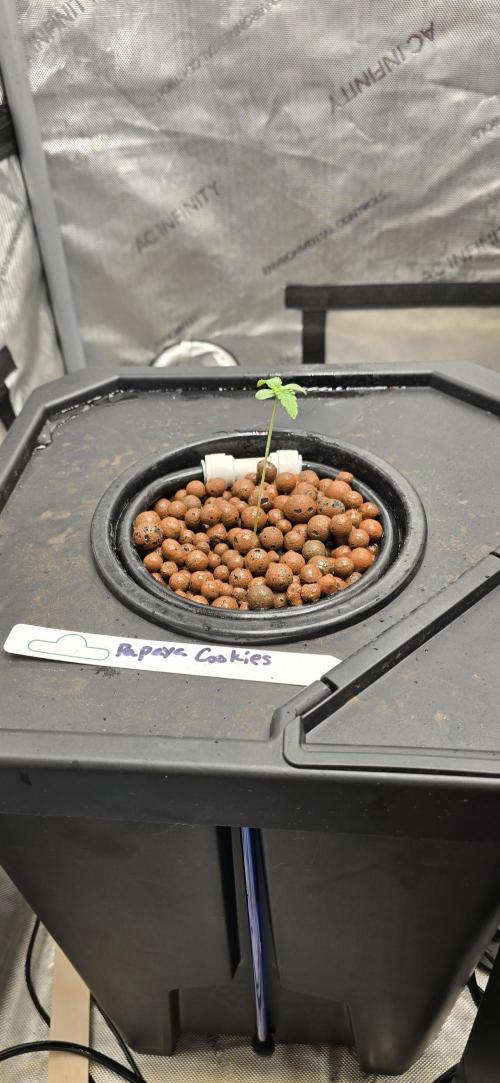
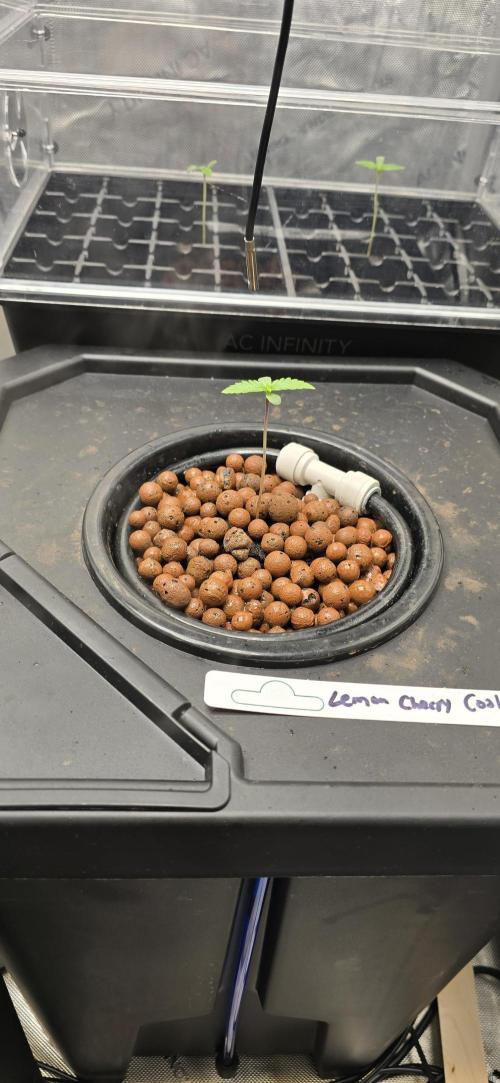
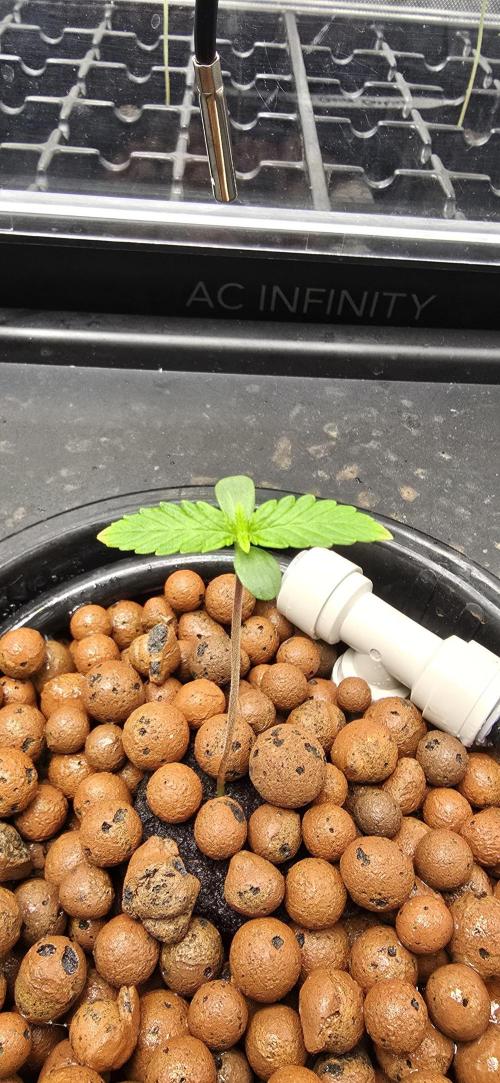
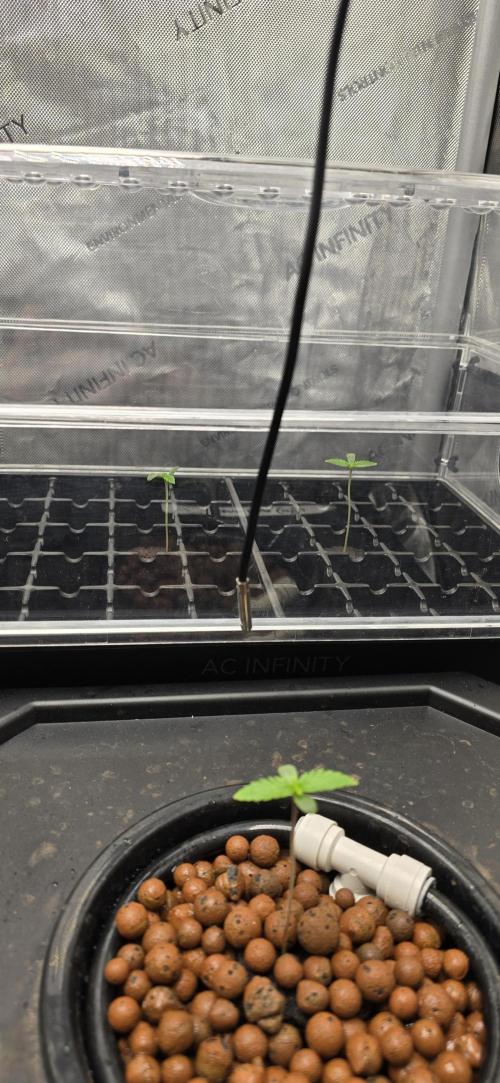
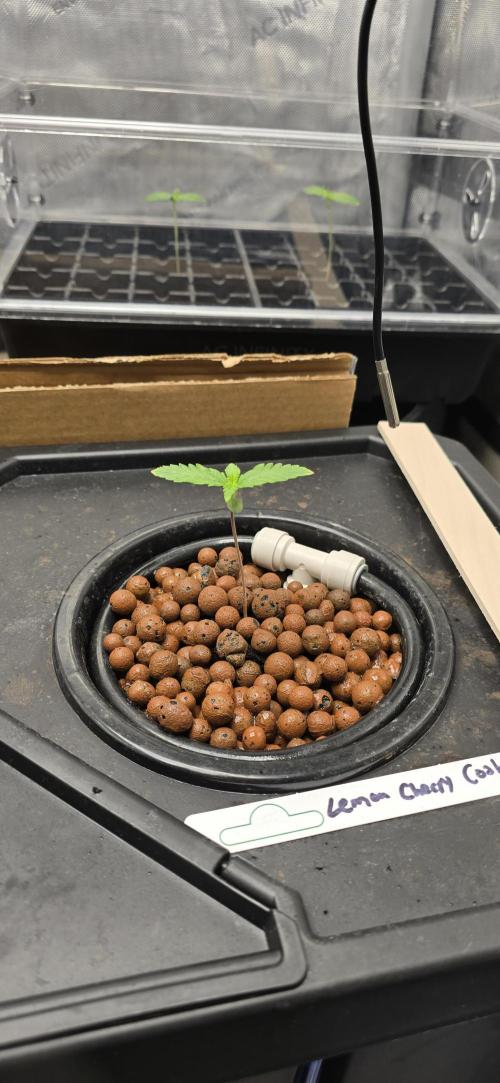
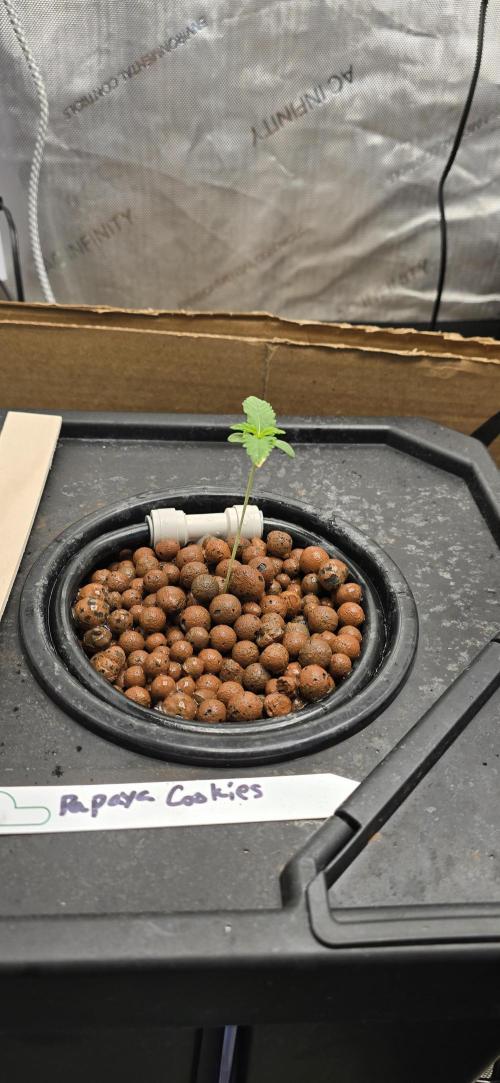
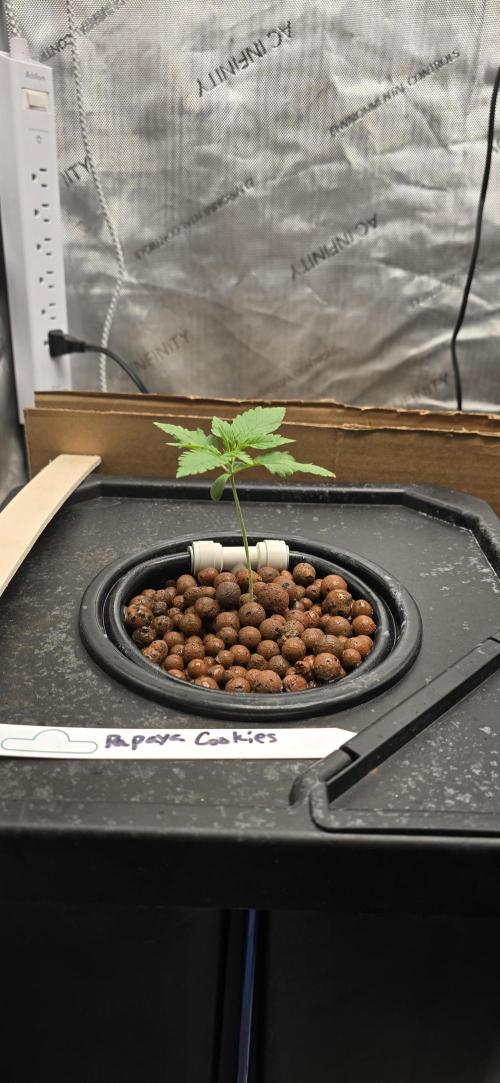
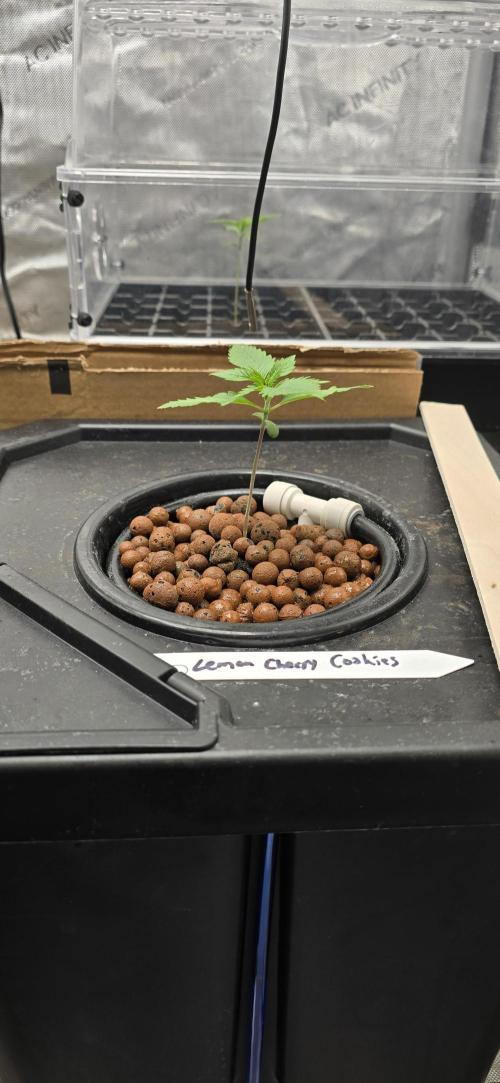
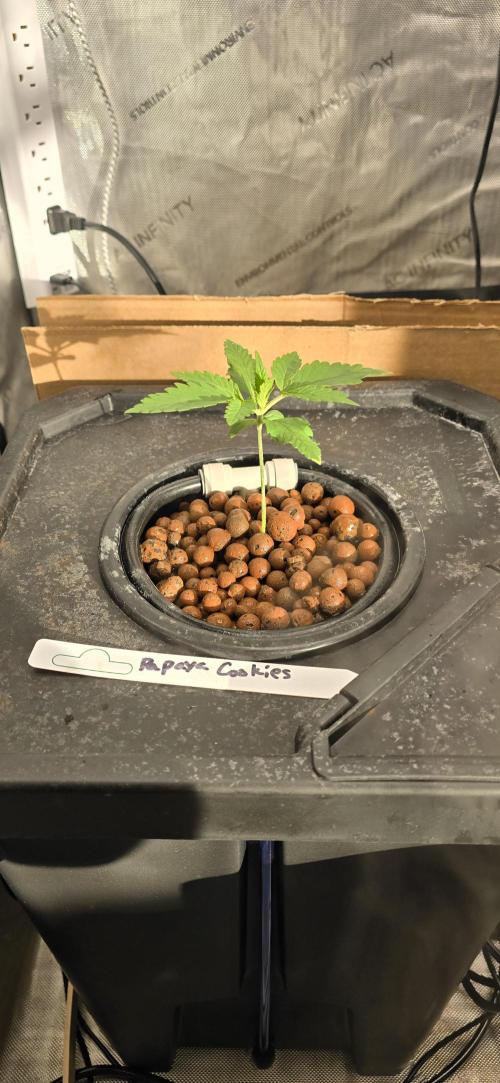
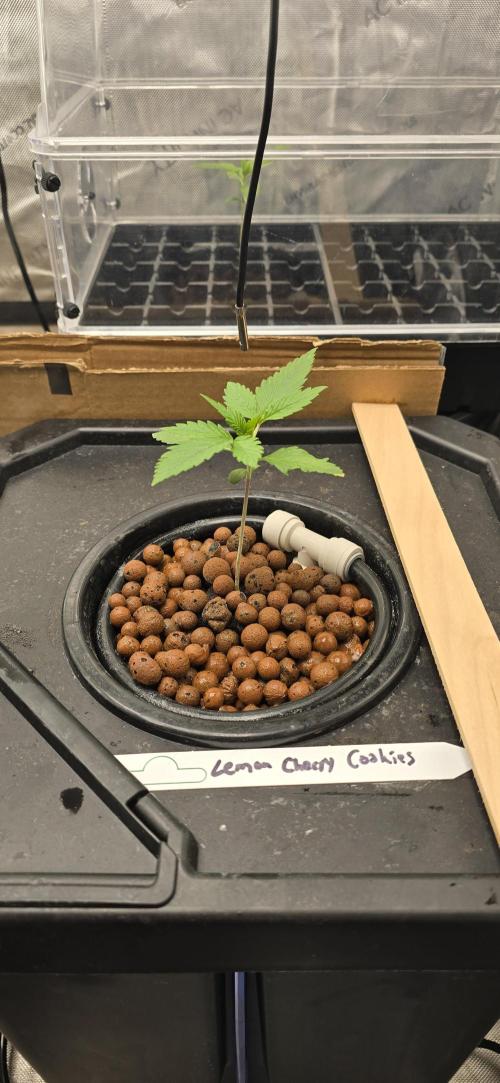
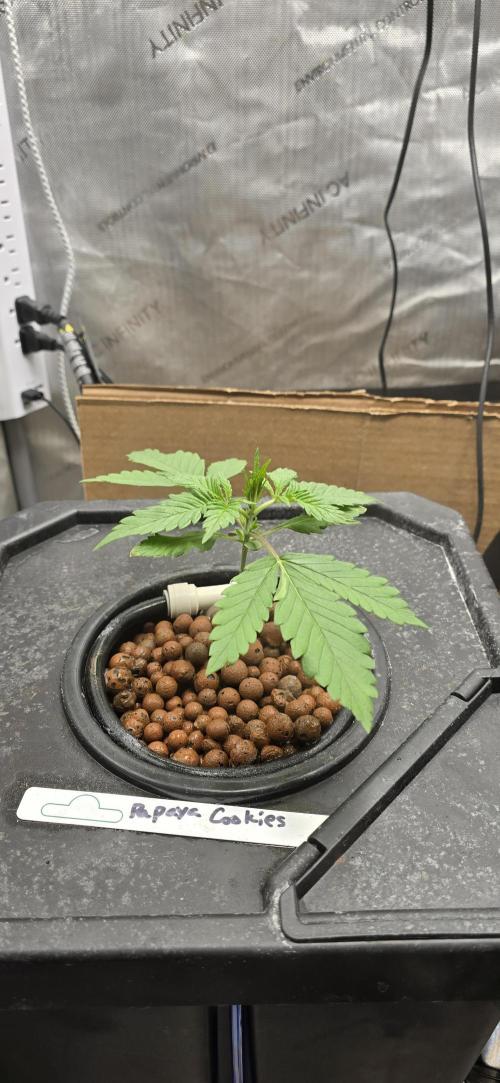
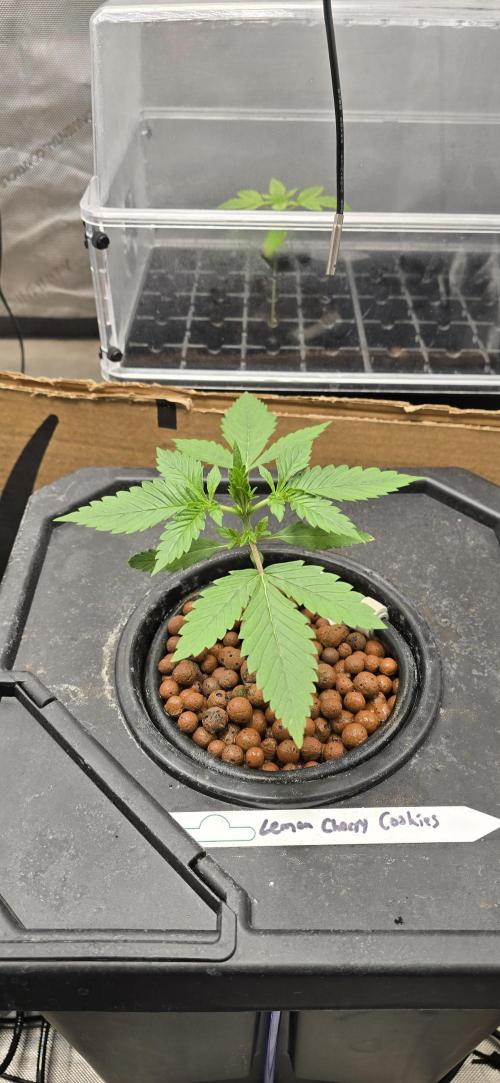
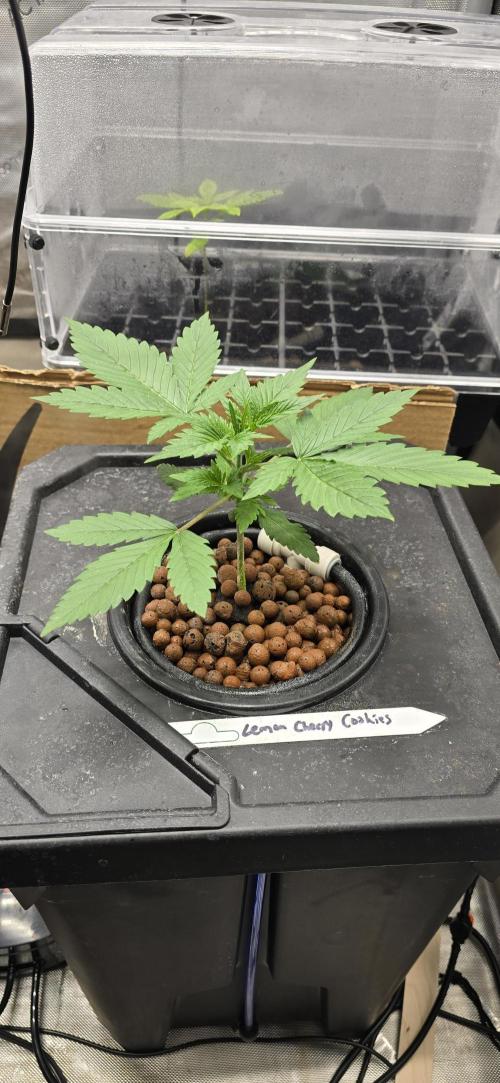
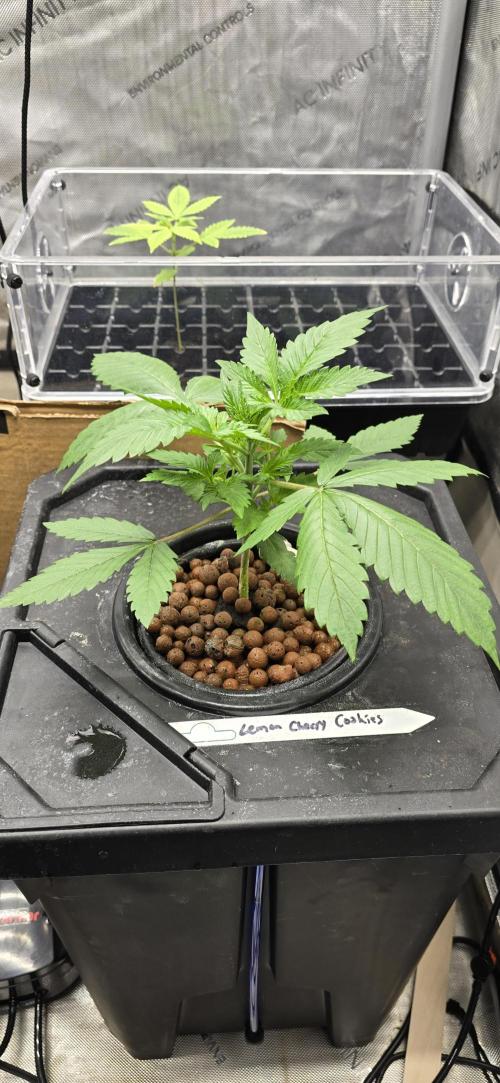
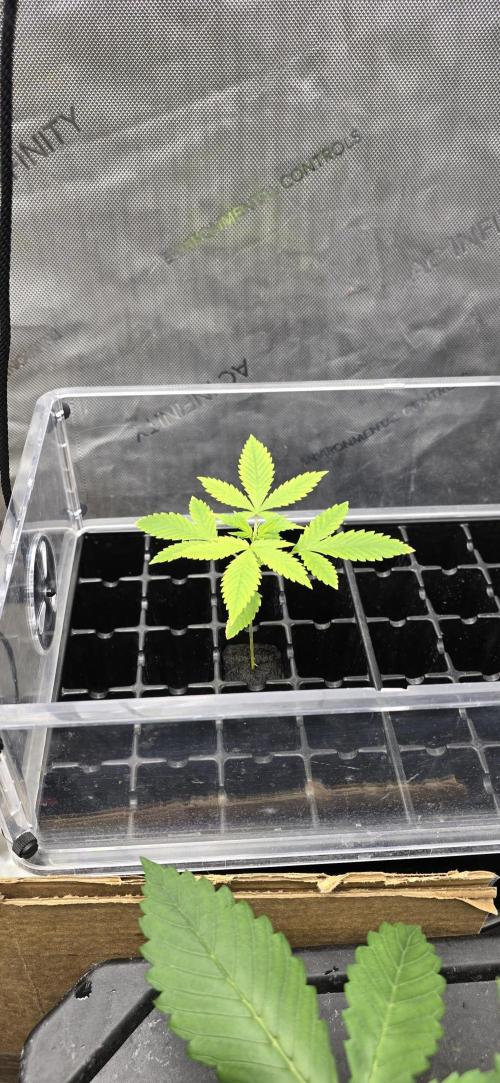
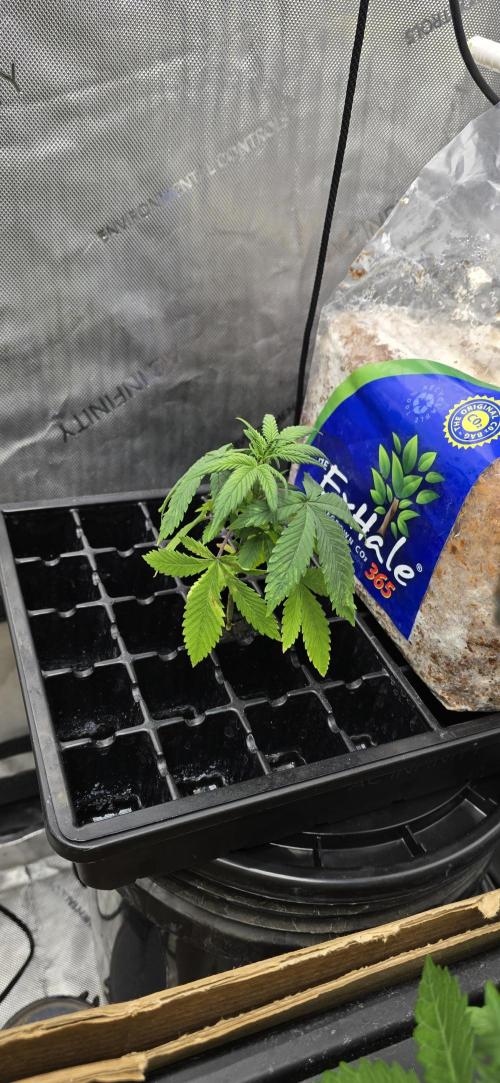
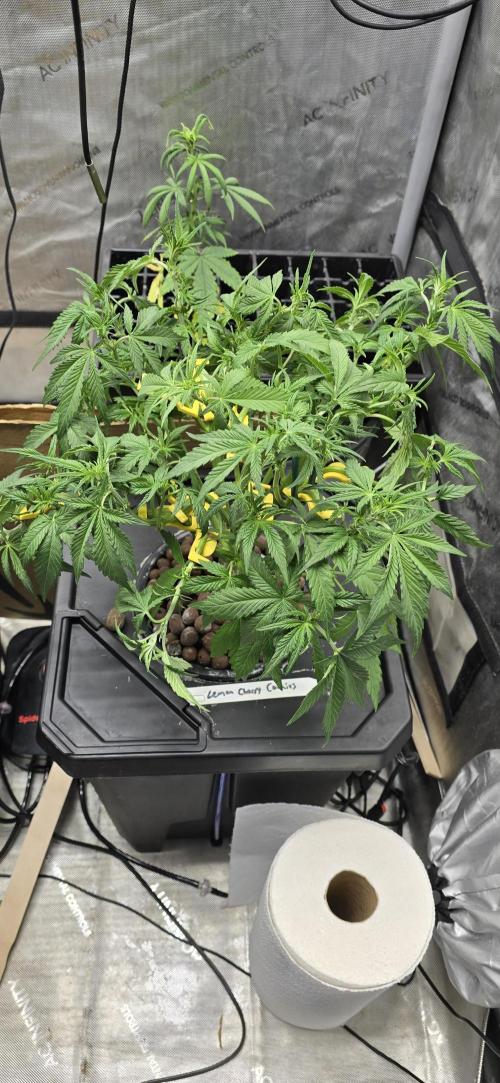
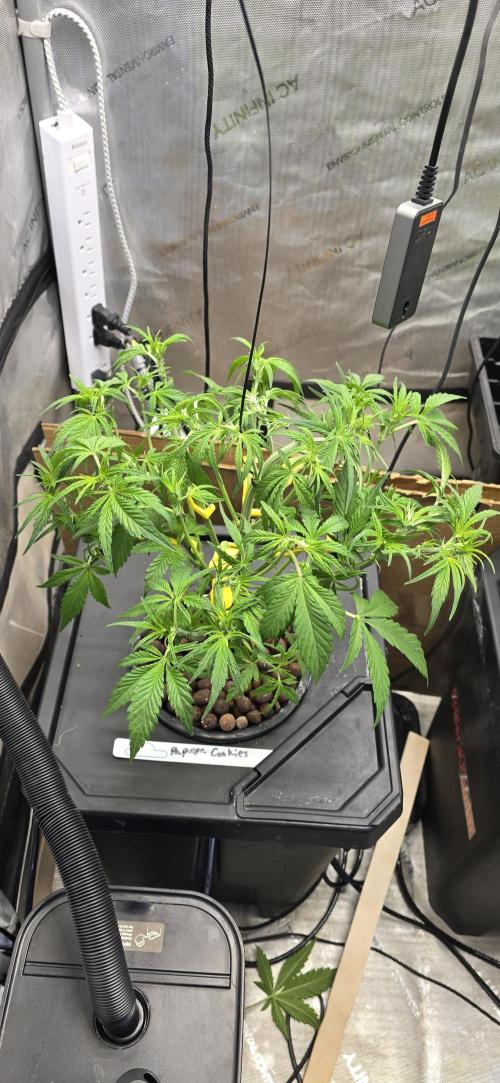
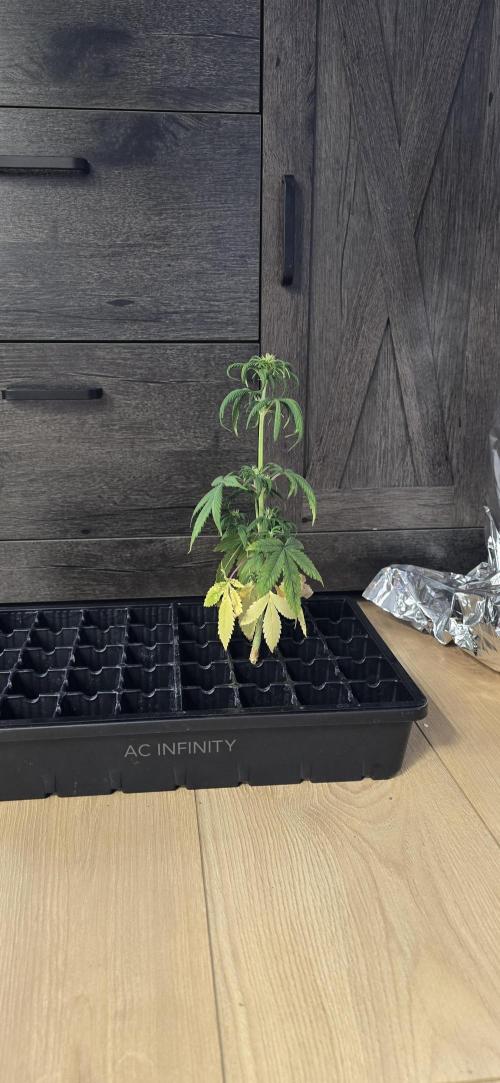
It's been days and I have 3 flourishing seedlings. One Papaya Cookies popped but didn't make it. Oh well. You can certainly tell the difference between the two strains. The Papaya Cookies shot right up. Lemon Cherry Cookies is a bit more stout, but both of them are identical in height. One of them only has one cotyledon. Interesting. We'll see how she does in the race to the final pot.
09/27/2025
Today we start with 3 extremely healthy plants. The Papaya Cookies is taking off and looks like she may end up pretty big. The Lemon Cherry Cookies are showing their stout and more compact feature. You can tell they are doing quite well and are also extremely healthy. Probably the most healthy seedlings I've had the pleasure of growing. I'm very impressed so far.
So I had to learn how to read my 4 in 1 meter. Lol. pH I get totally, it was the EC I was having trouble with. Next is how to understand ppm with the TDS part of the meter. Wish me luck. I don't understand the percentage part of the light meter reading for the AC Infinity AI controller. Is it DLI? PPFD? Or some other unit of measurement I don't know about yet. Anyone know what I'm talking about about?
Anyway, we are looking at some fantastic readings today. The Germination System environment is ideal and basically spot on. The light is still set to 2. I might set it to 3 in a couple days when they start showing their first set true leaves.
Germination System:
Temp: 74.2° (could be higher IMO)
RH: 78.7% perfect!
VPD: 0.61 kPa great!
Lung Room (Living room)
Temp: 72.1°
RH: 47.3% (could be a tiny bit higher)
VPD: 1.40 kPa
Note: I'm having a bit of trouble understanding how to feed a 7 gallon bucket everyday for my DWC system. Like, don't I just wait to top it off and add the appropriate nutrition solution based on the single gallon, let's say. What am I supposed to do here? Lol surely I'm not dumping in an entire dose for a 7 gallon setup am I? Won't that increase the solutions potency causing nutrient burn? I really don't understand. Any help would be greatly appreciated.
Anyway, it's a beautiful day. Toodles!
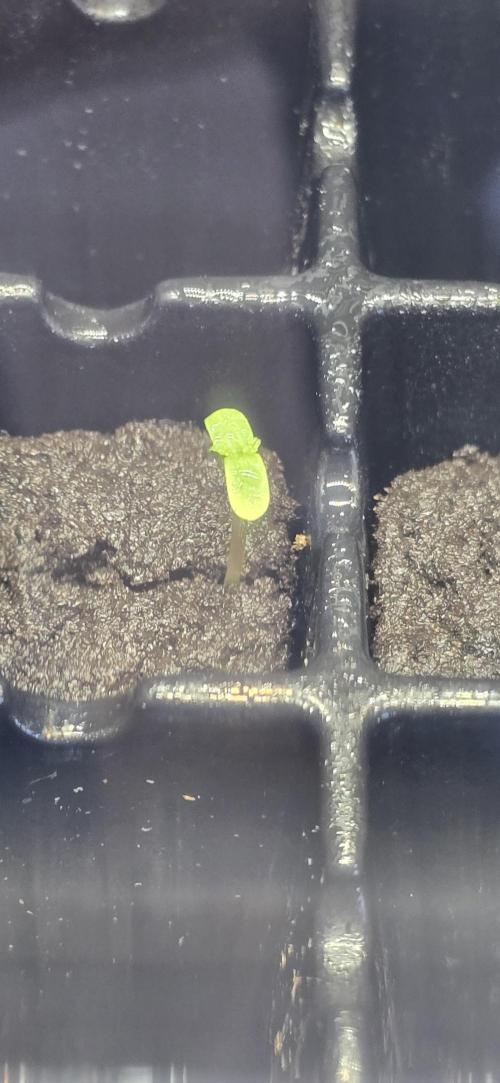
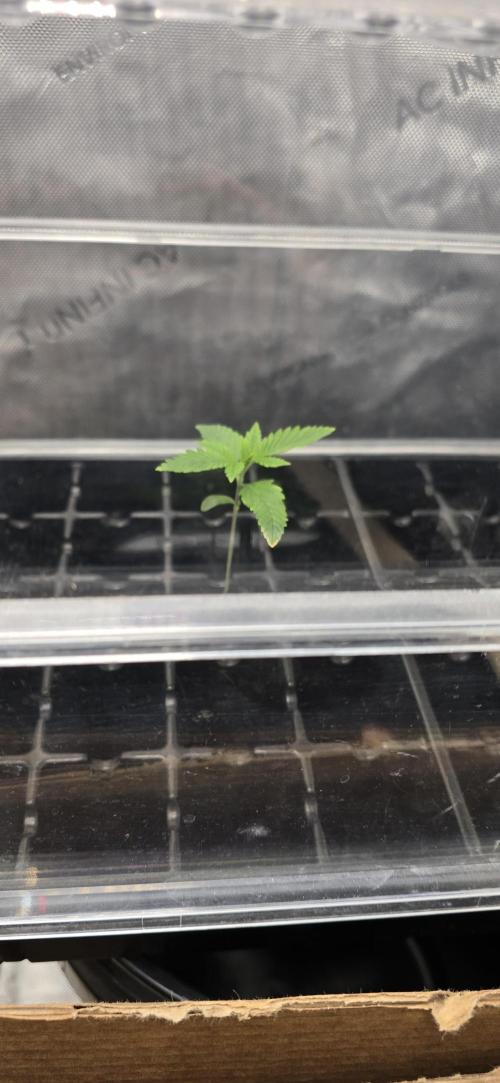
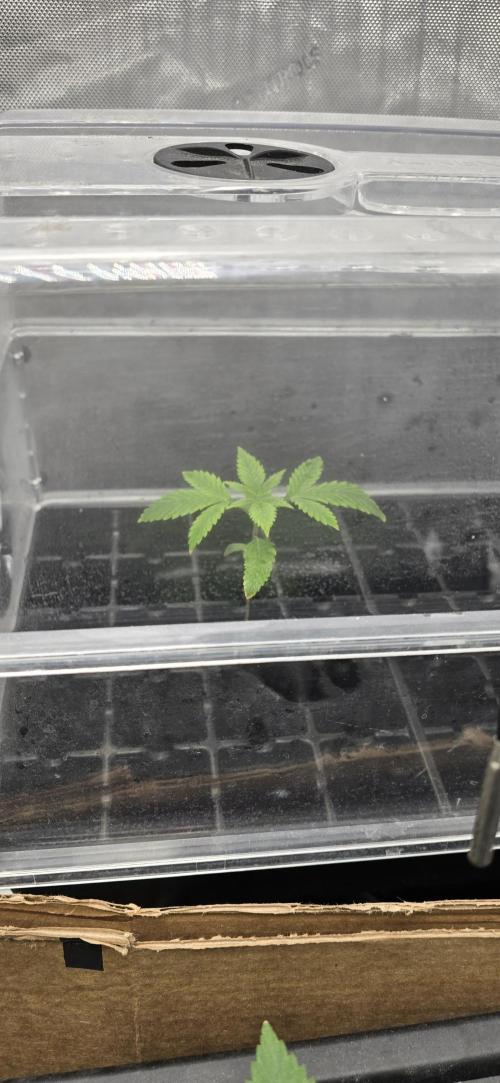
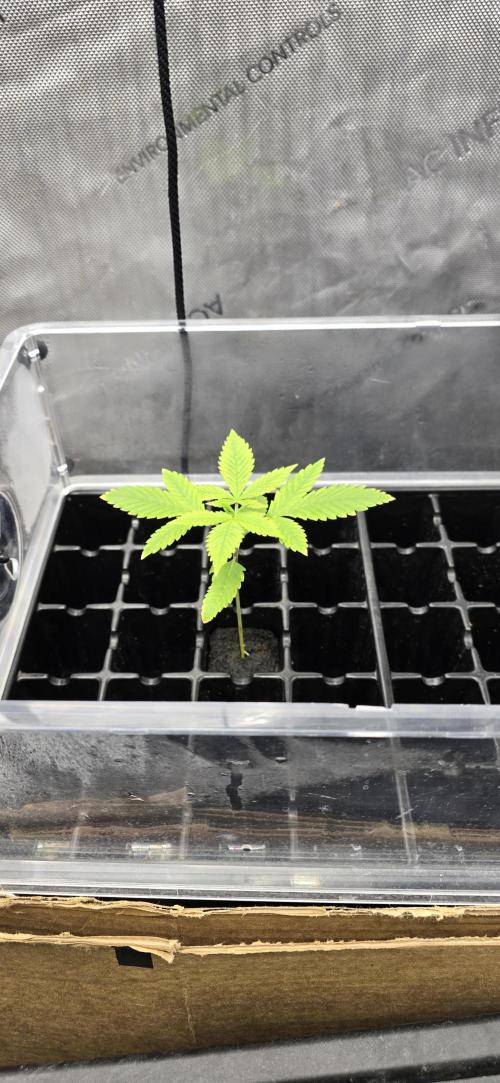
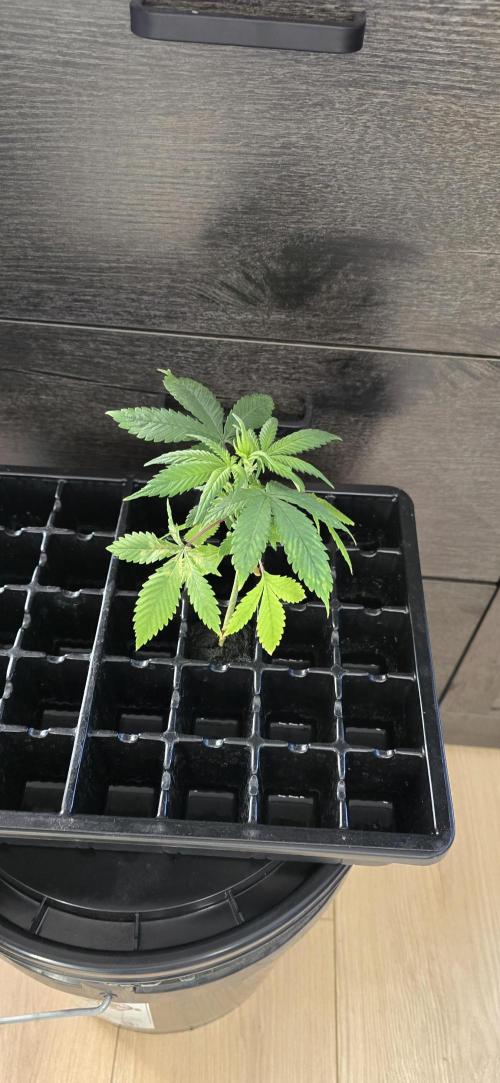
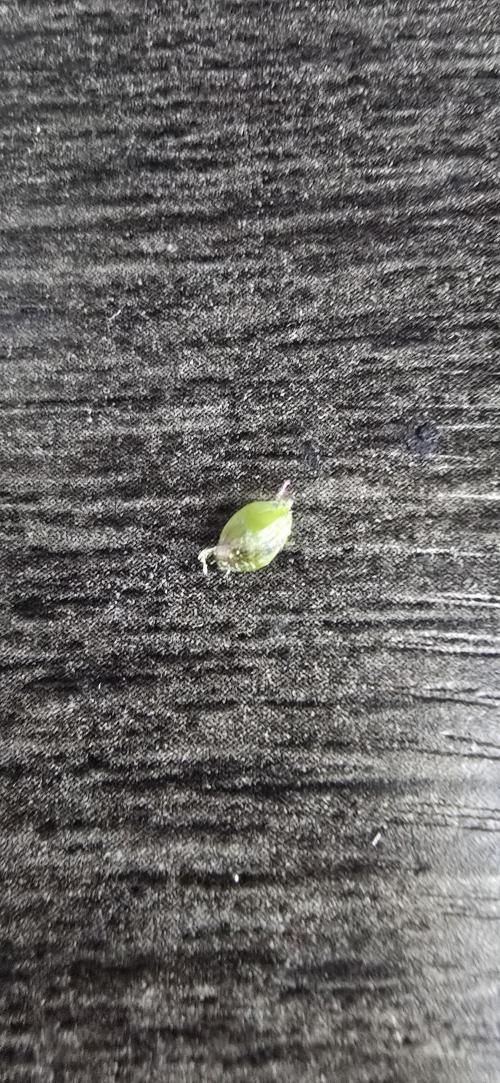
Update: She survived! The other Papaya Cookies somehow survived. I ripped the top of the plug apart and found a baby seed with a small tap root, so I put the whole plug back together and put it back in the Germination System. Somehow she survived and is breaking through the plug. That picture was taken this morning. I'll get another picture tomorrow, but her stem is almost already out. Insane! How resilient is that?! I mean, really! Wow! We'll have to see what happens tomorrow. Too bad she's not being kept. I wish I could, but I only have 2 buckets. Sad. 😢 Same thing with the other Lemon Cherry Cookies. I think I know which one I'm keeping, but I'd rather keep the other one too. Hell, I'd rather have kept all 4. I should have bought the 4 bucket system. But I'm in a 3x3, so 4 would be overkill. Lol. Ok I'm done.
09/28/2025
The other Papaya Cookies sprouted completely. Wow! I definitely thought she wouldn't make it. So late to the race. Unless she somehow magically catches up before the first true leaves, she's not a keeper. Definitely wish I had a couple more buckets. But I've learned my lesson. 4 plants will not fit in a 3x3. Well they will if they're all the same size. My plants however are never the same size.
Anyway, the other 3 plants look amazing. Still super healthy and have slowed their stretch. Time to stretch them roots.
So I was having a debate with myself. Why wait for the seedlings to have all the roots showing before transplanting to clay pebbles. Wouldn't it make more sense for the seedlings to grow into the pellets and grow down? Anyway, I digress. I'll have to listen to the experts, but I still can't shake the fact that when the roots grow out of the plug, they will have direct contact with the pellets, causing them to naturally grow into the pebbles without any stress. Obviously not using nutrients yet, just the drip thing to keep the pebbles wet. Why would I want to wait to transplant with roots showing already? Isn't sooner better? Especially with a DWC system? The amount of moisture they put off alone would keep the tent at a high humidity and the heat from the light should keep the temp up. But then they wouldn't have the cozy heat mat in the Germination System. I digress. I'll figure it out.
Anyway, back to the plants. Haha
As I said, all the babies are super healthy. They get 5 mistings a day of spring water. Don't know if there's much difference. Clean water is clean water at the moment.
The environment is the Germination System looks awesome! The temp is hovering around 76° while the humidity is ranging from 74% to 77% I'm trying to dial it in to 75%. Almost there.
Temp: 76.2°
RH: 77.6%
VPD: 0.69 kPa
Once the probe is in the actual tent, I can give CO2 readings and PPFD or DLI. Speaking of light measurements, anyone know how to use the light probe in the AC Infinity AI controller? I can't figure it out.
That's all for now. We'll be getting more in depth as the weeks go by. I'll try to keep it from turning into a novel, but no guarantees. Lol.
Quick update:
I decided to add just the hydroton now no nutrients just the drip ring and the bubblies. I figure when it's time to transplant, the pellets will be wet and the seedlings should take better to it I think.
09/29/2025
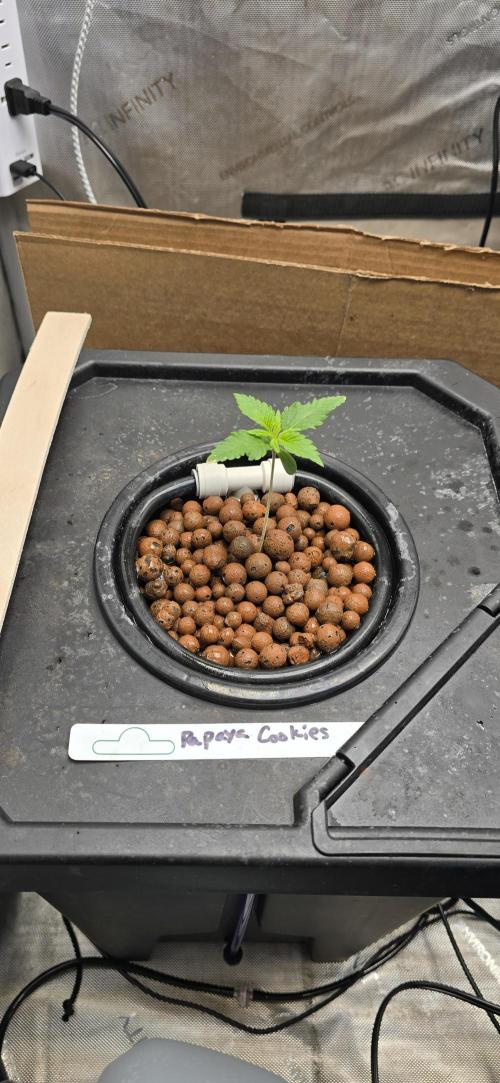
Big day today. I moved my two best babies to their final containers. Plain spring water until I see the first set of true leaves. Then I'm doing 1/4 dose of nutrients. Unfortunately the nutrient kit that I've had for 3 years has gone bad, so I had to order new stuff. Still lotus.
Anyway the Lemon Cherry Cookies started reaching almost immediately with the light up top. I increased the power to 2, but I'm pretty sure I'll need to change it to 3 in the next day or 2. Maybe sooner.
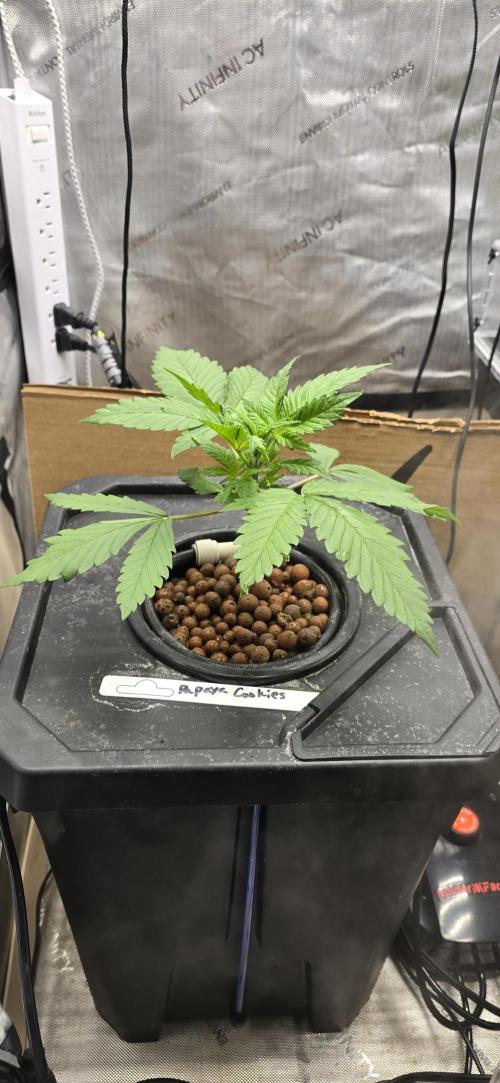
Papaya Cookies still looks great. She has some slight yellowing on one of the leaves, but nothing huge. I think she's getting hungry. We'll see over the next day or 2 as well. I'll keep a close eye on the yellowing. If it continues, I'm adding nutrients early. At least to this one.
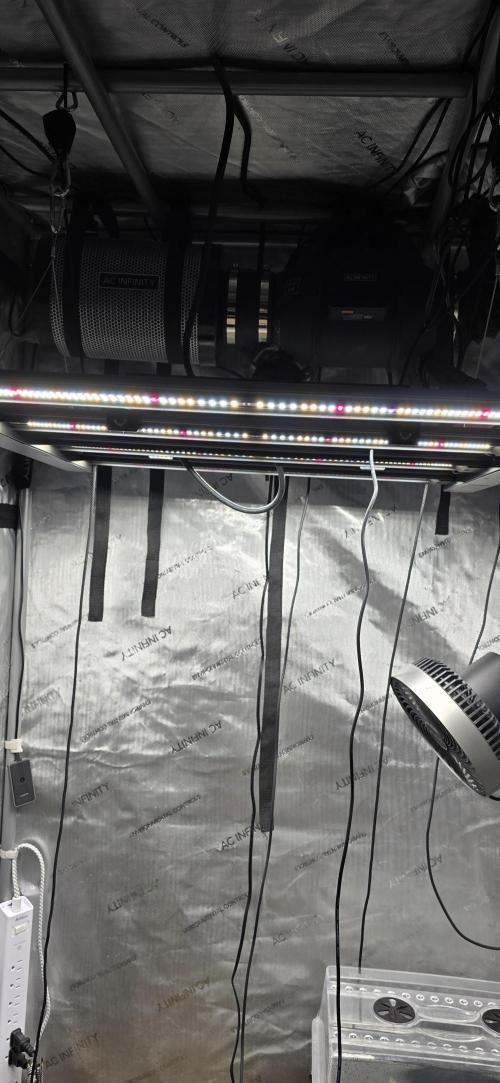
I have the light and exhaust all the way at the top of the tent. I think I'm going to leave it there for this grow and just increase the power as needed. I might drop it when the babies get to full height. Just to save on electric. Lol. Although, if everything goes right, I won't need to drop the light at all and the plants will grow towards it exponentially.
I'm having a bit of trouble getting the environment in the tent in order. But it's starting to shape up. Kinda wish my Germination System was outside of the tent. Then I could have had it set up all along. Oh well. I work with what I have. Lol.
Temp: 69.7°
RH: 71.6%
VPD: 0.70
It'll adjust eventually. The AI is supposed to do that. We'll see how things go. I'll probably have to change some things around.
09/30/2025
No pictures today. The babies look the same.
However, our super fast growing Papaya Cookies seems to be sad. Still has the yellow leaf tip and now she's droopy. Granted the lights are off, but the Lemon Cherry Cookies is like growing. Super fast babe already has her first true leaves coming in.
One thing I forgot to do is ph the water before I put the babies in their homes. That could be a reason. Either way, I phed the water to 5.8 hopefully she perks back up. Personally, I think she's hungry.
So my plan is to add a quarter teaspoon of nutrients to her water and see what happens. A quarter teaspoon is less than 25% of the total dose. So she should be fine. I'll be doing that today when the nutrients get here. Hopefully I'm right. It definitely looks like she's hungry. We'll find out.
Now as for the Lemon Cherry Cookies. She's like super weed. As I said, she already has her true leaves coming in. I'm probably going add half a teaspoon of nutrients as well. If she's reaching as she is and growing so fast, a little boost won't hurt. Especially at such a low dose.
Oh! The buckets hold 4.5 gallons of water. I never mentioned that in my setup. Oh well. I honestly didn't know. To be frank. I wasn't going to add them to the final containers until they had the first set of true leaves. But I jumped the gun. Oh well. One of them is super happy anyway. Lol. The other will be happy again.
So I'm using the Dynamic environment with my AI controller. So lights out from 11:30 in the morning until 5:30 in the evening. That's when it's most warm, BUT and a huge BUT. The temp and humidity are all messed up. For seedlings, you want 70 to 80° and 70 to 75% humidity. At least until those true leaves show up. Then we can drop it. Unfortunately my tent wont go above up and the humidity is bouncing all over the place. So I bought an AC Infinity heater to go with the controller. It should fix my problem in a jiffy. Jiffy. Ha!
Current temp is 68.6°
Humidity is 67.1%
VPD: 0.78 kPa
As I said, the heater will make a world of difference.
3 likes
2 comments
Share
Used method
Directly In Substrate
Germination Method
1
Week 1. Vegetation
3mo ago
1/19
7.62 cm
Height
18 hrs
Light Schedule
24 °C
Day Air Temp
5.9
pH
286 PPM
TDS
72 %
Air Humidity
22 °C
Solution Temp
22 °C
Substrate Temp
19 °C
Night Air Temp
26.5 liters
Pot Size
0.08 liters
Watering Volume
71.12 cm
Lamp Distance
753 PPM
CO₂ Level
Nutrients 2
0.33 mll
0.07 mll
Prilyfe13 10/01/2025
Week 1 of Veg.
Let's talk time frame for a minute. Both of these plants are 8 week autoflowers. Seed to harvest. They should be ready for harvest in late November early December. We shall see. I've heard mixed opinions on how long or short a time it will take in DWC. Some say it's a week or two faster and some say they get bigger but take a week or so longer. Both say they'll get bigger in DWC. So that's the goal. Bigger is better. So in other words, timeframe is just the expectation. But it all depends on the environment and the strain and the plant and all that. Everyone is different.
Well, for Lemon Cherry Cookies, she's in the very early stages of Veg. Papaya Cookies on the other hand is not doing so well. No idea why she has a near white stem and her tips are still yellowing and it's spreading. I dropped the light intensity down to 197 PPFD for now, had to pH the water again for both plants. It was really high. Like 6.8 high. My water is horrible. After the filter, it's still 8.5 I didn't check without the filter as I won't use the regular tap water. But with the pH being so high already, I think I'm gonna use distilled water. Too bad. I bought the Pur filter thing just for the plants. I won't drink that water at all. No thank you.
Anyway, so as I said, the pH was high. That could be the issue. Now it's down to 5.85 right where I want it. The TDS and EC are also in range. So if that was the issue, we should see some improvement throughout the day. However lights out is at 11:33 am and turns back on at 5:33 pm. Kinda stupid if you ask me. Lights out in the middle of the day? Why AI? Why?
So Lemon Cherry Cookies as said is doing great! Her first set of true leaves are coming through nicely. Great color green and her stem is even starting to turn a nice shade of purple. I'm pretty sure that's a good thing. Technically she's still a seedling, but I didn't want to ruin my starting week. Day 1 of Veg is day 1 of the month. Just works for me. She seems to be really adaptive to her environment or just really resilient. pH was also too high, TDS and EC are spot on and now is pHed to 5.85. not much else to say for today.
I had to raise the light and turn the intensity down to 3. Now the DLI is at 15.8. perfect range for seedlings. A little on the high end of the range, but as I said, Lemon Cherry Cookies is taking it all in. No issues at all. Let's hope Papaya Cookies bounced back. Or I'll be one sad baby plant owner.
Temp: 66° lights out 74° lights on
RH: 74%
VPD: 0.54 kPa
10/02/2025
Just a quick one today.
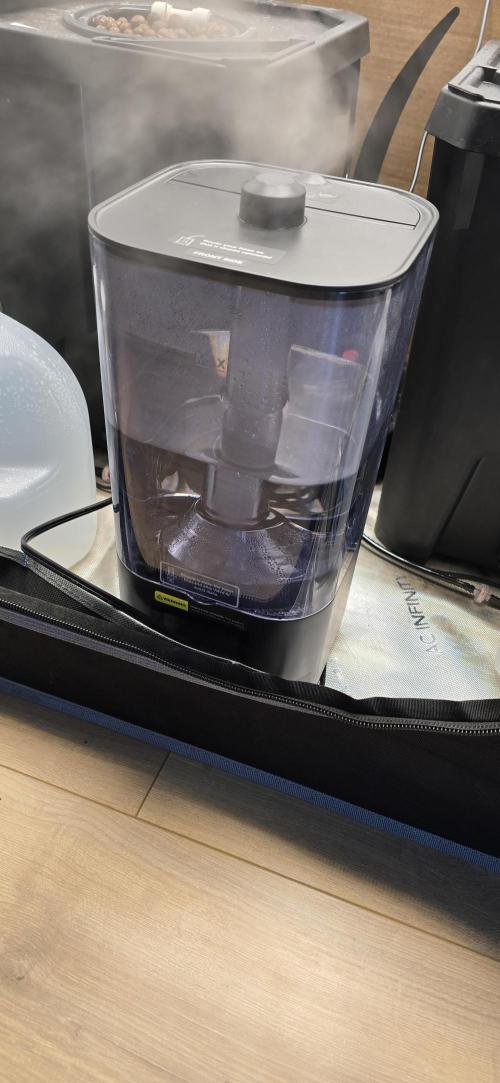
So I bought the AC Infinity heater for the system. It works fine, but the humidifier I have is either too much or not enough. So far I have t found a middle ground. I'm trying to get the temp to stay at 75° and the humidity between 70% and 80%. 75% would be preferable as these are still seedlings and still need the moisture. Both plants have a bit of yellowing on the tips. Not sure what it's from yet. Hopefully I'll figure it out very soon. It could be the pH being super high for a bit. That's what seemed to gave caused the issue. But I'm not sure.
Anyway, I noticed something interesting about the other Papaya Cookies. You know, the one that shouldn't have made it. It has the exact same droopy leaves as this one. AND, the other Lemon Cherry Cookies is reaching just like this one. That's some good genetics I think. Knowing the drooping vs the reaching, I feel like the drooping is natural to this strain. Or both plants are suffering the same issue. But they are now in totally different environments. Makes sense, right? Or am I crazy?
Temp: 76.1°
RH: 65.2%
VPD: 1.06 kPa
10/03/2025
And for the win we have Papaya Cookies with a massive comeback today. She was leaning really hard. But then she perked up when I got everything to the right temp and humidity. Had to buy a heater to do it, but yah. The next thing is the humidifier I have. It's great for bedrooms. Definitely not for growing tents. No auto shut off. Only 3 settings. The one I got today will be here tomorrow is the AC Infinity humidifier. So it will integrate with the controller and we'll see some real precision.
The tent is sitting at 74.7° and the humidity bouncing around between 65% and 82%. Not great, but it'll work for the next 24 hours. At least they're still seedlings and need the humidity.
Lemon Cherry Cookies looks amazing. Her first true set of leaves are coming out nicely. Soon enough she'll start to grow vigorously. Both will. But I have a feeling this one will be the bigger of the two. So now I have the heater, humidifier, AI controller, side lights, I just need the 6" fan and filter. Maybe. And the bar lights. I'm not gonna get the ones for the 3x3. I'll get the 4x4 ones. Those are 2.5 ft x 2.5 ft. Perfect for my 3x3 tent. Talk about wall to wall coverage.
So issues I'm having. My pH keeps climbing up. No matter what I do. pH up, more and more and more. I might have it stable by now. I'll have to check in the morning. The temp of my water is way too high at 75° it's from the heater. It blows directly toward the buckets. I have a piece of cardboard with a spacer to help keep the heat off them, but that's as far down as I could get it. Maybe with the heat where it is and the humidity the water will end up being that warm anyway. It should cool off when I switch to veg in the tent. I'll keep it at 72 so the heater doesn't really have to be on much. It should also cool off the water.
Anyway, numbers for the day.
Temp: 74.4°
RH: 77.8%
VPD: 0.65 kPa
10/04/2025
We have some super healthy and happy ladies today. I added in another half teaspoon of Lotus Grow and a half teaspoon of cal/mag. It's not much, but these little ladies are transitioning to the veg stage and I don't want to burn them or stunt them. Speaking of stunting. I was worried about Papaya Cookies a bit, but she suddenly bounced back. Now she has her first node just like Lemon Cherry Cookies.
I think I got the pH to level out finally. We are sitting happy at 5.85 now. I also read that the nutri8kind of act as a buffer because they have their own pH levels. So I double checked after adding my nutrients in and all was well. Only needed to bring the pH down by a couple points.
I'm keeping a close eye on both plants. They have the same amount of notes and are pHed almost perfectly. I'm watching for any signs of toxicity mostly. I don't think I'll be seeing any deficiencies for the time being. And if I'm able to, I hopefully won't see any issues at all. Honestly, I might see issues as this is my first time with hydroponics. But I figure if I follow the instructions and lower the dose about half way, I should see some pretty good results without overdoing it. Plus they will tell me when they need more.
The new humidifier can't come soon enough. The current one is killing the temp and flooding it with mist. Lights are off, and I assume the tent would be able to pull the humidity out and keep it level, but nope. Nothin doin. So we be stuck with high humidity and a 72° temperature. Luckily we are still babies, so it shouldn't be a problem at all.
Temp: 71.9°
RH: 80.6%
VPD: 0.51 kPa
10/05/2025
Both ladies are looking awesome! Papaya Cookies has a bit of twisting on a leaf. I'm going to look into it. It's not bad and it just started. I'll definitely be keeping an eye on it. I wonder if it's the cal/mag. But wouldn't it be faster in showing signs in hydroponics? I dunno. Lol
So as I said Papaya Cookies has some Twisties going on. Other than that, she is looking great. Her first set of true leaves are starting to come in quite nicely. I definitely expect a large plant.
However, Lemon Cherry Cookies has spacier nodes. That makes me think she'll be tall. I'm guessing some fairly wide internodal spacing. She looks great! Great color, shape. Her leaves are very sharp looking almost saw blade like. Really cool looking. I'm pretty sure she'll have some broad leaves indeed. I'm thinking bushier than Papaya Cookies as well. Maybe not as tall.
Watering.... See I'm getting there.
No clue how much water they're taking in. It's too soon to tell really. But I'll make sure to update the water when there's something to update.
Lighting...Finally!
So I have the lights roughly 28" from the plants. My light power is set to 30%. The light intensity is around 230 PPFD and they seem to be loving it.
10/06/2025
Forgot to write this one, but here's a quick recap:
Both ladies look good. The one in the Germination System is still growing. Wow. Everything looks great! They should be starting the Vegetative stage tomorrow or the next day. (Preemptive prediction) Hahahahaha
10/07/2025
As as I cheated and predicted yesterday... Both ladies have officially started the veg stage and wow did they start. First off they are growing super fast. BUT! They were growing away from the light. I know for a fact that the light isn't too bright. So I looked it up. Apparently that is a form of stretch. They are looking for brighter light. So I turned the light up by 10% and the DLI is exactly 20. Just where it needs to be for the beginning of veg. Very happy with that reading. I'll still keep a close eye on the direction they are growing. If the Google machine is right, they should straighten up in no time. We'll see, I only changed the light an hour before lights out, so it'll change back to 3 pretty quickly. The other advantage of having the light set to 40% is now as the sun sets and rises, the light can have a wider range of increase. That should help it mimic sunrise easier.
Papaya Cookies looks awesome! Her leaves are starting to expand more, her first node just came in and she's ready for more light. Maybe more nutrients. I should check that. But I'll empty the water next week. There isn't enough in there to cause any build up. So I can wait another week. Honestly I'm just trying to get into a schedule.
End of week recap.
So this was the second week of seedlings and they are both right on time for the veg stage. I know we are in the valeg stage now, but I don't know what to do without a seedling stage. Lol.
We had a tiny bit of trouble with leaf twisting but that stopped very fast.
Finally, the end of week readings.
Temp: 74°
RH: 74%
VPD: 0.75 kPa
Light: 321 PPFD
Both plants: (roughly)
pH: 6.2 (floating day)
EC:1187 us/cm
PPM: 598
Water temp: 72.6° ( kinda high) I'm gonna get ice packs.
Welp, that's it for the week. See you tomorrow at the start of a new week of official veg. This is where it starts to get exciting!
Update! So I checked the roots and we have roots! Like 3 or 4 each just about to touch the water. I think 1 root from Lemon Cherry Cookies is in the water. This is gonna be a great run!
4 likes
2 comments
Share
Used techniques
Transplantation
Technique
2
Week 2. Vegetation
2mo ago
1/15
8.89 cm
Height
18 hrs
Light Schedule
24 °C
Day Air Temp
5.8
pH
No Smell
Smell
65 %
Air Humidity
22 °C
Solution Temp
22 °C
Substrate Temp
21 °C
Night Air Temp
26.5 liters
Pot Size
0.08 liters
Watering Volume
68.58 cm
Lamp Distance
769 PPM
CO₂ Level
Nutrients 2
Lotus Grow
0.43 mll
Lotus Cal/Mag
0.33 mll
Prilyfe13 10/08/2025
A new week! And we have roots in the water! Only on Lemon Cherry Cookies right now. Her tap root is almost at the bottom of the bucket. Seriously fast growing. Papaya Cookies is a bit slower. She has roots coming out of the basket, but they aren't even hitting water yet. Interesting. I'm going to check when the lights turn back on.
Speaking of light. I bought the bar light for the tent. It'll be here in 3 days. In the meantime, I've turned the light up to level 5. The DLI is sitting very pretty at 21 mol things. PPFD is 340, or around there. I'll update with the correct PPFD.
So I've dropped the night time temp about 5 to 10 degrees. Just to mimic outside. The day temps are staying at 75 for now. I plan on dropping the temp down to 72° next week. But I'm not sure. I might want to stay at 75° for the rest of the veg stage. Although, my buckets are still over 72°, but I got bottle ice pack thingy dooders. Those should help cool the water down at least below 72°.
Btw, as I read, the plants weren't getting enough light. As soon as I brought the light up to 4, they started reaching for it. Setting it to 5 may be too early and if need be I'll set it back to 4. But they seem to be starving for some light. Just a little bit more won't hurt.
Alright, plant structure time.
Papaya Cookies has leaves coming in that seem more like a hybrid. Where Lemon Cherry Cookies has super broad leaves. She's a little shorter than her counterpart. But only by about a half inch.
Papaya Cookies: 4"
Lemon Cherry Cookies: 3.5"
While Papaya Cookies is taller, Lemon Cherry Cookies is growing faster. Nodes popping up. Her fan leaves are futher out as well. The race is tight. Who do you think will win? It's really rough to tell. But I think the Lemon Cherry Cookies is going to be stout and super bushy. Papaya Cookies will be taller but less bushy. We shall see.
Temp: 70° (night) 75° (day)
RH: 62%
VPD: 0.98 kPa
10/09/2025
What a weird little plant... Or too much air flow. (wind) Either way, Papaya Cookies was completely flopped over like she decided her own LST would be ok. She's perfectly fine looking though. She's even growing toward the light still. I proper he back up with a pebble. So far it's working. I wonder why that happened. The wind was fine yesterday. Any insight?
Lemon Cherry Cookies is growing so nicely. One thing I've noticed though is that she is smaller than Papaya Cookies. Not by much, but enough to notice. She is just as healthy, just as fed. I don't. Know. But she is smaller, but moving along just as quickly. Interesting. We'll see how things go. I'm still confident she'll turn kit really nice.
The other one:
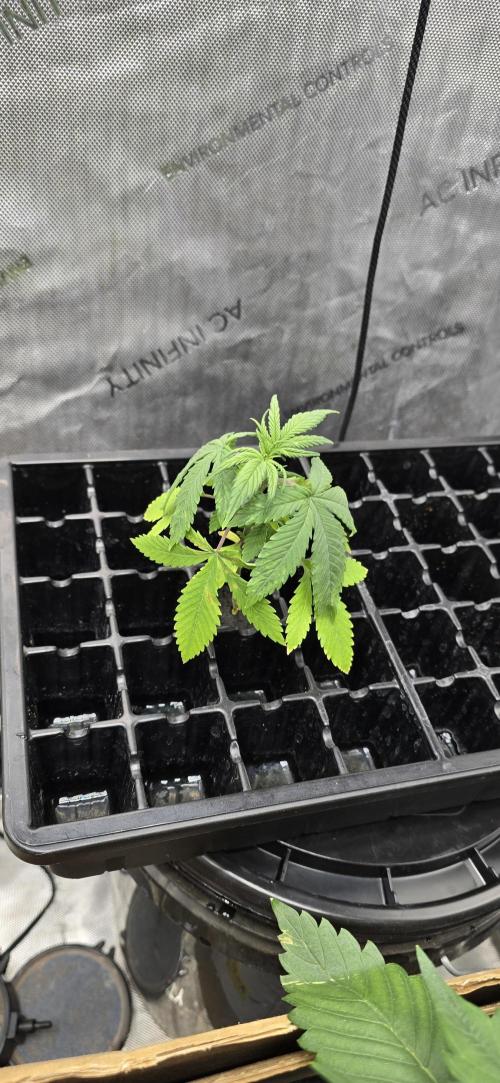
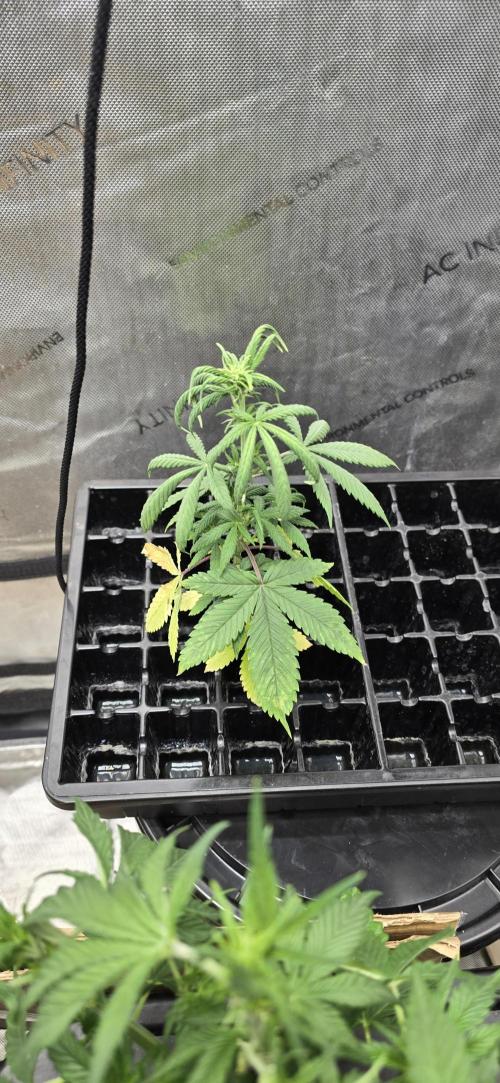
This little thing is quite the champ. She is still going. Just tiny. Same stage too. It's wild. But her leaves are starting to yellow. I'm half tempted to add a little more water to the bottom with a bit of nutrients to see what happens. Just a hint.
10/10/2025
Missed this day. Everything is as it was and as it will be. Sorry everyone. I've been quite busy and taking time to write hasn't been in the cards. It's fine. I'll be adding to the diary on the 12th.
10/11/2025
I raised the light and increased the intensity. I discovered both ladies were reaching in toward the center of the light. That tells me the footprint of the light was too short and there wasn't enough intensity. Raising the light increased the footprint. The light power was increased to 7. The power output is 194 watts. Yes I have energy monitoring. It's wonderful. They both turned back to reaching straight up. I'll have to wait til next month to see what the monthly power output is. For all those who want to know how much it costs in electricity. I'll figure it out.
I bought a smart power strip. Now I can monitor the energy being used but also the power output by all the devices. I can also turn the air pump off from my phone making maintenance that much easier. It's a Kasa I got on Amazon for like .
Don't need to add water yet, I'll probably change the water before I need to top off, unless these ladies continue their speedy growth. But I did add one more half teaspoon of grow nutrients. Something I noticed ,and read somewhere, the pH seems to be easier to level out with more nutrients. Like they of course have their own pH, so it works as a buffer. And it seems to be true. My pH only drifted a point and a half. 5.95 pH. It took less than 2 minutes to get it right and we move on. Lol.
So the heat turned on in my house last night. This is my first winter in this apartment and the heat is included. Because the entire house uses the same heat. I'm on the second floor. It got hot. Like 75° in the apartment. I have my AC running and it's legit 56° outside. BUT it's now down to 72 in my apartment. A little too warm for me and apparently the tent. It will not drop or move from 78° regardless of the cool mist in the humidifier.
Speaking of humidity, it's absolutely SPOT ON. I have it set to range between 60% and 70%. It hangs out at 65% with a slight drift up and down a point or 2. Ideal! Now if I can get the temp to drop to 75° I'll be happy. I have a feeling I'll be needing the AC in my window for the winter. Unless I buy the AC Infinity AC and that's like 0 and not happening for a 3x3 tent. Not worth it.
However, to keep the water from overheating, I bought water bottle freezer packs. You know, the thin cylinders that go in your water bottle. Or a small cooler. Anyway, I have 4. So I can use one at a time and have a backup for each bucket. Not sure how it works, but I'll have to keep an eye. 64° to 72° is ideal for cannabis, and mine is like 72.5°. I wonder if I just leave it in until the water starts to warm up again.
Let's talk plants now. Both of them are looking absolutely stunning. We have smell and the side branching is coming in fast.
Lemon Cherry Cookies seems to be side branching faster than Papaya Cookies. Only by a little. Her leaves are also reaching slightly. Perfect green. I think adding the extra nutrients made a difference. I figured out the need for more nutes by seeing some light green to yellow new growth. Adding the extra nutes immediately turned the plants both to a very nice vibrant green. These plants, so far, are perfect.
Papaya Cookies is looking great as well, but her leaves aren't reaching. They seem to be in rest mode but definitely aren't. But this plant has always had that look to her. Never really reaching, but not drooping. She's happy, but not as light hungry as Lemon Cherry Cookies. Oh well. I still expect her to be a very fine producer.
So I bought the Bar light for this tent. It should be here today, so all this info I talked about today is moot. Hahahahahahaha. I made you read a whole thing for nothing. JK. It's important information especially when I switch lights. I'll definitely need this info. Oh PPFD 320. And 22 DLI. I think. I'd have to check again. Well, it doesn't matter. I'm gonna set it all up tonight and have new readings. Plus the new light is 300 watts vs the current 240 watts. The bar light also spreads the light better and more evenly. Wish it was bigger though. I almost bought the one for the 4x4, but it was over 0. Nope.
But the light will be much better and I think we will see some significant growth and maybe an increase in speed. A mix of DWC and the new light, things should turn out perfect. Well, based on the information I have found on the world wide web over the years. From what I understand, temps between 70° and 80°, 65% humidity, 350 PPFD light, 64° to 72° water temp. That's at least for this stage of growth. I'll update next week with what the plants should need. At least environmentally. I don't use CO2, but I have a probe for it. Lol. It's kinda low at 702. It should be a little over 800.
Temp: 78° solid
RH: 65% slight drift.
VPD: 1.18 kPa going with the flow
10/12/2025
I was really busy this day, so I didn't have a chance to write. But I installed the new light.
I also added some nutrient water to the Germination System for the other one. I'm very curious to see what happens. If I can get her all healthy, I'll overfeed her to see what happens. This way I can decide if it's too much or too little for the actual ladies. That's all I did this day.
10/13/2025
The new light is up and running. I have it set to 60% power. The PPFD is around 360. The DLI is 23.1 mol. It's also 35" from the canopy. These ladies are loving it! They look amazing.
The water temp kinda shot right up with the heat of the light, so I added a couple bottle sized ice packs. You know, the ones you put in water bottles. Long and thin. Hopefully they don't hurt the roots. But the water was at 75°. Anyway, hopefully it works. I read that people just use frozen soda bottles. So this is the same concept, just more sophisticated.
Update: I just took the ice packs out. It wasn't even an hour. They are completely thawed out now. But the water temp dropped to just under 72°. So it's at least in range, but I'd like it under 70°.
The water is finally starting to go down. At least 2 inches in the Lemon Cherry Cookies. And an inch for Papaya Cookies. Perfect timing because the water is getting changed on Wednesday.
So tomorrow I'll start adding silica to my gallons. I have ten 1 gallon water jugs lined up. I read that silica needs to be added well before the mix is made. So tomorrow I do silica and Wednesday before I empty anything, I'll add the cal/mag and then just before everything is cleaned I'll finally add the nutrients. If everything I read is remotely right, it should be perfect for the plants.
I was gonna check the PPM and EC, but there really isn't much to do about it. The pH is perfect at 5.8 and holding. The plants look absolutely spectacular. I'll check it after lights out and update after they go on. I have a feeling the PPM will be slightly lower than when I check 2 days ago, but these plants aren't big enough to make much of a difference. That's gonna change really quickly though. In about a week, or 2, we should have a full grown set of plants. Ready for the scrogging. And for flowering.
The other one got some nutrients last night as I said for yesterday's entry. So far no difference, but she's not dead, so that's a good thing. I also checked to see what was going on under the germ tray. Lots of roots. I think if I keep it going, I'll get a tiny baby main cola. But the that's not the goal. The goal is to see what happens when I starve then overdose a plant... For science. This way I know exactly what to look for. So far, I don't see a single deficiency. Papaya Cookies did show a slight cal/mag deficiency, but that was quickly rectified and she worked right through it without pause. Now her leaves are perfectly green with no deficiencies. I did notice a bit of cal/mag toxicity. But it quickly passed. I think it was the sudden jolt of Cal/mag in the system. I'll be honest, I think I screwed something up with this first water bucket. Adding silica in the middle, then adding cal/mag later on. Next week, will be very different. As I said, I'll be adding silica first, then cal/mag, then the nutrients. I'll make sure each jug is thoroughly mixed before adding to the bucket. I'll make sure to top off as needed. I'm also going to mark the indicator tube on the front so I know where the 4.5 gallons begins. Having the little ball helps, but I don't know where it starts. I didn't look when I started. Oops. Of course we will be learning from our mistakes.
Oh I know it's late, but I wanted everyone to know that my numbers for the week not in the description, but the recorded numbers are the goals. Except for height. I just measure it at the beginning of the week. I don't measure again until the beginning of the next week, unless they take off and I have to start recording it daily. But that's not here yet. So yah, the numbers are current goals. Next week I think I'll keep the environment the same. But of course I'll get on track with nutrients. What really sucks about the nutrient brand I'm using is they don't have a feeding schedule for autoflowers. So I'm winging it. They say take 30% out, but I dunno. This is my first DWC, so I'm being careful. Adding a little at a time. Autos can be finicky after all. But now I think they are old enough to and established enough where I can start adding nutrients just under 40%. I'll work with 30% when we get to the flowering stage. And then this will be the last auto run for a while. I have a ton of photoperiods and have never run a photo. It's time to grow up. Lol. Although, some would argue that autos are harder because you can't make mistakes with them. I don't know yet. But I feel like having extra time in the veg stage with any mistakes is easier, just more time consuming. However, I feel like no mistakes with a photoperiod will have a better yield. Again, I'm not sure.
The 12/12 might be a problem. I may have to buy the updated 3x3 when I run photos. The room the tent is in happens to have a shit ton of light. Like a whole wall of windows and a fully windowed door It's in the morning and then the other wall with windows catches the realst of the day. Believe me when I say, there's zero point in a light for the whole day. Not until the sun sets. No breaks. And for some reason, the AI wants to run lights out in the middle of the day. I'll have to change that somehow. I'll need it to be lights out at night. Like 6 pm to 6 am.
I hope you're enjoying my random weed thoughts. Long winded I know. But there's basis to them at least.
Finally, today's environment. It's a bit warm and a bit humid. Honestly I think it's just right for these flourishing plants. Just booming with life. Booming, not blooming, we aren't there yet. Lol
It's hanging out at 77° to 78° today. The humidity is a little bouncy, but seems to favor the 68% range. Our VPD looks good though, pretty steady, around 1.0 kPa. That's a happy number.
So we covered the light, the water, the temp and the environment with a little fluff. That's good for the day I think.
5 likes
2 comments
Share
3
Week 3. Vegetation
2mo ago
1/23
13.97 cm
Height
18 hrs
Light Schedule
24 °C
Day Air Temp
5.8
pH
No Smell
Smell
749 PPM
TDS
63 %
Air Humidity
21 °C
Solution Temp
21 °C
Substrate Temp
21 °C
Night Air Temp
26.5 liters
Pot Size
0.95 liters
Watering Volume
68.58 cm
Lamp Distance
783 PPM
CO₂ Level
Nutrients 2
Lotus Grow
1.3 mll
Lotus Cal/Mag
0.33 mll
Prilyfe13 10/14/2025
I almost waited til tomorrow. Oops. But I caught it.
We have some good things coming our way folks. These ladies grew about 25% bigger in 6 hours. They are definitely hungry and enjoying life. I just changed the their water and am keeping an eye for the next hour for any issues. I haven't done a water change before, so I'm not sure what else, if anything, I have to do.
From what I understand, it's get your mix ready, place a plant in different bucket and clean out bucket. (I just used hot ass water for the first time.) There wasn't any buildup and the water is plenty hot. I know I'm supposed to like bleach it, set it on fire and then rub it down with peroxide, but that seems a bit overboard. Hot water for the first time should be fine. If I'm wrong, then I'm wrong. Then I fix the issue. After my hot rinse, don't worry, I was definitely thorough, I placed the bucket back in the tent and filled her up. Then I pHed for a final time and placed the plant back in the bucket. Sounds right to me.
Anyway, these ladies! Wow! I haven't measured them yet. I will after I'm done with this. But these plants are moving quite fast. I know they're autos and that's what they do, but I've grown autos exclusively so far and I haven't seen a plant grow so much in 6 hours in the veg stage. Maybe I'm doing something wrong, or this hydroponics dooder really works. Personally, I think it's the hydroponics. And it's so easy to control. Add nutrients, take measurements and add or take away. Not hard at all.
As for who's winning the race, it's neck and neck. There's no real difference between the two at the moment. Neither othem are stunted, or showing any signs of deficiency or toxicity. Not entirely sure what to look for when it comes to hydro. Like what is common? You know?
I don't know if I mentioned that I jacked the light all as high as it would go. It's about 4 inches from the roof of the tent. Like 34 inches from the plants.
Correction! The light is now 27 inches from the canopy and I increased the PPFD to 450 with the light being at 70% power. Hopefully this isn't too bright, but everywhere I've read says 200 to 500 PPFD during the veg stage. So it should be fine and dandy. Good light too, so this should be a great spot.
The AI system is keeping the environment in total check. I dropped the RH down to 63% I'll knock it down to 60% next week. Then 50% the first week of flower and then down to 45 and then 40 and so on. I'm gonna stop at 45 for the majority of flowering.
Temp: 74°
RH: 65%
VPD: 0.97 kPa
10/15/2025
So I added about 250 ml of nutrients water to the other one's tray. Lots of green coming in. Such a tiny plant. Watch her spit out a handful of super tight potent nugs. Like lowers.
The pH spiked up from 5.8 to 6.7 in 24 hours. Any thoughts? I pHed it, but what caused it is my question. Maybe it was the new water settling. Either way, it's all set now. But still...
Anyway, they really seem to like the light intensity. So we'll leave it there for the time being. But I'm gonna have to raise it soon. I wanna try to mimic the sun as much as possible. Also, I feel like the plants will grow a bit taller with the light being so high. Like how they get so big outside. They know. They have to know. They are plants. The tiny one I have is a perfect example. It grew to the height it could in the surroundings it had. A bigger light foot print with the same PPFD should make things insane. I'm gonna do that in a couple days.
Temp: 74.5°
RH: 63.8%
VPD: 1.06 kPa
10/16/2025
OMG I forgot to mention that my air filter was clogged up so bad that even at level 10 on my exhaust fan got zero air. So I pulled it off. The new one will be here later today when I do my actual daily entry.
10/19/2025
I got locked out of Grow Diaries for a couple days. Cached data issue.
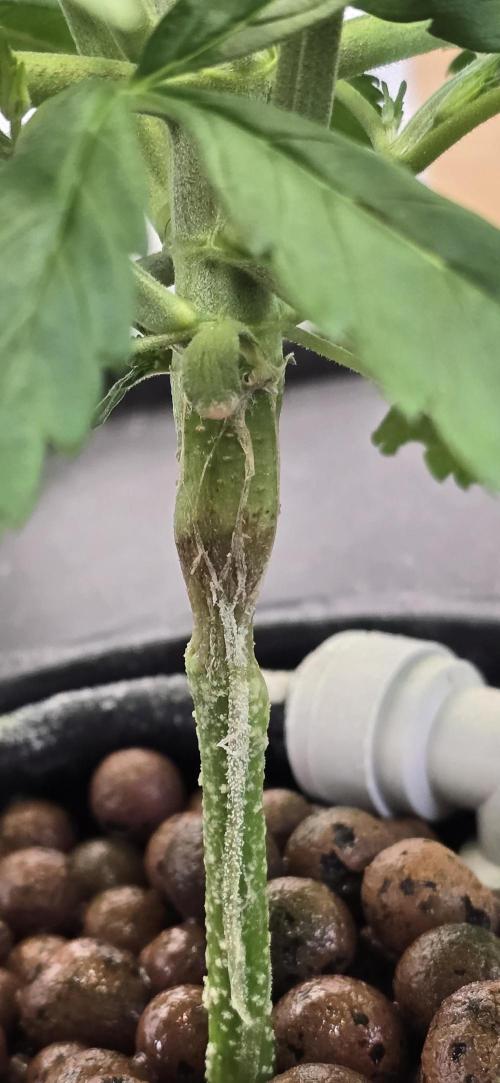
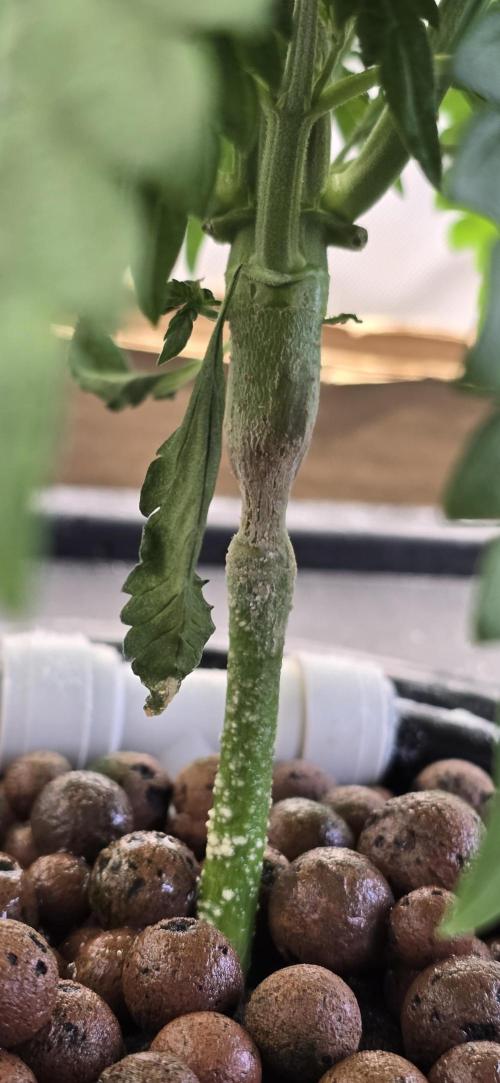
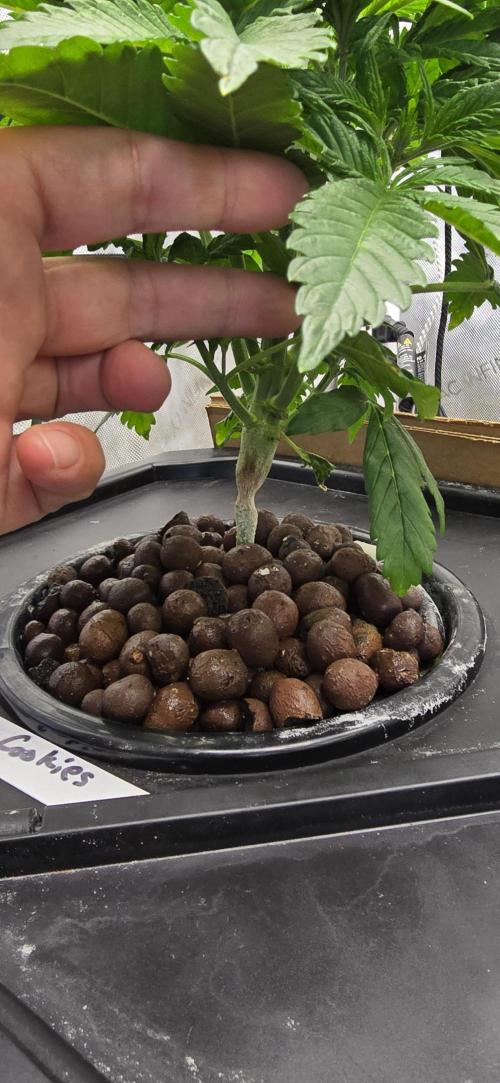
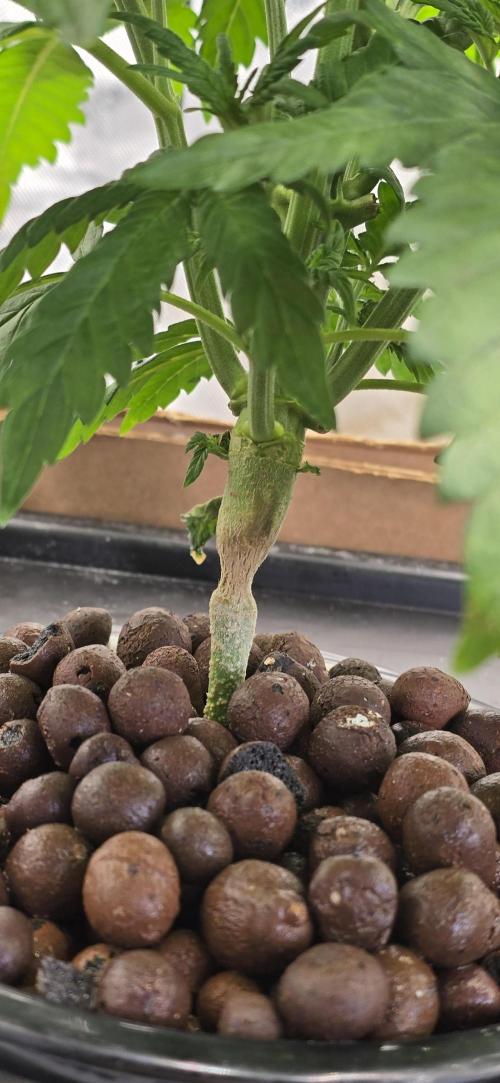
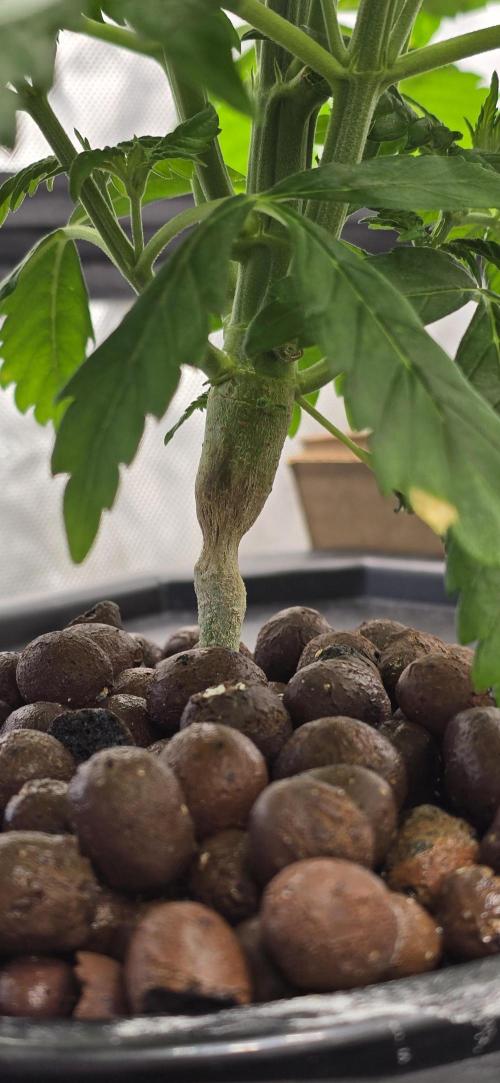
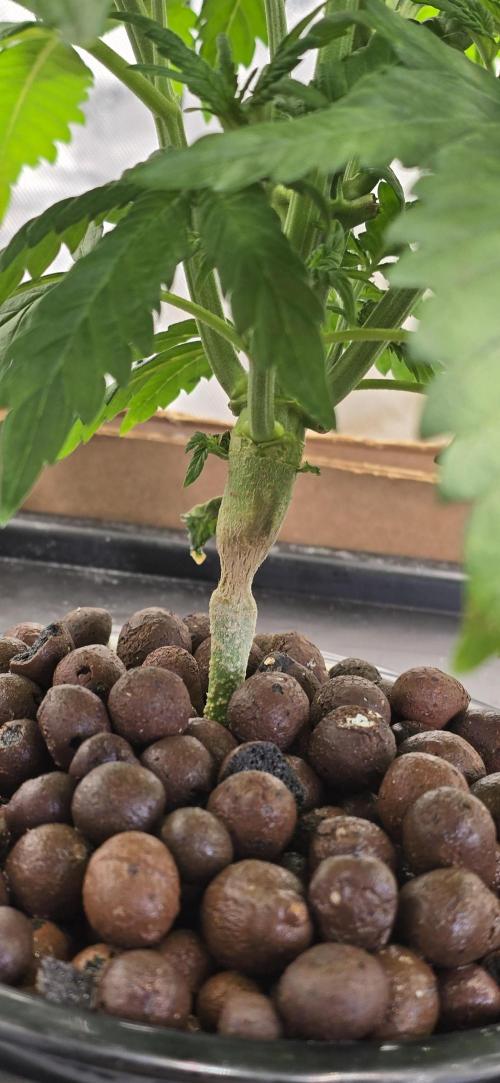
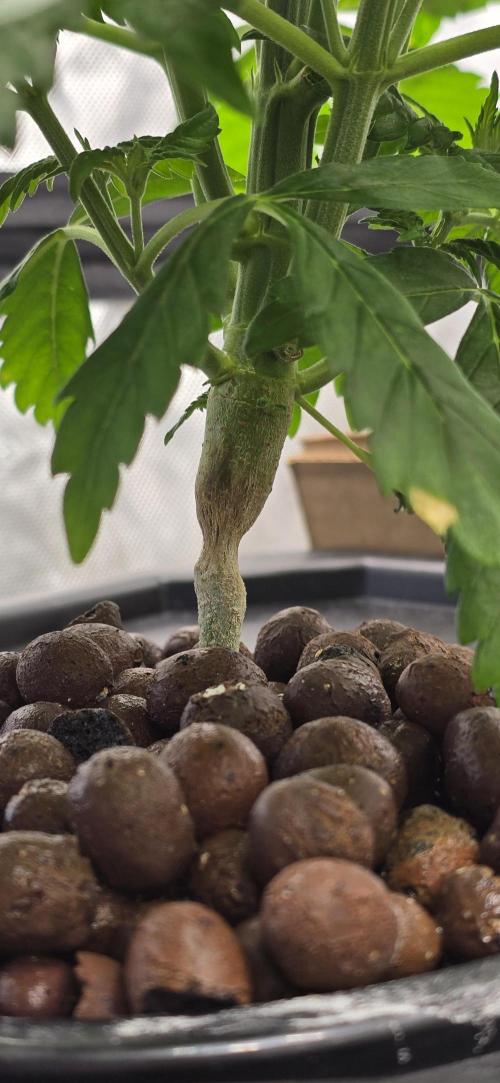
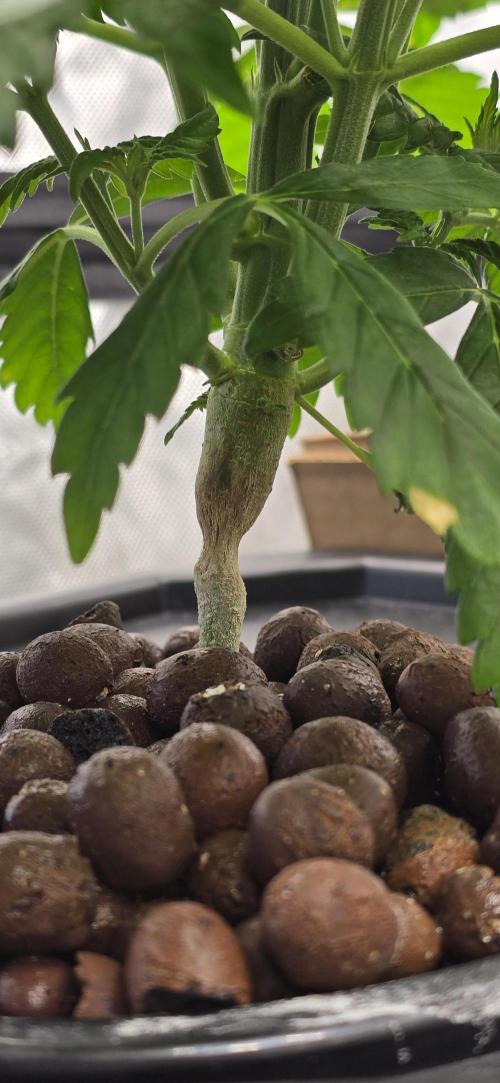
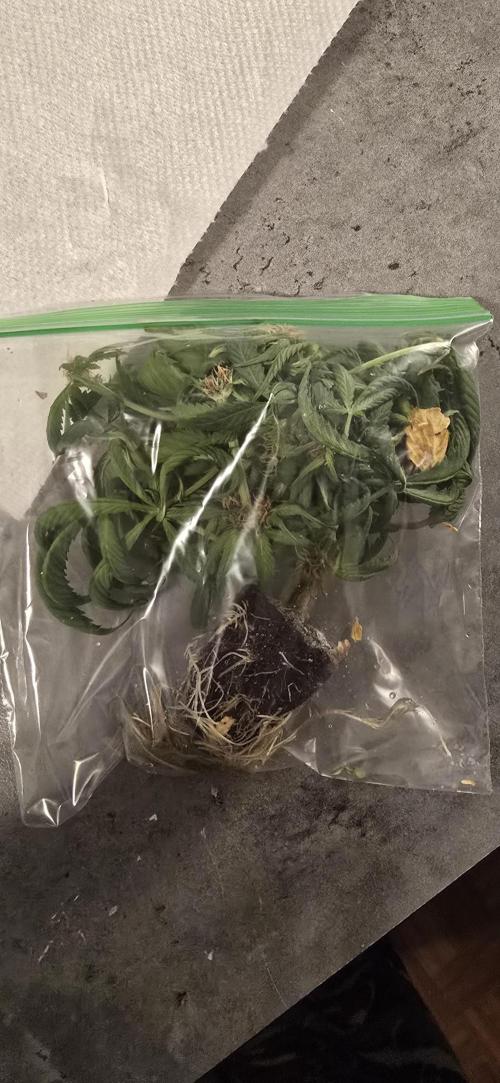
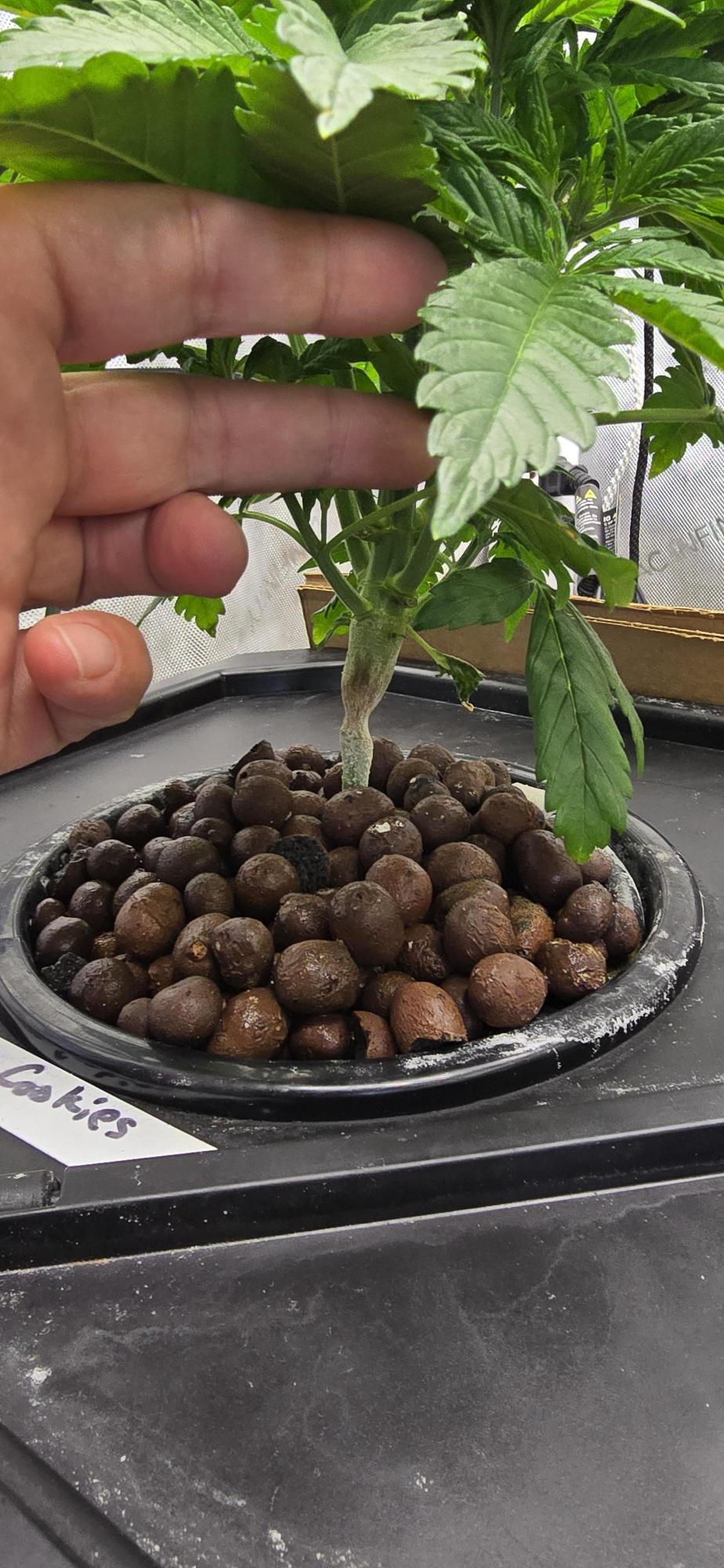
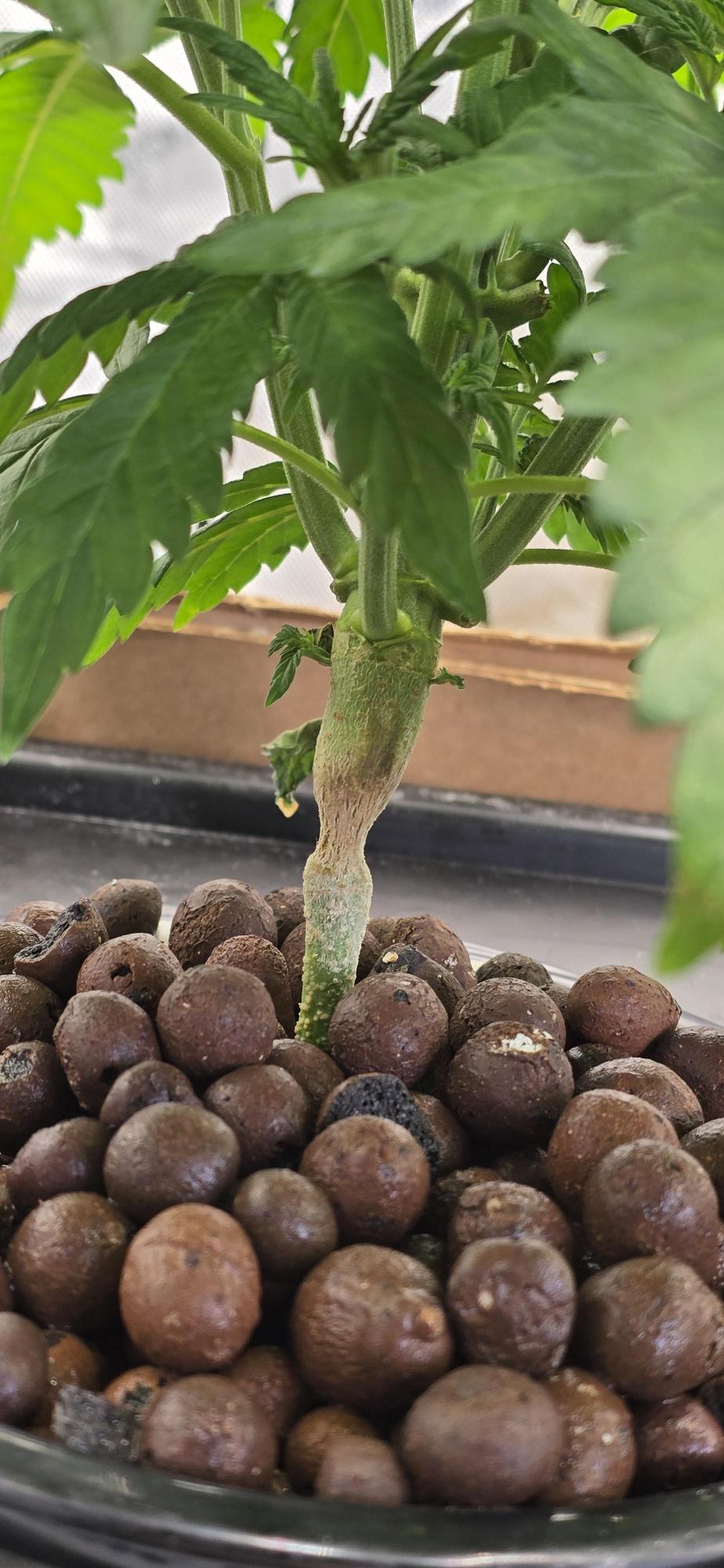
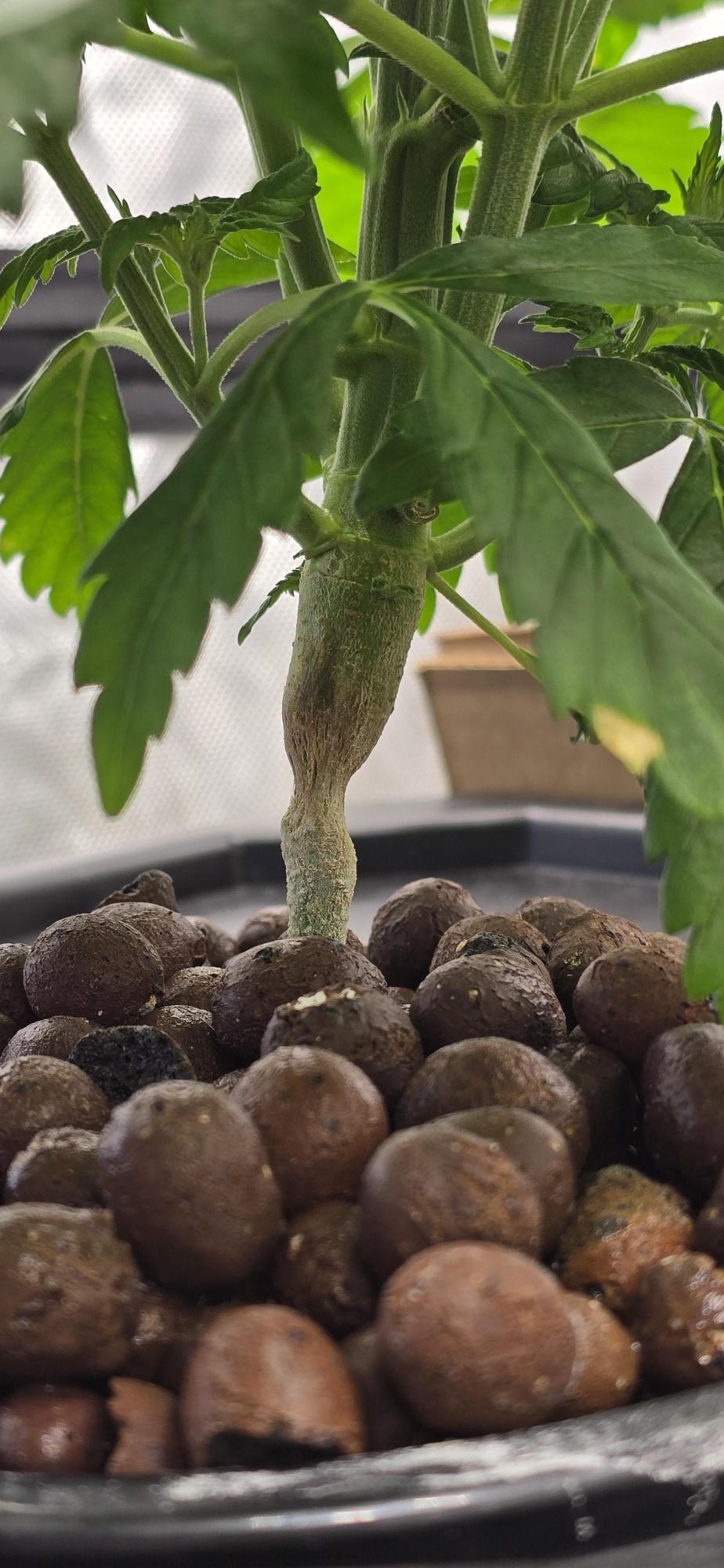
Anyway, I have an issue now. I asked about it the other day with some pretty good answers. But I figured out the issue. My Papaya Cookies has a fungal infection. 2 days ago, I had some serious clear nutrient lockout issues. Or so I thought. It could have been cal/mag, so I did a light flush and added a bit of cal/mag. NOPE. The next day it was way worse. Like leaves are starting to die. Clearly sucking the life from the poor leaves. (Didn't realize how easy nutrient deficiency is to identify) So I added a little bit of nutrients to the mix. THEN I saw it. The stem! It's choking itself? WTF? Nope. I took a picture and had Android Gemini AI dona search. Sure enough it pulled up pictures of exactly what my stem looked like. Fungal infection!
The stem did that in about 11 hours. I went back and looked at the camera. I also have a pic of it posted. Someone suggested bugs. I checked but with the discovery of the stem putting a chokehold on itself. It's so weird. It looks like the stem is going to pinch itself in half and the whole plant will fall off.
Fortunately I have Crop Defender 3. Now I get to use it. The annoying part is this is the first time I've had to really use it. Never had a fungal infection before. I did have white flies once, but I killed them off pretty quickly with neem oil. I might have used the defender. It was a couple years ago.
Anyway, I dosed both plants just before lights out yesterday and will be doing another one at lights out today as well. The issue seems to be slowing down. But I'll keep it up until I see the stem start to repair itself or well, until I see the stem is completely healed. I also removed the really bad leaves. There was only 2. There's 2 more that were also starting to get eaten away, but it seems to have slowed down.
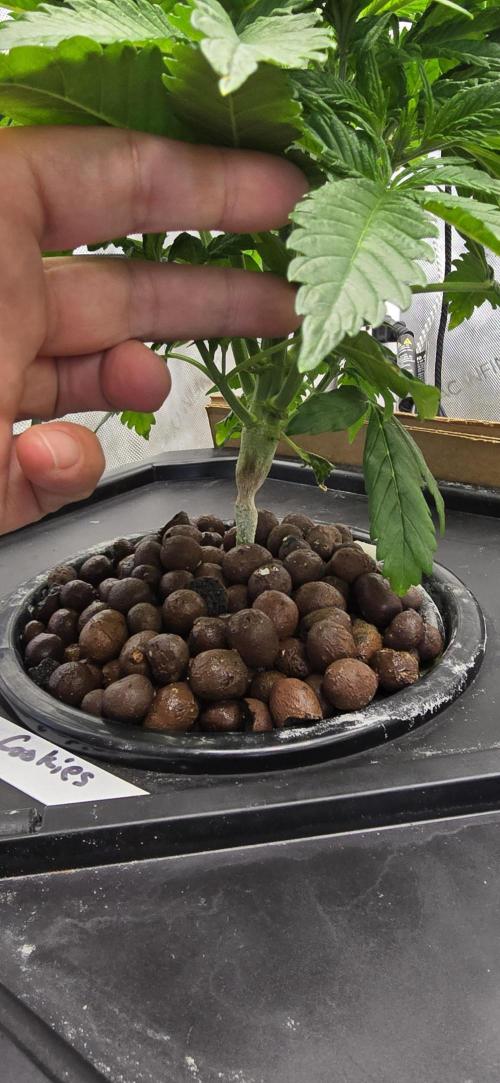
As for Lemon Cherry Cookies, she's perfectly fine. I still dosed her just in case. I also removed 2 leaves. These 2 were huge. And I know, taking off huge leaves is kind of a no no in this stage, but we are nearly at week 3. These 2 were covering at least 6 bud sites. So I took them off. Just the 2. I might take the leaves closest to the bottom off as well. They are starting to touch the containers. And the salts build up pretty quickly from the top feed system. I was considering putting more pebbles on top to cover the water outlets better and to better support the plant. But I don't think she'll need support. Her stem is starting to get super thick.
Back to Papaya Cookies. I will be adding some more pebbles for support. Well, and also for the water outlets. But mostly for support. See picture. Lol. I also checked her roots. Very clean, very white and no slime anywhere I can see. Good roots.
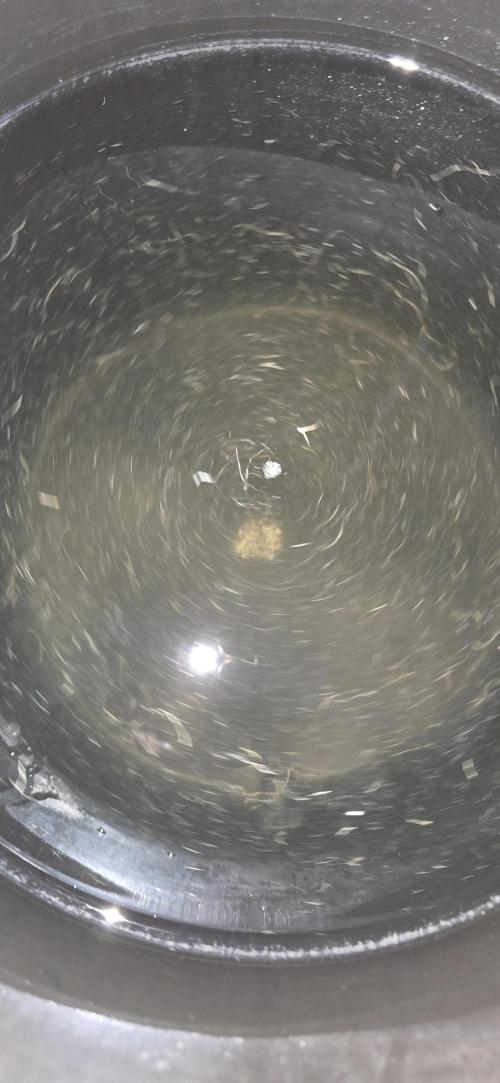
I've also made a holding bucket with clean filtered water pHed to 5 8. I feel like a little soak in the clean water will help dissolve salts as well as clean out the top water system. And clean the pebbles, kinda, as well. I've been working the pH and whatnot while they are in the bath. I think I can get a couple days out of it. Maybe 3. So I'll be changing it tomorrow. I'll check the PPM first though.
I forgot to do the daily environment. Sorry everyone.
10/20/2025
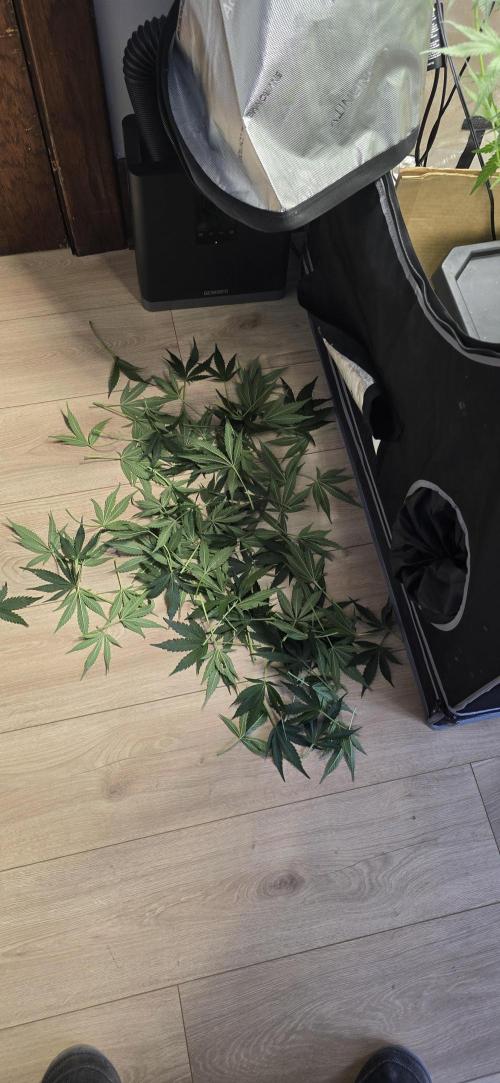
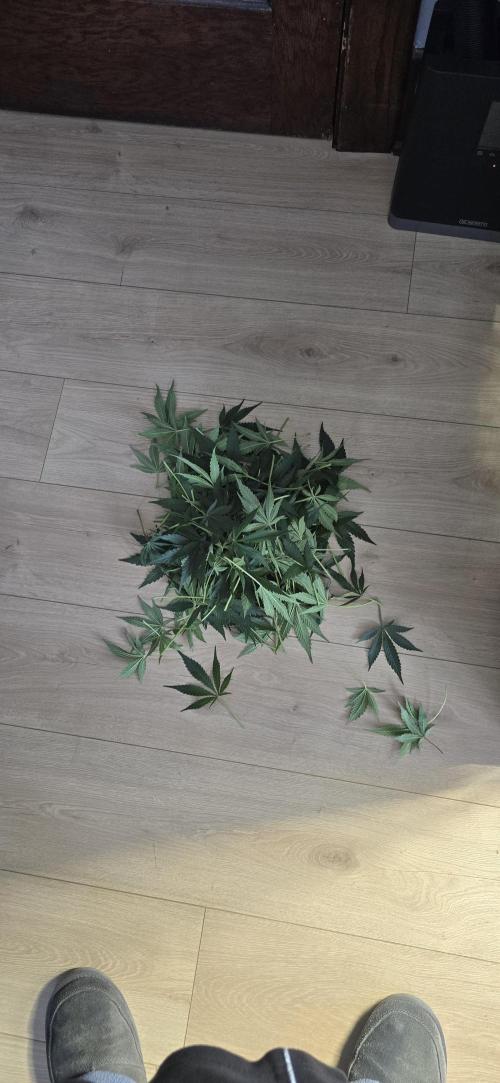
Today was a snip day for Lemon Cherry Cookies. I took off the lowest big fan leaves and one more set one node up. It freed up so much space for the branches underneath. Now she looks like a mess with her leaves all flopping in all different directions. Kinda like me in the morning. Floppin around and pretending to be able to make coffee. Ahem. Back to the report.
Anyway, she'll be fine after she has a nice rest.
So I'm starting to think maybe a week or so longer and she'll be in pre flower. I just have a feeling. Ya know? And if she keeps growing at this rate, she should be a pretty decent size before the flowering stretch. I'm thinking about the scrog net, but I'm not sure. I think I'll put it up at 3 ft. And if I have to get another one, I will.
Papaya Cookies is... I don't know... Sick. Really sick, but still growing. Her fungal infected stem and the weight of the still growing plant, is starting to make her tilt a bit. I'm really worried the infection is going to cut her off completely or she snaps and the whole plant falls down. And I have no idea what to do if that happens. Dead plant I guess. I was thinking about finding a way to stabilize her, like a Popsicle stick or something. Which I don't have. I would also need some thick plant wire. I don't have that either. I think I'll have to order both. Hopefully they get here in time. It could be any day. Maybe even today. Unless she doesn't snap, but bends over enough for the weight to ease up a bit. Then boom. I have a really strange plant structure.
As it's lights out at the moment, I'd like to say the tent environment is perfect. I have it set to 68° and 63% humidity. Spot on. Nothing is running except the fans. The exhaust fan stays at 1 to keep the air exchange going.
10/21/2025
Forgot to do the environment specs last night.
My main concern is the Papaya Cookies. She's starting to lean from her weight on the affected part of the stem. See picture. It's not good at all. This was my main concern. The thing is, I can see the plant trying to heal. The knot above and below the infected area shows that it's still alive and kicking hard. I'm not sure she will heal enough to avoid tipping over. What the hell should I do? Try to find a way to prop her up? How? Popsicle stick? Small metal spoon? Lol. I don't have Popsicle sticks.
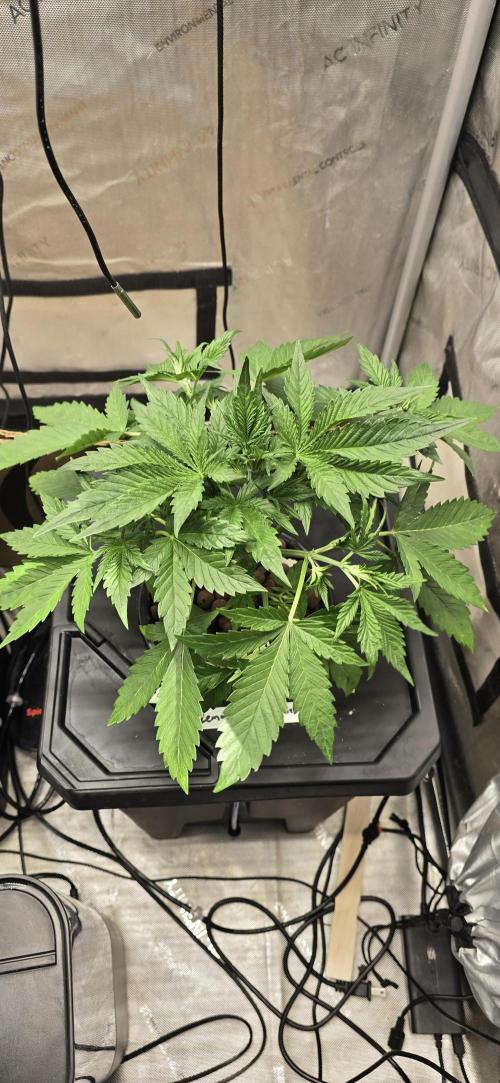
Lemon Cherry Cookies looks fantastic! She's really putting in some double time. I think I'm gonna order some plant training clips. Big ones. Her branches are all standing at attention. If I train them down, her total canopy area will triple. And maybe she'll be the same height as Papaya Cookies. She has obviously been stunted. Although, if I were talented enough and had the right stuff, I could train Papaya Cookies down and use the tie downs to keep her from leaning on any direction.
As I said the other day, I added more clay pebbles. It seems to be working really well. At least for the top feeding system. It's no longer spitting water everywhere. I couldn't get them to stay up so I couldn't cover the weak point on Papaya Cookies. Oh well. The spitting water is what I was really going for.
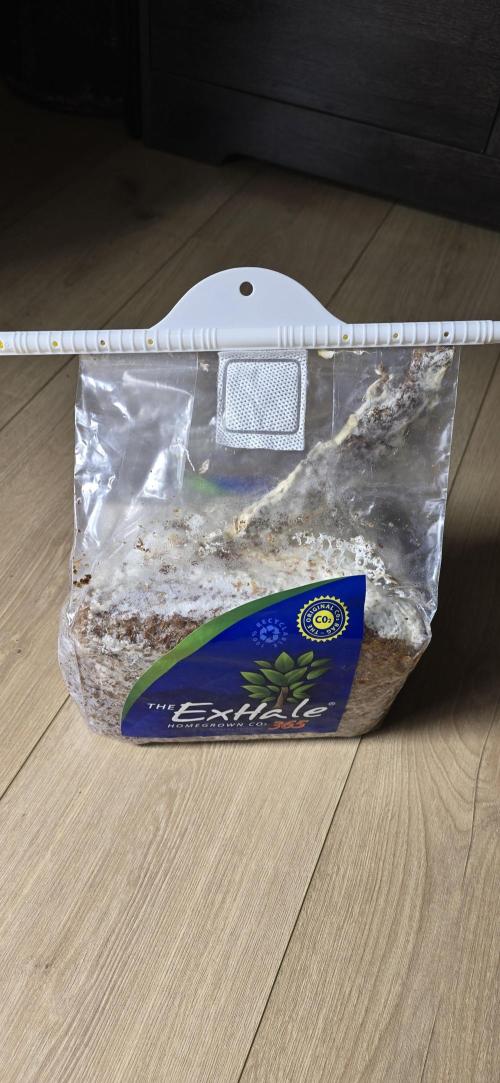
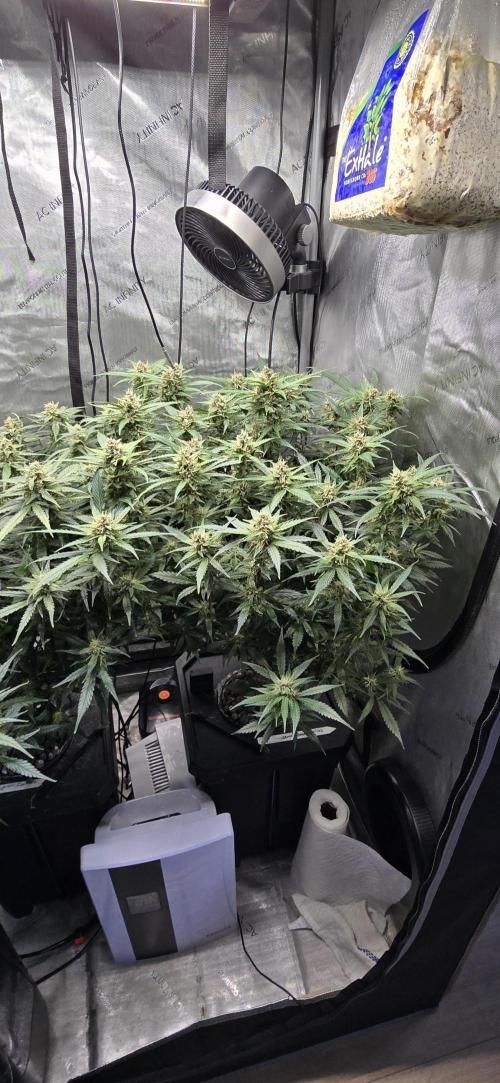
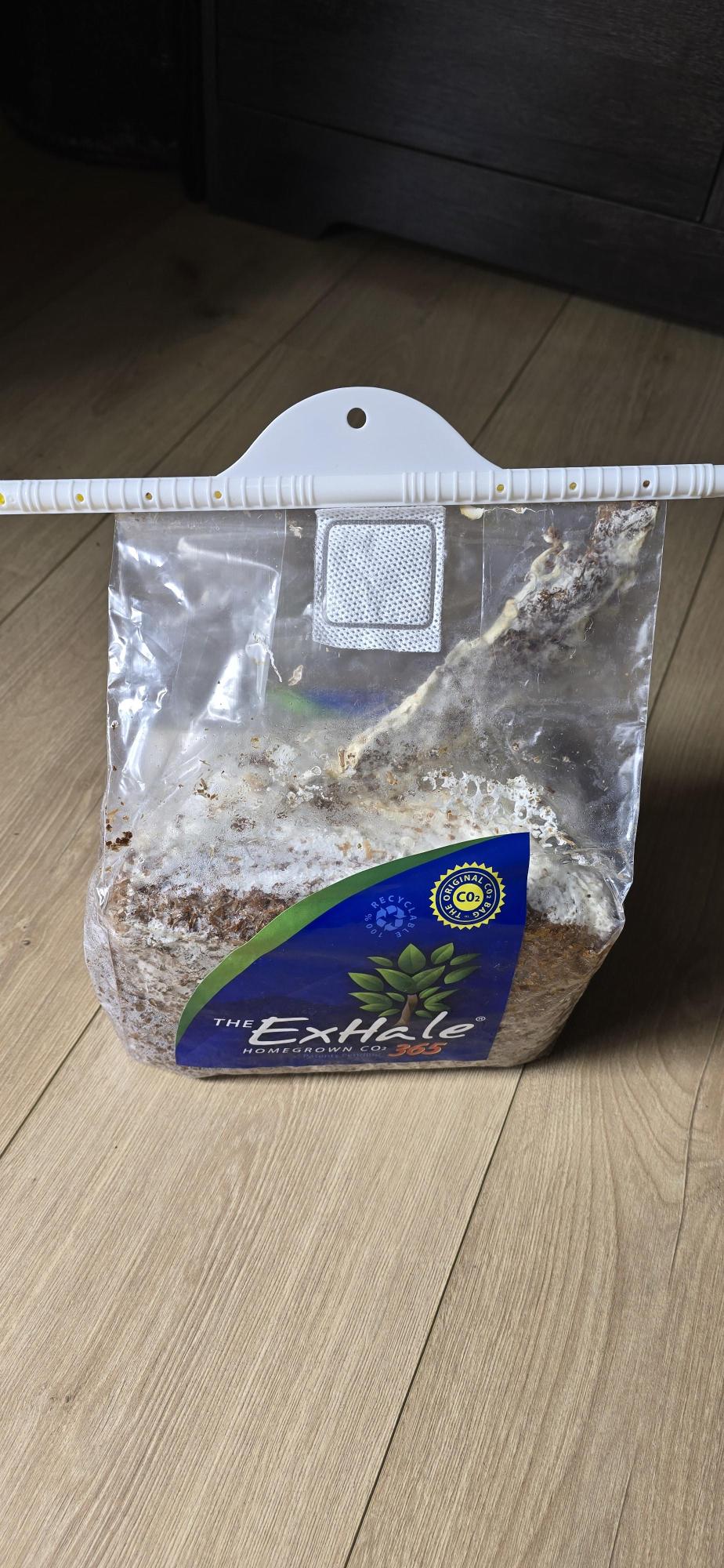
Let's talk environment for a minute. So I ordered an Exhale 356 bag. It's getting replaced. It was already active and should not have looked white at all. Anyway, I have it hanging up in the tent for now while I wait for the new one. It seems to be working? I haven't hit over 800 ppm in about 3 weeks. And now it bounces in and out of 800. And it's only been in there for about 12 hours. We'll see how the new one works. I've been told it takes a couple days to get going. So I'll have to start recording the daily CO2 ppms.
Temp: 75°
RH: 63%
VPD: 1.10 kPa
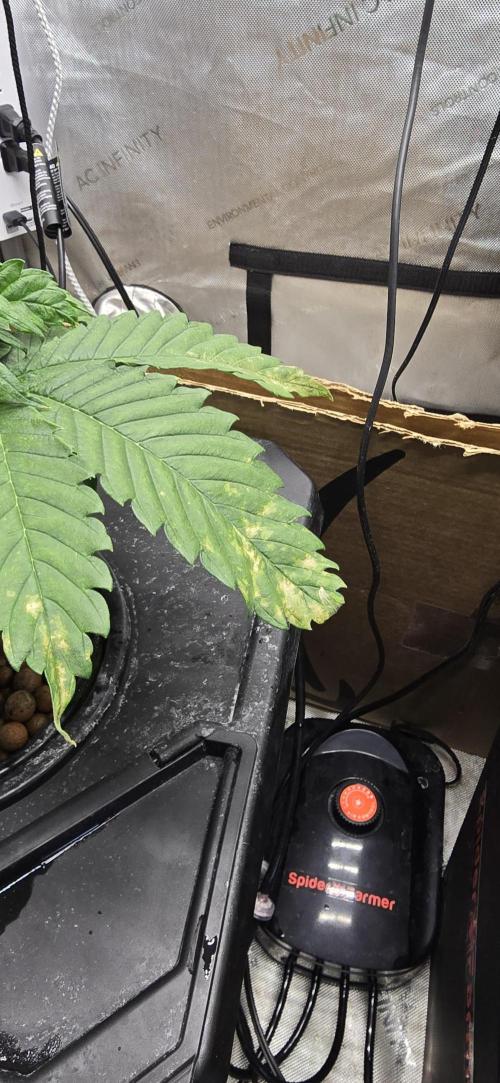
I have this yellow spreading on some of the larger leaves and it's moving super fast. Please help. I've done research and it says it's a deficiency, mostly likely cal/mag. I added that and it got worse, now I'm thinking nutrient lockout? The pH is fine. What do?!
I would first be looking for any insect causing damage. It could also be the start of a fungal infection, yellow rust spots, is it overly humid/moist in there? Are you checking up spillages and stuff?
Is this supposed to look like this brand new? I dropped what was in the top already, but there's stuff already growing inside. It came like this and I got it about 6 hours ago.
This is normal. Easy enough to make yourself if you do the research, maybe inoculate with magic spores from zamnasia and have a wild 1 after the shrooms pop up.. Just an idea
Follow up to my previous question. What do I do about this infection? It's fungal. I have crop defender 3, but the plant is starting to lean because of the weight. Help?! She is also killing another set of large leaves. And she's healing, I think, but it's taking too much time.
Looks like early stem rot / fungal infection, bro. The area around the stem probably stayed too wet for too long that’s why it’s swelling and getting soft.
Try to gently remove some of the top clay pebbles so the stem can breathe and dry out a bit.
You can spray a little hydrogen peroxide (3%) diluted 1:3 with water around the base it helps kill surface fungus.
Make sure your air stone gives enough oxygen to the roots and keep temps under 22–23 °C in the root zone.
She can recover if the rot doesn’t spread just keep it dry and clean from now on
Prilyfe13 10/21/2025
Week 3 of veg. We are looking great for Lemon Cherry Cookies. She's 8" tall. Not quite the 12 inches I was hoping for at this age. But she is strong. Great stem, or should I say stalk or trunk? It's hardening off now and getting big. She's not taking in a ton of water. I'll top her up this afternoon after lights out.
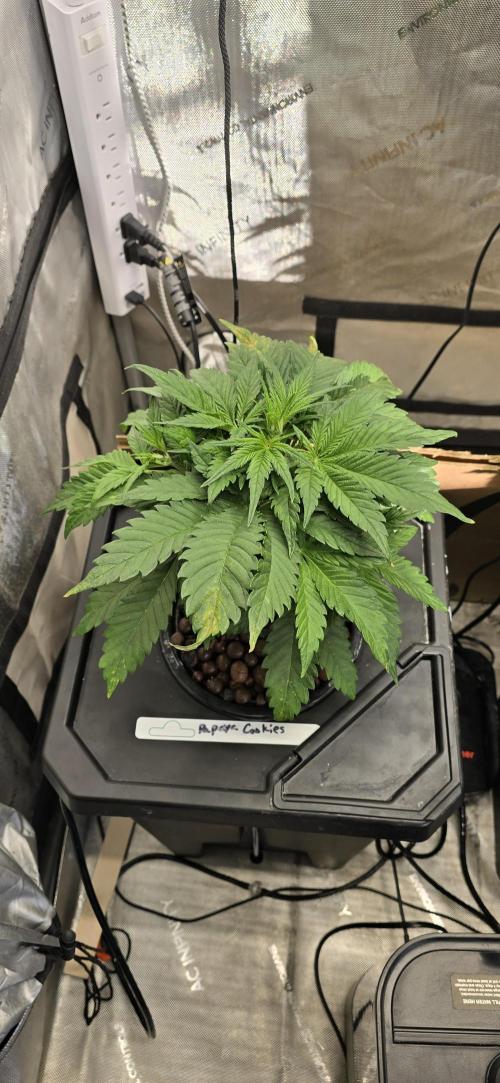
Papaya Cookies looks like she's about to tip over from the affected area on her stem. I think the infection is gone now. It's just a matter of healing. I'll continue using crop defender 3 until she's totally healed and no longer cannibalizing herself. But I don't know how I'm going to prop her up. As it is definitely needed. Or well from what I can see, she needs it. See picture.
Anyway, this week, I'm going to try to be a bit more organized. You know, organize the pics so you see the same plant over and over. So you can see the progress without having to flip through pics. Also, I'll try to keep my thoughts in check.
Environment this week. So it's about the same as last week. 63% humidity and 75° for temp. The VPD should stay around that 1.10 kPa.
The difference is I'm increasing the nutrients a little bit and officially adding silica blast. I'm also trying to increase the CO2 so I can increase the light intensity. The light distance is also going to change. I may lift it up and crank the power so I have a tent flooded with light. I'm gonna want a DLI of like 30 mol. Right now it's around 20. Should be higher than that. Who knows, maybe I'll start today at 25 mol, and bring it up slowly to 30 by the end of the week. If I'm not mistaken, I should be around 40 when flowering hits. 45 to 50 if I can get the CO2 to work. The light is 300 watts in a 3x3 tent. So I should t have a problem with intensity.
I'd also like to note that the hangers the light came with take away about 8 inches of space. I'll be fixing that as soon as I run out of space. I also have the CO2 bag sitting just above the light. The bag is pretty big, so it might take up more space than I can handle. I'll figure it out though. For the light, I think I'll add independent clips to each corner. So I can lift it up high enough for more growth.
Anyway, that's my pre lights out briefing. I'll be back with the days numbers.
Although, the numbers should be spot on.
And they aren't. I'll be back with more stable numbers later on today. They really are mostly stable I promise.
PPFD: 650
DLI: 42.5 mol (kinda high, but I'm seeing no light issues.)
Temp: 73.3°
RH: 62.9%
VPD: 1.04 kPa
10/22/2025
I'd like to start today with a thanks to all that have been answering my recent questions. If you are one of those and you're reading this, again thank you all for your fountain of information. I'd like to explain what I believe happened. The environment was and still is perfect. The humidifier is barely running. There's also heat in the tent, so there's no issue with things drying out as they should. While I 100% believe there was a moisture issue, I don't believe it was from the environment. It's super perfect thanks to the efficiency of the AI controller I have.
The roots look perfect as well. Nice and white. So no root rot.
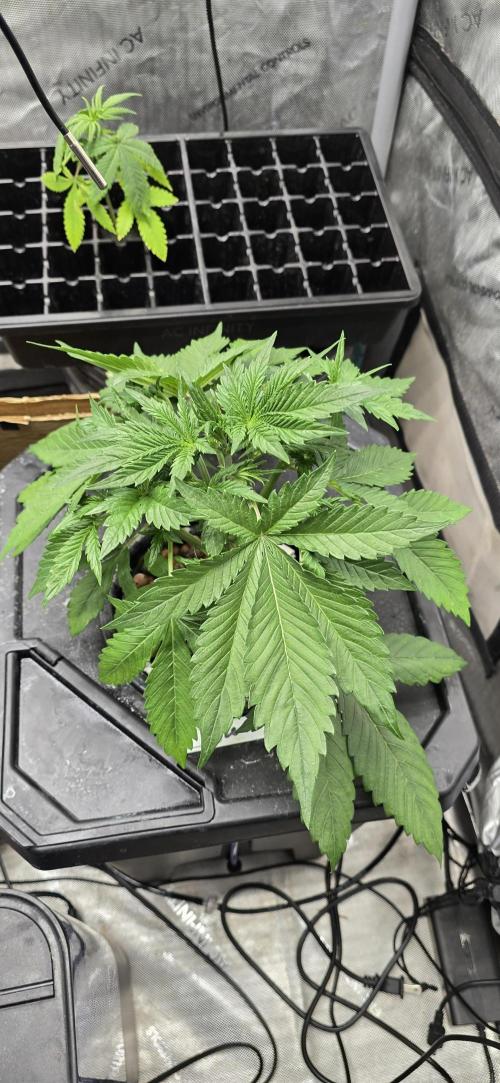
Also, for those of you who don't know I have a second plant in the tent and it's doing wonderfully. It's a Lemon Cherry Cookies by FastBuds. Great branching, awesome color, no issues whatsoever. She was fed and treated exactly the same as the dying Papaya Cookies.
What I think happened is the splash from the top feeder was getting onto that specific area of the stem. You can tell when you touch it and all that comes off is salt. Not powdery mildew, but salt. Lots of it. SO, it was definitely from moisture, but not where everyone thought. But all your answers helped me to know what to look out for next time. Personally I don't think I need to go back to soil. As this is my first hydro grow and I have 1 plant that is perfect and one that is still growing pretty well, but is definitely having feeding troubles now. I do like the idea of tying a string to the top of the tent and holding her up. I might do that instead of the stake.
The EC and PPM are on point. So it's not that. It has to be the splash of the top feeder. Which I fixed by adding more clay pebbles to help block the splash. So far it's working wonders.
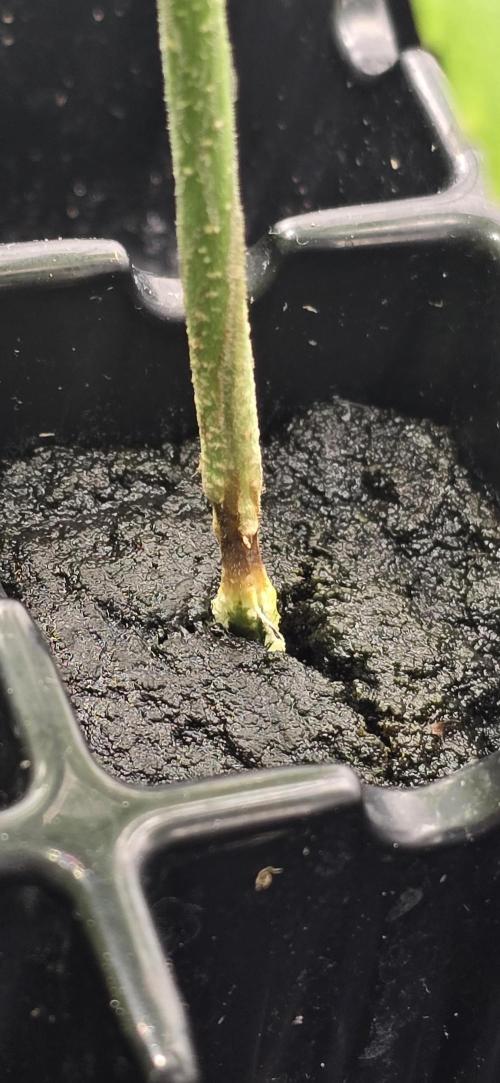
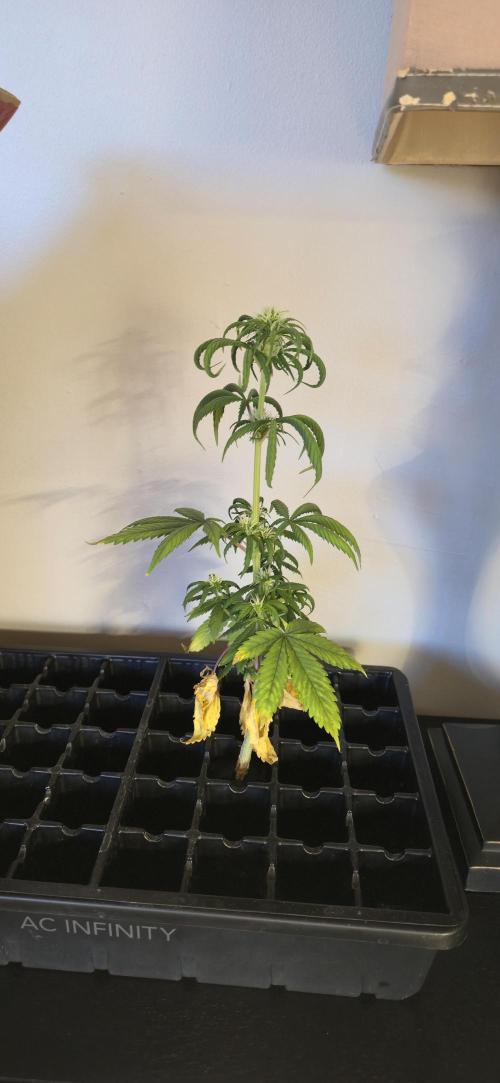
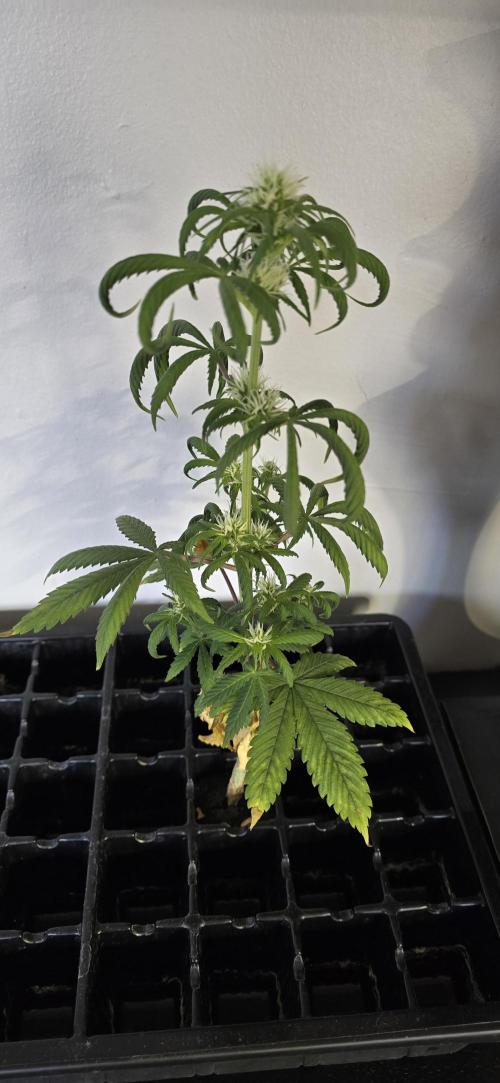
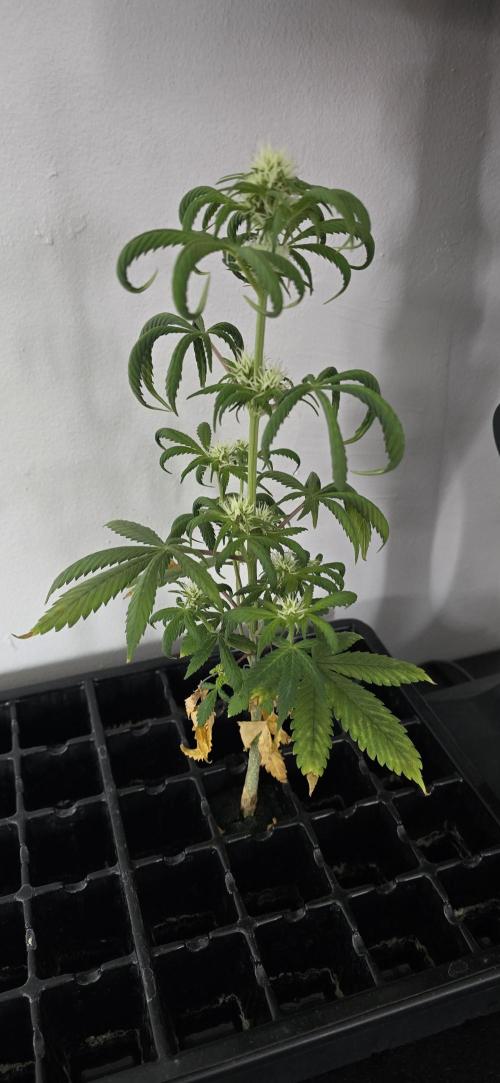
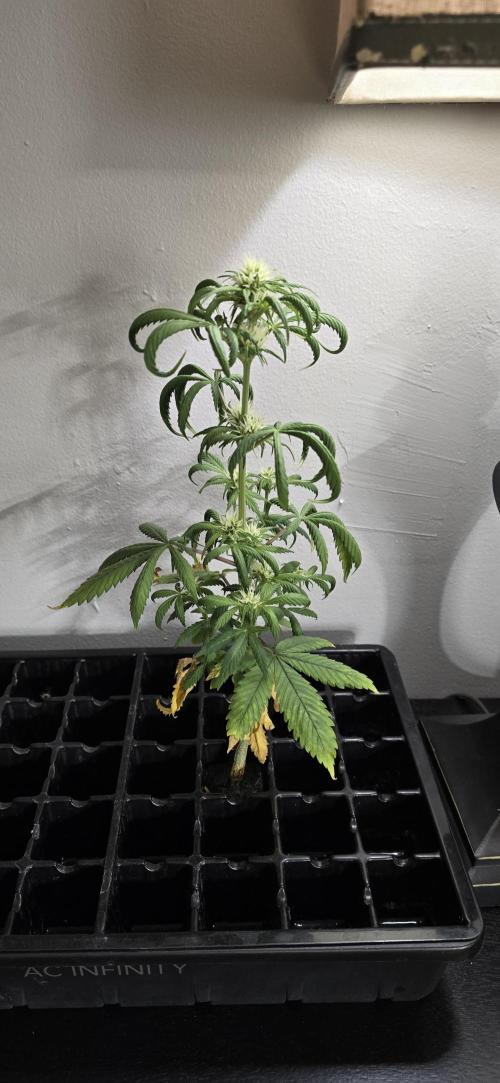
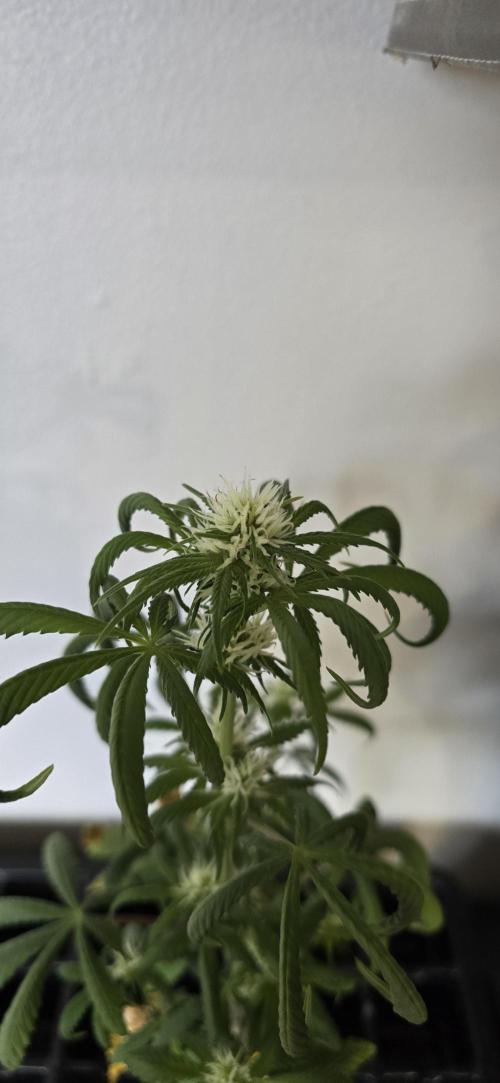
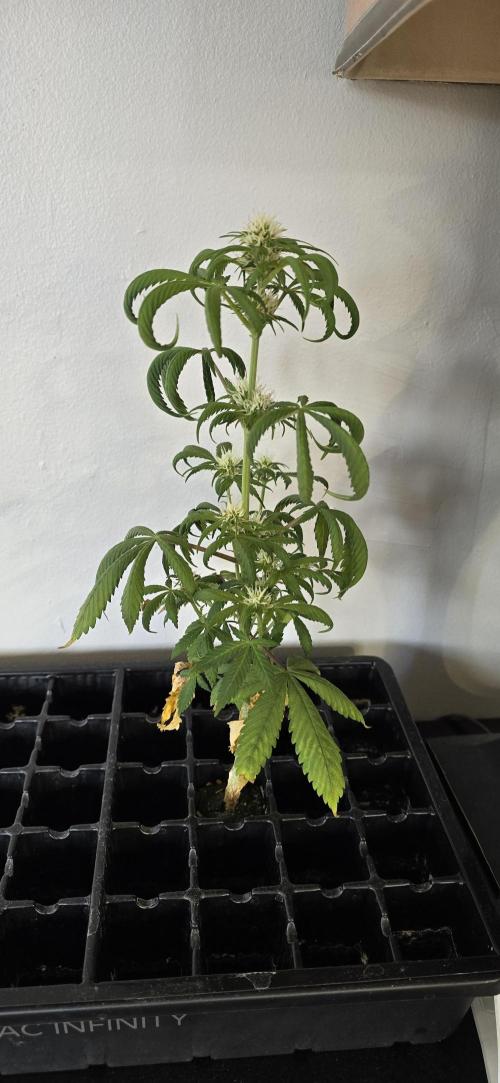
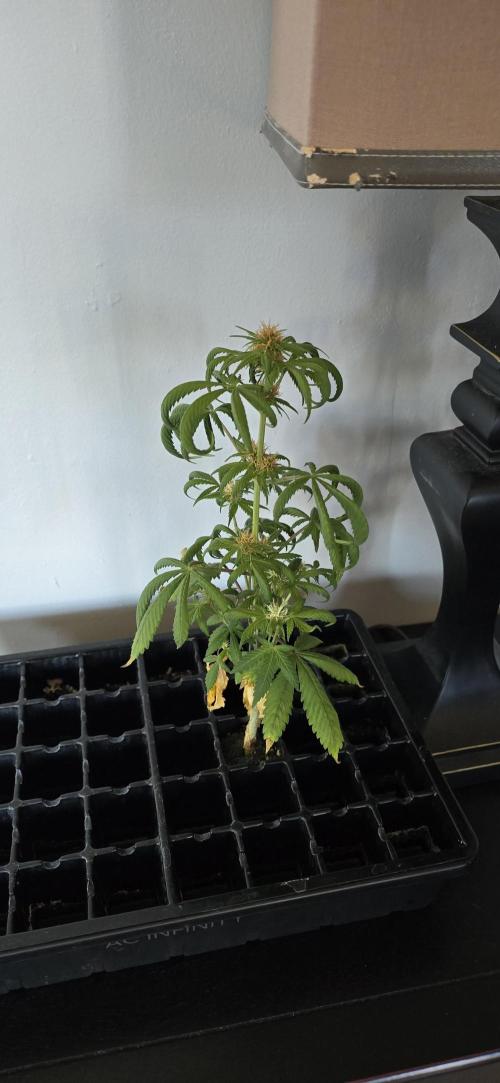
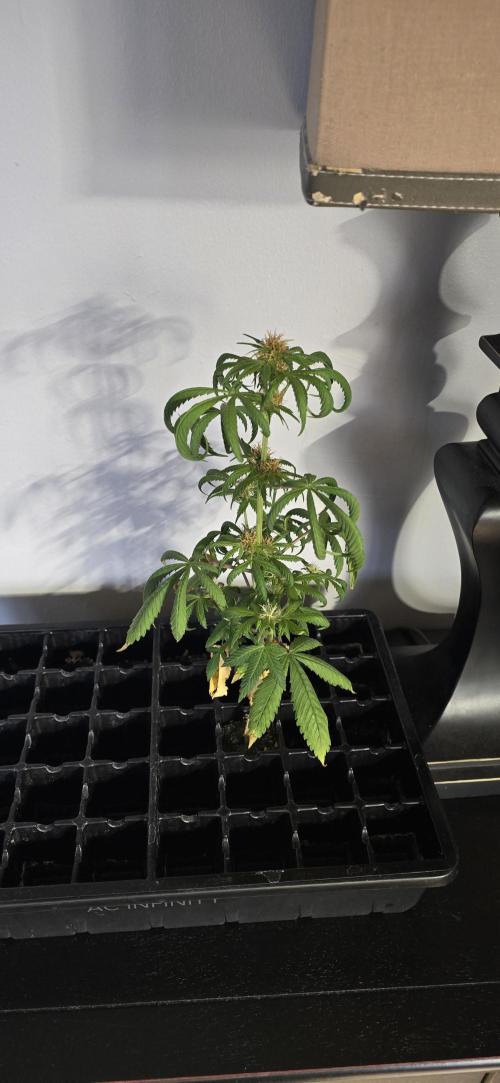
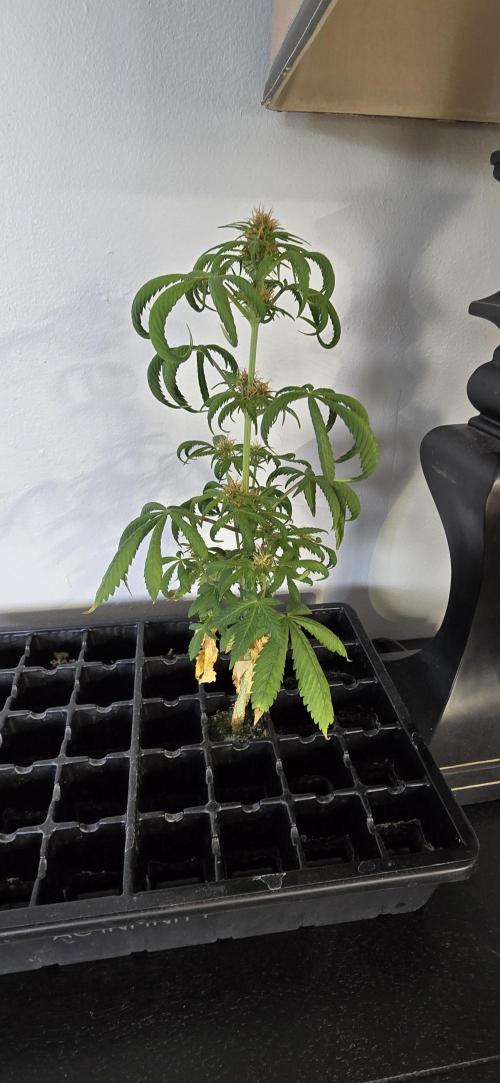
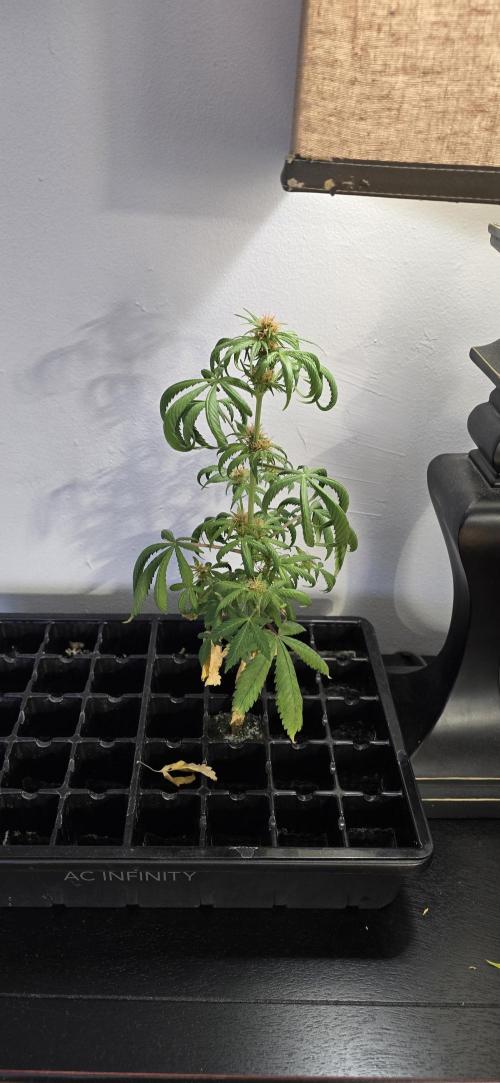
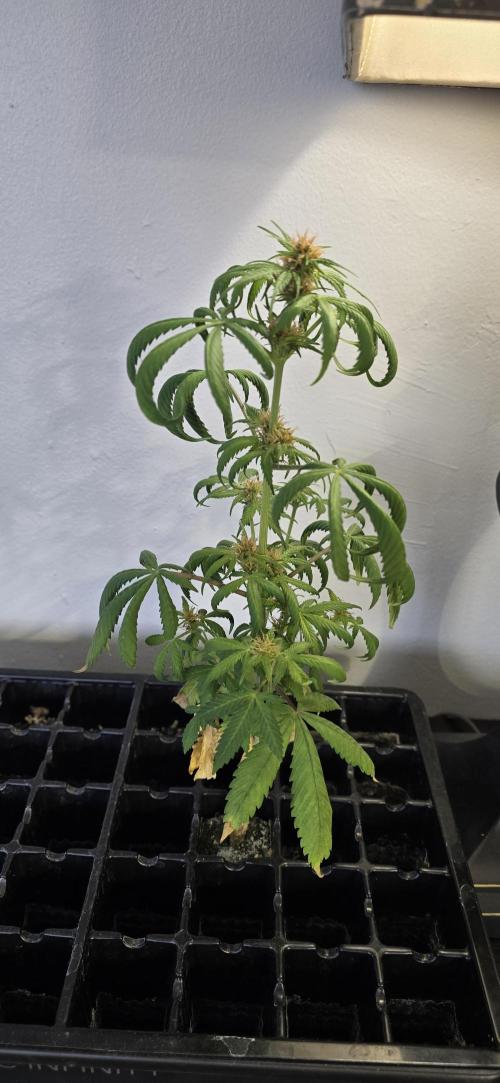
One last thing and I think it's a shot in the dark, but I have "The Other One" which is also a Papaya Cookies. If you're reading this you already know. But I haven't mentioned it. That one has what looks like the exact same problem. It was no where near the salts, humidifier or anything wet except for the tray with the water in the bottom. She has great roots for still in a seedling tray. But also has the same squeeze on her stem. Doesn't anyone find that odd? Let me know in a dm or the comments.
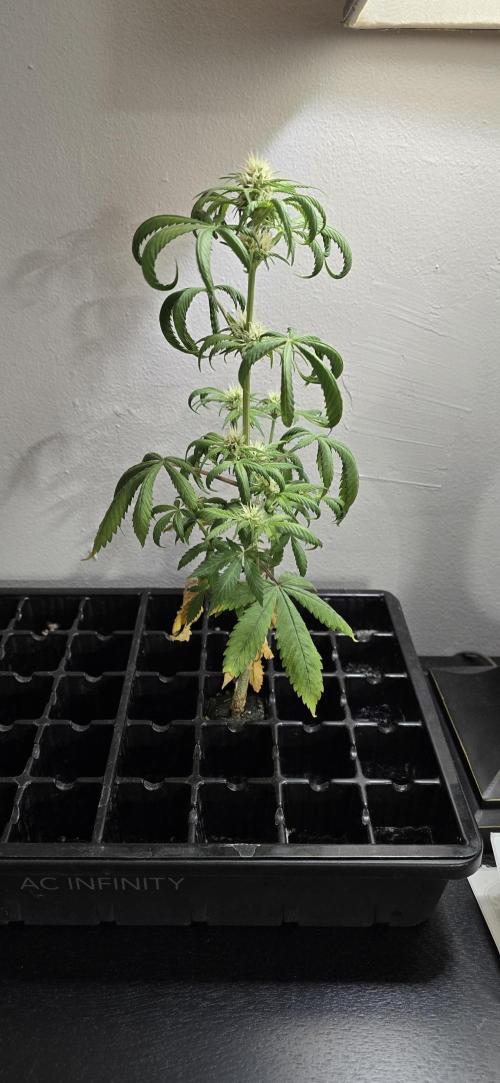
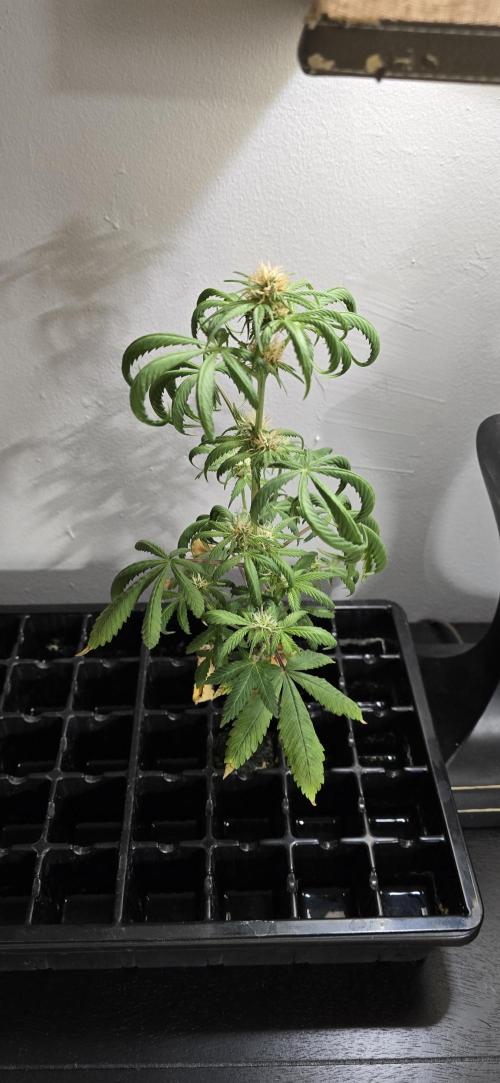
I'm keeping her alive to see what happens. With that. I mean, she has no oxygen getting to the roots, so she will die eventually. But til then, I'll use her as a reference for under feeding and overfeeding. As I've done both so far. And she's not dead! But it definitely is doing the same thing. I took a picture just now. I'll post it for everyone to see. This makes me think that the specific type of fungus is dangerous to this specific strain.
Has to be something like that. I'm gonna contact FastBuds for some insight. Again, thank you all for the help. Oh, the dying Papaya Cookies isn't dying anymore. She looks healthy except for the already damaged parts of the leaves. But nothing is spreading anymore. So I killed the fungus and the plant seems to be on the mend. I'll keep it and see what happens. If anything it's for... SCIENCE!
Back to our regularly scheduled program.
So today is a great day for Lemon Cherry Cookies. I'm not training her yet, I'm gonna wait for the scrog net I think. However, I really do want to train her down a bit. Maybe I'll do that today. Just a bit. I can't express how healthy she is. Never have I ever. And this is my first time in DWC. I think I like it to be honest. It's easier than guessing what's happening in the soil.
I bought some training clips for her. I'm not really sure how I would attach tie downs to this particular bucket system. The lids kinda seal themselves to the bucket... In a way. So there's no space to put a clip or hook. So training clips it is! I really don't like them, but I've only had experience with cheap small ones. Maybe these larger ones will do better. They're the BudClips brand. So good I guess? I haven't really seen anything else that I recognize.
So I just hung up the Papaya Cookies with some plant tie. I also took the largest 2 leaves on top. It opened up so much space and took some weight off. I know when a plant is recovering, clipping leaves is a no no, but as it stands ,she might die anyway, so why not give the bud sites a chance.
Temp: 73.1°
RH: 61.2%
VPD: 1.08 kPa
Quick update: I increased the light intensity to 450 PPFD. It was a bit too low for this stage. I think next week I can put it up to a 35 DLI. We'll see.
10/23/2025
This was a floating day for the pH. It was sitting pretty at 6.18 for the whole day and night. When dark time is over, I'll pH them back down to 5.8.
A lot of growth from Lemon Cherry Cookies. Not much upward, but who cares, she's growing outward. All I need to do is trim some leaves and tuck some others.
Papaya Cookies looks like she is mostly recovered from her infection. The leaves look great, I left 2 semi damaged ones on just in case. So I'll see what's happening with already damaged leaves and leave the rest alone for the most part. She's been tied up to the light which is maxed out in height. So she won't tip over. We'll see how she does in the coming weeks.
Both ladies are given the same mix of nutrients. And Lemon Cherry Cookies is looking fantastic. Papaya Cookies looks pretty good herself. I think next week, we'll bump the nutes up another 1/4 teaspoon. So that would be 1.5 teaspoons.
10/24/2025
It's still lights out for the next 45 minutes, so I'll just update quick and then a quick update later.
Right now, Papaya Cookies is stretching. Not fast, but still fast enough where I need to tighten the plant tie so there's less slack.
Lemon Cherry Cookies is completely perfect. I'll be upping the nutrients for sure next week. I snipped some leaves off before lights out, so technically yesterday. Just a few. A couple big ones that were pointing in. And a couple others. I also got my budclips training things. I hope the branches aren't too stiff. I could definitely have worked a couple days ago, but these things grow really fast. The only problem I'm having is tie downs. I can't use them. Not with DWC. Atnleast not with this system. It's completely sealed. As in no gaps from the lid to the bucket. Anyway, that's all for today. Our ladies are alive and kicking.
Temp: 73.6° average daily (includes lights out)
RH: 61%
VPD: 1.10 kPa
Quick update: so it's after lights out and still the 24th. But I had to share. I just did the absolute best training I have ever done. Those BudClips. So easy! Well, Lemon Cherry Cookies was a bit difficult because she was starting to really stiffen up. But I got all of it on the long run. Papaya Cookies was super easy and came out perfect. At least perfect for my experience. Lol. Best I've ever done. Too bad she isn't going to do much because of the thin stem.
10/25/2025
Good things today, good things.
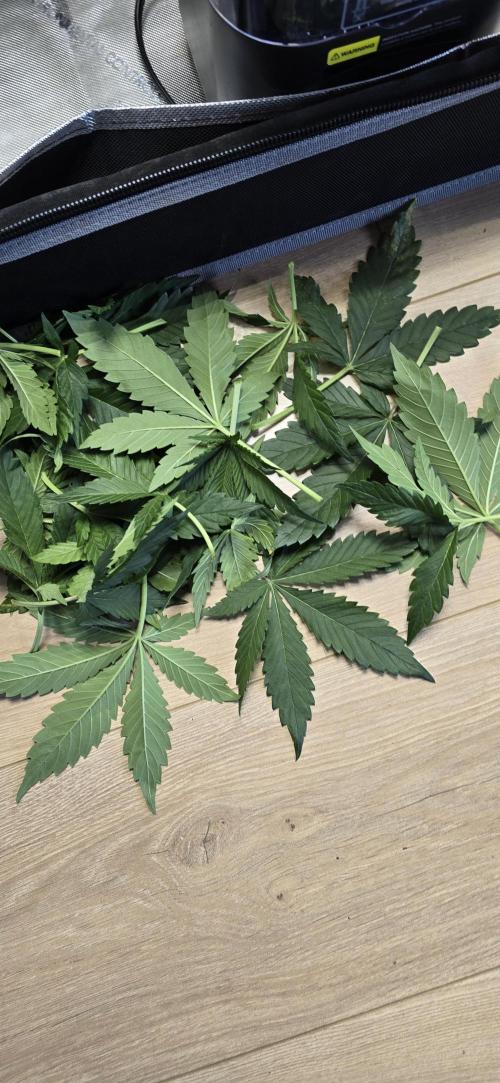
Let's see, real quick, both ladies got a small haircut today. Just freeing up a little space. Cutting the inward facing leaves and ones that were pointing straight down. Not a ton.
Honestly, Lemon Cherry Cookies doesn't look like she had much cut, but it was enough.
Papaya Cookies looks much more open, but that's because her leaves are smaller for now. She's about a week or so behind.
So training turned out to be perfect. They were both completely recovered in less than 12 hours.
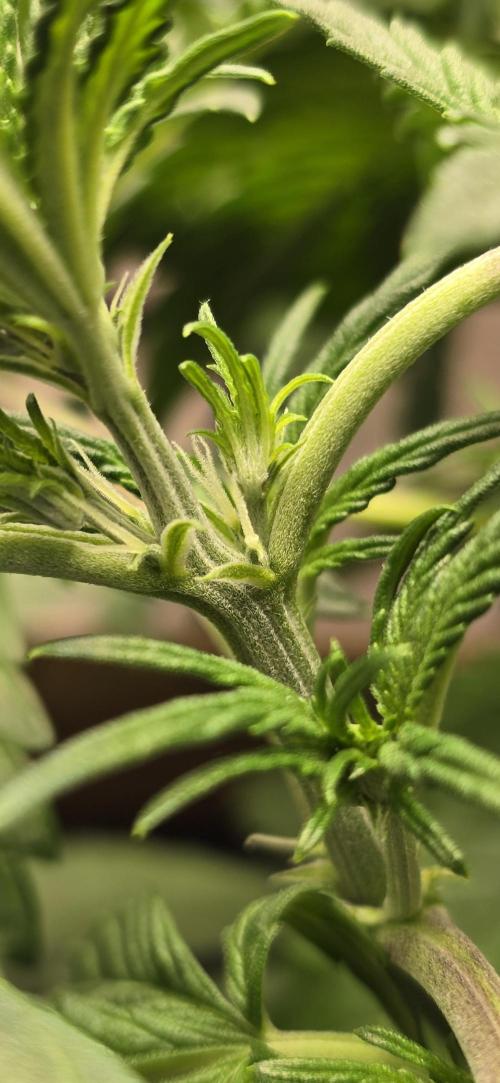
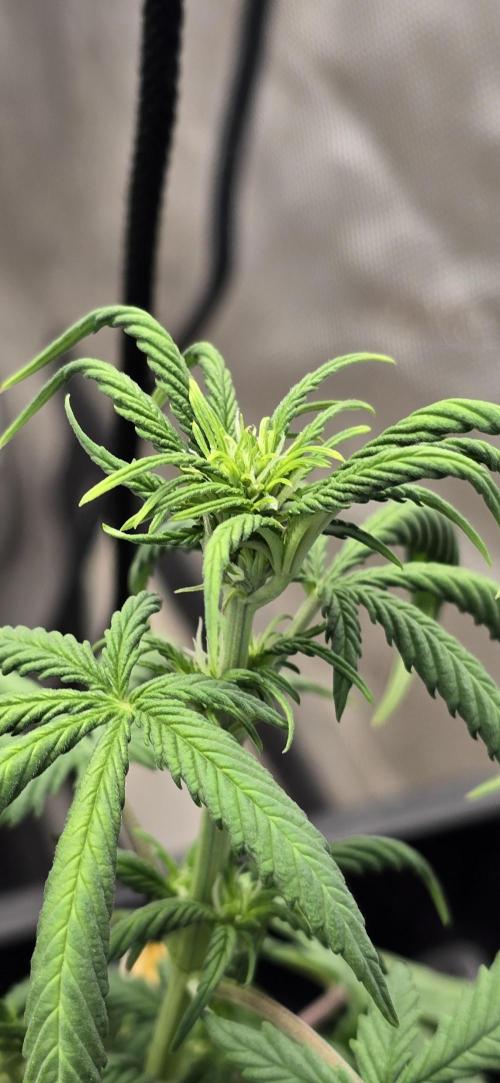
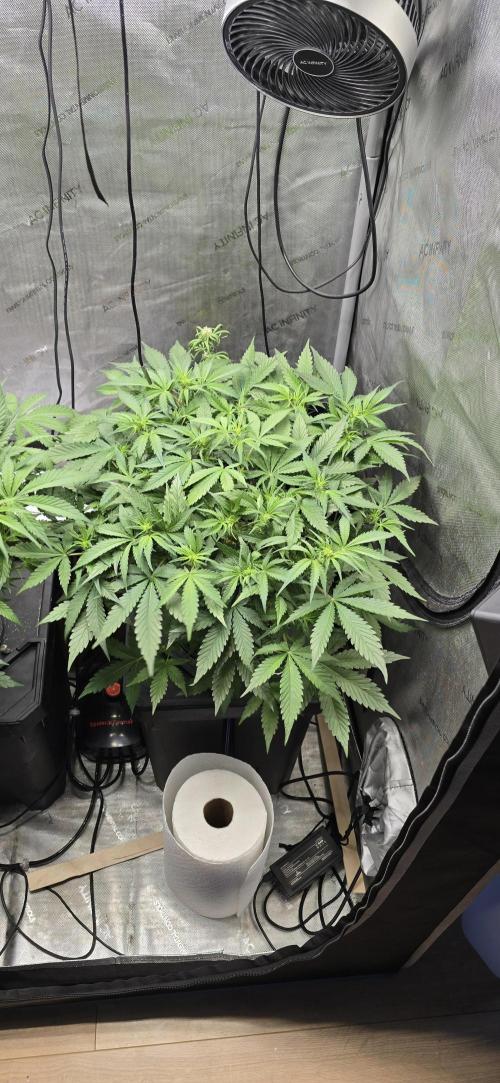
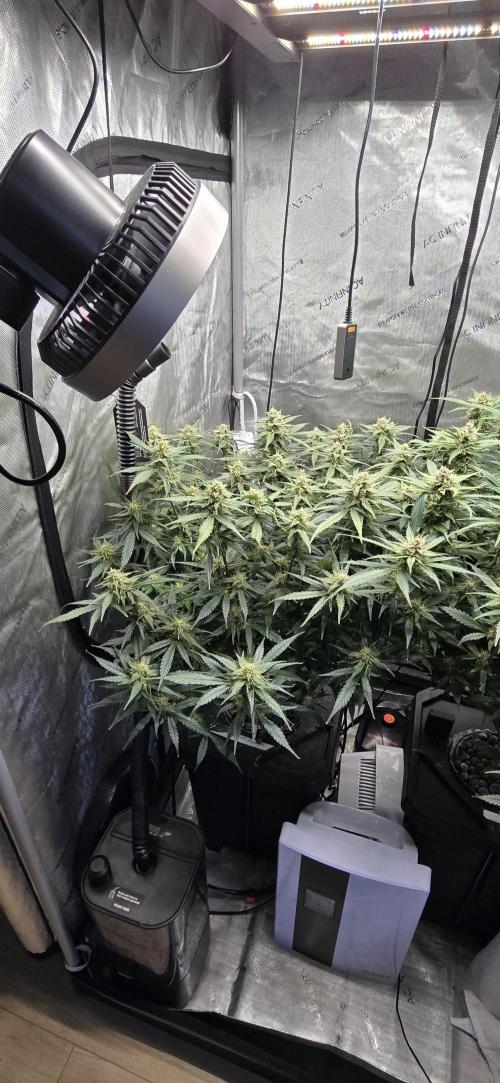
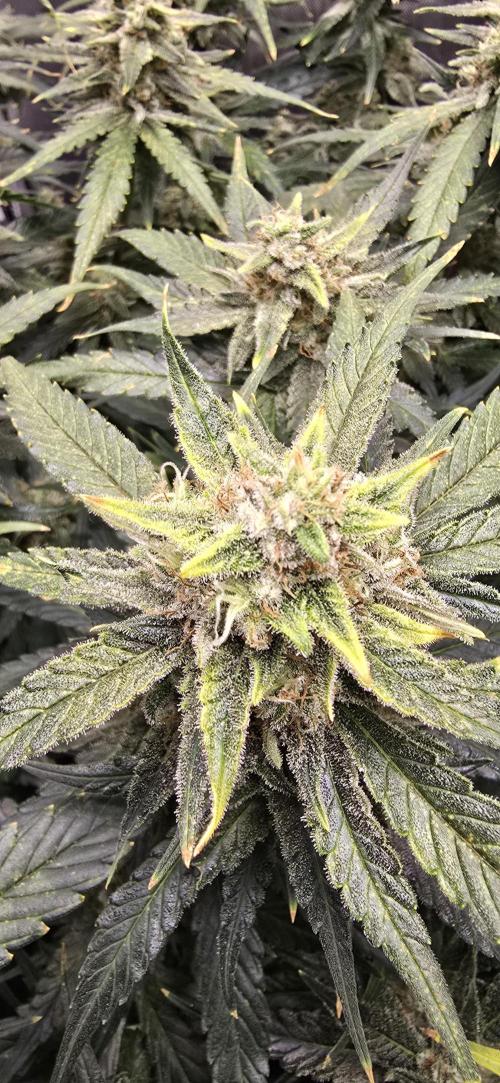
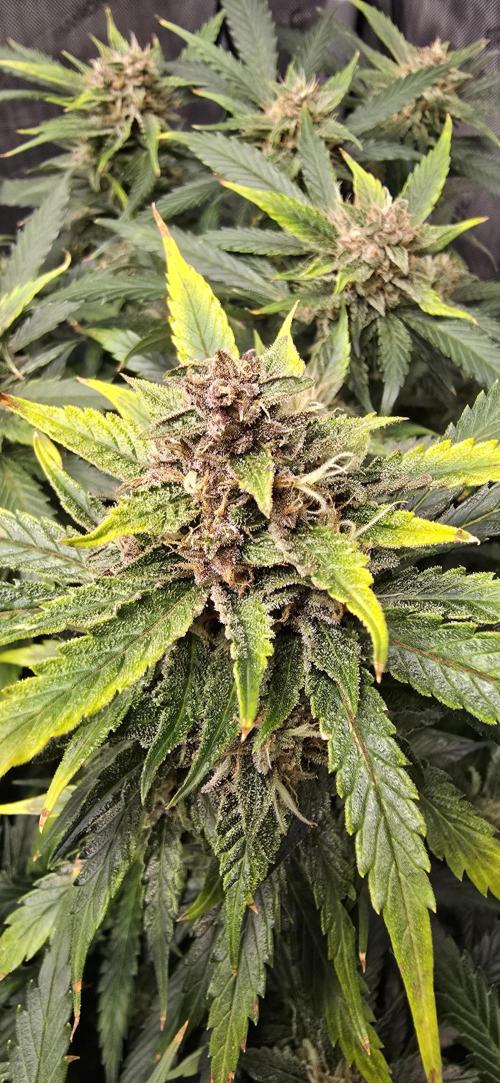
Now for the awesome news! Lemon Cherry Cookies has white pistils! Preflower baby! We might actually have an 8 week plant on our hands here.
Papaya Cookies seems to have them too, but not as prominent. I'm guessing she will follow in flower within the next few days. Maybe by the end of the week. Definitely time to up the nutrient dose.
That being said, I believe after training, we have a couple 10" plants to start the preflower transition. I'd be very happy with a couple 30" plants.
"The Other One"
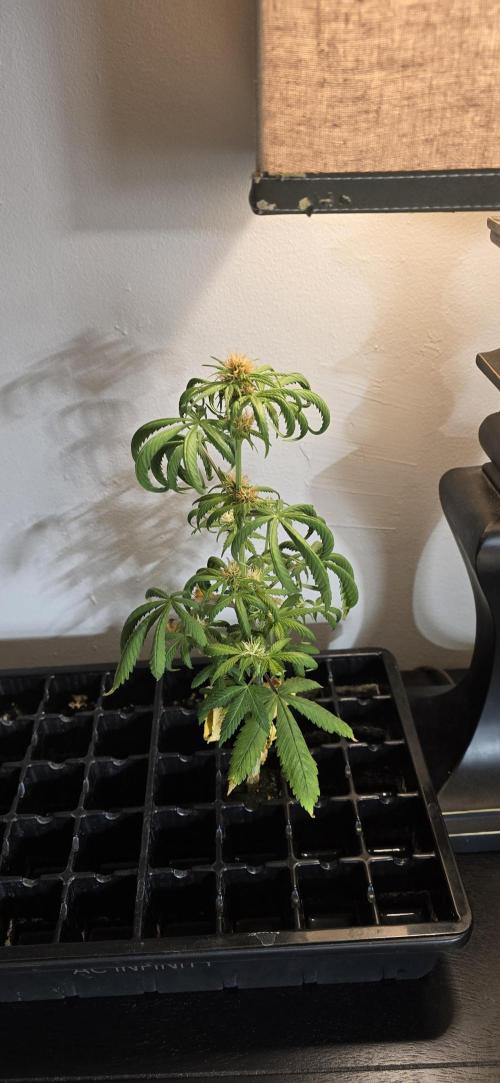
I dunno man, this plant is going to die someday. Imagine it pulls through and flowers. One big bud. Like the size of a regular cola. Pfft. Definitely not gonna happen, but we shall see.
Temp: 73.2°
RH: 60.8%
VPD: 1.10 kPa
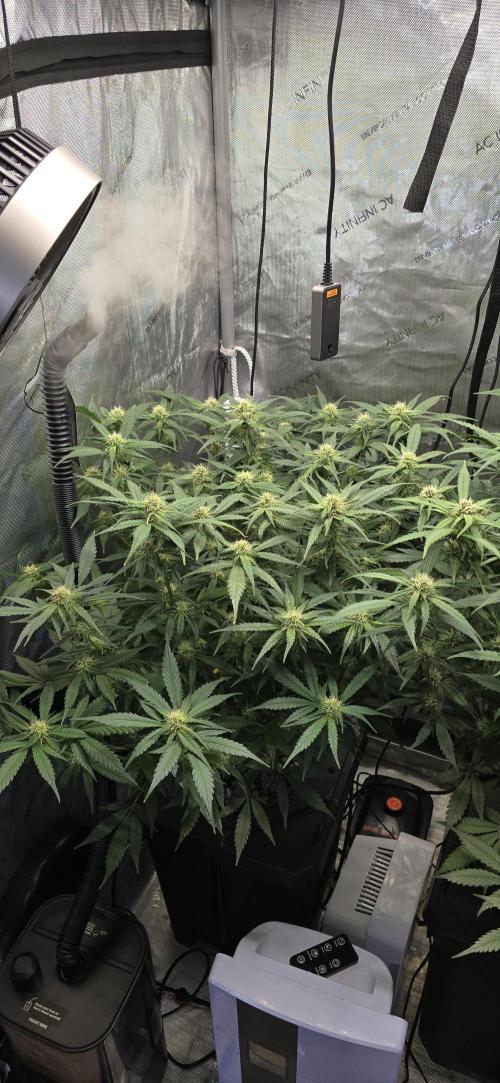
Quick pic update. If you look at the pic of Papaya Cookies stem, you can see the bottom is getting thicker as the plant heals. I think she's gonna make it.
I almost forgot a thing. So in my fungal infection question, someone mentioned that my humidifier was too close. Even though it doesn't run much, I decided to take the advice and stuck on the hose it came with and hung it about 2 ft above the canopy. From what I can tell, it's working better. So thanks for the advice! It barely ran before, but what it would do sometimes is blast fog for like 5 minutes to get the humidity back up. It's usually when I set the system to tent work. (It's a 15 minute timer where the heater and humidifier turn off and the light turns down to 1.) While I'm in there, obviously the temp and humidity drop. That could have been a contributing factor. Cuz when the tent turns back on, the heater blasts for a good 5 minutes with the humidifier dropping 8 levels of fog right on the stem. Now it drops on the leaves.
I think we have a false alarm with Lemon Cherry Cookies. I don't think she's in preflower, but Papaya Cookies sure is. Definitely. I'll get some pistil pics tomorrow.
10/26/2025
Not much today. I'll be checking pH after lights on.
I took off this tiny pathetic lowest branch off of Papaya Cookies. From what I can see, she didn't mind in the slightest. Honestly it popped off really easily. I didn't even use shears. Just a little push down and pop she goes. I hope the rest of the branches aren't like that. They'll be snapping from the weight of the buds. Lol. I also took 3 leaves off. The damaged ones from the infection. And one random huge leaf sticking out of the bottom.
Lemon Cherry Cookies looks great! She could use a little more of a haircut. But I'll wait a few days. She's definitely not in preflower. Bummer. I was really hoping for a super fast run. Well, it looks like we might have a normal run. Let's hope for an insane plant.
Can I just vent for a minutes about how annoying it is to live across from a church on Sundays. All the kids and I can't smoke a bowl yet. Damnit. I don't smoke in front of children. Damned kids coming to church and being all there and whatnot.
Oh hey, they all went inside. BOWWWWWL! BAHAHAHAHAHA
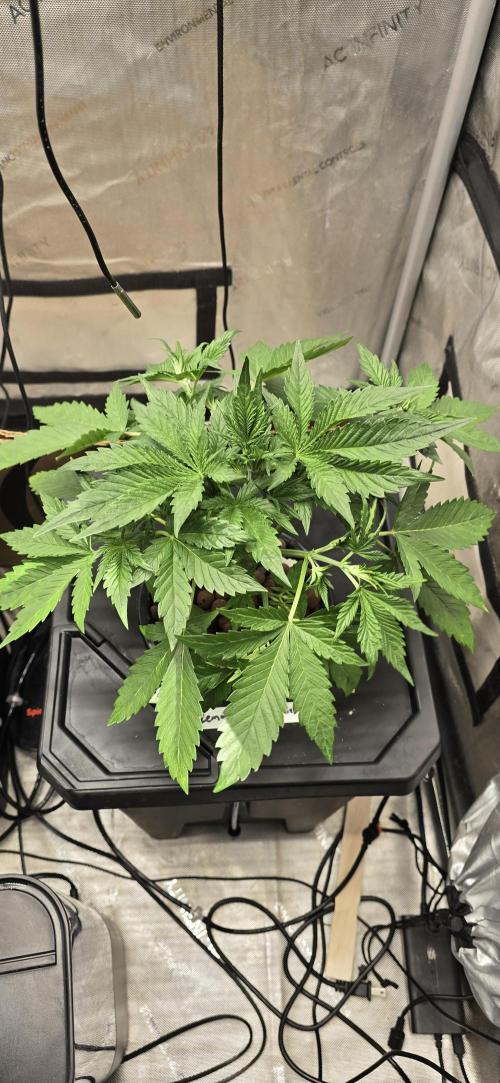
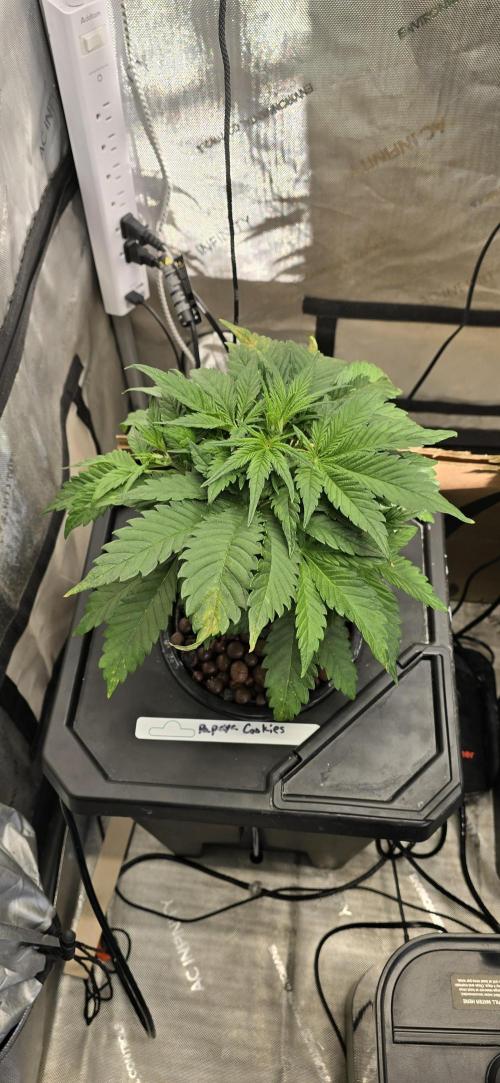
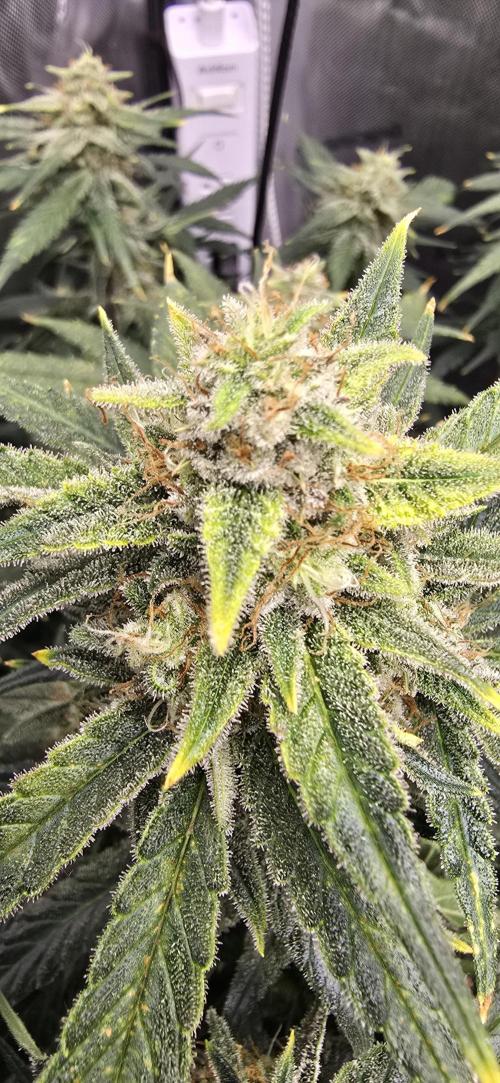
Update: I know I thought we had pistils on Lemon Cherry Cookies but not. Well they're here now. See picture. White pistils! And it starts! The race to the end. Who will win the glory of being sacrificed to the great Doobie Gods?
10/27/2025
Not much going on today. Did a little bit of extra training. Pulled the top down on the Papaya Cookies. It was starting to get way too high over the canopy.
I have this one branch on Lemon Cherry Cookies is super long. I had to train it down twice. Good things are happening!
The other one: I didn't even bother looking at her today.
Environment:
Perfect as always. The CO2 is super bouncy. I can't wait for the NEW exhale bag. Hopefully it works.
Lighting: I'll be changing the lighting tomorrow with the new week in Flower. Currently the light is topped out on the ceiling. I'm pretty sure I can take the tethers off if need be. Anyway, I'll be increasing the light intensity tomorrow as well. All the way up from 9 to 10. Hahahaha. I might have to drop the light. But we shall see.
Nutrients: I'll be adding some bloom nutes and backing off the grow nutes. I think I do this for 2 weeks starting tomorrow. It's perfect timing. I need to swap out the water, add new nutes and change the lighting. What a start to next week.
Anyway, to wrap it up. We had a very good week. Both plants are healthy and happy. Even Papaya Cookies. We had some good growth, some perfect training and a super light defoliation. All is well. Welp, see you next week on the flowering side!
2 likes
3 comments
Share
Used techniques
LST
Technique
Defoliation
Technique
5
Week 5. Flowering
2mo ago
1/14
30.48 cm
Height
18 hrs
Light Schedule
24 °C
Day Air Temp
5.8
pH
Weak
Smell
920 PPM
TDS
60 %
Air Humidity
20 °C
Solution Temp
20 °C
Substrate Temp
20 °C
Night Air Temp
26.5 liters
Pot Size
0.95 liters
Watering Volume
68.58 cm
Lamp Distance
1100 PPM
CO₂ Level
Nutrients 4
Lotus Grow
0.98 mll
Lotus Cal/Mag
0.33 mll
Bloom
0.98 mll
Prilyfe13 10/28/2025
What a day! We have started the Bloom Nutrients, cleaned out the reservoir... To be honest, I don't know what people are talking about with dirty things. My whole bucket was super easy and fast to clean. Frankly it really wasn't dirty at all. Kinda like reusing a cup. Nothing wrong with it. Just had something else in it. Anyway, quick and easy.
I used distilled water. 4 gallons per bucket.
I think my TDS meter is broken. Either it's really that high or these plants love it, but the reading is 1020 ppm and the EC is at 2000. That's really high... I think. I have no idea. I've read that people couldn't get over 300 ppm without burning their plant. While I'm at 1020 ppm. Something is wrong here and I can't figure it out. I've watched them like a hawk for the last 5 hours. And they look super happy and healthy. Not a single sign of toxicity. Just follow the instructions. Lol. So why am I looking at numbers that should burn them? Maybe I'm wrong. But I think they can just handle it. No idea how, but these are tough plants. I'll update with any signs of stress.
Anyway, moving on. Ahem...
So I definitely need to do another clip traing on Papaya Cookies. Not really sure if Lemon Cherry Cookies needs it. I'll see tomorrow.
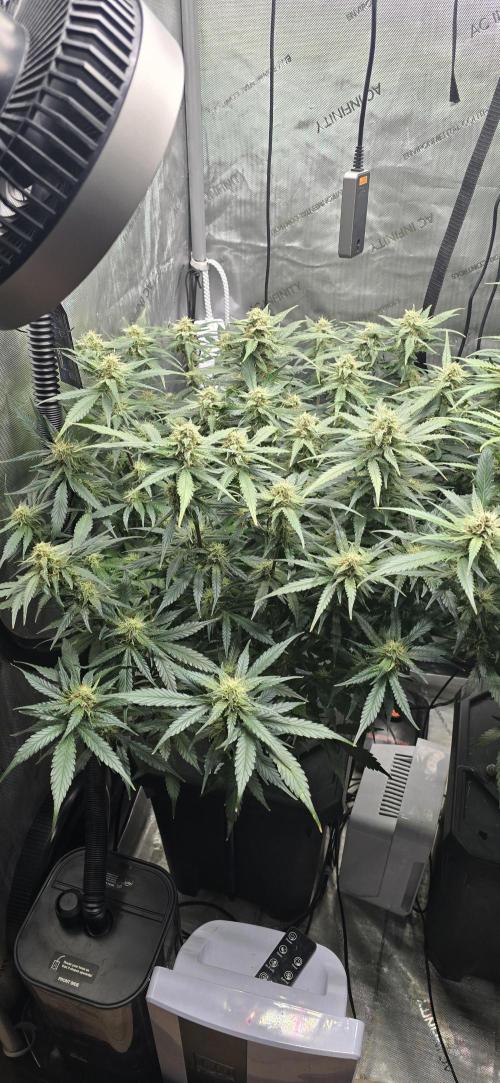
Also, these 2 are finally showing real traits of what they are. Papaya Cookies is definitely sativa as the description says. Like seriously sativa. Thin leaves, skinny branches. At first I thought it was the stem issue, but then I realized that this is what it's supposed to look like. Skinny but strong. Anyway, she is starting to grow too tall in the middle, so I need to pull down some branches with those clips I got.
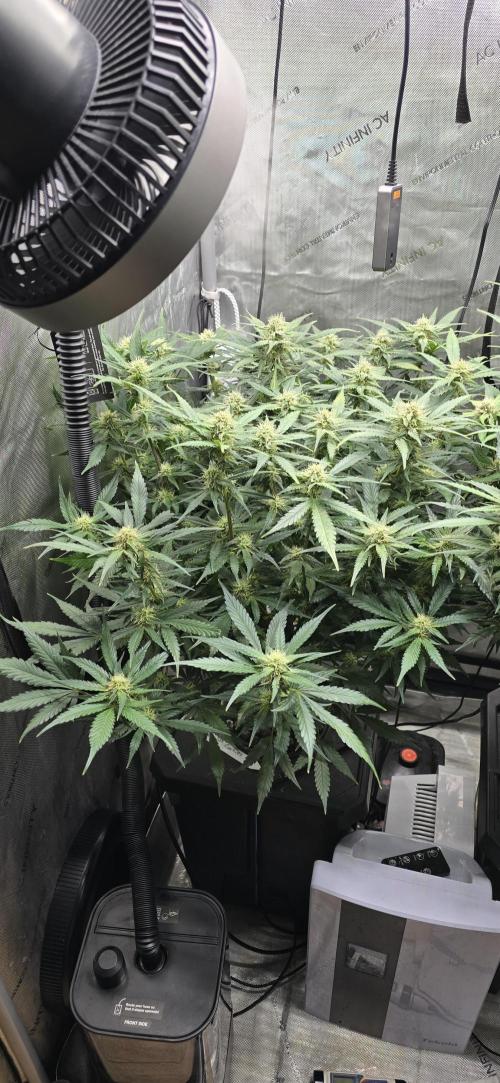
Lemon Cherry Cookies is certainly showing her indica traits. Wide leaves, bushy stature. Thick strong branches. Beautiful green color. (Papaya Cookies leaves are much lighter.)
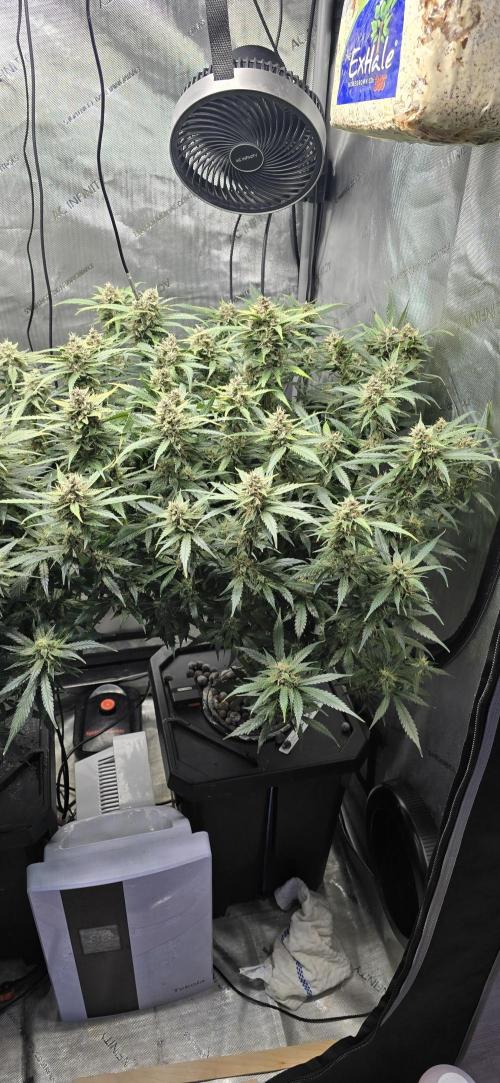
Lighting: 27" away from the canopy. Power 90% 278 watts. 615 PPFD I might have to dim the light a little when they grow closer to it. Maybe. It all depends on how much higher I can get the light up. I think there's 8 inches of space between the light and the ceiling. I'll figure it out.
The environment is still perfect. The humidifier and heater barely run. And if they do, it's like level 1 or 2 of power. Not much going on in there to change the environment. But I did get my new exhale 365 bag. It's supposed to take a few days to get going, so we'll see what it looks like in a few days. The CO2 level is around 900 ppm. I'd like it a bit higher, but it's ok.
I don't think I'll record the environmental readings. They are generally all the same. And it's honestly getting a bit redundant. Especially when they are already recorded in the list thing.
See you tomorrow.
10/29/2025
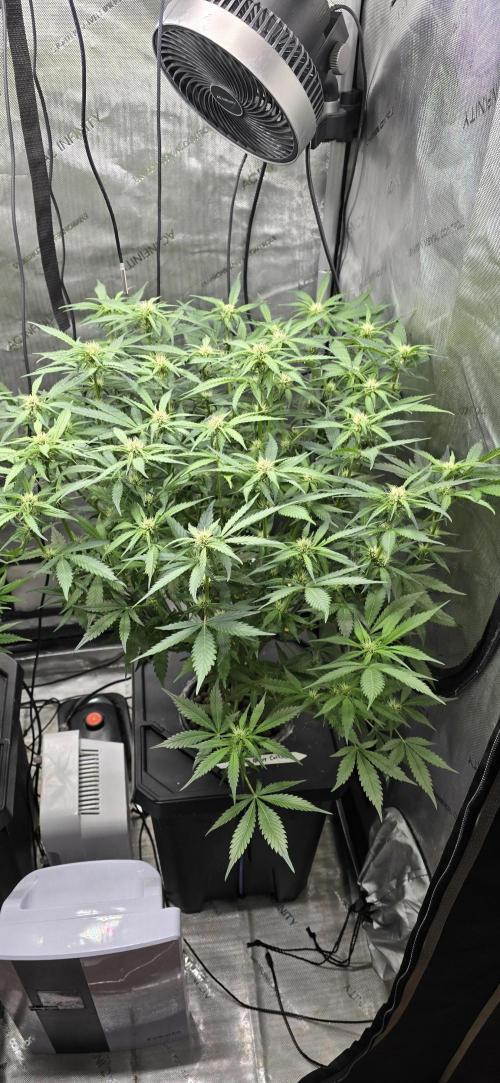
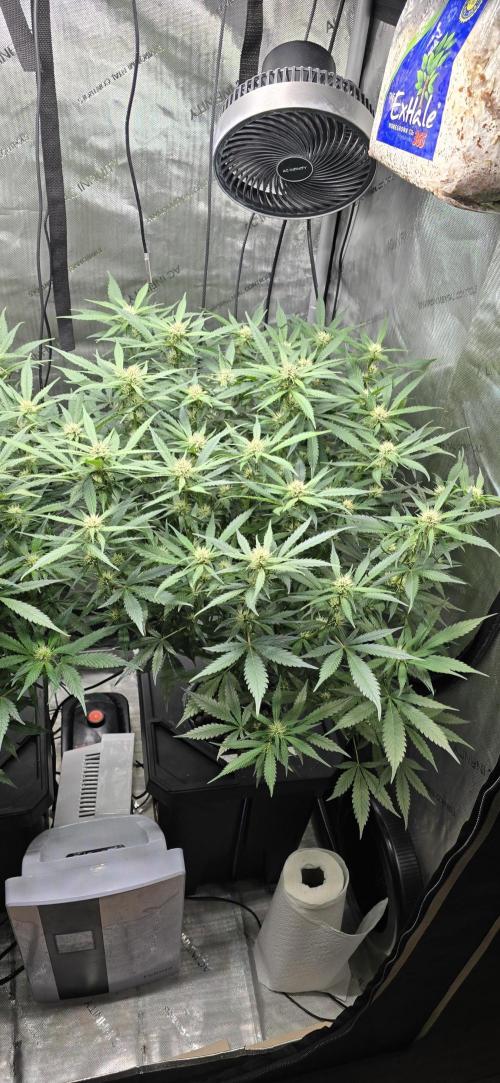
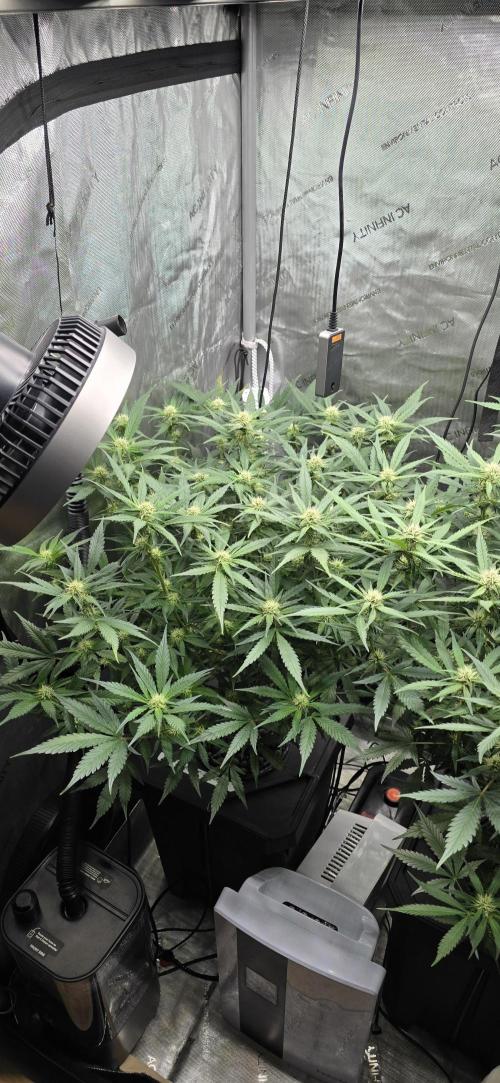
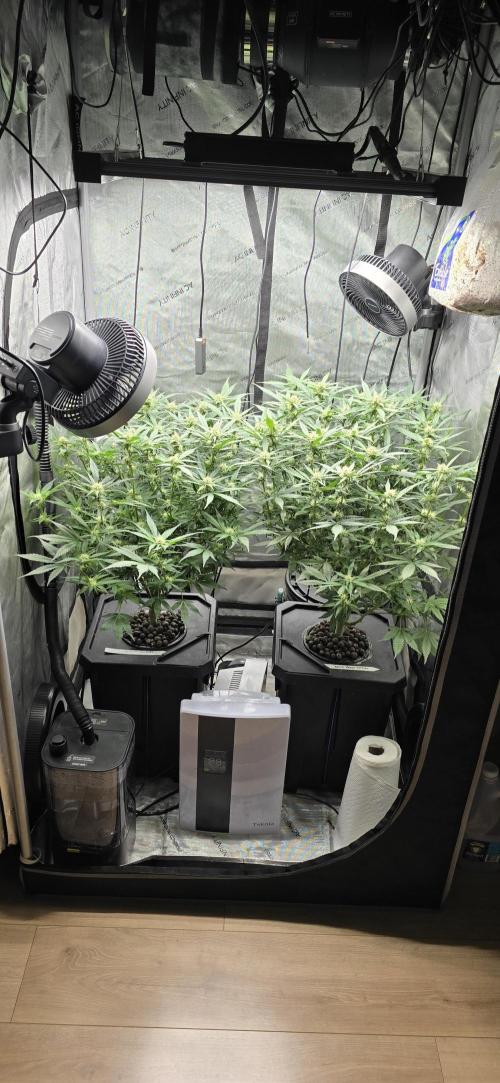
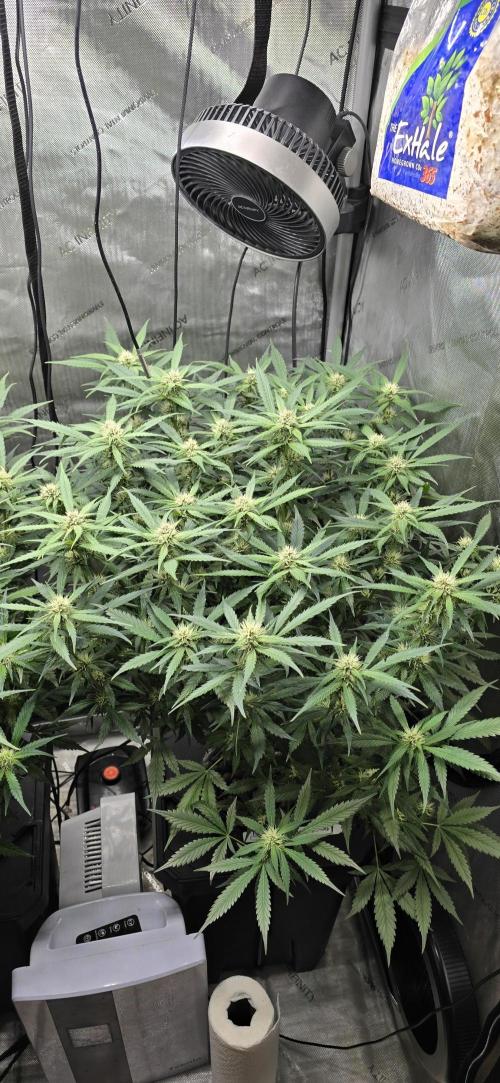
No picture day. I assure you they look wonderful. Both plants are starting to show buds. They should start stretching any day now. Each of them is 12". Very green, very healthy.
I'll have to pull down 2 top branches on Lemon Cherry Cookies after lights on. Just 2. They are sticking up too high above the others. Also, it'll help fill in a hole in the center of the plant. Still looks pretty bushy. That's nice.
Papaya Cookies looks awesome! Even after her little infection. Definitely stunted and I would have expected her to be taller than her counterpart. But she isn't. However. That's not stopping her from producing tons of bud sites. I may have to go with the scrog net after all. Unless she hardens up and can hold the buds. I don't think so. I'm gonna have to use the net as a support.
Lighting:
So I lowered the light to increase the DLI currently it's sitting at about 42.5 mol. The PPFD is around 630. Something like that. I'm going to double check when the light is at full power. I was going to increase the intensity to 100% but I decided I should wait a few days since I lowered the light. I'll get a measurement after the lights turn back on. Honestly, my goal is to have the light as high as it can go with max intensity. I'm not sure I can actually do that with this 300 watt light. I also have the CO2 exhale bag I can consider soon enough. If it works as they say, I can probably increase the DLI to 50 mol. We shall see.
Environment:
There's actually something to talk about. So I live in an apartment converted from a house. There's a total of 3 apartments. Someone, not me, cranked the heat this morning and the tent hit like 78°. I know it's not a lot, but still not within my precision mastered range. Lol. Hell, my AC isn't doing the job. The lowest it's been is 71° in the house. Back up to 72° but yah, in the house it was like 75°.
Anyway, that's it for the day. I'll check in later with any changes.
10/31/2025
I'm sorry everyone. I've been super busy the last couple days and didn't have time to add to my plants adventure tale. So I noticed at light level 9, the plants were praying pretty hard. I thought to myself well then a bit missing light. So I turned up to max level 10. Watt output is 310 watts. I don't remember the DLI, but it's like 44 mol. Anyway, I checked on them about an hour later. They were still slightly praying, but that's good. It just means they needed a bit more light. I'll keep an eye out for light stress. Also, I think I figured out a thing. Cannabis grows trichomes when it is stressed out as a defense mechanism, no? As in a strong aroma coming off in the veg stage. Isn't that a sign of stress. In particular light stress? Obviously when flower hits, it will smell from the flowers. But as a vegging plant, it should smell like a leafy green plant and not strongly of trichomes. It's just a theory, but could be useful if I'm right.
To summarize, veg stage should smell like a plant. Flowering should smell like weed. And as it's known. It builds trichomes to protect against light stress and a few others I can't think of at the moment. Wind burn too I think. More like environmental stresses. Something the plant would have to protect itself against. If you have an idea in regards to this theory, I would be glad to talk about it. Send a comment and we can maybe start a discussion.
Anyway, I let the pH float yesterday. Today it was dangerously close to 6.5. I don't understand why it increases so much. It doesn't swing either. Just spikes. It's seriously annoying not knowing why. I will learn thos somehow.
Back to 10/31/2025
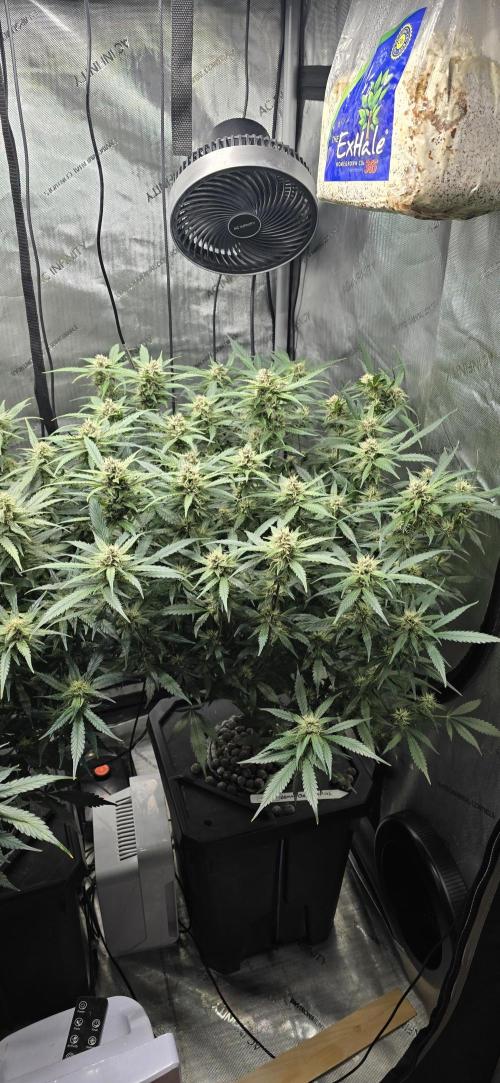
Happy Halloween everyone. 🎃
So today I will be taking some of the training clips off. They are starting to get too small for the bigger branches. I'd like to take them all off now, but I have a lot of small branches that need to be woody and thick. But yah, all of those are coming off. I've also decided to see if the light at 90% will still cause major reaching. And if so, maybe I should let it be. They can stretch right into the light. Or I'll leave it at 100%. I'm not sure yet. Any suggestions? Feel free to comment on that no matter how old this diary is.
The temp seems to be perfectly ok, but the humidy is starting to climb with the plants getting bigger. So it's dehumidifier time. I'm planning on buying the AC Infinity one that connects to the system. But I have as small one for now. Environmentally speaking, everything is going great! Not too much wind, decent air exchange and bouncy CO2. Not sure how to fix that. I was considering routing the end of the exhaust duct back into the tent. I think I will. When I get these vent port caps. They are light proof but also provide air exchange. So I was thinking of taking the duct. Sticking it in the top vent port and letting that air flow through. If it works, I should have plenty of CO2 in the tent, the temp should stay pretty constant as well as the humidity. Well, kinda. The dehumidifier would have to work double time, but the other accessories, like the heater and the humidifier won't need to run as much. And considering this AI is keeping my tent spot on, I'm guessing spot on to spot on would make a perfect mix. We shall see. I have to wait a week or so for the port covers, which sucks. Because this is the very beginning of flower and I would love for the CO2 levels to be in the 1200s. I think.
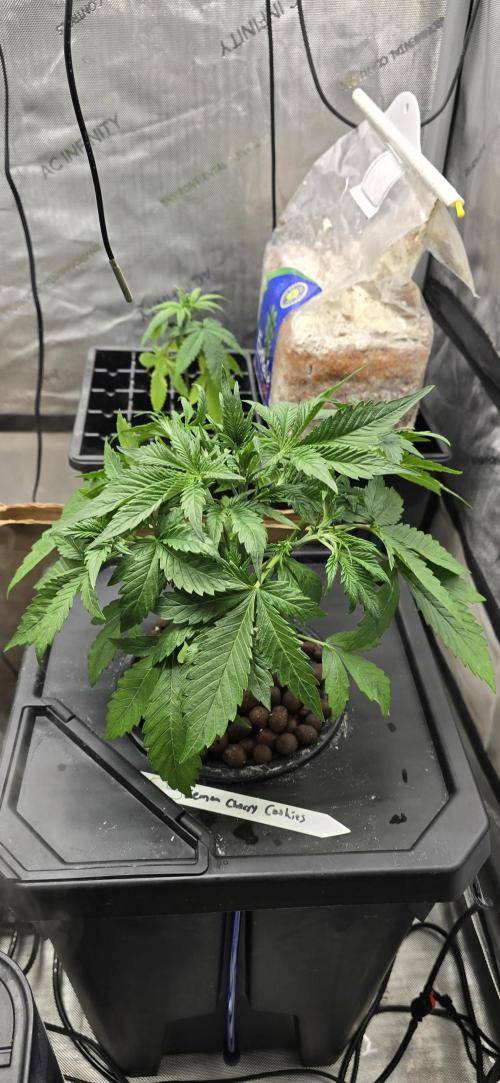
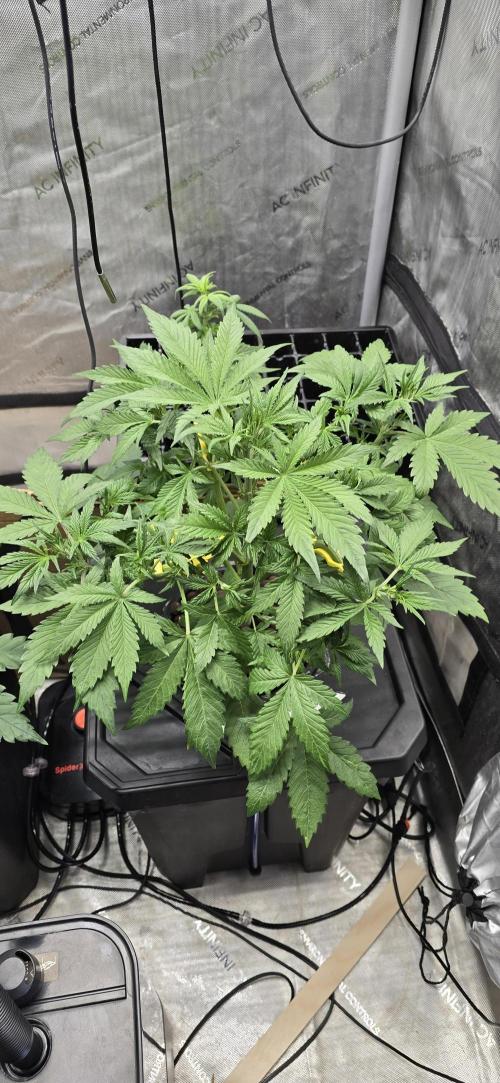
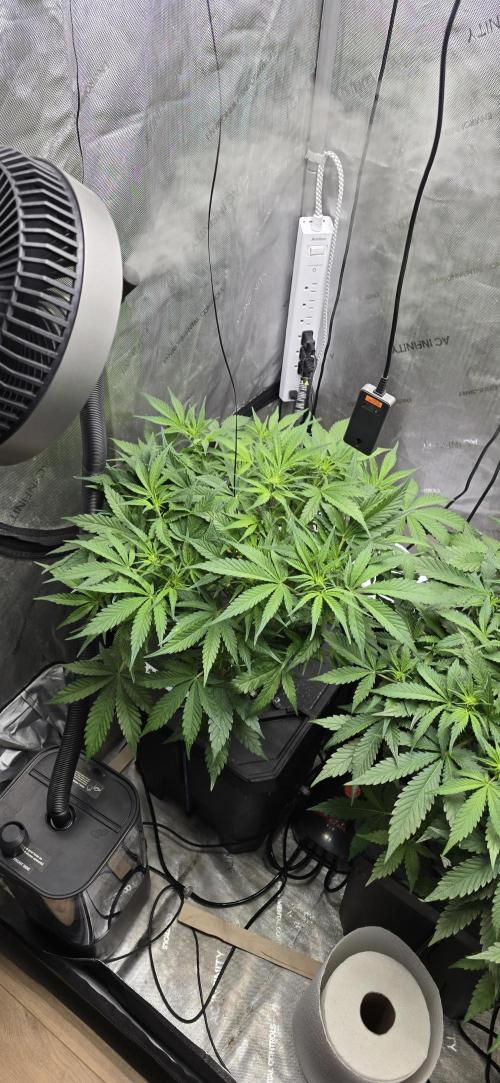
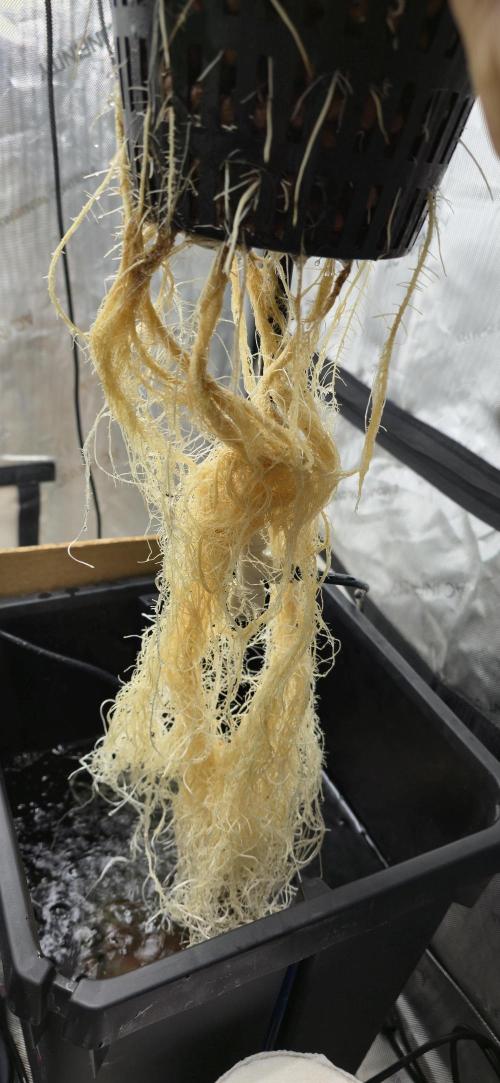
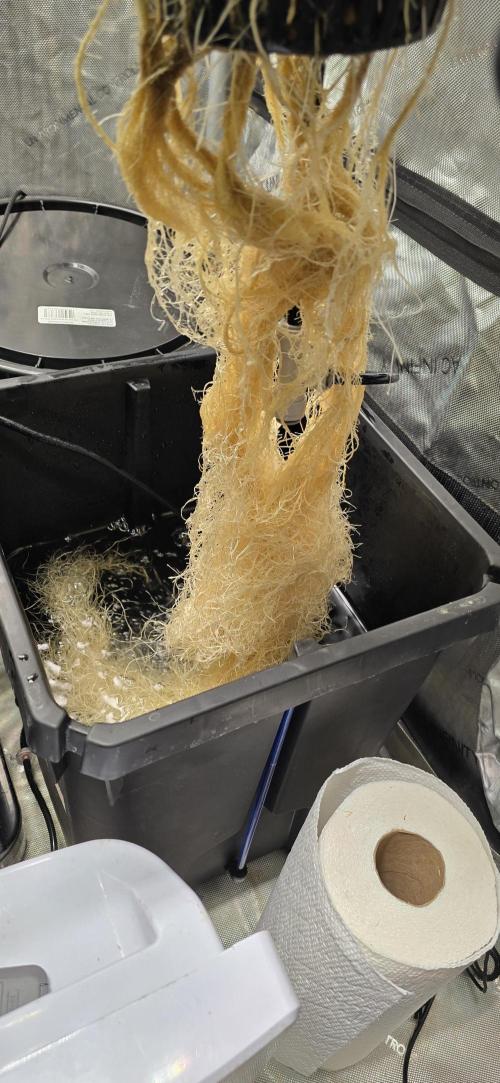
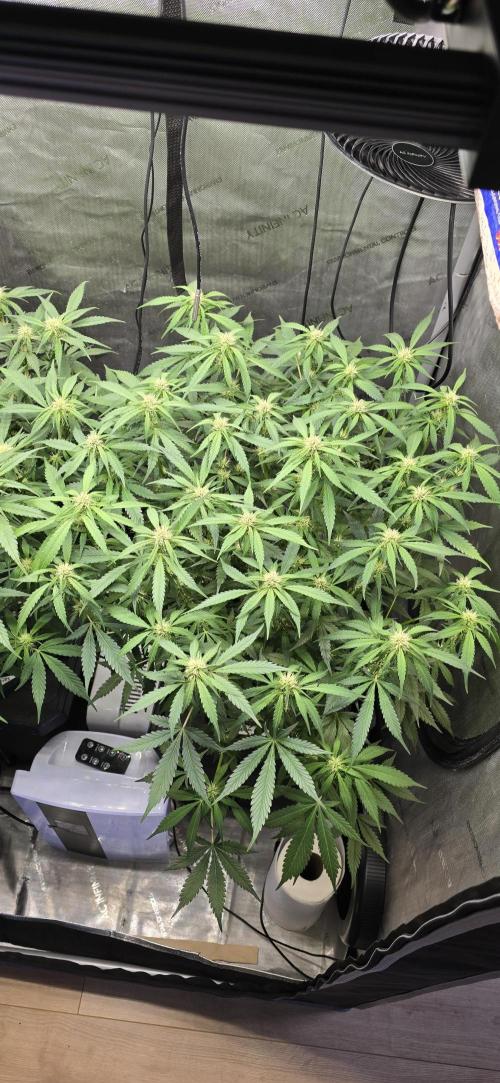
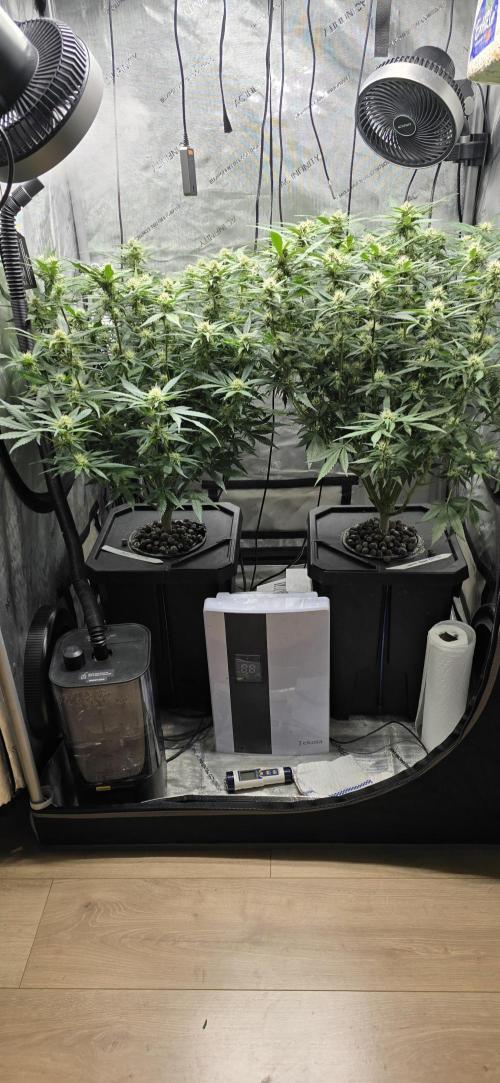
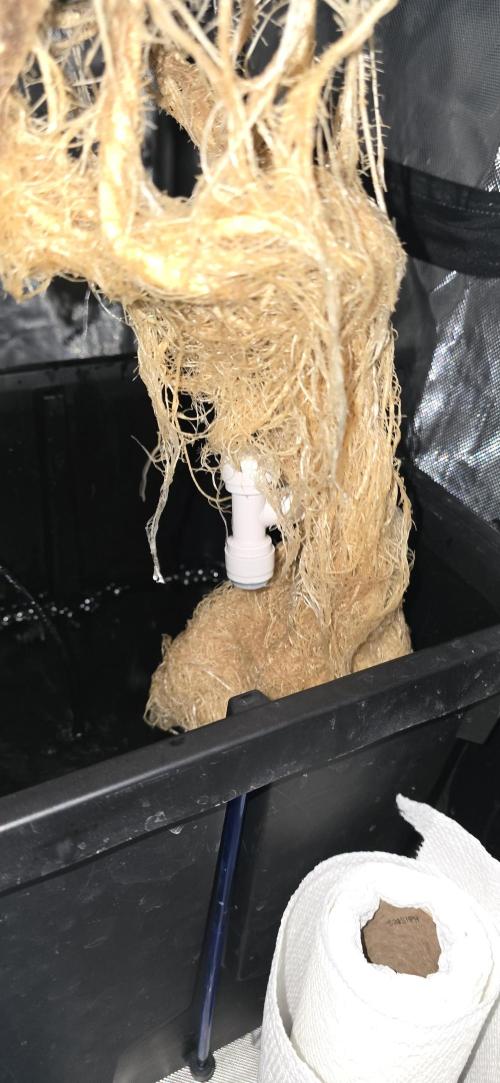
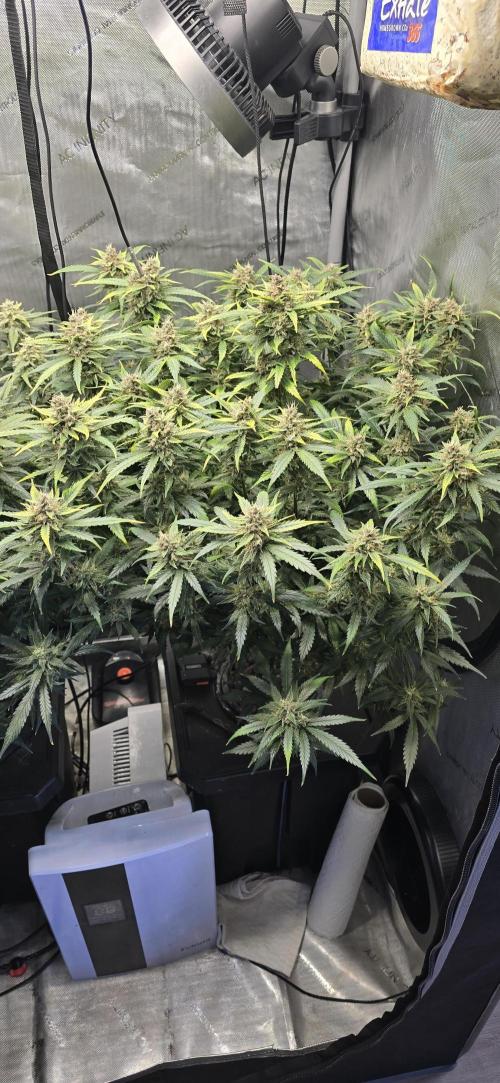
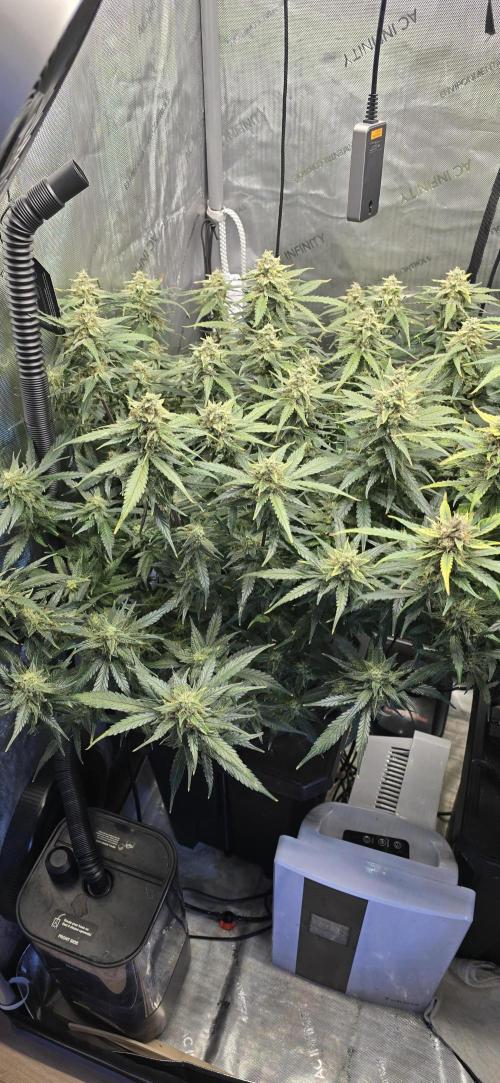
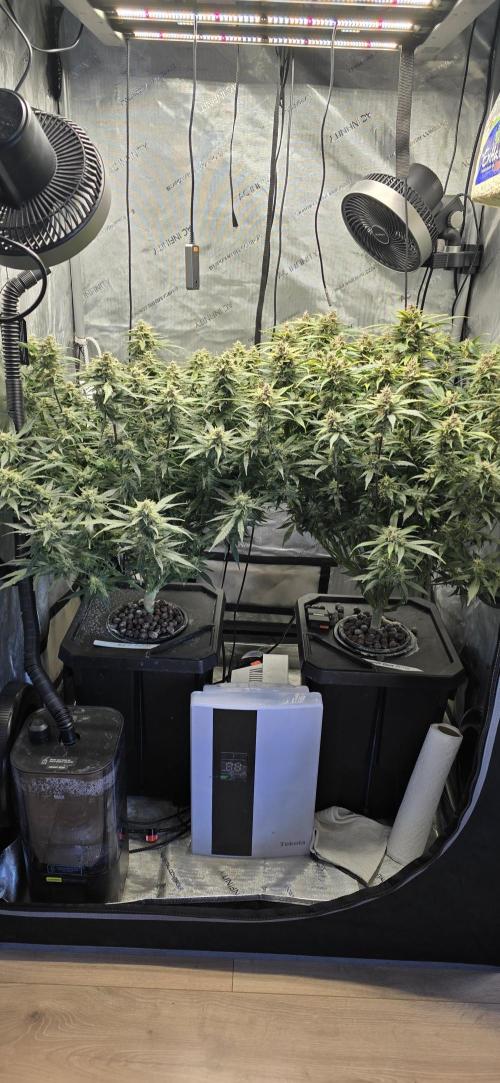
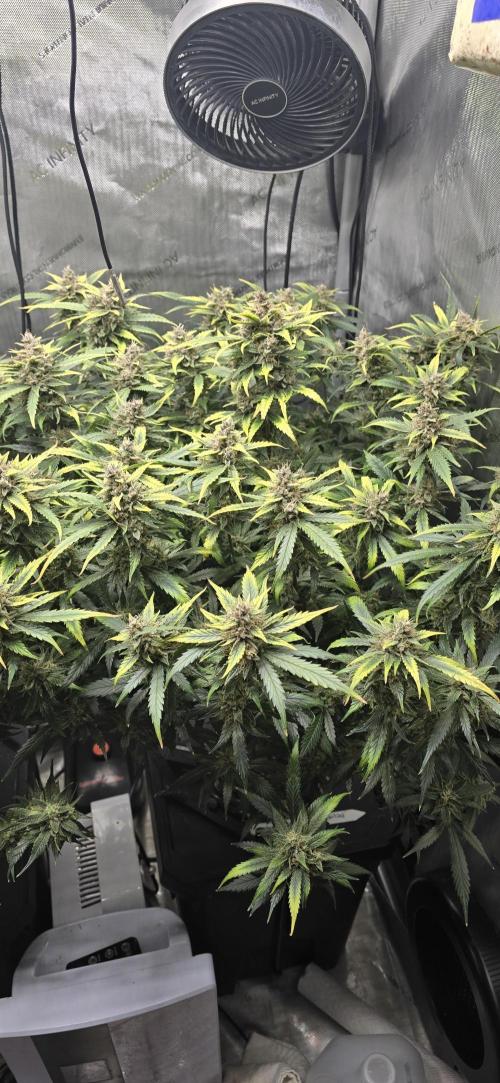
Lemon Cherry Cookies looks absolutely wonderful. Lush broad leaves. She'll definitely need a trim at the end of the stretch. Speaking of stretching, she hasn't done much of it. Like an inch or so. Not sure what I'm doing wrong or if I'm just being impatient. But I have had plants with the greatest care only get to like 18" tall. This Lemon Cherry Cookies looks like it might be one of those plants. Super bushy, but really short. Trimming after the stretch should open up some much needed air space. But as I said the leaves look great! No signs of any issues whatsoever. And the root ball! It's huge! I can't take pictures because I have to hold the lid up. Believe me, it's big.
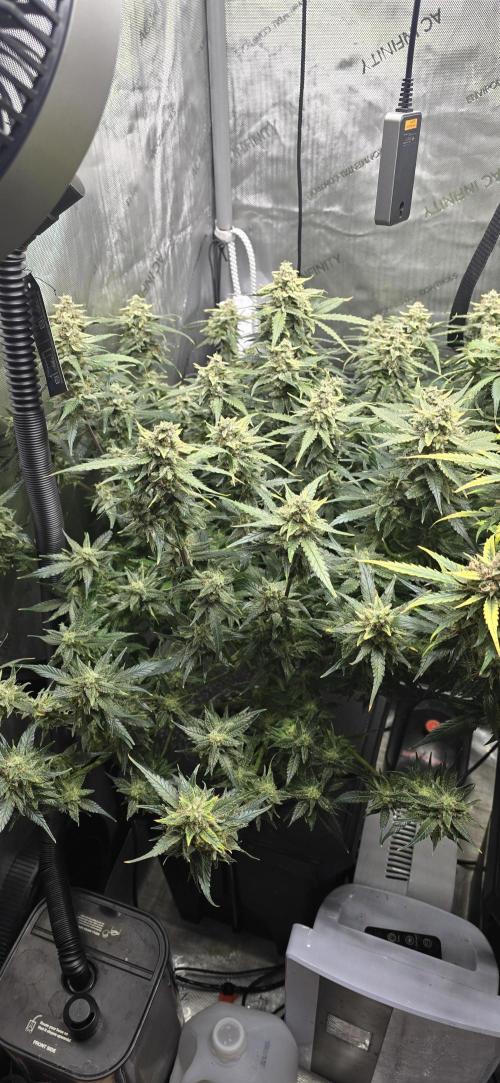
Papaya Cookies looks pretty good as well. She's actually taller than her counterpart. By a good inch or 2. But that is most likely because she's a sativa. Where Lemon Cherry Cookies is an indica. In that aspect everything is perfect. And! The stem isn't getting big big, but it's definitely expanding. Not like the other one, but still. She still definitely needs to be supported, but I expect good things. Maybe not big things, but good ones. Her root ball isn't all that big either. Kind of expected. However, I do have 1 more seed I think. Maybe I'll pop that after the next run. Hopefully I'll be in a bigger place with space for a 4x4 tent and my 3x3. That would be pretty bad ass. 3x3 for autos and vegging photoperiods. The 4x4 for the flowering phase. Autos stay in the 3x3. An endless supply of weed right there.
That's all for the day.
11/01/2025
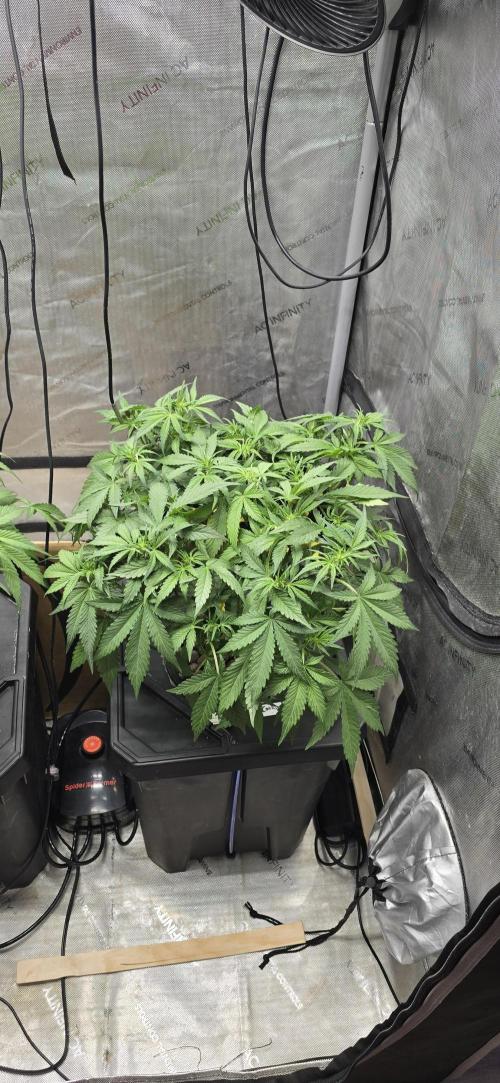
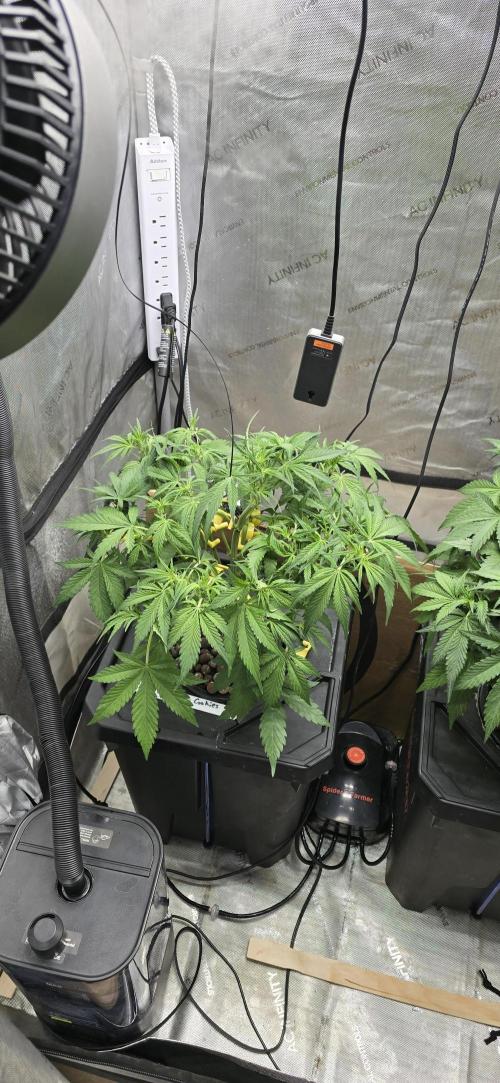
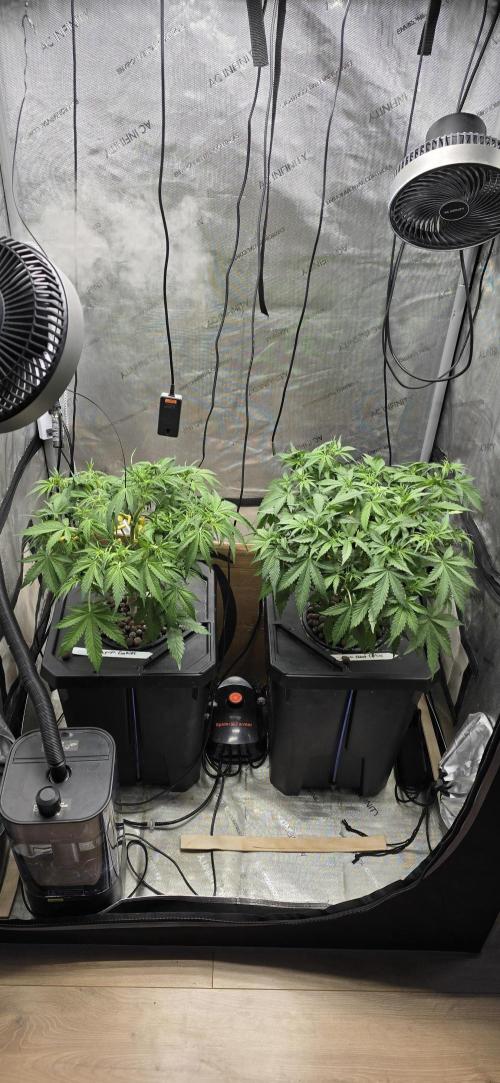
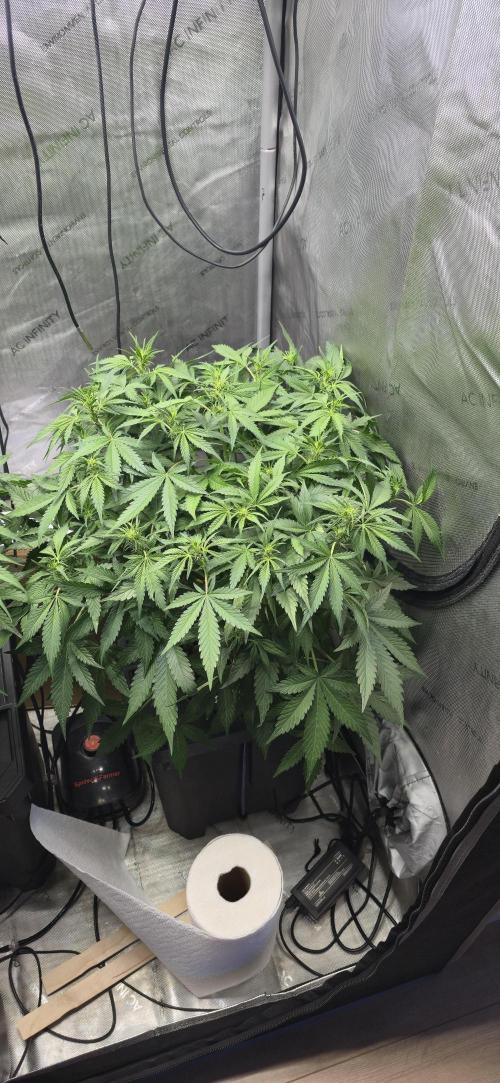
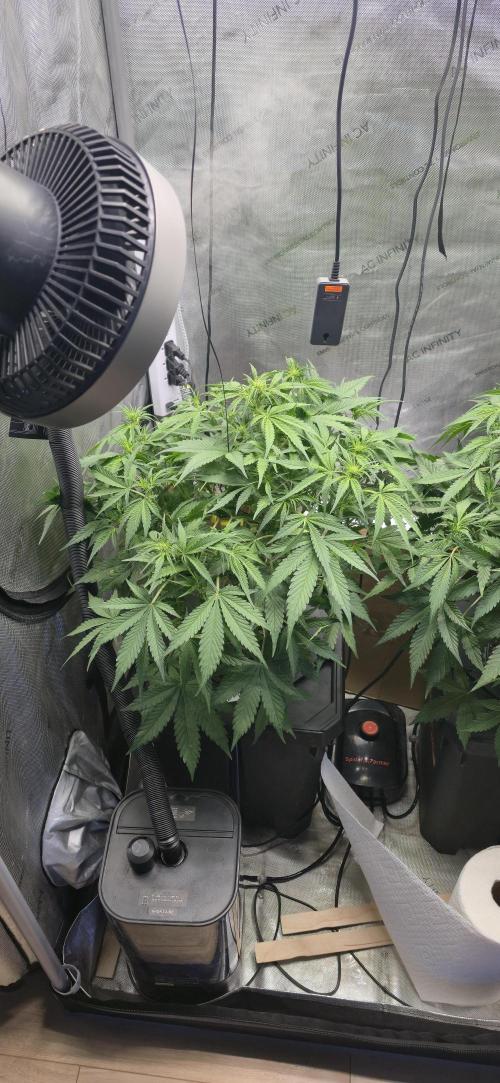
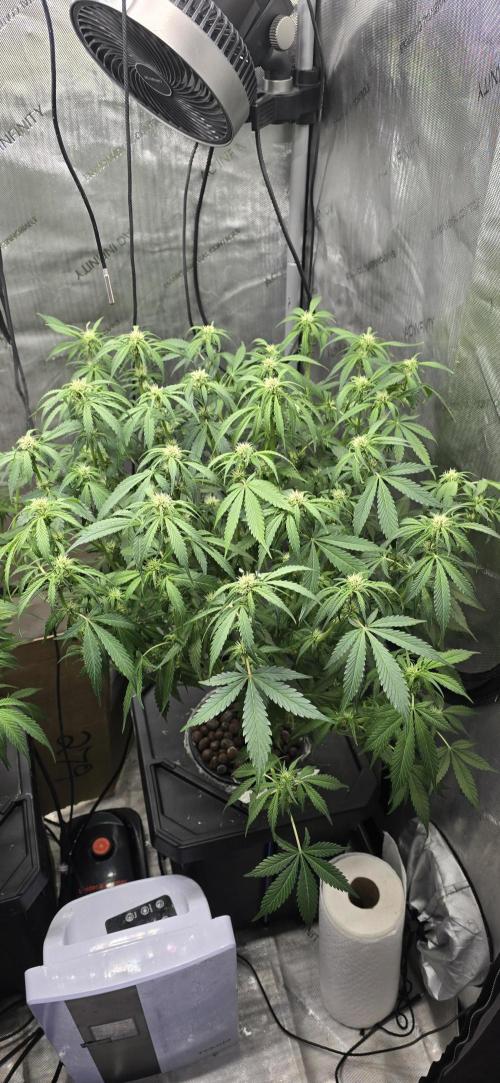
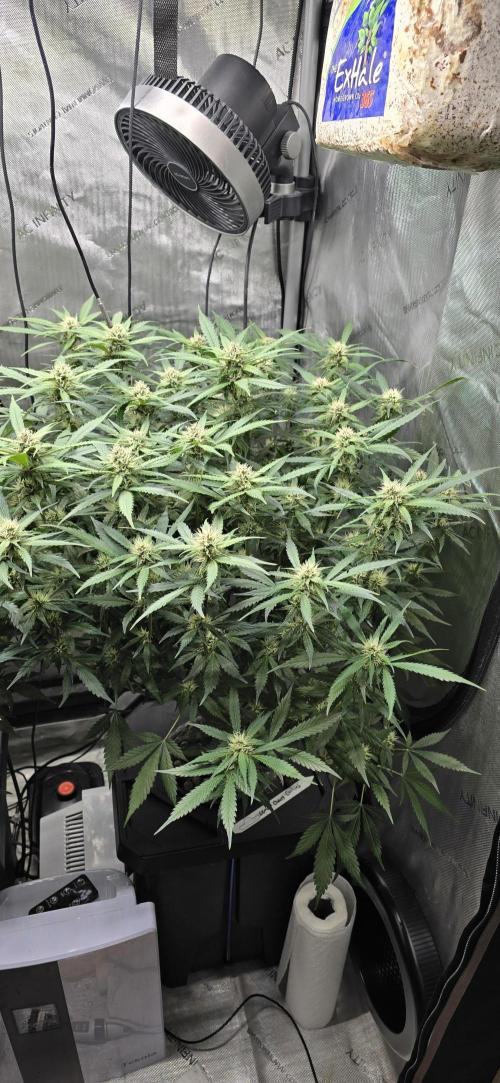
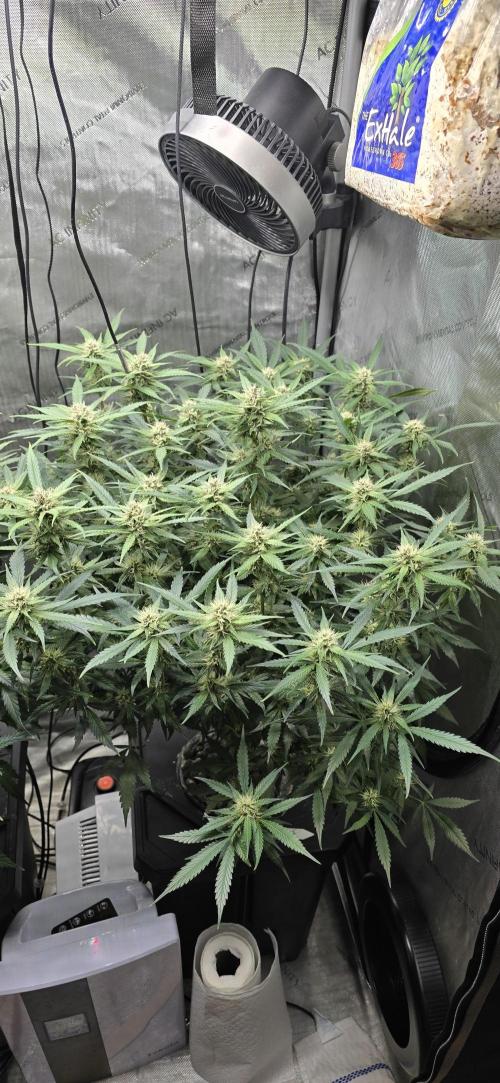
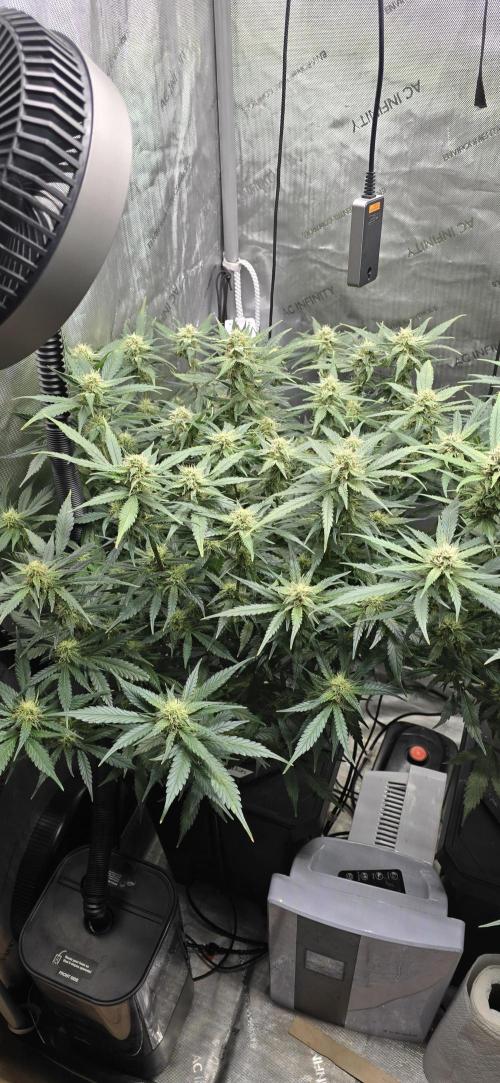
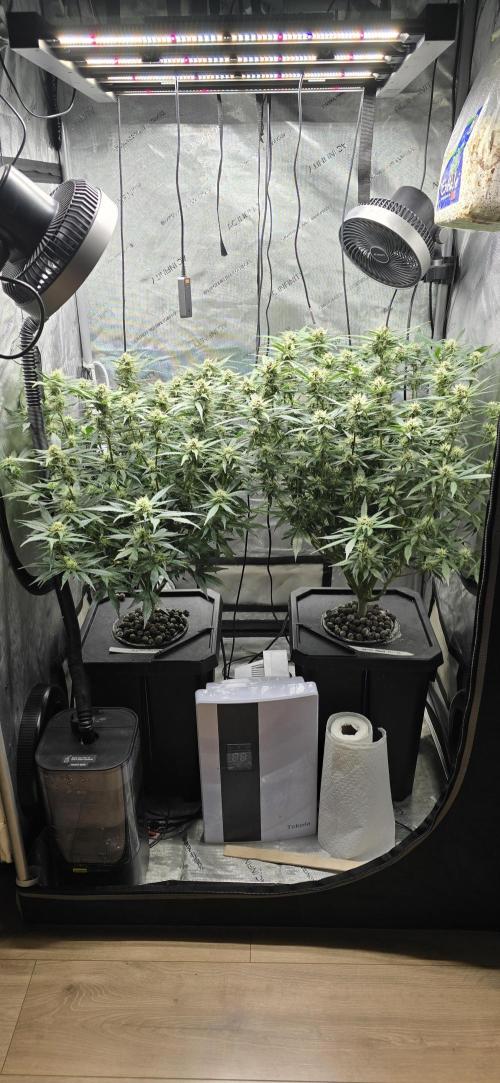
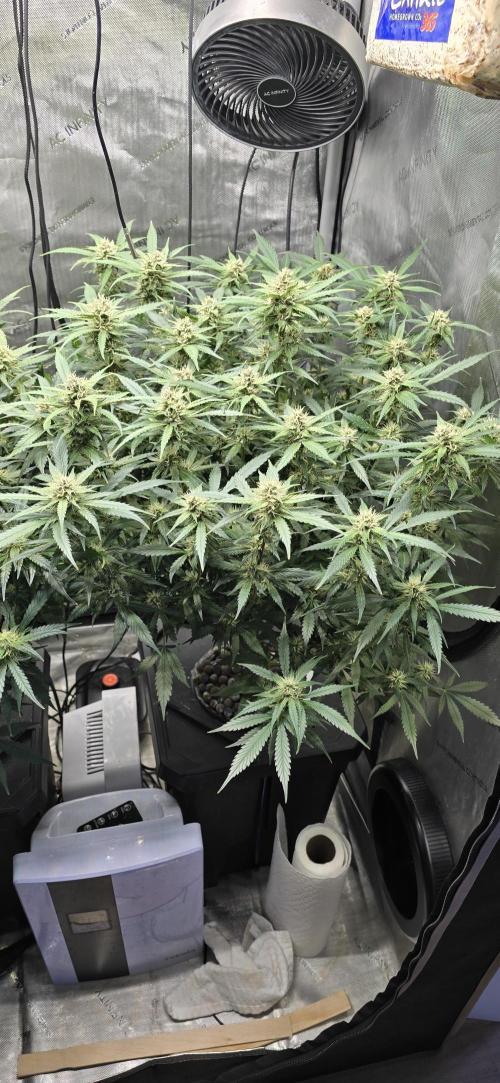
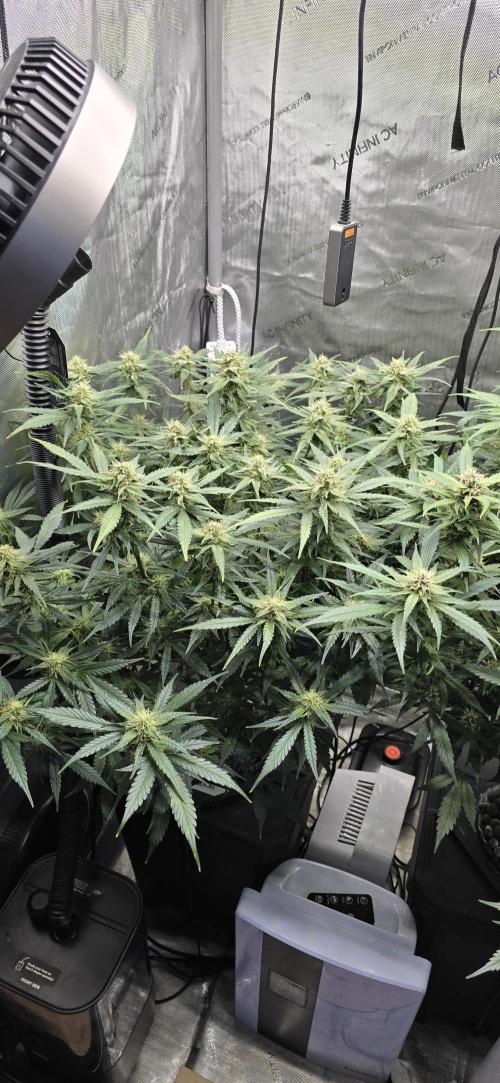
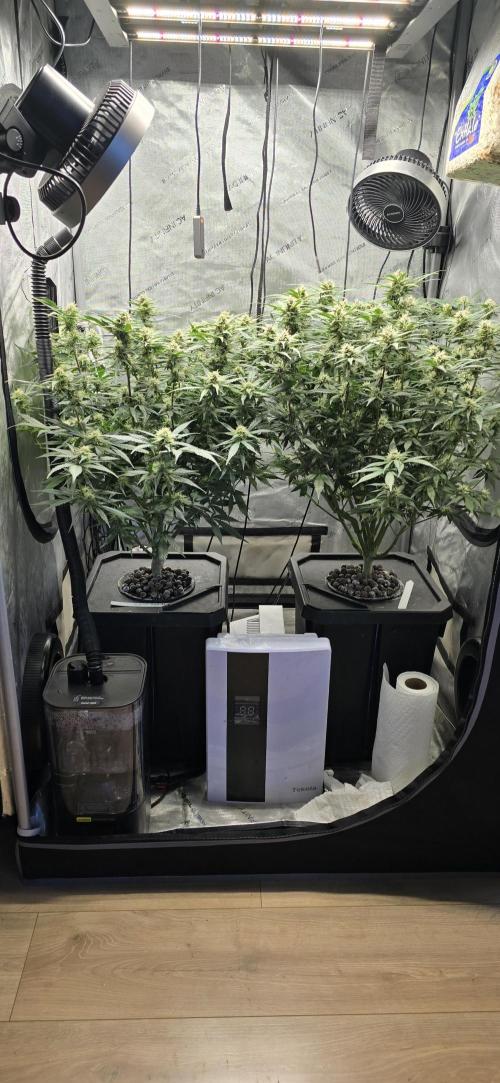
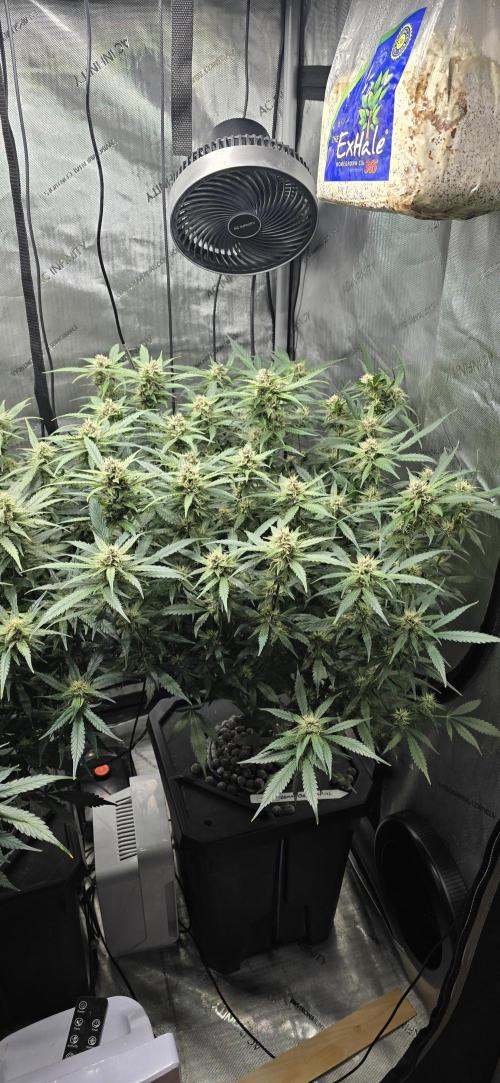
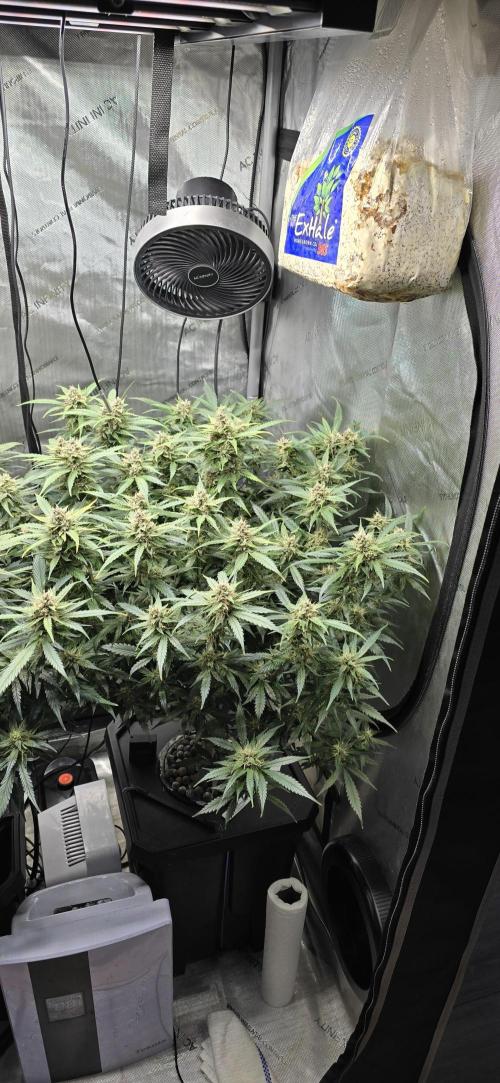
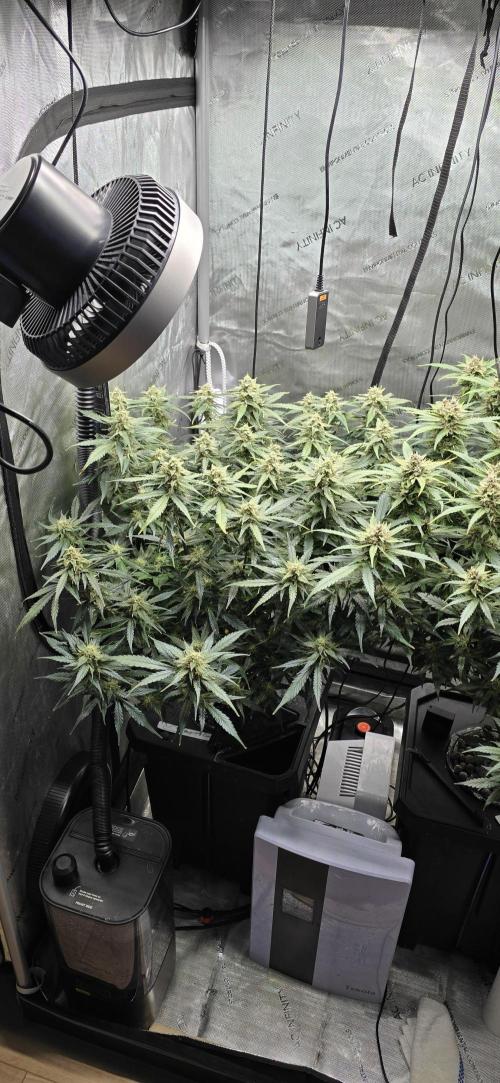
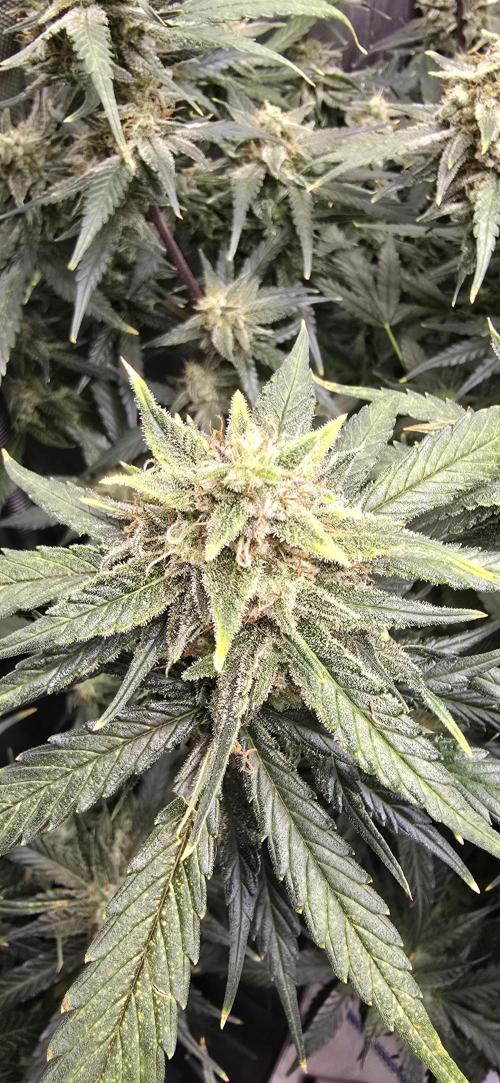
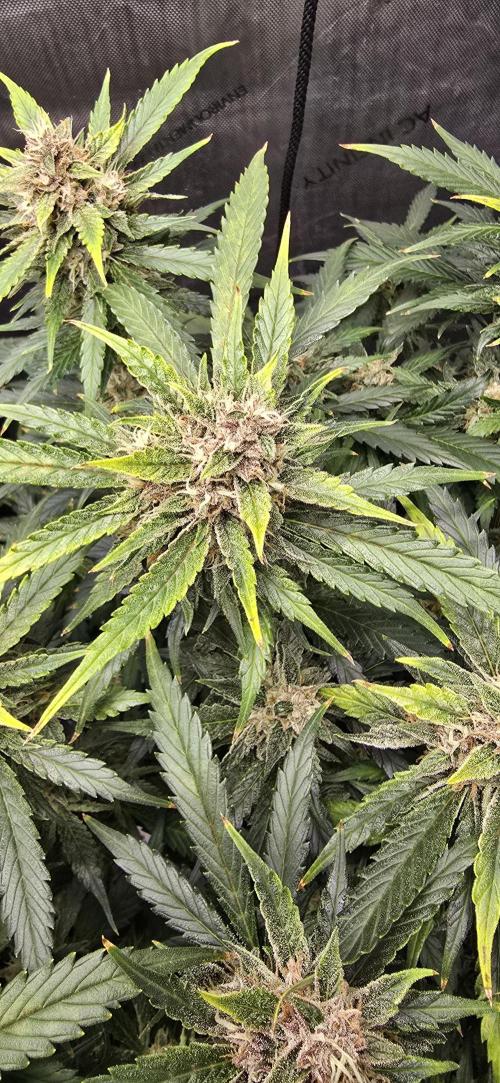
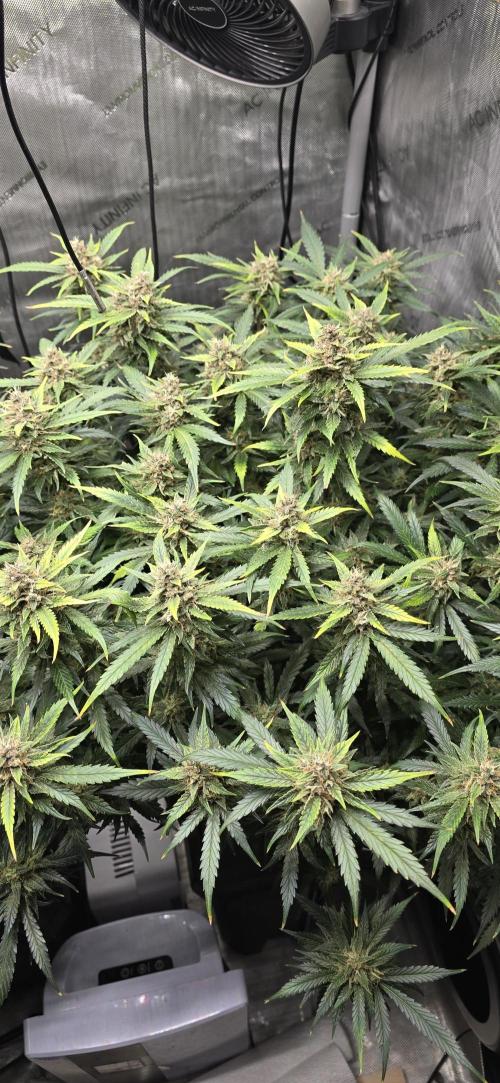
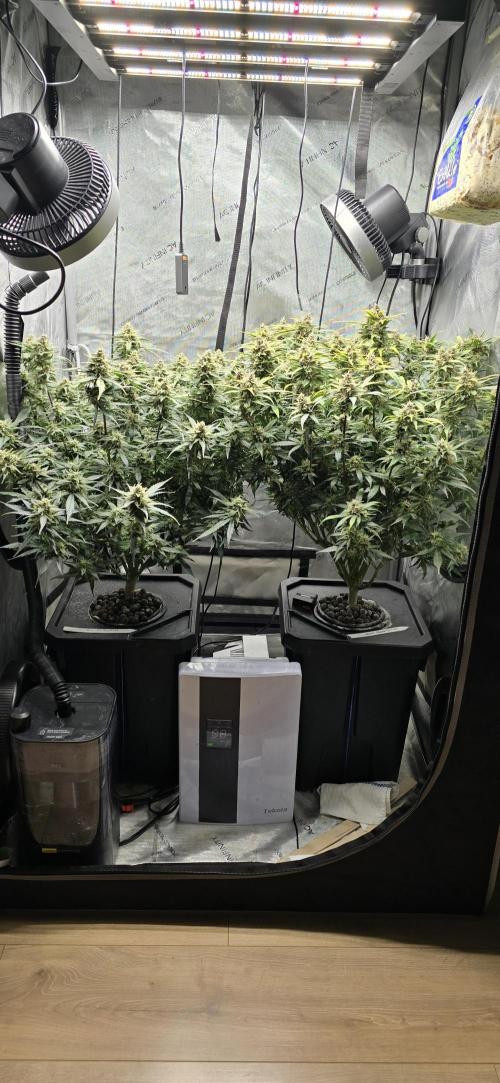
So I wake up this morning to a legit bush. Lemon Cherry Cookies seemed to go PUFF and blew up like a balloon. I'll definitely be taking out some leaves after her stretch. I think that's the best time to trim an autoflower. But only once. Small snippets, in my experience, are fine. But like just a few leaves here and there.
Papaya Cookies is starting to stretch more. She's also starting to fill out now. I'm expecting a much larger plant in the coming week or so. She's still a very healthy plant. No idea how, but even her lower stalk is fattening up. She might be a little bit behind, but she's starting to become more active. Honestly, she should be taller and a bit larger than Lemon Cherry Cookies. The way the stalk looks on both of them, Papaya Cookies wins. Up top anyway. But the bottom is small, so less production I think.
The environment is spot on still. I think I'll leave the light at level 9 for now. I might turn it up after the stretch. But for now, level 9 it is.
The CO2 is pretty low in the tent. I forgot to tell you all. The new exhale 365 bag came in and is already in place. That was nearly a week ago. My bad. Anyway, it works, but then it stops. I might route the exhaust duct back into the tent above the canopy after I get the port vent caps. I think that'll work. This is good. Because winter is coming and it gets cold here. So I'll need as much heat as I can get. Well, not really, the heater I have is fantastic. But you get it. The heater also brings in a ton of air. Enough where it balloons the tent.
I'm having trouble getting the pH to stay at 5.8. it jumps to 6.3 daily. So I guess I'll just keep fixing it. Lol.
Anyway, that's all for today. I'll update with any changes.
11/02/2025
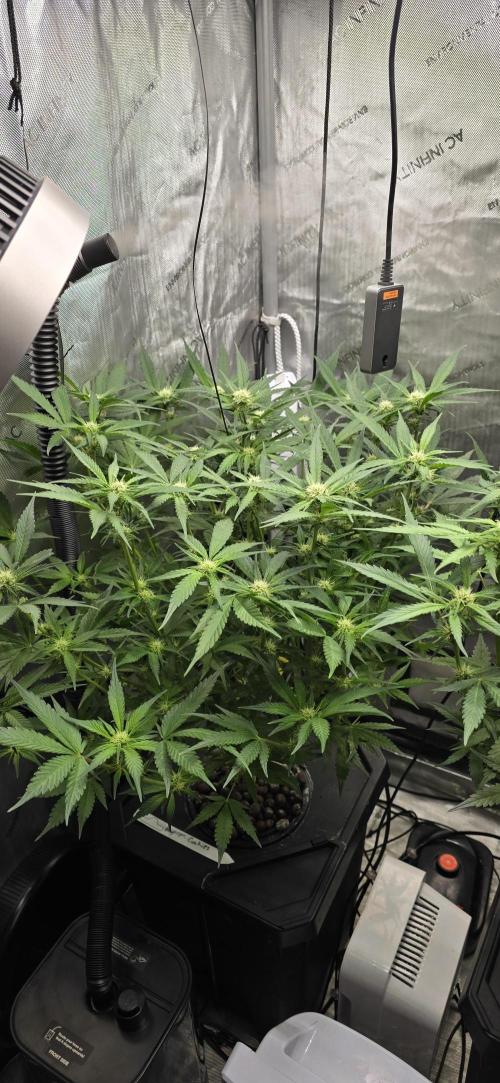
Well well well. Look who came out to play! Both ladies are doing quite well. Lemon Cherry Cookies is by far the winner of this run. But you never know. Papaya Cookies might shoot up but I'm pretty sure she won't get that big. Her root ball is kind small. At least compared to Lemon Cherry Cookies. Hers is huge. I can't take a picture because I have to hold the top and the roots. So big.
Anyway, I had to top off both ladies today. They were about a half gallon low. I added a little bit more bloom to help prepare them for the next water change and then bloom goes up. And we add the p/k boost. So I figured exposing them to a very small extra dose would probably do good.
Other than that and the huge root ball, nothing much else to report. The environment is perfect, as usual.
I'll definitely be trimming after the stretch. They are getting really bushy.
That's all for now.
10/03/2025
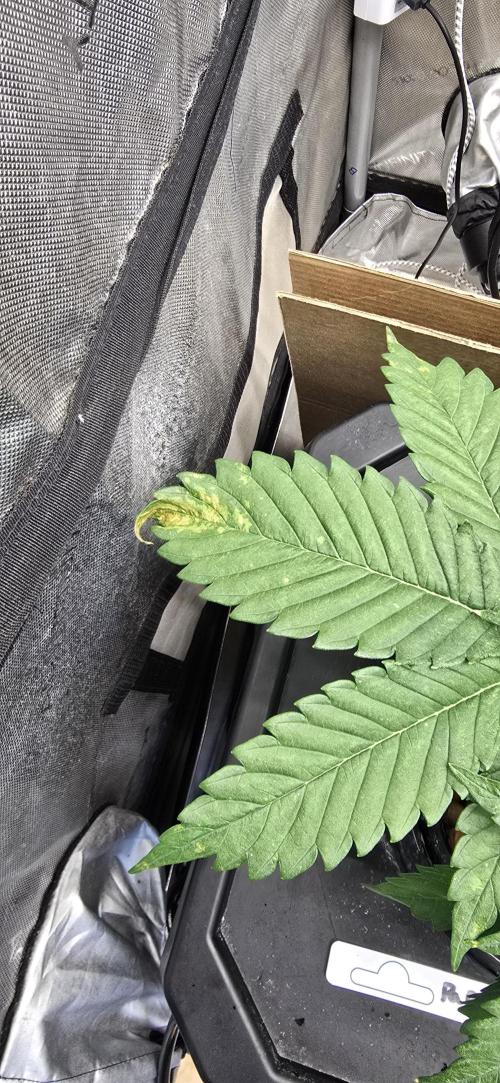
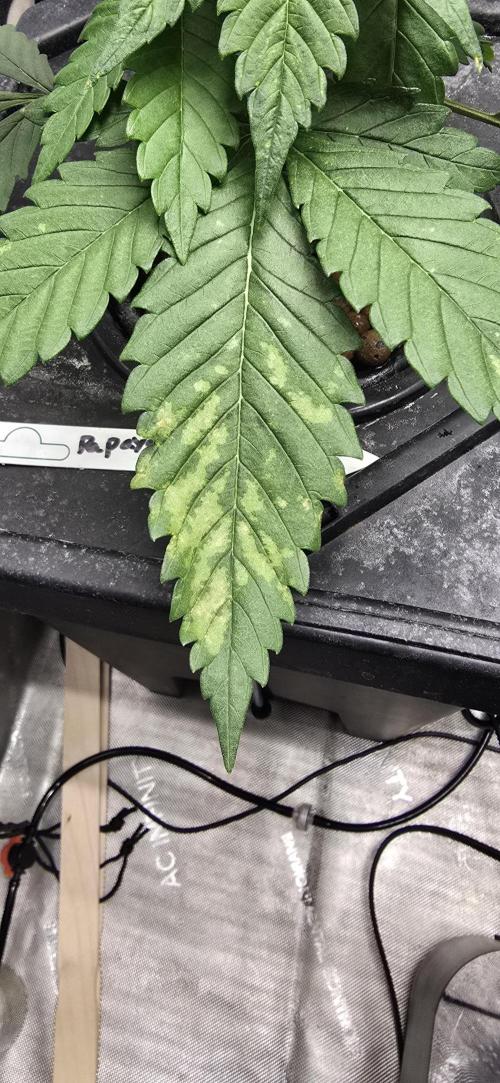
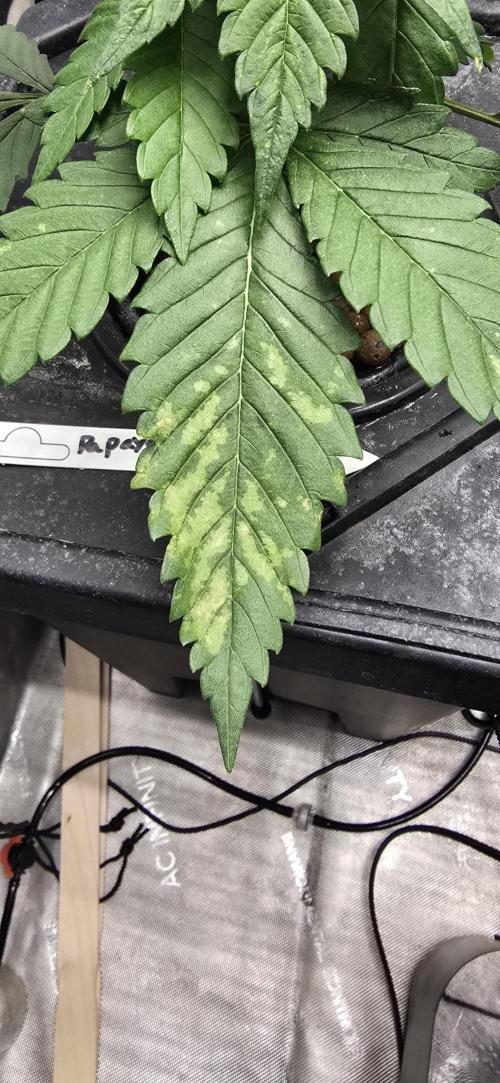
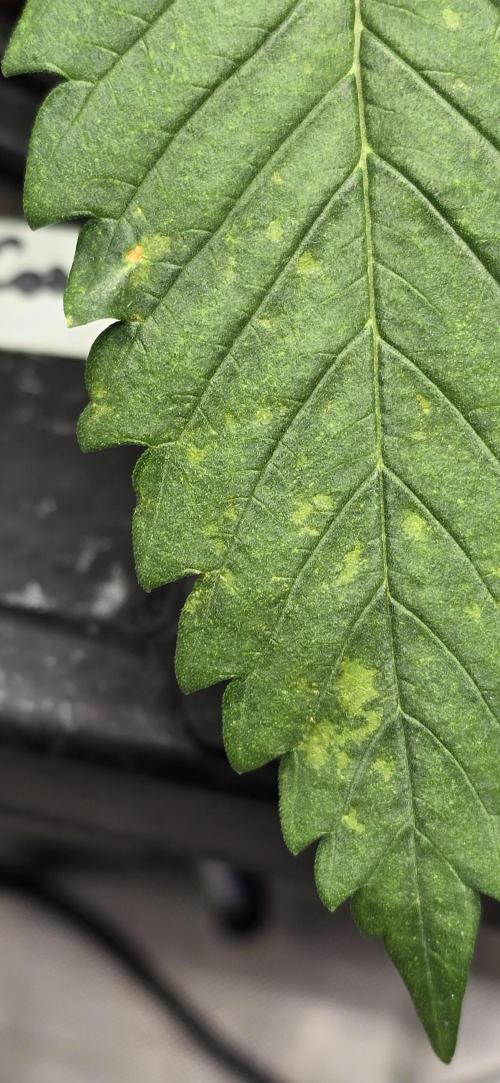
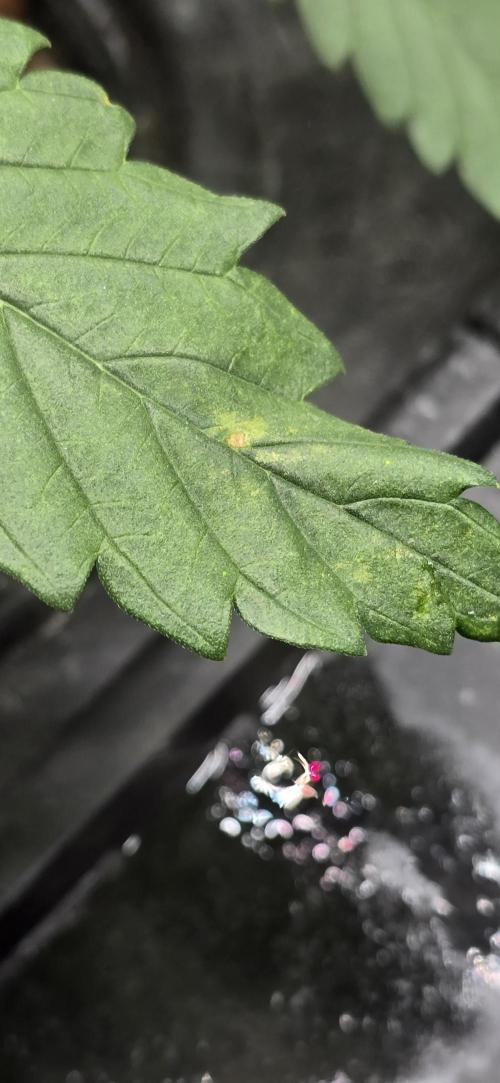
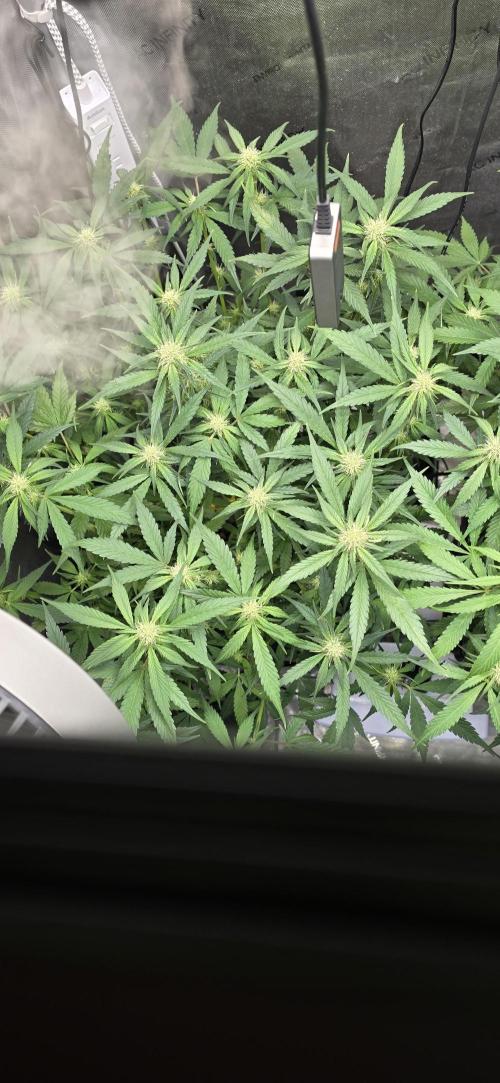
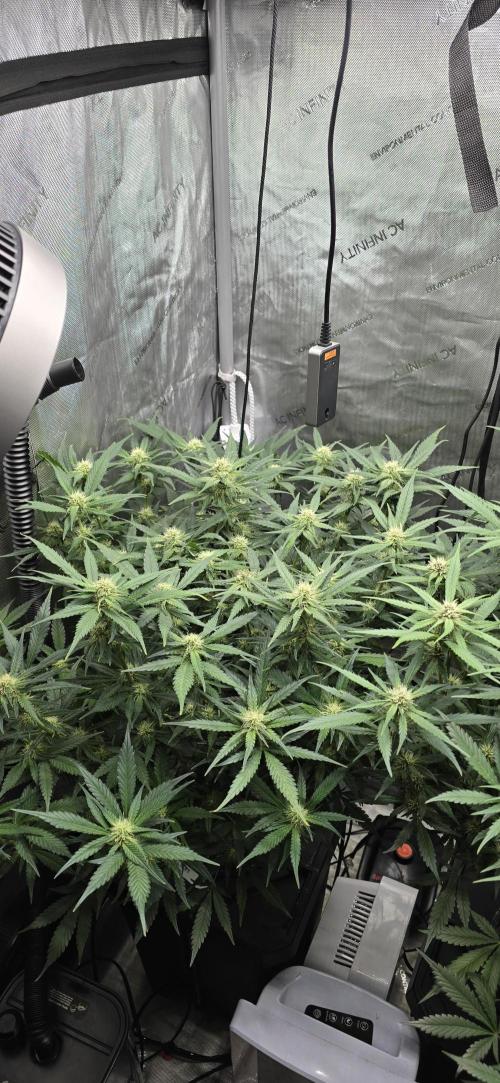
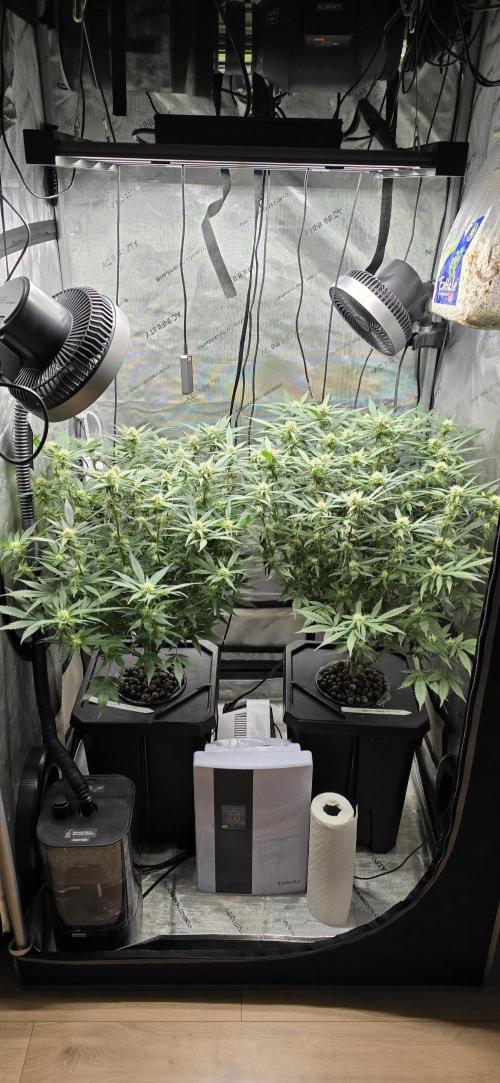
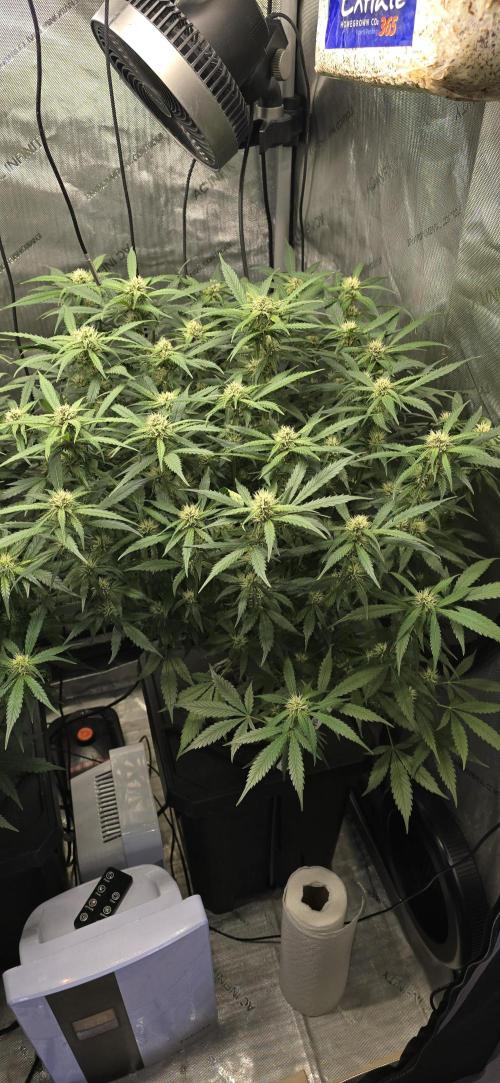
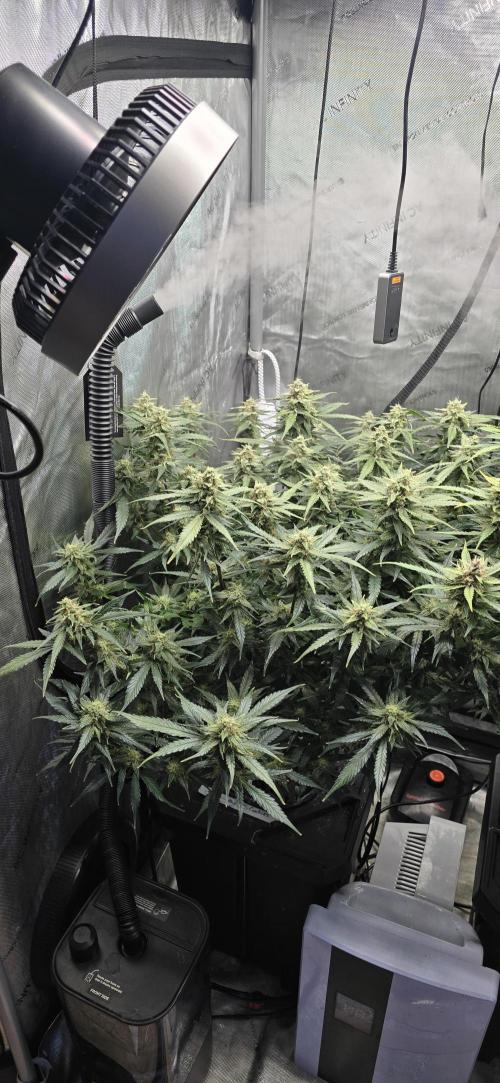
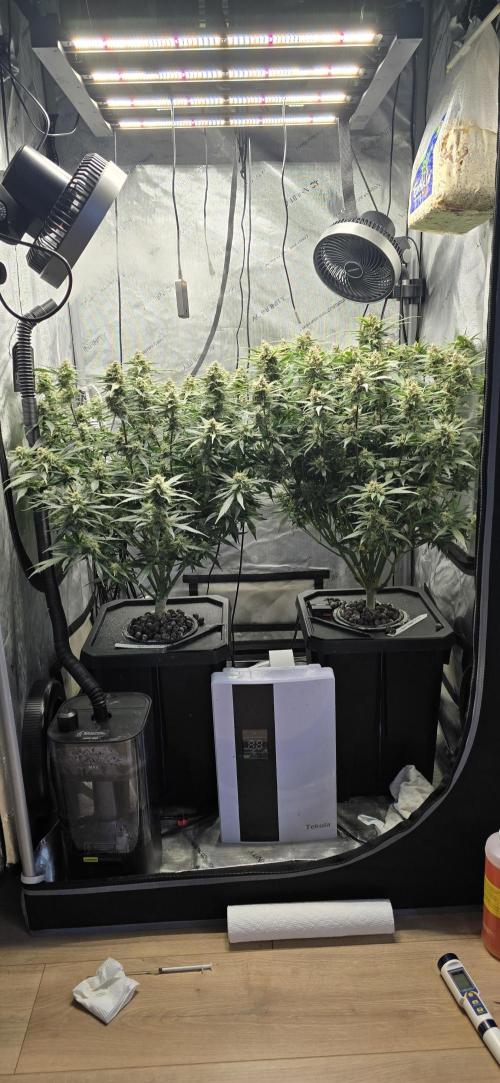
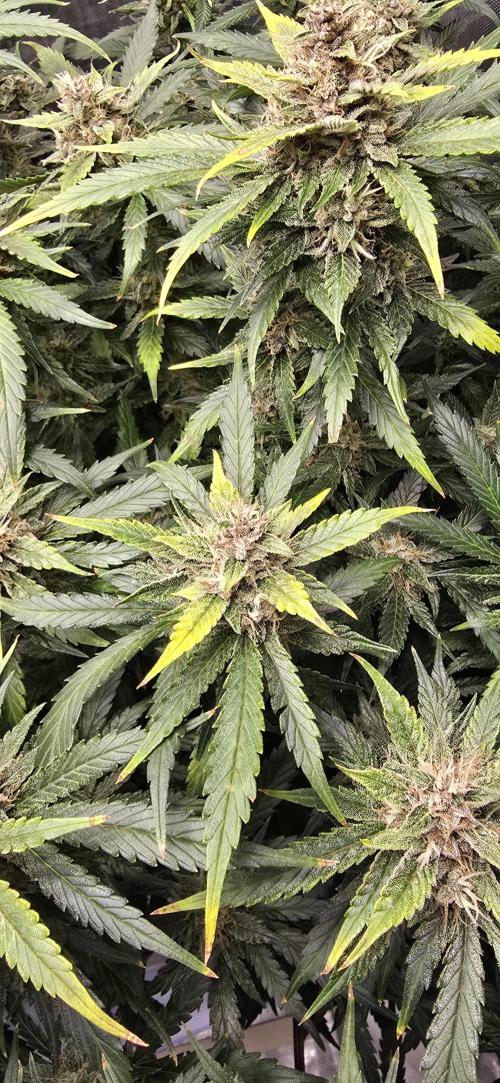
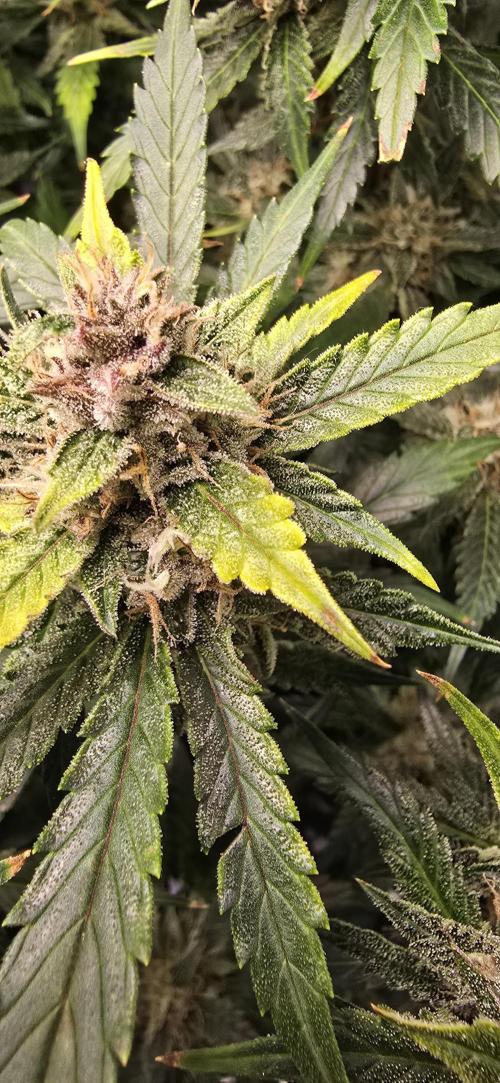
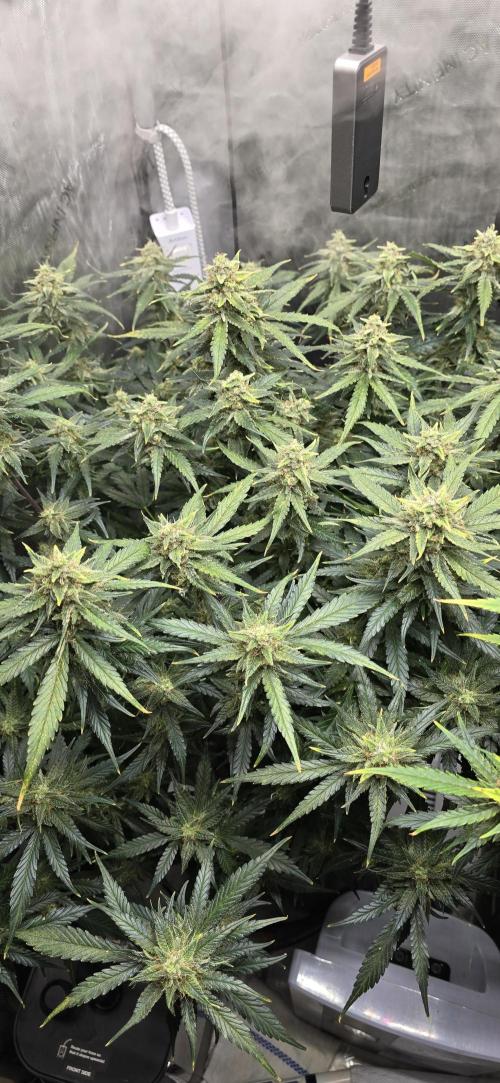
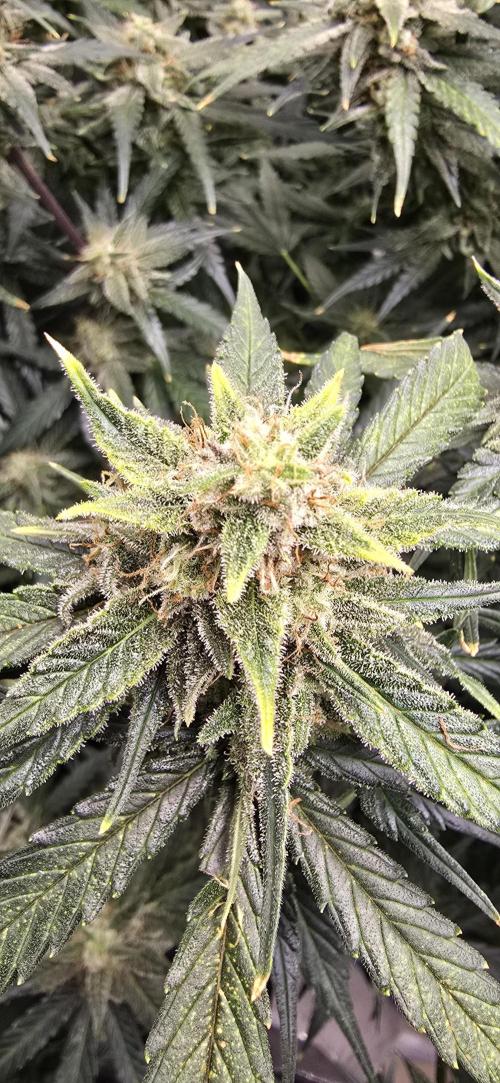
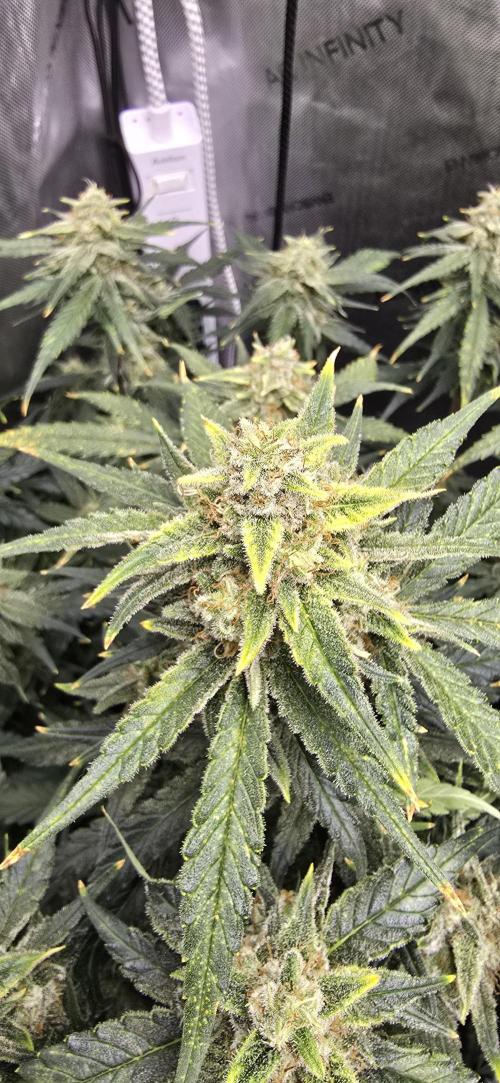
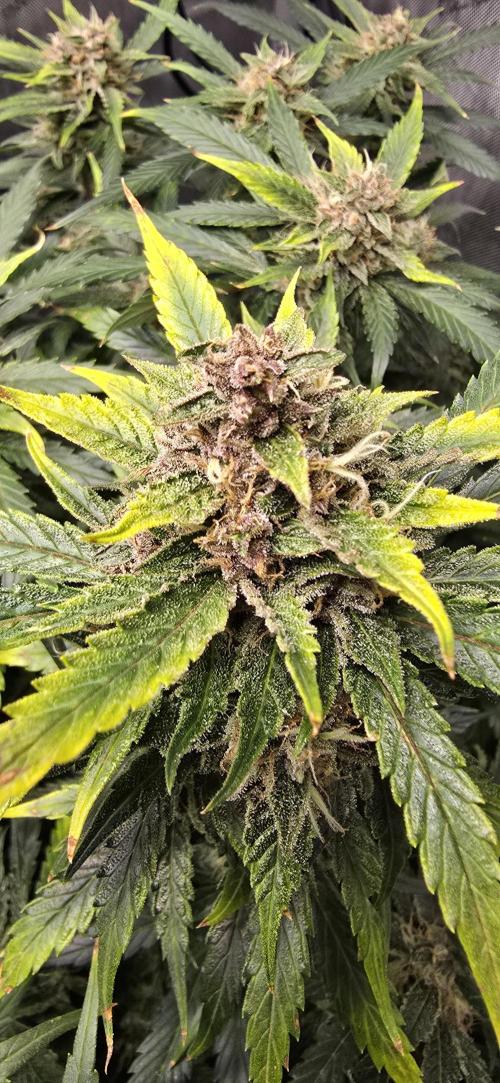
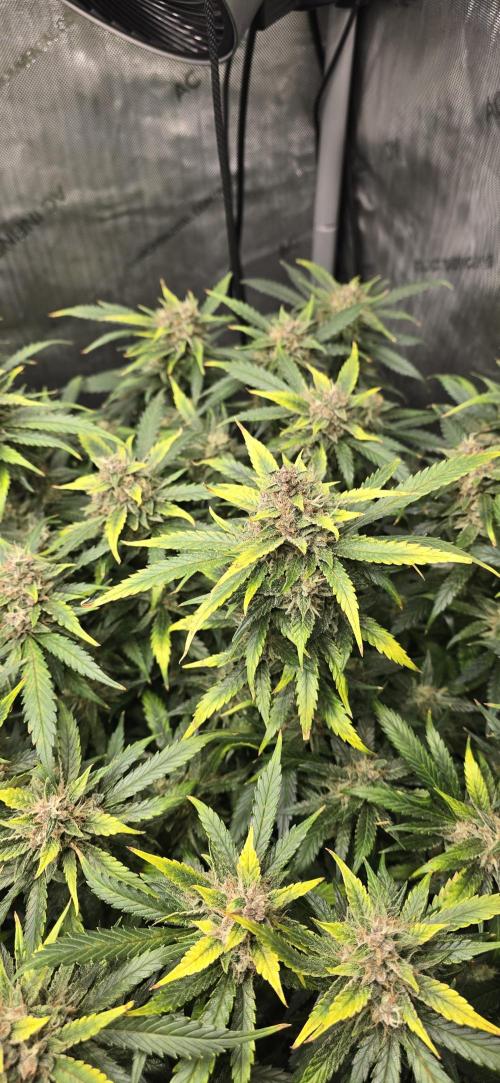
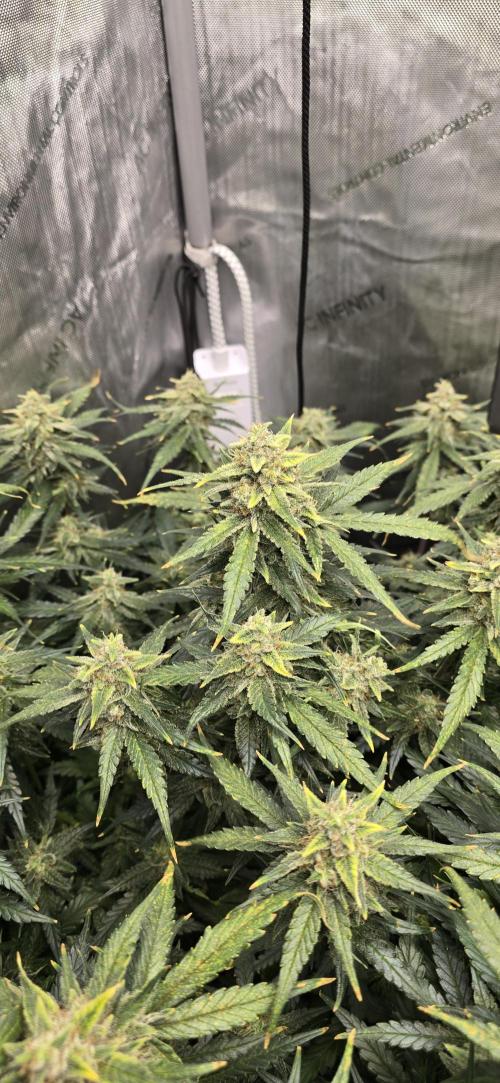
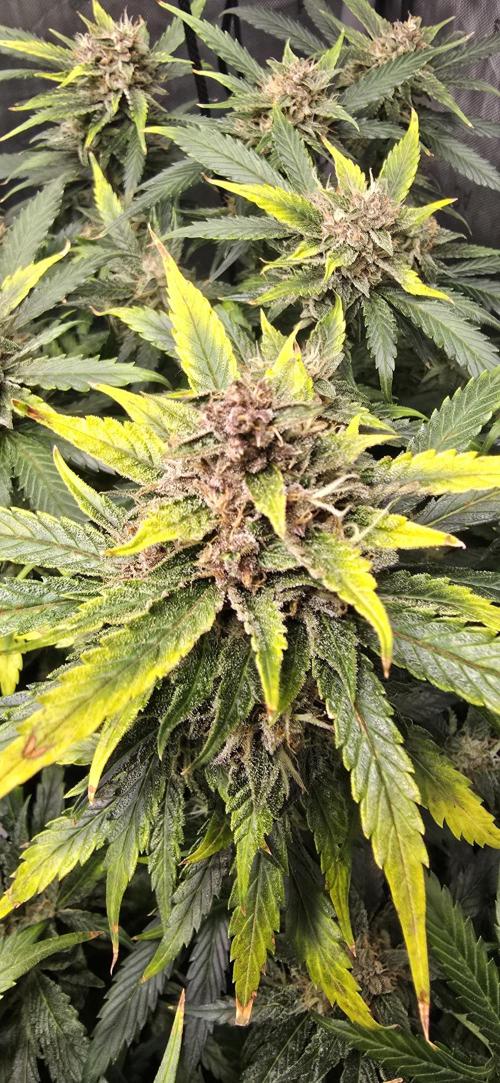
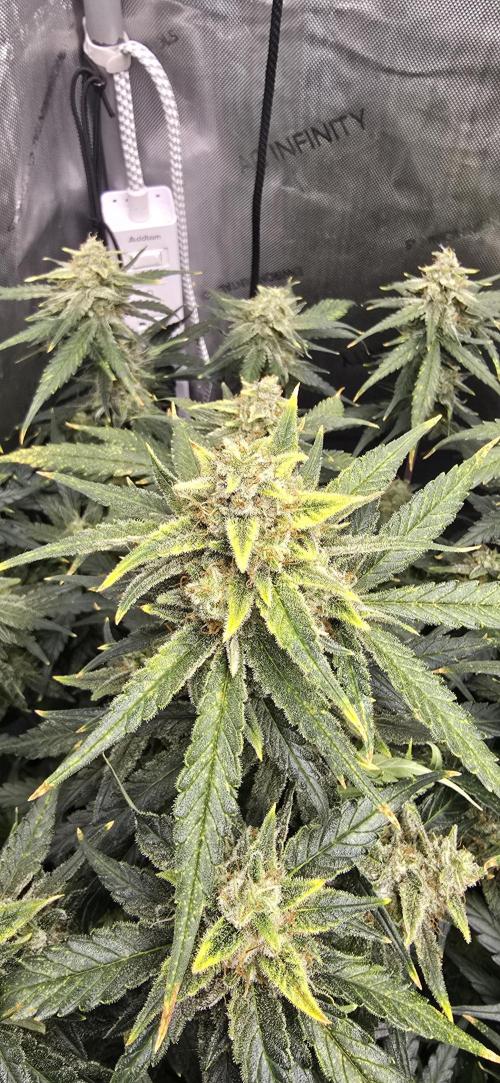
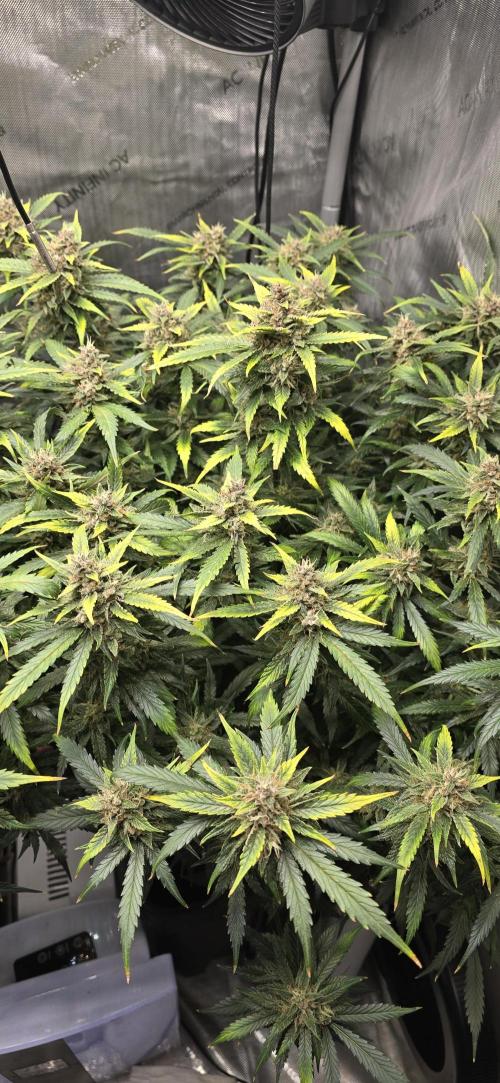
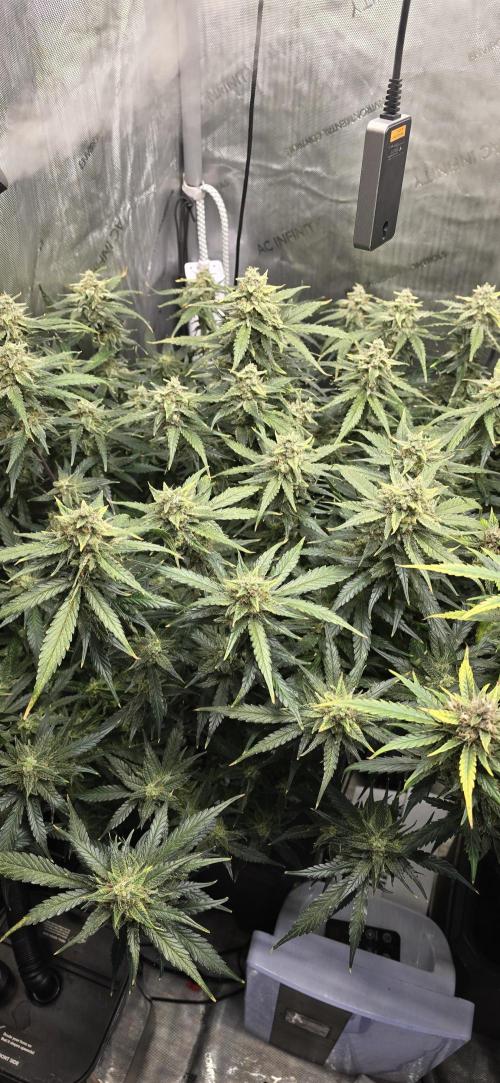
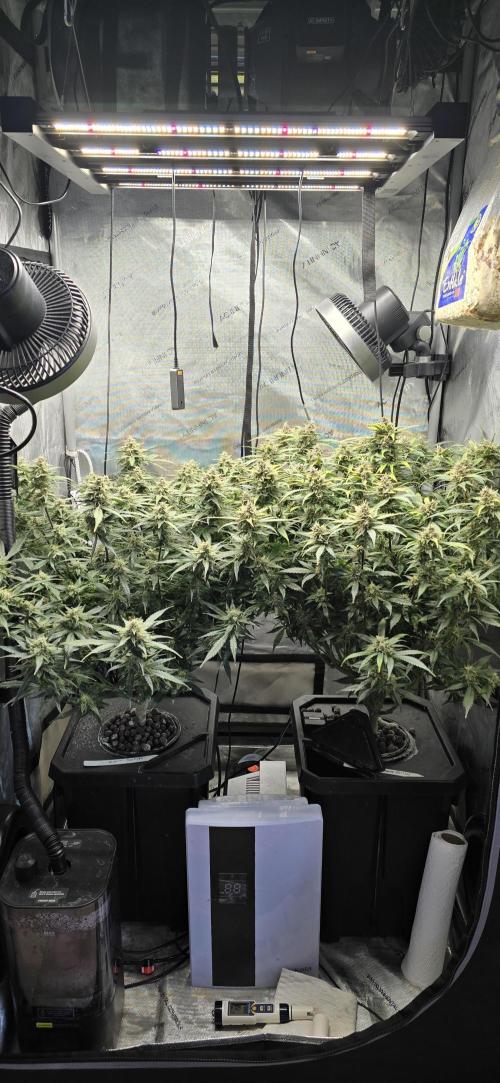
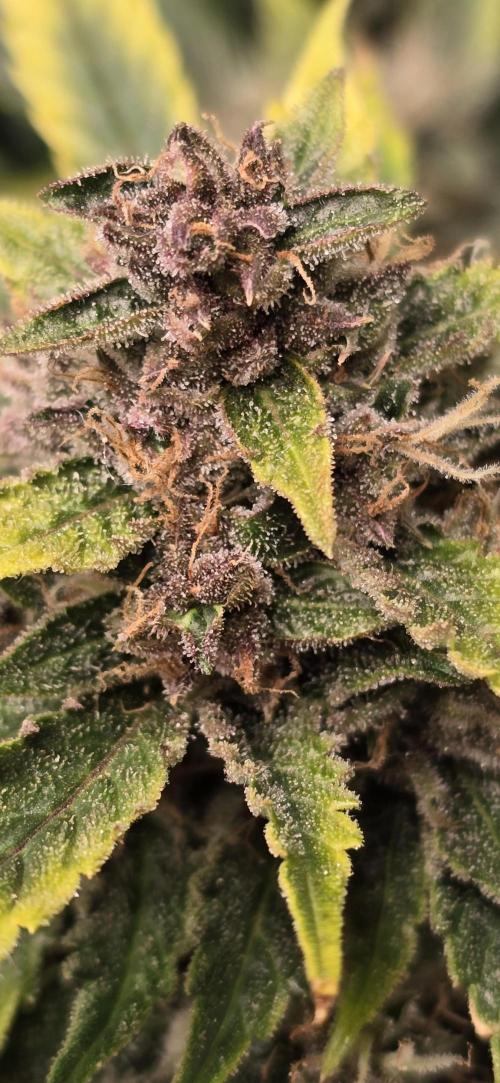
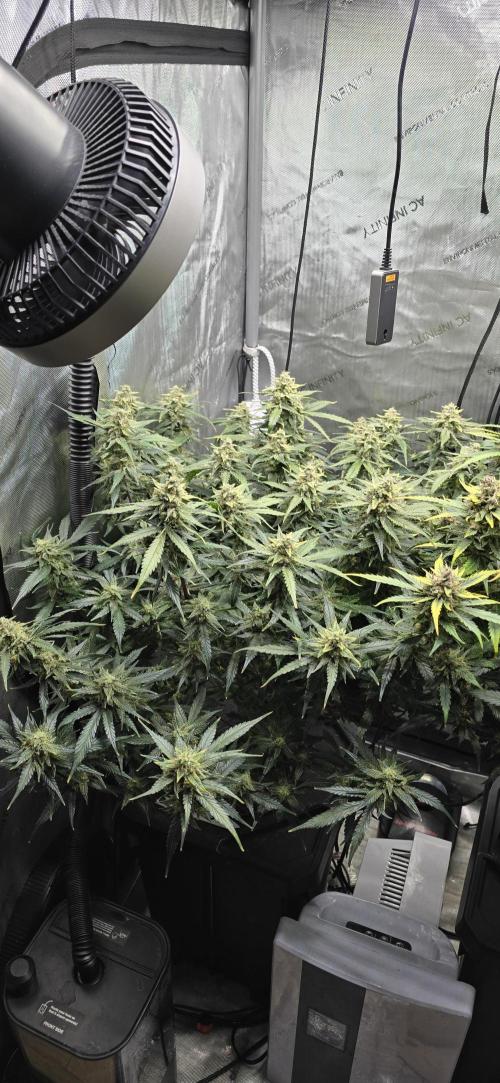
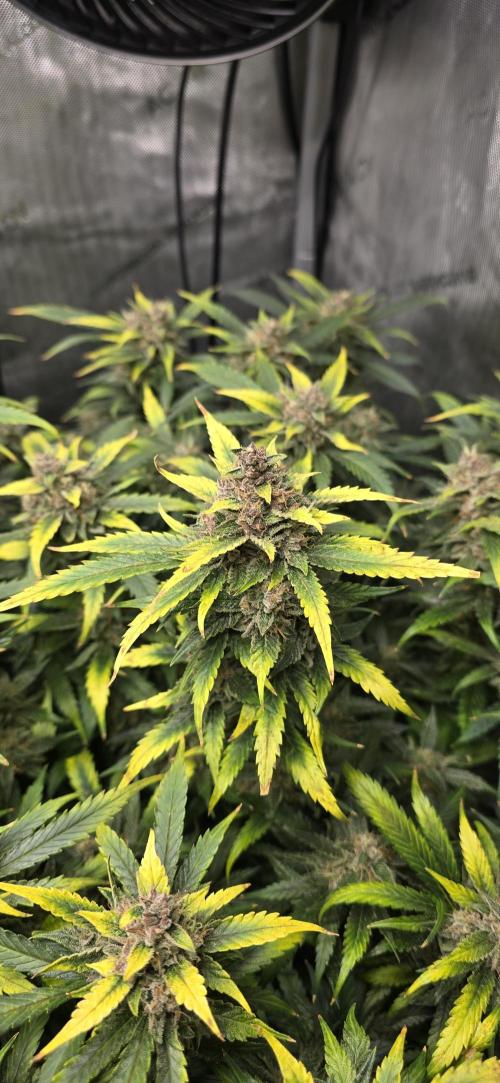
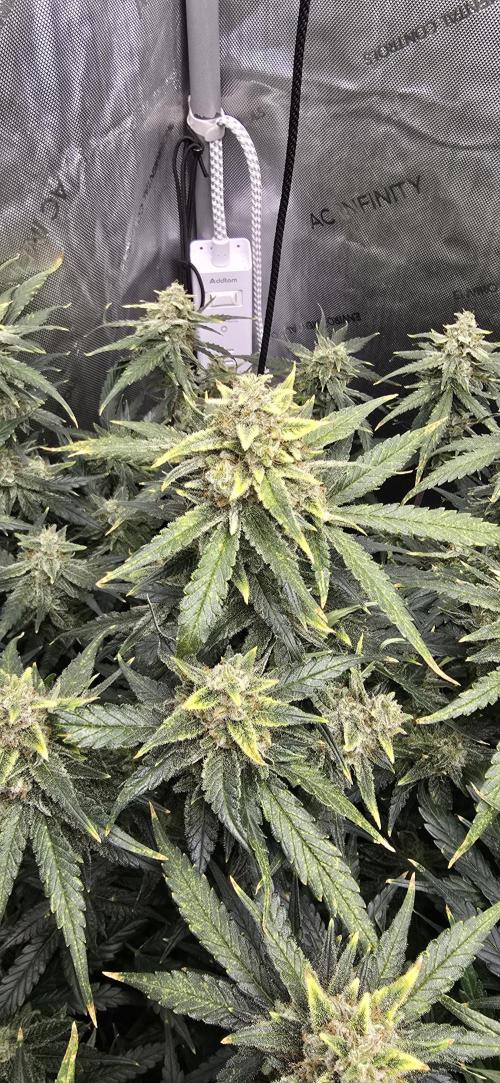
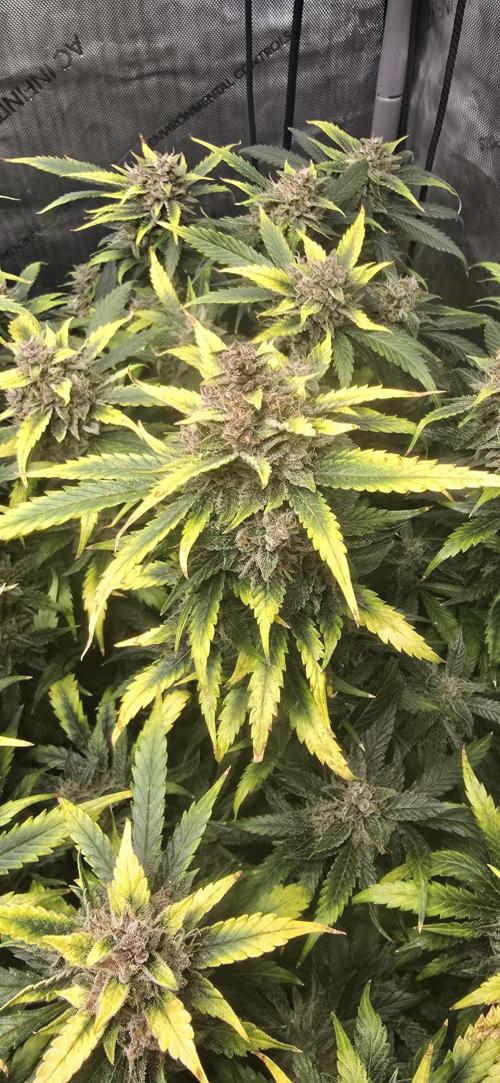
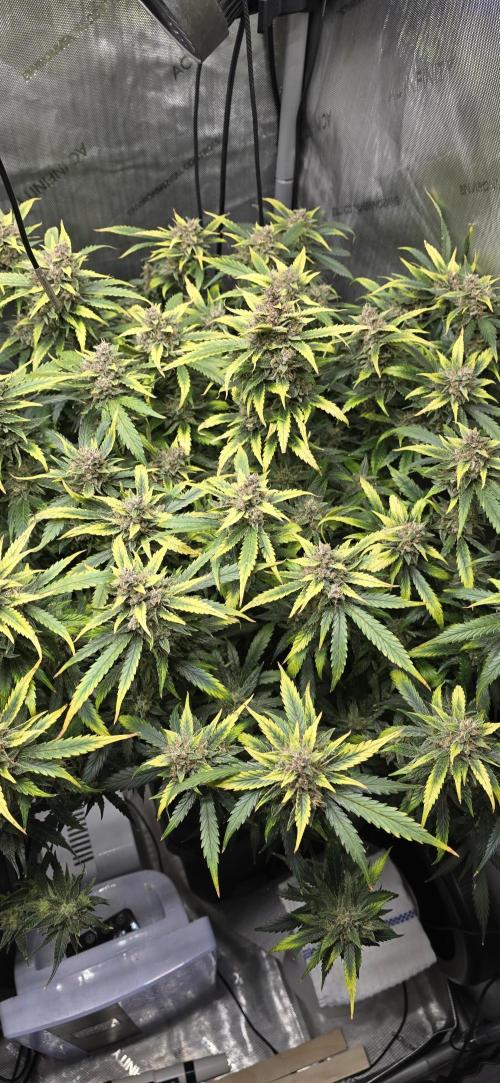
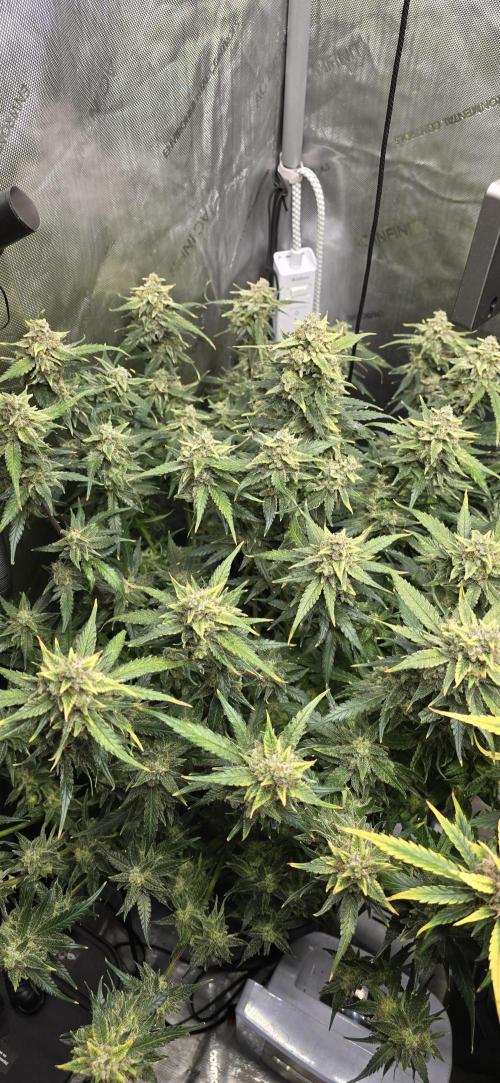
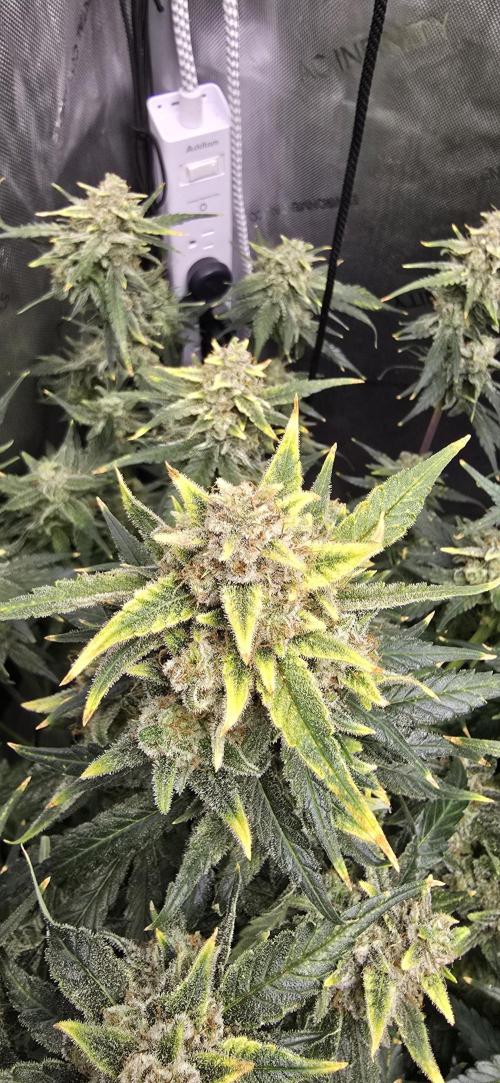
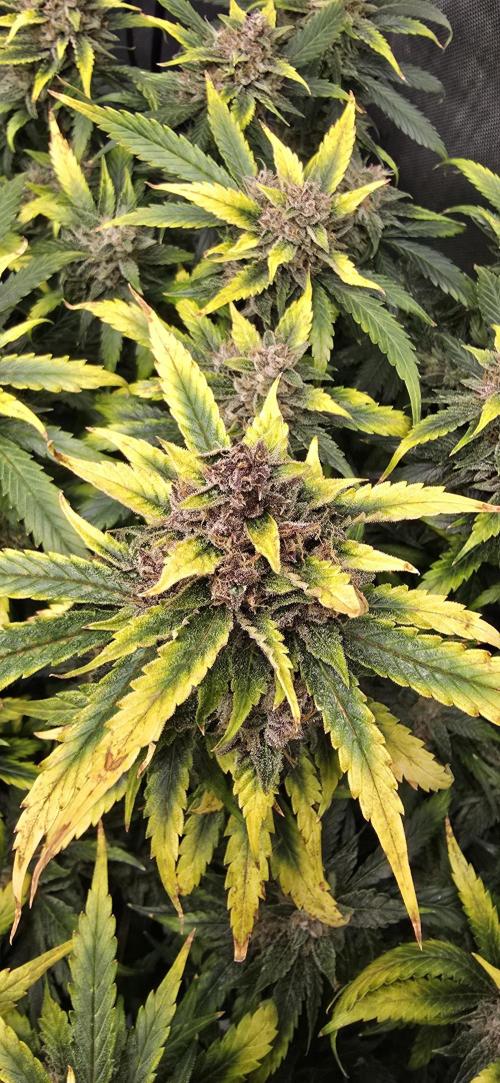
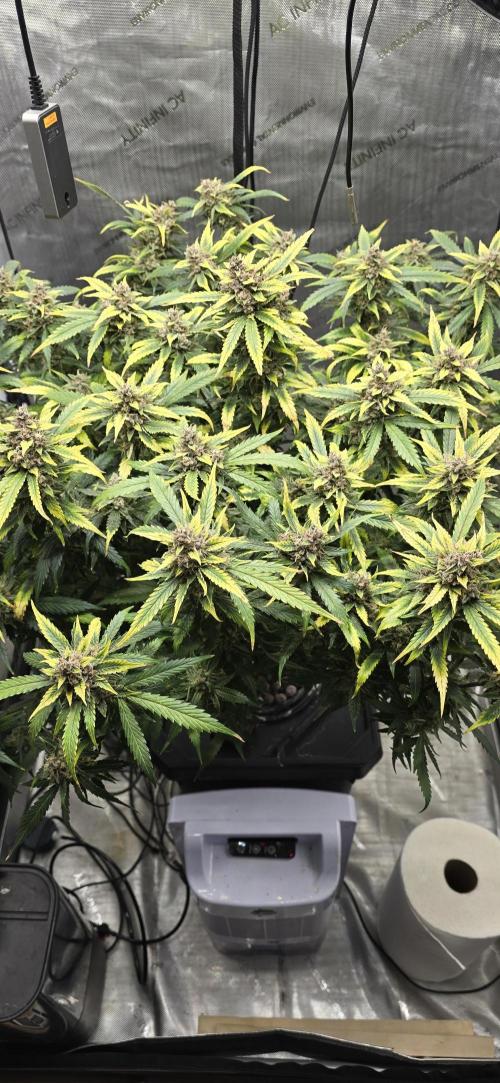
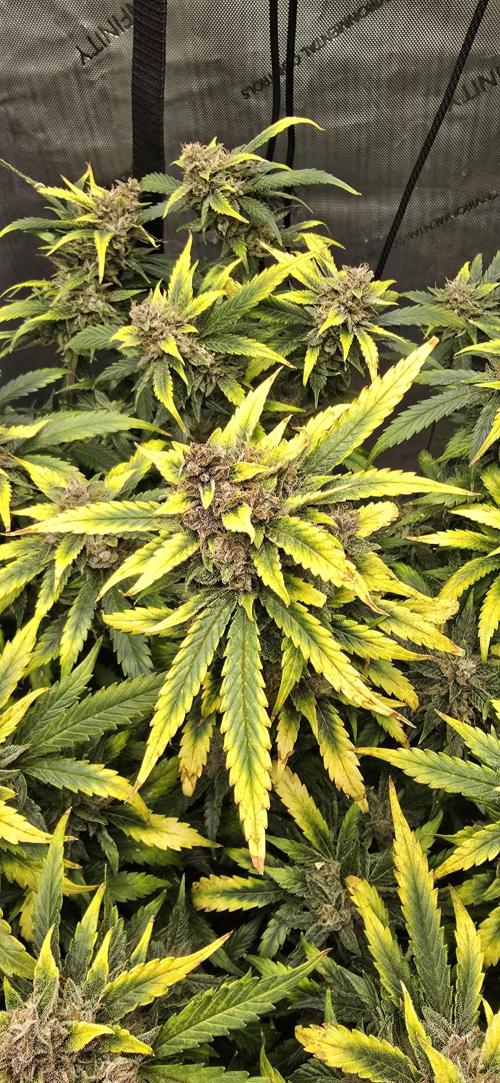
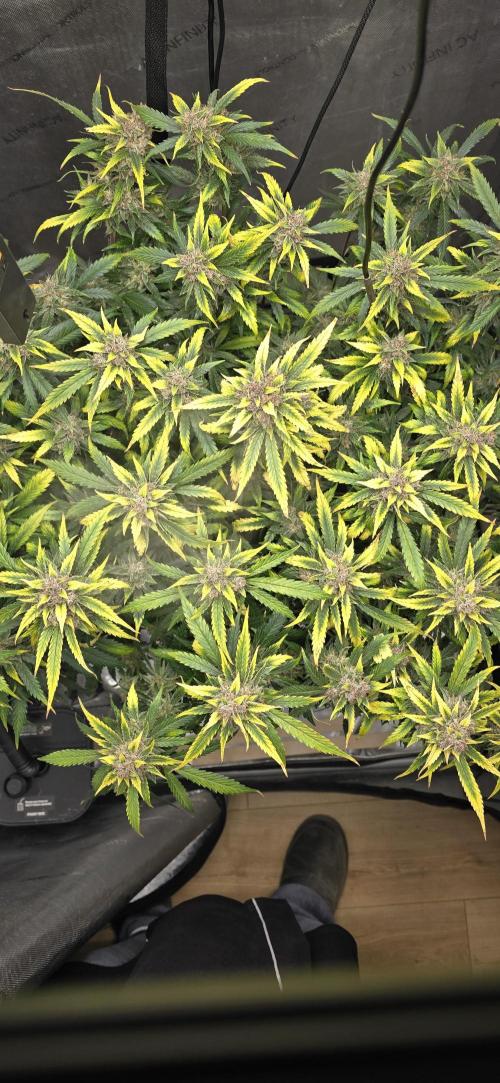
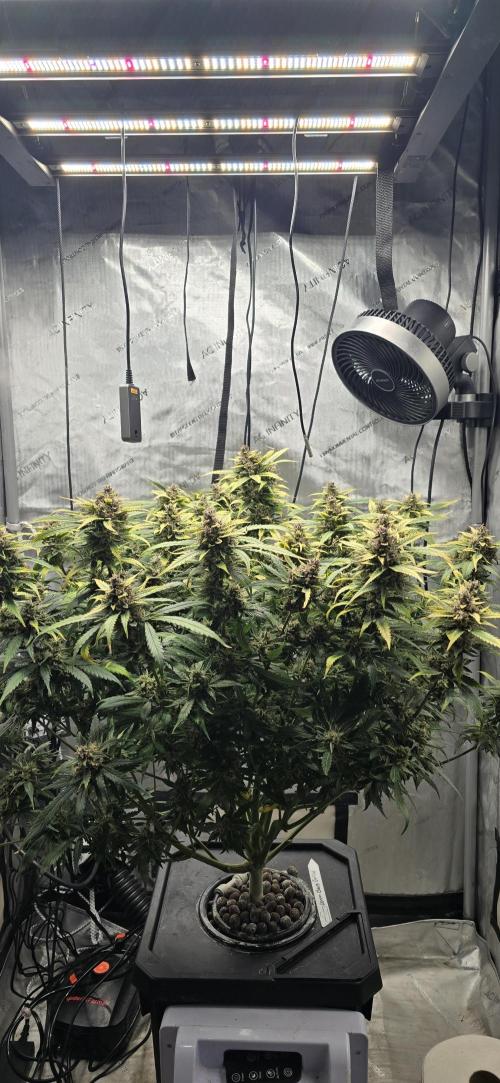
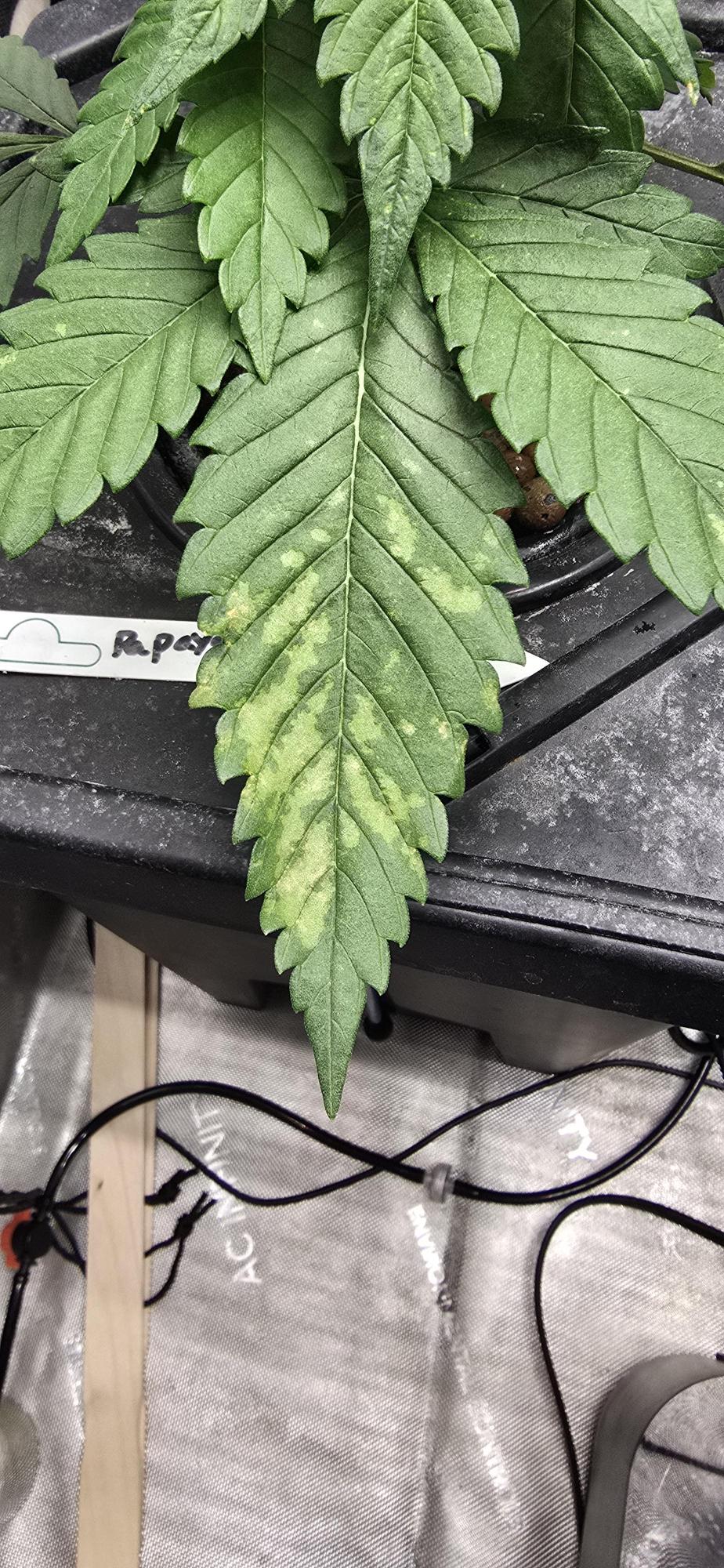
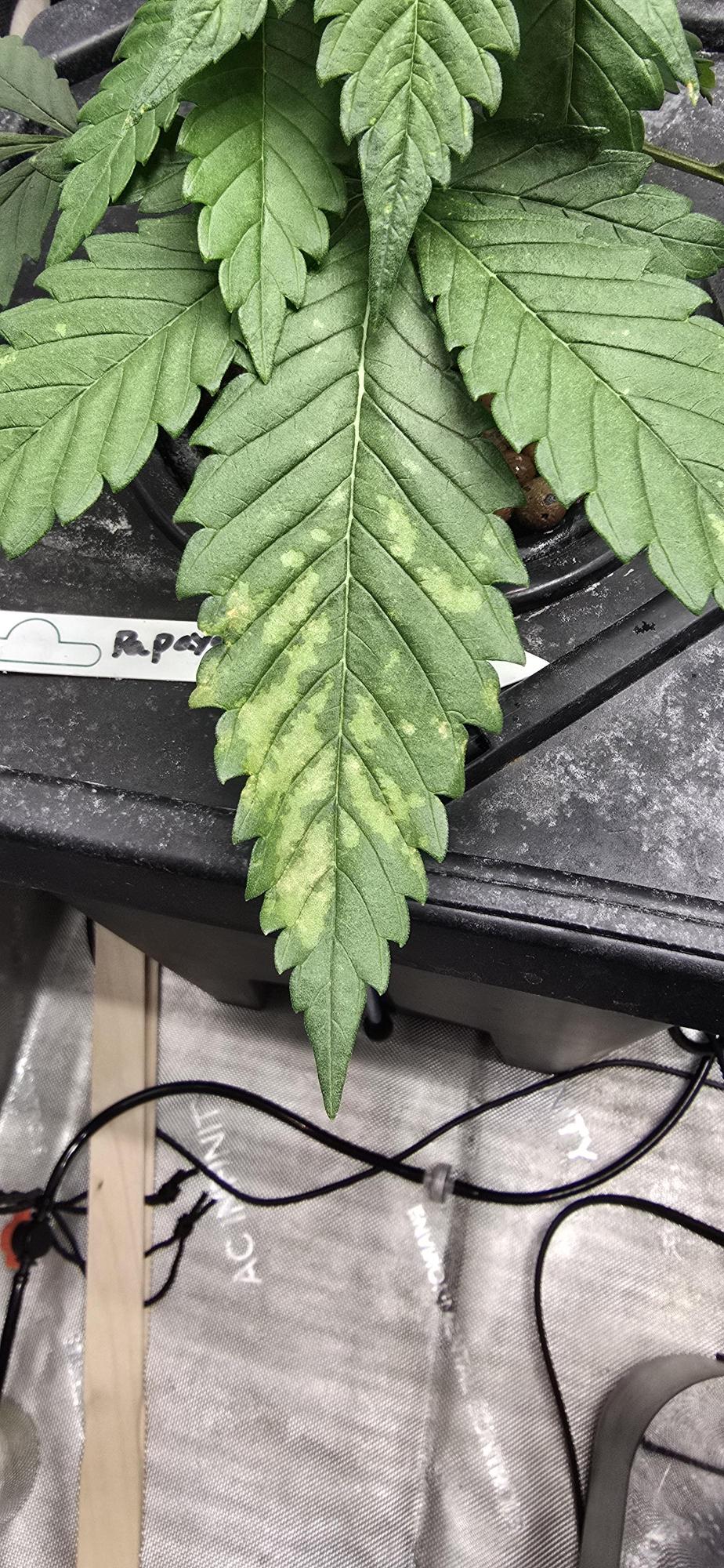
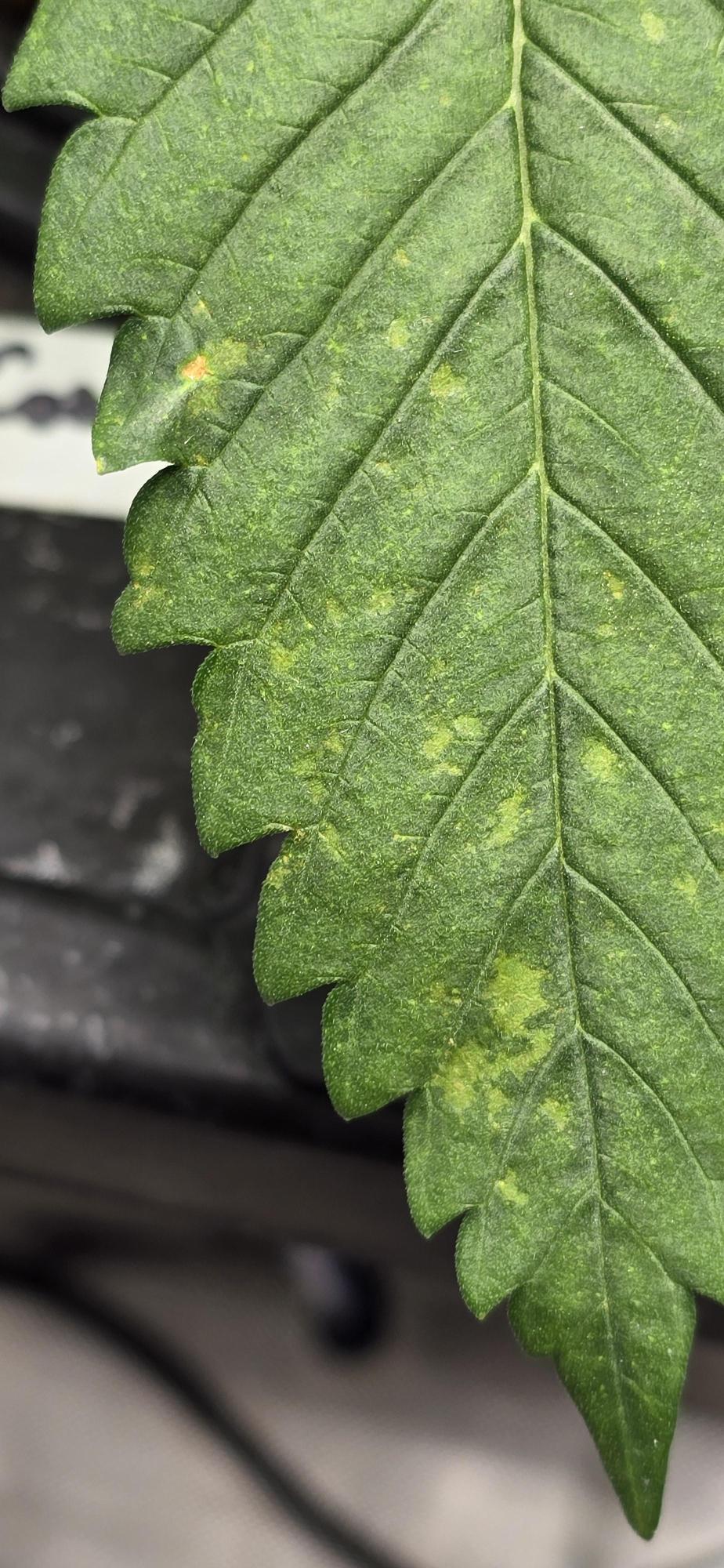
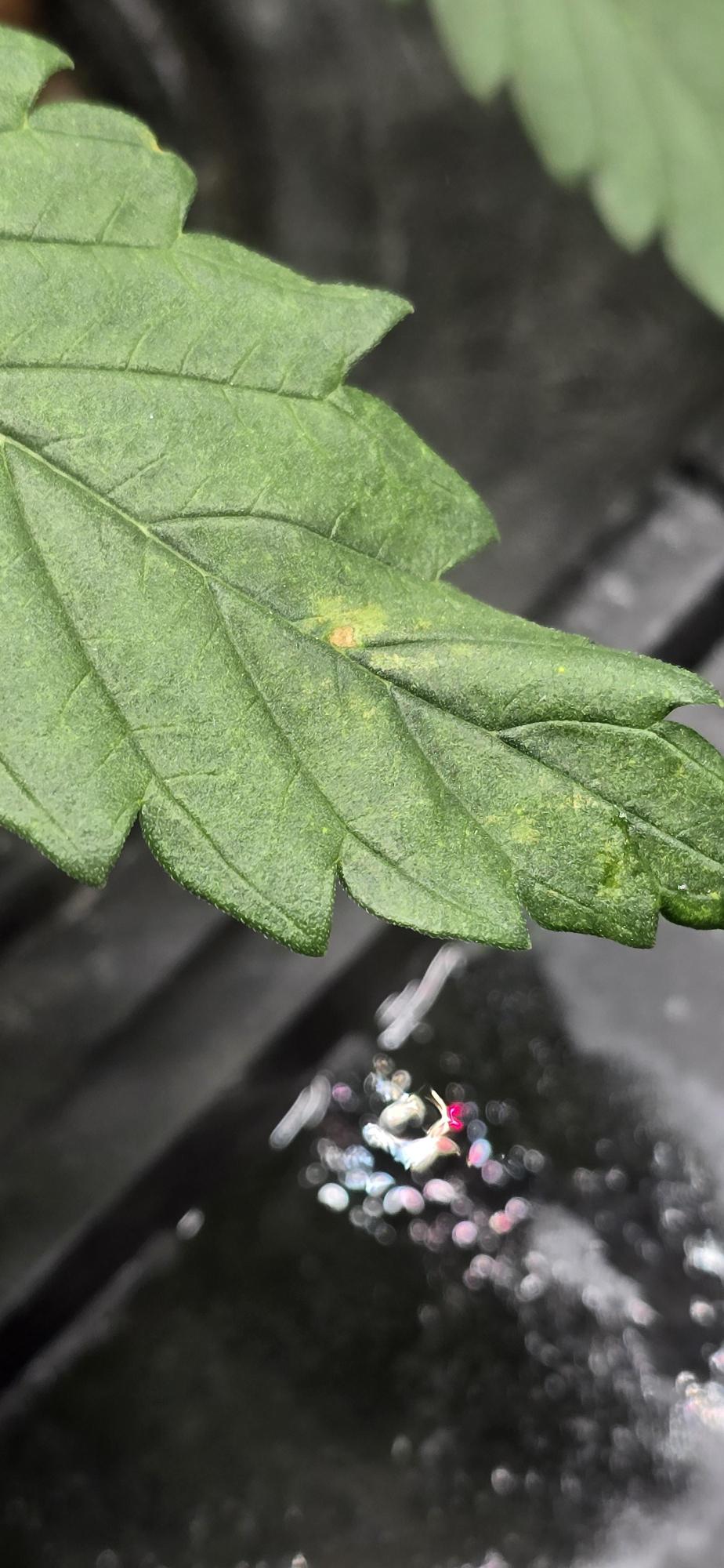
Good stuff happening today and possible bad stuff as well. Good things first. These 2 plants are getting nice and plump. Well Lemon Cherry Cookies is. Papaya Cookies has a few lower spots. Her canopy isn't very even at all. Thelmouter half just stopped growing. She's also showing signs of nutrient deficiency. She definitely has enough nutes. It's because of her smaller trunk. I could be wrong, but that's the only thing I can think of. I checked for bugs with my microscope. Nothin. Checked everywhere for signs of rot, root rot and anything else that could potentially be causing the yellow spots. They are burning through it looks like.
4 likes
comments
Share
Used techniques
LST
Technique
Defoliation
Technique
6
Week 6. Flowering
1mo ago
1/21
43.18 cm
Height
18 hrs
Light Schedule
24 °C
Day Air Temp
5.8
pH
Weak
Smell
950 PPM
TDS
50 %
Air Humidity
20 °C
Solution Temp
20 °C
Substrate Temp
20 °C
Night Air Temp
26.5 liters
Pot Size
1.89 liters
Watering Volume
60.96 cm
Lamp Distance
1100 PPM
CO₂ Level
Nutrients 4
Lotus Cal/Mag
0.33 mll
Bloom
1.3 mll
Boost
0.33 mll
Prilyfe13 11/04/2025
What a busy day. I put up the trellis net last night and had to take it down today for a little while. Both ladies got a new water swap and a new week of nutrients. We've taken out the Grow nutrients and replaced it with Boost.
So far they seem to be fine. Looking great even. Not much else to report. It was a busy day. Setting up for a new feed. Then other stuff not related to weed.
Both plants have grown to about 17". A little shorter than I'd hoped by now, but they still have stretching to do. I feel like it should be a few more days of stretch then full blown flowering. It looks like Lemon Cherry Cookies is gonna have some super tight stacks. Tight internodal spacing. Anyway, let's hope for 24" or more.
On a side note. I'm wondering now if I started the Bloom Nutrients a bit too early. That could be why they aren't already 2 feet tall. Anyway, it's only been a few days. I'm also concerned about stopping the grow nutes this week, but that's what the instructions say. I could add a tiny bit just so they have some growing nutrients left for the stretch? Is that a thing?
So we have an automated environment. Today I dropped the humidity and frankly the tent seems to be having trouble getting down there. The fan is running full blast and the humidity is stuck at 52%. The AI doesn't like that so it's chilling away at it one little percent at a time. Lol. Temp is pretty solid during both the day and night.
Anyway, that's all for today.
11/05/2025
Almost forgot to do today's check in.
First let me start by apologizing for my lack of detailed information. Home life is hectic and I honestly forget to add it. So I'll try much harder to provide more details related to the growing. Like daily TDS and EC. pH is done daily. Although, I have a major problem that I think I found a solution for. How do you change out the water from a DWC system when the top is in a scrog net. Well, in this case it's very simple. A water pump with 2 hoses and a second bucket. Pump the water out, pH, put the water back in. I might have to get a water cooler to do it, but that's ok. I'll get one of the DIY version. For water changes, just as simple. Drain the water into the second bucket then fill the bucket back up with fresh nutrients. However, I think a weekly change would be required to prevent buildup that I can't get to and not every 2 weeks. I'll see what happens I guess, but the ladies are officially in the net. I had to lower it so it's touching the lower colas. I fed the taller ones under the net. And how flat it is. See the pic. Super flat. Very satisfying. Papaya Cookies... Not so flat. Very chaotic with her branches. The left side closest to the wall is like half the height as the middle and the right side is growing straight up to avoid the other plant. It's really weird. Anyway, scrogging that will be a bit of a chore I think. But it needs to be done. I want some quality tops and this is the best way to achieve that goal.
Bushy as ever, Lemon Cherry Cookies is turning out to be a beautiful plant. Super flat canopy and leaves galore. She'll definitely need a haircut after the stretch. Don't know how much of one. I like to keep my ladies a little bit leafy while not blocking bud sites or airflow.
Papaya Cookies is looking great! Her stem is almost as thick as her counterpart even with the damage she survived, but I'm still getting signs of deficiency. Oh well. I know it's not the nutrients. They are at the right strength. I think. Nearly full dose. But still I think it's just a lack of roots and a choke hold still in the stem. Other than that she is looking absolutely fantastic. Buds everywhere, good color and lots of branches. We'll get them spread out in no time.
The Other One...
It's growing bud. How is it growing bud?! I found a fungus in the tray so I took it out and I'm keeping it out, but just in case, I sprayed the plants and the fungus with the crop defender 3 stuff. It's really interesting how you can see what I did throughout the plant. Like I starved her, you can see that. The. I overdosed her, you can see that, and I left her alone. Can kinda see that. Now it's grow light deprivation. Instead she gets a 60 watt bulb with a lamp shade. Hahahaha. We'll see what happens. Honestly I can't wait to see what she ends up doing on the end. Will she make it to harvest? Will she wither and die well before harvest? I don't think so. I'm gonna give her a normal dose when I feed her next. I think I've said this before, but unfortunately I can't lift the tray at all. The roots are routed throughout the tray and can be damaged when I place the tray back down, or exposed to the light. Surprisingly I haven't seen any algae. So that's that with the other one. She has a single cola and it looks like it's gonna get big. Hahahaha imagine that. This beat up science experiment grows a huge juicy cola loaded with terps.
The environment is giving the AI system a bit of trouble today. I changed the environmental settings for the flowering stage. The temp is still 75°, but I changed the Humidity to 50%. That being said, the system can't get the temp below 76° and the humidity below 56%. I have a dehumidifier in there to help, but I think the only thing it's doing is making the tent hotter. Like really, the humidity won't budge. The dehumidifier I'm getting is on pre order, so I'm trying to work with what I have. It's kinda tough. Well, not for me. But the AI is having a tough time. Lol.
I'm gonna open it for a bit and give the exhaust a bit of a break.
Nutrients are looking really good. No negative reacti8at all. Kinda think I should've added a little bit of grow in there to help with the stretch. But I think it's too late. They already have established flowers. Also, they're only drinking around a half gallon a day. I would have thought they would be at a gallon by now. Maybe next week. I think they'll get big enough. They are still in early stretch and they're already 17" or 18" tall and growing fast. If my time lapse video show correctly, they are growing roughly an eighth of an inch every half hour to an hour as of the beginning of the week. If she grows a little faster, like a quarter inch every half hour, she should be pretty tall. Not sure how tall, but I'm guessing maybe 29" to 36" total. 36" would be fantastic. Good internodal spacing with a plant that tall. Lemon Cherry Cookies might just end up with colas as long as my forearm, like my Gorilla Cookies run a couple year ago. Great run, that.
That's all for today.
11/06/2025
Aargh! Lost the whole entry.
Ok, so I'm not writing the whole thing again.
It's now the 7th and I'll update later today.
But yesterday, we had some awesome growth and the trellis net was lowered to the canopy. I tucked the tallest tops. I also topped off their buckets a little over a half gallon each. Don't know if I mentioned it, but I dropped the light power down to level 8. They took to it like I thought they would. Nice little reach. Not that they weren't having issues at level 9, but I want more stretch. Makes it easier to trim. Lol.
11/07/2025
I desperately need help. So I put the trellis net up and now I can't pH the water. I can't get the plants out of the buckets. Does anyone know how to do this? Seriously need help.
Anyway, for now I have taken the trellis off. The branches are really strong, so there shouldn't be any issues. And the pH is now back to 5.8. No idea how it keeps climbing so high. It was 6.7 today. Crazy high. I premix my water too, so it's all settled and mixed up. Then I give it one last good shake and pH before pouring it in. Still climbs. Eventually I'll figure it out... Unlike the damned trellis net thing. Lol.
Anyway, we have some beautiful growth. 19" tall and happy. Well, no. Papaya Cookies has serious signs of deficiency. I'm guessing magnesium. Or whatever helps deliver through the stem. It's clogging up. The roots are also not very impressive. But other than that, she's growing pretty fast and has a whole lot of bud sites. The bad leaves are classic signs of deficiency. Yellow spots and whatnot. But they aren't too bad yet. I'll keep her going just in case she makes it. Maybe she'll have some good bud considering she's dying.
Lemon Cherry Cookies looks great as well! No issues whatsoever. Even with the water pH level. I should also mention that her root ball is naw massive and getting bigger. By the time she's done growing, she should be a good 30" if the light will allow it. It's only 19" from the canopy. But it's maxed out. Damned small tent! I will have to figure out a way to raise the light even higher. But she's looking great! Drinking an easy half gallon a day. Maybe a bit more. Tons of bud sites and what's nice is that they aren't quite flowers yet, so there's more stretching to be done.
The Other One:...
..........
The environment was pretty good today. A solid 76° temp and 52% humidity. Good numbers.
I'm also thinking about the size of this tent and what that entails. Harder to keep the temp and humidity under control. Plants are a bit more difficult to work with unless you don't move them at all... Or only grow one. Nope. Not happening. Lol. 2 or more.
Over all, a 6 foot tent is not the best option. Next is a 4x4. Gotta have it. I'm losing way too much graw space. The two plants I'm currently running. If it were a 4x4, these 2 could flourish without ever touching the other. That makes them even bigger. More space. More growth.
That's all for today.
11/08/2025
We start our day out with a couple clippings. Just a few leaves off each plant. The a few super big ones and 2 that were big and facing inward. It's about an hour before lights out for them, so they are a bit droopy. No matter. They'll perk back up when the lights turn back on.
I've also read that clipping before dark and feeding at first light are a thing. Apparently, and I believe it, training and trimming at night is the best time as the plants heal better in the dark rest period. Feeding in the morning helps the plant to take in nutrients most efficiently. In turn, the plant gets healed quickly and feeds strong. Utilizing the entire day. That's what I've read at least and I'm doing that. Although, I do chack pH and water levels before dark, I don't do anything unless the pH is out of control or the water is really low. So far I've only let it get down about 2 inches, maybe 3. But I top off at the beginning of each day. So far it's about 3/4 gallon. I expect a gallon a day next week. They are growing so fast. And bud sites are everywhere as well as at least 42 tops between the 2 plants. I didn't get an count, but as it looks, it's around 40 to 50. 42 is superficial.
Papaya Cookies looks pretty good for a nutrient deprived plant. She's a fighter. I also started taking the bad leaves off. They don't need to take up energy to heal a leaf. I have a theory. The plant is starving, right? I assume it's due to the size. What happens if I take a whole lot of leaves off. Wouldn't that help the plant distribute nutrients in a more concentrated dose? Maybe the plant will still require all those nutes, but it's no longer supporting tons of leaves and only bud sites. I'd take about 2/3 total off of her. I'll be doing that in small amounts after the stretch.
Lemon Cherry Cookies definitely needs a haircut. She'll also be getting about 2/3 snipped off. I might do it in 2 sessions. She's healthy enough to take it without a problem. Her canopy is super flat, except for this one top that grew about 3 inches last night. I don't have the scrog net there anymore, so I'm trying to figure out how to tie her down. The clips are too big for the internodal spacing. I'm thinking of it gets over 4 inches, I'm gonna supercrop it. However, the rest of the plant grew about an inch. Not quite as fast as I'd hoped. But there's still time.
The light is still topped out with its current rig, and it's only about 18" from the canopy. But the plants seem to be happy with it. I'll keep an eye on it. Hopefully I'll remember to take a reading after the plants wake up. I can't tell, but I might be able to bump the light power back up to 90%. I don't think it will stress them, but it might and I don't want to stress them yet.
The environment is pretty good. Not perfect, but pretty good. The humidity keeps spiking to the top of my limit at 55% it climbs a little bit over, but not for very long. I need a better dehumidifier.
11/09/2025
I can't tell if it's good or bad that I can snap leaves off right at the base just by tugging down on them. I'm guessing good? I've seen people with super healthy plants do that. I wonder if it's better for the plant, like to heal. We'll see. I took some leaves off today. A couple days early, but they were really starting to crowd. So I plucked a bunch off each plant. They didn't seem to mind at all. About an hour and a half before lights out.
I'll also have to top them off again. Definitely thirsty plants. I think Papaya Cookies is a little bit ahead of Lemon Cherry Cookies. Not sure how, but she has very well forming buds, where Lemon Cherry Cookies is just starting to form them. She's also drinking more. Not a lot more, but noticably.
I also think the stretch is over. From my experience and from what I've read, when the buds start to take actual shape, the stretch is coming to an end. Then it's just stacking. I'm starting to see stacks on both plants now. So it was the perfect time to do a. Light defoliation. In a day or 2, I'll do a full defoliation. As they are autos, I'm only taking about 1/3 of the leaves. If I have to pluck a few here and there afterwards, it's fine.
Papaya Cookies is looking really good despite having less uptake at this stage. She's really thirsty though and I'm wondering if that's a good thing absorbing more nutrients to pull in. I'll keep feeding her. I don't think she's gonna die either. Far from it. I give them about 2 to 3 weeks at this growth rate. Probably 3 more weeks. Lol. I'm guessing end of November to early December. She has a whole canopy of tops. The left side is a little low still, but nowhere near as bad as before. So far everything seems to be leveling out on its own.
Lemon Cherry Cookies looks absolutely fantastic. She has a whole canopy of tops now and more coming in as I trim away the foliage. Bud sites all up and down each branch, with stacks starting on some of the tops. She's gonna be a good yielder. I'm not putting any guesses in quite yet. I don't have a feel for what she'll produce. She's an indica, so I'm expecting huge fat dense buds. They should drop with resin. As long as I do it properly that is. Lol.
The environment is looking great. I decided to drop the night temp to 65°. Not that it goes that low. It stays around 67°. Which is fine. I just wanna prep them for some really good colors. My only concern now is the dehumidifier. Mine will definitely not cut it. I can try to plug one more in, but it's also a small one. Hmmmm, maybe the second one will work. I just have to find it. Lol.
All in all a good day. I'll check back in later if there's any updates.
Update: 22" is the end height for the stretch. That's both plants. They are totally level. But they didn't grow one bit during lights out. Not one bit, but the buds are forming. And we have stacking. Next week (in 2 days) I'm going to give them the full trim. Not a ton of leaves. Just big ones and ones facing in. Light height is 18.5" I I had slack I didn't realize I had. 2 inches. Looks great! And they are drinking quite nicely. Papaya Cookies is at about 3/4 gallon a day and Lemon Cherry Cookies is at a little over half a gallon. I got a pic of the root ball for you. It's massive.
11/10/2025
Well, today was trimming day. I had planned on it tomorrow, but I got bored this morning before lights out. So I thought to myself. "Hey, it's about an hour til lights out. They stopped stretching, so why not " lol. The only thing I'm not a fan of is that they are already starting to drop for lights out it's probably because they get too much light, but they don't seem to mind. Anyway, the fact that they are already droopy means I can't tell how much stress I'm putting on the plants during the one and only trim session. I'm assuming because they didn't drop much more, they're good to go and will heal up nicely during theights out period. It's only hearsay, but lights out means healing time. Sure... Why not? Makes sense.
Papaya Cookies is really looking good. She doesn't seem to be showing anymore signs of deficiency, whatever it was. And is growing happily. Her flowering sites are huge. I'm expecting some fat bugs from this one. Probably long though, because of her sativa leaning stuff. Trimming her was pretty easy. I was surprised at how many open spots there are in the canopy. A couple huge ones that will hopefully fill out over the coming weeks.
Lemon Cherry Cookies is really looking good. She has a whole bunch of tops forming and trimming was an absolute breeze. I hardly used the trimmers. No need. The leaves I wanted snapped off with ease. Everything that was big or old. Anything that didn't pop off was left alone. Just over 1/3 of the plant. She's still quite full and has very little space for more tops. Maybe if they spread out a bit around the outside, but that may be the time for scrogging. I don't think so though.
Speaking of scrogging, I found out how to pH the water with the plant still in the bucket. Top off everyday with pHed water. Sounds simple, but what if there's no space to top her off? Well, my solution was to buy a small water pump. Pump a gallon out, pH it, and dump it back in. I haven't had to do that, but if that's the case, it's a great idea. Chances are you won't be doing this much or at all. But yah, I guess a simple top up will do the trick. At least for the most part. I found yesterday that the pH was a bit low, so I topped off with a slightly higher pH than normal. Landed right on 5.8. so it clearly works. So simple I completely looked over it.
So far the environment is nice today. It's been snowing today, so the humidity in the house is super low. It's keeping the humidity in the tent at or around 50%. The temp is a bit high at 71° for lights out. I have it set to 65° for night temps. It won't get that low. Maybe 67° but that's about it without an air conditioner in the tent. Currently it's 68° in the house. 36% humidity.
So that's really it for today. Both pants stopped stretching for sure. But they are stacking. So that's good. Tons of tops. Trimming was awesome. What a morning. Good times.
4 likes
comments
Share
Used techniques
ScrOG
Technique
Defoliation
Technique
7
Week 7. Flowering
1mo ago
1/16
60.96 cm
Height
18 hrs
Light Schedule
26 °C
Day Air Temp
5.8
pH
Normal
Smell
950 PPM
TDS
45 %
Air Humidity
20 °C
Solution Temp
20 °C
Substrate Temp
18 °C
Night Air Temp
26.5 liters
Pot Size
2.84 liters
Watering Volume
40.64 cm
Lamp Distance
950 PPM
CO₂ Level
Nutrients 4
Lotus Cal/Mag
0.33 mll
Bloom
1.3 mll
Boost
0.33 mll
Prilyfe13 Well well well! We made it to week 3 of flower and everything is just fine. Hahahahaha! Much excite!
11/11/2025
So here we are! Ready for a new week and some new stuff to look at. Over the last couple weeks we've been focused on upward outward growth. Height and leaf structure. Roots and nutes. (Had to tune there. Just had to do it.) But now that the stretch has basically ended, it's time to focus on the buds. We're going to focus on the lowers this run. I feel like tho
This week we are changing some things. I've decreased the humidity down to 45% and increased the temp to 78°. I might drop it back down to 75°, but I've read you can have it warmer and brighter with CO2 in the mix. And I happen to have CO2 in the mix. So I'm trying it out. Plus, I think the plants are looking for more light. They are praying a bit I increased the light intensity to 90%. It should be around 850 PPFD. I know that's a bit high for an autoflower, but these 2 are definitely enjoying the light.
As for the solution, it's stays the same this week. I set the pH to 5.9 as I have read a slightly higher pH is good for the flowering stage. Probably helps with specific nutrient uptake.
Papaya Cookies is looking fantastic. I noticed that she has a circle of tops all leaning out and making a nice open canopy. As for any ailments, I don't see anything anymore. I got rid of all the leaves with any type of issue on them and am now at all fresh growth. And some of the older leaves just to keep some energy coming in. Thos of course wasn't today. But the circle of tops looks great. I may have to use the scrog net. We shall see.
Lemon Cherry Cookies also looks fantastic. She has tops everywhere. Nothing leaning out, but a pretty even spread of tops all over. I did notice that she got a little bit taller than Papaya Cookies. But I'm not sure when that happened. They were perfectly level the other day. Now she's about an inch taller than her counterpart. Maybe a bit more. Something tells me this little lady has a bit more growth in her. I'm just not seeing it. Hopefully she gets over 24". That's what I want. 2 ft plant. I'd prefer a 3 ft plant, but I can't have everything. This one will do just fine. Tons of bud sites. Lots of light and air flow. Perfectly fed.
I also need to address the fact that I won't be cleaning out my buckets this week. There's no change in nutrients, and I made sure to at least wipe the sides of the bucket just over the water. There's a lot of air and water circulation, so I'm not all that worried about anything slimy or icky. There's just no point. They are getting just under a gallon of fresh water every day. So it eventually replaces the older water and depleted nutrients. Anyway, rant over. Lol.
Oh no! I just spilled my humidifier! Shit!...
Well that sucked. Anyway, I have these new grow tent duct vents. They are supposed to block out the light and let the air in. The ones I got go on the 8" ports on the bottom of my tent. Good airflow.
That's all for now.
11/12/2025
Well I noticed an issue with both plants. Light stress. They seemed fine for the lostest time with the light at 90% now I have the light at 60% and the DLI is 45 mol. The tent is also running a bit warm and won't go down. The humidity is also giving me a bit of an issue. It won't stay below 50% I have it set to 75° and 45% RH.
Anyway, light stress. I think I cought it in time before any real damage can be done. Both plants were showing signs of stress. Yellowing tips, cupping leaves, praying to high. All the things. So let's hope they are alright. I bet they are.
Papaya Cookies looks great. I had to take a few leaves off of her. Inner leaves that were blocking bud sites. I also noticed the sativa side of her genetics. The internodal spacing is pretty long. I like that for trimming. But I also like a super dense bush. Just buds and colas. Barely any leaves. Not true. I always keep leaves.
Lemon Cherry Cookies was the one that I noticed first. She was perfect until now. And then I knew it was light stress. Anyway, other than that, she's doing great. I did pull a few leaves as well. Not too many. Same reason. Blocking bud sites.
The pH is swinging down now. So I need to add a lot of pH up. When I added the silica first, it was super high. It kind of leveled out to like 6.2, but without it, it's like 4.3 and that's way too low. The watering trick works for the most part. I forgot to increase the pH to 6.2 so it can adjust the pH to 5.8 it works, kinda. As I said, I didn't bring the lH up enough to get it at 5.8. So today I needed to put them in the spare bucket for pHing. No big deal, but they are gonna get heavy and bendy. We'll have to see what happens. Hopefully they start drinking a gallon a day soon. Much easier to pH a gallon of water than to try and do it with half a gallon.
The Other One still has plenty of life on her. Still growing that main cola.
That's it for today.
11/13/2025
I noticed a leaf start to die on Papaya Cookies just like the last time. So I sprayed the shit out of the plants with the crop defender stuff. No way am I running into another infection or disease or bug. Nope. Not me.
I'm also starting to think another few days of grow nutes would have been a superb idea. I just have a feeling had I done that, I'd have a larger canopy and taller plants. However. The disadvantage to taller plants is the light height. I'm topped out and the plants are currently 16" from the light. And they're only 24" so I guess a perfect plants size in a 3x3 is 2 ft tall. I think I can go a bit higher, but I'd have to attach each corner individually and raise it that way. I could get about 5" out of that. Then I can increase the intensity.
Speaking of, I found that my leaves were starting to get yellow tips on both plants, so I took a peek at the rest of the top. Light stress. Not much, but enough to make a couple of leaves start to canoe. And a few were praying way too hard. So the light went from 80% all the way down to 60%. The light at 80% had a DLI of 55 mol. Maybe 60. I'm not sure anymore.
Anyway, it was way too high. So I messed around with it. 50% power was actually the most accurate, but I wanted a little bit more. In the center I'm trying to separate the plants, so there's an opening where the most concentrated light hits. It looks pretty good so far. The leaves are starting to go back to normal except for one on Papaya Cookies that was near death from last night to this morning. Lights on hours for the tent.
Other than that, the plants look really healthy.
As for the environment. It's pretty much spot on. No hiccups. No issues. When I sprayed the plants down, I made sure to keep the probe out of the way. Naturally the humidity went up a bit, but it's now lights out and these ladies are getting their rest. The humidity can stay up for a little while. It'll drop back down when the plants dry off.
I think that's all for the day. I didn't check the pH as I forgot. But it's ok. I'll be topping them off anyway.
Speaking of, Papaya Cookies is drinking the most at nearly a gallon a day. Lemon Cherry Cookies is a little behind drinking about 3/4 gallon a day. No big deal. That's just the pace they drink. However, with the light stress taken care of, I can assume they'll start drinking more.
Something I noticed is how light the smell is. As I said before, a plant smell is a healthy plant until it needs to smell. At this point I should be seeing trichomes. Haven't seen any. I'll take a peek when the light comes back on. I mean, it could also be because I live in the smell. So I might be nose blind. But still I can tell a big whiff of strong weed when it comes to me. But yah, I wonder if the light stress was melting the trichomes before they could develop. 🤔 Ponderous.
However, if I'm right, then the plants are still super healthy and happy. Reason being. These are 2 completely different strains. I chose them because of the short life cycle they have. But each one is different. But neither of them have a strong smell. Not yet anyway. But I have concerns. Isn't the lack smell a lack of trichomes? Not good. I'll have to research this.
11/14/2025
Having some trouble getting the heat down today. It's stuck at 80° and that's not good. No clue what else to do. I opened my door to let some 45° air in and that did nothing. Opened the tent door and it only dropped to 75° instead of the normal 70° to 72°. No changes whatsoever. I don't get it. Does something happen in the flowering period where the plants turn themselves into heaters? My heater is off, the humidifier is off. The dehumidifiers are on, but they've been on for a week or so. No changes there either. Please advise. Lol.
The pH is wild today as well as the TDS and the EC. They are reading super high. I don't understand that either. They both got the same slurry of nutes as always. What am I doing wrong? It's all a mess. Lol. The water temp is dangerously high. I have a couple ice blocks in the buckets to help keep the root zone cool, but it won't be enough. They thaw really fast.
So yah, just a strange day of everything going wrong.
I'll check back this evening if anything changes.
Alrighty. I'm back. So a little update. I've got the water pHed back to 5.8 but the nutes seem to be out of control. I might just add plain pHed water today. Just to help drop the TDS to a reasonable range. Currently it's at like 1250 ppm. Although, I do have another mix ready to go with only 700 ppm. That's also pHed to 5.8 and they'll only need about a half gallon each I think. They may need more. But I'll cross that bridge when I get there. I might do plain water, I might do another light mix. Probably a light mix.
I've been plucking the weird leaves off of Papaya Cookies for the past few days. Chances are this little lady will last to harvest at the rate she's going with any nutrient issues. It could also be the crazy fluctuations in the lH or the crazy high nute potency. No clue how that happened, but I'll keep a better eye on it. Honestly I haven't noticed any nutrient toxicity issues. Lemon Cherry Cookies has a nice deep green color. But a bit too dark on some. We'll have to see what's in store for us when the lights come back on.
11/15/2025
So both laides may have nutrient lockout. Their tips are starting to yellow and the water mix is reading 1440 ppm. Way too high. So I mixed in some plain pHed water and got them down to around 1100. Still a bit high and definitely too high for an autoflower. At least I think. It's lights out now, so I'm waiting for lights on to see how they are doing and maybe replace some more water. Not exactly sure how it got this high, but I'm fixing it. It's definitely early and good thing too. What if I didn't catch it til later. Both plants would be dying. But nope. I caught it really fast. Plus, I check the water daily. I'm pretty sure it was my mix from yesterday. But it's been the same mix for the week. Nothing different. Maybe just a build up I guess. Oh well, live and learn, right?
Papaya Cookies still has dying leaves. One here and there. Not really much to be done about it if it's the stem issue, but I don't think that's the case. I think the stem is completely fixed. So I'm guessing this is a real lockout. No matter. I'll be fixing it completely when the lights come on. I'll pull a gallon and dump a fresh water gallon in. Obviously pHed to 5.8 so hopefully I get the pH and the water back in order. Her pH was also super low this morning. Like 4.8 again. No clue what's going on, but I fixed the pH and it kinda fixed the water. It's not as high.
Lemon Cherry Cookies is slightly different. Her pH is actually pretty close. Her pH was nearly spot on hitting around 5.85, but the water was at 1260 ppm. I tried to bring it down, but only succeeded with about 100. So now the water is 1140 ppm. Still too high, but close to the manufacturer recommendation.
She's also looking suoer great! Buds are coming in nicely. If not maybe a bit slower than expected, but I'm guessing that's due to the lockout issue. Still, no issues except the yellowing tips.
The Other One.
...lol... That's all. Oh yah, I haven't done a thing for her except swap out her water like last week.
The environment is still giving a bit of a headache. At least for lights out. Now it's down to 69° which is a step in the right direction, BUT now the humidity is at 52% which is way too high. I want it down to around 45%
The day environment is ok. The temps have now risen to around 78° but the humidity is down to 44%. So ones up and ones down. SMH. I'll have to figure that one out for the next run. I think I just need the dehumidifier from AC Infinity. That way, it won't blow hot air constantly. It will vary. And I think at that point I can get the VPD right with the temp and humidity. Hopefully.
That's all for now. I'll post some pics what the plants wake up.
PS. This week's video is wrong. I didn't like the time interval and as you can see, it's much too fast. So I changed the interval to 30 minutes instead of an hour. This should slow down the video and help see the progress of the plants more clearly.
11/16/2025
So both ladies look perfectly fine, but I think they were suffering in silence. Too many nutes, and the pH has been plummetting like crazy. So today I took about a gallon out of each and refilled the water with plain distilled. That cleaned up the super high concentration of nutes. Then pHed to 5.8. I'm not sure how long the pH will hold. It doesn't take long for it to tank. And when it tanks, I mean like 4 6 pH. That was in less than 24 hours. I wonder what I'm doing wrong. If anything. Either way, I'm gonna check again when the lights turn on.
So I ordered a water pump about a week ago and forgot to get the tube I need to pump the water out. That should be here today, let's hope it's the right size. Anyway, that'll make swapping water much easier. As I clean my buckets throughout the week, swapping water without actually pulling the buckets out will be even easier. See, I don't let the build up start in the first place, so when I pH, I give a quick wipe down of the bucket and the air stone hose. Sometimes there's a small build up of something, but I wipe it away with a paper towel. I don't see the need to bleach and whatnot between waterings. I keep my area very clean and the buckets clean as well. Maybe a thorough cleaning between runs, but not between waterings. That's ridiculous. It's not like there's poison in the buckets than needs to be bleached away. It's just salts. Soap and water baby. Soap and water. Anyway, that's my rant for the day. Not much of a rant, more like the process of cleaning I have. Maybe good for someone who reads this.
Papaya Cookies is looking great! I took the bad leaves off yesterday and wouldn't you know it, there aren't anymore today. I think it's because I mostly sorted out the EC and TDS nonsense. All that was left was the pH. I made sure to nail it last night and again this morning. Both ladies should be perfectly fine. With the right amount of nutes at the right concentration should make her put out some crazy results.
Lemon Cherry Cookies seems to be impervious to everything. She just keeps trucking along. Suffering in silence as she goes. Well, now that I have the stuff fixed for the week, (2 days) it should be good. Now I have to go back and figure out when I changed the water. Honestly I don't think I need to. I can just add a little extra for the next top off. Especially because I swapped like a quarter of the water today and if it doesn't stay where it needs to be, I'll swap out another gallon. That way in the morning on Tuesday, I should be able to give it a normal dose for the week. Not much of an increase. The bloom nutes are the only thing increasing. Just a quarter teaspoon. So not much at all.
The environment is back to normal now. Well, kinda. The humidity is still a little bit high, but I think that's my fault. I have it set to 45% for the week and when it hits 44% the humidifier kicks on and drags it all the way up to 50%. Not sure why it does that, but it does. It's really annoying. Cuz then it gets stuck in the high 40s for hours. No clue why either. The lung room is at 66° and 37% humidity. Honestly kinda cold for me, but I need it for the plants. Plus I can just put a hoodie on and slippers.
I think that's all for the day.
Oh,
TDS: 940
EC: 1.9
pH: 5.8
Update: Lemon Cherry Cookies has a pH of 6.1 and Papaya Cookies is at 6.9. I might leave it for a bit. I have a feeling it'll swing back down by tomorrow. If not, I'll set the pH lower in the top off. That should help for a little while. But then in 2 days, it's a new week. And I think it's a water swap week. Anyway, they are both still on range with the water around 950 ppm and the EC is 1.9.
That's all for today
11/17/2025
These ladies look great, but I think we have a slight nutrient lockout going on here. The ppms keep increasing. I'm also not seeing signs of anything except slow growth. Weird. Anyway, I fixed the water yet again. I added some plain distilled water. I didn't pH it. I need the higher pH to lower the mix pH.
Lemon Cherry Cookies looks great! She seems a little slow in the swell of her buds. Or not. It's only been a few weeks.
However, Papaya Cookies is frosty and swelling like crazy. She looks fantastic, but there's that weird lack of nutrient uptake. I think. I could be dead wrong. Probably am, especially how she's filling up those buds. Can't wait for the finished product.
The environment:
I've decided I'm following the VPD instead of trying to fight the temp and humidity. The VPD is key for intake of air and nutrients. So let's focus on that. 1.55 kPa is what I'm going for.
The Other One:
She's just in the zone zenni g out before she dies. Definitely getting worse. Oh well. That's the game right?
That's all for the day
4 likes
comments
Share
8
Week 8. Flowering
1mo ago
1/17
64.77 cm
Height
18 hrs
Light Schedule
24 °C
Day Air Temp
5.8
pH
Strong
Smell
950 PPM
TDS
40 %
Air Humidity
20 °C
Solution Temp
20 °C
Substrate Temp
18 °C
Night Air Temp
26.5 liters
Pot Size
2.84 liters
Watering Volume
43.18 cm
Lamp Distance
1000 PPM
CO₂ Level
Nutrients 4
Lotus Cal/Mag
0.33 mll
Bloom
1.63 mll
Boost
0.33 mll
Prilyfe13 11/18/2025
Week 8 and we aren't done yet. Shame that. I'd say another 2 weeks, so a total of 10 weeks? At that point, I'd rather 12 weeks and have some hefty buds. We'll see. They have ideal conditions, constant maintenance of the water mix. pH was out of control last week, so we are gonna try harder to keep it at 5.8. I might change that to 6.0. I know autos like a slightly higher pH in flower. I'll have to research that myself.
Papaya Cookies looks great! She's about 24 inches tall now. Her root ball isn't very big, but we discovered that a couple weeks ago. However, she's still drinking a little under a gallon and that's a decent amount per day. She's not going to be the best producer, but I think I'll get a pretty good amount. Internodal spacing is pretty long, so trimming will be super easy. If I had to guess, I'd say a decent 5 oz out of this plant. From my experience so far, the height of the plant and the amount of bud sites, no to mention the size of the buds. I expect really big cones.
The flower surface is huge. My theory is that buds of plants, flowers, etc, grow into their petals. Cannabis petals are the final fan leaves and the sugar leafs of the plant. The buds usually engulf those smaller leaves to make colas. The ones that are on my plant are gigantic. We'll see if my theory pans out.
Lemon Cherry Cookies, who is now 25 inches, is definitely the winner in this little race. I know I've said it before and it was quite obvious well before now, but I wasn't sure who would give the most bud. This lady is COVERED in bud. There's about 5 inches of empty space on the bottom, but from there up, it's just bud bud bud. The internodal spacing is really short and the buds look like they will be huge. The flowering sites aren't as big as they are on Papaya Cookies, but plenty big enough.
This week we are dropping the environment. I need to get her to 40% humidity and the VPD at 1.6 kPa or slightly lower. Not exactly sure what the temp will be, but it should stay around 75°. Or well, I will make it stay at 75°. I don't think it's time to start dropping the temp. Not for another week or so.
I also can't get the water temp below 71°. Not that it matters really. The water will be changed when lights on. And it also drops pretty good at night. Like. 69° 68.5° somewhere around there. I'm not buying one of those diy kits. I've looked, you need a power supply, a mounting plate, water pump and tubing. Obviously you'd need all they with diy, but it got really expensive in my Amazon cart. Lol. So nope. I guess I'll need to get a couple water bottles and freeze them. I have the other ones, but I don't think they stay frozen for very long at all.
11/19/2025
Lemon Cherry Cookies:
11 am PPM: 861
Papaya Cookies:
11 am PPM: 910
I think I have nutrient lockout. Testing the TDS. I'll check again after lights on. I added a gallon of plain pHed water to each bucket. It didn't change much. I have a feeling I'll have to actually flush these ladies. What's confusing is how both of them got nutrient lockout.
Also, both ladies were praying this morning. No clue why. Nothing has changed. Maybe they are recovering from the lockout? If it's a lockout. Yellowing tips and an increase in the nute concentration. Not sure if the praying has anything to do with it, but I do find a bit of concern with this situation.
On a better note, both plants are loaded in frost. Papaya Cookies has the most. Not bad. We'll see how they come out.
The environment is doing great! All on point. 75° and 40% VPD is like 1.58 kPa.
Excuse me a moment while I get high as a kite...waiting music...
Ok all good now.
Anyway, where was I?
Oh right. The environment. Near perfect.
I want to touch back to the frostiness again. As I understand it, trichomes are defensive mechanisms and also used to catch pollen. The point is that these ladies are stressed and getting frosty. And if they are praying because of light stress...?? Then they would be producing more trichomes. I'm not sure. Honestly I'm at a loss here. Anyone know?
OMFG!!! I forgot. I found a 2 sets of balls on the lower part of Lemon Cherry Cookies. I got them off before they had a chance to pop open. Then I searched the shit out of the plant. Nothing else. I even searched all over Papaya Cookies. I've searched a few days in a row. So if that's the case, and those sacks were there, then the plants are right on point for trichome production.
Hence why I'm confused. This is the right time for trichomes, but is the plant still stressed? And how much? We have distinctive yellow tips indicating a deficiency. (Lockout) Also, if this is a subtle change over on the stage of growth, like peak flowering or something like that.
I'll be back with updated water specs.
Lemon Cherry Cookies:
5 pm : Ppm: 882
Papaya Cookies:
5 pm: Ppm: 914
11/20/2025
Kinda same morning today. pH was high, but not too bad this time. 6.4. The TDS was reading 1050 on both ladies. Lemon Cherry Cookies had the pH of 6.4 while Papaya Cookies was a little bit lower. 6.35 to be exact.
I added plain pHed water to the mix to dilute it a bit. It dropped them both to around 875 ppm. But the pH was still high. So I brought that down to 5.8. The issue I'm running into is the speed the pH rises. It climbs all the way up to 6.6 sometimes. It's been 4 hours since I pHed the water and it's already at 6.2. I think it's a little too fast.
Another thing that was a bit odd this morning is that both plants were happily praying which hasn't really happened in about a week. Maybe they're recovered, BUT the ppms were still higher than yesterday. But now the pH is higher as well. I'm having trouble diagnosing. Any help on that would be greatly appreciated.
Now, it's lights out and they are still praying. At least from what I can see. I'm looking through a night vision camera, so the buds kinda overwhelm the lens I think. Too white and sparkly. I dunno. Can't find anything on that either. Maybe I'm looking in the wrong places.
Lemon Cherry Cookies is starting to fill her buds out. The stacks are coming in. I wonder how much they slowed down. Seems like a bit to be honest. Not too stoked for that. I did notice that some of the older leaves are popping off again. Looks like it's time to remove a few before next lights out. I don't think that causes any stress when you pop them off like that. I'm not 100% sure, but I think when they pop off is when they become obsolete and use more energy than taking it in. Just a theory. Unless these are the leaves that will turn colors, I might as well meticulously pop them off over the next few days. It'll open some more space how that the new stuff is now big old stuff.
Papaya Cookies is also looking pretty good. Although, her leaves still won't pop off. I know a lot of it was new growth, but there was some older stuff I left on there. They still won't pop off. I wonder what that means. They should pop off. At least the older stuff. I really don't want to remove anything that is still bringing energy to the plant. But at the same time, I don't want her to start to crowd. We'll have to see what happens over the next few days. Just a few here and there, mind you. I'm not doing a full defoliation in the middle of the flowering stage. Lol. But a few here and there won't hurt but will help the rest of the plant direct energy to the buds. If I didn't need the weed and had more plants, I'd try stripping the plant of most of her leaves just to see what happens.
The environment is looking pretty stable now. Day temp was around 75° and the RH was about 45%. The VPD was like 1.56 kPa still right where I want it. Night time is pretty good too. The temp is 68° and the RH is 43%. The VPD is 1.34 kPa. Not bad, but I'd like it closer to 1.4 kPa.
11/21/2025
Frosty and smelly! That's what I woke up to this morning. Very happy. Both ladies seem to have recovered from their little issue.
Now they are super happy. Slightly praying and stacking nicely. I am going to say another 2 to 3 weeks. A lot more time than I anticipated, but bigger buds, so I can't complain. Especially with how healthy these 2 are now.
Papaya Cookies drank just over a half gallon. Her TDS dropped a little, but so did the pH...5.3 pretty low. However, with a top off of pHed mix, everything looks good now. Her leaves still aren't plucking off like they should be. It's very interesting to me. I wonder why. It's not new growth, that's for sure.
Anyway, I did a little bit of snipping today. Like 12 leaves. All big and blocking bud sites. Had to dig a little bit to get a couple of them. Those ones were blocking airflow. Nothing crazy. So she won't really notice.
Lemon Cherry Cookies is stacking. Or at least she looks to be stacking. In reality, the buds under the top are just filling out. But still a very much needed swell. Hopefully the next 2 to 3 weeks will show some super impressive bud. I also removed about 10 leaves. Those were also blocking bud sites and one big one in the middle blocking airflow. She has tons of frost on her now. So sticky!
The environment was a little warm this morning. In fact, 77.6°. nothing crazy. But still a little bit warm. They, of course, probably enjoyed it. Anyway, that's about it for the weather today.
I really have to get into the routine of specs again. Like with VPD, CO2, water specs. Like temp, EC, TDS and pH. I just need to get used to it. Never had so much info to go off of. Soil was really messy for me. Not only literally, but figuratively as well. I could never tell what they needed. And I could never tell if there were air pockets. Granted it was easy, but I still find this one more comfortable. Knowing all the things. Very important to me.
That's all for now.
11/22/2025
So today was kinda weird. Papaya Cookies pH plummeted to around 4.8 and the TDS was high as well as the EC. Not sure what that means, I'll have to research it, but yah, that got fixed right away. TDS was 1050 ppm EC was 2.0.
On the other hand, Lemon Cherry Cookies looks great! Her pH drifted a little. It's at 6.05. So I left it. I'll pH back to 5.8 this afternoon after lights out.
The environment was pretty good this morning. The temp was a little higher than usual. 77.6°. The humidity was also a bit high. 48%. I think the VPD was still good though, maybe a little over. I didn't look at it. My bad.
I plucked some leaves today. Not a ton, but a bunch. Both plants had some larger leaves that needed to be gone. Blocking airflow and light. I chose wisely. One thing I learned was how sticky these buds are. They are sticky and smelly. It's awesome. And they aren't even close to done. Speaking of buds, they are starting to take a better shape. Both plants have the cone shaped buds. But are also looking like they'll get pretty fat. Just gotta let them do their thing.
11/23/2025
Yet again the pH for Papaya Cookies crashed all the way down to 4.6. In just 16 hours. No clue what to do, so I took a gallon then added a gallon of plain pHed to 6.5 water. Then I pHed it up 6.2 the plain water dropped the TDS down to 850 ppm and the EC to 1.75. I don't expect it to stay there at all. Not in the next 6 hours. Hopefully it only swings down a bit. And hopefully it will be able to take in the nutrients it hasn't been able to get because of the crash. There's no upward swing, so the plant isn't getting a lot of nutrients she needs.
Lemon Cherry Cookies also had a swing. The TDS spiked to 1050 ppm and the EC to 2.0. The pH only climbed a little bit. Up to 6.1. So I added some plain pHed water to bring the concentration down and then pHed. I think I need to replace a gallon like I did with Papaya Cookies. I want the TDS down to like 800 to 850. Around there. I'm starting to feel like maybe there's just too much for her to handle. Both of them, to be honest. But I can't tell. They are growing and smelly. And this is about the right time, so we should be seeing some major swelling over the next couple of weeks. The smell is still pretty planty, but it's just the beginning. When the trichomes start to get cloudy and the leaves begin to turn, they will both have the full flavor profile ready for the sniffing.
The environment is a bit off today for lights out. It's hanging out at 69° but the humidity is higher than I'd like at 49%. I know it's not bad at all, but I want perfection with my AI system.
The CO2 is now really starting to crank up. I'm hoping I'll get a good amount in the coming few days. I'd like to increase the light intensity a bit. But I can't until I figure out how to clear up the nutrient challenge.
11/24/2025
SMH more plain water in Lemon Cherry Cookies. But the pH dropped this time. So that's good, but the mix is back up to 1050 ppm. I'm not sure what to do. I'm not seeing any signs of stress. Nothing new anyway. Maybe I need to drop it to like 700 or 750. But it's too late to screw around. If the problem persists tomorrow, I'll drain another gallon and replace it with a very mild dose. And then top off with plain pHed water.
Annoying thing, when I move my plants around to pH the water, they get stuck on things. Well, so far I've had 3 branches supercrop themselves on wires, the other plant and when I put the bucket in the tent. Point is the space is small. I bet I could grow a huge plant in this tent, but then it's just one strain. I need a bigger tent. And with the bigger tent, it'll still be tights, but not so much where I can't make space. I'd be tight because I'd be running photos and keeping them in veg til they reach every wall. Wall to wall tops. Then flower. Let them stretch and boom a complete sea of colas.
Papaya Cookies had a very low pH again, but the mix was fine. 925 ppm. Anyway, I added some nutrient water and pHed it back to 5.8. She's also getting orange hairs on top. Pretty early if you ask me. It could have been me accidentally brushing against them with my arm while I tried to get fan leaves. Who knows.
The environment is back to normal for lights out and this morning. It did get kinda hot when I closed to tent back up after working with the water. Like 78°. But I have CO2, so it should be fine.
The increase in light seems to be fine. I'm not seeing any signs of stress or anything.
The CO2 is honestly inconsistent. And that's because the fan runs too high and pulls it all out before it can hit the plants. It bounces between 750 and 1025. So I'm not sure how useful it is. I'll leave it, but still I need a different setup to make it work right.
Also, my inline fan seems to be stalling while it's on full blast. After reading a few articles, the 4" fan works but not as well as it needs to and basically sits at 100% power. So I'll be getting a 6" fan and filter sometime soon. It's obvious, but the 6" fan will do much better at pulling air in. It just does a better job. Not to mention, the 6" filter is super long, so I might be running just that in the tent and the fan on the outside.
That's all for now.
likes
comments
Share
9
Week 9. Flowering
23d ago
1/9
64.77 cm
Height
18 hrs
Light Schedule
24 °C
Day Air Temp
5.8
pH
Strong
Smell
950 PPM
TDS
45 %
Air Humidity
20 °C
Solution Temp
20 °C
Substrate Temp
18 °C
Night Air Temp
26.5 liters
Pot Size
2.84 liters
Watering Volume
43.18 cm
Lamp Distance
1000 PPM
CO₂ Level
Nutrients 4
Lotus Cal/Mag
0.33 mll
Bloom
1.3 mll
Boost
0.33 mll
Prilyfe13 11/25/2025
New week and new water. I can't figure out why my pH is so messy. Always swinging super wide. This morning for example was 4.6 pH on both plants. The mix concentration went up to 1000 ppm on both as well.
The big difference I'm seeing is what's in the water. Papaya Cookies has clean nutrient water while Lemon Cherry Cookies has root debris in it. No clue why it's happening. Hell I don't even know if this is a thing. But it's happening. Hopefully with the water swap, it'll go away.
Maybe I'll have to dunk the roots in a different bucket to try and clear the stuff off. It's too bad I can't bring the whole plant to the sink. Lol.
I could spray the roots down. As it is, that's never gonna happen. So aside from having my cousin come over and hold the plant up while I clean out the roots, I think I'm stuck with this and have no idea what it is or how to fix it.
Personally I think the roots are self pruning. Why? Maybe the concentration is too high and it's eating away at the roots. I doubt it, or it could be not enough oxygen. Don't know how to fix that. My air stone is bad ass. But it's the same air stone and setup in Papaya Cookies, but no debris or old roots. Could it be because the size of the root ball? The one in Lemon Cherry Cookies is massive while the other one is big, but not massive like this one. Could that be it? Who knows. All I know is I need to figure it out. Any ideas anyone?
Other than that, it's a new week and a new bucket of water. I think I'm gonna cut the nutes back a little bit from last week. Maybe they will actually show issues if there are any. I'm only cutting back a little bit. Just the bloom nutes. Instead of 1.25 teaspoons per gallon, I'm gonna cut it back to 1 teaspoon. If it shows signs of deficiency, I'll add a little bit more. But I have a feeling they will be happier with a lighter dose.
Now I can't tell when these ladies will be done. I'm saying another 2 weeks. I said the same thing last week, but I'm not so sure now. They still have tons of white pistils. Especially Lemon Cherry Cookies which is odd. That's the one who should be done first. However, Papaya Cookies has more orange pistils and denser nugs. I really hope both plants come out masterfully. And I really hope they finish at the same time. I'm using this tent for drying. I don't have space for my 2x2 anywhere. Small apartment. Anyway, so yah, drying on the 3x3.
Speaking of 3x3 tents. I'm pretty sure either one of these plants would have filled this tent out. They both filled out wide and deep. Luckily they aren't too deep where I can't access the back, but one of these would have filled out the tent. Especially with the training I could have done with that much room. I think they stopped growing where they stopped because of the size of the space. I bet if they were in a 4x4, they would be much bigger. Because they grow to fit the space. Or at least that's what I'm discovering.
Of course there's the one off that grows to be a beast, but that was a one time thing. And I'm pretty sure the seeding had something to do with it.
Anyway, I'm getting. A 4x4 eventually and will find out if my theory is correct. At least with autoflowers, that is.
Photoperiods may be a whole different story. Actually based on how they grow, it's a completely different story. We can manipulate photos in how they grow and even when they get switched to flower. It would make perfect sense that a photo grow as big as they can in in a smaller space with manipulation.
Anyway, rambling over.
Alright everyone. I have changed the water and this reads. 5.85 pH for both.
Papaya Cookies has an EC of 1.458 and TDS 725 ppm
Lemon Cherry Cookies EC 1.65 and TDS 809 ppm
We'll see what it's at in the morning. Don't really know why the mix is higher in Lemon Cherry Cookies, it's still low enough though. I have a feeling I should dunk both of them in plain water just to get the rest of the debris off. And maybe some of the nutrient buildup off. At least I think that might be the problem.
11/26/2025
2 days over the deadline, but whatever. I'm gonna get some damned good bud if I can fix this issue I'm having.
Specs:
Papaya Cookies:
EC: 1.701
TDS: 838
pH: 5.5 pHed to 5.85 2 hours ago now it's 6.1 (ummmmmm?)
Lemon Cherry Cookies:
EC: 1.765
TDS: 885 ppm
pH: 6.1
Well that's not good. I changed out the water and cleaned the buckets out. It has to be the roots. How the hell do I clean the roots? Or well, rinse the dead stuff off? I changed the water. I made sure the water they went into was clean as well. I have questions. Questions that need answers. To the forums! Hopefully I find a solution.
Good morning. Afternoon for us.
Lemon Cherry Cookies:
PH: 6.05
EC: 1.77
TDS: 885
After pH: 5.8
EC: 1.80
TDS: 888
Papaya Cookies:
pH: 6.44
EC: 1688
TDS: 837 ppm
After pH: 5.8
EC: 1.70
TDS: 848 ppm
11/27/2025
Papaya Cookies:
Before:
pH: 6.35
EC: 1.955
TDS: 977 ppm
After:
pH: 5.75
EC: 1.634
TDS: 829
Lemon Cherry Cookies:
Before:
pH: 6.5
EC: 1946
TDS: 967
After:
pH: 5.85
EC: 1.693
TDS: 843 ppm
Lost power last night while the lights were on. 11 hours of no light and now it's lights out, so another 4 hours of dark. Not too sure what I should do. Should I turn the lights on? Or should I leave them in the dark until lights on? I feel like turning the lights on now when it's not lights on time would really mess with the light schedule and possibly cause some issues. I'm gonna leave them off.
As we can see above, the concentration of the mix is still rising. But the plants aren't showing any signs of real stress. Or at least stress that could be seen. Still not sure what to do. I'm hoping the top off of plain water will help. But I think I need to dunk them both in a bucket of clean water a few times to get all the excess salts off the roots. That's what I think is causing the problem. The roots somehow have buildup in them and it's releasing it in the water. Or something like that. Maybe? I dunno. I think I figured out the debris in the buckets. It's from handling the roots when I remove the plant for pHing. Only Lemon Cherry Cookies though, her root ball is so large I have to lift half of it out of the bucket to put it in the reserve tank. Maybe the oils on my hands are causing issues? Maybe?
So the two issues combined today with the power outage and the water mix still out of whack, I'm afraid there will be some sort of stress that we can see when the lights turn on. Let's hope it's mild.
The environment was also pretty bad this morning. It was 56° in the house this morning. Apparently I lost heat and power last night. So it was cold and without the fan on, it was really humid too. Like 74% humid. But I think it was cold enough for nothing to start to grow. At least that's what I hope.
I might have to change Lemon Cherry Cookies water though. There's a subtle smell about the water. I might change it today. We'll see how it turns out when lights come on. If I'm having the same issue with the increased EC and TDS I'm swapping out the water. I might have to buy some hydrogaurd or something. Maybe that will help clear out whatever is going on. I was thinking peroxide, but I'd rather use things that are designed for Hydroponics.
I might change Papaya Cookies water as well, there's nothing funky about it, but the concentration is still rising. I'll pump a gallon out and replace it with plain water... Again. Maybe I'm just giving them to much to start. It's about 20% lower than the regular dose. Now that I think about it, that's pretty high. And these plants aren't big. Maybe I still need to drop the bloom down. Maybe the boost as well? I dunno. I'm gonna drop the Bloom nutes to 0.75 teaspoons per gallon. Should be 3 teaspoons for the 4 gallons of water. Let's see if I can get it to drop below 800 ppm and stays under there.
11/28/2025
AM readings.
Papaya Cookies:
Before:
pH: 4.9
EC: 1.857
TDS: 945 ppm
After:
pH: 5.8
EC: 1.816
TDS: 934 ppm
Lemon Cherry Cookies:
Before:
pH: 6.35
EC: 1.865
TDS: 934
After:
Didn't do anything. Will top off with pHed water this afternoon.
I want to see if they will do their thing with the higher concentration. Still, I know it's not good, but I really don't want to keep pulling Lemon Cherry Cookies out and mess up the roots. Btw, I've decided the issue with the debris in the water is because of me handling the roots when I pull the plant out of the bucket. I have to left about 2/3 of the roots by hand. So if I leave it alone in the bucket, and pH with top offs, I should be fine for the rest of the week. If the mix reads any higher, this afternoon, after lights out, I'll pull a gallon and replace it. But that means I have to handle the roots. I guess we'll see.
11/29/2025
I forgot to record today's measurements before I adjusted. Papaya Cookies had plummeted pH. 4.6. the EC and TDS were actually not too far off.
Lemon Cherry Cookies on the other hand swung super high, guzzled a ton of water and spiked both the EC and TDS. We are talking a TDS of 1200. How?! I dumped a gallon of plain water in. It fixed it for the most part. This thing is taking in like zero nutrients. I've been advised that the issue with the pH swing is probably the size of the roots compared to the bucket. They said it is most likely shedding roots due to the size. I assumed that is based on a ratio.
Ok, done. Lights turned off before I could get to Lemon Cherry Cookies. However I did dump the gallon of water in. Should be fine. 3 more days and we can change out the water and do a much lighter dose. Here's the afternoon specs.
Lemon Cherry Cookies:
pH: 6.5 (high)
EC: 1.794
TDS: 882 ppm.
Papaya Cookies:
pH: 6.3? (Apparently I did not do my measurements right.)
EC: 1.644
TDS: 820 ppm
So that was just after lights out. So I couldn't take them out and adjust the pH again. But, Papaya Cookies keeps crashing, so this should at least get through all the nutrients she needs.
Lemon Cherry Cookies on the other hand has been swinging up. With her pH up at 6.5, it's gonna spike even more. Maybe not though. I did add that gallon of plain pHed water. I need a bigger bucket. Lol.
Anyway, the environment has been pretty good these past few days. Very happy with that. I've been following the VPD for the most part. So far it's right on the money beteeen 1.49 kPa and 1.59 kPa. While lights out hangs out around 1.30 kPa. Temp is 68° and humidity is 44% for a perfect environment.
Day temp is 75° and the humidity at 45%.
11/30/2025
Morning Readings:
Papaya Cookies:
pH: 4.68
EC: 1746
TDS: 866
Lemon Cherry Cookies:
pH: 6.49
EC: 1904
TDS: 950
Adjusted:
Papaya Cookies:
pH: 5.6
EC: 1519
TDS: 760
Lemon Cherry Cookies:
pH: 6.2
EC: 1753
TDS: 876
So let me explain the way I did things today. Plain water for each. I left the water completely alone for Papaya Cookies and added that with its pH of 8.0. That mixed in pretty nicely. Not good enough, but close. After lights out, I'll probably pull both plants and pH them properly. But I'm trying to avoid lifting, moving or agitating the roots of both plants in any way. Obviously I'll have to pH properly at some point today or tomorrow.
12/01/2025
Measurements this morning were off. This time though, Lemon Cherry Cookies pH swung down to 5.6. That's new. But of course her EC and TDS were high again. So still not taking in nutrients. But she drank a gallon of water. Something is going on. I only lifted her a little bit to see where the air stone was.
Papaya Cookies had a super low pH as per usual. Which is really bad. Her leaves are starting to show signs of serious deficiency or pH damage. I don't know the difference yet. But I do know there's definitely an issue. Anyway, her EC and TDS weren't that far off. So I dumped half a gallon of pH rich water to bring the lower pH mix up. Spot on at 5.8. it also lowered the EC and TDS. Not much though. Unfortunately, my water pump is too big for the access panel. I need to get a smaller one. Then I could pump the water out, pH and pump it back in. Oh well. Next time.
Environment is good.
Why am I getting so much root debris? The pH is always fluctuating and I can't get it to stabilize. Is this the cause of the weird root debris? My other plant isn't doing it with the same mix and same pH swings. I don't see root rot anywhere. No slime nothin. Just light brown.
From everything I can see in your diary the debris and the pH swings are coming from the same two things the plant with the huge root mass is shedding root hairs whenever it gets lifted or shifted even a little and the EC keeps rising because the plant is drinking water faster than nutrients. That combination makes the outer root layer flake off and fall into the water and it also makes the pH move around a lot.
Nothing you described looks like rot, no slime, no smell, no mushy roots, and the plant itself still looks healthy. The roots are just reacting to stress and the pH drift is just the reservoir concentrating overnight. Even if you don’t lift the roots often a very large root ball will still shed when it gets moved at all and yours is much bigger than the other plant’s. That’s why one has debris and the other doesn’t The fix is just keeping things stable avoiding unnecessary root movement and letting the plant settle without constantly pulling it out. The issue is mechanical shedding and nutrient concentration drift not disease. Happy growing growmie 👊👍
Prilyfe13 12/02/2025
Week 10! And we have some revelations. I think I figured out a problem. No idea if it's related to the pH fluctuations, but I'm almost 100% certain that these ladies have been experiencing light stress. At least Lemon Cherry Cookies is. But she's taller, so she got the brunt of the light. I turned it down to 50% from 70% to see if that fixes things.
Of course the pH was off. But now the swing for both plants is going down. It seems Papaya Cookies is leveling off her nutrient intake finally. Lemon Cherry Cookies isn't far behind. But today is water change day. We'll be dropping the nutrients down a bit to hopefully clear out the nutrient lockout. Or whatever is happening.
I'm definitely slowing them down. And not in a good way. Buds are kinda on the small side right now. But I'm hoping with the next 2 weeks to go, and everything fixed, we'll get some glorious buds. Next run will be different. Next run, I'll know what to look for. In my defense, the light is topped out and the DLI is pretty bouncy. So I can't get a solid reading anywhere on either plant.
Speaking of either plant, each one is showing completely different stresses. While Lemon Cherry Cookies is getting really yellow leaves close to the buds, Papaya Cookies has brown spots. Indicative of a nutrient lockout. But the lockout is clearing up. I'm afraid the damage is already done though. Plants stunted, or slowed in growth. Maybe they'll both recover quickly.
As for potency, hands down Papaya Cookies is the most potent. She smells so strong, I have to ease the tent open or get blown away by weed smell. She has a super thick layer of frost all over each bud. Some have more. But it's pretty crazy.
Lemon Cherry Cookies doesn't have as much, but she is certainly sticky and smelly. Maybe I can't see as much because the buds are darker and not as developed as her compadre.
The base readings for this week.
Papaya Cookies:
pH: 5.8
EC: 1.639
TDS: 792 ppm
Lemon Cherry Cookies:
pH: 5.8
EC: 1.502
TDS: 749 ppm
I know they aren't the same, but close enough. Let's hope they start to take in the nutrients and not reject them. I also made sure to use a clean fresh reserve bucket for each plant. I think it helped to clear out some of the loose root fibers. We shall see.
So from here on out, it's just water and observe. Well, keep the pH in check too, but that's part of the observation. I know the damage is done on the yellow leaves, so I think I'm just looking for the leaves to stop turning yellow. Ultimately it's the water I have to keep a very close eye on. Fluctuations with these ladies is definitely causing more havoc than the light stress.
So it's about 4 hours after I made the new mix. Both are at the exact same pH. 6.6 and I honestly have no idea what to do. Take the plants back out and pH it again? Or let them sit in it and see if it swings back down. I think it has to do with the water temp. It's gone up 6° f. Not much but enough to mess with the pH. Any suggestions? Comment down below if you have an idea.
12/03/2025
Some changes today. Both ladies had a 6 6 pH this morning. Each also drank just about a half gallon. So I added about 3 ml of pH Down and mixed it up. Added to the reservoirs.
Morning:
Papaya Cookies:
pH: 6.59?! Wtf
EC: 1.718
TDS: 847 ppm
Lemon Cherry Cookies:
pH: 6.8?!!!!!!!!! What in the actual fuck is happening?!
EC: 1.510
TDS: 751 ppm
I put in 3ml of pH down in my top off. Why did it go up?! How?!
Evening: lights on:
Lemon Cherry Cookies: Got a fresh mix. I took out the silica.
pH: 5.8
EC: 1398
TDS: 699
Papaya Cookies:
pH: 5.8
EC: 1776
TDS: 863
I want to see what happens when I take the silica out. I read that it's not really necessary in late flower. Maybe it'll help with the pH swings, not having it in there. I also dropped the mix. Just a little bit. If Papaya Cookies has any issues tomorrow, I'll give her a new mix as well. It could also be the water. I don't have anymore water money, so I had to go to filtered tap water. It's not terrible, but it's hard. Well, kinda hard. I think. Lol. It's like a pH of 7.9
Anyway, both plants have swelling buds. The timing for most charts couldn't be too perfect with these two. I still have to figure out how to keep the EC and TDS from spiking. No clue how to do that. Hopefully the 2 days in a row where I use plain water as the backup reservoir. For when I'm changing the water out. Just pHed to 5.8. it seems to also be slowing down on the "shedding". Lol. I probably made it worse. For Lemon Cherry Cookies that is.
But yah, getting big and plump. I can't wait for the end result. I'm kinda skeptical of my original estimate of 6 oz. per plant or something like that. But now I'm thinking 3 to 4 per plant. Not terrible, but not great. A plant this size should put out 8 oz if the buds bulk up enough. So there still could be hope for the 6 oz. We shall see.
On a different note, I dropped the temp to 73° f. I'd like a nice purple plant. And Lemon Cherry Cookies is the perfect purple plant for it. Papaya Cookies is an all green sativa. Lime green. Very nice. The humidity stays the same. Now, I'm having trouble getting a legitimate explanation as to why the VPD should be 1.2 to 1.6 kPa when the recommended temp is like 73 and the RH between 40 and 50%? It's too high according to VPD charts. Am I looking at the right charts? Is there a difference between the VPD from veg to flower? I wonder.
12/04/2025
So I attempted to pH the water today for both plants. It was pretty much a fail. However I did get one of them within range. Not that'll last very long.
Papaya Cookies:
pH: 5.6
EC: 1728
TDS: 846
Lemon Cherry Cookies:
pH: 5.70
EC: 1492
TDS: 760
So while I managed to get Papaya Cookies in range, it's still not where she needs to be.
Lemon Cherry Cookies was over 7. I don't know how. And I am trying to keep from disturbing the roots, but I needed to pH that plant immediately. I was gonna wait for after lights out, but I really couldn't. The pH was way too high. Even topping off with water pHed at 5.5 only moved it to 6.9. So I did the thing. And now it's done.
I also think I figured out the source of the high pH. It's the roots. Definitely something in the roots. The holdover bucket was lHed to 5.8 exactly. Less than 15 minutes late and I have her back in her normal bucket. The holdover was already at 5.95. How do I clean the roots without hydrogaurd or whatever. I have sensizyme, but not much and it calls for a whole lot of it for a single gallon. It calls for 8 ml for a single gallon of water. Slightly more. I will never use that much. That's insane. Anyway, I'm not 100% sure what it does, and the description is pretty vague. I don't even know if it's the same stuff.
Anyway, the yellowing seems to be getting worse. It's almost on every sugar leaf on the top buds. Like there's still light burn, but I checked. The DLI is below 40 mol. So it has to be this lockout I can't get rid of. I'll be honest, I think if the tent were bigger, it would be easier to handle everything and I might be able to lift the roots without touching them. Alas. I'm in a 3x3 and there is no clearance folfeom the light. And just not enough space in general. One of these plants with a trellis would have filled the whole tent. Both of them take up a ton of space. Flat against the side walls and flat against each other. Nearly touching the front and back. Both plants did this. Plenty of back and front space. Just no room for a trellis that low.
So let's talk plant health. Because these ladies are not doing all that fantastic. I honestly have no idea what's wrong. I've been doing everything you're supposed to do. Keep the pH in check, drop the EC and TDS to keep that in check. Which it's not in check at all. It keeps going up. And I know it's the roots. And the water level. Because they aren't taking in any nutrients, they drink away the water and leave a high concentration of nutes.
The problem I'm having is that I can't get whatever is in the roots to come out completely. How do I do that? I know they spike the pH, but what is holding them back from eating the nutrients? It's obviously not the size of the roots preventing them from absorbing, but like what is it? Should I just tough it out, do what I can and in a week or so start flushing? I don't think they'll be ready in a week. Well, maybe. It all depends on the lowers and mids. I don't base doneness on top buds. Those will always look done first. But the middle buds, at least for me, are a good sign the plant is done. Lowers should be ready as well, but always end up being larf. I should really try to clean up the bottom of my plants before the stretch. Or is it after? I don't know. I can't remember and I should know this for next run. Lol.
Back to the issue at hand. On a plus side, both ladies are starting to really fatten up their buds. Papaya Cookies is covered in trichomes. Lemon Cherry Cookies is kind of lacking to be honest. But maybe that's because of the color. Purple. Maybe it hides it, but I don't think so. Just lacking. Disappointing. We'll see how she turns out in the end. There's still time.
12/05/2025
Morning numbers:
Lemon Cherry Cookies:
pH: 6.59
EC: 1686
TDS: 839
Papaya Cookies:
pH: 4.65
EC: 1819
TDS: 911
After adding pHed water. High or low. Based on the plant.
Lemon Cherry Cookies:
pH: 6.6
EC: 1535
TDS: 766
Papaya Cookies:
pH: 5.6
EC: 1650
TDS: 818
It looks like things are leveling out with EC and TDS. A little bit. But the pH is still way off. Maybe that'll adjust naturally when the plants start to feed again... For like the last week and a half before flush hahaha.
I'll be checking trichomes tonight. I figure it's time we take a look. I'm pretty sure Papaya Cookies is nearly done. Maybe the next week. Lemon Cherry Cookies on the other hand does not look done at all. Maybe she's closer than I realize. But there's still quite a bit of white pistils all over the plant. I like to wait for the lowers to start getting orange pistils. As I said before, I like to judge by the middle of the plant. With the middle, I like to see nearly all cloudy. Maybe a few amber and next to no clear. From my experience, it seems to work best for me. But that could also be plant height based as well. Still middle of the plant makes sense to me. You know the mids will be done and smokable. Where as the lowers, because I'm stupid and never cut them off, will end up being popcorn or larf. Good for pressing though. I also check the uppers, of course.
Anyway, I have been observing the yellowing on the plant from what I think is light burn. It was still going for a few days, but I think it's done now. Now all I need to worry about is the other deficiencies and lockouts and all that.
Mid-day:
I was just thinking about defoliation and how much I just didn't do it this run. I mean, I did, but it was just a little bit here and there. Anyway, I was thinking about the leaves and how the older ones pop off verses the younger ones that obviously don't. Wouldn't it make sense to just take the leaves that pop off when defoliating and then the new growth that may be in the way? Like old growth while still pulling in light, is now starting to use more energy than producing. Just a thought.
12/06/2025
Morning numbers AFTER Adjustments. I was half awake and forgot to record the readings.
Papaya Cookies:
pH: 6.05
EC: 1556
TDS: 774
Lemon Cherry Cookies:
pH: 6.35
EC: 1484
TDS: 741
It looks like we are finally getting back to normal. Lemon Cherry Cookies got about 3/4 gallon of water with 2.5 ml of pH down in it. It only dropped about 0.1 point on the pH scale. But the EC and the TDS are lower than yesterday and the pH was in range. High but in range. Point being, I think she is finally coming out of the woods. I think I'm gonna pull her out this afternoon and pH the water back down to 5.8. I wonder if she'll start taking nutrients in when she gets back to a 5.8 pH. The EC should also adjust a bit more, as well as the TDS. Hopefully it comes out low and in a better range.
Papaya Cookies still has super wonky pH, but not as low as it was yesterday. The EC and TDS both dropped a little bit as well. After adjusting the pH up to "5.8" which ended up at 6.05. No Clue how that happened. Roots maybe. I doubt it. Maybe it hadn't settled quite enough. I wait a few minutes between testing. Maybe I was a little hasty. Oh well. At least it's over. Maybe it'll drop to 5.8 and stop. Lol. Anyway, she definitely has signs of deficiency now. Not craziness everywhere. I think we're in the clear now. It was rost spots all over a bunch of the leaves. No crazy yellowing like Lemon Cherry Cookies.
So it would seem we are close to out of the woods as I said. Looking good. Both plants are drinking and starting to get even more frosty. Lemon Cherry Cookies is a bit behind, almost a week I think.
My concern is drying space. I have my 2x2, but no space for it. At least none that will let me hook it up to the 3x3 and plug in a fan for air circulation. Unless I run a huge power strip. I could do that. I could also plug in the exhaust fan, but I think the filter is all done. Gonna need a new filter. But I was thinking of putting the exhaust fan in and hooking it up to the 3x3 and putting it on low. To help extract the air.
Anyway, I don't want to let Papaya Cookies get too over ripe. And a week would definitely do that. I'm still trying to figure something out. I might have an idea. Definitely only temporary. Just until Lemon Cherry Cookies is done. Then I can dry both plants and pull the 2x2 down when I'm done. I really don't have space for it. Small apartment and all.
I also added some trichome videos that I took yesterday. I can't do pics. My hands aren't steady enough. But these should suffice. About a week left on both of them. Maybe a week and a half. Papaya Cookies looks to be a little bit closer to done. But Lemon Cherry Cookies isn't too far behind. It's the lowers that concern me. Very underdeveloped on Lemon Cherry Cookies. Papaya Cookies has a bit more going for it. Some decently solid buds in the lowers. Nothing big mind you. I'd say they will be smalls. And not larf. I'm definitely getting larf on Lemon Cherry Cookies though. Unless I want to wait another 2 to 3 weeks. That's about how long some of them have left to go. I think. Maybe I'm wrong and they will finish up by end of next week. Ultimately my goal is to have dried cured bud by the end of December. It doesn't look very promising. But maybe. If I harvest next week, that gives a week of drying and a week of curing. I like about 10 days drying and a good 2 to 3 weeks of curing. Middle of January if I let it go as I want it to. And I think I'll do that. No sense in ruining a good batch for impatient thoughts. Sorry for the terrible video quality. Best I can do.
12/07/2025
Morning numbers:
Surprisingly Lemon Cherry Cookies was almost on point. Her pH was 6.1 EC was 1705 and TDS was 735.
Lemon Cherry Cookies:
pH: 6.05 mix didn't do anything
EC: 1440
TDS: 722
Papaya Cookies:
pH: 5.73
EC: 1489
TDS: 736
Everything is looking alright today. Not good by any stretch, but alright. We aren't spiking and the crash with Papaya Cookies was manageable this time.
Lemon Cherry Cookies actually kept within range and even dropped a little. Her TDS is just a bit lower and the EC is roughly the same. To me, this is a win. Doesn't it mean she's no longer in lockout? Or finally recovering? This is great! Just in time for the last week and a half of the run. SMH. Wonder if that means she'll bulk up a bit more. Her buds are decent size but not big, and from what I can tell, not fully developed. She's still behind. But I'm hoping with the recovery, she'll bulk up and harden off. Currently the buds are fairly soft. Good purple color though.
Papaya Cookies. Well, we aren't doing too bad. The numbers look good. Only had to add plain water and got her right in range. Even super close to 5.8. The best part about this is what I'm observing with the plant. The buds are starting to weigh down the back branches. Some of the fronts are falling over as well. The middle is still standing straight up and that's great! What this all means is these buds while not massive, are rock hard and heavy. And I mean rock hard. I wouldn't be surprised if she only lost 60% of her weight after curing. It's possible.
Everything else looks good. The environment, the water temp is fine as well for both plants. 69° not great, but within range.
Update:
Lemon Cherry Cookies pH has not budged an inch and her EC and TDS are about the same as well. A little drop since this morning
Papaya Cookies also seems pretty good. Her pH is still dropping. This time it took 3 ml of pH up to fix it. I haven't seen anymore spotting on the leaves, but there are so many leaves afflicted with the spots it's hard to tell. Either way, a couple branches are leaning hard. Rear. Decent sized buds on them, but rock hard. I'm expecting a bit more bulking over the coming week.
So I think I have figured out the actual root of the problem for both plants. Overfeeding. It has to be. All the problems started in early flower. Both of them doing the same thing except for the pH swings. That's weird to me. Regardless, I think had I fed like half the suggested dose, we would have been very happy. Well, live and learn. Next run will be better.
12/08/2025
Morning Readings:
Papaya Cookies:
pH: 6.2
EC: 1393
TDS: 698
Lemon Cherry Cookies:
pH: 5.85
EC: 1385
TDS: 694
Well then, that looks much better. Had to adjust and Lemon Cherry Cookies was low today. Weird. But a little plain water brought her right up to 5.85. Nearly perfect. Papaya Cookies with a good amount of pH up landed at 6.2. Not on purpose. I miscalculated, but still better than the 4.5 it was at when I opened the tent.
Both plants are really starting to swell their buds. Not much weight on Lemon Cherry Cookies, but Papaya Cookies on the other hand. Heavy. More branches are starting to lean. I kinda wish the whole plant would do it so it can open up space for light to the bottom of the canopy.
I have a feeling that when Lemon Cherry Cookies starts actually putting on weight, the branches will also most definitely lean.
I never talk about this, but the two plants together makes for an extremely potent smell. They are distinctively different, but it's really hard to tell them apart in the tent. I can smell the difference on my hands, but then I touch the other plant and back to no clue. Lol. I can't really figure out a smell. Can't pin it down. Gassy, heady, sweet and sour. I think... Lol.
So this is the last full week for these ladies. Next week we will be starting the flush. It should only be for a few days. Anyway, today is the last day of normal nutes. Starting tomorrow we are taking out the Boost and dropping the bloom down to a quarter dose. I'll keep the cal/mag in but only a tiny bit. Let's hope everything goes as planned. Lol. So far it hasn't. Hahahahahaha. But we learn from our mistakes don't we? Of course. So everything should go smoothly. Tomorrow starts the new week. So I'll post a couple trichome videos for that. And the last time lapse video at the end of the week. That'll cover a month of growing.
Anyway, not much else for today. Oh wait. So the trichomes on Papaya Cookies are extremely prominent. The buds are thickly covered top to bottom. Lemon Cherry Cookies on the other hand don't look to be covering the buds. Not like her besty. BUT I did notice in the video that there's a whole lot more than you can actually see. I wonder if the purple is hiding them from the naked eye. Plus there's still a lot of clear on her and she definitely has time to build more. I might do a dark period for the three days of flushing as well. I'll have to look into it.
Bye for now.
1 like
comments
Share
11
Week 11. Flowering
9d ago
1/31
64.77 cm
Height
18 hrs
Light Schedule
23 °C
Day Air Temp
5.8
pH
Strong
Smell
950 PPM
TDS
45 %
Air Humidity
20 °C
Solution Temp
20 °C
Substrate Temp
18 °C
Night Air Temp
26.5 liters
Pot Size
1.89 liters
Watering Volume
43.18 cm
Lamp Distance
1000 PPM
CO₂ Level
Nutrients 2
Lotus Cal/Mag
0.18 mll
Bloom
0.65 mll
Prilyfe13 12/09/2025
Last week of nutes and last week of real flowering. Both ladies look just about done. Papaya Cookies is nearly there. Lemon Cherry Cookies isn't too far behind either. But she definitely has the whole week plus a couple days to go. Papaya Cookies might be done by the end of the week, if not sooner. I might have to push her a little more so I can harvest them at the same time. I won't be changing out the water until after lights out as I always do. So today will just be a plain water top off. Well, that's been everyday for like 2 weeks. Lol. But, I noticed both ladies definitely didn't drink as much as usual last night. Another sign that they are almost done. Normally it's close to a gallon a day. This was about a half gallon.
Anyway, I won't be recording the morning readings as the water will be changed out today. If it were under the normal night and day schedule, it would be easier to do this, but the AI suggested this time of day for lights out. It's warmer now than at night. Obviously. Lol. So now I have to wait for lights on after the plants have had their rest to change the water out. Then we can take readings.
Next week, which will only be 3 or 4 days, I'll be doing a slow wet trim. Or I guess the defoliation I should have done 2 months ago. Anyway, I'll be pulling anything with a reachable stem. I won't be cutting the sugar leaves. That's after drying with my new cannabrush. We'll see how well this baby works.
On a final note before lights out, Papaya Cookies has a few buds that are nearly done on the bottom and they are super hard. Really nice smalls. There's a bit of larf, and I can't really reach the buds in the middle, but they seem to be the ones taking the longest. So I think we'll be waiting for those ones to finish.
Lemon Cherry Cookies is kind of the same. Lots of bud in the middle that I can't reach. They aren't done and still have loads while pistils. But the buds on top are still swelling, so that's a good thing. We'll definitely see some bigger buds from this little lady.
Good afternoon everyone. It's 6:41pm.
New water new nutes cut in half.
Readings:
Papaya Cookies:
pH: 5.8
EC: 824
TDS: 409
Lemon Cherry Cookies:
pH: 5.8
EC: 874
TDS: 439
So it's 10 pm and I decided to check the pH and whatnot. It spiked to 6.8. What is happening? I cannot get it to stay in range. I don't know what to do here. It has to be something in the roots. I wonder if it's my tap water. It seems to have worsened since I started using it, but I can't afford distilled bottles. I will be ordering distilled for the 3 day flush. But that's only 3 days and I'm saving up for it.
Back to the matter at hand. pH spiking. Both plants. The EC and TDS also increased. Not by much, but still increased. The goal is to decrease. Hopefully, with the lower nutes, the roots or whatever gets diluted enough to slow everything down. They're already not drinking as much. So there's very little time. I wanted to get it corrected by today. But nope. Nothin doin. Well, I guess I'll be checking the pH tomorrow morning and changing the water out. I might have to change it in the morning and after lights out. We shall see. If it drops, I'm going to pH it back to 5.8 and leave the water alone. That's the plan.
12/10/2025
So today I checked the readings like everyday. BUT today my back is killing me and I can't lift the shit. It's really annoying. So frustrating.
Anyway, Lemon Cherry Cookies didn't change one bit overnight. pH is still at 6.8. the EC and TDS are also in roughly the same spot. But she did drink about a half a gallon and there was no change, so that's good. No increase in nutrient concentration. But the pH man, the pH is brutal.
Papaya Cookies dropped her pH down to 6.6, so that's good. Not in range, but still good. Her EC and TDS are also about the same. So same situation but a lower pH.
So I popped 3 ml of pH down in and mixed it up. Half gallon went into each container. It did nothing to Lemon Cherry Cookies. The pH stayed the same. But the EC and TDS dropped a little.
Papaya Cookies with the gallon, dropped down to 6.2 and the EC and TDS dropped a little bit as well.
Readings:
Lemon Cherry Cookies:
pH: 6.74
EC: 922
TDS: 465
Papaya Cookies:
pH: 6.5
EC: 867
TDS: 430
Forget everything you just read. LMAO. The numbers increased. I guess it's just a waiting game now. I'm gonna pH the water for both ladies after lights out. This morning I just added the plain pHed water. And not much happened. It's the roots. Gotta be. There's nothing left to look at. Well there's the tiny dose of nutes, but I don't think that's the problem. It could also be from the water itself. It's pretty hard. But I have no idea what to do about that. Is there a water softener that can be used in a bucket? Or would that be a really bad idea? Also, I just thought about this yesterday when I was removing Lemon Cherry Cookies from her bucket into the reserve for the water swap. As we all know, the tail of the roots is super long. So I have to lift it with my hands out of the water. My question is why didn't it ball up like Papaya Cookies? I think they have the same amount of roots, but Papaya Cookies has an actual ball where Lemon Cherry Cookies has a tail and smaller root ball. What gives?
Anyway, that was my weekly WTF question. Next week it's gonna be something like why won't this carboflush work? Should I add more? Should I swap out the water... Again?... You know. I'm implementing Murphy's Law here. What can go wrong will go wrong. LMAO. It's all good. I'm preparing for that exact question. I bet it's gonna be increasing EC and TDS levels. That's gonna be the problem. And no idea how to solve it. Swap out the water every few hours? That's crazy. Maybe one or two swaps every day, but not every few hours. A waste of carboflush and water.
So I'm super concerned with who will finish first. Papaya Cookies looks like she could be done by the end of the week. Lemon Cherry Cookies looks like she could use the whole week and then some. I know I said this last week, but it is a real concern. And I still have nowhere to put the other tent. But it's only for a few days and not an entire week. Well, hopefully not an entire week.
I have to trim in the tent so I can kinda keep the smell concealed. The fan on level 10 with just a side door open should be fine. Plus, I'm only taking off the sugar leaves at that point. So it should be a little faster with this brush thing and less smell will escape. Oh, I'll be using Grove Bags for the curing process. I really do like them. But I still need to add a Bovida pack because of the dry winter air.
12/11/2025
Morning readings after correction.
Papaya Cookies:
pH: 5.95
EC: 763
TDS: 381
Lemon Cherry Cookies:
pH: 6.2
EC: 946
TDS: 473
I got a couple trichome videos posted for everyone to see. I actually haven't watched them yet, so I'll update shortly.
But in bigger news. I found a full fledged flower on Lemon Cherry Cookies this morning. Complete with 1 seed. Then I found a bud with 3 seeds. Not developed yet, but there nonetheless. So that explains why she's taking longer to finish up. I'm hoping it was isolated and those are the only ones. I looked all through the bottom where I found the 2 sites. I think I found one more, but I left it alone.
My question is, if I clear out the seeded sites, will the plant mature faster? Good question right?! Because what I read was that seeded cannabis plants will take longer to mature because of seed production, as seeds take 6 to 8 weeks to mature.i had a gorilla cookies that went for like 21 weeks because it got seeded everywhere. No clue how, I never found the pollen sacks. But that plant was super healthy and HUGE. Well huge for an Autoflower in a 3x3 tent with 3 more plants in there.
Anyway, I'll definitely have to bring out the 2x2 now. As I said, I have trichome videos and I haven't seen them yet. But I have a feeling that Papaya Cookies is just about finished. As in I could probably start the flush this weeks as I suspected. We'll see though.
Oh speaking of healthy plants. Lemon Cherry Cookies is also still unhealthy. I spoke too soon. Still locked out and now more leaves are turning yellow. The weird thing is, I added a very small amount of nutrients. How there's still an issue I don't know. I guess just wait longer? 🤔
Ok, so I just watched both videos. Lemon Cherry Cookies definitely has more time to go. The trichomes are mostly clear toward the middle of the plant. So she definitely has more time to go. Hopefully with any luck, she'll mature by the end of the week.
Papaya Cookies has almost all cloudy trichomes. I like a bit of amber in the mix and there is none. So I'm going to wait for Sunday I think then start flushing her. I'll flush for 3 days. So that will be finished on Tuesday. And that's when I should be able to start flushing Lemon Cherry Cookies. Then I chop Papaya Cookies and hang her up. At the same time, I do a 3 day dark period for Lemon Cherry Cookies while she finishes up. In the meantime, Papaya Cookies is happily drying right above her. I'm still trying to figure out the best way to work the environment. I'm thinking I can just keep the temp at around 66° and bring the humidity up to 50% I think that's good. I have to look into it. But it's only for a few days and there's still plenty of airflow. I will be turning 1 fan off though. As to not disturb Papaya Cookies while she dries. Plus I don't need 2 fans for 1 plant this size. So yah, that's my plan. And as long as it works I'm good to go.
If it doesn't work, I'll have to bring out the 2x2 and hook it up to the 3x3 and use that exhaust to pull from the tent. I have an extra fan so I can run that as well. For air circulation. Not too sure how I'm gonna keep the humidity up in there. Hmmmm. That's not good. I can definitely keep the temp low, but the humidity is super dry here right now. Well, it'll be 3 days in the 3x3 drying so if the 3x3 isn't ready for both plants to dry, the 2x2 will only be used for like 7 days. With a 10 day dry, that is. I'd rather not rush the drying time. Although, if I can't figure out the humidity, I may be rushing it quite a bit. Like in a very bad way.
So I hurt my back and am having trouble even checking the readings. Hopefully it's not all messed up.
Also, I've been thinking. Both plants have nutrient lockout. Would it make sense to start flushing Papaya Cookies like tomorrow? She only has about a week left.
12/12/2025
Readings:
Papaya Cookies:
pH: 5.5
EC: 731
TDS: 364
Lemon Cherry Cookies:
pH: 6.2
EC: 877
TDS: 438
So I think Papaya Cookies is just about done. Tons of cloudy pistils. But a lot of clear as well on certain parts. I was gonna wait to flush in 4 days, but I think she needs it now. I'll start the flush later this afternoon I think. Or tomorrow. It all depends on how I'm feeling. My back is still out for torture lunch. Fuck, it hurts. Lol.
Anyway, I think she's really close to harvest.
Lemon Cherry Cookies on the other hand definitely needs more time. The tops look fine, but the middle of the plant is loaded with unfinished larf. Larf I can press into concentrate. And frankly, I don't want to harvest just the top of the plant. However, when I pull Papaya Cookies out, I'm going to center Lemon Cherry Cookies in the tent. I'm thinking about tossing the trellis net on there and pull the top branches outward to open up the canopy. That should help with the lowers in finishing a little faster. We shall see how I feel about it. Maybe I'll ask around.
Update:
I moved a couple things around and setup my dry tent. It's going to be exhausted through the 3x3. I'm thinking about putting the exhaust fan up to help with air exchange. Like very low. Anyone think this is a bad idea?
Another Update:
So I decided to start the flush with Papaya Cookies. She's got plenty of cloudy trichomes. Some buds have some clear on them. The only buds that aren't ready are the ones in the center of the plant. Way in there. I expect they will be ready on the next week. Or 3 days. Lol.
I figure if they have too much nutes, then Papaya Cookies should have enough to last a week or so. If that's how it works. We'll find out.
12/13/2025
Goooood Neews Everyone!
Papaya Cookies is done. She has completed her grow journey with me and all of you. I'll be trimming anything with a stem. Today I did the front before the lights went out. I don't think I finished. But a lot, and I mean a lot, of the leaves have been absorbed by the buds, so I can't access the stems. These are regular fan leaves. The buds really aren't THAT big, but whatever. They stay on and will be brushed off with the Cannabrush. (Very excited to use that.) I should be able to access a lot of the stems after drying as well, so I can manicure them right out.
I was considering doing a full wet trim and bucking them off into my drying rack. But, honestly it's not the best idea for me. Clearing out all the fan leaves is one thing, but a full wet trim is a lot of work especially for this plant. So many leaves. Very leafy plant. Good internodal spacing too. Not too tight, not too far away. Not to mention, I have the Lemon Cherry Cookies in the way as well. So it makes trimming about 60% of the plant a bit daunting. I was considering trying to find a way to bring the whole bucket in the dry tent so I can trim there, but alas, I don't have an air pump in that tent. I don't want to lose the bubbles quite yet. But also, I would have to detatch the lines from the air pump in the 3x3 just to bring them over to the dry tent with no light. Just not feeling it.
Lemon Cherry Cookies seems to be doing about the same. Terrible. All the yellow leaves. The larf all over the bottom.
Anyway, her pH was down today. Weird. But not far down. I got her to rest at 5.7 pH. I'm thinking I might be in the clear now. She's still swinging, but it's up and down and it's starting to level off. Not completely mind you, but leveling off nonetheless. It's a lot easier to get her back in range now. So that's really good. I recorded her readings, but for some reason the entry didn't save. So I'll have to take it again during lights on. And of course pH as needed.
I'm trying to avoid it as much as possible for the next few days. Pulling her out that is, to pH. The drying tent is on her side and locked on. So if I really need to, I have to remove the duct from the 3x3 and pull the dry tent out so I can get access to the side door. Pain in the bottom parts. Both cheeks even. Topped her off with 1 ml of pH up at about a half gallon.
Papaya Cookies was also a little low, but in range. I added some pHed water to top her off. Weirdly enough, she took almost the whole gallon. She hasn't done that in days. Is there a thing where the plant takes in more water because of a flushing agent? I wonder. 🤔
I'll have to look into that. Also, should I be adding more Carboflush to the top off? I don't really understand how it works. Unfortunately I have been in a bit of a situation and never really learned if you're supposed to add it in every time or not. I think it's just once per week, unless she's eating more and then add more. But she doesn't need food. So what do?
Update:
Papaya Cookies:
This plant is so very leafy and sticky. I decided to trim the wall side and really couldn't get very far past the forest of buds and giant sugar leaves. And the big fan leaves that have no visible stem. There's lots more leaves to collect, but I just can't get to them. The plant is just too compact.
12/14/2025
Day 2 of flushing Papaya Cookies and honestly I haven't seen any change except for yellowing sugar leaves. Which was happening in the first place. Maybe I'm being impatient, but from what I've read, people only flush for 3 days when growing in DWC. I have been taking leaves off at a rapid pace, so maybe they aren't really turning yet. Could I be stressing the already done plant? Anyway, I'm done taking leaves for now. I can't reach all the way in the back nor on the right side. However, I did manage to get some of it. I might try to get to those two areas after I harvest. You know, hang her up and rotate her until I have all the stemmed fan leaves.
Readings:
Papaya Cookies:
pH: 6.04
EC: 534
TDS: 263
Lemon Cherry Cookies
pH: 5.75
EC: 795
TDS: 396
So I can't really tell, because I keep forgetting to check the EC and TDS before I pH and add water, but I think Lemon Cherry Cookies is taking in nutes now. Yesterday after pH and new water the levels were higher. Today was less than half a gallon. Could she be done?! I don't think so. I'd have to check the trichomes to be sure, but there's still white pistils still popping up. I'm gonna go based on her trichomes from now on. Shouldn't be more than a week or so. At least that's what I think.
Papaya Cookies has been dropping her concentration nicely. All the way down to 263 ppm after some pHed water. I'm considering harvesting her today, but I'm not quite sure yet. I really wanna f get some fade on all these damaged leaves. But I think I cut off all the ones that would turn color. Lol. Maybe tomorrow? I'm not sure, but very very soon. Maybe Tuesday might be the best idea. It's the beginning of a new week and we have a harvest. Then I can push Lemon Cherry Cookies out til next Tuesday if she's ready before then. I'll see what she looks like later this afternoon and tomorrow. I'll especially pay attention to the water consumption. If it stays low, it's time to flush. Then I'll give this one a good 4 to 5 days in the flush, then a dark period. That could start Tuesday. That'll give the plant a week in flush as well as a few days in the dark.
Anyway, I had to pH both plants anyway, so it started out at 5.8 for each bucket. After returning the plants, I waited about a half hour before taking readings. Those are the readings I got. So Lemon Cherry Cookies seems to be dropping and Papaya Cookies increasing. Not by much, but we will have to see after lights on.
The dry tent is looking pretty good. I discovered that with the circulation fan off, the humidity drops super low. Like 35%. But with it set to 3, it circulates the air and blows on the bowl of water. That increased the humidity up to 47%. That should be perfect to start out the drying cycle. I'm pretty sure I'll have to take the bowl of water out though. For the time being. I'll add it back in when the humidity drops to 55%. That should only be a day or 2 maybe 3. The rest of the drying period will be a bit low in the humidity so I might need to break out the tiny humidifier I have. I doubt I'll need it though, the environment is really stable. Still at 64°.
12/15/2025
The whole entry got deleted and I lost today's readings. No good. Anyway, I can say what they looked like.
Papaya Cookies was low in pH. Below 5. Like 4.8 while Lemon Cherry Cookies was even lower at 4.6. I got Papaya Cookies up to 6.2 so she can drop again and maybe hold that space. She also drank nearly a gallon of water again. What is happening? She's definitely ready to go. On the other hand Lemon Cherry Cookies drank next to nothing. Like maybe 500 or 600 ml. Maybe a tiny bit more, but definitely not much. A sure sign she's getting ready.
Papaya Cookies and Lemon Cherry Cookies held roughly the same EC and TDS. A little bit lower than yesterday, so we are going in the right direction. But that's after top off and pH adjustments.
The issue is that while Papaya Cookies has dropped a bit, Lemon Cherry Cookies hasn't shown any signs of getting better. She's still locked out and I'm super concerned about he yellowing of the sugar leaves. They are getting dangerously close to the buds. From what I understand, yellowing getting into the bud can cause bud rot. Definitely don't want that. So I'm trying to figure out if I should harvest in like 2 days or can I hold off for the week I want. If anyone has insight to this please let me know.
Papaya Cookies is rearing to go. She will be sacrificed to the weed gods today, an hour before lights on. I was going to wait til tomorrow, but she's experiencing the same yellowing issue and I can definitely harvest her anytime. So today it is. I'm also not seeing anymore bulking up or anything. Just trichomes changing to cloudy and amber. Very little clear left. I feel like this is the perfect time to harvest a sativa. So experiment underway.
Lemon Cherry Cookies while not ready for harvest, does look kinda pretty. With her buds being so purple and the yellowing being really lush and bright. It actually looks cool. But it be bad. So sad. I could get mad. Just a tad.
1 like
comments
Share
12
Week 12. Flowering
2d ago
1/7
64.77 cm
Height
18 hrs
Light Schedule
23 °C
Day Air Temp
5.8
pH
Strong
Smell
450 PPM
TDS
45 %
Air Humidity
20 °C
Solution Temp
20 °C
Substrate Temp
18 °C
Night Air Temp
26.5 liters
Pot Size
1.89 liters
Watering Volume
43.18 cm
Lamp Distance
1000 PPM
CO₂ Level
Nutrients 2
Lotus Cal/Mag
0.18 mll
Bloom
0.65 mll
Prilyfe13 12/16/2025
It's the start of a new week and we are in the homestretch I believe. The lowers are still under developed. But she also has that insane yellowing going on. I don't think it's stopping yet either. Maybe she is starving. But I can't get her to take in nutes. Plus, this is what she should be at anyway.
She only drank about a half gallon last night, which is more than yesterday. Significantly more. What is she doing with this drinking? And she's still not taking in the nutes. No idea what to do here. Should I just start flushing? Just plain water for a few days then Carboflush? Maybe that's what I'll do. After lights on, of course.
I rotated her last night, only a quarter turn. But it was the best. The plant is now able to stretch out and open up the lowers to more light. I couldn't do this before with Papaya Cookies in the tent too. So now I expect some decent finishing speed. Maybe I'm right and I should start the flush today and let it go for a week or so. Add Carboflush in a couple days, then at the end of the week if she isn't done, another round of plain water then upgraded to Carboflush and so on. But I doubt it will be a full week with the flush before she needs to be chopped. I must get information on this.
Readings:
Lemon Cherry Cookies:
pH: 5.85
EC: 764
TDS: 382
12/17/2025
Posted some holiday pics of Lemon Cherry Cookies.
She tipped over like 5 times this morning trying to put her Christmas sweater on. I got there in the end. Nice garland, lights, candy canes and bobbles. Perfect lady plant sweater. Wish I had a topper though. The main cola would have been perfect for one. Alas, it probably would have fallen over as well.
Other than that, she looks good. pH is a bit low, but within range. Like. 5.65 or something. I didn't really get too much of a look. I was more focused on happy holidays. BUT! No reason to pH today. Hooray!
The environment is spot on now. I tweaked a few things and brought the temp to a low 65° during lights out and the day time temp down to 71° to mimic autumn.
Day 2 of flush. Well, it will be day 2 this afternoon. Don't really know how I'm gonna get her out of the bucket to clean it. She is way too tipsy now. I have a feeling I'm gonna have to put up the trellis for stability. She gained a ton of weight over the last couple days. Almost done. I have to check the trichomes when the lights turn back on. She's not ready. At not that I can see. I see quite a bit of cloudy, more than wanted clear. Very few amber. This is an indica. So I want a little bit of couch lock. Just a smidgen.
I'm definitely not going to figure out what is really wrong with her because harvest is so soon, but I can check the roots thoroughly for any signs of rot or slime. So far every time I've checked, there was none. BUT! Papaya Cookies had some knarly looking roots up top in the pebbles. Do t know if it was build up or something, but it was like sludge. Not really roots though, like it was a sludge. I have a couple ideas. One being the top feed system. Maybe it was bringing in more nutrients than water. Or not enough water at all. I don't know, but that could definitely be a cause of it all. The second idea is just overfeeding for 3 weeks straight then still trying to feed new nutes every week. Well those are my two ideas. Not much to go on, but something.
Got a fungal infection, but bounced back pretty strong. Good work plant!
Show more
Translate
Spent 86 days
Ger Veg Flo Har
1077.28 g
Bud wet weight per plant
1
Plants
22.86 m²
Grow Room size
Normal
Difficulty
Height
Day air temperature
Air humidity
PPM
PH
CO2
Light schedule
Solution temperature
Night air temperature
Substrate temperature
Pot size
Lamp distance
1/8
Prilyfe13 What a journey! We started out with a fungal infection or dampening off. Either way, she survived to bring some of the hardest buds ever grown. Very impressed. The resilience of thos one is something to note. Currently the plant is in control of the humidity. But it won't be for very long. Not once the exhaust fan kicks in to max power.
The temp is stable at 61° f. Humidity is at 62%. Now 63 and climbing. 🤔. I adjusted it. And it won't stay still. It either plummets or spikes up. A tiny opening in the door dropped it super fast. While closing it up spiked it in the mid 60s. I'm trying to level it out at 55%. The temp is perfect. I should be able to do it. I can tweek it until it works properly.
.so I just pulled the roots out of the bucket. I had a whole bunch of goopy shit all in the roots in buried in the pebbles. What the hell is that? I'm trying to find out right now. It was all black and nasty. It smelled like soil. Not strong or anything, but like I didn't use soil. Anyway, I did use carboflush and it turned the water a super dark brown. Maybe that's part of it. Or maybe that was the problem all along. Black root rot? Root rot at all? The roots seemed fine. Just the sludge all in their business. How should I have cleared that out if I saw it? Dump plain water through the hydroton? I think I'll do that for my next run. Once a week top off into the hydroton. Makes sense. It should keep the roots clean?
12/16/2025
Day 1 of drying Papaya Cookies and the environment looks great. It swings a bit, but doesn't go over 61% and I haven't seen it go under 45%. I know it's a big swing, but the temp is solid at 61° and it's in range. I expect it to be a bit more controlled in a few days after the plant dries out a bit. You know, when she has less control over the humidity.
The goal is 61° and 53% humidity. I'm pretty sure I can keep it at 60%, but maybe I want 55%. I'm thinking 55% because it's the top of the ideal range and it still matches the temp. So it should I perfectly.
So for the setup. I don't think I properly explained it yesterday. The 2x2 is connected to the 3x3 with a 4" duct. You can see in the picture that the hose is installed on the top of the 2x2 and to the upper 6" port on the right side of the tent. There's a reason I'm telling you this. The 4" charcoal filter is on the left side of the tent. If it were on the right side I'd have to attach the dry tent to the left side of the 3x3. The goal is to exhaust the dry tent with the whole 3x3 circulating air throughout, before exhausting the dry tent. Instead of the filter being right above the port, sucking in way too much from the dry tent and neglecting the rest of the 3x3. It makes sense in my head. So far it's seems to be working. The air in the tent has been exhausting just fine. With the 2 circular fans running at level 7 dynamic mode, it moves the leaves just enough and mimics the outside world quite well without any harsh gusts.
I wonder. Seeing as though a cannabis plant needs to be pollinated, and it goes airborne, wouldn't having larger gusts of wind help a healthy cannabis plant to grow bigger buds as to catch the pollen? That makes sense to me. Don't overdo it, just a few little gusts just like September and October. At harvest season. I bet that will do something. Maybe I'll turn the speed up to 9 and see what happens. Wind burn on these leaves is the least of my problems. Plus, it'll be fine. Don't you worry.
Maybe she'll produce more trichomes and bulk up a bit more. It makes total sense. Without wind burn, just under where it would start to happen, I bet she will finish up nicely and have added a bit more bulk too.
12/17/2025
Day 2:
The humidity is bouncy. It stays in range from 46% to 61% I'd like to see it stabilize at 55%, but I don't think I'll see that until I have a bit more control over the space. It's funny. To bring the humidity up when it's low, I open the main tent and the air doesn't get pulled out of the dry tent making it more humid. I open the dry tent a little to drop the humidity. Either way, it's in range and the temp doesn't move at all. It warmed up here for the day and the temp went from 61 to 64 and holding steady.
Nothing else to report.
Lemon Cherry Cookies locked out for weeks. She's yellowed up big time. Took in less than a quarter gallon water yesterday and a half gallon today. But then she had a higher EC and TDS before adding plain pHed water both days. After topping off it went back down. Check my diary.
Okay, you have a 300w in a 3x3. If you are 100% at 17" that's almost certainly too much light without co2 supplementation. You are giving it 12/12 power over 18 hours. You are probably giving 150% of local limitations. If my guess is correct, you need to turn the light down to ~60%.
--- less likely but may need attention after fixing the light....
Looks like K-def but that should happen at middle of plant not at top, so it's possible it's too much light and the plant is cannibalizing itself where the intensity is too much -- this sort of thing can take a longn time to present itself, too.. just depends on severity.
Anything that locks out K is also on the table - see Mulder's Chart for list of possibilities.
Your pH will swing because the plant does not take in all nutrients equally. So, pH can swing. Better nutes should be pH buffered to mitigate this to some extent, but still need a rez refresh at some point. Topping off and a full drain and refill can be a cyclical thing you learn through trial and error to avoid it. MAybe, a better ph-buffered fertilizer setup could help too.
--- more details about light if you care to read... please note that the quantitative things i say about ac infinity are mathematically true and not exaggerated, i do not like ac infinity and will embellish the way in which i talk about them in other less relevant ways, lol.
Fuck, ac infinity specs on that light are total nonsense lies... 1819 ppfd? first, that requires knowing what area it is focused on, because 300w and 1819 would be incredibly small area relative to 3x3. If it were focused on half that size assuming their efficacy claims are true, which they most likely are not, 1800ppfd makes sense but makes no sense when you say it is for a 4x4 vege and 3x3 flower, lol. The efficacy of this light will be a bit reduced from samsung evo specs because they are running the diodes 150% more wattage than testing parameters. They went cheap on diodes because AC infinity is dog shit company with good reputation and very average products. They are willing to lie and misinform on their light specs, becuase they are dog shit.
I am making some guesses.. the actual umol/s PAR output of this light is around ~850 based on a 2.8umol/J efficacy guesstimate. Still good efficacy. 3.14 is just not possible unlesss it's a light with ALL 6500K CCT dioes (or whatever the CCT of testing parameters on smasung.com is... 90% sure it's 6500K), which would be a shitty CCT for a grow light, lol. They clearly have other diodes, so 3.14 is just a blatant lie - on tp of running them too "hot" at .33w/diode, give or take a hundredth.
On 18h, i'd run this light in a 3x3 around 60% and go from there (~38 DLI or thereabouts). ~18" is a good starting spot. Further fine-tuning can be made based on observing growth pattern -- if too tight, needs more height or less power, and if it is too lanky, the opposite. Getting closer is not all roses. Closer with less power generally means less penetration - has to do with out light spreads out accoring to inverse square law, i.e. it spreads out very quickly. Greater distance and more power = greater depth of more intense light -- this too is not all roses... a happy medium balances cost and useful depth. If it's heavily shielded, no amount of penetration reaches those depths anyway, so more is not always better or useful.
Their spec is actually coherent in this one regard -- 4x4 vege and 3x3 flower coverage. Though i think they err a bit on the high side by about 10%. So, i'd recommend 90% for 12h 3x3 and 60% 18h autos in 3x3. The math is in balance, but depends on my guesstimate of actual power. IT's difficult when the lightmanufacturer lies like dog shit.
It is an absolute certainty that running the diodes at .33w/diode vs the .2w/diode testing parameters on samsung.com will reduce the stated "3.14umol/J" efficacy -- which is only for the 6500K CCT chips anyway... lower CCT will also come with reduced efficacy, which only amplifies the context further. These deceitful motherufckers, lol. It's a decent light. It's just not top-shelf efficacy because they went cheap on the diode count. They needed 150% more diodes but decided to maximize profits while people falsely perceieve they are high-end equipment.
2.7-2.8umol/J (mutilply that by watts and you get umol/sPAR production and not some bullshit made up PPFD ac infinity gives with a distance they don't provide and area of focus they also neglect to mention - important for a metric that is umol/S PAR per meter-squared) is a saner guesstimate and because they run hotter, they will also degrade faster, too. So the advertised 50,000 hours before they hit 90% of original intensity is also a lie. It will dim faster than that. Longevity curves are significantly impacted by overpowering the diodes. Maybe 35-40k hours is a better guess before it dims to 90%. If they show the longevity curve on samsung.com you can make a better guess. visualize the resulting difference of the area under the curve and it'll head downhill around the same total energy blasted through it, i bet... good enough for a guess but not entirely accurate.
Read up on DLI... it's not about watts..
it's about photons. watts can mean different rates of photons produced,therefore watts are a shitty way to dictate light usage. Shoot for upper 30s DLI to start, than adjust based on observations -- local variables will make "your" max DLI different from someone else's garden. You need to observe and fine tune. This math is a tool, not an exact answer. It will be 100x better than a wild stab in the dark to start. That's the usefulness... gets you at a much better starting point with minimal adjustment from there.
Although distilled water would be superior, I use Dechlorinated Tap water (let it sit out in a 5 gal bucket for 24 hours) and adjust for Ph w/ Ph Up or Down to 6.0. Fully saturate your pots, and repeat 15 minutes later. The flush should clear any blockage and make room for new nutrients.
You are not going to be able to fix anything before harvest.
Does look like a major potassium deficiency, but could also be a lack of trace elements, particularly zinc.
I also would not be running the humidifier any more...........ever heard of budrot?