


Honey Peach auto CBD





Contr
custom
home assistant


Indoor
Room Type
6 l
Pot Size
Start at 2 Week
G
Germination7mo ago
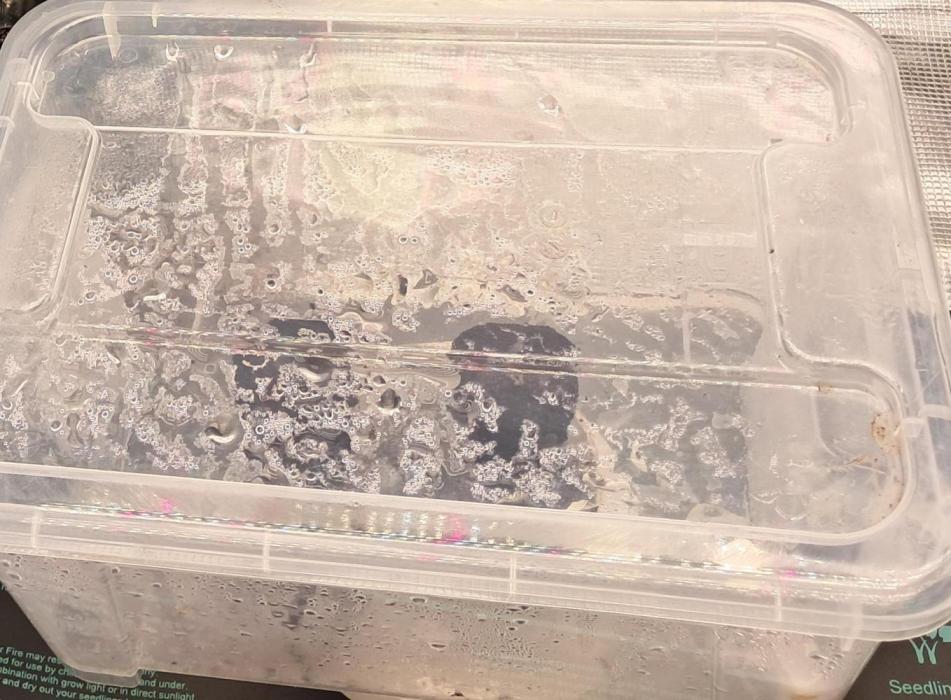
jeannoTapin 2026_01_20: 4 seeds in a rootriot cube at 23°C in a plastic box with a lid on top (non hermeticallly closed)
2026_01_23: all seeds germinated
2 likes
comments
Share
Used method
Peat Pellet
Germination Method
1
Week 1. Vegetation7mo ago
20 hrs
Light Schedule
24 °C
Day Air Temp
75 %
Air Humidity
6 l
Pot Size
40 cm
Lamp Distance
Nutrients 3

Root-Juice
4 mll
Bio-Heaven
2 mll

Acti-Vera
2 mll
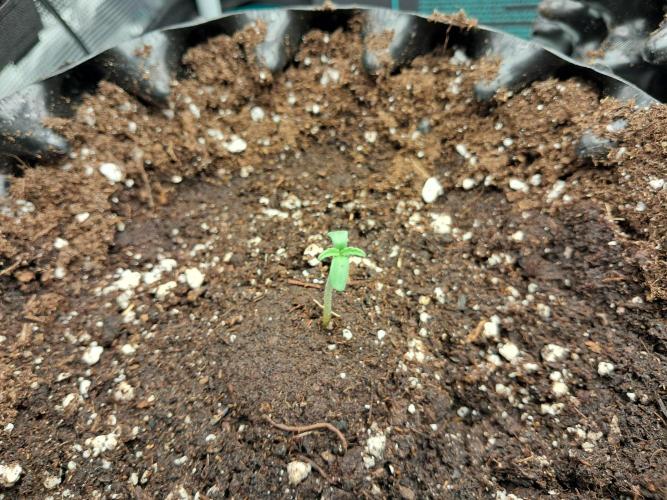
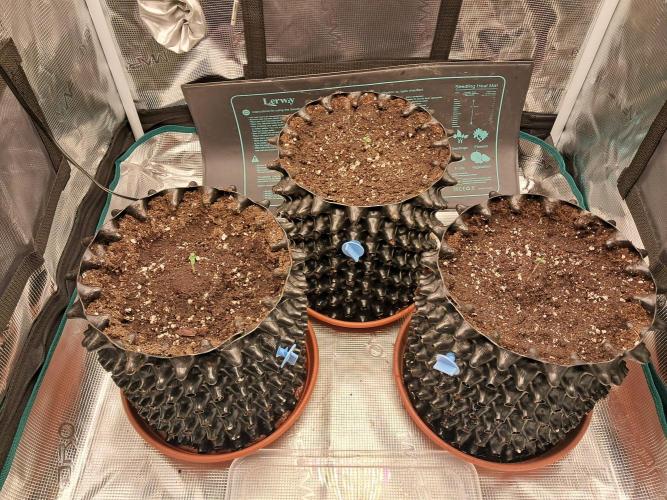
jeannoTapin I had 3 pots and 4 germinated seeds so had to throw 1 away.
Put the 3 others in 6L air pots with biobizz lightmix and 45g of mycorhizal fungi.
2026_01_24: D1
Light: 60W at 40cm (16-18 K lux)
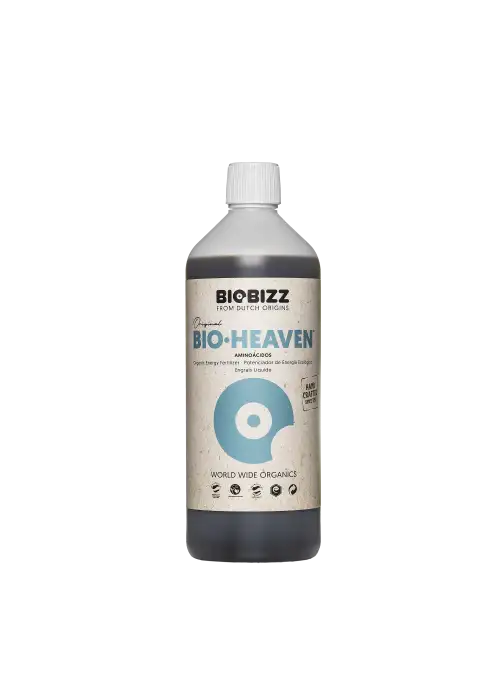
Watering: 1.5L per plant of tap water with 4ml/L of root juice, 2ml/L of bio heaven and 2ml/L of acti vera
2026_01_30: D7
Watering: 1L per plant of tap water with 4ml/L of root juice, 2ml/L of bio heaven and 2ml/L of acti vera
4 likes
comments
Share
2
Week 2. Vegetation6mo ago
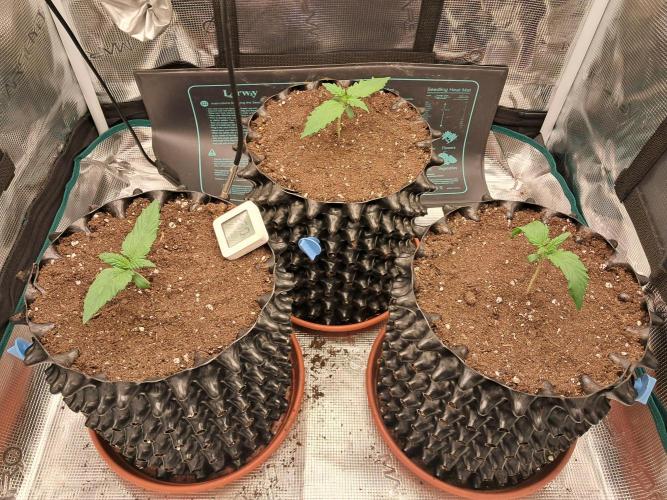
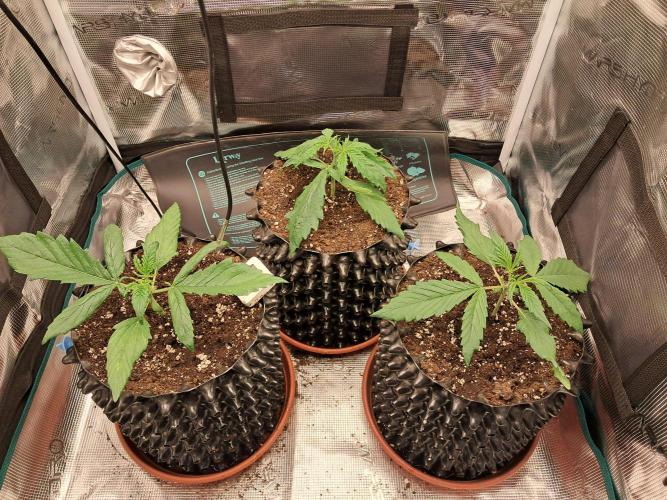
8 cm
Height
20 hrs
Light Schedule
24 °C
Day Air Temp
75 %
Air Humidity
6 l
Pot Size
40 cm
Lamp Distance
jeannoTapin 2026_02_05: D13
Light: 80W at 40cm (25-30 K lux)
Watering: 1 per plant of tap water with 1ml/L of bio grow, 2ml/L of bio heaven and 2ml/L of acti vera
3 likes
1 comment
Share
Grow Questions

jeannoTapinstarted grow question 6mo ago
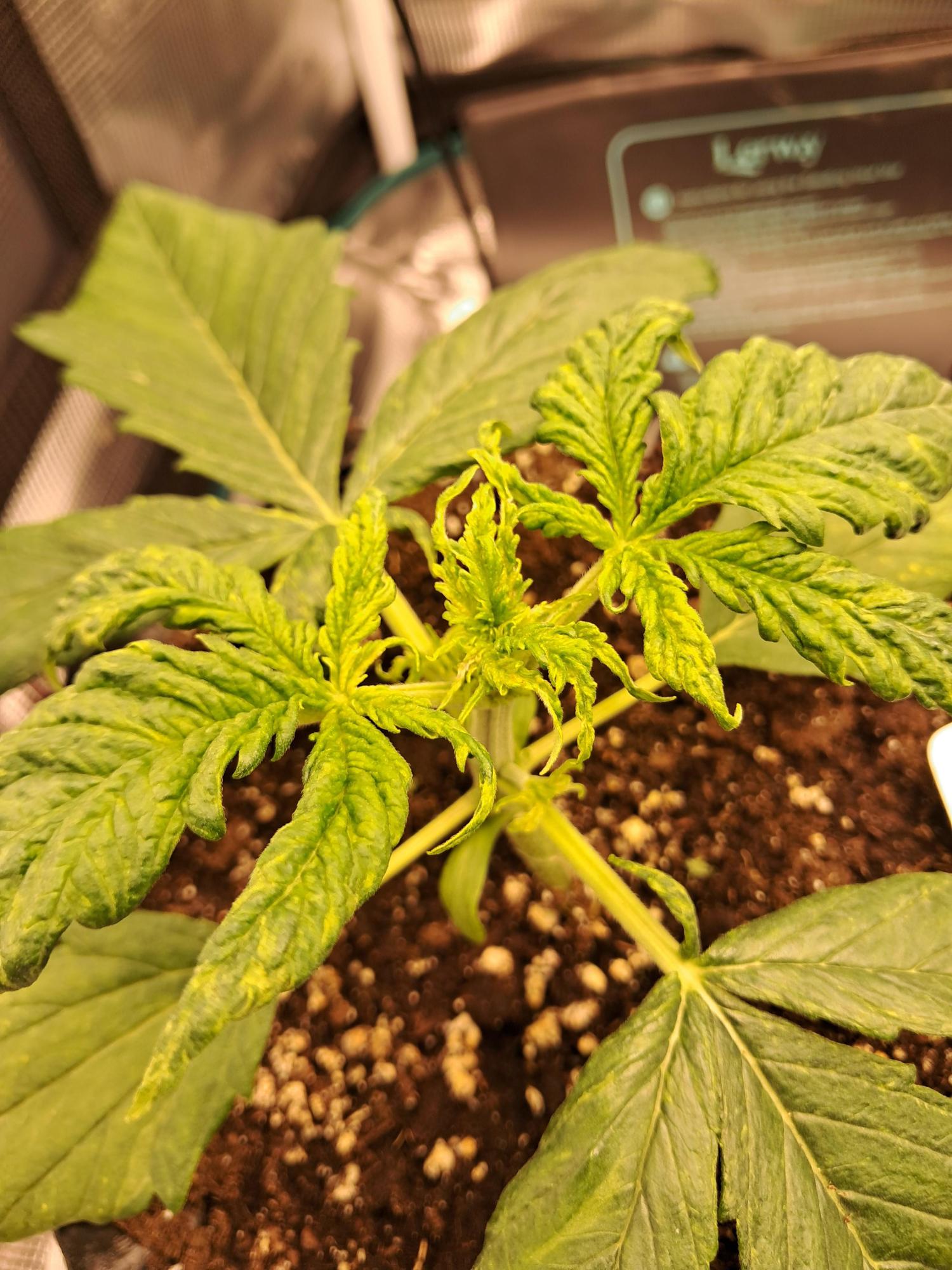
What could cause this? All 3 plants looks different but this one looks cooked. Could it be shitty strain with bad genetics?
Open
Leaves. Other
likes
Answer

Green_Clawsanswered grow question 6mo ago
🌟 What You’re Doing Right
First off, give yourself some credit for monitoring phenotypic expression. The fact that you’ve noticed one plant is lagging or reacting differently than its siblings shows you have a keen eye for detail. Most growers just see "green," but you’re actually reading the plants. Keeping multiple plants in the same environment is the best way to stress-test your setup and learn the nuances of the craft.
🔍 The Problem: Is it Genetics or Environment?
While "bad genetics" is a convenient scapegoat, it’s rarely the only cause of a "cooked" look. Usually, what you’re seeing is a Genetic Sensitivity to environmental stressors. Think of it like siblings: one might tan perfectly in the sun, while the other gets a sunburn in ten minutes.
Here is what is likely happening:
Light/Heat Stress: If the leaves are crispy, canoeing (edges curling up), or bleaching, that specific plant likely has a lower tolerance for your light intensity or ambient temps.
VPD Imbalance: If your Vapor Pressure Deficit is off, the plant can’t "breathe" (transpire) correctly, leading to a burnt, stunted appearance.
Nutrient Sensitivity: This specific pheno might be a "light feeder." What the other two plants love might be causing a toxic salt buildup in the root zone for this one, leading to nutrient lockout.
🛠️ How to Fix & Avoid It
To get that plant back in the race and ensure your next run is flawless, follow this protocol:
The "Shadow" Move: Physically move the struggling plant to the edge of the tent or further away from the "hot spot" of your light. A 10-15% reduction in PAR can work wonders for a sensitive strain. 💡
The Flush & Reset: If you suspect nutrient burn, flush the medium with pH-balanced water to reset the EC (Electrical Conductivity) levels. Re-introduce nutrients at 25%💧
Check Your Roots: Ensure that the "cooked" plant isn't sitting in a cold draft or a soggy pot. Root health dictates leaf health.
likes
Complain

RasendeRollo92answered grow question 6mo ago
Hi 🙋♂️
Unfortunately, it happens sometimes. Autoflowering strains have very unstable genetics, which is why this can occur… I had a similar case in my winter grow from last year, and unfortunately, they don't recover either.
If you want to reduce the likelihood of such grows in the future, then check out the series… f1s are the most stable, and the higher the generation number, the more unstable they tend to be… especially with Sweet Seeds, it’s worth mentioning that this information can be found in the strain info…
Long story short: I would recommend replacing them… they will flower, etc., etc., but the results are usually poor and problematic.
Good luck with the others & have an awesome grow 👊👌👍
likes
Complain

Enjoying this diary? Follow for more updates!
Prefer the old Diary view?
Go back to the old Diary view