


Sensi Seeds Himalayan CBD 4th indoor run




Tent
40x40x120 cm
Temu

Fan
USB
USB case fan

Filt
240 m/h, ø 100 mm
Economy line

Farm Mix Light Mix
Bio2Grow

Coco Coir
Bio2Grow


Indoor
Room Type
LST
weeks 4-7
Defoliation
weeks 6-7, 9-10, 12
ScrOG
weeks 8-9
Lollipopen
weeks 9
8 liters
Pot Size
0.48 liters
Watering
Start at Harvest
G
Germination7mo ago
Nutrients 2
AlfaBoost
1 mll

Mycotrex
0.1 mll
floristician Started the journey on Feb 12th using the water glass method. The Sensi Seeds genetics showed great vigor right from the start.
Method & Process:
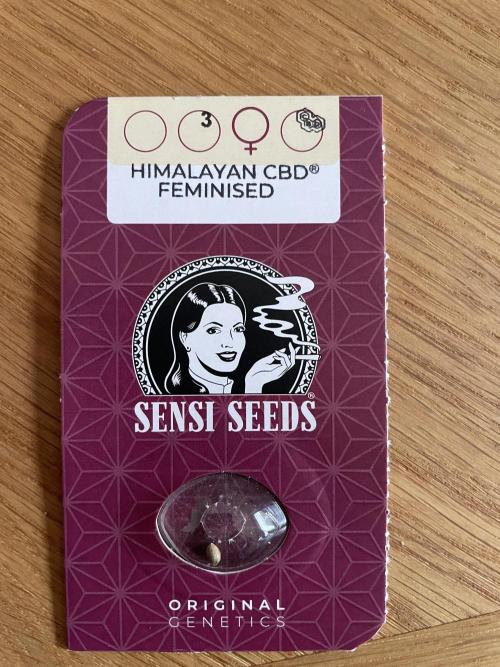
• Germination: Seeds were soaked in a glass of water at room temperature for about 24 hours until they sank and the shells started to crack.
• Planting: Transferred them directly into their starter pots filled with a mix of Bio2Grow (FarmMixLight) and 25% Coco.
• Inoculation: Added Mycotrex (Mycorrhiza) directly into the planting hole to ensure early root colonization.
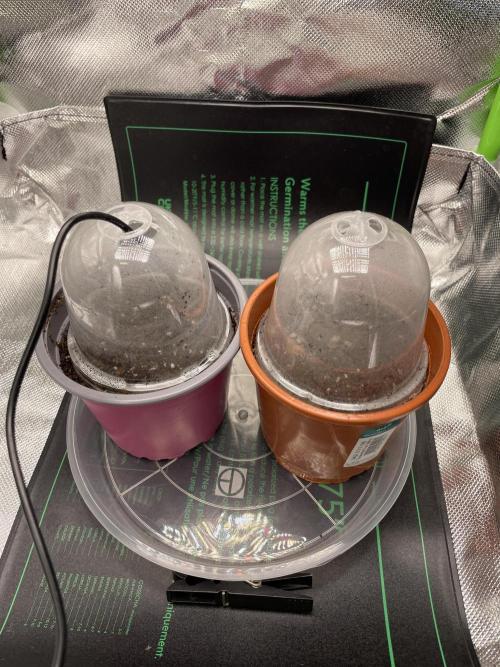
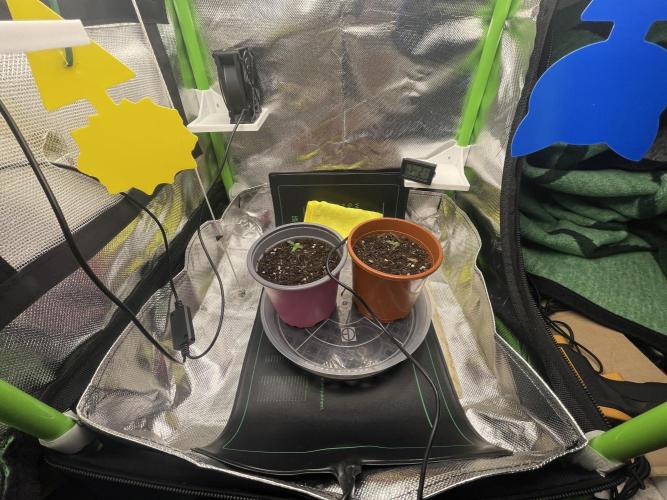
• Temperature: A heat mat was used to maintain a steady soil temperature of 22°C (approx. 72°F), which definitely helped with a fast emergence.
Result:
100% germination rate. Both seedlings broke through the soil looking healthy and strong, ready for their first week under the 100W LED.
#HimalayanCBD #SensiSeeds #BioTabs #OrganicGrowing #CBD #VPDfocus #Microgrow #Bio2Grow
8 likes
5 comments
Share
Used method
Directly In Substrate
Germination Method
1
Week 1. Vegetation7mo ago
3 cm
Height
18 hrs
Light Schedule
22 °C
Day Air Temp
No Smell
Smell
75 %
Air Humidity
22 °C
Solution Temp
20 °C
Night Air Temp
0.5 liters
Pot Size
0.1 liters
Watering Volume
35 cm
Lamp Distance
Nutrients 1
AlfaBoost
1 mll
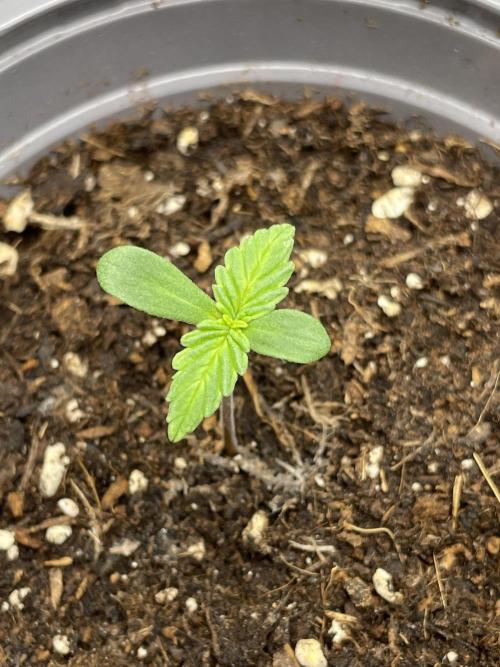
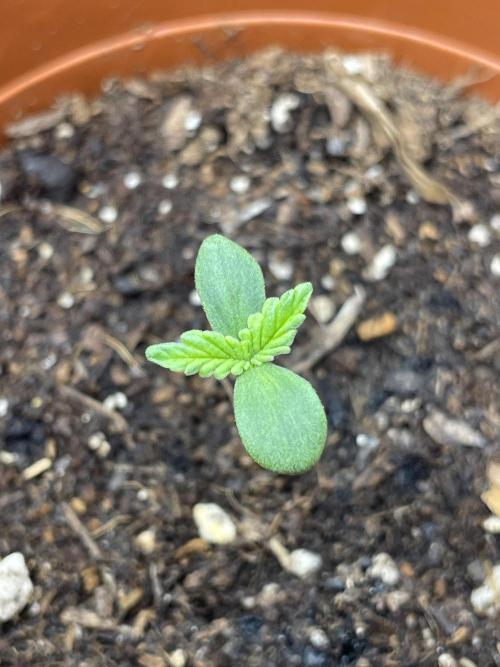
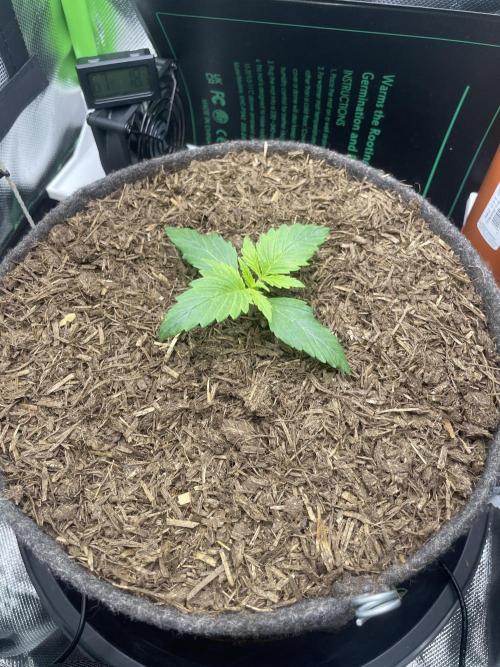
floristician First week after germination (starting Feb 12th) is a wrap. Both Himalayan CBDs are looking healthy at a compact height of 3 cm. My main goal this week was building a strong foundation for the upcoming Days.
Setup & Strategy:
• Substrate: A breathable mix of 75% Bio2Grow Light Farm Mix and 25% Coco, enriched with Mycorrhiza (Mycotrex/BioTabs).
• Lighting: Currently running a DLI of 13.6 (approx. 200 PPFD) on an 18/6 cycle. The short 3 cm height proves the intensity is spot on – no stretching so far!
• Climate & VPD: Heavily focusing on Leaf Surface Temperature (LST). With air temps at 22-24°C and LST at 21°C, I'm keeping RH at 75-77%. This results in a VPD of approx. 0.53 kPa – perfect for seedlings to minimize transpiration stress.
Observations:
Both seedlings have fully developed their first serrated leaves. Root activity seems great, likely boosted by the Mycorrhiza and the heat mat (keeping root zone at a steady 22°C). The "late bloomer" caught up quickly and is now on par with the first one.
8 likes
1 comment
Share
2
Week 2. Vegetation6mo ago
3 cm
Height
18 hrs
Light Schedule
23 °C
Day Air Temp
No Smell
Smell
70 %
Air Humidity
22 °C
Solution Temp
20 °C
Night Air Temp
8 liters
Pot Size
0.3 liters
Watering Volume
35 cm
Lamp Distance
Nutrients 7
AlfaBoost
2 mll
Rock Dust
1.3 mll
Epsom Salt
0.13 mll
floristician Transplanting & BioTabs Setup (The "Firstborn" takes the Lead)
Update:
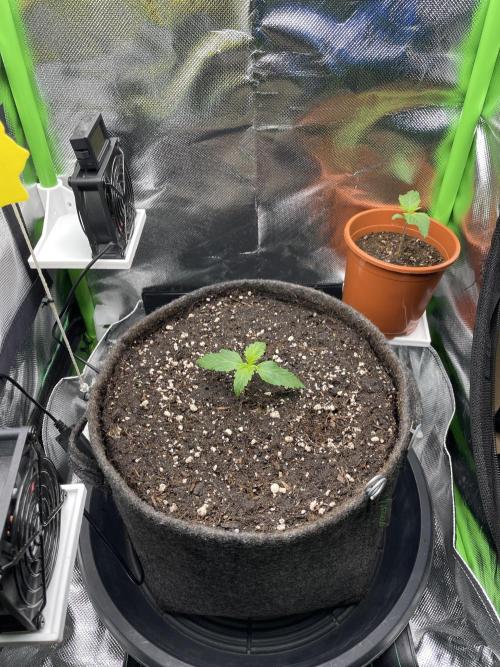
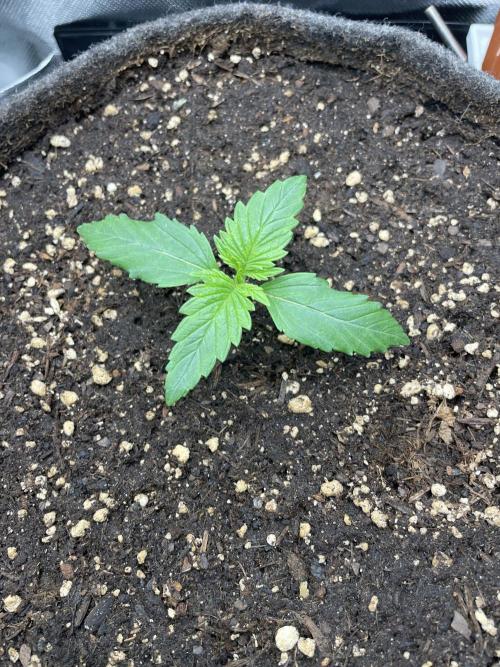
Today marks the big move! The "Firstborn" Himalayan CBD showed strong root development, so I decided to select her for the 8L main pot. The 40x40 tent is officially her kingdom now.
The Setup:
• Pot: 8L with a thin layer of clay pebbles for drainage.
• Medium: 92% Bio2Grow / 8% Coco.
• Additives: 40g Startrex, 1 tablespoon of Rock Dust, and Mycotrex directly in the planting hole for root symbiosis.
• Feeding: Two BioTabs pushed 10cm deep.
First Watering (Activation):
• 1g Bactrex & 10ml Orgatrex (to kickstart microbial life).
• 2ml Alfa Boost (triacontanol & enzyme boost).
• 0.13 g Epsom Salt.
Why Epsom Salt ?
I am using Epsom Salt to specifically adjust the Calcium-to-Magnesium ratio to the ideal 3:1. It's not just about adding Magnesium; it’s about balancing the cation exchange capacity to ensure optimal nutrient uptake and prevent lockout.
Stats:
• Leaf Temp: 21.5°C
• Humidity: 70%
• VPD: 0.65 - 0.7 kPa
• DLI: 19 (approx. 293 PPFD)
#HimalayanCBD #SensiSeeds #BioTabs #OrganicGrow #MedicinalCannabis #CBD #MicroGrow #40x40 #Homegrow #VPDcontrolled
#DLI #PPFD #SoilLife #Mycorrhiza #Bactrex #Startrex #MagnesiumBalance #EpsomSalt #WaterChemistry #SustainableGrowing
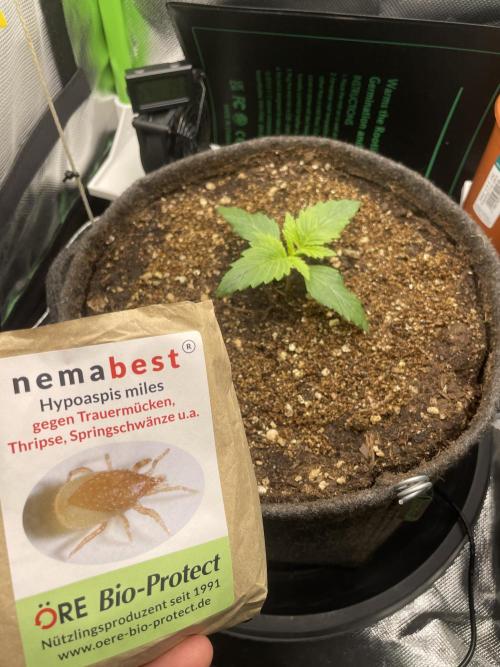
Strategic Defense & Mulching – Beneficial Insects Onboard
Update:
I’ve integrated a professional pest prevention strategy today. Even though no pests are visible, I prefer a "proactive over reactive" mindset to keep the Himalayan CBD in peak health.
Pest Management:
• Beneficials: Added 3 tablespoons of predatory mites. These will act as a natural security force, patrolling the foliage and the top layer of the substrate to eliminate any potential threats like thrips or spider mites before they can establish a colony.
Mulching:
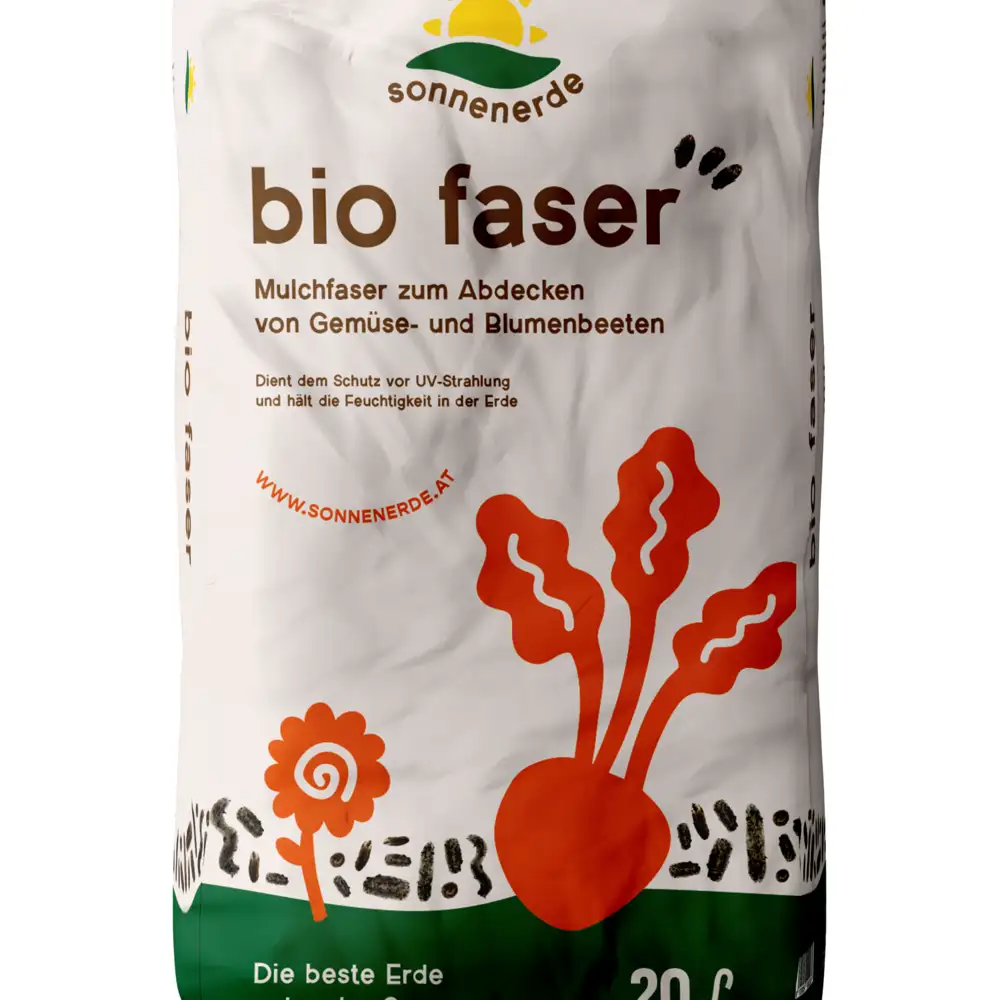
• Material: Applied a layer of Sonnenerde Biofaser (organic fiber mulch) on top of the 8L substrate.
• Purpose: This mulch layer serves two main functions:
1. Microbial Protection: It prevents the top layer of the soil—where the Mycotrex and Startrex are most active—from drying out between waterings.
2. VPD & Habitat: It helps stabilize the humidity at the soil surface and provides an ideal habitat for the predatory mites to thrive and reproduce.
Climate & Lighting Adjustments:
• DLI Increase: After observing the "Firstborn" handling the transplant perfectly, I have increased the DLI to 22 (approx. 340 PPFD).
• Temperature Optimization: To counter the low leaf temperatures, I’ve adjusted the light distance to use the LED's radiant heat to push leaf temps closer to the 22-24°C target, aiming for a more balanced VPD (target: 0.8 - 0.9 kPa).
#IPM #BeneficialInsects #PredatoryMites #Raubmilben #BiologicalPestControl #NoPesticides #CleanGreen #PestPrevention #ÖRE
#Mulching #Sonnenerde #Biofaser #LivingSoil #MicrobialLife #SoilHealth #MoistureControl #Rhizosphere #HealthyRoots
7 likes
1 comment
Share
3
Week 3. Vegetation6mo ago
3 cm
Height
18 hrs
Light Schedule
23 °C
Day Air Temp
No Smell
Smell
55 %
Air Humidity
22 °C
Solution Temp
20 °C
Night Air Temp
8 liters
Pot Size
0.3 liters
Watering Volume
30 cm
Lamp Distance
Nutrients 2
AlfaBoost
2 mll
Epsom Salt
0.13 mll
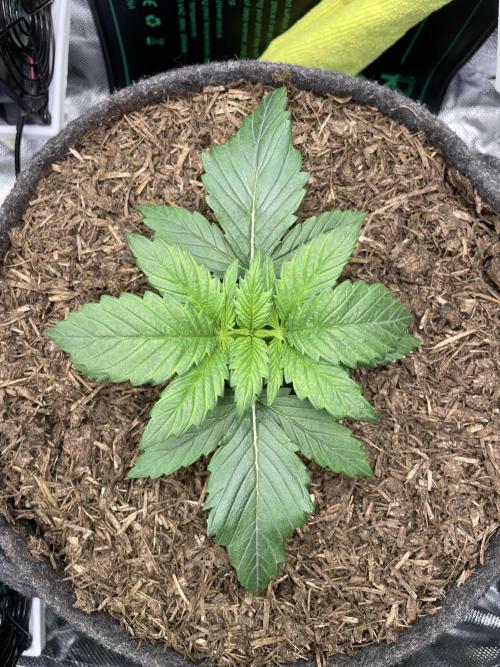
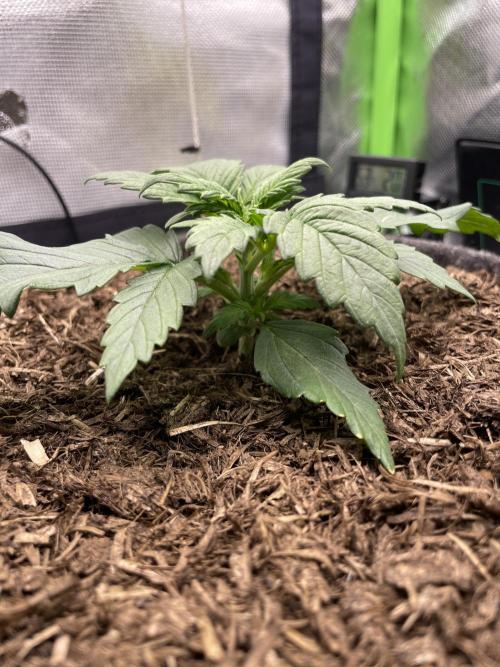
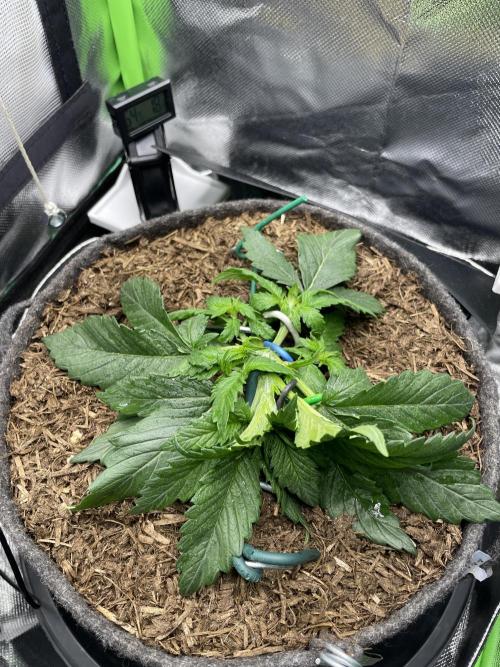
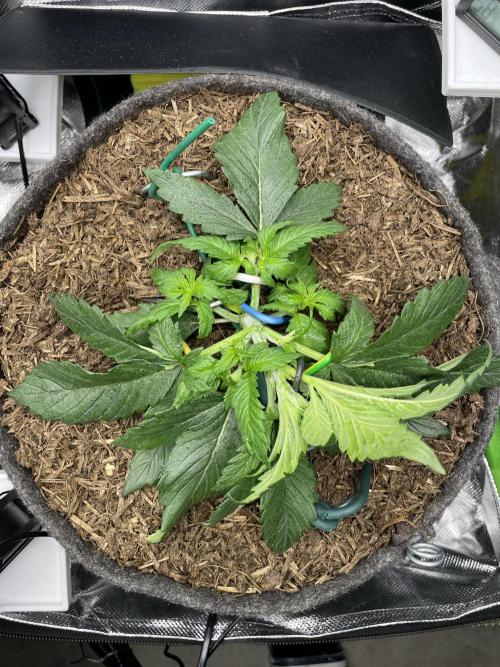
floristician Entering Week 2 with the "Firstborn" and she is looking incredibly stout! I’ve transitioned her into her final 8L fabric pot filled with a Bio2grow Farm Mix Light/Coco blend, amended with BioTabs for that organic punch.
I am running a high-intensity light schedule in my 40x40 tent, currently hitting a DLI of 27 (ramping up to 30 soon). Leaf temperatures are stable at 22°C with 55% RH, giving me a solid VPD of around 1.1 kPa.
The plant is showing very tight internodal spacing and thick stems. I noticed some slight "clawing" on the tips of the first leaf pairs – likely a sign of the high nutrient density from the BioTabs and the warm root zone (thanks to the heating mat).
No topping for this lady. I’ve decided to go for LST only to keep the stress low in my cool cellar environment. Waiting for the 5th node to start the first major bend.
UPDATE Day 19
LST is on! Alpha Boost Tuning
Big moves today! The 5th node is starting to show, so I decided it’s time for some serious LST. I’ve tucked the large fan leaves to expose the side branches and did the first major bend on the main stem. No topping here – keeping it low-stress to maintain momentum in my cool cellar setup.
I also gave her a foliar feed with Alpha Boost (top and bottom of the leaves) to help her bounce back from the training and stimulate growth.
Environment Challenges:
Managing humidity in a 40x40 tent is a bit of a balancing act. Even on the lowest setting, my extraction fan is quite powerful, pulling the RH down. I’m currently using wet towels to keep it stable around 55-60%.
6 likes
1 comment
Share
4
Week 4. Vegetation6mo ago
3 cm
Height
18 hrs
Light Schedule
23 °C
Day Air Temp
No Smell
Smell
55 %
Air Humidity
20 °C
Solution Temp
20 °C
Night Air Temp
8 liters
Pot Size
0.3 liters
Watering Volume
40 cm
Lamp Distance
Nutrients 2
AlfaBoost
2 mll
Epsom Salt
0.13 mll
floristician Tech Upgrades & Structural Reflections 📏
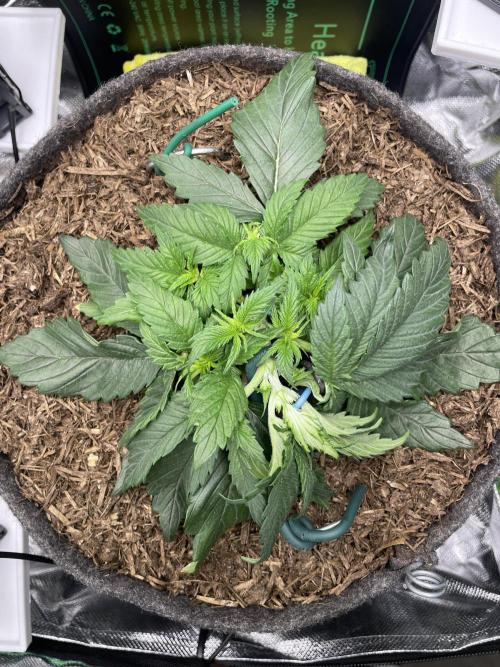
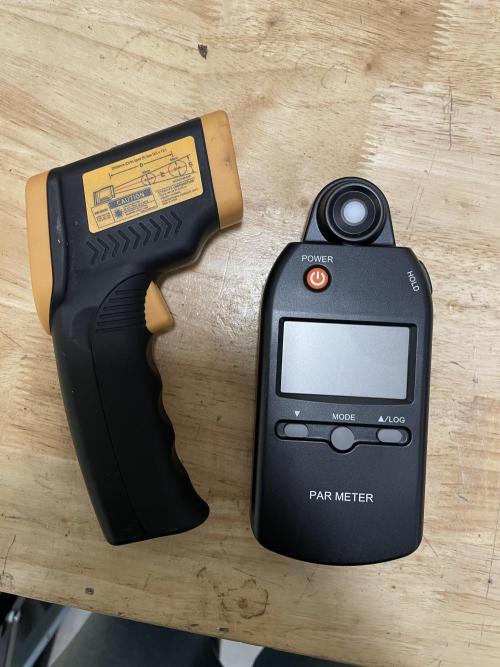
We are officially starting Week 3 since transplanting! Honestly, I’m a bit torn about her structure. She is growing incredibly compact and "cabbagy." I suspect that my initial light intensity was way too high because my phone's PPFD app was inaccurate. I’ve now invested in a professional PAR meter to get precise readings and stop the guessing game.
Training Update:
Looking back, topping might have been the better option to manage this specific growth pattern, but I chose LST only to keep stress levels at a minimum in my cellar environment. I’m sticking to the plan and will try to pull the side branches out as much as possible to create some space.
Today I watered with 1.2L of tempered water. I’m being very cautious this time as I’ve struggled with overwatering in the past.
The mix included:
3ml Alfa Boost (to stimulate the metabolism)
15mg Epsom Salt (Bittersalz) (to keep the Magnesium levels stable under the strong LED)
Leaf Temp: 22°C
RH: 55-60% (VPD is looking good at ~1.1 kPa)
PPFD: Dialed in to 410-450 now with the new meter.
Let’s see if she starts to stretch a bit more now that I have better control over the light.
8 likes
1 comment
Share
Used techniques
LST
Technique
5
Week 5. Vegetation6mo ago
4 cm
Height
18 hrs
Light Schedule
23 °C
Day Air Temp
No Smell
Smell
55 %
Air Humidity
20 °C
Solution Temp
20 °C
Night Air Temp
8 liters
Pot Size
0.4 liters
Watering Volume
40 cm
Lamp Distance
Nutrients 2
AlfaBoost
2 mll
Epsom Salt
0.13 mll
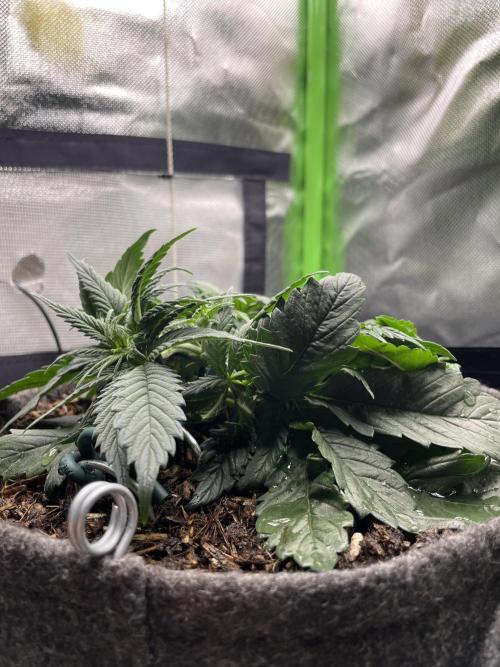
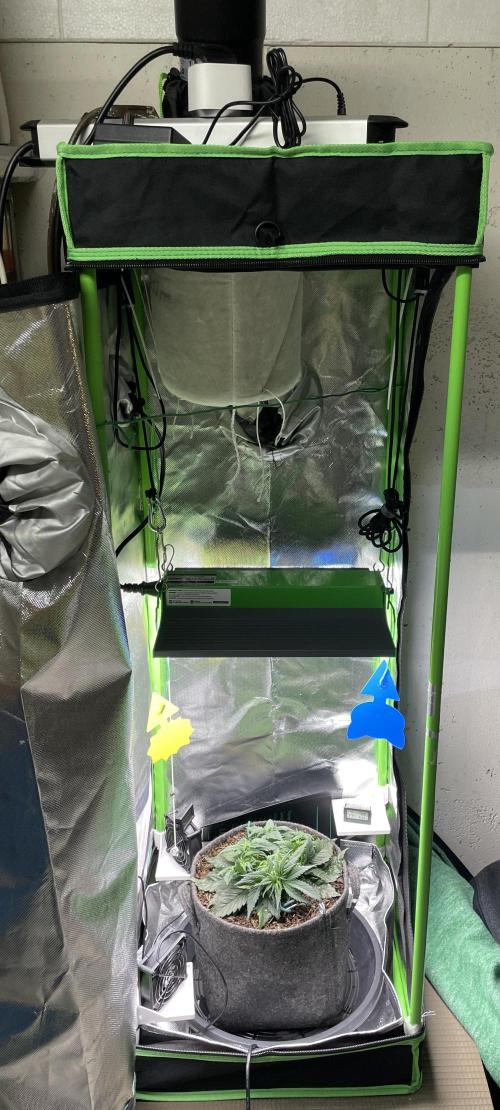
floristician Welcome to Week 4 since transplanting. As a floristician, I believe in transparency—and this past week was a bit of a challenge regarding environmental control.
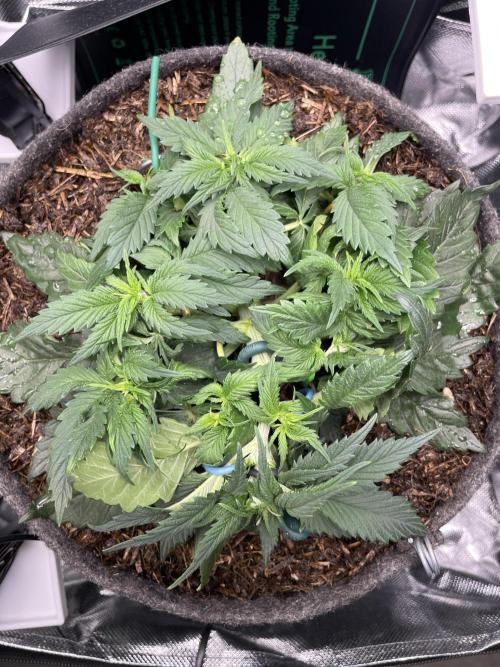
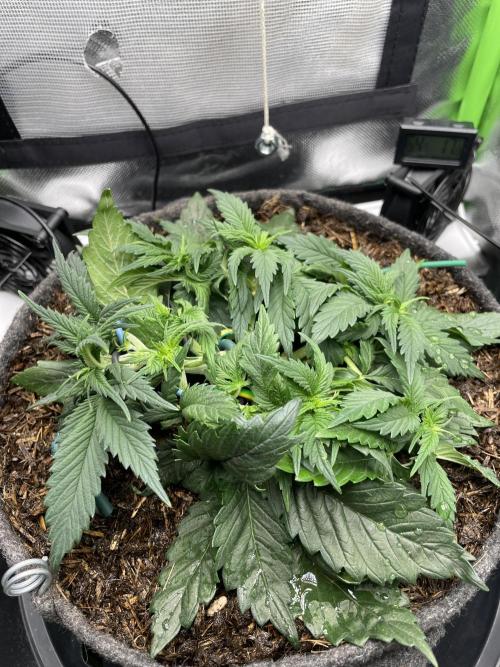
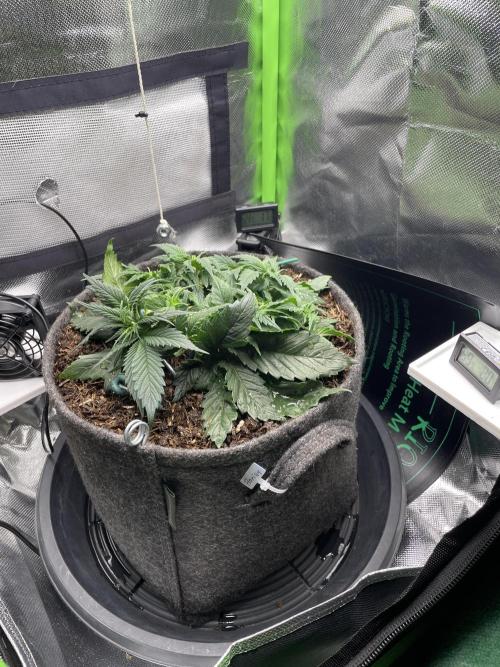
I’ll admit I was a bit negligent with the VPD management. Due to a busy schedule, I missed keeping the 'wet towel' method consistent, which led to lower humidity levels than planned. This is likely why the Himalayan CBD is staying so incredibly compact and bushy.
Training & Progress:
LST only: I’ve strictly stuck to Low Stress Training to open up the canopy.
Structure: The plant is very squat with extremely tight internodes.
The Plan: For the coming week, I’m refocusing on my VPD targets to encourage a bit more stretch before we head towards flip. Precision is key, and I’m getting back on track with discipline.
Novice in a constant state of learning.
DEUTSCH:
Willkommen in Woche 4 seit dem Umtopfen. Die letzte Woche war eine kleine Herausforderung in Sachen Umweltkontrolle.
Ich muss zugeben, dass ich beim VPD-Management etwas nachlässig war. Da ich wenig Zeit hatte, war ich nicht konsequent genug damit, den nassen Lappen im Zelt zu erneuern. Das führte zu einer niedrigeren Luftfeuchtigkeit als geplant, was wahrscheinlich der Grund ist, warum die Himalayan CBD so extrem kompakt und buschig bleibt.
Training & Fortschritt:
Nur LST: Ich habe mich strikt an Low Stress Training gehalten, um das Blätterdach zu öffnen.
Struktur: Die Pflanze ist sehr gedrungen mit extrem kurzen Internodien.
Der Plan: In der kommenden Woche werde ich mich wieder voll auf meine VPD-Ziele konzentrieren, um ein wenig mehr Streckung zu provozieren, bevor es Richtung Blüte geht. Präzision ist der Schlüssel, und ich kehre zur Disziplin zurück.
Neuling im ständigen Lernprozess.
7 likes
7 comments
Share
Used techniques
LST
Technique
6
Week 6. Vegetation5mo ago
5 cm
Height
18 hrs
Light Schedule
23 °C
Day Air Temp
No Smell
Smell
55 %
Air Humidity
20 °C
Solution Temp
20 °C
Night Air Temp
8 liters
Pot Size
0.4 liters
Watering Volume
40 cm
Lamp Distance
Nutrients 2
AlfaBoost
2 mll
Epsom Salt
0.13 mll
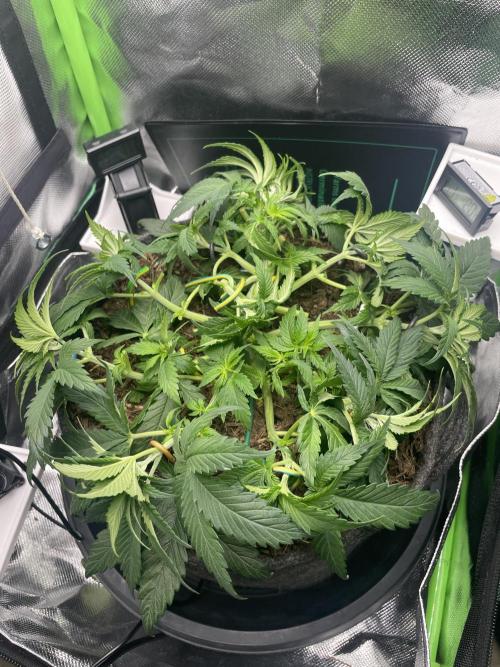
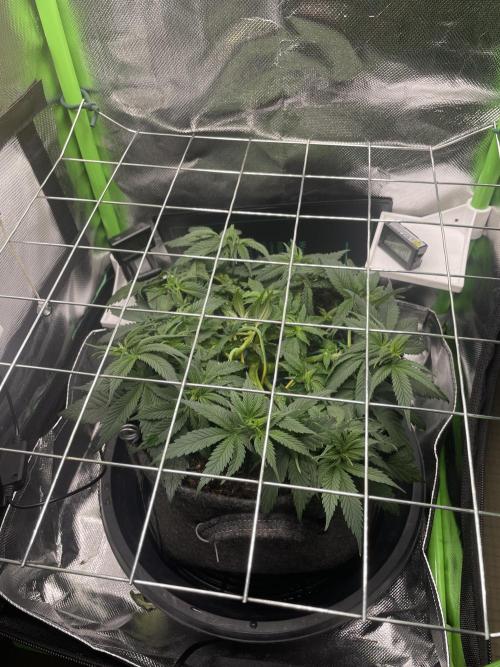
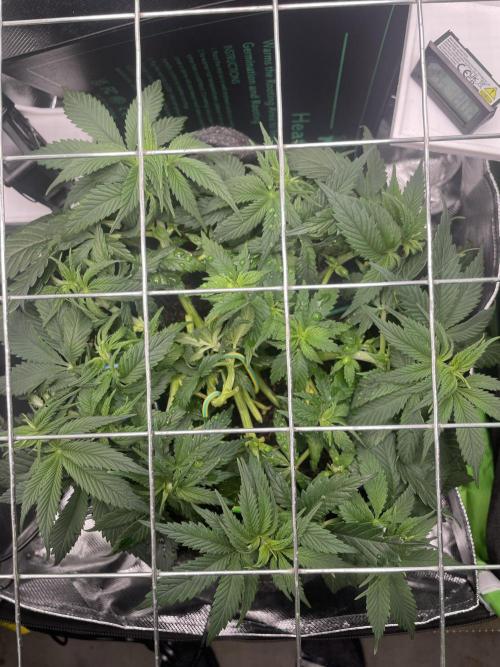
floristician The "Less is More" Lesson
Adjusting the Precision: Recovering from Light Stress & BioTabs Wisdom
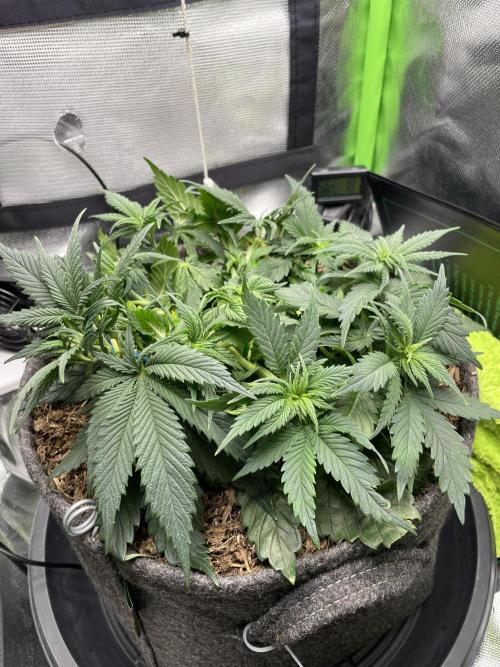
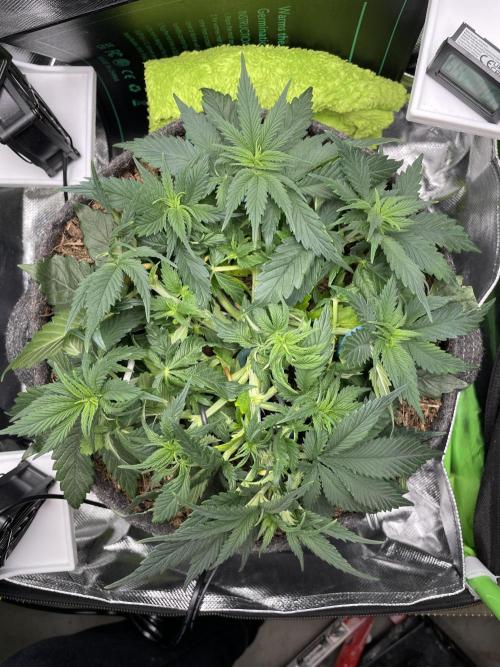
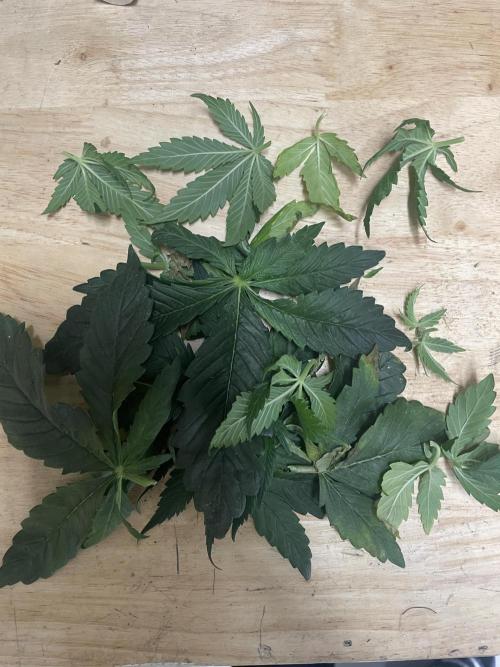
Week 5 is here, and I have to be honest: I’m not entirely satisfied. I feel like the growth isn't as vigorous as my previous runs. My initial mistake—pushing too much light at the start of the vegetative stage—is showing its consequences now.
Mia from BioTabs was absolutely right in the comments: Less is more. I’ve taken the lesson to heart and reduced the PPFD to 370 to give the plant some breathing room.
Current Routine:
Watering: 1.5L twice a week.
Additives: 3ml Alfa Boost & 17mg Epsom salt (Bittersalz) per feeding.
Training: Continued LST and strategic defoliation to improve light penetration.
DEUTSCH:
Präzision nachjustieren: Erholung von Lichtstress & BioTabs-Expertise
Woche 5 läuft, und ich muss ehrlich sein: Ich bin noch nicht ganz zufrieden. Ich habe das Gefühl, die Pflanze wächst nicht so potent wie meine vorherigen Durchgänge. Mein Fehler zu Beginn der Vegiphase – zu viel Licht – rächt sich jetzt spürbar.
Mia von BioTabs hatte in den Kommentaren absolut recht: Weniger ist mehr. Ich habe die Lektion gelernt und den PPFD auf 370 reduziert, um der Pflanze die nötige Ruhe zur Erholung zu geben.
Aktuelle Routine:
Bewässerung: 2x pro Woche 1,5L.
Zusätze: 3ml Alfa Boost & 17mg Bittersalz pro Gabe.
Training: Weiterhin LST und gezieltes Entlauben, um die Lichtverteilung zu optimieren.
9 likes
1 comment
Share
Used techniques
LST
Technique
Defoliation
Technique
7
Week 7. Flowering5mo ago
59 cm
Height
12 hrs
Light Schedule
23 °C
Day Air Temp
Weak
Smell
55 %
Air Humidity
21 °C
Solution Temp
20 °C
Night Air Temp
8 liters
Pot Size
0.4 liters
Watering Volume
38 cm
Lamp Distance
Nutrients 2
AlfaBoost
2 mll
Epsom Salt
0.13 mll
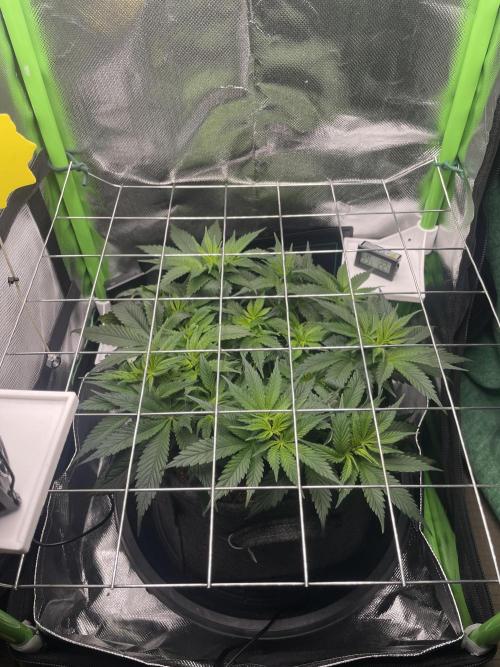
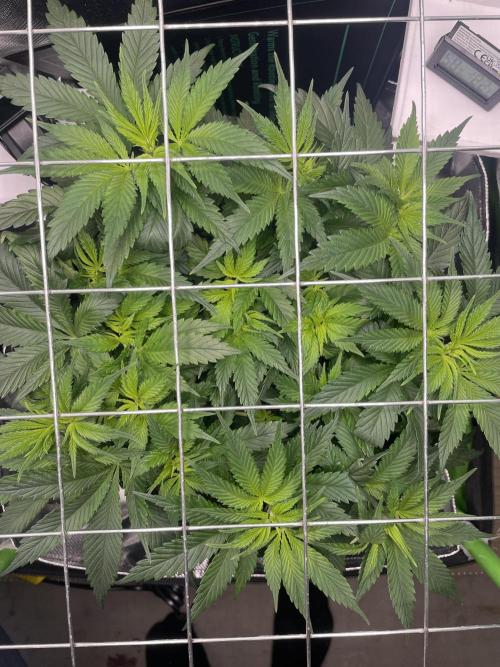
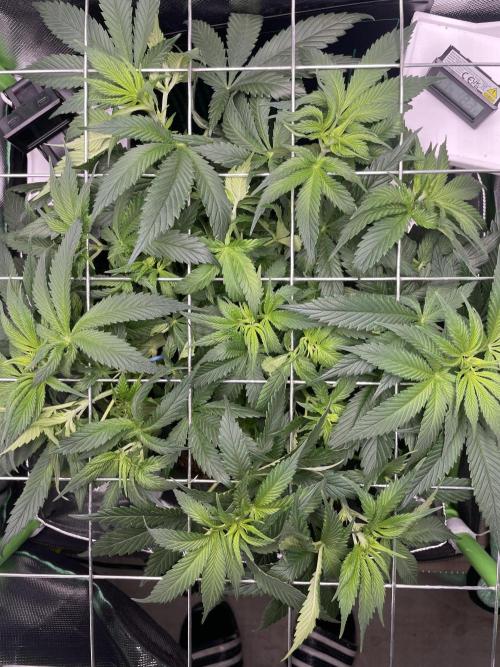
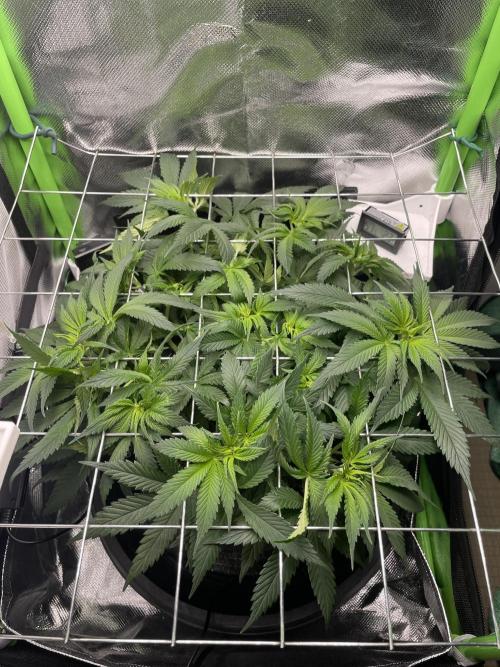
floristician Bloom Phase Initiated: Lessons in Light Intensity & Natural Buffering
Today marks the official start of the flowering phase (12/12). After some trial and error in the vegetative stage, I finally found the sweet spot at 370 PPFD. In a small 40x40 tent, the standard recommendation of 600 PPFD was definitely too much for this phenotype; even 400 proved to be a bit aggressive.
Technical Details:
Watering: Sticking to 1.5L twice a week.
pH Management: I’ve stopped adjusting the pH manually. The Alfa Boost naturally slightly acidifies the water, and combined with the BioTabs microbes, the soil buffer is holding up perfectly.
Condition: The plant looks fantastic now—healthy, resilient, and ready for the stretch.
I’m excited to see how this specific Himalayan CBD genetics responds to the flip and how much it will expand. Transitioning with confidence!
8 likes
1 comment
Share
Used techniques
Defoliation
Technique
LST
Technique
8
Week 8. Flowering5mo ago
15 cm
Height
12 hrs
Light Schedule
23 °C
Day Air Temp
Weak
Smell
55 %
Air Humidity
21 °C
Solution Temp
20 °C
Night Air Temp
8 liters
Pot Size
0.48 liters
Watering Volume
38 cm
Lamp Distance
Nutrients 3
AlfaBoost
3.5 mll
Epsom Salt
0.13 mll

Bio PK 5-8
5 mll
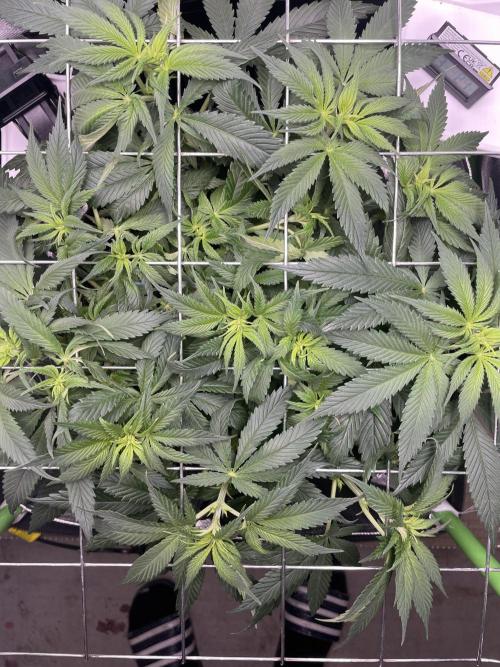
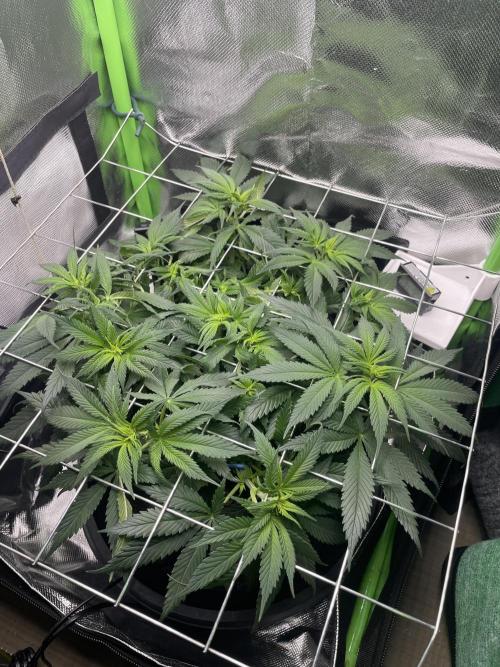
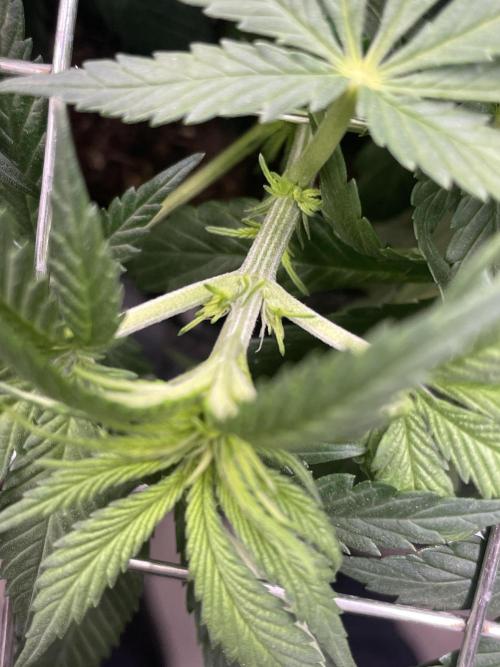
floristician Steering the Stretch: Increasing Intensity &
First PK Feeding (English):
We are officially in the transition phase! The Himalayan CBD is responding well to the 12/12 flip and the stretch has begun. To support this energy-demanding phase, I've slightly increased the light intensity to 410 PPFD.
Watering & Nutrition:
My routine remains stable at 1.7L twice a week.
The mix continues with 0.22g of Epsom salt and 6ml of Alfa Boost to maintain the microbial balance and magnesium levels.
The PK Milestone:
This week, I am introducing the BioTabs PK 5-8 Boost. I'll be applying a dose of 5 ml per 1L of water in the next feeding. Given the previous nitrogen saturation, this phosphorus and potassium kick will help shift the plant's focus entirely from leaf production to building strong floral structures.
The canopy looks lush and healthy. Now it's all about managing the height and keeping the environment stable!"
(Deutsch):
Den Stretch steuern: Intensität erhöhen & erster PK-Boost
Wir sind offiziell in der Übergangsphase! Die Himalayan CBD reagiert gut auf den 12/12 Flip und der Stretch hat begonnen. Um diese energieintensive Phase zu unterstützen, habe ich die Lichtintensität leicht auf 410 PPFD angehoben.
Bewässerung & Nährstoffe:
Meine Routine bleibt stabil bei 1,7L zweimal pro Woche. Die Mischung besteht weiterhin aus 0,22g Bittersalz und 6ml Alfa Boost, um das mikrobielle Gleichgewicht und den Magnesiumspiegel zu halten.
Der PK-Meilenstein:
Diese Woche führe ich den BioTabs PK 5-8 Boost ein. Bei der nächsten Bewässerung werde ich eine Dosis von 5 ml auf 1L Wasser geben. In Anbetracht der vorherigen Stickstoffsättigung wird dieser Phosphor- und Kalium-Kick der Pflanze helfen, ihren Fokus komplett von der Blattproduktion auf den Aufbau starker Blütenstrukturen zu verlagern.
Das Blätterdach sieht üppig und gesund aus.
Jetzt geht es darum, die Höhe zu kontrollieren und die Umgebung stabil zu halten!
6 likes
1 comment
Share
Used techniques
ScrOG
Technique
9
Week 9. Flowering5mo ago
17 cm
Height
12 hrs
Light Schedule
23 °C
Day Air Temp
Weak
Smell
55 %
Air Humidity
21 °C
Solution Temp
20 °C
Night Air Temp
8 liters
Pot Size
0.48 liters
Watering Volume
38 cm
Lamp Distance
Nutrients 4
AlfaBoost
3.5 mll
Epsom Salt
0.13 mll

Orgatrex
15 mll
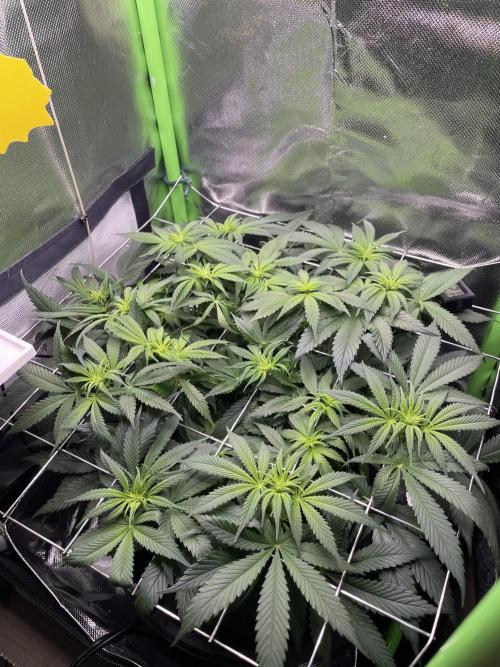
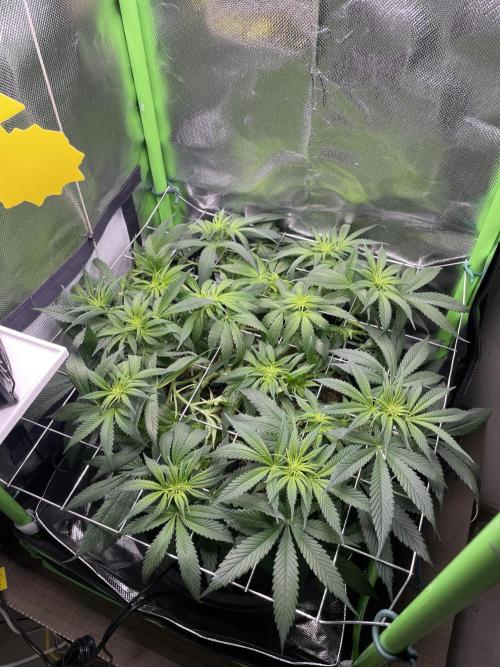
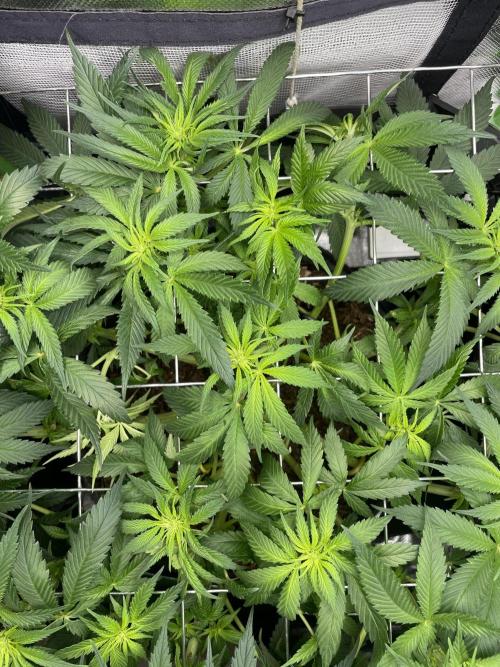
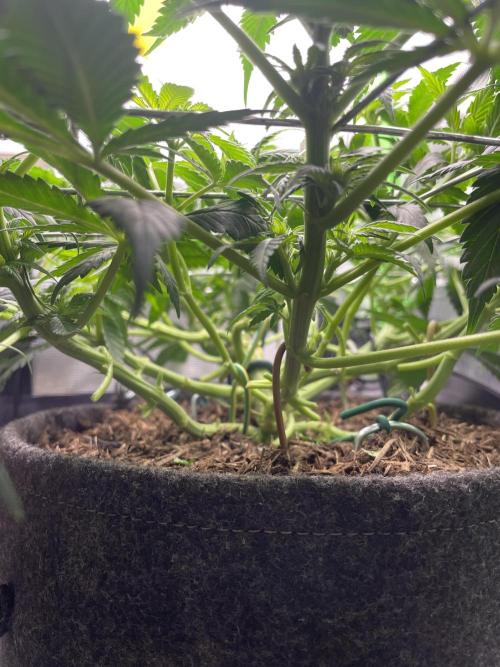
floristician Cleaned Up & Loaded: Lollipopping and Organic Boost
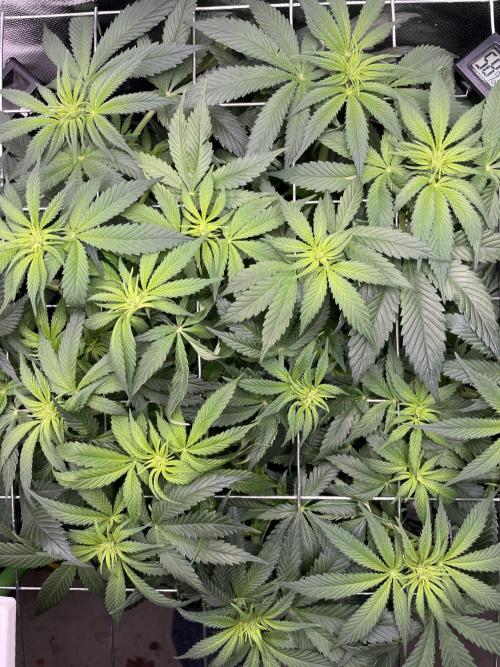
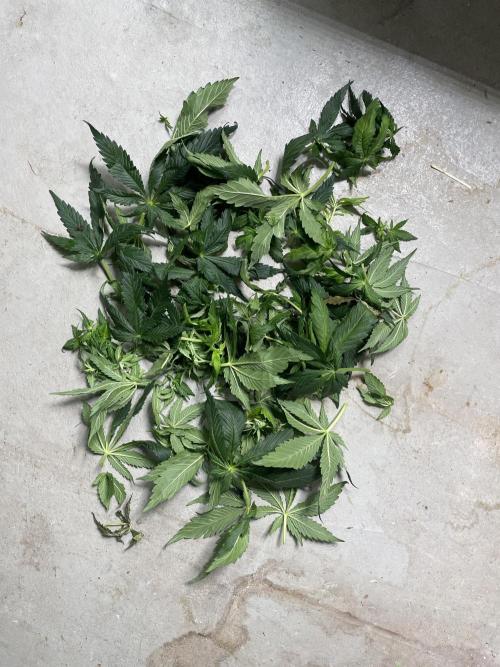
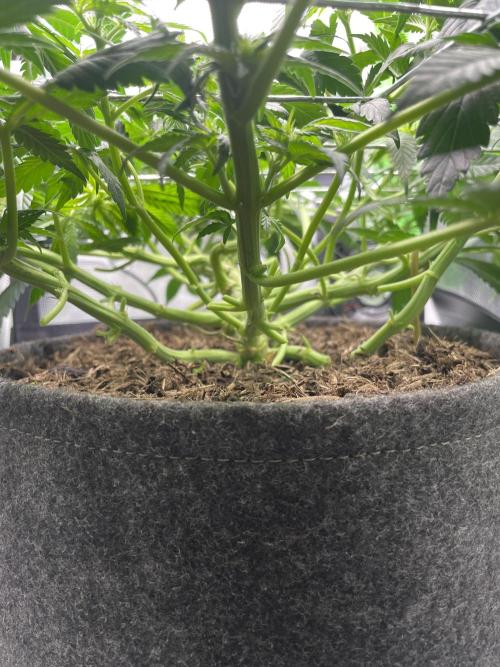
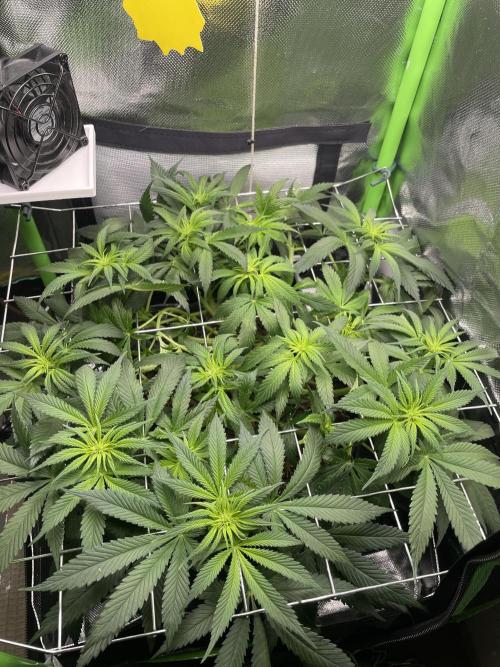
Today I completed the major structural work for the bloom phase. I decided to perform a radical Lollipopping and some strategic defoliation to clear out the bottom third of the plant. This ensures maximum airflow in the 40x40 lab and directs all energy to the main canopy.
I’m a bit nervous if it was slightly early, but given the healthy growth, I'm confident she will bounce back stronger.
Feeding & Lighting:
Nutrition: This week’s menu includes Orgatex and Bactrex. This combo will replenish the microbial life and provide a solid organic base for the upcoming flower development.
Lighting: I am gradually pushing the intensity. We’ve moved from 450 to 500 PPFD now. I’m watching the leaf tips closely for any signs of light stress, but so far, the Himalayan CBD is taking it like a champ.
Now, it’s all about monitoring the recovery and watching the first real flowers form!
DEUTSCH:
Aufgeräumt & Aufgetankt: Lollipopping und organischer Boost
Heute habe ich die großen strukturellen Arbeiten für die Blütephase abgeschlossen. Ich habe mich für ein radikales Lollipopping und eine strategische Entlaubung entschieden, um das untere Drittel der Pflanze komplett zu säubern. Das garantiert maximale Luftzirkulation im 40x40 Lab und lenkt die gesamte Energie in das obere Blätterdach.
Ich bin zwar ein wenig nervös, ob es vielleicht einen Tick zu früh war, aber angesichts des gesunden Wachstums bin ich zuversichtlich, dass sie sich schnell erholt.
Fütterung & Licht:
Nährstoffe: Diese Woche stehen Orgatex und Bactrex auf dem Plan. Diese Kombi füllt das mikrobielle Leben wieder auf und bietet eine solide organische Basis für die anstehende Blütenentwicklung.
Licht: Ich steigere die Intensität weiter schrittweise. Wir sind jetzt von 450 auf 500 PPFD gegangen. Ich beobachte die Blattspitzen genau, aber bisher steckt die Himalayan CBD das super weg.
Jetzt heißt es: Erholung beobachten und auf die ersten echten Blüten warten!
9 likes
comments
Share
Used techniques
ScrOG
Technique
Defoliation
Technique
Lollipopen
Technique
10
Week 10. Flowering5mo ago
17 cm
Height
12 hrs
Light Schedule
23 °C
Day Air Temp
Weak
Smell
55 %
Air Humidity
21 °C
Solution Temp
20 °C
Night Air Temp
8 liters
Pot Size
0.48 liters
Watering Volume
35 cm
Lamp Distance
Nutrients 3
AlfaBoost
3.5 mll
Epsom Salt
0.13 mll
Bio PK 5-8
7 mll
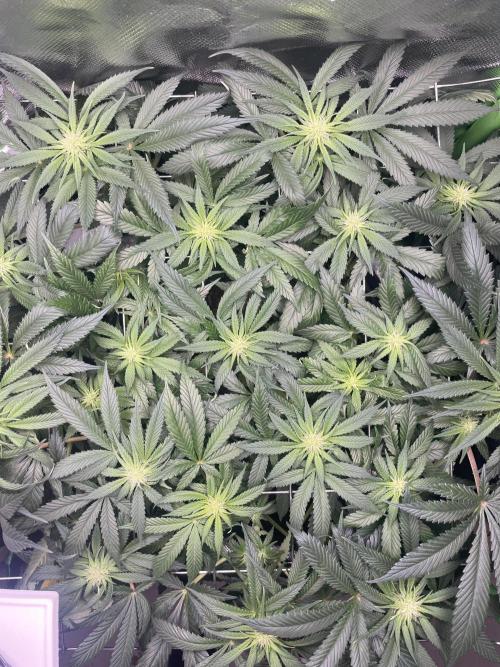
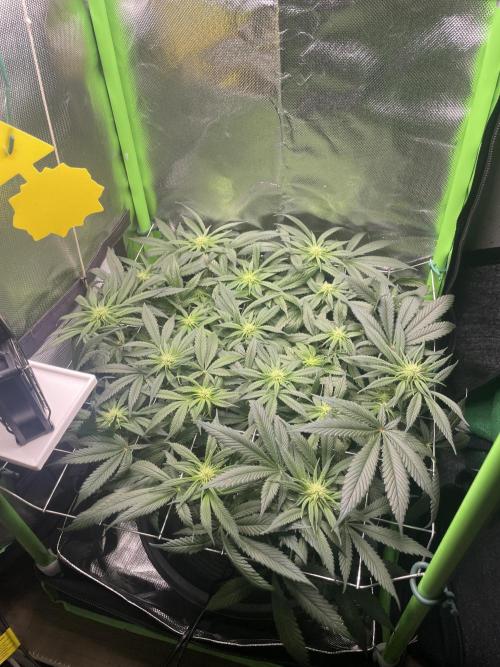
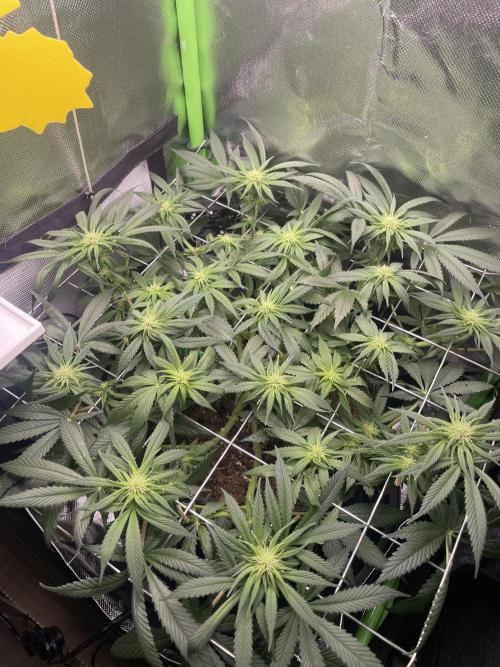
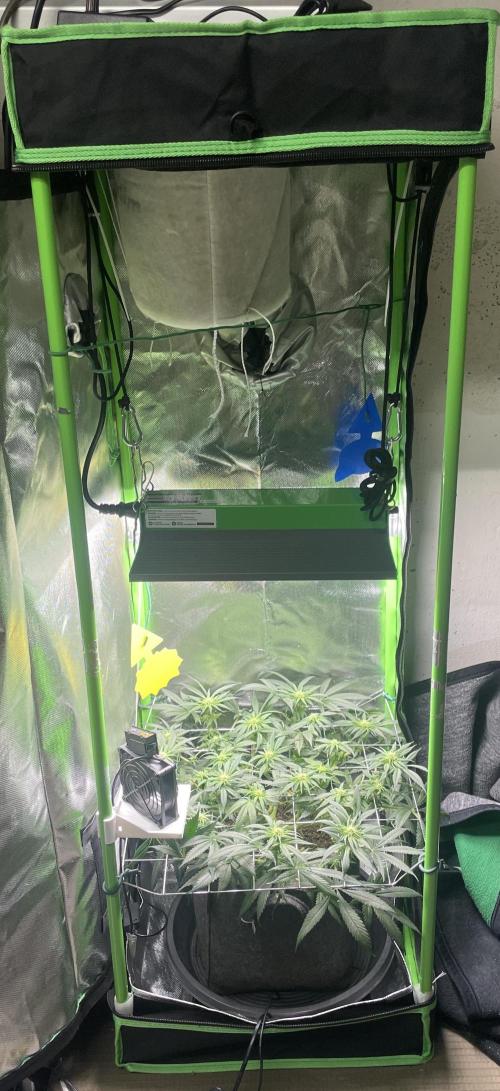
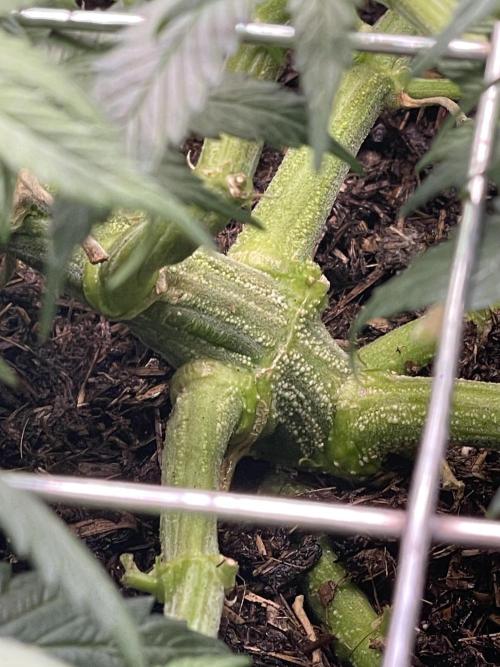
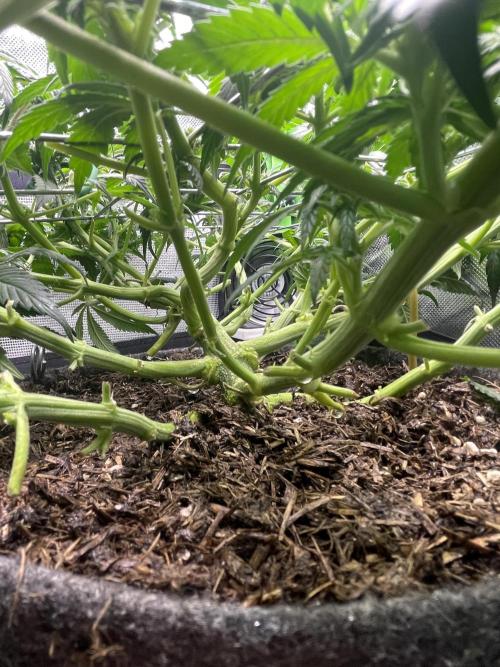
floristician The stretch seems to have officially come to a halt. While I wished for a bit more vertical expansion to create more space between the nodes, this Himalayan CBD pheno remains extremely compact and 'stocky'.
To compensate for the dense structure and to drive flower production, I am continuously pushing the light intensity. My goal is to reach 550-600 PPFD by next week.
Feeding Strategy:
I’m sticking to the BioTabs PK Boost for this week's watering. Even though the plant looks a bit 'weak' or light-hungry at the moment, I’m confident that the extra Phosphorus and Potassium will now trigger the real bud swelling. It’s all about patience now and letting the organic life in the soil do its work.
Current Focus:
Monitoring the canopy density. Since she is so compact, I have to be extra careful with airflow to prevent any moisture build-up between the tight nodes.
8 likes
1 comment
Share
Used techniques
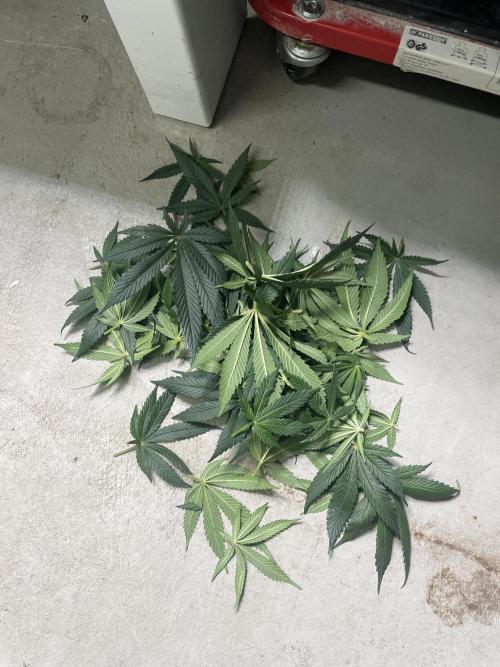
Defoliation
Technique
11
Week 11. Flowering4mo ago
17 cm
Height
12 hrs
Light Schedule
23 °C
Day Air Temp
Weak
Smell
55 %
Air Humidity
21 °C
Solution Temp
20 °C
Night Air Temp
8 liters
Pot Size
0.48 liters
Watering Volume
35 cm
Lamp Distance
Nutrients 2
AlfaBoost
3.5 mll
Epsom Salt
0.13 mll
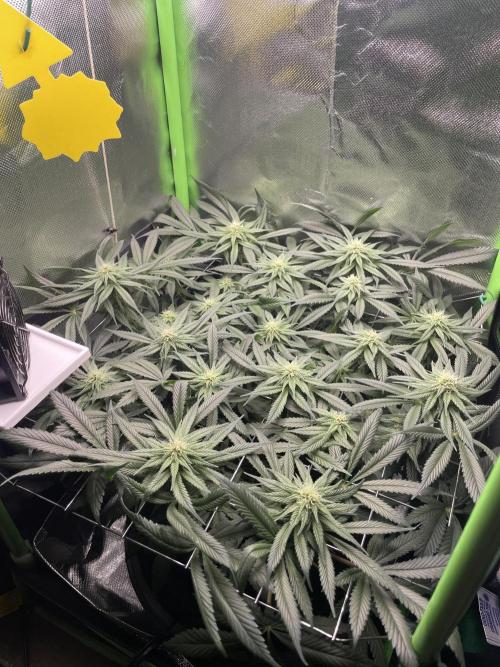
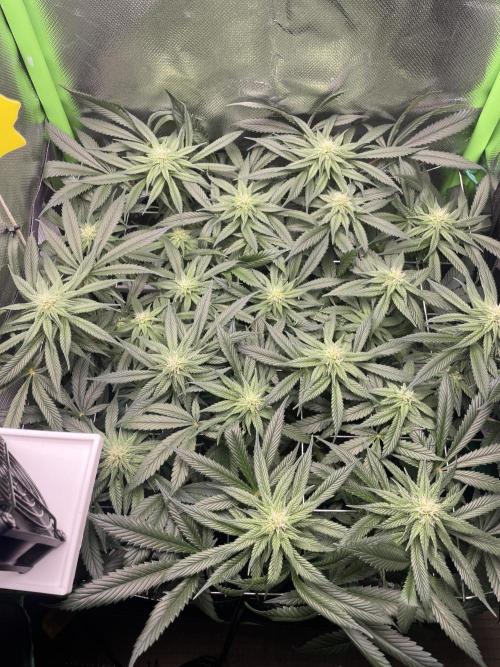
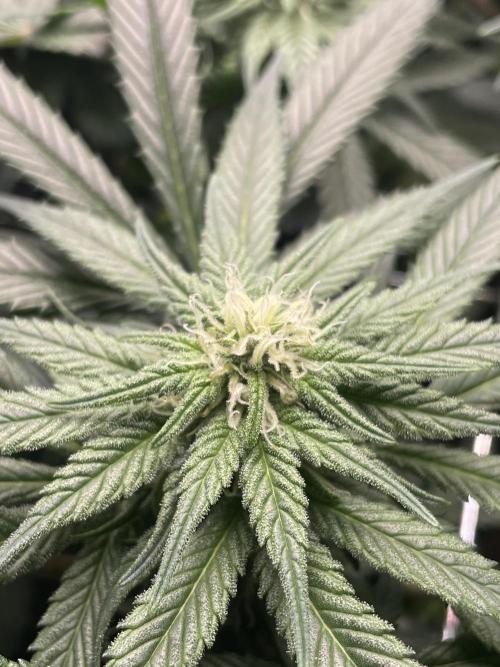
floristician We have entered the phase of patience. The stretch is over, and the Himalayan CBD is now focusing all its energy on flower development. My main task now is monitoring and maintaining a steady watering rhythm.
Watering Routine:
Every 3 days, she receives 1.7L of water, enriched with 6ml of Alfa Boost and a precise dose of 22mg Epsom salt to keep the magnesium levels stable under the increasing light intensity.
The Finale Strategy:
I’ve decided to go with the BioTabs Compost Tea. I’ll be preparing the 'Super Juice' for a grand finale in Bloom Week 6. This will provide a massive microbial boost right before the plant starts its final ripening process.
Currently, the plant is looking stable. I'm excited to see how the bud structure develops with this organic power-up in the coming weeks!
8 likes
comments
Share
12
Week 12. Flowering4mo ago
17 cm
Height
12 hrs
Light Schedule
23 °C
Day Air Temp
Normal
Smell
55 %
Air Humidity
21 °C
Solution Temp
20 °C
Night Air Temp
8 liters
Pot Size
0.48 liters
Watering Volume
35 cm
Lamp Distance
Nutrients 6
AlfaBoost
2 mll
Epsom Salt
0.13 mll

PK Booster Compost Tea
10 mll
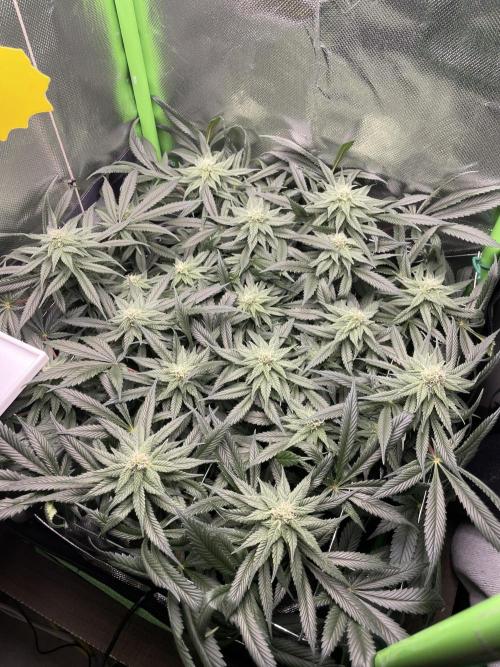
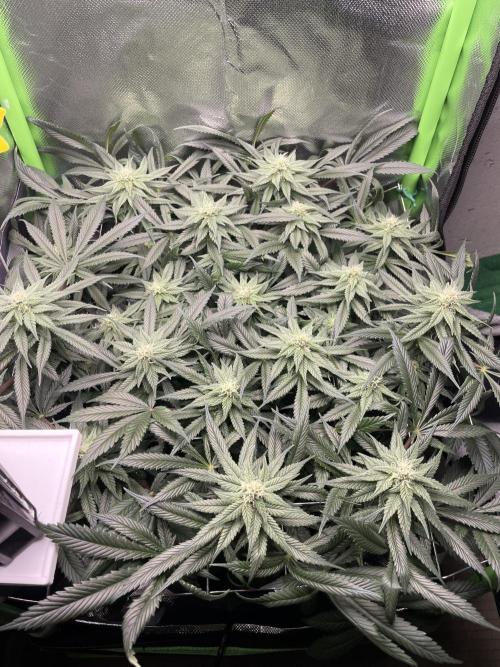
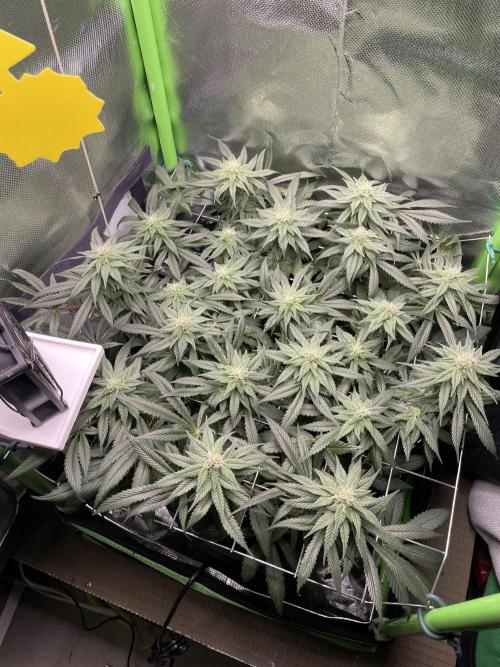
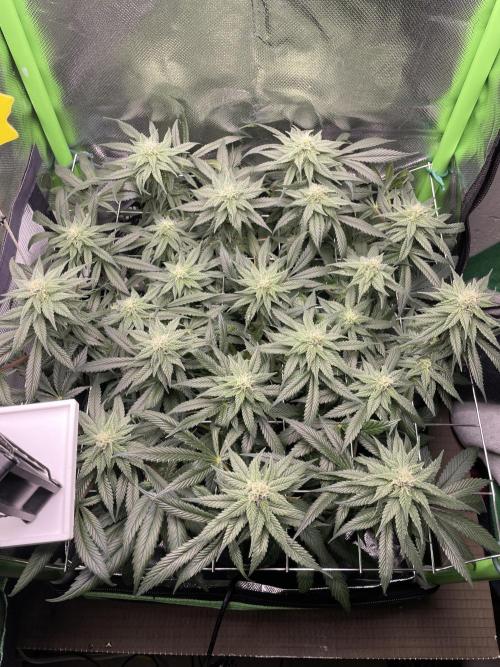
floristician Sticky Fingers & Citrus Dreams: First Trial of Compost Tea
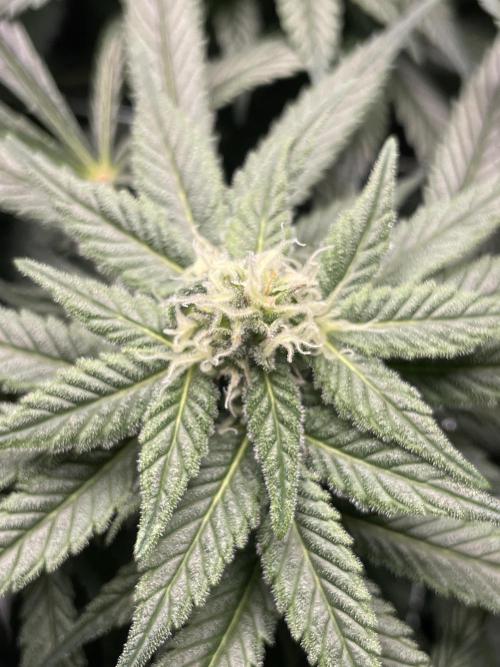
The garden is smelling incredible! I did another round of defoliation this week to manage the dense canopy. While trimming, I was hit with an amazing scent – a mix of intense sweetness and sharp citrus. Even some of the larger fan leaves are already starting to frost up with trichomes.
I’ve heard so many great things about Compost Tea, so this week I’m finally giving it a try. I’m hoping this 'Super Juice' will give the plant the final push it needs to swell those buds up.
To be honest, there’s a lot of leaf material between the flower sites, which makes me think of a potential 'trim jail' later on. But if the terpene profile and the effect live up to these early citrus notes, the extra trimming will be well worth it. Now, let's see how she reacts to the microbial boost!"
Technical Addendum: Nutrient Status
The leaves are currently a very deep dark green and have an almost leathery texture. This indicates that the plant is fully loaded with nutrients—it’s basically running at 'full steam.
Looking back, for this specific compact phenotype, one BioTab probably would have been sufficient instead of two. I am closely monitoring for any signs of nutrient burn, but for now, it seems she is just barely managing to convert all that energy into flower production.
UPDATE
Because the plant is standing so strong 'in the juice' with high nutrient levels, I’ve adjusted the tea recipe to be a bit more diluted than first intended.
DEUTSCH:
Klebrige Finger & Zitrusträume: Erster Versuch mit Komposttee
Der Garten riecht einfach unglaublich! Diese Woche habe ich noch einmal entlaubt, um das dichte Blätterdach in den Griff zu bekommen. Beim Arbeiten kam mir ein wahnsinniges Aroma entgegen – eine Mischung aus intensiver Süße und starker Zitrusfrucht. Sogar einige der größeren Fächerblätter fangen schon an, Trichome zu bilden.
Ich habe so viel Gutes über Komposttee gehört, dass ich es diese Woche endlich selbst ausprobiere. Ich hoffe, dieser ‚Super Juice‘ gibt der Pflanze den nötigen Kick, damit die Blüten so richtig anschwellen.
Ehrlich gesagt ist ziemlich viel Blattmasse zwischen den Blütenansätzen, was mich schon jetzt an die ‚Trim-Hölle‘ (Trimjail) denken lässt. Aber wenn das Terpenprofil und die Wirkung halten, was die Zitrusnoten versprechen, ist es die zusätzliche Arbeit beim Trimmen definitiv wert. Jetzt bin ich gespannt, wie sie auf den mikrobiellen Schub reagiert!
Technischer Nachtrag zum Nährstoffstatus:
Die Blätter sind aktuell sehr dunkelgrün und weisen eine fast ledrige Textur auf. Das deutet darauf hin, dass die Pflanze vollgepackt mit Nährstoffen ist – sie steht quasi ‚unter Volldampf‘. Rückblickend wäre bei dieser speziellen, kompakten Genetik vermutlich ein BioTab ausreichend gewesen statt zwei. Ich beobachte genau, ob sie Anzeichen von Überdüngung zeigt, aber aktuell scheint sie die Energie gerade noch so in die Blütenproduktion ummünzen zu können
UPDATE
Da die Pflanze so im Saft steht, habe ich den Tee etwas milder angesetzt als ursprünglich geplant.
Den PK-Boost 5-7 (Banane) habe ich getrennt vom Tee gegossen.
8 likes
4 comments
Share
Used techniques
Defoliation
Technique
13
Week 13. Flowering4mo ago
17 cm
Height
12 hrs
Light Schedule
23 °C
Day Air Temp
Normal
Smell
55 %
Air Humidity
21 °C
Solution Temp
20 °C
Night Air Temp
8 liters
Pot Size
0.48 liters
Watering Volume
35 cm
Lamp Distance
Nutrients 2
AlfaBoost
6 mll
Epsom Salt
0.13 mll
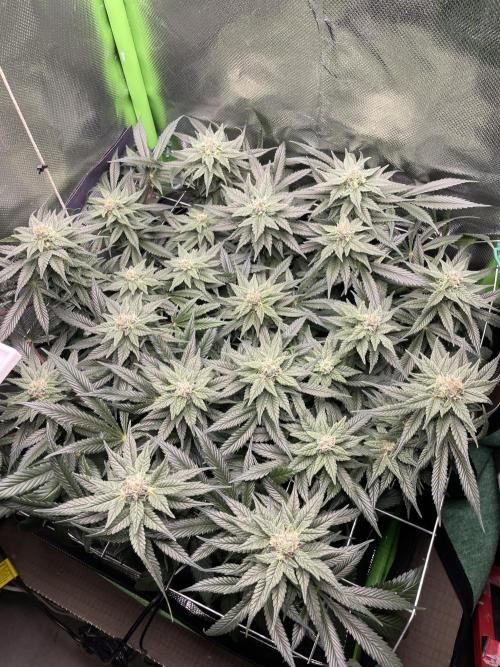
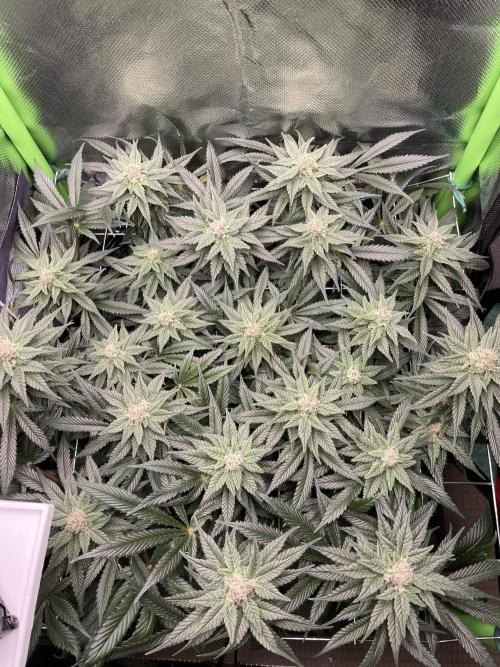
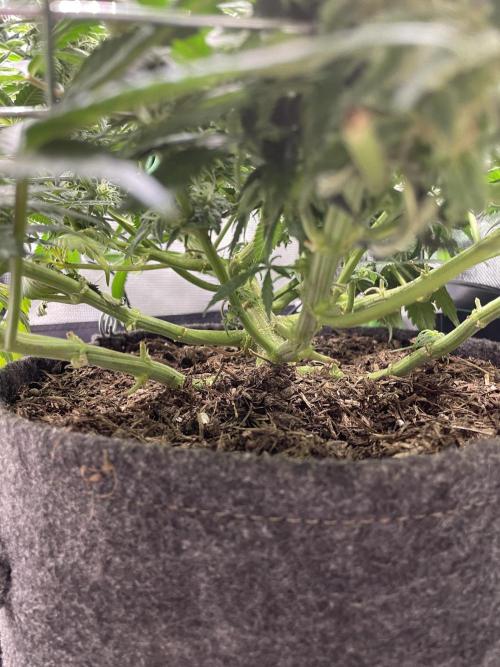
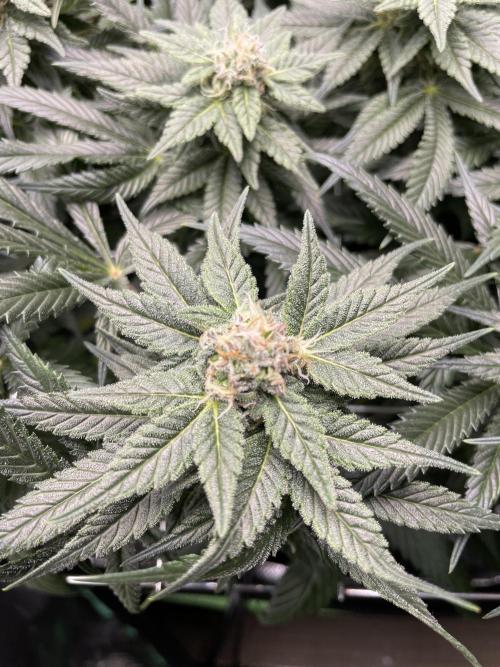
floristician Deep Green & High Light: The Final Swell Begins
Entering Week 7! The plant is still 'standing in the juice' (fully loaded with nutrients), making it crystal clear that the second BioTab was definitely overkill for this compact phenotype. To manage this, I’m sticking to a clean regimen: just water mixed with Alfa Boost and Epsom salt (Bittersalz) for the rest of the run.
I've pushed the light intensity to 700-750 PPFD now. Since the leaves are so dark and nutrient-rich, the plant needs this extra energy to process the reserves and pump them into the buds.
I'm starting to see the first orange hairs appearing, and the scent is getting even more intense. Now, I'm just hoping for that final swell to get those buds as thick as possible.
DEUTSCH
Tiefgrün & Volle Power: Das große Anschwellen beginnt
Woche 7 bricht an! Die Pflanze steht noch immer massiv ‚im Saft‘, was mir deutlich zeigt: Der zweite BioTab war für diesen kompakten Phänotyp definitiv zu viel des Guten. Ich reagiere darauf, indem ich nur noch eine cleane Mischung aus Alfa Boost und Bittersalz gebe.
Die Lichtintensität habe ich jetzt auf 700-750 PPFD hochgeschraubt. Da die Blätter so dunkel und voller Nährstoffe sind, braucht die Pflanze diese Extra-Energie, um die Reserven zu verarbeiten und in die Blütenbildung umzumünzen.
Die ersten Härchen färben sich bereits orange und der Duft wird von Tag zu Tag intensiver. Jetzt hoffe ich auf den finalen ‚Swell‘, damit die Blüten noch ordentlich an Masse zulegen.
9 likes
2 comments
Share
14
Week 14. Flowering4mo ago
17 cm
Height
12 hrs
Light Schedule
23 °C
Day Air Temp
Strong
Smell
55 %
Air Humidity
21 °C
Solution Temp
20 °C
Night Air Temp
8 liters
Pot Size
0.48 liters
Watering Volume
35 cm
Lamp Distance
Nutrients 1
AlfaBoost
6 mll
floristician ENGLISH / DEUTSCH
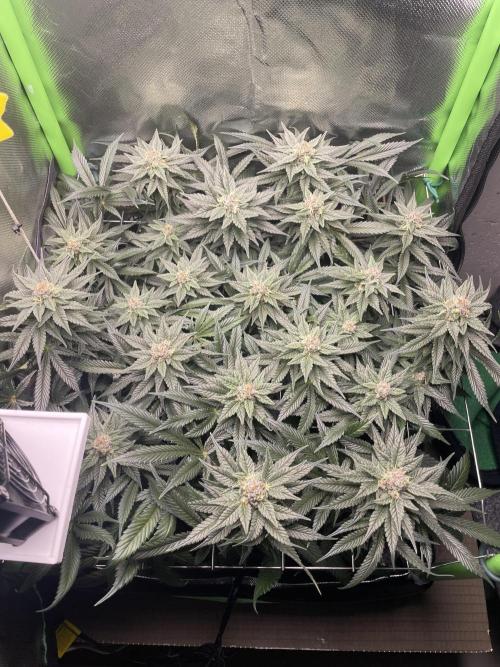
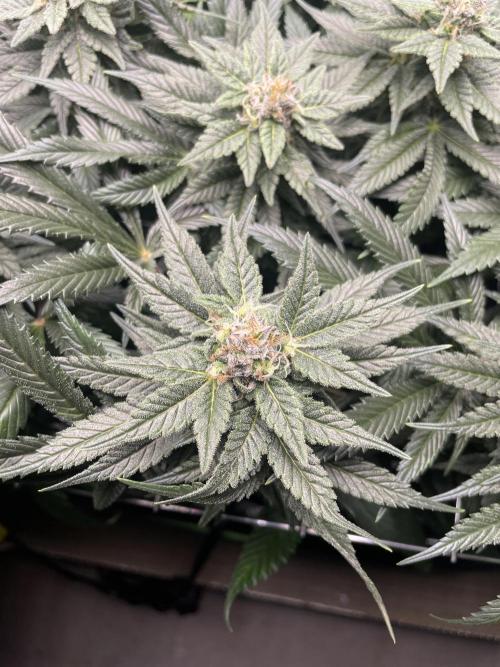
Spotting some leaf issues - Adjusting the plan
Welcome to Week 7!
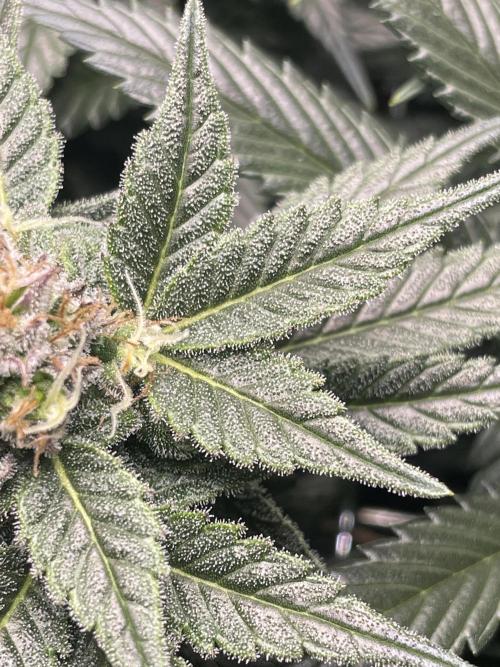
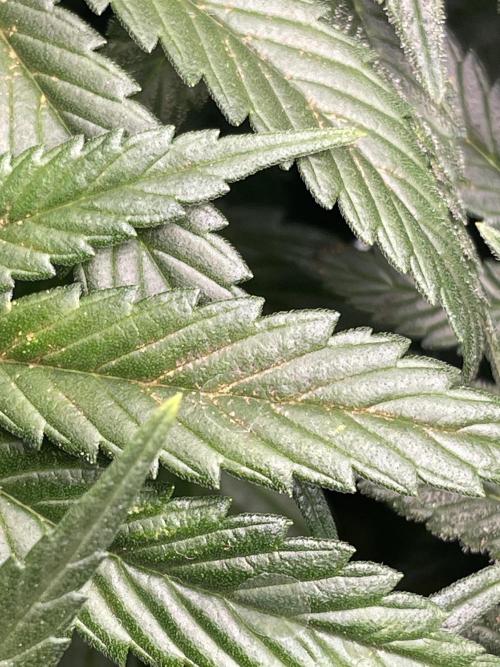
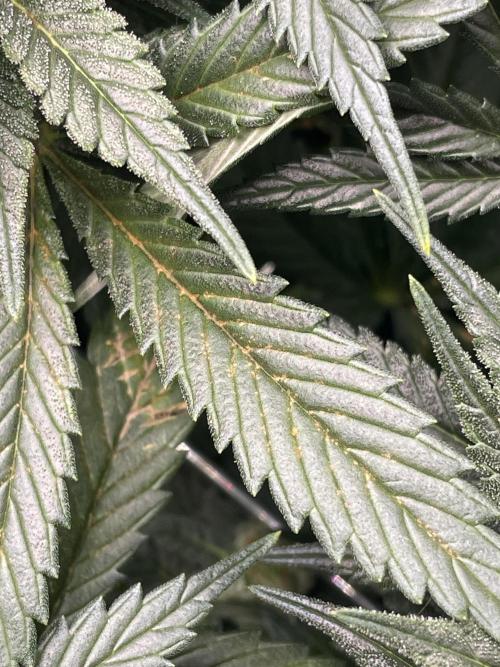
The buds are developing nicely, but I’ve noticed some brown, rusty spots popping up on the fan leaves. Since I’ve been adding a bit of Epsom salt regularly, I’m not entirely sure what’s causing it.
It could be a slight Calcium issue, or perhaps the second BioTab created a bit of a nutrient lockout in the soil since this phenotype is so compact and already very dark green. It's hard to tell for sure, and I don't want to make things worse by guessing and chasing deficiencies with heavy bottled nutrients.
To play it safe and avoid risking any bud rot this late in flower, I won't be spraying anything. Instead, I’ve decided to just stick to pure water and Alfa Boost for the remaining 3-4 weeks. The plant seems to have plenty of green reserves left anyway, so letting the soil slowly lean out feels like the gentlest way to bring her to the finish line. First orange hairs are showing, and the smell is getting great!
Erste Flecken auf den Blättern - Plan-Anpassung
Willkommen in Woche 7!
Die Blüten entwickeln sich gut, aber mir sind ein paar braune Rostflecken auf den Sonnensegeln aufgefallen. Da ich eigentlich regelmäßig etwas Bittersalz gegeben habe, bin ich mir nicht ganz sicher, woran es genau liegt.
Es könnte ein leichter Calciummangel sein, oder der zweite BioTab hat zu einem kleinen Nährstoff-Lockout in der Erde geführt, da dieser Phänotyp ohnehin sehr kompakt und extrem dunkelgrün ist. Hundertprozentig sicher weiß ich es nicht, und ich möchte das Ganze ungern verschlimmbessern, indem ich jetzt wild Dünger hinterherkippe.
Um auf Nummer sicher zu gehen und so spät in der Blüte kein Schimmelrisiko einzugehen, wird natürlich nichts gesprüht. Ich habe mich stattdessen dazu entschieden, für die restlichen 3-4 Wochen einfach nur noch klares Wasser und Alfa Boost zu geben. Die Pflanze hat ja an sich noch massig grüne Reserven, und die Erde jetzt langsam aushungern zu lassen, fühlt sich einfach nach dem sichersten Weg an. Die ersten Härchen werden orange und der Duft wird immer besser!
8 likes
3 comments
Share
15
Week 15. Flowering3mo ago
17 cm
Height
12 hrs
Light Schedule
23 °C
Day Air Temp
Strong
Smell
55 %
Air Humidity
21 °C
Solution Temp
20 °C
Night Air Temp
8 liters
Pot Size
0.48 liters
Watering Volume
35 cm
Lamp Distance
Nutrients 3
AlfaBoost
6 mll
Bittersalz/Epsonsalt
13 mll

Calmag
1 mll
floristician DEUTSCH / ENGLISH ⬇️
Das CalMag-Problem wird schlimmer – Ich ziehe meinen Plan durch
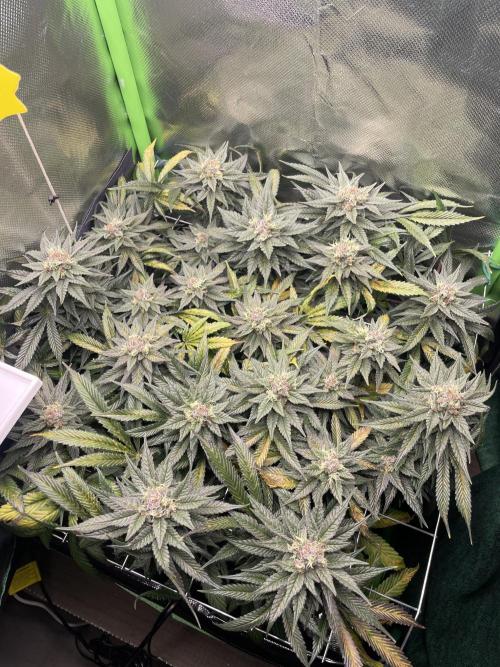
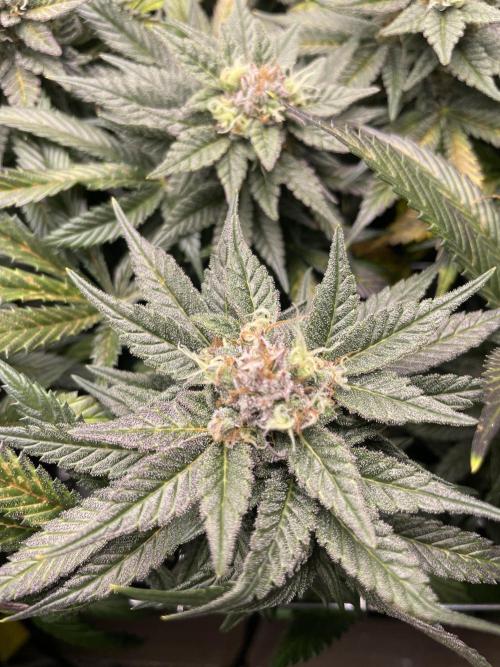
The CalMag problem is really kicking in now. The leaves are turning quite crispy and dry. Despite the AI recommending to stop feeding, I decided to keep watering with BioBizz CalMag. My reasoning is that the buds are still developing and building mass, so they need the support.
My recent watering stats:
May 21st: 1.7 liters of water with 1.5 ml CalMag, 18 mg Epsom salt, and 6 ml Alfa Boost.
May 24th: 1.7 liters of water with 1 ml CalMag, 22 mg Epsom salt, and 4 ml Alfa Boost.
The AI still predicts a nutrient lockout caused by too much Nitrogen in the soil from the two BioTabs, blocking the Calcium uptake. Let's wait and see how it turns out and how the buds develop. Fingers crossed!
7 likes
2 comments
Share
16
Week 16. Flowering3mo ago
17 cm
Height
12 hrs
Light Schedule
23 °C
Day Air Temp
Strong
Smell
55 %
Air Humidity
21 °C
Solution Temp
20 °C
Night Air Temp
8 liters
Pot Size
0.48 liters
Watering Volume
35 cm
Lamp Distance
Nutrients 4
AlfaBoost
6 mll
Bittersalz/Epsonsalt
13 mll
Calmag
1 mll
floristician DEUTSCH / ENGLISH ⬇️
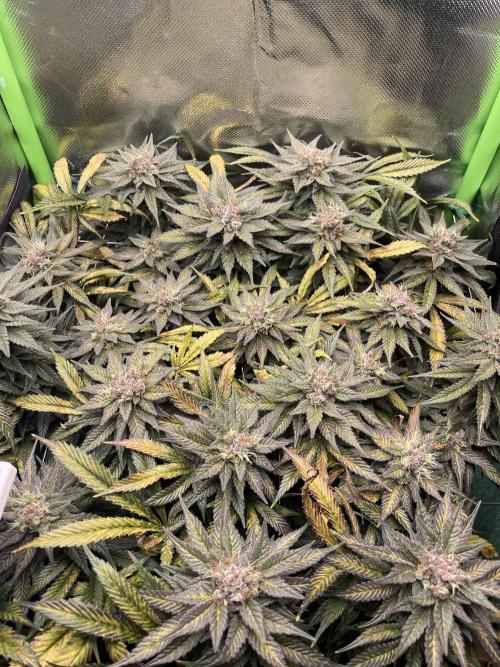
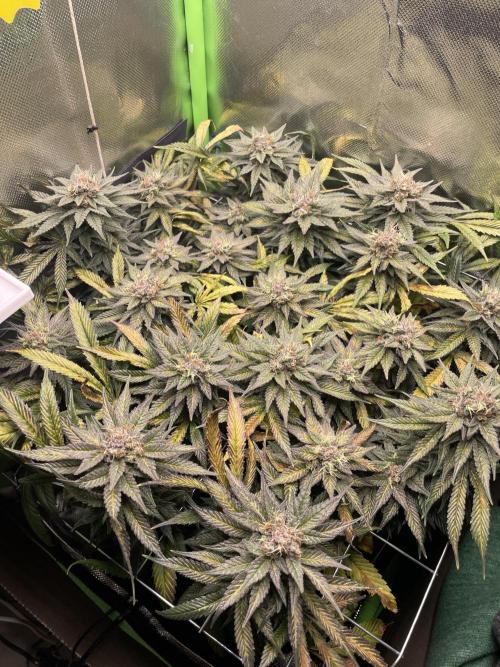
Der Herbst zieht ein & Wichtige Erkenntnisse für die Zukunft
Die Pflanze zieht jetzt ihre letzten Reserven aus den Blättern – der Herbst ist endgültig eingeleitet. Aus diesem Run habe ich auf jeden Fall wieder extrem viel Neues gelernt. Speziell diese Sorte braucht gar nicht so viele Nährstoffe; hier reicht ein einziger BioTab vollkommen aus. Ich habe noch einmal Bactrex hinzugefügt, um das Bodenleben anzuregen, was mir so auch direkt von BioTabs empfohlen wurde.
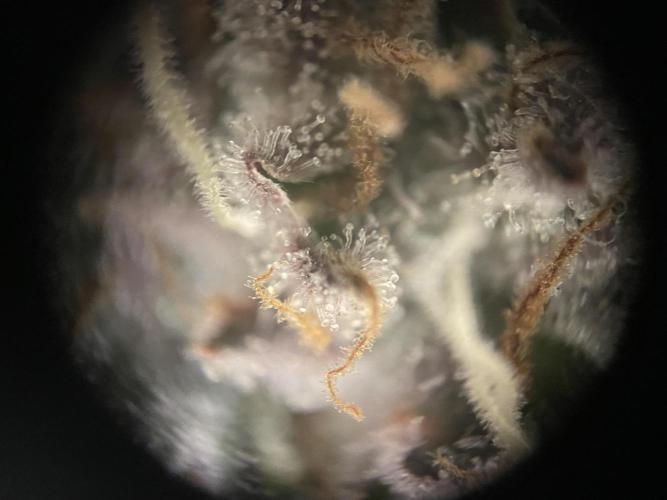
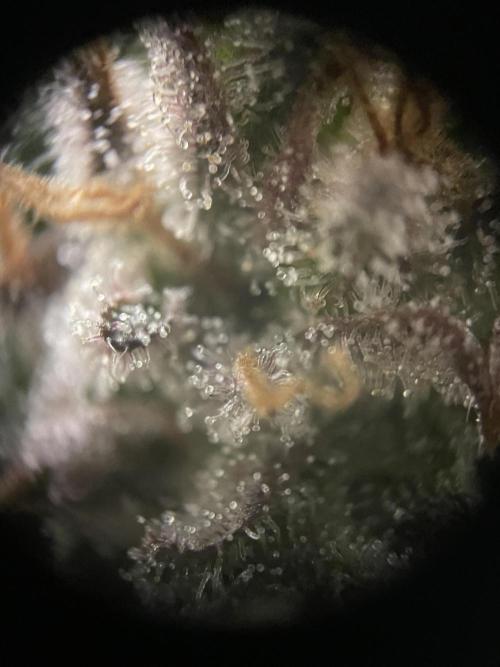
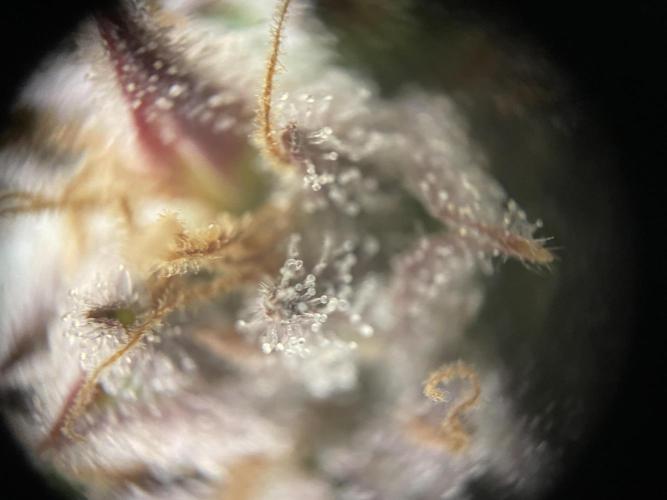
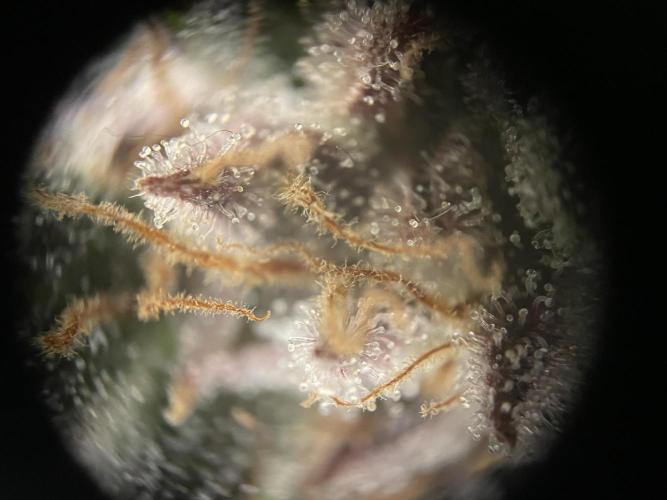
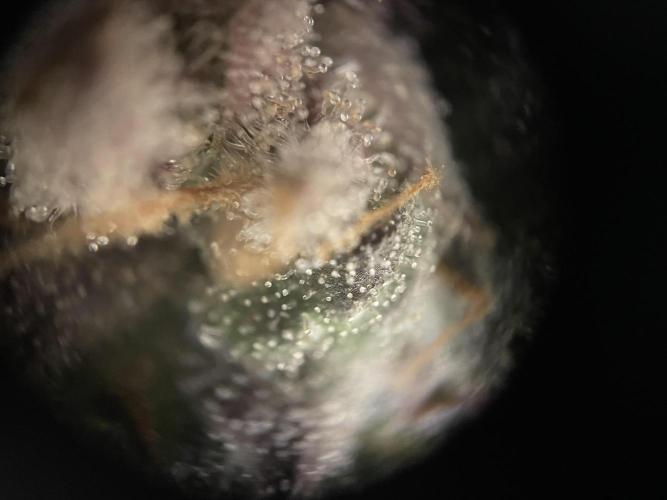
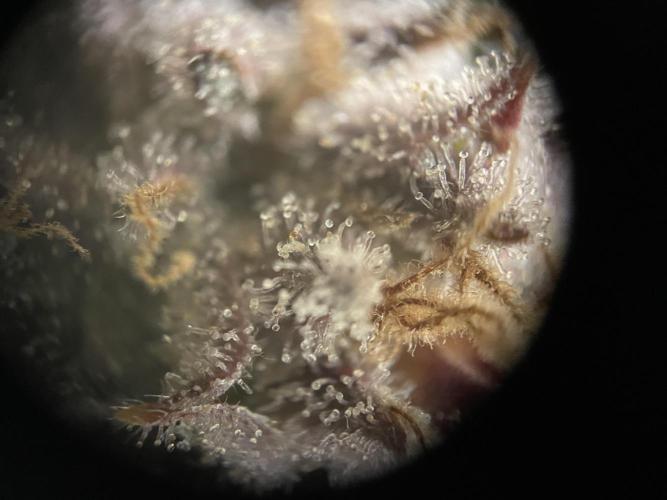
Die Trichome entwickeln sich langsam, sind aber noch nicht an dem Punkt, wo ich sie haben möchte. Ich will definitiv noch ein paar mehr bernsteinfarbene Köpfe sehen. Ein Glück, dass die Nährstoffprobleme erst so spät in der Blütephase aufgetreten sind. Ein bisschen enttäuscht bin ich allerdings von der Blütengröße. Die Pflanzen, die ich davor im Zelt hatte, hatten wesentlich dickere Headbuds. Ich hoffe einfach, dass die Qualität und die Wirkung das am Ende wieder ausgleichen!
Englische Version
Autumn is here & Important lessons learned
The plant is now pulling its last reserves from the leaves – autumn has definitely arrived. I've certainly learned a lot of new things from this run. This specific strain doesn't need many nutrients at all; a single BioTab would have been more than enough. I added some Bactrex again to stimulate the soil life, which was also recommended to me directly by BioTabs.
The trichomes are developing slowly but aren't quite where I want them yet. I definitely want to see a few more amber heads. Luckily, the nutrient issues only kicked in this late in the flowering stage. I am a bit disappointed with the bud size, though. The plants I grew in the tent before this one had much thicker head buds. I just hope the quality and effects will make up for it in the end!
7 likes
comments
Share
17
Week 17. Flowering3mo ago
17 cm
Height
12 hrs
Light Schedule
23 °C
Day Air Temp
Strong
Smell
55 %
Air Humidity
21 °C
Solution Temp
20 °C
Night Air Temp
8 liters
Pot Size
0.48 liters
Watering Volume
35 cm
Lamp Distance
floristician DEUTSCH / ENGLISH ⬇️
Won't win a beauty contest, but valuable lessons learned
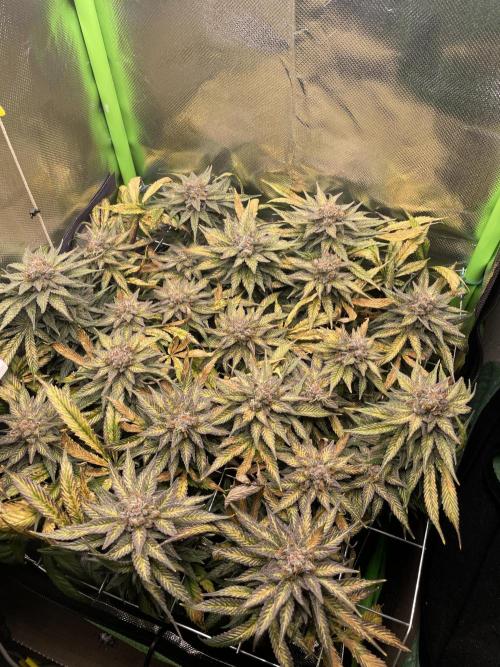
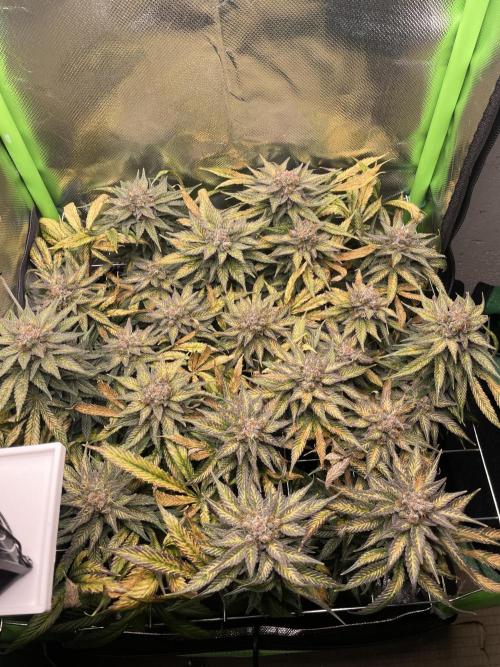
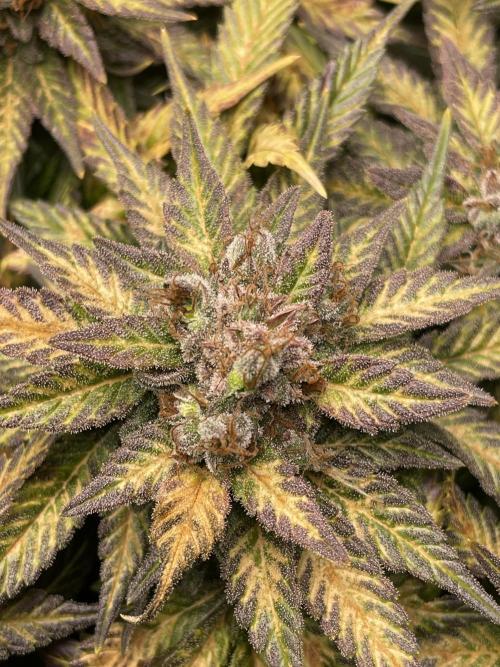
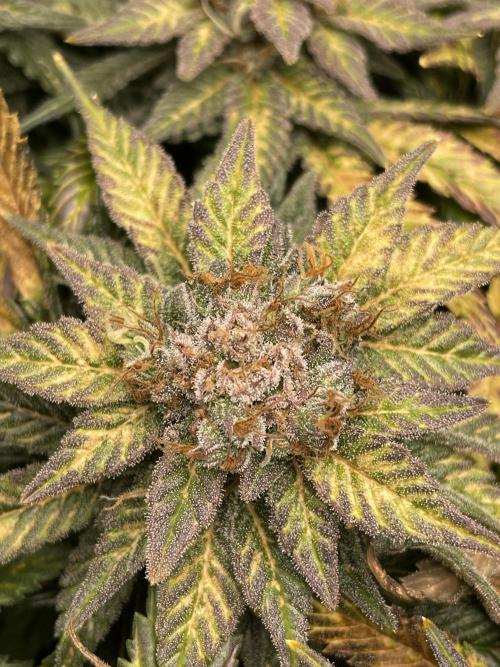
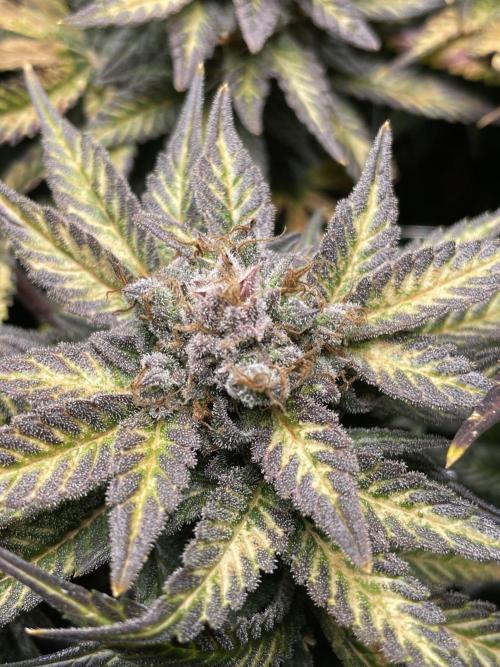
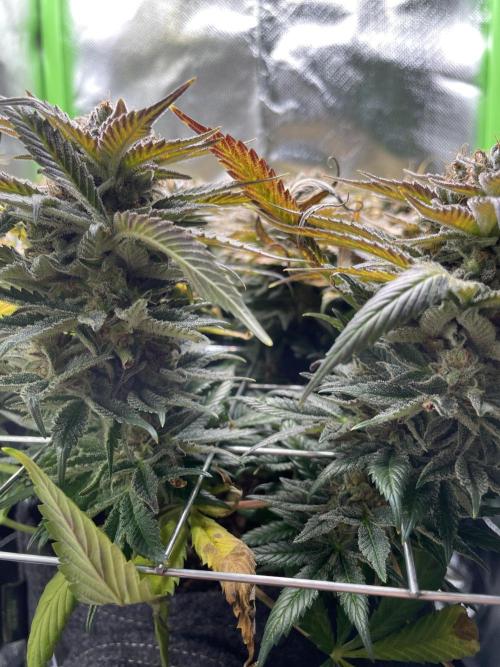
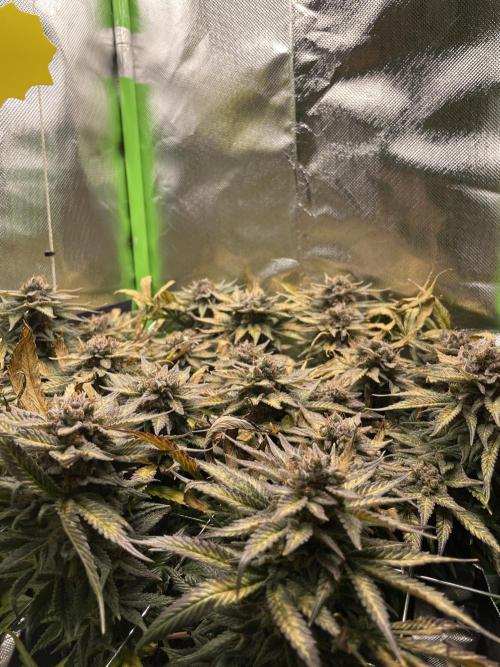
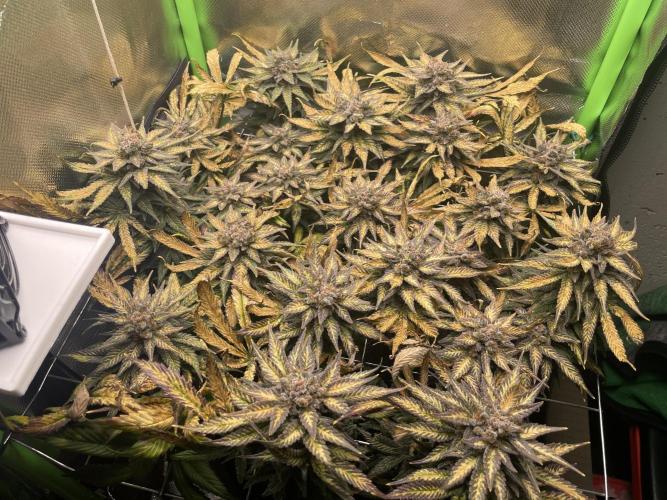
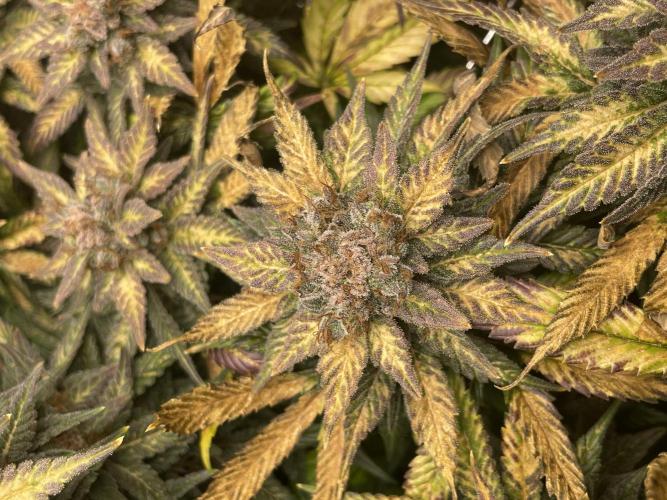
She definitely won't be winning any beauty pageants, but I’ve learned a lot of new things again this week. I'm just letting her finish in peace now and have reduced the watering – from now on, she only gets water every 4 days. I also turned the light down by a few percent. To be honest, I'm not entirely sure what happened to the upper part of the plant. The top leaves and the big fan leaves look really ugly. The funny thing is, the leaves on the buds that are lower down in the shade are still lush and green. Despite this visual autumn chaos, she will still need another 1 to 2 weeks for me until the trichomes are perfect.
5 likes
1 comment
Share
18
Week 18. Flowering3mo ago
17 cm
Height
12 hrs
Light Schedule
23 °C
Day Air Temp
Strong
Smell
55 %
Air Humidity
21 °C
Solution Temp
20 °C
Night Air Temp
8 liters
Pot Size
0.48 liters
Watering Volume
35 cm
Lamp Distance
floristician DEUTSCH / ENGLISH ⬇️
Die letzte Woche vor der Ernte bricht an
The final week before harvest begins
Die letzte Woche vor der Ernte ist nun angebrochen.
The last week before harvest has officially begun.
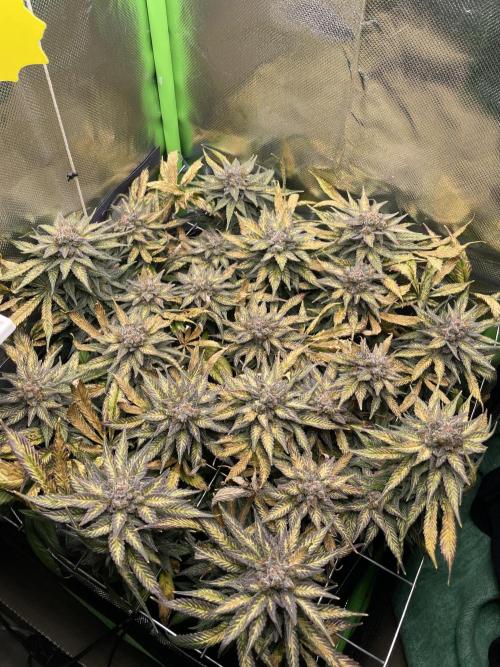
Ich denke, nach dieser Woche wird sie zwar immer noch nicht ganz den Reifegrad haben, den ich mir eigentlich wünsche, aber manchmal lässt es sich vom Timing her einfach nicht anders regeln.
I think that after this week, she still won’t be quite at the level of ripeness I originally wanted, but sometimes the timing just doesn’t work out any other way.
Heute bekommt sie noch ein allerletztes Mal 1,7 Liter klares Wasser, und dann geht es auch schon langsam auf die Zielgerade zu.
Today she gets one last feeding of 1.7 liters of plain water, and then we are heading straight into the final stretch.
10 likes
comments
Share
19
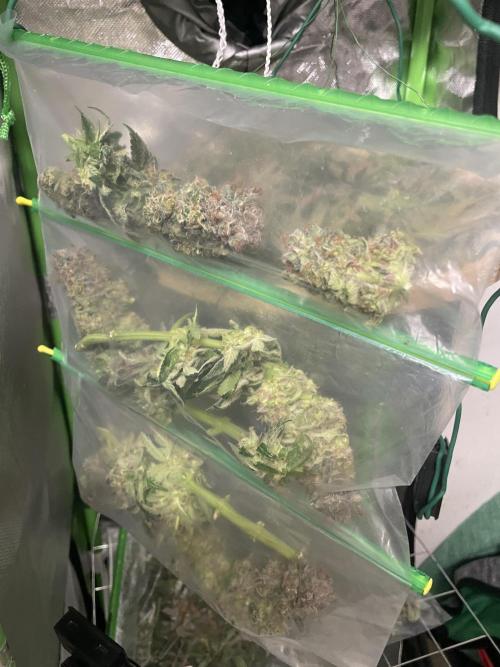
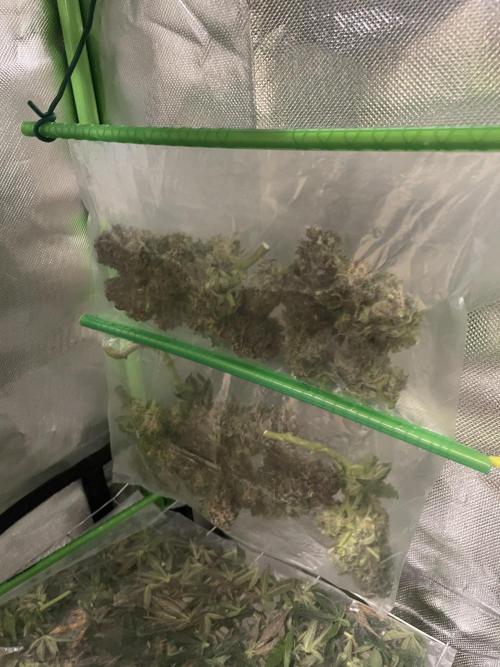
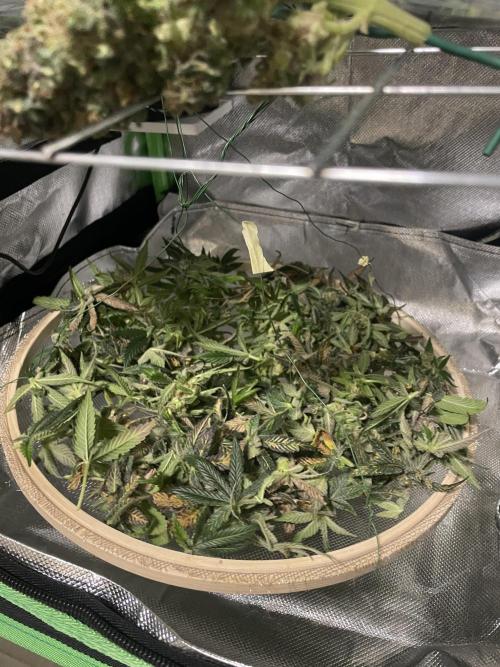
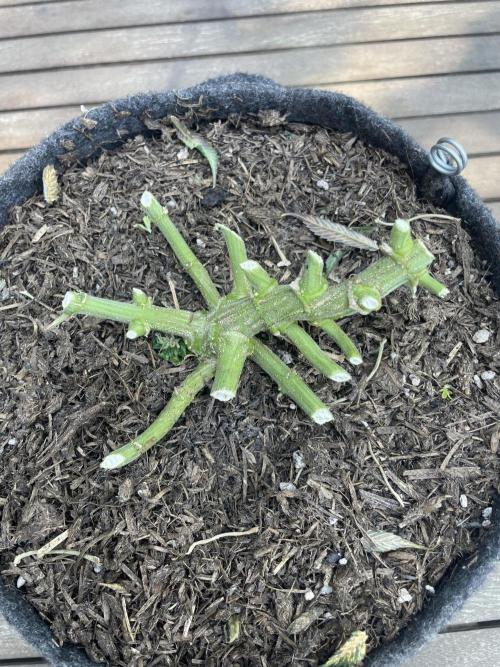
Week 19. Harvest2mo ago
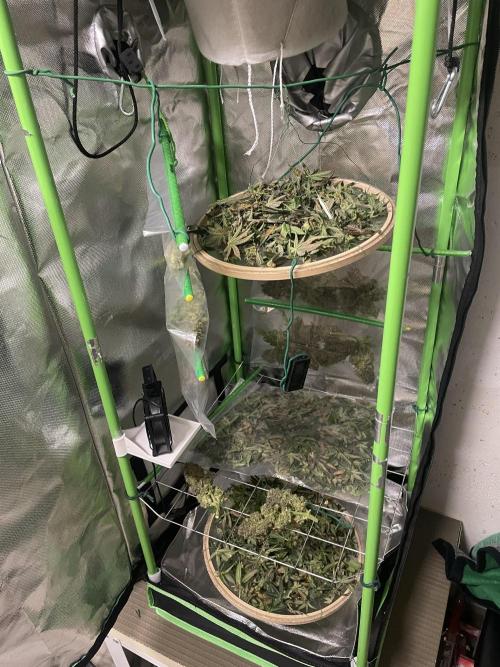
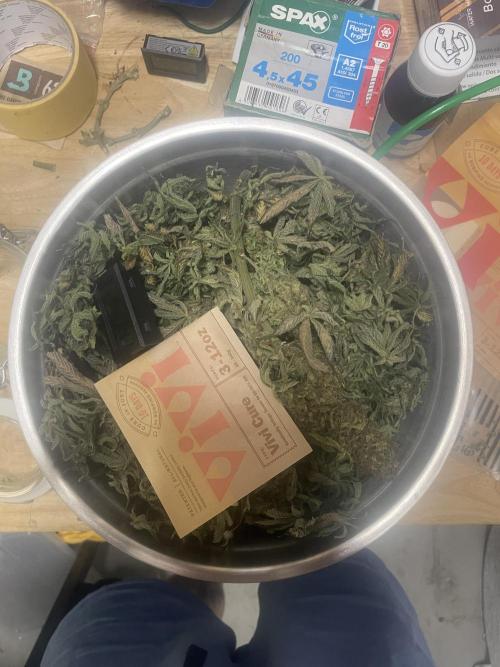
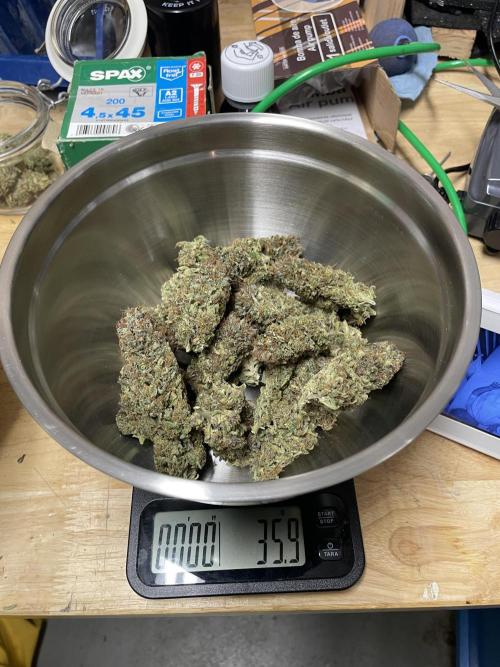
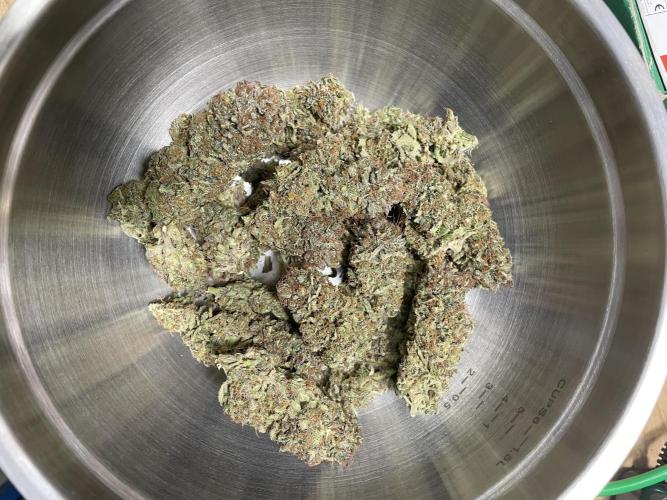
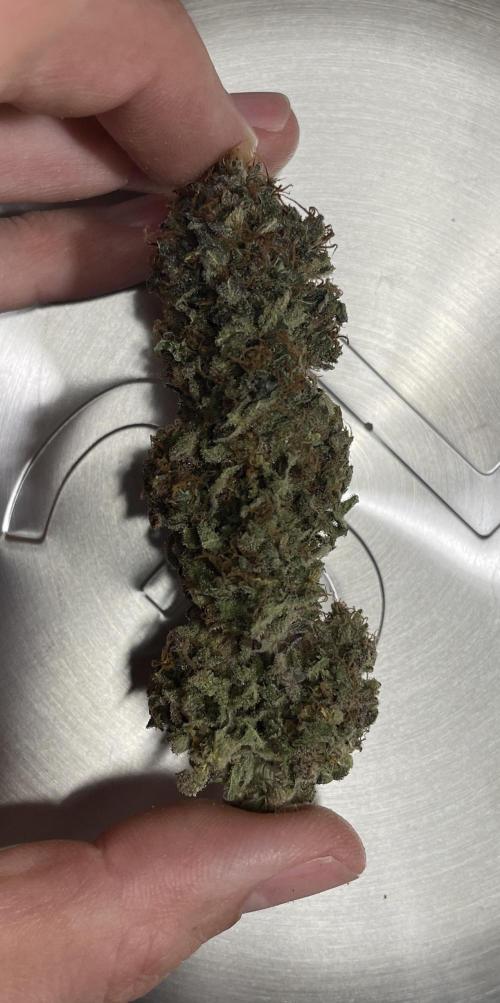
Happy Harvest Day!


8/10
Rated
Spent 128 days
Ger Veg Flo Har
1
Plants
Normal
Difficulty
Height
Day air temperature
Air humidity
Light schedule
Solution temperature
Night air temperature
Pot size
Lamp distance
floristician Comming…
8 likes
1 comment
Share
Equipment Reviews





the end.
Enjoying this diary? Follow for more updates!

Prefer the old Diary view?
Go back to the old Diary view