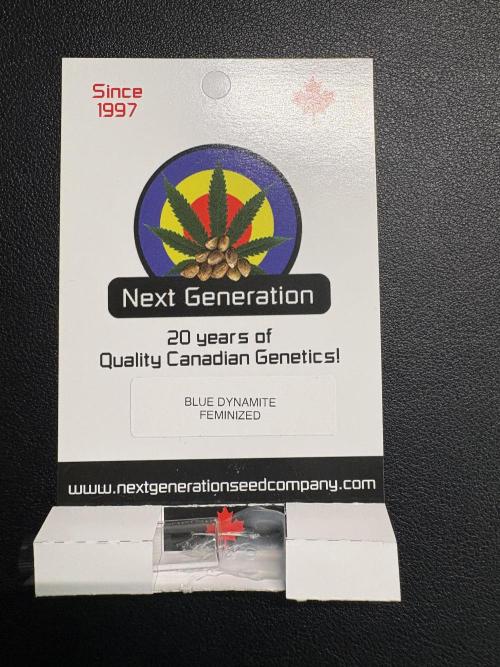
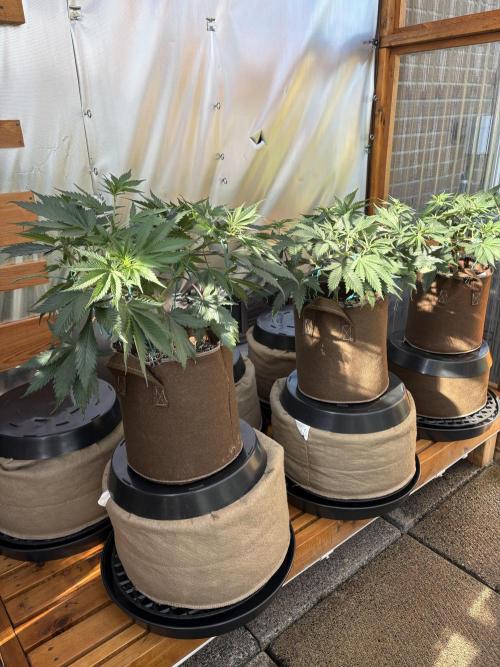
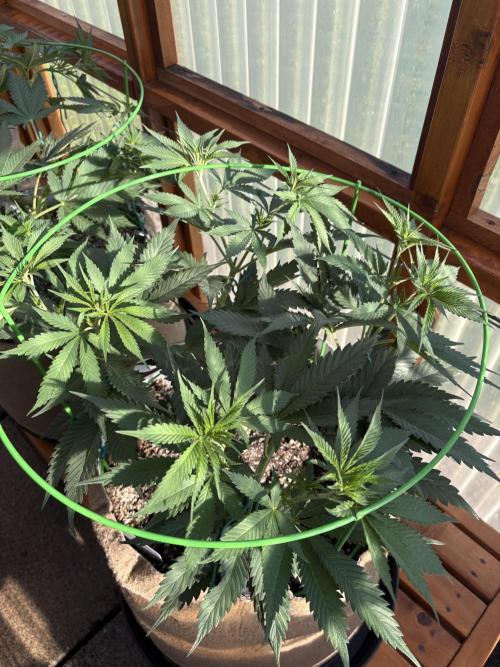
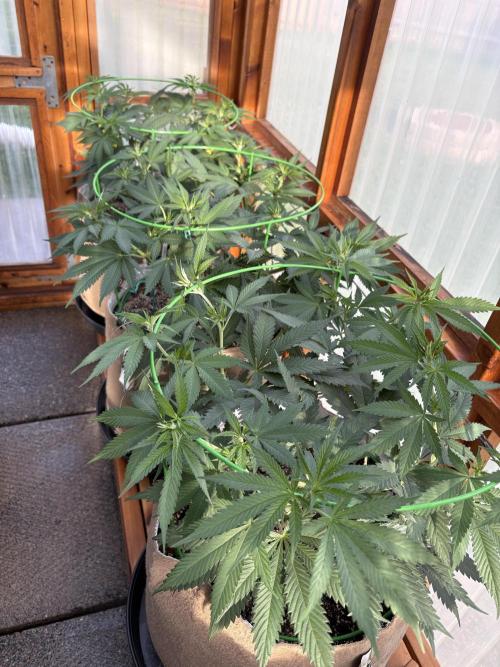
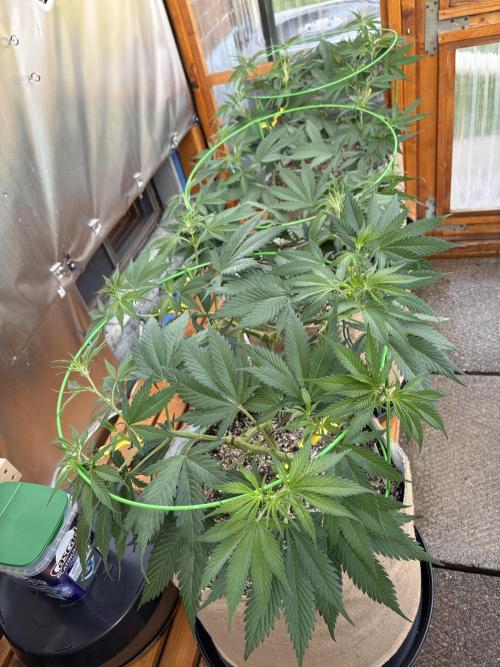
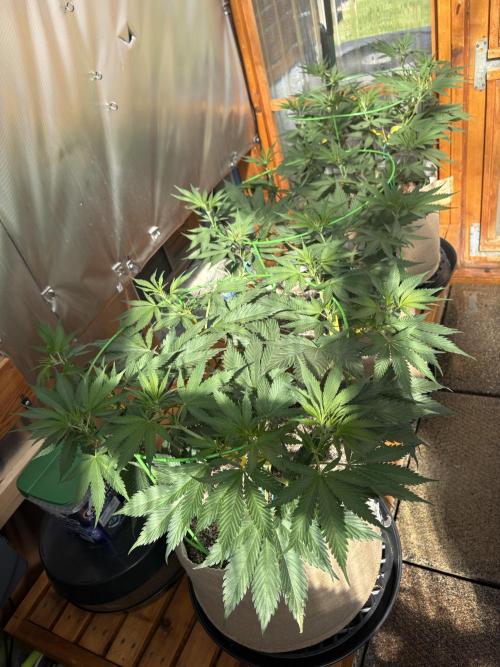
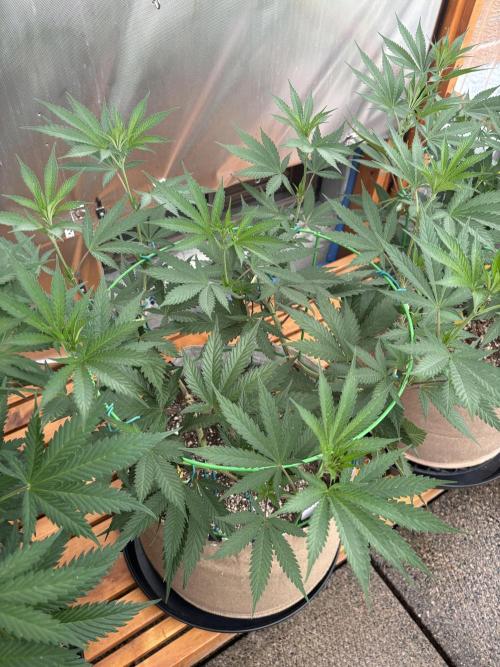
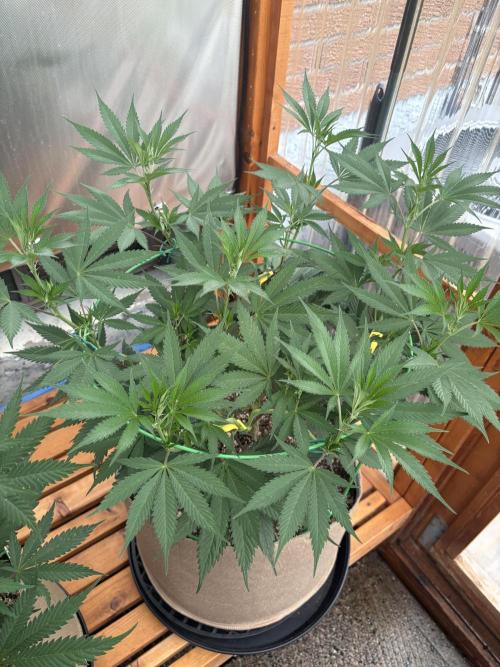
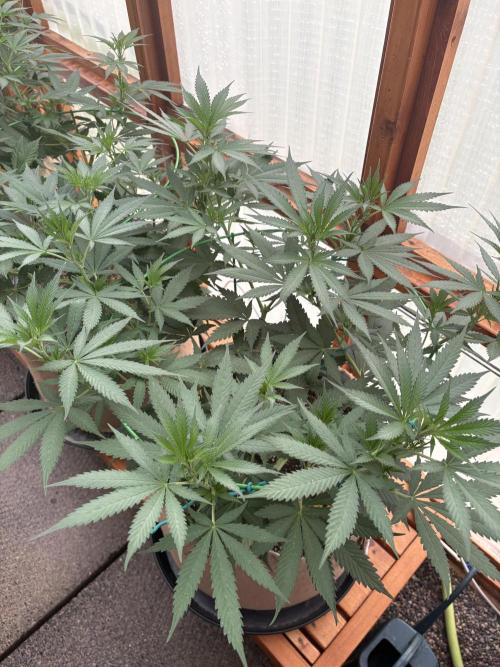
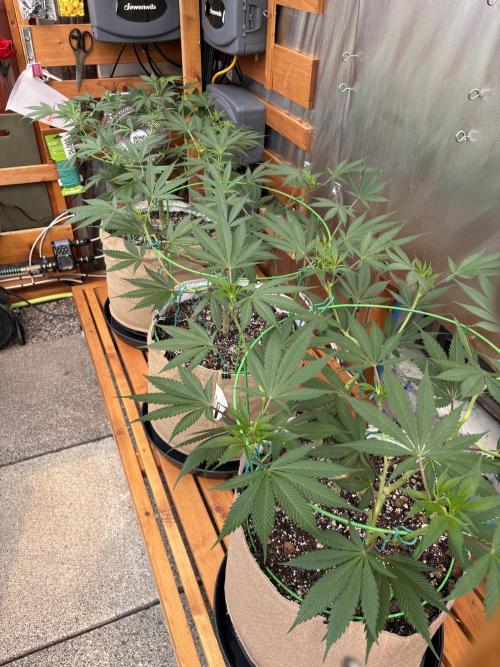
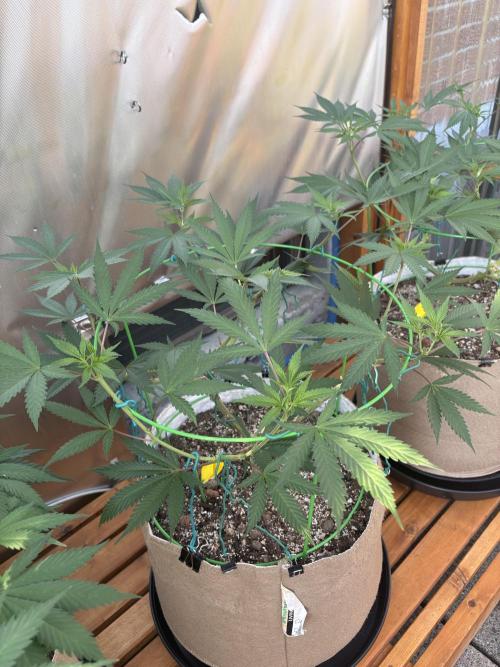
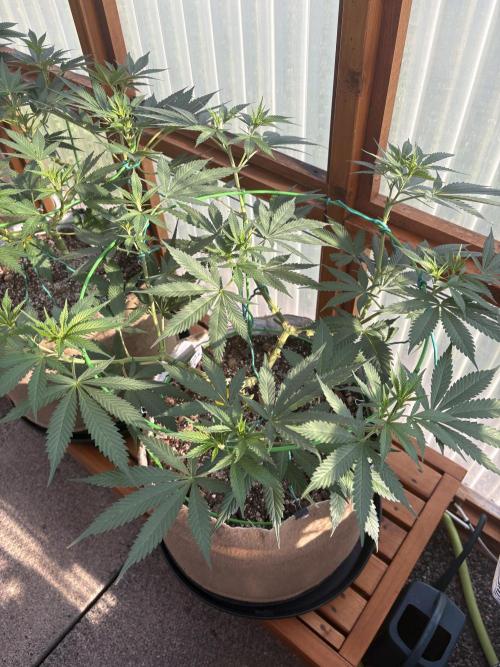
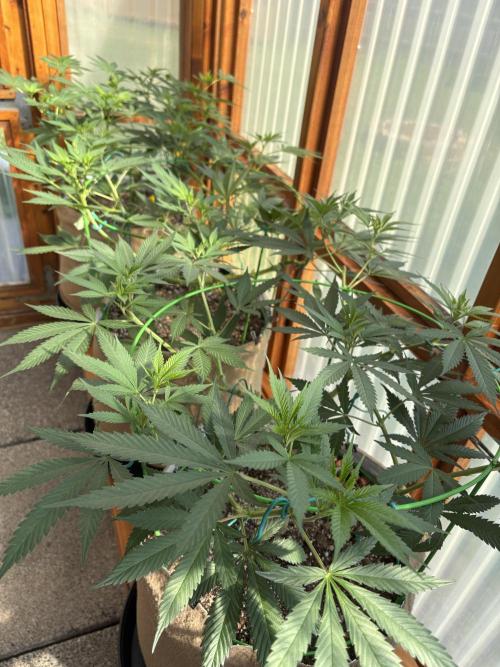
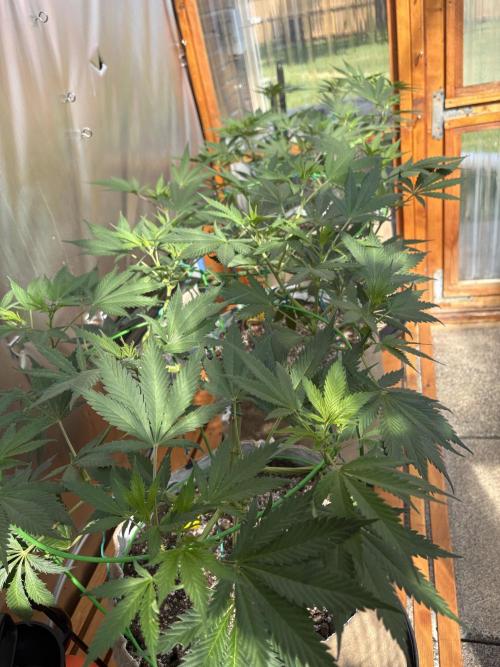
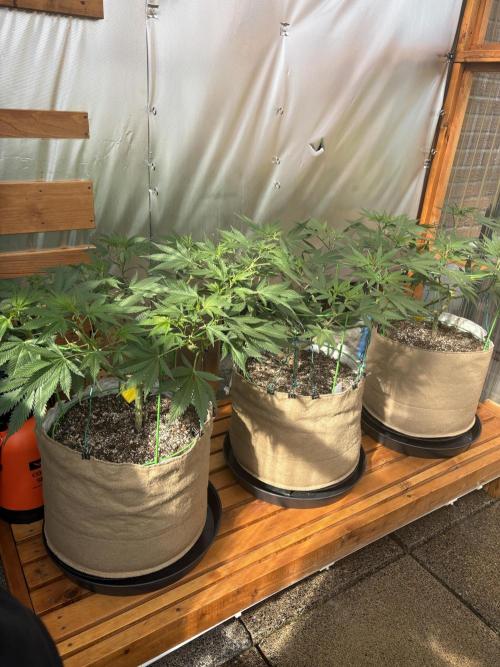
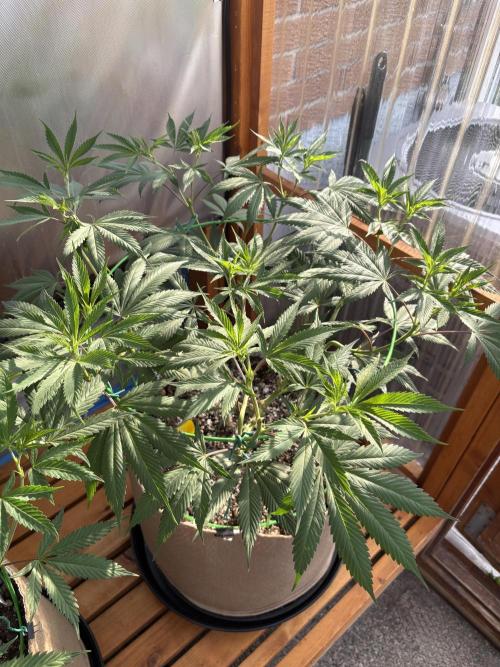
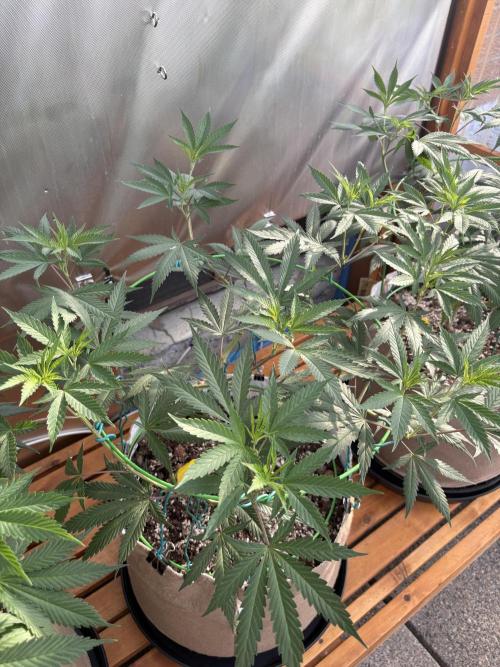
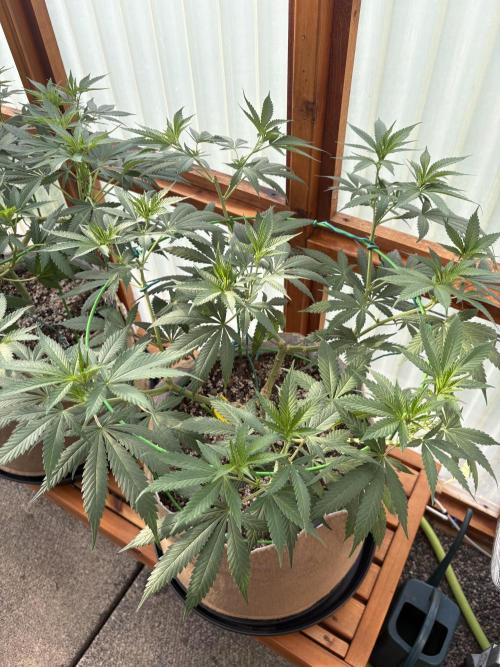
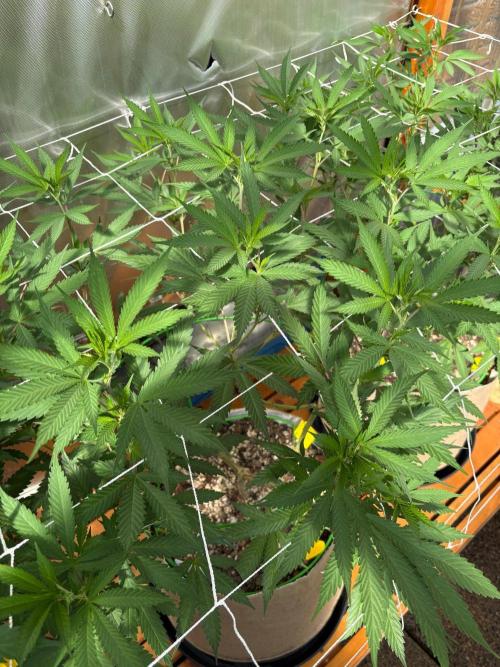
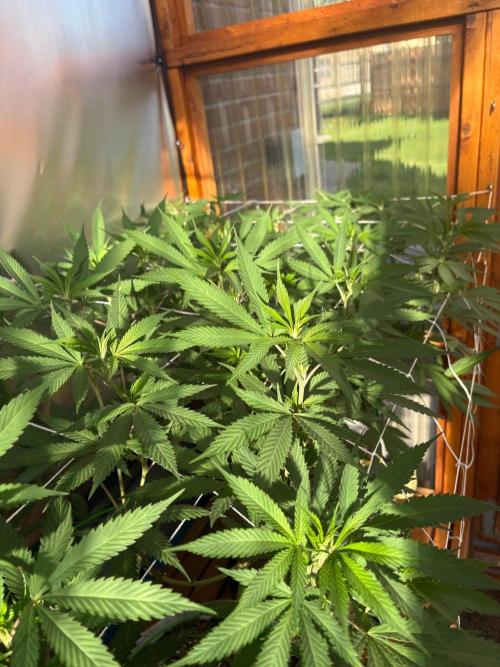
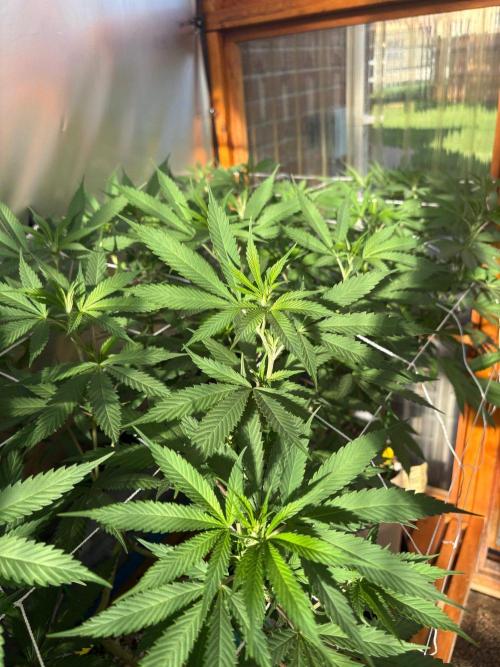
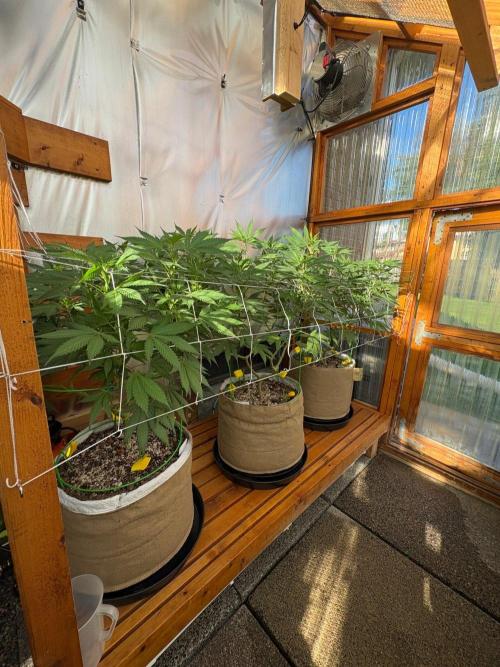
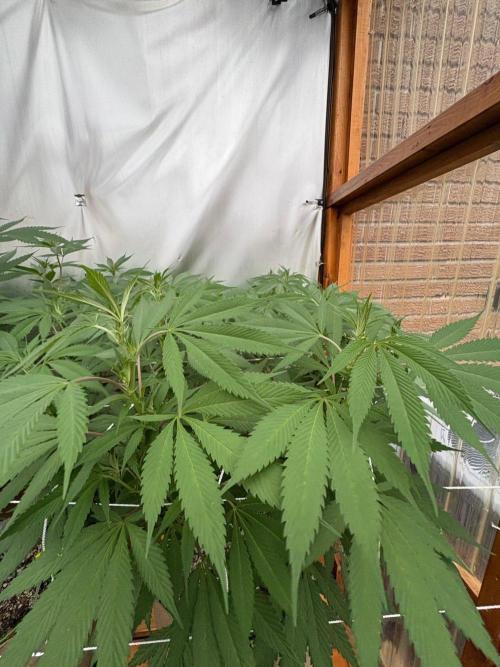
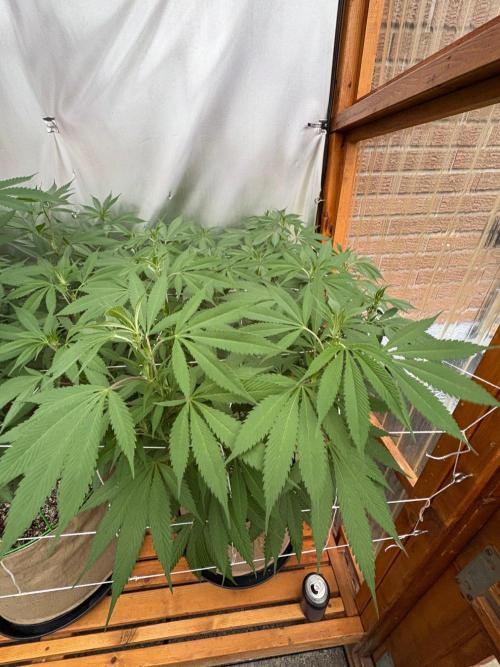
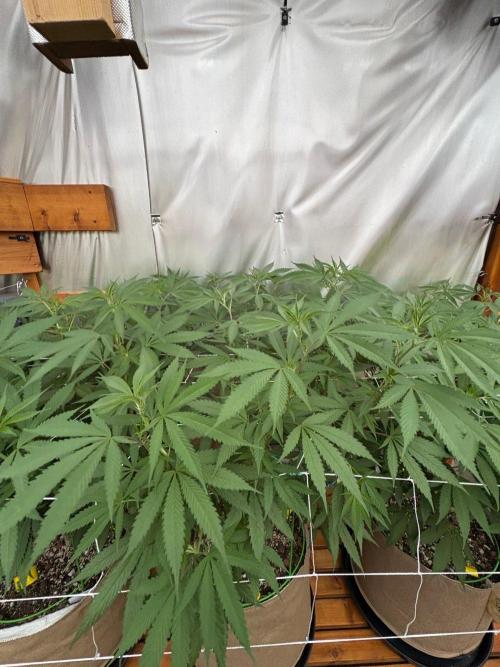
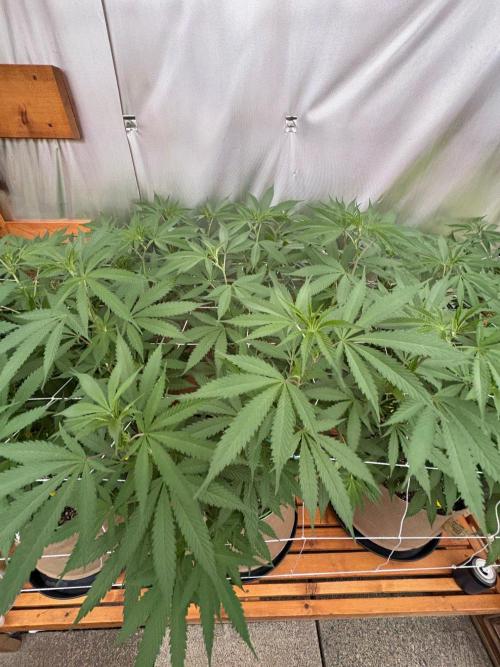
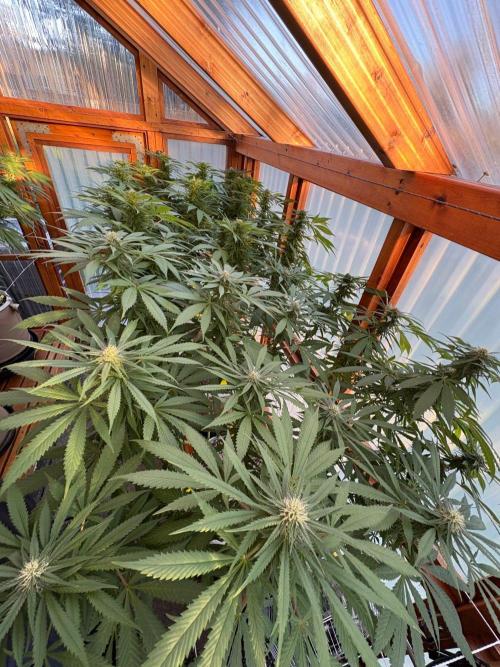
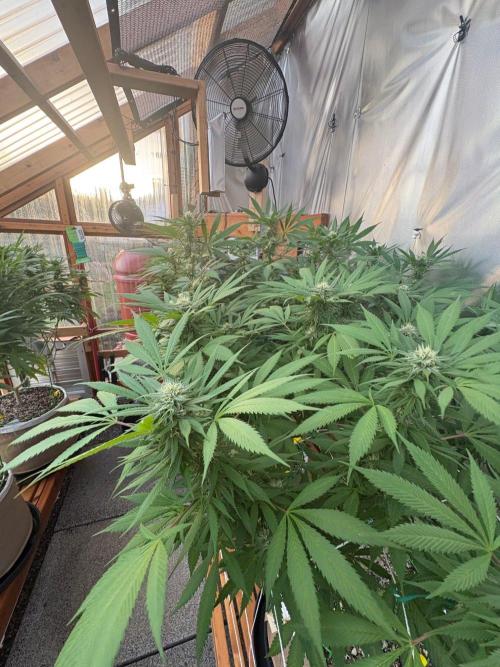
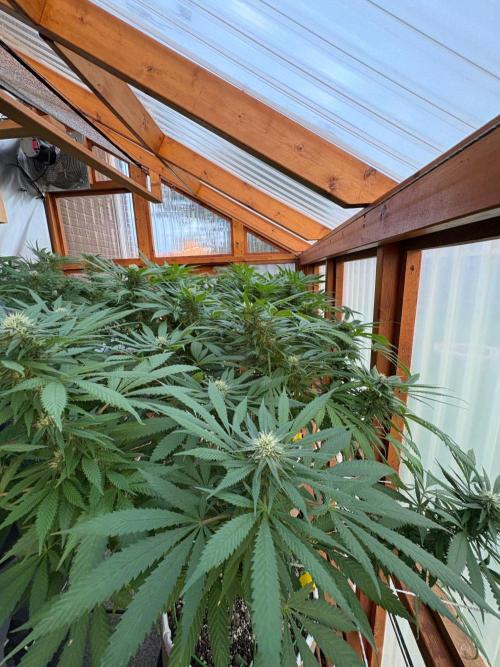
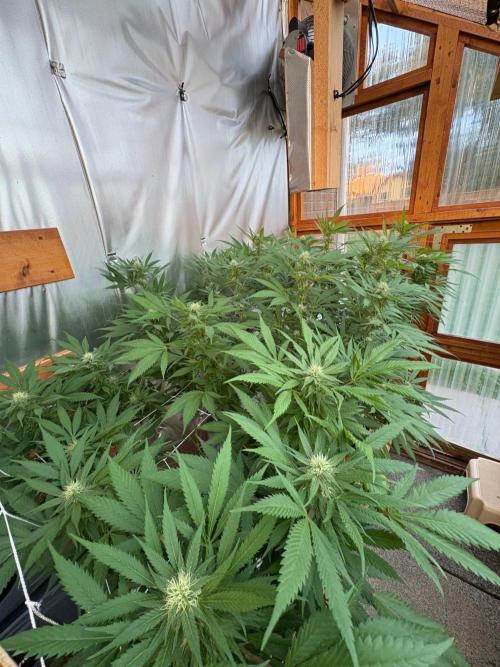
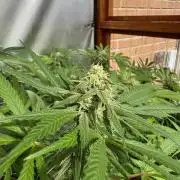
cultivars GERMINATION STRATEGY
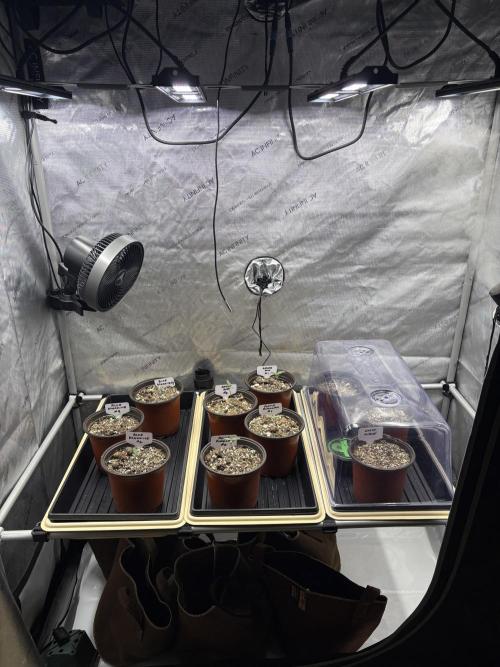
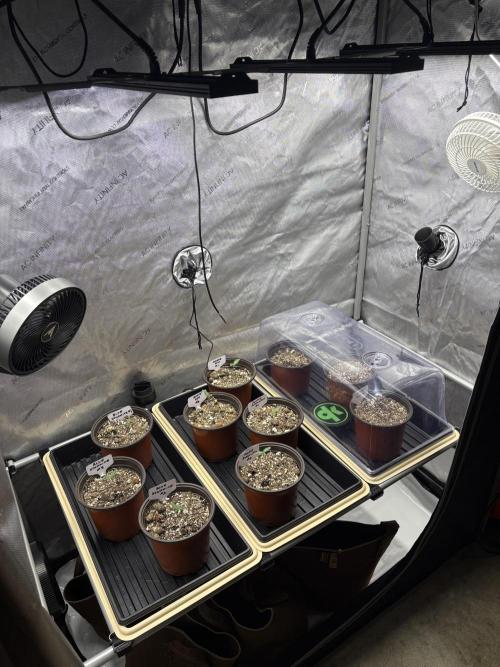
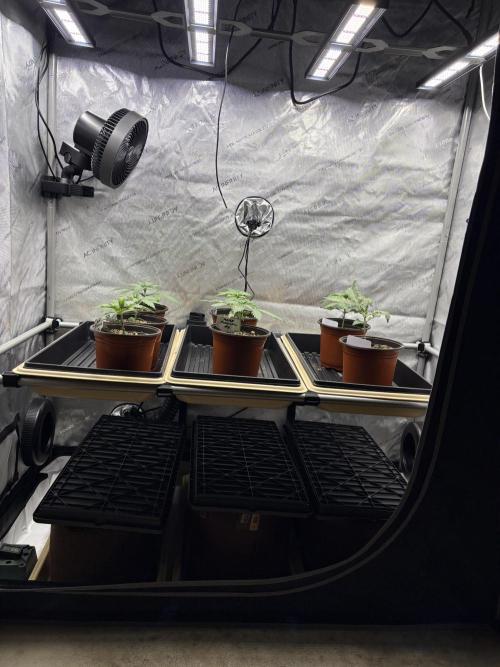
To germinate my seeds, I follow a three-step process: 1) Seed Scarification; 2) Convection Based Lab Paper Germination Method (CannaKan: https://cannakan.com/) and, 3) Germinated Seed Sowing.
To scarify seeds, a process that softens the outer coating of the seed, I create a seed scarification solution by combining 50mL of 3% Hydrogen Peroxide (typical household H2O2) with 100mL of distilled water, then pour in CannaKan, place seeds in CannaKan strainer, then place on heat mat targeting a temperature of 26C. I soak seeds in the solution for no greater than 16 to 20 hours.
Following scarification, I remove all liquid from CannaKan and replace with 8mL of H2O2 and 16mL of distilled water. I then place the CannaKan back on heat mat and monitor for the emergence of a radical.
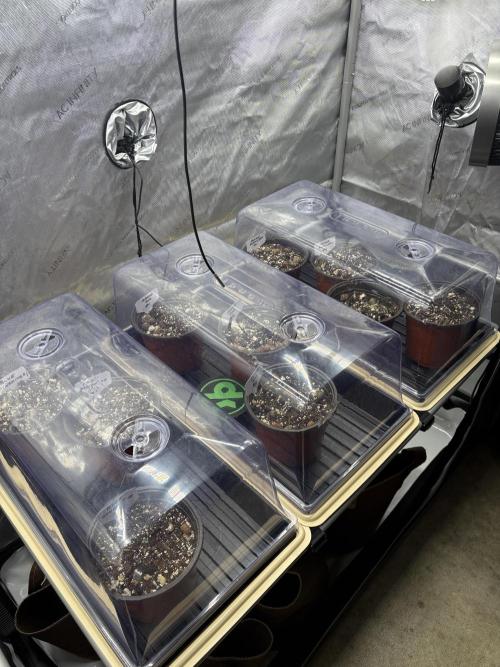
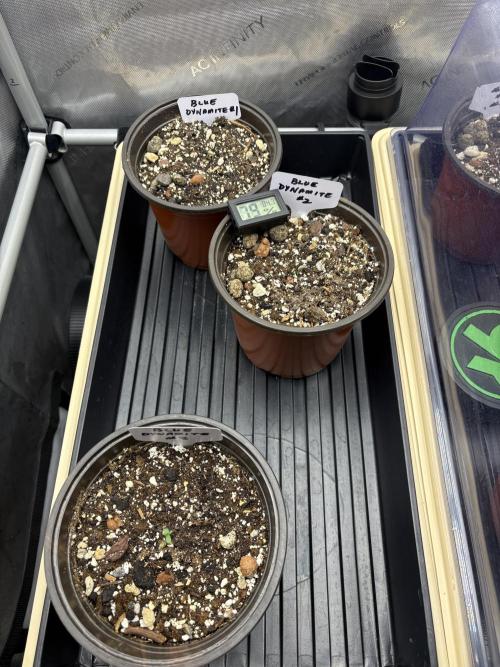
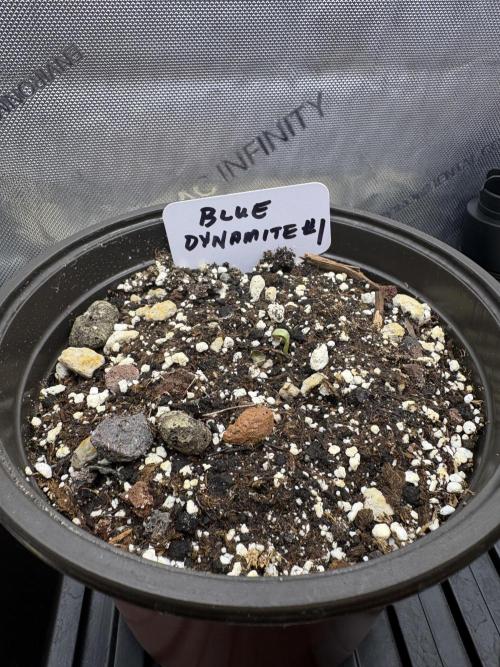
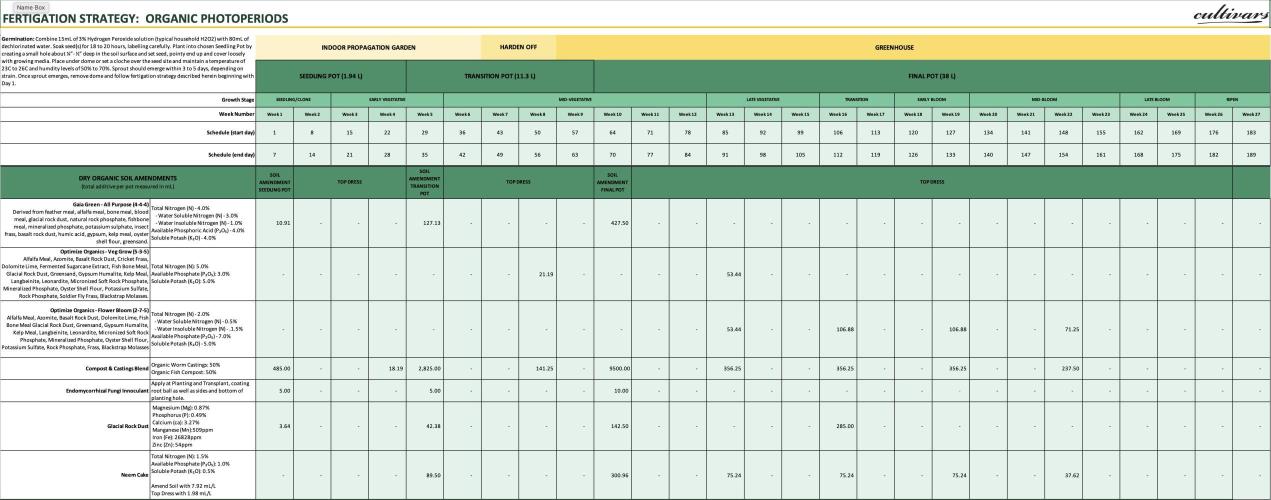
To undertake Seed Sowing I fill Seedling Pots (1.94L ea.) with moistened living soil and plant seeds that have an emerged radical that is approximately 6mm to 12mm in length (¼”- ½”). I utilize a custom blended living soil by preparing a mix of peat with aeration and organics as per ratios described on the Fertigation Plan for Dry Organic Amendments images posted to the gallery of this diary entry. To complete the living soil preparation, I set the filled containers in the propagation garden (no lights, all other systems on), inoculate each with a Soil Drench that includes Activated Beneficial Microbes (ABM) and let sit for a minimum of 5 days prior to Seed Sowing, so as to allow the biology to develop within the growing media. To sow the germinated seeds, I create a small hole in the substrate, about 6mm to 12mm (¼”- ½”) deep in the soil surface, dust the hole thoroughly with up to 3mL of Mycorrhizal Innoculant (Arbuscular Mycorrhizal Fungi Blend), then set the seed in the hole, radical pointed downward into the substrate. I cover the seeds loosely with growing media then mist the soil surface with plain dechlorinated water adjusted to a pH of 6.5. Next I place the pots on a heat mat and under a dome, targeting a temperature range of 23C to 25C and humidity levels of 65% to 70%. Once sprouts appear, the dome is removed.
TRANSPLANT AND GROWTH STRATEGY
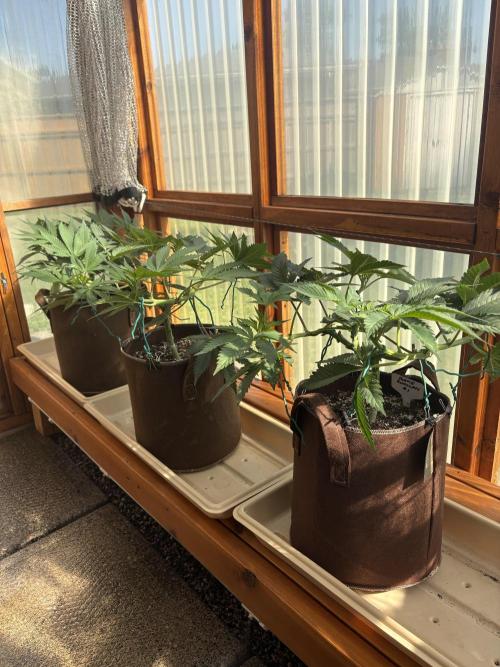
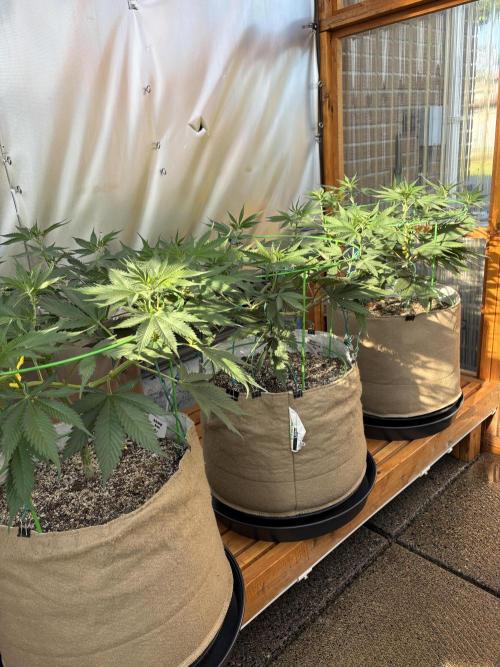
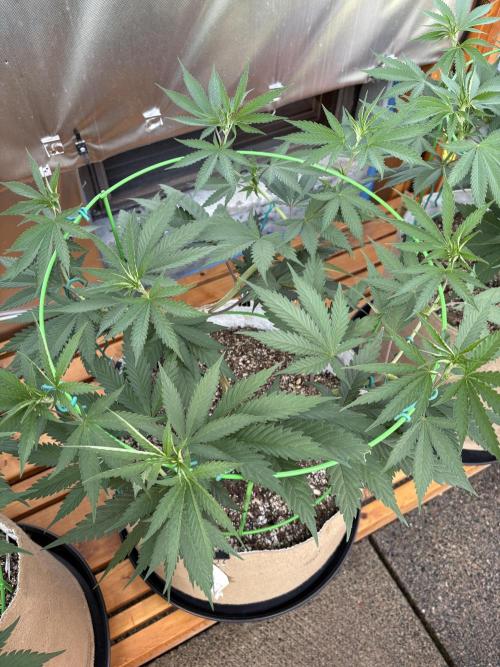
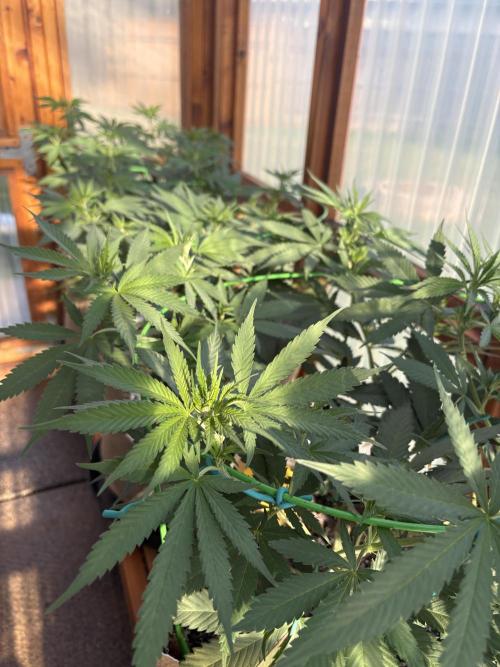
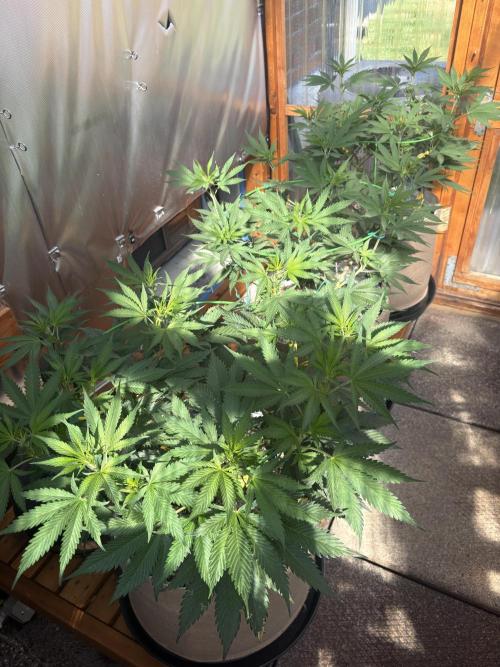
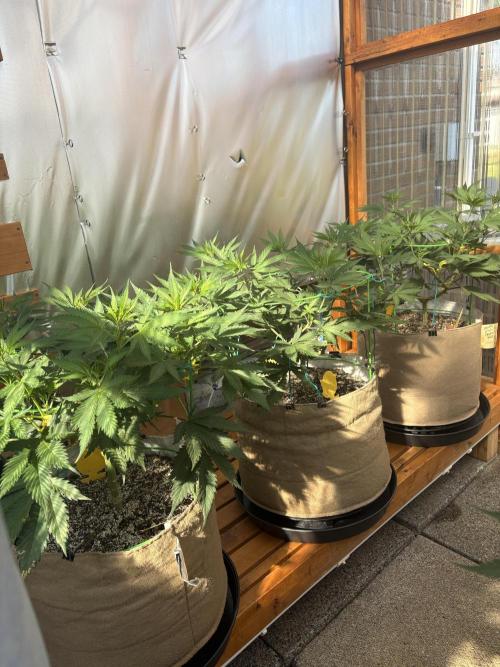
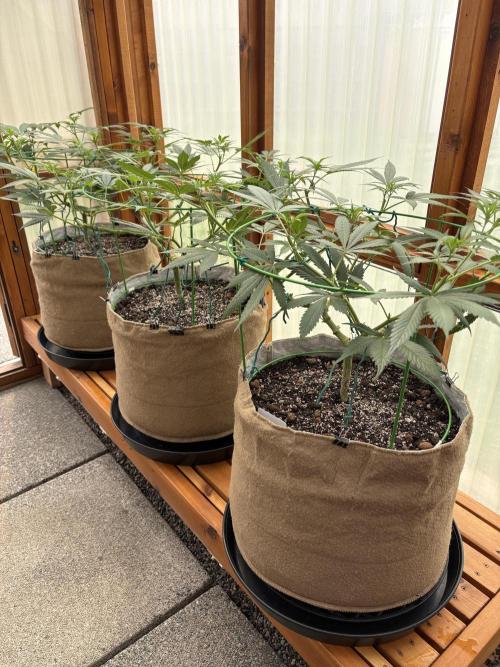
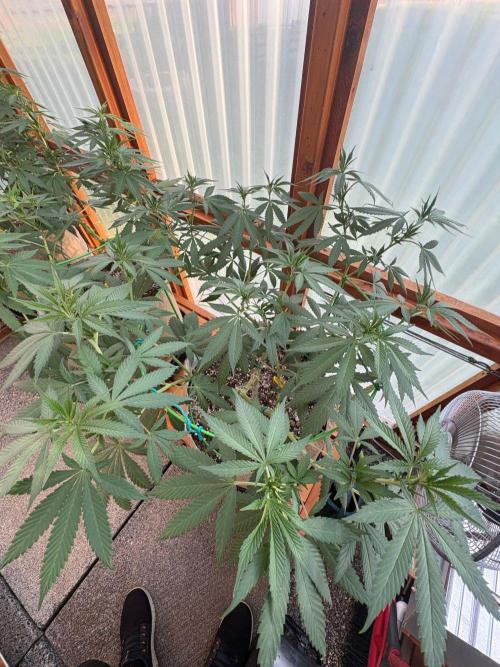
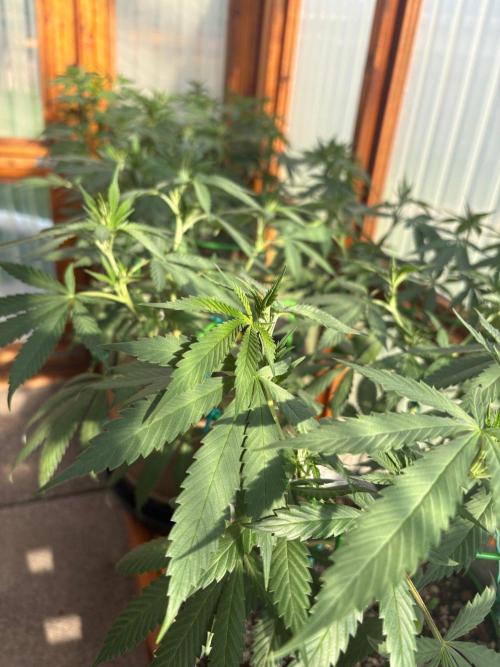
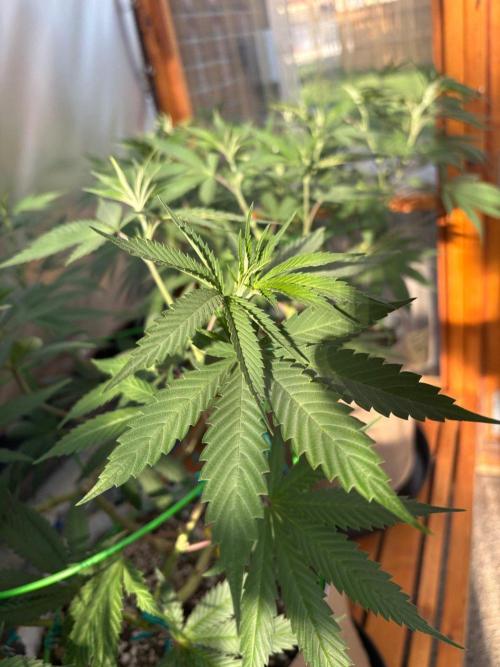
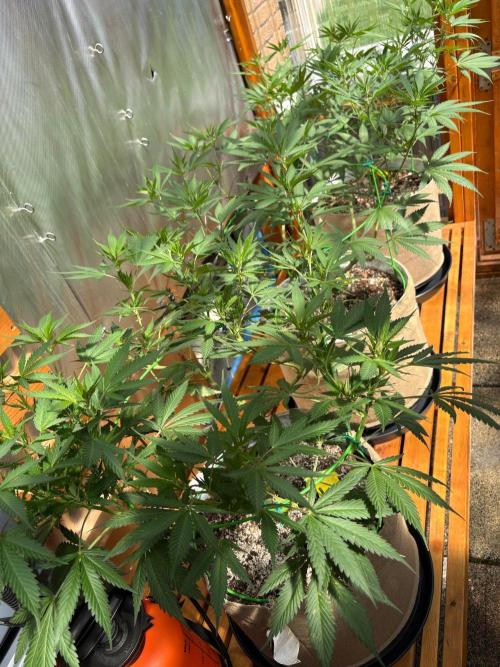
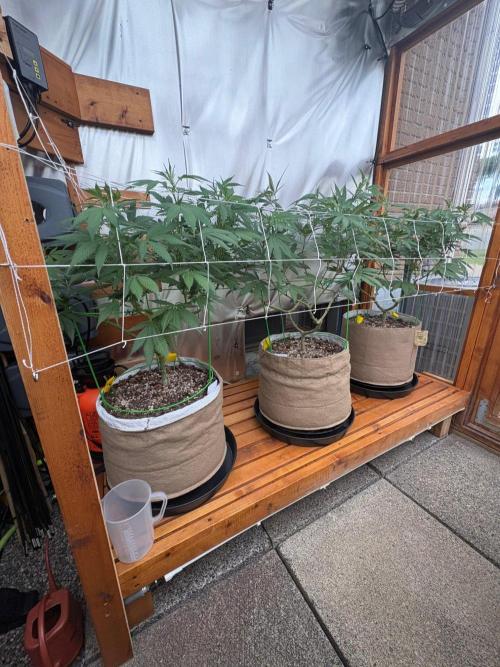
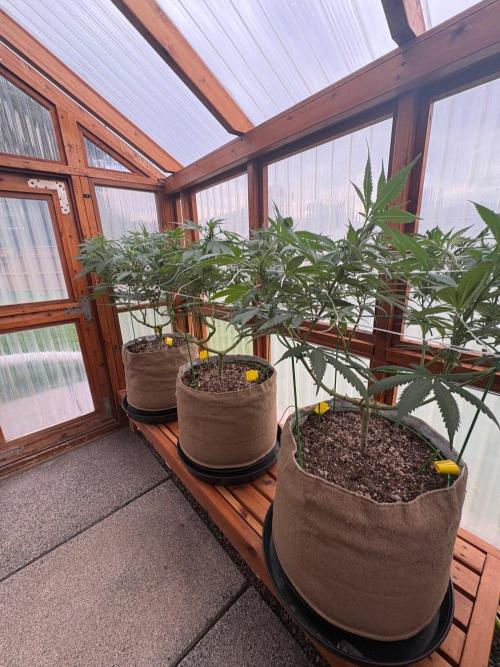
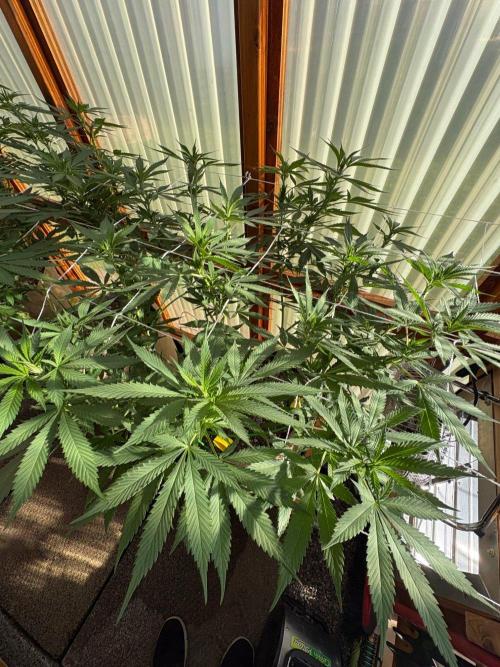
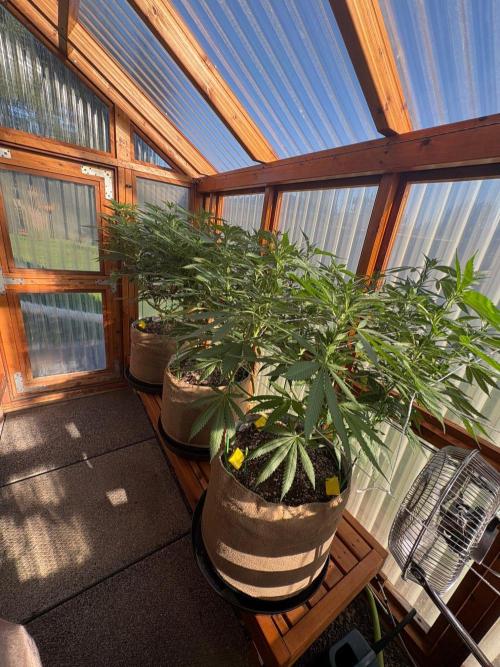
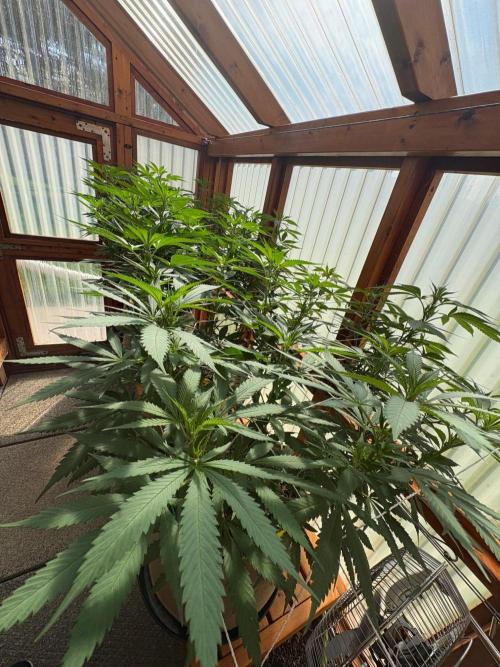
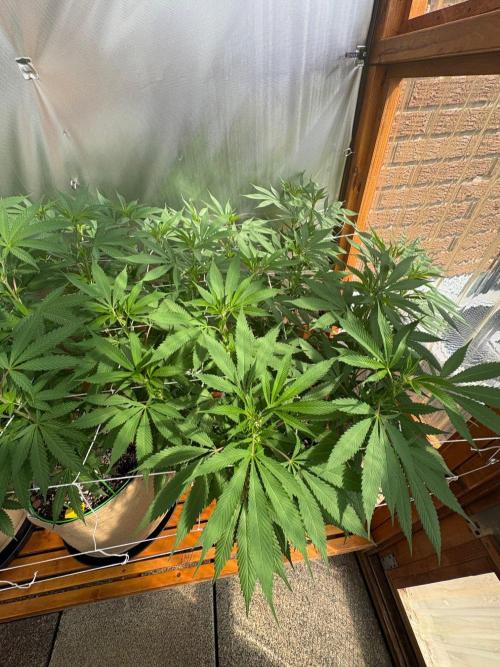
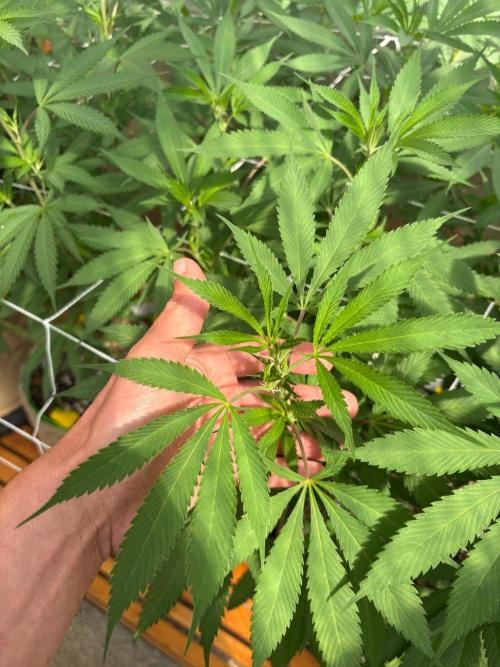
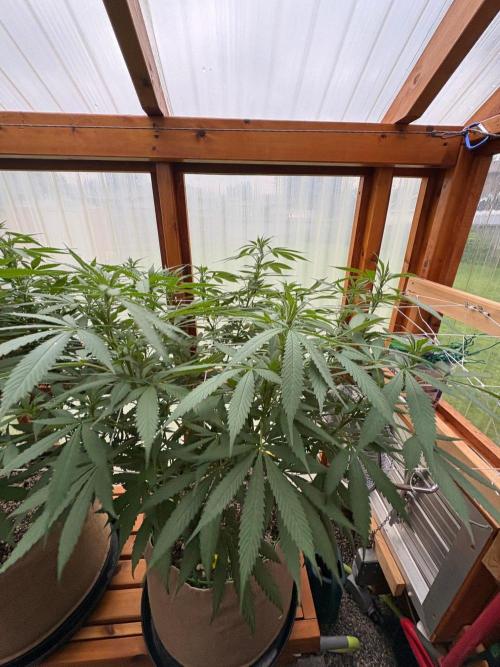
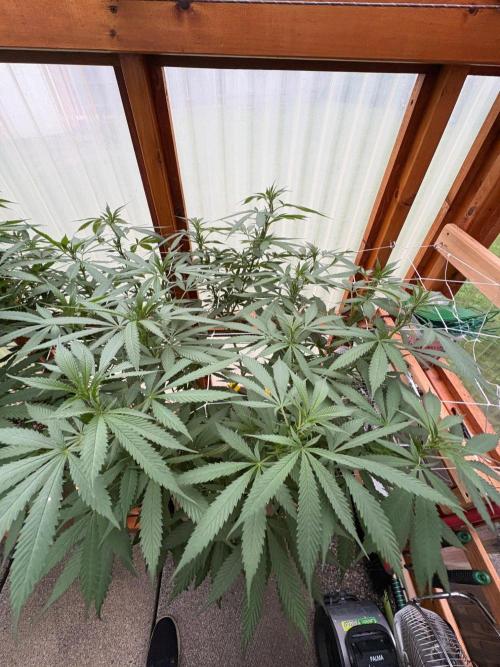
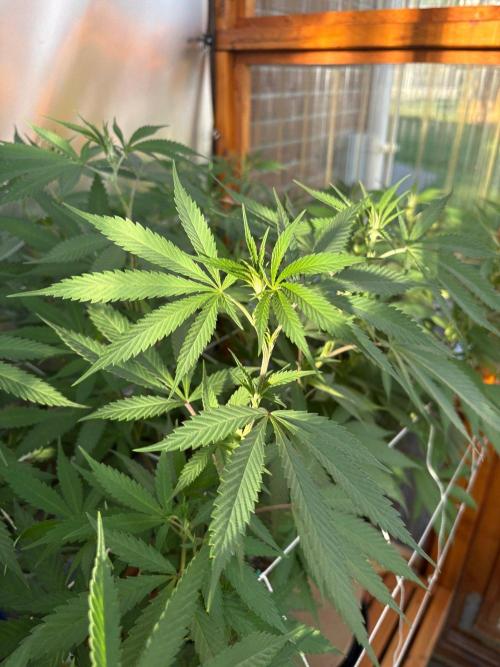
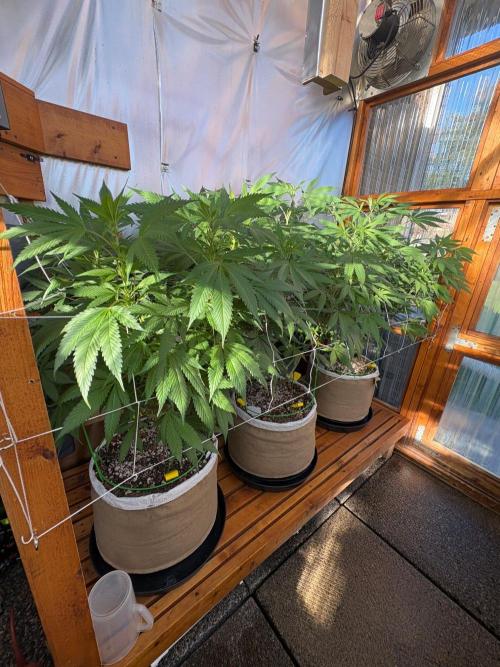
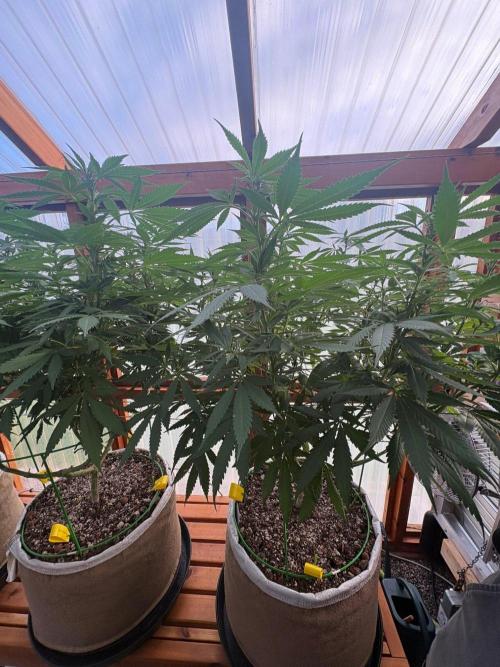
This crop will undergo two transplants, along with a combination of Low Stress Training (Leaf Tucking, Branch Training, Defoliation) and High Stress Training (Topping, Manifolding, Lolli-Popping and Super Cropping) to maximize the size and canopy of each specimen. Germinated seeds are planted in a 1.94L (~0.5 gallon) plastic pot and grow through seedling stage and into early vegetative stage, in an indoor environment under an LED Light Fixture. When ready (between days 29 and 35), specimens will be transplanted to an 11.3L fabric Transition Pot (~3 gallon) and once recovered (5 to 7 days), will be transitioned to the greenhouse setting over a 10-day hardening-off process. Plants will continue to grow through early to mid-vegetative stage and when ready (between days 64 and 70 or no later than approximately 4 weeks from the beginning of flowering), will undergo one more transplant to a fabric 37.7L Final Pot (~10 gallon) where the individuals will complete their life cycle through to harvest.
FERTIGATION STRATEGY
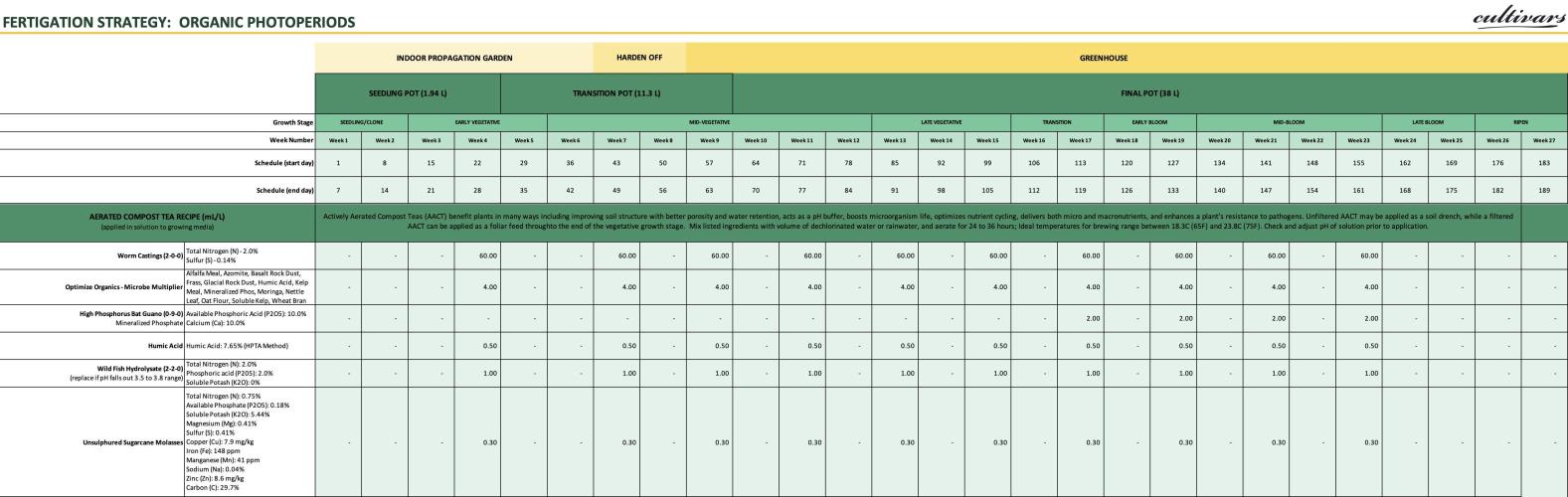
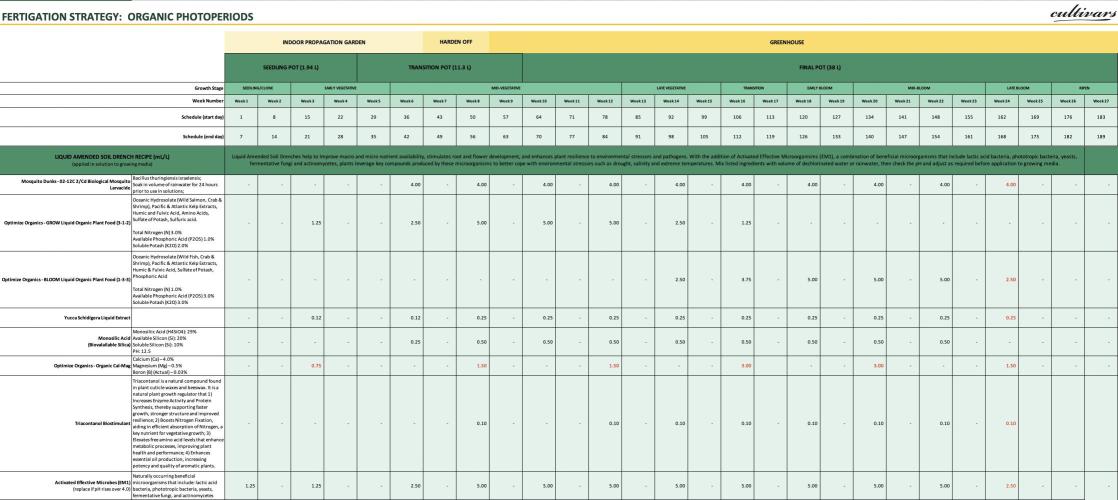
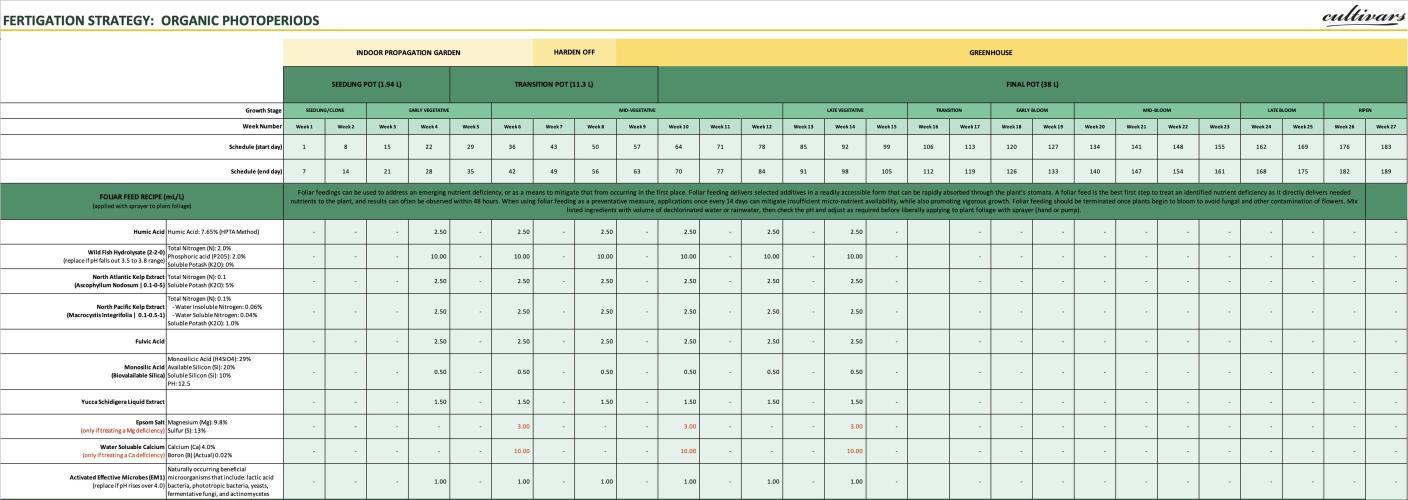
I employ a multi-faceted organic fertigation methodology that leverages only those amendments that comply with Canada’s Organic Production Systems General Principles & Management Standards and Permitted Substances Lists (CAN/CGSB-32.310-2021 CAN/CGSB-32.311-2020). I use dry organic amendments as well as compost and worm castings to amend soil, and supplement at regular intervals throughout the life-cycle with top dressings. Aerated compost teas and liquid amended soil drenches are applied bi-weekly (rotating: one week soil drench, next week compost tea), and I foliar feed through to the beginning of the flowering stage (bi-weekly).
11 likes
2 comments
Share
Used method
Other
Germination Method
1
Week 1. Vegetation
6mo ago
1/5
3 cm
Height
18 hrs
Light Schedule
25 °C
Day Air Temp
6.5
pH
No Smell
Smell
60 %
Air Humidity
18 °C
Solution Temp
21 °C
Night Air Temp
2 liters
Pot Size
cultivars APRIL 25 to MAY 1, 2026
VPD (DAY): 0.8 kPa | VPD (NIGHT): 0.7 kPA | DLI: 13
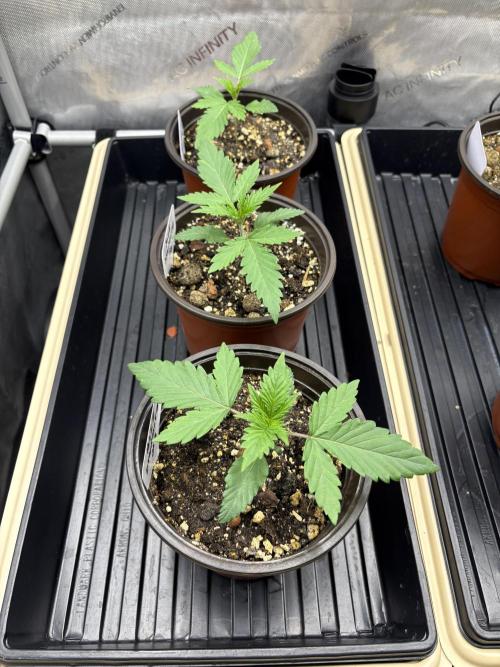
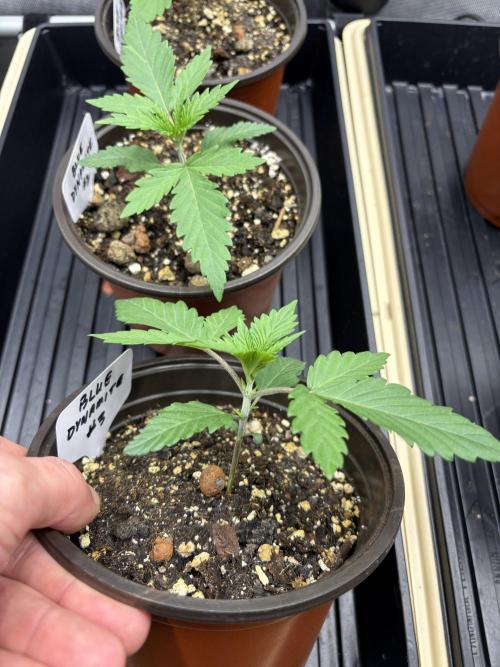
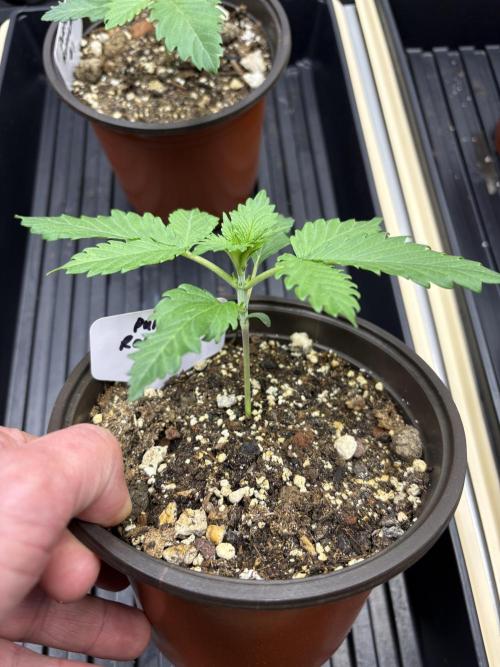
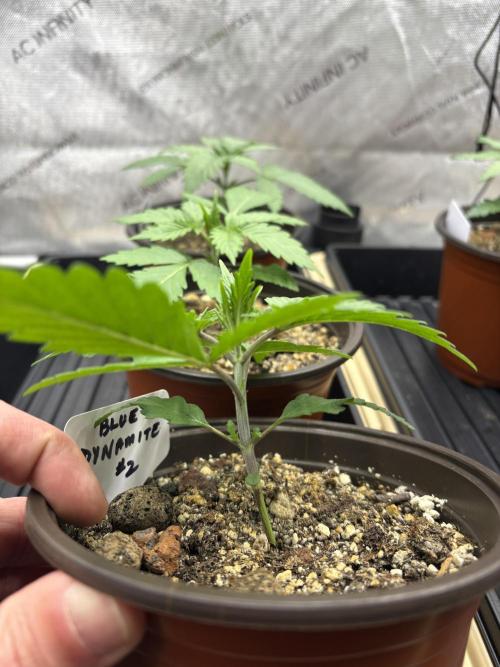
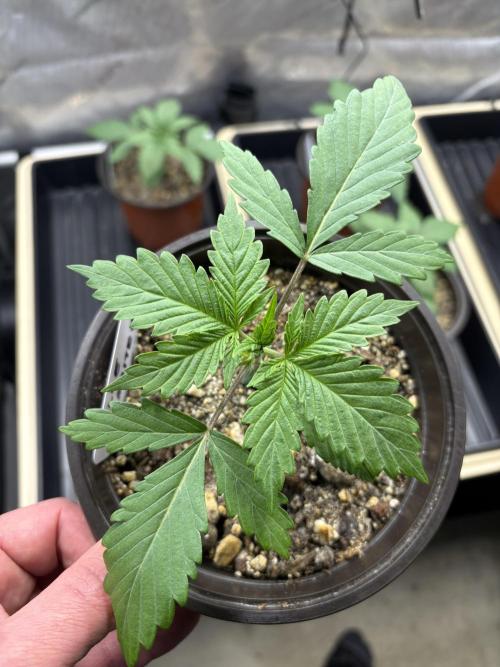
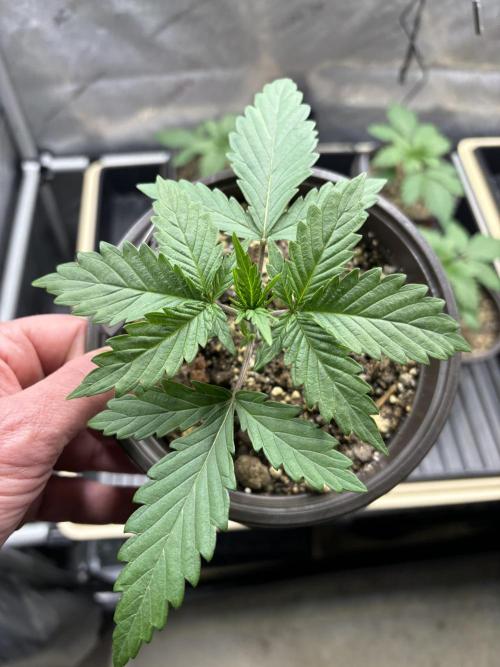
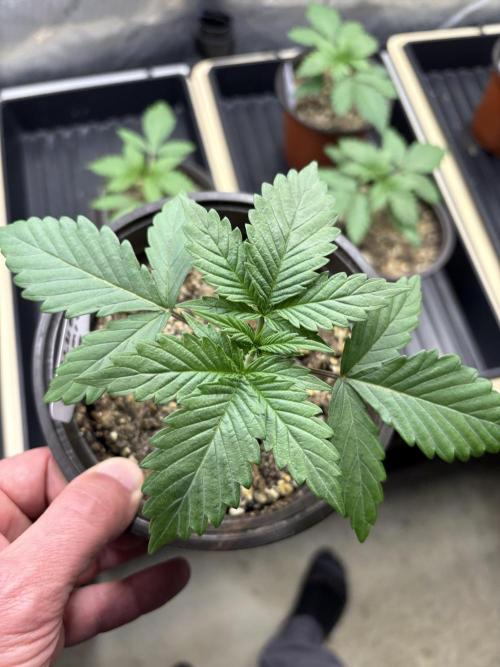
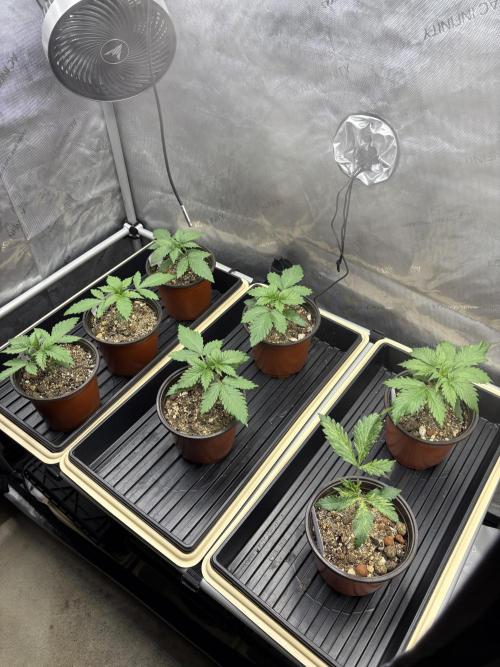
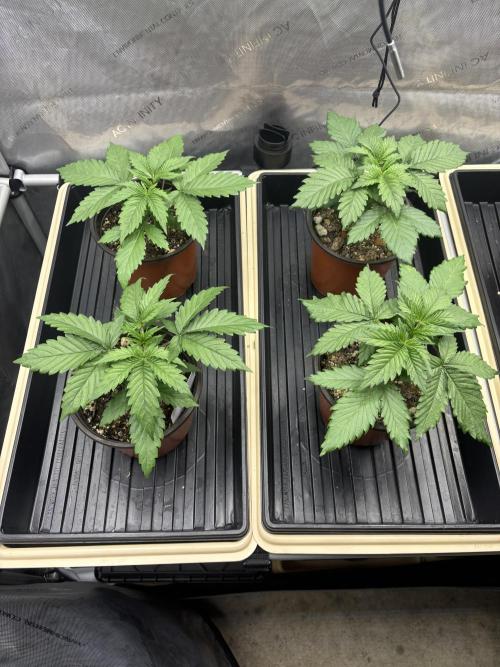
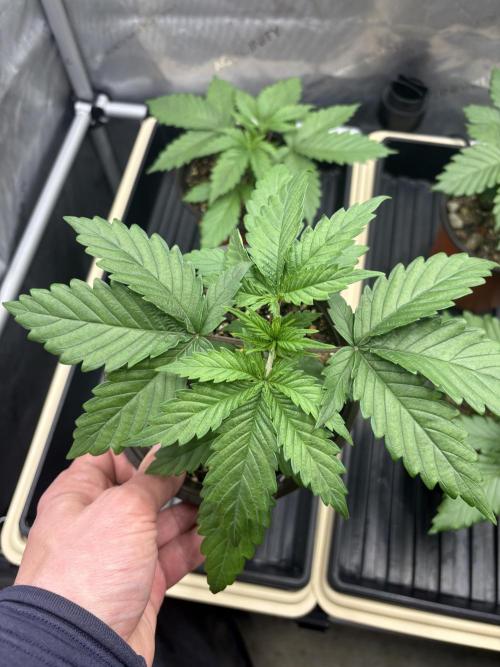
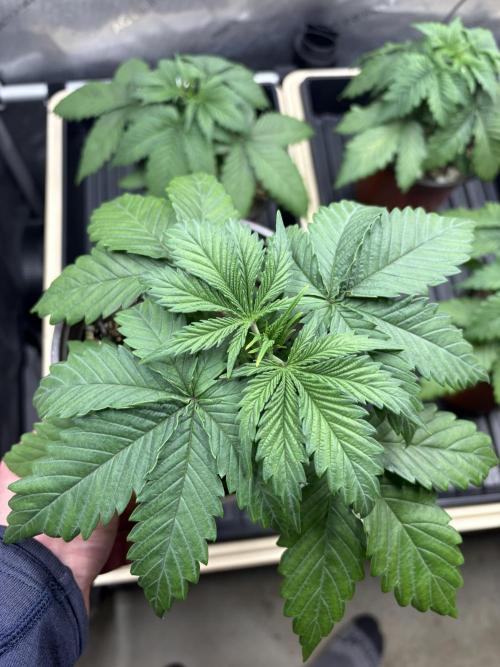
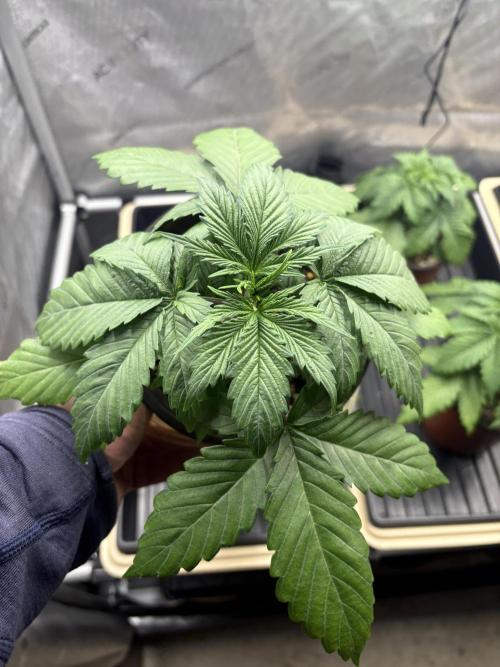
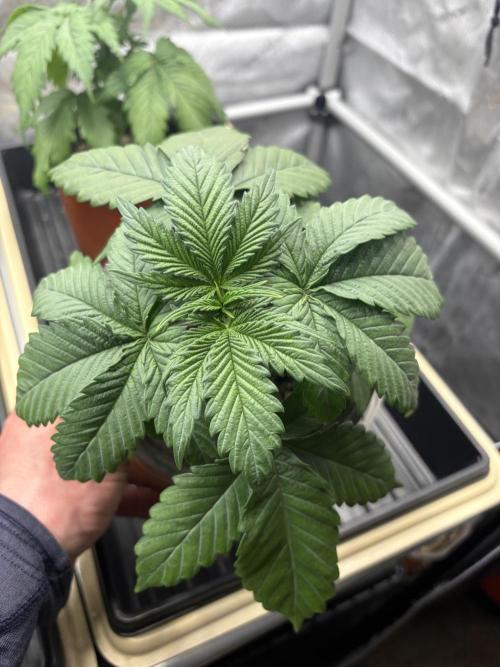
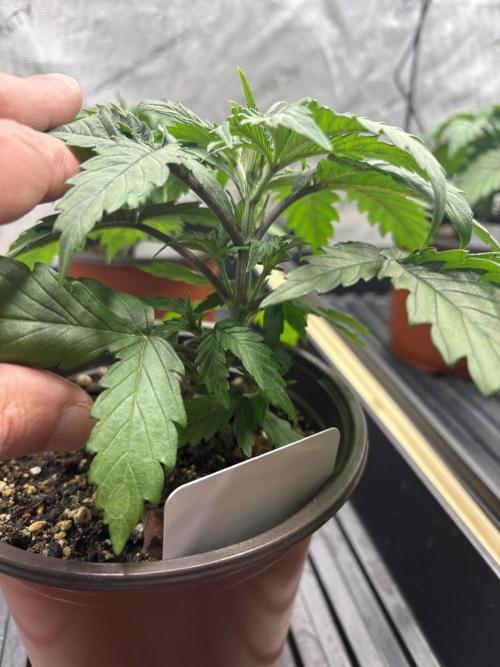
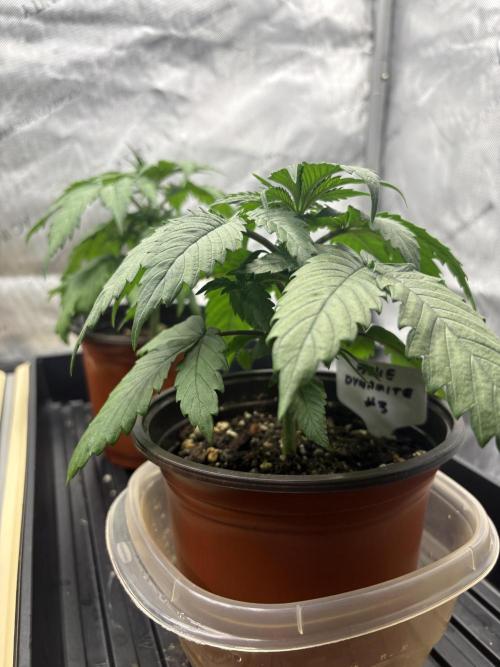
Not much to report, specimens have appeared to have established themselves and look healthy and happy.
DAY 1 - n/a
DAY 2 - n/a
DAY 3 - n/a
DAY 4 - 200mL of plain dechlorinated water pH'd to 6.5
DAY 5 - n/a
DAY 6 - n/a
DAY 7 - n/a
10 likes
comments
Share
2
Week 2. Vegetation
5mo ago
1/10
18 hrs
Light Schedule
25 °C
Day Air Temp
6.5
pH
No Smell
Smell
60 %
Air Humidity
18 °C
Solution Temp
21 °C
Night Air Temp
2 liters
Pot Size
cultivars MAY 2 to MAY 8, 2026
VPD (DAY): 0.8 kPa | VPD (NIGHT): 0.7 kPa | DLI: 15.6
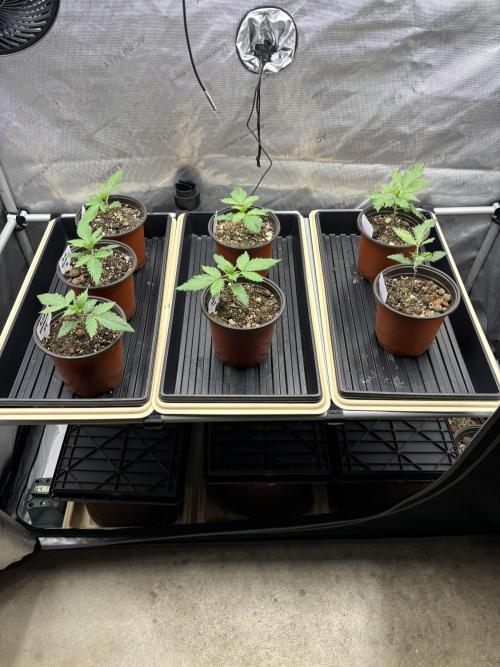
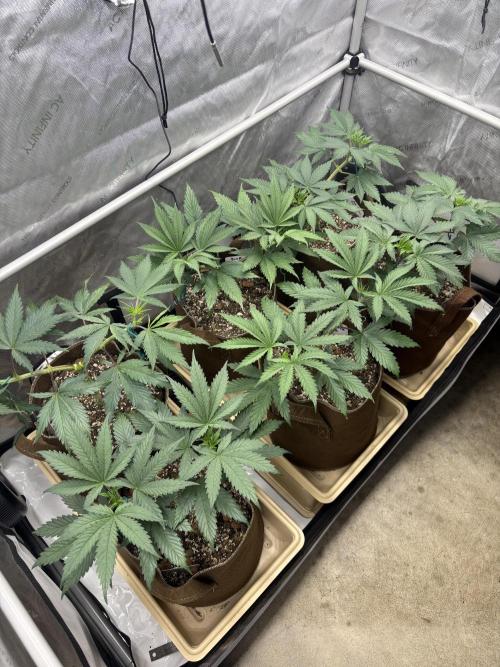
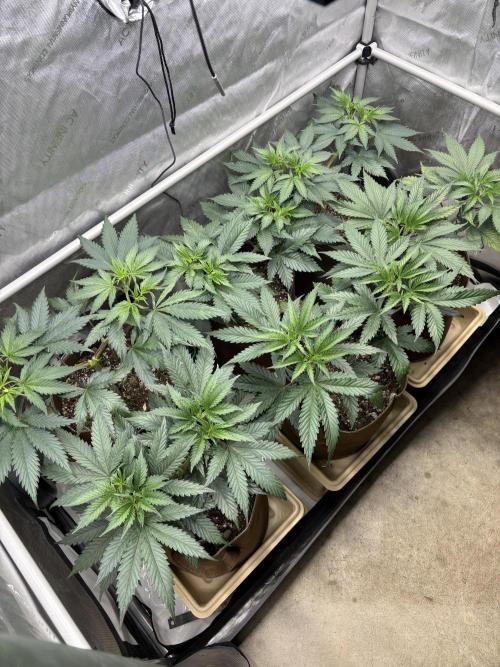
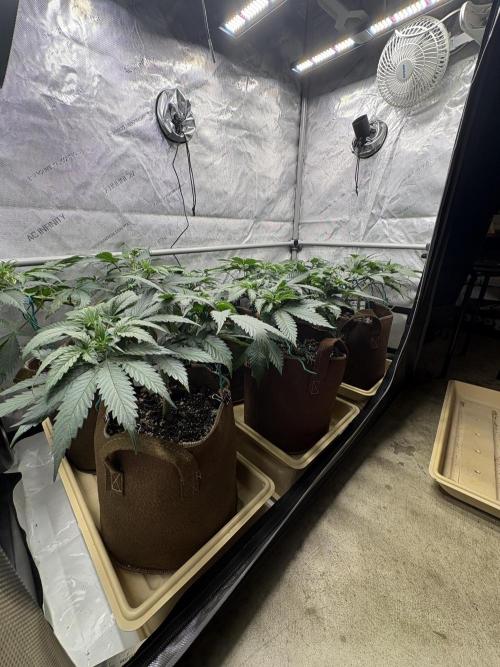
With a slight increase in light intensity and following a Compost Tea application, the plants really began to bulk up. By week's end each has double in size and produced larger leaves and leaflets. I prepared the soil for the 11.3L Transition Pots, mixing 50% ProMix HP with Mycorrhizae, 25% Aeration Blend (Pumice Stone, Large and Medium Leca Balls, Medium Perlite and Red Lava Rock) and 25% Organics (Worm Castings) amending it with All-Purpose (4-4-4) Dry Organic Fertilizer. I inoculated each pot with Compost Tea (recipe below) then set them in the tent to "cook". Soil should be active and ready to receive transplants around Day 29.
SPECIMEN DETAILS
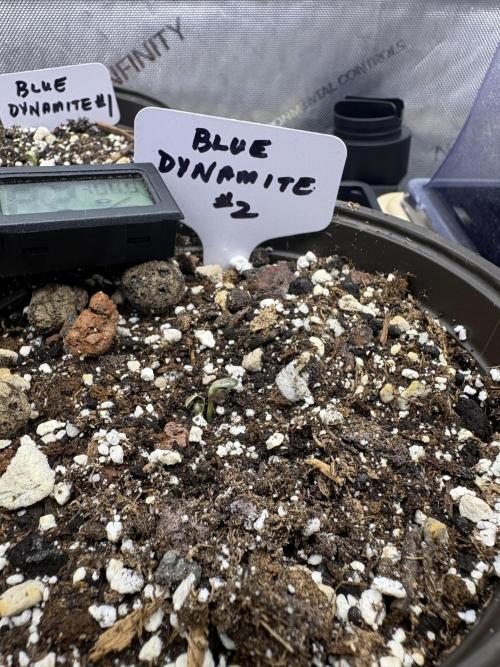
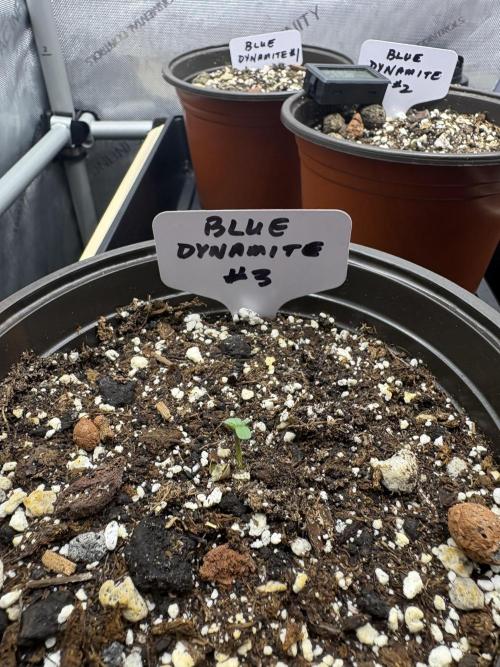
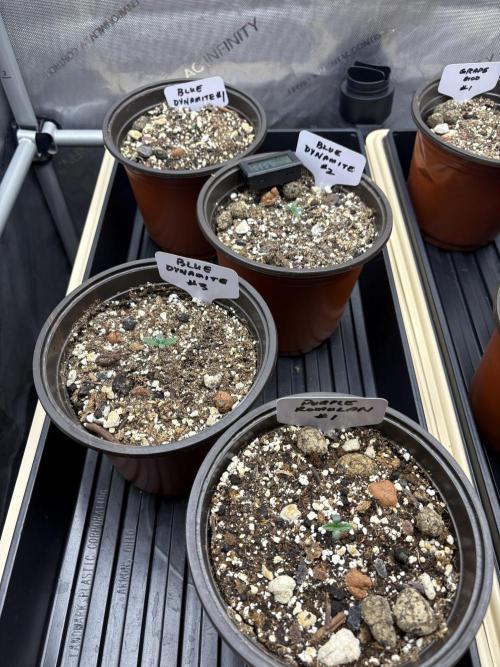
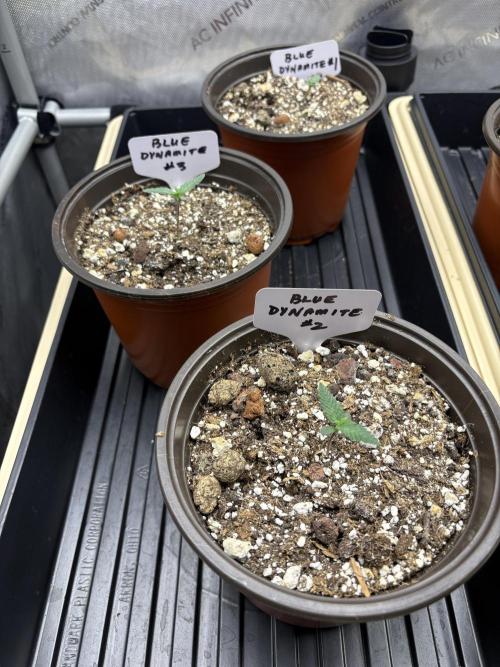
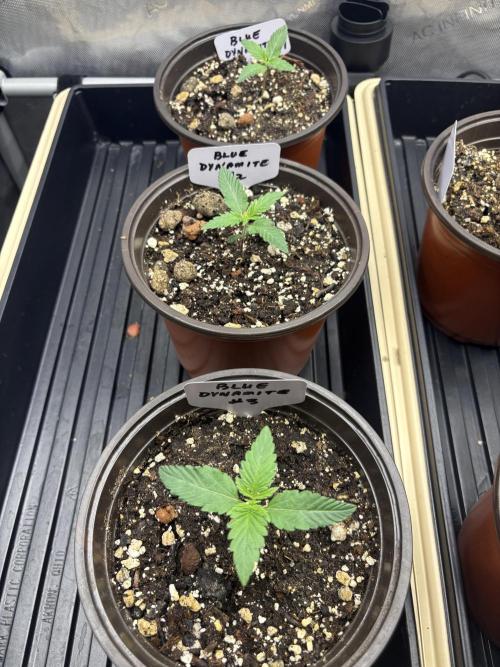
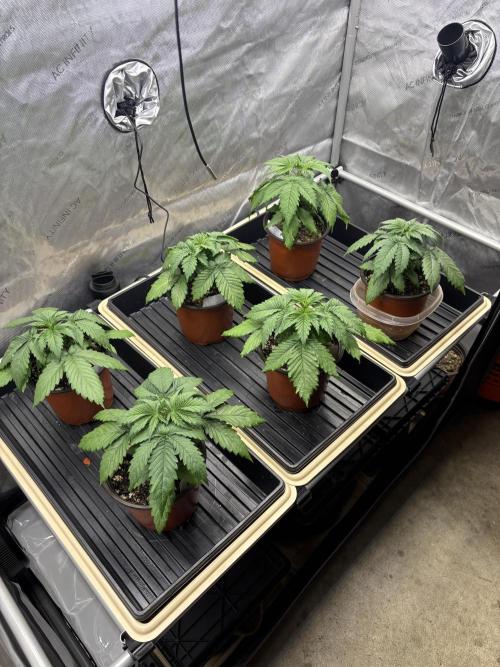
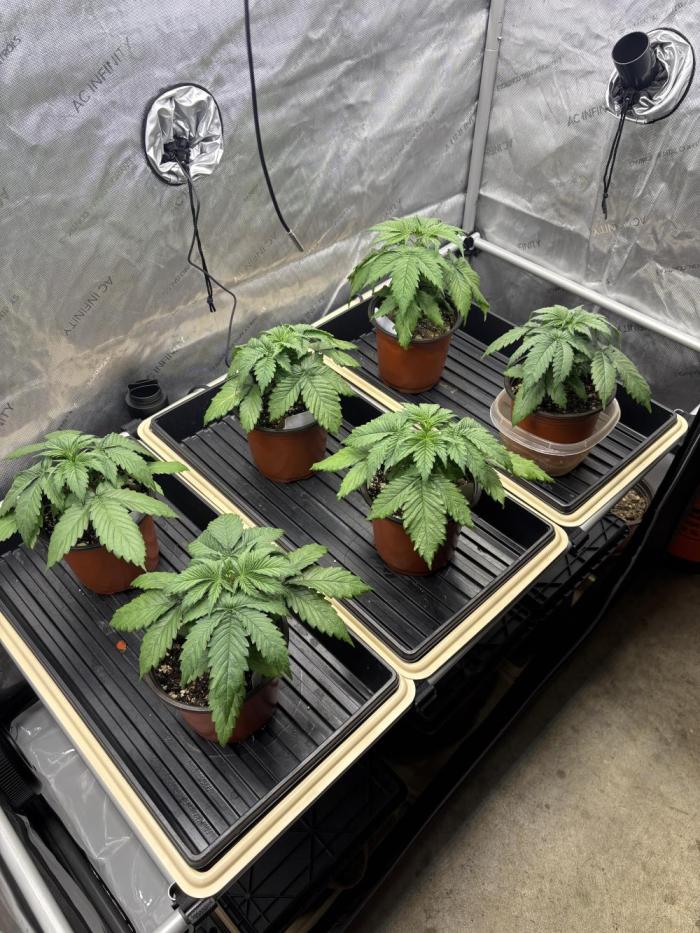
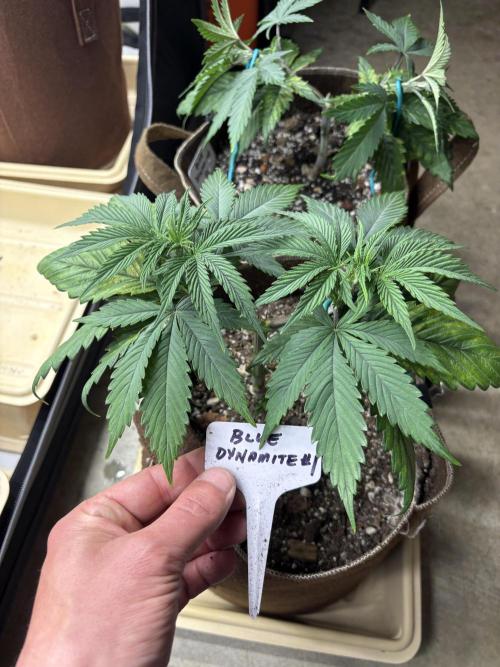
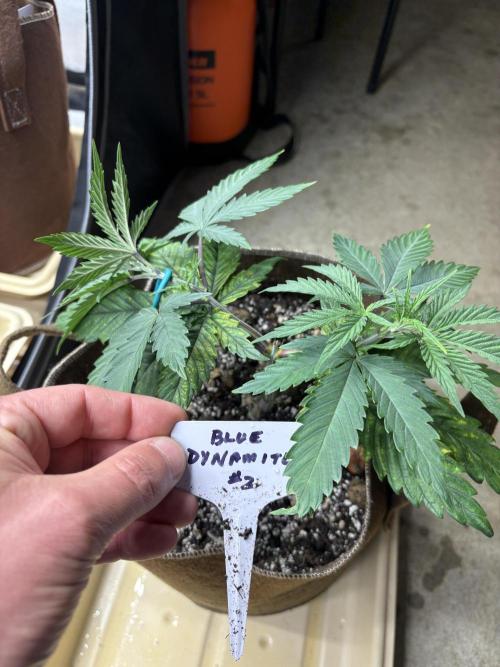
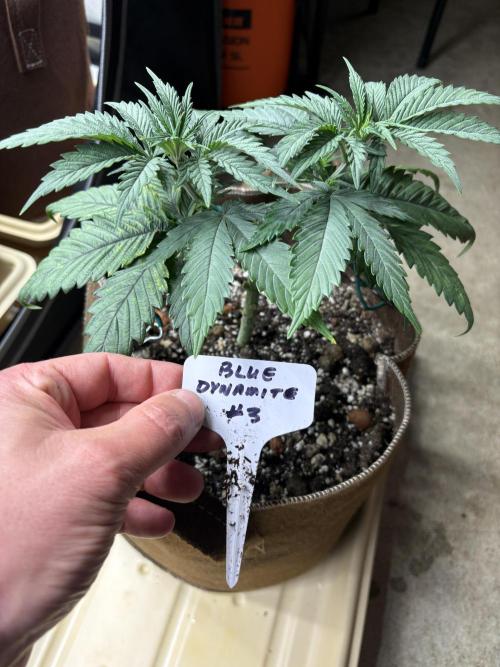
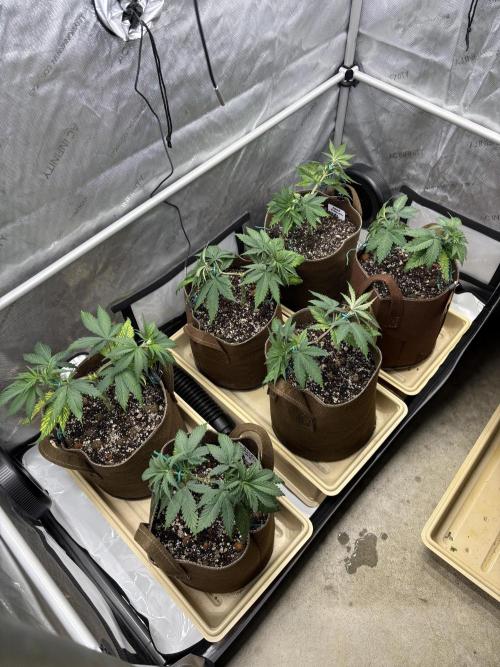
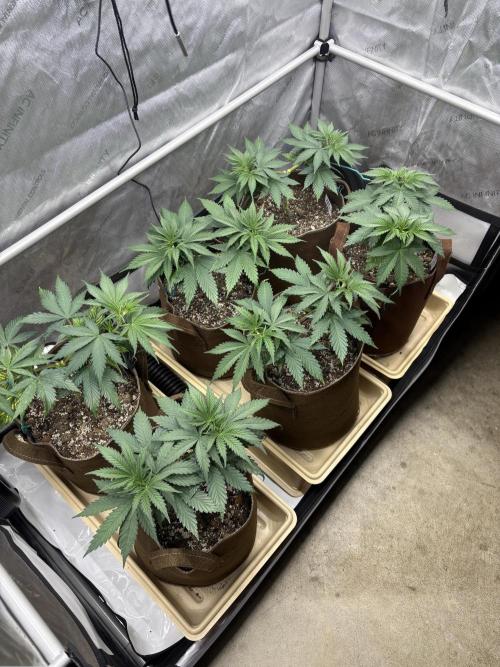
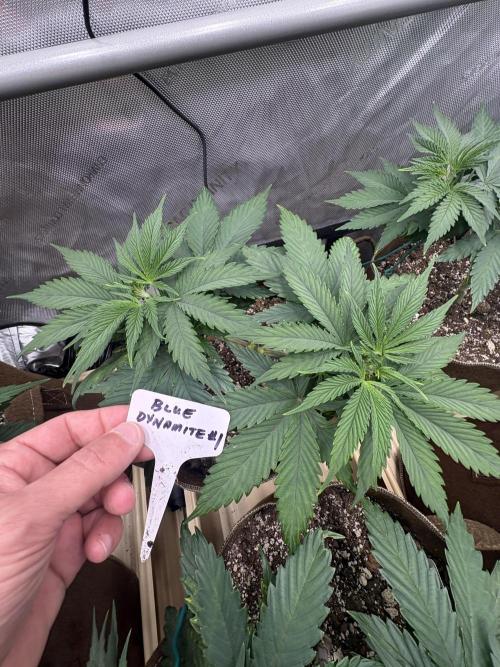
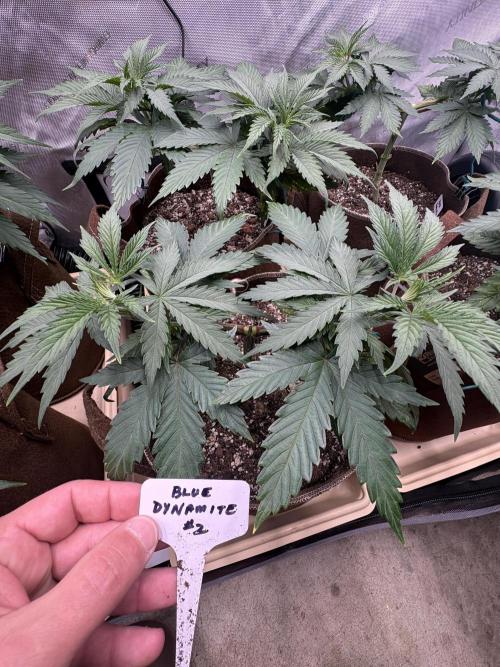
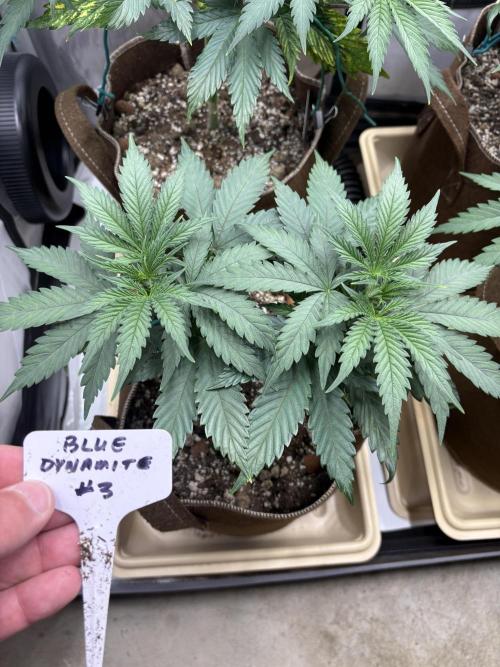
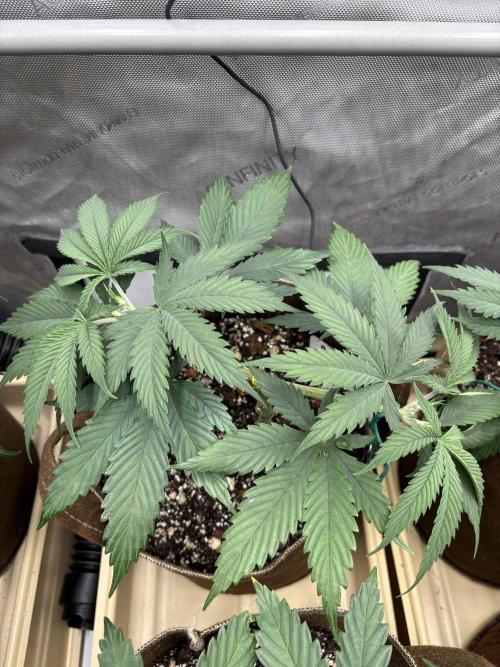
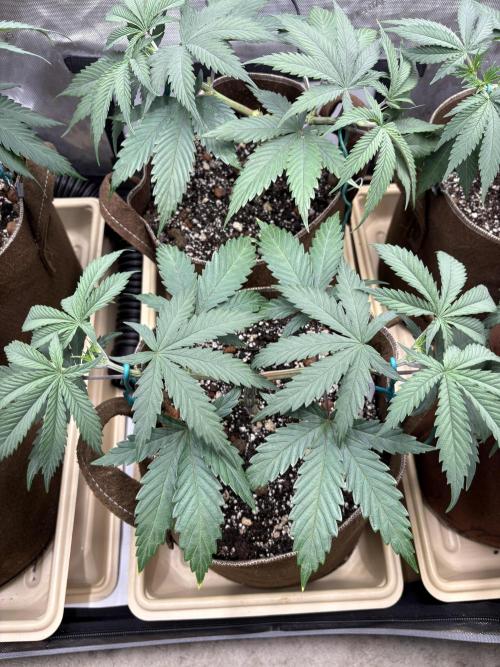
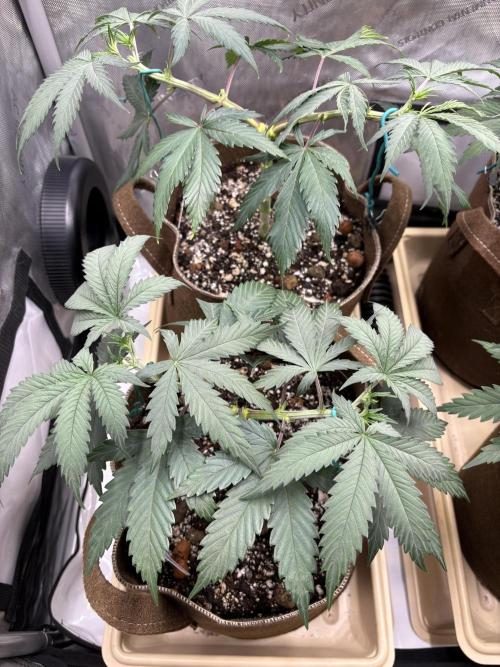
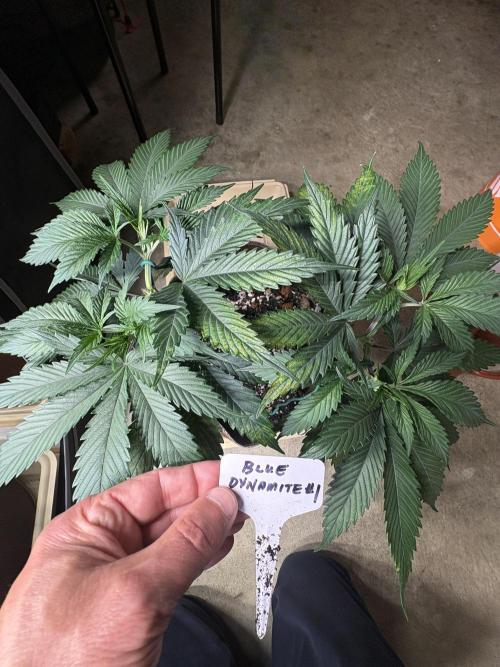
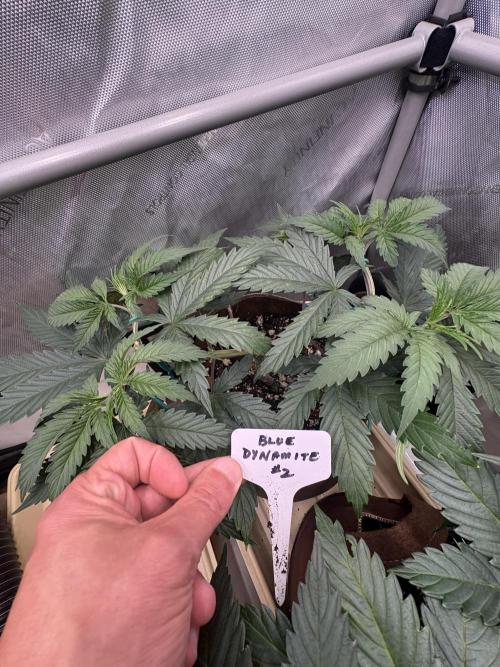
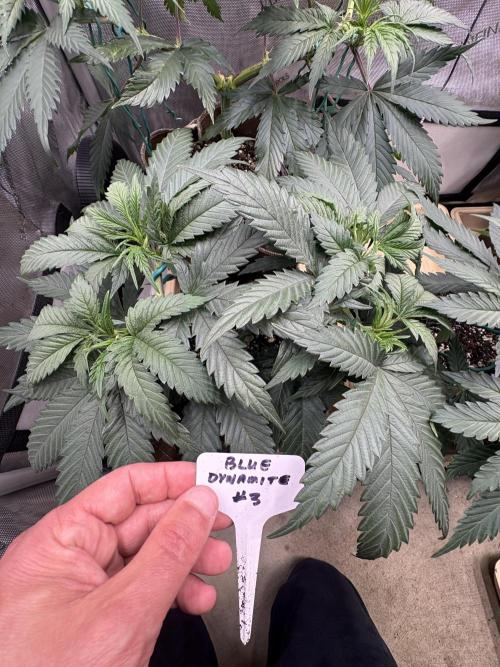
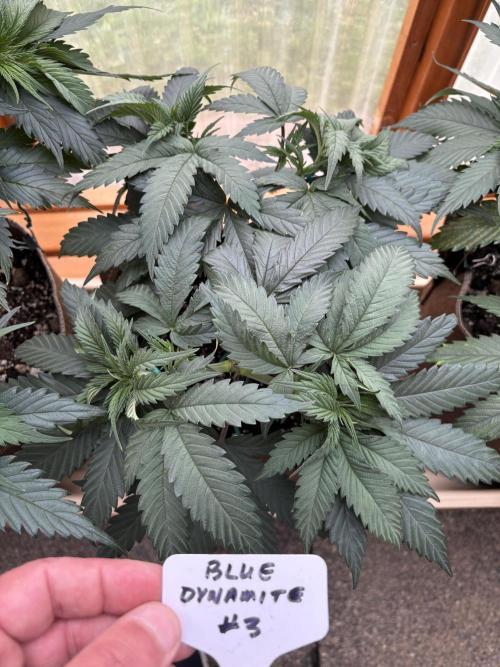
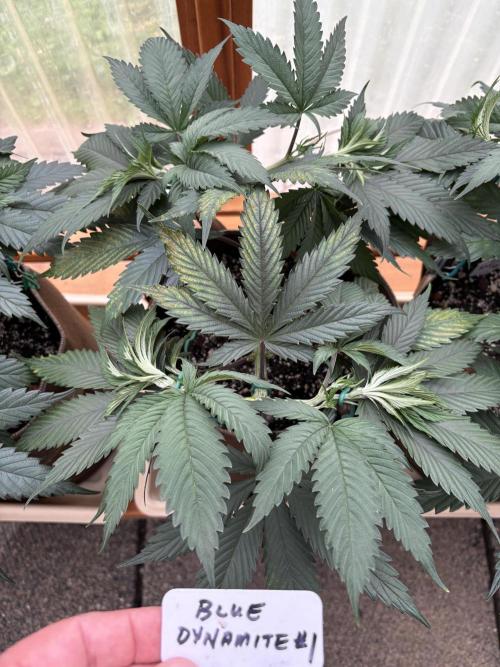
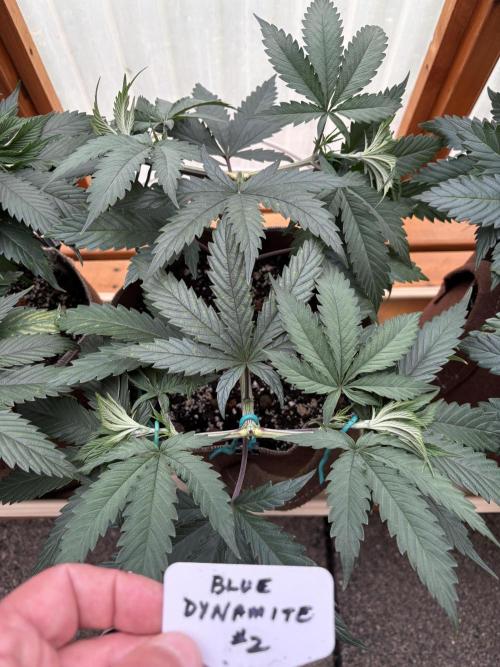
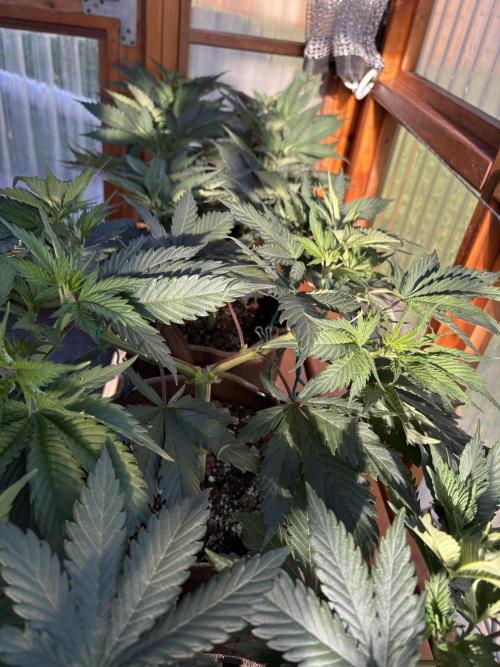
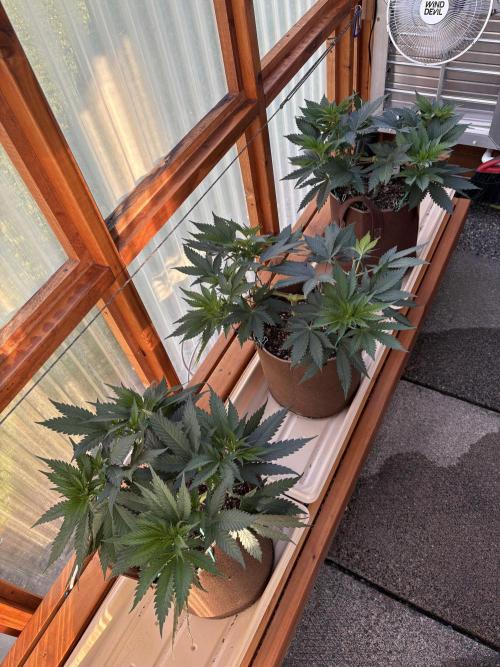
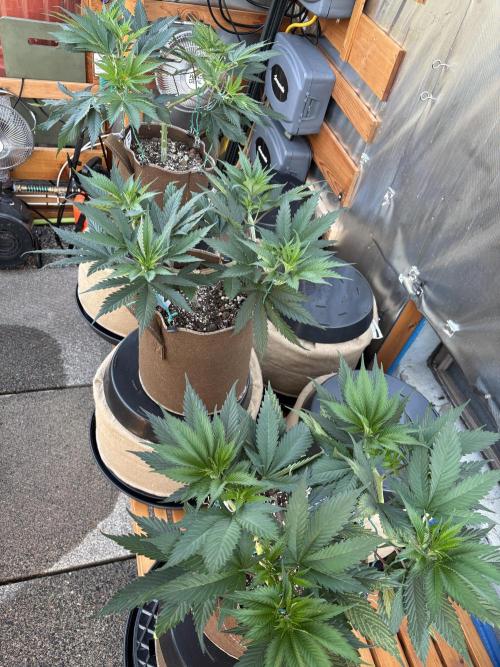
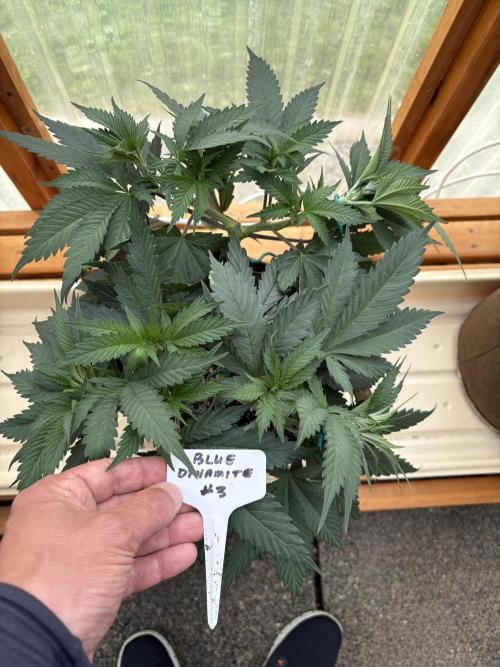
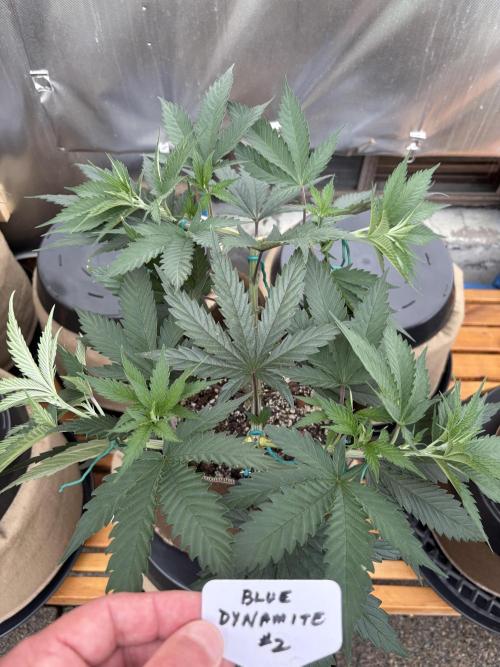
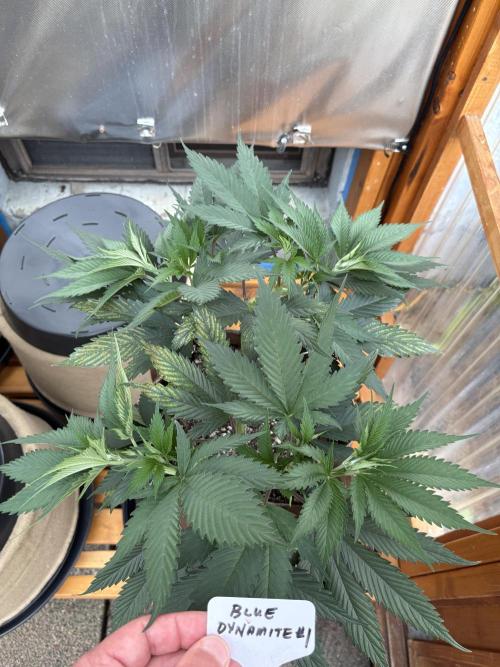
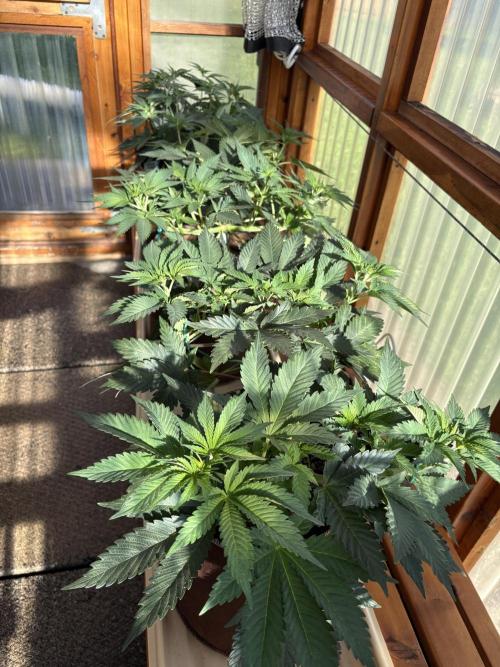
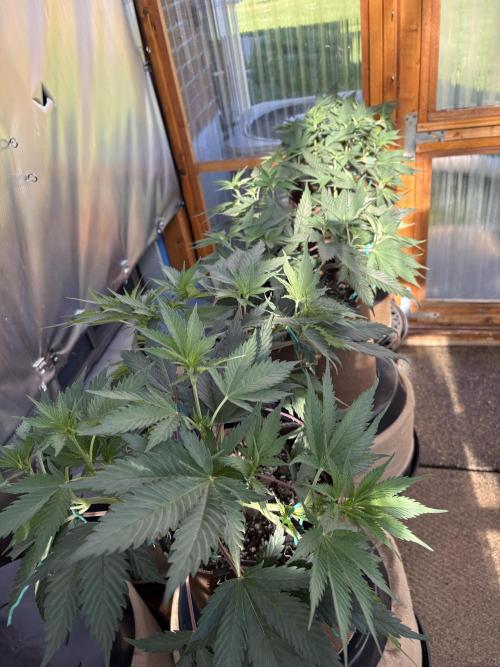
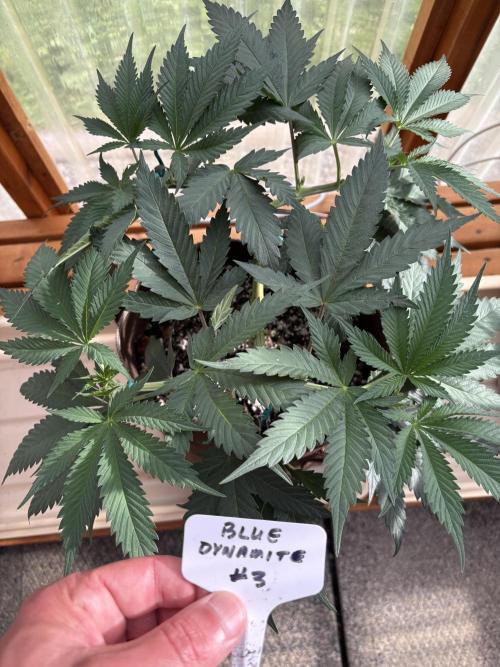
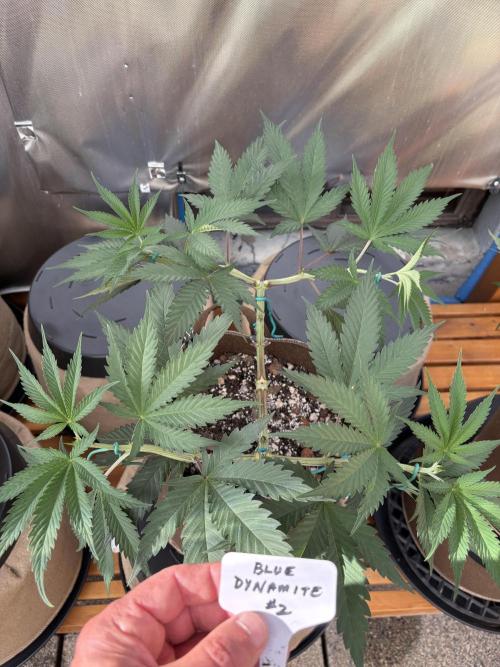
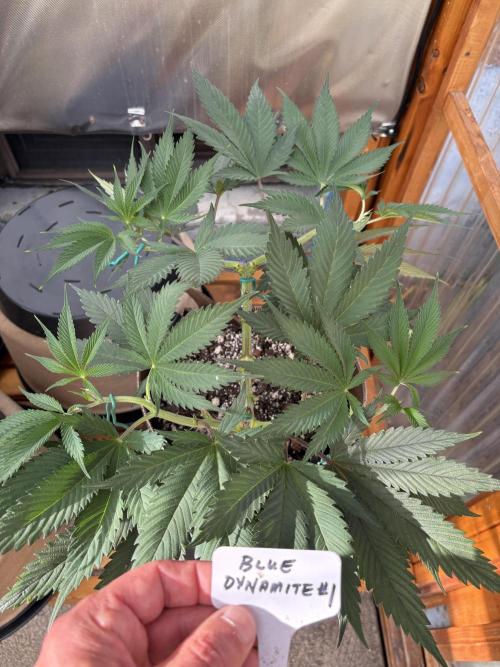
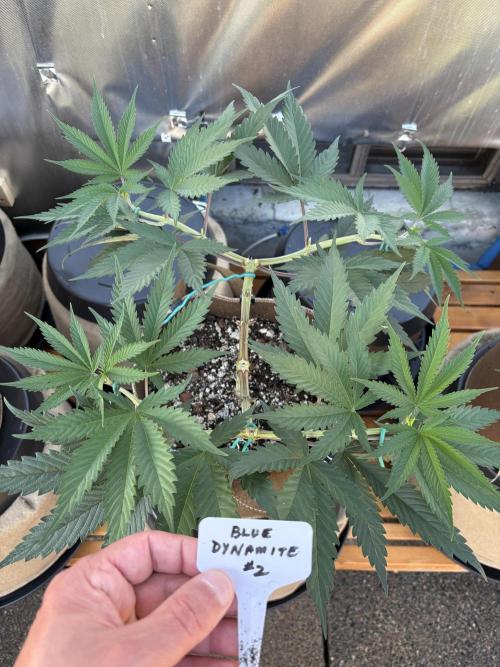
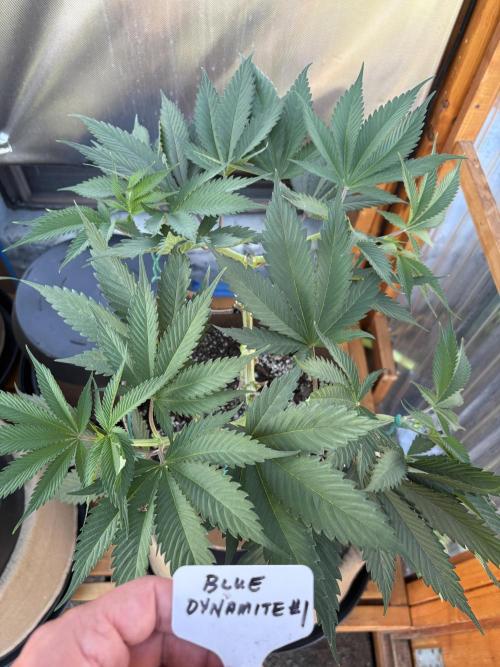
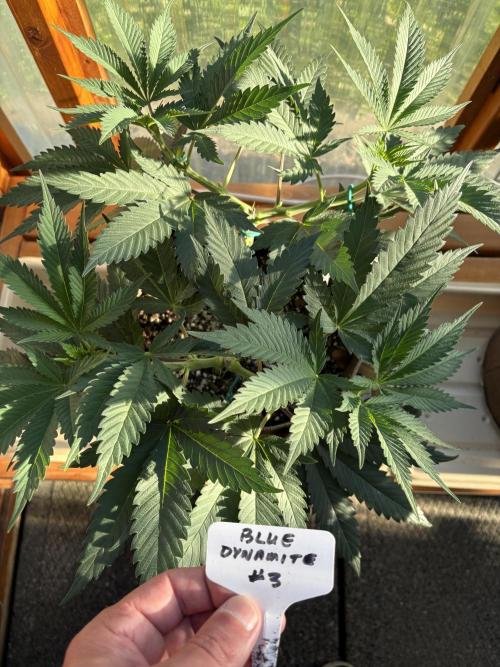
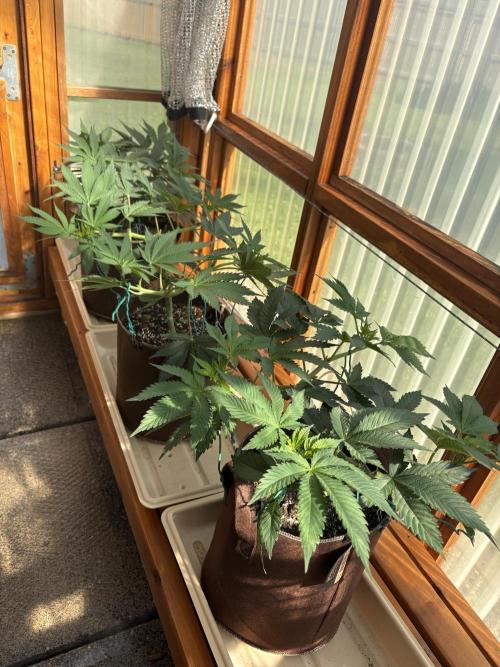
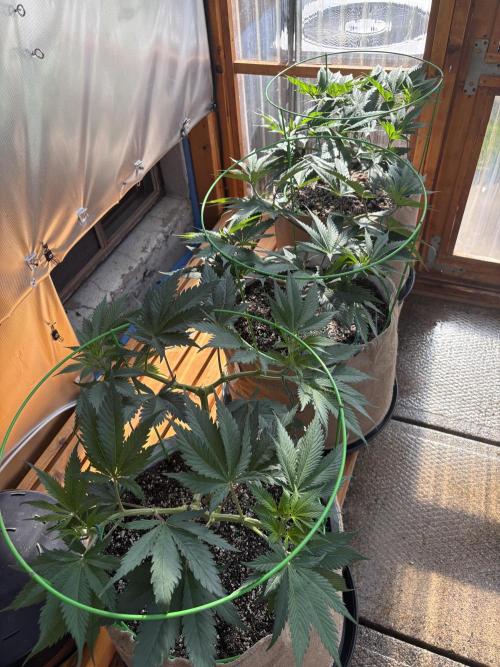
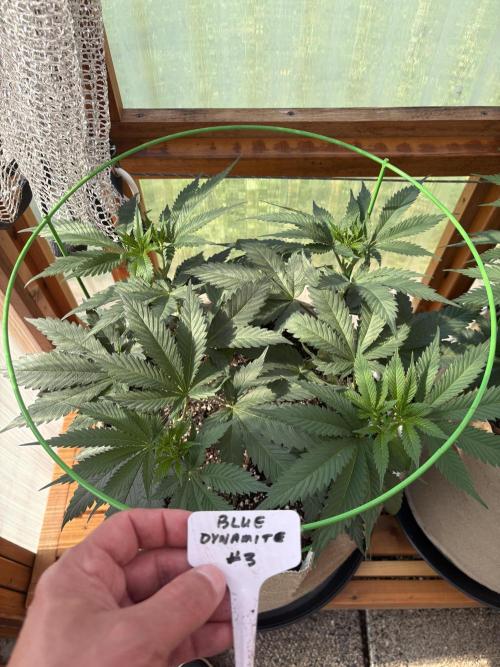
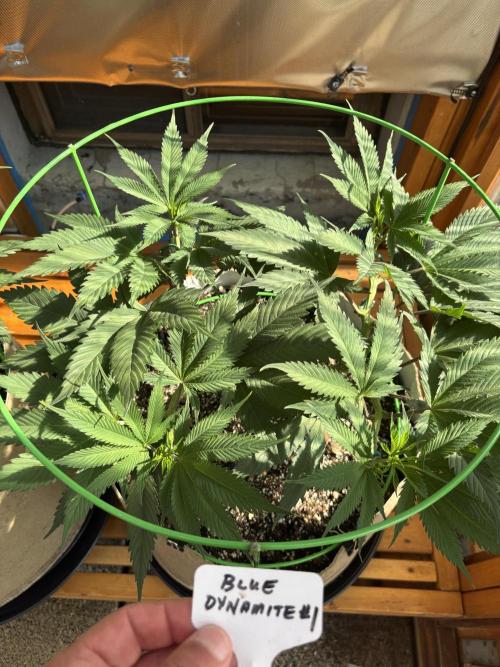
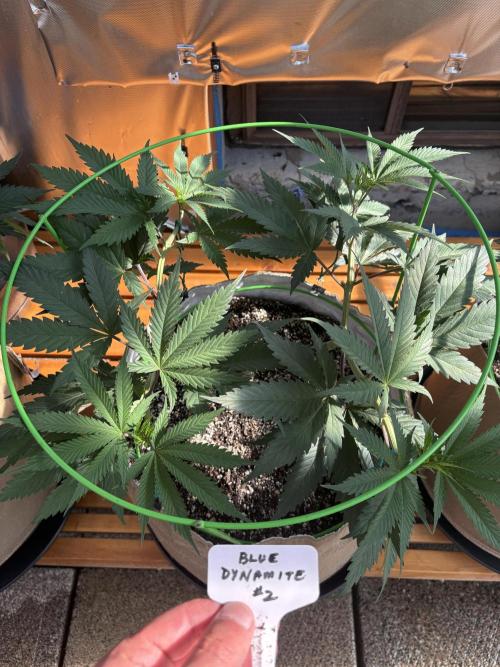
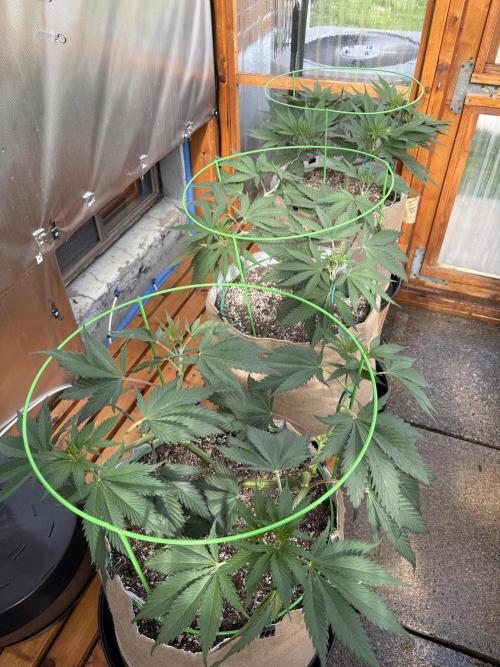
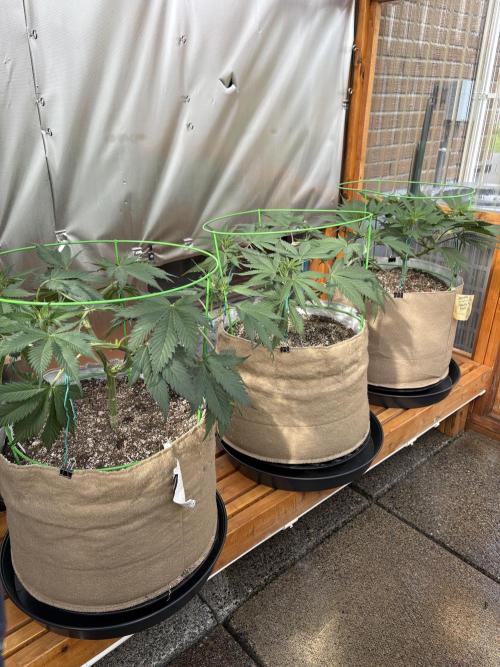
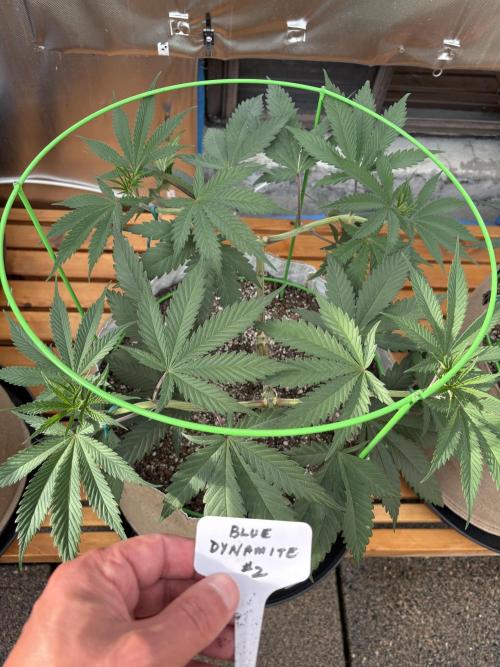
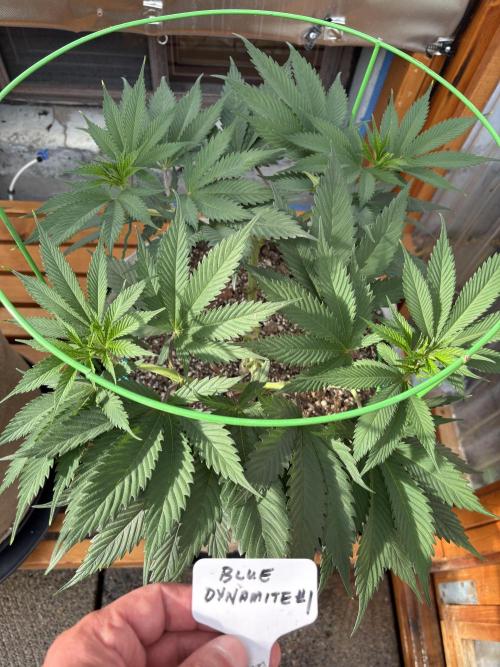
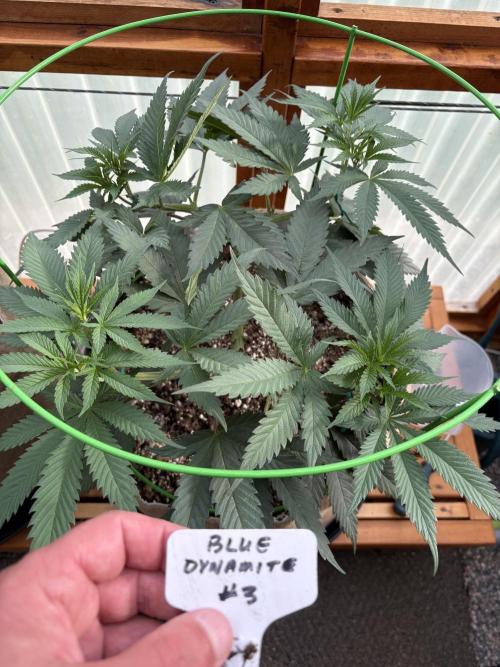
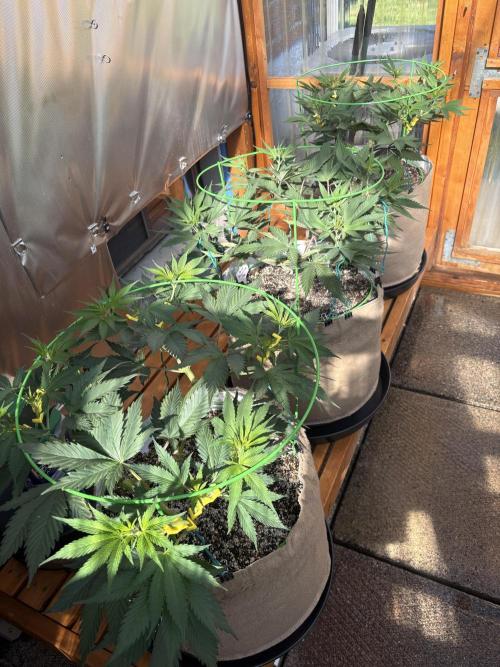
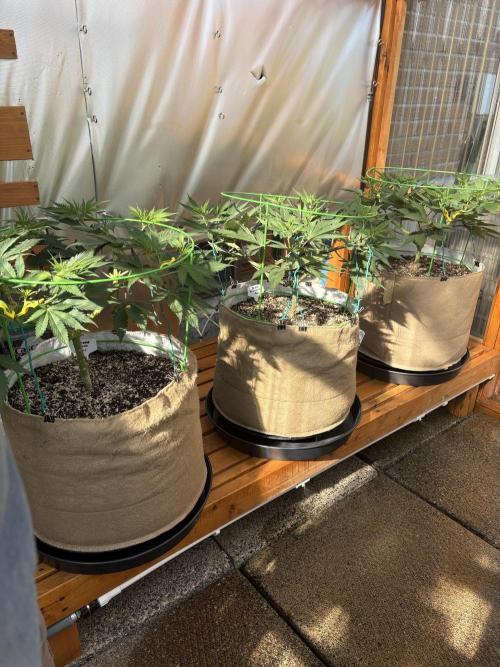
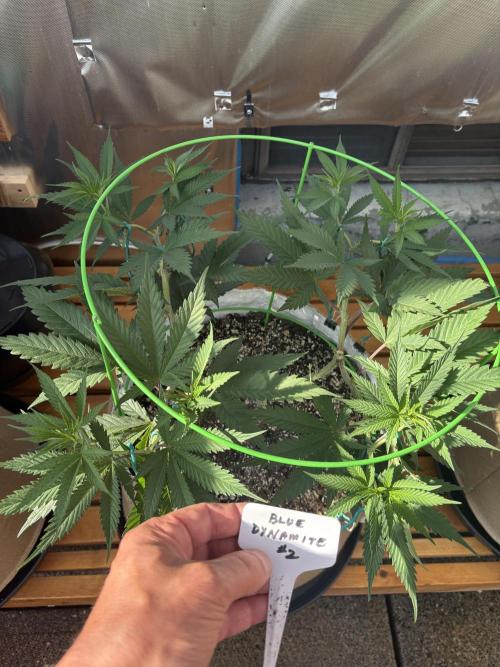
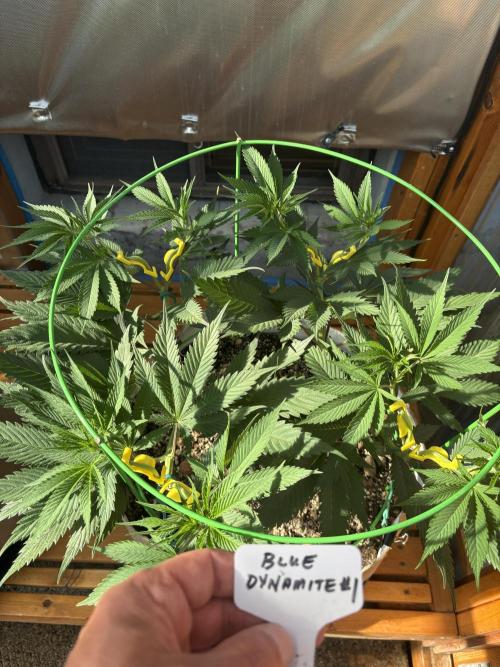
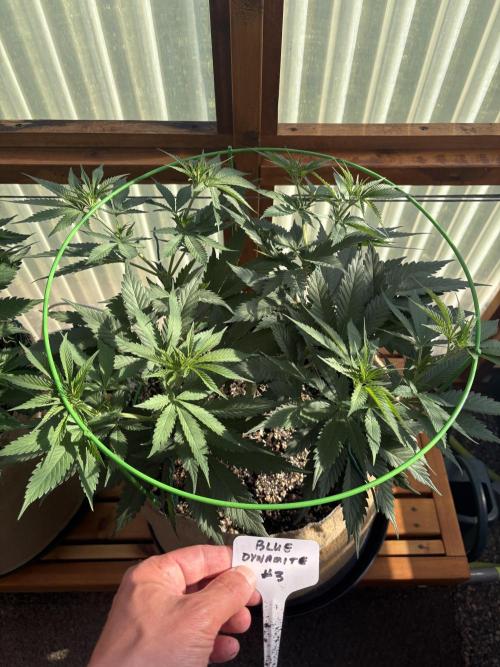
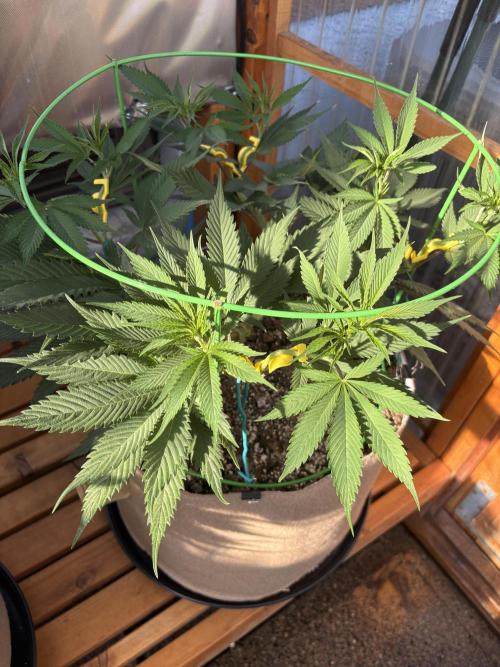
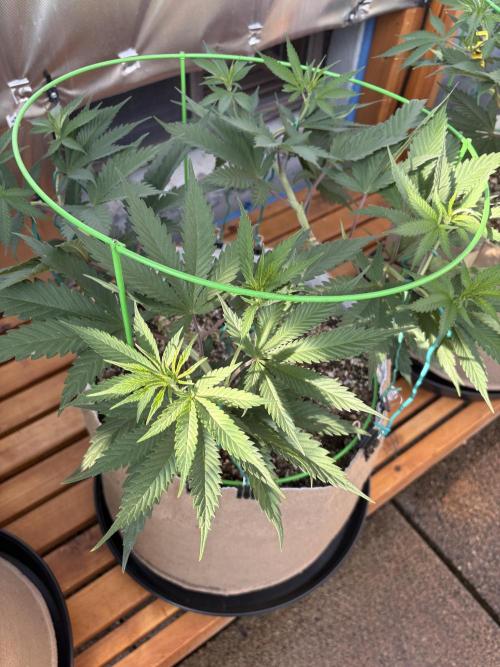
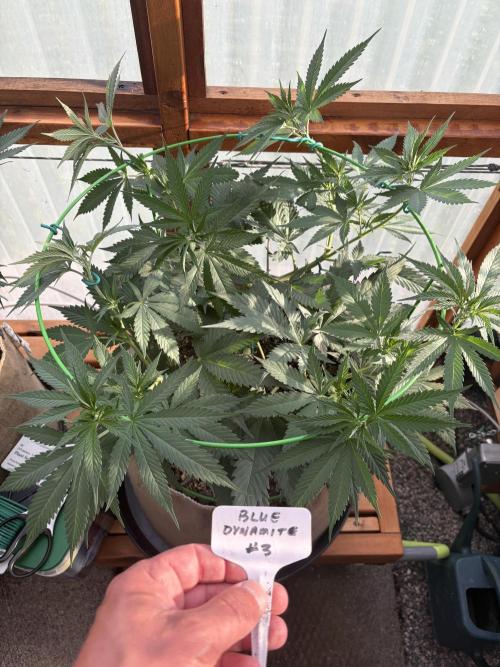
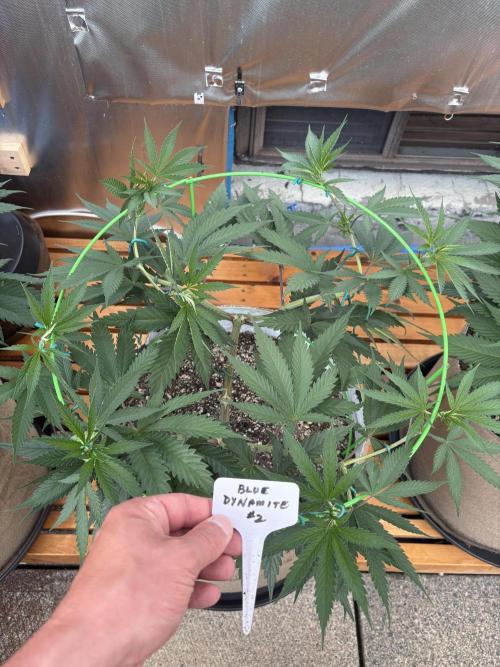
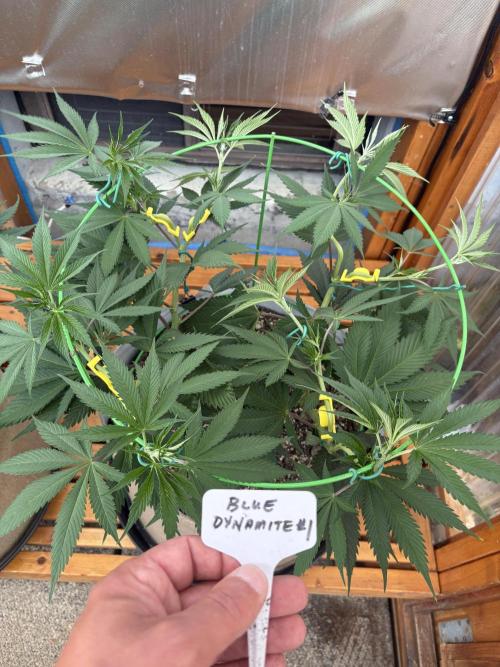
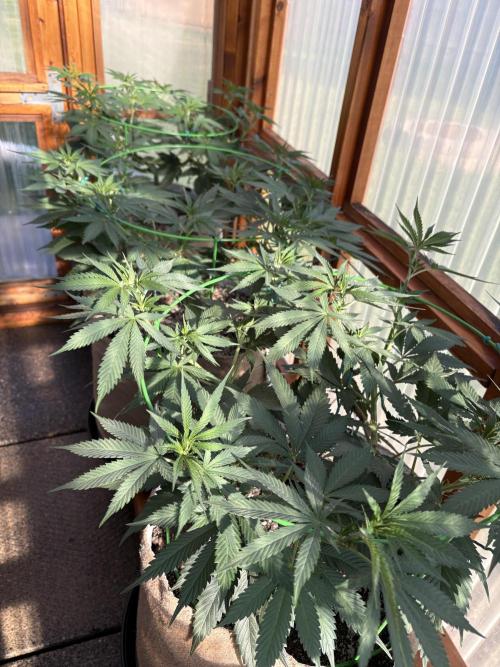
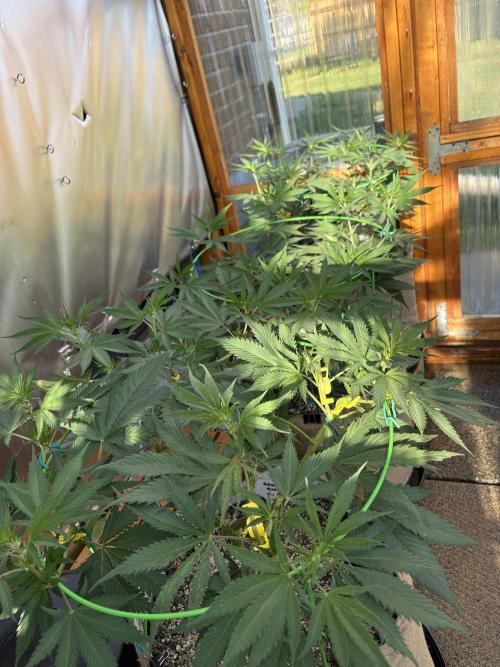
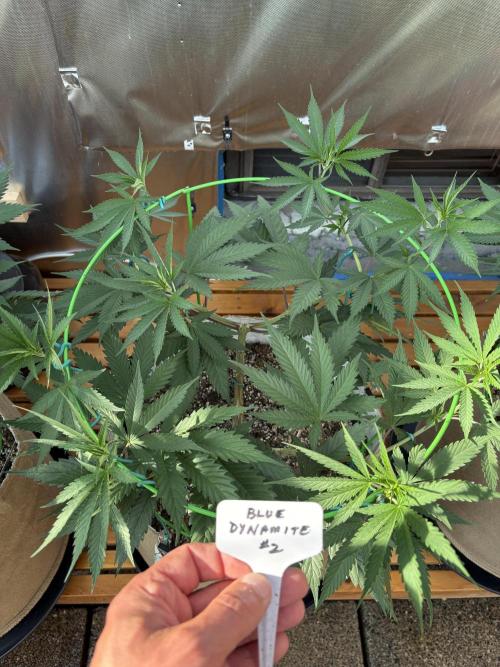
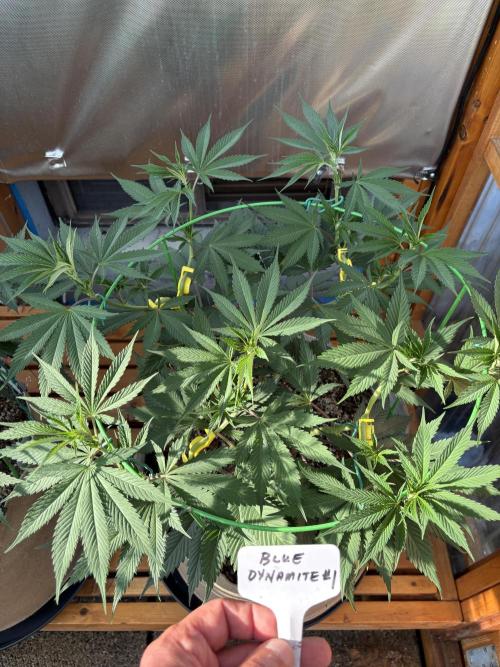
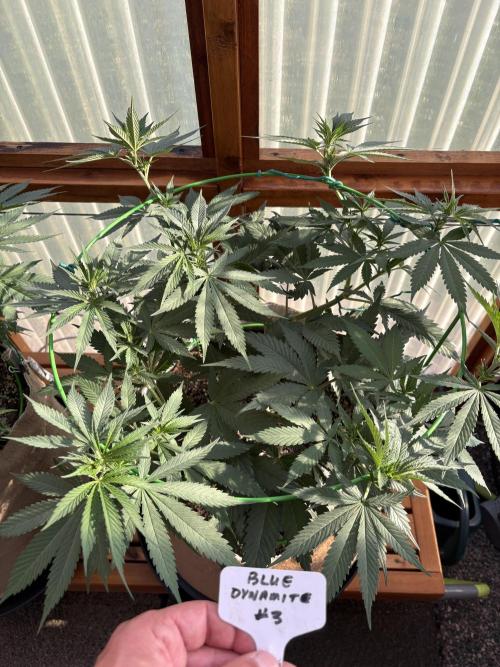
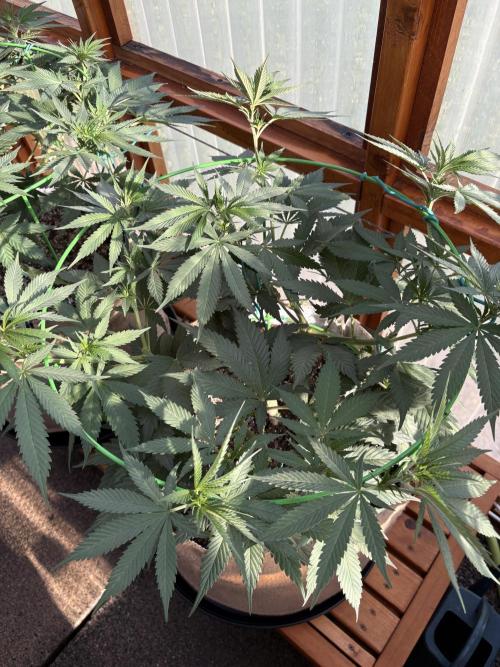
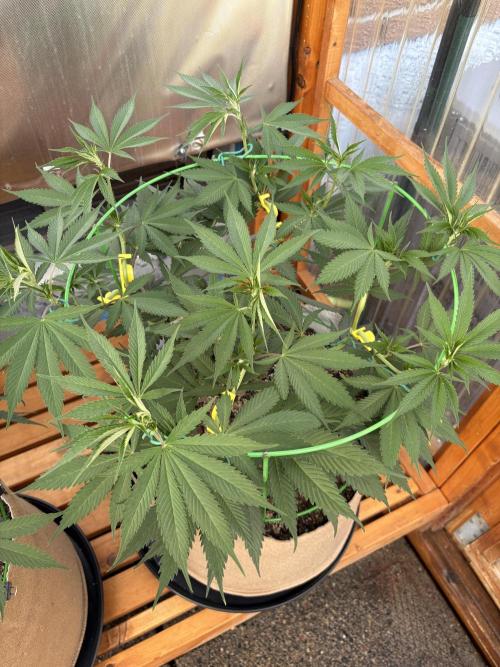
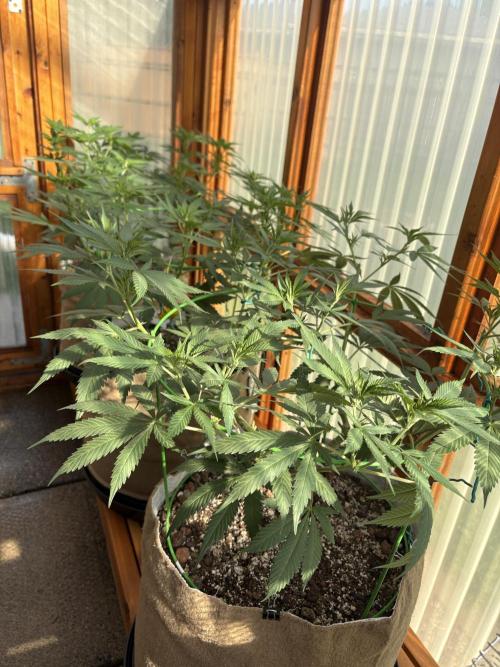
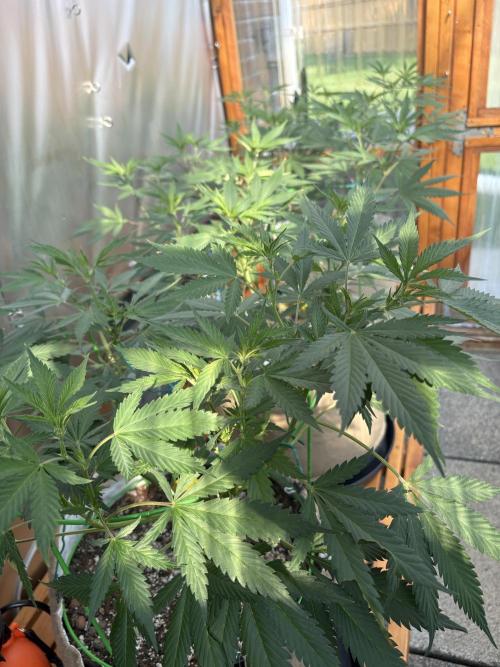
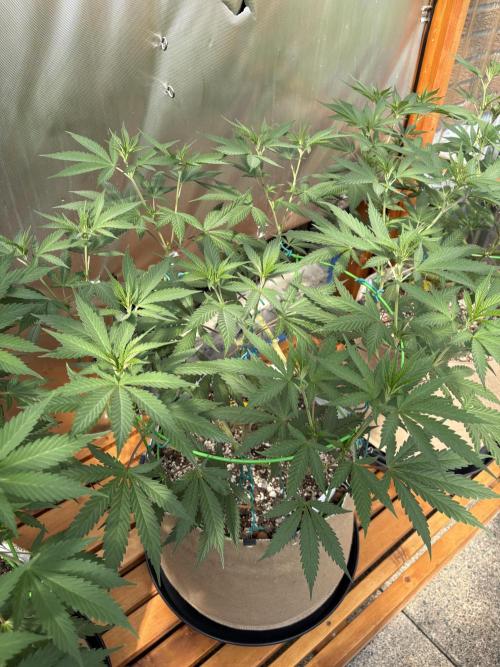
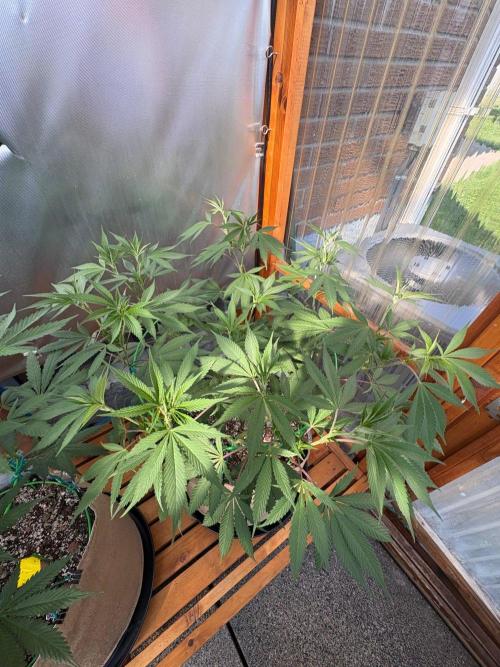
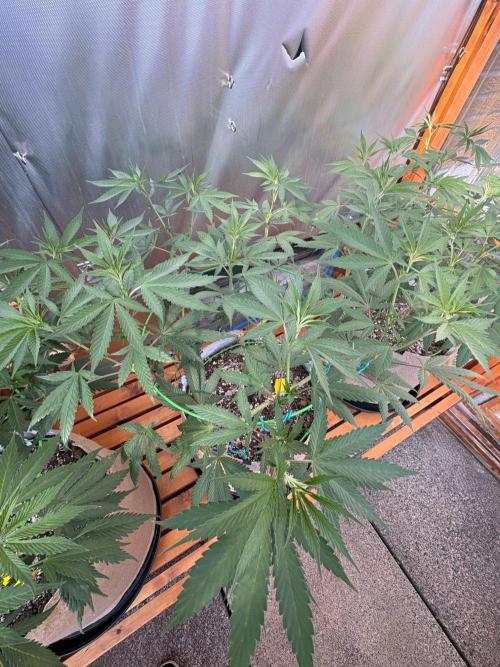
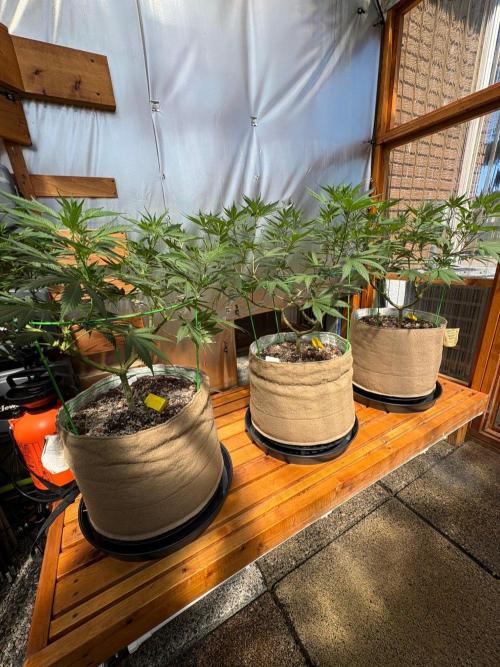
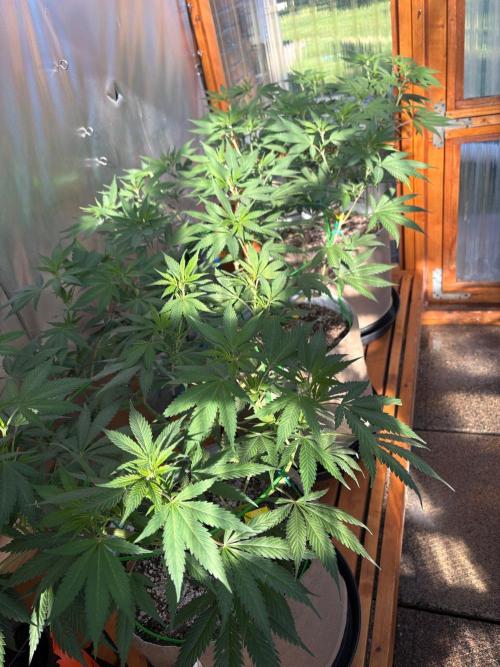
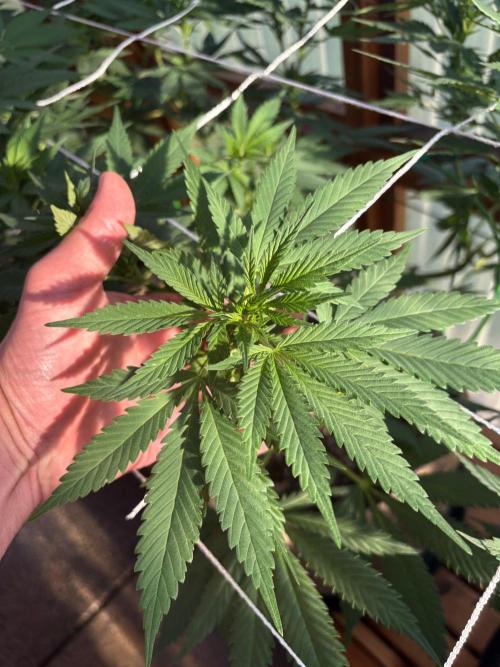
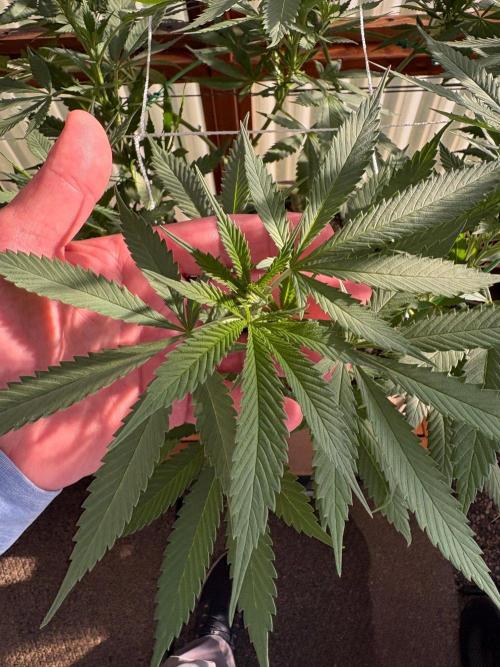
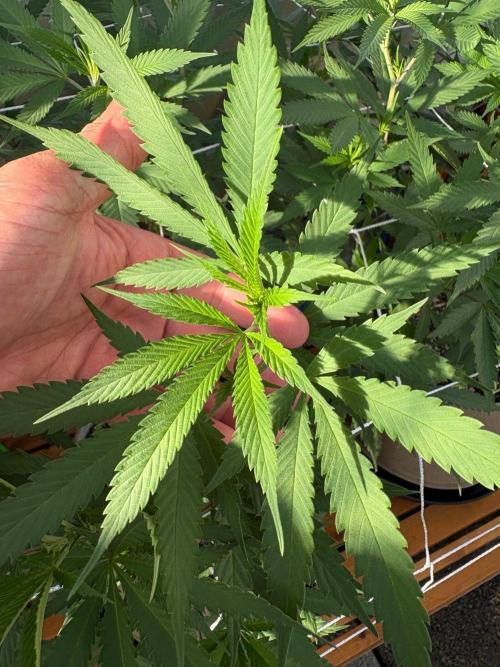
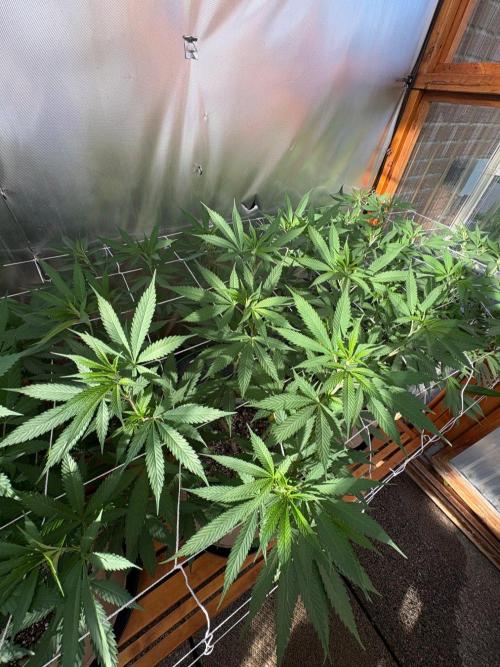
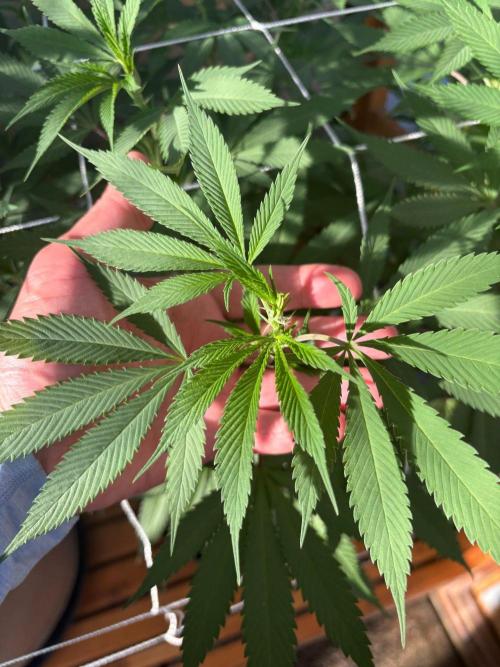
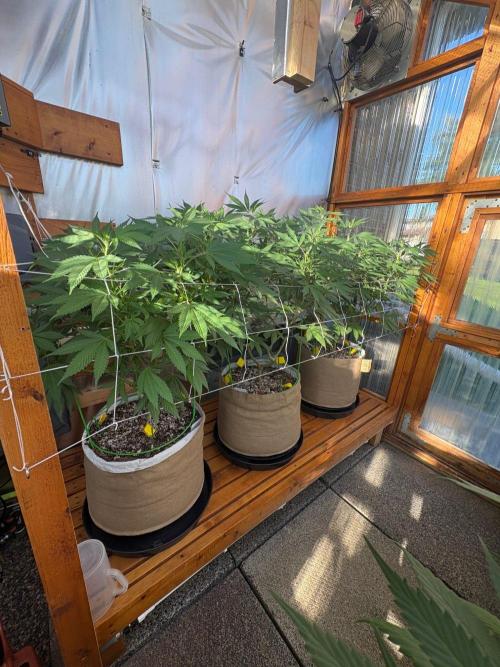
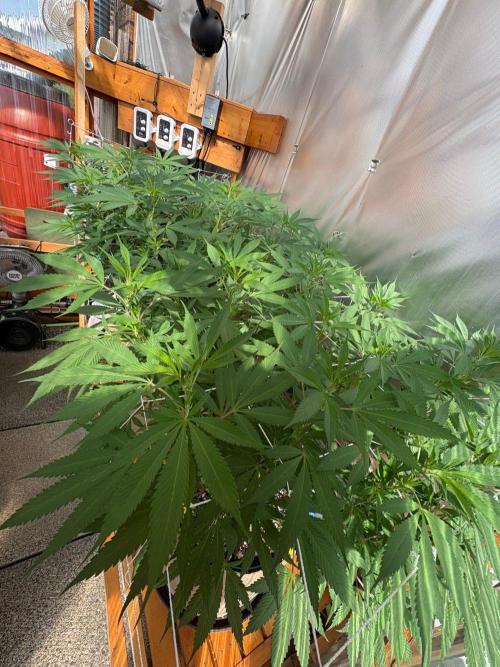
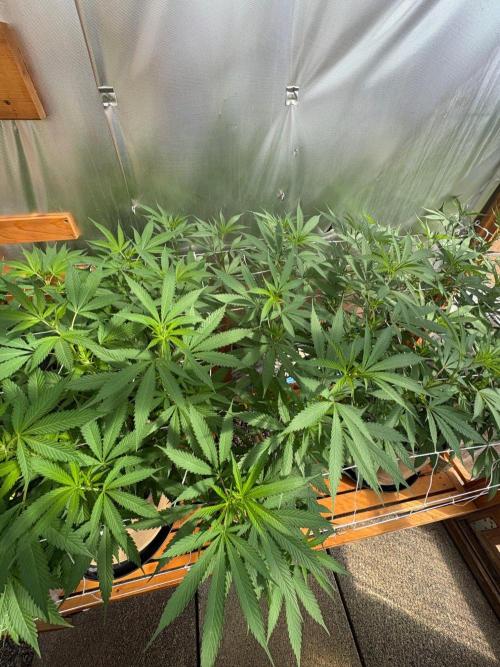
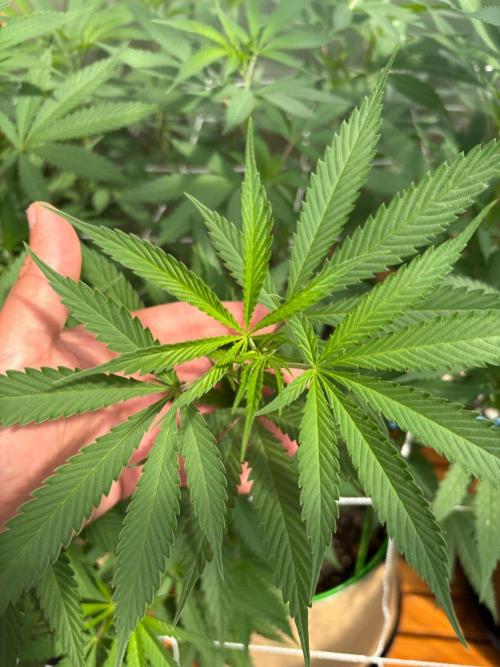
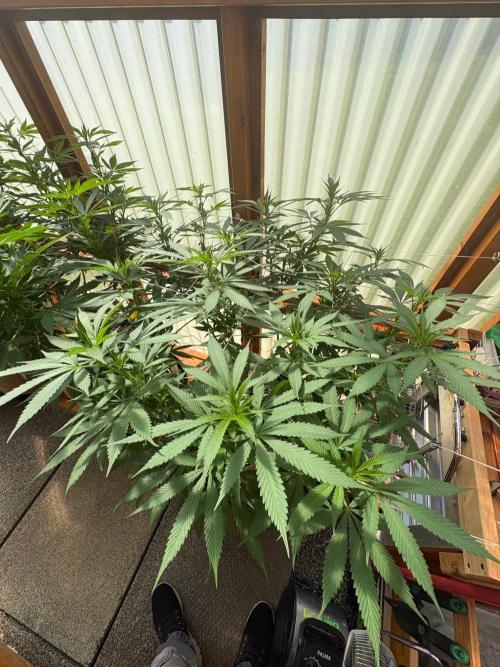
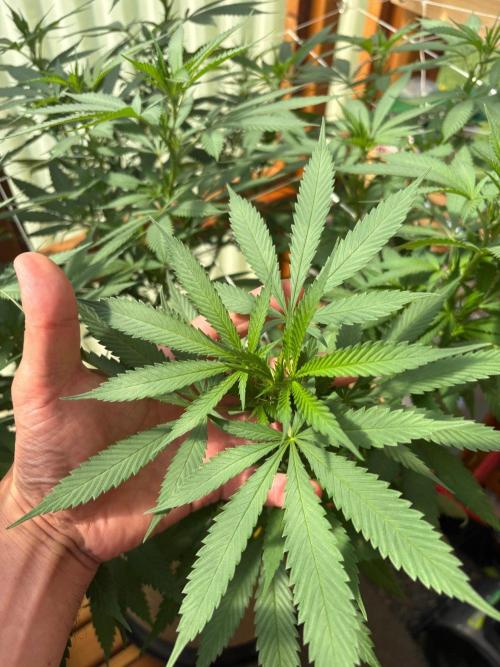
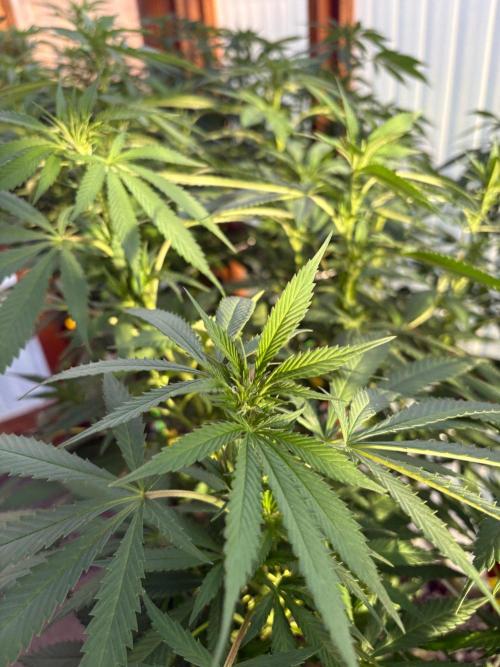
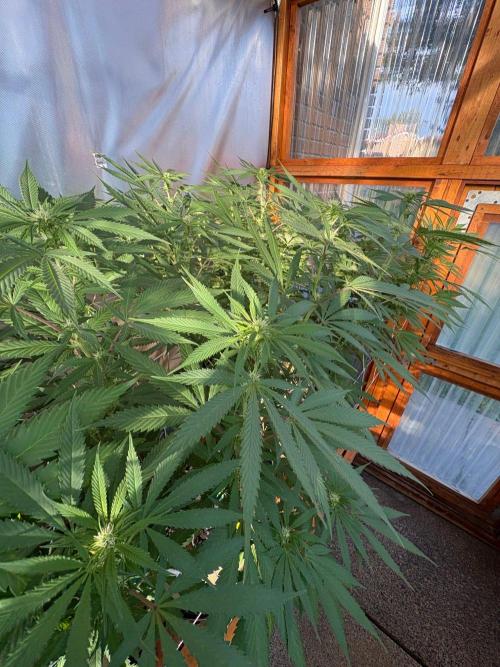
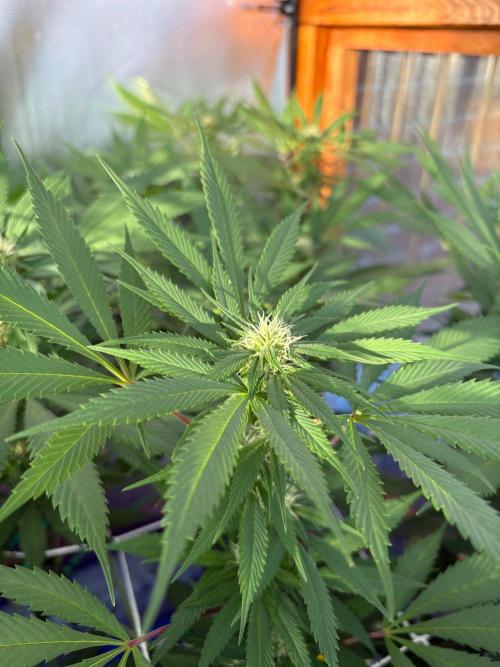
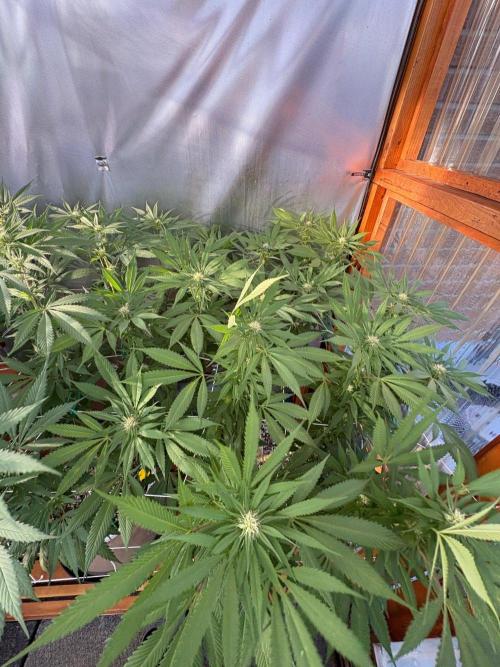
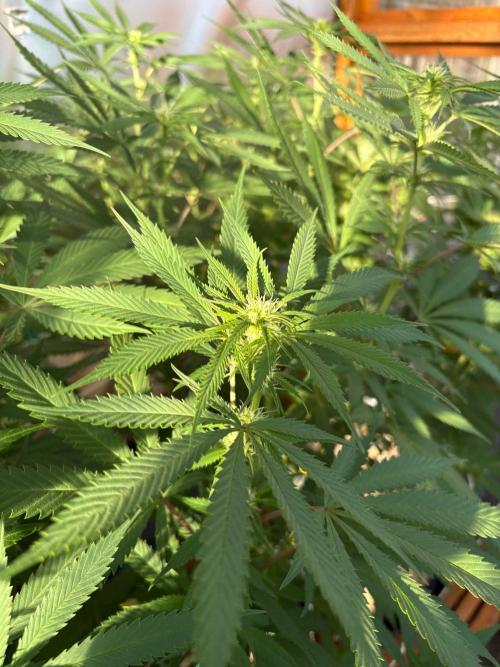
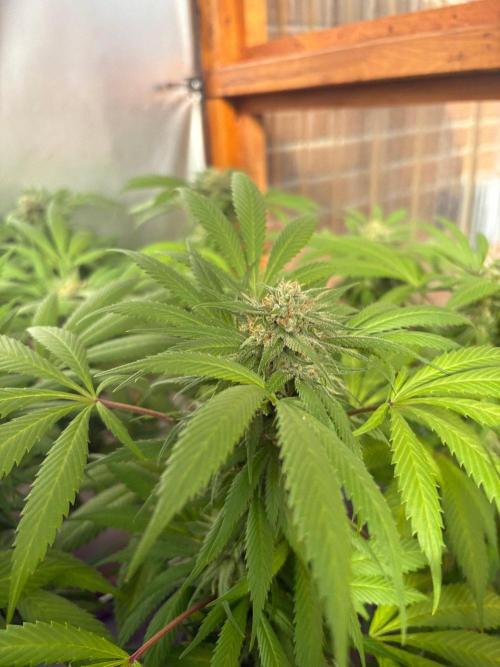
All three Blue Dynamite specimens appear healthy and happy. Each are quite similar in stature and leaf structure. Leaflets are generally wide, although Blue Dynamite #1 has slightly narrower leaflets. Stems are strong and quite thick, with each plant displaying compact inter-nodal spacing. Each is pushing out it's fourth node.
DAY 8 - n/a
DAY 9 - 150mL Compost Tea (recipe described below)
DAY 10 - n/a
DAY 11 - n/a
DAY 12 - 150mL top water of plain dechlorinated water, pH'd to 6.3, along with 100mL bottom water.
DAY 13 - n/a
DAY 14 - n/a
COMPOST TEA (measures in mL of additive to L of plain dechlorinated water)
Worm Castings - 60mL
Microbe Multiplier - 4mL
Humic Acid - 0.5mL
Wild Fish Hydrolysate - 1.0mL
Unsulphured Sugarcane Molasses - 0.3mL
11 likes
comments
Share
3
Week 3. Vegetation
5mo ago
1/8
18 hrs
Light Schedule
25 °C
Day Air Temp
6.5
pH
No Smell
Smell
60 %
Air Humidity
18 °C
Solution Temp
21 °C
Night Air Temp
2 liters
Pot Size
Nutrients 3
GROW - Liquid Organic Plant Food (3-1-2)
1.25 mll
Yucca Schidigera Liquid Extract
0.12 mll
Activated Beneficial Microbes (EM1)
1.25 mll
cultivars MAY 9 to MAY 15, 2026
VPD (avg): 0.79 | DLI: 22.7
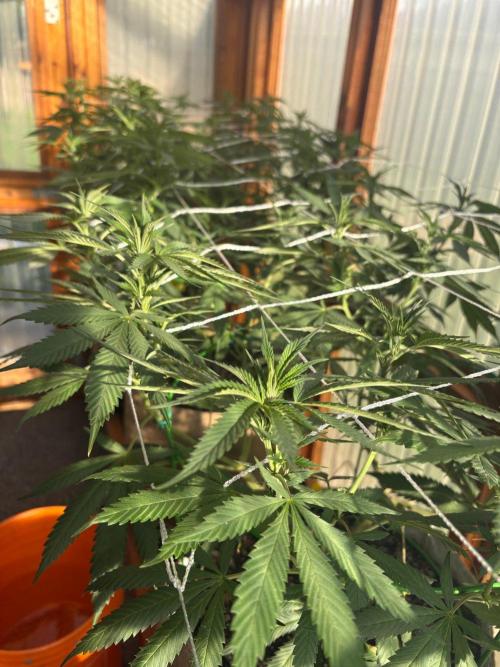
Was another decent week, with all specimens bulking up substantially. Each of the three specimens has a very thick stem, and were pushing beyond their 6th nodes by end. Topping for manifold coming soon. Some signs of problems arising, with mild discolouration of leaves. A transplant is scheduled to occur on May 23, so hopeful I can manage until then.
Day 15 - 250mL liquid amended soil drench (as per Nutrients Section) applied as top-water at a pH of 6.4; 80mL was applied via bottom water
Day 16 - n/a
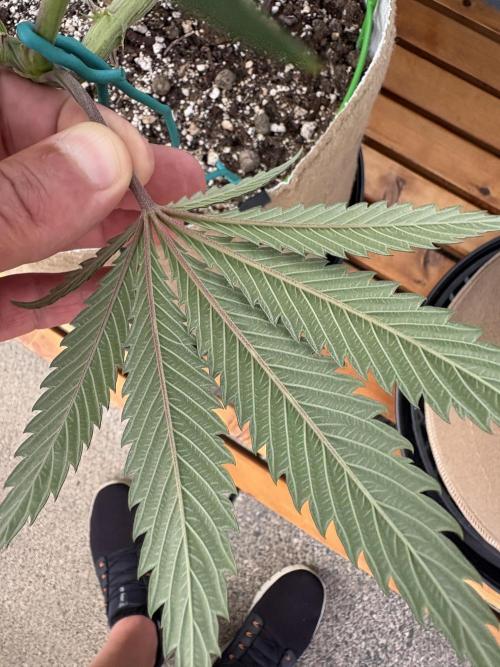
Day 17 - Some minor discolouration of leaves across all specimens; Perhaps some light stress, or hungry; Blue Dynamite # 1 and #2 have some purpling along the undersides of their fan leaves, a behaviour I noted last summer with this strain.
Day 18 - 175mL plain dechlorinated water at pH6.8 via top-water; Applied a Foliar Feed to help with what I believe to be some hunger
Day 19 - All specimens pushing out 6th node, but not ready for topping just yet; Light Foliar Feed application to each.
Day 20 - 125mL plain dechlorinated water at pH 6.5 via top-water, with 75mL applied via bottom water.
Day 21 - Foliar Feed spray
12 likes
comments
Share
4
Week 4. Vegetation
5mo ago
18 hrs
Light Schedule
25 °C
Day Air Temp
6.5
pH
No Smell
Smell
60 %
Air Humidity
18 °C
Solution Temp
21 °C
Night Air Temp
2 liters
Pot Size
cultivars MAY 16 to MAY 22, 2026
VPD (avg): 0.79 | DLI: 22.7
I was a bad “plant parent,” and “photo documenter” this week. All specimens showing deficiencies, with yellowing of lower leaves, some leaf curling, purpling of petioles, stems and in some cases underside of fan leaves. Was hoping that the compost tea application (recipe below) would give them a bit of a boost, but the deficiencies progressed through the week. I attribute it to several factors: 1) the substrate is suffering from a pH imbalance, and/or 2) substrate is spent of its plant available nutrients, and/or 3) the light intensity is causing a stress response.
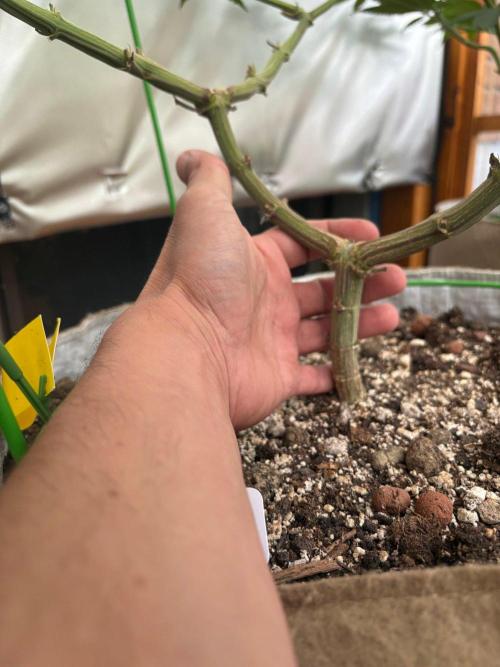
Despite the signs of problems, I pushed forth with topping the plants and hope they respond well enough to be transplanted next week.
Day 22 - n/a
Day 23 – 250mL Compost Tea application via top water.
Day 24 – n/a
Day 25 - Plain rainwater 125mL top water, 125mL bottom water; topped all plants and pruned lower growth shoots; reduced light intensity; Plants displaying some deficiencies, appears to be nitrogen
Day 26 – n/a
Day 27 - 200mL plain rainwater for each specimen; All specimens showing signs of deficiency, suspect as a result of spent substrate or too aggressive light intensity; Blue Dynamite specimens exhibiting strong purpling of petioles, but also on underside of fan leaves; I believe this to be stress related.
COMPOST TEA (measures in mL of additive to L of plain dechlorinated water)
Worm Castings - 60mL Microbe Multiplier - 4mL Humic Acid - 0.5mL Wild Fish Hydrolysate - 1.0mL Unsulphured Sugarcane Molasses - 0.3mL
6 likes
comments
Share
Used techniques
Topping
Technique
5
Week 5. Vegetation
5mo ago
1/4
18 hrs
Light Schedule
26 °C
Day Air Temp
6.5
pH
No Smell
Smell
60 %
Air Humidity
18 °C
Solution Temp
22 °C
Night Air Temp
2 liters
Pot Size
cultivars MAY 23 to MAY 29, 2026
VPD (avg): 0.92 | DLI: 15
After the topping last week, and given the stress the plants were exhibiting, I reduced the light intensity. This seemed to have a positive effect, however, the deficiencies the plants were displaying continued to develop up to the transplant on Day 30.
Thankfully the plants all responded very well to the transplant, and new growth is healthy. With the positive response from the plants, I increased the VPD this week, and slightly increased the light intensity.
In addition to the transplant, I applied Low Stress Training (LST) this week to spread out the two main shoots, to produce the mainline.
Day 29 - n/a
Day 30 – Transplanted all specimens; Full root masses on all specimens; Watered in with 2.0L of plain rainwater
Day 31 – n/a
Day 32 – n/a
Day 33 – Plants have all taken to transplant well, and are growing with vigour; Dropped light to increase intensity (220PPFD @ canopy)
Day 34 – n/a
Day 35 – n/a
8 likes
comments
Share
Used techniques
Transplantation
Technique
Main-Lining
Technique
6
Week 6. Vegetation
4mo ago
1/8
18 hrs
Light Schedule
26 °C
Day Air Temp
6.5
pH
No Smell
Smell
58 %
Air Humidity
18 °C
Solution Temp
22 °C
Night Air Temp
11 liters
Pot Size
cultivars MAY 30 to JUNE 5, 2026
VPD (avg): 0.92 | DLI: 17
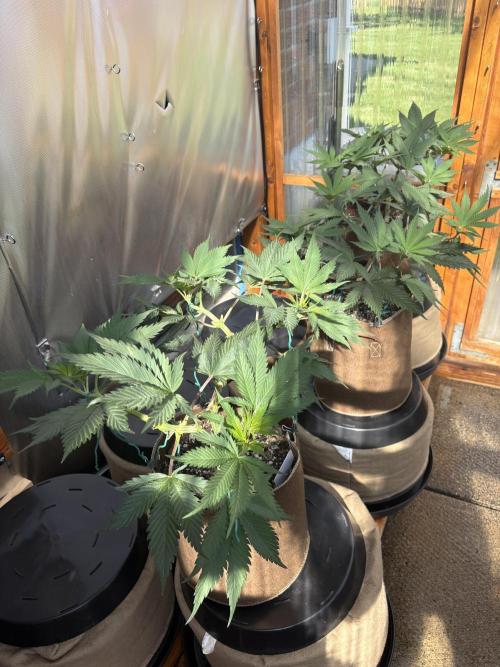
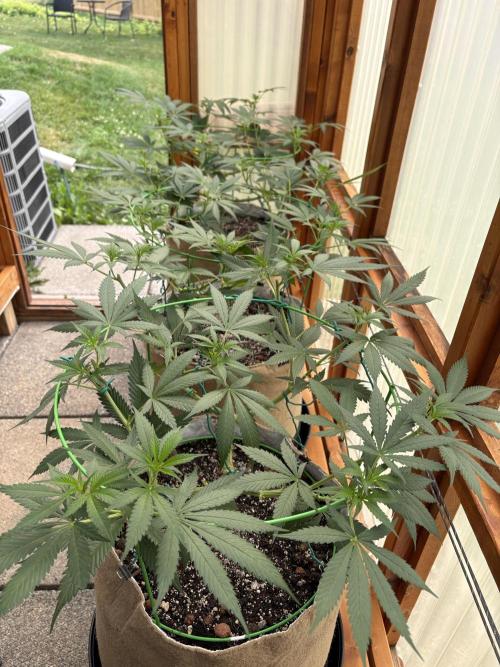
All specimens are performing well and growing with vigour. Manifold developed well this week, with the two main shoots reaching 5th node. Topped all specimens back the 3rd node and pruned all other growing shoots. Hardening off to begin next week as the plants will transition to the greenhouse for the remainder of their lifecycle.
No feeding this week, just plain rainwater. Will look to apply a compost tea next week.
Day 36 - n/a
Day 37 – 1L top water with plain rainwater; Built Final Pot Soil (38L fabric pots) and placed in greenhouse to “cook” for the next 4 to 5 weeks.
Day 38 – n/a
Day 39 – Lowered light in grow tent to slightly increase light intensity to 250PPFD
Day 40 – n/a
Day 41 – n/a
Day 42 – 1.25L of plain rainwater applied via top water; Topped each specimen for a second time, back to the 3rd node, to produce four main growing shoots for the manifold.
9 likes
comments
Share
Used techniques
LST
Technique
7
Week 7. Vegetation
4mo ago
1/12
18 hrs
Light Schedule
26 °C
Day Air Temp
6.5
pH
No Smell
Smell
58 %
Air Humidity
18 °C
Solution Temp
22 °C
Night Air Temp
11 liters
Pot Size
Nutrients 1
Worm Castings
15 mll
cultivars JUNE 6 to JUNE 12, 2026
VPD (avg): 0.92 | DLI: 20
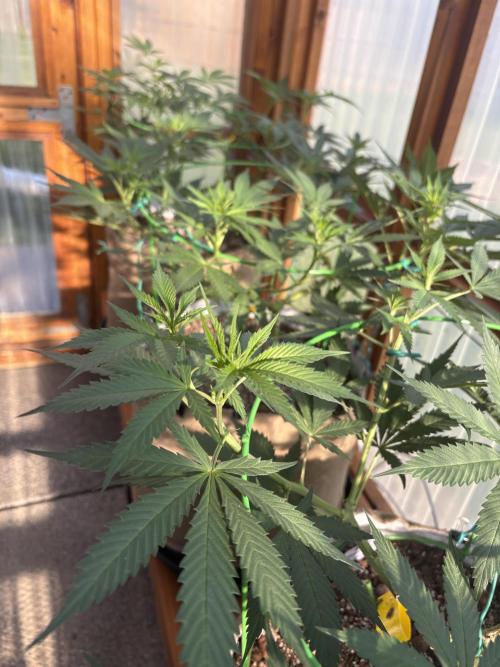
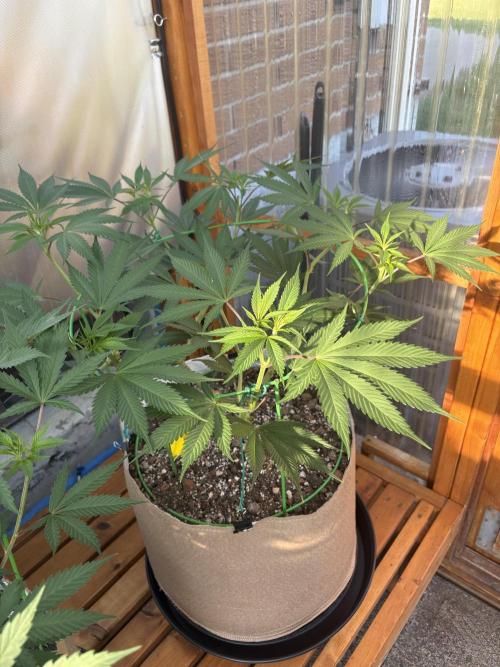
Good week for the plants, with hardening off for the transition to the greenhouse beginning. All specimens are growing well, appear quite healthy and robust, and appear on track. To boost the organic life and rhizosphere, I gave each specimen a light top dressing of worm castings this week, in lieu of a compost tea.
SPECIMEN DETAILS AND OBSERVATIONS
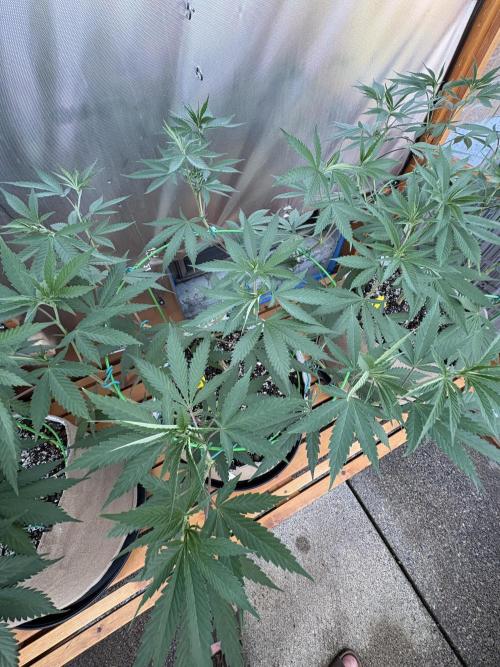
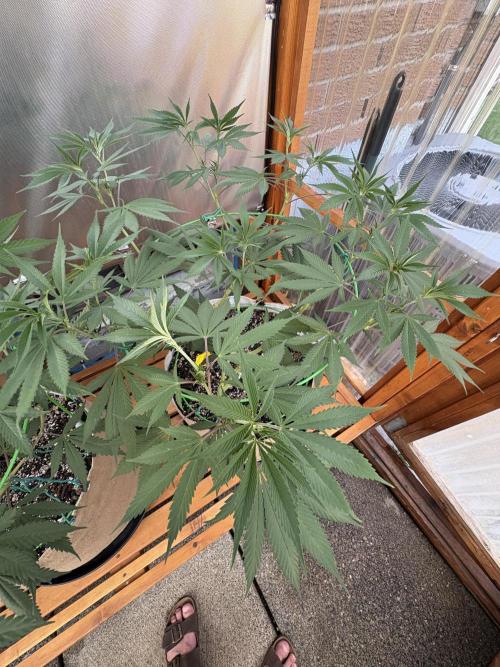
The three Blue Dynamite specimens are doing quite well. Blue Dynamite #1 was displaying some sort of deficiency that I diagnosed as a Calcium/Magnesium issue, so for one of its waterings I amended it with some organic Cal/Mag in a small dose. Blue Dynamite #1 and #2 appear very similar in stature, with slightly longer internodal spacing than Blue Dynamite #3, and perhaps slightly more elongated leaf petals. Blue Dynamite #3 is a very compact specimen, and quite bushy. All are pushing out their 3rd nodes on the newly created four main growing shoots. All stems are quite rigid, and very thick. I am pleased with the progress to date.
Day 43 - n/a
Day 44 – Provided compost tea (3L) to the Final Pot soil that is “cooking” in the greenhouse; Will be ready to receive the plants in a couple of week’s time.
Day 45 – Top dressed with 125mL of worm castings; 1L top water with plain rainwater; Blue Dynamite #1 showing deficiencies, with "rust" spots on fan leaves; Added organic Cal/Mag to its 1L of rainwater, pH'd to 6.4
Day 46 – n/a
Day 47 – Cloudy and wet day, so I decided to defer hardening off; Provided 1L of rainwater via top water in early evening to all specimens. Began training newly created 4 main shoots to build out the manifold.
Day 48 – Began hardening off; Plants taken out to the greenhouse at 9:00AM and returned to the grow tent at 11:45AM; They experienced some good sunny exposure, and responded with the desired “praying”; Applied further LST to direct 4 main growing shoots on each specimen; Blue Dynamite #1 seems to have recovered from the issues it was facing, that I believe were triggered by too far a dry back.
Day 49 – Continued the hardening off process, and put the plants out in the greenhouse at 8:00AM; GrapeGod #1 provided 500mL of plain rainwater as it seems a little “light”; Plants returned to grow tent under LED lights at 11:45AM
10 likes
3 comments
Share
Used techniques
LST
Technique
8
Week 8. Vegetation
4mo ago
1/8
18 hrs
Light Schedule
26 °C
Day Air Temp
6.5
pH
No Smell
Smell
50 %
Air Humidity
18 °C
Solution Temp
20 °C
Night Air Temp
11 liters
Pot Size
Nutrients 2
Veg Grow (5-3-5)
2 mll
Worm Castings
12.5 mll
cultivars JUNE 13 to JUNE 19, 2026
Sunrise: 05:55 | Sunset: 22:05
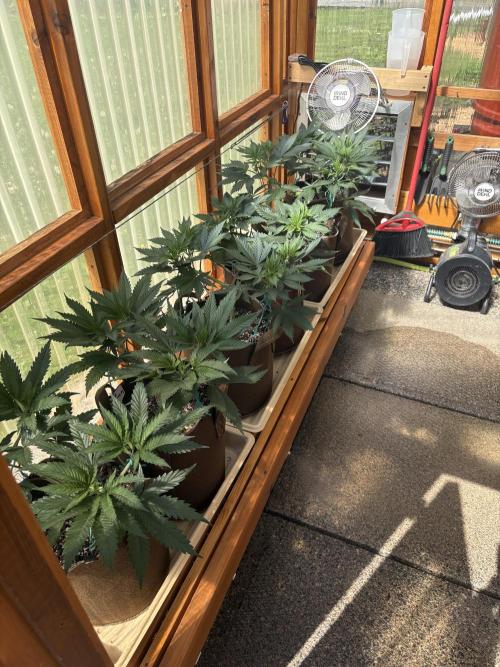
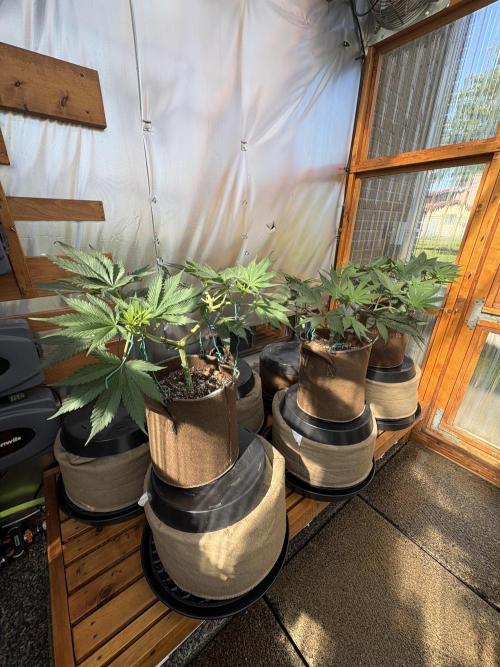
Plants hardened off, and full-time in greenhouse this week. Weather not the greatest as there was more cloud cover than sun, however temperatures were good and the greenhouse held humidity levels at a reasonable target. All specimens are doing well, and did bulk up, although the growth rate not a substantial as desired. With the cloud cover, the plants got a little stretchy, with internodal spacing increasing over what was occurring under the LED fixture in the indoor propagation tent. Nothing to really worry about.
Plants were top dressed with dry organic amendments this week, and received an liquid organic soil drench. Next week, a Compost Tea application and another topping is on tap (creating 8 main growing shoots).
Day 50- Out to greenhouse at 8:00AM, back in the tent under LED at 1:30PM; Cloudy and overcast day, with intermittent light rain; A few sunny breaks between 10:00AM and 1:30PM; Top dressed with worm castings and Dry Organic amendments (Veg Grow 5-3-5); Watered in with 1.1L Organic Liquid Amended Soil Drench pH'd to 6.5 (recipe below); Bottom watered with 250mL of plain rainwater; LST applied to main growing shoots to keep the plants flat and to build out the manifold; Bumped VPD target in tent to 1.1kPA
Day 51 – Cleaned greenhouse (quite dirty due to spring pollen); Plants out at 8:00AM; Cloudy, overcast and cool in the morning, with sunny breaks in the afternoon, and mostly sun in the evening. Left the plants out, as they seemed to be responding well; Perhaps some mild signs of sunburn or malcontent (slight discolouration of top leaves, couple instances of leaf curl), but nothing too serious. Decided to let them overnight in the greenhouse as tomorrow is going to be cloud covered for most of the day; Temps are good in the greenhouse, so no reason to not just let them continue.
Day 52 – Cloudy, overcast and cool in the morning; 1L of plain rainwater applied via top water to all specimens. All growing shoots pointed upward after LST last night. Plants are doing well, but perhaps a bit of excessive leaf turgor. Further LST applied in the evening to keep the canopy flat; Plants are growing with vigour
Day 53 – Mostly sunny morning; Plants look happy and healthy, although the LST on one plant (Purple Romulan #2) caused a stem to break and I needed to remove it, thereby topping it back to its first nodes.
Day 54 – Overcast in the morning; What appeared to be excessive leaf turgor has subsided somewhat, with the plants "relaxing" last evening, and waking up eager and praying in the morning; Remained cloudy for most of the day, with sporadic sunny breaks; Plants did not appear to be worse for wear, but also didn't push much new foliage out; Pots are light, and so I will give them some rainwater tomorrow morning.
Day 55 – Mix of sun and cloud; Purple Romulan #2 given 1L of plain rainwater via top water, all others 500mL; Intermittent rain today, and mostly cloudy for the afternoon.
Day 56 - Bright sunny morning, forecasted to be mostly sunny for the day; Applied some LST to the plants first thing in the morning; Compost Tea brewing (set up last night) for application tomorrow morning.
LIQUID ORGANIC SOIL DRENCH RECIPE (mL/L)
Optimize Organics – Liquid GROW (5-3-5) – 5.0mL/L
Yucca Extract – 0.25mL/L
Monosilic Acid – 0.5mL/L
Triacontanol Biostimulant – 0.1mL/L
Activated Beneficial Microbes – 5.0mL/L
NOTE: All products from Optimize Organics (http://www.optimizeorganics.ca)
9 likes
comments
Share
Used techniques
LST
Technique
9
Week 9. Vegetation
4mo ago
1/18
18 hrs
Light Schedule
26 °C
Day Air Temp
6.5
pH
No Smell
Smell
50 %
Air Humidity
18 °C
Solution Temp
20 °C
Night Air Temp
38 liters
Pot Size
cultivars JUNE 20 to JUNE 26, 2026
Sunrise: 05:58 | Sunset: 22:02
Decent week for weather, with majority of days sunny with moderate temperatures. Greenhouse environment has been adequate, and the plants have grown well over the week.
It was a bit of a busy week for all involved as each specimen was topped at the beginning of this week, to produce 8 main growing shoots. At the end of the week, all specimens were transplanted to their Final Pots (38L/10 gallon).
Root zones in the 11L (3 gallon) fabric pots consumed all available space, reaching the edges of the pot, as well as the bottom. The transplant was a delicate process to slowly roll sides of fabric pot downward until it was free of the full soil/root mass. Gentle prying from the between the pot and the bottom of the root mass freed up the root growth weaved into the bottom of the fabric pot. The soil in the Final Pots that was prepared on Day 37 (26 days prior to transplant) was moist, smelled rich and biological, ideal for the transplant. It will just be a matter of monitoring the plants over the coming days to note any root zone issues.
Day 57- Applied 1L of Compost Tea to all specimens via top water.
Day 58 – n/a
Day 59 - Topped for a 3rd time, pruned and defoliated; Applied 500mL of plain rainwater to each specimen; Sunny morning, projected to be mostly sunny throughout the day; Temperatures in greenhouse good.
Day 60 - Nice sunny morning, remained mostly sun for the day; Temperatures good; Plants look find after the topping, pruning and LST; Soil moisture good; Plants began to droop mid-afternoon, and so I applied 1L of plain rainwater at 2:45PM (not ideal) but all specimens immediately responded by perking up; Temps slightly high (around 30C) and humidity low (around 30%), but it is what it is with the way I am able to manage the environment in the greenhouse.
Day 61 - Cloudy and overcast, with cooler temperatures today; Greenhouse is fine temp and humidity wise. Plants look good and appear to be responding well to the topping. Sunny breaks as the day wore on, with plants responding well.
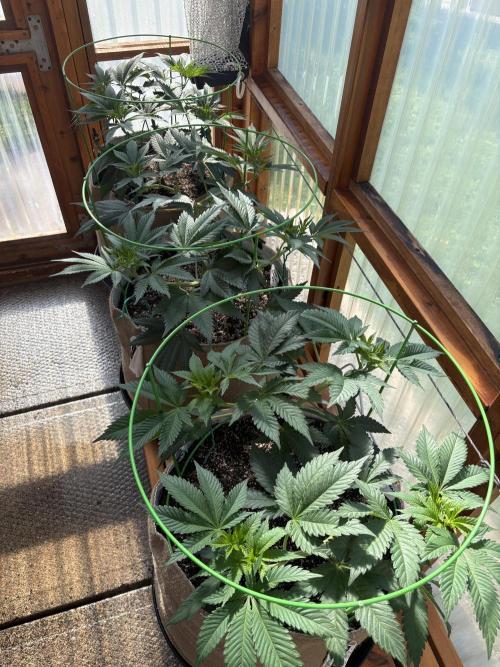
Day 62 - Bright sunny morning remained sunny for the day with a brief cloudy period late afternoon; Applied 1L of plain rainwater via top water to each specimen in the morning; Plants appear to be performing well, new main growing shoots are developing well, no signs of deficiency from the plants, environmental conditions adequate. While perhaps the plants should be given another week, I am planning to proceed with the transplant to Final Pots (38L/10 gallon) tomorrow evening. Plants are large enough that tomato cages may not be able to go on after the transplant, but rather the plants transplanted to pots with the modified tomato cages already in place; GrapeGod #1 is particularly large.
Day 63 - Another sunny morning; Plants look good. Transplanted all specimens to final pots in the evening; Well-watered in with 1.5L of Soil Drench; Re-applied LST to flatten the canopy of each specimen, and direct toward Final Pot plant cages.
COMPOST TEA RECIPE (mL/L of plain rainwater)
Worm Castings – 60mL/L
Optimize Organics Microbe Multiplier – 4mL/L
Humic Acid – 0.5mL/L
Wild Fish Hydrolysate – 1mL/L
Unsulphured Sugarcane Molasses – 0.3mL/L
LIQUID ORGANIC SOIL DRENCH RECIPE – TRANSPLANT FORMULA (mL/L of plain rainwater)
Fulvic Acid - 2.5mL/L
North Atlantic Kelp - 0.5mL/L
Pacific Kelp - 0.5mL/L
Yucca Extract - 0.25ml/L
NOTE: All products from Optimize Organics (http://www.optimizeorganics.ca)
9 likes
comments
Share
Used techniques
Transplantation
Technique
LST
Technique
Topping
Technique
Main-Lining
Technique
Manifolding
Technique
Defoliation
Technique
10
Week 10. Vegetation
3mo ago
1/13
16 hrs
Light Schedule
28 °C
Day Air Temp
6.5
pH
No Smell
Smell
50 %
Air Humidity
18 °C
Solution Temp
21 °C
Night Air Temp
38 liters
Pot Size
cultivars JUNE 27 to JULY 3, 2026
Sunrise: 06:01 | Sunset: 22:01
Decent week for weather, with very hot temperatures through the middle of the week. Took some personal time and went fishing for 3 days. Upon return on day 70, the plants were drooping, so immediately received a plain watering. All specimens recovered from the slight drought.
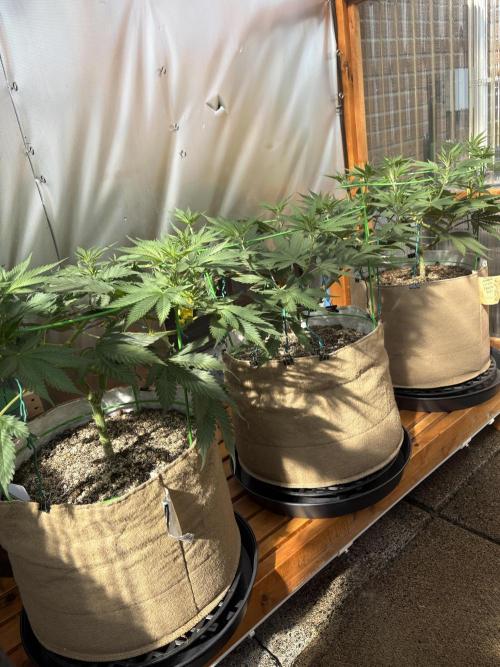
Growth continues as expected, however the plants are getting a bit large. All have strong thick stems from main stalk to the tips of the main growth shoots. Blue Dynamite specimens are uniform in size, with Blue Dynamite #3 exhibiting a slightly more compact structure. Leaves across all specimens have very similar shape with leaflets that are broader in shape. All specimens in the garden are exhibiting stronger scents, and when handled and manipulated the Blue Dynamite plants smell of citrus, fruit and earthy pine.
Day 64- Full sun throughout the day; Greenhouse hit 31C but it was fairly brief in the afternoon; Humidity wasn't good from 1PM onward to 7PM, something I cannot really contend with in current set up (corrugated polycarbonate panels produce large air leaks in greenhouse). All specimens have responded very well to the transplant, with noticeable growth and upturning of growing shoots toward light.
Day 65 – Cloudy in the morning, sunny in the afternoon; Temperatures ideal, and plants have responded well to transplant.
Day 66 - Cloudy and overcast, with cooler temperatures to start the day; Greenhouse in a good temperature and humidity range; Plants look happy and healthy; Cloud cover for the remainder of the day, with rain arriving in the evening (7:00PM); Using the probe, soil moisture levels remain good; Considering a small top-up of water tomorrow before departing for 3 days on a fishing trip
Day 67 - Rain overnight, temps and humidity good in the greenhouse in the morning; Bottom watered each specimen with 400mL of plain rainwater, top watered with 1L; GrapeGod #1 received an additional 1L. Forecasted to be very hot couple of days ahead; Gone fishing at 4:00PM
Day 68 – n/a (Gone Fishing)
Day 69 – n/a (Gone Fishing)
Day 70 – Back from fishing at 2:00PM; 2L of plain rainwater applied immediately upon return, as the plants were drooping; Weather had been hot so no surprise there… but a disaster has been averted; Hopefully rhizosphere remains strong;
8 likes
comments
Share
Used techniques
LST
Technique
11
Week 11. Vegetation
3mo ago
1/16
16 hrs
Light Schedule
28 °C
Day Air Temp
6.5
pH
No Smell
Smell
50 %
Air Humidity
18 °C
Solution Temp
21 °C
Night Air Temp
38 liters
Pot Size
cultivars JULY 4 to JULY 10, 2026
Sunrise: 06:08 | Sunset: 21:57
Very nice sunny week, with some warmer days (26C+), but greenhouse temperatures stayed within tolerances.
Plant growth consistent and fairly vigorous. Seem to be an a pretty good rhythm continuing to put on size at a steady pace. Having some modest concerns about their size at the moment due to vertical space limitations, so planning to top all specimens one more time to produce 16 main growing shoots. The compost tea application early in the week seemed to provide a needed boost, and I believe the root zone benefitted greatly from the thorough bottom water at mid-week.
Day 71- Prepared compost tea in the morning (recipe below), will be ready for application tomorrow evening; Applied an additional 2L of plain rainwater today, to help the plants contend with the pending heat and full sun; LST applied to direct 8 main growing shoots and keep canopy flat; No signs of pests or any other issues with plants; All recovered from the "drought".
Day 72 – Compost tea application in the evening; 2.0L to each specimen via top water; Plants doing well, growing with vigour; New growth stems are a bit thin and flimsy, and so will consider giving them some silica at their next watering; Checked soil moisture with probe meter, and each pot would benefit from a bottom watering at next soil drench.
Day 73 - Bright sunny morning, forecasted to be mostly sunny for the remainder of the day; Greenhouse environment good; Plants doing well, and growing with vigour.
Day 74 - Very hot and sunny day; Plants did well, despite very high heat for several hours over the afternoon
Day 75 – Another hot day, with high humidity but with cloudy breaks. Temperatures didn't quite get to danger zone; Applied 1.5L of plain rainwater via bottom water to all specimens, with GrapeGod #1 receiving 2.25L (substrate was drier throughout, and it is the largest specimen so unsurprising it needed a bit more water); Further LST applied to direct shoots to areas of space where I want the growth to occur; Plants are not quite ready for the next topping (just pushing out 4th nodes on each main shoot), but I believe based on their growth rate and size, a 4th topping will be required in order to control height.
Day 76 – A good sunny day, with higher temps, but right on the max line; All specimens responded very well to the LST of yesterday, with growth shoots pointed upward; Most shoots have their 4th nodes, but I feel it too early to top again. Will look to find a good timing to do it over the next 3 to 4 days; A 4th topping is necessary, or the plants will push beyond my target vertical height during the flowering stage.
Day 77 – Clear skies and sun in the morning, and forecasted to remain as such throughout the day; Temperatures good in the morning.
COMPOST TEA RECIPE (mL/L of plain rainwater)
Worm Castings – 60mL/L
Optimize Organics Microbe Multiplier – 4mL/L
Humic Acid – 0.5mL/L
Wild Fish Hydrolysate – 1mL/L
Unsulphured Sugarcane Molasses – 0.3mL/L
11 likes
comments
Share
Used techniques
LST
Technique
12
Week 12. Vegetation
3mo ago
1/21
16 hrs
Light Schedule
30 °C
Day Air Temp
6.5
pH
No Smell
Smell
50 %
Air Humidity
18 °C
Solution Temp
21 °C
Night Air Temp
38 liters
Pot Size
cultivars JULY 11 to JULY 17, 2026
Sunrise: 06:16 | Sunset: 21:51 | Total Daylight: 15:35
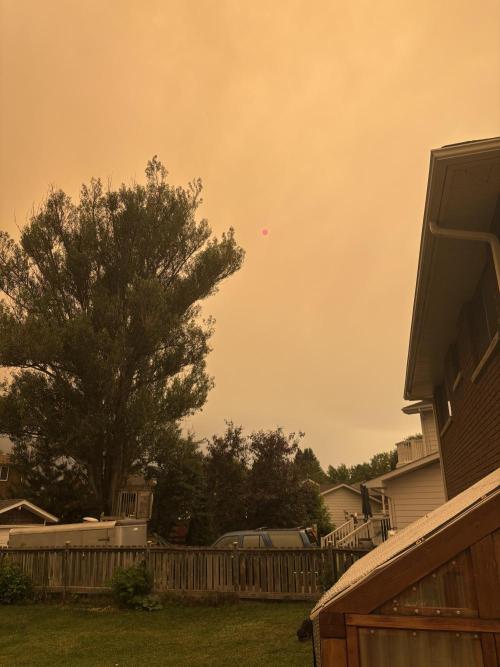
Eventful week weather-wise with extreme heat marking the beginning of the week, followed by forest fire activity negatively impacting air quality while blocking sunlight.
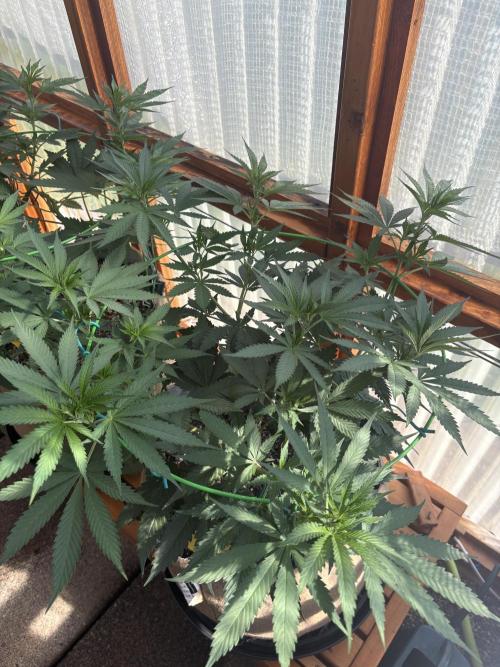
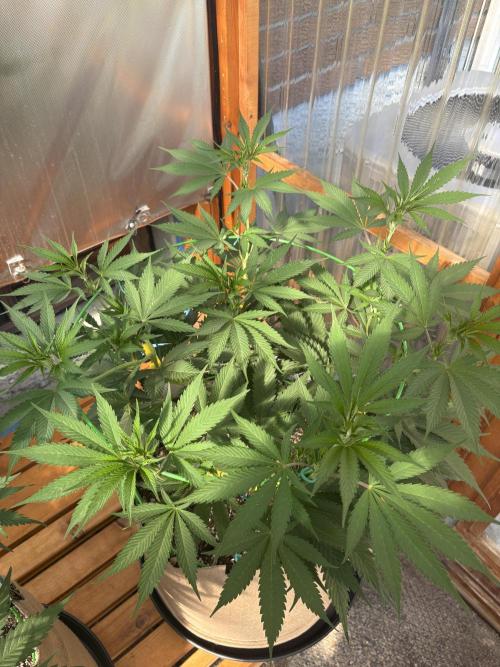
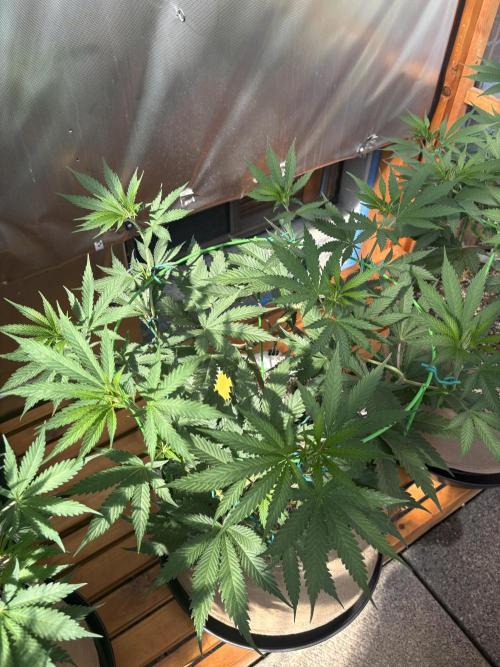
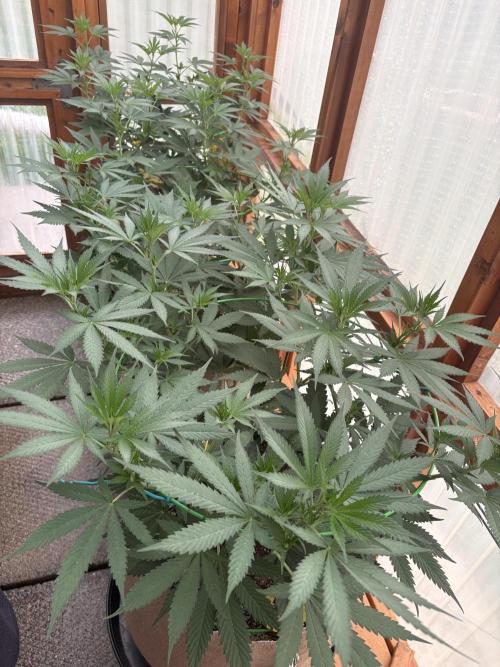
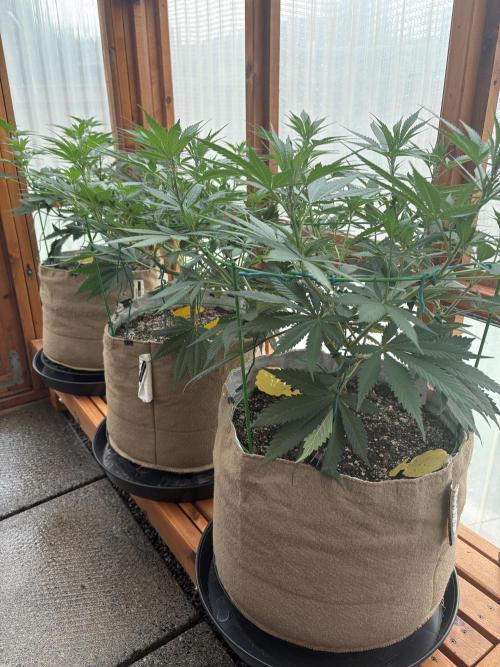
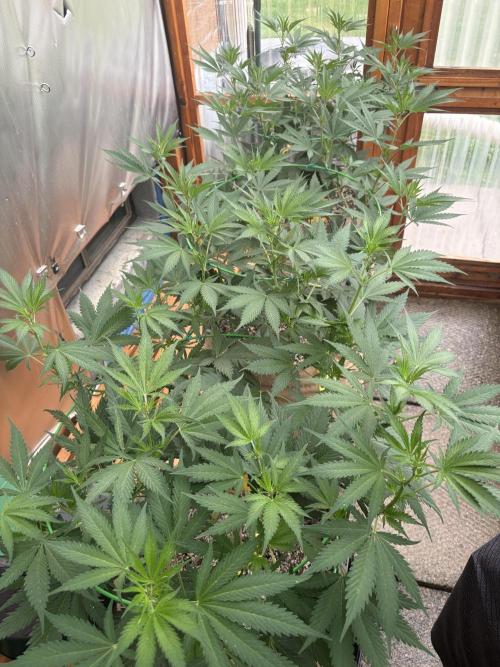
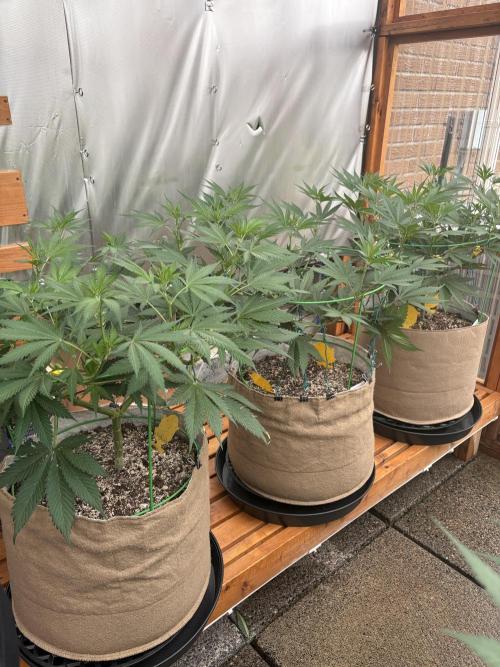
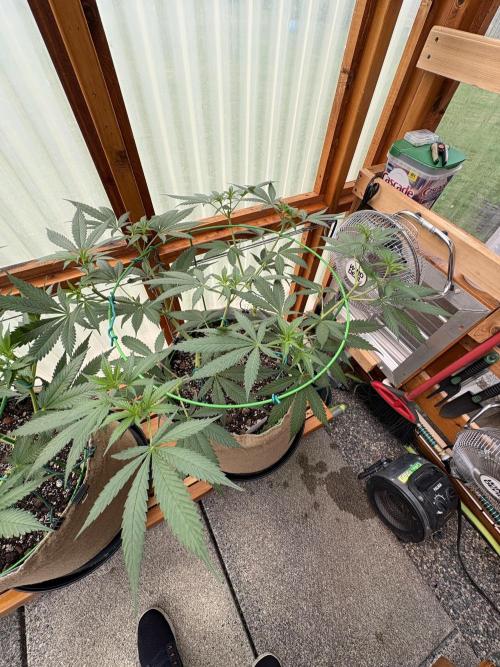
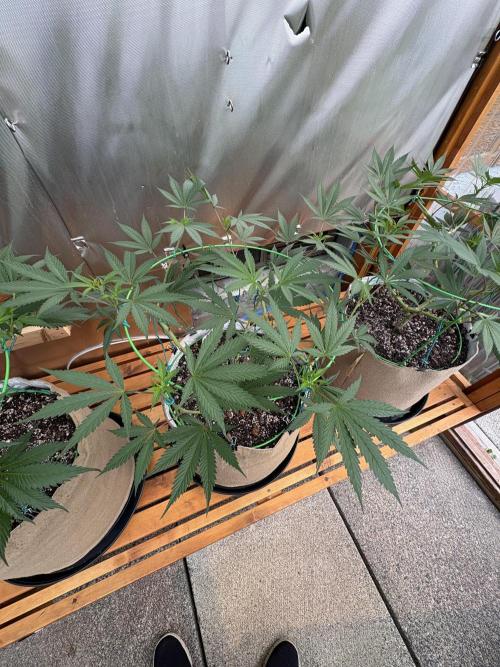
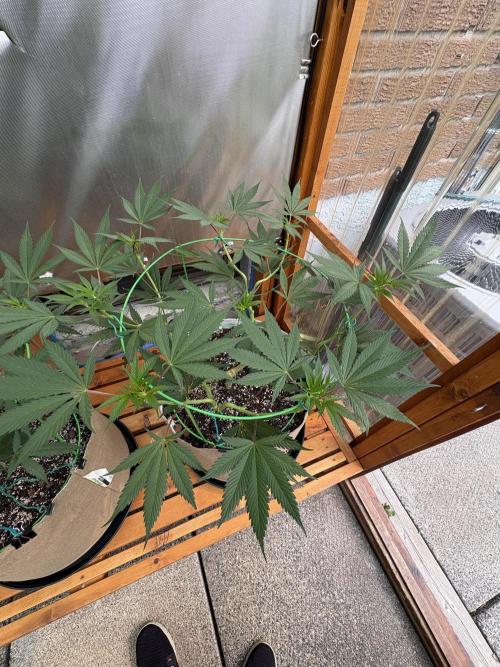
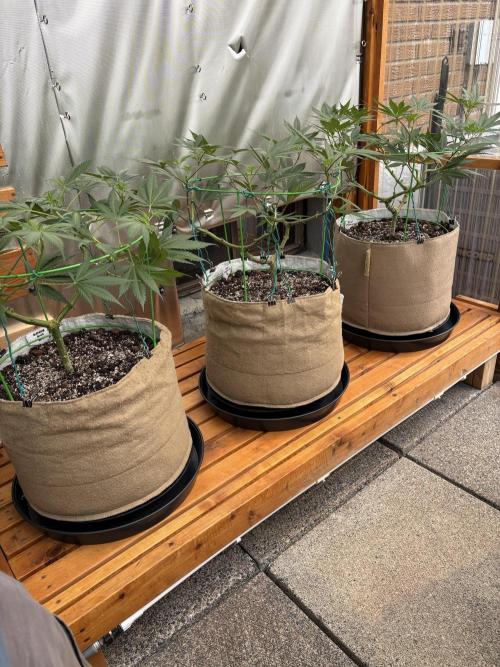
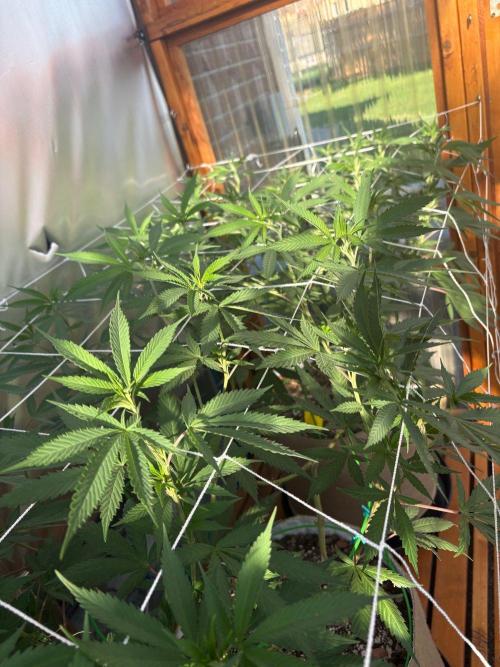
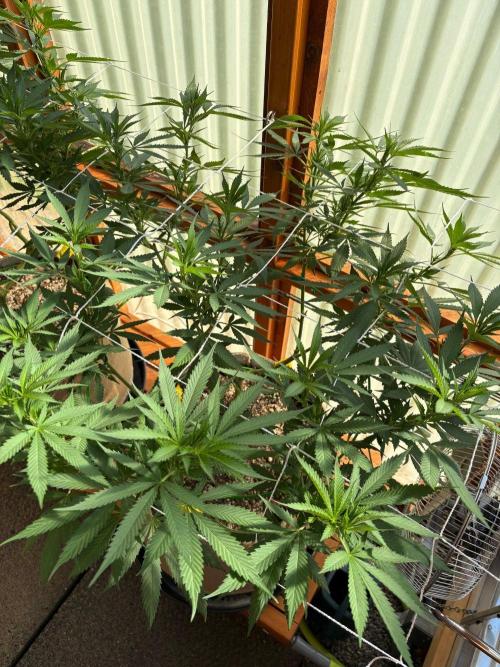
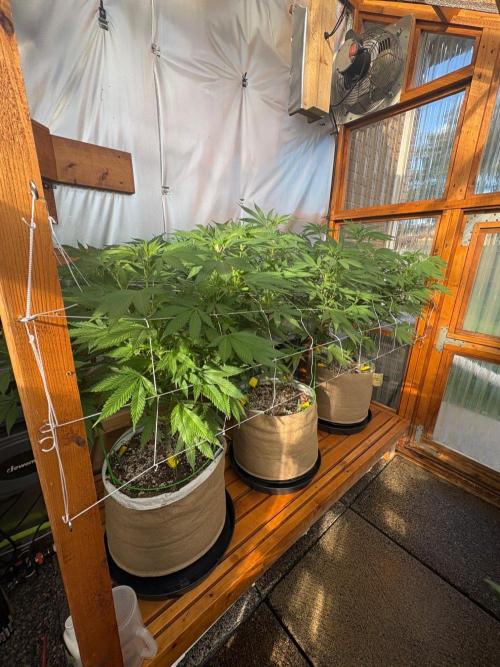
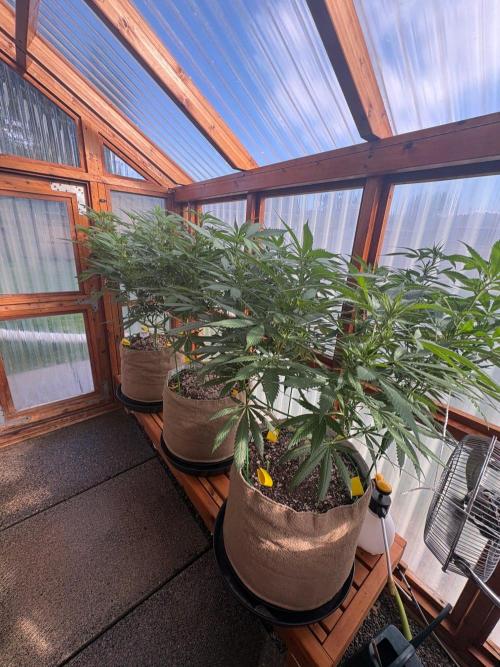
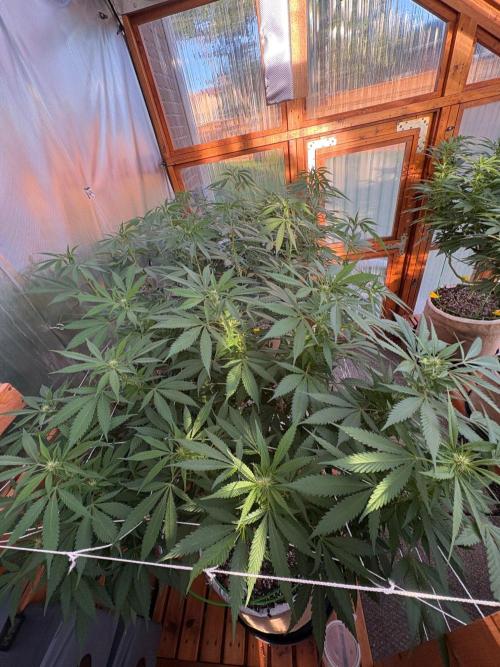
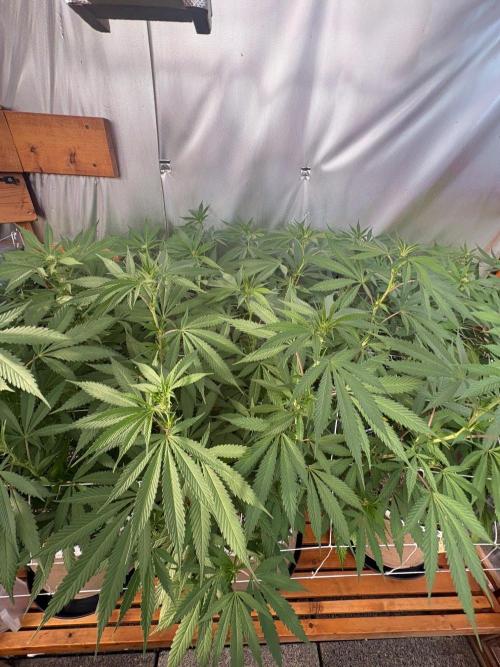
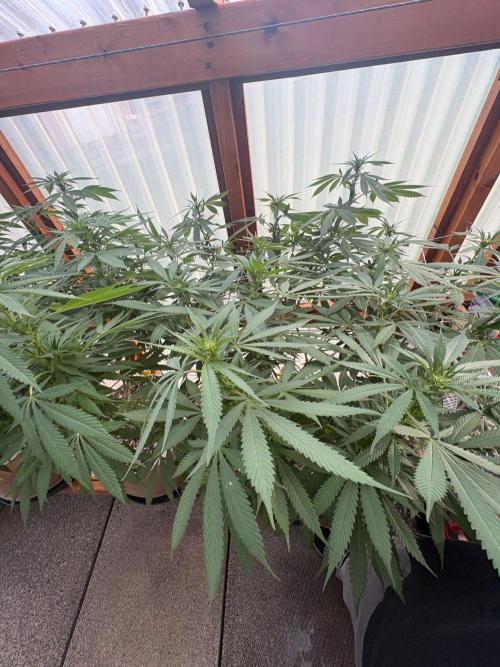
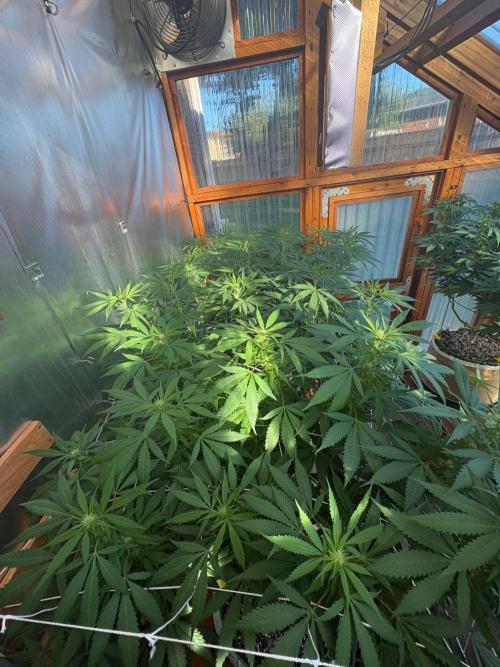
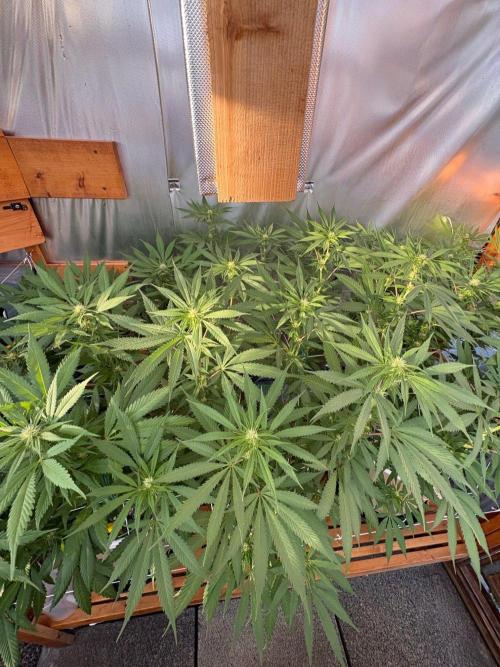
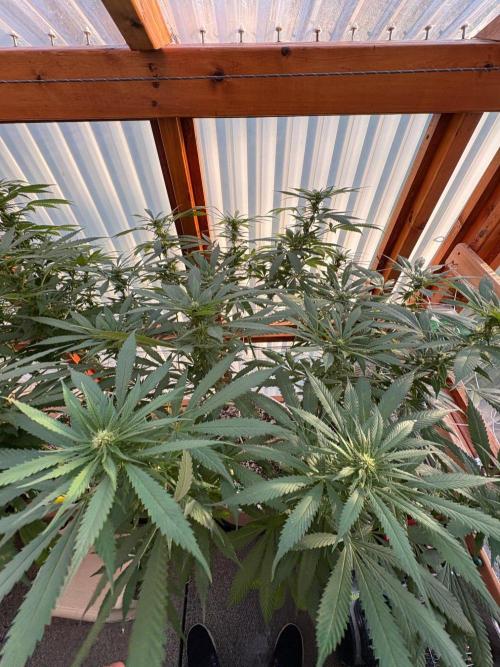
Plants have performed well however appeared to stretch a little bit as a result of the high heat event where temperatures briefly exceeded 40C (104F). Due to their strong overall health, size and vigour, I decided that all specimens needed to be pruned and topped one more time in order to control the canopy and to mitigate risk of the plants outgrowing the available vertical space.
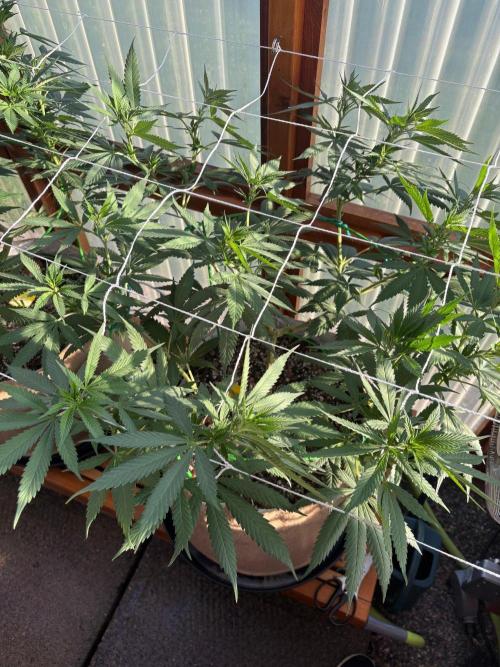
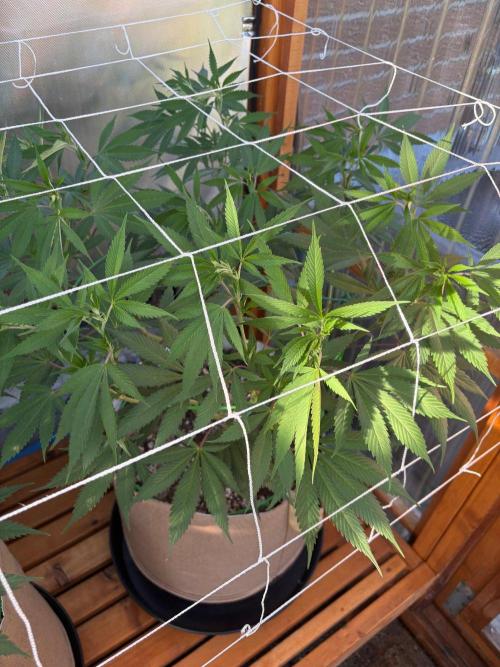
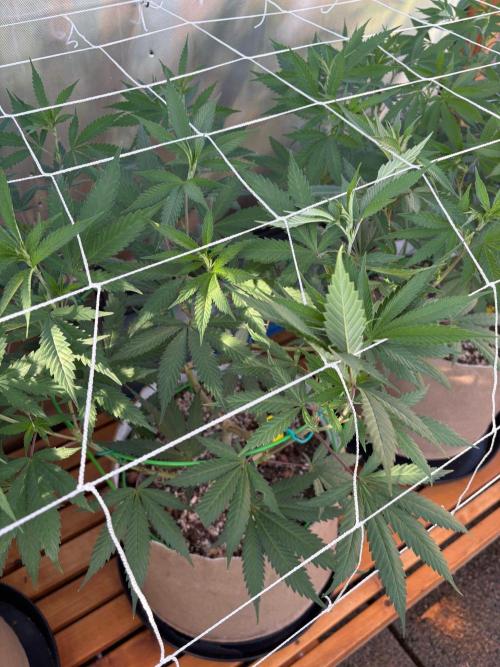
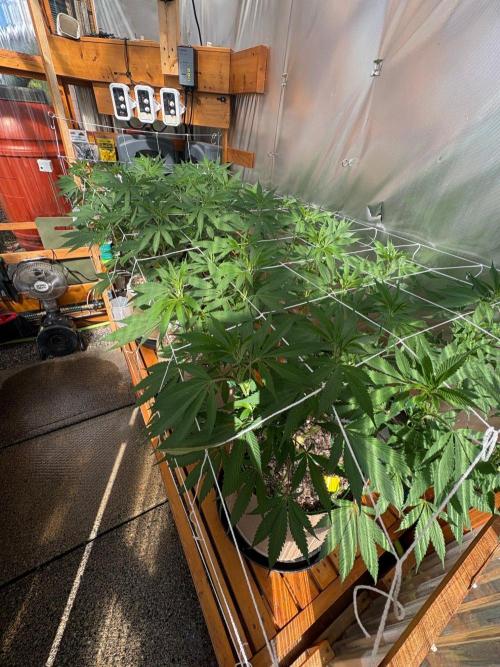
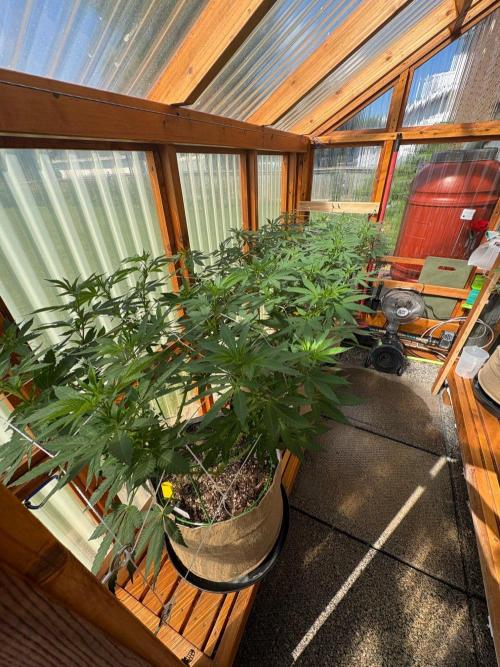
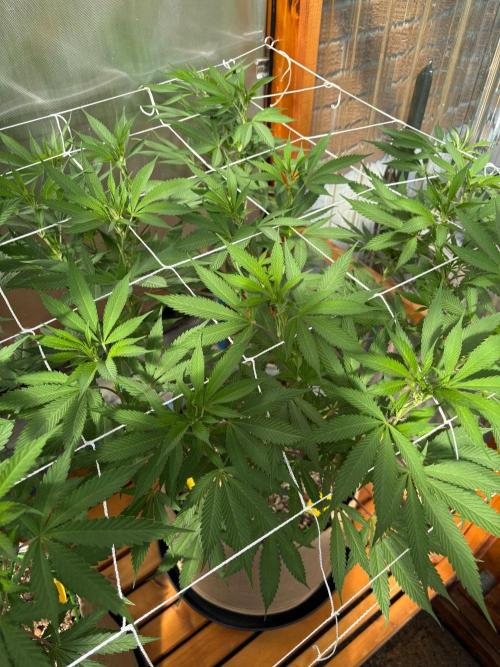
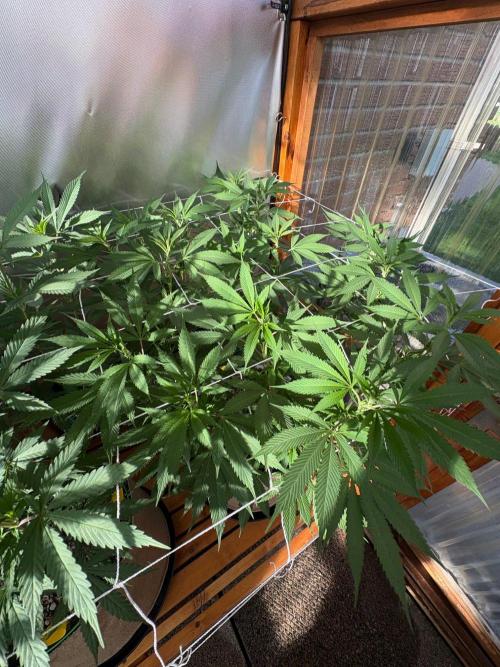
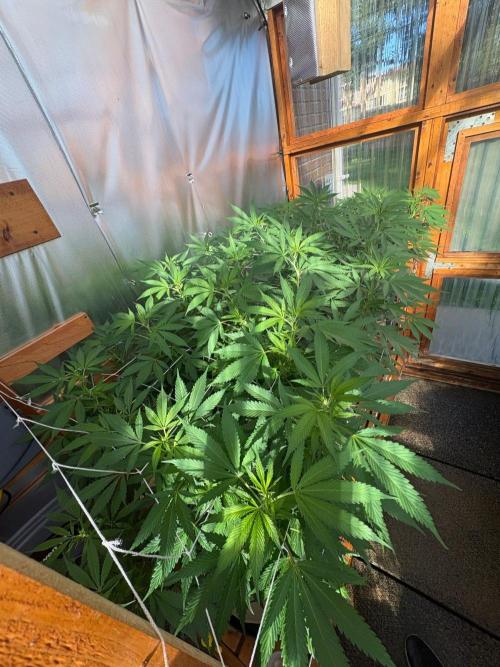
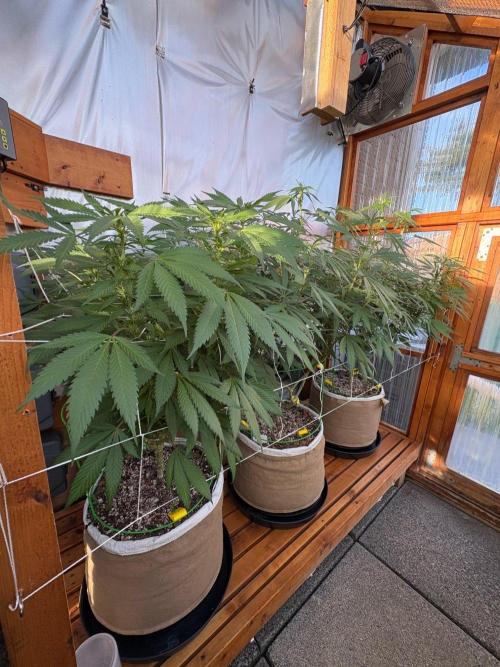
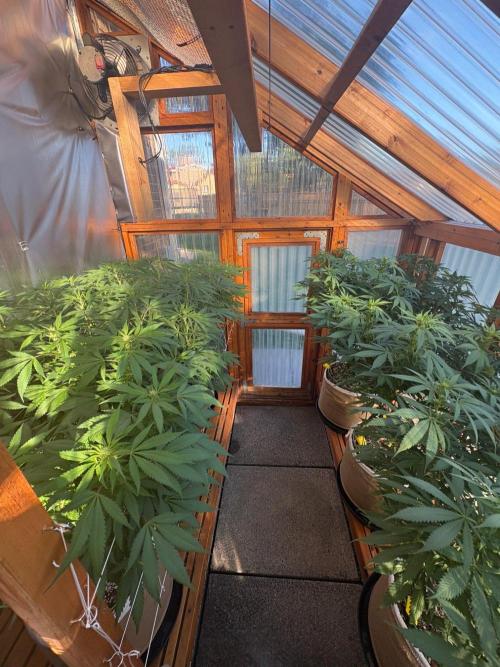
As of Day 82, each plant has 16 main growing shoots. From here forward the plants will be left to grow vertically, with minor Low Stress Training (LST) to direct shoot to desired areas for growth. The strategy will be to utilize trellis netting to fill out the canopy across the available bench area for both front and back benches. There can be up to 50 6”x6” squares available on the back bench, another 30 or so on the front bench.
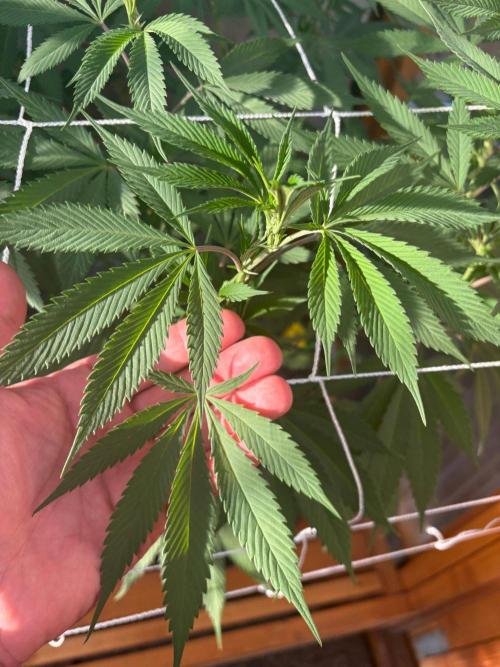
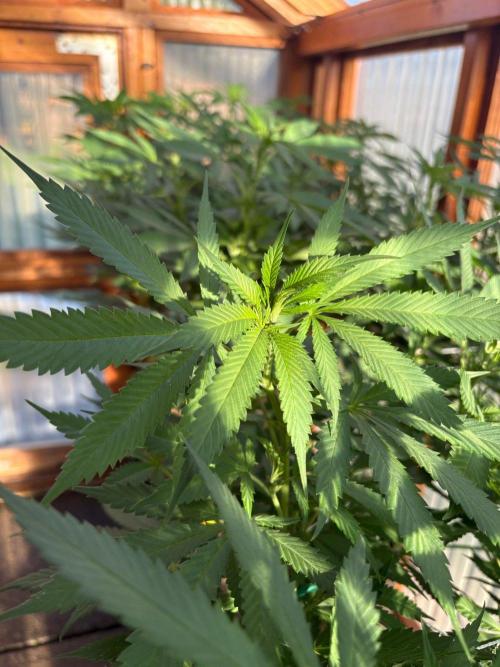
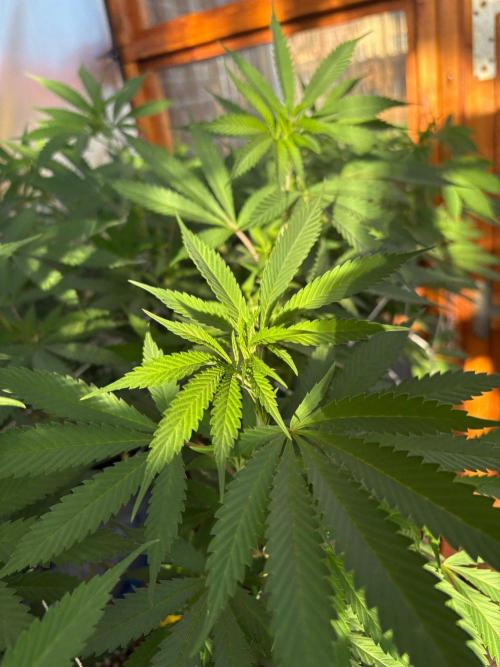
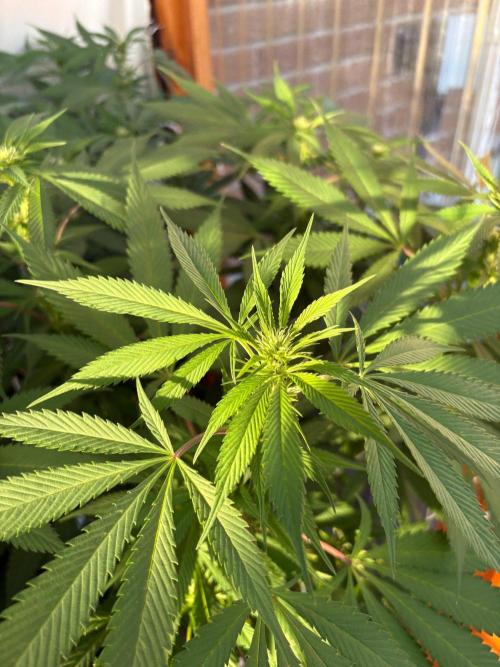
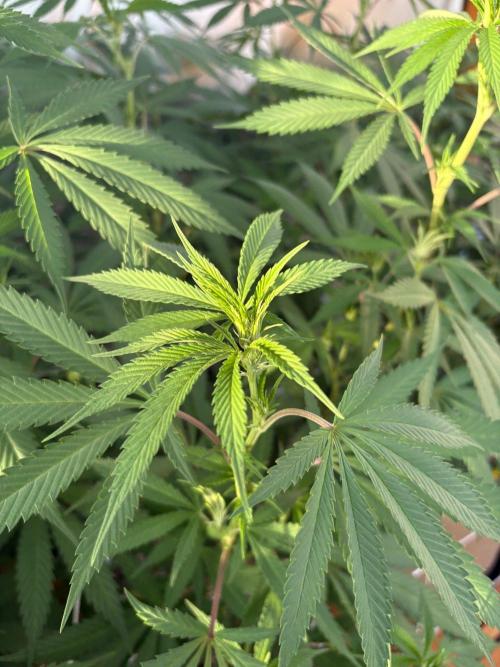
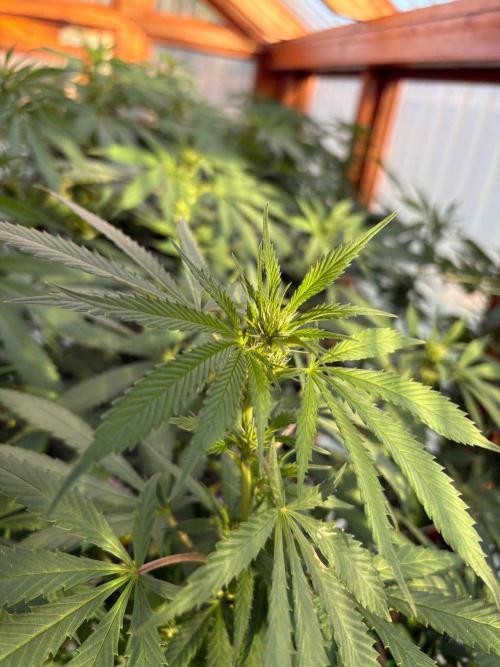
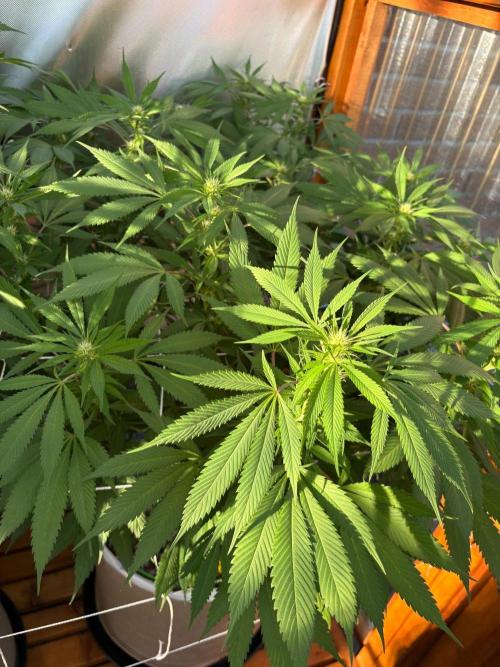
Blue Dynamite specimens are uniform in shape, leaf size and height, with some minor variance as Blue Dynamite #3 is slightly shorter but bushier than her sisters. Each have strong, thick stems, with mild purple striping. Lower fan leaves are of a larger size, with purpling in the petioles throughout the plant. Blue Dynamite #3 is exhibiting the strongest odours, with the grapefruit scent beginning to become prominent from all specimens.
Day 78 - Sunny and warm morning with outside temperatures expected to hit 26C; Forecast over next few days calling for temps in the 30's. 2.0L of organic liquid amended soil drench applied via top-water. An additional 1.0L of rainwater applied to all specimens, with GrapeGod #1 receiving 2.0L of rainwater; Fungus Gnats have appeared in GrapeGod and Blue Dynamite #2; Oscillating fan speed increased, sticky traps put in place, next watering (probably Day 81 or 82) will have BTI treatment (Mosquito Dunks); Top Dress next week will get Neem Cake added. Hope I can break their lifecycle.
Day 79 – Thunderstorms overnight causing a spike in humidity in the greenhouse, but nothing to worry about at this stage of their lifecycle; Forecast over the next few days calling for extremely hot temperatures (Outside temps of 37C predicted for Day 80); That is surely going to tip the greenhouse into danger zone for temperature; Put on a shade cloth to help mitigate, and plan to manually spray interior floors and walls with very cold water to help manage the temperatures; Today forecasted to be 31C, and by 10:30AM it was already hot outside and in greenhouse (humidity spike from rainstorm helping to keep it down). As the day wore on, temperatures did not spike as predicted, with a cool breeze off Lake Superior keeping things somewhat moderate. Plants doing well, growing with vigour, LST applied to control canopy and keep it even.
Day 80 - Already quite warm in the morning, with forest fire smoke in the air. Predicted to be very hot today (36C). Probed soil in all specimens and they all seem adequate but will have to monitor as transpiration is going be excessive today; Set aside a bucket of rainwater last night and placed a mosquito dunk in it (BTI), to apply at next watering as a means to replenish the plants, but also to defend against fungus gnats. Sticky traps have been effective in capturing adults. 33C outside at 12:00PM, 36C in greenhouse; Temperatures forecasted to continue to rise through the afternoon; Sprayed floors and walls with cold tap water from hose, to boost humidity and in an effort to cool the zone down; Repeated every hour; Plants appear to fine at the noon hour with upper most grow nodes "praying"; Shade cloth helping control temps; 2:00PM greenhouse hit 40C, sprayed exterior with cold water from hose, as well as interior, temps dropped to 38C, temporarily; Plants still appear ok; 4:00PM greenhouse crested 40C (104F), and I have continued with hourly spraying of hard surfaces (exterior and interior) with cold water from hose; By 5:00PM forest fire smoke covered the sky, blocking the sun and allowing temperatures to drop slightly; By 7:30PM forest fire ash also falling from the sky (mild) with the greenhouse falling to 34.2C (outside 32C) and Leaf Temperatures at 31.5C; Top watered 2L per specimen of cooler rainwater treated with BTI; Plants relaxed by 8:00PM and really don't look like the suffered too dramatically from the extreme heat of a very eventful day.
Day 81 - Exhaust fan ran overnight as temps remained above 26C inside the greenhouse; Light dusting of ash from nearby forest fires covering plants and hard surfaces inside greenhouse; Temps forecasted to be 32C today. Smokey haze in the sky, but there are patches of blue sky. Greenhouse temperatures reached 35C between 1:00PM and 4:00PM; Plants appear to be doing fine.
Day 82 – Temperatures finally cooled to the point that the exhaust fan on the greenhouse shut off overnight; Cloud cover this morning (along with forest fire smoke), and forecasted to continue through the day; Greenhouse remained in good temperatures and humidity, but no direct sun for the entirety of the day; Opted to prune all specimens, topping for a 4th time and removing foliage and lower growth shoots on each; Hopeful that with the forecasted overcast weather and moderate temperatures, recovery will be expedited; Each were topped back to near the top ring of the modified cages providing support; Mild LST to direct new main growth shoots to desired areas for upward growth; Greenhouse has a moderate coating of ash and dust from the forest fire situation, so a cleaning is needed over the coming weekend; Additionally, there were some signs that there may be mites present, so I intend to apply a foliar pest defense before end of weekend.
Day 83 – 17C outside this morning, greenhouse at good temps and humidity; Plants don't appear to have been negatively affected by heavy pruning and defoliation last evening; Probed soil and all have sufficient moisture to last the day; Remained cool and overcast throughout the day.
Day 84 – Cool, overcast and smoky this morning; Much needed rain in the forecast; Greenhouse operating a good temps and humidity; Probed soil, and there remains sufficient moisture, but GrapeGod and Blue Dynamite #1 are light; Set up an aerated compost tea brew first thing in the morning for use at next feeding; Fungus gnat situation appears to be under control with sticky traps capturing adults.
LIQUID ORGANIC SOIL DRENCH RECIPE (mL/L of plain rainwater)
Optimize Organics - Grow Liquid Organic Plant Food (3-1-2) – 5mL/L
Yucca Schidigera Liquid Extract – 0.25mL/L
Monosilic Acid – 0.5mL/L
Triacontanol Biostimulant – 0.1mL/L
Activated Beneficial Microbes – 5mL/L
NOTE: All products from Optimize Organics (http://www.optimizeorganics.ca)
11 likes
comments
Share
Used techniques
LST
Technique
Topping
Technique
Main-Lining
Technique
Manifolding
Technique
Defoliation
Technique
13
Week 13. Vegetation
3mo ago
1/10
16 hrs
Light Schedule
30 °C
Day Air Temp
6.5
pH
Normal
Smell
50 %
Air Humidity
18 °C
Solution Temp
21 °C
Night Air Temp
38 liters
Pot Size
Nutrients 4
Veg Grow (5-3-5)
1.5 mll
Flower Bloom (2-7-5)
1.5 mll
Worm Castings
9.5 mll
cultivars JULY 18 to JULY 24, 2026
Sunrise: 06:24 | Sunset: 21:43 | Total Daylight: 15:19
Weather over the week was decent, with air quality from forest fires in the area improving early in the week.
Plants have been doing well, however did not drink as much as expected. Seem to be in a better rhythm by week’s end. Plenty of time to pick up growth and put on size and bulk before flowering really sets in. Some signs of fertigation burn on a couple of specimens, but minor in nature.
Minor presence of fungus gnats in soil, being managed with yellow sticky traps and BTI treated soil drenches.
Day 85 - Shade cloth removed (can be put back in place if another high heat event arises). Full cleaning of greenhouse, wiping all surfaces (pretty dirty as a result of fallout from the forest fires in area); Applied Foliar Pest Defense to all specimens, which doubled as a foliar wash to rid of forest fire ash; 1L each bottom water of plain rainwater; Each specimen top dressed with dry organic amendments (50/50 Veg Formula (5-3-5)/Bloom Formula(2-7-5)) and Neem Cake; Watered in with 2L of Compost Tea; Fresh sticky traps set over soil; Rodent activity evident in greenhouse, thus traps were set.
Day 86 - No rodent visitors overnight; Poor air quality in the morning, but better than it has been in about 6 days; Sun still obstructed by forest fire smoke, but as the day wore on, it did clear; Couple of light rain events in the early evening, over the course of about an hour before the skies cleared; Probed substrate of all specimens, and good moisture throughout; No signs of foliar pests, and fungus gnat population appears to have been decimated; Temperatures good throughout the day, peaking at 29C at one point in the late afternoon; Humidity was also adequate throughout the day; Plant growth good, as new main shoots have really begun to take hold; Will need sunny spells over the next couple of weeks to give them a boost after the last pruning/topping.
Day 87 – Cloudy with thunderstorms in the morning; No rodent visitors overnight; Sunny breaks during the day, then mostly sunny in the late afternoon and into the evening with sporadic cloud cover and an instance of rain squall around 4:00PM; Plants look good, with main growth shoots becoming well established; Evidence of full recovery from heavy prune, defoliation and topping; Fungus gnat situation is under control, but some evidence of adults on sticky traps.
Day 88 – n/a
Day 89 – n/a
Day 90 – Weather over the past few days has been primarily good, with mostly sunny skies and temperatures within tolerances in the greenhouse; It was a bit warmer today, with the greenhouse hitting 33C at one point, for a perhaps an hour (leaf temp is generally 2C to 3C less); Humidities fluctuate, but hover between 40% and 55%; Overnight temperatures have been lower outside (7C overnight on Tuesday), the greenhouse heating system has been keeping things within tolerances.
Plants have responded, really beginning to build the main shoots over the course of today; Internodal spacing has been good on all specimens, and it is notable that new main shoot stems are quite fibrous and strong; Purple Romulan specimens are the most dense of the bunch, with Blue Dynamite #3 (on the front bench) doing quite well for compactness and density of new growth; Canopies on both benches are filling in nicely, with front bench a strong candidate for super-cropping to control height over the next couple of weeks; Hopeful for good sunny weather so this growth rhythm can continue for the next week;
Have not provided any water since day 85, as they haven't needed it; Not drinking particularly heavily, and there have been some signs fertigation burn on leaf tips, particularly on GrapeGod #1; May have allowed too far a dry back prior to last solution application, or the compost tea solution was perhaps a bit hot; Alternatively, the top dress with Neem Cake was a bit too much for them; Probed substrate at end of day, moisture present at depth for all specimens, but dry enough from mid to upper most portions to warrant a plain watering on day 91 (Amended Soil Drench to be deferred a couple of days); Set aside 12L from rain barrel, set 1/4 mosquito dunk (BTI) in for treatment overnight.
No foliar pests present, however, there is a small population of fungus gnats; Will continue with the BTI treated waterings and sticky traps to control.
Day 91 – 2.0L of BTI treated rainwater at 8:00PM; Plants look ok but didn't drink very much during the week; Starting to build a rhythm; Liquid amended Soil Drench deferred to next watering.
COMPOST TEA RECIPE (mL/L)
Worm Castings - 60mL/L
Optimize Organics - Microbe Multiplier - 4mL/L
Humic Acid - 0.5mL/L
Wild Fish Hydrolysate - 1mL/L
Unsulphured Sugarcane Molasses - 0.3mL/L
9 likes
comments
Share
Used techniques
LST
Technique
14
Week 14. Vegetation
3mo ago
1/10
15 hrs
Light Schedule
30 °C
Day Air Temp
6.5
pH
Normal
Smell
50 %
Air Humidity
18 °C
Solution Temp
21 °C
Night Air Temp
38 liters
Pot Size
cultivars JULY 25 to JULY 31, 2026
Sunrise: 06:33 | Sunset: 21:33 | Total Daylight: 15:00
Weather over the week was decent. Plants performed well, however not drinking as much or as quickly as anticipated or hoped. Stems are strong on all specimens, indicating that energy being directed to be able to support flowers. By week’s end, and after a mid-week feeding, plants noticeably bulked up, with fan leaves on main growth shoots gaining size.
Minor presence of fungus gnats in soil, being managed with yellow sticky traps and BTI treated soil drenches.
Day 92 - No garden work other than some mild LST in the morning in effort to keep canopy even; Mix of sun and cloud over the course of the day, but with long sunny breaks; Temperatures up near 28C outside by early afternoon, with greenhouse cresting 32C (leaf temp 29C);
Day 93 - Mostly sunny throughout the day, with showers in the evening; Plants look good, although not growing with the vigour I had hoped.
Day 94 – Cloudy and overcast with cooler temperatures and brief showers in the morning. Mostly cloudy with brief sunny breaks in the afternoon; Cleared late afternoon and through the evening; All plants doing well, with lush green foliage; Some signs of caterpillar or moth having eaten a few leaves on the GrapeGod, but I think I found it and got it removed; Fungus gnats under control, but do remain present; Soil moisture in all specimens still good at middle half of each living soil pot, but perhaps a little too moist in the bottom quarter; Going to allow them to dry back in the hope that roots continue to thrive and so I don't run in to soil problems; It may slow growth, which would be desireable as there is still time until the stretch starts in earnest and the plants are potentially going to threaten vertical space limitations.
Day 95 – Sunny and cool in the morning; Remained sunny throughout the day; Probed soil and there remains sufficient moisture at depth.
Day 96 – Sunny cool morning, probed soil and moisture remains at depth; Sun continued throughout the day, and temperatures reached 33C in greenhouse; 2.0L of liquid amended soil drench pH'd to 6.4 applied in the evening along with some mild LST; Plant foliage on all specimens are displaying lush green colour, and internodal spacing is adequate on all specimens. GrapeGod is unevenly shaped, has a few leaves that have been distorted or displaying a variegation (like one of the sisters I decided to terminate earlier in the grow). No pests identified on foliage, although the GrapeGod seems to be getting eaten by something I can't find; There is a minor nuisance of fungus gnats, with BTI treated solutions and yellow sticky traps helping to contain it. Each row has a fan blowing across the soil surface of the specimens they host;. Oscillating wall fan was turned up to 2 (out of 3) about a week ago, and it seems to have contributed to the sturdiness being exhibited in the stems of the new growth on each plant. Some concern about the amount of water being consumed/transpired, but I can't complain about the growth just yet but would like to see some larger fan leaves getting produced, more quickly; Currently appears like 16 decent sized clones on each specimen (96 in total). A burst of growth over the next week with size would be desireable.
Day 97 – Rodent caught in trap and disposed of; Trap reset; Cloudy throughout the day with rain showers in the morning; Plants look good after feeding last night.
Day 98 – Mostly cloudy in the morning and into early afternoon, humid and hot. Sun partially broke late afternoon, and into evening, interrupted by a brief rain event (1 hour); Plants look quite robust, with fan leaves on new main shoots gaining size (still not as big as I'd like to see them). Each pot lifted and heavy, so no watering required despite the higher heat today; Stems on front row specimens are quite rigid with lower nodal growth on the new shoots pushing out strongly; Feels like they are getting ready for flower;
ORGANIC LIQUID AMENDED SOIL DRENCH (mL/L of BTI Treated Rainwater)
Optimize Organics – Grow Liquid Organic Plant Food (3-1-2) – 2.5mL/L
Optimize Organics – Boom Liquid Organic Plant Food (1-3-3) – 2.5mL/L
Yucca Extract - 0.25mL/L
Monosilic Acid – 0.5mL/L
Triacontanol Biostimulant - 0.1mL/L
Activated Beneficial Microbes – 5mL/L
12 likes
7 comments
Share
Used techniques
LST
Technique
15
Week 15. Vegetation
2mo ago
1/15
15 hrs
Light Schedule
30 °C
Day Air Temp
6.5
pH
Normal
Smell
50 %
Air Humidity
18 °C
Solution Temp
21 °C
Night Air Temp
38 liters
Pot Size
Nutrients 3
Flower Bloom (2-7-5)
3 mll
Worm Castings
9 mll
Glacial Rock Dust
7.5 mll
cultivars AUGUST 1 to AUGUST 7, 2026
Sunrise: 06:40 | Sunset: 21:24 | Total Daylight: 14:44
Weather over the week was good, with lots of sun. Plants performed well, putting on notable size/girth.
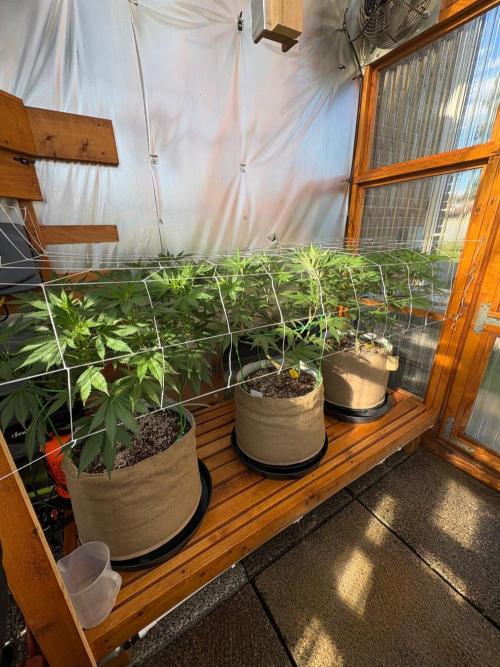
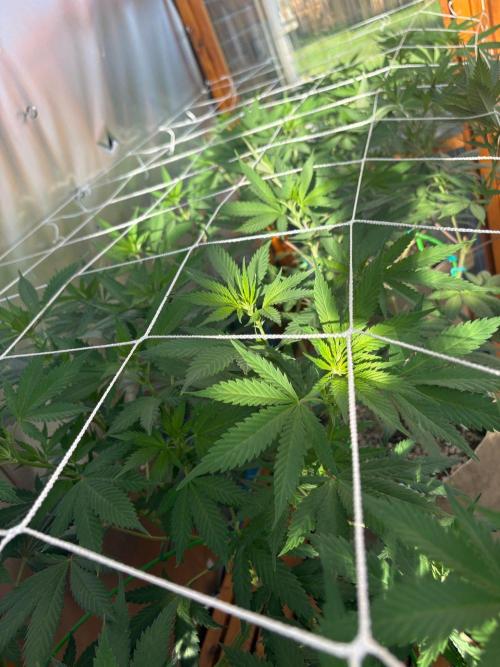
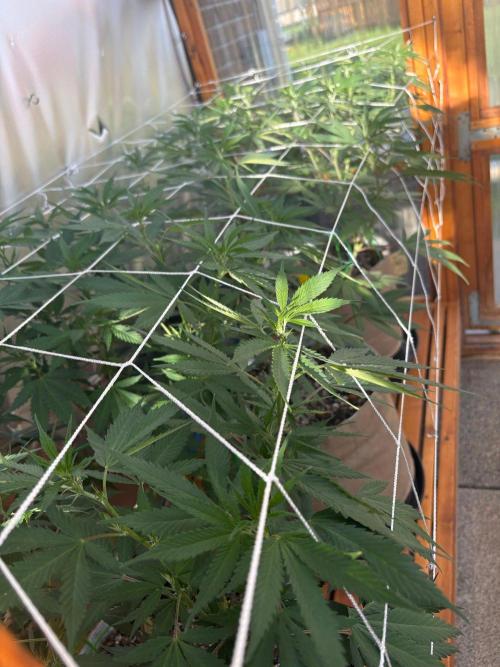
Installed trellis netting to guide growth shoots to optimum areas for growth. At week’s end top dressed with Dry Organic Amendments (Bloom Formula) and watered in Organic Liquid Amended Soil Drench solution treated with BTI (25/75 Grow/Bloom). Regular LST being applied to manage height.
No foliar pests present, and a mild fungus gnat infestation that seems to be managed with yellow sticky traps and BTI treated solutions.
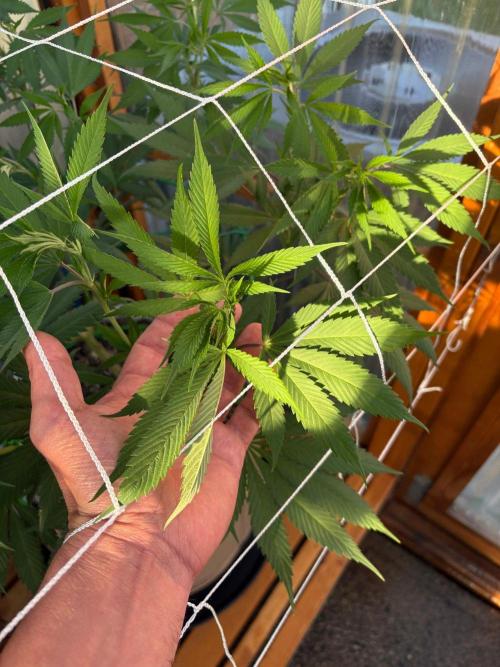
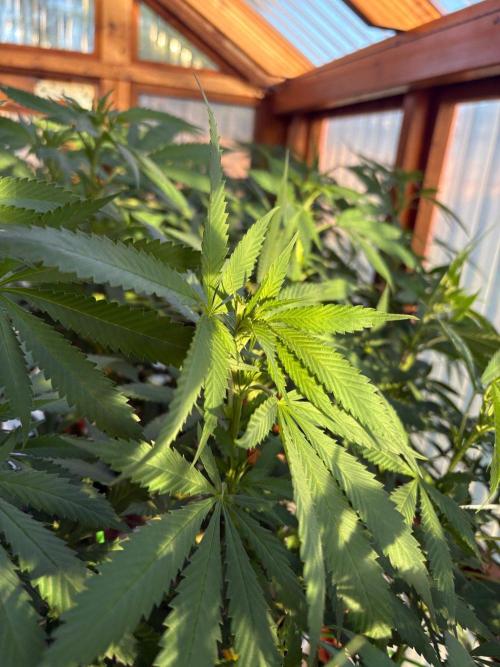
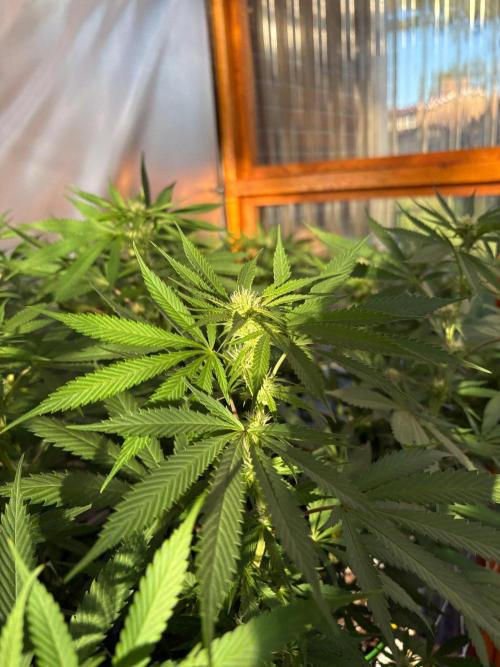
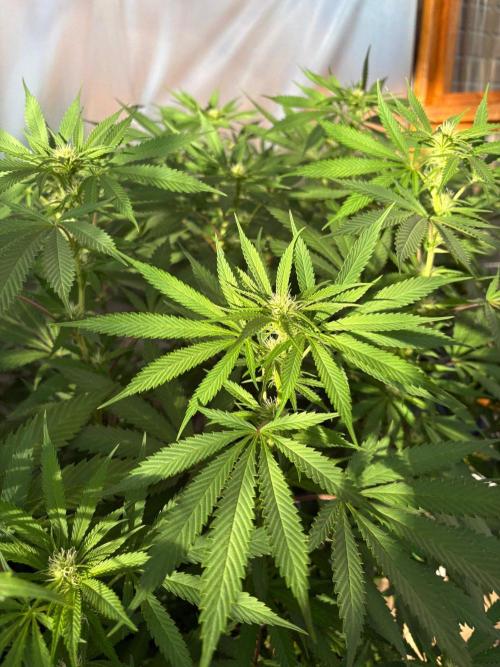
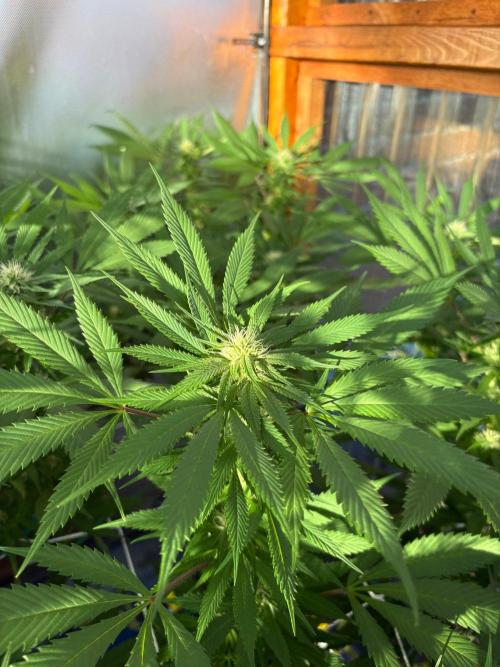
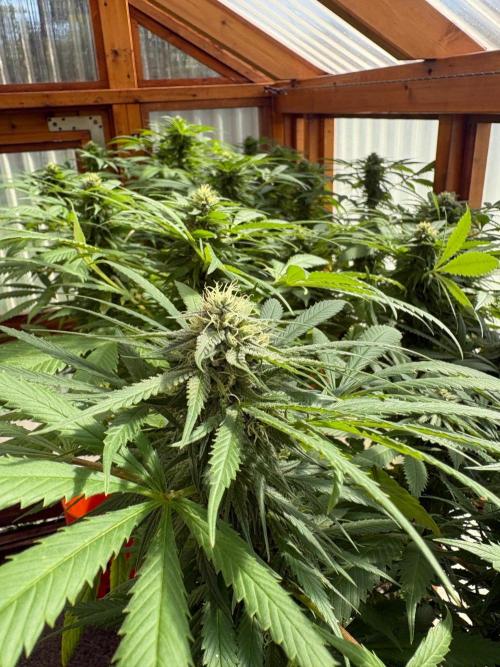
Blue Dynamite specimens are growing with vigour, displaying sativa leaning traits with longer leaflets, and wider internodal spacing. Not getting the desired strong grapefruit scents just yet, more of a fruity skunk smell. No signs of deficiencies with green foliage from bottom to top of plants. All three plants are very similar in growth size and structure, indicating stability within the genetic pool.
Day 99 - Mostly sunny day, getting hot in the afternoon, but the greenhouse held within tolerances
Day 100 - Nice cool sunny morning; Applied 0.5L of plain rainwater via bottom feeding, and 2.0L of BTI treated rainwater via top feeding; Removed many of the tie downs clipped to pot, left the few attached to top rung of modified tomato cages that direct shoots to good growing areas; Canopy is pretty even throughout, with some spots on GrapeGod displaying slower and shorter main shoots; Fungus gnats present, but in small numbers, continue to address with BTI treated waterings, and yellow sticky traps: LST in the evening to flatten canopy.
Day 101 – Beautiful sunny day throughout; Decided to install trellis netting above both benches, to have a visual guide to directing main growing shoots to optimum growth areas.
Day 102 – Thunderstorms overnight causing spike in humidity; Mostly sunny with cloudy breaks throughout the day.
Day 103 – Bright, cool sunny morning; 2L of plain rainwater applied between 7:00AM and 8:00AM; Plants are performing very well, with fan leaves picking up size, internodal spacing fairly compact and the associated growth shoots dense; Casually undertaking LST throughout the day, directing shoots to a grid spot on the trellis netting; GrapeGod has a set of four slower growing mains that may not be productive; Will monitor but might prune them in the next week; A few slower growing main shoots on other plants as well, but no more than one or two per plant; Likely to see 86 to 90 total main colas across the entire crop (16 shoots per plant, with 10% loss due to inadequate growth);
Day 104 – Sunny cool morning; Mild LST throughout the day to direct shoots to optimum grow area.
Day 105 – Cool morning, partly cloudy to start; Plants doing well, continue with LST to direct shoots through grid of trellis netting; Rain mid-morning, clearing by afternoon; Applied Top Dress and watered in with 2.0L Liquid Amended Soil Drench (also treated with BTI). Fungus gnats population has grown, refreshed sticky traps, added a couple of extra; Need to be diligent in treating water with BTI; All plants doing well, putting on size (fan leaves getting much larger), and growing with density;
ORGANIC LIQUID AMENDED SOIL DRENCH (mL/L of BTI Treated Rainwater)
Optimize Organics – Grow Liquid Organic Plant Food (3-1-2) – 1.25mL/L
Optimize Organics – Boom Liquid Organic Plant Food (1-3-3) – 3.75mL/L
Yucca Extract - 0.25mL/L Monosilic Acid – 0.5mL/L
Triacontanol Biostimulant - 0.1mL/L
Activated Beneficial Microbes – 5mL/L
10 likes
2 comments
Share
Used techniques
LST
Technique
16
Week 16. Vegetation
2mo ago
1/12
15 hrs
Light Schedule
30 °C
Day Air Temp
6.5
pH
Normal
Smell
50 %
Air Humidity
18 °C
Solution Temp
21 °C
Night Air Temp
38 liters
Pot Size
cultivars AUGUST 8 to AUGUST 14, 2026
Sunrise: 06:51 | Sunset: 21:12 | Total Daylight: 14:23
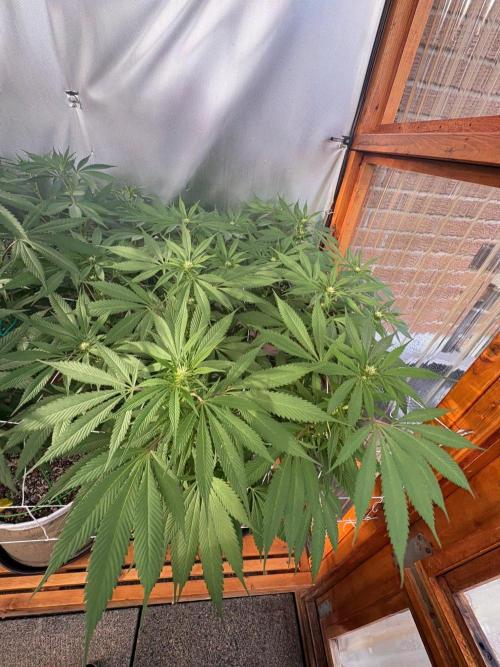
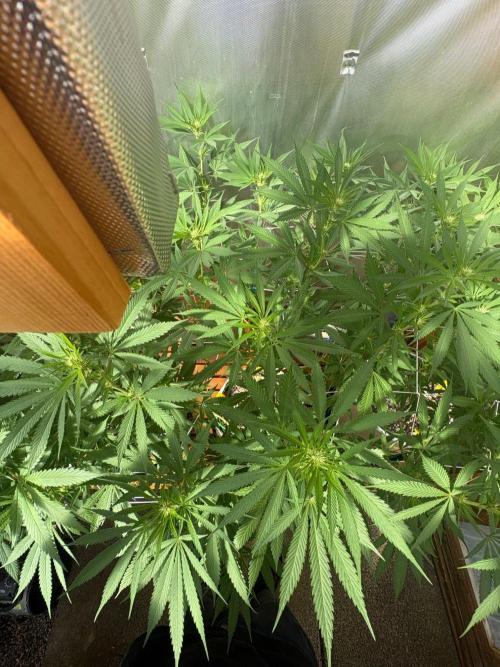
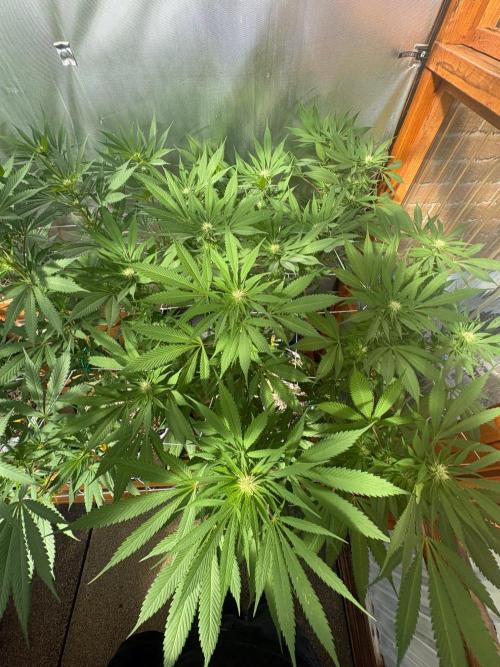
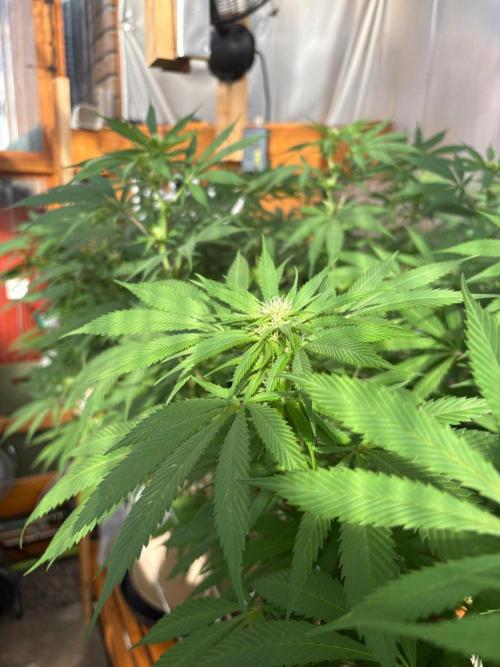
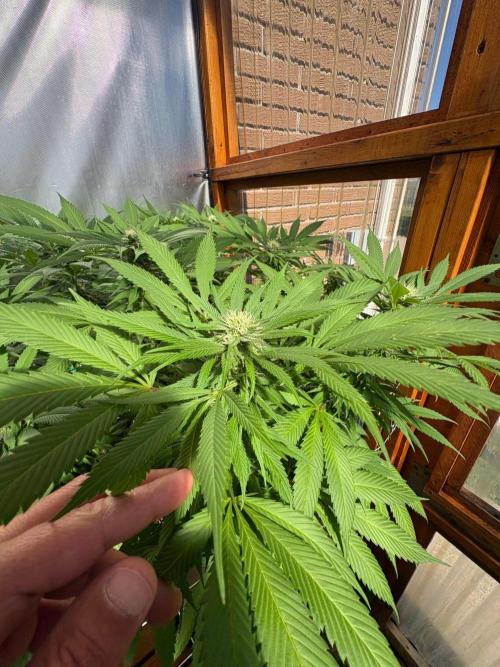
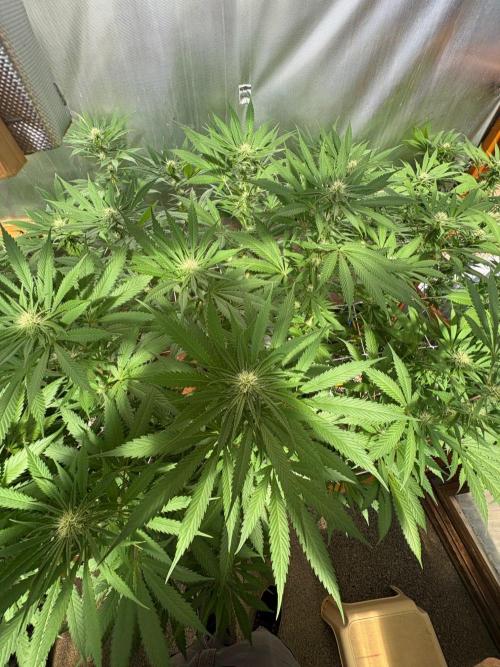
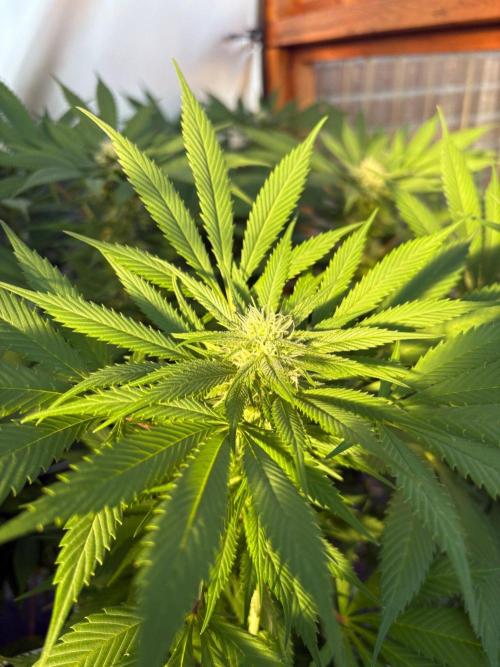
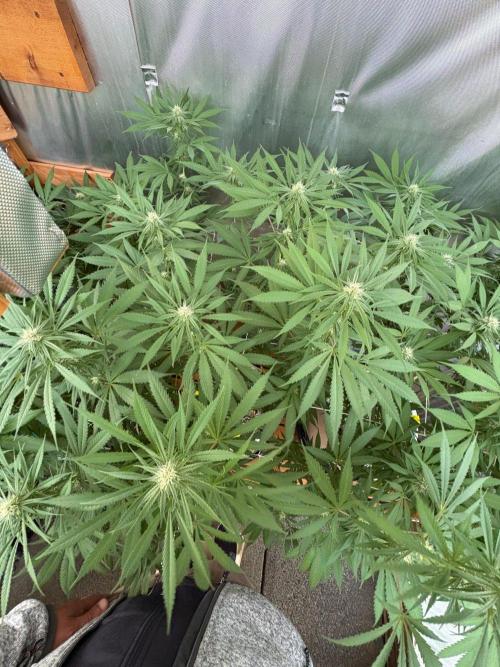
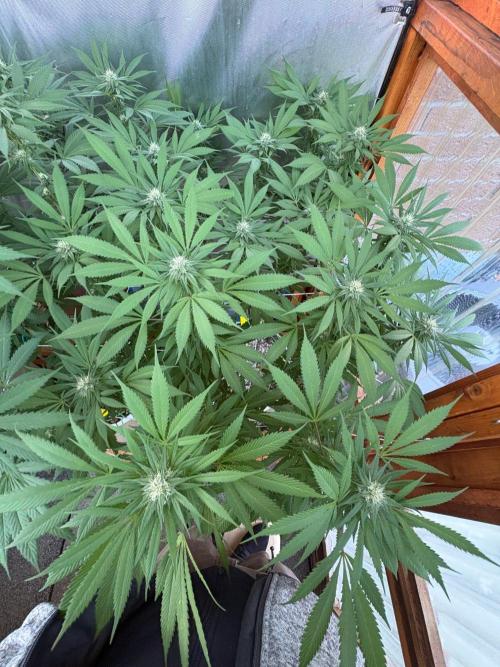
Daylight shrinking closer to 14 hours, and I believe the plants have begun to stretch. All specimens displaying pistils at various locations. With that, I am declaring this the last week of the vegetative stage, and from here on forward the plants are in their flowering stage.
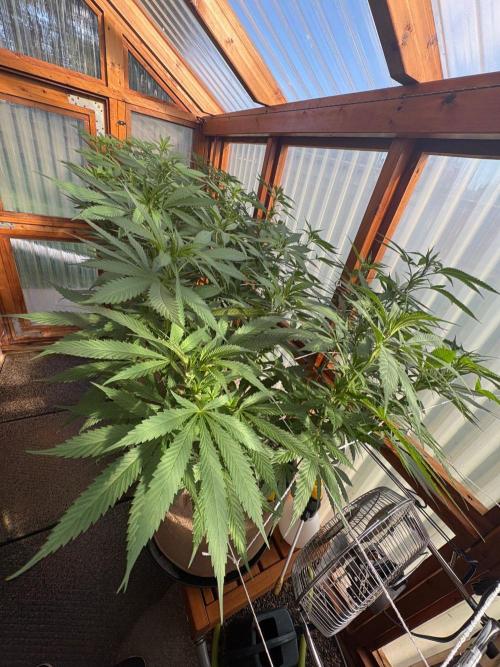
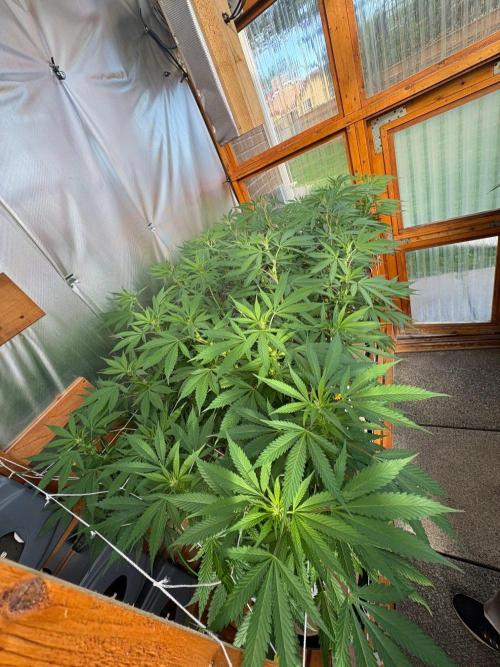
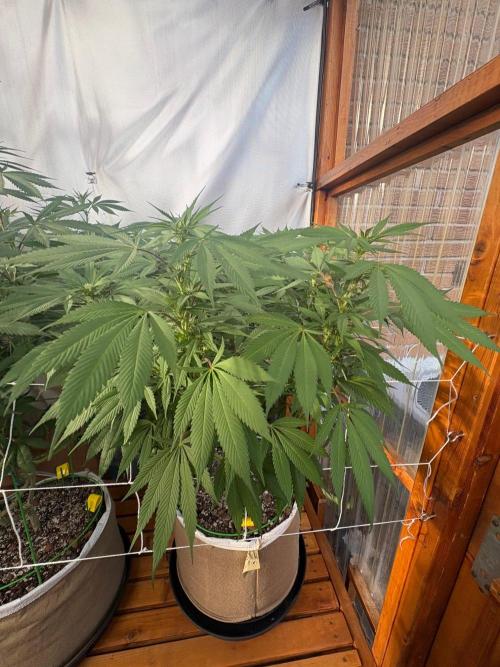
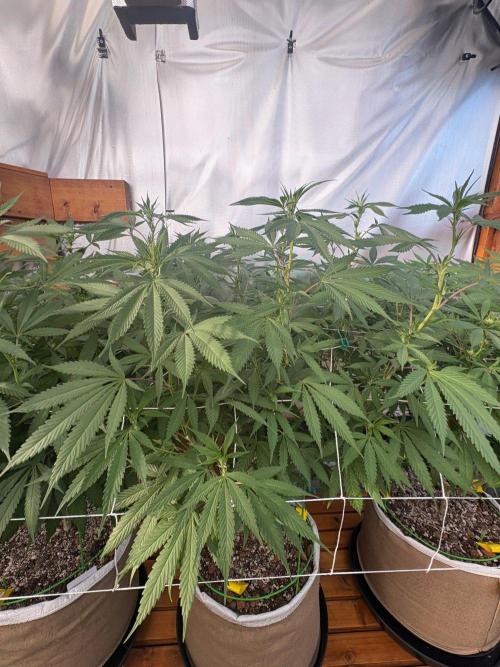
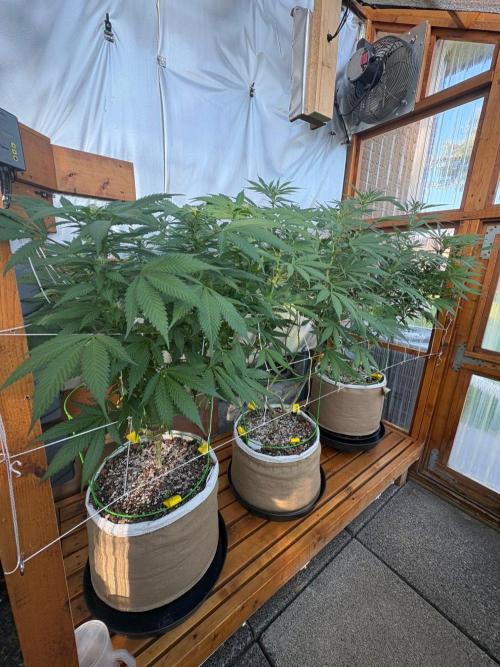
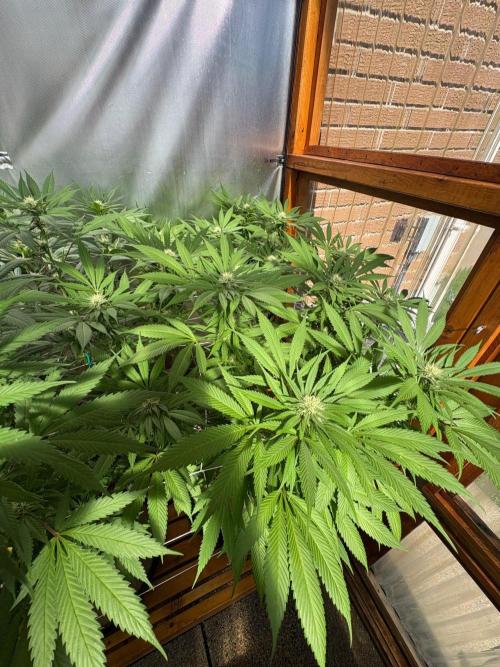
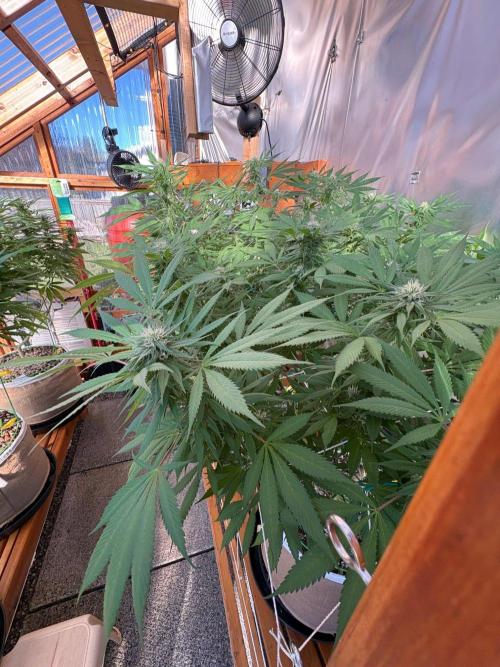
Weather over the week was good, with lots of sun. Plants performed well, putting on notable size/girth. Height of canopy of the front bench ranges from 21” to 24”, while on the back bench ranging from 24” to 27” (from soil surface to tallest growing shoot).
Much of the work this week has been with LST as I attempt to direct shoots to optimum grow areas on the grid of the trellis, and to control height. Undertook a mild defoliation of lower leaves of each specimen to open them up to airflow, while also increasing the speed the low level fans.
No foliar pests present, and a mild fungus gnat population appears to be controlled effectively with yellow sticky traps and BTI treated solutions. Neem Cake pellets still visible near the soil surface, indicating they may also be contributing to controlling the fungus gnats.
All specimens in the garden are green and showing no signs of deficiency or fertigation burn. Plant may be a little undersized, and with weather permitting (lots of sun) I will attempt to push a little more water in.
Day 106 – Side Quest (away from home/garden)
Day 107 – Side Quest (away from home/garden)
Day 108 – 3.0L of BTI treated rainwater applied via top water; Plants are doing well, regular LST being applied to guide shoots through trellis;
Day 109 – Mix of sun and cloud, with warmer temperatures; LST throughout the day to control canopy; Mildly defoliated lower parts of all plants, and increased fan speed to create stronger breeze across soil surface and beneath canopy; Leaves are "dancing".
Day 110 – Cool morning, mostly cloudy; Mild LST applied to control canopy;
Day 111 – Sunny warm day. Given 1.8L of plain rain water, followed by 2.0L of BTI treated rain water (Total 3.8L); May need to follow up with an additional 1.0L in the morning as a probe at depth of substrate showed dry spots.
Day 112 – Beautiful sunny warm day; Nothing to do in the garden outside of LST to control canopy in effort to keep it even.
12 likes
comments
Share
Used techniques
LST
Technique
17
Week 17. Flowering
2mo ago
1/20
14 hrs
Light Schedule
29 °C
Day Air Temp
6.5
pH
Normal
Smell
50 %
Air Humidity
18 °C
Solution Temp
20 °C
Night Air Temp
38 liters
Pot Size
cultivars AUGUST 15 to AUGUST 21, 2026
Sunrise: 07:02 | Sunset: 20:58 | Total Daylight: 13:56
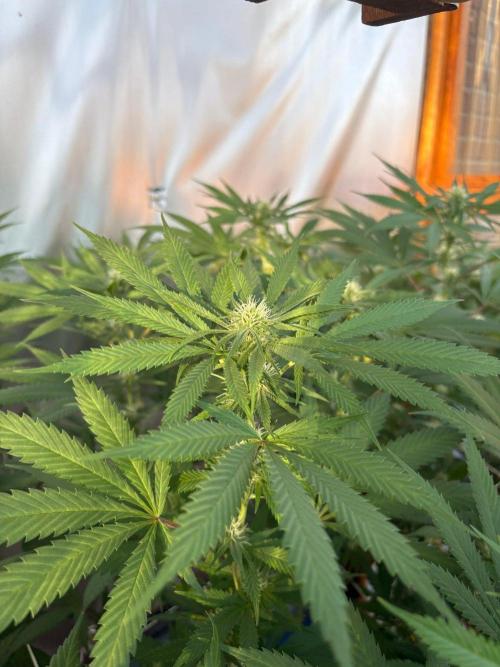
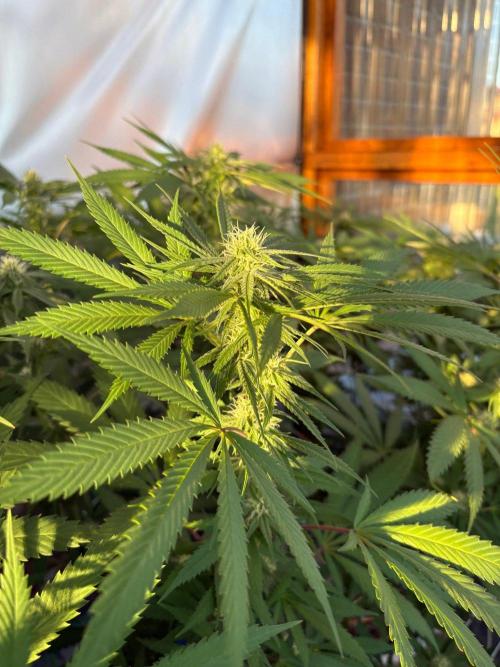
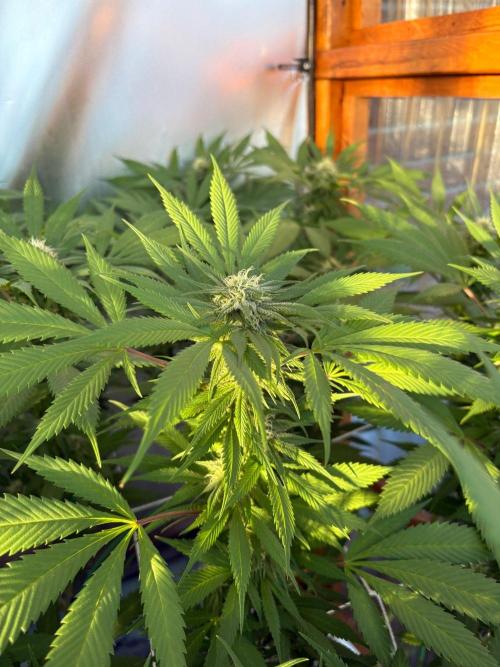
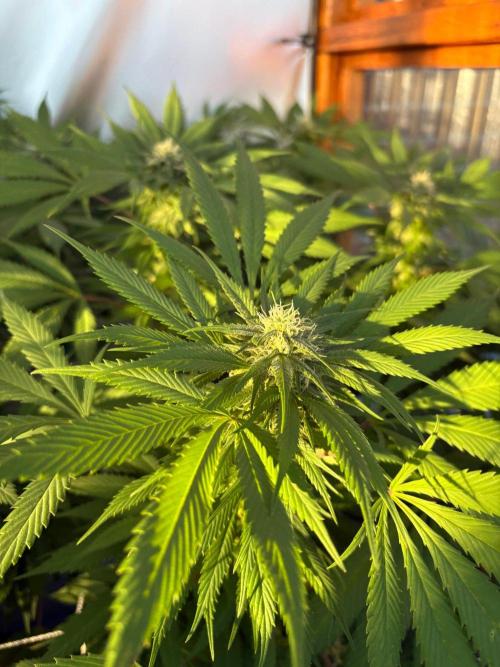
Flowering is underway, with all specimens stretching over the course of the week. Pairs of pistils are being displayed on all specimens, with Blue Dynamite #2 showing the fewest to date. All plants appear healthy and happy, with no signs of deficiency or excess being displayed on the leaves.
There is the presence of fungus gnats across all specimens however they are most prevalent in the soil of plants located furthest away from the low-level soil surface fans (Purple Romulan #1 and Blue Dynamite #1). The BTI treated solutions along with the yellow sticky traps are keeping them under control.
Soft bodied white bugs have appeared in very small numbers on Blue Dynamite #3. I believe them to be aphids (could be mealybugs) and am considering a spray of some type over the next day to control, if not, eradicate them. Since the plants have another 9 to 10 weeks to go and don’t have developed flowers yet, the window for foliar sprays is now.
Went away for a few days this week to enjoy some outdoor time and fishing, so not much done in the garden aside from a heavier watering/feeding on Day 115.
Day 113 – Cloudy and cool this morning, with light rain throughout the day; Found what appeared to be a couple of aphids on Blue Dynamite #3; Inspected entire garden thoroughly, and found them only on that specimen, and only 3 of them (there are surely more); Still time to spray foliage, but will monitor for another day or two to see if there are others or if they proliferate; Probed soil, and all specimens have sufficient moisture throughout.
Day 114 – Cloudy with sunny breaks early in the morning; Started Compost Tea Brew for application tomorrow evening; Mild LST applied to control canopy; Both Purple Romulan specimens appear to be in flowering, as they are stretching and displaying pistils; Blue Dynamite #1 showing pistils, while #2 and #3 are stretching but don't have has many pistils on display; GrapeGod #1 has been showing pistils for quite some time, and appears to be stretching; Everything is on track; Inspected Blue Dynamite #3 for what appeared to be aphids, and did not spot any; Will continue to monitor.
Day 115 – Bright sunny morning, and remained mostly sunny throughout the day with the greenhouse hitting a peak temperature of 33C; Wiped all surfaces in greenhouse, and added a small clip fan to blow some air over a dead spot underneath the wall mounted oscillating fan; Mild LST applied, and added some ties to pull some shoots to the center of their grid spot on the trellis; Watered each in the evening with 1L of plain rainwater, 2L of compost tea, 2L of BTI treated rainwater (Total 5.0L); Fungus gnat population has grown, hopeful to not make it worse with this heavy watering.
Day 116 – Gone Fishing
Day 117 – Gone Fishing
Day 118 – Gone Fishing
Day 119 – Gone Fishing, returning early afternoon; Plants have noticeably stretched.
COMPOST TEA RECIPE (mL/L)
Worm Castings - 60mL/L
Optimize Organics - Microbe Multiplier - 4mL/L
Humic Acid - 0.5mL/L
Wild Fish Hydrolysate - 1mL/L
Unsulphured Sugarcane Molasses - 0.3mL/L
14 likes
comments
Share
Used techniques
LST
Technique
18
Week 18. Flowering
2mo ago
1/16
14 hrs
Light Schedule
28 °C
Day Air Temp
6.5
pH
Normal
Smell
45 %
Air Humidity
18 °C
Solution Temp
20 °C
Night Air Temp
38 liters
Pot Size
cultivars AUGUST 22 to AUGUST 28, 2026
Sunrise: 07:09 | Sunset: 20:46 | Total Daylight: 13:37
Overall a good week for weather, although I would prefer more sun. Plants have all performed well, continuing to stretch as they begin their flowering phase.
Fungus gnats still present, but very much under control with the BTI treated watering solutions and yellow sticky traps. Gave Blue Dynamite #3 a spray of OMRI compliant insecticidal soap to address what was a very small population of aphids. The spray was effective and eradicated them. With 8 to 9 weeks to go, and plants not in full bloom, the soap ought to degrade and not impact the flowers. By the end of the week I would say the window has passed for further foliar sprays, so hopefully this is an issue that is behind us. A defoliation and pruning of lower non-productive shoots, scheduled to occur in the next 10 days or so will help matters.
Plants drinking sufficiently, and I allowed a pretty deep dry back this week, to the point the plants were drooping on Day 125 before providing them with a liquid amended soil drench. This approach seems to have been helpful in knocking down fungus gnats, and the plants responded quite well to the feeding. A top dress is on tap for next week, along with a Compost Tea to boost the microbial life in the substrate.
All three Blue Dynamite specimens are doing well, with Blue Dynamite #1 and #3 very similar in size and shape, with Blue Dynamite #2 noticeably taller as it stretches. Blue Dynamite #1 and #3 are moving along in flowering, showing pistils at several locations, with Blue Dynamite #3 appearing to be lagging behind. Not certain this one will finish in time. Blue Dynamite #3 is quite a bit more dense than her sisters in the garden with #1 and #2 having slightly wider internodal spacing. All are quite robust plants. The canopy on all three specimens is quite even, will all shoots appearing to have the capability to equally productive.
Day 120 – Applied 2L of plain rainwater, followed by 2L of BTI treated rainwater (4.0L total) in the morning; Plants all look great, with fungus gnats still present; Spotted a few aphids on Blue Dynamite #3, having me strongly considering an evening application of some foliar spray to eradicate them.
Day 121 – n/a
Day 122– Sunny bright day, with temperatures moderate; Plants doing well, Blue Dynamite #1 showing some "fatigue" at mid-day; Checked soil moisture with probe, and substrate sufficiently moist in all specimens;
Day 123– Cloudy and rainy day, with cooler temperatures; Brief sunny break in late afternoon, followed by clouds; Plants all doing well, continuing to stretch; Blue Dynamite #2 and #3 not quite showing pairs of pistils other specimens are, but are clearly stretching; Soil probe showed sufficient moisture throughout.
Day 124– Rain overnight, wet, cool and humid in the morning; Probed soil in the evening, and decided that I could allow them to dry back a little further before giving them an amended soil drench; Will probe again in the morning, and if necessary, provide up to 2L each of plain rainwater, and in the evening give them the amended soil drench.
Day 125 – Plants started to droop, so, 2.0L of plain rainwater applied late afternoon, followed by 2.0L of liquid amended soil drench pH’d to 6.4 and another 1.0L of plain rainwater applied in evening (5.0L total).
Day 126 – n/a
SOIL DRENCH (mL/L)
Optimize Organics - BLOOM Liquid Organic Plant Food (1-3-3) - 5.0ml/L
Yucca Extract – 0.25mL/L
Monosilic Acid - 0.5mL/L
Organic Cal-Mag - 1mL/L
Triacontanol Biostimulant - 0.1mL/L
Activated Beneficial Microbes - 5.0ml/L
16 likes
3 comments
Share
19
Week 19. Flowering
2mo ago
1/18
13 hrs
Light Schedule
27 °C
Day Air Temp
6.5
pH
Normal
Smell
45 %
Air Humidity
18 °C
Solution Temp
19 °C
Night Air Temp
38 liters
Pot Size
Nutrients 2
Flower Bloom (2-7-5)
3 mll
Worm Castings
9.5 mll
cultivars AUGUST 29 to SEPTEMBER 4, 2026
Sunrise: 07:18 | Sunset: 20:32 | Total Daylight: 13:13
Overall, a good week for weather, but as always, I would prefer more sun. Plants have all performed well, with almost all specimens setting flower sites and ending their stretch.
Fungus gnats still present, but very much under control with the BTI treated watering solutions and yellow sticky traps. Aphid situation seems to have been addressed.
Plants drinking sufficiently, and I provided a top dress of dry organic amendments.
Blue Dynamite #1 and #3 are very similar in size and stature, with tight internodal spacing. Both phenotypes have set their flowers (crowned) and probably won’t add much more height. Blue Dynamite #2 is a stretcher and is the tallest plant in the garden following the transition to flowering phase. Internodal spacing is wider than her sisters, and I suspect she is a little more sativa leaning.
Day 127 – Really nice day weather-wise today; Sunny with occasional cloudy breaks, before clouding over late evening; Temperatures quite good, with outside temps dropping to 9.0C on day 126 and 8.0C tonight; Scheduled Top Dress deferred, until at least tomorrow night, perhaps evening of Day 129.
Day 128 – n/a
Day 129– Dark, overcast and light rain in the morning.
Day 130 – Cloudy and damp start to the day, but the sun came out mid-morning and remained steady through the day; Did a soil probe and found most specimens have moisture remaining from mid to lower levels of substrate profile; Top Dressed with dry organic amendments, watered in with 1.0L of plain rainwater, and 2.0L of BTI treated rainwater in the evening (Total: 3.0L).
Day 131 – Mix of sun and cloud through most of the day, then mostly sunny late afternoon into the evening.
Day 132 – Sunny and cool in the morning; Many of the plants have crowned now, Blue Dynamite #2 being the exception; Expect some additional height to be gained on the others, but not much more. Plants closely inspected in the evening, all doing well with no discolouration outside of those associated with human manipulation; No foliar pest sightings
Day 133 – Cloudy cool morning; Probed soil, and plants will need a watering tomorrow morning; Created a Compost Tea and set to brew for 24 hours.
14 likes
6 comments
Share
20
Week 20. Flowering
1mo ago
1/12
13 hrs
Light Schedule
26 °C
Day Air Temp
6.5
pH
Normal
Smell
45 %
Air Humidity
18 °C
Solution Temp
19 °C
Night Air Temp
38 liters
Pot Size
cultivars SEPTEMBER 5 to SEPTEMBER 11, 2026
Sunrise: 07:28 | Sunset: 20:17 | Total Daylight: 12:45
Mix of weather this week as autumn sets in and cooler temperatures and more rain arrive. Overnight lows outside reached 8C (46F) but the greenhouse held at 18C to 19C (65F)
Applied a Compost Tea this week to boost help boost the microbial life in the substrate. Plants have been drinking well, taking in about 4.0L every 3 to 4 days.
Also undertook a substantial pruning and defoliation, to open the plants up to better airflow, and to remove lower growing shoots that won’t be productive. Did discover a sizeable population of aphids on Blue Dynamite #3 and Purple Romulan #2 and decided it best to defoliate more substantially and opted to spray with OMRI compliant insecticidal soap. Not an ideal situation at this stage of growth, and I will likely need to wash the flowers on these plants prior to hanging to dry at harvest time. They may also need to be set aside for extracts only. That said, the spray was effective and appears to have eradicated the aphid issue.
Fungus gnats persist, with the population growing slightly following the Compost Tea application but are being managed effectively with yellow sticky traps and BTI treated rainwater solutions.
Day 134– Watered in 2.0L of BTI treated rainwater and 2.0L of Compost Tea first thing in the morning; Bright sunny day throughout, and plants were "praying".
Day 135 – Bright sunny morning with cool temperatures. Warmed up and remained sunny throughout the day; No activities in the garden today.
Day 136– To open things up and allow for better airflow through the canopy, I undertook a major defoliation, 2 hours after sunrise (08:30): Noticed a much larger population of aphids on Blue Dynamite #3 than expected; They were also present on portions of Purple Romulan #2 where she was close to her infected bench mate; Decided to spray with OMRI rated insecticidal soap, twice in the morning, again in the evening; Not happy about having to use a foliar spray, and suspect I may need to repeat it in a week; Given this unfortunate development, I will plan to wash the flowers from both plants at harvest, prior to drying. The flower from these two plants may also go straight to extracts, a decision that doesn't need to be made just yet; Everything else in the garden looks great, with no foliar pests present; Fungus gnat population is well under control; Probed soil and all have sufficient moisture; With a cloudy and rainy day forecast for tomorrow, I suspect a watering can happen on Day 138 (Wednesday).
Day 137 – Cloudy and rainy this morning and persisted throughout the day.
Day 138 – Mix of sun and cloud, with lengthy sunny breaks in the afternoon; 1.0L of plain rainwater applied in late afternoon as the plants were showing some droop.
Day 139 – Bright sunny morning and was sunny and warm throughout the day; Applied 2.0L of BTI treated rainwater and 1.0L of plain rainwater first thing in the morning (7:00AM)
Day 140 – No activities in the garden today.
COMPOST TEA RECIPE (mL/L)
Worm Castings - 60mL/L
Optimize Organics - Microbe Multiplier - 4mL/L
Humic Acid - 0.5mL/L
Wild Fish Hydrolysate - 1mL/L
Unsulphured Sugarcane Molasses - 0.3mL/L
14 likes
comments
Share
21
Week 21. Flowering
1mo ago
1/12
12 hrs
Light Schedule
26 °C
Day Air Temp
6.5
pH
Normal
Smell
45 %
Air Humidity
18 °C
Solution Temp
19 °C
Night Air Temp
38 liters
Pot Size
cultivars SEPTEMBER 12 to SEPTEMBER 18, 2026
Sunrise: 07:38 | Sunset: 20:03 | Total Daylight: 12:24
Weather was decent for much of the week, with adequate sun over the seven days. Overnight low outside reached 4C (39F) during the week, but the greenhouse held at 16.5C 62F)
Provided an Organic Liquid Amended Soil Drench this week (Bloom Formula | 1-3-3), that included Activated Beneficial Microbes.
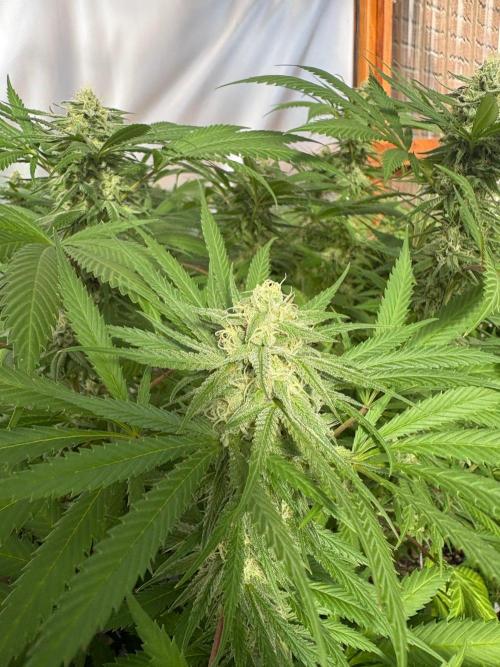
Plants have been growing well. Blue Dynamite #2 is taller than her sisters and appears to be developing more sativa like flower structures (internodal spacing wide, pistil clusters are "fluffy". Blue Dynamite #3 and #1 are very similar, much denser structures, with Blue Dynamite #1 showing good trichome production.
Day 141– n/a
Day 142 – 1.0L plain rainwater applied in the afternoon; An additional 2.0L of Soil Drench (BTI Treated rainwater) and 2.0L of plain rainwater applied in the evening (5.0L total). Plants look pretty good, even with the unevenness of the canopy on the front bench.
Day 143– n/a
Day 144 – n/a
Day 145 – Mostly sunny, with a few cloudy periods; Greenhouse temperatures good throughout the day.
Day 146 – Mostly sunny day with a few cloudy periods; Overnight temperatures were around 6C; greenhouse around 17C; Daytime temps good, greenhouse hovering around 24C to 27C. 2.0L of BTI treated rainwater at 7:00PM; Plants continue doing well, building flowers.
Day 147 – Frost visible on rooftops of neighbouring homes; Greenhouse above 16.5C in the morning;
SOIL DRENCH RECIPE (mL/L)
Optimize Organics – BLOOM (1-3-3) – 5.0mL/L
Yucca Schidigera Liquid Extract - 0.25mL/L
Optimize Organics - Organic CalMag – 1.5mL/L
Triacontanol Biostimulant - 0.1mL/L
Activated Beneficial Microbes – 5.0mL/L
12 likes
comments
Share
22
Week 22. Flowering
22d ago
1/19
12 hrs
Light Schedule
26 °C
Day Air Temp
6.5
pH
Normal
Smell
45 %
Air Humidity
18 °C
Solution Temp
19 °C
Night Air Temp
38 liters
Pot Size
Nutrients 2
Worm Castings
6.5 mll
Power Bloom
2 mll
cultivars SEPTEMBER 19 to SEPTEMBER 25, 2026
Sunrise: 07:48 | Sunset: 19:48 | Total Daylight: 12:00
Weather was decent for much of the week, with adequate sun over the seven days. Overnight low outside reached -1C (30F) during the week, but the greenhouse held at 12.5C (54F).
Top dressed the substrate of each plant this week with Dry Organic Amendments (Bloom at 75%) and watered in with a Liquid Amended Soil Drench (25/75 Veg/Bloom). This will be the last top dress for the plants, and from here on out it will be one more Compost Tea and mild Liquid Amended Soil Drenches.
A couple of plants appear to be displaying some deficiencies, with mild yellowing of leaves. Some other discolourations of older leaves have appeared, but I don’t think it anything to worry about as the plants near end of life.
Day 148– n/a
Day 149 – In the morning, top dressed with 250mL of Worm Castings, and 75mL of Gaia Green 4-8-4 Power Bloom. This will be the last top dressing for the season; Watered in with 3.0L of plain rainwater, and 2.0L of Soil Drench (25/75 - Veg/Bloom). Felt they needed a little boost of nitrogen so decided to make it immediately available through a soil drench.
Day 150– Mostly sunny, with a mix of clouds throughout the day; Very cool overnight dropping to 4C.
Day 151 – Visible frost on roofs and ground in the morning with temps dropping to -1C in the morning; Greenhouse held at 12C; Sunny and clear throughout the day, with daytime high temperatures in the greenhouse reaching above 27C. Plants continue to stack and bulk up.
Day 152 – n/a
Day 153– 2.0L of BTI treated rainwater at 7:00PM; Mild defoliation and inspection of plants; Blue Dynamite #1 and #2 showing some mild deficiencies; Could be related to a pH imbalance, or nitrogen.
Day 154 – n/a
SOIL DRENCH RECIPE (mL/L)
Optimize Organics – GROW (3-1-2) – 1.25mL/L
Optimize Organics – BLOOM (1-3-3) – 3.75mL/L
Yucca Schidigera Liquid Extract - 0.25mL/L
Triacontanol Biostimulant - 0.1mL/L
Activated Beneficial Microbes – 5.0mL/L
15 likes
2 comments
Share
23
Week 23. Flowering
11d ago
1/20
12 hrs
Light Schedule
26 °C
Day Air Temp
6.5
pH
Normal
Smell
45 %
Air Humidity
18 °C
Solution Temp
18 °C
Night Air Temp
38 liters
Pot Size
cultivars SEPTEMBER 26 to OCTOBER 2, 2026
Sunrise: 07:57 | Sunset: 19:33 | Total Daylight: 11:35
Weather was decent for much of the week, with some rain and several days of mostly sunny skies. Daytime temperatures within the desired band, night-time temperatures cooling off with the greenhouse holding above 14C.
Provided the plants a Compost Tea this week, in effort to boost microbial life in the rhizosphere and to unlock any remaining nutrient in the soil for the plants to take up. Several specimens beginning to show signs of senescence, consuming nitrogen from the stores in the larger fan leaves. Purple Romulan #2 is showing some problems, with rapidly wilting lower leaves, but end of life is coming, and I am just going to let it go.
Day 155– n/a
Day 156 – n/a
Day 157– 2.0L of BTI treated rainwater at 12:00PM as the plants were drooping under full sun and warmer temperatures; 2.0L of Compost Tea (made with BTI treated rainwater) applied at 7:30PM; Purple Romulan #2 is suffering from type of deficiency and displayed significant leaf turgor following the watering and into nightfall; Not overly concerned at this stage.
Day 158 – Cloudy and humid this morning, with rain expected throughout the day; Leaf turgor in all specimens has subsided; Plants look great this morning and with 3 days of mostly sunny skies forecasted I'm hopeful the plants respond well with continued flower development and that the compost tea helps them along.
Day 159 – Rainy and humid overnight, with temperatures a bit warmer; As a result, humidity spike in the greenhouse (above 65%), but with sun forecasted for the day, I expect it to drop and not be a problem.
Day 160– Mainly sunny day throughout. 1.0L of plain rainwater around 2:00PM as the plants were drooping slightly
Day 161 – Mostly cloudy, then clearing around noon to mostly sunny; 2.0L of BTI treated rainwater at 8:30AM
COMPOST TEA RECIPE (mL/L)
Worm Castings - 60mL/L
Optimize Organics - Microbe Multiplier - 4mL/L
Humic Acid - 0.5mL/L
Wild Fish Hydrolysate - 1mL/L
Unsulphured Sugarcane Molasses - 0.3mL/L
14 likes
comments
Share
24
Week 24. Flowering
9d ago
1/10
12 hrs
Light Schedule
26 °C
Day Air Temp
6.5
pH
Normal
Smell
45 %
Air Humidity
18 °C
Solution Temp
17 °C
Night Air Temp
38 liters
Pot Size
cultivars OCTOBER 3 to OCTOBER 9, 2026
Sunrise: 08:08 | Sunset: 19:19 | Total Daylight: 11:11
Weather was quite good throughout the week, particularly as the week wore on, with mostly sunny skies and warm temperatures. Frost outside one morning, but greenhouse held temperatures above 13C overnight.
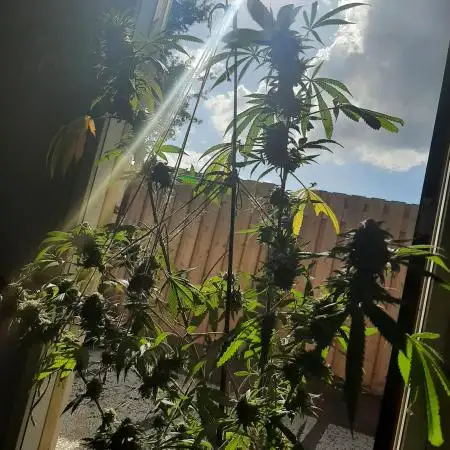
Plants now cut off from feeding, receiving only plain rainwater from here on out. All specimens have had flowers notably plump this week, particularly after the watering on day 166. Blue Dynamite #1 appears to be closest to full ripening with almost all pistils wilted and receding. Blue Dynamite #3 is close behind and Blue Dynamite #2, the more sativa looking plant and flowers still with a ways to go.
Garden scents have noticeably amplified, with pine, fruit and fresh cut flowers being the most prominent smells. Blue Dynamite specimens smell very sweet, GrapeGod floral with sweet fruit undertones, Purple Romulan smelling strongly of pine with a fruit undertone.
Day 162 – n/a
Day 163 – n/a
Day 164– 2.0L of BTI treated rainwater at 7:00PM; Plants with a little bit of droop in the afternoon, but overall looking good and flowers continuing to bulk up.
Day 165 – n/a
Day 166 – 4.0L of plain rainwater (cold) applied in the evening 6:00PM; Almost all plants beginning to fade.
Day 167– n/a
Day 168 – n/a
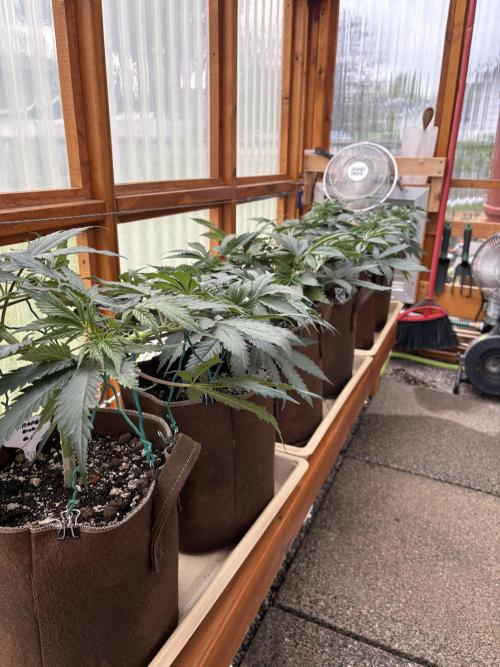
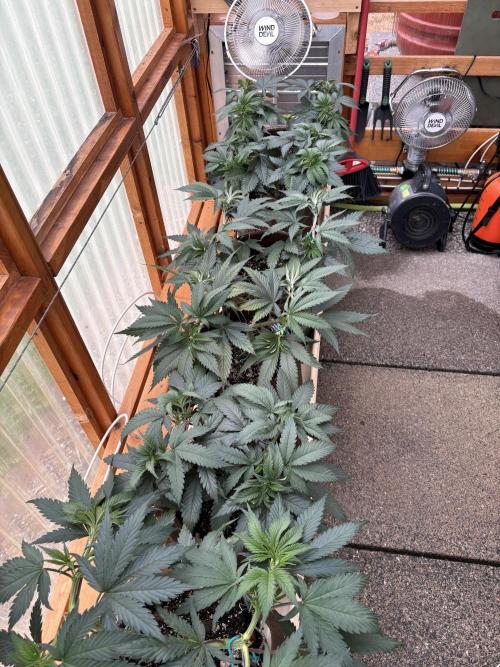
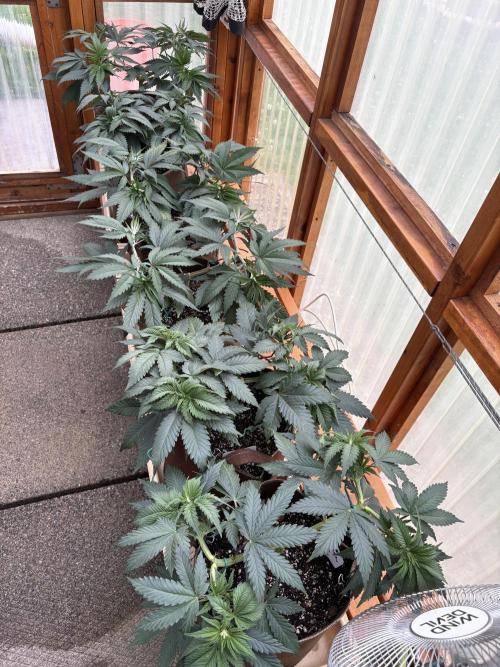
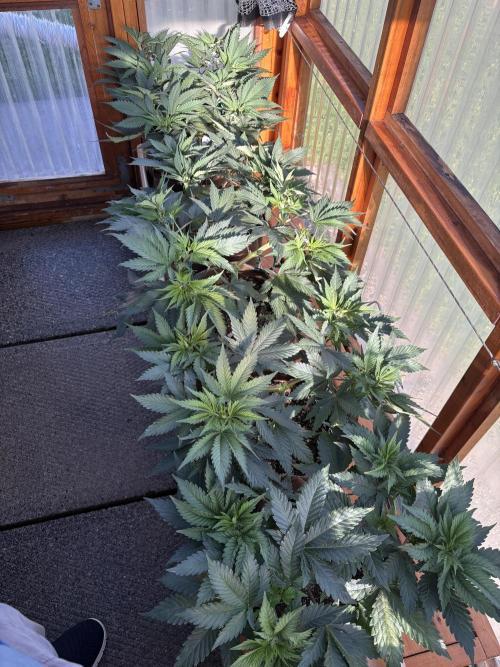
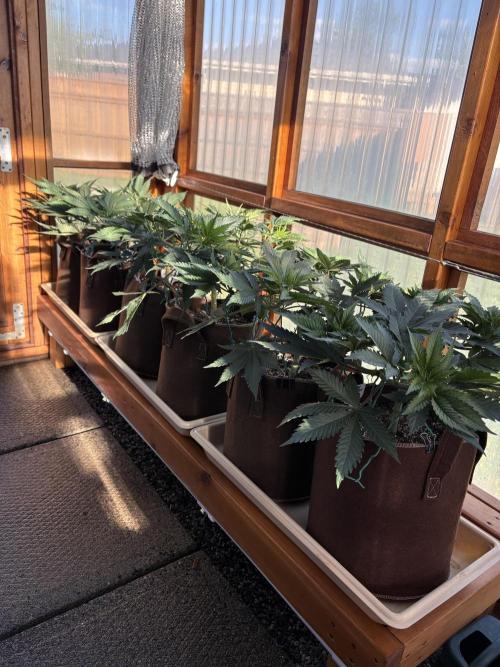
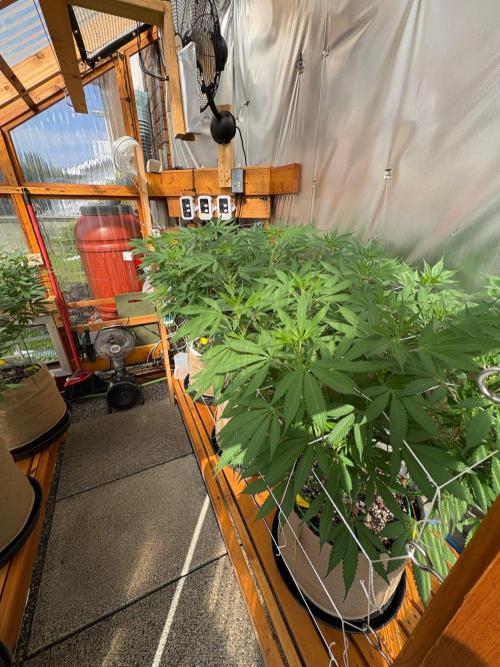
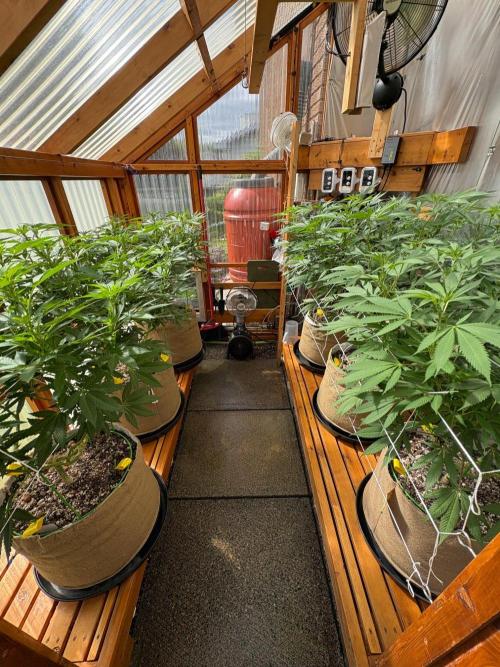
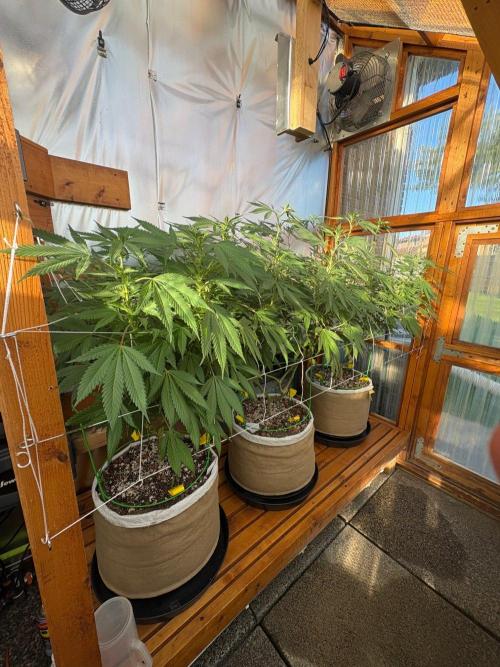
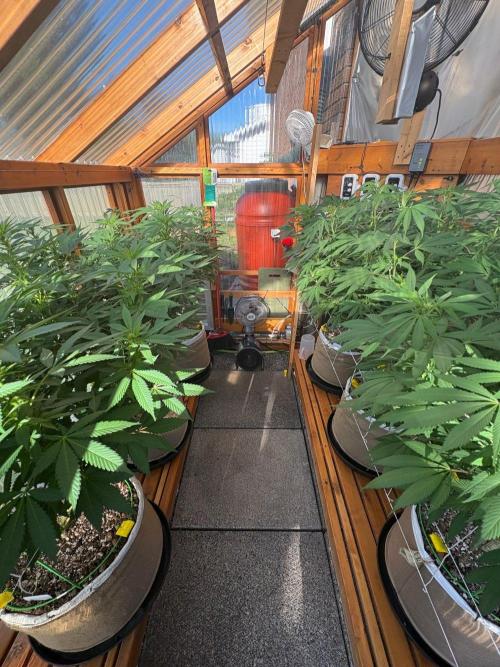
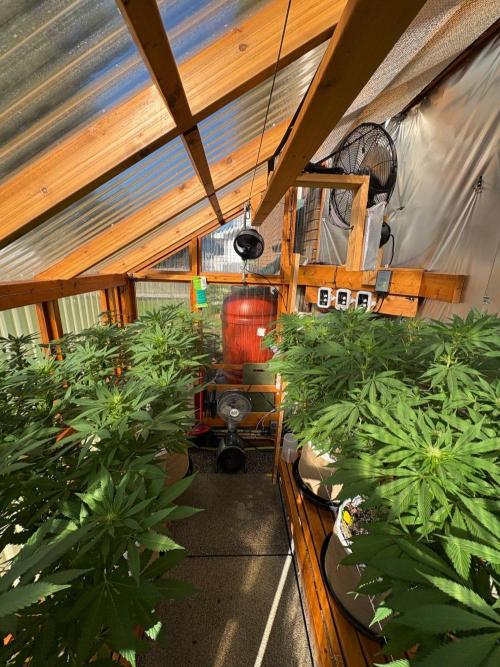
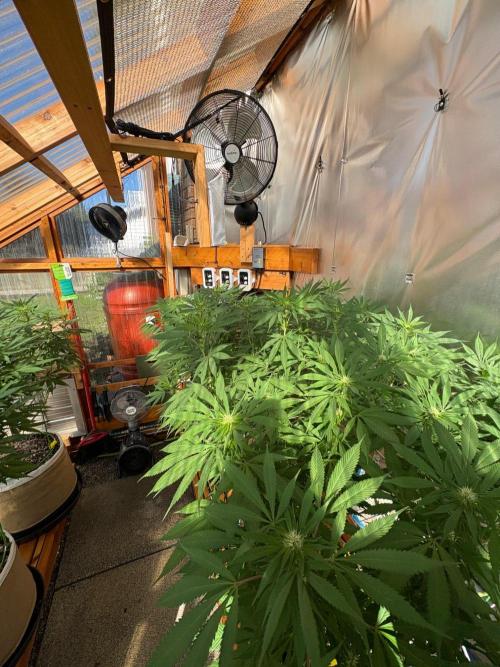
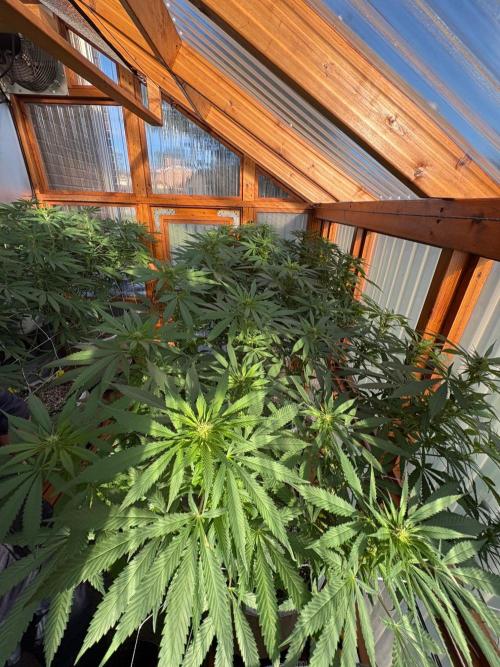
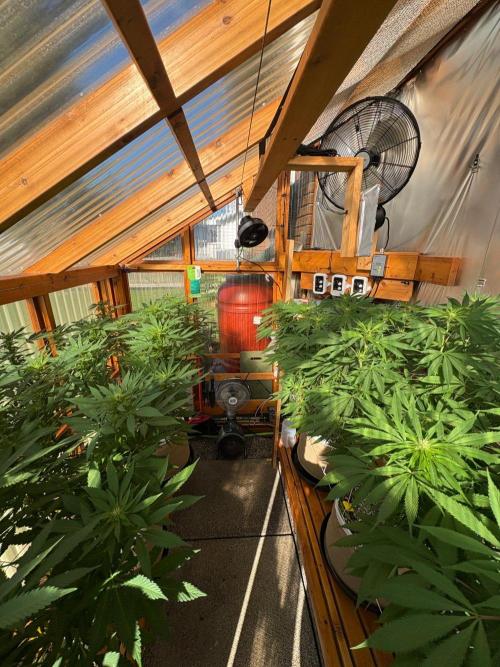
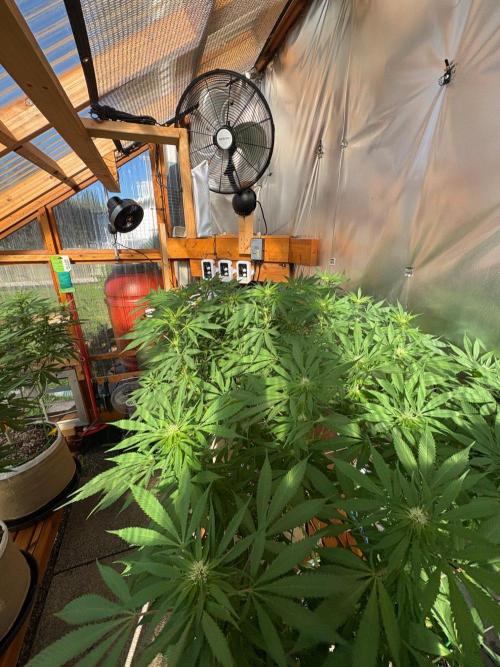
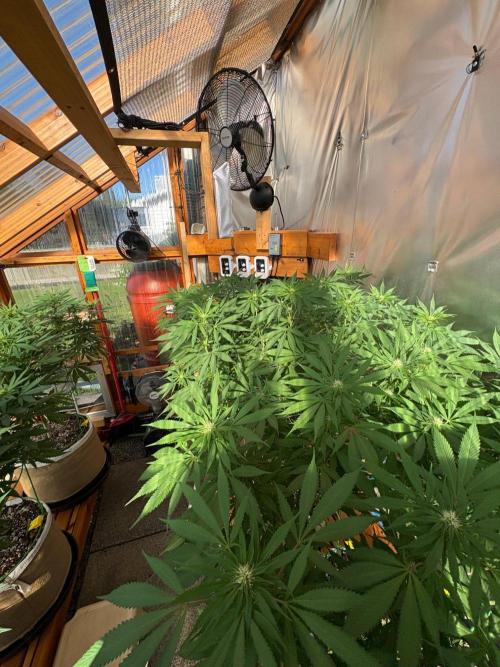
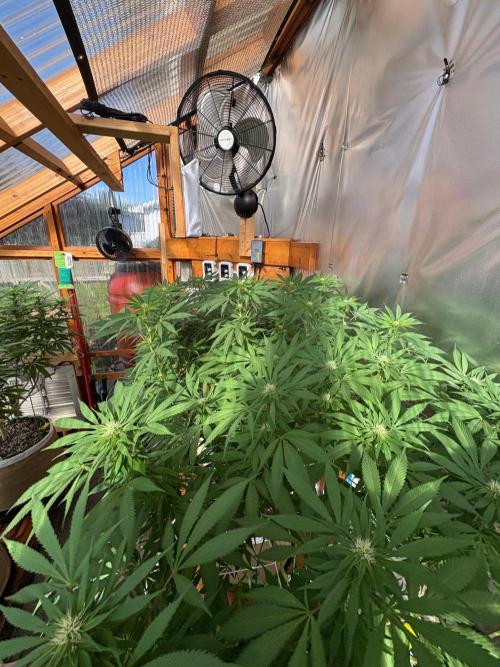
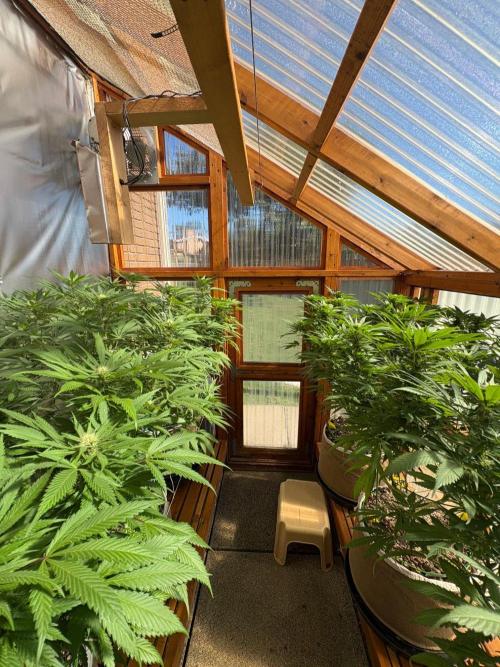
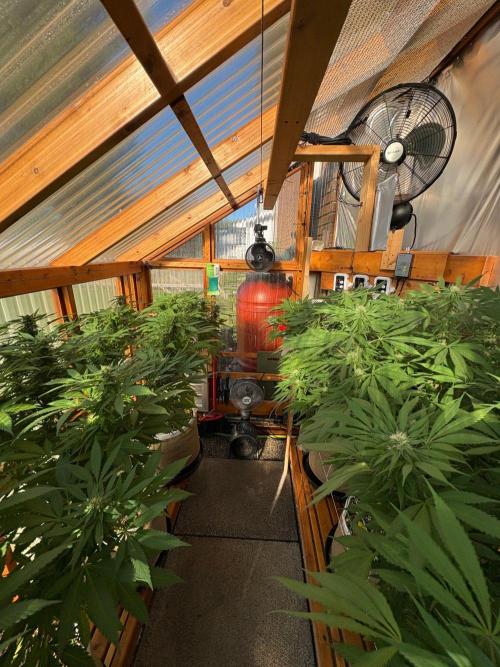
@Natrona, thanks so much, I love it. Quite a bit of work but, I custom designed and built it, plumbed the rain barrel to a demand pump inside to support drip watering (handy when I need to get away for a bit), but I still mostly hand water. Air movement handled by a 16" Oscillating Wall Fan, three 9" low level fans (two blowing over the benches at soil surface), and a 16" motorized intake shutter paired with a 12" exhaust fan on a controller. Also custom built a floor misting system (on a controller) to help cool and boost humidity during high sun/heat days, but I'm not so certain it is all that efficient and am considering constructing an evaporative cooler system. Also, given I am above the 48th parallel in North American Plant Hardiness Zone 3, I have to run a heater.
All in all, a labour of love and I have done reasonably well over the past few years with my harvests. Cheers to you!
@cultivars, I didn't know that 14 hours already starts the flower. Good to know. So let's look forward to some beautiful flowers and an even better harvest.🤩
@RelaeX, I would probably do better with flowering if I were to implement some sort of light deprivation, or employed techniques to trigger flower sooner like @Northern_Ent. Things have worked out for me though over the last 3 summers, so I haven’t invested in messing with things.
@cultivars, I’m at 53N and we run out of strong UV light in mid-August well before it gets too cold in October. By force flowering and using the far red light I get it to flower under more daily hours of stronger sunlight and finish 2-3 weeks earlier with much better buds. Well worth it this far north, but fast flowering genetics help speed things up everywhere.
Thanks @Wojkers ! Plants are where I expected, and hoped they would be at this stage. They should be stretching over the next two weeks, and hopefully doing so under mostly sunny skies. Next few weeks will fascinating to watch develop.