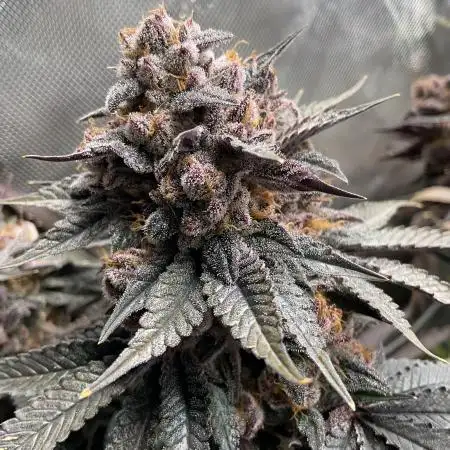




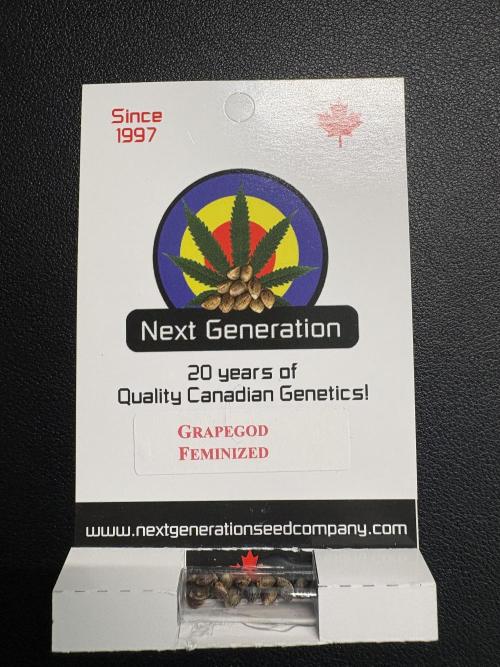
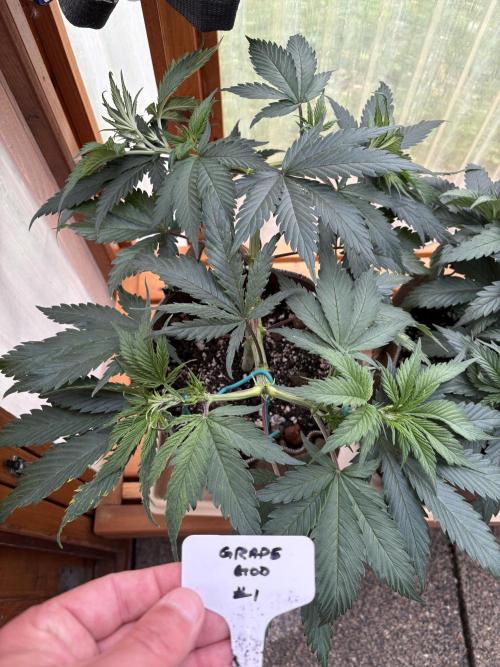
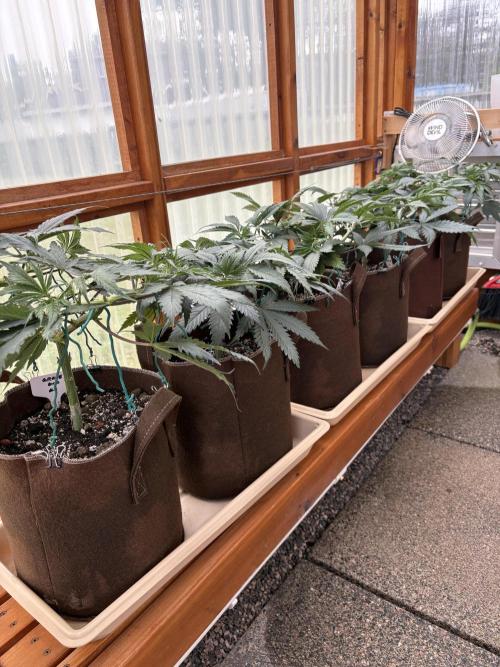
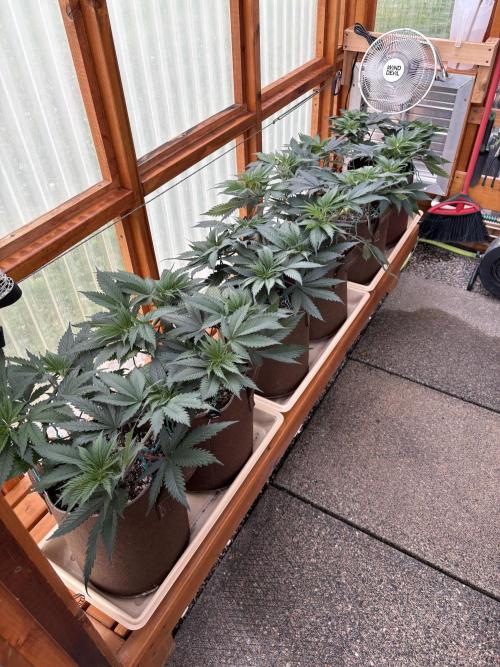
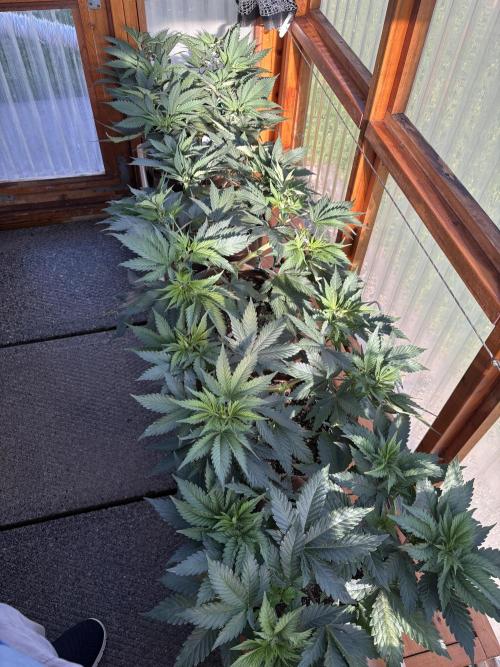
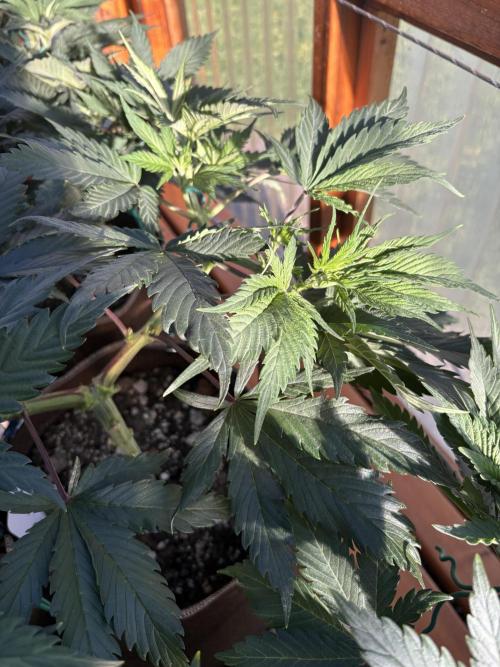
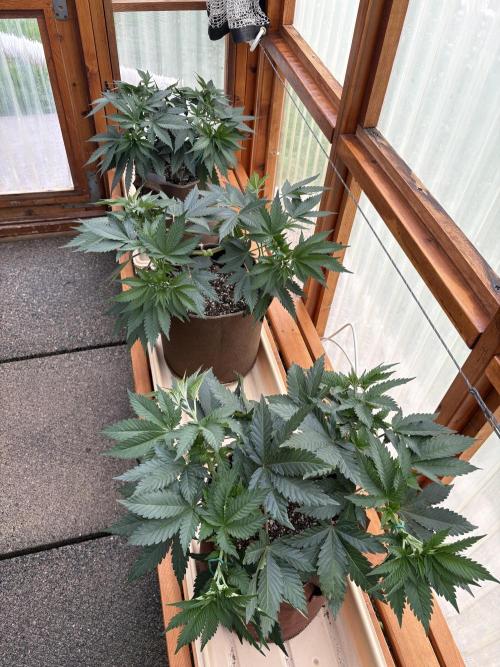
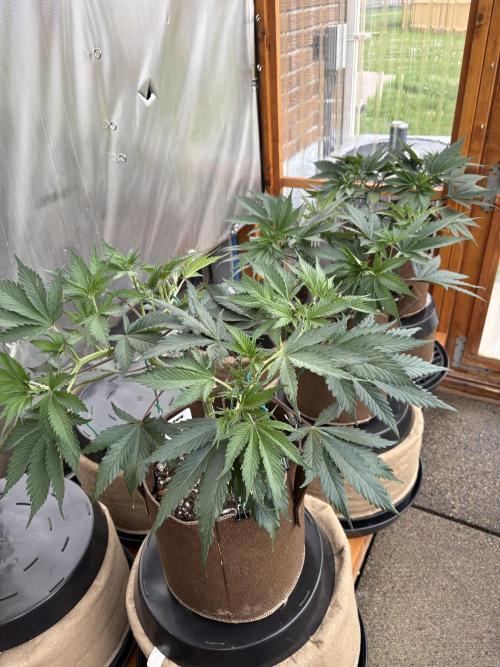
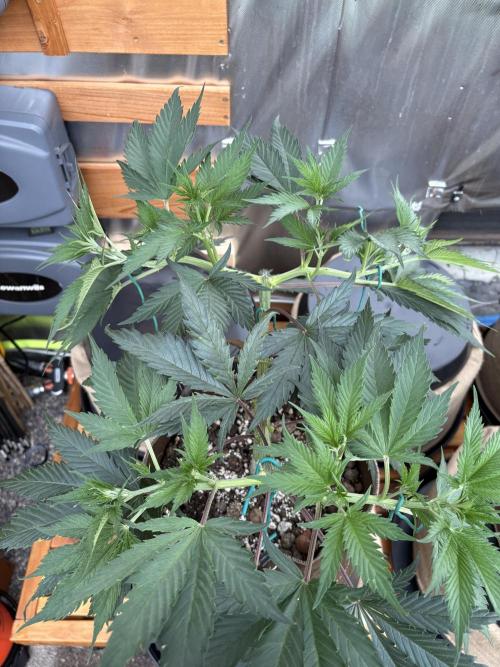
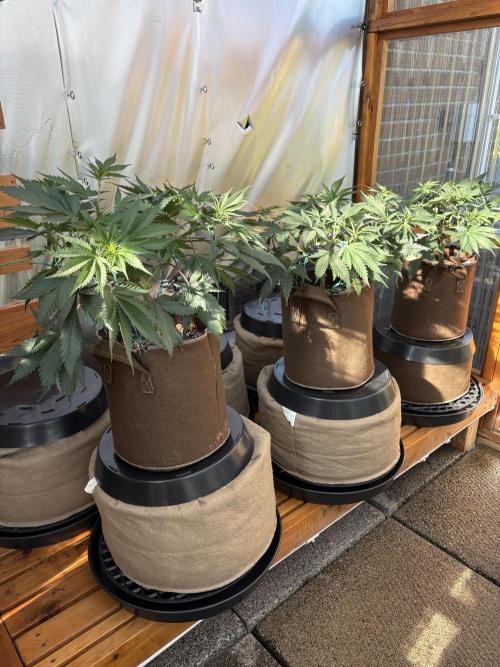
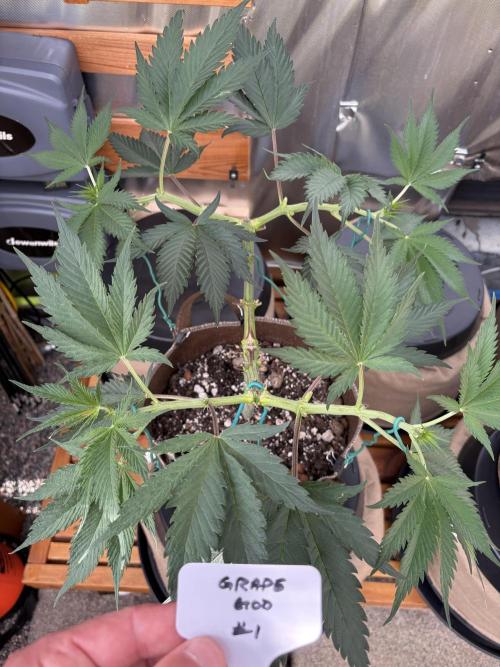
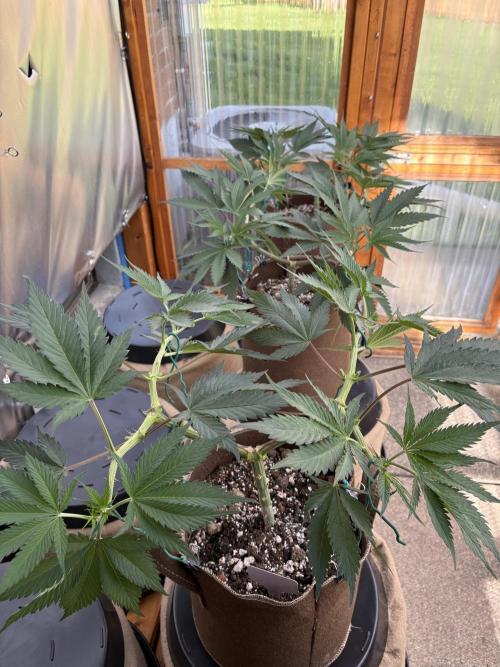
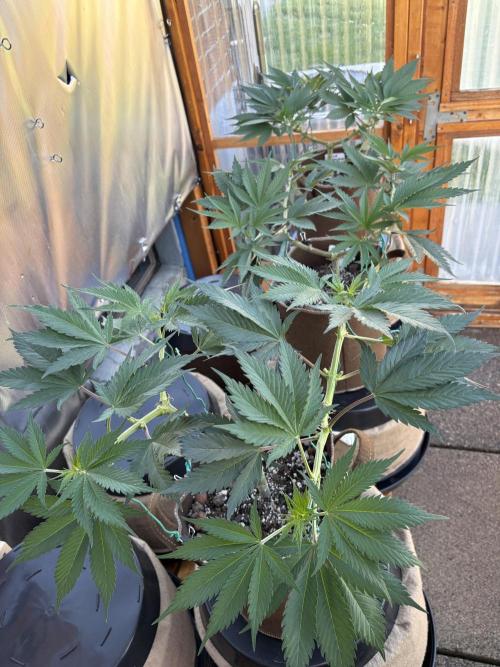
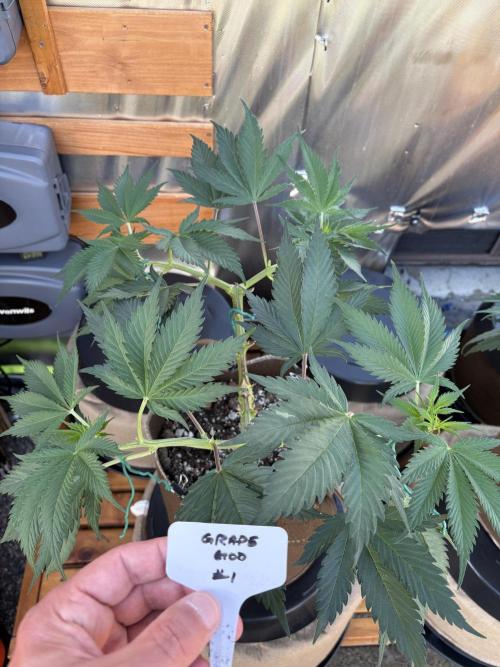
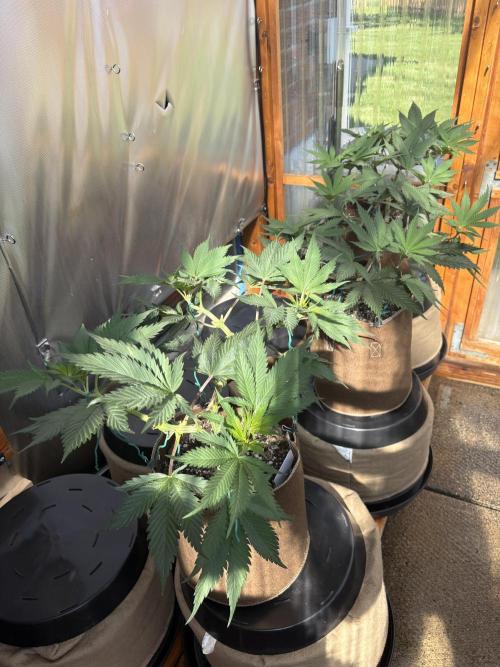
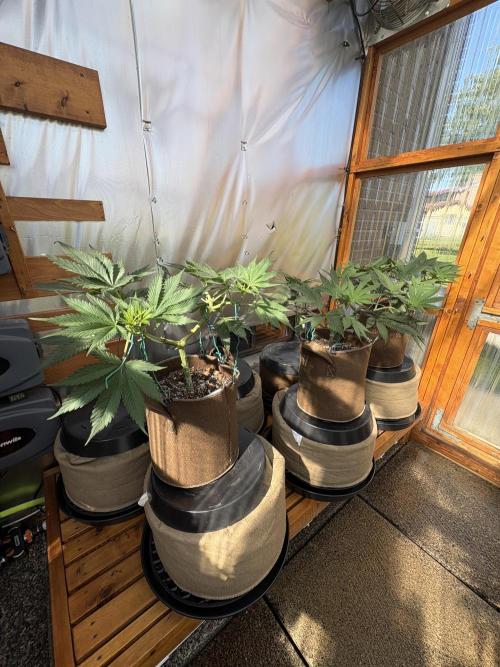
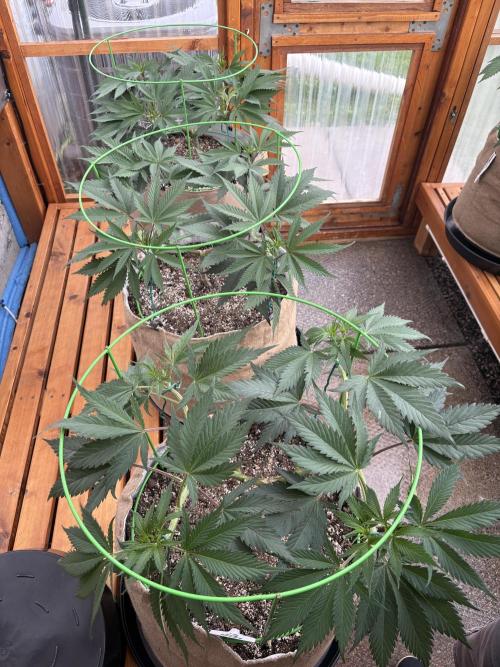
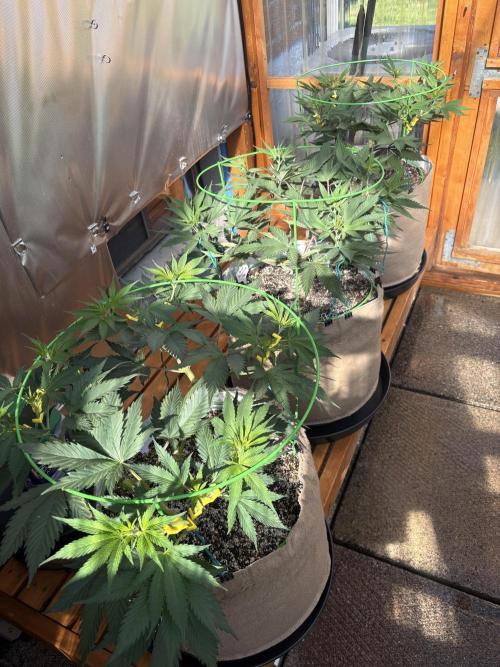
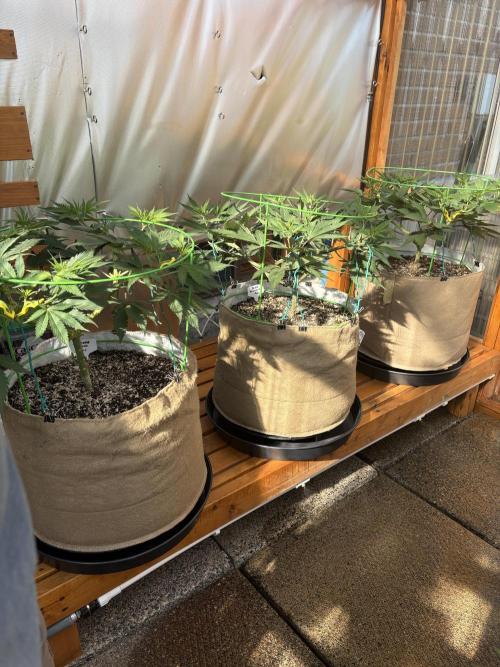
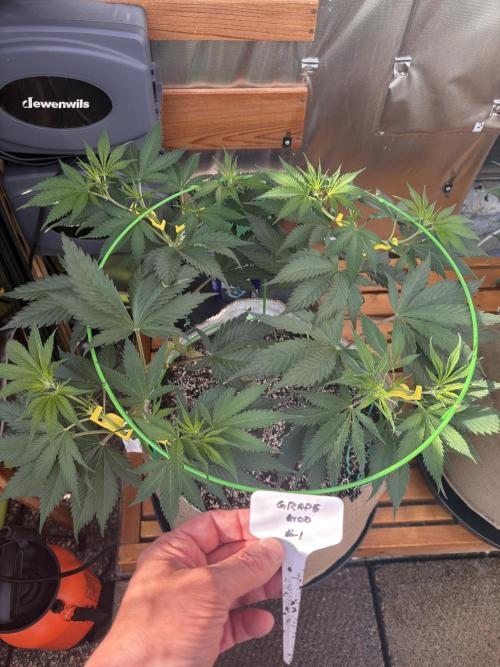
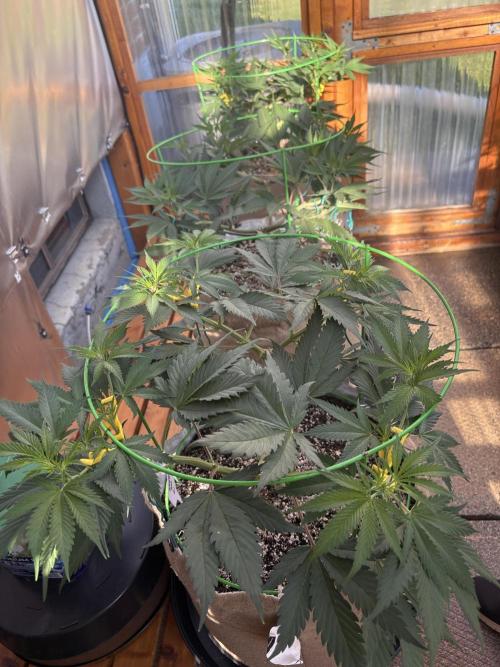
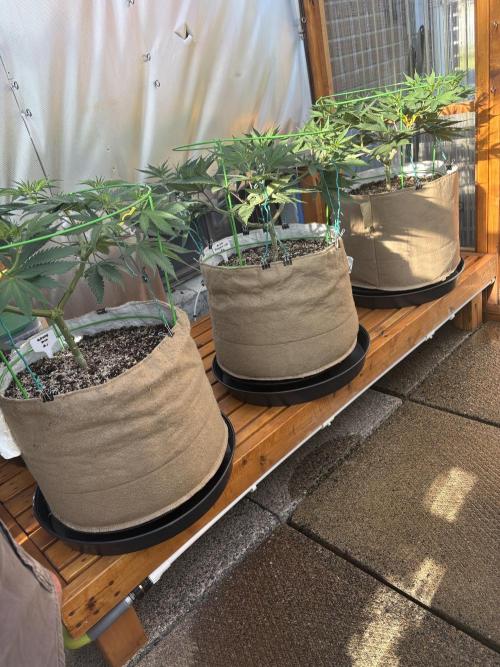
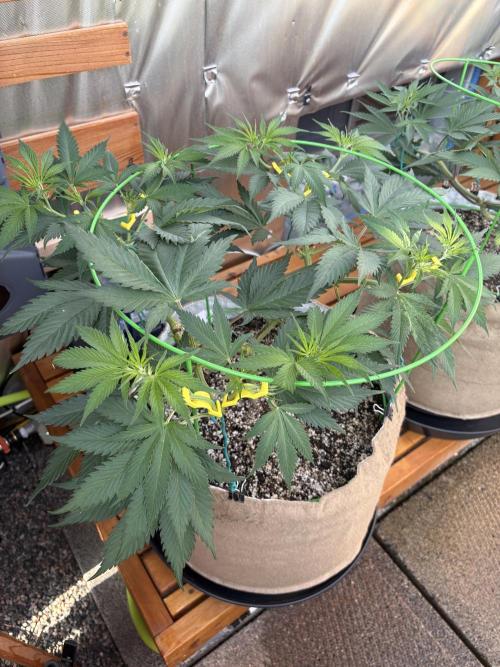
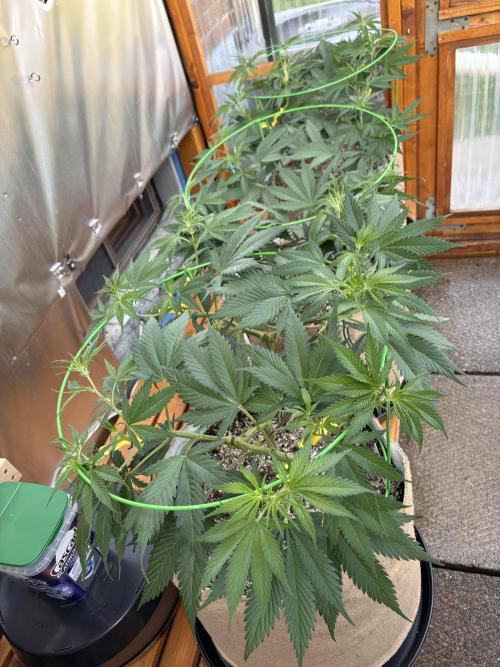
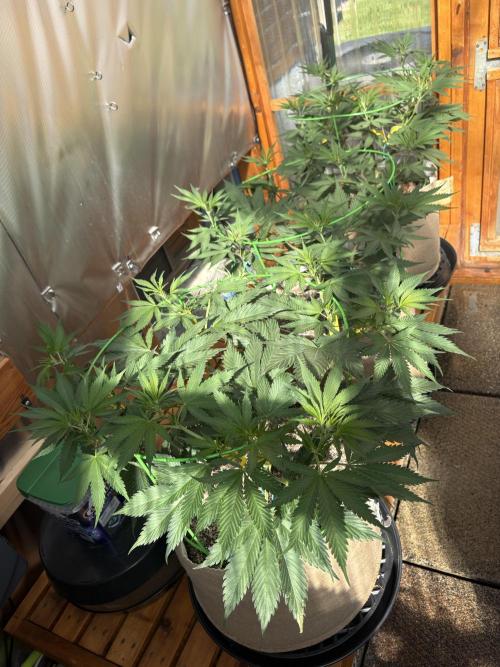
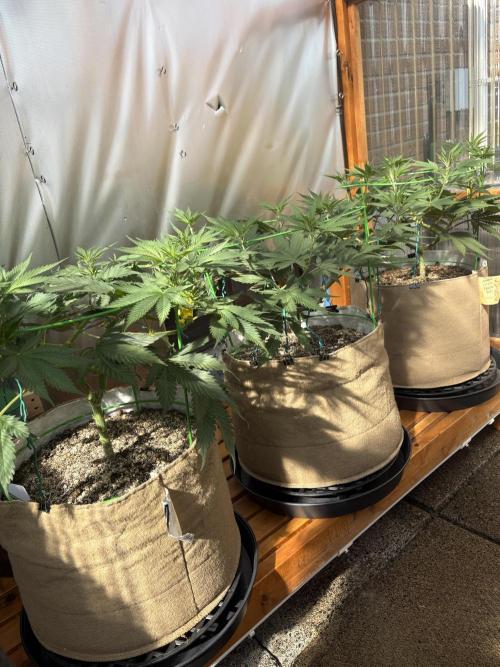
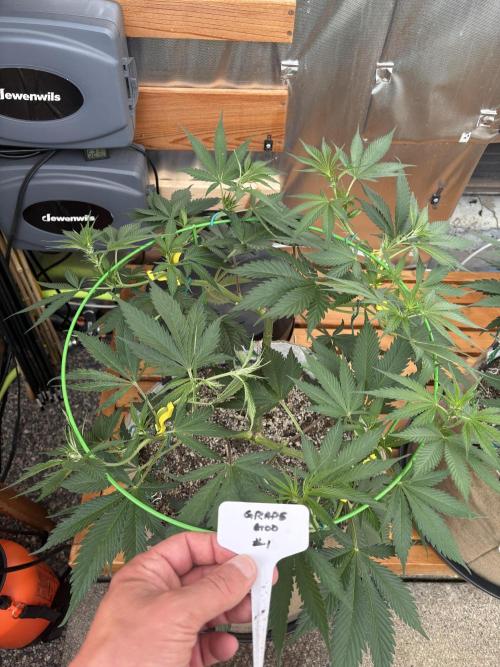
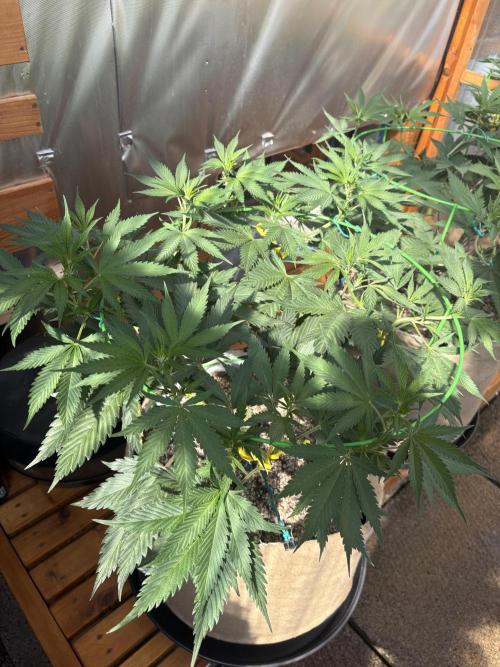
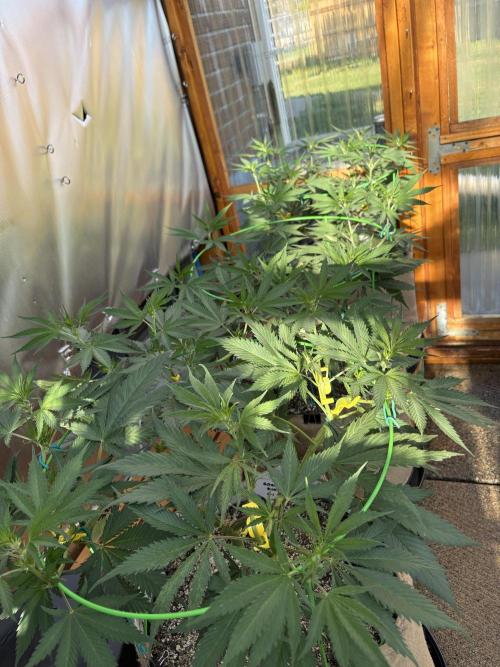
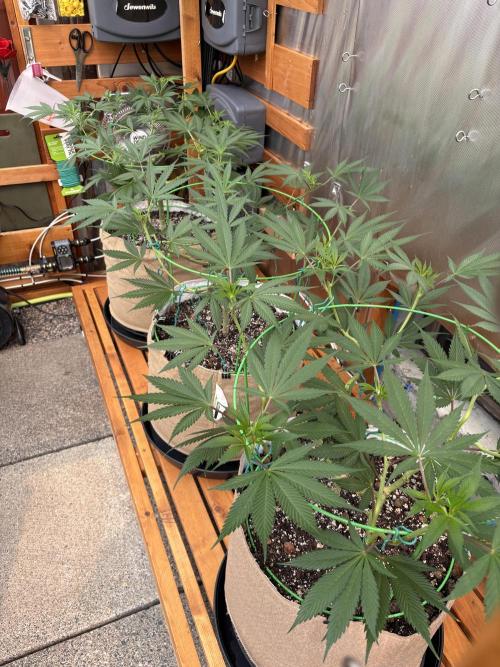
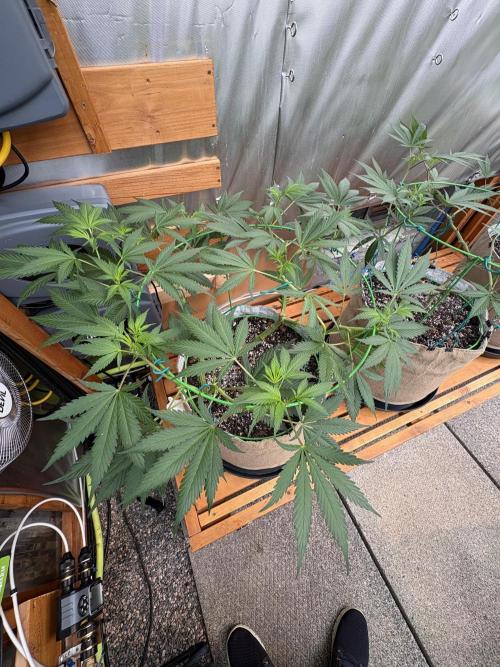
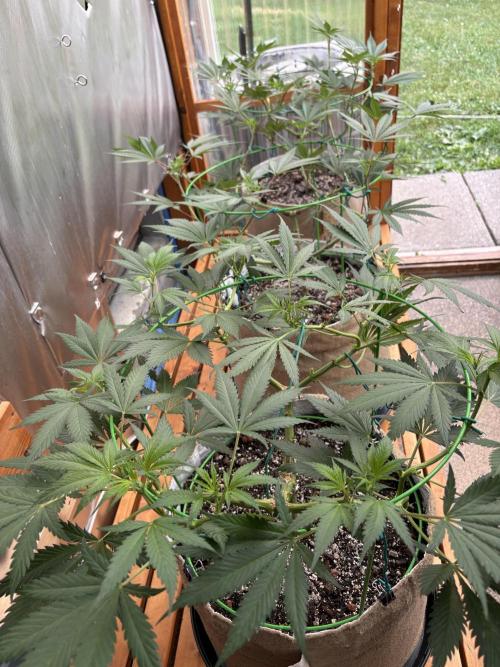
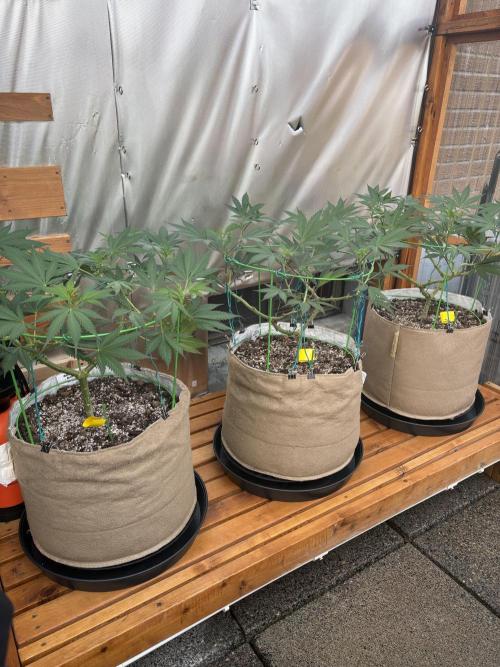
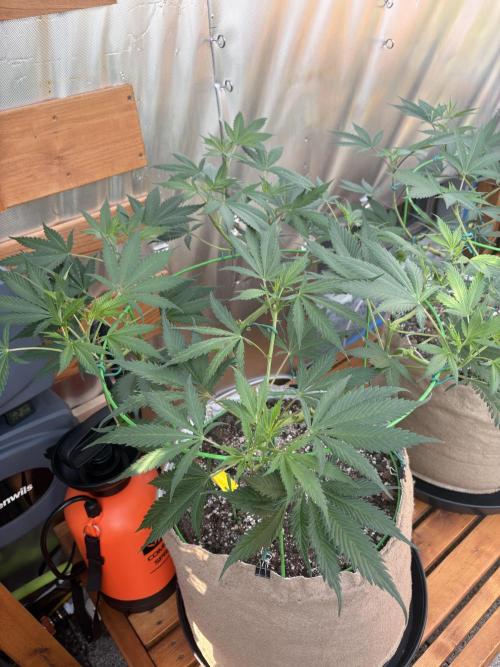
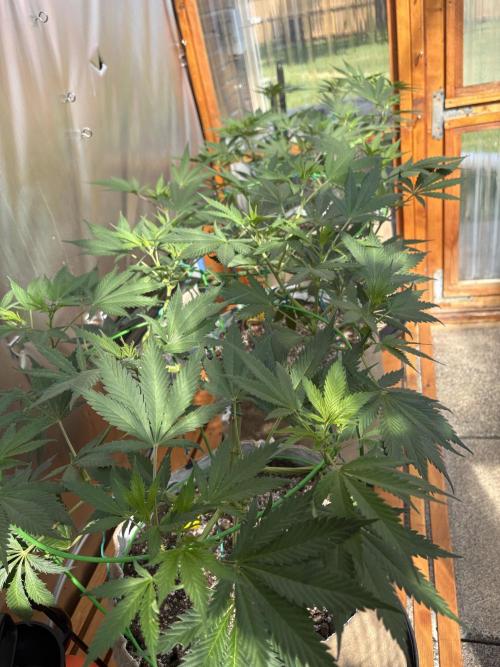
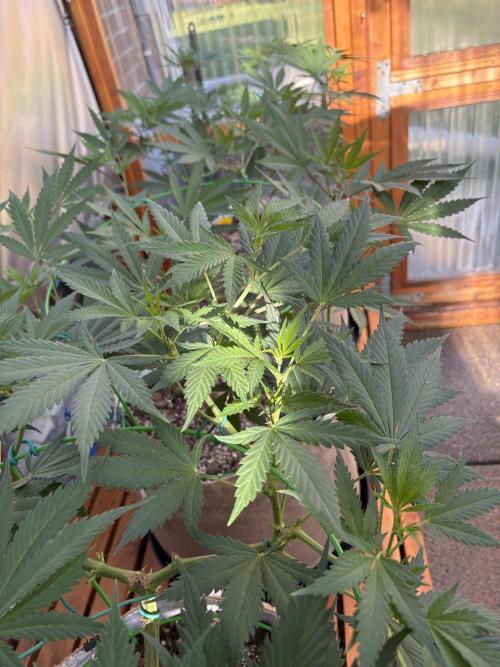
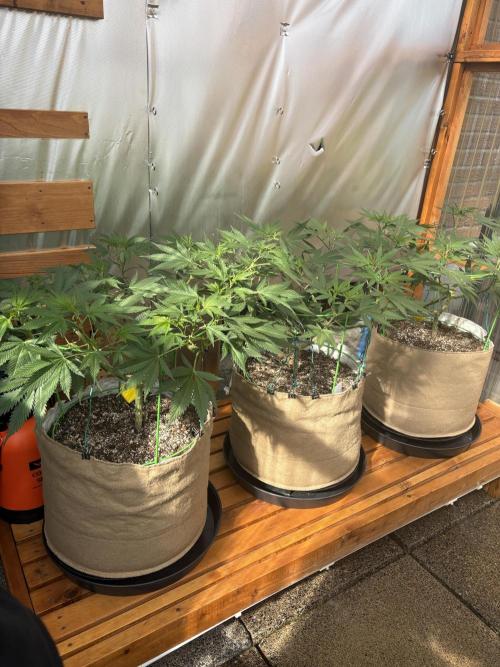
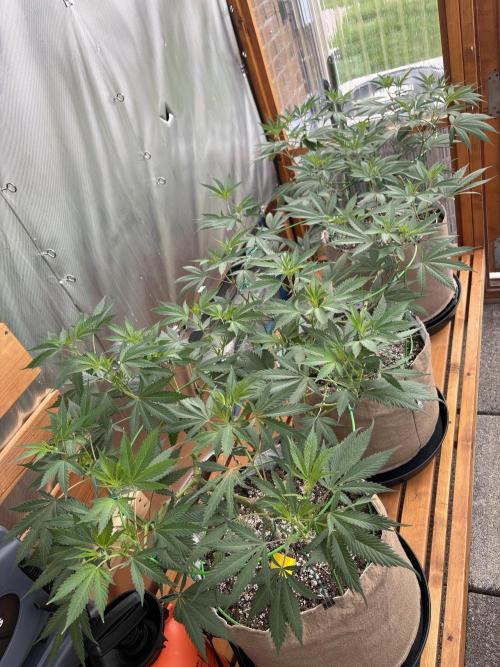
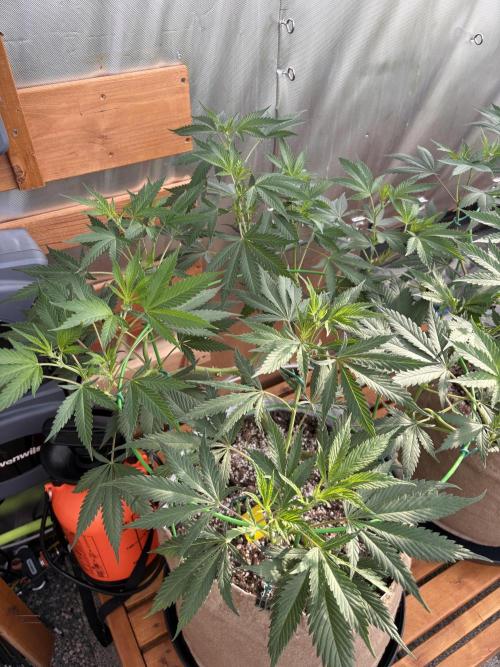
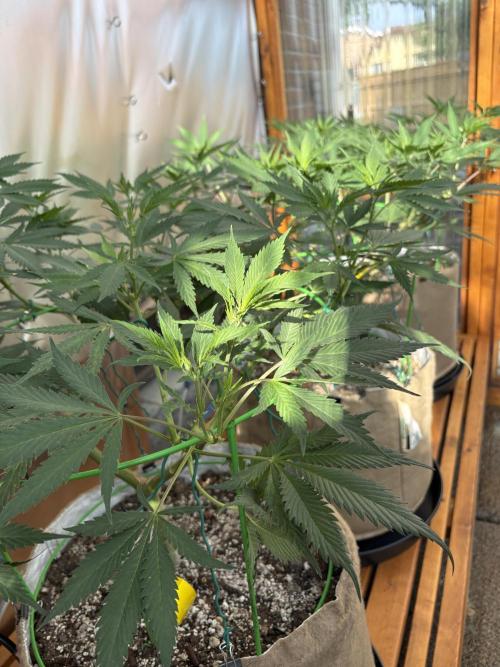
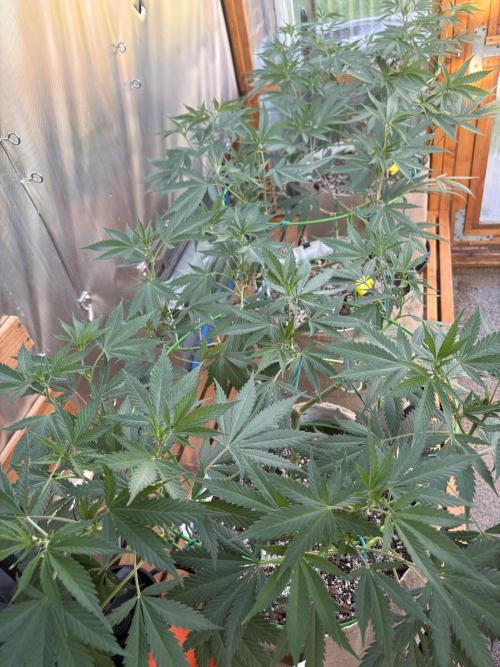
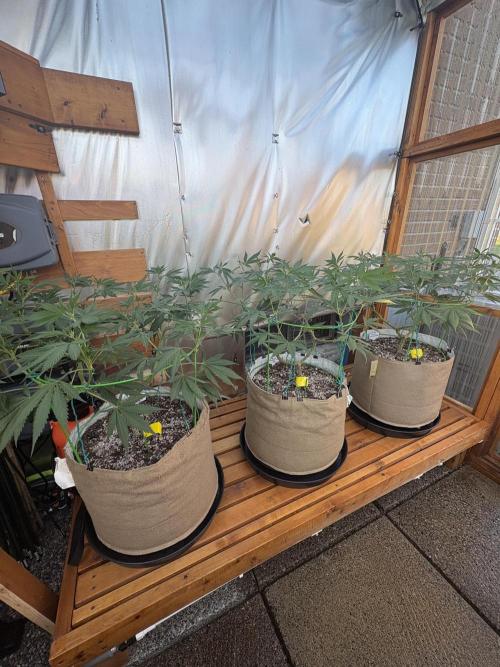
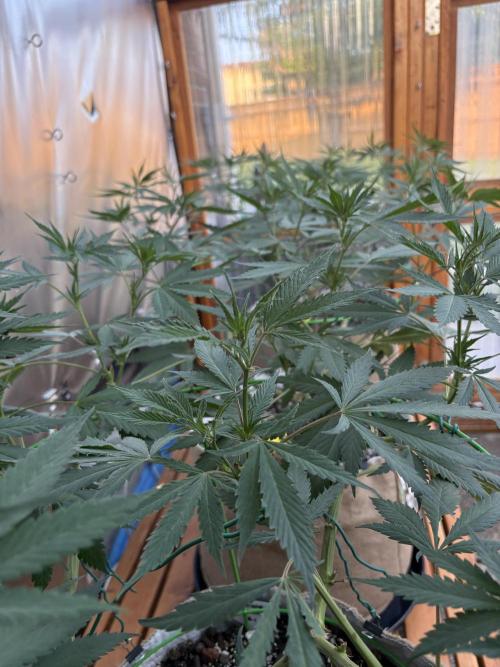
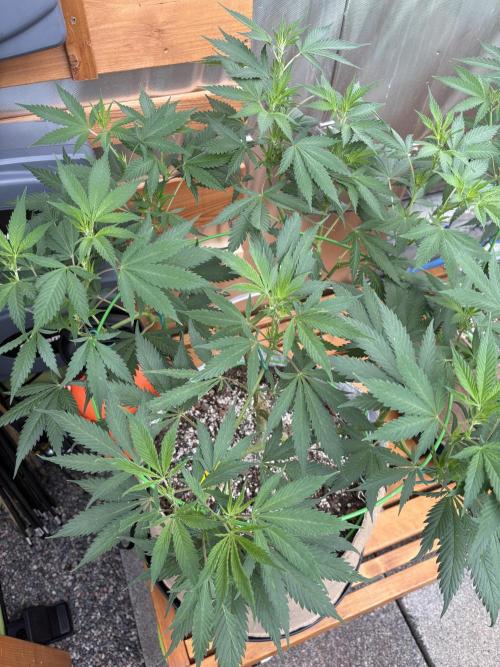
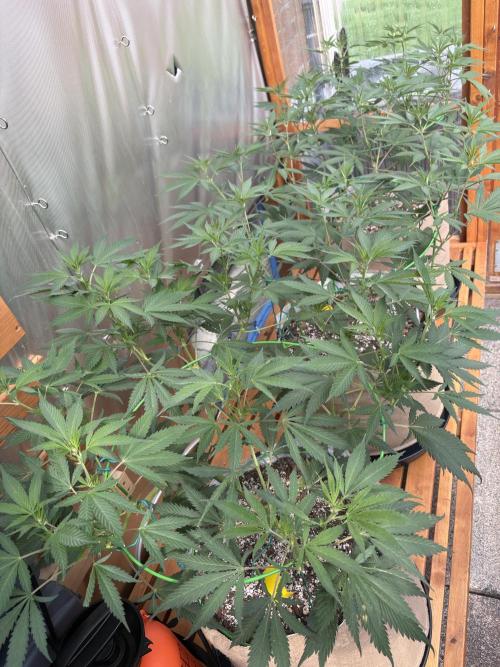
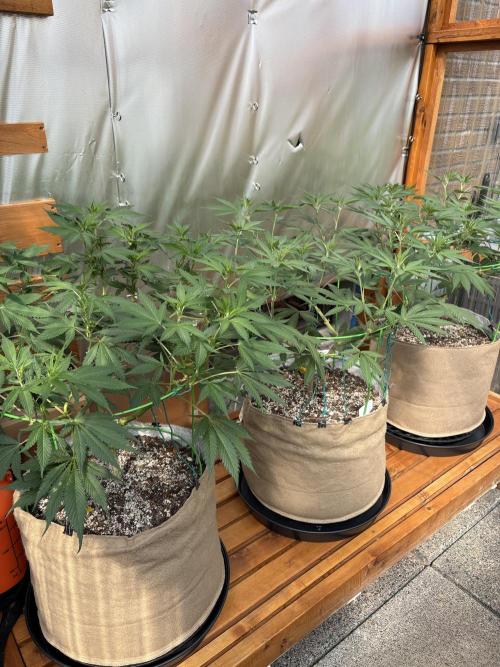
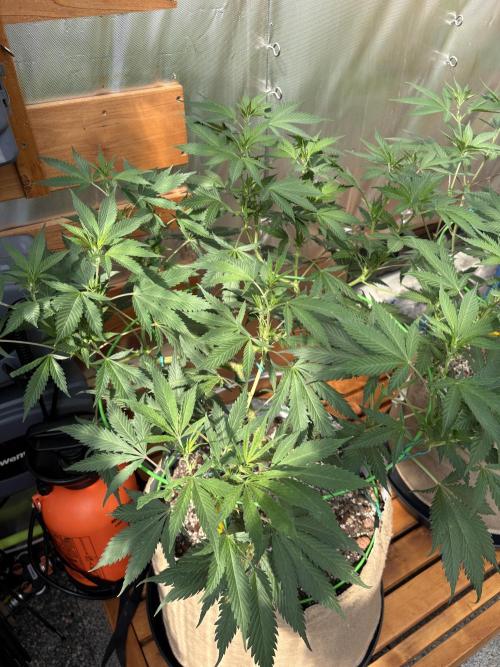
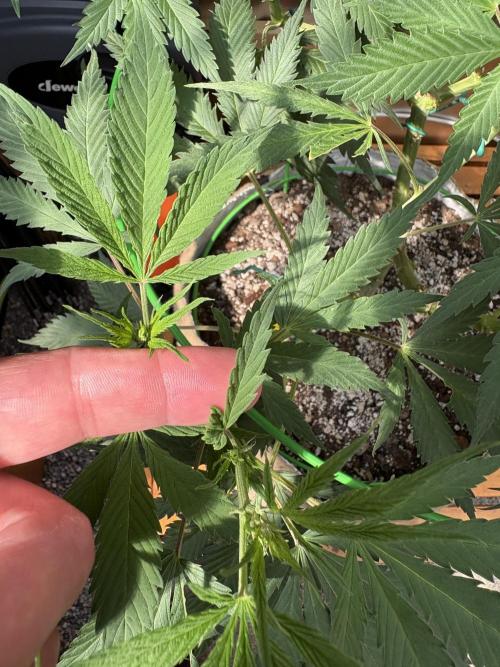
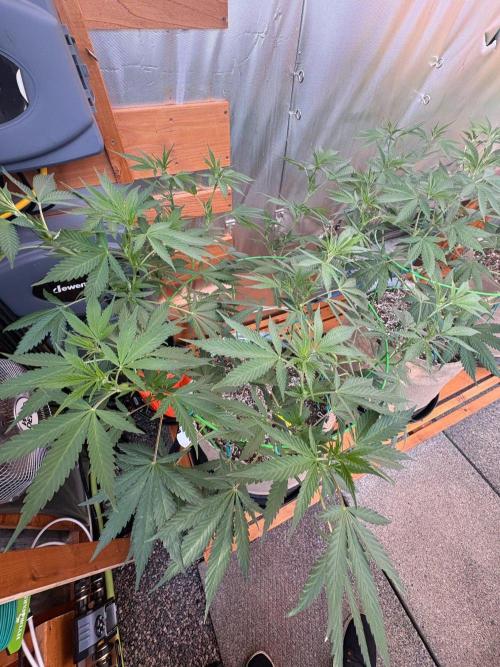
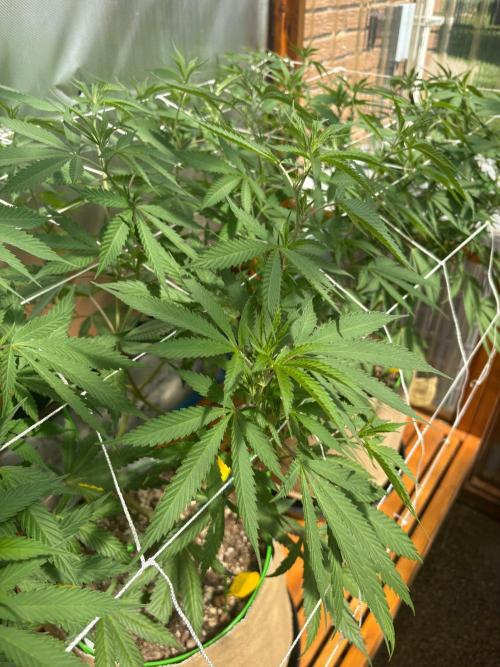
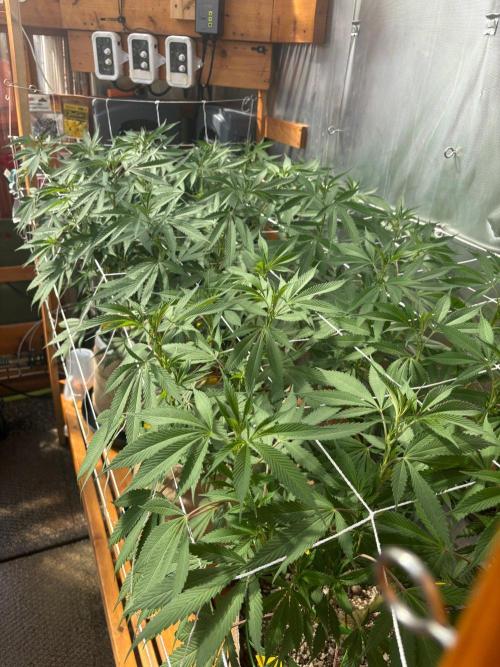
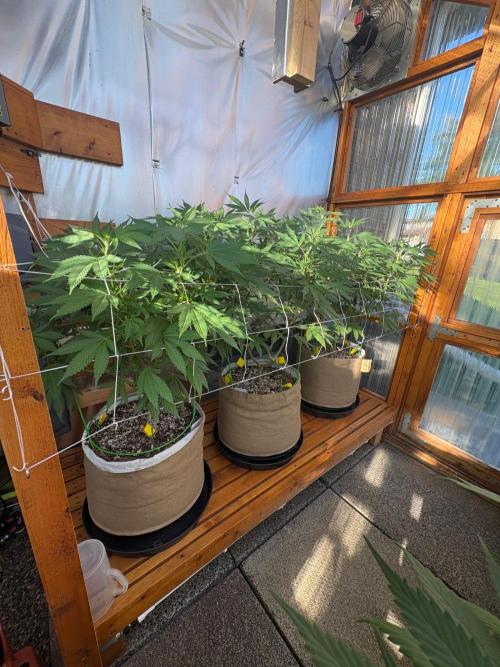
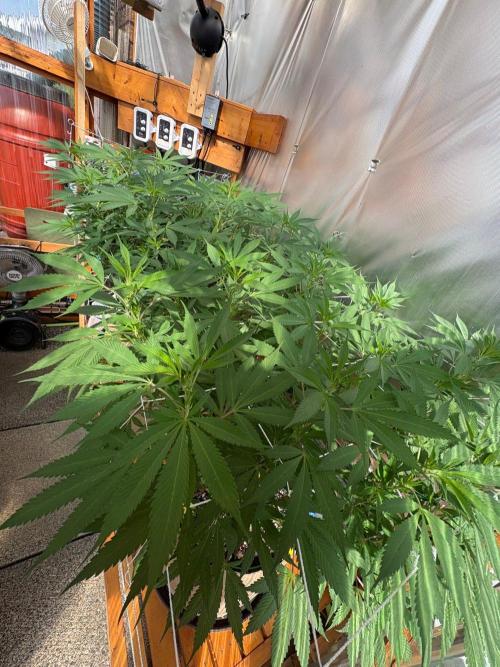
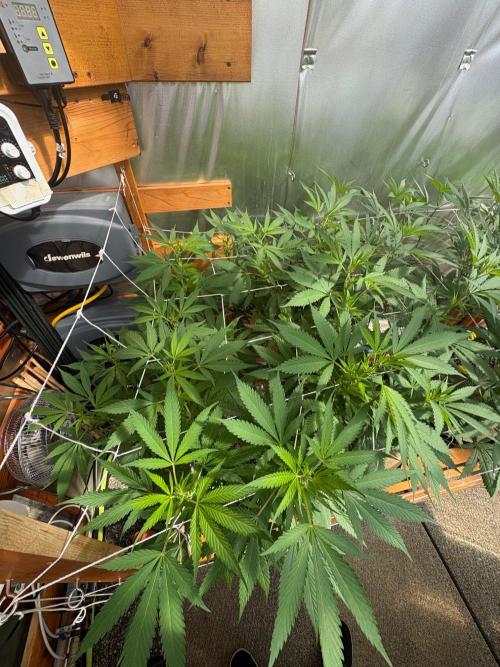
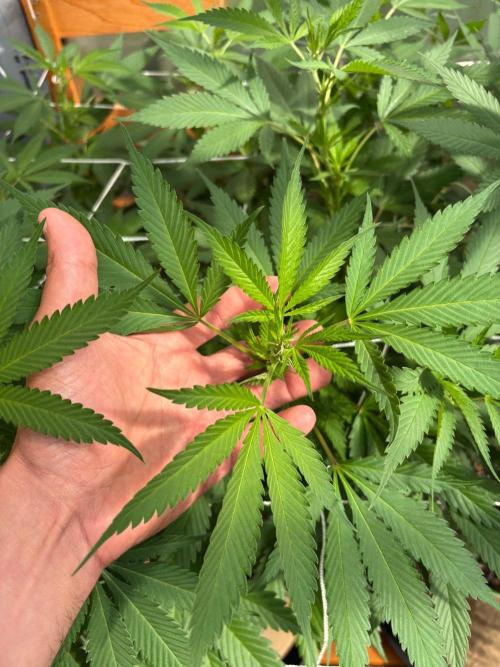
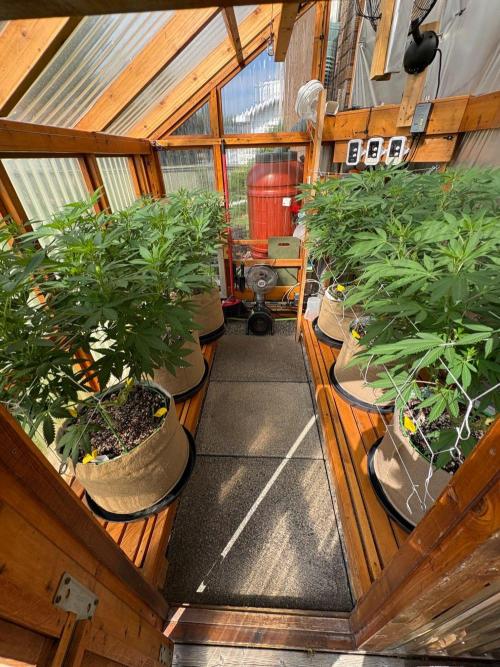
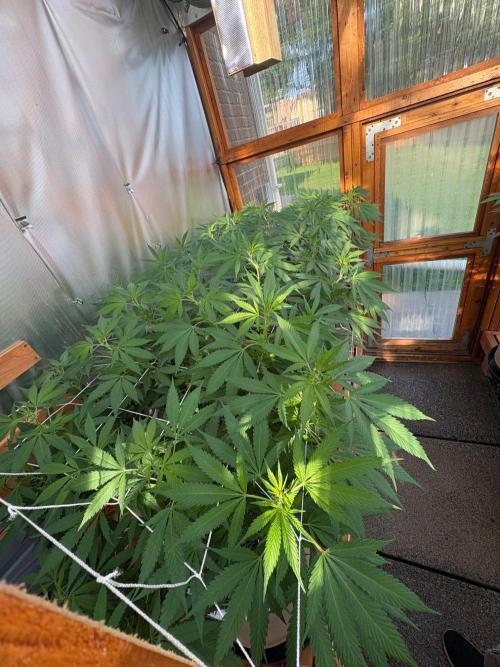
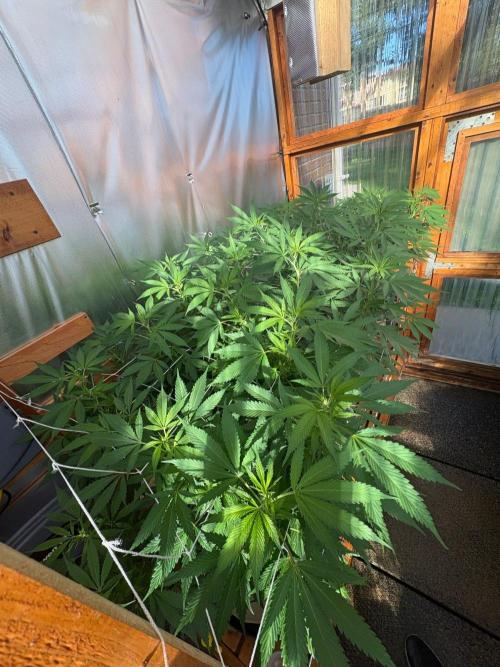
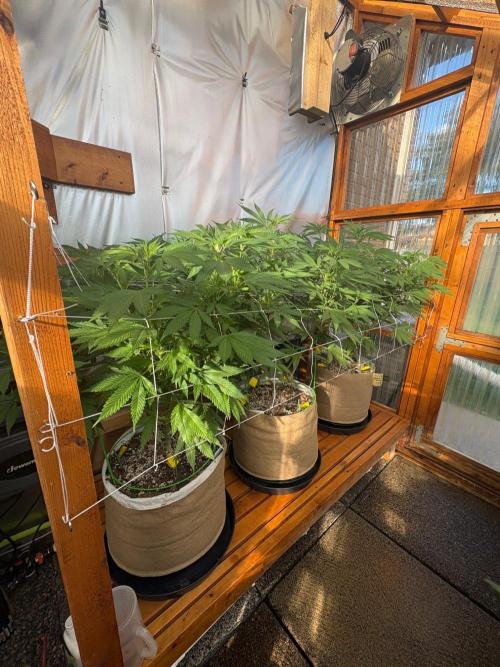
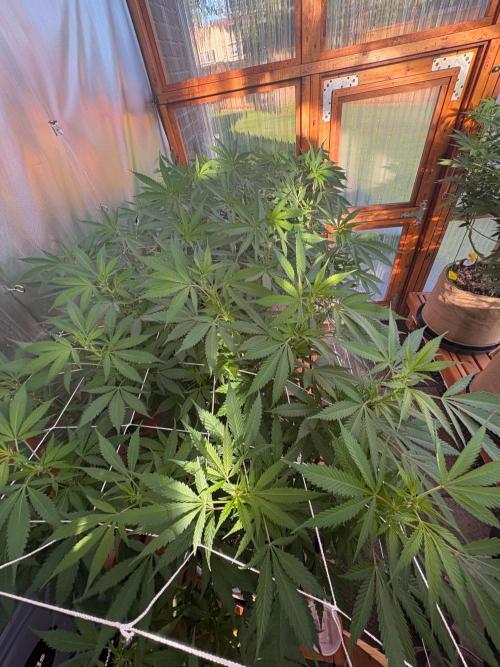
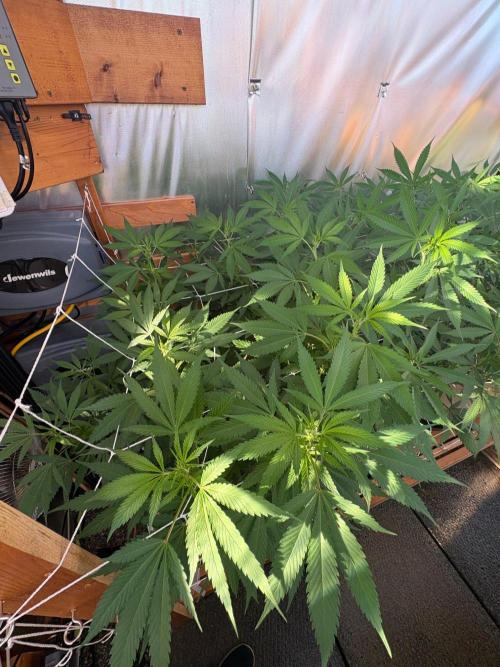
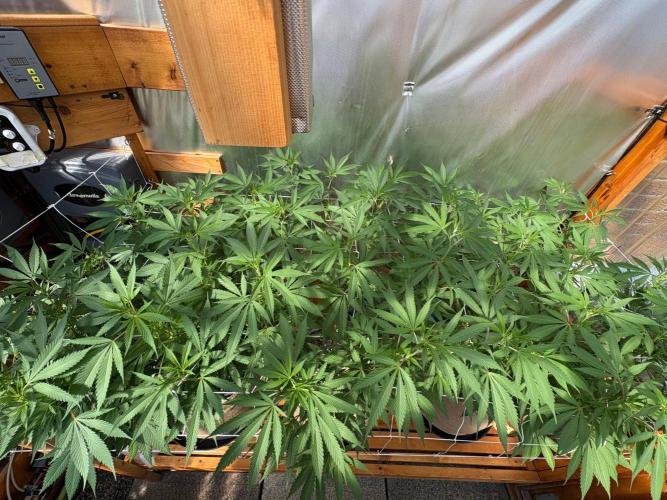
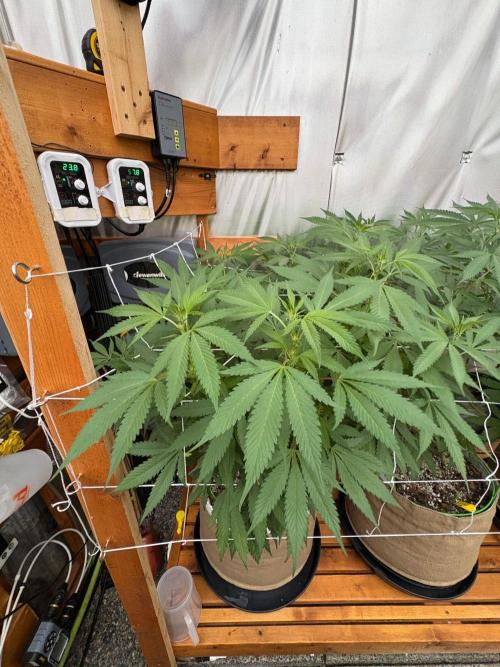
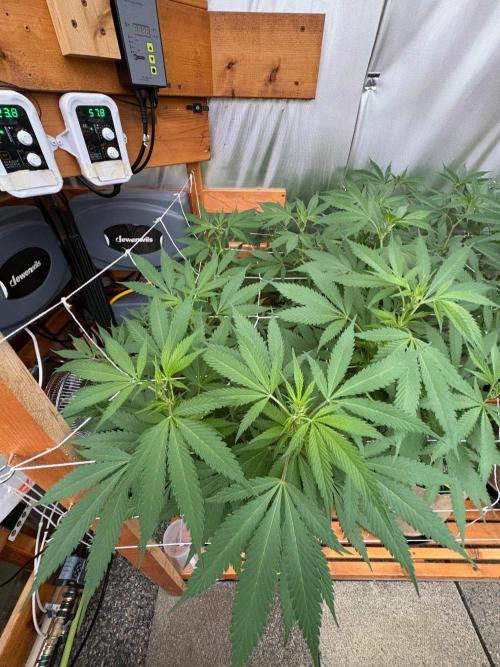
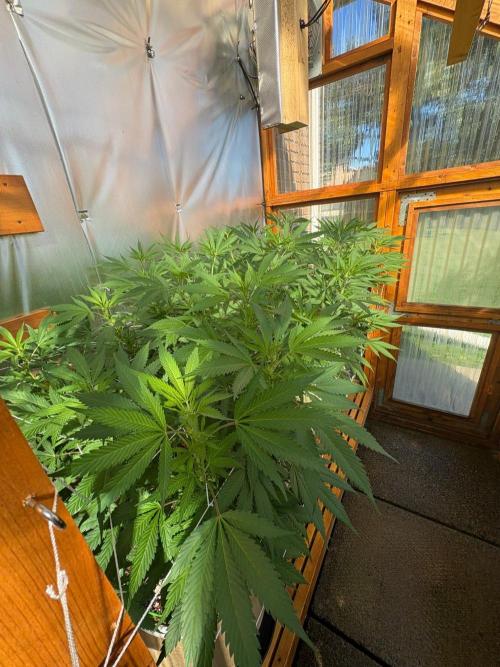
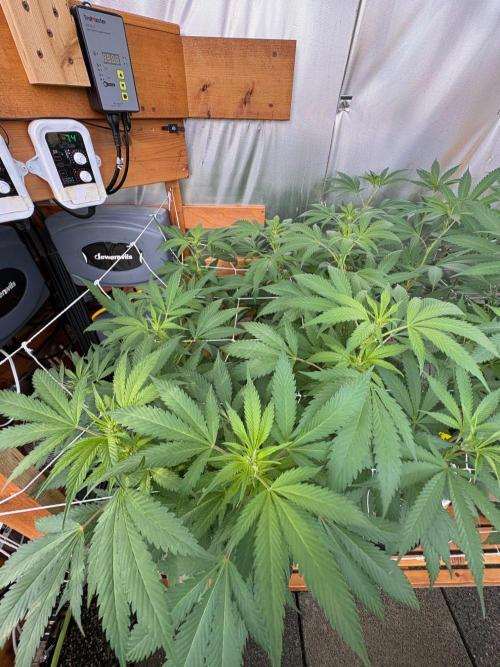
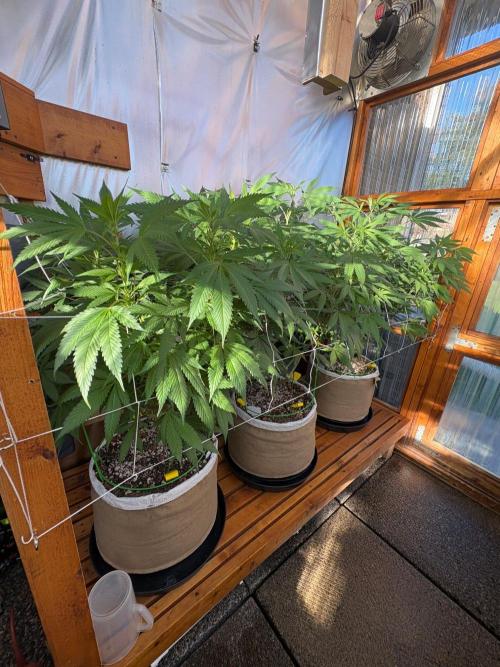
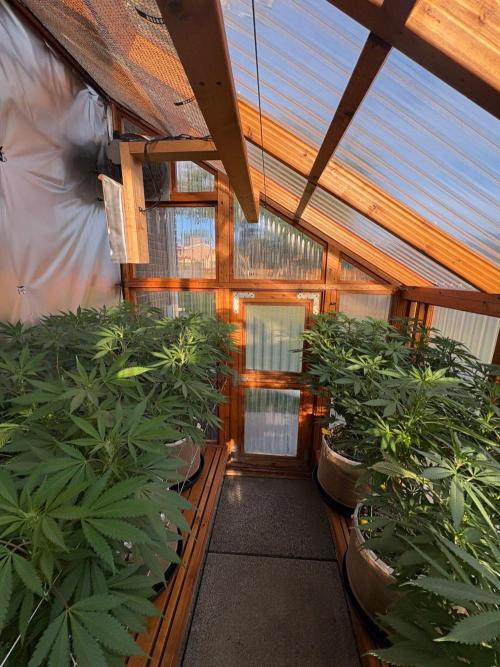
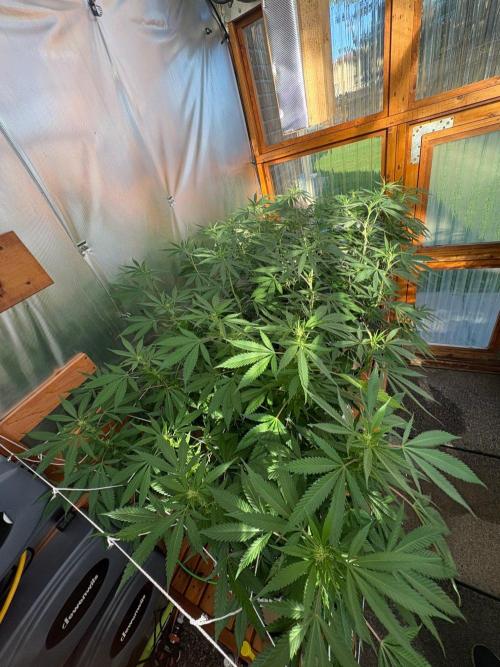
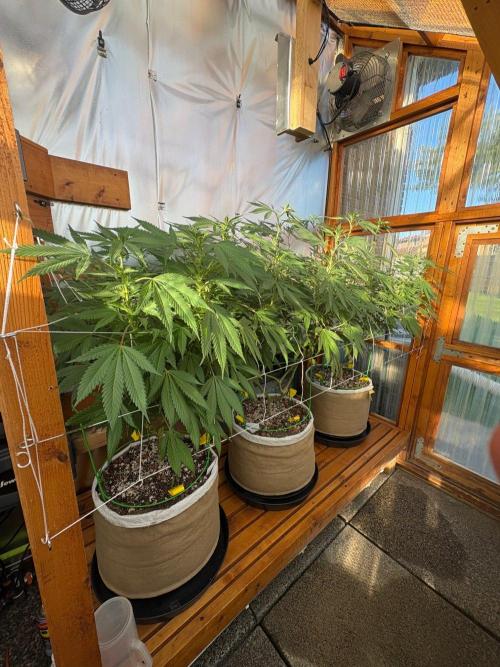
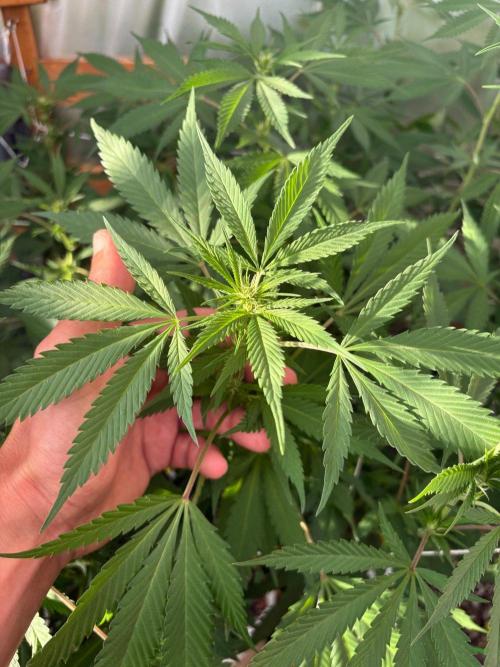
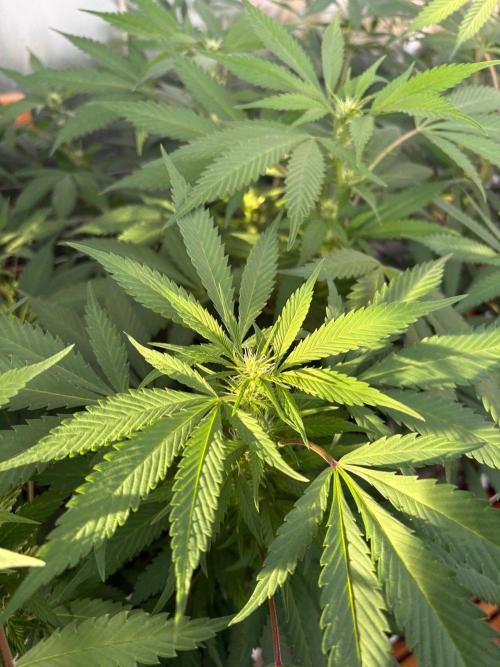
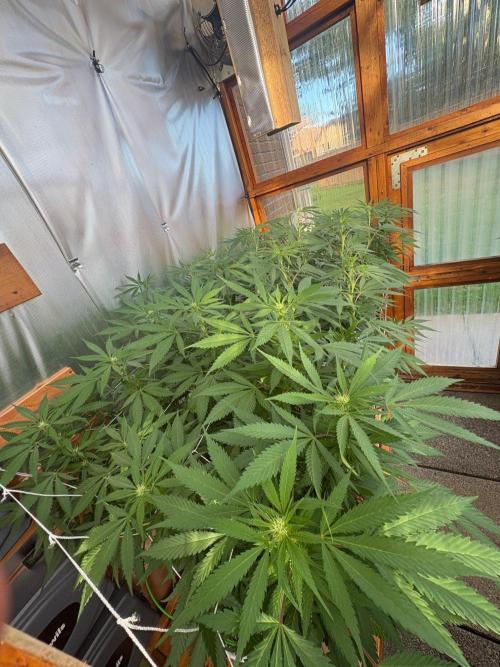
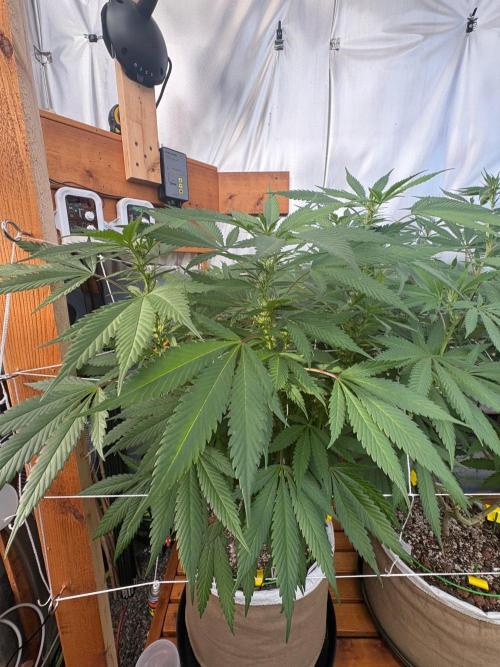
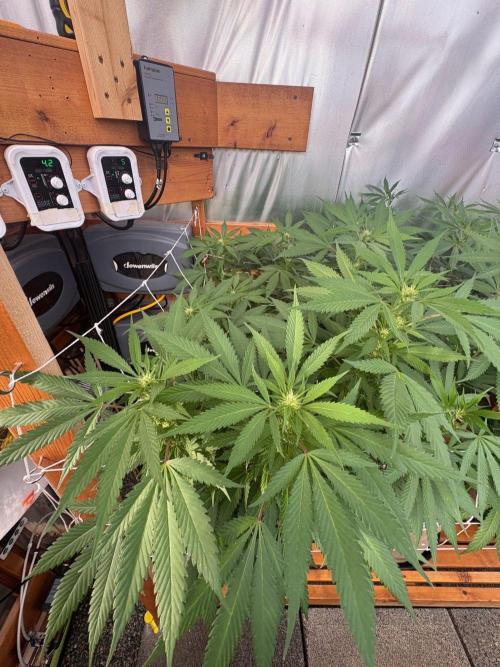
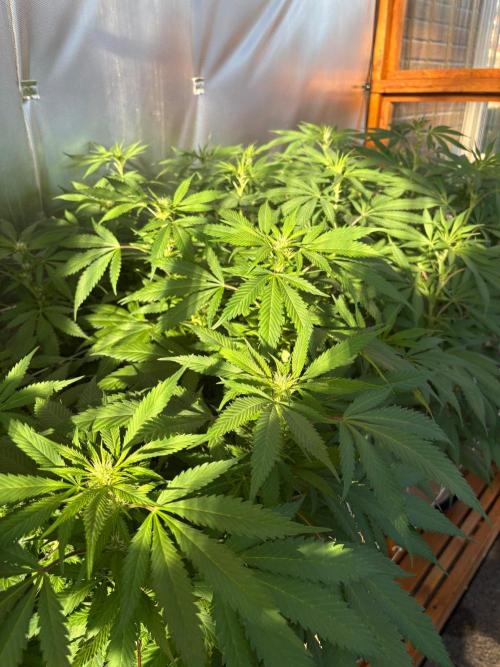
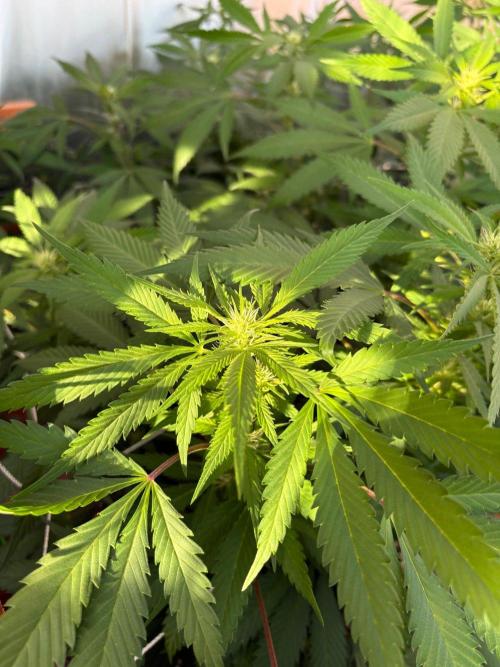
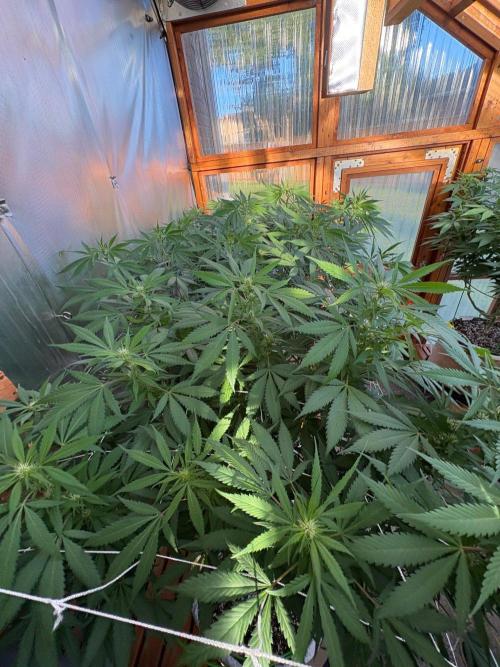
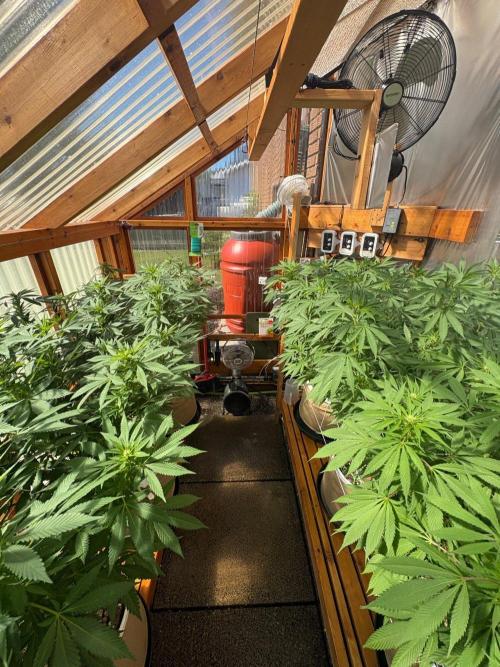
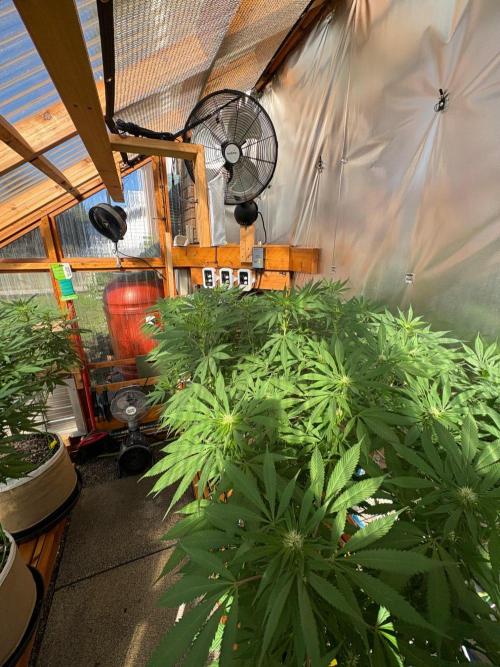
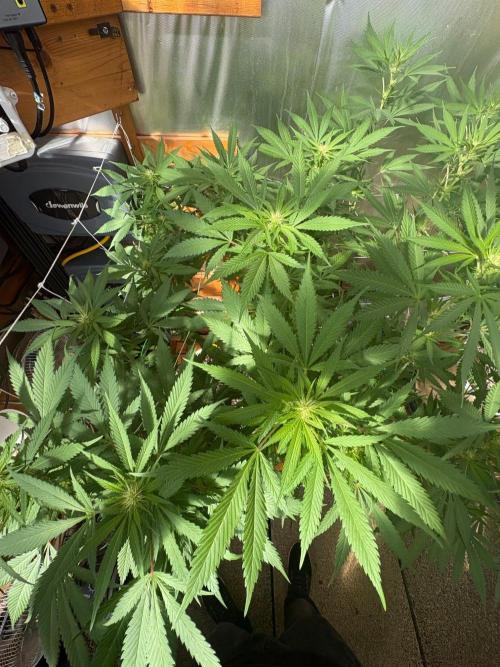
GrapeGod - Summer 2026

1
54
7
75
5d ago
Day/Night Temperature Controller
Plug N Grow
Day/Night Humidity Controller
Plug N Grow
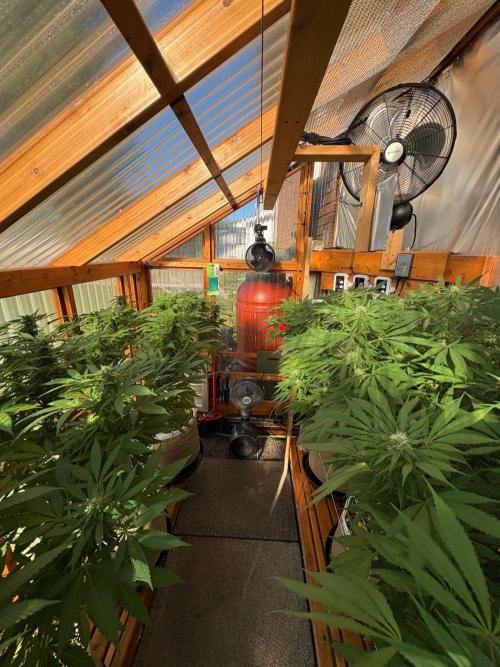
Drip Irrigation from Rain Barrel
Custom Build
Aeration Blend Other
Optimize Organics
Worm Castings Other
Pure Life
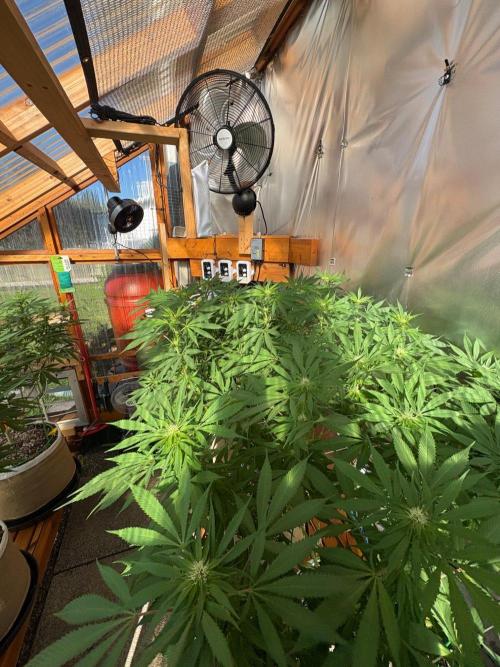
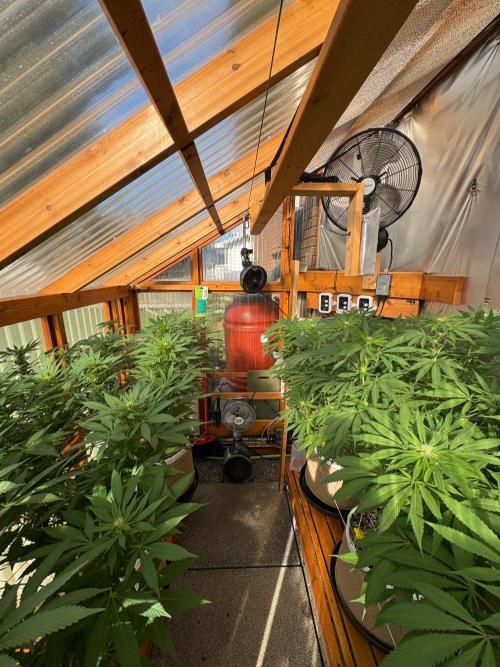
Outdoor
Room Type
Topping
weeks 4
Manifolding
weeks 5
Transplantation
weeks 5
Main-Lining
weeks 5
LST
weeks 6
11 l
Pot Size
Start at 6 Week
G
Germination
2mo ago
Nutrients 2
Arbuscular Mycorrhizal Fungi (Endomycorrhizal)
1 mll
Worm Castings
242 mll
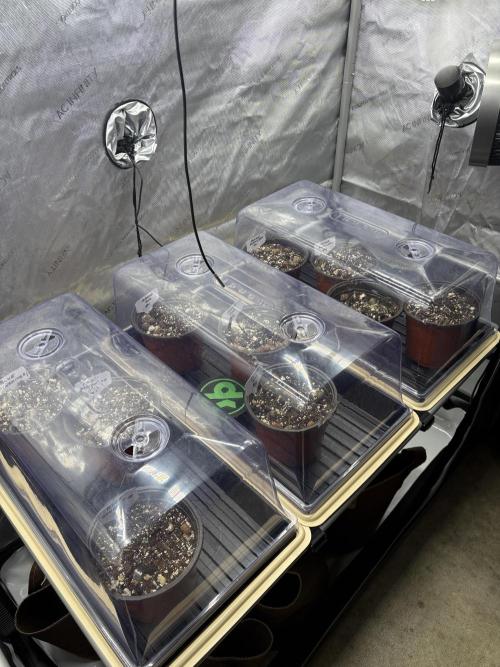
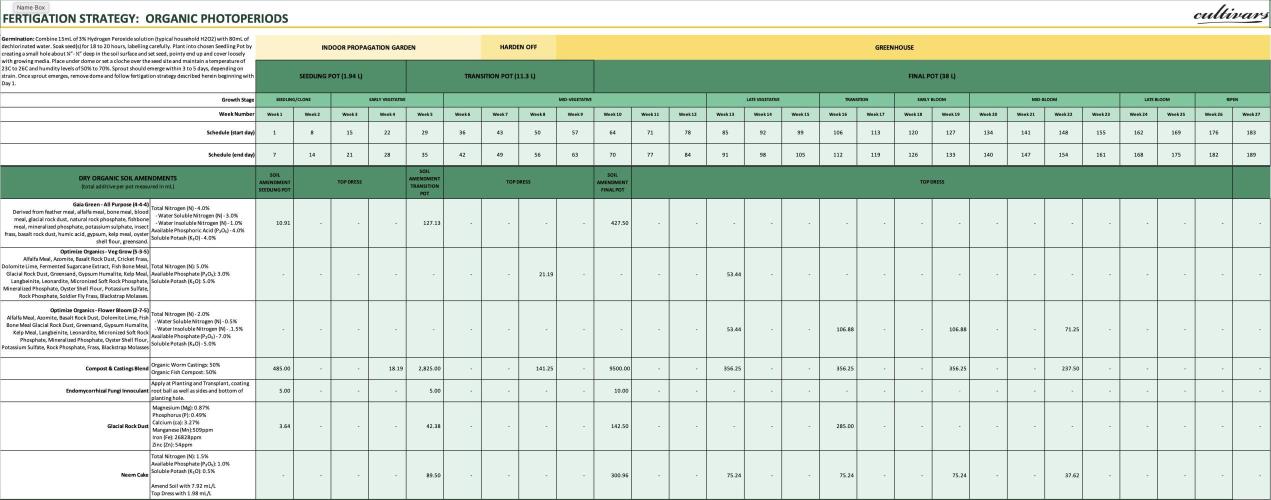
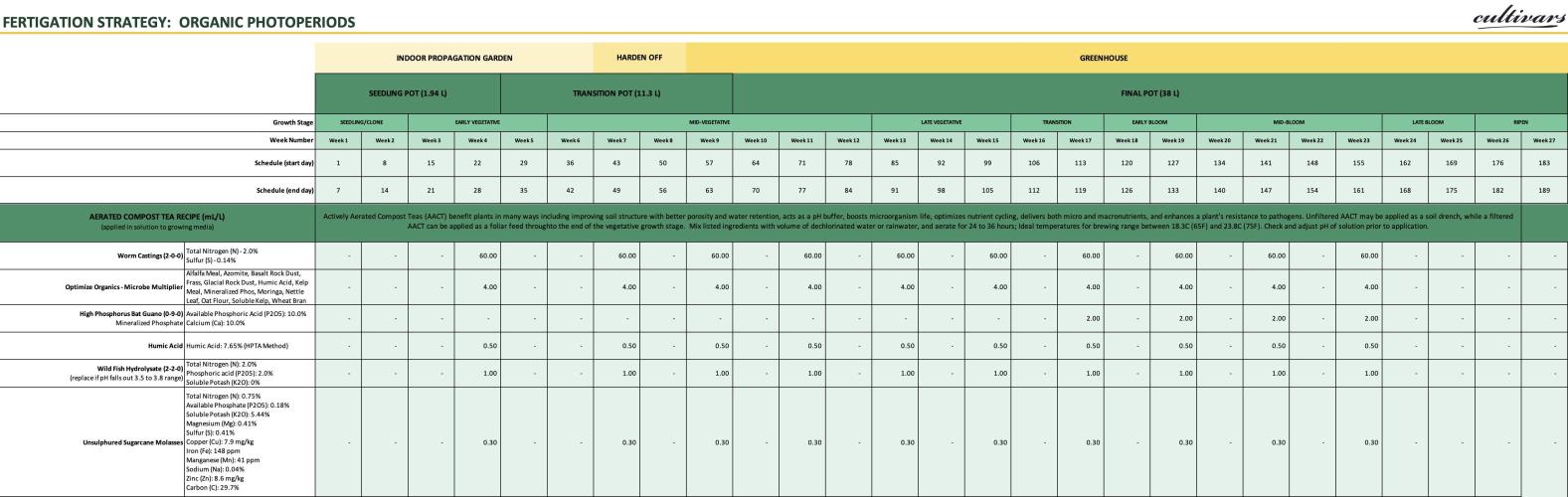
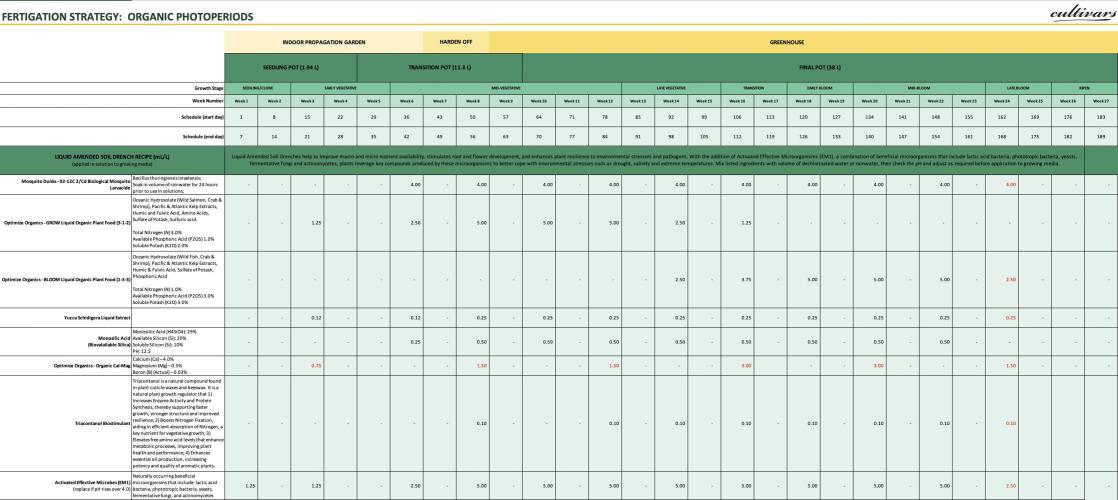
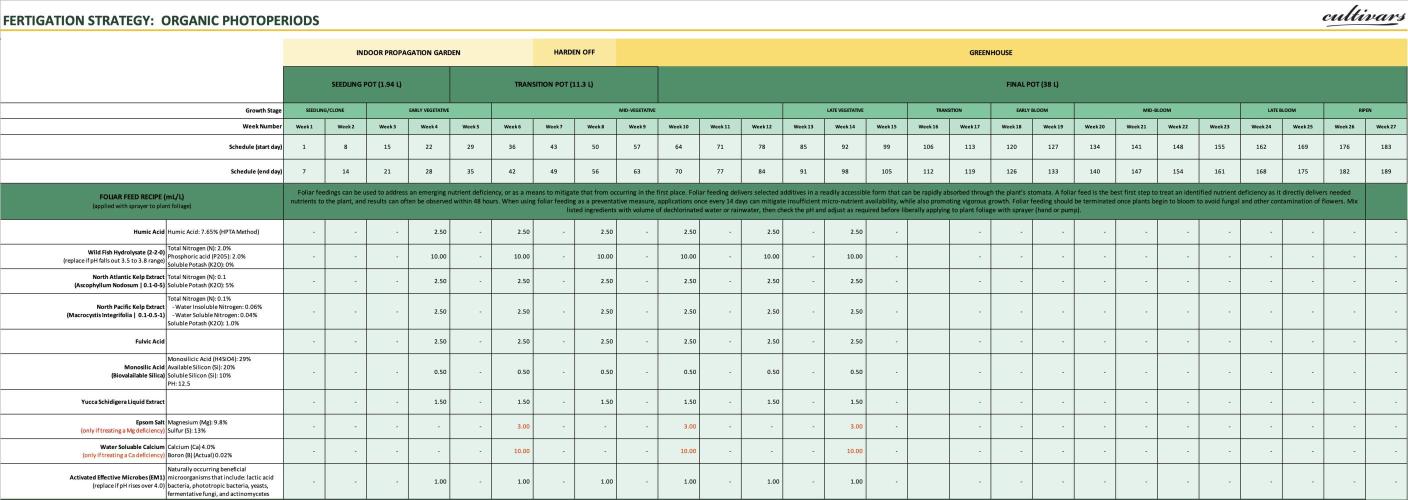
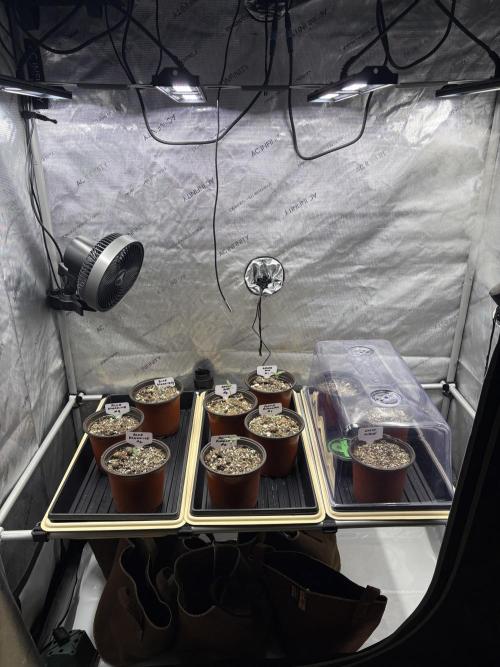
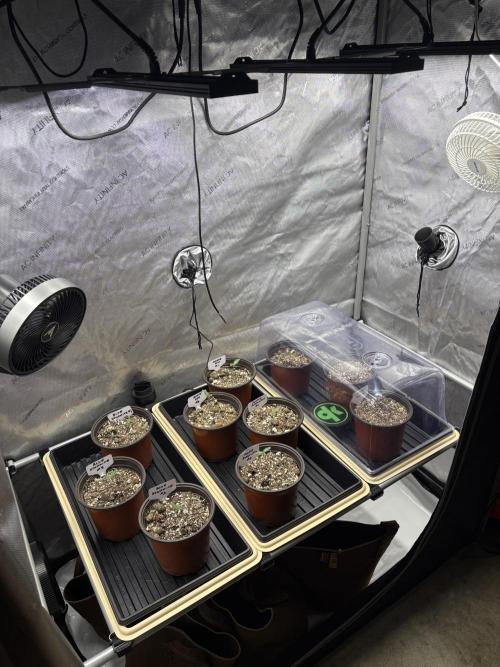
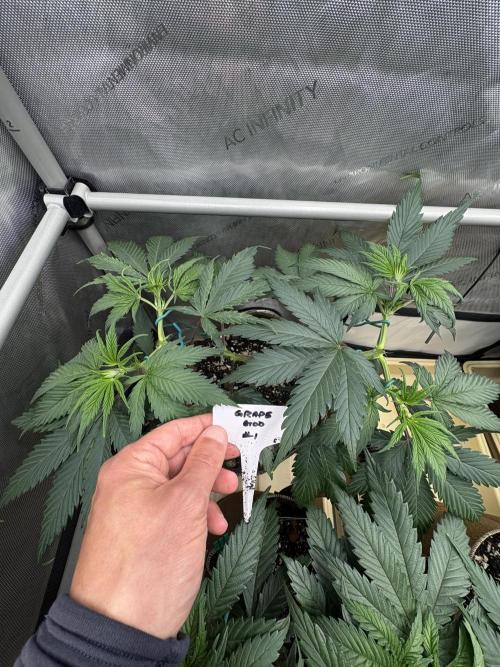
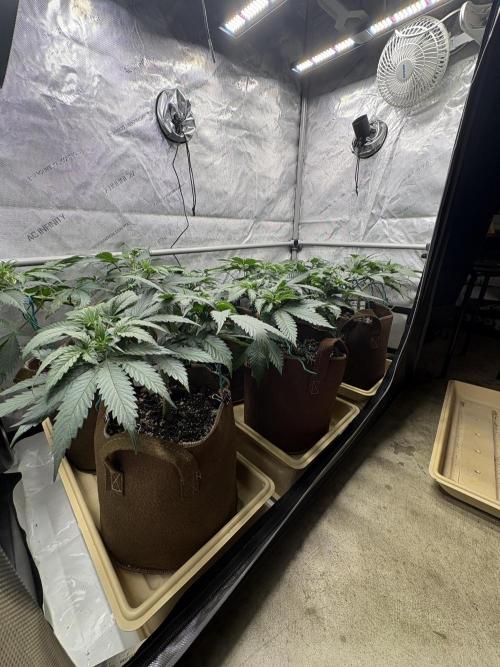
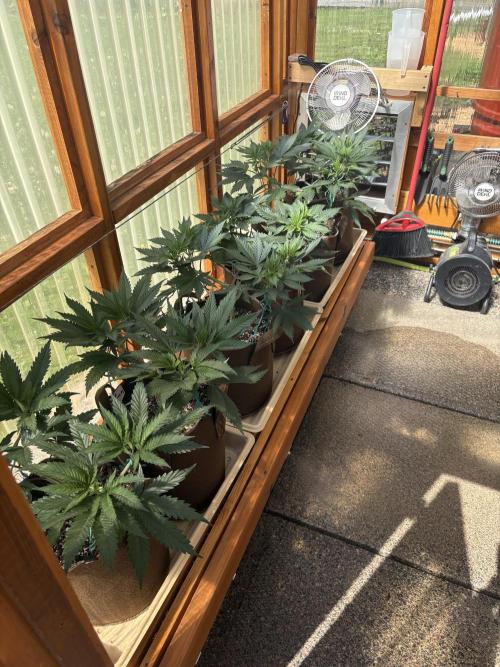
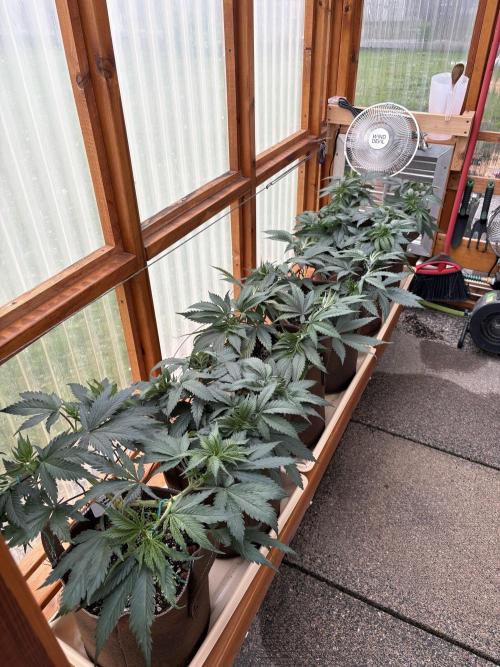
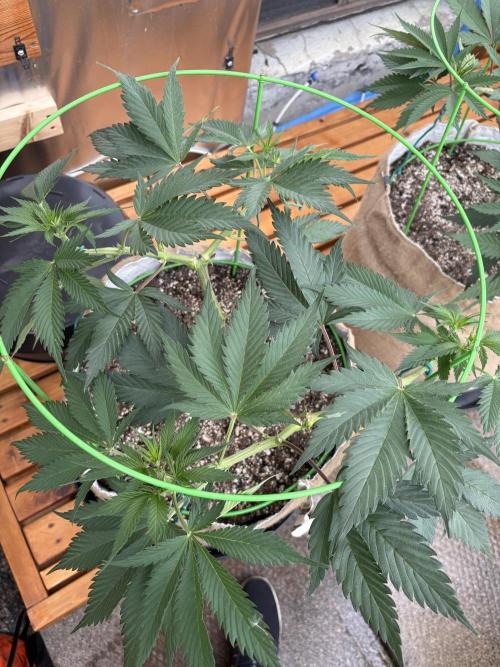
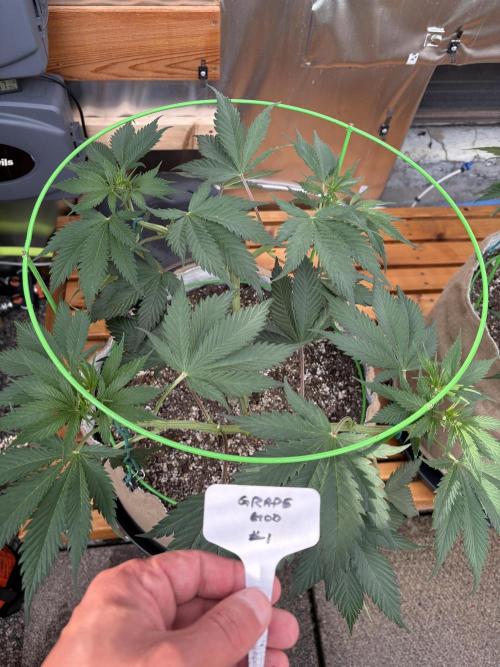
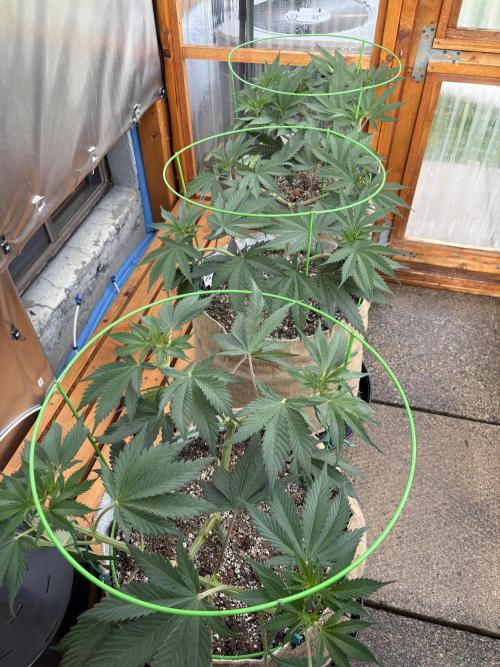
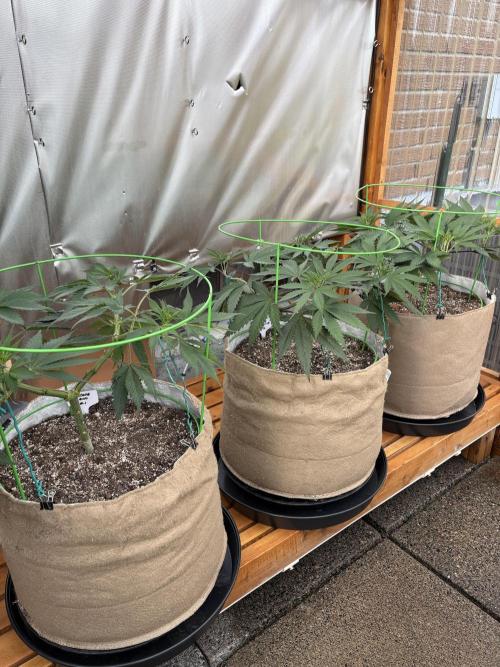
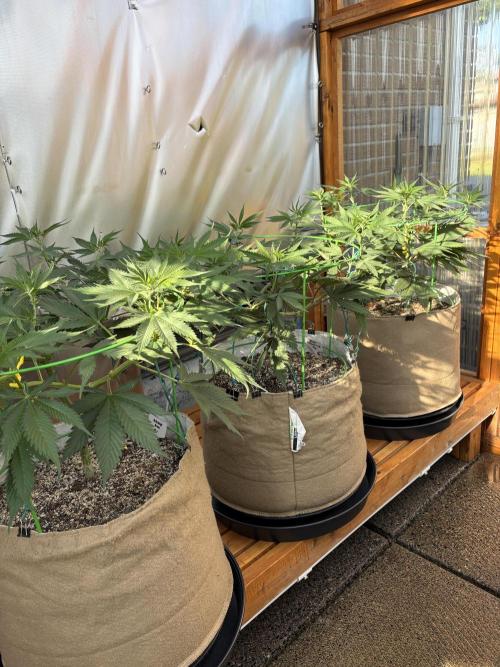
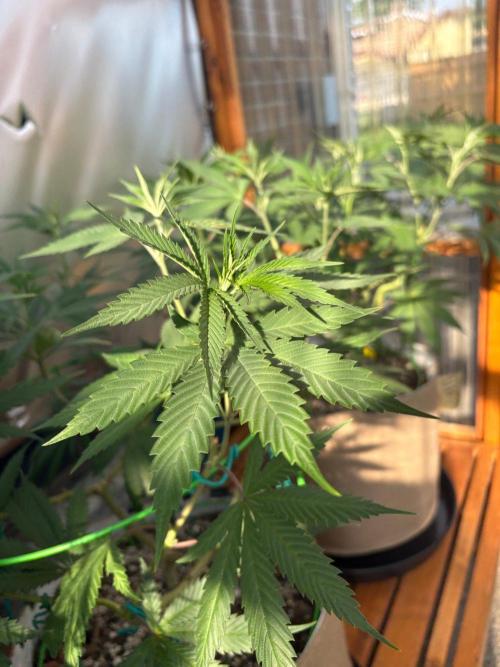
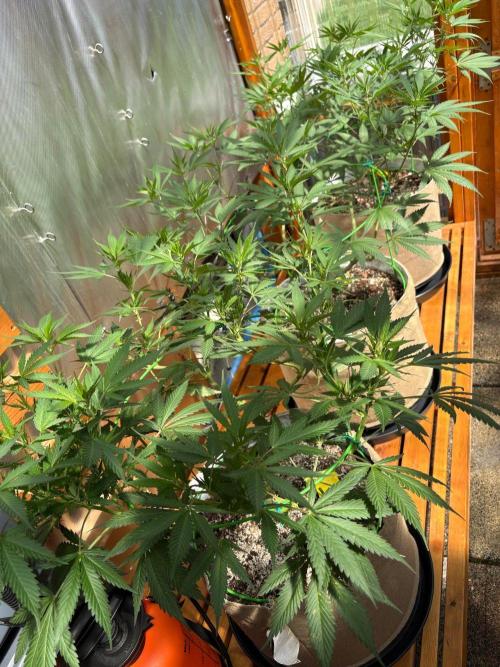
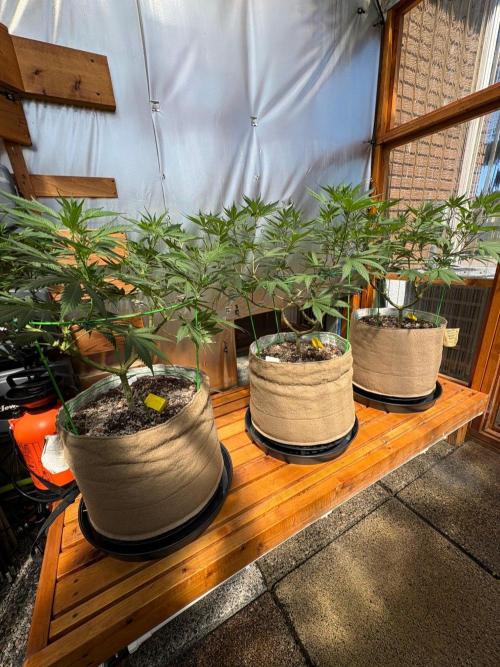
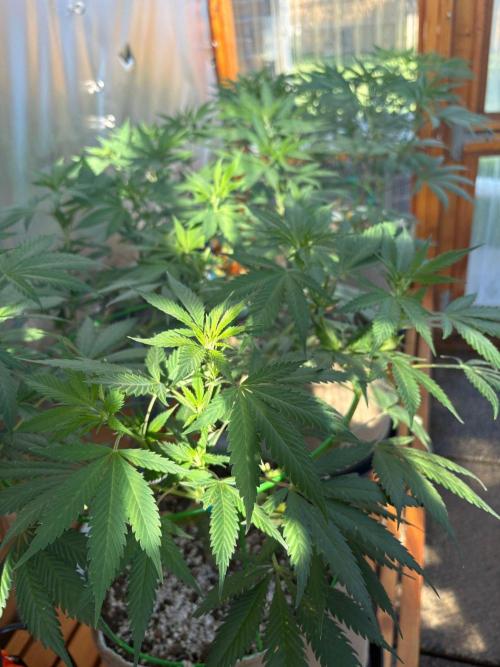
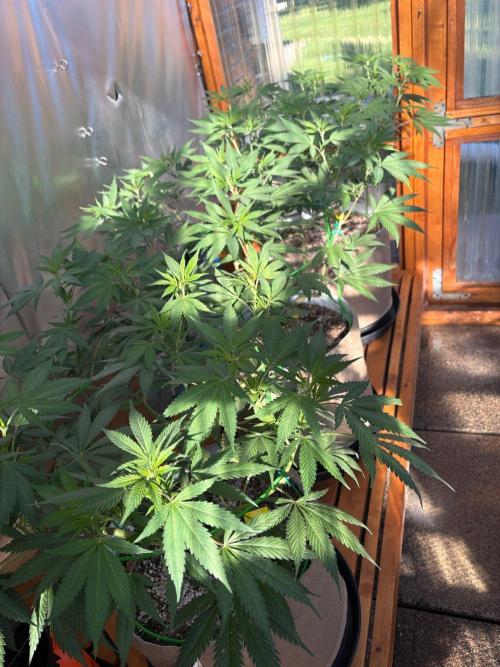
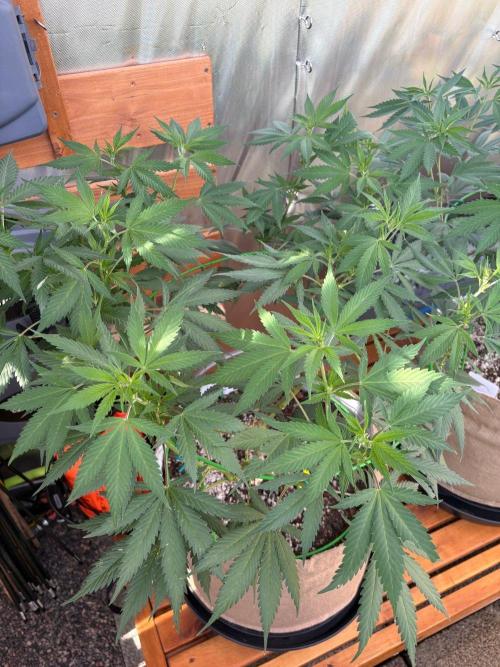
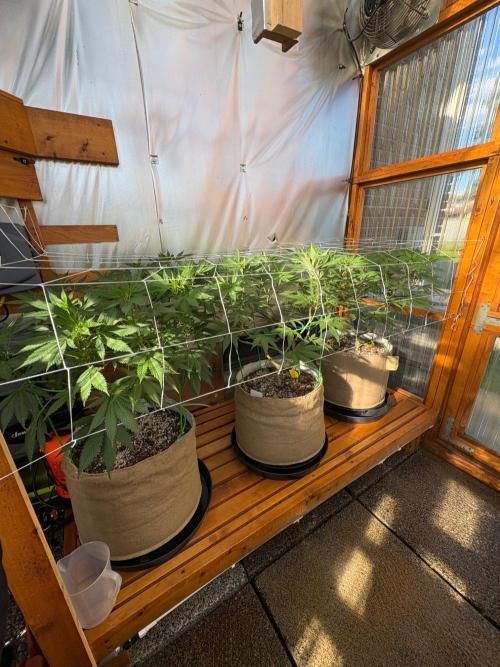
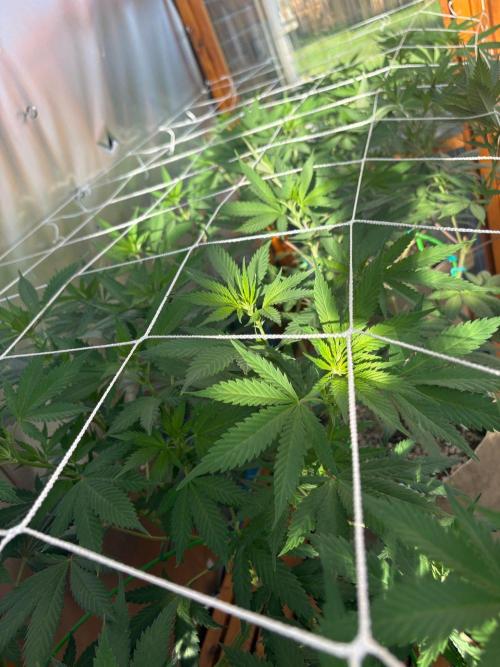
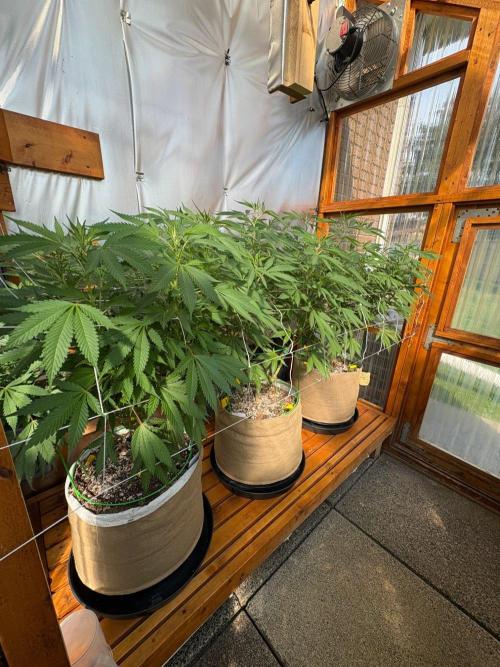
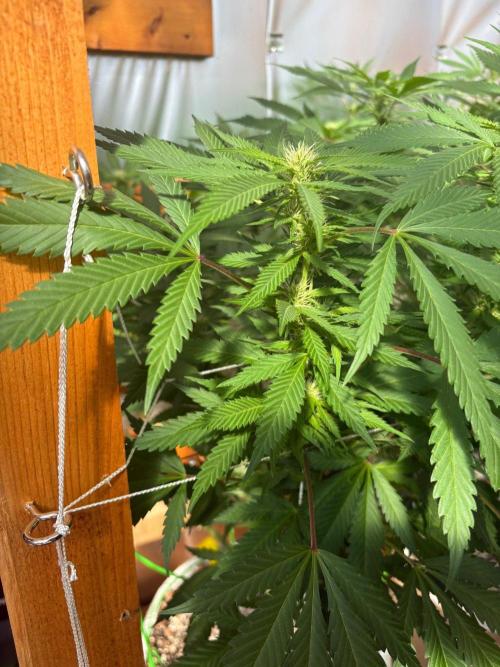
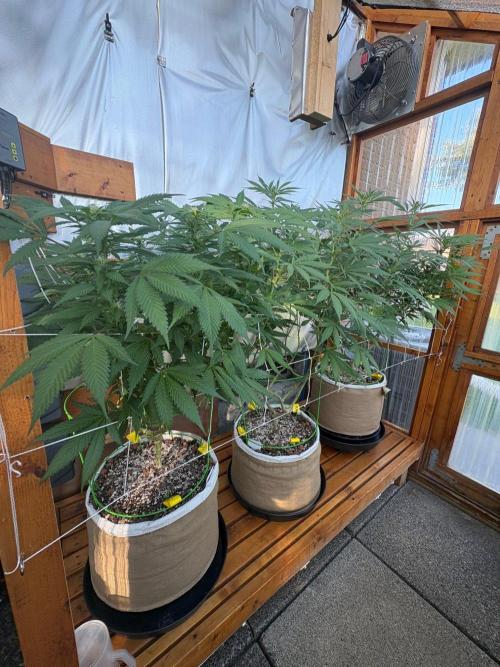
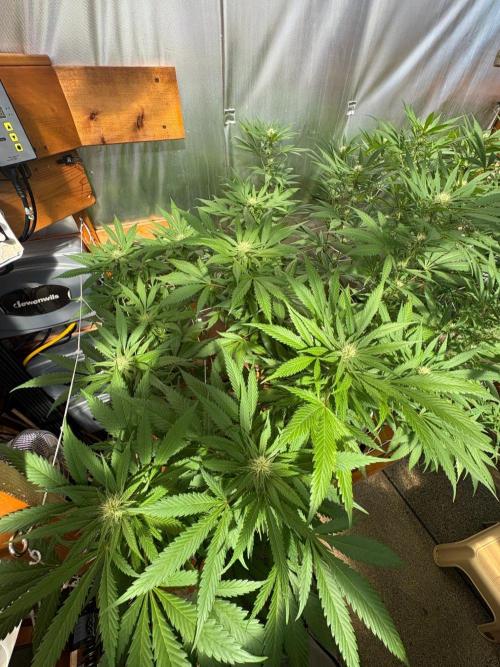
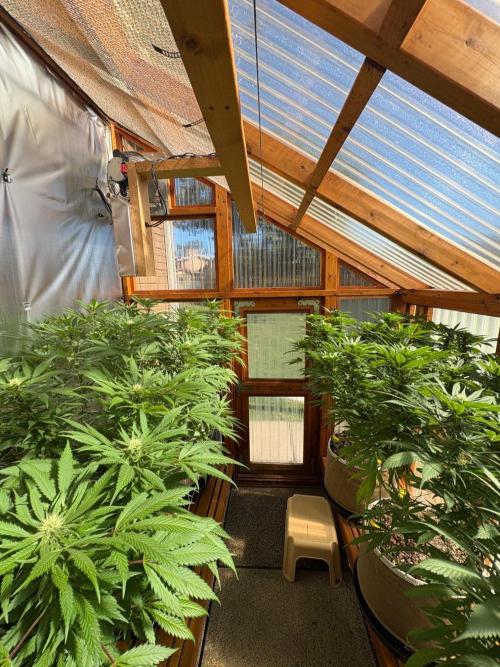
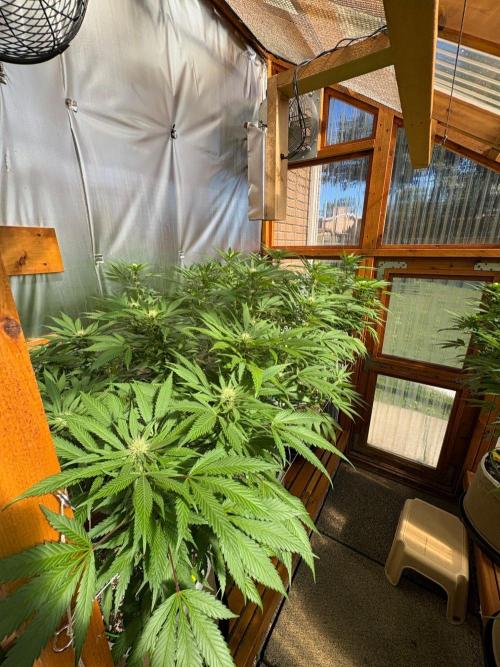
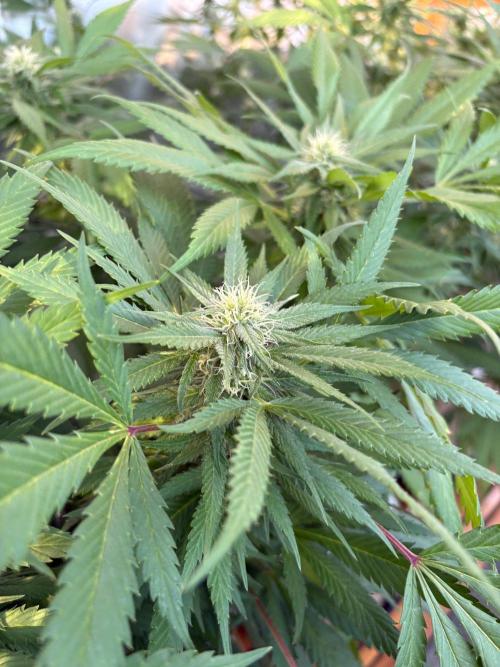
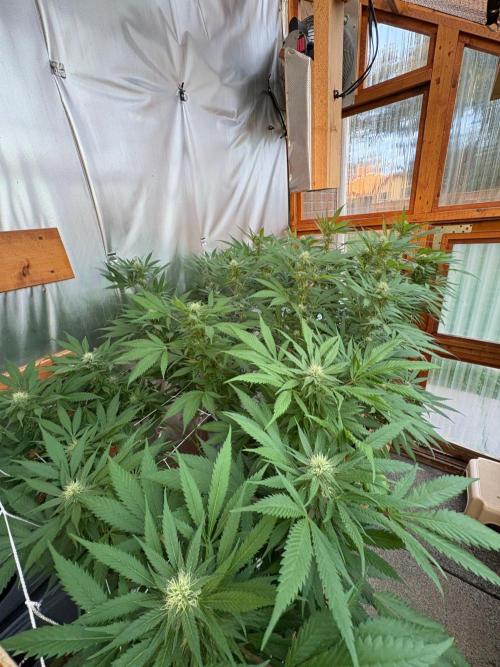
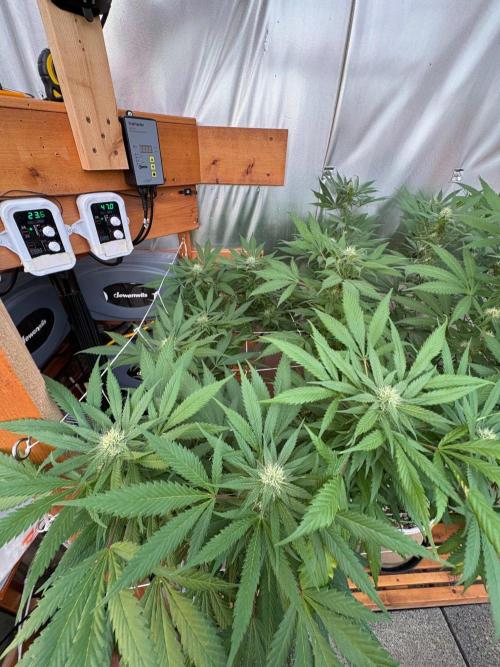
cultivars GERMINATION STRATEGY To germinate my seeds, I follow a three-step process: 1) Seed Scarification; 2) Convection Based Lab Paper Germination Method (CannaKan: https://cannakan.com/) and, 3) Germinated Seed Sowing. To scarify seeds, a process that softens the outer coating of the seed, I create a seed scarification solution by combining 50mL of 3% Hydrogen Peroxide (typical household H2O2) with 100mL of distilled water, then pour in CannaKan, place seeds in CannaKan strainer, then place on heat mat targeting a temperature of 26C. I soak seeds in the solution for no greater than 16 to 20 hours. Following scarification, I remove all liquid from CannaKan and replace with 8mL of H2O2 and 16mL of distilled water. I then place the CannaKan back on heat mat and monitor for the emergence of a radical. To undertake Seed Sowing I fill Seedling Pots (1.94L ea.) with moistened living soil and plant seeds that have an emerged radical that is approximately 6mm to 12mm in length (¼”- ½”). I utilize a custom blended living soil by preparing a mix of peat with aeration and organics as per ratios described on the Fertigation Strategy for Dry Organic Amendments image posted to the gallery of this diary entry. To complete the living soil preparation, I set the filled containers in the propagation garden (no lights, all other systems on), inoculate each with a Soil Drench that includes Activated Beneficial Microbes (ABM) and let sit for a minimum of 5 days prior to Seed Sowing, so as to allow the biology to develop within the growing media. To sow the germinated seeds, I create a small hole in the substrate, about 6mm to 12mm (¼”- ½”) deep in the soil surface, dust the hole thoroughly with up to 3mL of Mycorrhizal Innoculant (Arbuscular Mycorrhizal Fungi Blend), then set the seed in the hole, radical pointed downward into the substrate. I cover the seeds loosely with growing media then mist the soil surface with plain dechlorinated water adjusted to a pH of 6.5. Next I place the pots on a heat mat and under a dome, targeting a temperature range of 23C to 25C and humidity levels of 65% to 70%. Once sprouts appear, the dome is removed. TRANSPLANT AND GROWTH STRATEGY This crop will undergo two transplants, along with a combination of Low Stress Training (Leaf Tucking, Branch Training, Defoliation) and High Stress Training (Topping, Manifolding, Lolli-Popping and Super Cropping) to maximize the size and canopy of each specimen. Germinated seeds are planted in a 1.94L (~0.5 gallon) plastic pot and grow through seedling stage and into early vegetative stage, in an indoor environment under an LED Light Fixture. When ready (between days 29 and 35), specimens will be transplanted to an 11.3L fabric Transition Pot (~3 gallon) and once recovered (5 to 7 days), will be transitioned to the greenhouse setting over a 10-day hardening-off process. Plants will continue to grow through early to mid-vegetative stage and when ready (between days 64 and 70 or no later than approximately 4 weeks from the beginning of flowering), will undergo one more transplant to a fabric 37.7L Final Pot (~10 gallon) where the individuals will complete their life cycle through to harvest. FERTIGATION STRATEGY I employ a multi-faceted organic fertigation methodology that leverages only those amendments that comply with Canada’s Organic Production Systems General Principles & Management Standards and Permitted Substances Lists (CAN/CGSB-32.310-2021 CAN/CGSB-32.311-2020). I use dry organic amendments as well as compost and worm castings to amend soil, and supplement at regular intervals throughout the life-cycle with top dressings. Aerated compost teas and liquid amended soil drenches are applied bi-weekly (rotating: one week soil drench, next week compost tea), and I foliar feed through to the beginning of the flowering stage (bi-weekly).
9 likes
3 comments
Share
Used method
Other
Germination Method
1
Week 1. Vegetation
1mo ago
4.5 cm
Height
18 hrs
Light Schedule
25 °C
Day Air Temp
6.5
pH
No Smell
Smell
65 %
Air Humidity
18 °C
Solution Temp
22 °C
Night Air Temp
2 l
Pot Size
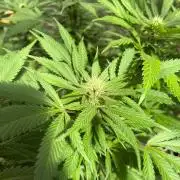
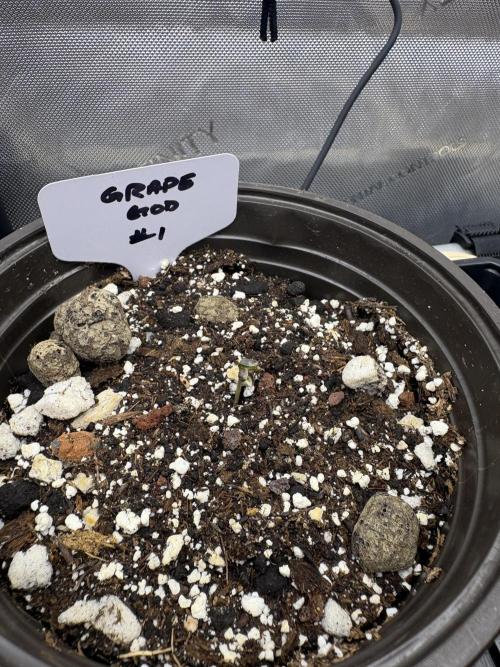
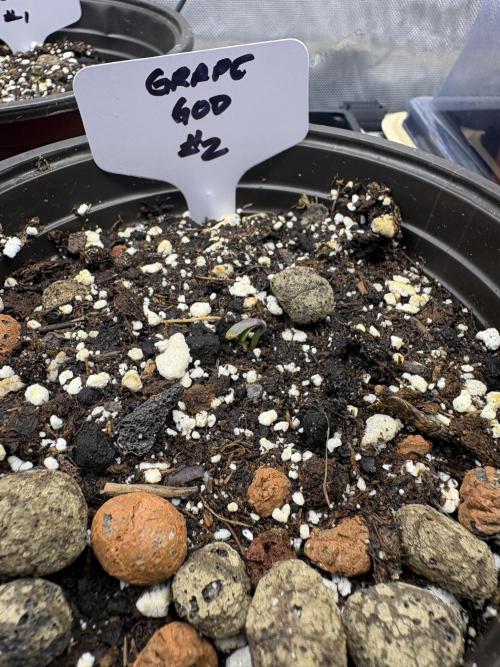
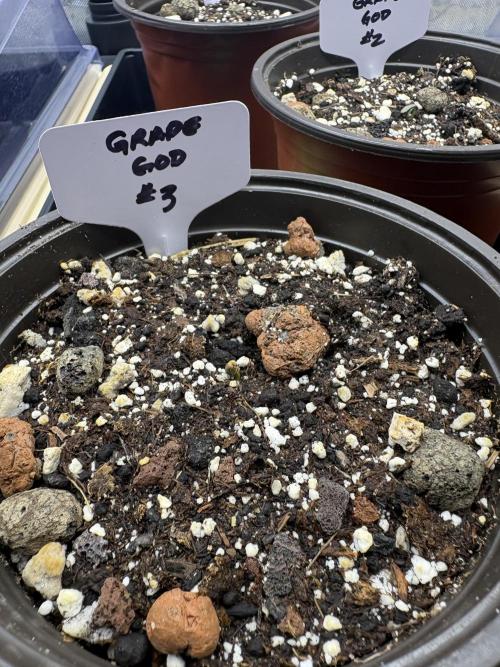
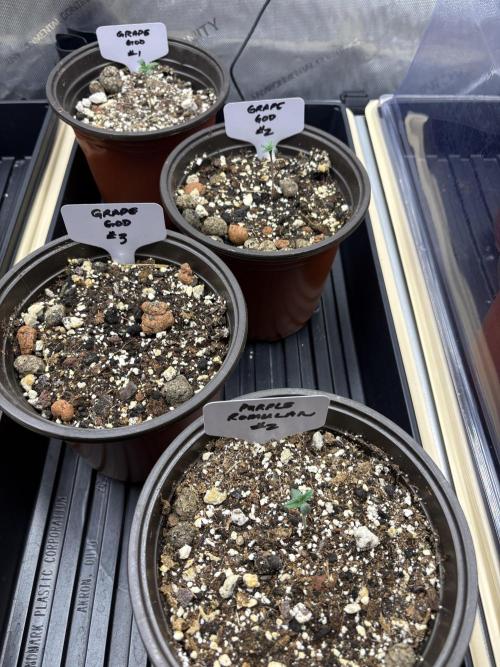
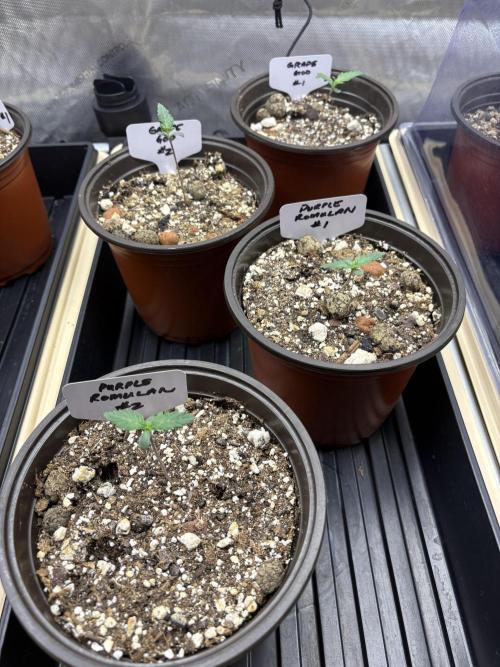
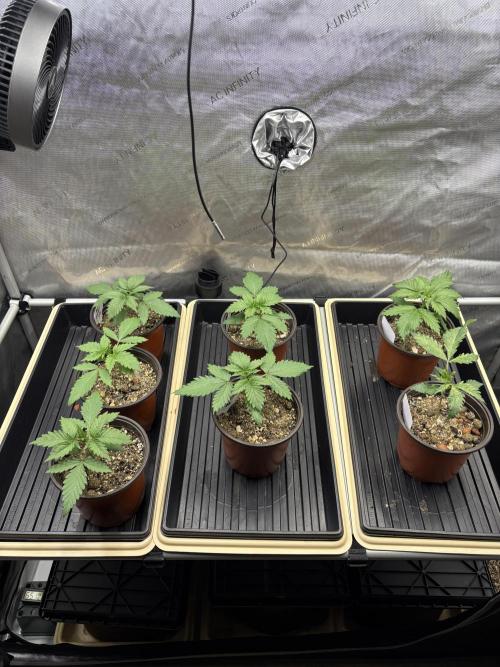
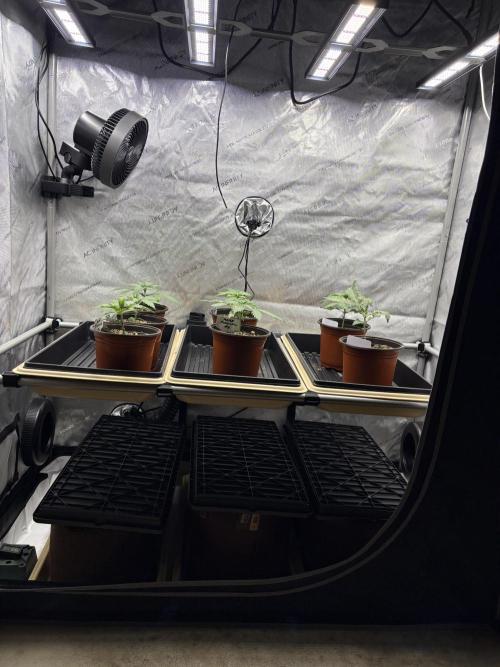
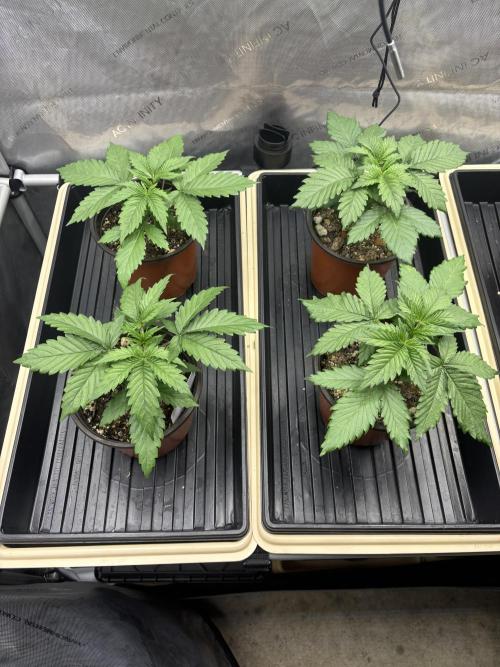
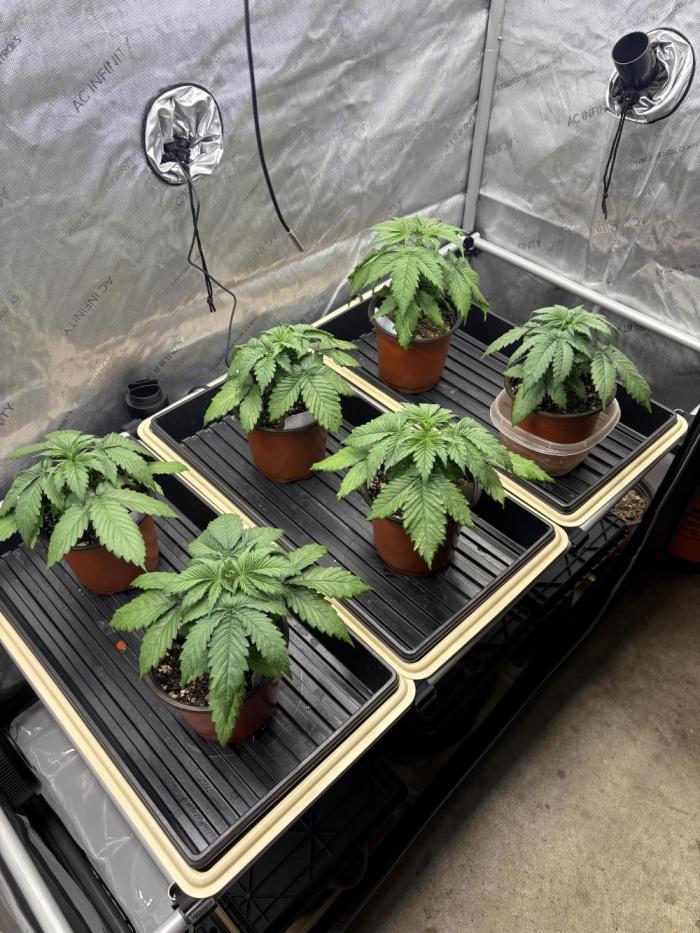
cultivars APRIL 25 to MAY 1, 2026 VPD (DAY): 0.8 kPa | VPD (NIGHT): 0.7 kPa | DLI: 13 Not much to report, specimens have appeared to have established themselves. Did lose GrapeGod #3 on Day 3, presumably due to dampening off or grower error (I messed with it to try and assist with shedding the seed casing, might have not been gentle enough). GrapeGod #1 and GrapeGod #2 appear fine, if not perhaps a bit overwatered. Will allow a better dry back this week. Specimens a bit stretchy compared to other strains in the garden. DAY 1 - n/a DAY 2 - n/a DAY 3 - n/a DAY 4 - 200mL of plain dechlorinated water pH'd to 6.5 DAY 5 - n/a DAY 6 - n/a DAy 7 - n/a
9 likes
2 comments
Share
2
Week 2. Vegetation
1mo ago
18 hrs
Light Schedule
25 °C
Day Air Temp
6.5
pH
No Smell
Smell
65 %
Air Humidity
18 °C
Solution Temp
22 °C
Night Air Temp
2 l
Pot Size
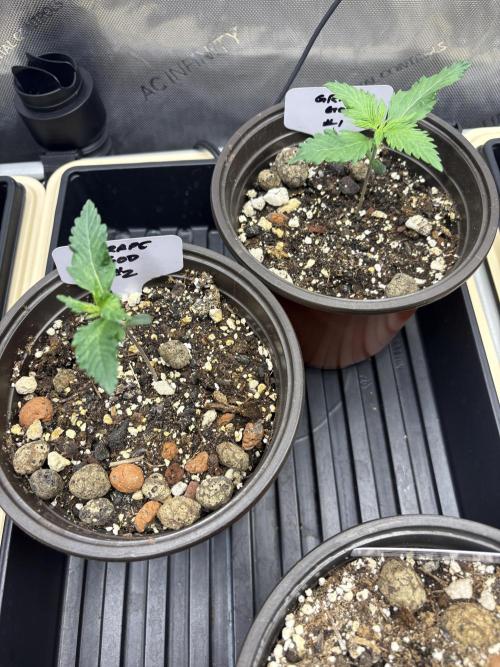
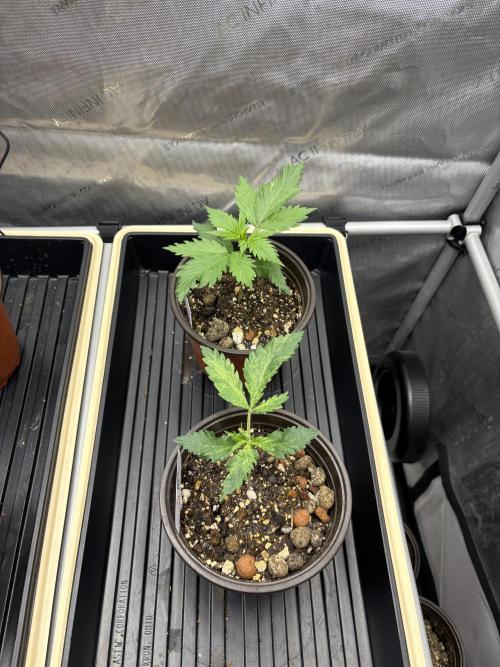
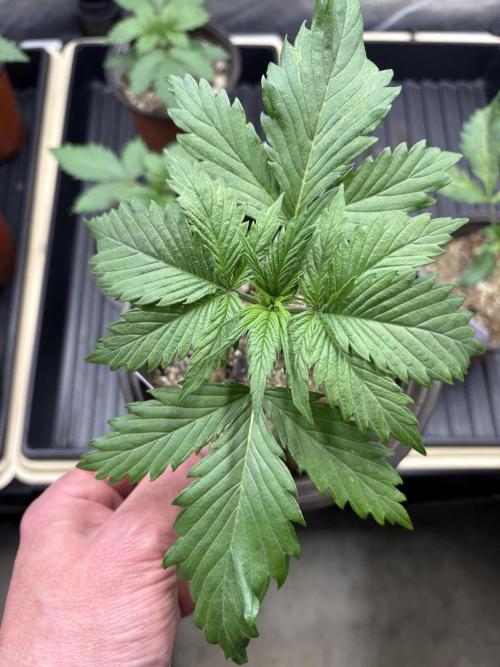
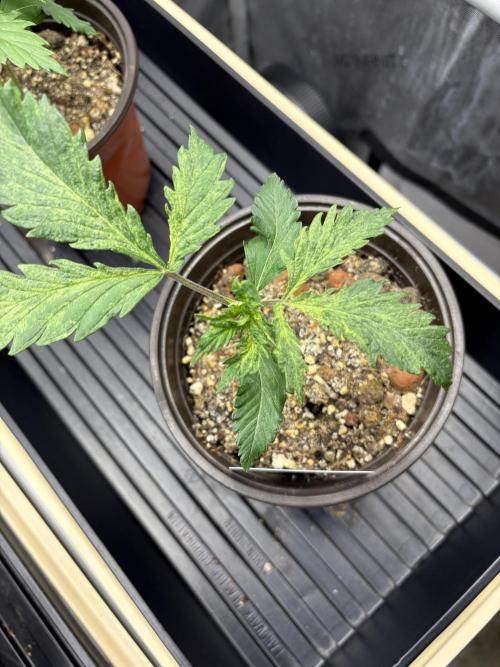
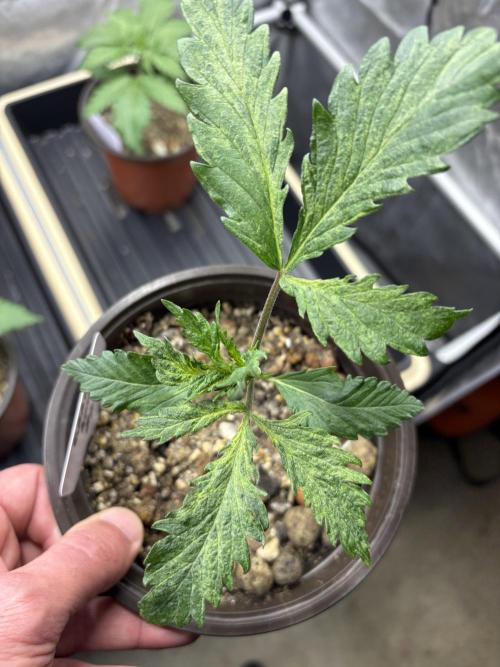
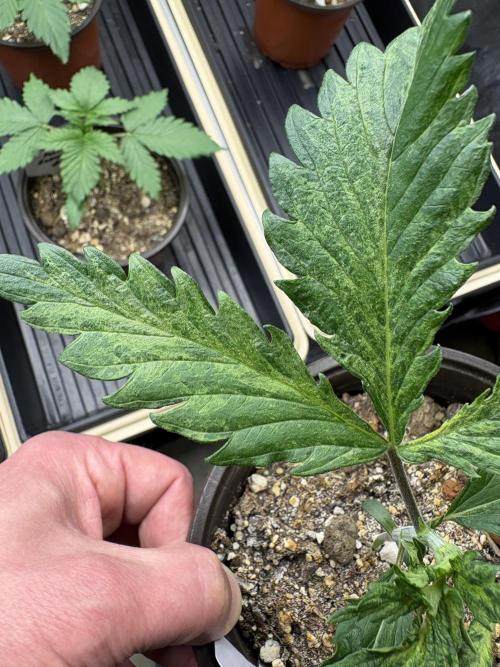
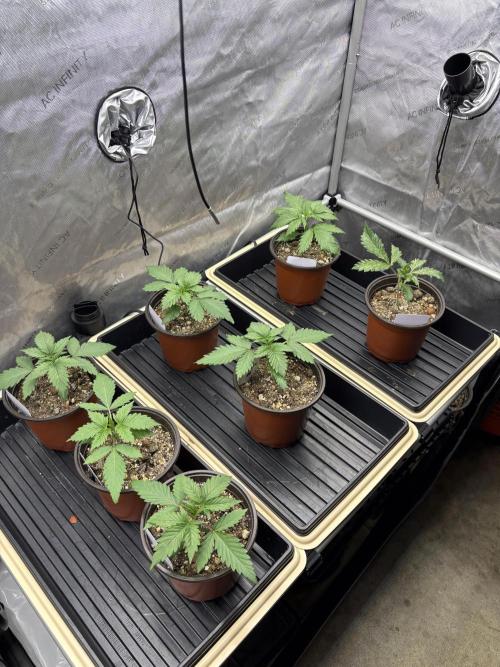
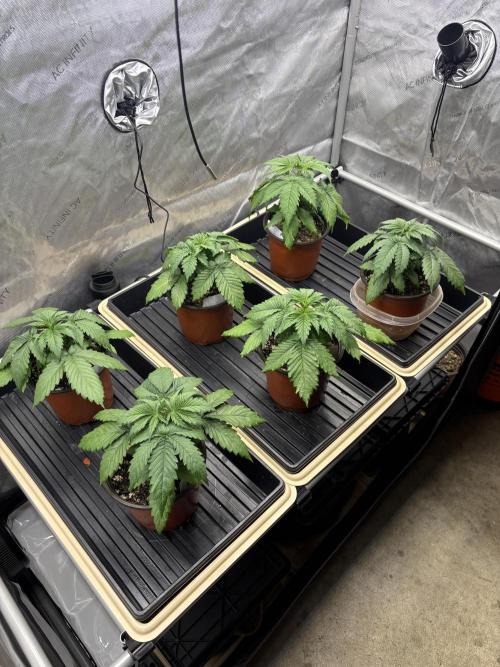
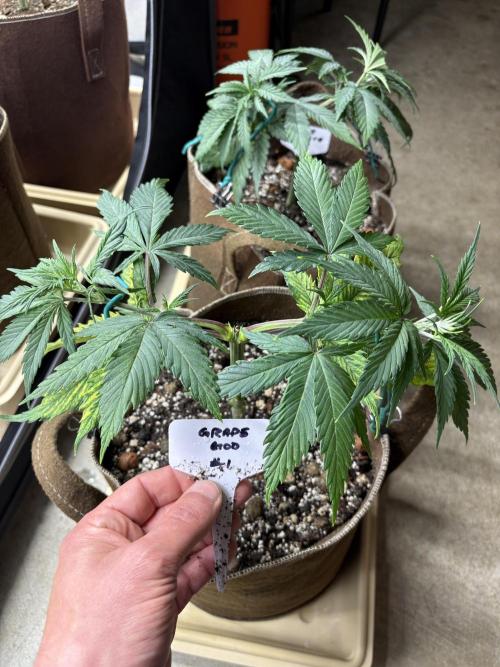
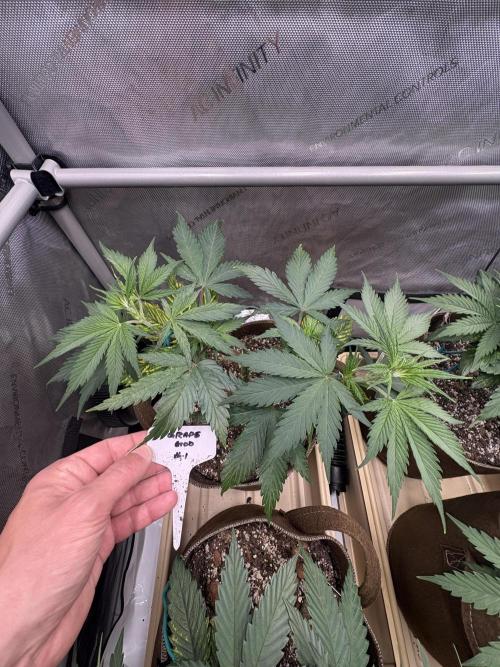
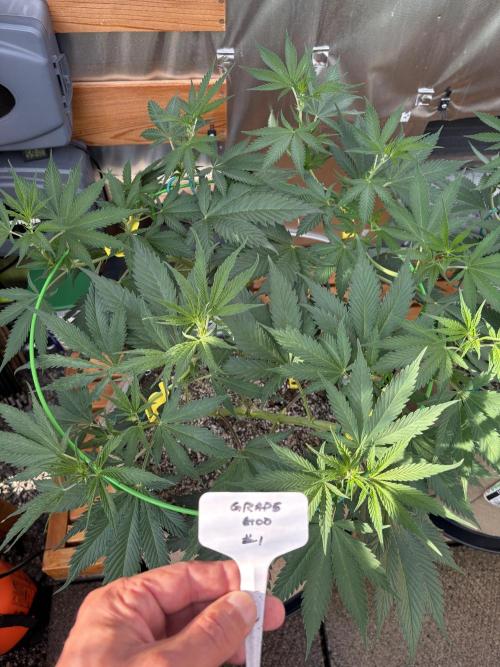
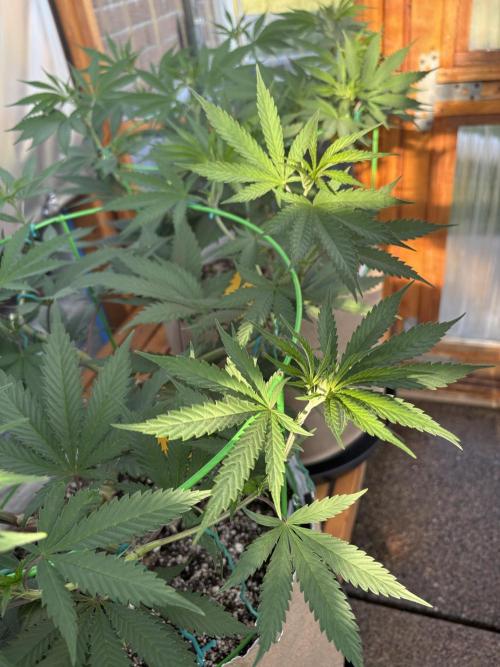
cultivars MAY 2 to MAY 8, 2026 VPD (DAY): 0.8 kPa | VPD (NIGHT): 0.7 kPa | DLI: 15.6 With a slight increase in light intensity and following a Compost Tea application, the plants really began to bulk up. By week's end each has double in size and produced larger leaves and leaflets. I prepared the soil for the 11.3L Transition Pots, mixing 50% ProMix HP with Mycorrhizae, 25% Aeration Blend (Pumice Stone, Large and Medium Leca Balls, Medium Perlite and Red Lava Rock) and 25% Organics (Worm Castings) amending it with All-Purpose (4-4-4) Dry Organic Fertilizer. I inoculated each pot with Compost Tea (recipe below) then set them in the tent to "cook". Soil should be active and ready to receive transplants around Day 29. SPECIMEN DETAILS GrapeGod #1 seems quite healthy, although there appears to be some modest leaf discolouration and slight twisting. It's nothing I am very concerned about at this stage as it continues to grow with vigour. The leaves on GrapeGod #1 have very broad leaflets, and the inter-nodal spacing is quite compact. I believe GrapeGod #2 has some sort of mutation, possibly variegation but coupled with some awkward leaf growth. One consideration was that it could have been getting too much turbulence from the circulation fans, so I moved its position in the garden, along with her sister. The leaves on this specimen have narrower leaflets with sharper points. She has another two weeks or so to improve, or she may be sacrificed as there are only 6 slots available in the Greenhouse where all plants will be moved to in June (there are currently a total of 7 specimens). DAY 8 - n/a DAY 9 - 150mL Compost Tea (recipe described below) DAY 10 - n/a DAY 11 - n/a DAY 12 - 150mL top water of plain dechlorinated water, pH'd to 6.3, along with 100mL bottom water. DAY 13 - n/a DAY 14 - n/a COMPOST TEA (measures in mL of additive to L of plain dechlorinated water) Worm Castings - 60mL Microbe Multiplier - 4mL Humic Acid - 0.5mL Wild Fish Hydrolysate - 1.0mL Unsulphured Sugarcane Molasses - 0.3mL
10 likes
2 comments
Share
3
Week 3. Vegetation
1mo ago
18 hrs
Light Schedule
25 °C
Day Air Temp
6.5
pH
No Smell
Smell
65 %
Air Humidity
18 °C
Solution Temp
22 °C
Night Air Temp
2 l
Pot Size
Nutrients 3
GROW - Liquid Organic Plant Food (3-1-2
1.25 mll
Yucca Schidigera Liquid Extract
0.12 mll
Activated Beneficial Microbes (EM1)
1.25 mll
cultivars MAY 9 to MAY 15, 2026 VPD (avg): 0.79 | DLI: 22.7 Bit of a heartbreaking week, as I decided to terminate GrapeGod #2. I was unable to validate if it expressing a mutation or a viral response. Given I was going to have to cull one plant from the Propagation Garden regardless due to space limitations in the greenhouse, I decided to remove it. Down to one GrapeGod, if I'm lucky she's a good one for deciding whether or not to grow it again in the future. At the end of the week GrapeGod #1 is the largest and tallest specimen in the garden. Day 15 - 250mL liquid amended soil drench (as per Nutrients Section) applied as top-water at a pH of 6.4; 80mL was applied via bottom water Day 16 - n/a Day 17 - Some minor discolouration of leaves across all specimens; Perhaps some light stress, or hungry. Day 18 - 175mL plain dechlorinated water at pH6.8 via top-water; Applied a Foliar Feed to help with what I believe to be some hunger Day 19 - All specimens pushing out 6th node, but not ready for topping just yet; Light Foliar Feed application to each. Day 20 - 125mL plain dechlorinated water at pH 6.5 via top-water, with 75mL applied via bottom water; Some stronger discolouration in the fan leaves of GrapeGod #1; I think it (and the others) are hungry, and will benefit from the scheduled Compost Tea in the next 3 days. Day 21 - Foliar Feed spray
10 likes
comments
Share
4
Week 4. Vegetation
10d ago
18 hrs
Light Schedule
25 °C
Day Air Temp
6.5
pH
No Smell
Smell
65 %
Air Humidity
18 °C
Solution Temp
22 °C
Night Air Temp
2 l
Pot Size
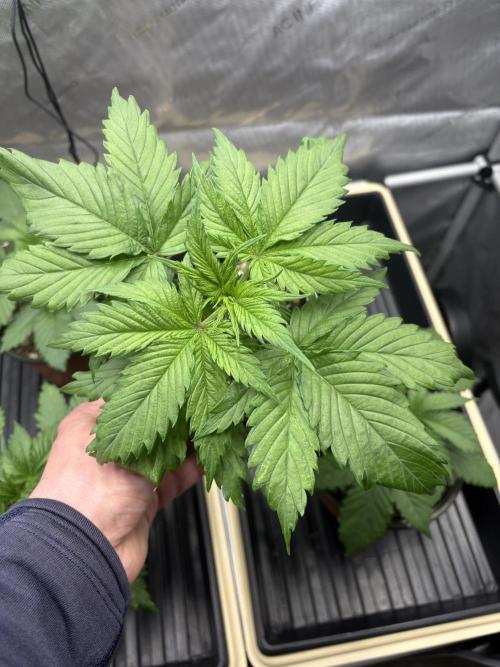
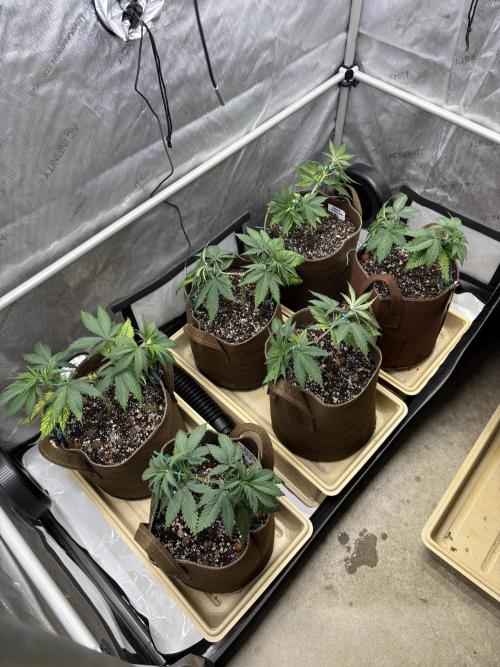
cultivars MAY 16 to MAY 22, 2026 VPD (avg): 0.79 | DLI: 22.7 I was a bad “plant parent,” and “photo documenter” this week. All specimens showing deficiencies, with yellowing of lower leaves, some leaf curling, purpling of petioles, stems and in some cases underside of fan leaves. Was hoping that the compost tea application (recipe below) would give them a bit of a boost, but the deficiencies progressed through the week. I attribute it to several factors: 1) the substrate is suffering from a pH imbalance, and/or 2) substrate is spent of its plant available nutrients, and/or 3) the light intensity is causing a stress response. Despite the signs of problems, I pushed forth with topping the plants and hope they respond well enough to be transplanted next week. Day 22 - n/a Day 23 – 250mL Compost Tea application via top water. Day 24 – n/a Day 25 - Plain rainwater 125mL top water, 125mL bottom water; topped all plants and pruned lower growth shoots; reduced light intensity; Plants displaying some deficiencies, appears to be nitrogen Day 26 – n/a Day 27 - 200mL plain rainwater for each specimen; All specimens showing signs of deficiency, suspect as a result of spent substrate or too aggressive light intensity; Blue Dynamite specimens exhibiting strong purpling of petioles, but also on underside of fan leaves; I believe this to be stress related. COMPOST TEA (measures in mL of additive to L of plain dechlorinated water) Worm Castings - 60mL Microbe Multiplier - 4mL Humic Acid - 0.5mL Wild Fish Hydrolysate - 1.0mL Unsulphured Sugarcane Molasses - 0.3mL
5 likes
comments
Share
Used techniques
Topping
Technique
5
Week 5. Vegetation
10d ago
18 hrs
Light Schedule
26 °C
Day Air Temp
6.5
pH
No Smell
Smell
65 %
Air Humidity
18 °C
Solution Temp
22 °C
Night Air Temp
2 l
Pot Size
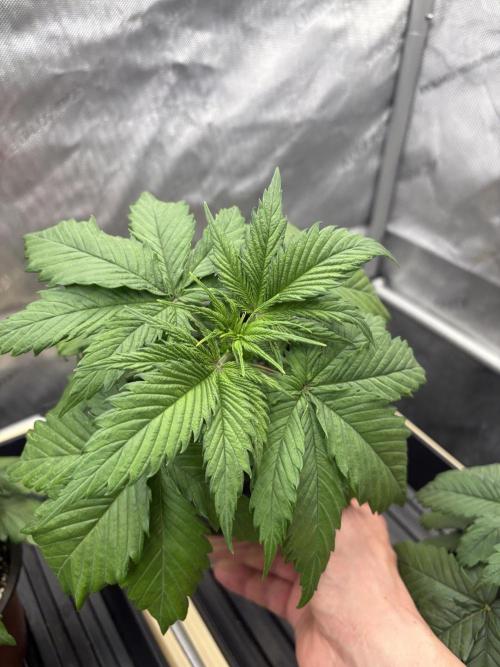
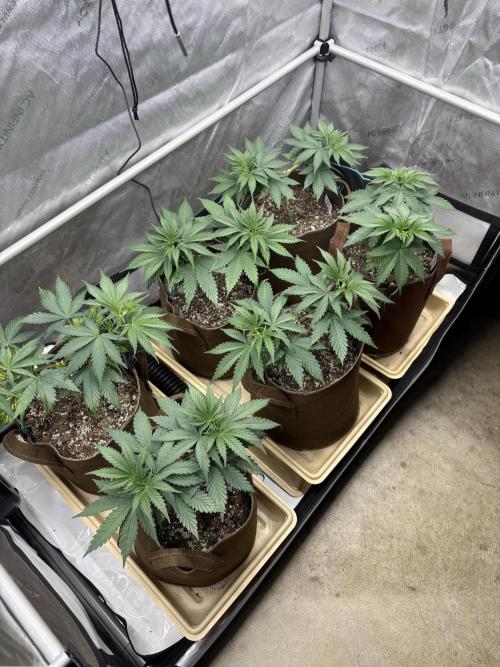
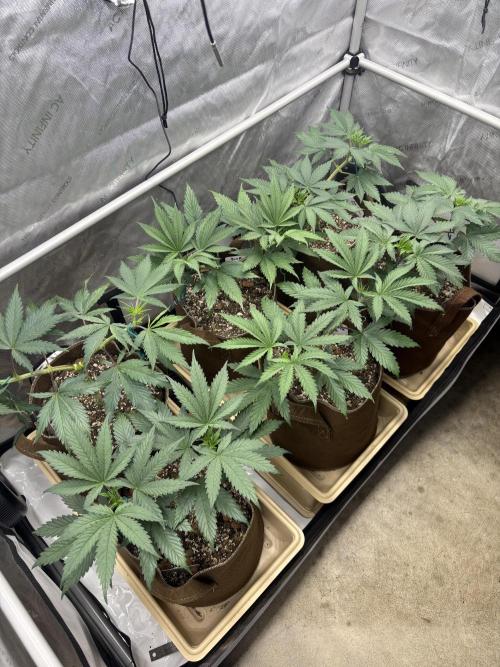
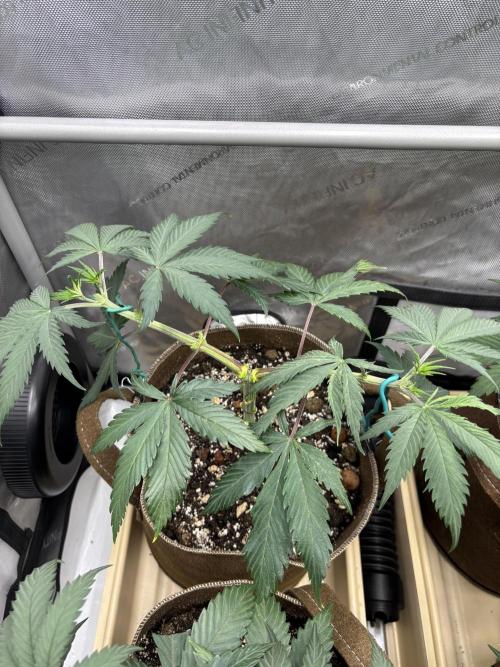
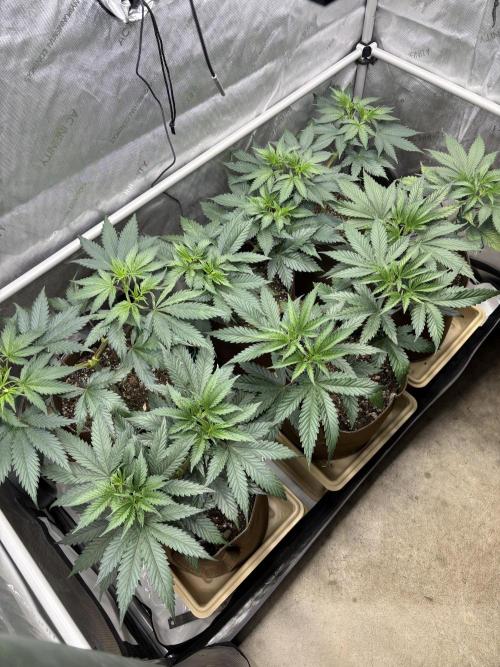
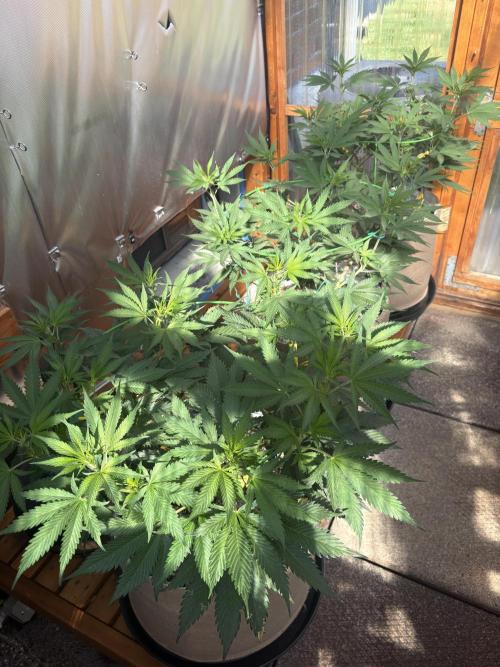
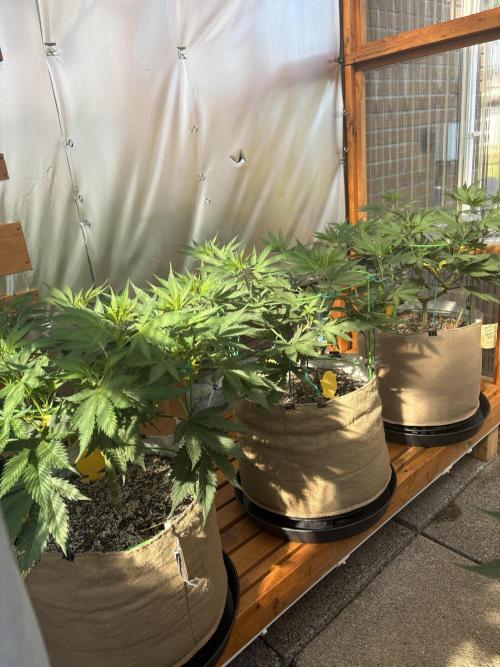
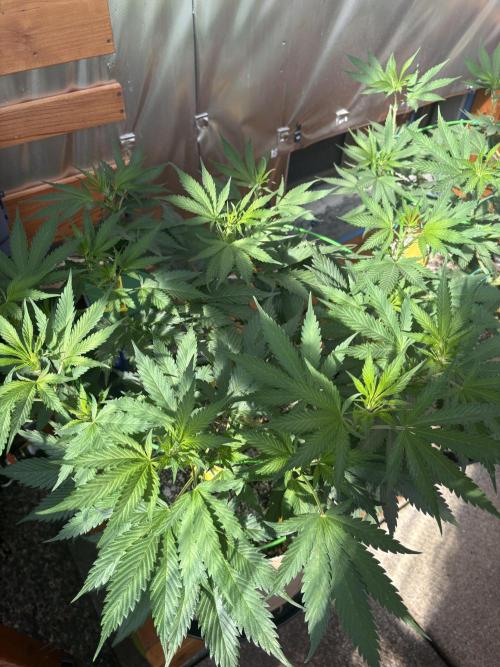
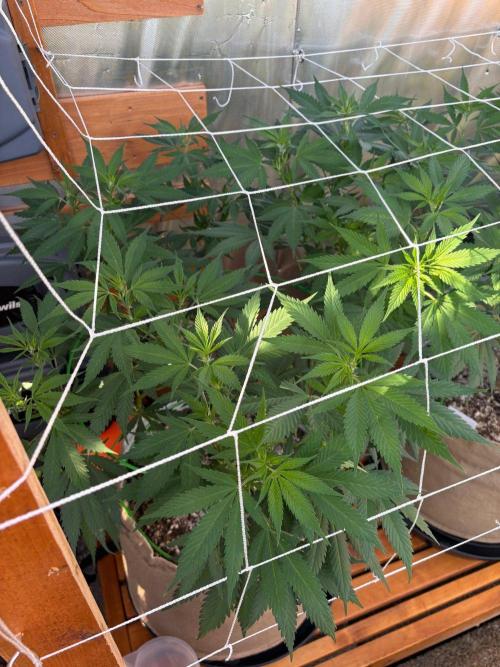
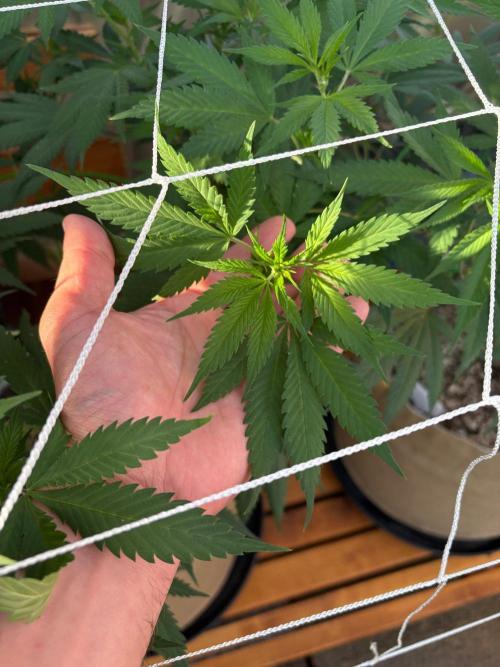
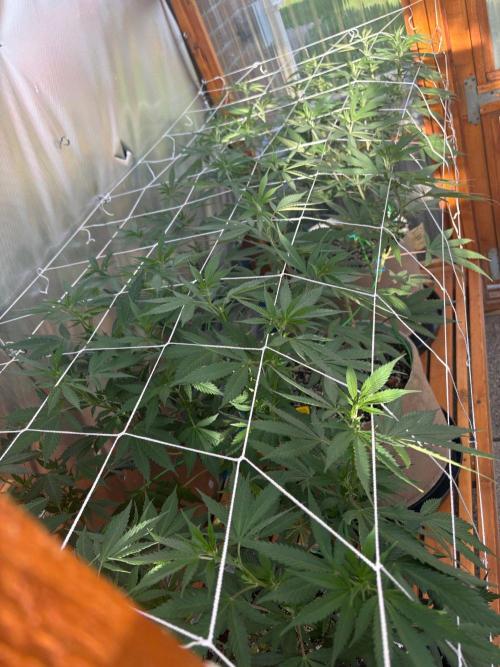
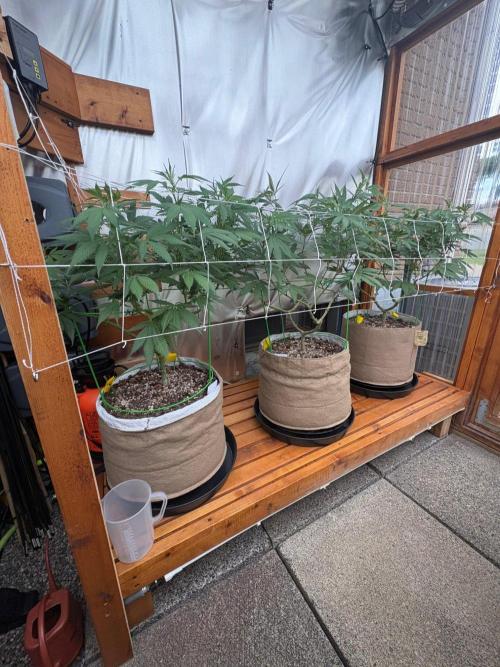
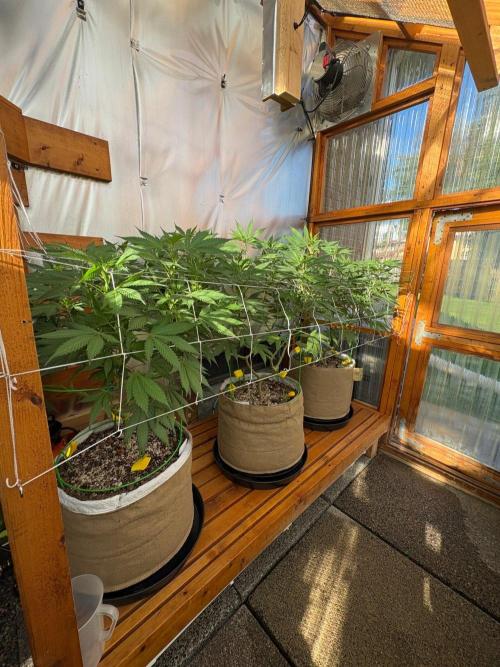
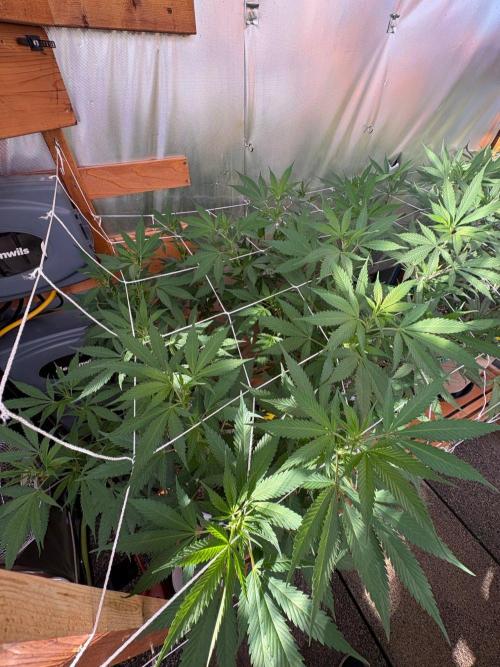
cultivars MAY 23 to MAY 29, 2026 VPD (avg): 0.92 | DLI: 15 After the topping last week, and given the stress the plants were exhibiting, I reduced the light intensity. This seemed to have a positive effect, however, the deficiencies the plants were displaying continued to develop up to the transplant on Day 30. Thankfully the plants all responded very well to the transplant, and new growth is healthy. With the positive response from the plants, I increased the VPD this week, and slightly increased the light intensity. In addition to the transplant, I applied Low Stress Training (LST) this week to spread out the two main shoots, to produce the manifold. Day 29 - n/a Day 30 – Transplanted all specimens; Full root masses on all specimens; Watered in with 2.0L of plain rainwater Day 31 – n/a Day 32 – n/a Day 33 – Plants have all taken to transplant well, and are growing with vigour; Dropped light to increase intensity (220PPFD @ canopy) Day 34 – n/a Day 35 – n/a
6 likes
comments
Share
Used techniques
Main-Lining
Technique
Transplantation
Technique
Manifolding
Technique
6
Week 6. Vegetation
5d ago
18 hrs
Light Schedule
26 °C
Day Air Temp
6.5
pH
No Smell
Smell
58 %
Air Humidity
18 °C
Solution Temp
22 °C
Night Air Temp
11 l
Pot Size
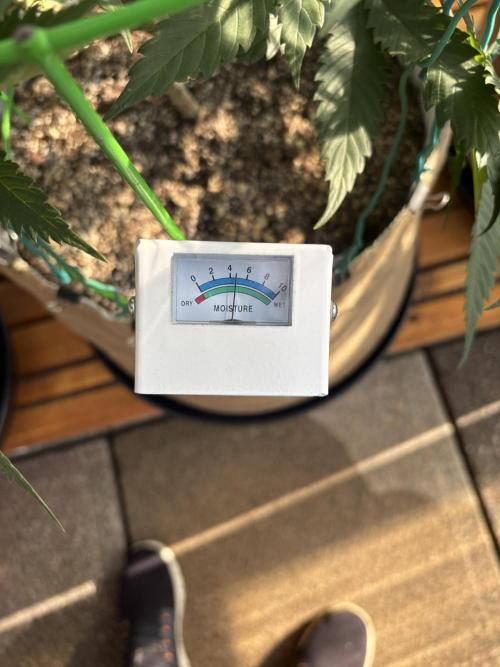
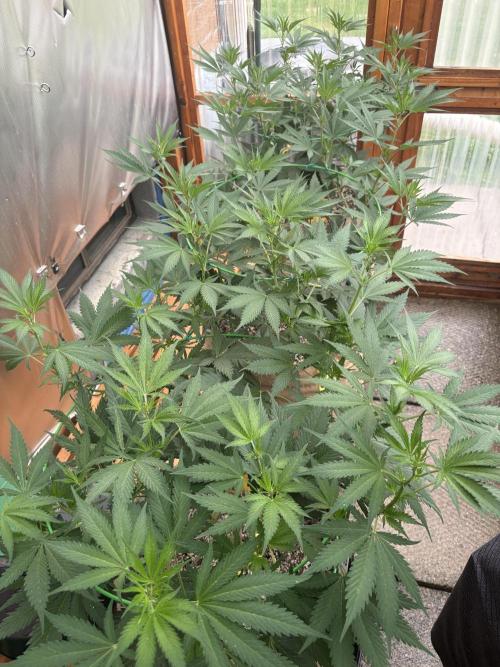
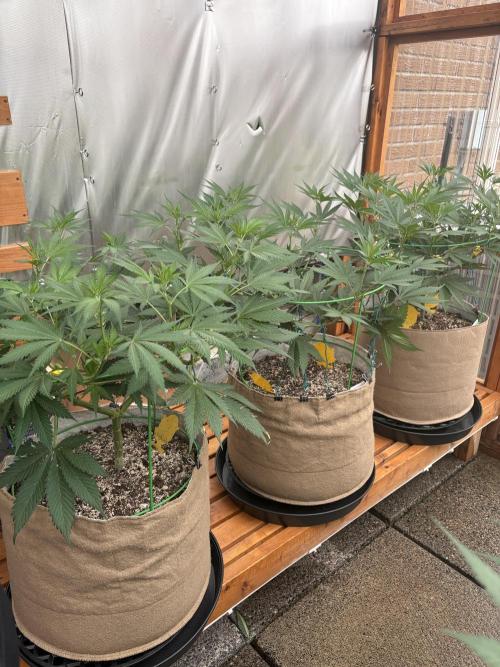
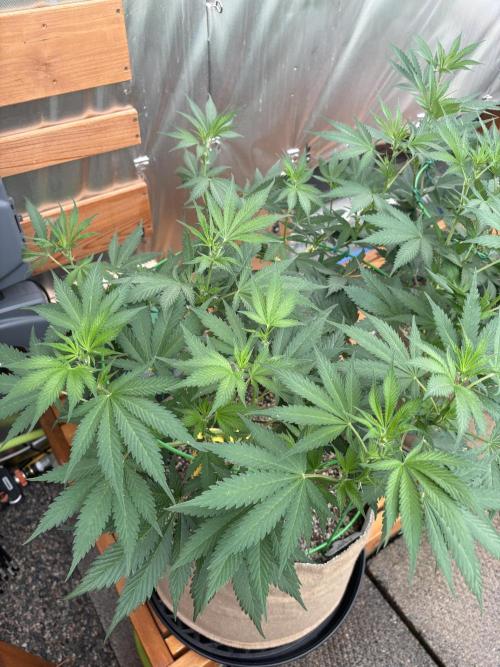
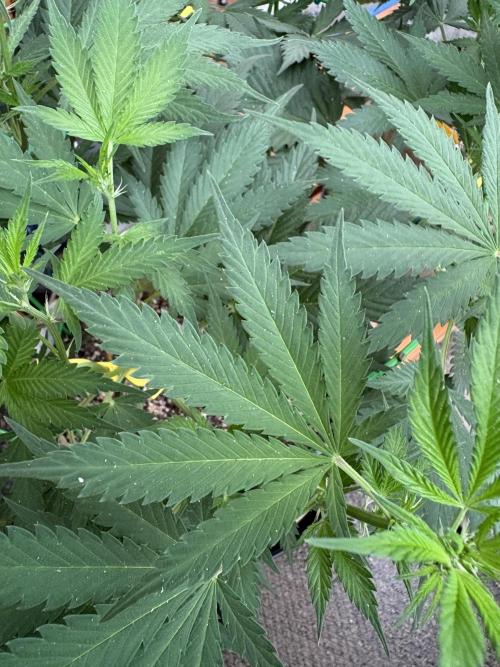
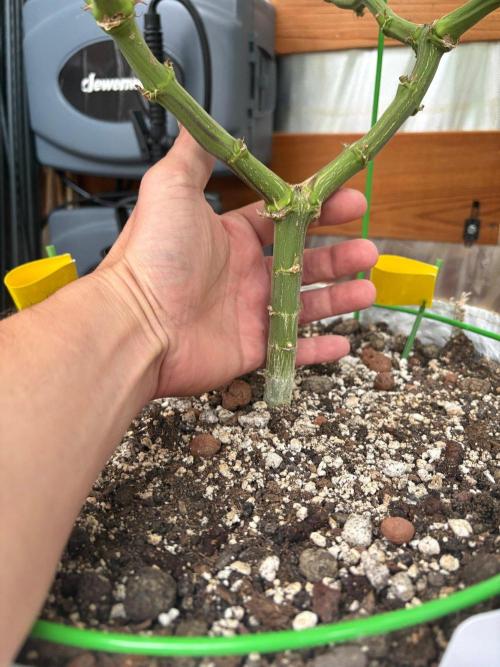
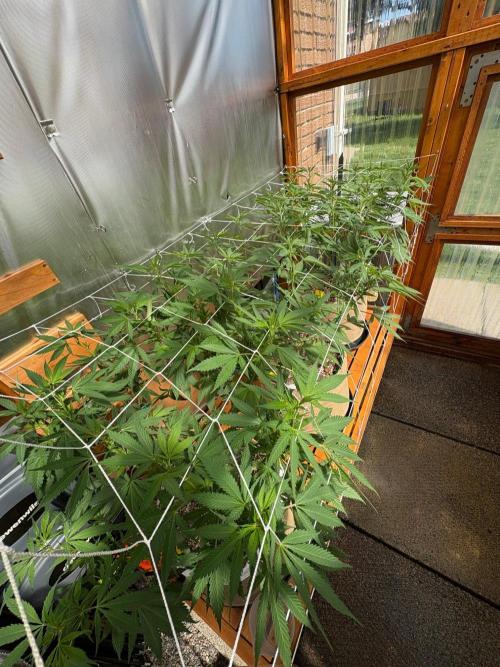
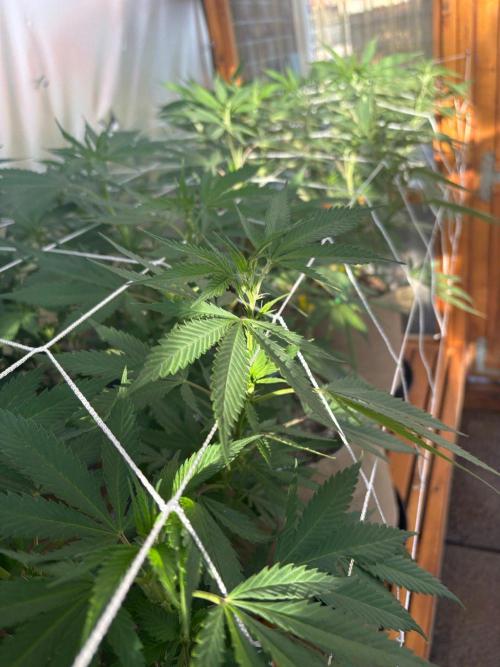
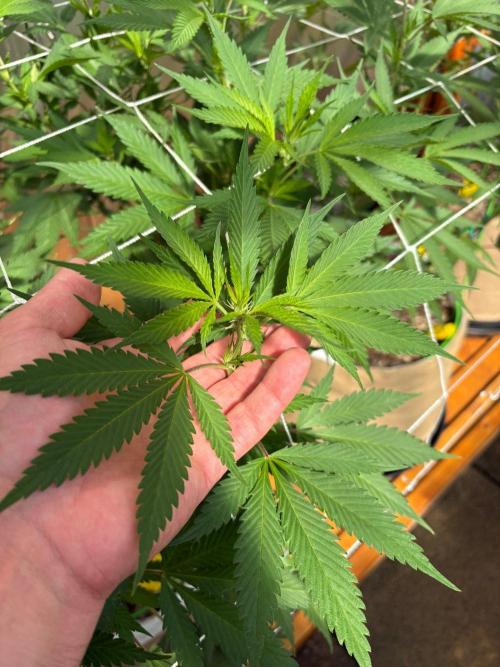
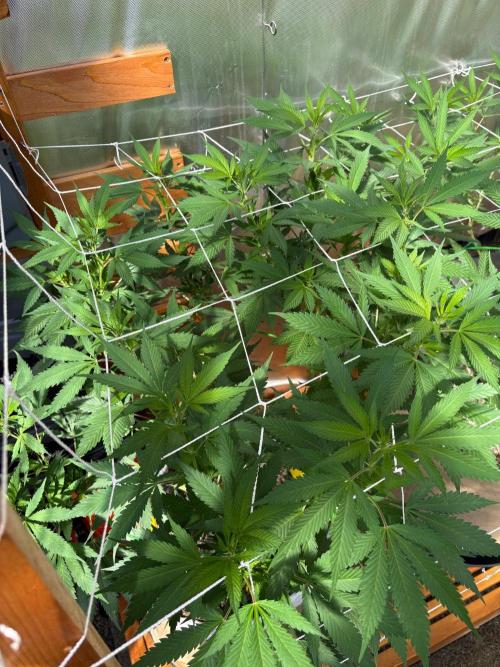
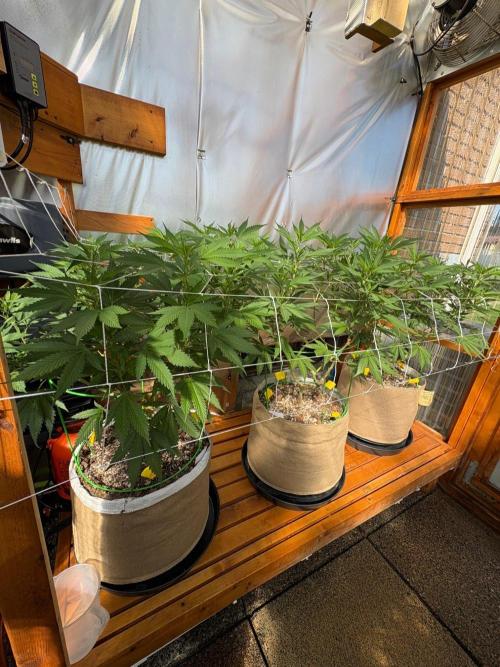
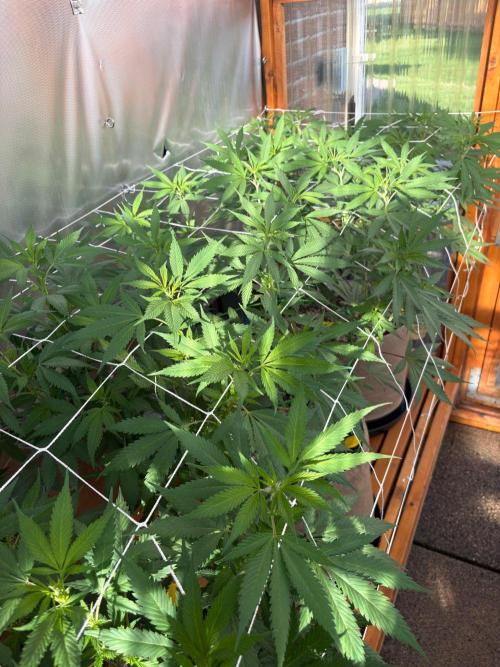
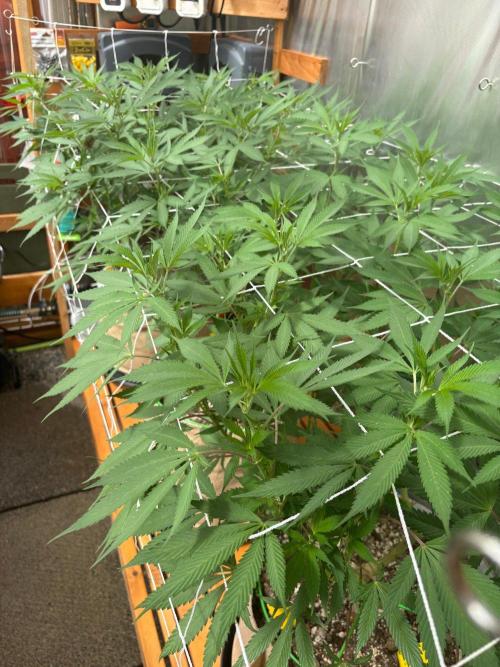
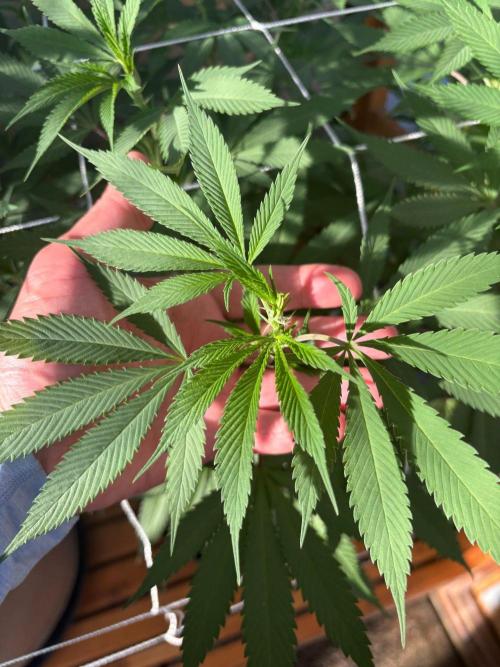
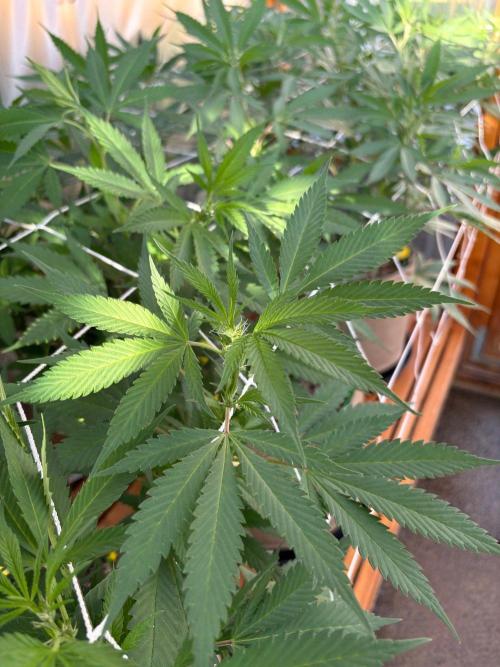
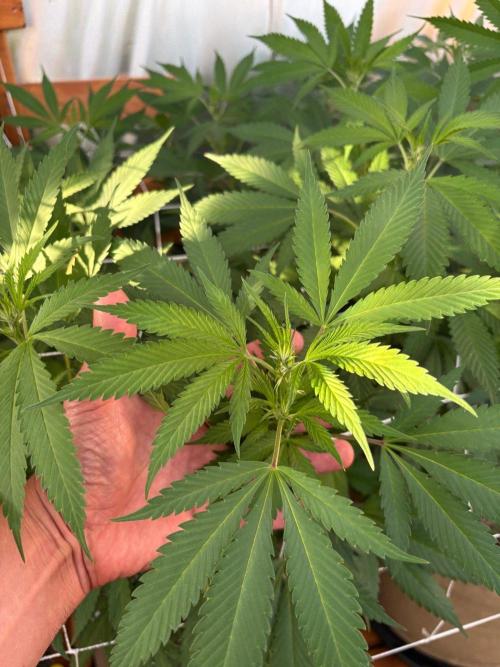
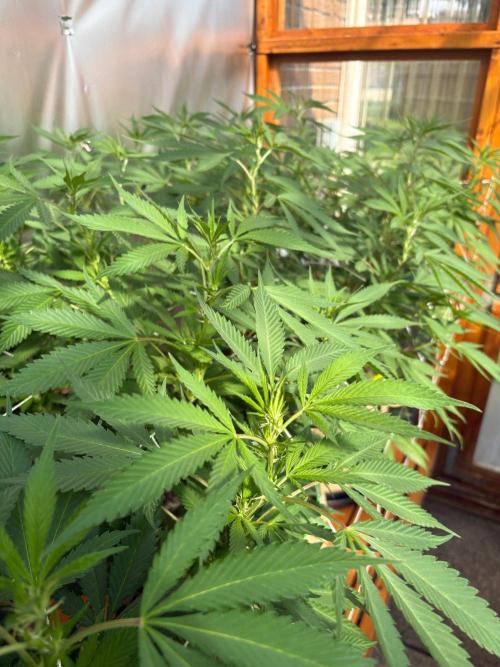
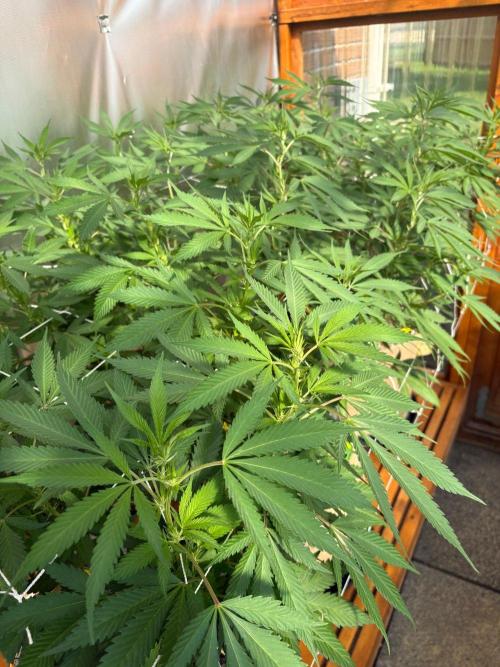
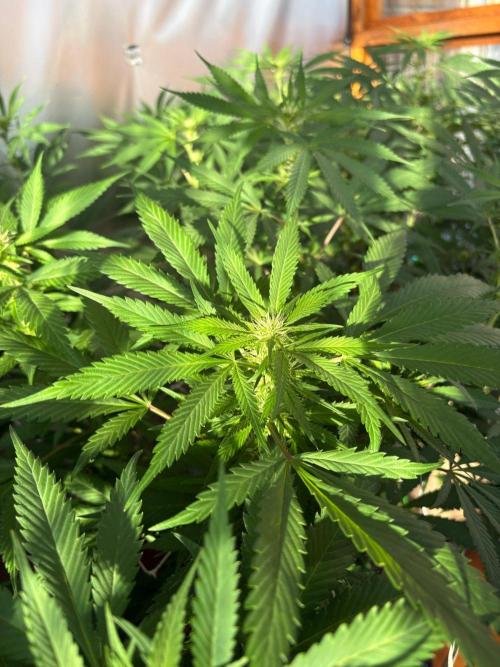
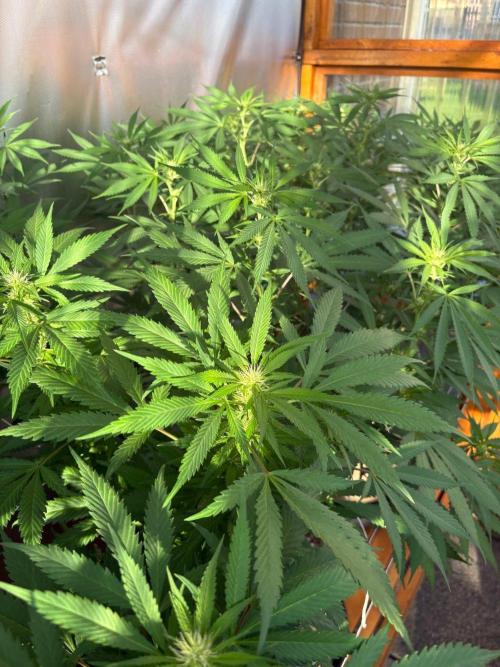
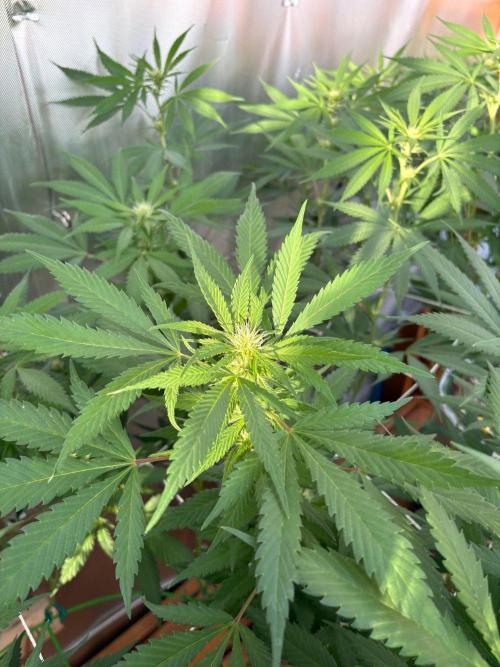
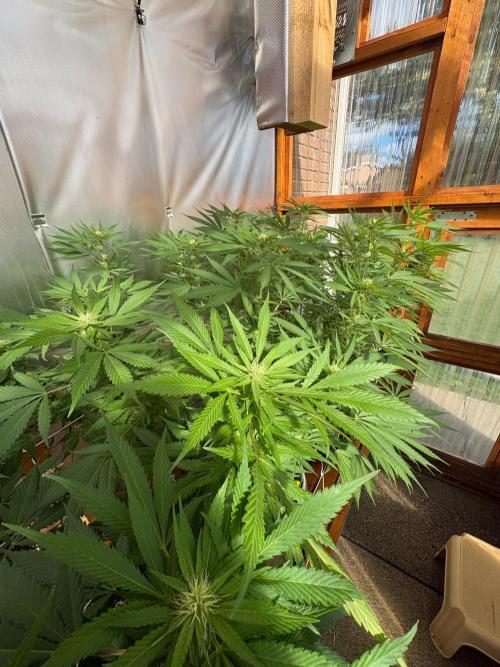
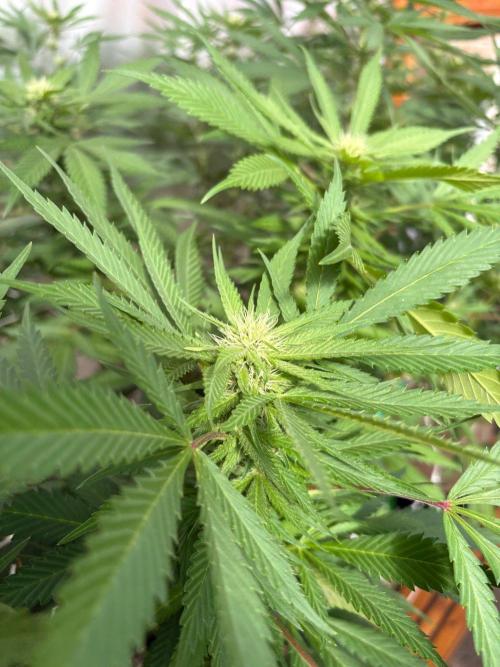
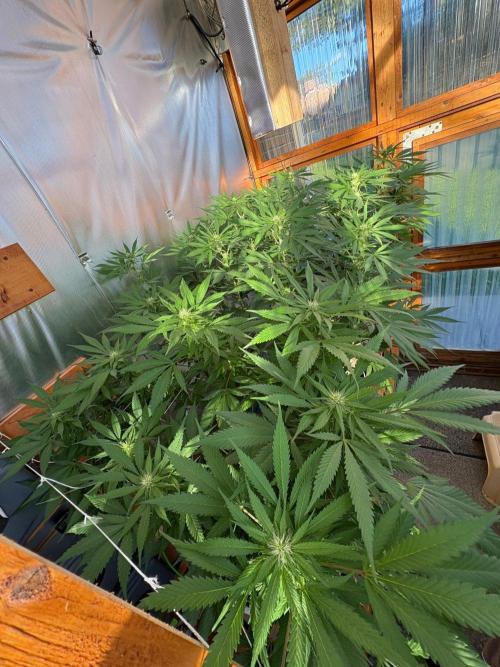
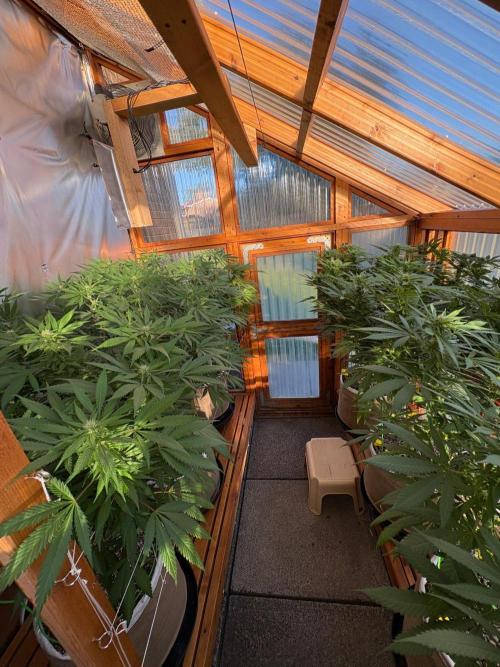
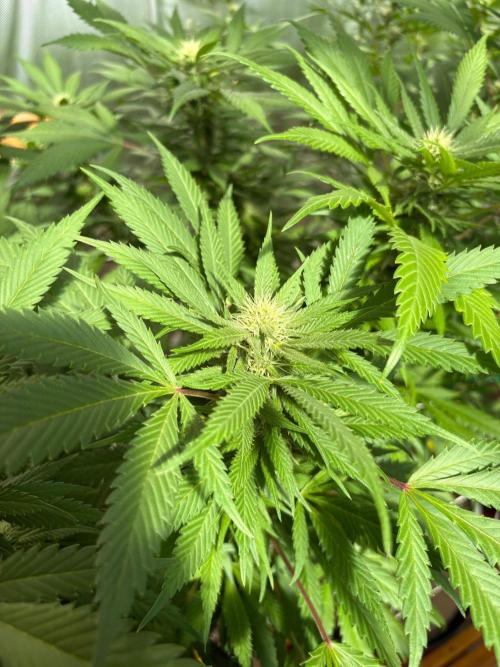
cultivars MAY 30 to JUNE 5, 2026 VPD (avg): 0.92 | DLI: 17 All specimens are performing well and growing with vigour. Manifold developed well this week, with the two main shoots reaching 5th node. Topped all specimens back the 3rd node and pruned all other growing shoots. Hardening off to begin next week as the plants will transition to the greenhouse for the remainder of their lifecycle. No feeding this week, just plain rainwater. Will look to apply a compost tea next week. Day 36 - n/a Day 37 – 1L top water with plain rainwater; Built Final Pot Soil (38L fabric pots) and placed in greenhouse to “cook” for the next 4 to 5 weeks. Day 38 – n/a Day 39 – Lowered light in grow tent to slightly increase light intensity to 250PPFD Day 40 – n/a Day 41 – n/a Day 42 – 1.25L of plain rainwater applied via top water; Topped each specimen for a second time, back to the 3rd node, to produce four main growing shoots for the manifold.
5 likes
comments
Share
Used techniques
LST
Technique

Login

7 comments
Sort by
popularity
popularity
newest
oldest
GrowerBaal
GrowerBaal commentedweek 01mo ago
Good luck with your new Ladies.
cultivars
cultivars commented1mo ago
@GrowerBaal, thanks man… all the best to you too!
GrowerBaal
GrowerBaal commented1mo ago
@cultivars, Thx mate.
Wojkers
Wojkers commentedweek 11mo ago
Happy growing 💚
cultivars
cultivars commented1mo ago
@Wojkers, thanks… got a ways to go until harvest time in October, but we’re on our way! Cheers!
Tower84
Tower84 commentedweek 21mo ago
Maybe its not a mutation, it could also be hop latent viroid. Do you smoke tobacco?
cultivars
cultivars commented1mo ago
@Tower84, hadn't considered that... and suppose it is a possibility. I will have to monitor and consider either isolating or terminating the specimen.
Enjoying this diary? Follow for more updates!
cultivarscultivars
Follow Author
OR
Prefer the old Diary view?
Go back to the old Diary view