


Critical Mass CBD Auto #2


Perlite
Harvest Hero

Indoor
Room Type
Transplantation
weeks 2
LST
weeks 4-5
15 set_lilers
Pot Size
Start at 7 Week
G
Germination2mo ago

Nutrients 3

Mykos
1.3 mll

Support 4-0-0
1.321 mll

Grow 0-1.5-4
0.264 mll
Aeromatics Let’s try this again, shall we?
With my recent failure on White Widow CBD Auto, I decided to move switch to Critical Mass CBD Auto, also from ILGM. Critical Mass CBD Auto was my highest yielding auto thus far (7 oz in 6.9 gallons), so I figured it would be a great, robust genetic to run as a 2-plant grow in my 2 x 4.
My goals are the same as my White Widow grow, keep it simple with a nice CBD grow. I’ll grow 20/4 for these to avoid light stress signals that may have pushed my last Critical Mass Auto to throw some pollen towards the end of the grow. Additionally, I will transplant these from their .5 gallon pots into their final 3.9 gallon homes around day 10 or 14, depending on their size.
For training, these gals are aggressive stretchers, so I will slowly guide them into individual canopies, and I will do my best to get some solid tops across the board.
For this grow journaling process, I will run 2 separate diaries. I like running a diary for each individual strain as well, especially for contests and to feature characteristics of each individual plant, as phenotypes may vary.
The diary comments will be labeled as in two separate parts: Individual Updates (Critical Mass CHB Auto #1, #2) and then Tent-Wide Updates.
Coco Planting Process:
For my coco, I was very pleased to have a much easier preparation process than my previous runs. Canna Professional Plus comes pre-washed and buffered, so I didn’t need to do a big rinse and buffer process for this round, which was very nice.
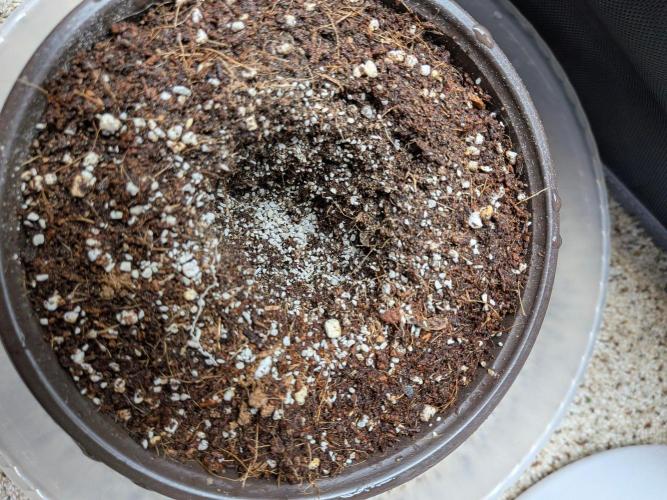
I mixed a ratio of 80/20 Canna Professional Plus with Harvest Hero Perlite and tossed it all together so it was fully integrated into one beautiful medium. I will say, the Canna Coco was absolutely beautiful… huge upgrade!!
To prepare the mixed medium for potting, I added around 500 ml of RO water and Ventana Plant Science solution to moisten up the coco a bit, but not overload or soak it too much. I wanted the coco to hold it’s shape but not let water drip when squeezed.
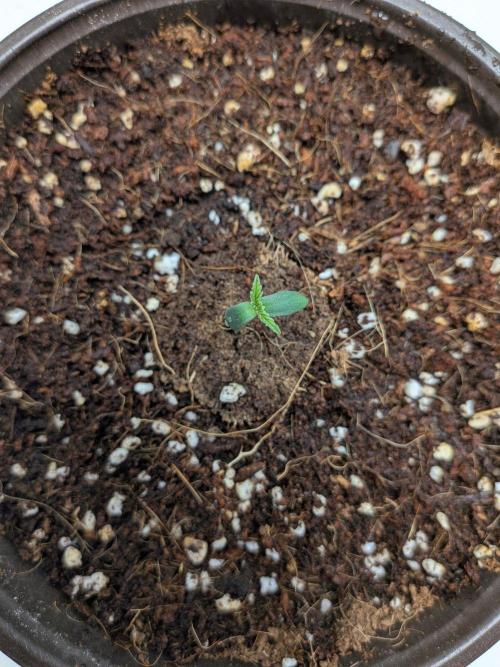
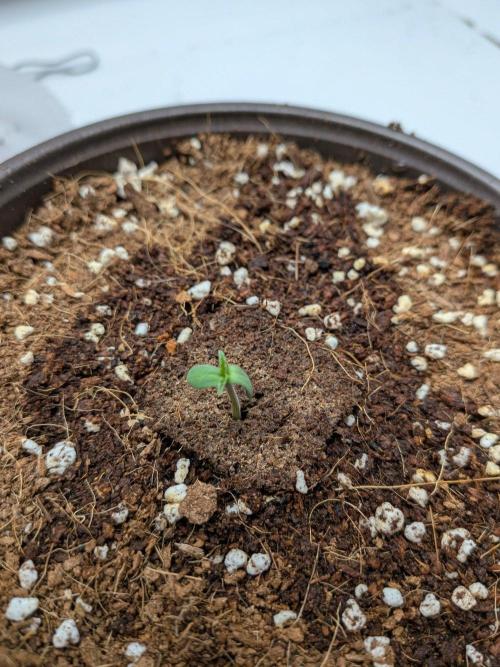
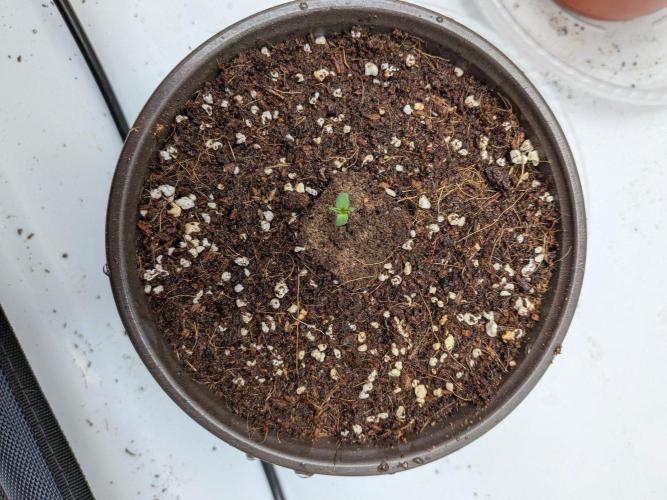
When it felt ready, I potted up my half liter pots, and I got ready to plant my Clementine Slush Seeds in Organiplugs!
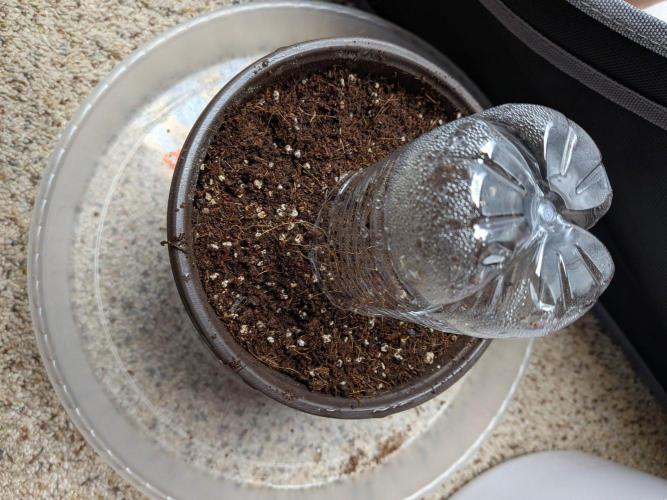
I planted the seeded Organiplugs directly into the prepared Coco and put them into the prepared tent with a half-bottle humidity dome, with the goal of limiting any exposure of the taproot to open oxygen/air. My idea behind this new method is to prevent any possible oxidation of the root, and allow the taproot to hit its growing environment as soon as it emerges from the Organiplug.
Plus, I get to sprinkle Xtreme Mykos in each planting hole before I put the Organiplugs into the coco, allowing for that extra root growth.
I will plan on transferring these into their final homes around day 10/12, depending on size and top root development!
Let’s hope for some monsters, and thanks for tuning in!
8 likes
comments
Share
Used method
Rockwool Cube
Germination Method
1
Week 1. Vegetation2mo ago


2.54 cm
Height
24 hrs
Light Schedule
27 °C
Day Air Temp
5.7
pH
375 PPM
TDS
75 %
Air Humidity
1.89 set_lilers
Pot Size
91.44 cm
Lamp Distance
Nutrients 2
Support 4-0-0
1.321 mll
Grow 0-1.5-4
0.264 mll
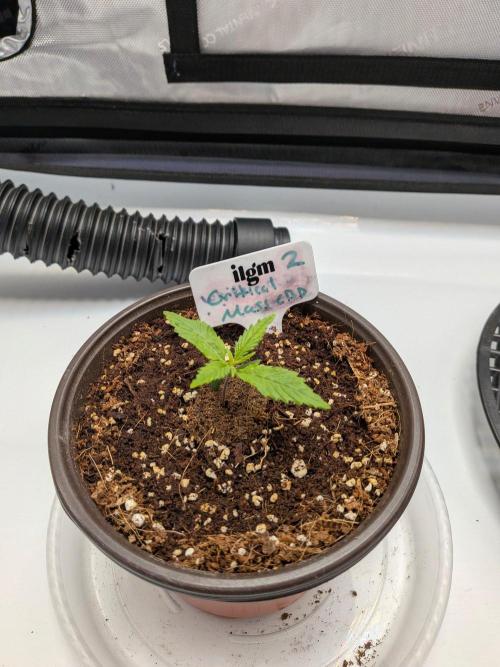
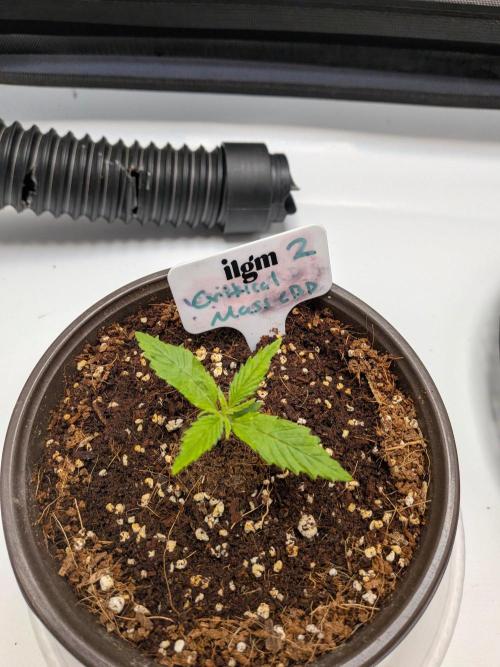
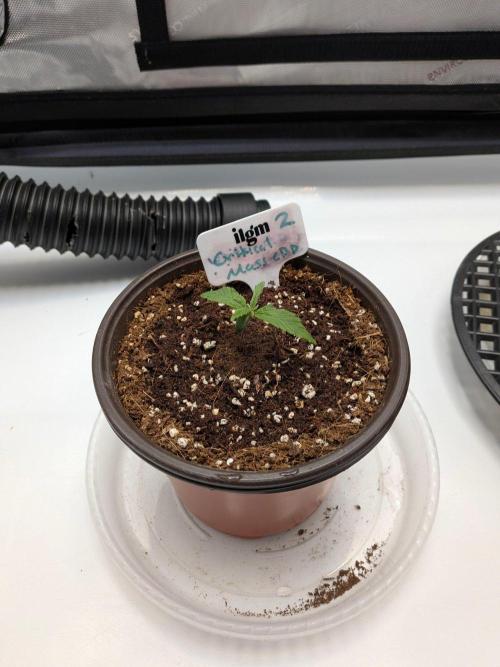
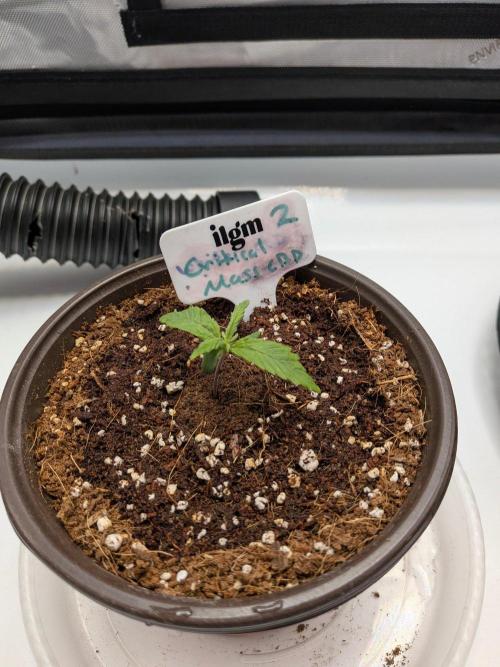
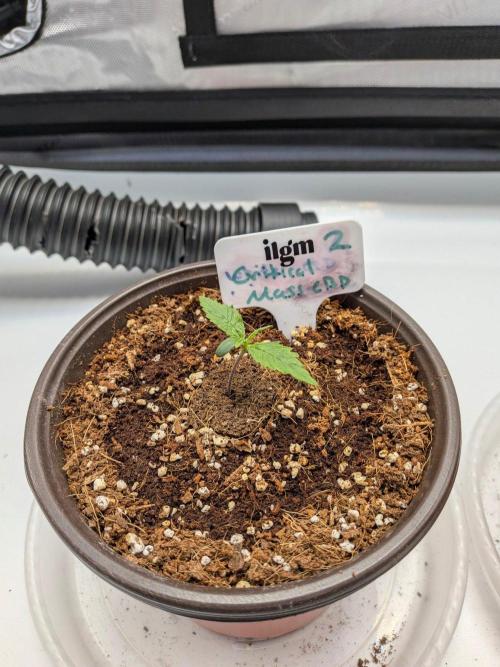
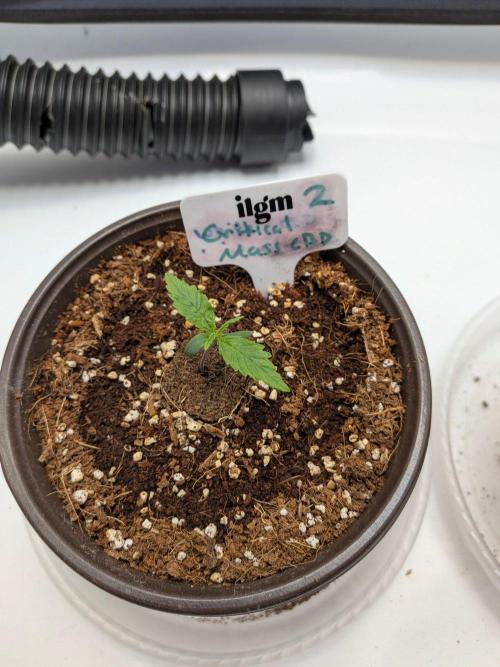
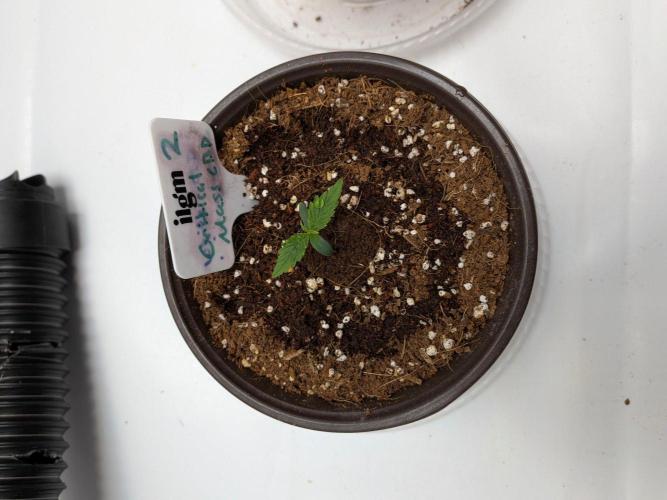
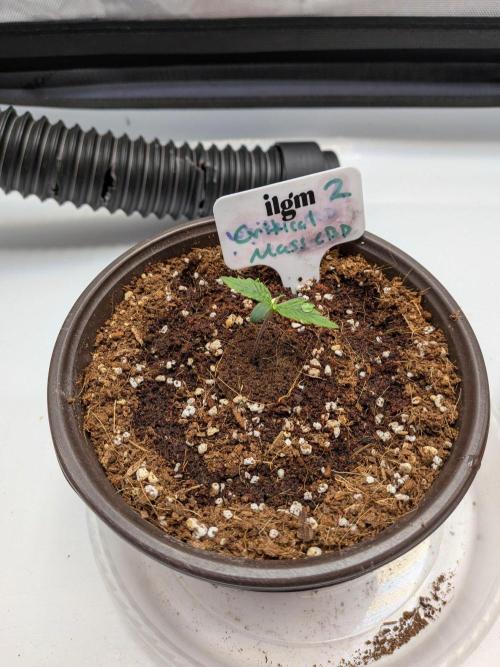
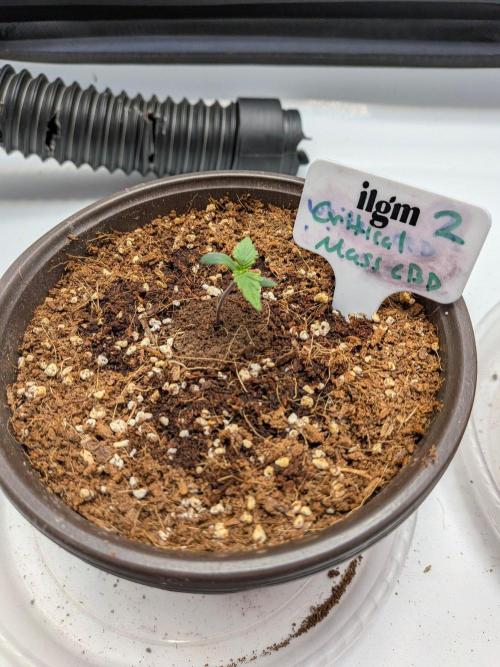
Aeromatics Week 1 for Critical Mass CBD Auto #2 is another solid start, and proof of some old or off genetics for those White Widow CBD seeds. These are already surpassing their growing and I got 100% germination again with 0 issues. It's been an absolutely stellar batch of seeds from ILGM.
Her growth is daily, and I've been keeping her upper root coco layer moist with some daily droppers of waters, as well as 25-50 ml droppers of water of the following recipie:
1 gallon RO water
5 ml Ventana Plant Science Support
1 ml Ventana Plant Science Grow
ec .75 PH 5.7
On day 4, I gave 150 - 200 ml of water around the root ball circle as the whole pot was dry and craving some solution.
PPFD has been riding around 240, but I will slowly look to increase that over the coming weeks.
We are off to a good start in the 2 x 4!
10 likes
comments
Share
2
Week 2. Vegetation1mo ago


12.7 cm
Height
24 hrs
Light Schedule
27 °C
Day Air Temp
5.7
pH
375 PPM
TDS
70 %
Air Humidity
14.76 set_lilers
Pot Size
91.44 cm
Lamp Distance
Nutrients 2
Support 4-0-0
1.321 mll
Grow 0-1.5-4
0.264 mll
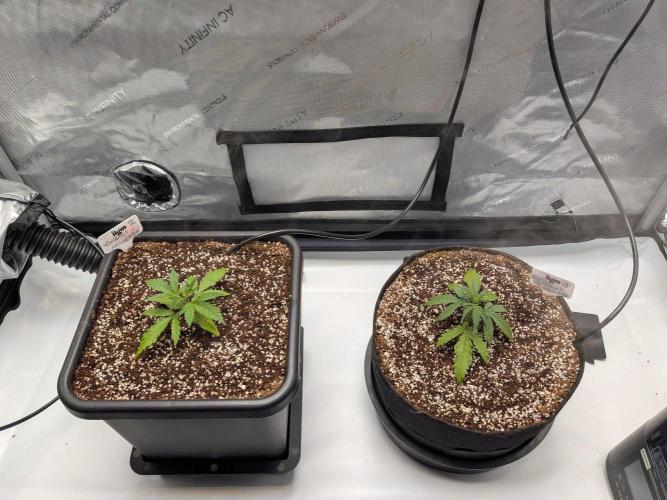
Aeromatics Critical Mass CBD Auto #2: Her transplant went great! She is 4 days behind, in general, to #1, but we will soon not see too much of a difference there after stretch and flower. All in all, we are rocking and rolling with both CBDs.
Tent-wide Updates: Transplant time has arrived!
These gals have been rooting nicely in their .5 gallon pots heading from week 1 and 2, and I didn't want them to get too root bound before making their move into 3.9 gallon pots.
Heading into transplant, I bottom watered them to encourage that root development, and they each drank up a solid 500 to 750 ml throughout each water heading into transplant week.
The mix was a simple one:
1 Gallon RO Water
5 ml Ventana Plant Science Support
1 ml Ventana Plant Science Grow
.75 ec 5.7 PH
With transplant, we did our standard mix of 70/30 Canna Coco Professional Plus and Harvest Hero Perlite.
Once I mixed each batch, I moved aside about a 1.5 gallons and mixed in 2 tablespoons of Stash Base to enhance some of that Coco, giving it a nice boost for vegetation.
Additionally, I sprinkled Xtreme Mykos onto the root bundle and planting zone on each plant and then layered that Stash Base enhanced around the rootball and the top 1/3 layer of coco.
Once packed in, I watered her in with around 500 ml of water with a bit more Stash Base as well as Mammoth P Active Microbes to get them started, around the root ball and external area of the planting zone, and let her settle in before any thing else was adjusted, like airdomes or even thinking about autopot activation.
It's a big move, but she was ready!
Next steps are going to be working on getting the root zone ready for Autopot activation!
5 likes
comments
Share
Used techniques
Transplantation
Technique
3
Week 3. Vegetation1mo ago



12.7 cm
Height
24 hrs
Light Schedule
27 °C
Day Air Temp
5.7
pH
375 PPM
TDS
70 %
Air Humidity
14.76 set_lilers
Pot Size
91.44 cm
Lamp Distance
Nutrients 3
Support 4-0-0
1.453 mll
Grow 0-1.5-4
0.396 mll

Structure (Silica)
0.132 mll
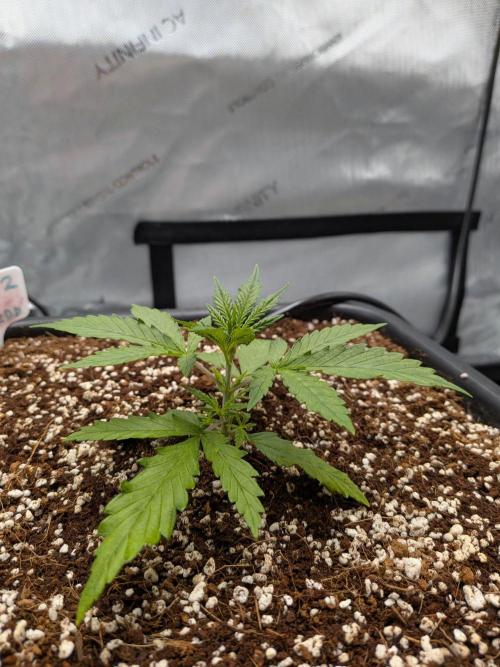
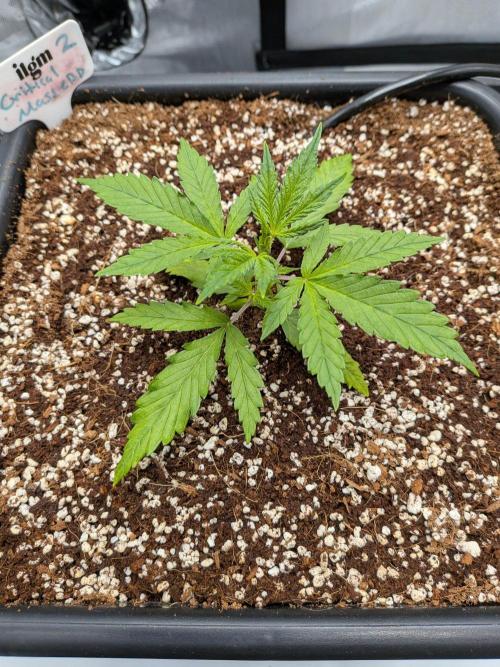
Aeromatics Critical Mass CBD Auto #2: She took amazing to the transplant and showed no signs of stress. A few days behind #1, she is excelling thus far and looking healthy and happy.
I turned on her airdome a bit higher since she is in a plastic pot, but for now... no training and we will keep her happy and steady!
Tent-Wide Updates: Entering Week three, we are focused on a hopefully swift recovery from the transplant into 3.9 gallon autopots. Both plants too to it well, with #1 looking the worse for ware across the two.
I top watered each plant with 500 ml of the following mixture:
1 Gallon RO Water
5.5 ml Ventana Plant Science Support
1.5 ml Ventana Plant Science Grow
.5 ml Ventana Plant Science Structure
Additionally, we made a big move in the hope to minimize stacked stress, the shift from 24/0 to 20/4 light schedule. I want to give these CBD plants a chance to relax a bit and since I don't need to push that 24 hour light cycle, I will let them take it easy for 4 hours a day.
I have also turned on my autodomes to around 6 hours a day, with incremental increases planned throughout the next few days t encourage root growth.
Outside of that, we are in a transition week before we hopefully turn our autopot reservoir on and hit the boom!
4 likes
comments
Share
4
Week 4. Vegetation1mo ago









17.78 cm
Height
20 hrs
Light Schedule
24 °C
Day Air Temp
5.7
pH
450 PPM
TDS
65 %
Air Humidity
14.76 set_lilers
Pot Size
91.44 cm
Lamp Distance
Nutrients 3
Support 4-0-0
1.849 mll
Grow 0-1.5-4
0.528 mll
Structure (Silica)
0.132 mll
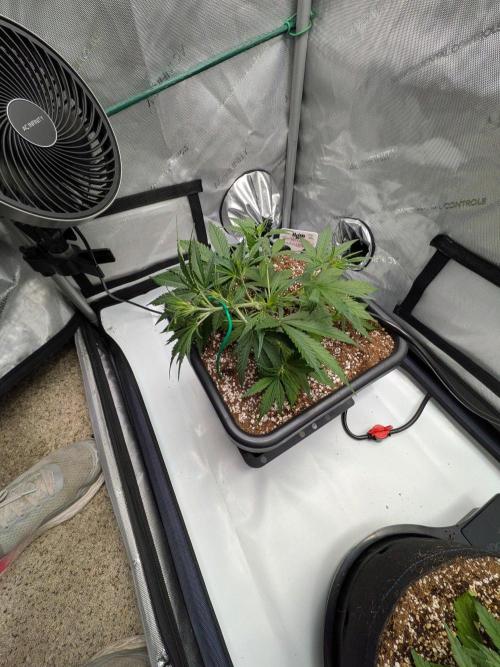
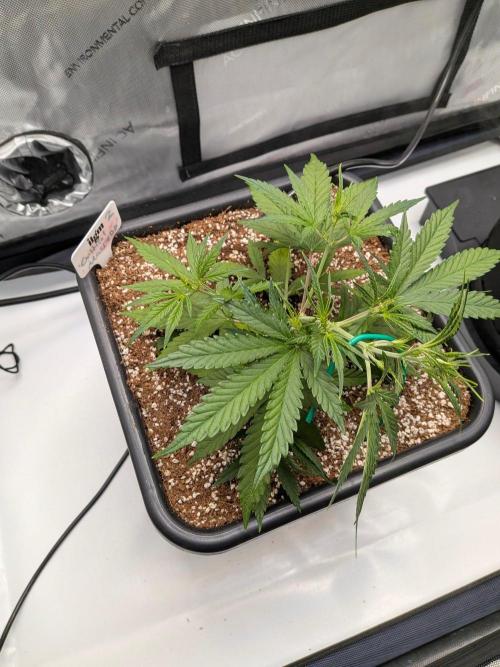
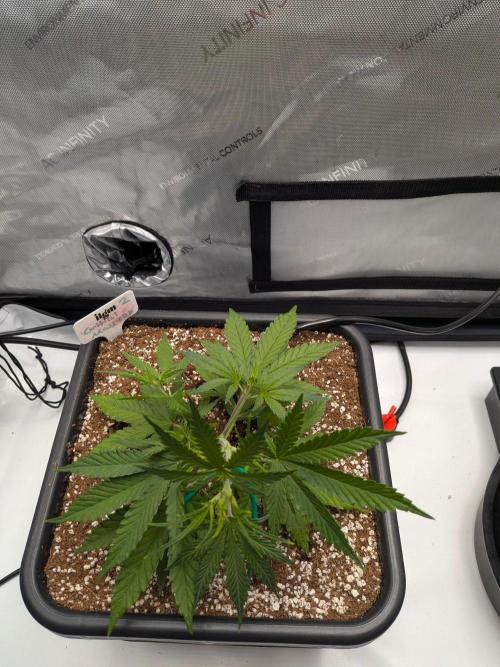
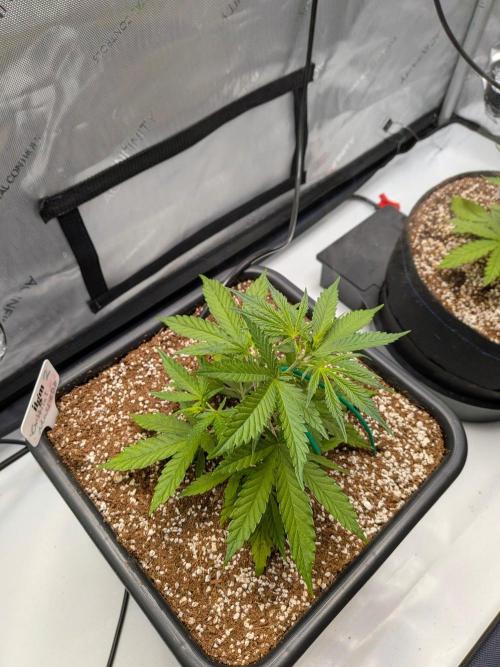
Aeromatics Critical Mass CBD Auto #2: She is growing, but I still don't know what to expect given my now 3 different experiences with these seeds (see previous diaries including my concurrent #1).
I am all about quality on this run, and my only daily adjustments and checks are main stem offset training just to do my classic, and what I may start to call, LOTR, style training.
For now, we are low stress with autopot activation and we will see how stretch goes!
Tent-Wide Update: Autopots Activated!
I tested her with a few 500 ml waters throughout the week to see if she would draw some from the reservoir, and she proved ready to go heading into day 22.
Thus, I activated the system in full!
I filled my reservoir with 3 gallons of a vegetation supportive mixture:
3 Gallons RO water
1.5 ml Ventana Plant Structure
6 ml Ventana Plant Science Grow
21 ml Ventana Plant Science Support
Both plants drank up well, but three gallons was a bit too much for 1 full, so I am going to shrink it down to 2 gallons moving forward.
I have my airdomes on in full for the 20 hours that the lights are on.
PPFD might be a bit high (380), so we will see if I want to drop it down to avoid stress.
All in all, I am happy and we are off for a big growth spurt!
6 likes
comments
Share
Used techniques
LST
Technique
5
Week 5. Flowering23d ago






35.56 cm
Height
20 hrs
Light Schedule
24 °C
Day Air Temp
5.7
pH
Weak
Smell
430 PPM
TDS
62 %
Air Humidity
14.76 set_lilers
Pot Size
91.44 cm
Lamp Distance
Nutrients 4
Support 4-0-0
1.849 mll
Structure (Silica)
0.132 mll

Flower 0-3-4
0.66 mll
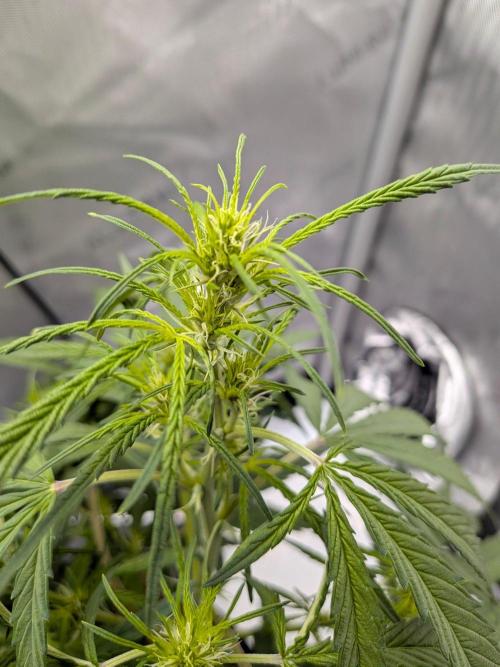
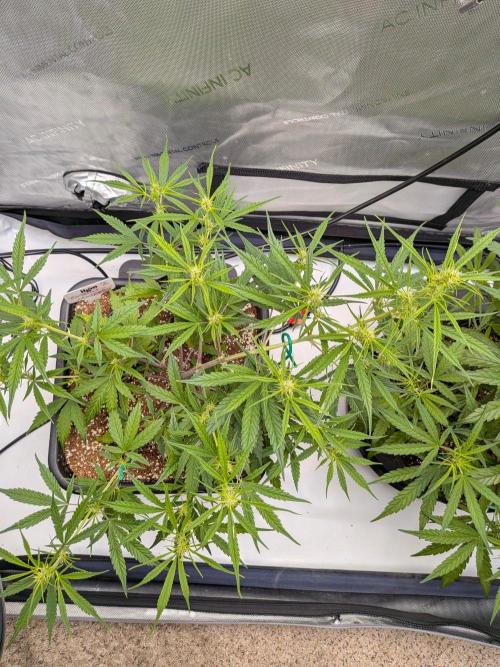
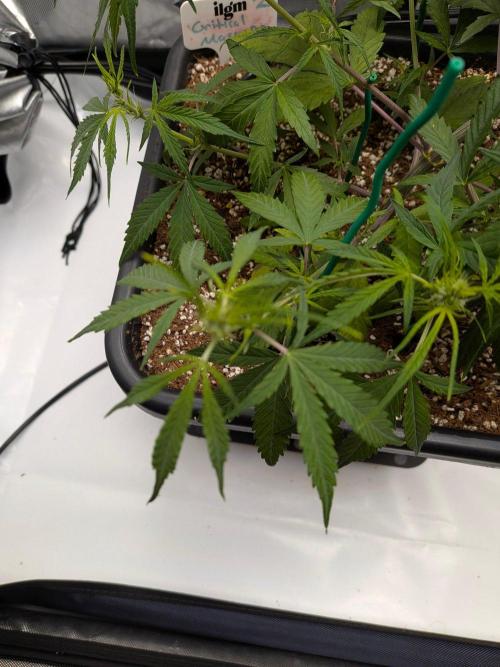
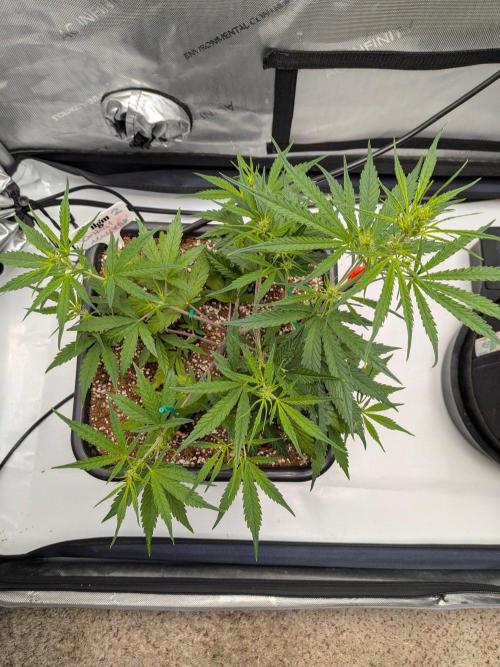
Aeromatics Critical Mass CBD Auto #2: Our younger lady is following closely behind! She has a slightly different structure, with a more open and stretchy growth pattern compared to #1. She took to her plastic AutoPot transplant well and has continued developing new nodes and branches. While she is still a few days behind her sister, I am happy with her progress and have no plans to push her unnecessarily.
Tent-Wide Updates: Weeks four and five brought some exciting developments as we officially transitioned both plants over to their AutoPot reservoir!
After a few controlled bottom-watering tests, both plants showed signs of taking up moisture from the trays. Once the coco had fully wicked and the plants appeared comfortable, I activated the reservoir and allowed the system to take over. The first two gallons disappeared surprisingly quickly, although consumption slowed once the coco became fully saturated.
We also gradually increased our AirDome schedule from a few short intervals to running throughout the 20-hour light period. Both plants seem to be adapting well to the additional root-zone aeration.
Nutritionally, we made some small adjustments as the plants moved through vegetative growth and into their early flowering transition. Both were showing lighter green foliage, so we increased Ventana Plant Science Support while gradually introducing Flower alongside Grow.
Our reservoir mixtures during this period generally included:
One Gallon of RO Water
Ventana Plant Science Structure: 0.5 ml
Ventana Plant Science Grow: 1–2 ml
Ventana Plant Science Flower: 1–2.75 ml
Ventana Plant Science Expand: 0.5 ml
Ventana Plant Science Support: 6–7 ml
Target EC: approximately 0.85–1.0
Target pH: 5.7–5.8
We have intentionally kept the feeding relatively mild. Since these are CBD autoflowers, I am much more interested in maintaining healthy, low-stress growth than chasing maximum size or yield.
I also introduced some gentle LST to both plants, using small adjustments to spread the developing branches outward and improve light exposure throughout the canopy. Nothing aggressive, just enough to open them up and give the developing flower sites some room to grow!
One interesting observation was the appearance of some narrow, twisting leaves as the plants began transitioning into flower. After experimenting with PPFD in the 320–350 range, I decided to back the light down closer to 280–300 PPFD. The plants appeared to respond positively, so we are keeping things conservative for now.
Outside of that, we are finally starting to see some pistils and early flower development!
The goal moving forward is simple: maintain stable environmental conditions, keep nutrition consistent, minimize unnecessary stress, and let these Critical Mass CBD Autos show us what they can do!
7 likes
comments
Share
Used techniques
LST
Technique
6
Week 6. Flowering15d ago


71.12 cm
Height
18 hrs
Light Schedule
24 °C
Day Air Temp
5.7
pH
Weak
Smell
475 PPM
TDS
62 %
Air Humidity
14.76 set_lilers
Pot Size
91.44 cm
Lamp Distance
Nutrients 5
Support 4-0-0
1.585 mll
Structure (Silica)
0.132 mll
Flower 0-3-4
0.793 mll
Aeromatics Critical Mass CBD Auto #2: Our younger lady continues to show off a completely different growth pattern! She is noticeably taller and more open than #1, with longer internodes, narrower foliage, and plenty of flowering sites along her branches.
One interesting development has been a gradual lightening of her foliage, particularly over the last week or so. While some of the leaves became fairly lime-green, they remained flexible and healthy-looking without significant tissue damage. Her flowers continued developing throughout this period, although she remains a little behind #1 in overall bud development.
Toward the end of the week, we even started noticing some green returning to portions of her canopy, which was encouraging!
Tent-Wide Updates: Week six has been all about maintaining stability and allowing these two Critical Mass CBD Autos to settle into flowering!
Both plants are now fully established in their AutoPot systems, with the reservoir providing our primary nutrition through Ventana Plant Science. The AirDomes continue operating during the light cycle, and both containers are maintaining consistent moisture.
One of our bigger adjustments was moving to an 18/6 lighting schedule. We had previously been running 20/4, but decided that a longer dark period might be beneficial as the plants progressed through flower. Since our primary goal is quality rather than maximum yield, I am perfectly happy giving these ladies a little extra rest!
We also continued keeping our light intensity relatively conservative rather than pushing PPFD unnecessarily.
Nutritionally, we gradually settled into a flower-focused Ventana Plant Science reservoir recipe. With #2 showing lighter foliage, I considered increasing nutrients or adding Cal-Mag, but ultimately decided against introducing unnecessary variables. Ventana Support already supplies calcium and magnesium, and I wanted to give the plants an opportunity to respond to a consistent feeding program.
Our reservoir recipe during this period included:
One Gallon of RO Water
Ventana Plant Science Structure: 0.5 ml
Ventana Plant Science FlaVUH: 1 ml
Ventana Plant Science Flower: 3 ml
Ventana Plant Science Expand: 0.5 ml
Ventana Plant Science Support: 6 ml
Target EC: approximately 0.80–0.95
Target pH: 5.7–5.8
We also introduced our first Stash Bloom application alongside Mammoth P, continuing the supplemental feeding approach we previously established with Stash Base and Blend.
Rather than adding organic amendments to the AutoPot reservoir, I prepared a separate, diluted root-zone drench and applied it from above. Both plants received approximately 1.2 liters, after which I removed the runoff and cleaned their AutoPot trays.
The plants responded well following the application and cleanup, with noticeably improved leaf posture and continued flower development. While I cannot say exactly which adjustment contributed to the improvement, I am happy with how both plants are looking!
One thing I am really enjoying about this grow is observing how differently these two plants express themselves despite being the same strain. #1 has maintained a compact, bushy structure with larger developing flowers, while #2 has grown into a more open plant with numerous smaller flowering sites.
Both are beginning to show some early resin development, and we are seeing plenty of fresh white pistils as the flowers continue to build.
Outside of that, there has not been much aggressive intervention this week, and that's exactly how I want it!
Moving forward, the goal remains simple: keep our environmental conditions stable, maintain consistent nutrition, avoid unnecessary stress, and allow these CBD autoflowers to develop at their own pace.
Onward to bigger flowers and hopefully some beautiful CBD-rich medicine!
10 likes
comments
Share
7
Week 7. Flowering22m ago







71.12 cm
Height
18 hrs
Light Schedule
24 °C
Day Air Temp
5.7
pH
Weak
Smell
475 PPM
TDS
62 %
Air Humidity
14.76 set_lilers
Pot Size
91.44 cm
Lamp Distance
Nutrients 5
Support 4-0-0
1.585 mll
Structure (Silica)
0.132 mll
Flower 0-3-4
0.793 mll
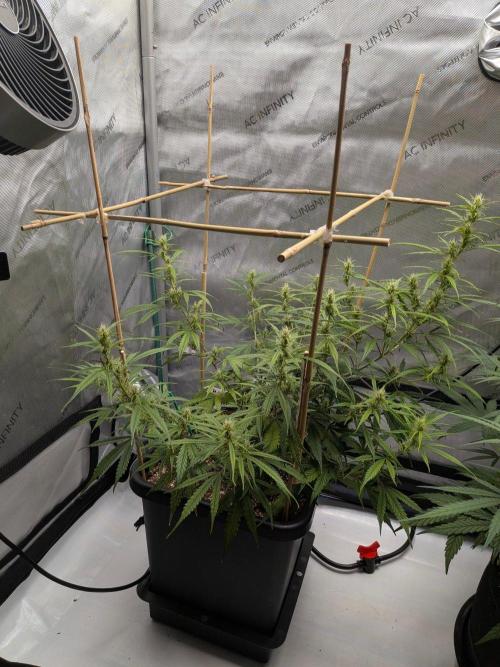
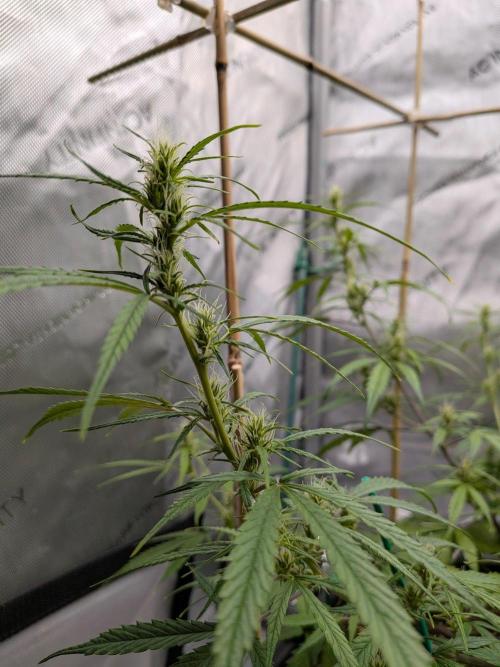
Aeromatics Critical Mass CBD Auto #2: Our younger lady continues to be the interesting one of the pair!
Despite being the same strain, she has developed a noticeably different growth structure from #1. Her branches are longer and more open, with narrower foliage, greater internodal spacing, and a more elongated flowering pattern.
The biggest concern during these weeks has been her increasingly light-green foliage. Over approximately 10 days, we watched her transition toward a noticeably pale, lime-green color, with some yellowing becoming more pronounced across her older fan leaves.
We considered several possible explanations, including differences in nutrient uptake, magnesium or nitrogen availability, and natural phenotypic variation. However, I didn't want to chase a specific deficiency without stronger evidence, especially since both plants were receiving the same reservoir nutrients.
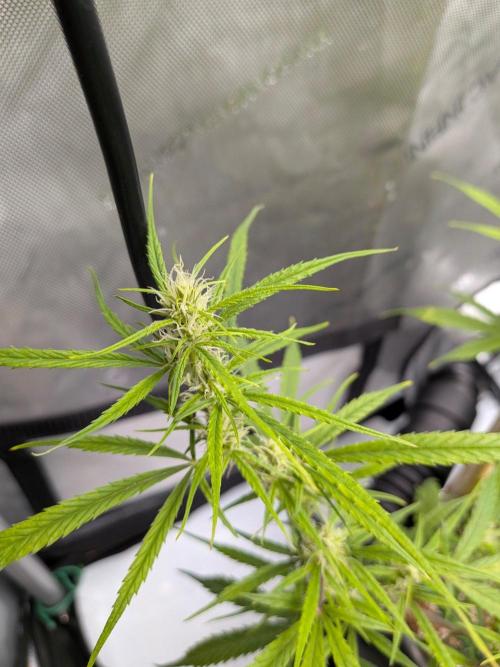
Interestingly, despite her lighter appearance, she continued producing new flowering sites and developing plenty of fresh white pistils. Her leaves remained flexible and healthy to the touch, and we weren't seeing significant tissue damage or widespread necrosis.
Toward the end of this period, we began noticing a little more green returning to portions of her upper canopy, which was encouraging.
She is certainly developing differently from #1, but I am enjoying the opportunity to compare two distinct expressions of the same genetics!
Tent-Wide Updates: Weeks six and seven brought a number of interesting developments as we moved further into flowering and continued refining our environmental and nutritional approach.
One of our most significant changes was transitioning from a 20/4 light schedule to 18/6.
After observing some downward-facing foliage and considering the overall development of both plants, I decided to provide a longer uninterrupted dark period. Since this run is focused on producing high-quality CBD flower rather than maximizing yield, I am perfectly comfortable being a little more conservative with our lighting.
We also worked on stabilizing our environmental conditions, bringing temperatures closer to 77–78°F and adjusting humidity downward as flowering progressed.
Our light intensity remained relatively conservative, generally around 340 PPFD across the canopy, with some higher flowering sites approaching 400 PPFD.
Both plants continued drinking through their 3.9-gallon AutoPot systems, with our AirDomes operating throughout the light cycle.
Nutritionally, we completed our transition into a flower-focused Ventana Plant Science feeding program.
Rather than pushing nutrient concentrations higher, I wanted to establish a consistent reservoir formula that would support both plants through flower development without introducing unnecessary stress.
Our reservoir recipe during this period generally included:
One Gallon of RO Water
Ventana Plant Science Structure: 0.5 ml
Ventana Plant Science FlaVUH: 1 ml
Ventana Plant Science Flower: 2.5–3 ml
Ventana Plant Science Expand: 0.5 ml
Ventana Plant Science Support: 6–6.5 ml
Target EC: approximately 0.80–0.90
Target pH: 5.7–5.8
We also continued our supplemental feeding program with Stash and Mammoth P.
Having previously introduced Stash Base and Blend, we moved into our first Stash Bloom application on October 16.
Rather than adding organic products directly to the AutoPot reservoir, I prepared a separate Bloom and Mammoth P root-zone drench, allowing us to introduce these amendments from above while maintaining a clean mineral reservoir.
The mixture was diluted to approximately 1.0 EC and adjusted to pH 5.5 before application. Both plants received approximately 1.2 liters, after which I removed the runoff and cleaned the AutoPot trays.
The following day, both plants appeared happy and vigorous, with #1 showing particularly encouraging improvements in leaf posture.
While it's difficult to isolate which adjustment contributed most to that improvement, I am very happy with how the plants responded to the overall maintenance and feeding program.
One of my favorite aspects of this grow has been observing the differences between these two plants.
Despite sharing the same genetics, lighting, environment, and nutrient reservoir, #1 has developed into a dense, bushy plant with substantial foliage, while #2 has taken on a much more open, elongated structure.
It's a great reminder of how much variation we can see between individual plants, even within the same strain!
Outside of that, we're finally beginning to see the flowers take shape, with plenty of fresh pistils, developing bud sites, and the earliest signs of resin production.
Moving forward, the plan remains the same: maintain stable environmental conditions, continue our conservative flowering nutrition, avoid unnecessary training or stress, and allow both ladies to develop at their own pace.
We're not trying to grow the biggest plants possible. We're trying to grow beautiful, healthy, CBD-rich flowers while documenting everything we learn along the way!
Onward to the exciting part of flower!
1 like
comments
Share
Enjoying this diary? Follow for more updates!
Prefer the old Diary view?
Go back to the old Diary view