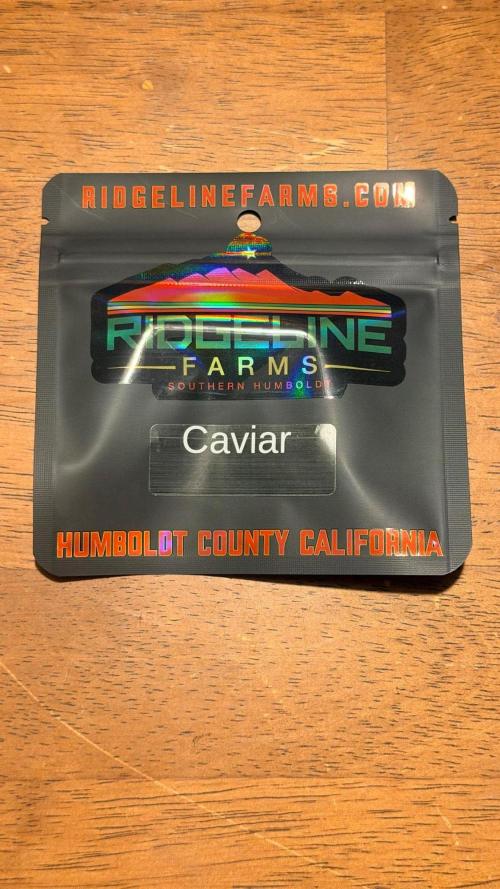
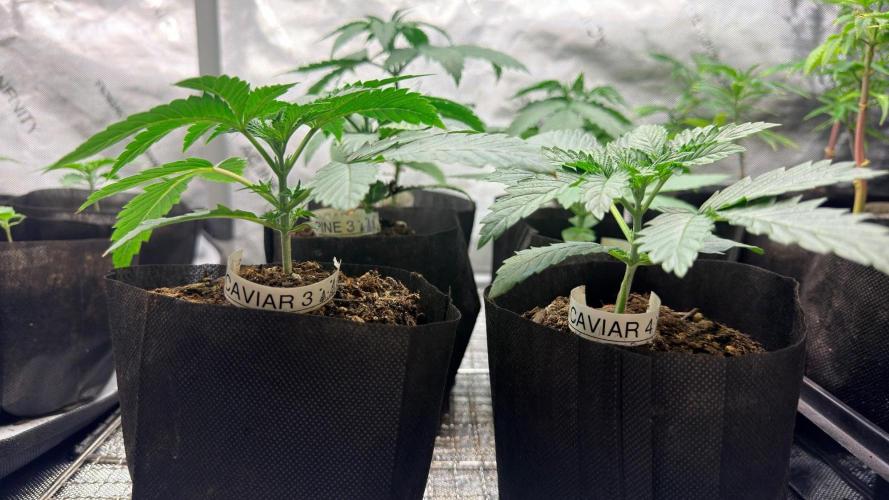
ChillSpace And we’re officially underway with the Caviar Collection from Ridgeline Farms!
This is a project I’ve been looking forward to for a long time! I actually discovered Blueberry Caviar a year or two ago and was immediately fascinated by the genetics. I even reached out to Jason Gellman directly to ask whether any seeds had been released and to my surprise, he responded that same day and told me they weren’t available yet! I thought it was pretty awesome that someone whose work I admired would take the time to respond to a random home grower. I’ve been a fan of Jason and Ridgeline Farms ever since, keeping an eye on their genetics and hoping this collection would eventually become available.
When the Caviar Collection finally dropped, I knew I had to get my hands on it! But with the packs costing roughly twice as much as their standard releases, I decided to start with Platinum Lantz to gain some experience and confidence before diving into this project.
And boy, am I glad I did!
Platinum Lantz has become one of my favorite growing experiences. I’ve learned so much about regular seeds, cloning, phenotype selection, and breeding along the way. Even the little clones I’m currently flowering out smell absolutely incredible! I can hardly believe how good they are already, and I can’t wait to see what the full plants produce once I flip them.
Anyway, back to this exciting release!
What makes the Caviar Collection especially interesting is that these are the genetics from the population that gave rise to Ridgeline’s Blueberry Caviar and Blackberry Caviar selections. Rather than growing an established cultivar, I’m getting the opportunity to explore that genetic population myself and hopefully discover something special of my own!
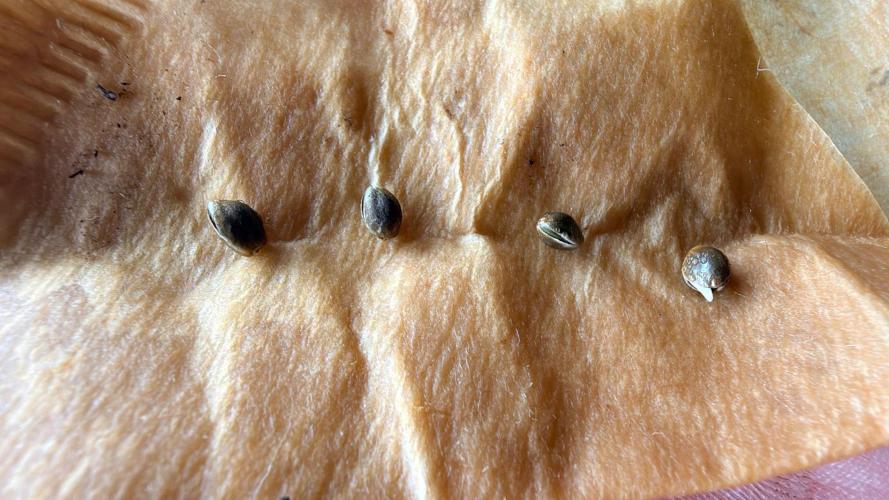
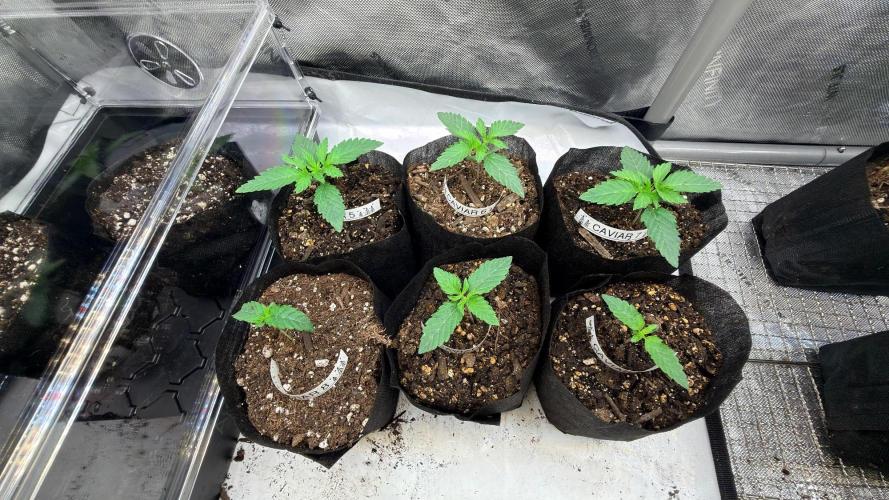
For now, I started four regular Caviar seeds, and all four cracked within approximately 40 hours for a perfect 4/4 start!
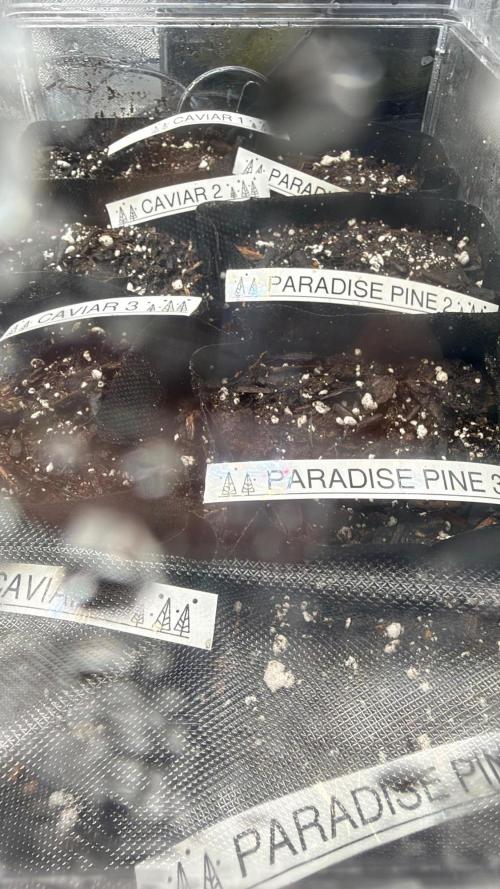
They’ve since been planted in quarter-gallon fabric pots filled with Purple Cow IndiCanja and placed in my propagation tent alongside four Paradise Pine seedlings from Huckleberry Hill Farms.
I’m excited to watch these individuals develop, explore their differences, and hopefully find something worth preserving and carrying forward into my own breeding projects.
Huge respect to Jason Gellman and Ridgeline Farms for making these genetics available to home growers. It’s pretty incredible that something I’ve been following and hoping for over the last couple of years is finally growing in my own tent!
The hunt for my own Black Pearl officially begins! 🤙
3 likes
2 comments
Share
Used method
Paper Towel
Germination Method
1
Week 1. Vegetation
13d ago
1/13
5.08 cm
Height
27 °C
Day Air Temp
6.5
pH
80 %
Air Humidity
20 °C
Solution Temp
17 °C
Substrate Temp
ChillSpace This one has been a long time coming!
When I first set out on this breeding journey, my goal was pretty simple: build my own personal collection of exceptional genetics, produce quality seeds, and create enough variety that I could keep exploring new possibilities for years to come.
Caviar has been on my radar for a LONG time. Originally, it was Blueberry Caviar that caught my attention, but getting my hands on these regular Caviar seeds has turned into something even more exciting.
Instead of finding someone else’s keeper, I get to hunt for my own Black Pearl. 🖤
I actually started another breeding project with Ridgeline Farms’ Platinum Lantz back in July, partly to gain experience before taking on this hunt. That project has taught me a tremendous amount about growing photoperiods, cloning, identifying males and females, and further evaluating individual plants. Now that things are really coming together with Platinum Lantz, it feels like the perfect time to begin the project I’ve been anticipating.
I initially started four Caviar seeds alongside four Paradise Pine seeds from Huckleberry Hill Farms. But after thinking about what I really wanted from this project, I decided to go all in and germinate my remaining seven Caviar seeds, bringing the total to eleven.
After all, this is a phenotype hunt. The more individuals I have to evaluate, the better my chances of discovering something truly special.
Final result: 10 out of 11 Caviar seeds successfully germinated! That’s a 90.9% success rate. I’ll take it.
The final seed held out for six days without opening. Eventually, curiosity got the better of me and I cracked it open myself. 🤷♂️ Surprisingly, the inside was still white and looked potentially viable! But with ten successful seedlings already growing, I decided it wasn’t worth holding everything up for one more seed.
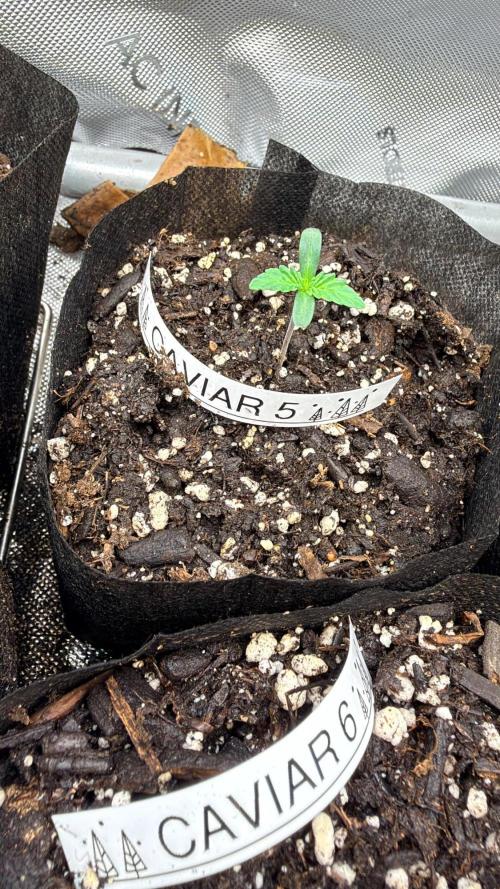
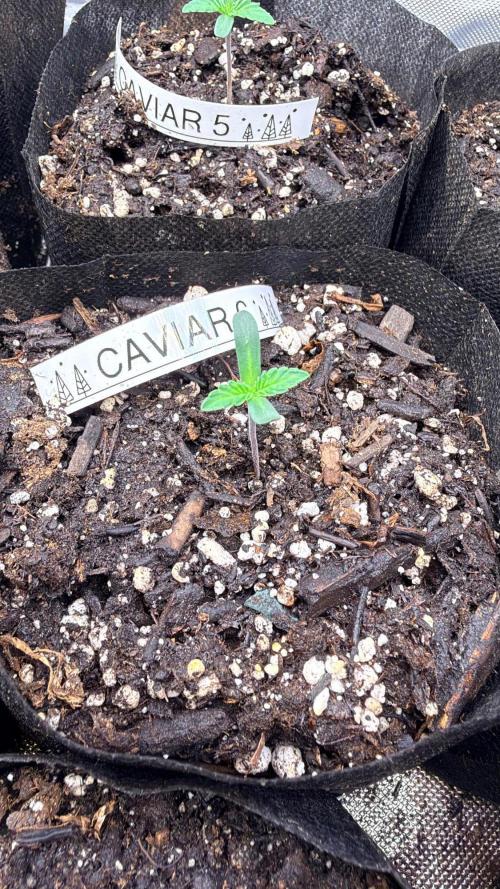
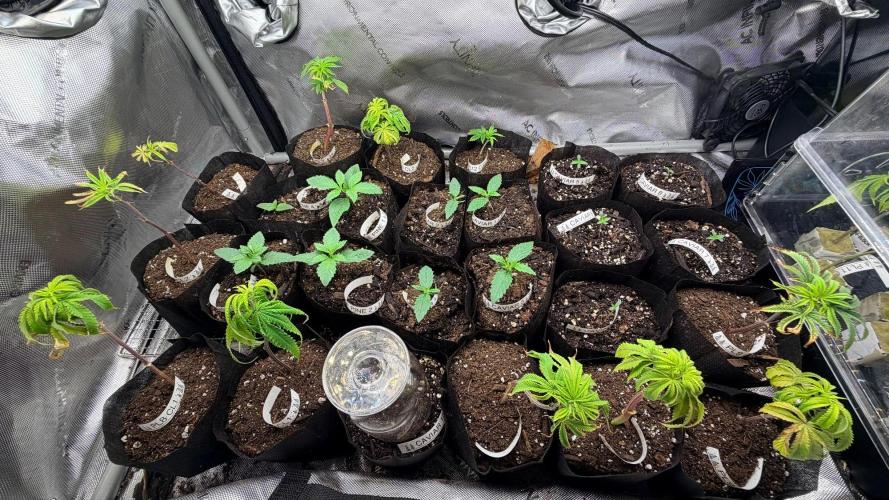
The first four Caviar seedlings have a few days’ head start on the remaining six, so there’s currently some noticeable variation in size. That should become less significant as they mature.
One interesting observation already: the Caviar seedlings seem noticeably smaller than the Paradise Pine seedlings started alongside them. I’m curious whether that’s simply an early developmental difference or something that will continue as they grow.
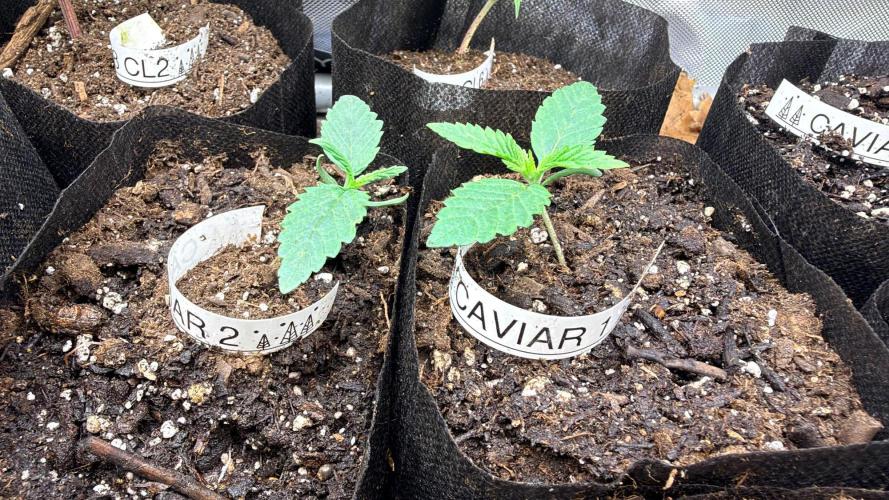
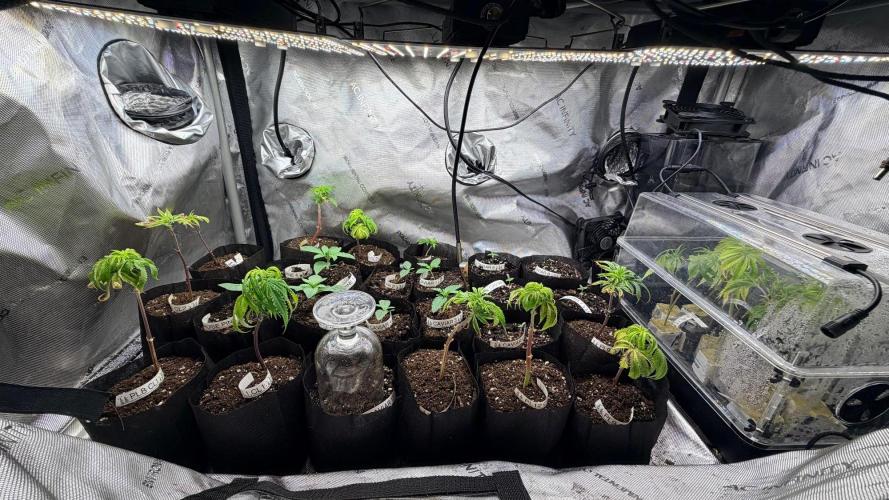
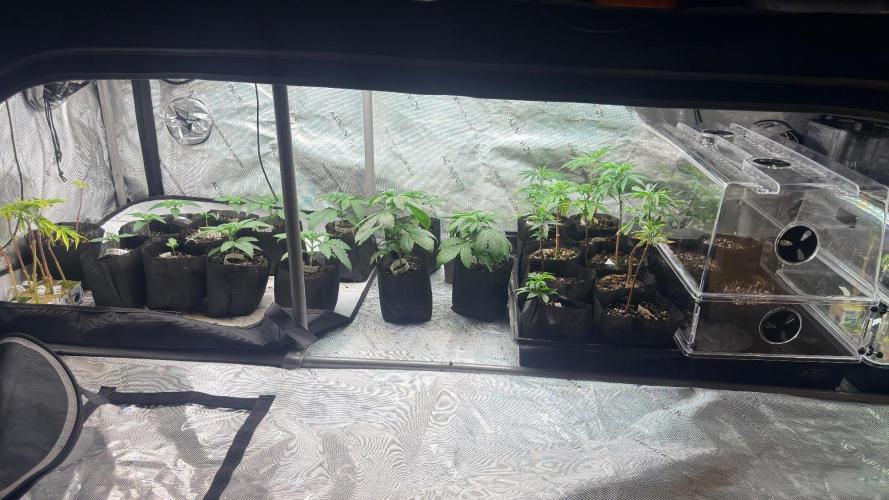
All ten Caviar seedlings are now growing in quarter-gallon fabric pots, surrounded by some of my Platinum Lantz clones and Paradise Pine seedlings.
You’ll probably notice those older clones looking a little yellow and rough around the edges. They’ve been hanging out in rockwool while I finished germinating everything, and I finally transplanted them into their quarter-gallon pots today. You should have seen their roots, haha. They’re not the stars of this diary, but they’re part of the bigger breeding operation happening behind the scenes.
For now, I’m letting the seedlings establish themselves while keeping an eye on their individual growth patterns.
My goal isn’t simply to make as many crosses as possible. I want to find a few genuinely exceptional plants worth building something around.
Aroma, flavor, appearance, resin production, structure, and overall plant quality are what I’m most excited to evaluate. I’m especially interested in finding something unique rather than settling for the first decent plant.
With ten regular Caviar seedlings, I have no idea yet how many males or females I’ll end up with, much less which individuals will stand out.
And that’s exactly what makes this exciting.
I’ve spent months getting my equipment, growing methods, and other breeding projects to this point. Now I finally get to start searching for the plant that inspired so much of it.
Ten seedlings. One hunt. Hopefully, one extraordinary Black Pearl.
Let the hunt begin! 🖤🌱
3 likes
comments
Share
2
Week 2. Vegetation
5d ago
1/21
10.16 cm
Height
20 hrs
Light Schedule
27 °C
Day Air Temp
6.5
pH
80 %
Air Humidity
20 °C
Solution Temp
17 °C
Substrate Temp
0.95 liters
Pot Size
ChillSpace These little plants are coming along beautifully! We’re working with 10 Caviar plants here, and I’m expecting somewhere around half males and half females. I’m excited to see what kind of selections I end up with!
I started these seeds in two groups about 4–5 days apart, so there’s a noticeable difference in their development. They’re all doing really well, though, and it’s been awesome watching their individual growth patterns start to emerge. Caviar #3 has been particularly vigorous so far, but it’s still incredibly early!
Originally, I intended to take this project pretty slowly. Start a few seeds, evaluate them individually, and introduce more as space became available. Basically, the same approach I took with my first breeding project, Platinum Lantz. But that experience has taught me quite a bit about managing a small-scale pheno hunt.
I realized I was already about 13 weeks into Platinum Lantz and still waiting on sex results from some of my plants! Because I’d started different groups weeks apart, I eventually found myself combining plants of different ages and even restarting some of the originals through clones to get everything growing at a more comparable stage.
It worked, and I learned a tremendous amount, but it also made me realize how much time and effort I could potentially save by approaching things differently.
Starting seeds gradually definitely has advantages, especially when space is limited and you want to give each plant individual attention. But when you’re comparing phenotypes, having plants growing under similar conditions at roughly the same age makes those comparisons much more meaningful. Your environment, techniques, and even your own experience change over time, so evaluating plants months apart introduces variables that aren’t always easy to account for.
I can see why serious pheno hunters prefer starting large groups together. Obviously, I’m working on a much smaller scale, with only 10 Caviar seeds to explore, but I can still apply some of those principles.
Then something happened with Platinum Lantz that really changed my perspective. As my plants began developing their individual aromas, I started realizing just how interesting these genetics actually were. PL6 in particular completely caught my attention with these incredible sweet melon candy aromas that eventually developed into something almost like grape soda. And now the other females are beginning to reveal their own personalities, with some surprisingly fruity, almost Fruit Loops-like aromas coming through.
That was the breakthrough for me. Not simply getting plants into flower or figuring out the logistics, but realizing that I might actually have some genuinely special plants growing right in front of me!
I’ve now got three beautiful Platinum Lantz females flowering, with plans to pollinate selected branches using one of my males. Watching them develop has been incredibly rewarding, especially after everything I’ve learned along the way. And damn, they have not disappointed me!
That excitement pretty much sealed the deal. I ended up starting the remainder of my Caviar pack instead of spreading everything out over the coming months. I figured I’d rather deal with a little extra congestion early on and spend more time making selections later, instead of still germinating seeds when I could already be evaluating plants.
Apparently, that perpetual autoflower habit of always having something new starting hasn’t completely left me lol.
I’ve taken a slightly different approach with my feminized photoperiod lines, starting with just three seeds from each. Since I’m not searching for males in those original packs, I can focus on evaluating the females and preserving interesting genetics for future crosses.
Altogether, I’ve got five carefully selected foundational lines in the works, three from Ridgeline Farms and two from Huckleberry Hill Farms, with one final addition starting in the next few days. So if you notice some empty pots or plants from other projects in the pictures, that’s why!
Of course, all this enthusiasm has introduced another challenge: SPACE.
I’ve been looking ahead at everything I have growing and realizing that managing these projects simultaneously might become one of my biggest obstacles. In preparation, I pulled out my trusty tent stretcher, and now I’ve got a 2×2×6 tent running on its side! I also picked up an XL humidity dome to expand my propagation space for upcoming cloning runs.
I’m willing to slow down some of my other projects if Caviar needs more attention later, but there’s no reason to make those decisions just yet. Starting a project doesn’t mean it immediately has to take the driver’s seat. I’ve got time to evaluate everything and adjust my priorities as I go.
I’m really trying to avoid adding another tent, though. I can only take over so much of the house before my wife starts complaining! Lol.
One of the things that makes this particular project so exciting to me is the history behind these genetics.
Jason Gellman of Ridgeline Farms has spent years developing his own lines in Southern Humboldt, building on generations of cultivation experience. His Lantz genetics are especially interesting because they came from crossing two of his Emerald Cup winners, Green Lantern and Ridgeline Runtz. He and his father spent years developing and selecting Lantz, which went on to win at the 2023 Emerald Cup.
Platinum Lantz, which brings Ridgeline Runtz back into Lantz, seemed like a natural place to start, especially knowing that Lantz is also foundational to the Caviar genetics I was so excited to explore.
And that’s where this gets especially interesting!
These Caviar regular seeds come from the original Grape Gas × Lantz family that produced both Blackberry Caviar and Blueberry Caviar. Jason selected his own Blackberry Caviar, while Berner recognized something special in a different phenotype that initially hadn’t made the cut.
From what I saw on YouTube, Berner was going through samples when he identified one he considered a keeper, and Woody Harrelson eventually got to sample it as well. It’s actually a pretty cool video! That overlooked selection eventually became Blueberry Caviar, which went on to receive some serious recognition, including a Golden Bear award at the California State Fair.
What fascinates me most about that story isn’t necessarily the recognition or the famous people involved. It’s the fact that different people can explore the same genetic family and find completely different things worth keeping.
Jason found something he loved in Blackberry Caviar, while Berner saw something special in Blueberry Caviar. Neither selection invalidates the other. They simply represent different expressions of the same genetic possibilities.
And now I’m sitting here with seeds from that original family, wondering what else might be hiding in there!
It’s honestly a little surreal. When I really consider the history and legacy behind these genetics, part of me almost feels like they’re wasted on someone who’s still such a newbie to breeding. But everybody has to start somewhere, and just because I’m learning doesn’t mean I want to start with anything less than genetics I genuinely believe in.
I’m certainly not expecting every seed to produce something exceptional, and I understand that 10 plants barely scratch the surface of what’s possible within a genetic family. But I’m also not particularly interested in eliminating females before I’ve had the opportunity to see what they can offer. I want to explore these plants, appreciate their differences, and make selections based on what I actually enjoy.
That connection to the breeder is a huge part of why I chose Ridgeline Farms in the first place. I wanted genetics with a traceable history, developed by people who actually put in the work. With so much repackaging and questionable naming throughout the seed industry, knowing where my genetics originated and appreciating the breeders responsible for them means a lot to me.
Interestingly enough, none of this was originally part of my plan!
Before all this, I was primarily focused on production and enjoying whatever Mephisto Genetics released that caught my attention. I’ve accumulated something like 70 different packs from them, including freebies, which are honestly one of the best perks haha.
I’ve got enough autoflower seeds to keep myself busy for years, but the possibility of future restrictions on seed sales really changed how I started thinking about my collection. Even with all those packs, the seeds are ultimately finite. Eventually they get used, and if access to new genetics becomes more difficult, I don’t necessarily want to find myself completely dependent on whatever happens to be available.
And while I absolutely love growing autos, breeding with them presents its own challenges. You can’t really preserve an autoflower through conventional cloning the way you can with photoperiods, since the cuttings continue aging toward flowering. That makes evaluating a plant and then returning to the exact same individual for future breeding considerably more complicated.
Rather than worrying about what might happen down the road, I started thinking about how much more interesting it would be to build my own collection. Make seeds, preserve genetic diversity, and create something I could continue exploring for years.
I don’t expect to recreate the exact plants these breeders have already discovered, nor is that really my intention. I’m interested in exploring related genetics, finding expressions that appeal to me, and eventually seeing what happens when I start combining some of these different families.
All five of my foundational lines were carefully selected with that bigger picture in mind. There are some fascinating genetic connections between the Ridgeline and Huckleberry Hill offerings, and I think they’ll complement one another in some really interesting ways. I’m not just collecting random packs of seeds and hoping for the best. I have ideas for where I want to take them, even if I’m still figuring out exactly how everything will come together.
And no, I don’t plan on becoming some huge commercial breeder or maintaining a permanent collection of mother plants forever. I want to make seeds, enjoy the flower, preserve interesting combinations, and continue exploring the offspring over time. I might discover some incredible keepers along the way, or I might find that I enjoy completely different expressions in the next generation. That’s part of what makes the whole thing exciting!
I’ll admit, having five separate lines in the works is a little intimidating. I don’t have all the answers about how I’m going to manage everything yet, and I’m definitely fucking around with some pretty expensive packs here (lol, don’t tell my wife). But I know I can slow things down, make adjustments, and give individual projects more attention when necessary.
There’s a method to the madness. At least that’s what I keep telling myself lol.
What’s really crazy is how quickly my entire outlook on growing has changed. It feels like somebody flipped a switch, and suddenly I’m barely opening the treasure chest of possibilities.
For years, I had this mental barrier around photoperiods. I always figured they would be more complicated than autos, and I was perfectly happy growing the genetics I enjoyed without worrying about cloning, sexing plants, or making my own crosses.
Now that I’ve actually started working with them, that barrier has been completely shattered!
Honestly, for what I’m trying to accomplish, photoperiods are proving to be easier in a lot of ways. Having control over vegetative growth, training, and when plants transition into flowering has opened up possibilities I never really had with autos.
There are definitely differences, though! These photos seem to need a little more slapping around, literally, to develop the sturdy structure I’m looking for. I’ve been learning how much training and support can influence their growth, especially when you’re trying to avoid those tall, wispy branches that can’t hold themselves up without a net.
Although, I’m cutting them some slack in that department. I’m working with genetics that have a strong outdoor cultivation background and asking them to adapt to life inside my relatively small tents. I also wasn’t giving them quite as much attention as I probably should have in the beginning, simply because I already had so much going on when I started this project. Watching them adapt, recover, and develop under these conditions has been another interesting part of the learning experience.
It’s been an entirely different approach to growing, and I’ve been enjoying the hell out of learning it!
In a way, Blueberry Caviar is one of the biggest reasons I started down this road in the first place. I was following these genetics over a year ago, long before I imagined I’d be growing their relatives myself, let alone using them as a foundation for future breeding projects.
And now here we are!
What started as wanting to preserve a few interesting genetics has fundamentally changed how I think about growing. It’s not necessarily about expanding the size of my operation or producing more flower. It’s about discovering what’s possible with the genetics I already have, learning to appreciate the differences between individual plants, and creating something I can continue enjoying and exploring for years.
For now, I’m just enjoying watching these little plants grow. There’s a lot to learn, plenty of selections to make, and probably a few surprises waiting for me along the way.
This is really only the beginning, and I’m having a hell of a time with it already!
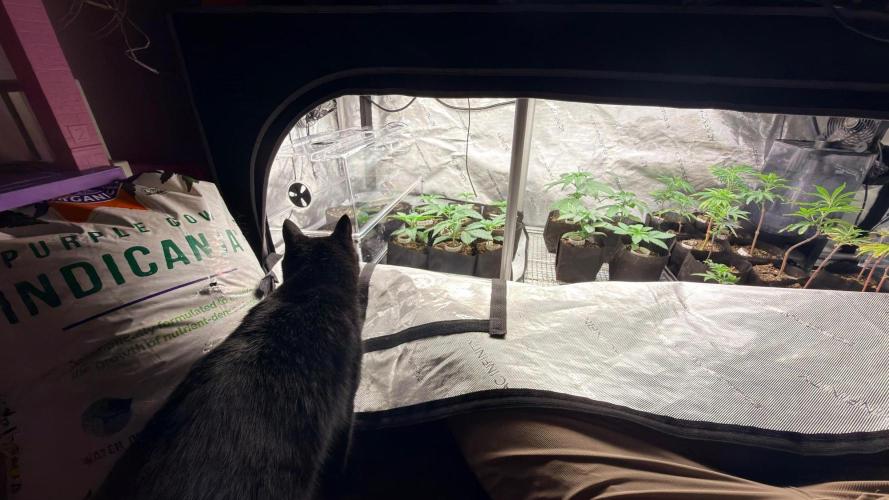
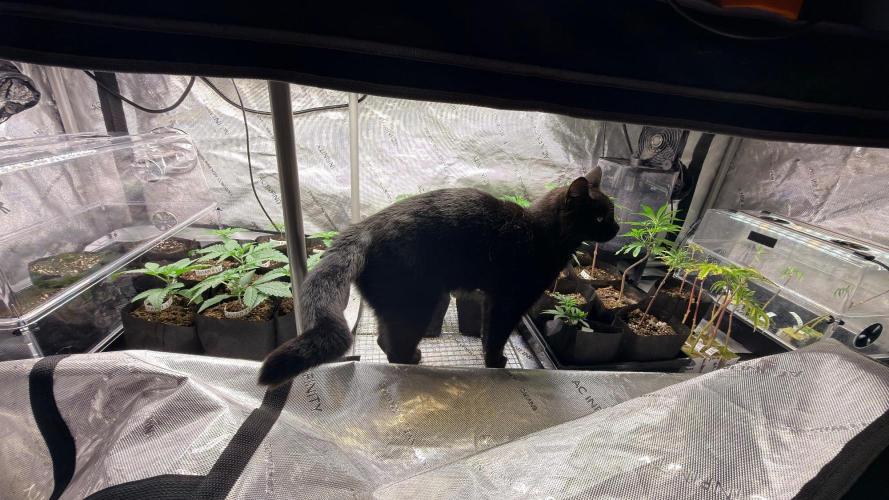
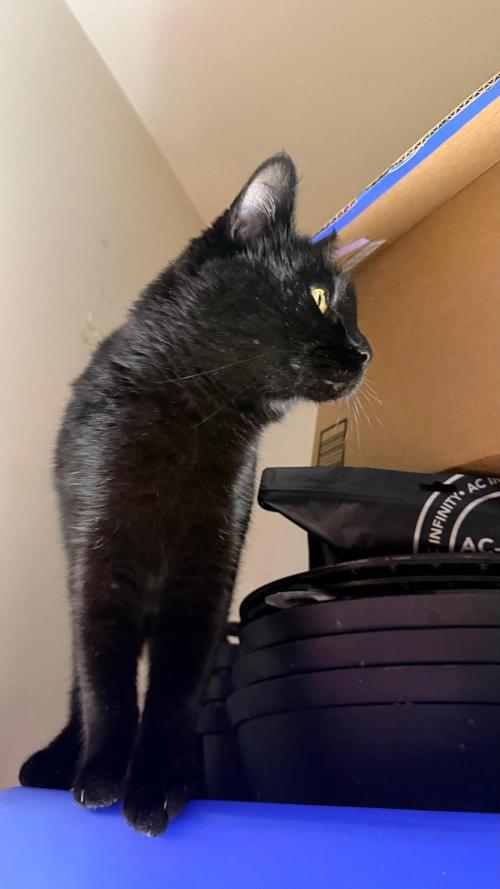
Even my black cat had to come inspect the Black Pearl operation. 😂
Love the passion, bro! And thanks for keeping such a detailed grow journal! 👊
I’d love to get my hands on a Caviar cut one day! That’d be a hell of a keeper to run! 🔥🌱
@ChillSpace, Haha, fair enough bro! I’ve actually been eyeing that source myself for a while, but haven’t dared to place an order yet. Wasn’t sure if the seeds would make it all the way to Europe. Glad yours made it safely!🌱