


Leeward Islands Jamaican Sativa Showcase


Leeward islands Jamaican Sativa
Leeward Islands Heirloom Population

Soil
Local vulcanic soil

Outdoor
Room Type
5
Week 5. Flowering16h ago


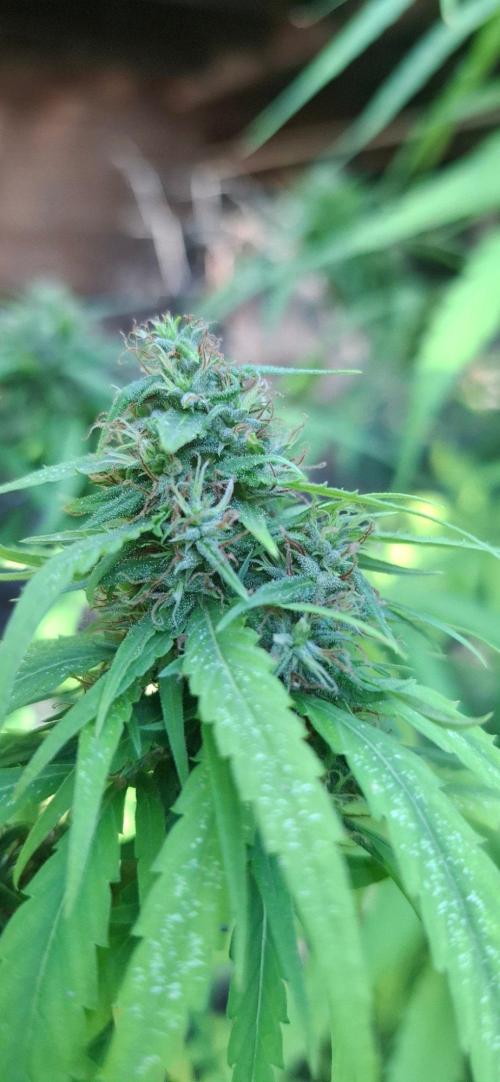

220 cm
Height
12 hrs
Light Schedule
32 °C
Day Air Temp
Weak
Smell
80 %
Air Humidity
28 °C
Night Air Temp
Nutrients 1
No nutrient used
1 mll
DutchGlobalCitizen When I started this grow, I had no intention of documenting it.
Every year, we plant a handful of seeds from this local Caribbean population. They are not grown as a serious production crop and they are certainly not the most modern genetics available. We grow them simply because they provide something that many modern hybrids do not.
A lighter daytime smoke.
The effect is energetic, functional and clear-headed. It is the kind of cannabis that allows you to stay active, work in the garden or enjoy a conversation without feeling glued to a chair. Around here, these plants have been grown for generations and remain popular precisely because of those qualities.
However, after posting a few photos and discussing them with other growers, I realized that many international growers have never actually seen what these local plants look like. Most cannabis content today revolves around highly refined commercial cultivars. Local Caribbean populations are rarely documented, despite having survived and adapted to tropical conditions for decades.
So I've decided to start documenting them.
What Exactly Is This?
I refer to these plants as Leeward Islands Jamaican Sativa.
That is not a commercial strain name. It is simply the name I use for a local Caribbean heirloom population that has been circulating between growers and islands for as long as I can remember.
I've been encountering this locally grown Jamaican for more than 30 years on St. Eustatius and neighboring islands. While modern hybrids came and went, this old Caribbean sativa never completely disappeared.
Over time, seeds have likely moved between growers, islands and generations through both human selection and open pollination. Rather than a highly stabilized modern cultivar, this appears to be a living regional population that continues to evolve under Caribbean growing conditions.
Growth Characteristics
These plants display many classic tropical sativa traits:
Narrow leaflets
Strong vertical growth
Long internodal spacing
Excellent airflow through the canopy
Long spear-shaped flowering tops
Flowers developing along much of the stem length
Relatively open flower structure compared to modern hybrids
The open flower structure may actually be one of the reasons these plants have survived so well in the humid Caribbean environment. While modern dense flowers can struggle with frequent rain and high humidity, these plants seem naturally suited to those conditions.
One observation that continues to surprise me is the resin production.
When people hear the words "local sativa" or "landrace-type cannabis", many imagine extremely loose flowers with little visible resin. While the flowers are certainly more open than modern hybrids, these plants consistently produce more trichomes than many growers would expect.
A Low-Intervention Approach
For this diary I am intentionally avoiding modern cultivation practices as much as possible.
The purpose is not to maximize yield.
The purpose is to observe how these plants behave under conditions that may be closer to those in which this population adapted over many generations.
No bottled nutrients are being used.
The plants receive only natural rainfall and occasional watering during dry periods.
Interestingly, the soil may already contain a significant amount of organic matter because this area was historically used as a dumping spot for material removed while cleaning a chicken run. Whether this contributes significantly to plant performance remains uncertain, but it is worth mentioning for transparency.
Flowering Progress
Based on visual observations, I currently estimate these plants to be around week 5 of flowering.
The flowers continue to build mass, fresh white pistils are still being produced, and the plants appear to have plenty of development left ahead of them.
Given the history and characteristics of this population, I expect a flowering period considerably longer than that of most modern hybrid cultivars.
For now, the plants remain healthy, vigorous and largely self-sufficient.
And perhaps that is the most interesting thing about them.
In an era of feeding schedules, additive charts and precision cultivation, these old Caribbean plants continue doing what they have done for generations:
Growing under the tropical sun with very little help from anyone.
2 likes
comments
Share
Enjoying this diary? Follow for more updates!
Prefer the old Diary view?
Go back to the old Diary view