DutchGlobalCitizen Week 5 Flower (Estimated)
When I started this grow, I had no intention of documenting it.
Every year, we plant a handful of seeds from this local Caribbean population. They are not grown as a serious production crop and they are certainly not the most modern genetics available. We grow them simply because they provide something that many modern hybrids do not.
A lighter daytime smoke.
The effect is energetic, functional and clear-headed. It is the kind of cannabis that allows you to stay active, work in the garden or enjoy a conversation without feeling glued to a chair. Around here, these plants have been grown for generations and remain popular precisely because of those qualities.
However, after posting a few photos and discussing them with other growers, I realized that many international growers have never actually seen what these local plants look like. Most cannabis content today revolves around highly refined commercial cultivars. Local Caribbean populations are rarely documented, despite having survived and adapted to tropical conditions for decades.
So I've decided to start documenting them.
What Exactly Is This?
I refer to these plants as Leeward Islands Jamaican Sativa.
That is not a commercial strain name. It is simply the name I use for a local Caribbean heirloom population that has been circulating between growers and islands for as long as I can remember.
I've been encountering this locally grown Jamaican for more than 30 years on St. Eustatius and neighboring islands. While modern hybrids came and went, this old Caribbean sativa never completely disappeared.
Over time, seeds have likely moved between growers, islands and generations through both human selection and open pollination. Rather than a highly stabilized modern cultivar, this appears to be a living regional population that continues to evolve under Caribbean growing conditions.
Growth Characteristics
These plants display many classic tropical sativa traits:
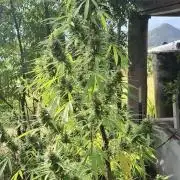
Narrow leaflets
Strong vertical growth
Long internodal spacing
Excellent airflow through the canopy
Long spear-shaped flowering tops
Flowers developing along much of the stem length
Relatively open flower structure compared to modern hybrids
The open flower structure may actually be one of the reasons these plants have survived so well in the humid Caribbean environment. While modern dense flowers can struggle with frequent rain and high humidity, these plants seem naturally suited to those conditions.
One observation that continues to surprise me is the resin production.
When people hear the words "local sativa" or "landrace-type cannabis", many imagine extremely loose flowers with little visible resin. While the flowers are certainly more open than modern hybrids, these plants consistently produce more trichomes than many growers would expect.
A Low-Intervention Approach
I am intentionally avoiding modern cultivation practices as much as possible.
The purpose is not to maximize yield.
The purpose is to observe how these plants behave under conditions that may be closer to those in which this population adapted over many generations.
No bottled nutrients are being used or have been used previously.
The plants receive only natural rainfall and occasional watering during dry periods.
Interestingly, the soil may already contain a significant amount of organic matter because this area was historically used as a dumping spot for material removed while cleaning a chicken run. Whether this contributes significantly to plant performance remains uncertain, but it is worth mentioning for transparency.
Flowering Progress
Based on visual observations, I currently estimate these plants to be around week 5 of flowering.
The flowers continue to build mass, fresh white pistils are still being produced, and the plants appear to have plenty of development left ahead of them.
Given the history and characteristics of this population, I expect a flowering period considerably longer than that of most modern hybrid cultivars.
For now, the plants remain healthy, vigorous and largely self-sufficient.
And perhaps that is the most interesting thing about them.
In an era of feeding schedules, additive charts and precision cultivation, these old Caribbean plants continue doing what they have done for generations:
Growing under the tropical sun with very little help from anyone.
"Nature nuh rush, but everything get done."
Nature doesn't rush. Every plant has its own rhythm, growing according to its natural cycle. With the right conditions, patience and time, things will develop as they should.
It's a reminder that growth cannot always be forced. Sometimes the best thing a grower can do is give nature the space and time to do its work.
12 likes
3 comments
Share
6
Week 6. Flowering
10d ago
1/10
220 cm
Height
12 hrs
Light Schedule
32 °C
Day Air Temp
Weak
Smell
80 %
Air Humidity
28 °C
Night Air Temp
Nutrients 1
No nutrient used
1 mll
DutchGlobalCitizen Week 6 Flower (Estimated)
As this diary continues, Alisha (left) and Kenisha (right) will be the two reference plants followed throughout the season. Both germinated in early July, were transplanted into larger pots later that month, showed their first signs of preflower around late August, and were eventually selected and planted outdoors. Although Alisha started as the larger plant and Kenisha the smaller, their positions eventually reversed, with Kenisha becoming the taller of the two.
This week both plants continue to reinforce one of the recurring themes of this diary: despite growing within the same environment and belonging to the same local population, no two individuals express themselves in exactly the same way.
Kenisha remains the taller and more upright plant. Her main stem continues to dominate the canopy, carrying flowers along a long central spear while maintaining the characteristic open structure seen throughout this population. Alisha, while still substantial in size, appears slightly more compact and bushier by comparison, with flower development distributed somewhat differently across the upper canopy.
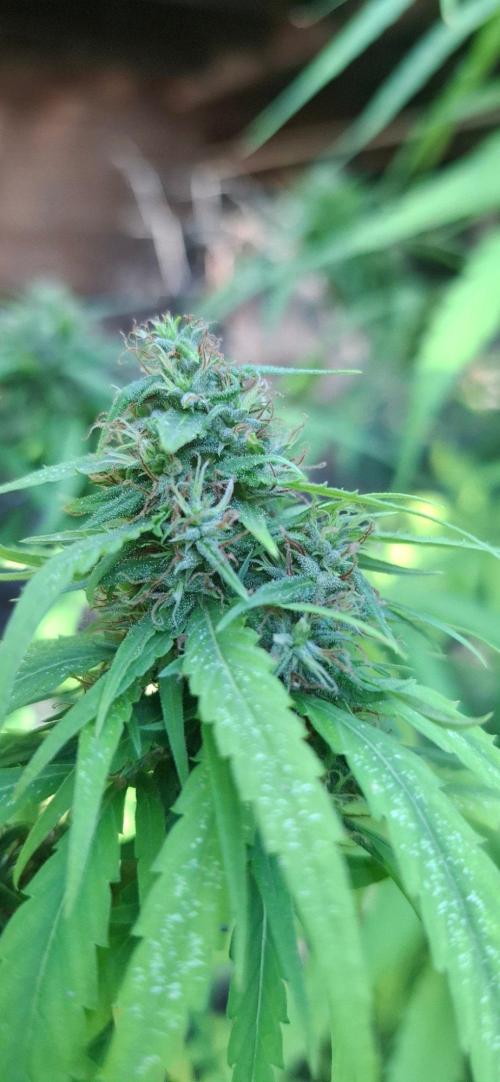
The close-up photographs reveal another characteristic that has become increasingly obvious as flowering progresses. Neither plant is attempting to build the extremely dense, compact flowers commonly associated with modern indoor hybrids. Instead, the flowers continue to develop as elongated clusters with visible spacing between calyx groups. Despite this open appearance, resin production continues to increase steadily, particularly on the upper flowers and surrounding sugar leaves.
Many pistils remain bright white, while others have begun transitioning to darker orange and brown tones. This mixture of fresh and aging pistils suggests that both Alisha and Kenisha are still actively building flowers rather than approaching a rapid finish. New growth remains visible at the tops of several flowering sites, indicating that the plants continue investing energy into floral expansion.
Equatorial Flowering: Small Changes, Reliable Results
One of the advantages of growing a local Caribbean population is the opportunity to observe how cannabis behaves under a nearly equatorial light cycle.
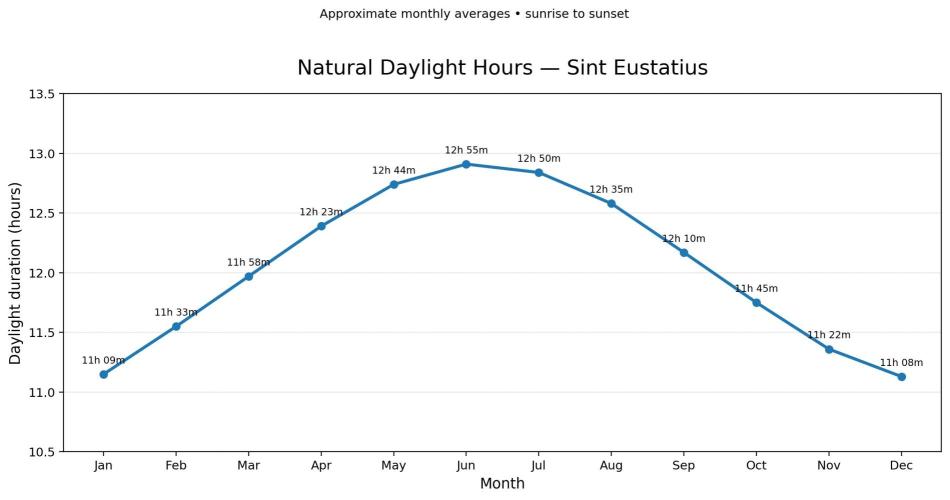
The included daylight graph shows that St. Eustatius experiences only a small annual change in day length. Throughout the entire year, natural daylight varies from approximately 11 hours 08 minutes in December to 12 hours 55 minutes in June, a difference of only 1 hour 47 minutes. Compared to higher latitudes, where day length can swing dramatically between seasons, this represents a remarkably stable environment.
Yet despite these relatively small seasonal changes, this population reliably transitions from vegetative growth into flowering every year. Alisha and Kenisha are living examples of that adaptation. Without artificial lighting schedules, timers, or any human intervention, they responded naturally to subtle seasonal signals and entered reproductive growth at roughly the same time.
The temperature graph tells a similar story. Seasonal temperature variation on St. Eustatius is modest by global standards, with average highs remaining around the upper 80s°F (approximately 30-32°C) for most of the year and nighttime temperatures remaining consistently warm. These plants evolved in an environment where neither light nor temperature changes are extreme. Instead, they appear finely tuned to detect and respond to gradual environmental shifts that would barely be noticed by many cultivated varieties.
Taken together, the daylight and temperature graphs help illustrate an important point: these plants are not adapting to dramatic seasons. They are adapted to subtle seasons.
Environmental Notes
The weather remains characteristically tropical. Warm temperatures, strong sunlight and persistent humidity continue to define the environment in which this population developed over generations.
The increasingly visible resin production remains particularly interesting under these conditions. While dense modern flowers often force growers to think about moisture retention and airflow, the open architecture maintained by Alisha and Kenisha continues to support the idea that this structure may be advantageous in a humid Caribbean climate. Whether that relationship is genetic adaptation, environmental influence, or a combination of both remains an interesting question for future observation.
Final Thoughts
Week after week, Alisha and Kenisha continue to demonstrate why this population has survived for so long across the Leeward Islands.
The seasonal cues are gentle. The temperatures are consistently warm. The changes in daylight are surprisingly small. Yet these plants continue to move through their life cycle with remarkable confidence.
Sometimes adaptation is not about responding to dramatic change.
Sometimes adaptation is learning how to listen to whispers.
13 likes
3 comments
Share
7
Week 7. Flowering
6d ago
1/13
220 cm
Height
12 hrs
Light Schedule
32 °C
Day Air Temp
Weak
Smell
80 %
Air Humidity
28 °C
Night Air Temp
Nutrients 1
No nutrient used
1 mll
DutchGlobalCitizen Week 7 Flower (Estimated)
We're having a grand celebration this week!
My American growmies, in particular, might be interested in this small piece of our shared history.
But first...
Alisha & Kenisha
As this diary continues, Alisha and Kenisha remain our two familiar reference plants.
Both continue progressing steadily through flower, with more pistils beginning to age and increasing flower development visible throughout the canopy. As always, these observations come from a population that receives little intervention beyond rain, sunshine and occasional watering during drier periods.
Kenisha continues to hold her lead in height, despite having started as the smallest of the selected females when they were transplanted outdoors. Alisha remains slightly more compact but continues building flowers at a similar pace.
One thing that continues to stand out is the relaxed nature of this population. These plants were never bred for grow tents or feeding schedules. For generations they survived under Caribbean skies with varying degrees of care, and they still seem perfectly comfortable doing exactly that.
Nothing dramatic happened this week.
Which, for an old heirloom population growing outdoors in the tropics, is often a very good thing.
Island Notes
The First Salute: When A Small Caribbean Island Acknowledged A New Nation
For most GrowDiaries readers, St. Eustatius is probably just a small Caribbean dot on a map.
This week, that changes.
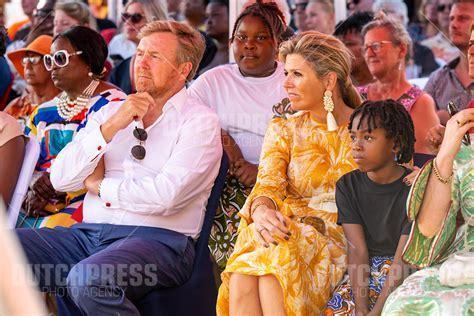
This week we celebrate Statia Day, the national holiday of St. Eustatius. While it is an important event for island residents, its history extends far beyond our shores.
The story begins during the American Revolutionary War.
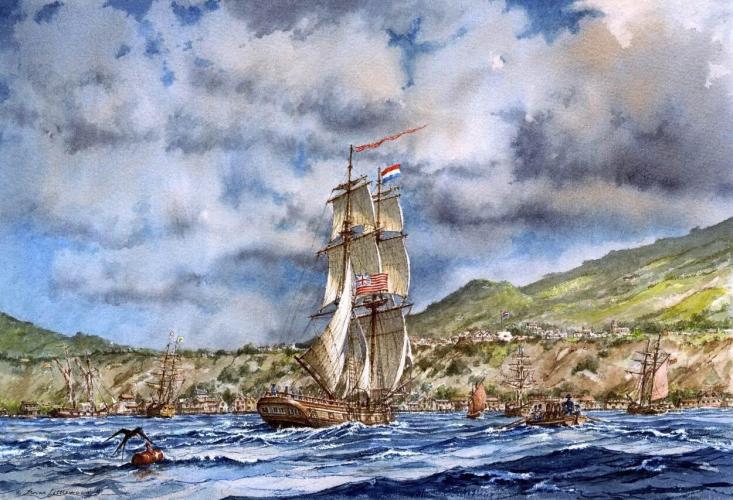
On November 16th, 1776, the American brig Andrew Doria sailed into the harbor of St. Eustatius flying the flag of the newly declared United States.
The island's commander ordered Fort Oranje to respond with an eleven-gun salute.
That exchange became known as The First Salute.
For many Americans, the event holds special significance because it is often regarded as the first formal international recognition of the United States flag and, by extension, the young American republic.
But the salute itself was only the visible part of a much larger story.
Long before the Andrew Doria entered the harbor, St. Eustatius had already become one of the busiest trade hubs in the Americas. During its peak years, the island earned the nickname The Golden Rock because of the enormous volume of international trade passing through its port.
Merchants from around the world arrived to buy, sell and exchange goods. Among those goods were weapons, gunpowder and military supplies.
The American revolutionaries desperately needed those supplies.
St. Eustatius was one of the few places where they could obtain them.
In that sense, the Andrew Doria did not arrive at a random island by accident.
The First Salute was not the beginning of a relationship.
It was a public acknowledgment of one that already existed.
Trade routes, merchants and supplies had been flowing between Statia and the American cause long before the cannon smoke drifted away from Fort Oranje.
Britain noticed.
The island's commercial success and its role in supplying the American rebels generated increasing anger from British authorities. Those tensions eventually contributed to military action against the island and the decline of the Golden Rock era that had made Statia famous throughout the Atlantic world.
History can be surprisingly unforgiving.
A tiny volcanic island helped support a revolution thousands of miles away.
The revolution succeeded.
The island paid a price.
Today, Fort Oranje still overlooks the harbor where the Andrew Doria once appeared. The cannons remain. The flags still fly. And every year Statia Day gives the island an opportunity to celebrate a chapter of history that connected this small Caribbean trading post to the birth of a nation.
As the United States approaches the 250th anniversary of its independence, that connection is likely to receive renewed attention.
And for those reading this diary from elsewhere in the world, you now know a little more about the island where this old Caribbean sativa population has quietly evolved for generations.
Final Thoughts
While Statia Day takes center stage this week, Alisha and Kenisha continue their slow journey toward maturity beneath the same trade winds that have crossed these islands for centuries.
The flowers continue to develop.
The celebration continues.
And somewhere between history, culture and cannabis, another week passes in the Caribbean.
"The cannons fell silent long ago. The trade winds never did."