DutchGlobalCitizen Good day everyone,
Let me start by introducing myself.
I am known online as DutchGlobalCitizen.
I grew up in the The Hague region of the Netherlands and became involved in cannabis culture at a relatively young age. My regular hangouts included Ceylon, De Mistral and Meneer Jansen. We knew the coffeeshop owners personally, sometimes helped with trimming and, on exceptional occasions, even took care of gardens when necessary.
In 1991, at the age of sixteen, I moved to St. Eustatius, where I have lived ever since.
I also started growing cannabis regularly in my early twenties.
Living on a small island like St. Eustatius often means developing your own techniques and solutions over the years. Books such as Marijuana Grower's Handbook by Ed Rosenthal and Marijuana Grower's Guide by Mel Frank circulated here regularly, but much of the knowledge was shared and developed locally.
Many of the techniques I will describe in this diary did not originate from following modern trends, but rather from years of practical experience under local conditions.
To be honest, I do not always know which methods are considered standard practice nowadays and which might differ from what is commonly done elsewhere.
For that reason, I will try to describe my entire approach as clearly as possible, without going into unnecessary detail.
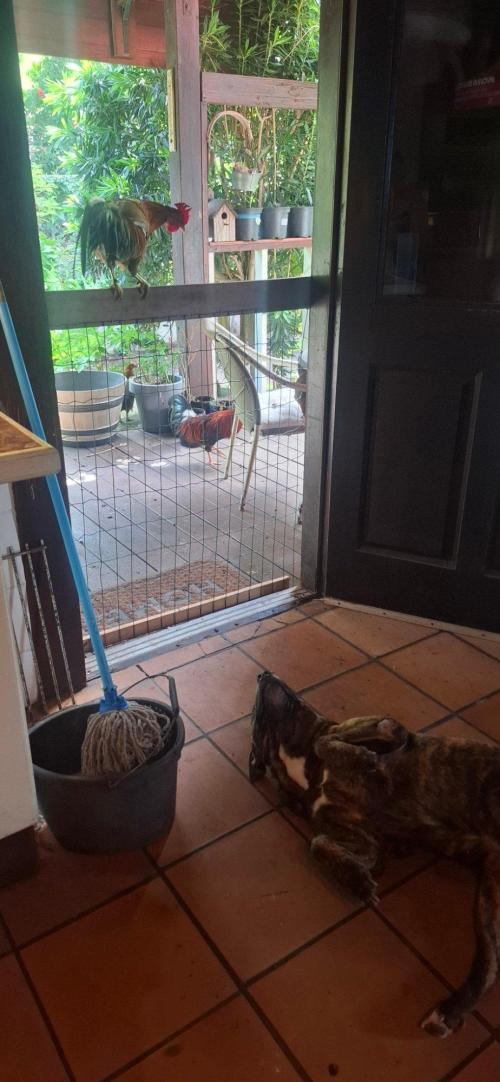
After my previous grow, which I documented here on GrowDiaries, and an incident involving my dog Loki and an unwanted rooster in the house, I currently find myself without commercially purchased seeds.
During a previous grow this summer, I had ordered Hyper Vyper seeds from Zamnesia using my Tribe gift points. The low-odor characteristic claimed by Zamnesia sounded particularly attractive to me as an outdoor grower. The smell of fresh buds has given away more than a few grows over the years.
The flowering period of the local heirloom sativa (most likely related to Lambsbread from St. Vincent) happened to coincide with the flowering period of the Hyper Vyper.
After curing, it was noticed that several seeds had developed inside some of the buds. I saved these. Out of almost 700 grams of dry weight, I ended up with approximately 60 seeds.
It is therefore reasonable to assume that these resulted from open-air pollination. The island has quite a few guerrilla growers with small plots scattered around here and there.
So, this is most likely a Hyper Vyper x Local Heirloom Lambsbread hybrid.
I have placed four seeds in a Sproutly Smart Germinator by Kannabia. (another Zamnesia Tribe item) and am currently waiting for signs of life. They were well-formed, dark seeds, so I expect them to germinate without too much trouble.
I don't have a predefined plan for this grow, just an idea.
I have been active on GrowDiaries for about three months now. I have almost thirty years of outdoor growing experience, but I have never completed a full indoor grow. The heat and humidity here make that particularly difficult. I also don't have air conditioning in my home.
Over the past months, I have watched with great admiration how you use LST and other techniques to make plants take on entirely different shapes than anything we have ever seen here.
The feeding schedules are something local growers here have never even heard of. Often, a little cow or chicken manure is all they use. Through my own experiences and experiments over the years, I have learned a great deal from these local growers, and hopefully they have learned something from me as well.
There is one principle that runs like a common thread through almost all of my growing methods: maximizing root development before the plant enters flowering.
The climate on St. Eustatius is warm and sunny, and can become quite dry during certain periods. Under these conditions, plants consume and transpire considerable amounts of water.
In my experience, many potential problems become less significant when a plant has a large, healthy and well-developed root system.
Over the years, I have therefore placed increasing emphasis on techniques that encourage root development. Almost every decision I make during the vegetative stage can ultimately be traced back to that principle.
From what I have gathered so far, this should also be an important consideration when growing indoors, especially considering the number of flowers you manage to get your plants to produce.
As mentioned earlier, I don't really know what is considered common practice elsewhere. Several people who visited the island and showed an interest in our growing techniques have told me that our methods are rather unconventional.
To be honest, I wouldn't really know. I simply don't see them being discussed here on GrowDiaries.
I am certainly not arrogant enough to claim that our methods are better, but perhaps seeing and hearing something that falls outside your usual bubble can provide some new ideas.
I hope a few people will decide to follow this diary out of curiosity for precisely that reason.
I read all the comments, and whenever someone makes a good, well-founded argument, I am more than willing to give their suggestions a try.
For now, all that's left is to wait and see if these seeds decide to do something.
20 likes
5 comments
Share
Used method
Paper Towel
Germination Method
1
Week 1. Vegetation
5d ago
1/13
5 cm
Height
18 hrs
Light Schedule
34 °C
Day Air Temp
No Smell
Smell
82 %
Air Humidity
28 °C
Solution Temp
28 °C
Substrate Temp
28 °C
Night Air Temp
0.47 liters
Pot Size
20 cm
Lamp Distance
Nutrients 1
BN X-ceL
4 mll
DutchGlobalCitizen Week 1 of Vegetative Growth
We have 4 young seedlings!
After 48 hours, the first taproots became visible, and the germinating seeds were transferred to their first home: a half-filled 16 oz Solo Cup.
It was a very warm week, with only a little rain, which is quite unusual for this time of year. Sometimes, when temperatures get this high, seeds can struggle to germinate, but fortunately that was not the case this week.
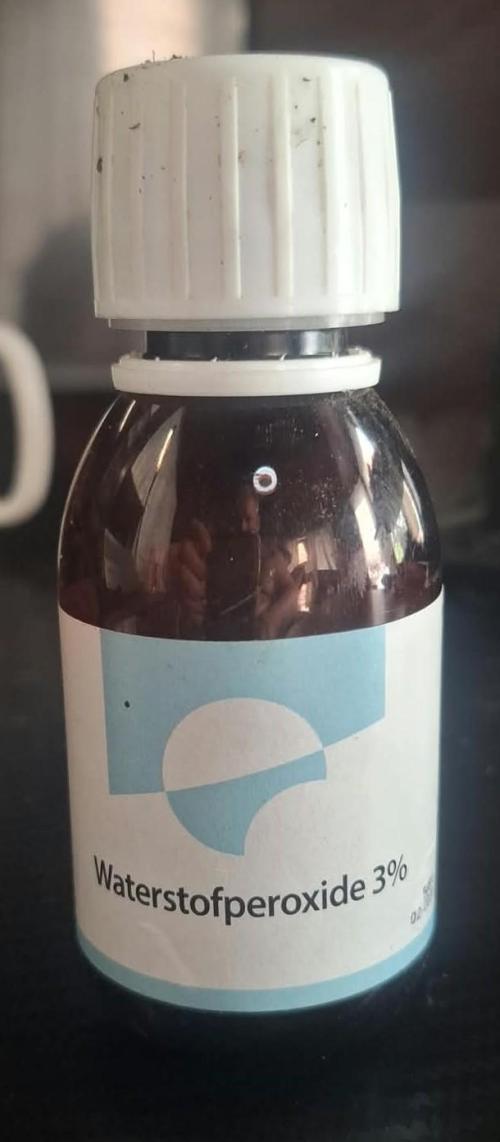
For germination, I use a 2% hydrogen peroxide solution. It helps keep bacteria and fungi under control during the germination phase, when the emerging roots are at their most vulnerable. I simply buy 3% hydrogen peroxide, which is readily available at any pharmacy, and dilute it to 2%. A 110 ml bottle costs me about €2.75 and lasts well over a year.
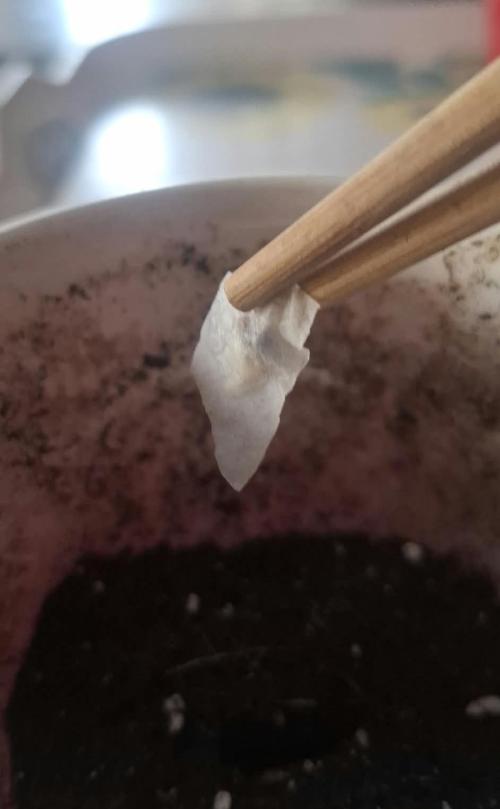
The Sproutly works perfectly. Unfortunately, the cotton pad included with it is a single-use item. My first instinct was to use some makeup-removal pads from a friend, but I quickly discovered that the many fibers trapped the delicate root hairs, making it difficult to remove the seed safely. I encountered the same problem with expensive paper towels. Ironically, in my experience, the cheapest paper towels work best for germination. I simply cut them to fit the Sproutly.
After germination, I cut around the germinated seed with clean scissors and transfer it together with a small piece of the paper towel. I try to avoid contact with my hands or other potentially contaminated objects as much as possible. Instead, I use a pair of chopsticks to position the seed carefully in the substrate.
The Old 16 oz Solo Cup Method
Many tomato growers are familiar with the modern "double cup" method, but I still use the old Solo Cup method for both tomatoes and cannabis.
With this technique, the cup is initially filled only partway with substrate. The seedling begins its life at this lower level. As the plant grows, additional substrate is gradually added until a larger portion of the stem is buried.
Like tomatoes, cannabis can form additional roots along a buried stem. By gradually adding substrate over time, a stronger and more extensive root system can develop before the plant is transplanted into its next container, final container, or growing location.
It is a simple technique that costs virtually nothing, requires no additional materials, and makes maximum use of the available space inside a standard growing cup during the seedling stage.
After two days, the first seedlings emerged from the substrate.
I use Bio Nova X-Cel during this stage to support root development in young seedlings. It helps provide a solid foundation for future growth and development.
I germinated four seeds to increase the chances of finding at least one female to grow out. If a male appears among the seedlings, I may take a clone from it for future breeding projects, either to backcross this hybrid or to serve as a pollen donor for future crosses.
At this stage, I am not focused on quantity. The most vigorous female will be selected and kept for the project. The remaining plants will unfortunately be culled or rehomed with a local growmie.
For now, the seedlings will spend the next week in my clone tent, a small 75 cm × 45 cm × 90 cm space equipped with a Viparspectra P1000 100 watt grow light. It is set to an 18/6 light schedule (05:00-23:00), with near-daily watering if necessary. Temperatures remain unusually hot for this time of year, reaching 34°C (93°F) in the shade almost every day.
PS. pay no mind, I am parking my memes for this month on this update.
Happy growing 🌱 💚 💫. I will find your methods interesting. I have experimented with new things that havent always worked. I do have uranium glass in my water.





 commentedweek 08d ago