


Eldritch Tide | Nameless 18

2h ago

Unknown
Old bag seeds
FLO
2x4 tarantula ultimate Light Emitting Diodes/320W



Cond
Arc 1030WN inverter dual hose
Whynter
IndiCanja Soil
Purple Cow

Pure worm castings with egg material Soil
Worm Castings

Indoor
Room Type
G
Germination2h ago


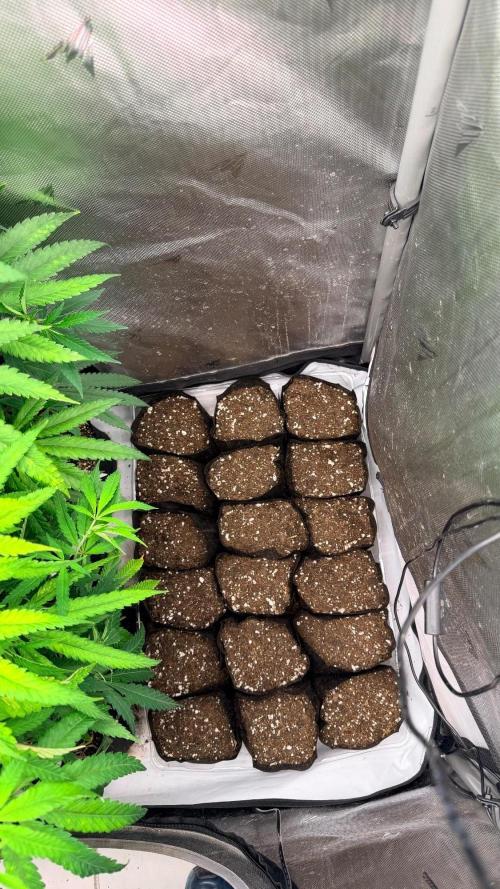


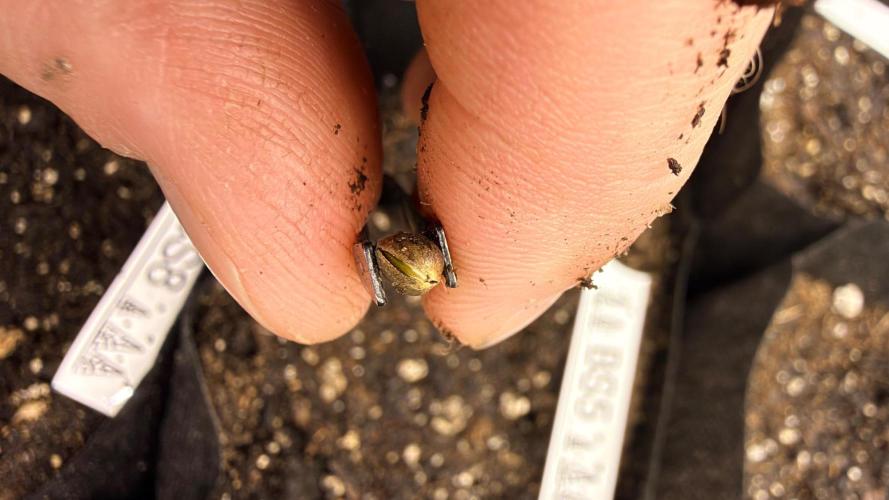


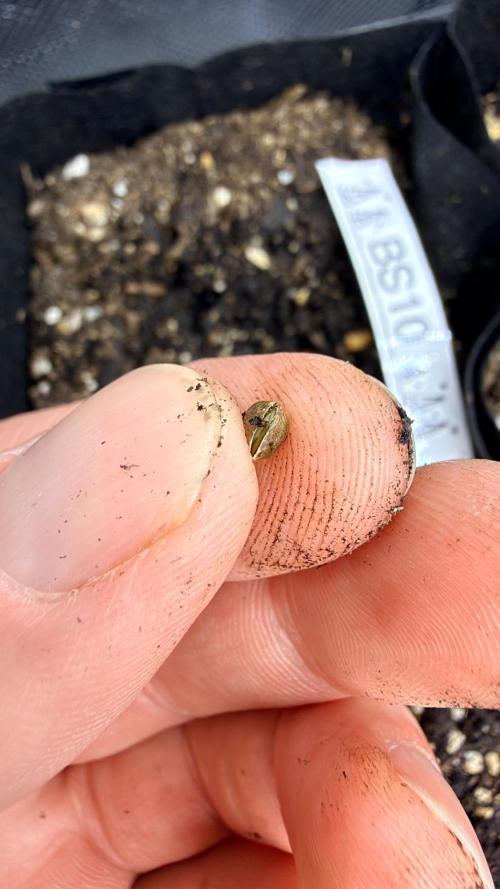


ChillSpace Fair warning, this one’s a bit of a novel! If you’re just here for the plants and don’t read, feel free to skip ahead to the pictures, haha! I generally try to keep these updates short and simple, but once I start telling a story, I find it rather difficult to leave things out.
Apparently, seven genetic projects weren’t quite enough! My latest adventure comes courtesy of an old Airborne container that has been quietly collecting dust for years.
Inside were eighteen random bag seeds that predate my experience growing cannabis, some of which I suspect are at least ten years old! For whatever reason, I could never bring myself to throw them away, so they were placed in storage and essentially forgotten about. I stumbled across them the other day while looking for a grinder for my wife, and apparently, some part of me believed these little bastards deserved a chance!
Considering their age and questionable storage history, I figured twelve germinating would be a pretty respectable outcome, although I was genuinely entertaining the possibility that I had prepared eighteen pots for absolutely nothing!
At approximately 22 hours, I decided to check on them and was surprised to find that six had already germinated! Roughly seven hours later, another seven had opened, followed by one more later that evening and another this morning. That brings us to fifteen out of eighteen in approximately 40 hours, an unexpected germination rate of 83.3%!
The remaining three have developed a darker coloration that, in my recent experience, hasn’t been particularly promising. I’m perfectly willing to be proven wrong, and it would certainly be interesting if all eighteen germinated, but for now, I’m calling it at fifteen. Anything beyond this is simply a bonus!
I went from questioning their viability to questioning my available floor space remarkably quickly. Damn, am I glad I prepared those pots beforehand!
Six would have been a perfectly workable group, but fifteen makes this a proper side search! I’ve individually labeled them BS1 through BS15. BS stands for bag seed, although bullshit remains an equally plausible interpretation at this point!
Interestingly, both BS5 and BS10 exhibited a distinct olive-green interior similar to what I’ve observed during germination with my original Caviar genetics and two Blueberry Caviar crosses. I’m not suggesting any genetic relationship, but it’s an interesting little detail worth documenting.
Beyond curiosity, this experiment also serves a more practical purpose. I’ve experienced some frustrating inconsistencies with a few of my recent and considerably more expensive seed packs. Germination hasn’t really been the problem; getting them above the soil and establishing healthy seedlings has been the challenge. Whether those seeds lacked sufficient vigor, weren’t fully developed, or simply didn’t appreciate my environment remains unclear.
If these forgotten bag seeds establish themselves more consistently than some of my most expensive genetics, it would certainly restore some confidence in my process lol.
What makes these seeds particularly interesting to me is that they represent a completely different chapter of my life. I remember collecting them back when I still smoked cannabis, whereas nowadays I exclusively use herbal vaporizers. I barely recognize the person I was when I tucked them away, and yet here they are, unexpectedly becoming part of a much greater search today. Apparently, my younger self was unknowingly leaving something behind for me to discover years later!
I have absolutely no idea what these seeds are or whether they’re even related. They could represent eighteen different genetic combinations or an incredibly disappointing family reunion! Legendary cultivars such as Chemdog and Cinderella 99 have histories rooted in bag seed discoveries, which raises an interesting question: does an unknown pedigree make a seed less promising, or simply less predictable?
Unknown ancestry leaves room for both extraordinary discoveries and spectacular disappointments. Unexpected genetic diversity, unusual aromas, and hidden recessive characteristics are possibilities, but so are inherited intersex tendencies, poor vigor, undesirable traits, and the consequences of years of questionable storage.
I could discover something extraordinary, something absolutely terrible, or eighteen different reasons why people buy seeds from established breeders!
For a little perspective, my breeding journey began with two packs from Ridgeline Farms. Platinum Lantz was intended to be my trial run and was, at the time, the most expensive pack of seeds I had ever purchased. That distinction was rather short-lived, however, as the original Caviar regular seeds, which represented the actual hunt, cost twice as much!
I remember explaining to my wife that spending 0 on seeds actually made financial sense in the long run. By investing in genetics I genuinely wanted to breed with, I could eventually eliminate the need to purchase more seeds!
An absolutely brilliant financial strategy, provided we conveniently ignore the five additional packs I purchased afterward. My wife, unfortunately, did not.
What began as a simple trial run quickly evolved as I discovered how much I enjoyed exploring individual phenotypes and the genetic relationships between them. Two packs became four, followed by a particularly exciting fifth, and eventually seven distinct genetic projects.
And now an eighth, although I’m pleased to report that this particular expansion was funded entirely by archaeological discoveries within my own household.
Despite the somewhat spontaneous expansion, the genetic foundation itself was deliberately chosen. I’m particularly fascinated by the relationship between Ridgeline’s contemporary genetics and Huckleberry Hill’s heritage surrounding Whitethorn Rose. Between these two breeders, I feel I’ve established an incredible foundation for something I could enjoy exploring for decades.
The ultimate goal is no longer simply to produce my own seeds. It’s to establish a personal genetic library that allows me to continue discovering, revisiting, and appreciating what I already have, especially with uncertainty surrounding future seed availability.
I’ve come to recognize four distinct phases within this larger adventure.
Phase 1: Acquisition and Discovery
Or, as my wife might describe it, the expensive part.
This is where I am today, although I’m approaching the end of it. The purpose of acquiring these genetics was to establish possibilities, not permanent responsibilities. There will always be another exciting release, but acquisition is supposed to be a phase, not a lifestyle.
Phase 2: Evaluation
This is where the plants themselves get to do the talking. I want to develop my own opinions rather than rely on pedigrees, breeder reputations, or marketing. I’m not searching for one undisputed champion of everything, but rather a collection of plants I appreciate for entirely different reasons.
No customers, no investors, no market trends to satisfy, and nobody else to impress.
Variety over obsession. Discovery over ego.
Phase 3: Consolidation
Otherwise known as the part where I hopefully remember that I live in a house and not a botanical research facility.
I want to develop a deeper appreciation for fewer plants rather than remain superficially familiar with an ever-expanding collection. Downsizing should be evidence of progress, not a loss of it. I certainly don’t want to spend the next twenty years wondering where the hell I’m supposed to put another tent!
Phase 4: Long-Term Stewardship
A smaller, more select living collection supported by a diverse personal seed library. Imagine opening a container years from now and rediscovering genetics accompanied by your own photographs, observations, and memories.
That prospect excites me considerably more than endlessly chasing new releases. I want decades of possibilities without decades of unnecessary responsibilities. My family, my home, and my other interests deserve my attention as well.
This is precisely why Eldritch Tide might be arriving at the perfect time. After deliberately assembling seven genetic families, I’ve introduced eighteen completely unidentified variables into the equation. What’s a proper project without a few wildcards?
Unlike my other projects, these seeds arrive without prestigious pedigrees, impressive photographs, breeder reputations, or a price tag influencing my expectations. They have absolutely nothing to defend them except their own performance.
And that might be exactly what I need.
One of my greatest struggles so far has been learning to let things go. I’m constantly entertaining the what-ifs. What if the plant I discard would have developed an incredible aroma? What if I unknowingly eliminate something exceptional?
The problem with hypothetical potential is that every plant has it. If I allow that alone to justify keeping something, I’ll never consolidate anything!
The Nameless 18 will have to prove themselves unquestionably. If something genuinely impresses me across the characteristics I care about, the decision should be easy. Realistically, however, I suspect most will give me more reasons to let them go than to keep them.
I’m not even sure how many of these plants will make it into one-gallon pots. Space is limited, my other projects are closely staggered, and within another two months I’ll likely be resetting some of my existing mother plants with clones. These newcomers are entering a garden where space is already spoken for.
Perhaps the greatest value of this experiment will be learning to recognize the difference between something that has potential and something that genuinely deserves a permanent place in my collection.
These little stowaways haven’t been invited aboard permanently. They’ve merely been rediscovered hiding among the cargo and granted temporary passage!
I’m also curious how much knowing the story behind a plant influences our appreciation of it. Would I enjoy my favorite genetics just as much if I had discovered them anonymously? Would I overlook something exceptional simply because it lacked a recognizable name?
This is officially my largest simultaneous germination attempt to date, ironically involving the seeds I have the least attachment to. I started this experiment with relatively low expectations, figuring I might end up with a handful of interesting plants to observe alongside my other projects. Instead, I woke up this morning with fifteen germinated seeds and the realization that this little side adventure might be considerably larger than anticipated!
I’m perfectly comfortable walking away with nothing, but discovering even one truly unique aroma that I absolutely love would make the entire adventure worthwhile.
And after years of following breeders, countless hours researching genetics, and a considerable amount of money purchasing seven different packs from both of my favorite breeders, wouldn’t it be absolutely hilarious if my favorite discovery came from an old Airborne container?
I’m not sure whether I would consider that a triumph of curiosity or the greatest financial insult my garden has ever delivered.
Either way, there would certainly be something poetic about it.
From garbage to art. From something most people would have thrown away years ago to something I might genuinely consider a personal treasure.
Unknown origins. Zero expectations. Eighteen possibilities.
Welcome aboard, Nameless 18!
likes
comments
Share
Used method
Paper Towel
Germination Method
Enjoying this diary? Follow for more updates!
Prefer the old Diary view?
Go back to the old Diary view