


Leaf spot follow up
803FireGrowerstarted grow question 5mo ago
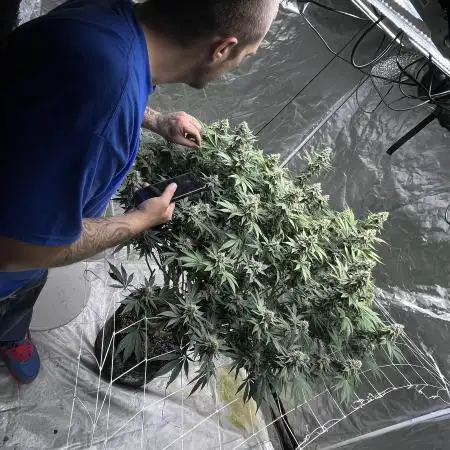
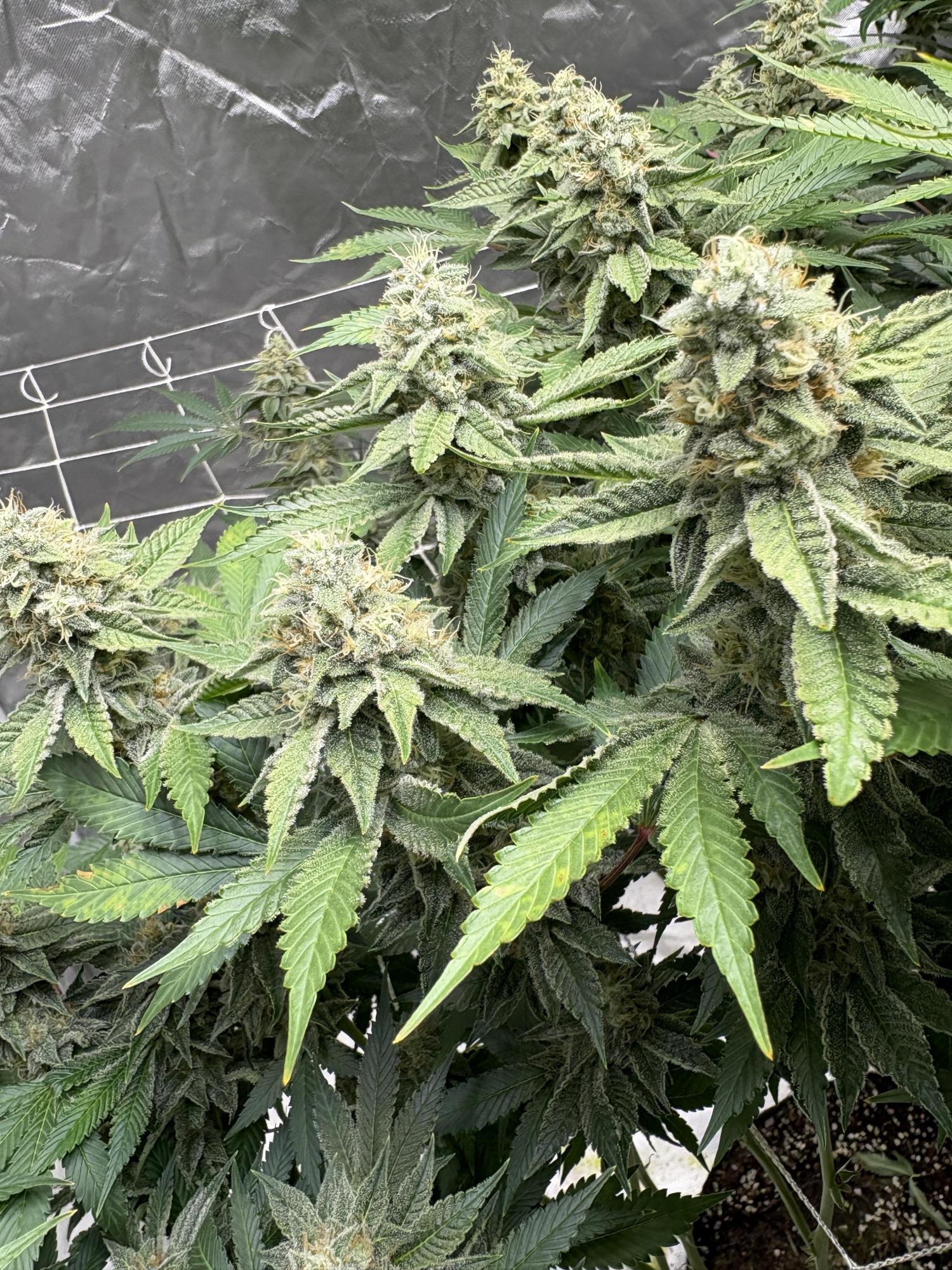
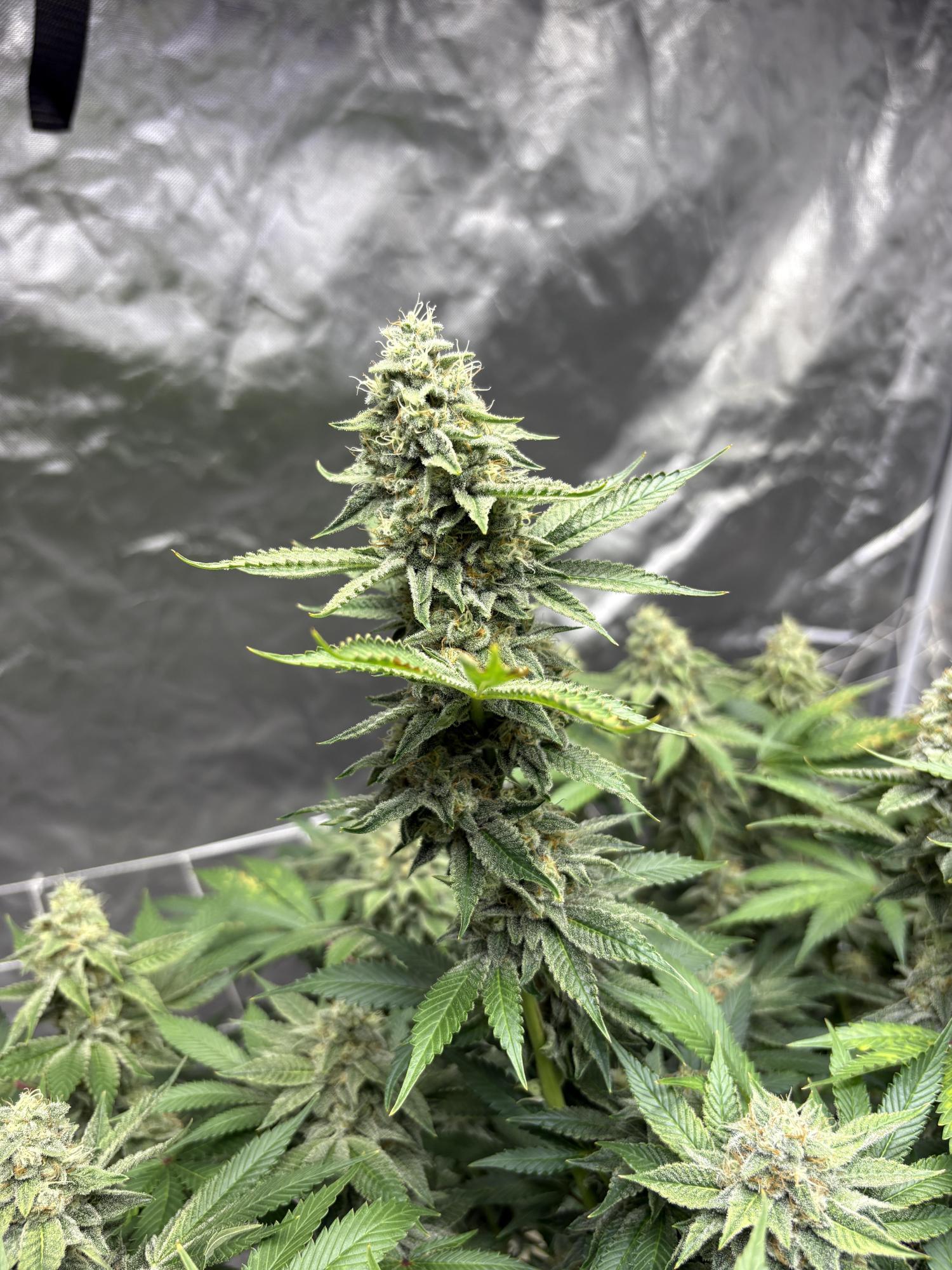
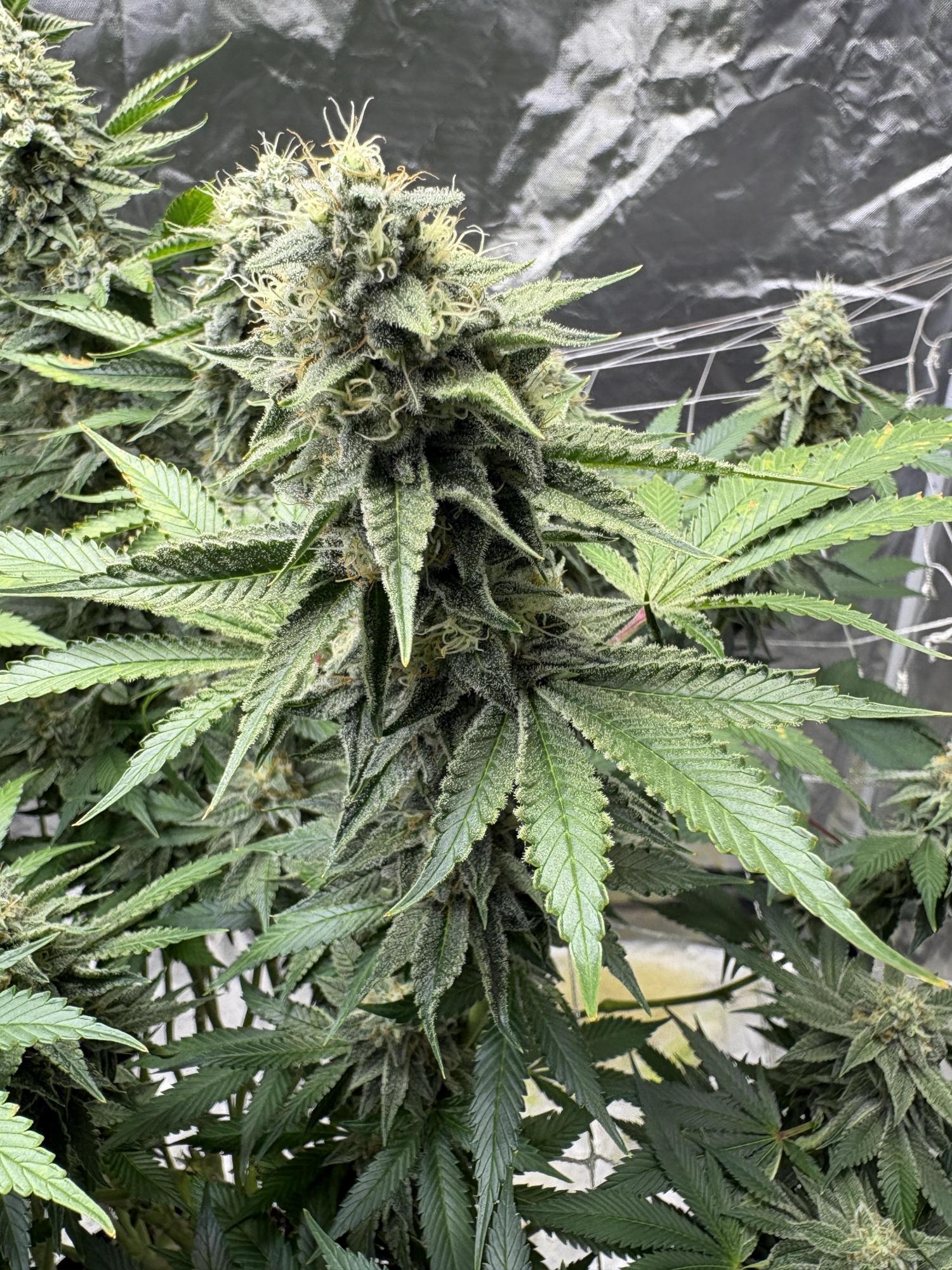
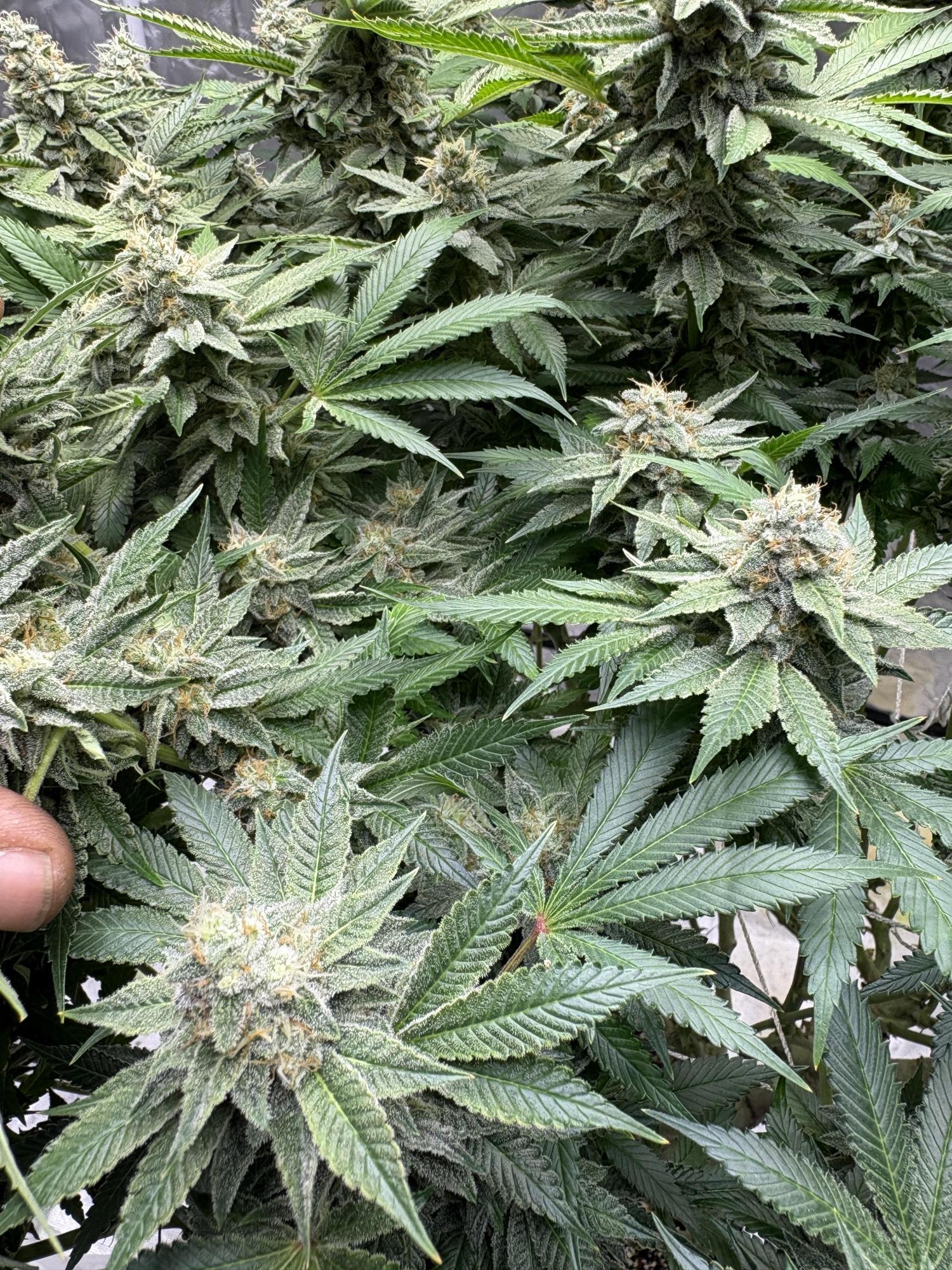
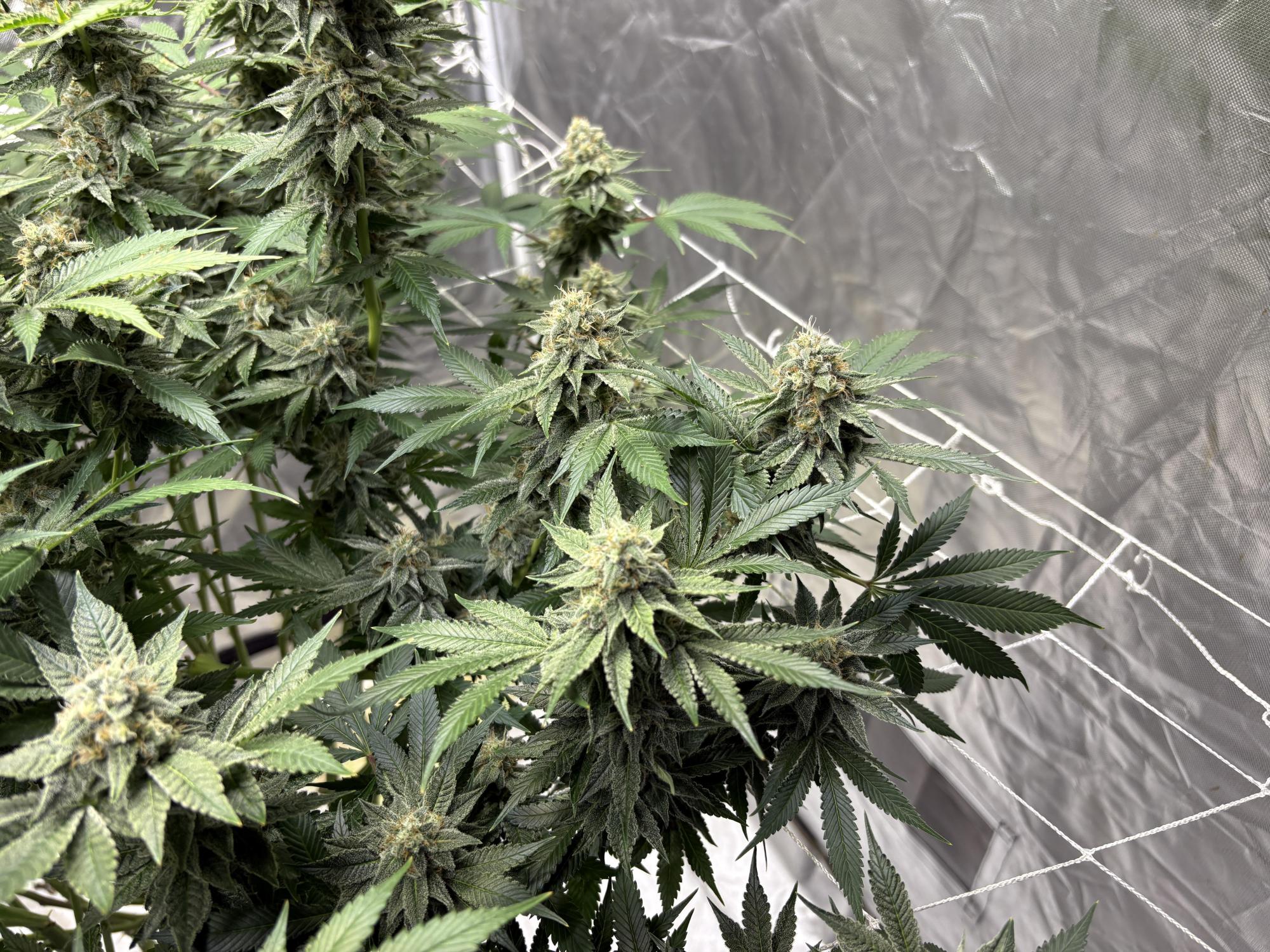
So new question to all who answered my previous. The spots are not spreading to any other areas of the plant and are all located on the tallest branches. The rest of her looks lovely and my lights are at 18” and at 80%. Saw many who said calcium was the issue some said phosphorus
Solved
1 like

Spy-Nelloanswered grow question 5mo ago
Calcium could be it, but if the problem is only with the upper leaves, it makes me think more of light stress (some leaves tend to curl up at the top). 18" seems like the right distance, try to place the probe right near the affected areas. In my opinion, it's a local microstress, whether metabolic or from light, but it's local. However, the plants are in excellent health, dark green leaves mean they are eating well... I wouldn't worry too much about nutrient deficiencies since you're in advanced flowering and the buds are bulking up... I think you've done a great job and you can relax. 😊

John_Krameranswered grow question 5mo ago
@Organoman u still spreading nonsense?
Why then if u flush a plant it starts to eat itself and u see changes on leaves in 2 days? Or if a plant has a deficiency and loosing leaves, aftere a good feed it stops losing em also in 2 days ?
Do u need proof?
likes
Complain
John_Krameranswered grow question 5mo ago
ur edges and tips strat burnig and courling and the brown spots appear on the leaves it's a sings of PK deficiency
boost it with PK 200 + 400 ppm and wait for 2 days if it stops then this issue fixed for a few days
then u'd to increase PK income for ur watering
likes
Complain

Organomananswered grow question 5mo ago
It takes 2-3 weeks for changes in the root zone to show results in the leaves.
What is showing in the leaves now, is what was happening in the root zone 2-3 weeks ago, so you are basically playing catch up.
Yes, both are possible, calcium and phosphorous.
Unfortunately, you will not be able to "fix" anything this late in the flowering cycle, only prevent it from getting worse.
likes
Complain

00110001001001111Oanswered grow question 5mo ago
Yeah, the progress in either direction is what you want to in on.. if the damage stops or in the case of minor damage, reverses, you know you've corrected properly.
lights are generally designed to handle a 12hour schedule. So, when you use a grow light for autos and on a 18/6 schedule instead of 12/12, the use of the light should be based on their suggestions for vege phase. If they didn't give bad advice on the max flower area, it should be roughly 2/3rds of the vege area suggestion.
18/6 requires 67% power -- inversely proportional to change in hours of operation. 18h/12h or 3/2, which is 150% or 67% depending on which way you are going. Fewer hours obvioulsy needs a higher rate of photon production to provide the same amount of energy per day. This only applies when you cover the same area for vege and flower. With autoflowers, you don't need to worry about 12 hour needs. so you can either run the light at 67% and ~4sq ft coverage over 12h or 100% and 6 sq ft coverage over 18h.
I have an xs1500 - not a pro, but probably not a huge difference. Figure it can possibly cover about 6sq ft on an 18/6 @100% and stick closer to 4sq ft for 12 hour operation @100%. Is that more or less than what it is currently focused on? That'll give a good idea of the power you need.
18-20" should be good enough to provide spread of light and not sacrifice overall DLI.
That's just for reference... and it's a ballpark, not an exact suggestion. if it's greatly off from what you were doing before, it gives you more evidence that it was caused by the light ... or not.
You only need ~600 ppfd over 18h for a good DLI. (again, needs adjustment based on plant growth due to local variables)
your light has a specification for umol/s PAR production - they may shorten it to umol/s or they may call it ppf or ppe. They may also lie, lol. Multiplying efficacy, if listed, by watts will also give the umol/s production of photons of the light.
divide that value by area in meters-squared, and that'll give you a rough PPFD estimate. 7sq ft / 10.76 sq ft = .65 m^2. Lit's say it;s 320 production. 320 / .65 = ~500ppfd. So, a 320 umol/s light would be okay for 7sq ft, but probably want ~20% more, ideally.
if you see the relationships, it's super easy to size a light... any light, given good specifications you can rely on.
likes
Complain

Nocone_Purpleanswered grow question 5mo ago
If the spots aren’t spreading and they’re only on the top branches, it’s not a deficiency it’s light stress or natural late-flower fade on those upper leaves. The rest looking lovely is a good sign. At 18” and 80%, you’re probably just catching those tallest tips with slight intensity stress. No action needed. Just monitor and don’t stress about it.
likes
Complain

Hashyanswered grow question 5mo ago
If the spots aren't getting bigger or aren't increasing in number then the issue you had has been resolved, damaged plant tissue will remain damaged.
likes
Complain

cangrowzanswered grow question 5mo ago
Yo 803AutoGrower, honestly, if those spots are strictly on the upper canopy and the rest of the plant is vibing, you might actually be looking at light stress or slight "light burn" rather than a true nutrient deficiency. At 80% power and 18", some strains get a bit sensitive, especially during the peak of flowering when they're pushing hard. Since it’s not spreading to the lower fans, it’s less likely to be a mobile nutrient issue like phosphorus. If you still suspect CalMag, check your pH first, because a lockout is usually the culprit rather than a lack of it in the feed. I'd personally try backing the lights off just an inch or two or dropping the intensity to 75% to see if it stabilizes. She looks stacked though, so you're definitely doing something right. Happy Growing Growmie🌱
1 like
Complain