


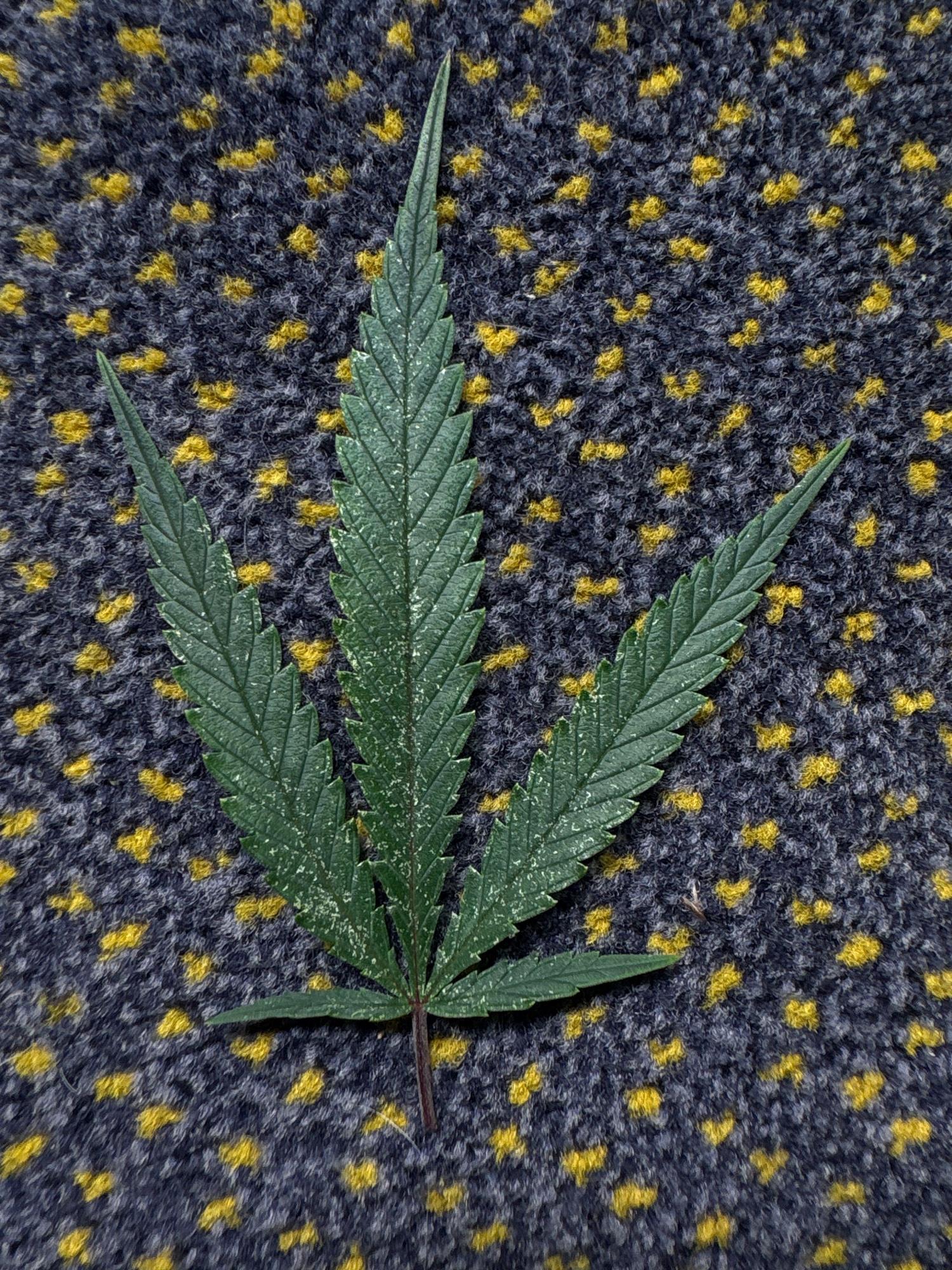
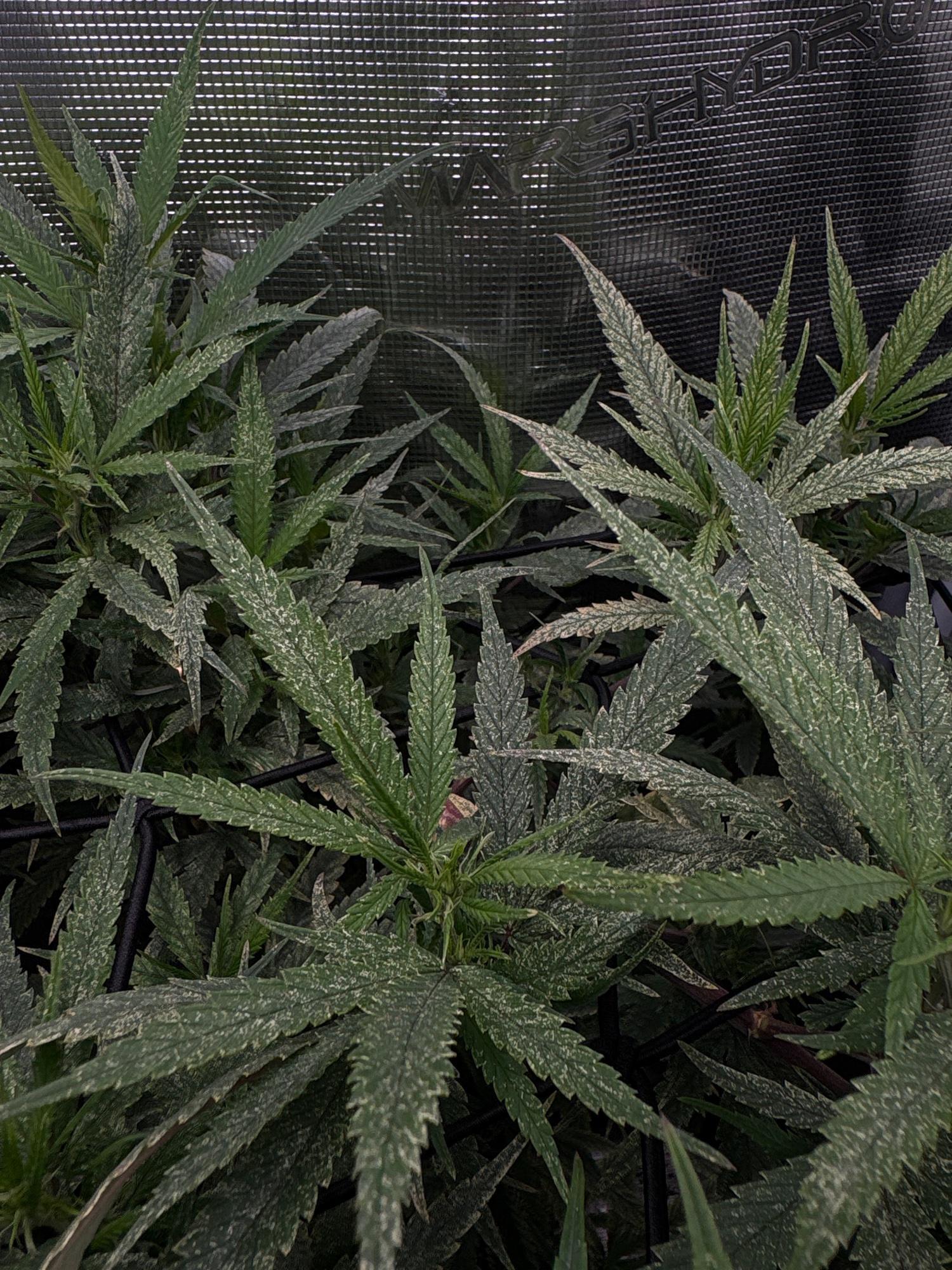
Discoloration of the leaves


ZariRat_Growanswered grow question 2mo ago
Hello friend, in our humble opinion, they look like trips or spider mites. To clear up any doubts in 10 seconds without guessing: pass a cotton ball with a little water or mild alcohol over the underside (the bottom side) of that same leaf, pressing gently. If it comes out stained green/brown or you see tiny dragged spots, there’s no doubt it’s mechanical damage from bites. I hope this helps you, best wishes for a quick resolution and happy growing! 💚🍀🌱🍀💚

TerpToadanswered grow question 2mo ago
I agree with the others, you got some bugs! Start with some neemseeds and predatory mites before entering flower
1 like
Complain

Altitonans_Fulmenanswered grow question 2mo ago
High root pressure from wet soil; at night, stomata are closed and cannot transpire, which is called guttation, and I always thought it looked similar to spider mites' "spew", but it's very easy to spot spider mites, as they always seek the highest point nearest the light to make webs and form colonies. I'd certainly expect to see A LOT of activity with that much affected plant material. Even though it does look more like spider mite damage, without any mites, though, I'd hazard guttation, which is more localized to tips and margins, unless you have a chronic case.
Guttation itself is the sugary sap, which is water mixed with mineral nutrients, enzymes, and trace sugars, but water normally evaporates in the early morning before you see it, leaving behind the "sugary" stain deposits behind. Very bad guttation = very bad jizzy stains. The sugars left behind, along with high RH% and possibly low airflow, will give disease and bacteria all it needs to multiply at alarming rates, exceeding the rate at which the plant can protect itself. Fungal combo maybe? Dried guttation residue is frequently mistaken for powdery mildew. Guttation mineral deposits dry hard and do not brush off easily. Powdery mildew has a soft, talcum-powder texture that smears or wipes away when touched.
The nighttime VPD does not need to mirror the daytime VPD. Daytime VPD dictates the pull of water and nutrients, while nighttime VPD acts mostly as a prevention tool. A high nighttime VPD increases the risk of the leaf temperature dropping below the dew point, which can trigger bud rot and powdery mildew.
Dayz: 0.8kPa to 1.2kPa (Veg close to flower)
Night: Exhaust linked to RH. Maintaining a nighttime VPD between 0.8 and 1.0 kPa is highly beneficial in that it ensures the air is dry enough to prevent powdery mildew or bud rot, but moist enough to keep the plant from undergoing unnecessary stress. This range keeps the environment comfortable for cellular processes and prevents large atmospheric swings. Keeping it all flowing.
Avoid watering right before the lights go out. Wet dirt and cold night air cause this problem.. The first 2 hours after lights-off are the most critical. Turn up your fan for the first 2 hours after the lights turn off. This stops the air from getting heavy and damp. Since guttation occurs on lower and mid-tier leaves too, running small fans under the canopy at night keeps those leaf-surface boundary layers moving, forcing the morning evaporation to happen cleaner and faster. 0.1-0.3ms/cm ambient 24/7.
Either way, I hope you find your solution. Good luck; hope to see her back on track soon.
1 like
Complain
Crusty_Juggleranswered grow question 2mo ago
100% Spider Mites, and they've got a strong foothold!
You can spray the plants with an insecticide (yes, it also works on arachnids :) ) since you don't have flowers yet. - I recommend doing that but it probably won't eradicate them but only set them back for a while. A week after using insecticide I highly recommend introducing bio-combat and and deploying predator mites or Lacewing Larvea to keep the Spider Mites+ down to a minor nuiscance.
I've had success with Lacewing Larvae against Spider Mites several times, and feels awesome to have an army of micro-monsters on your side :)
4 likes
Complain

00110001001001111Oanswered grow question 2mo ago
my "vote" is for pests of some sort. Looks like suckling.
2 likes
Complain

GoodWeedBerlinanswered grow question 2mo ago
If you have a microscope to check the trichomes, you can take a leaf off and examine it. Leaf suckers like spider mites or thrips leave such traces in a later stage. I don't believe it's spider mites in this case, as you would see the fine webs (at least I don't see them in the photos). You would see thrips under the microscope as green/yellow little worms.
If there are no signs of pests, my first tip would be powdery mildew. That would be the worst case.
If you can rule both out, @Altitonans_Fulmen's answer might be an idea.
1 like
Complain

Organomananswered grow question 2mo ago
Looks a lot like spider mites to me.
Plant is also being fed way too much.
2 likes
Complain

Altitonans_Fulmenanswered grow question 2mo ago
High root pressure from wet soil, nighttime stomata are closed and cannot transpire.
1 like
Complain