


auto or photoperiod?

Shivashamboom1started grow question 6d ago
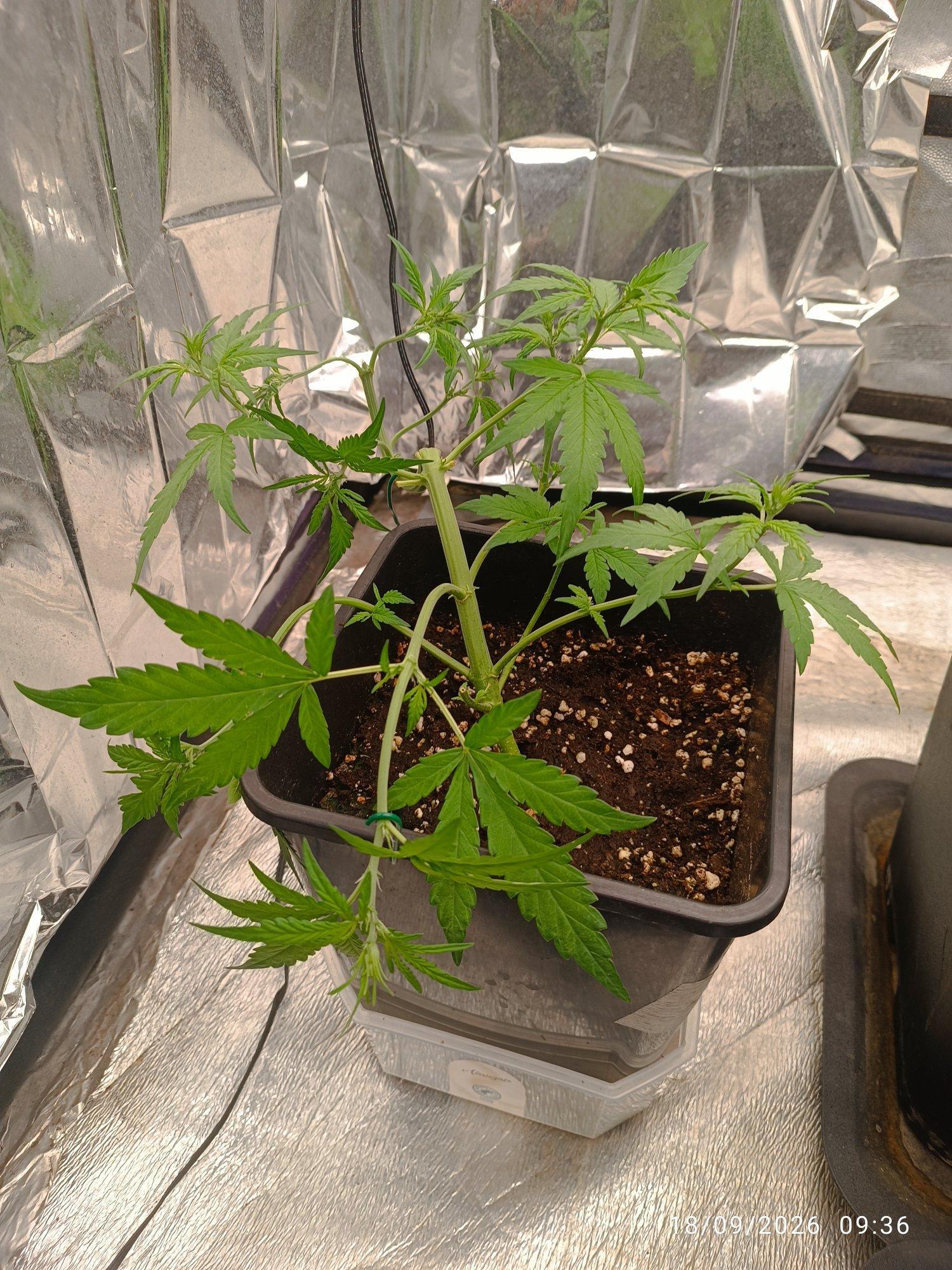
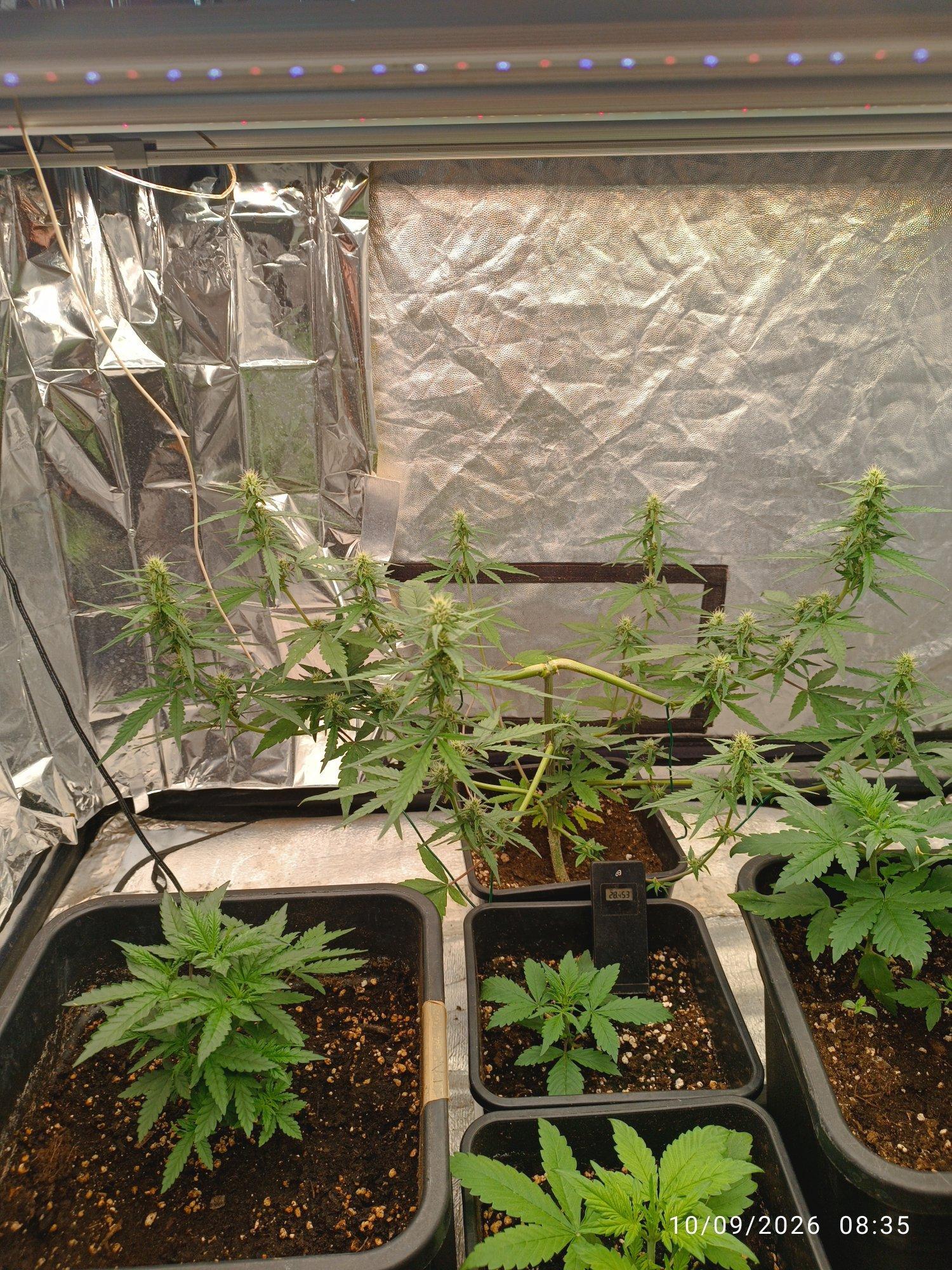
For those who didn't understand! I'll rephrase the question, is it possible for a seed that is half autoflowering and half photoperiodic... to grow for 8/9 weeks at 18h like a photoperiodic? Then start to flower without lowering to 12h of light... strange 🤫
Open
2 likes
Answer

tjaymanswered grow question 3d ago
Hiya Shiva.
From what i heard/learned over time is that once the roots are expended to the side and bottom of the pot she'll want to force herself to go to the flowering stage.
likes
Complain
Crusty_Juggleranswered grow question 6d ago
People did understand, maybe you just didn't understand their answers because you want genetics to be a simplistic either/or which it isn't.
It's not strange at all, growing unknown semi-autos indoors is however a quite strange thing to do :)
1 like
Complain


LPintoanswered grow question 6d ago
Good morning, The seed that gave rise to this plant is theoretically 50% auto and 50% photo, however, the genetics or genetic combination does not work in a linear way. For example, I have half of my mother's chromosomes and the other half from my father, yet physically I resemble my father more... During crossing, there is genetic recombination that allows for the existence of variety and it doesn't always mean that we will achieve the idealized result.
1 like
Complain

AsNoriuanswered grow question 6d ago
Without lowering hours at least to 15/8 semi autos won't start.
In my mind, your heavy training delayed her switch, sometimes heavy training force early flower, sometimes prolongs vegetative stage...
I had autos which went huge without any training and started to flower on week 9.
likes
Complain

Organomananswered grow question 6d ago
Every time you top it or defoliate it, you slow it down.....even training can slow things for a day or three...so yes, it is possible to have 8 weeks veg with an auto before flowering starts.....you have proved this.
With this plant'.s lack of leaf material and its small size, again, this can lead to delayed flowering.
I have crossed a few female autos with male photoperiod plants before and the results were surprisingly random.
Seeds grown turned out to be a mix of autos, photoperiod and "fast/early" types as well.....however, there were also a bunch of mutants that did weird things, like flowering at 3 weeks, crazy hermies and some that just didn't flower....genetics is a gamble and to fix desirable traits takes many generations of selective crossing/back crossing. F1 generations can throw up all sorts of unexpected results!
1 like
Complain
00110001001001111Oanswered grow question 6d ago
If you mean the offspring will vary -- yes. You will get both in the seeds that are produced. From what i understand, to get 100% autoflower seeds, or nearly 100%, it takes more than one generation of breeding, but i could be wrong on that. Genetics is just a lesson in probabiity... the math is incontravertible. The ratios will play out with a large enough sample. it might be 95.7%, it might be 93.2% or it might be 100%, but it isn't unpredictable or random except in a small sample.
if it flowered without along night, it is an autoflower... you merely bred one with a longer than usual vegetative phase. That could be a very useful trait, actually.
-------------------
If you mean hyrbirdiztion within one specific plant: somehow one plant exhibiting both traits of autoflower and photoperiod.... highly unlikely and the only outcome is a plant nobody would want to grow.
so, if it flowers with greater than 10 hours of darkness per day (this varies), it is a photoperiod. There's no hybrid here because you can't give it more light per day without causing a re-vege.
if it can flower without a long dark period it's an autoflower... the only thing here that might be caused by incongruent flowering genes is a mutant that exhibits vegetative growth (aka stem elongation and leaf growth) long after flower initiates, which would not be a trait anybody wants. The 'hybrid' trait would be an autoflower that is also sensitive to light cycles, lol... that's just not useful to anyone.
i wouldn't assume oddities of autoflowers is guaranteed to be a matter of genes related to photoperioism. This trait of late flower stem elongation can be seen in strains like dr. grinspoon and no ruderalis genes were involved. Similar traits can be caused by independently evolved genes, too, so it doesn't preclude the possibility, either.
The point is.. any hybridization of the trigger for flower in one plant would lead to a fucked up plant.
likes
Complain

Green_Clawsanswered grow question 6d ago
Anything is possible it's nature.. between the male and the female pollened by said male will have traits from 100% the male or zero and same the female traits.... It's how genetics work
likes
Complain

MindFlowers68answered grow question 7d ago
yes it is possible. Check out Jake Nectars 18 hour flower trait Iranian stuff. he's got a bunch of videos but he explains it better than i will www.youtube.com/watch
likes
Complain

Kali_flaueranswered grow question 7d ago
I can explain my thought better actually.
An 8 week veg period sounds like it would be perfect for a beginner friendly auto strain. That would be the purpose of saving the genetics. That and novelty I suppose 😉
likes
Complain
Kali_flaueranswered grow question 7d ago
I don't have an answer for your question, but that's a wild trait 🤯. If it's something desirable for future grows, maybe try pollination or STS to save the genes?
1 like
Complain