


Likes
Comments
Share


@AsNoriu
Follow
Day 88. Girl down ;)
Think she will be in 70-80 g area, with about 50W light per plant - not bad ;)))
Presume all girls left will brake that plank ;)
Happy Growing !!!


Processing
Likes
10
Share


@Andres
Follow
she grows healthy ... with substrate top of mills ... she has a height of 60 cm ... the diqs are cloudy and under the temperature ... let's hope as we go with it ...

Likes
85
Share


@Tropicannibis_Todd
Follow
Start of day 21 ..... Oct 30
Check out the full grow video on latest weekly update
Exceptional Growth
Started LST ON day 19 , re-adjusting daily ... and leaf tucking daily ....
Water Only when needed and adjusting lights when needed.......
Rain Water Only !!!!!!
Sidenote : Being that it's my first autoflower and being a spong and learning, I am impressed so far at the stage growths however a little surprised at NL 2 showing Pre-flowers already on day 21 ,and NL 1 decided to show her pre-flowers on day 26 , super happy with the grow so far,
Truly Love it !!!!!!!

Likes
32
Share


@Bread_n_Buds
Follow
The Zenviations have been processed specifically differently I must say that they are both beautiful but one suffered the attack a little more even if he has very dignished flowers. The low one has a few beasts as you but you seem to end up great, hopefully good


Likes
6
Share


@BabyBillyFreeman
Follow
Decided to harvest at 10-12% amber. Running out of time and needed to chop her down. Pretty sure I slowed her down from a heavy defol. She was supposed to be done on day 65 based on breeders notes. She took considerably longer for me so the heavy defol is the only thing I can think of.
She has sweet gas and grape terp. Very nice heavy dense buds but not as large as I was hoping. Despite the bud size I think it will be some good smoke. I’ll update with dried and cured bud pics.
Buds are very dense after dry and cure!

Likes
6
Share


@Back_woods_buds
Follow
Just to catch you up to speed since I’m starting the week before flower The big one I started from seed and then there’s a clone of her maybe the clone only be rooted for a week but the mothers 7 weeks since she popped up and she’s a been pretty easy she’s real Bendy but as usual I push it too far and have to get the tape out and she’s come back fine every time so far been pretty easy and probably one of the easiest ones I’ve ever claimed I mean this thing routed bike and my humidity was real low I didn’t have an even expecting it to route I was just I had to cut the branches so they weren’t in the dirt

Likes
8
Share


@Aranseed
Follow
Mejor de lo esperado. No había trabajado nunca con el banco así que no sabía exactamente que esperar pero al momento de ir avanzando en el cultivo, pude apreciar que la planta tomaba una forma hermosa e incluso en las bajas temperaturas se comportaba bastante bien. Cpe bastante recomendable incluso para cultivadores noveles


Likes
3
Share

@BeskarBuds
Follow
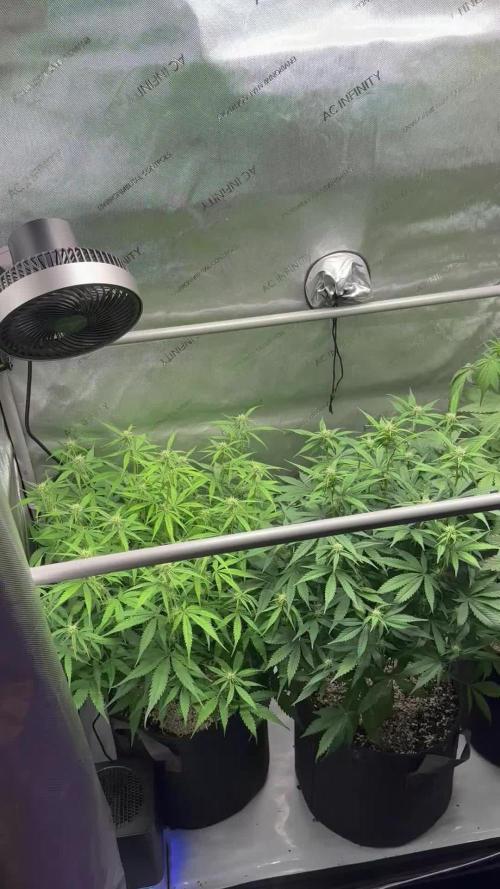
This Starwberry Gorilla Auto is getting huge on me just under 30 inches tall at this point and flowers are starting to come in beautifully. Little worried about high humidity right now but I just may need to get a better dehumidifier for the tent 💚
This is the way
Likes
11
Share


@Luv2Grow
Follow
Day 50 - Starting week 8 and not a whole lot to update but she is getting frosty as hell. She’s drinking a ton of water so should be ready in another day or so. She’s not huge but looks like she’s gonna be a nice, fat and compact girl.
Day 51 - All still good and fattening up each day still. Not much that I did with her today other than check the soil for wetness and should be ready tomorrow. Other than that, just tucked her leaves and placed her back into the tent.
Day 52 - She’s finally just about dried up and gave her a little over a gallon of plain pH’d water, next time she’ll get a round of nutes. Other than that all is looking good and she’s coming along nicely. I’ve got nothing to complain about with this grow so far, other than she’s a bit smaller than I was hoping for but probably something I did early on.
Day 54 - Nothing much to speak of today, just watching her fatten up. Tucked a few leaves and put her back into the tent and all is looking good.
Day 55 - Just took her out for a once over today and she’s looking good. Tucked a few leaves out of the way and might do a little defoliating with her tomorrow, even though she really doesn’t need much. She’ll also get some nutrients and water as well.
Day 56 - The end of week 8 and thought she would be ready for water but gonna give her another day then will give her some with flower nutes. Other than that, just did a little adjustments to the leaves to keep her as opened as possible. Also kicked on the second AGLEX light to get her as beefed up as possible.
Likes
45
Share


@masterofsmeagol
Follow
7/18 I'll make this week a six day week to get back on track since i didn't last week. Rhis has been INCREDIBLY challenging for me to be away from my plants for this long. It will be six days. I'm leaving early to come home and water. We are supposed to get thunderstorms. Not sure if we did but it's only 11am. All pics so far are ones sent to me this morning. It rained a little bit yesterday. I have a lot to do in the garden. I need to assess Amy damage. Probably water (depending on weather), defoliate and hunt pillars. I may decide to spray and I may not. Depends what I see. Plants are getting big though. I'll need to add the second set of supports. I'm hoping I come back and find inch long buds like I did last time with those mendo breath that flowered super early two years ago. I just want to see my girls and take a big deep breath of their smelly goodness. I need to check for deficiencies as well as i usually started nutes by now. Tomorrow morning I'll do a video when I get back.
UPDATE: AROUND 7 O'CLOCK MY INTUITION OR AS I CALL IT "MY SPIDY SENSE" STARTED TINGLING. IT HAD BEEN EARLIER BIT I IGNORED IT. I PLANNED FOR TWO THUNDERSTORMS WE GOT HERE AND WERE SUPPISED TO GET AT MY GROW BIT DIDN'T GET. I FIGURED THE GIRLS WOULD BE OKAY BUT I COULD FEEL THEIR PAIN. I COULDNT REALLY TELL THROUGH THE CAMERA IF IF THEY WERE DROOPING BAD SO I HAD DAD GO LOOK. HE DIDNT RESPOND WHICH PISSED ME OFF. I TOLD HIM THIS MORNING TO KEEP A VERY CLOSE EYE ON THEM AND IF NEEDED TO WATER THEM. NOT WANTING TO ASK TO MUCH OR I WOULDVE JUST SAID DO IT. HE WATERED EACH PLANT A HALF GALLON AND SPLIT A GALLON WITH THE 10 GAL AND THE 5 AND 50 GALLON SEEDLING CONTAINERS. I'M GLAD I CAUGHT THIS. I NEED TO INCREASE THE AMOUNT OF WATER. AT LEAST I HOPFULLY WONT COME HOME TO DROOPING PLANTS. THAT WOULD BE A KICK IN THE NUTS. I'M NOT GOING ON VACATION DURING GROWING SEASON AGAIN. I CANT WAIT TO SEE MY GARDEN.
7/19 Came home to the plants looking okay but very light and needing water. All expected storms missed us so what I planned for water wasn't enough. Plus they are much larger. DAD WATERED ALL CLONES WITH A HALF GALLON OF WATER AND THEN I GOT BACK AROUND 10ish AND GAVE THE PLANTS ANOTHER FULL HALF GALLON. THE GMOs ARE DEFINATELY WATER HOGS. I've noticed some interior leaves fading so I'll start nutes soon. Saw some pillar damage (and the pillar in a picture dad sent) and went hunting. I caught 11 caterpillars!!! Three different species. A big green one that rolled into a ball. Yellow and green normal moth larvae and an inch worm the color of an earth worm! I found no eggs though. I took a video, but I'll have to wait to upload it. Luckily, my intuition is on point, and I have family that will help me. All it takes is a day of this heat advisory over 100f weather and the wind to dry my bags right out! I don't want to over water, but 10% is 2 gallons in the 20s. I'm upping the water to a gallon a plant. The event horizons seem to be a little further in flower and don't seem to be using AS much water. I'll play it by ear. I was going to spray bt but having caught double digit pillars I think I'll hold off and do what I'm doing. I can always spray later if needed.
7/20 Checked my plants late and noticed they were light and starting to droop. I had one gallon mixed up so I gave to what was worse. They seemed like they would be OK until after my wife's doctor's appointment. I got back and EVERYTHING but one event horizon were starting to droop and light as a feather. This was after I gave them half a gallon yesterday afternoon and dad gave them a half gallon the late night before. The plants are just too big and with this heat they need more water. I mixed 8 more gallons amd gave each plant a full gallon. Used another gallon earlier in the morning so a total of 9 gallons was used on the garden today. I defoliated what I could. I noticed a hole in my cage as well. A lathe broke and it left a small hole for an animal to crawl through. I found a small lathe and got the drill and went around and repaired the cage. I have a lot more to do. Some serious defoliation. I need to start nutes and I need to add the second supports which is a trellis. That way I can LST. The cages kinda hold everything close together but once the supports are added things while be spread out much better. Much more room this year. I need to switch the plant in the 10 with the flowering event horizon to better utilize space. Dad says these are the best looking plants I've grown. I don't know if I agree but the are really thick. Could just be the strain. I'm certainly not complaining. Things look good. If I can hunt pests myself I'd rather do that than spray chemicals. Got a few more pillars and jpn beetles. Took a video but it won't upload until tomorrow.
7/21 It was definately a good idea to up the watering amounts. If not they'd probably be dead. They are growing at a significant rate. Some seem to be in early flower. I have damage from pillars but considering how many I've caught from hunting im still on the fence about spraying. I probably still should. I went through abd manually removed as many as possible. When I went over this morning I checked the weight of every plant. Every plant was noticeable lighter than after I had watered them yesterday. That kinda suprised me. My water hogs were actually significantly lighter. We haven't been getting rain either. I'm going to have to water every day. I think a gallon a plant should be enough. 10% is 2 gallons though. I'd rather understand water than over water but I'd like to get it so I'm not watering every day. Or every other day which I'm sure is what will happen. I'm planning on having to water tomorrow. I'm still going to mull over whether I should apply the BT tonight or not. I probably should. They aren't a problem now but further in flowering they wreck havoc on flowers. Eating and shitting and spreading mold every where they go. There's no way I got all of them. I keep saying it but never do it but I should get netting. That would basically solve this problem. Oh, didn't get a chance to upload the video I made. I'll do it tomm.
UPDATE: THAT "SPIDEY SENSE" STARTED TINGLING AGAIN SO I DROVE TO INSPECT MY PLANTS. ITS BEEN SUNNY AND HIGH 80S/90. ALMOST ALL PLANTS WERE DROOPING. SOME WERENT FEATHER LIGHT BUT THEY WERE LIGHT AND DROOPING. THE WIND WAS WHIPPING AND WHEN IT DOES THAT IT DRIES THOSE BAGS OUT QUICK. INTERESTING ENOUGH THE EVENT HORIZON THATS IN THECMIDDLE OF THE CAGE SURROUNDED ON ALL SIDES ABDCPROTECTED FROM THE WIND STILL HAS WEIGHT. IT LOOKED A LITTLE DROOPY BUT DOESNT GETCTHE WIND THE OTHERS DUE. IM WONDERING IF I COULD BE OVER WATERING THAT ONE PLANT WITH THE FREQUENCY OF WATERING. THE SOIL WAS DUSTY AND DRY BUT WHEN I STUCK MY FINGER IN SOME DIRT STUCK TO IT SO I DIDNT WATER THAT ONE PLANT. I MIXED UP EIGHT GALLONS OF WATER AND GAVECEVERYTHING A GALLON. I GAVE A HALF GALLON TO THE PLABT IN THE 10 AND BRIEFLY HIT THE CONTAINER PLANTS. THE REMAINING HALF GALLON WAS ADDED TO THE PLANTSCTHAT ARE USING THE MOST WATER. GMOS WERE USING MORE THAN ANYTHING BUT THAT SHERB PIE AND TOASTED TOFFY SEEM TO HAVE CAUGHT UP. LOOKED FIR PILLARS BUT COULDNT FIND ANY. ILL UPDATE TOMORROW. IM WONDERING IF I SHOULD GO FOR A GALLON AND A HALF EVERY TWO DAYS OR A GALLON A DAY DURING THIS HOT WEATHER. LUCKILY I CAN KEEP AN EYE OUT AND FIGURE IT OUT. I HAVEXA COUPLE PLANTS THAT ARE TRANSITIONING TO FLOWER. EXCITING TIMES! OH AND AFTER WATERING THE GIRLS PICKED THEMSELVES RIGHT BACK UP. I KNOW ITS NOT IDEAL BUT ITS BETTER TO UNDER WATER THAN OVER WATER. I STILL HAVE NIGHTMARES ABOUT FUSARIUM.
7/22 Much cooler day. It's 74 at 9:40 bit it was 60 earlier this morning. With the cooler weather I'm hoping I won't have to water as often. I think I hadn't been giving them enough water at a time for the conditions. I'm not going to water again until all bags are super light. That's what I had been doing but I don't want my plants getting to the drooping phase. Luckily I check on them multiple times a day and I've got the cams. I caught approx half a dozen inch worms this morning. I'm wondering if I should still spray. If I'm catching this many there has to be more. I'm not removing the damaged leaves if they aren't bad so it's hard to tell if it's new damage. It was extremely windy yesterday. I assume that is what helped dry the bags put so much. I already doubled the water intake so I don't want to do anything else until I see how this turns out. I figure I'll have to water tomorrow. We are getting some rain in the next few days but not much.
7/23 This will be the last entry for this week so I can get back on track. If you've been following along you'd see that I had pretty much doubled my watering amount due to it not lasting until next watering. I take the weather reports I to account. They have really been passing me off lately. On vacation we were supposed to get two large storms at my grow. We got ZERO rain amd it just followed me to my vacation (where the weather WAS supposed to be sunny) and poured some of the heaviest shert rain I've seen. Now after I over watered my plants (just a litttle) I found out the weather changed. Today, tomorrow and Wednesday we were supposed to get TINY amounts of rain. It totaled like .35in for the 3 days. I'm thinking cool. Instead it get changed last minute to supposably get an inch of rain JUST today. It was sheet rain earlier but it has totally stopped raining. The GMOs aren't really over-watered (too bad at least) and look normal. Nothing looks BAD. I can just tell by the weight that some of these girls are overwatered. That's OK though. If we get any wind (which we should) it will dry those bags out quick. With the gmos and that sherb pie it would be very hard to overwatercto the point where it hurts the plant. I just need to realize the GMO'S just use more water. They are asparagusing right up. Event horizon is in early flower. Everytime I go to my grow I'm able to kill multiple pests. I got at least 5 moth larvae, a couple moths, couple leafhoppers and I missed this giant grasshopper that had been going to town chomping leaves. I think it's time to start nutes. I also think I'm going to spray either BT or captain Jack's after this rain. I don't need pillars come flower. Since I can SEE multiple pests it might be best to use something broader like spinosad but we will see how it goes. I also need to switch a couple plants for better room, defoliate and add the trellis and second set of supports. The first support kinda keeps the branches together so I need to lst and tie down branches to open up the plant.


Likes
57
Share


@Kmikaz420
Follow
Et voilà la fin les amies , toutes mes plantes on été flusch et apres 2 jours d obscurité elles vont être recolter (sauf la scherbet à qui il faudra encore quelque jours :) quel beauté et super plante pour débutant = presque pas de feuille, elle supporte les grand ec , et surtout la plante se développe super bien et pas besoin de tuteurs pour les branches .
Voilà on se retrouve d ici 2..3 jours pour la recolte de toutes ces filles
Pour le moment j en suis à = 340grames sec
avec les plantes que j ai déjà couper et sécher .
Je vais vous mettre se que chaque plante a donné en poids sec mais va falloir être patient j ai pas mal de travail avant sa encore ;)
Likes
76
Share


@Canna96
Follow
Hey now, this week went pretty good, she grew 6 inches to 22" tall, so I am going to veg her for one more week and then flip her to flower next week. She seems to be fairly healthy, but she is not growing super fast like I am used to, but I also have only grown autoflowers and mainly sativa dominant autos. I don't think this Planet of the Grapes will stretch too much being an indica dominant plant, but I have another 24 inches of usable space for her to grow if needed. I am getting super excited to see what this little lady can do in flower. My plan is to flip the lights next week, but continue with veg nutes for another week, then slowly start to transition her to flower nutes in the 2nd week of flowering, and be totally switched over and adding bloom boosters by week 3 of flower. I hope everyone had a great weekend, Thanks for stopping by, be safe and blaze on!

Likes
25
Share


@KivzBudz
Follow
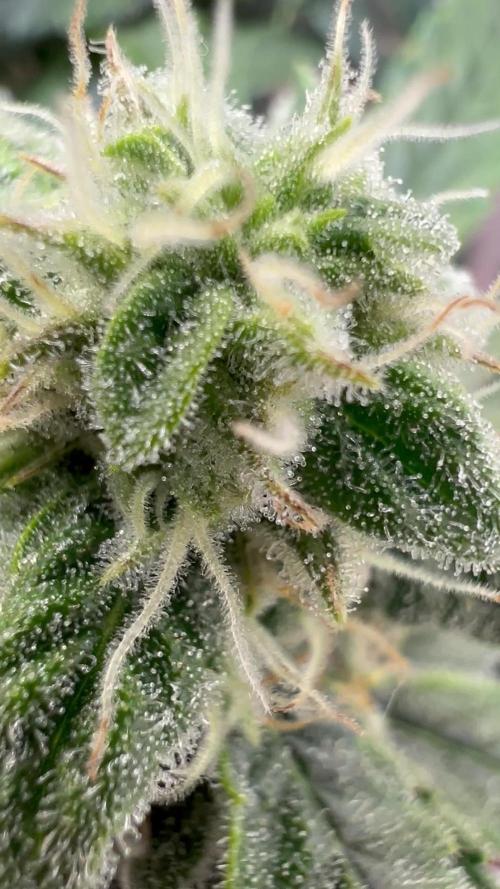
In the end I’m very happy how this first Grow went. Tomorrow I’m gonna finish the other half and update some pictures. Curing begins now, can’t wait to smell and taste the full cured terpens! 😋🌱



Likes
13
Share
@Bread_n_Buds
Follow
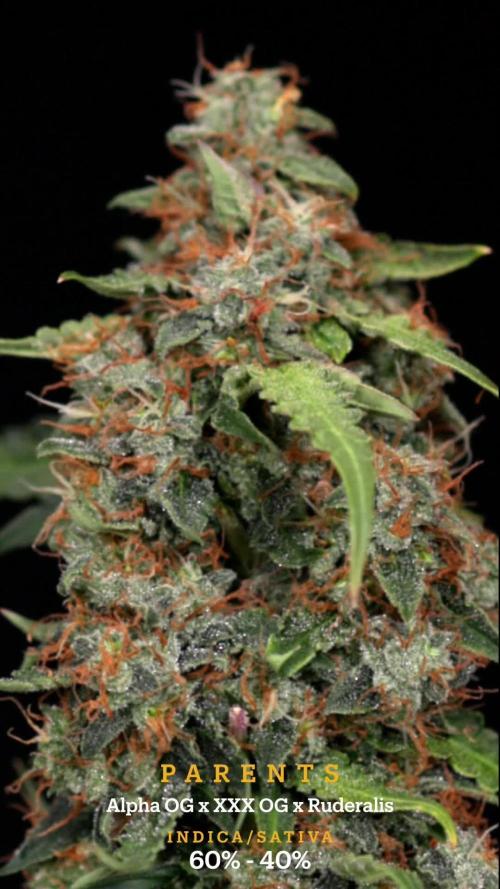
This week I present the HARVEST of GODFATHER OG Autoflowering #2. The first plant is another monster, the one you found last week, the one before harvest. Thanks to an exceptionally long transition period between vegetative and flowering, it has developed a large quantity of cannabis and truly splendid flowers, with impressive resin production, beauty, and robustness.
The plant has a lanky appearance, due, as mentioned, to a longer-than-average transition period between vegetative and flowering. It almost seemed like it wouldn't flower, but then, perhaps due to genetic characteristics or the addition of Power Buds to stimulate initial growth, the plant performed at its best in a small pot.
Pot and soil - This plant was grown in an 11-liter pot with Plagron BiloLight Mix organic soil.
Lighting - The Zamnesia Phytonaut 480W LED lamp, used from mid-flowering onward, allowed fruiting. We achieved a PPFD (photosynthetically active photon flux density) between 800 and 1200 μmol/m²/s, with cycles of 24, 23, 20, and finally 18 hours.
Z https://www.zamnesia.io/it/14526-lampada-led-per-coltivazione-phytonaut-480.html (National link in case Google doesn't work)
Growing system: Zamnesia Ecosystem, fan, extractor, and grow tent, all made by Zamnesia.
Trichhomes: We let the plant mature longer than usual to bring out its indica characteristics; this time, there are numerous amber trichomes and beautiful red-tipped trichomes.
Fertilization: Grown with Plagron Official, a 100% organic base fertilizer, and all recommended additives.
Visit www.plagron.com for grow cycle calculations, product selection, and general information.
All nutrients are available on the Zamnesia website. Also check out the live substrate and the fantastic new Zammi product line.
You can find this excellent strain here:
https://www.zamnesia.io/en/11102-blueberry-crumble-auto-zamnesia-seeds-feminized.html
(Google it if the link doesn't work; it's a national link)
You can find this excellent strain here:
https://www.zamnesia.io/it/14330-godfather-og-auto-zamnesia-seeds-femminizzato.html
(Google it if the link doesn't work; it's a national link)
Terpene // Caryophyllene, Myrcene, Limonene
Parents // Alpha OG x XXX OG x Ruderalis
Genetics // 60% Indica / 40% Sativa
THC // 26%
CBD // 0-1%
Climate // Mediterranean
Resistance // Mold Resistant
Taste // Aroma // Sweet, Fruity, Spicy Pine Diesel
Effect // Relaxing, long-lasting, body high, calming
Zamnesia Description - Godfather OG Automatic by Zamnesia Seeds is the autoflowering version of one of the most potent OG strains on the market. With 26% THC, a rich terpene profile, and a full flowering cycle of 9-10 weeks, this indica-dominant hybrid is ideal for growers seeking fast, aromatic, and intense results without compromise.
Godfather OG Auto is the result of a cross between Alpha OG, XXX OG, and Ruderalis. This blend retains the potency of the original OG while incorporating the speed and autoflowering potential of Ruderalis. The 60/40 indica-sativa balance ensures fast and reliable yields.
Every hit delivers the classic OG bouquet: sweet fruity notes, fresh pine, wood, and a subtle diesel aftertaste. The smoke is dense, aromatic, and satisfying, perfect for lovers of bold, complex flavors.
Compact and discreet, Godfather OG Automatic is perfect for small spaces, balconies, or grow tents. Indoors, it can reach a height of 100 cm with yields of up to 450 g/m², while outdoors, it reaches 120 cm with a potential yield of 150 g/plant. All this in just 9-10 weeks from seed to harvest, with feminized seeds for maximum reliability.
"The best that nature has to offer"
www.zamnesia.com
Likes
11
Share


@B4niTa
Follow
Day 71 harvest:D girls are impressive, very nice smell. Fastbuds are amazing only topping and girls give a great results. Soon i will edit everything, also smoke report. Peace!