







Likes
21
Share


@MG2009
Follow
01/09/2022
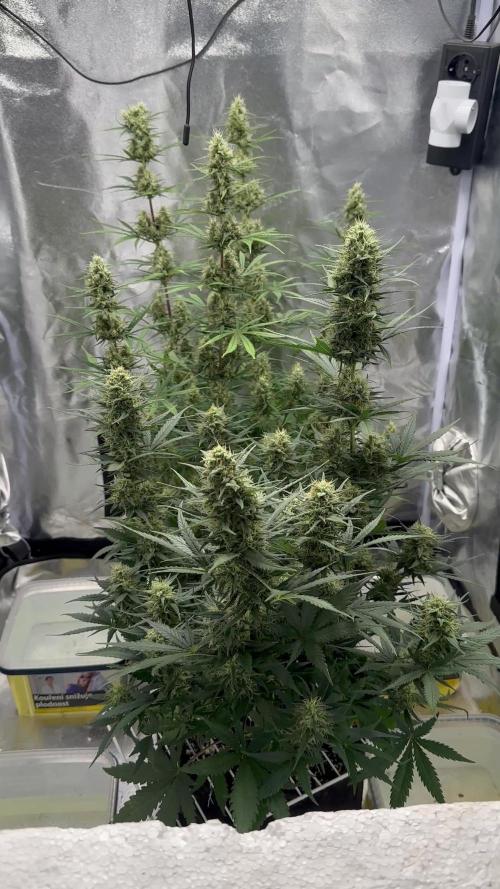
Finally time to flower, and all girls went into flower room at lights out.The males will be next week, don't want to put them in to early so I will carefully check every day and separate before they open their flowers. I'm guessing week 3-4
I Will select two branches on each female to selectively pollinate.
01/11/2022
Blue Matter #5 (update #5 culled male) repotted with lemon og seed
Will continue in her own evolving diary. My hope is to eventually graft different cuts for a multiple variety mom plant, I can have 6 total plants
And would be nice to be able to maintain only one mom.
Likes
2
Share


@CogordoAcuatico
Follow
Las flores se van cerrando y las hojas secandose dando como resultado un final exitoso
Likes
Comments
Share
@MyLittleGarden
Follow
Blütewoche 4 - 06.07. – 13.07.2026
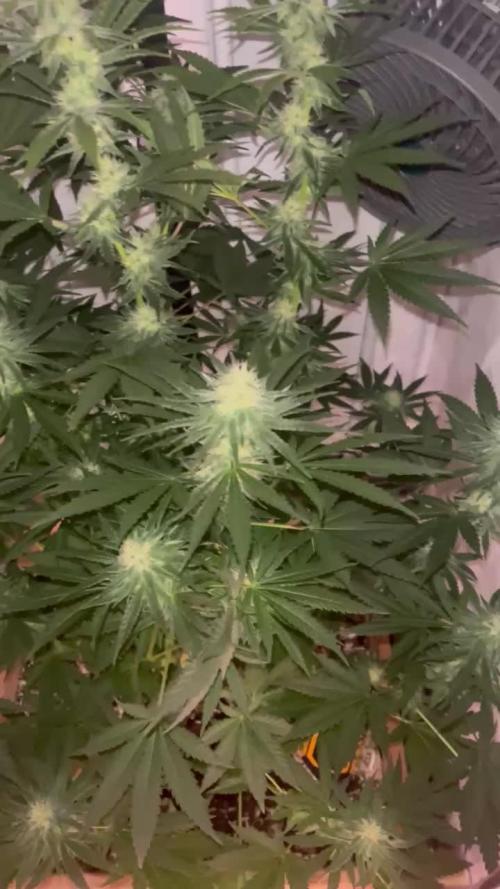
Der Stretch ist nun weitestgehend abgeschlossen. In dieser Woche ist die Pflanze nur noch etwa 3 cm gewachsen und steckt ihre Energie jetzt sichtbar in die Blütenbildung. Die Buds entwickeln sich an allen Trieben sehr gleichmäßig, die weißen Blütenfäden werden immer zahlreicher und die Blüten beginnen langsam an Volumen zuzulegen.
Die Pflanze ist weiterhin sehr vital, zeigt eine satte grüne Farbe und weist keinerlei Mangelerscheinungen auf. Der höchste Headbud befindet sich inzwischen nur noch etwa 5 cm unter der LED. Sollte der Abstand durch die anschwellenden Blüten noch geringer werden, werde ich die Triebe in der kommenden Woche vorsichtig seitlich abbinden.
Insgesamt habe ich 11 Liter Wasser gegossen und eine leichte Entlaubung durchgeführt. Ansonsten verlief die Woche ruhig und die Entwicklung im Beet ist weiterhin sehr erfreulich.

Processing
Likes
39
Share


@InnerCityGardens
Follow
Flush has began, 1st day they were fed 6 hours of Flawless Finish. Now onto just plain water to bring down the PPM of the media. Really trying to push these girls over the line and make the yield worthwhile! After the slow start they are starting to fatten and harden up, their like little golf balls. Next week is flush and that’ll keep going until the trichomes are 50% amber.
🙌🏽💚🇬🇧


Likes
12
Share


@SmylinPupil
Follow
Well I’m closing this one out. I had a lot of problems with humidity outside and bud rot, in hindsight i read a few reviews in the last few weeks and purple kush is susceptible to bud rot. I did 2 separate harvest, one on the 9th and one on the 14th. I collected everything I could smoke, there is still buds left on the plants but because of bud rot and immature buds I’m saying fuck it. Sonoma seeds quotes 9-10 weeks flower i harvested at week 8 and week 9. I harvested just shy of a pound total, and just over and oz of “purple” looking weed. Between you guys and i, the purple one was pretty shwaggy as far as bud goes. Would i grow this again outdoors? NOPE. Would i try it indoors? You will have to stay tuned for my next grow. If you plan to grow this strain outdoors do not do it. The fact that it’s pretty much 100%indica it does not like to get wet,🤦♂️🏻 if you are in the desert, indoors or live in Afghanistan (lineage) go for it. The taste is also not quite what I expected, all the reviews say grapes, but i taste a neutral taste. Some of it smells quite good in the jars but as soon as you smell each bud it smells like spicy woody herb with some dank undertone. Trimming it i had some sort of dank spicy smell i just can’t put my fingers on, except it was all over them. The buzz is “ok”but nothing to knock your socks off with. It is a stimulating feeling followed by a calm “not sleepy” feeling. I haven’t grown many outdoor variety’s but I’m sure most of them turn out the same. I’m waiting for my indoor no name to finish and I can start trying to redeem myself with my leftover seeds, and hopefully get the true quality/if there is, with this purple kush strain.
Fall indoor; here i come. Thanks for tagging along.
Cheers.
Update: decided to make bubble hash with it.
Update 2: pressed some hash into some shatter

Processing
Likes
15
Share


@AK1210
Follow
The tricombe production on this strain is ridiculous! It looks amazing under my microscope. The heads are mostly milky coloured so this may be finishing sooner than expected.
The space in the tent is getting a bit tight so I'll be glad to have more room when this lady has done her thing.
Likes
Comments
Share


@Growfather1
Follow
Hello everyone.
Here is the week one update for my Peyote Critical diary from Barney’s Farm.
She is doing okay so far—not in absolute peak condition, but pushing through nicely! To give her a little boost, I am stepping up the nutrient feeding slightly this week.
Feeding & Environment Log
Parameter Current Week Status / Adjustments
CANNA Coco A & B Increasing from 1.0 ml to 1.5 ml
CANNA Rhizotonic Maintaining at 2.0 ml per liter of water
Humidity Lower today at 56% (normally swinging between 62% – 65%)
Temperature Steady as per the winter tent setup
There isn't too much else to report just yet as she finds her footing. They say patience is a virtue, but watching a seedling grow is the only time you can stare at a green speck for an hour and convince yourself it just grew a millimeter!
Let's see how she looks next week.
Thanks for stopping by and have a nice day.
Best regards,
Growfather
Likes
36
Share


@MadeInGermany
Follow
Info:
Unfortunately, I had to find out that my account is used for fake pages in social media.
I am only active here on growdiaries.
I am not on facebook instagram twitter etc All accounts except this one are fake.
Flowering day 44
since the time
change to 12/12 h.
Hi everyone 😁.
The plant continues to develop very well week after week and its buds keep getting bigger and smelling better and better ☺️.
1 g enhancer per l cocos was added.
Otherwise the tent was cleaned again and all containers filled 👍.
Many fun and all stays healthy 🙏🏻
You can buy this Strain at :
https://originalsensible.com/original-sensible-seeds-zkittlez~20503
Type:
Zkittlez
☝️🏼
Genetics:
Afghan Kush Indica x Grandaddy Purple x Grapefruit hybrid
👍
Vega lamp:
2 x Todogrow Led
Quantum Board 100 W
💡
Bloom Lamp :
2 x Todogrow Led
Cxb 3590 COB 3500 K 205W
💡💡☝️🏼
Soil :
Canna Coco Professional +
☝️🏼
Fertilizer:
Green House Powder Feeding
☝️🏼🌱
Water:
Osmosis water mixed with normal water (24 hours stale that the chlorine evaporates) to 0.2 EC. Add Cal / Mag to 0.4 Ec Ph with Organic Ph - to 5.5 - 5.8 .

Likes
17
Share


@STAYINGONMYMAINCBATORUNTWO
Follow
Amazing results! They’re 2 weeks (14days) in bloom today! Flowers are developing everywhere with this one! I had to make an edit on one of the stems as I had no more room on the pulley and had to snap a stem and bend it sideways! (Super crop) can’t wait to see what happens with it as the last time way Ago in the past I accidentally snapped it after bending it as it heals firm and I didn’t realise but this time no mistakes even got her tied as I had to bend her twice as the first time she sprang back to position! Hope you like 👍

Likes
2
Share


@Stankmeister
Follow
So a whole lot has happened in the last 2 weeks. My main goal has been setting up for season 3 outdoors in my new garden where I will test my theory.
I went a little hard on the plant ferment I made and have been feeding because the Whiskey Zulu and the Girl Crush because have a few spots on some leaves so I guess they might've briefly locked up a little. No problem with the Ogreberry though.
The Whiskey Zulu smells like purp—like GDP, the Ogreberry smells like fruitloops with some funk and a little like Northern Lights. The Girl crush smells like a sweet diesel og—and I've just switched her over to 12/12 not long ago.
For season 3:
I've ordered seeds from DDA who owns Boneyard Seeds Norcal on Dagga.garden please check him out before it's 2 late. Please checkout his fantastic selection of cultivars.
He goes by Mr. Toad on youtube if you have any questions. The man is a fantastic breeder and educator. [With my order of Roberts Creek Congo × Space Cheese seeds he sent 10 free The Ghost of Toadally Haze and 7 of a cbd/cbg strain for breeding called Holy Ogre. In the package was also brown rice ocb papers, a soil inoculent, boveda packs, terploc curing bag, stickers, and arugula seeds.]
I met DDA through a future cannabis project live, he was in he comments spreading killer knowledge and I asked him a few questions about my ideas and he educated me for a long ass time simply because he's all about it. That's a breeder whose genetics I want in my garden, (and then he sent me all the freebies without even knowing me.) The man will have my buisness for as long as he's selling seeds because he values education and fosting the next generation of growers. He gave me some tips about rooting clones and now I've rooted my 1st clone for this next season. I think the temperature wasnt consistent enough before...
I've started 3 Roberts Creek Congo × Space Cheese and they all popped within 14 hours with a 100% success rate. DDA — look him up.

Likes
19
Share


@GoldenWeedGrower
Follow
Legend
Timestamp: 📅
EC - pH: ⚗️
Temp - Hum: 🌡️
Water: 🌊
Food: 🍗
pH Correction: 💧
Actions: 💼
Thoughts: 🧠
Events: 🚀
Media: 🎬
D: DAY, G: GERMINATION, V: VEGETATIVE, B: BLOOMING, R: RIPENING, D: DRYING, C: CURING
________________________________
📅 D56/V49 - 10/01/24
⚗️ EC: 1.1 pH 7.2
🌡️ T: 23 °C H: 58%
🌊
🍗
💧
💼
🧠
🚀
🎬 Added Time lapse video
________________________________
📅 D57/V50 - 11/01/24
⚗️ EC: 1.1 pH 7.2
🌡️ T: 23 °C H: 58%
🌊
🍗
💧
💼 Big Defolation and LST
🧠 Preparation for blooming stage
🚀 Finally she has her space back, so all the grow box is for her 😊
🎬 Added 4 pics
________________________________
📅 D58/V51 - 12/01/24
⚗️ EC: 0.9 pH: 7.6
🌡️ T: 23 °C H: 58%
🌊 Added 4L
🍗 Added Bud Candy - B52
💧
💼 Added ScrOG net. Defolation and LST to prepare the blooming stage
🧠 Blooming mode almost ready
🚀
🎬 Added Time lapse video and 1 pic
________________________________
📅 D59/V52 - 13/01/24
⚗️ EC: 0.9 pH: 7.6
🌡️ T: 23 °C H: 58%
🌊
🍗
💧
💼
🧠 pH is rising too much, but I'll not adding nothing for now
🚀
🎬 Added Time lapse video
________________________________
📅 D60/V53 - 14/01/24
⚗️ EC: 0.9 pH: 7.4
🌡️ T: 23 °C H: 58%
🌊 Added 6L
🍗 Calmag - Grow A-B- B-52 - Bud Candy
💧
💼
🧠 It's time to bloom triggering, in the next days I'll change the water for flush and bloom nutes
🚀
🎬 Added Time lapse video
________________________________
📅 D61/V54 - 15/01/24
⚗️ EC: 0.1 pH: 7.4
🌡️ T: 23 °C H: 58%
🌊 RES Changed 💦💦💦. Flushing until tomorrow
🍗
💧
💼 Passed lights to 12-12 (21.00 ON and 09.00 OFF)
🧠
🚀
🎬
________________________________
📅 D62/V55 - 16/01/24
⚗️ EC: 0.1 pH: 7.4
🌡️ T: 23 °C H: 58%
🌊 Flushing almost finish, all is ready
🍗
💧
💼 Made some LST
🧠
🚀 Let's BLOOMING !! YEAHHHHHH 🎉🥂
🎬

Likes
51
Share


@Chumpkilla
Follow
12/30/23 - Day 54 - Hello All! I started this week a day early. I wanted to update everyone on something I have been thinking about a lot. Curing. I feel if there was a hole in my growing skills it would be curing. Last grow there was more than I had anticipated. I was not set up for curing 1 lb. I threw in an audible at the last minute. It worked out but I know I can improve with some trial and error and hands-on experience. So after reading a ton, and going off of some of my prior builds for drying, I came up with this design.
I have a controller that will turn the air on and will run when the contents inside the box hit whatever RH% I want to set it at. I think the first week I will set it for 78%RH, then every couple of days go down a % until I hit 62%.
The thought is that if the bucket gets above the set RH% then the air will kick on and distribute air across the buds until the RH% is back down to where you want it. It will force the humidity out. I won't need to worry about burping. It will happen on its own.... in theory.
Ill update tomorrow with some pictures after the water change.
12/31/23 - Day 55 - Everything is looking good. The water change completed this morning while I was in the shower. Its adding nutes now and will do so over the next hour or so. She is starting to get stinky. I had to add the extra carbon filter to the room. I've got some pics up top of that.
Happy New Year! Next time I post it will be in 2024! Have a great night and be safe! Dont drink and drive, your life and anyone else involved in an accident is too important! C' YA!
1/4/24 - Day 58 - I have been thinking of trimming her for a while.... I got a comment on the bushy-ness and I got self-conscious and gave her a trim. Lol I have been going bath and forth for a while and that gave me the push to give her a little trim.
She looks great and is growing really quickly. Ill update with more pics as it goes along.
Likes
162
Share


@DutchFarmer
Follow
She is reall fat now wow 😳🤩🤯
The smells is amazing real potent skunky

Likes
10
Share


@Fort_Wendy
Follow
Week 10
This wonderful plant is going wider (and bigger) than ever thought. Flowers are coming at a fast pace now and making a vast surface of different side branches. The skeleton of the plant is clearly visible at the pictures taken from below.
The other plant is doing just fine, but rather smaller than the other one (the one that is topped). Flowers are also more abundant and the pistils from both plants are getting really fat (but slightly brown at the tips). Not really any trichomes are found and smell is still very low, more to the "plant-ish" smell than a banana smell, but that is still coming. Both plants are scheduled on 12 weeks, so we'll wait it out.

Likes
21
Share


@BLAZED
Follow
W19 (Harvest)
6-6
Last day before harvest.
7-6
Harvest day!
Installed a humidifier outside the tent, set to 55% aiming for a 60% humidity inside the dry tent.
21-6
After 14 days of slow drying she is ready to be trimmed.
While posting this a couple of months later i found out that i totally forgot to make pictures and video's of the trimmed buds 😅
It was a very nice daytime smoke, tasted sweet-sour.
End results:
74.26 Grams of bud
57.90 Grams of small buds and trim, in the freezer for bubble hash.
I have some trim and small buds saved up from different strains and i will be posting a diary of the full process making hash of them!
If you are interested in me making bubble hash feel free to follow me as i will make some in the next month, this way you keep notified!


Likes
21
Share


@Budhunter
Follow
Purple punch is nuts, super frosty. Even some fan leaves are covered with tricomes. I believe I will flush it very soon, maybe in the next watering.
Gorilla punch beautiful plant with some purple nugs. They are getting really fat
Mimosa cake still getting more and more white pistils and I hopping the nugs get fat 🙏🏼